108 939 résultats
1941028483Los Angeles: Art Center School 1941. 1st Edition . Hardcover. Fine. Photographs. 35 Pages In Red Plastic Binder 13" X 10 1/4" With White Plastic Comb Spine. The Book Consists Of 32 Pages Of Photographic Paper On Card Each With A 10 1/4" X 8 3/8" High Quality Photographic Image At Top On Each Side Documenting All Kinds Of Class Settings In The Studios And In Outside Locations And 3 Pages Of The Same Paper Each With Four 4 3/4" Square Photographs Attached To The Pages On Each Side Portraits Of The Teachers For A Total Of 88 Photographs. There Is No Text Or Writing Of Any Kind Anywhere In The Book But It Is Very Similar To A Set Of Pages In The Art Center School Of Design Archives In Pasadena Punched For A Spiral Binding But Unbound Having Four More Pages Than This Set But Lacking Some Of The Photographs Present Here. Ansel Adams Is Shown Instructing Many Of The Classes As Are Fred Archer Clarence Bull James H. Doolittle Edward Kaminski Paul Dorsey C. K. Eaton Otto Hulmer A B Shore Herman Wall And Others. The Photographs Are Very High Quality Showing Excellent Composition And Detail. This Particular Collection Of Photographs May Be Unique And In Any Case A Quite Rare And Desirable For Collectors Of Photography And In Particular The Ansel Adams Collector. Adams Developed His Zone System Technique Of Photography In 1941 While Teaching At The Art Center. <br/> <br/> Art Center School hardcover
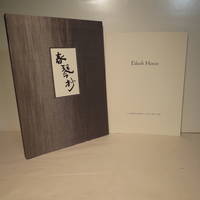
042230New York: The Limited Editions Club. Limited Edition. Hardcover. Fine. Illustrated. Signed by the artist. Rare Limited Edition Club. 62 sets numbered 1-62. Ours is #29 of 62. 1 Printer's proof and 2 archival proofs. This portfolio was editioned by Jon Goodman on Arches Cover. Contains: Kimono No. 2 1963: The Night of the Newly-Married Bride. Kimono No. 4 1963: Hard Times of Marriage. Kimono No. 6 1963. Widow in Mourning at the Funeral. Silver nylon clamshell case. White label laid in on front cover with black Japanese lettering. Black velvet interior. Full refund if not satisfied. The Limited Editions Club hardcover
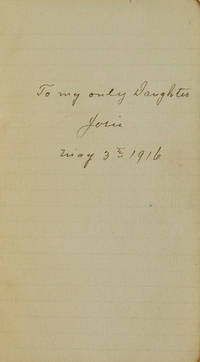
1916321536Jersey City NJ 1916. Manuscript throughout. 61pp. neatly written in ink on ruled paper. Inscribed on the first page "To my only daughter Josie" and signed and dated on the final page. 12mo. Contemporary flexible leather covers. Binding worn. Manuscript throughout. 61pp. neatly written in ink on ruled paper. Inscribed on the first page "To my only daughter Josie" and signed and dated on the final page. 12mo. Born on November 9 1841 in Constance Baden-Württtemberg Germany Gubelman arrived in New York in May 1854. The following year he found work with famed mapseller J. H. Colton "as pupil to Jos. Schedler who was in charge of the engraving dept a ledding man as engraver of maps." In 1857 he relocates to Washington DC with Schedler to draw maps on boxwood for wood engraving though the following year he returned to New York working as an engraver for Forbes in New York being paid $8.00 a week.<br /> <br /> In 1858 he accepts his first job in photography:"On Dec. 20th I got a situation with Julius Brille on Chatham St. to retouch photograph & coloring the same under the tuition of Mr. Bathing a very able artist. Dr. Ehrman was also employed there as operator." Gubelman stayed in that position less than a year before moving to Memphis Tennessee to work in a family friend's grocery business. "I stayed one month in that business but it did not prove congenial to me so I secured a situation in Clark's Gallery the most noted in Memphis as a colorist" He returned to the grocery business shortly thereafter when the owner sold his interest to Gubelman's family. "The summer of 1860 was a very trying time in Memphis particularly for a good republican. The only thing to do was to keep mum a hard thing to do when you hear the most patriotic men of the nation abused like pick pockets. Homeguards were organized uniformed and drilled in the evening attending to business during the day and wearing the uniform as a protection against being pressed into the rebel army." He leaves the south under the pretense of purchasing stock for the store and smuggles himself north by flagging down a steamer on the Ohio River making his way back to Jersey City. <br /> <br /> His memoir continues: "I hired Campbell's Gallery at 60 Montgomery St he having gone into making plates for tintypes then just coming up. I improved in my chemical knowledge under Mr. Campbell done my own operating and colored photographs and made a fairly good living." In May however he enlists for 3-months service "in response to Pres. Lincoln's call for 75000." His service was largely uneventfully spending most of his time at Suffolk Virginia with the exception of being shipwrecked en route to Fortress Monroe. He mustered our honorably in September and joined by his parents moved to Trenton "where I founded the partnership Parker & Gubelman & opened a gallery on East State St. We did not succeed and due no doubt to inexperience of both of us." <br /> <br /> In May 1863 he "entered the employ of C.C. Giers at Nashville Ten. at a salary of $80 a month which was increased to $100 in Aug." After Giers retirement and a brief stint working "in a photo tent at a camp in Murfreesboro" he befriends Captain Welles who loans him $400 to open his own studio. "I located at Pulaski Ten. There was about 10000 soldiers and no photographer . There was a fine skylight on the square one flight up. I got an order from the Provost Marshal to take possession. On Jan. 11th 64 I came back to Pulaski with the needed stock and an old acquaintance who was a printer we went to work to fit up prepare chemicals that was collodion days when it took time to get in working order . In the first day I took in $37.00. By the middle of March I paid back the loan to Capt. Welles as he would take no interest I presented a gold watch to Mrs. Welles." <br /> <br /> By May however Union troops left Pulaski and Gubelman returned to Nashville with $500 in stock & $1000 in cash." He entered into partnership with his former boss Giers. "So we formed the firm C.C. Giers & Co. Mr. Giers put up $4000 cash & I $1000 in cash & $500 in stock we bought the Merrit Gallery for $5000. Mr. Giers was to have 2/3 interest." Just a few months later however with Sherman marching towards Atlanta Giers bought out Gubelman's share for $2600 and Gubelman again returned to Jersey City where he opened his own studio on Newark Avenue in May 1865. After describing the meeting his future wife his marriage and other family news Gubelman records the opening of a second gallery on Washington Street in Hoboken which would be sold two years later to Louis Nagel. <br /> <br /> He moves several times in the early 1870s but prospers: "For a number of years I was an exhibitor at the Am. Institute Fairs obtaining a number of medals. In 1878 I made an exhibit of Photo Portraits all sizes from cabinet size to 18 x 22 life size all from gelatin plates the first exhibit of its kind in this country. The same year I made an exhibit in Paris and obtained a bronze medal. All of which not only was a fine advertisement but materially helped to establish a fine reputation in every way. I was also the producer of the first photo prints of instantaneous views of yachts Steamers & Co. in N.Y. art stores." He goes into partnership in 1882 with Arthur Hargrave on W. 23rd street in New York which after several years became profitable. In 1888 he travelled with his family to Europe and while there he arranges for his son Leopold to study with Dr. Eder in Vienna "as I thought a scientific education in the photo-mechanical processes would insure his future."<br /> <br /> Gubelman profitably dissolves his partnership with Hargrave in 1892. The rest of the memoir is devoted to his European travels his family and his grandchildren. The memoir ends recording the death of his wife on April 7 1916 and with Gubelman signing and dating the memoir Jersey City May 3 1916. A pencil notation below presumably by his daughter Josie records her father's death on October 31 1916.<br /> <br /> Though unpublished the memoir is known from a transcript of a second copy of the memoir penned for his son Fred. The transcript is located at the George Eastman House though the whereabouts of the original manuscript presented to Fred is unknown though at one point belonged to his grandson Herbert Gubelman. For a detailed biography of Gubelman see Saretzky and Bilby whose article is based on a second copy of the transcript of the manuscript penned for Fred Gubelman and given to A.J. Peluso for a 1999 article in the Maine Antique Digest. Saretzky Gary D.; and Joseph C. Bilby "Photographers of the Civil War Era: Theodore Gubelman of Jersey City" in NJS: An Interdisciplinary Journal Winter 2021 unknown
193052798NP: NP 1930. Original photographs. poor to very good condition. fair to fine. Oblong Quarto. 23 plates with tissue guards. String bound photo album remains of leather fitting on cardboard. Personal photo-album of Isadore Nebenzahl war correspondent for Agence Havas later: French News Agency in Ethiopia containing 310 b/w original photographs documenting Ethiopia during the Second-Italo-Ethiopean War of 1935. The photographs measure 3 1/2 x 2 1/2" with one measuring 9 x 6" Son of the emperor and one at 3 1/4 x 5 1/4" <br /> <br /> Some 200000 Italian troops invaded Ethiopia in October 1935 under the command of Italian Marshall Emilio de Bono who was soon replaced by General Pietro Badoglio by Mussolini. The Ethiopian forces were defeated and on May 7 1936 the Italian King Victor Emmanuel III was declared emperor and the provinces of Eritrea Italian Somaliland and Abyssinia Ethiopia were united to form the Italian province of East Africa. The fighting between Italian troops and rebels continued until 1939.<br /> <br /> The British war correspondent George Steer had reported on the use of chemical weapons by the Italian forces and subsequently had been deported together with Nebenzahl and other reporters on grounds of anti-Italian propaganda and espionage see original Reuters bulletin of May 18th 1935 enclosed in the album. The Reuters bulletin was covered by several newspapers including the New York Times mentioning Steers and Nebenzahl in their reporting. Several of the photographs included in this album show Isadore Nebenzahl.<br /> <br /> The photographs depict everyday life in Addis Abebba show Nebenzahl and his colleagues in business settings or on portrait photographs construction sites armed patrol activities gatherings and diner settings military personnel official events actions to extinguish fires friends and families airplanes during air raids victims and destruction from air raids army exercises refugees and troops train stations and ships the harbor and navy ships an airfield and scenarios on the ship after being expelled.<br /> <br /> The album includes a small set of documents and photographs loosely laid in:<br /> <br /> 1. Two official press credentials Service des la Presse for Isadore Nebenzahl both with passport photo of Nebenzahl<br /> <br /> 2. A photograph of what seems to be the son of Heila Selassie laid in with two other photographs.<br /> <br /> 3. A formal invitation of the Foreign Ministry of Ethiopia for Isadore Nebenzahl to attend an evening at the "Noveau Palas Imperial".<br /> <br /> The leather padding of the front cover of the album is missing the back padding barely attached with heavy wear along edges. Front cover cardboard with water staining along top edge not affecting album or photographs. Light age-toning. The binding in overall poor photos and interior in good to very good condition. Binding protected in modern mylar. NP unknown
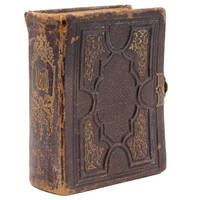
1900351974Np 1900. 23 images in all 6 albumen the rest tintypes. Thick 12mo. Contemporary brown embossed morocco album many of the inserts torn. Condition of images varies greatly. 23 images in all 6 albumen the rest tintypes. Thick 12mo. The images are unidentified and likely unrelated to each other but include some nice studio portraits. unknown
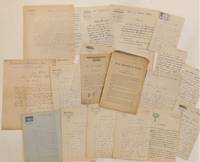
337<p><strong>LUMIÈRE BROTHERS – COLOUR PHOTOGRAPHY</strong>Archive of 19 letters sent to the Lumière brothers and one offprint of their paper on colour photography. </p><p><strong>An exceptional set of 19 letters expressing the enthusiasm of the scientific community and photographic societies following the production of the first colour photographic prints by the Lumière brothers more than ten years before their invention of the autochrome 1903-1904.</strong></p><p>Louis Lumière achieved this exceptional result by improving Gabriel Lippmann's process which was based on "an interference method that enabled him to record the solar spectrum in its natural colours". Alphonse Berget one of Lippmann's students published a report on his discovery in 1891.</p><p>" Louis Lumière at the head of a flourishing photographic products company mastered every aspect from formulation to the industrial production of plates that could be used to make interferential colour photographs. As soon as Lippmann's invention was announced a correspondence was established between Gabriel Lippmann and Louis Lumière and after a year of fine-tuning Louis Lumière presented the Académie des Sciences with some surprising "Lippmannian" views : flowers oranges landscapes stained-glass windows a naturalised parrot flags etc. A plate depicting the solar spectrum was presented to the Société française de photographie. Any object with shimmering colours could be recorded on a plate as long as it was still : the exposure time could be counted in hours ! . They were reduced to thirty minutes and then to a few minutes and the first portrait of a young girl in "natural colours" was taken in the summer of 1893. " translated from Bertrand Lavédrine <em>Peindre avec la lumière. Entre art et science les prémices de la photographie couleurs au XIXe siècle</em> Nov. 2015 Paris France.</p><p>Post-1894 letters underline the Lumière brothers' efforts to promote their process. </p><p>The printed pamphlet is the Lumière brothers' last publication on their trichromatic method superposition of three monochromes - red yellow and blue before their discovery of the autochrome. It begins with a theoretical study of this method followed by a practical study of the process.</p><p>Provenance: Dr Paul Génard a great collector of early films and projection devices and leading authority on the Lumière brothers. He was the founder and first director of the Musée du Cinéma in Lyon in 1966.</p><p>Detailed liste in chronological order :</p><p>- BERGET Alphonse ALS Paris 12 November 1891. 2 pages 8° 208x132 cm.</p><p>Important letter from the physicist Alphonse Berget of the Laboratoire de Recherches de la Sorbonne to one of the Lumière brothers reporting the experiment of projection by reflection of a photographic print by M. Lippmann with supporting drawing. Followed by a request for 4 dozen stereoscopic mirrors to be cut beforehand or to be made.</p><p>- LAUSSEDAT Aimé LS Paris 9 March 1892. 1 page 4° 27x21 cm.</p><p>Letter of thanks from the Director of the Conservatoire National des Arts et Métiers for the donation of a "proof of the solar spectrum" obtained using Mr Lippmann's process.</p><p>- DAVANNE Alphonse ALS Paris March 1892. 2 pages 8° on a bifolium 209x133 cm.</p><p>Letter from the Société Française de Photographie to one of the Lumière brothers requesting a "specimen" of the colour spectra obtained using M. Lippmann's method.</p><p>- DAVANNE Alphonse LS Paris 7 April 1892. 1 page 4° 275x215 cm.</p><p>Letter of thanks from the Société Française de Photographie for sending the spectral image obtained using Mr Lippmann's process.</p><p>- PEGOUD Marie François Joseph Albert ALS Grenoble 21 July 1892. 4 pages 12° on a bifolium 177x111 cm.</p><p>Letter from Dr Pegoud professor at the École de Médecine of Grenoble to one of the Lumière brothers acknowledging receipt of the microphotographs reminding him of his request to send a "spectrum" and asking him to sit on the jury for the awards of the Société de Grenoble exhibition.</p><p>- ASSCHE comte d' ALS n.p. 26 July 1892. 3 pages 12° on a bifolium 181x114 cm.</p><p>Letter of congratulations from the Comte d'Assche to one of the Lumière brothers for his recipe for paramidophenol.<br />- ASSCHE comte d' ALS Paris 8 August1892. 2 pages 12° on a bifolium 178x114 cm.</p><p>Reminder letter from the Comte d'Assche to one of the Lumière brothers to send his note on cobalt salts for publication in the <em>Photogazette</em>.</p><p>- PUTTEMANS Charles ALS Brussels 21 November 1893. 2 pages 4° 272x207 cm.</p><p>Letter of thanks and congratulations from the Belgian Photographic Association for the temporary provision of 8 projection prints and for the results obtained. Followed by a request to send a print to the Brussels Industrial School.</p><p>- LUCKHARDT Fritz ALS to Louis Lumière Vienna 12 January 1894. 1 page 4° 29x21 cm.</p><p>Letter from the Photographische Gesellschaft in Vienna announcing that the Lumière brothers have been awarded the society's gold medal for their work.</p><p>- GIREL François Constant ALS Paris 14 March 1897. 4 pages 8° on a bifolium 215x136 cm. Letter from Constant Girel camera operator and agent of the Lumière brothers giving an account of the people he met in Paris.</p><p>- REGARD Albert ALS Saint-Claude Jura 16 March 1898. 3 pages 8° on a bifolium 209x132 cm. With inscription in blue pencil : " Répondu le 22-3. Couleurs ".</p><p>Letter of congratulations from the members of the Photo-Club du Haut-Jura for their successful work on colour photography and request to send some colour prints.</p><p>- PARVILLE Henri de ALS Paris 22 March 1898. 2 pages 8° on a bifolium 206x133 cm.</p><p>Letter from Henri de Parville editor of the periodical <em>La Nature</em>.</p><p>- GIREL François Constant ALS Paris 18 April 1898. 4 pages 8° on a bifolium 21x134 cm. Letter from Constant Girel camera operator and agent of the Lumière brothers giving an account of the people he met in Paris.</p><p>- GIREL François Constant ALS Paris 20 April 1898. 3 pages 8° on a bifolium 211x132 cm.</p><p>Letter reporting on his dealings in Paris with bromide paper manufacturers in particular.</p><p>- GIREL François Constant ALS 1898 . 2 pages 8° on a bifollium 215x135 cm.</p><p>Letter reporting on his dealings in Paris with various scientific writers.</p><p>- GIREL François Constant ALS Paris 23 1898. 3 pages 4° on a bifolium 27x215 cm.</p><p>Letter reporting on his dealings in Paris with various scientific writers and directors of learned societies.</p><p>- GIREL François Constant ALS Paris 31 1898. 2 pages 8° on a bifolium 215x136 cm.</p><p>Letter reporting on the people he met in Paris.</p><p>- GIREL François Constant ALS Paris 29 1898. 2 pages 8° on a bifolium 215x137 cm.</p><p>Letter reporting on the people he met in Paris.</p><p>- LUMIÈRE Auguste & Louis <em>Sur la photographie des couleurs</em> Lyon Boulud 1901.</p><p>8° 23 1 pages ; publisher's printed wrappers cover and last leaf loose with small losses of paper. Offprint from the <em>Bulletin de la Société française de photographie</em> 1901 pp. 204-211 303–10 et 441-449.</p><p>- ALS Paris 19 January 1908. 3 pages 8° on a bifolium 21x133 cm.</p><p>Letter of congratulations and thanks from the Photo-Club de Paris for providing a projection device an operator and prints on autochrome plates.</p>
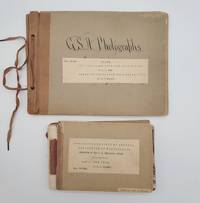
1898693921898. Two odd volumes of Geological Society of America photo books. Small oblong quarto 20 cm x 27 cm; Oblong duodecimo 13 cm x 18 cm. <br /> <br /> First book: Cover title and seven photographs on 1/4 brown cloth with gray card boards held together with a string tie binding. In calligraphy on the front board: "G. S. A. Photographs." The photographs measure 16.5 cm wide x 11.5 cm tall. Caption titles on paper strips mounted below the photographs. Numbers on small strips mounted in top fore-edge corners. With the following photographs present: 495- "28. Terraces of Tertiary Lake Beds near Salmon City Idaho on the Lemhi River."; 496- "29. Terraces of Tertiary Lake Beds on Lemhi River near Salmon City Idaho."; 497- "30. Old Gold diggings - work 1859-65. Leesburg Idaho on Napias Creek."; 498- "32. Rocky cut for sluice California Bar Idaho."; 499- "33. Discharge sluice California Bar Idaho."; 500- "31. Hydraulic Mining at California Bar Idaho."; 501- "No. Basal Cambrian sandstones of section at mouth of Two-mile Canyon 2 miles south of Malad City Idaho 562 C.D.W. 1898." Condition: Very good. Light wear and waviness to boards. Numerical notations crossed out in top fore-edge corners.<br /> <br /> Second book: Thirty-seven linen-backed photographs mounted between gray card boards with 1/4 brown cloth. Front board completely detached but present. The photographs measure 16.5 cm wide x 11.5 cm tall. With typed titles and some notations in pencil/pen on the reverse. Numbers mounted in the top fore-edge corners of the photographs. With the following photographs present: 747- "Shore of lake Ontario Niagara county New York. Illustrated mode of origin of beach shingle by showing rock in place and rocks recently detached."; 748- "Beach of flat shingle. Shore of lake Ontario at Golden Hill Creek New York." 749- "Beach of well rounded shingle. Shore of lake Ontario at Golden Hill Creek New York."; 750- "Cemented shingle in spit of glacial lake Iroquois at Lewiston New York."; 751- "Section of spit of glacial lake Iroquois at Lewiston N.Y. The dip is landward indicating growth on the inside of the spit."; 752- "Section of spit of glacial lake Iroquois at Lewiston. The dip is landward indicating growth on inside of spit." 753- "Cut terrace of the Iroquois shore line 2 miles west of Dickensonville N.Y. Lacustrine plain bed of lake Iroquois near Jeddo N.Y. The water edge was at base of cliff. The cliff is carved from Medina shale."; 754- "Till plain 1/2 mile south of Jedoo Niagara county N.Y."; 755- "Cross bedding and unconformity in sand kame 3 miles east of Lockport N.Y."; 756- "Till Shore of lake Ontario Wilson N.Y."; 757- "Deposit by torrent of Erian water on the withdrawal of the ice sheet from the escarpment at Lewiston N.Y. Unassorted and unworn alluvi."; 758- "Section of talus Niagara gorge."; 759- "Angular gravel in kame south of Royalton Niagara county N. Y."; 760- "Solitary gravel kame 3 miles south of Middleport N. Y."; 761- Escarpment of the Niagara limestone; looking west from a point on the talus near Lewiston N.Y."; 762- "Niagara escarpment capped by niagara limestone; looking east from a point 5 miles west of Lockport N.Y."; 763- "Niagara escerpment sic without capping of Niagara limestone; looking west from a point near Middleport New York."; 764- "Drowned valley of Twelve-mile creek Niagara county N.Y. near Wilson. Water lilies grow on submerged alluvial plain."; 765- "Head of estuary of Twelve-mile creek Niagara county N.Y. Submerged alluvial plain supports rushes."; 766- "Estuary of Eighteen-mile creek near Olcott Niagara county N.Y. Channel deep current slow. Submerged alluvial plain supports rushes."; 767- "Valley of Eighteen-mile creek Niagara county N.Y. above head of estuary. Channel shallow current rapid; alluvial plain supports rushes."; 768- "Post-Glacial anticline Hopkins creek Niagara county N.Y. The displacement of the rocks is accompanied by a superficial ridge traversing an alluvial terrace." 769- "Section of Niagara limestone Cooks quarry near La Salle Niagara county N.Y. Shows structure described by James Hall Geology of 4th district N.Y. pages 93 and 94."; 770- "Section in cut of Erie Railroad Niagara falls N.Y. Shows structure described by James Hall Geology of the 4th district N.Y. pages 93 and 94."; 771- "Weathering of Niagara limestone by solution. A joint face exposed in quarrying southwest of Middleport N.Y."; 772- "Weathering of Niagara limestone by solution; old quarry southwest of Middleport N.Y."; 773- "Unconformity by erosion. Sandstones and shales of the Medina format Niagara gorge."; 774- "Isolated limestone mass at base of Niagara shale containing 'transition fauna' of Ringueberg."; 775- Section of ripplemark on Medina sandstone Lockport N.Y. From crest to crest 23 feet; depth of trough 29 inches.";776- "Flagstone in court-house yard Elyria Ohio. Shows reticulated ripplemarks."; 777- "Trough of large ripplemark in Medina sandstone Niagara gorge N.Y."; 778- "Crest of large ripplemark in Medina sandstone quarry near Lewiston N.Y."; 779- "Crest of large ripple-mark in Medina sandstone. Quarry in Lockport N.Y."; 780- "Diverse cross-bedding associated with large ripplemarks in Medina sandstone. Quarry near Lewiston N.Y."; 781- "Quarry dace in Medina sandstone Lockport N.Y."; 782- "Quarry face in Niagara limestone Lockport N.Y. The joint face shows weather fracture."; 783- Shore of lake Ontario at Wilson N.Y. Train of shore drift from right being arrested by bew-pin begins to accumulate and partly protects bluff from wave attack. Dearth of shore drift under lee of pier fevors wave attack; bluff eaten back 45 feet. Bluff contains two tills and cover of laminated clay a deposit from lake Iroquois. Boulder pavement at top of lower till indicated by arrow." Condition: Good only due to the detached cover. The photographs are in very good condition. Two photo books with forty-four photographs extremely well identified with detailed captions containing the geological characteristics of the wide variety of locations and with the numbers of Gilbert's negatives clearly listed. It could be that these images appeared or were intended to appear in USGS publications.<br /> <br /> The Geological Society of America GSA was founded in 1888. It is a global scientific society with members from academia government and industry in over one hundred countries. The aim of the GSA is to support the professional growth of geoscientists and encourage cooperative research among earth life planetary and social scientists foster public dialogue on geoscience issues and promote the geosciences in the service of humankind.<br /> <br /> James Furman Kemp 1859-1926 was mostly known for his work in igneous petrology and on the origin of ore deposits. He served as the President of the Geological Society of America in 1921. Charles Doolittle Walcott 1850-1927 was the third director of the U.S. Geological Survey the fourth Secretary of the Smithsonian Institution and a contributor to the "Bulletin of the Geological Society of America."<br /> <br /> The lion's share of the photographs are reproduced from the negatives of U.S. explorer geographer and geologist Grove Karl Gilbert 1843-1918 whose life spanned an age of heroic geology and who was one of the founders of modern geomorphology the study of landforms. He helped launch the U.S. Geological Survey USGS and was its chief geologist under the famed explorer and second USGS director John Wesley Powell. In addition Gilbert was a founding member of the National Geographic Society as well as president twice of the Geological Society of America. Gilbert was first exposed to the American West when he participated in the Wheeler Survey one of the four great surveys of the American West headed by George Wheeler Clarence King Ferdinand Vandeveer Hayden and Powell. Gilbert's monumental works were "Report on the Geology of the Henry Mountains" 1877 and "Lake Bonneville - Department of the Interior Monographs of the United States Geological Survey Volume 1" 1890. He is credited with naming ancient Lake Bonneville whose raised shorelines he used to demonstrate crustal isostasy.<br /> <br /> "Gilbert had a knack for harnessing the geography of the land in the cause of something greater: extraction of knowledge about the processes at work." - R. S. Anderson https://eos.org/features/reflections-on-the-legacy-of-grove-karl-gilbert-1843-1918.<br /> <br /> A collection featuring the investigative research of three prominent U.S. geologists who were the top field geologists of their time. A spectacular portrait of late nineteenth century / early twentieth century field geology. unknown
193042850Leicester UK: Cascelloid 1930. Very good . Beautifully-produced trade catalogue from the Cascelloid "Palitoy" company displaying a wide range of baby dolls and other toys. Several uncomfortable designs of black children with pitch-dark skin date this catalogue at roughly the 1930s when the Cascelloid company was dubbed the "House of Constant Progress" by the industry press for its material innovations with the plastics Bexoid and Plastex. One page features a celluoid model by the noted designer Mary Lucie Attwell a doll named "Diddums." The catalogue also displays the company's offerings of animal dolls die-cast trucks pool toys golf and ping-pong sets rattles pinwheels and more. Needless to say color photography was not the norm at this time and this catalogue comprises a beautiful set of vivid and sharp photographic prints. A truly exceptional example unlike anything we've seen: simultaneously surreal and nostalgic. Oblong 4to. album. Blue leather-covered boards. Contains 29 color photographs all 9" by 6.5" approx. mounted on rectos one each of light-gray cardboard leaves. About very good plus overall. Moderate rubbing and edgewear to boards. Several pages display mild soiling and offsetting from photos. Prints just a bit yellowed but remain sharp vivid and clean. [Cascelloid] hardcover
191053538San Francisco: H.C. Tibbitts/ Panama-Pacific International Exposition Co 1910. First edition. Hardcover. g to vg. Oblong quarto. 12 x 8". Unpaginated. 3 pages of text 25 photographic plates. Dark brown pebbled leather boards with gilt lettering on the front cover gilt tooling along the edges of the front and back cover. Period floral endpapers.<br /> <br /> This photographic work takes the form of a proposal for the city of San Francisco to host the Panama–Pacific International Exposition celebrating the impending completion of the Panama Canal. The work was compiled by the Panama-Pacific International Exposition Co. Initial text praises the ongoing reconstruction and recovery effort of the city in the wake of the 1906 Earthquake and details the amenities offered by the city to tourists. The text is finely printed including a decorative woodblock initial printed in black and red. The following 25 plates of original b/w silver-gelatin photographs by photographer Howard Clinton Tibbitts 1863-1937 highlight not only the beauty of the city of San Francisco but also showcase the grandeur of the state of California and all that it would have to offer prospective visitors to the Exposition. There are also a few images of other locations of natural beauty in the Western United States that would also appeal to tourists. Each photograph measures 8x6" on the plate is printed on heavy stock mat photo paper and contains captions.<br /> <br /> Images included here are: San Francisco business district including the Mills Building and the Merchant Exchange Post Street SF Lotta's Fountain SF St. Francis Hotel SF Hotel Fairmont San Francisco Montgomery Street near Post SF Post and Market Street SF Spreckels Temple of Music at Golden Gate Park SF theatre district SF the banking district SF including the Bank of California and the Alaska Commercial building Chinatown SF park at Union Square SF construction of a YMCA SF Sutter street near Grant SF Powell and Geary St. SF SF Bay Mount Tamalpais with the Mount Tamalpais and Muir Woods Railway in the foreground Bridal Veil Meadows in Yosemite Wawona Tree of the Mariposa Grove in Yosemite Mount Shasta Lake Tahoe Mission San Miguel Yellowstone Falls The Grand Canyon The Capitol Building in Sacramento.<br /> <br /> Binding with some rubbing and light chipping to extremities including the head and tail of the spine. Interior with some minor to light sporadic staining mostly confined to the margins of the pages and plates. All images clean and vibrant save for one plate which contains more extensive foxing including some on the photograph itself. Binding in good interior in very good condition overall. Quite scarce. Binding protected in modern mylar. Howard Clinton Tibbitts 1863-1937 was a San Francisco based American photographer. Over a 40 year period beginning in 1892 Tibbits produced notable work documenting the American West Canada and Mexico while working for the Southern Pacific Railroad. His work shows the natural landscapes cities towns and industry which helped promote the grandeur beauty and innovations of the Western United States.<br /> <br /> It is unclear how many copies of this work were produced or if it was ever sold to the public. Known copies are bound in presentational bindings with the recipients name on the front cover. Many of the recipients were notable American politicians including copies given to congressmen such as Henry C. Loudenslager Walter I. Smith and Ben Johnson. Our specific copy is especially significant and relevant as it was given to George C. Perkins 1839-1923 who at the time was serving as the United States Senator for California and had previously served as the 14th Governor of California from 1880 to 1883. H.C. Tibbitts/ Panama-Pacific International Exposition Co hardcover
1940157046N.p.: N.p. 1940. Archive of 26 vintage photographs of mid-Atlantic roadside alert signs with advertisements circa 1930s-1940s. Includes 21 double weight photographs and two matte-finish. Three photographs bear annotations in manuscript pencil on the verso.<br /> <br /> The collection contains thirteen photographs of alert signs advertising Champion spark plugs seven advertising hotels the Biltmore in Dayton Hotel Sinton in Cincinnati Hotel Adelphia in Philadelphia Hotel Schenley in Pittsburgh Hotel Webster Hall in Detroit and two for Hotel Elizabeth Carteret in Elizabeth New Jersey three advertising radio stations WJW and WADC of Akron and WSPD of Toledo and three for various automobile and travel-related businesses.<br /> <br /> Ostensibly designed to warn drivers of forthcoming crossroads turns or junctions the roadside alert signs presented here were perhaps more effective for the prime advertising real estate of their plinths. The circular "alert" section containing text or symbols of approaching traffic changes and usually containing a center piece of reflective glass was mounted to a large freestanding base used for advertising automobile products radio stations local businesses and travel locations.<br /> <br /> 8 x 10 inches. Very Good plus to Near Fine with some light edgewear overall and several with even fading. N.p. unknown
195424812Orgeval France: Not Published 1954. The letters give much background to the creative process of Strand and were written to the designer-artist couple William Golden & Cipe Pineles here addressed as 'Bill & Cipe' who were friends and professional colleagues extending back to their collaborations as participants in the Group Theater in New York in the 1930s. Paul Strand 1890 -1976 American photo-artist Strand and his fellow-photographer wife Hazel Kingsbury took up residence in Orgeval France after moving to Europe in 1950 "driven into self-exile Strand later would suggest by the repressive anti-Communist climate in America after publishing La France de Profil 1952 a portrait of postwar small-town French lifeStrand would spend the rest of his life assembling and completing similar book portraits celebrating primarily rural cultures" as Un Paese & others "Many established photographers from Walker Evans to Eliot Porter have admitted to having been strongly influenced by Strand's impeccably rich and detailed prints concern for formal relationships respect for his subjects and ability to distill the essence of his subjects. However through much of the 1950s and 1960s his reputation fell into eclipse. His dedication to view cameras and fine printing his largely frontal compositions and his devotion to creating politically motivated celebrations of traditional largely rural cultures did not fit an artistic world fascinated with the hand camera and the constant change of contemporary life. By the late 1960s however Strand received renewed acclaim first through European exhibitions and then by means of a retrospective exhibition sponsored by the Philadelphia Museum of Art 1971." John B. Rohrbach in the ANB Cipe Pineles 1908 - 1991 Austrian-born American graphic designer & art director associated with Conde Nast Vogue & others; William Golden 1911 - 1959 American graphic designer especially noted for his work at CBS. Letter 1: Four handwritten pages with very good content throughout; dated May 10 1954 just prior to the publishing of "Un Paese" the Italian-produced photograph & text collaboration between photographer Paul Strand and neo-realist screenwriter Cesare Zavattini. Written in blue ink on airmail paper: "just back from Milan with very good news. The book is finished and accepted by Einaudi one of the best and biggest publishers in Italy. Zavattini has written a fine and moving text very direct very simplethis outcome after months of nothing happening made us both feel pretty good. Printing is going to be done by Pizzi in Milanone of the best around for gravure. We had one conference and find that the nephew of the boss speaks English and seems both intelligent and cooperative. Won't be any problem of putting my finger in the pie I think. We have to be back in Milan on the 20th with the negatives and Pizzi offered to make a few quick tests for us to see. Einaudi is being very flexible as to size and format cover etc. They seem to want to do a good job and one that doesn't look like the present rash of photo book. I mentioned that my good friend Golden might take a crack at the cover and they were only too pleased. We decided on a slightly larger page size than La France de Profil both to get away from the standard thinking and also to give more space for text. Size we chose was 23 x 29 cms. Naturally the cover will be a little larger. I would say add about 3mm for the cover size length & width. The title so far chosen is "Un Paese." In Italian this has the double meaning of a village and the whole country. This is Zavattini's title and we think it is good - Simple and excites curiosity by not being too explicit. As for other printing on the cover - Cesare Zavattini and Paul Strand. He is a big name in Italy and I have the feeling that both names can be larger and more effective than in "La France de Profil." Lastly this publisher usually puts his own name Einaudi on the cover not too conspicuously. Now as to the photographs for the cover. The publishers are favorable to one of people and there are two which attracts them. One you have. It is the photograph of a family the mother in the doorway and five sons. For me it is one of the most important photographs and one that many people respond to. That is a horizontal. The other is a vertical portrait of a little girl which I will print this week and mail to you before we go back to Milan. I have the feeling that the impact of the cover should not rely entirely on the photograph itself but rather on a total layout in which the whole page is eye compelling. In short not like the French book. What do you think Last of all we thought the photograph of the white wall with all the iron things- sides etc. might do well for the back cover - no type. The photograph you mentioned of the people in front of the café is good but perhaps too sad - for most of those folks are from the old people's home across the street. Einaudi are not interested in bleed pages. If I wanted some they would agree. If you were around maybe there would be some. On my own I think to have none at least at this stage. But that doesn't mean I guess that the cover photos can't be bled if you see it that way on one or more sides. Guess that about covers the news. I think we will go to Scotland in June at least to have a look around and perhaps work if it looks good. It's awfully damn kind of you think about the cover of the new book and to let us have your ideas.As always signed Paul." The cover photograph discussed was used as planned on the finished "Un Paese" photo-volume; the Scotland trip mentioned eventually led to the publication of Strand's "Tir a'mhurain Outer Hebrides." Letter 2: Dated June 13 1955; three pages handwritten and also sent to Cipe Bill and Tom their son Golden. Strand inquires as to Bill Golden's opinion on the final version of 'Un Paese': "for I just received the first letters from America from very enthusiastic people. Everyone comments on the beauty of the cover such words as 'superb.' We think it is swell and a real 'Golden' job. The general feeling is that although the Swiss printing is a bit better that as a whole this is a better book more warm and human. I think that is so because it was much more planned and concentratedhoping there may be an edition in French and one American publisher has expressed interest. If this develops I may have to call on you Bill again for we must keep the cover intact" Also about half the letter is concerned with the purchase redesign and descriptions of the property & gardens of their home in Orgeval France which was eventually a subject of another Strand photo-book and was the haven from which much work originated. The letter signed by Paul and Hazel. The letter-sheets approx. 8 1/4" x 10 1/4" size; old fold lines little bit of edge-wrinkling; in very good condition. . Manuscript. Not Bound. Very Good. Not Published paperback books
1939112519-BNew York: E.P. Dutton & Co. 1939. Book. Illus. by Author. Very Good. Hardcover. 1st Edition. 1st. Edition 1st. Printing 1939 Light blue cloth hardcover in the dated 1/39 original dust jacket . 207 page book . With full page black & white photo illustrations by Abbott for the Production of The Federal Art Project of the W.P.A. Condition : Very Good book has ex-owners book plate on the inside board edge of book show light ware . The rare dust jacket is Very Good with edge rubs light chipping and small piece missing at the bottom dj spine. Please look at images . Size: Folio - over 12 - 15" tall. E.P. Dutton & Co. Hardcover
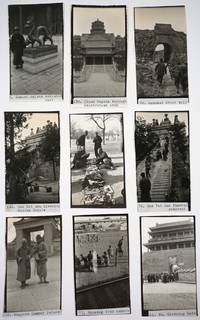
1942287481942. Photography. Very good condition. A collection of black & white photographs in and around Pekin Beijing taken in about 1925. While the photographer is unidentified the photos are clear and well framed. These are unusual images as they seem to have been taken by an American but no American is ever shown in the photographs. The photos illustrate the sites and trades of China and there are also images that refer to Sun Yat Sen including a photo captioned with his name possibly him with a group of others walking in a square. Shot number 76 is of 'Sun Yat Sen Funeral rehersal' sic at the Temple of Azure Clouds" which took place in 1925. <br /> <br /> Famous buildings include the Summer Palace Temple of Heaven Great Wall Altar of Heaven Forbidden City Sleeping Buddha Temple Cloud Tower Taoist Shrine Temple of Universe Summer Palace Marble Boat Pagoda Tientsin Dock the Great Wall etc. There are many street scenes with local people and merchants Tibetans at Lama Temple Pekin Donkey ready for shoeing Toy Peddlar sic with Gong Pekin old man and 2 bird cages Paint Shop Pekin camels Iceman Pekin Coal Carrier Defile near Wall Pekin Beggar Pekin Barber. <br /> <br /> "Unique among 20th-century Chinese leaders Sun is revered by both the Republic of China on Taiwan where he is officially the "Father of the Nation" as well as the People's Republic of China where he is officially the "Forerunner of the Revolution" for his instrumental role in the 1911 Revolution that successfully overthrew the Qing dynasty." wikipedia.<br /> <br /> One additional snapshot of a snowy American scene entitled 'Winter 1941-2" that was developed at the Westchester Photo Finishing Co. with Nutone process 4 1/8 x 5 1/8". The typewritten caption on this photo is consistent with the captions on the photos so it appears to be a cohesive group belonging to one person.<br /> <br /> 154 photographs 2 5/8 x 4 1/2". They are printed on card and are possibly from contact sheets as they there are some slightly rough edges. The majority have a label affixed to the bottom of photo with identifying number and caption which corresponds with a 3pp typewritten index. The list number 157 photos 154 present here so nearly complete. Very good condition. unknown
1860CAT01491860. A striking photograph featured on page 89 of David Deitcher's Dear Friends: Photographs of Men Together 1840-1918. "Romantic friendship between American men acquired a different kind of social prestige and meaning within the Civil War. No sooner did young recruits leave the shelter and ties of home and family than they were thrust into mutual dependence care and collective terror of being comrades in arms. Intimate ties were tacitly encouraged as a result of the soldier's need to steel himself for battle to prepare emotionally for the prospect of injury and death and for having to inflict such suffering to others." - Deitcher p. 87. A remarkable image of two young soldiers holding hands. It shows the vulnerability and intimacy described by Deitcher. Provenance: From the collection of gay rights activist and Washington D.C. Councilman Jim Graham. unknown books
1910180618004Racine WI: W.D. Harney Photogravure Publisher 1910. Hardcover. Very Good. Edition de luxe single-volume probable first edition issued around the time of a nine-volume wrappered issue also "de luxe" according to the publisher with the slightly different title Art Work of Seattle and Western Washington but with the same photos. 77 leaves of photogravures with tissue guards plus leaves of text printed on rectos only with illustration on title page and photo on first page of text. Full leather with four raised spine bands ruled and lettered in gilt. About Very Good with leather rubbed along edges chipped at foot exposed tips with small corner tear to bottom front corner hinges a little taxed by heavy pages but holding a few tissue-guards torn and creased. <p>An oversize volume featuring many beautiful Pacific Northwest photographs by Asahel Curtis brother of Edward Curtis. OCLC currently notes ten institutional copies of the two editions of this work stating this particular edition de luxe has "108 photogravures-- 83 credited to Asahel Curtis 4 credited to Walter Averett 1 each credited to Brent Gifford Grant Humes and A.H. Barnes and 10 uncredited. The photogravures are printed in various hues from sepia to grey and many have tints of blue and grey." Scarce in this format. W.D. Harney, Photogravure Publisher hardcover
185142845Lexington: Holman & Gray 1851. Hardcover. 12mo. Quarter black calf with compartments and gilt lettering and marbled paper over boards. iv 200pp. Very good. Tight-hinged and fully handleable though mildly edgeworn and with marbled boards rubbed; text block lightly age toned and occasionally foxed; contemporary ownership signature on front pastedown same on inner flyleaf and pencilled at top of title page; ca. 1900 bookplate on front pastedown. First of this edition tight and fairly nice being a revised edition of his 1850 "Treatise on Daguerreotype." In 1851 upstate New York minister Levi L. Hill 1816-65 caused controversy when he claimed to have developed a process to create color photographs which he called "heliochromes" and which soon became personalized to "Hillotypes". It wasn't until 1856 that Hill published his "Treatise on Heliochromy" to explain the process but a daguerreotypist got the book banned on grounds of libel and all but a few were pulped. Hill's process was long discredited then forgotten although recent scientific tests show that his convoluted process works somewhat. A decent copy of this rarity. A second edition revised and enlarged was issued in 1854 by Myron Shew in Philadelphia and this later edition too is extremely scarce. Holman & Gray hardcover
197154569Tokyo: Shueisha 集英社 1971. New edition. Hardcover. vg to near fine. Large oblong folio. 15x21". Unpaginated. All content housed inside the publisher's original cardboard shipping box with printed label pasted on the front. Binding protected in original a white cloth portfolio with red lettering on the front cover and lavishly decorated interior flaps. Black suede-covered boards with mutli-colored illustration mounted on the front cover. Decorative endpapers. Engraved stainless-steel plate showing Mishima's face mounted on black paper preceding the title page.<br /> <br /> The deluxe and lavishly printed new bilingual edition of the acclaimed and eroticly-charged work also know as "Killed by Roses" by Japanese photographer Eikoh Hosoe b.1933. It gained notoriety and elicited controversy when it was originally released in 1963 and won the Japan Photo Critics Association's writer award. The main photographic subject of the book the acclaimed and controversial writer Yukio Mishima 1925-1970 wrote the preface to the original edition and also writes the preface for this new edition both are included here. Mishima's acclaimed works include the famous and controversial novels "Confessions of a Mask" 1949 and "The Temple of the Golden Pavilion" 1956. Hosoe's striking high-contrast b/w photographs are all printed in high-quality photogravure retaining all the power and atmosphere of his original images. In comparison with the first version of the work this edition features the content having been noticeably re-edited with one image added a few others removed. The images have been thematically re-organized into five new chapters with the names "Sea & Eyes" "Eyes & Sins" "Sins & Dreams" "Dreams & Death" and "Death" respectively. Influential artist and graphic designer Tadanori Yokoo b. 1936 oversaw all of the design and layout aspects of the book and also created its additional illustrated elements most of which comprise the first chapter of this new edition.<br /> <br /> While Hosoe was still completing work to prepare this new edition of "Ordeal by Roses" the notorious "Mishima Incident" occurred November 25th 1970 which culminated in the ritual suicide of Yukio Mishima by seppuku. The incident shocked the nation and in its wake the photographer was quite unsure of how to proceed regarding the publication of the book. Not wanting to seem like an opportunist taking advantage of the controversy and the publicity surround Mishima's death he contemplated shelving the project but was later persuaded by Mishima's widow Yoko who said that her husband would have wanted it to be released. It was finally release only a few months later on January 30th 1971.<br /> <br /> Text in Japanese and English throughout.<br /> <br /> Portfolio with light foxing and sunning to the white cloth of the front cover very minor foxing and smudges to the flaps. Interior of portfolio with minor smudging to the cloth joints but the illustrations on the flaps are still clean. Suede binding clean. Minor foxing to the verso of the front endpaper. Interior with all pages and images clean and vibrant save for a few sporadic instances of the most minor stains or smudges on the blank versos a few pages. Portfolio in very good binding and interior in very good to near fine condition overall. Alternate title: 細江英公写真作å“. Shueisha (集英社) hardcover
198643837New York: St. Martin's Press 1986. First Edition. First Printing. Square quarto 29.25cm; full black cloth with titles stamped in silver on spine; dustjacket; 14914pp; illus. Inscribed by Mapplethorpe on the front endpaper to model Ken Moody: "For Ken - one of my favorite models - Thank you Robert Mapplethorpe '87." Some trivial wear along lower board edges else Fine. Dustjacket is unclipped priced $40.00 with some mild wear and a single closed tear along lower edge of front panel; Near Fine. Distinguished copy of one of Mapplethorpe's most astonishing and controversial works a full-length photographic study of black male nudes - an erotic fixation Mapplethorpe developed later in his life. Black Book is comprised of 91 images of male models many of whom he had intimate personal relationships with including his lover Jack Walls. Ken Moody the recipient of this copy was a graduate of the Fashion Institute of Technology and fitness instructor at a gay-owned gym in New York when he was connected with Mapplethorpe through a mutual friend. "I met him at his studio at 24 Bond Street and we started shooting immediately. He asked me to take off my shirt and I sat in front of the camera. It was then that he produced one of the most perfect photographs that we ever took together.When we met nothing struck me as odd or terribly different or even exceptional about Robert. He just seemed like a nice white man although he was very quiet. He was very very professional and I believe that's probably because I fell outside the category of man that he was attracted to. I knew what his tastes were and I also knew that I was not that.Robert and I shot together over three years - 1983 '84 and '85. I reckon we did it 12 times in each of those years maybe a bit less. I remember reading on the internet that I was his most-photographed subject.I didn't think it was exceptional at the time I had no idea. I just assumed that when a photographer found a subject that they liked they would work with them a lot. I knew that there was chemistry between us. I knew that from the first day. I could always tell when I have chemistry with a photographer and with Robert I knew immediately that he was going to produce incredible photographs" Stansfield Ted. "Being Mapplethorpe's Muse." Another Man. October 27 2017. Moody appears in Black Book on pp.84-91 more than any other model; the photographs of him are among the most celebrated examples of Mapplethorpe's work. The volume contains a brief moving foreword by the late poet Ntozake Shange along with the full text of her poem "irrepressibly bronze beautiful & mine. St. Martin's Press unknown books
198722190Atlanta: Nexus Press 1987. First edition. Hardcover. Fine. First edition. Folio. One of only one hundred unnumbered copies with original SIGNED Gelatin Silver Print and with certificate of authenticity also SIGNED by Burke. A fine copy protected with fine clear acetate cover. This book has been cited in Andrew Roth The Open Book and in Martin Parr and Gerry Badger's The Photobook: A History Volume II. Part artist book part travelogue I Want To Take Picture seems destined to be one of the most desirable not to mention disturbing photobooks of the 20th century. <br/><br/> Nexus Press hardcover books
197114969Lexington: The University Press of Kentucky 1971. First edition. Cloth. Very Good/very good. Square quarto. 96 pp of text followed by a suite of black and white photographs. A very good example in oatmeal cloth binding with some light soiling to covers. The original printed price on the inside front flap has been neatly scratched away otherwise a very good example of the dustwrapper with crease to front panel. What makes this a standout copy is the fact that it has been briefly INSCRIBED by Meatyard. The first example of the photographer's signature that we have seen in over a decade. This copy has also been SIGNED by Wendell Berry who provides the text. Only one other example of a book signed by Meatyard currently exists in the secondary market. The University Press of Kentucky unknown books
196630535Los Angeles: Self Published 1966. First Edition. Paperback. Very Good. First edition first state with extra paper fold at end of volume. Accordian fold-out book. A very good copy of this highly sought after artist book. Darkening to spine and with a spine crease. Comes in a handsome example of the fragile silver paper covered slipcase. Listed in Roth et al's Book of 101 Photography Books. Printed in an edition of one thousand copies. Self Published paperback books
196815318New York 1968. Near fine. Eight Kodak color transparency slides. 2" square with image area 1 3/8" x 15/16" approx. Date-stamped "MAR 68" to border of verso. No- tated in ink outside of image area with names numbers. Clean well preserved. Near fine. High-resolution jpgs of all images provided. <br/><br/>A collection of exceptional but presumably unpublished images of Jimi Hendrix performing at New York City's Hunter College on March 2 1968. Seven capture the guitar hero on stage: with his signature Stratocaster kneeling before a giant stack of amplifiers playing with his teeth etc. The eighth is a candid portrait likely snapped backstage. Though we've been unable to determine the photographer the photos are of clear professional caliber and bear a certain re- semblance to the work of legendary rock-and-roll photographer El- liott Landy. An iconic selection of original vintage slides capturing the signature style of a rock legend. unknown books
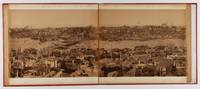
189054541Constantinople: Sebah & Joaillier 1890. First edition. Hardcover. vg- to vg. Oblong small folio. 12 1/4 x 14 1/4". Red pebbled cloth boards with decorative gilt ruling tooling and lettering on the covers. Rebacked maroon leather spine. Gilt-stamped crescent moon and star motif the national emblem of Turkey on the back cover.<br /> <br /> Taken from the Galata Tower in what is now the Karaköy neighborhood of Istanbul this magnificent panorama displays the skyline and cityscape of Constantinople as it appeared sometime in the late 1880s or early 1890s. The panorama is comprised of 10 original albumen photographs mounted on heavy card stock and bound together in accordion style leporello measuring a total of more then 11 feet when completely unfolded. Shot in a southwardly direction the viewer can see Galata Karaköy in the foreground and from left to right across the Bosporus to the Uskudar district on the Asian side and then across the harbor at the mouth of the Golden Horn the Galata Bridge and across to the Pérama neighborhood and the Faith district where many famous landmarks of the city can be seen including the New Mosque Topkapi Palace Hagia Sophia and many others. Each panel measures about 13" wide and 12" tall.<br /> <br /> The photography is credited to "Sebah & Joaillier" one of the most prominent and prolific photography studios of Ottoman Empire during the second half of 19th century. Originally founded sometime around 1857 in Instanbul by Syrian-Armenian photographer Pascal Sebah 1823-1886 the studio was one of the earliest in the city and all of Ottoman Turkey. By the 1870s Sebah had become among the most prominent Ottoman photographers having also opened a branch of the studio in Cairo. Upon Sebah's death in 1888 the firm was taken over by his 16 year-old son Jean Pascal Sebah who then partnered with photographer Policarpe Joaillier 1848-1904. The firm was renamed "Sebah & Joaillier". Therefore although this panorama is undated it could not have been issued earlier than 1888; most likely sometime shortly thereafter circa 1890.<br /> <br /> Spine of of the portfolio has been professionally re-backed. Plates with minor to light foxing although the images are still quite clean and vibrant. Binding in very good images in very good- to very good condition overall. A slightly later version of the panorama from Sebah & Joaillier simply titled "Constantinople" is comprised of 12 slightly smaller panels instead of 10 and measures around the same size in total.<br /> <br /> Bibliographic refences: Jacobson Ken. Odalisques & Arabesques: Orientalist Photography 1939-1925. Quaritch 2007; Özendes Engin. "Photography in the Ottoman Empire"; Öztuncay Bahattin. The Photographers of Constantinople. Aygaz 2003. Sebah & Joaillier hardcover
1979721091979. A collection of approximately 1000 color snapshots taken by an unknown photographer at a New York nude beach in August and September 1979 and June and July 1980. The 5" x 3 1/2" photos are printed on Kodak paper and include the date imprinted on the verso. This collection of images has a voyeuristic quality. The photographer captures personal moments such as a series showing a young woman shyly disrobing. Another group of images appear to show a bikini clad woman publicly fondling her nude male partner's penis. Several others appear to show a man sliding his hand between his nude female partner's thighs. There are numerous close ups of vaginas and the photographer captures shots of several women from the rear when they are bending over. The vast majority of the images are of women sunbathing applying suntan lotion playing in the waves tossing a frisbee and talking with friends. One grouping has a more familiar quality between subject and photographer. The women in these images who appear to be lesbians showing affection for one another pose for numerous photos. This beach appears to be Jacob Riis Beach in Queens New York City's unofficial nude beach as well as a legendary LGBTQ-friendly gathering place. In one image the bath house with its twin art deco spires can be seen in the background. The sand is populated by hundreds of people of all ages who are openly nude. A few photos show a police officer on horseback patrolling the beach. According to a New York Daily News report from August 26 1980 police made 107 arrests on charges of public lewdness at the beach since May 26. "The arrests this summer include charges of public masturbation sodomy and manipulation of private parts by those who sunbathe in the nude" the newspaper reported. According to a 1979 report from the New York Times about nude beaches the acceptance and proclivity of them seems to be in a state of flux tolerated in some communities and outlawed in others. At this time California had the greatest concentration of nude beaches while New York's cities and towns set out their own local rules. Police officials at Fire Island in New York wrote tickets to nude sunbathers along the Islip portion of the beach but not in Brookhaven Town where nude sunbathing was legal. Overall the photographs carry a light musty smell as if stored in a damp space. A handful have old photo corners attached suggesting they were once housed in an album; otherwise the images are in very good condition and help to illustrate the changing social mores related to publicly nudity. unknown books
189733852ABBoston, Millet, 1897. Folio. 382pp. With 10 coloured flower collotypes by K. Ogawa, 30 coloured albumen photographs by K. Tamamura and numerous photogr. text-illustrations. Orig. coloured patterned cloth bindings with paper label to front cover.