POLKE SIGMAR (1941-2010)Livre Rare Book

108 933 résultats
104170Köln, Wienand Verlag,1975, 297x418mm, 28p., plié en deux sous bande-annonce jaune imprimée en noir.Catalogue d’exposition, texte d’Evelyn Weiss.Illustrations en couleurs et en noir et blanc, participations d’Achim Duchow, Baselitz et Palermo entre autres. Polke révèle dans cette édition, publiée sous forme de journal, son attitude artistique et socialement critique. Il obtint à cette occasion le prix de peinture.Tirage de 800, bel exemplaire complet de sa bande-annonce. (104170)
192076021circa 1930 | 8.40 x 13.30 cm
Six by Six: Set 4, Volume 5. With a separate exhibition-quality original print, numbered and signed by the Artist, on 11 x 14 inch paper. 29 colour photographs / Con una stampa originale sciolta su carta pesante, numerata e firmata da Doug Rickard (Esemplare 74/100. Cm 35,5x27,5). 29 fotografie a colori N. 74/100. Limited to 100 hand-numbered copies, printed on exclusive heavyweight Japanese paper and bound in Japanese cloth. Artist's signature inserted into an eyelet to the back cover / Stampato su carta giapponese pesante e rilegato in tela giapponese. Firma dell'Artista inserita in un occhiello al piatto posteriore. 4to (cm 37x29,5). pp. 32. . Ottimo (Fine). . Prima edizione di 100 esemplari numerati e firmati (First edition of 100 numbered and signed copies). . A New American Picture di Doug Rickard offre una prospettiva sorprendente e fresca sulla fotografia di strada americana. Mentre a prima vista l'opera appare rassicurante, familiare e ben all'interno dei confini tradizionali del genere, la sua metodologia è tutt'altro che convenzionale. Tutte le immagini sono prese da Google Street View; per un periodo di due anni, Rickard ha approfittato dell'archivio di immagini della piattaforma per "guidare" virtualmente per le strade sconosciute e trascurate d'America, luoghi deserti che sono stati dimenticati, economicamente devastati e abbandonati.
In 4, cm 26 x 33,5, pp. (112) con 50 tavole fotografiche in b/n. Tutta tela editoriale con impressioni in argento. Sovraccoperta con pochi strappi marginali e piccola mancanza posteriore. Firma autografa dell'autore alla sguardia. Edizione originale impreziosita dalla firma autografa di Aaron Siskind, considerato uno dei dei grandi fotografi del '900, inizio' quasi per caso la sua attivita' nel 1929. Dopo poco entra a far parte del New York photo league, associazione che si dedicava alla fotografia di documentazione sociale. In seguito si concentro' a fotografare dettagli offerti dalla natura, dall'architettura ecc. finendo per legarsi con il mondo artistico dell'espressionismo astratto e privilegiando un approccio creativo e spontaneo a scapito dell'intento narrativo
189318273Paris, Editions du “Mercure de France”, 1893 ; in-16 (203 mm), broché, chemise-étui (rel. mod.) ; [16] 230 pp., [1] f. blanc, photographie du poète, en frontispice, à l’époque où on l’appelait “Le magnifique”.
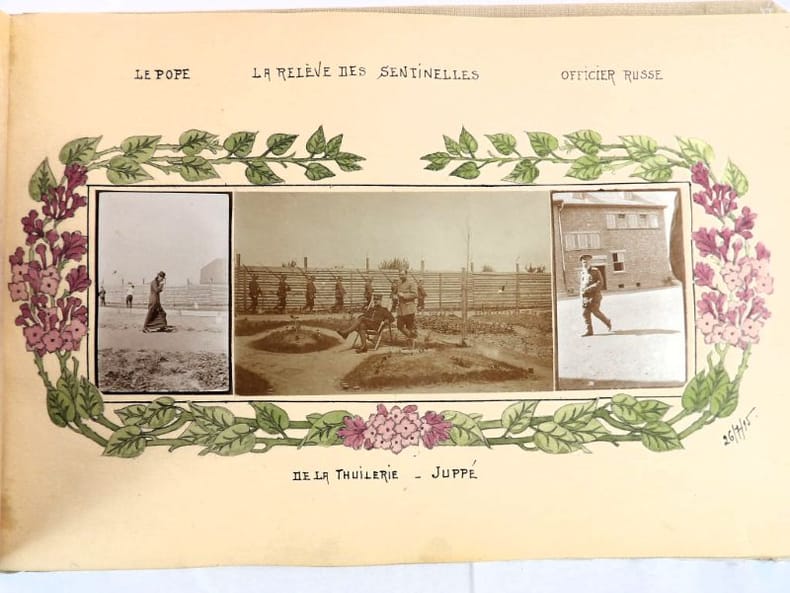
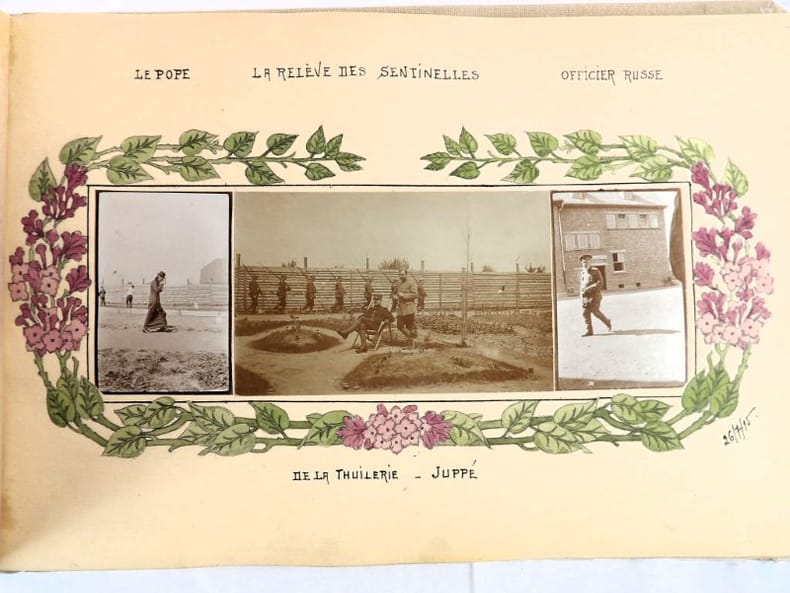
19152625[Friedberg-en-Hesse], sans éditeur, pièce unique, 1915. Format oblong - 27,5 x 19 cm. Carnet relié en pleine toile beige, muni de deux lacets de fermeture. 68 pages. Emouvant et intéressant album relatif à la captivité en Allemagne, durant la Première Guerre mondiale, d'un officier français du 46e Régiment d'Infanterie, le sous-lieutenant Romain Talabot. Il contient une carte postale, 114 photographies originales, souvent légendées, et de nombreuses illustrations (principalement ornementales) offrant un aperçu, sur l'année 1915, de la vie au camp de prisonniers de Friedberg-en-Hesse.Plusieurs vues, dont certaines aériennes, montrent la configuration et de l'environnement du camp : la grande cour, les bâtiments (caserne, gymnase) et les paysages alentour (le village de Friedberg et la chaîne de moyenne montagne du Taunus). Les portraits constituent une majorité des clichés : individuels ou de groupe, ils évoquent la diversité des nationalités présentes puisque se côtoient Français, Anglais, Belges, Russes, officiers des armées coloniales..., mais également des grades, des armes (infanterie, cavalerie, etc.) ainsi que des origines géographiques et militaires (le 46e, le 147e et le 256e sont cités). Ainsi, d'après les indications de l'auteur, parmi les Français, se trouvent les "Bourguignons", les "5 Batignollais", les "Africains", ou encore un Algérien ; Belges et Russes forment des groupes tantôt à part, tantôt mêlés aux autres, et il semble régner entre ces compagnons d'infortune une certaine solidarité, voire une franche camaraderie qui transparaît dans leurs visages ou attitudes. S'ajoute la variété des confessions religieuses, auxquelles font référence les photos d'un pope russe et celles de l'abbé Noël Delattre, vicaire de Cambrai devenu aumônier catholique du camp, posant près de l'autel dans la salle de prière. Les photographies donnent ainsi à voir la réalité quotidienne d'un camp réservés aux prisonniers gradés en territoire ennemi, qui contraste avec les conditions de vie extrêmement éprouvantes des simples soldats : à Friedberg, Talabot et ses co-détenus disposent de chambres relativement spacieuses, d'une cuisine, d'un réfectoire, d'une "buvette" aux allures de café, d'un jardin potager. Bien que l'objectif de l'appareil ait capté la relève des gardes et sentinelles, de même que les survols du camp par Zeppelin et ballons dirigeables ou l'arrivage des colis - rappelant le contexte immédiat de guerre-, ce sont de nombreuses activités de loisirs qui sont ici mises en valeur : musique et chant dans une salle dédiée, sports pratiqués dans des espaces aménagés tels que le gymnase ou le court de tennis, jeux de table (bridge) ou d'extérieur, comme le traditionnel gorodky* russe, dont plusieurs images permettent d'imaginer la popularité. Enfin, les clichés documentent occasionnellement quelques épisodes sortant de l'ordinaire : le transfert des Belges à Magdebourg, l'organisation de cérémonies religieuses lors des fêtes de Jeanne d'Arc et de l'Assomption (15 août 1915), l'enterrement d'un sous-lieutenant (qui bénéficie de deux services, l'un catholique et l'autre orthodoxe, célébrés respectivement par les Français et les Russes. Quant aux illustrations, à l'exception d'une composition en pleine page pour le titre de l'album, il s'agit d'encadrements soignés, d'une grande finesse, en noir (encre) et en couleurs (aquarelle), dont on notera avec intérêt l'inspiration ambivalente, entre les arabesques et motifs floraux Art Nouveau et les lignes sobres et géométriques Art Déco. Agréable et unique recueil. * le gorodki est un jeu sportif traditionnel très populaire en Russie au XIXe siècle. Sur un terrain rectangulaire de 22 x 12 m, on délimite un carré de 2 m de côté ("gorod") où l'on dispose 5 cylindres de bois ("gorodki") selon 15 configurations imposées. Il s'agit de renverser ces "quilles", à une distance de 13, puis 6,5m, à l'aide de battes en bois, en un temps minimum et un nombre de lancers réduit.
19152647[Friedberg-en-Hesse, Germany], No publisher, unique piece, 1915. Oblong format : 10.8 x 7.5 inch. Bound in full beige cloth (new), with two closing laces. 68 pages. Moving and interesting album relating to the captivity in Germany, during the First World War, of a French officer of the 46th Infantry Regiment, Second-Lieutenant Romain Talabot. It contains a postcard, 114 original photographs, often captioned, and numerous illustrations (mainly ornamental) providing a glimpse, over the course of 1915, of life in the Friedberg-en-Hesse prison camp. Several views, some of them aerial, show the layout and environment of the camp : the large courtyard, the buildings (barracks, gymnasium) and the surrounding landscape (the village of Friedberg and the Taunus mountain range). Portraits make up a majority of the shots : individual or group, they evoke the diversity of nationalities present, with French, English, Belgian, Russian and colonial army officers rubbing shoulders, as well as ranks, arms (infantry, cavalry, etc.) and geographical and military origins (the 46th, 147th and 256th are mentioned). Thus, according to the author's indications, among the French there are the “Bourguignons”, the “5 Batignollais”, the “Africans”, or even an Algerian ; Belgians and Russians form groups that are sometimes separate, sometimes mixed with the others, and there seems to be a certain solidarity among these companions in misfortune, even a frank camaraderie that shows in their faces or attitudes. Added to this, is the variety of religious denominations, alluded to by photos of a Russian pope and those of Abbé Noël Delattre, former vicar of Cambrai and then the camp's Catholic chaplain, posing by the altar in the prayer room. The photographs reveal the day-to-day reality of a camp reserved for high-ranking prisoners in enemy territory, in stark contrast to the extremely harsh living conditions of ordinary soldiers : at Friedberg, Talabot and his fellow prisoners had relatively spacious rooms, a kitchen, a refectory, a café-like “buvette” and a vegetable garden. Although the camera's lens captured the changing of the guards and sentries, as well as Zeppelin and airship overflights of the camp, or the arrival of parcels - reminiscent of the immediate wartime context - it is the many leisure activities that are highlighted here : music and singing in a dedicated room, sports practiced in equipped areas such as the gymnasium or the tennis court, table games (bridge) or outdoor games, such as the traditional Russian gorodky*, the popularity of wich is shown through several photos. Lastly, the photographs occasionally document some out-of-the-ordinary episodes : the transfer of the Belgians to Magdeburg, the organization of religious ceremonies on the feasts of Joan of Arc and the Assumption (August 15th, 1915), the burial of a second lieutenant (who had two services, one Catholic and the other Orthodox, celebrated by French and Russians officers, respectively). As for the illustrations, with the exception of a full-page composition for the album's title, they are meticulously framed, with great finesse, in black (ink) and color (watercolor). Their mixed style, between Art Nouveau arabesques or floral patterns and sober, geometric incoming Art Deco lines, will be noted with interest. A pleasant and unique collection. * gorodki is a traditional sports game that was very popular in 19th-century Russia. On a 22 x 12 m rectangular field, a 2 m square (“gorod”) is marked out and 5 wooden cylinders (“gorodki”) are arranged in 15 set configurations. The aim is to knock down these “skittles”, from a distance of 13, then 6.5 m, using wooden bats, in a minimum time and a reduced number of throws.
Stampa fotografica vintage. CON DEDICA Bella dedica autografa firmata e datata dell’artista al recto: «Per Bruno Sanzin Con saluto solare · Ernesto Thayaht · Firenze 31.8.1931». In ottime condizioni; proveniente dall’archivio del futurista B.G. Sanzin. Rara fotografia originale in formato grande.
2005010699Tokyo Eikoh Hosoe Photographic Arts 2005 In-4 à l'italienne Broché, couverture illustrée en couleurs, chemise à rabats de papier fin
in-4 oblungo, leg. coeva in t. tela marrone, filetti oro e tit. "Album fotografico" al piatto ant. Bella raccolta di 20 albumine, più 2 sciolte, raffiguranti particolari di palazzi e monumenti della città di Venezia. Probabilmente tratta dalla serie fotografica realizzata dai fratelli Alinari, indiscussi protagonisti della campagna fotografica di città, monumenti e opere d'arte italiani e fondatori della moderna iconografia artistica. Importante documento fotografico risalente al 1880 circa. Ottimo esemplare.. .
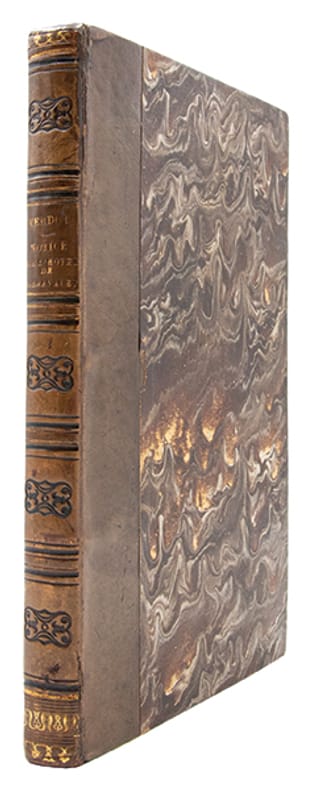
39152Petit in-8 (175 x 105 mm), demi-veau acajou, dos orné dun décor romantique de compartiments garnis dun jeu de filets estampés au noir en place des nerfs et dun fer spécial répété au centre, palettes dorées en tête et pied, titre doré (reliure de lépoque), 71 pages imprimées et 43 feuillets sur papier fort interfoliés, contenant des annotations et corrections autographes en regard du texte imprimé à modifier. Paris, chez l'Auteur, Hôtel Carnavalet, (...) et chez les principaux libraires, 1838.
186575138Legré et Bergeron | Paris 1865 | 6 x 10.20 cm | une photographie
20997Very good. Four photograph albums containing a total of 558 mounted images documenting military training and service in Japan in 1920s and 30s all in very good condition. Although we acquired these albums together they appear to have belonged to different people. Most if not all were officers. One album has handwritten captions the others do not but do have some group photographs with captions in the negative. Two identity documents are tipped in to one album that we are told are for people with the family names Yokoo and Hayashi. During the interwar years Japanese culture was pervaded by the conviction that a strong military was the solution to most problems foreign and domestic. The Army enjoyed considerable independence from the civilian government and various factions within the military played a major role in directing the country's foreign policy. As described by historian David Hunter-Chester in The Culture of Military Organizations Cambridge 2019 the Imperial Japanese Army's "organizational culture produced tough proficient and courageous soldiers." These albums reflect great pride in military service with numerous images of their subjects in dress uniform singly and in groups and engaged in military exercises including bayonet training firing machine guns field and parade drills physical fitness ropes course gymnastics equestrian training cleaning and assembly of weapons and more. There are also images of soldiers in the classroom at leisure sporting events sumo at a public bath etc. and at special events and celebrations-the latter characterized by an abundance of Japanese and Imperial Army flags. These albums reflect an ethos that was soon to vanish. The military culture of pride in excellence according to Hunter-Chester "left it unable to deal with military losses; it was a culture that prized reputation over public honesty ritualized death and placed its own judgment above question. According to its own creed the Army should have 'done its utmost to protect the state.' Instead its soldiers are remembered in Japan and much of the world as 'beasts.'". unknown books
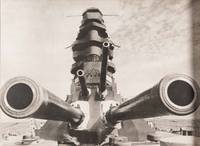
194248810Tokyo: Tokyo Nichinichi Shimbunsha æ±äº¬æ—¥æ—¥æ–°èžç¤¾ 1942. First edition. Hardcover. g to vg. Oblong quarto. Unpaginated. 36 printed double-sided leaves. Housed in a tan cardboard slipcase with black lettering on the front cover and spine. Blue paper boards with embossed silver lettering and geometric decorative designs on the covers. Photo-illustrated title page.<br /> <br /> This scarce work is a striking piece of photographic propaganda displaying the power and glory of the Japanese Imperial Navy during WWII. Illustrated throughout with a total of 74 mostly full-page b/w collotype images including stunning aerial photography.<br /> <br /> The photobook is divided into two parts: the first one is concerned with naval training while the second part deals with the unfolding course of the war being a record of Japanese successes from Pearl Harbor Malaya New Guinea and other parts of South East Asia. <br /> <br /> This is one of the very first publications to have show and extended pictorial account of the bombing of Pearl Harbor including a number powerful and dynamic images two of the images seen to be illustrations. Includes also numerous b/w Soviet-style photographic plates of naval guns battleships submarines and military planes as well as photographs of operations in China Java Borneo Philippines New Guinea and other areas in Southeast Asia. None of the images are credited to a particular photographer but included is work by Matsugi Fujio and possibly Kimura Ihei. The beginning of the section contains a finely detailed illustrated map showing Japanese naval positions and battles across the pacific theater.<br /> <br /> Text and captions throughout in Japanese.<br /> <br /> Slipcase with some light scratches as well as minor age toning and smudges. Corners rubbed and lightly chipped. Binding with minor stains smudges and scratches to the covers. There is a small 1/2" stain on the upper right corner of the front cover. Edges lightly rubbed with the head of the spine lightly chipped. Interior covers and endpaper lightly damp-stained. Gutters of interior covers reinforced. Book block tight. pages throughout very clean. Slipcase in good binding in very good- interior in very good condition overall. Slipcase and binding protected in modern mylar. Tokyo Nichinichi Shimbunsha (æ±äº¬æ—¥æ—¥æ–°èžç¤¾) hardcover
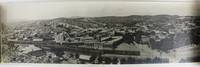
19163187Los Angeles: Jameson 1916. Very good. Panoramic photograph 8 x 48.5 inches. Rolled. Light creasing and cracking at vertical edges; moderate soiling in upper right corner. A crisp image with good contrast captioned in the negative. An excellent panoramic view of the two towns of Nogales on the U.S-Mexico international boundary in Arizona and Sonora taken by a Los Angeles photographer during the Mexican Revolution and Border War. The image was taken with a circuit-view camera and presents a wide-angle view of the Mexican and American settlements centered on the border then just a road called International Street / Calle International and the Plaza and City Hall of the Mexican Nogales. To the right of center are the two train stations directly adjacent to one another straddling the border with most of American Nogales further to the right and spreading into the background. The photograph was taken from a hill just on the Mexican side of the border looking slightly northwest; captions in the negative identify the respective sides and the international boundary as well as the plaza at the center of the image. None of the military buildup around Nogales which resulted from a skirmish in 1915 and precipitated the Battle of Los Ambos Nogales in 1918 is visible but another panorama taken by this photographer on the same excursion from a farther vantage point shows American soldiers and army tents that surrounded Nogales during the Border War. OCLC locates no individually catalogued examples of this photograph though we locate a possible copy in the Southwestern photography archives of the University of Arizona. Jameson unknown
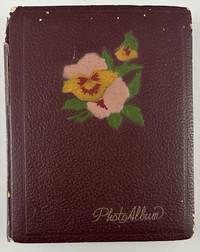
19474328Various locations mostly Japan but also California and Hawaii 1947. Good. 24 leaves illustrated with 206 mounted black-and-white or sepia-toned photographs of varying sizes most with manuscript captions in Japanese. Quarto. Contemporary maroon photograph album with floral design and "Photo Album" printed on front cover. Spine chipped both boards and spine detached minor rubbing to boards. Photographs generall well preserved. A well-annotated vernacular photograph album documenting the life schooling and early work career of a young woman in the Hamamoto family the only daughter and here referred to simply as "Hamomoto-san" along with significant images of her family in California in the 1930s. Hamamoto's family seem to have been early immigrants to the Los Angeles area particularly Pacoima where they ran a meat market and grocery store in 1934. Seven photographs in a two-page spread show the Hamomotos in Pacoima including four of their store and three of the Hamomotos posed at Pacoima Elementary School; one of the latter images shows the compiler posed with three other students of different ethnicities at the school.<br /> <br /> The present album includes numerous photos of Hamomoto along with portratis of her parents brothers various friends and so forth. Hamamoto's family apparently relocated back to Japan in the mid-1930s stopping in Hawaii along the way where a photo of the family is captioned "On the way back to Japan." She evidently stayed in Japan thereafter likely so that she could attend school in Hiroshima. Once Hamamoto resettled in Hiroshima she enrolled in a Buddhist-affiliated private high school for girls Shintoku Higher School for Girls where she graduated in 1942. Much of the latter half of the present album contains school class photos groups shots of students engaging in various ceremonies and school projects individual portraits of her classmates with many identified and other scenes at school and at reunions afterwards. Hamomoto's school was later destroyed in the atomic bombing of Hiroshima in 1945 killing almost 400 students and teachers.<br /> <br /> The present album also documents at least one other back-and-forth move between the United States and Japan within the Hamomoto family. In 1940 the compiler's brother Hiroshi went to the U.S. and returned in 1941 where he entered a major institute focusing on broadcast technology. Following high school Hamomoto worked for Mitsui Bussan for a while; one image here is captioned "During the time I worked at Mitsui & Co. 1944. Taken on the roof." Mitsui Bussan is still a major trading company in Japan that deals in commodities. Hamomoto may have also worked for American authorities during the Occupation of Japan following World War II evidenced by a couple of images here showing her posed outside an R.T.O. office in 1947. The American military established the Railroad Transportation Office in occupied Japan in order to manage military and personnel travel on the Japanese railway system; these offices were set up at several major Japanese train stations.<br /> <br /> This album is a nice example of a primary source reflecting the fluid interplay within the Japanese and Japanese-American communities with regard to life in Japan versus the United States before World War II. There were often tensions within Japanese and Japanese-American families related to which country provided better opportunities for their families especially the younger generations. The present album is one example when the family apparently decided against life in America and returned to the mother country specifically to Hiroshima. The compiler of the album survived the war however and may have even worked with American occupiers likely due to some facility with the English language first learned long before during childhood in California. unknown
193953436New York: E.P. Dutton & Co. 1939. 4to. xiv 16-206 pp unpaginated. Including photo frontisp. 96 photo plates each with facing explanatory text. Blue tweed boards black lettering & FAP logo on front cover black lettering on spine minor bumping head & foot of spine edgewear wear to corners ffep renewed w/ d.j. wraparound photo cover art by Abbott chips & tears to front cover corner & spine repaired & restored paper restoration to verso VG-/G- copy. First edition stated of this exceptional photo essay presenting 97 of Abbott’s images documenting New York during the Great Depression on the eve of World War II. Abbott was a former model and assistant to Man Ray friend to Marcel Duchamp and participated in Dadaist publications who was responsible for rescuing and promoting the photos of Eugene Atget which chronicled 30 years of Parisian streetscapes as “realism unadorned.†Returning to New York in 1929 she spent the next 10 years determined to present New York in the same light with stunning photos of curiosities New York architectural details old tenements elevated structures costly skyscrapers gritty street life pushcarts barber shops and remote alleys in Greenwich Village. With support from the Federal Art Project Abbott together with a staff of more than a dozen including darkroom printers field assistants researchers and clerks produced this work in advance of the 1939 World’s Fair in Flushing Meadow NY with captions written by her life partner and art critic Elizabeth McCausland 1899-1965. See: Parr & Badger The Photobook Vol. I p. 141; New York Public Library Digital Collections Changing New York Collection History. E.P. Dutton & Co., hardcover
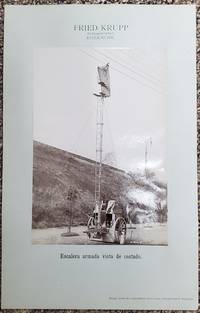
191174595Essen: Fried. Krupp Aktiengesellschaft 1911. A portfolio of forty-four original mounted silver gelatin prints of Krupp armaments designed specifically for the Argentinian Army. Published by the Krupp family in Essen in 1911. Each photograph measures 5.25 x 9 inches or a bit smaller. They are tipped onto thin gray sheets with printed captions in Spanish. Each image has a Krupp blind stamp in the lower left corner. Oblong octavo 8.5 x 13.25 inches. Housed in the original folding maroon cloth portfolio with gilt lettering on front and snap closures. Portfolio lightly rubbed but photographs and mounts crisp and clean. Near fine. Laid in are two extra photographs measuring 5 x 8.5 inches on stiff mounts measuring 7 x 9.75 inches each with printed text identifying the members of the Argentinean delegation and the Krupp employees at the Meppen Gun Testing Area December 1899. In the background of one image can be seen the massive cannon and the gun works.A striking array of military hardware is pictured including cannons and wagons for carrying ammunition spare parts and tools. Two photographs show a remarkable wagon with its observation deck extended to a height of twenty feet. In twelve photographs various tool boxes are opened to display the tight and orderly placement of saws hammers dies cordage brushes and other implements needed to keep these guns and wagons in top order. Fried. Krupp Aktiengesellschaft hardcover
18853348N.p. likely Groton SD: October 1885. Very good. Two mounted albumen photographs 5.5 x 8.25 inches on 8-x-10-inch plain cardstock. Small chip to bottom edge of each mount some edge wear dust-soiling and rubbing. A highly-informative pair of original photographs of two different areas of Groton South Dakota just four years after its founding each identified in the lower margin both taken in October 1885 both from a slight elevation and each with numerous manuscript captions in the margins identifying various locations in the images. The first photograph pictures "Central Part of Groton. October 1885." Manuscript captions point to the bank post office "Trinity Church" the Presbyterian Church "Presbyterian Parsonage" and an "X" on the Brunswick Hotel identifying "Will's room formerly at the hotel." The second photograph is titled "Northern Part of Groton Dakota. In Oct. 1885." Among the buildings identified here are "Will's home" "School house" "New College Buildings" "Bank Building" and the location of Main Street. Each photograph pictures many more buildings than are identified through the captions and juxtapose the town's collection of buildings against a wide and empty prairie beyond. Together the photographs provide a rare and early city view of the still-remote city of Groton located in the north-eastern part of South Dakota and numbering just 1380 residents as of the 2020 census. October unknown
1930List328Boston 1930. Oblong quarto 49 pp. With appx. 1400 photos most measuring less than an inch square with roughly 175 in larger formats up to 3 ½ by 5 inches. Very Good. A wonderful labor of photographic love created by an unidentified young woman with ties to the Cabot family of Beacon Hill. The album composed largely of tiny contact prints glued in neat grids. Off-kilter compositions - a portion of a steeple against the sky the tail of a dog etc. - are mixed in with more traditional landscapes leading one to question whether the photographer had modernist aspirations or just took a lot of pictures.<br /> <br /> The photographer is unknown but our best guess is that it was someone who was a friend of Ellen Cabot of Beacon Hill perhaps while both were students or just after. Ellen Cabot the most frequent subject of the album is shown in a variety of settings often accompanied by her dog Prowler. Aerial photography the New England coastline camping life in Cambridge and equestrian competition are all on display. Other highlights include a dog named Benito Mussolini and artful shots of a monk’s torso. A portion of the photos perhaps five or ten percent are not present though the album is otherwise in excellent condition. Handwritten label on the front reads “Newport Races to Topsfield autumn 1930â€. Overall the album is a testament to the energy and spontaneity of youth and the possibilities of the photographic form as well as an intimate look into Boston’s storied upper class. unknown
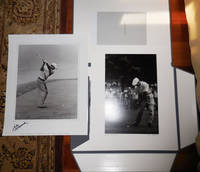
199226254No Place: Privately Printed 1992. First edition. Loose Sheets. Fine. Elephant folio. Cloth covered folding portfolio containing twelve original SIGNED black and white photographs of golfer Ben Hogan taken by photographer Jules Alexander. One of supposedly five hundred sets this being #92 but it remains the first one we have seen or handled in twenty years in business. Folded booklet with text by Herbert Warren Wind laid in and signed on the rear panel by the photographer. All elements in fine condition. As a bonus item this portfolio includes an extra signed photograph of Tiger Woods taken from the book Tiger Woods in Black and White by Jules Alexander. All of the photographs are 15 1/2" wide x nearly 20" tall including borders. A scarce and beautiful golf item and of particular interest to Hogan fans and followers. Privately Printed unknown books
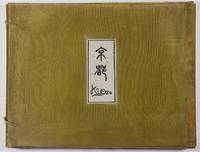
192153936Kyoto 京都: Kyoto City Hall 京都市役所 1921. First edition. Hardcover. vg- to vg. Oblong quarto. 30 loose plates. Housed in a yellow cloth portfolio with bone fasteners. White label with text in Japanese and English in black lettering pasted on the front cover. Silver-speckled interior flaps<br /> <br /> This extremely scarce undated Taisho-era photographic collection was created by the government of the City of Kyoto for promotional purposes and was never for sale. The portfolio is comprised of 30 loose plates of beautiful high quality b/w collotype images showing famous sites from around the Kyoto area each measuring 11x 14 1/4". Each image is protected by a tissue guard with printed bilingual text in Japanese and English including a title number and a short single-paragraph description. <br /> <br /> Places shown include the Imperial Palace 京都御所 Fushimi Inari-taisha ä¼è¦‹ç¨²è·å¤§ç¤¾ Sanjusangen-do 三åä¸‰é–“å ‚ Temple of thirty-three bays Toyokuni Shrine 豊国神社 Kiyomizu-dera 清水寺 Yasaka Shrine å…«å‚神社 Sanjo Ohashi bridge 三æ¡å¤§æ©‹ Cherry blossoms at Maruyama Park 円山公園 Ginkaku-ji 銀閣寺 "Temple of the Silver Pavilion" Kinkaku-ji 金閣寺'Temple of the Golden Pavilion' Shimogamo Shrine 下鴨神社 the Arashiyama district åµå±± the rapids on the The Hozu River ä¿æ´¥å· Hozugawa and many others. Also shown are gatherings for festivals such as the Aoi Matsuri è‘µç¥ Jidai Matsuri æ™‚ä»£ç¥ and the Gion Matsuri ç¥‡åœ’ç¥ as well as images showing the Miyako Odori 都をã©ã‚Š.<br /> <br /> The interior right flap contains a bilingual table of contents and the interior middle flap contains publication information in Japanese.<br /> <br /> Portfolio with light rubbing to extremities as well as some minor scratches smudges and/or stains. Interior clean. Minor age toning to the very edges of a few plates with images unaffected clean and vibrant throughout. The captioned tissue guard for the first plate is torn but still holding. The tissue guard for plate 26 is detached but present with text unaffected. Portfolio in very good- interior in very good condition overall. Photography here is credited to Hori Masumi. This means the images here were likely taken by an unnamed photographer or group of photographers from the studio of the deceased Meiji-era Kyoto photographer Hori Masumi 1826-1880. The name of Hori Masumi continued to be credited for photography into at least the first decades of the 20th century including much documentary photography work on behalf the city government of Kyoto.<br /> <br /> Although undated it was published sometime in the Taisho era 1912-1926. Kyoto City Hall (京都市役所) hardcover
19833116643New York: Viking Press. Fine with no dust jacket. 1983. First Edition; First Printing. Softcover. 0670430137 . First edition. SIGNED by Robert Mapplethorpe and Lisa Lyon on the half-title. Fine in trade-size pictorial printed wrappers. 128pp. 9" X 11" Rare signed by the duo. ; Studio Book; 9" X 11"; 128 pages . Viking Press paperback
198224924Tokyo: Hakuya Shobo 1982. First edition. Hardcover. Very Good /near fine. Hardbound quarto in dustwrapper. Unpaginated volume of black and white photographs capturing some of the mystery and gritty underground street life of the city of New York in the early 1980's. Book contans 140 photographs in all. The cover features a now quite famous photograph of Mick Jagger in jaunty hat. Book has some light foxing to preliminary pages some light shelfwear to bottom edge of boards else a bright clean near fine copy in just short of fine unclipped dustwrapper. Book comes with the rare tan obi. Very nice example of what has become one of the more sought after "New York" photobooks. Hakuya Shobo hardcover books
199416668Czech Republic: Josef Koudelka - Magnum Photo 1994. First edition. Paperback. Very Good. Oblong quarto. Brief text in Czech. 76 accordian pages with 34 double-page plates. A fascinating series of large black and white photographs taken in the Ore Mountains. Book documents in pictures the devastation caused by industrial pollution in the region. A very good copy in die-cut cardboard wrappers. Lacking the original slipcase. Nice copy of an uncommon title. <br/><br/> Josef Koudelka - Magnum Photo paperback books