108 933 résultats
1920194741920 1 11 photographies de sculptures (dont 10 dédicacées) et une photographie du sculpteur dans un format carte postale.
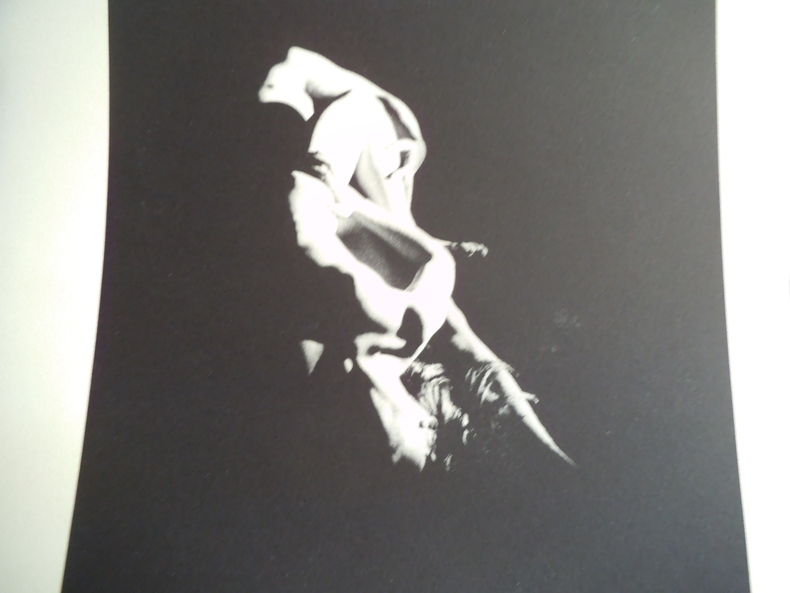
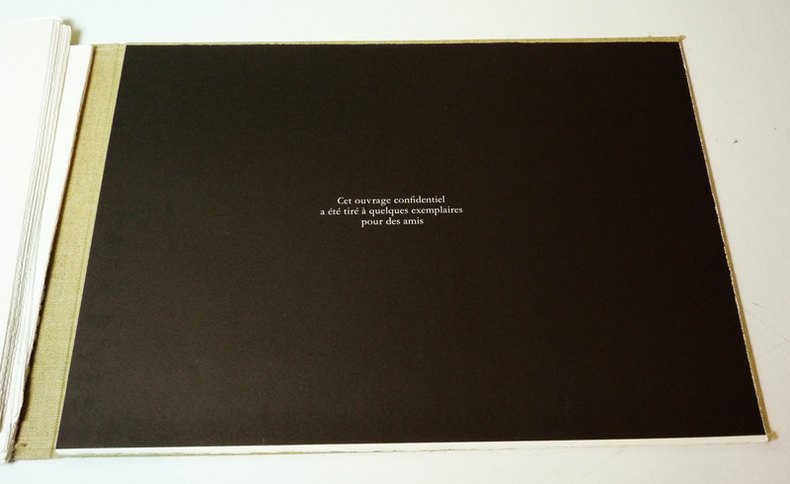
1967ko1290Editions La balance Sélection Abraxas-libris Feuilles sous chemise et emboitage 1967 "TRES RARE ALBUM in-folio (40 x 30 cm), format à l'italienne, exemplaire en feuilles tiré sur papier d'Arches, sous chemise et emboîtage cartonnés toilés, 1 feuillet de titre, 37 planches photographiques très contrastées sur fond noir montrant un homme et une femme dans une variété de positions voluptueuses. Ces photographies sont accompagnées de 6 planches de vers libres de Louise Labé et Pierre de Ronsard, et d'un feuillet imprimé en blanc sur noir : ""Cet ouvrage confidentiel a été tiré à quelques exemplaires pour des amis"". La signature de Pierre Jousson (auteur de La Femme (1964), Le Couple (1965), Jessica (1967), Préludes (1970, etc.) n'apparaît pas sur ces photographies sur lesquelles on retrouve pourtant sa patte, notamment son usage de l'obscurité et les fonds noirs qui font sa réputation. Cet album, réédité par Régine Desforges (Paris, L'Or du Temps), a aussitôt été interdit. Il s'agit de l'album le plus rare du photographe, quasiment introuvable, ici en excellent état. Livraison a domicile (La Poste) ou en Mondial Relay sur simple demande."
12964Erotiques. La Balance 1967. In folio à l’italienne. Portefeuille et étui cartonnés, toilés lin écru. Format 400x300mm en feuilles, sur Arches. 1 page de titre, 37 planches très contrastées sur fond noir montrent un homme et une femme dans diverses positions voluptueuses, 6 planches de vers libres de Louise LABBE et de Pierre de RONSARD, 1 feuillet en noir imprimé en blanc de justificatif de tirage.. Très rare.
Fotografie di Ugo Mulas. Testo di Alan Solomon Impaginazione di Michele Provinciali. Custodia muta. 4to. pp. 342. . Ottimo (Fine). . Prima edizione (First edition). . In più di 500 fotografie in bianco e nero Ugo Mulas ha colto perfettamente l'ambiente e l'habitat di artisti tanto diversi (Marcel Duchamp, Barnett Newman, Robert Rauschenberg, Jasper Johns, Larry Poons, Kenneth Noland, John Chamberlain, Jim Dine, Frank Stella, Lee Bontecou, George Segal, Jim Rosenquist, Tom Wesselmann, Claes Oldenburg, Roy Lichtenstein, Andy Warhol) che fecero di New York il fulcro e l'asse del mondo. Un certo numero di artisti come Jasper Johns e Kenneth Noland non avevano mai permesso prima che un fotografo li ritraesse al lavoro, e troviamo qui per la prima volta una documentazione della loro attività. Solomon e Mulas ci hanno dato un magnifico intimo studio fotografico della scena creata da alcuni dei membri più produttivi del nuovo microcosmo americano, il mondo artistico di New York (dal rivolto della sovracoperta).
5647Paris Fasquelle Editeurs, sans date 1930 in 4 (23,5x17) 1 volume reliure demi chagrin marron foncé à coins de l'époque, dos à nerfs, couverture conservée, 285 pages. Edition originale tirée à 1000 exemplaires de luxe, celui-ci un des 800 exemplaires numérotés sur vélin teinté pur fil lafuma. Bel envoi autographe signé de Marcel Pagnol à son collaborateur et ami Bienstock (Jean-Wladimir), daté Août 1930. Jean-Wladimir Bienstock, Jitomir 1868 - Paris 1933, avocat, écrivain et traducteur franco-russe. Marcel Pagnol, Aubagne (Bouches-du-Rhône) 1895 - Paris 1974, écrivain, dramaturge, et cinéaste français. Notre exemplaire est de plus enrichi de 22 grandes photographies originales en noir et blanc de scènes des représentations montées sur onglets in fine (beaux tirages argentiques de l'époque). Ce précieux et émouvant ensemble documentaire concerne les tournées et représentations de Topaze ( satire de l'arrivisme ) de Marcel Pagnol en Russie, et principalement les scènes avec décors et les portraits d'acteurs russes. Chacune de ces photographies est légendée en russe au verso. Document original unique pour l'histoire de la diffusion et de l'adaptation de l'oeuvre théâtrale de Marcel Pagnol en Russie durant les années 30. Bel exemplaire ( Photographies sur demande / We can send pictures of this book on simple request )
19057520Atlanta GA 1905. Original Photographs. Very Good. 7 7/8 X 10 Inches. Six photographs measuring about 4 1/2 X 6 1/2 mounted to larger "cabinet style" backings. Two unnamed baseball players with the photographer blindstamp "L.M. Daniel / Atlanta Ga" in lower right border. The uniforms and equipment lead us to date the photographs to about 1905. A very attractive grouping showing the players in game situations or what would become "in action" card photography. Typical photographs of this time period were of single players but most commonly of teams. Action photographs like these are quite rare in commerce today. Overall VG condition with some light soiling and wear to edges. unknown
1904000013623New York: Underwood & Underwood Publishers / Keystone View Co 1904. Stereograph Photographs. Near Fine. Stereograph photographs mounted on stiff brown paper board printed in black. Each card measures 18 cm x 9 cm each photograph measures 8 cm x 8 cm. Two photographs mounted on each card. Each card states "Underwood & Underwood Publishers" with various cities listed and then at the opposite end of the card the words "Works and Studios Arlington N.J. / Westwood N.J." printed. Captions in English on the recto a long caption in English on the verso of each card these long captions taken from From Notes of Travel No. 8 published by Underwood & Underwood. Below the long captions on the verso of each card there are short captions printed in English French German Spanish Swedish and Russian. Each card numbered 1 to 100. 99 out of the 100 photographs called-for are present. The photographs are housed in a brown cloth case lined with grey linen gold lettering and rules on one side of the case. Offered with these stereograph photographs is a Telebinocular Stereoscope a black binocular-type device with a holder for a stereograph card that is adjustable. When a card is placed in the stereoscope the device gives the photograph an intended three-dimensional appearance. The stereoscope is housed in a navy cloth case lined on the inside with black cloth the case lettered and ruled in gold. The photographs offered here show a myriad of views of Japanese culture and values. Highlights include steamships in Yokohama rickshaws Meiji-era clothing family life views of Japanese schools and schoolchildren millet and barley farming a Buddha statue in Kakamura Mt. Fuji views of Kobe Hiroshima Nagasaki and so much more. The photographs are brilliant and clear and are a wonderful record of life in Japan at the turn of the twentieth century. The photographs are nearly Fine the cloth case has just a touch of rubbing. The stereoscope case has more noticeable rubbing but is overall sharp. Underwood & Underwood Publishers / Keystone View Co unknown
Very Good Turkish, Ottoman (1500-1928) Original registry book in its original grey art nouveau cloth. All edges marbled. 'The English manufactory of book and register' written on end-papers. 'Zugologion' written in Greek letters on front cover. Slightly faded. A fine copy. Demy 8vo. (22 x 15 cm). In Ottoman script. 52 p. is written of which apprx. 200 p., but it's finished and complete; one folding hand-drawn color map, and 3 tables. [MANUSCRIPT] [Ottoman Prokopi sanitary report] Konya Sihhiye Müfettisligi'nin 16 Tesrinievvel 1327 tarihli mezkûr müfettislige takdim olunan rapordur ki 327 senesi Ürgüp'te zuhur eden koleraya dairdir.; Vilâyetin topografya-yi sihhiye ve harita-yi sihhiyesi. The report on the cholera occurring in Ürgüp in 1910, which was presented to the Inspectorate of Konya Sihhiye on October 16, 1910. Besides cholera, it contains information about diseases such as measles. 1329 (Hegira) written at the end of first 10-paged report. The second part contains title: Mecelle-i Memâlik-i Osmaniye'ye ait minvallere cevabât yazilarak Üsküp Kaymakamligi'na takdim olunan 'Müslüman Sihhiye' raporu [= Muslim health report submitted to the Ürgüp (Prokopi) District Governor]. This and following next chapters include general health and sanity registers on epidemics like 'frengi' (syphilis, pox), all kinds of 'humma' (pyrexia) and several others (almost more 15 titles) and give information about how often diseases are encountered in the region of Prokopi and Cappadocia. One folded map which is hand-drawn includes color markers as 'Ürgüp Bölgesi saglik haritasi' [= Prokopi region sanity and epidemic map]. Also it shows demographic and historical info about region. There are 3 statistical tables contain demographic, historical, religious info such 'Muslim' and 'Non-Muslim'. Maps and tables are perfectly drawn. Another chapter is 'Usul-i sihhiye', has all epidemics and their historical and demographic contexts, their cures etc. Book was written in a very nice hand-writing. Used black, blue, and red inks. Report was not published before such as that. Roumi: 1327 = Gregorian: 1910. The Ottoman land represented a bridge between Asia and Europe, which was destroyed by epidemic diseases that emerged in different periods. In the 19th century, the main source of epidemic was the cholera morbus that emerged in India in the lower Bengal delta between the Ganges and Brahmaputra rivers. At the beginning of the 19th century, the disease became a global threat. Cholera epidemic appeared for the first time in the Ottoman territory in 1822, and continued to emerge into intermediate outbreaks. Due to its geographical location, the cholera epidemic was easily spread to the Ottoman territory and caused great losses in the 19th century, when it became a global threat. At the beginning of the 20th century, still cholera was a serious problem. Prokopi is a settlement in Central Asia Minor, built on a plateau at an altitude of 1,200 m above sea level. It lies near the confluence of four tributary rivers of the Alys River (Kizilirmak), which flows to the north of Ürgüp, within about 10 km from the settlement. It has been claimed that the word Ürgüp is the Turkish version of the Greek name Prokopi. The latter is supposed to refer to St. Prokopios, although there is no evidence suggesting the existence of a namesake church. Levidis supported that the ancient name of the settlement was Osiana, which the traveller Texier (Charles) adopted as well. Ürgüp was inhabited by Muslims, Turkish-speaking Greek-Orthodox and some Armenians. Several conflicting opinions have been stated about the population. Farasopoulos talks about 15,000 Muslims and 5,000 Christians. According to an inventory carried out by the state in 1919, Ürgüp was inhabited by 12,500 Muslims, 6,000 Christian-Orthodox and 15-20 Armenian families.
- S.NS, Elbeuf S.d (1900), 5,5x8cm, une feuille. - Photographie originale de Maurice Blanchot debout contre un mur. Tirage argentique d'époque. « Blanchot mit longtemps au défi photographes et caricaturistes de la presse littéraire. Minimalistes et rarissimes, sur tant d'années, sont les esquisses d'illustrations : en 1962 dans l'Express, une main brandit un livre, sur fond de page ; en 1979, dans Libération, un carré vierge au milieu de la page, portant pour toute légende le nom de Maurice Blanchot et une citation de l'Entretien infini ("un vide d'univers: rien qui fut visible, rien qui fut invisible") » (C. Bident, Maurice Blanchot). En 1986, à l'occasion d'une exposition de portraits d'écrivains, il demande que sa photo soit remplacée par un texte manifestant son désir d'« apparaître le moins possible, non pas pour exalter [ses] livres, mais pour éviter la présence d'un auteur qui prétendrait à une existence propre » . Une photo prise à son insu par un paparazzo sur un parking de supermarché, fera longtemps office de portrait de l'écrivain avant que son ami Emmanuel Lévinas ne dévoile quelques rares portraits de leur jeunesse. Que Maurice Blanchot ne se soit pas opposé à cette divulgation, que celle-ci soit le fait de son plus proche ami, pourrait s'expliquer par ce que Bident nomme « l'espacement de l'inquiétude », l'inactualité des portraits dévoilés faisant écho aux publications reportées de L'Idylle, Le Dernier Mot, L'Arrêt de mort...). Seules quelques photographies rassemblées dans les pages centrales du numéro des Cahiers de l'Herne consacré à Maurice Blanchot complètent ces clichés uniques de l'écrivain le plus secret du XXème siècle. Dans son chapitre « L'indisposition du secret », Christophe Bident consacre plusieurs pages à l'absence presque totale d'image de ce partenaire invisible, s'interrogeant sur les motivations intellectuelles et psychologiques de l'écrivain conscient pourtant de l'inévitable révélation à venir, « Tout doit devenir public. Le secret doit être brisé. L'obscur doit entrer dans le jour et se faire jour. Ce qui ne peut se dire doit pourtant s' entendre. Quidquid latet apparebit, tout ce qui est caché, c'est cela qui doit apparaître ... » Maurice Blanchot, L'Espace littéraire) [ENGLISH DESCRIPTION ON DEMAND]
- s.n., s.l. s.d. (circa 1920), 5x8cm, une photographie. - Original black and white photograph of André Breton in profile with other people including Max Morise [ca 1920] | 5 x 8 cm | one photograph Original black and white photograph of André Breton in profile with other people including Max Morise. Contemporary print probably unique. Provenance: Destribats collection. [FRENCH VERSION FOLLOWS] Photographie originale en noir et blanc représentant André Breton de profil ainsi que d'autres personnes à ses côtés dont Max Morise. Tirage d'époque probablement unique. Provenance : collection Destribats.
- s.n., s. l. [Boulouris] s.d. (ca 1920-1930), 12x17cm & 16,5x22,5cm, 6 photographies montées sur carton. - Collection of six original photographs showing the interior of the Pax Villa in Boulouris-sur-Mer owned by Jenny Meurlot [Boulouris ca 1920-30] | 12 x 17 cm & 16,5 x 22,5 cm |6 photographs mounted on card Collection of six original photographs, contemporary silver print. All the photographs are mounted on strong boards and show the interior of the Pax Villa in Boulouris-sur-Mer owned by Jenny Meurlot, who also appears on two of them. Some of the photographs are discreetly side-stitched in the margin. Four of the photographs show, on the lower right margin, the engraved signature of the Raphaël studio A. Bandieri. Jenny (Eugénie) Meurlot was a pupil of Jules Chérét, a close friend of Sarah Bernhardt and Natalie Clifford Barney, but also an ambassador and muse of René Lalique. In her residence, the Pax villa in Boulouris-sur-Mer in Var, she hosts many artists (Mucha, Dufy) and keeps an important collection of works of art. On two of the photographs, we can make out her portrait as Sappho, painted by Jan Styka (1858-1925), currently kept at the Smart Museum of Art in Chicago. Very beautiful collection, testimony to the elegance of the illustrious home of the artist. [FRENCH VERSION FOLLOWS] Ensemble de six photographies originales, tirages argentique d'époque. Tous les clichés sont montés sur des cartons forts et figurent l'intérieur de la villa Pax à Boulouris sur Mer propriété de la peintre Jenny Meurlot, qui apparaît d'ailleurs sur deux d'entre eux. Quelques photographies sont très discrètement piquées en marge. Quatre des photographies présentent, en marge basse droite, la signature gravée du studio raphaëlois A. Bandieri. Jenny (Eugénie) Meurlot fut l'élève de Jules Chérét, une proche amie de Sarah Bernhardt et de Natalie Clifford-Barney, mais aussi une ambassadrice et égérie des bijoux de René Lalique. Dans sa résidence, la villa Pax à Boulouris sur Mer dans le Var, elle accueille de nombreux artiste (Mucha, Dufy) et conserve une importante collection d'uvres d'art. Sur deux des photographies, on distingue d'ailleurs son portrait en Sappho peint par Jan Styka (1858 1925) actuellement conservé au Smart Museum of Art de Chicago. Très bel ensemble, témoignage du rafinement de l'illustre demeure de l'artiste.
- s.l. [Japon] s.d. (circa 1880), Album oblong : 17x12cm / Clichés : 9,2x14cm, un album contenant 12 photographies. - Album photographique en accordéon contenant en recto-verso 12 portraits de geishas et vues de la route du Tokaïdo. Tirages albuminés d'époque rehaussés à la main en couleurs. Reliure en toile rouge sur ais de bois. Quelques serpentes un peu froissées, sinon très bel exemplaire. Tous les portraits de geishas ont été réalisés en studio alors que les vues de la route du Tokaïda, reliant Edo à Kyoto, présente des scènes de vie (femmes à l'entrée d'une maison, porteurs, hommes priant...) [ENGLISH DESCRIPTION ON DEMAND]
- Carjat et Cie, Paris s.d. (circa 1875), 6x10cm, une photographie. - Rarissime photographie originale sur papier albuminé, au format carte de visite, contrecollée sur un carton. Nous n'avons trouvé aucun autre exemplaire de cette photographie dans les collections publiques internationales. [ENGLISH DESCRIPTION ON DEMAND]
- A. Thierry, Paris s.d. (circa 1875), 6,3x10,5cm, une photographie. - Rarissime photographie originale sur papier albuminé, au format carte de visite et en médaillon, contrecollée sur un carton jaune au bord rouge. Nous n'avons trouvé aucun autre exemplaire de cette photographie dans les collections publiques internationales. [ENGLISH DESCRIPTION ON DEMAND]
- Pierre Petit, Paris s.d. (circa 1875), 6,2x10,5cm, une photographie. - Rarissime photographie originale sur papier albuminé, au format carte de visite et en médaillon, contrecollée sur un carton. Nosu n'avons pu trouver aucun exemplaire de cette photographie dans les collections publiques internationales. [ENGLISH DESCRIPTION ON DEMAND]
- Nadar, Paris s.d. (1867), 6,6x10,4cm, une photographie. - Nadar, Paris N.D. (but 1867), 6,6x10.4 cm, photograph Original photograph on albumin paper in a visiting card format, laid down on card by Nadar, initialed and with a red border. Doré poses with his arm on a fringed chair, the same as in the portraits of Théophile Gautier, Edouard Manet and Alexandre Dumas. Manuscript annotation to verso. We have not been able to find any copies of this photograph in any of the international public collections. [FRENCH VERSION FOLLOWS] Photographie originale sur papier albuminé, au format carte de visite, contrecollée sur carton de Nadar au bord rouge et à l'initiale. Gustave Doré y pose le bras reposé sur une chaise à frange, la même que celle des portraits de Théophile Gautier, Edouard Manet ou encore Alexandre Dumas. Annotation manuscrite au dos. Nous n'avons trouvé aucun autre exemplaire de cette photographie dans les collections publiques internationales.
- Mayer & Pierson, Paris s.d. (circa 1860), 6,2x10,5cm, une photographie. - Photographie originale sur papier albuminé représentant le Baron Haussmann, au format carte de visite, contrecollée sur un carton du studio Mayer & Pierson, avec la marque au dos. Annotation au crayon au dos du cliché. Très beau cliché mis en oeuvre d'une manière beaucoup plus soignée que les photographes de l'époque. Le carton est plus rigide, les coins de la photographies sont arrondis. [ENGLISH DESCRIPTION ON DEMAND]
- Nadar, Paris s.d. (circa 1852), 6,5x10,3cm, une photographie. - Photographie originale sur papier albuminé représentant George Sand, au format carte de visite, contrecollée sur un carton du studio Nadar "35 boulevart des Capucines". Ce cliché, réalisé en 1852 par Nadar d'après un daguerréotype de Richebourg, a été commercialisé entre 1862 et 1871, comme en témoigne l'adresse du photographe au dos du carton. Annotation au crayon en marge basse du portrait ainsi qu'au dos. Une étiquette de librairie du temps encollée au dos du carton. Un exemplaire au Musée d'Orsay. [ENGLISH DESCRIPTION ON DEMAND]
31071S. e. Cuir S. l.
042190New York: The Limited Editions Club 1995. First Limited Editions Club. Fine. Crite Allan Rohan Illustrator. Signed by the artist. Signed Limited Edition #87 of 300 copies. This copy is fine in near fine black cloth clamshell case. "The volume is hand bound in burgundy linen. The hinged box covered in black Italian cotton is inset with Nigerian goatskin bearing the title stamped in 22‑karat gold." 58pp. Large folio 56 x 33 cm. Signed by Crite. The fifteen relief engravings by Crite hand printed on Japanese Kitikata paper at Evans Editions. The text paper was made at Cartiere Enrico Magnani. Plates printed on recto and verso of four leaves. The text has been set in Monotype Caslon with Romulus heads at Golgonooza Letter Foundry by Julia Ferrari. "Typographical design is by Dan Carr who drew the verse numerals and cast them by hand into punches for typesetting." The book was printed by Wild Carrot Letterpress. Full refund if not satisfied. “Revelation was written at the height of Christians’ persecution at the hands of the Romans. The work cries passionately against the power of evil and exhorts Christians to resist even at the cost of martyrdom a message that has a special resonance for an African‑American artist such as Mr. Crite. Perhaps the most forceful of his Revelation drawings is that showing an angry Angel whirling a millstone through Babylon archetypal city of sin and indulgence. Critics have acclaimed Crite’s revisualization as the finest of the artist’s religious works.” From the Limited Editions Club Website The Limited Editions Club hardcover
18933115513 vol. grand in-8 reliure éditeur demi-percaline verte, Charles Mendel, 1893-1905 Vol. I : Numéro 1 à 24 avec à partir du 15 un numéro bis (15 bis à 24bis), du 15 avril 1893 au 15 avril 1895 - N° 1 à 12 (et 1bis à 12 bis) du 15 avril 1895 au 1er avril 1896, 192-80 pp. et tables et 96 pp. et tables, Vol. II : Numéro 1 à 12 avec les numéros 1bis à 11bis du 15 avril 1896 au 1er avril 1897, puis Numéro 1 à 12 et 1 bis à 12 bis du 15 avril 1897 au 1er avril 1898, 96-88-8 pp. et 96-88-8 pp. ; Vol. III : Numéro 1 à 12 avec les numéros 1bis à 12bis du 15 avril 1898 au 1er avril 1899, puis Numéro 1 à 12 et 1 bis à 12 bis du 15 avril 1899 au 1er avril 1900, 96-88-8 pp. et 96-88-9 pp. et 1 f. n. ch. ; Vol. IV : Supplément au numéros bis 1898-1899-1900, près de 600 pages numérotées en chiffres romains ; Vol. V : Numéros 1 à 38 du 15 avril 1900 au 31 décembre 1900, 304-12 pp. ; Vol. VI : Numéros 1 à 52 de l'année 1901, 208-8-208-7 pp. ; Vol . VII : Numéros 1 à 52 de l'année 1902, 208-8-208-7 pp. ; Vol . VIII : Numéros 1 à 52 de l'année 1903, 208-8-208-7 pp. ; Vol. IX : Supplément de l'année 1903 près de 600 pages numérotées en chiffres romains ; Vol. X : Premier Semestre 1904 avec Supplément ; Vol. XI : Second Semestre 1904 avec Supplément ; Vol. XII : Premier Semestre 1905 avec Supplément, sauf le numéro 1 ; Vol. XIII : Second Semestre 1905 avec Supplément
1902101890BBParis, Mendel, o. J. (1902 ?). Gr.-8°. 228 S., [2] Bl., 7 S. mit zahlr. teils ganzs. Abb. u. 8 montierten Orig.-Photographien (Gelatine-Silber-Abzüge) auf Tafeln. OKart.
In 8 grande, bross. ed., pp. 328, ca 200 fig. n.t., 10 tavv. di cui due a col. le altre con fotografie originali applicate per un totale di 9.Prima edizione.Sciolto, dorso parzialmente mancante, piatto post. con mancanza.Opera rara e fondamentale: tra i padri della polizia scientifica italiana, Umberto Ellero perfezionil metodo della fotografia segnaletica con il complesso ottico noto come "gemelle Ellero", evidenzil'importanza della cosiddetta fotografia dell'invisibile per il reperimento delle prove indiziarie.Volume diviso in due parti: la prima con capitoli riguardanti la fotografia e le varie tecniche, la seconda dedicata alla fotografia segnaletica e al sopralluogo fotografico.Luogo di pubblicazione MilanoEditore SocietEditrice LibrariaAnno pubblicazione 1908Materia/Argomento Fotografia
187072935Ernest Ladrey | Paris 1870 | 6.50 x 10.50 cm | une photographie
1936102392BBParis, Monnier, 1936. 8°. [5] Bl., 154 S. mit 80 Abb. auf Tafeln. Illustr. OKart. (Portrait des franz. Präsidenten A. Thiers von Didéri) mit Japanpapier-Schutzumschlag.