19 867 résultats
Oblong 8vo (ca. 215 x 175 mm). (11), (8 blank) ff. Calligraphic exercises in French, written in a French civilité with some first lines in a French cursive or gothic hand. With 9 larger decorated initials, containing extensive ink-drawn illustrations in contemporary hand colour, showing an armoured knight on horseback, birds, dragons and other fabulous beasts, a pierced heart, etc. Some letters with extensive flourishes in the margins, many of them showing ink-drawn human faces. Contemporary limp vellum, loosely stored in a modern marbled paperboard folder within a matching marbled slipcase. French calligraphic manuscript, containing 11 unnumbered leaves of calligraphic exercises. Most of them are small verses (often six lines), but the collection also contains a letter to a friend and complete alphabets. The manuscript is visually very appealing, and calligraphic manuscripts with decoration like the present one are rare: it comprises vividly decorated initials and numerous flourishes in the margins, which also contain small drawings of faces. - The manuscript was very likely manufactured in the 1640s, a period in which France took over the lead from the Dutch in the publication of writing books. Calligraphy flourished in the 17th century, as it continued to evolve. Flourishing became more important, including calligraphic drawings of human and mythical figures, animals, birds, monsters etc. The present manuscript, with its elaborate decorative alphabets, embellishing and initials, is a beautiful example of this development in calligraphy. - Some dates appear in the manuscript, one on the first page reading "1634", another one "1636", while the letter itself is dated 5 June 1643. Therefore we can assume that the manuscript as a whole was made ca. 1640-1645, with at least the last leaves written after 1643. It is possible that the other leaves were also written after 1643, but it could also be around this year, as the ink and style of the hand appears to be slightly thinner there. - Altogether a beautiful example of a calligraphic exercise book, here in manuscript, which is not only visually appealing, but which also beautifully reflects the popularity of calligraphy manuals and copybooks in the 17th century and the strong focus on flourishing and decoration which were more frequently added to letters or words. - Slipcase only slightly worn around the edges, marbled paper on the spine of the folder cracked. Limp vellum detached from the leaves and worn, first three leaves and 11th leaf loose, paper edges frayed, some foxing throughout (especially to the blanks), a few stains barely affecting the text, first blank at the end almost gone and last blank half gone, but overall in fine condition.
German manuscript on paper (watermark: crowned double-headed eagle, counter-sign CH), probably by two or three different hands. 196 unnumbered ff. with 197 written pages. Contemporary half vellum with remains of ties, 4to (158 × 200 mm). Loosely inserted between the leaves are 9 slips of paper in various sizes, some folded and written on several sides, containing additional recipes (including the remainder of a letter, addressed to the book's owner in Ischl), as well as a strip of cotton cloth from the 17th or early 18th century. An extensive, privately compiled medical manuscript, owned and in all likelihood largely written by a patrician lady from Ischl in the Austrian Salzkammergut region. The recipes contained appear to some extent based on popular tradition, but more frequently on Paracelsian sources and generally on the Paracelsian-inflected pharmacology and chemical medicine of the Renaissance. A relevant example is provided by the very first recipe, "daß gerechte Froschlaichpflaster" - a frogspawn bandage on a white lead basis, as it was frequently applied by surgeons as early as the 16th century to advance wound healing: "Froschlaich 2 lb., Baumöll 1½ Virting, Wein Essig 3 loth. Lass es mit ein andter sieden bis die Feichtigkeith verraucht und nur daß Öll verbleibe, dan du mues es hernach durch ein [Sieb] durchseihen, daß die schwartzen Eier in und ander Unflath darvon weg khumbt, hernach due darein Bleyweis 8 loth, Bleyzucker 2 loth, lass es wider ein wenig sieden und du must alleweil riechen, damit du es nicht verbrenest, so dan duehe darein Weißwax 1½ Vierting, lass es wider ein wenig sieden, und hernach von Feurer gethan thue darin Weisses Vitriol 1 loth, Rohen Alaun ½ loth, Ca[mp]her 2 Quintl, riche so lang bis es kalt wirdt, hernach mach Zapfen darauß, due es reecht mit Öll wo gaffer darein ist und zächs recht endereinander, so dan ist es bereith." This is followed by "daß gerechte Fontonell Pflaster" (a bandage for the fontanelles) and "Jungfrau Milch" (virgin's milk), then - after several blank leaves - a series of recipes concerning the head, including "das edle Khopff Bulffer" ("the noble cephalic powder"), "fier die Pluet Schuß im Khopf" ("for when blood rushes to one's head"), "fyer das Haubt Wehe der Khinter" ("for children's headaches"), "Wann ein Personn verwüret ist in Haubt" ("when a person is confused in his head"), "fuer den Wuremb im Khopf" ("for the worm in the head"), "füer den großen Khopf Wehe" ("for the severe headache"), etc. Among the further recipes are "ein khöstliches Wuntt Trankh" ("a delicious wound potion"), "Khrafft Wasser vor den Schlag" ("strong water for a stroke"), "Etles Trisanet Pulver, vor den Schlag, vor Schwacheit des Herzen, Bletigkeit des Mang, der Löber" ("noble trisanet powder for strokes, weakness of the heart, and ailments of the stomach and the liver"), "Inwendig grosse Hizen" ("great inner heat"), etc. Other recipes concern the internal organs and respiratory tract ("Räynigung des Mangs", "Geschwollen Mangen", "Wer hart umb Prust", "Vor Huesten", "Vör Lung- und Lebersucht, Huesten, auch Stäckhen auf der Prust"), gynecology and obstetrics ("Wann ein Frau nit gebehren khan", "Wann das Khünntt nit kan ledig werten", "Von Mangel der monatlichen Zeit"), as well as dentistry ("Vor Zahn Wehe", "Zahn ohne Schmerzen herauszunemben", "Vor Munntfeille"); also, recipes for emetics ("Vor Erbrechen daß der Mangen nichts behalte") and for various ointments ("zu den Prysten", "vor Reissen und Grimmen"), tapeworms ("vor Wuremb im Leib"), enemas ("Von Clystier- und Purgiern"), and "how to push the intestines back into the body when the bowels have fallen out" ("so einen der Leib Tarmb ausgeht, den Layb Darmb hinein zu bringen"). Some recipes reveal the scientific limits of their age (one captioned "vor Anwax ter Khüntter", intended to make children grow faster, is essentially a rose ointment to be soaked in a cloth which is bound on the child's head); others fall into the province of the quasi-magical ("Krumpe und lammbe Gliter zu haillen, es wirt die selbe verzaubert, und also gemacht worten, mit der Hilffe Gotes abzuhelfen", "Wahrer Gebrauch und Nuzung des Pulvers des Lebens"). Although several hands appear to have contributed to this manuscript, a large part is unquestionably by the writer of the title page, whom we may identify with its owner. Maria Magdalena Seeauer, born on 7 June 1668, was descended from the well-known dynasty of Ischl salt loaders who can be traced to the 14th century. She was a daughter of the local salt loader, alderman and judge Simon Seeauer (1615-1704) and sister of Johann Ignaz Seeauer (1661-1709), who succeeded his father in all his offices. Ten days after her 19th birthday Maria Magdalena married, in Ischl, the 36-year-old Johann Richard Winkler from Grieskirchen; she began compiling the present recipe book the following year. She died in her native city on 9 March 1745, having survived her husband by 27 years. - Binding somewhat rubbed; paper insignificantly browned. Nine leaves in the book's interior show slight worming, occasionally barely touching letters, but altogether clean and unstained, uncommonly well preserved for a manuscript apparently kept in constant use. The piece of cotton cloth inserted between two leaves likely represents the authentic type of a cloth bandage used for applying ointments in the early 18th century.
Oblong 4to (222 x 172 mm). 1 blank leaf, 50 unnumbered written pages, 2 blank leaves. German manuscript (dark brown ink) on paper, fine calligraphy by a single scribal hand (titles and headlines in blackletter, text in cursive script). Later limp vellum wrappers, spine reinforced with a fragment of a 15th century vellum manuscript with red and blue rubrication. Stored in a modern custom-made half morocco case. Calligraphically appealing 16th century manuscript on the art and terminology of hunting and falconry, written by a professional scribe for an unidentified sponsor, though likely for a highly placed personage or member of the nobility in South-Western Germany. The manuscript contains contemporary extracts from the end of the third part of Noe Meurer's "Von Forstlicher Oberherrlichkeit und Gerechtigkeit", an important study of hunting first published in Pforzheim by Georg Rab in 1560, and then, in expanded form, in Frankfurt, by Georg Rab & Weigand Han, in 1561. Meurer (born ca. 1525 in Memmingen in Southern Swabia, died in Heidelberg in 1583) was one the first German legal scholars to write in his native tongue rather than in Latin; among his works are treatises on the law of inheritance and of water. In particular, he was the first German author to publish monographs on the subjects of forestry and hunting, not as mere chapters within the larger framework of agriculture, for which reason he was of great importance for the study of forestry in the 16th century. The present extracts comprise the only parts of Meurer's book concerned with the practical, technical aspects of hunting, rather than with its legal foundations. They include sections on hounds, canned and net hunting, the hunting of stags, roes, boars, foxes, rabbits, bears, wolves, ibexes and chamois, as well as a section on how to tell a deer from a roe when viewing the animal from the rear. The final part is dedicated to hunting with falcons and hawks. The entire section on deer ("Die Hürsch zu suchen, wie auch der Hürsch für der Hinndin zue erkennen etc.") is not part of the first edition of Meurer's book, suggesting that the scribe based his work on the second edition of 1561 (leaves LXXXIIII verso to XCVII verso). Yet the order of the individual sections does not follow the published book in all particulars, and the present arrangement would seem to reflect the scribal editor's or the sponsor's private considerations. - The paper stock for this manuscript is from a paper mill in Meurer's native Memmingen (watermark: Gothic letter "P" - or more likely "Q" - with the arms of Memmingen: Briquet III, no. 8750 and p. 468; cf. Briquet I, p. 72; specimens dating from the late 1580s to 1590s). - Very well preserved and legible, untrimmed manuscript from the collection of the Swiss-born German merchant and entrepreneur Hans Dedi (1918-2016), chairman of the "Quelle" mail order concern and the Schickedanz business group, with his bookplate in the marbled solander case and his gilt signet on the spine. Cf. VD 16, M 5017.
Folio (ca. 375 x 250 mm). (13) ff., 1 blank leaf. German manuscript on paper. With 10 pen-and-ink drawings in original hand colour. Contemporary boards with manuscript title label to cover. Fine German manuscript on how to increase the efficiency of German salt production. In German cities such as Halle, a major centre of the salt industry, the production of cooking salt was based essentially on the use of wells that provided a high concentration solution of brine. Extracted from the wells, the brine was boiled and refined to salt, a process carried out by specialized personnel - the "salters", who worked in small huts or cots ("Kothen" in German) located in close proximity to the wells. - Presumalby prepared by an experienced salter, the present manuscript gives detailed instructions on the efficient construction and heating of hearths and the sustainment of the required heat, as well as the correct handling of boiling pans. The text concludes with a recommendation of the highly profitable pratice of concentrating the brine using sea salt, as was common in Dutch salt production. - The charming illustrations show the interior of the cots with their various boiling and concentration pans, including diagrammatic depictions of masonry and the arrangement of pans, grids and hearths, as well as a scene of everyday life in the cot. - Engraved bookplate of the artillery school and stamp of ownership of the Hanover military library to front pastedown, the latter also to the first page. Later bookplate of the historian Hanns Freydank (1892-1971) to pastedown. Freydank is the author of numerous publications on salt production with a focus on his native Halle. - Spine and corners somewhat rubbed. Block damaged; paper slightly browned, occasional spots. A rare survival.
Folio (433 x 280 mm). 17 ff. Coloured ink on coloured paper. Contemp. half cloth with gilt-stamped spine title. Highly original and exceptionally colourful manuscript in elegant calligraphy, written in inks of various colours (mainly white, blue, red, and green) on glossy and silk paper in alternating colours. The writing is surrounded by elaborate calligrams showing birds and penwork. The text itself consists mainly of descriptions of various kinds of birds (such as the magpie, quail, pheasant, peacock, jay, and swallow), but also includes bits on bears and hedgehogs; another page offers two capital blackletter alphabets instead. The calligrapher has succeeded in marrying content, script, and image, achieving a unique and impressive synthesis, undoubtedly penned with a feather quill. - Binding insignificantly rubbed; extremeties bumped. The delicate pages show occasional slight signs of wrinkled; the silk papers are browned. Several pages show ink bleeding or offsetting on the reverse.
4to (175 x 202 mm). German manuscript in brown ink with red underlinings on paper by two hands. Title, 356, (16) pp., of which 162 written. The final 8 leaves with an index added later, probably mid-18th century. Contemporary vellum with ms. title to spine. A wide-ranging compilation of medicinal recipes and treatments for a great variety of ailments, certainly drawing on various medical and pharmacological texts, although only one specific reference is made, namely to Melchior Sebisch's 1580 translation of Charles Estienne's agricultural treatise "L'agriculture et maison rustique" (Paris 1564). A medicine for the treatment of aphasia following a stroke ("Wann einen Menschen der Schlag gerühret und sprachlos liegt") is said to have been successfully used to treat Paul von Gröbel, princely hunter of Christian I of Saxony in the 2nd half of the 16th century (p. 11). The third personal mention in the manuscript, a "Doctor Longobart", who lends his name to a powder with several cold-related applications, seems to be folkloristic. - Many recipes are organized by illnesses or conditions like toothaches and gum disease, sleeplessness, epidemics affecting children and old people ("Zu heilen die schweren Seuch in Kindern und alten Leuten"), the plague ("In Zeit der Pest"); others stand for themselves like a miraculous rejuvenation tonic ("Ein wunderbarlich gleichsam göttliches und heimliches Wasser zumachen, welches alle alte verlebte Läuthe Verjüngen", p. 41), a "delicious stomach and chest powder" (p. 46 f.), or a tonic named after Emperor Charles ("Keyser Carll Kraftwasser", p. 47 f.). On pp. 83-105 follows an unrelated copy of a short treatise on gold ore with a description of locations for gold panning in Bohemia. The title suggests that the text on "finding gold mountains and gold washing locations" had been sent by a Venetian named Gratianus Gündell to Jacob Schaden of St. Gallen in 1530 or 1560. Among the locations indicated are: "Frauenstein bey Freyberg [...] Das rothe Wetterhaus [...] Der Eisenberg im Böhmen [...] Brun in Böhmen [...] Radebergh [...] Neunmarck [...] Gera und Weida [...] Weidenstein [...] Hammerberg [...] Schnegrube [...]". Further recipes listed are a remedy for nose bleeds ("Wieder das Bluten aus der Nasen", p. 149) and a cure for worms in children and old people ("Für die Würme der Kinder und alten Leutt", p. 237). The curious final pages present advice on how to tell the age of a horse ("Wie man das Alter eines Pferdes erkennen soll", pp. 335-337) with reference to Melchior Sebisch's 1580 publication, an alchemistic "piece" that had supposedly been commissioned by a member of the Bohemian Rosenberg family (p. 340 f.), three spells to stop a fire, including one that demands a shirt that has been worn by a virgin when she had her first period ("ein Hemdt, so eine Jungfrau ahn ihrem Leib getragen, so sie erstmals ihre Zeit bekam") and that is "used by all gypsies and is reliable" (p. 347 f.), a method for turning red roses partly white and instructions on how to keep beer from going stale due to contaminated kegs. - Covers somewhat soiled and warped. Some foxing and browning throughout; occasional collector's notes in pencil. A fine survival.
12mo (65 x 90 mm). 109 ff. (numbered i, 108 in pencil by a later hand); thus complete. Latin bastarda on vellum. With blue and red Lombardic initials throughout, a few (ff. 31r, 49r, 69r, 71v, 74v) with penwork decoration. Contemporary wooden boards (wants spine; lower cover cracked). A pretty, pocket-size prayer book, not classifiable as belonging to any known collection. Based on the unsophisticated penwork and the litany, it was probably created in the (northern) Rhineland. Title (fol. 1r): "Exhortacio salutaris terrorem iudicii ac timorem incutiens divinem ul[tionis]; incipit "Expergiscere o miserabilis homo" (for the beginning, but not the remainder of the text, cf. Nicolaus de Saliceto, Antidotarius animae). Contains numerous indulgences, including (fol. 80r/v) one by Pope Alexander VI in honour of Saint Anne (1494; she is also the first female Saint mentioned in the litany, fol. 38v). As the indulgence granted by Pope Sixtus IV for performing the prayer "Ave sanctissima virgo" was doubled by Pope Julius II (1503-13) (cf. fol. 67r), the date can be assumed with a high degree of certainty as after 1503. The penitential psalms (fol. 31r ff.) are followed by the kyrie and litany (37v-38v: with SS. Gereon and Odila); fols. 88r-97v contain prayers to the Saints (including SS. Rochus [fol. 93v], Odilia [fol. 95r], Gertrude [fol. 95v], Apollonia [fol. 96r], Mary Magdalene and Ursula [fol. 97r]). - Later quotation from Maleachi 4:2 in the margin of the first page ("orietur vobis timentibus Deum sol iustitiae"); the blank verso contains a longer note "Dum quis intrat Ecclesiam Auffer a nobis quis Domine cunctas iniquitates nostras" etc.; some additional early modern marginalia. Between leaves 67 and 68 an interesting stain shows that a contemporary reader forgot his pince-nez, which he must have used as a bookmark, within the book. Ownership "Co[...] Rabenau" (2nd half of 18th c.) on inside upper cover. Wooden boards show traces of a former calf binding, with the impression of an armorial stamp on the upper cover; lower cover split near the binding. Right edge of upper cover, as well as lower edge, show traces of gnawing (no loss to text).
Folio. Latin ms., ink on vellum. 156 unnumbered pp., 27 lines. Contemporary vellum binding with attractive giltstamped tendril border, fleuronnée corner stamps, gilt spine and two different giltstamped heraldic supralibros on the covers. All edges gilt. Inner margin shows two holes drilled through covers and interior for a decorative cord with the seal (now lost). Remains of ties. A collection of copies of Habsburgian documents relating to the Gonzaga family and the War of the Mantuan Succession, compiled by the Imperial Registry and signed by the Emperor, Ferdinand III. The ensemble, which comprises documents by Frederick III, Maximilian I, Charles V, Maximilian II, Rudolf II, Matthias, Ferdinand II, etc., was probably drawn up for Duke Ferrante III Gonzaga, Duke of Guastalla (1618-78), to record and secure his claims upon the Duchy of Mantua (claims which lay in the interest of the Imperial family), whereas the War of Succession had ended a few years previously with Mantua becoming part of the French sphere of influence. - The Gonzaga family had ruled Mantua since 1328; in 1530, Federico II Gonzaga assumed the title of a Duke of Mantua. Upon gaining control over the counties of Monferrato and Guastalla in the mid-16th century, the family reached their apogee of political, financial, and cultural importance. When Francesco IV Gonzaga died in 1612 without leaving a male successor, he was succeeded by his brothers Ferdinando and Vincenzo, both cardinals without children. Upon the death of Vincenzo II Gonzaga in 1627 the direct male line of the House of Gonzaga became extinct, causing a war of succession. Emperor Ferdinand II, husband of Eleanor Gonzaga, Vincenzo's sister, sought to re-attach the Duchy of Mantua to the Holy Roman Empire by transferring it to the Spanish-Imperial line of Gonzaga-Guastalla. This objective was opposed by the older line of Gonzaga of Nevers and Rethel, supported by France. The conflict ended when Sweden entered the Thirty Years' War and Ferdinand required his troops in the principal theatre of combat. The Duke of Nevers and Rethel became lord of the devastated and depopulated counties of Mantua and Monferrato, and France gained a foothold in Upper Italy. (Three quarters of a century later, however, the Imperial cause was to triumph after all: in 1708, the War of Spanish Succession re-attached Mantua to the Empire, while the Duke of Mantua and Monferrato sided with France.) - The present compilation is intended to document the legal succession of the House of Gonzaga-Guastalla on the basis of archival sources; this goal is underscored by the Imperial arms on the upper cover (double-headed eagle with quartered escutcheon showing the fesses of Gonzaga and the Bohemian lion, bordered by a tendril desgin enclosing the four evangelists) and Guastalla's lion rampant within a crowned shield on the back cover. The documents repeatedly invoke the feudal righty of the House of Gonzaga-Guastalla, especially in the areas of Castiglione delle Stiviere and Castel Goffredo: "Ad perpetuam rei memoriam recognoscimus, ac postum facimus tenore praesentium universis, quod cum nobis submissime exponendum curavit. Illustris Ferdinandus Gonsaga, Priceps Castilionis à Stiveriis, Consanguineus et Princeps Noster charissimus, quem ad modum maiores olim sui ab Augustissimis Romanorum Imperatoribus & Regibus Praedecessoribus Nostris sacratissime recordationis super Marchionatu Castilionis à Stiverys, & Castro Guiffredi cum omnibus suis pertinentys investiti. Pater verò suus quondam Franciscus Gonsaga de eodem Marchionatu Castilionis et permutatione Castri Giuffredi [...] Matthias Romanorum Imperator semper Augustus [...] agnoscimus & notum facimus tenore praesentium universis. Quod cum Illustris Franciscus Gonsaga Princeps Castilioni à Stiverys, consanguineus et princeps noster charissimus, demisse Nobis esponi curavit, non tantum Maiores suos, verum etiam se ipsum à Predecessoribus Nostris Divis Romanorum Imperatoribus & Regibus praeclarissimae memoriae de Marchionatu Castilioni à Stiverys, et de Castro, et Terra Castri Guiffredi cum omnibus suis pertinentys investium, alijsque insignibus privilegys ornatum fuisse [...]". Signed at the end by Emperor Ferdinand III, with counter-signatures by the Aulic Councillors Conrad Hiltprandt and Johann Walderode.
Small folio (242 x 304 mm). Latin ms. in red and black ink on sturdy paper. (2), XIII, 117, (5) pp. (and several blanks). With 12 full-page washed and mounted ink drawings. Ruled throughout, with black and red borders surrounding text and illustrations. Contemp. brown calf, covers and spine elaborately giltstamped. Gilt brocade endpapers. All edges gilt. Illustrated late Baroque book of hours, written in clean and regular characters. Apart from its magnificent binding, the volume boasts a remarkable cycle of mariological illustrations. The washed ink drawings are evidently the work of a trained artist whose workmanship were fully abreast with contemporary style and technique (including the occasional Rocaille touches). Especially the elegant treatment of the figures and the fine execution of landscape and details of clothing and interiors suggest one of the more significant mid-18th century Tyrolean painters; the characteristic faces with their pronounced eye areas are so similar to those known from the work of Joseph Adam Ritter von Mölk (1718-94) and his circle that an attribution appears justified. - The dated ms. ownership at the beginning ("Soc. Stae. Ursulae oenipontani 1751") locates this manuscript with the Ursuline monastery at Innsbruck, for whom it was probably drawn up in the first place. The Baroque décor of the monastery and church, founded in 1691, was entirely destroyed in the 19th century. - The magnificent binding shows a double ornamental border and corner fleurons on the covers. Splendid brocade endpapers with large curved scrollwork, blossoms and leaves on red gold background. A unique, near-immaculate specimen.
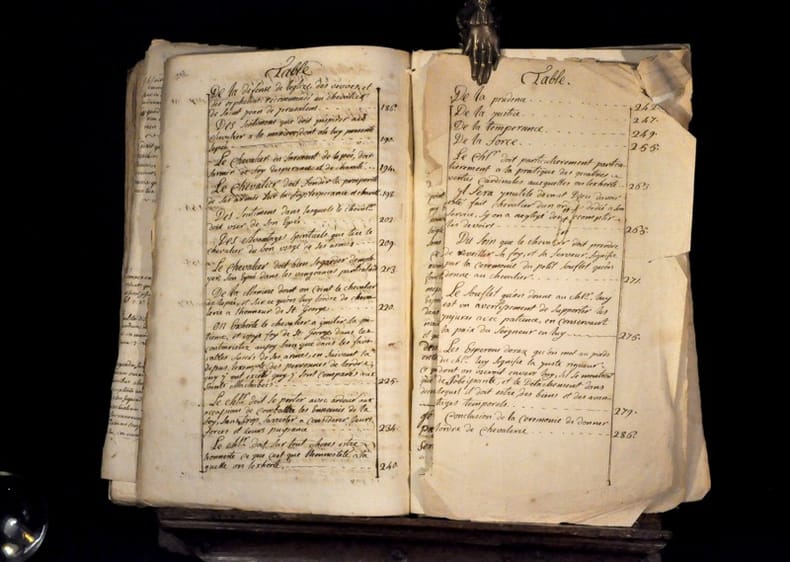
16883205Circa 1688 Manuscrit composé de 15 cahiers assemblés par des lacets et reliés entre eux par une cordelette de lin (177 feuillets in-folio (230 x 355 mm). Calligraphie très lisible, écrite à l’encre noire et à l’encre rouge, réglé au crayon en marge. Quelques déchirures, manques dans les premiers feuillets. Manuscrit très fortement raturé et surchargé. Composition - Avant-propos, 6ff.- Suivi de : « Formulaire de la profession reguliere des Chevaliers de Malte » (à l’encre rouge) 1ff.- Suivi de : « Oraisons que le prestre dit avant la profession ». En latin aux encres rouges et noires, 2ff.- Suivi de : « La forme de Donner l’ordre de Chevalerie, Les oraisons finies, le prestre commence la messe et sarreste avant levangil alors celui quy se dispose a recevoir l’habit se leve de devant l’autel, et va se mettre a genoux devant le chevalier quy la luy doit donner : pour en recevoir premierement lordre de chevalerie lequel luy dit (…), 4ff.- Suivi de : « Troisieme section contenant les paroles qui se prononcent en faisant les vœux », 1page. - suivi de : « Quatrième section contenant la forme de donner la croix et l’habit régulier de l’ordre et les oraisons quiserecitent pour conclusion de la cérémonie » 2 ff.- Suivi de : « Oraison après profession » (à genoux devant l’autel), 3ff.- Suivi de : « Reflexions dun Chevalier de Malte Religieux de l’ordre militaire des hospitaliers de Saint [Jean] de jerusalem. Sur la grandeur et les devoirs de son Etat ». 326 pages numérotées, dont les 4 derniers blancs. Le dernier marqué au verso d’une autre écriture : « Recu Ch de Malthe dan langue de provence le premier 7 bre 1572. »Défauts : Saut de pagination entre la dernière page de table marquée 293 à la partie commençant par : « réflexion d’un chevalier » paginée 303.
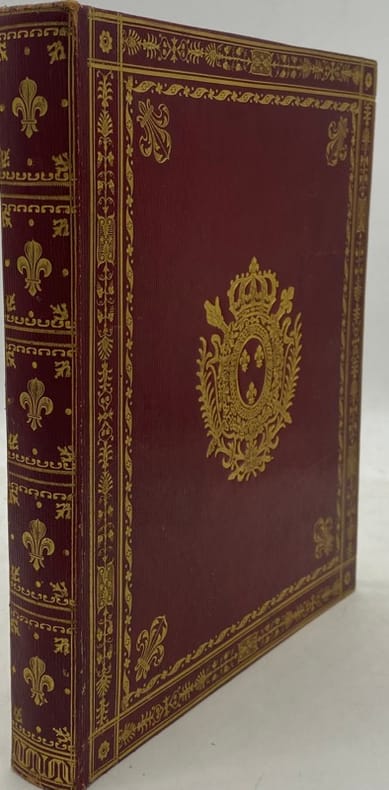
208287S.l., s.d. (mai 1814) in-4 carré, [3] ff. n. ch. (dédicace, table des chapitres), 308 pp. couvertes d'une écriture fine et lisible (environ 25/30 lignes par page), maroquin cerise, dos lisse orné de hachurés et caissons fleurdelisés dorés, double encadrement de double filet doré enserrant des guirlandes sur les plats, fleurs de lis en écoinçon, armes au centre, tortillon doré sur les coupes, tranches dorées, hachuré doré sur les contreplats, gardes de papier violine (reliure de l'époque).
1665602451 vol. in-4 reliure de l'époque pleine basane marron, dos à 5 nerfs, daté in fine : 1665, 152 ff. (dont 4 restés vierges)
60560o.J. Weimar, 7. II. 1824, 4° (23,5 x 20 cm). 1 Seite. Doppelblatt.
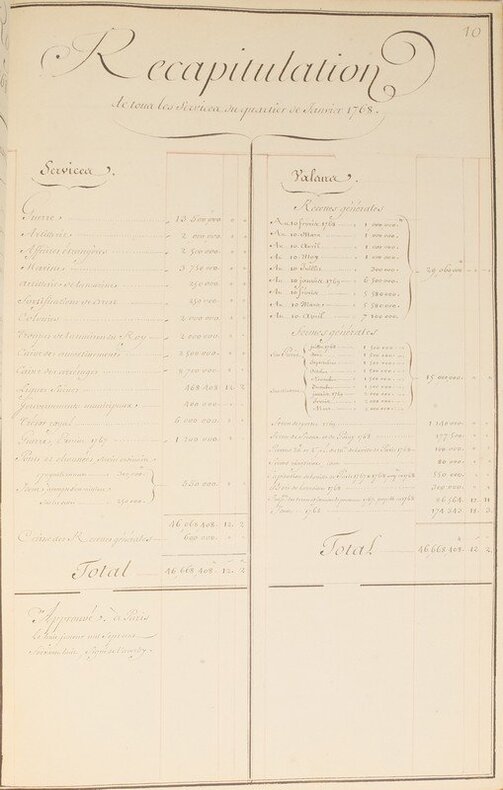
671S. l. (Paris) : 1768-1769. LA CAISSE D'ESCOMPTE DE LOUIS XV : LE DESSOUS DES CARTES !
190484876s. l. mardi (25 octobre 1904) | 12.60 x 20.40 cm | 12 pages sur 3 bifeuillets
1943995731943 Ensemble de 10 lettres autographes signées "Edith", au total 19 pages au format in-4 ou in-8, écrites de Marseille, Paris, New York et Hollywood, entre 1943 et 1956.Rare et émouvante correspondance inédite à Robert Dalban (1903-1987), mémorable majordome des Tontons flingueurs que Piaf rencontre par l'entremise de son épouse, la comédienne Madeleine Robinson avec laquelle elle a sympathisé aux Bouffes-Parisiens. Plus qu'un ami, "son Bob" devient pour Piaf un confident, un frère : elle signe à plusieurs reprises ses lettres d'un "ta frangine Edith".Cette correspondance dévoile toute l’ardeur sentimentale de la chanteuse. En 1943, elle évoque les tensions avec son amant en titre le parolier Henri Contet, alors même qu’elle entretient une liaison avec Yvon Jeanclaude, jeune chanteur ténébreux à la voix de basse. En 1946, c’est Yves Montand qui fait battre son cœur, "tout ce que je peux te dire c'est que je l'aime à en crever !" L’interprète évoque son état de santé fragile, "c'est patraque tout le temps cette pauvre mère Piaf", et sa joie de faire la nique à "Trenet, Chevalier et Tino" qui, comme elle, se produisent en matinées à Marseille en zone libre.Le coeur d’Edith est à son paroxysme en 1949 : elle a rencontré Marcel Cerdan. Mais le boxeur disparaît dans un accident d’avion le 28 octobre alors qu'il rejoignait Piaf en tournée à New York. Dans les lettres écrites entre le 3 novembre 1949 et le 21 janvier 1950, on peut lire le choc, la profonde détresse et le deuil provoqué par ce drame : "Tu sais, ma douleur, c'est affreux, je ne réalise pas. C'était la première fois que j'aimais et puis voilà. On m'enlève tout, on me brise le cœur, on me l'arrache, on m'écrase. Je voudrais mourir mais j'ai peur de ne pas le retrouver si je me suicide. Je ne vis que dans cet espoir, être là où il est, le reste je m'en fous! (...) je n'ai plus envie de chanter, tout ce que je faisais c'était pour lui!".Les dernières lettres couvrent la période avec son mari le chanteur Jacques Pills. Si le cœur d’Edith s’est apaisée, notamment avec le soutien qu’elle a trouvé auprès des Rose-Croix, elle fait montre d’une lassitude morale et physique, "aussi je veux serrer les poings, pendant deux ou trois ans avant qu'il ne m'arrive un pépin !" (1956). Fiche détaillée sur demande.
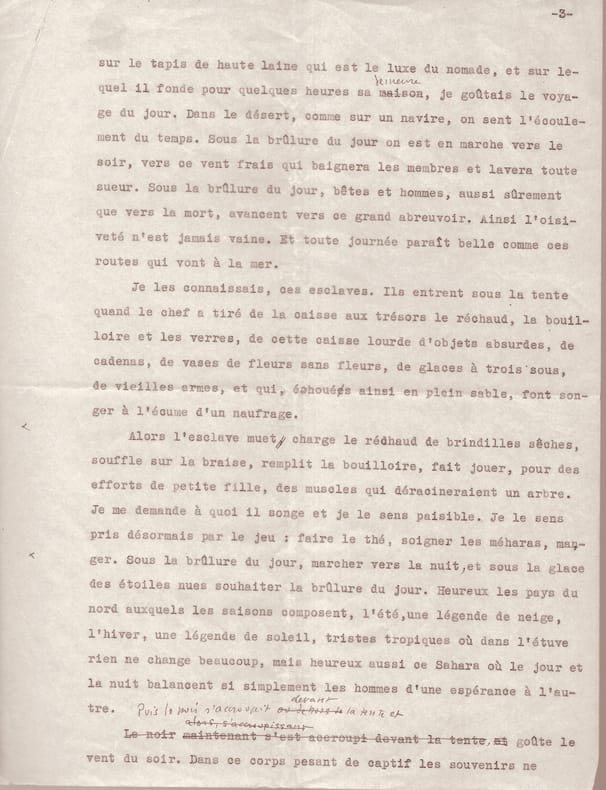
10164Très important tapuscrit de la nouvelle « Bark, esclave maure » (paru dans la revue Marianne n° 30 du 17 mai 1933). Il est composé de 13 feuillets. Signé et dédicacé à son ami Jean Lucas. Nombreuses corrections autographes. Sous portefeuille Très bon 13 feuillets
- [Bruxelles] Vendredi 12 mai 1865, 13,2x20,8cm, 1 page sur un feuillet remplié. - Lettre autographe signée de Charles Baudelaire, rédigée à l'encre, adressée à sa mère. Quelques soulignements, biffures et corrections de l'auteur. Cette lettre a été publiée pour la première fois dans Charles Baudelaire, Dernières lettres inédites à sa mère en 1926. Ancienne collection Armand Godoy n° 197. Précieuse lettre de l'époque bruxelloise, exil volontaire du poète à la fin de sa vie. «?Il est douteux que j'habite quelque part à Paris. Je crois que j'habiterai surtout une voiture dans laquelle je ferai, si je peux, toutes mes courses en un ou deux jours.?» Angoissé par Paris - cité des vices et des créanciers - il appréhende cette brève visite. L'exil bruxellois est en effet synonyme d'échec pour le poète qui ne cesse, depuis son arrivée en Belgique, de repousser son retour en France. Pourtant, impatient de quitter le plat pays qu'il exècre, il raille ses autochtones?: «?On est lent ici.?» Le poète, comme jadis l'élève de dix-sept ans qui affirmait à sa mère qu'il allait se ressaisir, promet : «?Me voici en mesure d'accomplir tous mes plans. Je ne sais comment t'exprimer ma reconnaissance ; et je crois que la meilleure manière sera d'exécuter mes promesses.?» Littéralement obsédé par cette mère sacrée «?qui hante [son] cur et [son] esprit?», le «?fils reconnaissant?» s'estime incapable d'atteindre sa destinée poétique sans une attention maternelle exclusive. [ENGLISH DESCRIPTION ON DEMAND]
- Paris 11 février 1844, 10,4x13,6cm, quatre pages sur deux feuillets. - Trois lettres autographes signées par Gérard de Nerval (2 pages signées «?Gérard?»), Théophile Gautier (1 page) et un troisième scripteur qui n'a pas signé (1 page), adressées à Louis Desessart. La troisième lettre a été rédigée par un certain «?Robert?» (cf. la lettre de Nerval) Louis Desessart, éditeur attitré de Théophile Gautier, publia avec Barba la pièce Léo Burckart de Nerval en 1839. À la suite d'ennuis financiers, il fut contraint de se réfugier «?dans cette triste et charmante ville de Bruxelles?». Les trois amis rédigent ce courrier à Paris, où ils se sont retrouvés au retour du long voyage en Orient qu'entreprit Nerval?: «?J'ai vu l'Égypte 6 mois?; puis j'ai séjourné en Syrie 3 mois - à Constantinople 4 mois le reste en route. C'est assez beau. Je ne m'amuse plus qu'en voyage et je vis double autant que je puis.?» Ce voyage force l'admiration de Théophile Gautier qui ne se rendra que des années plus tard en Turquie et en Egypte?: «?Je suis à Paris et voudrais être au Caire d'où Gérard arrive.?» L'exotisme des voyages lointains contraste ici violemment avec la tristesse et l'austérité de l'Europe?: «?Quelle tristesse que Paris quand on revient des pays éclairés du soleil.?» (Nerval) D'autant plus que, loin des rêves d'évasion, Paris rime avec travail et mélancolie?: «?Nous sommes comme les gens malades qui ne se trouvent bien nulle part. Je crois que le bon temps est passé et que les bonnes heures d'autrefois où nous disions tant de sages folies ne reviendront plus. À quoi sert de vivre puisqu'il faut travailler et qu'on ne peut ni voir ses amis ni leur écrire ni rien faire de ce qu'on voudrait ??» (Gautier) Les deux écrivains sont très compatissants quant à l'exil belge de leur ami, Bruxelles apparaissant ici comme la capitale du spleen?: «?Quoi?! Vous êtes encore dans cette triste et charmante ville de Bruxelles?! [...] Bruxelles est encore plus noir, pauvre garçon?!?» (Nerval) Cette triple lettre a en réalité été rédigée à l'initiative de «?Robert?»?: «?N'est-ce pas, mon cher ami, que je suis habile à faire oublier mes torts ? [...] je trouve le moyen en compensation, de t'envoyer ces autographes de deux de tes [...] camarades, de tes plus doux souvenirs, de deux célébrités qui malgré toutes leurs sympathies, toute leur affection pour toi, ne t'eussent jamais écrit un mot, si je ne leur avais pas taillé leurs plumes, affrété leur papier, comme à de petits enfants boudeurs, et si je ne leur eusse dit?: écrivez tout de suite, tout de suite à l'exilé que vous aimez le mieux.?» [ENGLISH DESCRIPTION ON DEMAND]
- 1er avril 1793, 15,6x20cm, une page sur un feuillet. - Lettre autographe inédite datée et signée, rédigée à l'encre noire et adressée à un notaire. Au verso, probablement de la main d'un secrétaire, la mention « Sade du 1er avril 1793 » ; sous cette mention, une courte phrase de la main du Marquis : « pour que j'écrire à Gaufridy de lui envoyer de l'argent ». Quelques pliures transversales inhérentes à la mise sous pli. Longue lettre adressée à un notaire alors que le Marquis, rendu à la liberté le 2 avril 1790 par l'abolition des lettres de cachet, est libre et tente de mettre de l'ordre dans ses affaires. Après la Révolution ses fils ont émigré et il ne les a pas suivis. Son nom figure pourtant sur la liste des personnes ayant quitté la France en raison des troubles révolutionnaires : « J'espère qu'avec tout cela je parviendrai à faire effacer mon nom de dessus cette fatale liste d'émigrés. » Soucieux de ne pas être considéré comme un ci-devant Marquis en cette période précédant la Terreur, il insiste sur la persécution dont il serait victime malgré sa bonne volonté : « C'est une atrocité sans exemple que de m'avoir joué un pareil tour à moi qui n'ai pas quitté Paris depuis la révolution, et qui depuis cette époque n'ai pas cessé de donner les preuves les moins équivoques de mon patriotisme ». Sade dénonce également dans cette missive la complexité des rouages de l'administration française après la Révolution : « Je viens d'envoyer à M. Lions le certificat de résidence qui convient et j'y ai joint une pétition au district qu'il me dit être (...) essentielle. » Impécunieux, il prie son avocat « d'exciter le zèle de ceux qui [lui] doivent et de les engager à compter le plus d'argent qu'il percevront tout de suite à M. Gauffridi (sic) » et n'hésite pas à se montrer complaisant pour arriver à ses fins : « ne me ménagez pas alors je vous en conjure (...) conservez moi toujours votre soin et votre amitié (...) Je vous embrasse et salue de tout mon cur. » Les efforts de Sade seront vains, en décembre 1793 il est incarcéré aux Madelonettes, avant d'être admis, grâce à sa bonne amie Mme Quenet, à la maison Coignard de Picpus, un établissement de santé abritant les riches suspects. Intéressante lettre inédite montrant l'infortuné Marquis aux abois, lors de l'un de ses rares moments de liberté. [ENGLISH DESCRIPTION ON DEMAND]
- Nrf, Paris 1932, 12x19cm, broché. - New edition. Spine very discreetly restored, a few fold marks on the front cover. Exceptional copy signed and inscribed by Antoine de Saint-Exupéry: "For Jean Lucas. With all my true friendship cemented by sand (the play on words is bad but the heart is there). In memory of the beautiful orgies of Port Etienne." ("Pour Jean Lucas. Avec toute ma vraie amitié cimentée par le sable (l'astuce est mauvaise mais le coeur y est). En souvenir des belles orgies de Port Etienne." with a drawing of a naked girl. Saint-Exupéry inscribed this copy of his first book to Jean Lucas, a fellow pilot at l'Aéropostale, who prepared with him in 1935 his famous Paris-Saigon raid during where he famously crashed "in the center of the desert" of Libya. His accident as well as the stopovers in Port Etienne with Lucas will be told in his masterpiece Wind, Sand, and Stars. Lucas will celebrate at his side the great literary success of this last novel (winner Grand Prix of the French Academy) at Consuelo's flat in Paris, with writer Léon-Paul Fargue and the Werth couple. In this long and humorous inscription, the writer evokes moments spent in 1931 in Port-Etienne, now Nouadhibou in Mauritania, where "Lucas, head of the airport, turns, night and day, the gramophone which, so far from life, speaks to us a language half lost, and causes a melancholy without object which curiously resembles thirst" (Wind, Sand, and Stars). In this refuge where "the threats are dampened by so much sand" a fraternity itself "cemented by the sand" was born between these pioneers of aviation. Braving all imaginable dangers, Saint-Exupéry flew mail from France to Casablanca in a Laté 26. He recalls here his stopovers, the "beautiful orgies of Port-Etienne" in the burning solitude of these remote lands: "Located on the edge of unsettled territories, Port-Etienne is not a city. There is a fort, a hangar and a wooden hut for the crews of our country" he writes in Wind, Sand, and Stars. In the company of Lucas and the captain-governor, he kills boredom with chess games, conjuring tricks, naval battles, games of hangman, long stories of flights and girls, as the explicit ink drawing at the bottom of the page seems to attest... many crazy evenings of which this letter and this drawing preserve the memory. One night in July 1939, Lucas cured him of his "blank page syndrome" by locking him in his room so that he could finish his preface to the book by aviator Anne Morrow Lindbergh. At the end of the war, the inconsolable Léon Werth, to whom Saint-Exupéry dedicated The Little Prince, wrote to Jean Lucas: "The armistice without Tonio is not quite the armistice". An exceptional gesture of friendship from the "Lord of the Sands" to his faithful brother in arms. Lucas was one of the rare intimates the writer confided in (Saint Exupéry, Une vie à contre courant, p. 264). [FRENCH VERSION FOLLOWS] Nouvelle édition. Dos très discrètement restauré, quelques marques de pliure sur les plats de couverture. Précieux envoi autographe signé d'Antoine de Saint-Exupéry : "Pour Jean Lucas. Avec toute ma vraie amitié cimentée par le sable (l'astuce est mauvaise mais le coeur y est). En souvenir des belles orgies de Port Etienne." enrichi d'un dessin représentant une jeune fille nue. Saint-Exupéry adresse ce très bel envoi sur son premier livre à Jean Lucas, compagnon de vol à l'Aéropostale, qui préparera avec lui en 1935 son célèbre raid Paris-Saïgon lors duquel l'écrivain-aviateur s'écrasera « au centre du désert » de Lybie. Son célèbre accident ainsi que les escales à Port Etienne avec Lucas seront contés dans Terre des Hommes. Lucas célébrera à ses côtés chez Consuelo rue Barbet de Jouy, avec Léon-Paul Fargue et le couple Werth, le grand succès littéraire de ce dernier roman et son obtention du Grand Prix de l'Académie Française. Dans cette longue dédicace, l'écrivain fait allusion aux moments passés en 1931 à Port-Etienne, actuelle Nouadhibou en Mauritanie
- Nohant 21 décembre 1867, 13,4x20,7cm, deux feuillets sous chemise et étui. - Lettre autographe de George Sand adressée à Gustave Flaubert datée du 21 décembre 1867, 8 pages sur deux feuillets rempliés. Publiée dans la Correspondance, XX, pp. 642-645. Issue d'une des plus belles correspondances littéraires du siècle, cette lettre écrite à la veille de Noël 1867 est un sublime témoignage de la franche amitié entre George Sand, le «?vieux troubadour?» et Gustave Flaubert baptisé «?cul de plomb?» après avoir décliné son invitation à Nohant pour achever l'Éducation sentimentale. Malgré les dix-sept ans qui les séparent, leurs tempéraments opposés et leur conception de la vie divergentes, le lecteur est saisi par la tendresse mais aussi l'étonnante verdeur de cette longue confidence de George Sand. Alors au faîte de sa gloire littéraire et à la joie de son théâtre de Nohant, Sand s'entretient longuement de politique, de leur séparation, de leur conception du travail d'écrivain, de la vie même. Dans cette lettre à l'allure de «?courant de conscience?», Sand couche naturellement et librement sur le papier huit pages de conversations avec l'écrivain, qui ne fait que de trop rares et brèves apparitions à Nohant?: «?Mais comme je bavarde avec toi?! Est-ce que tout ça t'amuse' Je le voudrais pour qu'une lettre de causerie te remplaçât un de nos soupers que je regrette aussi, moi, et qui seraient si bons ici avec toi, si tu n'étais un cul de plomb qui ne te laisses pas entraîner, à la vie pour la vie?», tandis que chez Flaubert, alors plongé dans l'écriture de l'Éducation sentimentale, la devise est plutôt l'art pour l'art. Cette fin d'année 1867 est marquée par la douleur de la disparition d'un «?presque frère?», François Rollinat, que Sand apaise par ses lettres à Flaubert et les soirées animées à Nohant?: «?Voilà comme je vis depuis 15 jours que je ne travaille plus. [...] Ah'?! quand on est en vacances, comme le travail, la logique, la raison semblent d'étranges balançoires?». Sand lui reprochait volontiers de travailler sans relâche dans sa robe de chambre, «?l'ennemi de la liberté?», alors qu'elle, courait par monts et par vaux, de Cannes à la Normandie, jusque sur les terres de l'écrivain qu'elle avait visitées en septembre. À cette occasion, Sand avait relu avec bonheur Salammbô dont quelques lignes se retrouvent dans Mademoiselle Merquem, sa dernière uvre en date. Leur amitié littéraire et virile, comme celle avec Rollinat, défia toute la vieille garde des littérateurs qui affirmaient l'impossibilité d'une liaison sincère entre l'homme et la femme. Sand, qu'on a tour à tour qualifié de lesbienne, de nymphomane, rendue célèbre pour ses amours retentissantes et si diverses, entame une longue et riche correspondance avec Flaubert pour qui elle est une mère et un vieil ami. Le «?vieux troubadour?» ou «?vieux cheval?» ne se considérait même plus comme femme, mais comme un être quasi-homme, rappelant ses travestissements de jeunesse et son formidable mépris des barrières entre les sexes. À Flaubert qui avait écrit à celle qu'on surnomma la «?papesse des gynandres?»?: «?Pour mieux tirer à l'arc, elles s'écrasaient le téton?», en évoquant les Amazones?; Sand répond «?Je ne suis pas dans ton idée qu'il faille supprimer le sein pour tirer l'arc. J'ai une croyance tout à fait contraire pour mon usage et que je crois bonne pour beaucoup d'autres, probablement pour le grand nombre?». Guerrière certes, mais guerrière pacifique, Sand a volontiers adopté les usages d'un monde de lettrés misogynes, tout en ayant su rester elle-même?: «?Je crois que l'artiste doit vivre dans sa nature le plus possible. À celui qui aime la lutte, la guerre?; à celui qui aime les femmes, l'amour?; au vieux qui, comme moi, aime la nature, le voyage et les fleurs, les roches, les grands paysages, les enfants aussi, la famille, tout ce qui émeut, tout ce qui combat l'anémie morale.?» ajoute-t-elle ensuite. Belle évocation de sa «?période verte?», ce passage c
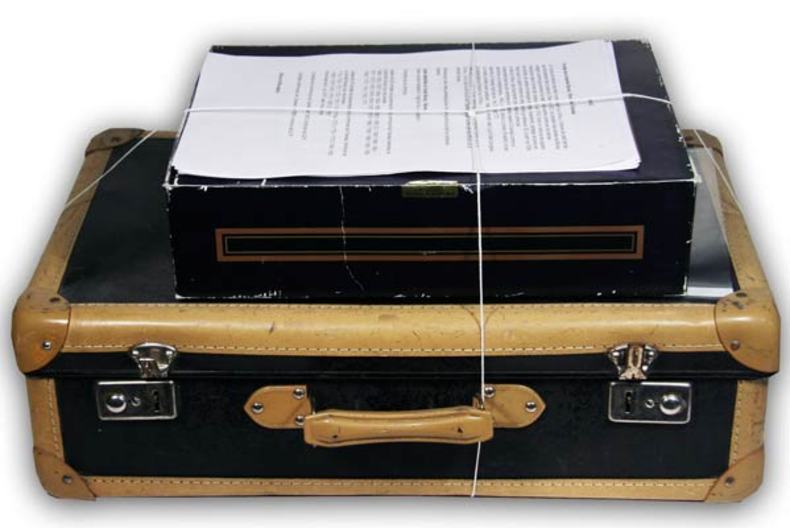
64848aaf1 valise + 1 boîte en carton.
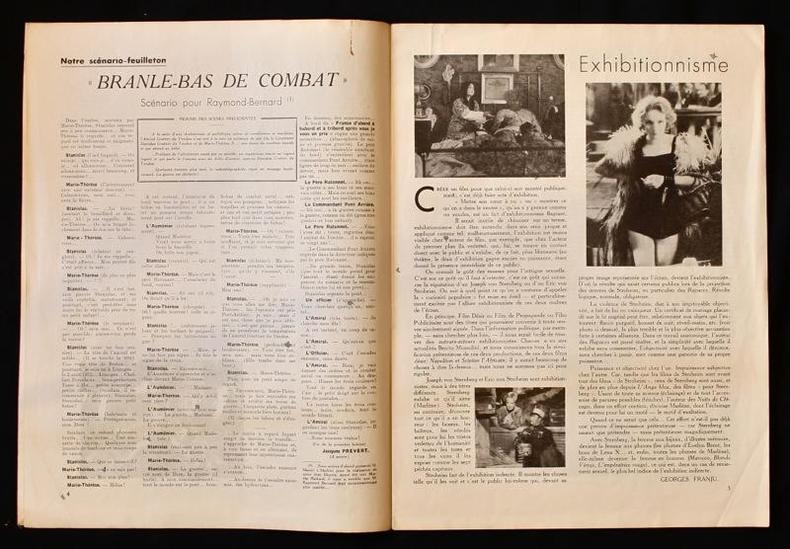
193758431937. Branle-bas de combat , 9 feuillets manuscrits autographes (27,1 x 21 cm. ) comportant de nombreuses ratures, d’un seul mot à un paragraphe entier. Quatre paragraphes sont ainsi biffés, et non repris dans la version publiée dans la revue le CINEMAtographe. On joint à ce manuscrit les deux seuls numéros de la revue CINEMAtographe, parus en mars et mai 1937, in-folio de 16p. chacun. Le texte des 9 feuillets autographes présentés ici correspond à la seconde partie, qui occupe la p. 4 de la revue. On joint un papillon annonçant les projections du tout jeune Cercle du Cinéma qui deviendra en 1936 la Cinémathèque française.