HUGO VictorMareMagnum

19 878 résultats
- Michel Lévy frères, Paris 1872, 15,5x23cm, broché. - L'Année terrible [The Terrible Year] Michel Lévy frères | Paris 1872 | 15.5 x 23 cm | original wrappers First edition printed on ordinary paper. Small sections missing on the board margins, sometimes filled and restored. Presentation copy signed by Victor Hugo: «Aux pieds de madame d'Alton-Shée.» «At the feet of Madame d'Alton-Shée.» Precious presentation copy in its original condition. Victor Hugo does not skimp on compliments towards women, but the expression «at the feet of My Lady» is reserved for the first «At the feet of Madame», in one single word, a seemingly more sober tribute, is in fact always addressed to women with whom the poet is besotted like, for example, Léonie d'Aunet, for whom he adds the same intimate dedication to her copies. Yet it is here to a married women, thirty years younger than him, that the writer dedicates this collection of poems about the 1871 war. Her husband, Count Edmond d'Alton-Shée, is also a long-time friend of Victor Hugo, a peer of France like him, and shares the same democratic struggles. They both tried to prevent the 1871 catastrophe, as shown by this letter, dated 2 August 1870, addressed to Victor Hugo: «I am in complete agreement with you. It will be necessary to seize the moment. At a given time, civilization, having revolution as a language, must put a stop to it. I want the Rhine for France, [...] But nothing by Bonaparte! Nothing by this frightful war! We are in agreement.» Yet it is not to this brother in arms and ink that Victor Hugo offers this copy, but to his wife, the young Valentine, whose great beauty was immortalised by another family friend, the painter Paul Chenavard who was also her lover. In September 1872, at the time of L'Année terrible's publication, the ageing poet's heart gives in to the attractive wife's charms, whose husband, now almost blind, can undoubtedly no longer appreciate her attraction. The couple pay a visit to Victor Hugo in Guernsey and stay in a hotel «opposite Hauteville-House [...] where [they] have two bedrooms for 20 francs per week.» «They are at my house all day, they have lunch and dinner at mine, and only have to step across the street.» (letter to Judith Mendès, 10 September 1872). This proximity to the captivating woman inspires Hugo to write a long, nostalgic poem on 5 September, one which he would only publish eleven years later, after the death of Edmond, in oute la Lyre. We must read between the lines of his poem «A Madame d'A-sh.» to guess the relationship that the poet then had with this muse: «Nobel woman faithful to the defeated, your smile fresh and beautiful, when it shines on me, it reminds me of this dawn on this tomb» However, the intimate handwritten dedication that he honours on his collection of poems shows a passion that will not reduce with time because, after his return to France, it is with the same enthusiasm that he invites her to visit him: «Have you found my name, at your door, Madame My name came to throw itself at your feet, and for your grace. Be good enough to come to dinner [...] I will be very happy to put myself at your feet» (letter to Valentine D'Alton-Shée, 1 August 1873). Exceptional handwritten dedication and secret declaration of a poet in love with the beauty of women. [FRENCH VERSION FOLLOWS] Edition originale sur papier courant. Petits manques parfois comblés et restaurés en marges des plats. Envoi autographe signé de Victor Hugo : "Aux pieds de madame d'Alton-Shée." Précieux exemplaire de présent dans sa condition d'origine. Victor Hugo n'est pas avare de compliments envers les femmes, mais l'expression « aux pieds de Ma Dame » est réservée aux premiers exemplaires offerts à chaque parution à Juliette Drouet. « Aux pieds de Madame », en un seul mot, hommage en apparence plus sobre, est en réalité toujours adressé à des femmes dont le poète est épris comme, par exemple, Léonie d'Aunet, pour laquelle il enrichit ses exemplaires de la mêm
- Fasquelle, Paris 1908, 19,5x25,5cm, relié. - De luxe edition illustrated with a hundred drawings by Pierre Bonnard scattered in the margins of the leaves, one of 200 numbered copies on Arches vellum, one print after 25 Japan. A beautiful copy. Binding in half brown calf, spine decorated with double black fillets, gilt date at the foot, marbled paper boards, marbled endpapers, covers and spine preserved, top edge gilt on the rough. Handwritten presentation signed by Pierre Bonnard to Xavier Roux: "... à son compatriote dauphinois et ami..." "...to his Dauphiné compatriot and friend..." enriched with a handwritten presentation signed by Octave Mirbeau to the same. [FRENCH VERSION FOLLOWS] Edition de luxe illustrée d'une centaine de dessins de Pierre Bonnard parsemant les marges des feuillets, un des 200 exemplaires numérotés sur vélin d'Arches, seul tirage après 25 japon. Bel exemplaire. Reliure en demi veau marron, dos lisse orné de doubles filets noirs, date dorée en queue, plats de papier marbré, gardes et contreplats de papier à la cuve, couvertures et dos conservés, tête dorée sur témoins. Envoi autographe signé de Pierre Bonnard à Xavier Roux : "... à son compatriote dauphinois et ami..." enrichi d'un envoi autographe signé d'Octave Mirbeau au même.
- s.l. (Paris) s.d. (1955), 18,7x27cm, une photographie. - Original collage produced on an original photograph portrait of Robert Doisneau enriched with a handwritten presentation signed by Jacques Prévert [Paris 1955] | 18.7 x 27 cm | one photograph Original photograph in contemporary silver print showing Jacques Prévert, in front of the pediment of a church, on which the poet glued an old engraving depicting a bird and which he enriched with a signed handwritten presentation to his friend Jean Mattei. Prévert also, using paint, reddened the end of his cigarette. Stamp of the Doisneau studio in Montrouge on the back of the picture. One central fold. On this rare photograph, reproduced in the book Rue Jacques Prévert by Robert Doisneau, the poet poses in front of the Catéchismes chapel of the Église Saint-Jacques-Saint-Christophe de la Villette, situated in the 19th arrondissement in Paris. Jean Mattei, dedicatee of this work, was Chagall and André Gide's doctor and lived in Saint-Paul-de-Vence. [FRENCH VERSION FOLLOWS] Photographie originale de Robert Doisneau en tirage argentique d'époque représentant Jacques Prévert, devant le fronton d'une église, sur laquelle le poète a collé une gravure ancienne figurant un oiseau et qu'il a enrichie d'un envoi autographe signé à son ami Jean Mattei. Prévert a également, à l'aide de peinture, rougi le bout de sa cigarette. Tampon du studio de Doisneau à Montrouge au dos du cliché. Une pliure centrale. Sur cette rare photographie, reproduite dans l'ouvrage Rue Jacques Prévert de Robert Doisneau, le poète pose devant la chapelle des Catéchismes de l'église Saint-Jacques-Saint-Christophe de la Villette, située dans le 19e arrondissement de Paris. Jean Mattei, dédicataire de cette uvre, fut le médecin de Chagall et d'André Gide et vivait à Saint-Paul de Vence.
- Ambroise Vollard, Paris 1911, 22,5x29cm, relié sous étui. - Sagesse<br>Ambroise Vollard | Paris 1911 | 22.5 x 29 cm | morocco with slipcase<br>Illustrated edition with 95 original compositions (borders, title headers and tail-pieces) of which 72 are in color by Maurice Denis, one of 210 numbered copies on Holland. Bound in strips of half caramel morocco, spine decorated with wavy arabesques bordered with grey fillets and mosaics of pieces of Havana brown, autumn leaf color, brown and cream morocco, gilt name of the illustrator at the foot, grey fillets framing the marbled paper boards, pastedowns in brown paper, covers and spine preserved, top edge gilt, slipcase edged in caramel morocco, marbled paper boards, beige felt interior, binding signed Miguet. Very handsome copy of this important artist's book particularly representative of Maurice Denis' Nabi period, «that where the freshness of invention unites with a symbolist workmanship to give a pure note of its own» (cf François Chapon, Le Peintre et le Livre, 1870-1970, pp. 68-72.) Maurice Denis's signature on the print details page with this note «Copy of M. J. Guiffrey.» Art historian, Jules Guiffrey was the manager of Gobelins and the founder of the Société de l'histoire de l'art français (French art history society). Endpapers very lightly and partially shaded. Beautiful copy of this important artist's book set in an elegant mosaic binding by Miguet. [FRENCH VERSION FOLLOWS] Édition illustrée de 72 compositions originales (encadrements, têtes de chapitres et culs-de-lampe) dont 72 en couleurs de Maurice Denis, un des 210 exemplaires numérotés sur Hollande. Reliure en demi maroquin caramel à bandes, dos lisse orné d'arabesques ondulées bordées de filets gris et mosaïquées de pièces de maroquin havane, lavallière, marron et crème, nom doré de l'illustrateur en queue, filets gris en encadrements des plats de papier marbré, contreplats de papier marron, couvertures et dos conservés, tête dorée, étui bordé de maroquin caramel, plats de papier marbré, intérieur de feutrine beige, reliure signée Miguet. Très bel exemplaire de cet important livre d'artiste particulièrement représentatif de la période Nabi de Maurice Denis, "celle où sa fraîcheur d'invention s'allie à une facture symboliste pour donner une note pure qui lui est propre" (cf François Chapon, Le Peintre et le Livre, 1870-1970, pp. 68-72.) Signature de Maurice Denis à la justification du tirage avec cette mention "Exemplaire de M. J. Guiffrey. Historien d'art, Jules Guiffrey fut administrateur des Gobelins et fondateur de la Société de l'histoire de l'art français. Gardes très lègèrement et partiellement ombrées. Bel exemplaire de cet important livre d'artiste établi dans une élégante reliure mosaïquée de Miguet.
- s.l. [Londres] s.d. [25 juillet 1905], 12,4x16,7cm, 4 pages sur un double feuillet et 2 pages 1/2 sur un double feuillet. - Ice and fire: Set of two handwritten letters signed "Paule" and "Pauline" addressed to Natalie Clifford Barney: « Lorely - Undine - Viviane - reçois mon cur entre tes mains étranges - et si douces ! » « Il m'est impossible de te revoir ! » [London 25 July 1905] | 12,4 x 16,7 cm | 4 pages on a double leaf and 2 pages 1/2 on a double leaf Two handwritten letters signed «Paule» and «Pauline» addressed to Natalie Clifford Barney and written in black ink on a double leaf with a silver purple header and the address 3 rue Jean-Baptiste Dumas. On the letter signed «Pauline», the address at the top is crossed out with a line of ink. Transverse fold from having been sent. Skillful romantic contrast from the virtuoso Renée Vivien, who, in turn Paule and Pauline, orchestrates her romantic relationships before her run away to Lesbos. Several years after an extraordinary break-up, during which Natalie Clifford Barney tried to win back the Muse aux violettes, the latter finally fell back into her arms. The first letter, signed "Paule" is very sensual: "I have thought of you so deeply and with such softness since you left! And I see you again, in your dress shimmering with opals, magical and prestigious... Yesterday's spell has regained its eternal power over me... It is now three o'clock in the morning and I am not sleeping at all and I am thinking of you, intensely... and I bitterly consider that one evening when you were beside me, foolishly, a stupid fatigue went through me... While this night when I am alone, I cannot sleep." We discover at the turn of a sentence that this missive, written in haste, is completely secret: "Don't be surprised, beautiful, to receive any day an icy letter telling you that I am going to Holland with my friend and whoever. My friend has demanded that I write you this letter, she is very worried, very nervous, about you. Please don't be mad with me when you receive this letter, I had to write it to calm and reassure my friend. Once again, forgive me!" The "friend" in question is none other that the baroness Hélène de Zuylen, with whom Renée maintained a stable relationship since her break-up with l'Amazone in 1901. The "Brioche", as Natalie calls her, who tried by all means to save Renée from the torments of her heart, even asks her to write "an icy letter" to her rival. This false letter, in a very different tone from the first, seems to have been written directly under her dictation: "After you left, I thought a lot about everything that had just happened, and I can only repeat to you what I have already told you: it is impossible for me to see you again, under any circumstances. The nervous disorder of which I am now suffering and of which only you are the cause, demands the utmost tranquility in the interest of my health, and I beg you to refrain, in the future, from any attempt at getting together, which, I warn you in advance, will be absolutely useless. You will see, from this letter, that I am in Holland, with my friend, as I told you. We go out together, among the calm landscapes, a charming rest. Farewell, Natalie, and remember that you were the sole cause of everything that happened. Pauline" However, a third muse occupies all of Renée's thoughts: the young Ottoman Kérimé Turkhan-Pacha, with whom she has maintained an intense and regular correspondence for a year. Several days later, she left France with Natalie for Mytilene (Lesbos) and took the opportunity to escape and finally meet her Bosphorus sultana for the very first time. A very beautiful testimony of Renée Vivien's ubiquity in love. Precious and very rare letters from Sappho 1900 to l'Amazone. It is at the end of 1899 and through Violette Shillito that Renée Vivien - then Pauline Tarn - met Natalie Clifford Barney "this American woman softer than a scarf, whose sparkling face shines with golden hair
- Londres Tuesday the 7th [september ? 1909] , 12,5x20cm, 4 pages sur un double feuillet. - Handwritten signed letter in English addressed to her younger sister: "Little Child, I never could possibly find the right words to tell you how deeply your dear little letter touched me" London Tuesday the 7th [September? 1909] 12,5 x 20 cm | 4 pages on a double leaf Handwritten letter signed by Renée Vivien addressed to her younger sister Antoinette Tarn, four pages written in black ink on a double leaf of headed paper from the Savoy Hotel in London. Transverse folds from having been sent. A very beautiful letter, full of joy, testifying to the intense relationship that Renée Vivien had with her little sister. "It would be profoundly inaccurate to believe that Renée Vivien, during her literary life (1900-199), had little contact with her family. [...] On the contrary, various documents prove that the relationships with her family - and with her sister primarily - were regular as well as affectionate." (J.-P. Goujon, « Renée Vivien et ses masques » in à l'encart n°2 April 1980) Our letter reveals the poet's great tenderness for her "little child" whom she showers with attention: "I've sent you to-day some flowers and fruit which I hope will reach you safely. If not write so Solomon's and scold them soundly. I know you and Francis like fruit, - and how right you are! - but it's frightfully difficult to get any at the sea-side. So I've sent you some peaches, a bunch of black grapes and a bunch of white - also some oranges, as they are so refreshing." La Muse aux violettes then dwells on the description of the bouquet que Toinette will receive "Then there are some flowers for you especially - some green pink roses - not the ordinary stupid pink but a sort of flashed golden... (I'm afraid this sounds like a second-rate artist, but it's so difficult to express oneself. I mean a mélange of pink and yellow) And some of the dear fragrant little lilies-of-the-valley you like."), mixing English phrases and French vocabulary with humor: "I'm talking you all this, my little Darling, en personne pratique, as if the things don't arrive all right, you can réclamer." Renée Vivien's correspondence is not usually marked with such joy, and it is in a new light that this letter reveals the optimistic and reassuring sister that she was: "(last night was horrible by the way - crises d'estomac and nightmare combined) But to-day I'm blithe and merry and feel sur this night will be a good one, as good and bad almost invariably alternate. However, even the bad nights aren't quite so bad, as then I compose poetry or write little prose-poems or pièces of théâtre and thus turn insomnia to good account." However, at that time, the poet's health deteriorated considerably, alcohol and chloral hydrate abuse caused her chronic gastritis. In this painful and yet prolific moment, Renée thinks of her sister and, in this year 1909, - her last among the living - she asks Sansot, her publisher, to publish a booklet entitled à ma sur, printed on Japan paper with few copies and whose colophon explains: « Achevé d'imprimer le XVIII novembre MCMIX par E. Sansot éditeur [...] pour Pauline Tarn décédée ce même-jour » ("Printing completed on XVIII November MCMIX by E. Sansot publisher [...] for Pauline Tarn who died this same day"). This "heavy poem"and intimate testament speaks of the important place that Toinette occupied in Renée's life, who is the godmother of her son Paul, also mentioned in this letter: "I so often think of you, and the lovely country, and little Paul [...]! Give the Darling a great kiss from his absent Aunt." The child was baptized Paul (a very rare name in England at the time) in honor of his aunt, and in 1911, Toinette gave birth to a daughter whom she names Renée in tribute to her late sister. The tender letters from Sappho 1900 to her family, through periods of her suffering, are of great rarity. [FRENCH VERSION FOLLOWS] Lettre autographe sign
- Charpentier, Paris 1886, 11,5x18cm, relié. - Republished one year after the original. Binding in half blue-grey percaline, spine decorated with a gilt fleuron in the centre and a double gilt filet at the bottom, brown shagreen title piece, discreet restorations on the joints, contemporary binding. Handwritten presentation by Émile Zola to the publisher Ernest Flammarion. Precious copy enriched with a handwritten presentation by the author set on one of his masterpieces. [FRENCH VERSION FOLLOWS] Réédition postérieure d'un an à l'originale. Reliure en demi percaline bleu gris à coins, dos lisse orné d'un fleuron doré au centre et d'un double filet doré en queue, pièce de titre de chagrin marron, discrètes restaurations sur les mors, reliure de l'époque. Envoi autographe d'Émile Zola à l'éditeur Ernest Flammarion. Précieux exemplaire enrichi d'un envoi autographe de l'auteur sur le plus célèbre de ses Rougon-Macquart.
- G. Charpentier & Cie, Paris 1887, 11,5x18cm, relié. - Republished nine years after the original. Binding in half blue-grey percaline, spine decorated with a gilt fleuron in the centre and a double gilt filet at the bottom, brown shagreen title piece, discreet restorations on the joints, contemporary binding. Some minor foxing. Handwritten presentation by Émile Zola to the publisher [Ernest] Flammarion. Precious copy enriched with a handwritten presentation by the author set on one of his masterpieces. [FRENCH VERSION FOLLOWS] Réédition postérieure de neuf ans à l'originale. Reliure en demi percaline bleu gris à coins, dos lisse orné d'un fleuron doré au centre et d'un double filet doré en queue, pièce de titre de chagrin marron, discrètes restaurations sur les mors, reliure de l'époque. Quelques légères piqûres sans gravité. Envoi autographe d'Émile Zola à l'éditeur [Ernest] Flammarion. Précieux exemplaire enrichi d'un envoi autographe de l'auteur sur l'un de ses chefs-d'uvre.
- Médan 1er décembre 1882, 13,6x21,4cm, 2 pages sur un double feuillet - enveloppe jointe. - Lettre autographe signée d'Emile Zola - apparemment inédite - rédigée à l'encre noire sur un double feuillet et adressée à Léon Carbonnaux, chef de rayon au Bon Marché. Pliures inhérentes à l'envoi. Enveloppe jointe. On ne connaît que deux lettres de Léon Carbonnaux à Emile Zola : elles sont consultables dans la numérisation du dossier préparatoire du Bonheur des Dames mis en ligne par la Bibliothèque nationale de France. On sait cependant grâce à ce même dossier, dans lequel figure une longue section intitulée « Notes Carbonnaux », que ce chef de rayon au Bon Marché fournit à Zola un nombre important d'informations, notamment sur les murs des employés, leur rémunération et surtout sur les techniques d'inventaire. Les deux hommes se sont sans doute rencontrés alors qu'Emile Zola, avide de renseignement quant au fonctionnement des grands magasins, mena une enquête de terrain en février et mars 1882. Très importante lettre inédite apportant un éclairage nouveau sur la publication pré-originale d'Au bonheur des dames. Dans sa biographie d'Emile Zola, Henri Mitterrand écrit : « Avant même que le roman ne soit achevé, Zola en donne un extrait au Panurge, en novembre ; et le 23 novembre 1882, le Gil Blas en annonce la proche publication dans ses colonnes. » Notre lettre, évoquant justement cette prétendue prépublication dans le Panurge, atteste qu'il s'agit tout bonnement d'une plaisanterie et dément ainsi Henri Mitterrand : « Mais votre lettre m'étonne et me chagrine un peu. Comment avez-vous pu vous laisser prendre à la plaisanterie imbécile du Panurge ? Vous n'avez donc pas remarqué que tout le numéro est une « farce » ? Pas un des articles n'est authentique, ce sont des pastiches, et même fort mal faits. » En effet, la lecture dudit extrait ne peut tromper le lecteur assidu de Zola, malgré l'introduction que les journalistes ont rédigée : « Après Nana et Pot-Bouille, ces épopées du vice élégant et du vice bourgeois, M. Emile Zola a voulu faire celle de l'honnêteté : Au bonheur des Dames, qui va paraître prochainement, est une peinture rassérénante de l'innocence et de la vertu ; le plus grand succès est assuré à cette nouvelle uvre dont les personnages se meuvent dans le décor d'un grand magasin de nouveautés ; le haut commerce parisien n'attendra pas longtemps son observateur et son peintre. Nous remercions Emile Zola d'avoir bien voulu, tout spécialement pour Panurge, découper quelques feuilles de son ouvrage encore inédit, et nous sommes fiers de donner les premiers au public un extrait de cette uvre d'une si haute moralité et d'un si puissant intérêt. » (Panurge n°4 du 22 octobre 1882) Les phrases de ce faux texte zolien sont exagérément longues et le Panurge a pris la liberté de doter le roman d'un personnage principal masculin, Denis Mouret, amalgame de Denise (véritable héroïne du livre à paraître) et Octave Mouret. On peut penser qu'il s'agit d'un texte composé à partir d'éléments de Pot-Bouille, précédent volume des Rougon Macquart où Octave - futur patron du Bonheur des Dames - exerçait la fonction de commis avant sa fulgurante ascension sociale : « Depuis déjà plus de deux mois, il était attaché au rayon des « soieries et fourrures » ; il arrivait le matin à sept heures pour ne rentrer chez lui, sa journée finie, qu'à neuf heures du soir, quand Paris tout entier bruissait étrangement d'une animation fiévreuse de plaisir et de jouissance, et, en s'en retournant, il suivait badaudant les grands boulevards encombrés, où flambaient les cafés pleins de filles, et où, sur l'asphalte, à la porte des théâtres, se bousculait la foule avec, ça et là, dans la rumeur vague du piétinement et de la presse, l'intonation voyou des cris des marchands de programmes et des vendeurs de billets. » (Panurge) Dans sa lettre du 30 novembre 1882, Léon Carbonnaux - lisant l'extrait du Panurge - avait reproché à Zola ses erreurs : « Nulle part excep
Manuscript document together with linen backed drawings. Document is 11 pages written recto and verso to six folded leaves string-tied at margin, measuring approximately 28,5 x 18,5 cm. Drawings are folded leaf measuring approximately 64 x 43 cm, accompanied by a related diagram on a single leaf measuring approximately 27 x 40 cm. The manuscript document describes the great consternation among the Japanese civilians, upon the arrival of Commodore Perry's four American ships at Uraga in July 1853, and the warlords' immediate action to guard the coast. Together with a large manuscript ink drawing depicting the "black ships", and an accompanying drawing of a barrel transport method. All text is in Japanese. Minor creasing and age-toning, otherwise items are in very good condition, beautifully preserved contemporary documentation by a Japanese civilian observing the events as they unfolded. A contemporary advisory of utmost urgency alerting Japanese civilians of the arrival of four formidable American vessels and the immediately appointment of warlords to protect the nation from invasion. The manuscript begins by reporting the arrival at Uraga in Edo Bay [Tokyo Bay] on 8 July 1853 of Commodore Perry and his four "Black Ships" [war steamships Susquehanna and Mississippi, sailing sloops Plymouth and Saratoga]. Details of the ships are given, including size, one estimated at 45 ken [approximately 82 metres], number of masts, firing canons, and so forth. The writer describes the ensuing panic among Japanese civilians, at Uraga and as far as Shinagawa, which is now part of Tokyo. [The news was travelling fast by word of mouth along the coast and trade routes, and began being illustrated with the "kawaraban" - broadsides with woodblock prints - for distribution. Naturally, Edo commoners were curious to learn about the imposing vessels that suddenly appeared within sight of their city.] He goes on to further explain that the Feudal Lords feared of an imminent and much larger attack by a foreign power, and the final section includes a list of warlords assigned to the vital responsibility of coastal guard duty. [The Japanese had no navy with which to defend themselves. The Americans were there to impose a trade agreement, and the opening of Japanese ports to U.S. merchant ships. This was the era when all Western powers were seeking to open new markets for their manufactured goods abroad, as well as finding more raw materials for their growing industries. Perry's small squadron itself was not enough to force the massive changes that subsequently took place in Japan, but the Japanese knew that his ships were just the beginning of Western interest in their islands. Russia, Britain, France, and Holland indeed followed Perry's example and used their fleets to influence Japan into signing treaties granting regular relations and trade. [Perry's vessels imposingly sailed into Edo Bay and his crew began surveying the surrounding area. The Japanese were shaken by this unprecedented and brazen conduct. After Perry's departure, an extensive debate ensued within the Shogunal court on how to respond to the American's implied threats. Shogun Tokugawa Ieyoshi died within a few short days, and was succeeded by his sickly young son, Tokugawa Iesada, leaving effective administration in the hands of the Council of Elders (roju) led by Abe Masahiro. Abe felt that at the time it was impossible for Japan to resist the American demands by military force, so he polled all of the daimyos (magnates and feudal lords) for their opinions. Of the 61 known responses, 19 were in favor of accepting the American demands, 19 were equally opposed, 14 gave vague responses expressing concern of possible war, 7 suggested making temporary concessions, and 2advised that they would simply go along with whatever was decided. The only universal recommendation was that steps be taken immediately to bolster Japan's coastal defenses. As revealed in the present document, one of the earliest steps was to assign the feudal lords to coastal defense. Fortifications were hurriedly built close to current day Odaiba in order to protect Edo from a subsequent American naval incursion. The Japanese ultimately agreed to the demands. Although many leaders wanted the foreigners expelled from the country, in 1854 a treaty was signed between the United States and Japan which, allowed trade at two ports.]
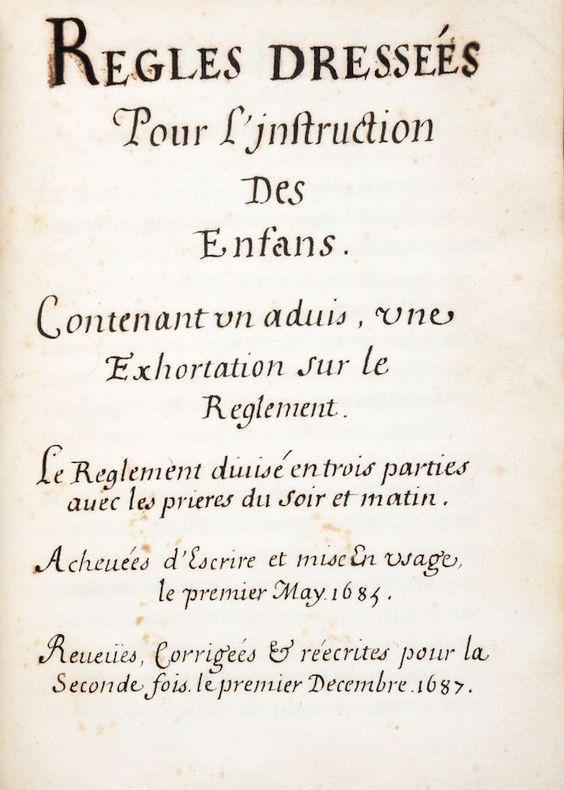
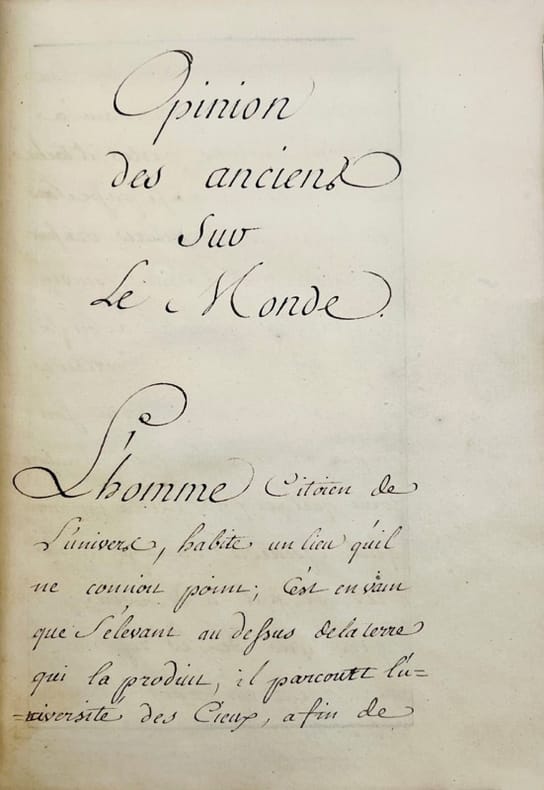
168711339, , 1687. In-8 carré manuscrit de (45) ff. à 22 lignes par page veau brun granité, dos orné à nerfs, traces de lacets, tranches jaspées (reliure de l'époque).
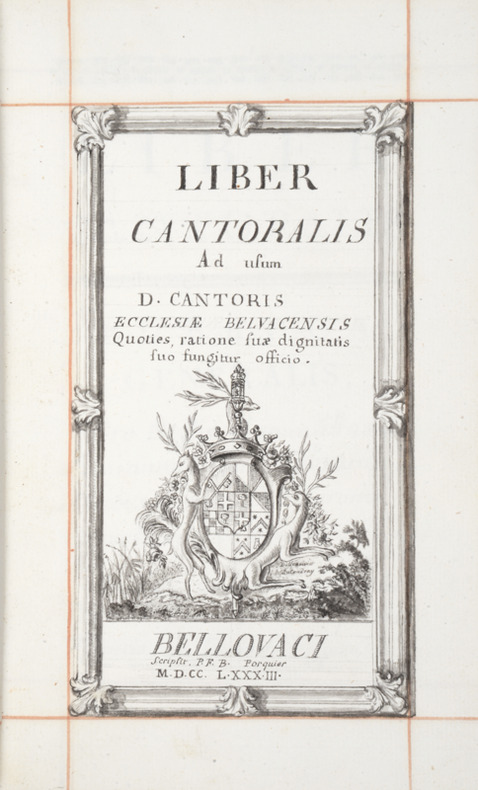
178341437Beauvais, , 1783. Manuscrit in-8 réglé de XL-201 pp., maroquin rouge, dos à nerfs orné à la grotesque, pièce de titre en maroquin vert, triple filet doré d'encadrement sur les plats, gardes de papier dominoté, filet or sur les coupes, roulette intérieure dorée, tranches dorées (reliure de l'époque).
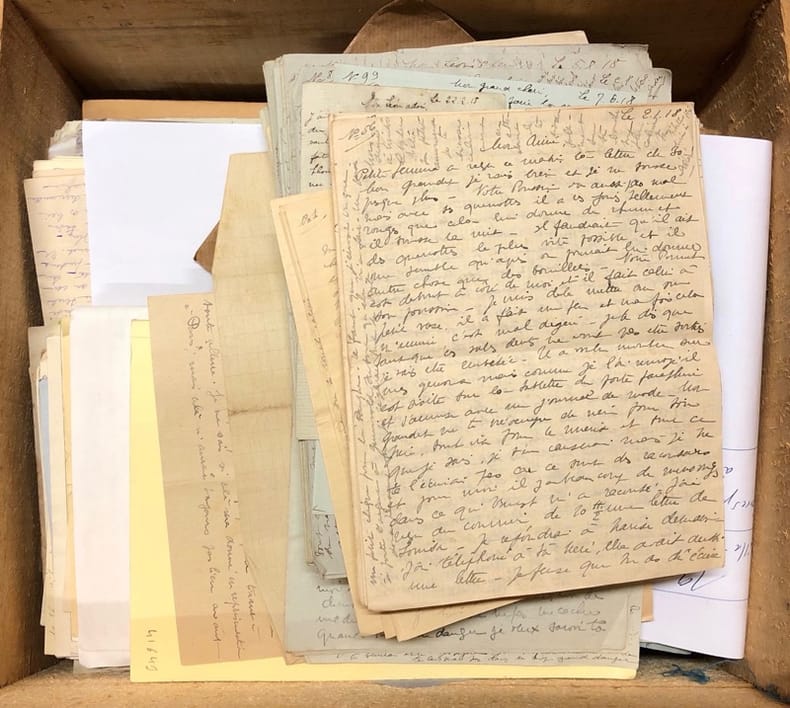
191441649, , 1914-1917. Plus de 1000 lettres et cartes manuscrites.
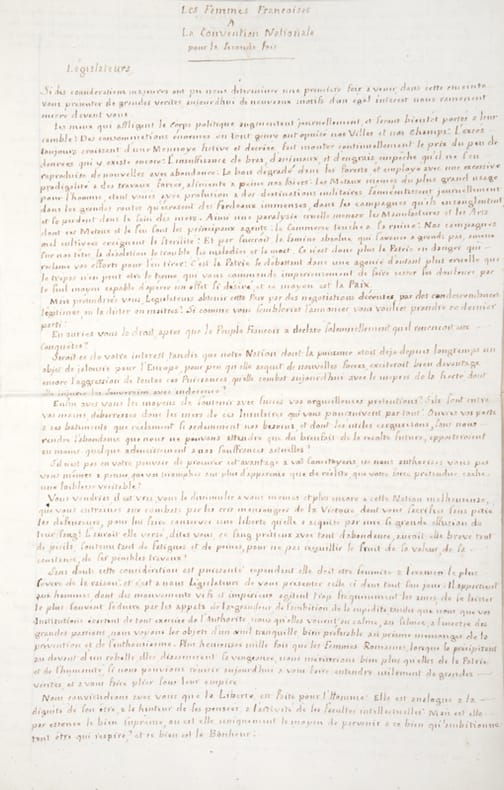
179542285S.l.n.d., , (1795). Manuscrit in-folio broché de 4 pp. à 62 lignes par page.
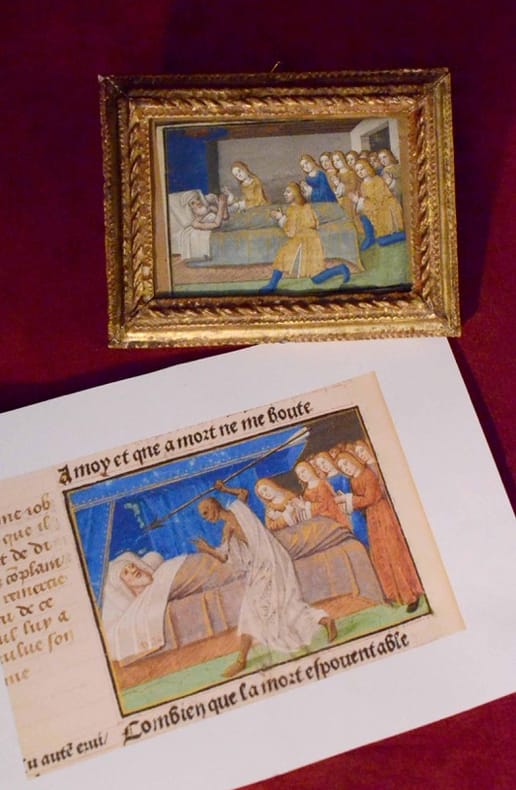
2548Deux miniatures sur vélin - l’une représentant « Job sur son fumier » (7,5 x 5, 5 cm) placée dans un petit encadrement mouluré doré ; la seconde « La mort de Job » (8,2 x 6 cm) dans un encadrement moderne.
1655149XVIIe circa 1655 Pas de couverture Dim : 26 x 21 cm.Gouache sur vélin tendue sur panneau de bois. Première moitié du XVIIe s.
171642817, , 1716. Manuscrit petit in-4 sur papier de 121 pp. chiffrées et cadrées, maroquin rouge, dos orné aux petits fers, plats avec encadrements de filets fleuronnés, tranches dorées (reliure de l'époque).
170044492S.l.n.d. (Versailles, , 1700). In-12 manuscrit (9 x 14 cm) de (5)-228 pp., maroquin noir janséniste, dos orné à nerfs, pièce de titre en maroquin rouge, gardes de papier dominoté, tranches dorées (reliure de l'époque).
189178S.l., s.d. in-4, 6 planches finement aquarellées, de 21,5 x 28 cm, avec sujets dans une large bordure citron, légendées en allemand (sauf la dernière, en français), en feuilles sous chemise de chagrin azur à recouvrements de toile et lacets, dos lisse muet (reliure moderne). Bon exemplaire.
168099S.l.n.d. fort vol. in-folio, [612] pp. n. ch., couvertes d'une écriture fine et très lisible (environ 40 lignes par page), [7] ff. vierges, vélin rigide, tranches mouchetées de rouge, titre manuscrit au dos (reliure de l'époque). Vélin un peu taché, mais bon exemplaire.
186422828Abbaye de Solesmes, 1864. Petit in-4° (175x125 mm), plein maroquin lavallière, dos rond à cinq nerfs soulignés d'un filet doré fin, caissons à double encadrement de filet doré fin et fleurons de marguerite dorés, titre et date en queue (1864) dorés, double filet d'encadrement des plats, titre en majuscules et chiffre MG doré, marguerites dorées en coins sur les deux plats, dentelle intérieure accompagnée de dents-de-rat, filet doré sur les coupes, soie moire écarlate en contre-plats et gardes (Pinot au Mans) ; 14 feuillets de bristol crème épais accompagnés de serpentes de papier de soie montés sur onglets entièrement consacrés à un calendrier manuscrit et décoré dans le style des livres d'heures des XVe-XVIe siècles, accompagné de la page de garde qui fait office de lettre d'envoi manuscrite du frère Prosper Guéranger à Mlle Marguerite Landeau, à l'occasion de son mariage [avec Gustave-Marie Daniel-Lacombe], daté du 2 février 1864, veille de la cérémonie du mariage à l'abbaye de Solesmes.
172644760, , 1726 ca. Manuscrit in-8 carré (190 x 135 mm) de (133) ff., veau fauve, dos lisse orné, pièce de titre en maroquin rouge, triple filet doré d'encadrement sur les plats, tranches dorées (reliure de l'époque).
Deutsche Handschrift auf Papier. (6), 63, (16) Bll., zwischen Titelblatt und Register durchschossen. Grün gefärbter Pergamentband der Zeit. Kl.-Folio (200 x 305 mm). Zeitgenössisches Manuskript der wichtigen Bergwerksordnung des Fürsterzbischofs Matthäus Lang von Wellenburg von 1532, die 1551 als eines der ersten gedruckten Bücher von Salzburg bei Hans Baumann erschien. Die neue Bergwerksordnung löste die älteren, teils mehrdeutigen und unverständlichen Regelwerke ab; sie bestand mit mehreren Novellierungen auch nach dem Ende des Erzstiftes weiter und wurde erst 1854 durch das Allgemeine Berggesetz für die Österreichische Monarchie abgelöst. - Die Ordnung regelte die Rechte und Pflichten der landesfürstlichen Beamten, der Gewerken und Hutleute, die Abgaben der Bergleute, die Versorgung der Bergwerke mit Holz und Lebensmitteln sowie die Arbeits- und Ruhezeiten, wobei der übermäßig lange Aufenthalt im Wirtshaus nach Feierabend unter Strafe gestellt wurde: "Wir wollen auch das unnsere Perckhrichter zu fürderung gemeines nutz und der perckhwerch [...] allenthalben darob seyen, Das die Huetleut, Lehenhewer, Gedingheuer und annder Arbaiter, all zu rechter zeit, und wie obgemelt ist, zue und von der Arbait geen, und sich nit in den Wirtshewsern, Tafernen oder anndern ennden uber die gewönndliche zeit versitzen oder verhalten, bey peen aines Reinischen guldens [...]" (fol. 35). - Der erste Teil der vorliegenden Handschrift stammt noch aus der ersten Hälfte des 16. Jhs., bricht jedoch bei Artikel 34 (fol. 63v) ab und wurde nach dem erwähnten Baumann-Druck wohl im dritten Viertel des 16. Jhs. ergänzt. Das im Zuge dieser Komplettierung entstandene Titelblatt entspricht jenem der gedruckten Ausgabe. - Einband fleckig, Rücken lädiert, Schließbänder fehlen. Papier durchgehend leicht fleckig; einzelne Seiten mit kleinen Randläsuren, teils alt mit Papierstreifen hinterlegt.
1918962421918 4 pages in-8 à l'encre, chacune contrecollée sur une feuille de format in-4. Manuscrit de travail, avec corrections et ratures, de cette chronique parue dans la rubrique "La Vie anecdotique" du Mercure de France (16 mars 1918). La pénurie de tabac qui sévit en France, conséquence de la crise de 1917, sert de prétexte à ce récit délibérément provocant d’inspiration sado-masochiste."Dans une ville d’Italie quelques années avant la guerre, un de ces Allemands enrichis et sadiques qui traduisaient leurs imaginations grossières et compliquées en décors d’une banalité splendide me fit demander d’aller voir ses livres, sa collection de fétiches d’Océanie et d’Afrique et ses tableaux de Gauguin. Cet homme, dont le nom importe peu, cherchait à rivaliser en raffinement avec ce qu’il avait entendu dire de certains Anglais et en goût avec ce qu’il savait des Français. Parmi ses tableaux, il y avait quelques faux. Les fétiches avaient été choisis sans discernement. Quant à ses livres, je n’eus pas le temps de les regarder. On me fit passer dans un fumoir, où le parvenu allemand était enfoncé dans un fauteuil de cuir et fumait des cigarettes égyptiennes tandis qu’auprès de lui, nue, une fillette idéalement fine, attendait qu’après avoir tiré trois ou quatre bouffées, avant de la jeter, il éteignît sa cigarette sur les reins de la petite fille, dont la peau frémissait, et une brûlure tachait la blancheur du corps charmant que le vieil Allemand cynique torturait d’un air indifférent". Cette chronique a été reprise dans le recueil "Anecdotiques" paru chez Stock en 1926.
1918962421918 4 pages in-8 à l'encre, chacune contrecollée sur une feuille de format in-4. Manuscrit de travail, avec corrections et ratures, de cette chronique parue dans la rubrique "La Vie anecdotique" du Mercure de France (16 mars 1918). La pénurie de tabac qui sévit en France, conséquence de la crise de 1917, sert de prétexte à ce récit délibérément provocant d’inspiration sado-masochiste."Dans une ville d’Italie quelques années avant la guerre, un de ces Allemands enrichis et sadiques qui traduisaient leurs imaginations grossières et compliquées en décors d’une banalité splendide me fit demander d’aller voir ses livres, sa collection de fétiches d’Océanie et d’Afrique et ses tableaux de Gauguin. Cet homme, dont le nom importe peu, cherchait à rivaliser en raffinement avec ce qu’il avait entendu dire de certains Anglais et en goût avec ce qu’il savait des Français. Parmi ses tableaux, il y avait quelques faux. Les fétiches avaient été choisis sans discernement. Quant à ses livres, je n’eus pas le temps de les regarder. On me fit passer dans un fumoir, où le parvenu allemand était enfoncé dans un fauteuil de cuir et fumait des cigarettes égyptiennes tandis qu’auprès de lui, nue, une fillette idéalement fine, attendait qu’après avoir tiré trois ou quatre bouffées, avant de la jeter, il éteignît sa cigarette sur les reins de la petite fille, dont la peau frémissait, et une brûlure tachait la blancheur du corps charmant que le vieil Allemand cynique torturait d’un air indifférent". Cette chronique a été reprise dans le recueil "Anecdotiques" paru chez Stock en 1926.