[Anonymous]:Biblio.com
253 537 résultats
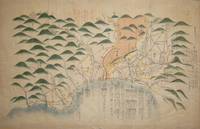
6624The focus of the map is Toyama a significant sea-port in what was once Etchu province on Honshu. The medium is ink on laid paper. A mid nineteenth century date has been suggested on stylistic grounds and the script is pre-Meji era. Toyama and the surrounding towns are shown in the yellow circles linked by red roads and regions are also named. It is unsigned on the back of the map is written 'Etchu Map'. Most of the text concerns distances a form of mileage table. There is a note top right which appears to indicate that the information in red is less certain than the information in black. Various other things are shown on the map: shrines and temples hot springs and a gate where travellers would have to show passports. Map unknown
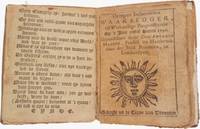
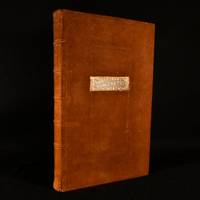
17492101<p>1 No name. Kort en Bondig Kronykje beginnende met de geboorte ons heeren Jesu Christi tot op deeze tijd.</p><p>Illustrated with a woodcut vignette on the title-page and a woodcut tailpiece after the first part.</p><p>2 No name. Ordre der rydende posten wegens 't post-comptoir binnen Zutphen: als mede 't reysen der boden 't varen der schepen wagens en karren. </p><p>3 No name. De vaarsen van Dionisius Cato. Om manierlyk te leven.</p><p>Illustrated with a woodcut vignette on the title-page.</p><p>4 Giovanni Antonio Magini. Opregten Italiaanschen waarsegger of wiskundige prognosticatie op 't jaar onses heeren 1750. Gepractiseert door Don Antonio Magino profess. en matthematicus der stad Bononien in Lombardyen.</p><p>Illustrated with a woodcut sun with a face on the title-page and a little woodcut moon at the beginning of each month.</p><p>5 No name. Koddige opschriften kakhuys opschrift.</p><p>2 pp.</p><p>6 No name. No title.</p><p>12 pp.</p><p>Unique almanac printed in Zutphen no other copy is recorded in a library auction results or dealer catalogues. Bound in full leather with the arms of Zutphen and Holland blind stamped on it. The work consists of 6 parts: 1 A historic chronology from the year 1 up to the year 1749 the date of publication divided in two parts: the first part ends at the year 1700 the second part deals with the years 1701-1749. 2 An overview of the post schedule for Zutphen to nearby places and international. 3 New edition of the first part of Salomon van Rusting's Dutch translation of Dionysius Cato's Disticha Catonis first published in 1658 and last recorded edition in 1712. 4 Astronomical forecast for the year 1750 after the edition from Bologna "Gedrukt na de copye van Bononien" based on the method of the famed astronomer Giovanni Antonio Magini 1555-1617. His method was widely used for Dutch almanacs in the 16th 17th and 18th centuries known as the "Italiaensche waersegger". 5 A short bawdy piece supposedly written on a public toilet. 6 An unidentified work of which the start is missing and the last few pages are damaged. A charming and unique almanac in similarly special binding.</p><p>Condition: Last page damaged with loss of text and the two pages before that slight frayed with minor loss of text. Book block detached and some quires loose. A few tiny holes in the spine of the binding new paste-downs. The leather binding smells. Otherwise in good condition.Literature: not in STCN NCC KVK WorldCat USTCN; for the publisher/printer see: CERL Thesaurus cni00017912.</p> Johannes Henricus Louw
17803719n.d. n.p. n.d mid-late 18th century 1780. An album of hand-drawn maps with handwritten notes in an attractive italic. 230x180mm. Unpaginated 137 pages of maps 84 maps and text: pp. 89 24bl 48 including 4 blank pages 14bl. The maps are beautifully drawn in pen and ink with borders in coloured ink and watercolour. Tan half calf rebacked and corners repaired eighteenth-century marbled paper covered boards. Raised bands burgundy morocco label lettered in gilt "Maps J:R". Some scuffing and staining to the boards. A repaired tear to the first page of text but otherwise in very good condition throughout. The author is unidentified and possibly unidentifiable but the main section on England is based on Thomas Badeslade's Chorographia Britannia of 1741 originally intended as a pocket atlas for George I. The maps are: forty county maps of England one map of England showing all the counties and one showing the main coastal areas two maps showing North and South Wales seventeen European maps in which Scotland interestingly is included and three maps of places in Asia. The first eighty-nine pages are devoted to England. There is a map of each county and on the facing page information about the county in varying degrees of detail. In almost all cases the major towns and cities and the number of MPs sent to Parliament are listed but for some counties geographic architectural and historic features are included. Oxfordshire and Cambridgeshire have a list of the University colleges and their date of foundation. The section on Europe shows the regions of the major nations and lists the major rivers mountains and volcanoes. There is a map showing the whole of Asia much of which is described as Tartary while Asiatic Turkey and Indostan are given separate more detailed maps. This is a highly attractive book lovingly created. n.d. n.p. n.d [mid-late 18th century] hardcover
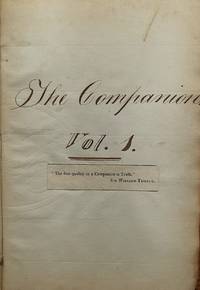
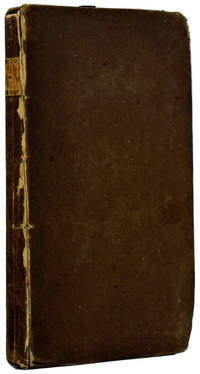
18303609n.p. n.p. n.d. c1830 1830. An unpublished manuscript literary magazine in twelve numbers. 178x120mm. pp. 2 256 2. Brown half calf notebook with marbled paper covered boards. Joints a little worn and split at the foot of the spine at the lower cover. Chipping to head and foot of spine. Paper label to spine printed with the title "The Companion". Hinges are worn and splitting in places and there is some slight soiling but overall it is in good condition. The text is very clear and although it appears to have been written by more than one hand the exceptionally neat italic style is uniform throughout. The contributors are referred to only by their initials R E J.D. and V although one is called "Theta". On the title page is the epigraph "The first quality in a Companion is Truth" - Sir William Temple. This is printed on a small piece of paper and pasted onto the leaf. It has almost certainly been cut out of a copy of Leigh Hunt's literary journal also called The Companion where this epigraph appears on the title page in exactly the same typeface and layout. The paper is watermarked 1828 and on the front free endpaper is the inscription "Charles Wilkinson 1830" hidden but legible under a glued piece of paper torn from the facing leaf. � Wilkinson's The Companion is in twelve parts the first number dated "September 12" with the rest unnumbered. It is a collection of short stories extracts from plays essays poems and witticisms. The stories and plays are a mixture of historical adventures - with titles such as "Voyage to Fairyland" "Charles Deloraine: A tale of the Pretender" and "De Warren - a dramatic fragment" set in the fifteenth century - and contemporary light comedy including an amusing dreamlike tale taking the recent "Edinburgh murders" of Burke and Hare as its starting point. The poetry is in a light romantic vein and the essays cover a wide range of subjects including swearing snuff cant women marriage dinner and the history of drama. Many of the issues end with a short note addressed "To Correspondents" informing readers of communications received advertising stories or essays to come in future issues or requesting contributions. The journal is clearly modelled on and incorporates many of the same elements as Leigh Hunt's The Companion which was published during 1828 running only from January to July that year. Although the editor addresses his readers and invites contributions for future issues it is not clear that the journal existed in any form other than this manuscript. We can find no record of its having been printed or circulated. It seems that it might have been a private project involving no more than half a dozen people. We are unable to identify Charles Wilkinson but one possible candidate might be Charles Allix Wilkinson 1813-1889. In later life he became a priest but in 1830 he was a schoolboy at Eton. He is recorded as the author of three books the most well-known of which is a Reminiscence of Eton although it must be said that this recalls much about sport and nothing about a journal called The Companion. However if this schoolboy is our Charles Wilkinson then it does explain the occasional tone of a creative writing exercise. The final piece of the first number requests questions from readers who should also supply an answer these are essentially essay questions such as "What is Fame". The editor goes on to say that "as this work is intended chiefly to improve our writing style all pieces must be original". The Companion begins with a somewhat high-toned introduction suggesting that people who attain knowledge but do not share it are like misers who hoard money. Accordingly the purpose of the journal is to dispense "amusement" as well as "instruction" and "to impress upon the mind that good order is the basis of felicity". The final piece of Issue Twelve is a little more relaxed: "We make no pretence to fine writing; our aim has been to please rather than to shine". Whether this book is instructive or amusing or both is up to the reader to decide. What it does show is how in this golden age for small scale short-lived literary periodicals the example of journals such as Leigh Hunt's Examiner Indicator and The Companion encouraged readers to produce their own private amateur and highly assured imitations. n.p. n.p. n.d. c1830 hardcover
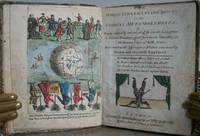
52493<p>London printed for & sold by Edward Ryland at No 67 in the Old Bailey no date 1790. TITLE CONTINUED: decorated with 34 copper plates curiously drawn and elegantly engraved. Price 1s Plain 2s Coloured. Edition not known circa 1790 16mo in eights approximately 120 x 90 mm 4¾ x 3¾ inches LACKS 2 COLOUR PLATES Nos 9 School Boys correcting their Master and 27 Old Women ground Young image 4 hand coloured facsmiles inserted see images ALSO LACKING LAST LEAF OF TEXT FOR PLATE 31 D8 63/64 facsimile inserted for page 63 but lacking final page 64. Hand coloured frontispiece engraved title page with hand coloured vignette unnumbered hand coloured plate facing Introduction the rest numbered 1-31 pages: 2 - title page verso blank ii 2 page verse introduction 3-62 numbered on versos only collation: pi1 A-D8 -D8 verse text quarter brown roan marbled boards. Binding rubbed endpapers inscribed by 2 early owners 1802 and 1 20th century lacking rear endpaper light creasing to frontispiece old erased scribble on verso outer margin of 2 plates trimmed no loss to image 1 plate and following page with tiny loss to top blank corner D1 has crude repairs with slight loss of text inked in on the repairs a little soiling and spotting to some pages small ink smudge to inner margin page 49 lower margins of some text pages slightly trimmed no loss. A good copy lacking 2 plates and 1 leaf of text as noted. Hand coloured copies are uncommon. The images: Horses riding men; Ox driving farmers at plough; Fish angling for a man; Ass driving miller to market the mill turned topsy-turvy; Hare roasting cook on spit Cock basting him; Deer shooting Game Keeper; Wife acting the Soldier Husband nursing child; Ox butchering a human; Horses turned Farriers; Doll carrying child etc. ESTC T213665 1790 is very similar to ours but uncoloured with only 60 numbered text pages. Not in Osborne or Gumuchian but an uncoloured copy is in Sotheby's final catalogue to the Oppenheimer sale No. 262 c.1770 and another uncoloured in Christie's sale of Marjorie Moon's library No.64 c.1785. MORE IMAGES ATTACHED TO THIS LISTING ALL ZOOMABLE FURTHER IMAGES ON REQUEST. POSTAGE AT COST.</p> London, printed for & sold by Edward Ryland, at No 67 in the Old Bailey, no date, (1790). hardcover
46581Añadidas algunas obvias reflecciones en honor del mismo Héroe esclarecido y de esta dichosísima Ciudad felize en ser su Patria. Por un Eclesiástico de este Arzobispado . . México : En la Oficina Madrileña de la Calle de Sto. Domingo y Esquina de Tacuba 1802. Octavo 195 x 140 mm contemporary full mottled calf very good with some minor staining and edge wear spine with gilt decoration edges stained red; lacking the front free endpaper pp. 71 with engraved allegorical half-title leaf as in all copies from Montés de Oca's Vida de San Felipe de Jesus protomártir de Japón y patrón de su patria México 1801 and one other portrait plate both engraved by Montés de Oca 'invento i grabo en México Calle del Bautisterio de Sta. Catalina Mr. No. 1'; the title with two faint old collection stamps of the Padres Pasionistas some browning to margins of the outer leaves but internally clean and fresh an excellent copy. A biography of San Felipe de Jesús 1572-1597 the first Mexican-born saint and the first native of the Americas to be canonized who was martyred in Japan. Beristain attributes the work to José María de Munibe. Although separately published in Mexico City - the metropolis of which San Felipe de Jesús would become the patron saint - it is in many respects a companion volume to Montés de Oca's lavishly illustrated Vida de San Felipe de Jesus published in the previous year. Indeed the two works share the same engraved title leaf. Palau 35446; Medina Mexico 9461; Tenri Catalogue I 2.18; Nipponalia 1647 & p. xxvi; Beristain de Souza Biblioteca Hispano Americana Setentrional 1883 Vol. II p. 314; not in Cordier. unknown
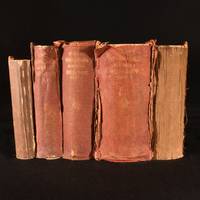
1867949F35London: G. Street 1867-1889 . First edition. Cloth. Poor. 10" by 7". Not Stated. An impressive five volume set of this vanishingly scarce guide to India and the colonies of the British Empire illustrated with a wealth of maps. Five volumes of this vanishingly scarce work in the publisher's original cloth binding.These fascinating directories provide lists of merchants trading throughout India and the colonies including lists of merchants in the principal cities of India Ceylon China Japan Java Mauritius Australia New Zealand Canada British Columbia the West Indies South and Central America British Guiana the Mediterranean and the United Kingdom.Details of trade returns tariffs population and more are also included.Present here are:The 1867-8 volume.The 1873 volume.The 1880-1 volume illustrated with seventeen colour double paged maps. Collated complete.The 1882-3 volume illustrated with eighteen colour double paged maps. Collated complete. The 1888-9 volume illustrated with nineteen colour maps some folding. Collated complete. In the final three volumes the section of the work to the rear devoted to information on the United Kingdom is separately paginated.With contemporary advertisements to front and rear endpapers and with large catalogues of advertisers to the rear of each volume.With stamps of the Incorporated Law Society of the United Kingdom throughout each volume including to title pages. In the publisher's original cloth bindings. Significant losses of cloth to back strip heads and tails with boards age toned with handling marks. Tide marks and paper residue to rear board of 1873 volume. 1867-8 boards detached but present but lacking back strip. Rear board of 1880-1 board detached but present with front joint starting and board very tenderly held. 1882-3 boards detached but present lacking back strip. Front board of 1888-9 detached but present with rear joint starting and board tenderly held. Joints of 1873 volume starting with boards exceptionally tender. First three gatherings of 1867-8 volume detached but present with text block divided between pages 128 and 129. Text block of 1873 volume divided between pages 512 and 513. Text block of 1880-1 volume divided between pages 476 and 477 with surrounding gatherings working loose. 1882-3 and 1888-9 volumes lacking title pages with preliminary leaves of the latter volume detached but present. Pages bright with light handling marks throughout but with closed tears to leaf and map perimeters. Library stamps throughout. Two maps detached and loosely inserted. Poor G. Street hardcover
2024BIBHB0331650252024. Hardcover. New. Due to the very old age and scarcity of this book some pages are missing and may be hard to read due to the blurring of the original text. The Title 'Census of India 1921 written/authored/edited by Anonymous' published in the year 2024. The ISBN 9788121271264 is assigned to the Hardcover version of this title. This book has total of pp. 14524 Pages. The publisher of this title is Gyan Publishing House. This Book is in English. The subject of this book is History Census India. Size of the book is 22.59 x 28.94 cms Vol: Volume 25 Vols. In 44 Bindings hardcover
1822984F19Not Stated: None 1822 . Leather. Very Good. 7.5" by 5.5". None. A very scarce and highly impressive early 19th century volume containing over fifty handwritten recipes including guides to making 'a good curry' stewed pears and lobster cutlets. A very scarce and unique handwritten recipe book dated 1822 in the compiler's hand to the first page.The volume contains a total of fifty-two recipes written across fifty six pages.These recipes written in two different hands often include weights and measures of ingredients.Many of the recipes are for sweet dishes and deserts although there are a number of savoury recipes and a surprising presence of international cuisine including instructions for making curry powder.Recipes include: mince meat; orange jelly; lemon solids; short bread; to stew pear; plum cake; damson cheese; 'a good curry'; Italian cheese; egg curd; macaroni; lobster cutlets; 'to dry apples'; turnip soup; lemon pudding; apple jelly; plum cake; pound cake; curry powder; 'to make yeast'; biscuit pudding and concluding with a guide to making polish for furniture. In a half straight grain morocco binding with marbled paper covered boards. Rubbing to back strip head and tail and board perimeters otherwise externally excellent. Internally firmly bound. Pages clean and bright. Very Good None hardcover
1923333325New York: Société Anonyme Inc 1923. 2nd printing. 8 pp. 8vo. Side-stapled printed wrappers with some toning and bump to top corner which has caused small bit of loss to cover and first leafe. 2nd printing. 8 pp. 8vo. First published in 1920 Dreier's collection 1951 lists the book as being from 1920 making it the first ever Société Anonyme publication but says that it is out of print and notes 2nd printing 1923. Collection of the Société Anonyme p. 218; OCLC records only two copies: Yale and Wellesley Société Anonyme, Inc unknown
180129004London: Printed by W. Bulmer and Sold by J. Bell 1801 1801. First edition. Summers Gothic Bibliography pages 525-26; and see Richard Garnett Original Poetry By Victor & Cazire John Lane 1898. Fine copy. 8vo 20th century black straight-grain half morocco marbled paper boards brown morocco spine label gilt rules and lettering. Engraved title color frontispiece and two color plates. Without the final leaf of advertisements. An anonymously compiled collection of 20 tales in verse which parody M. G. Lewis' popular Tales of Wonder 1801 and was often incorrectly attributed to him. In his Gothic Bibliography Montagu Summers writes: "The book is gruesome and in its illustrations even disgusting and it seems impossible that Lewis could have had anything to do with it. Some of the ballads are too coarse and grotesque to stand comparison with any work by M. G. Lewis; and they read more like an attempt to ridicule the popularity of the gothic romances for which Lewis was so largely responsible." This poor pastiche of Lewis has one interesting facet: the fifteenth of the twenty tales is "The Black Canon of Elmham or Saint Edmond's Eve an Old English Ballad" which reappeared ten years later almost verbatim as "Saint Edmond's Eve" in Original Poetry by Victor and Cazire the collaborative volume of verse by Percy Bysshe Shelley and his sister Elizabeth published in 1810. Its publisher J. J. Stockdale discovered the plagiarism once the book had been issued and confronted Shelley who pointed the finger at Elizabeth and insisted that all the remaining copies be destroyed. Percy was almost certainly the plagiarist as he was responsible for the lion's share of the contents of the volume but the whole truth is not known. Richard Garnett's writes at some length about the plagiarism in the introduction to his edition of Original Poetry. Binders' ticket of Abrams of Somerset on the rear paste-down. The destruction of the remaining copies of Original Poetry by Victor and Cazire caused it to become a "black tulip" of the Shelley canon. London: Printed by W. Bulmer and Sold by J. Bell, 1801 unknown
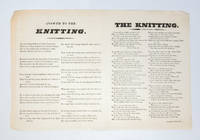
18205877Bury: Birchinall Printer 1820. First edition. Near Fine. Broadside measuring 245 x 380mm and printed to verso only; the layout and placement of the imprint suggest that this piece was meant to be folded down the center with The Knitting appearing first and Answer appearing at rear. A very nearly Fine example with just a bit of creasing at the corners and faint offsetting along the left margin. Unrecorded by the Bodleian Library of Broadside Ballads or by OCLC the typeface suggests that it was produced toward the end of W. Birchinall's operations 1806-1829.<br /> <br /> A common thread connecting the Birchinall broadsides recorded by OCLC is the sensational depictions of 19th century true crime -- from the murder of Mary Booty in 1806 to the execution of Thomas South and his companions in 1816 to the burglary trial of James Philips and John Wade in 1822. The Knitting and Answer to the Knitting stand apart from these in a number of ways. Not only are they not sensationalizing identifiable local activities using names and dates clearly within their titles they take a more literary and satirical tone in relating young Susan's education in "knitting" and her resulting pregnancy and rejection by the shepherd Johnny. <br /> <br /> The Knitting focuses not only on Johnny's seduction but even more so on Susan's public exposure to gossip and social rejection as a result of his refusal to marry her. The text's serious warning to young women -- that whether right or wrong they will ultimately be blamed for the outcomes of unwed sex -- is undercut however by the followup Answer. Unlike The Knitting which opens with a more formal communal overture "come all ye pretty maidens fair" Answer creates a more private conspiratorial tone with its "It's of a young damsel as I have heard say." Lured into gossip by the narrator readers hear how Johnny returns to Susan after being required to pay child support for their son; how he secretly confesses his love in order to lure Susan again into a tryst; and how the couple's intercourse in a grove is a source of humor with Johnny's lovemaking resembling "a man that had fits". Unlike The Knitting's widely shared community knowledge and its use of gossip to warn young women and curb their sexual behavior Answer depicts how gossip spreads individual to individual with the narrator having heard this story from an unnamed friend and then sharing it with the reader among men to warn them against getting caught for their indiscretions.<br /> <br /> A research rich piece and the only known copy further work could be done on the physical object its typography and its printer. On a literary level further analysis could be done on how the pairing connects to other call-and-response poems such as the 17th century Passionate Shepherd to His Love and The Nymph's Reply and to the pastoral tradition. On a social history level further study could connect the work to 19th century gossip helping historians to understand how the practice of gossip differed in groups of various genders or classes especially surrounding sexuality and shame. Near Fine. Birchinall, Printer unknown
180100398624R. Phillips 1801. Hardcover. Very Good Plus. This book includes the earliest serious attempt to write a biography of Thomas Jefferson . The author is anonymous but very likely is the publisher R. Phillips . Phillips was a writer as well as a publisher . His book stall was in the alley at St. Paul's Cathedral . His attempt at Jefferson is interesting . He was pretty accurate at some points and just plain wrong at other points . He clearly had access t Jefferson's o NOTES ON VIRGINIA including the map and used it . His attitude to the man who was about to become the American President was distinctly a British one . He gives a lot of attention to Jefferson's " flight " from the British during the Revolution and he focuses on Jefferson as pro French and anti British . There is a large fold out sheet presenting portraits of the Public Characters including Jefferson . The artist offers a recognizable Jefferson probably based on the physical description of Jefferson offered in the text . The writer notes that Jefferson " was seen ' in London in 1791 . He had the date wrong but Jefferson had been there several years earlier on a brief visit from Paris . Is it possible that Jefferson given his love of books " was seen " at Phillips' stall at St. Paul;s The foldout sheet frequently missing in this book is in excellent condition . This copy has been beautifully rebound by Lisha Shaver one of America's most creative young bookbinders . The book is bound in three quarter leather with marbled paper covered boards . Gold graphics on the spines . Marbled paper pastedowns and endpapers . The paper is designed by Ann Muir distinguished artist of Bath England . The textblock is clean no marks of any kind . and it is remarkably free of age toning and damp spots . R. Phillips hardcover
055922N.p. Istanbul N.d. but c. 1857. Hardcover. Very Good. 8vo - over 7¾ - 9¾" tall. Contemporary cloth with marbled boards. Demy 8vo 22 x 14 cm. In Ottoman script Old Turkish with Arabic letters. 63 pp. Ex-library copy with three stamps. Slight marginal fading spine slightly loosened and minor chipping on the left corners of some pages. Overall a good copy. Lithographed. An extremely rare early undated edition of the earliest architectural monograph and description of Hagia Sophia from a Muslim perspective. This work details the construction of Istanbul's iconic monument and includes a brief history of the 1453 conquest of Constantinople by Sultan Mehmed II. After a brief anonymously written account told from a Muslim perspective of the Turkish conquest of Istanbul the author recounts the legendary events surrounding the construction of Hagia Sophia. These narratives largely rooted in Byzantine oral traditions also found resonance in early Islamic culture. The author begins the chapter on Hagia Sophia with legendary accounts after page 42 following the heroic tales of Constantinople's celebrated capture in 1453. One of the earliest legends recounts the mysterious disappearance of the Byzantine architect before the church's construction was completed. Another legend describes how the unfinished building abandoned due to financial difficulties was ultimately completed after a hidden treasure was discovered at a location revealed by a mysterious figure. The author then provides a detailed account of various narratives including the origins of the columns some believed to be cast-iron pillars made using moulds the claim that doors from the Temple of Solomon crafted from the remains of Noah's Ark were brought to Hagia Sophia and the assertion that the frames and bars of the windows were made of gold silver lead and iron. Additionally the text describes how four grand paintings of the Archangels Gabriel Azrael Michael and Raphael were placed at the edges of the dome and even discusses the overall cost of constructing Hagia Sophia. Overall this work stands as the earliest known example of its kind in Turkish architectural literature. Özege 5659.; TBTK 10770.; As of March 2025 twenty institutional holdings according to the OCLC 46608320 nine paper copies in North American libraries: Harvard University LoC Concordia Theological Seminary Virginia Tech Concordia College Library University of Washington Libraries Dallas Theological Seminary UCLA and Hawaii Pacific University. <br/> <br/> [N.p.], [Istanbul], [N.d., but c. 1857] hardcover
1781291930London: MacGowan 1781. hardcover. very good. 2 Volumes. 33 engraved maps & plans 3 folding & 28 engraved plates. Thick 4to unpaginated text in double columns. Full contemporary calf. Heraldic bookplate in each volume. London: MacGowan 1781. Scarce. Well-worn and joints cracked but attractive and overall very good.<br/> <br/> The work contains numerous entries for North American battles of the Seven Years' War American Revolutionary War &c. including Annapolis Royal Beauséjour Brandy-Wine Lake Champlain Charlestown Fort Frontenac Louisbourg Fort Necessity Fort Niagara Penobscot Fort Pitt Quebec Saratoga Ticonderoga New York &c. Appended are an essay on fortification.<br/> <br/> MacGowan unknown
1781291930London: MacGowan 1781. hardcover. very good. 2 Volumes. 33 engraved maps & plans 3 folding & 28 engraved plates. Thick 4to unpaginated text in double columns. Full contemporary calf. Heraldic bookplate in each volume. London: MacGowan 1781. Scarce. Well-worn and joints cracked but attractive and overall very good.<br/><br/> The work contains numerous entries for North American battles of the Seven Years' War American Revolutionary War &c. including Annapolis Royal Beauséjour Brandy-Wine Lake Champlain Charlestown Fort Frontenac Louisbourg Fort Necessity Fort Niagara Penobscot Fort Pitt Quebec Saratoga Ticonderoga New York &c. Appended are an essay on fortification.<br/><br/> MacGowan unknown books
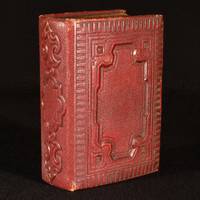
197023231ca. 1970. Hardcover. Near fine. Small 4to. Hand-bound in red morocco with raised cords and decorative gilt stamping to spine. Moderate edgewear and rubbing. Top edge gilt. Black and gold patterned endpapers. Bookplate taped to ffep; brown geometric design with designer initials ACW at lower right and "Ex Libris AJ". Slight chipping to leather at inside rear hinge. Gilt stamping to lower edge of back cover below paste-down: "BOUND BY BAILEY BROS. LTD." Near fine. 205pp. <br/><br/>"The stand of yews statues are noseless lichen smirched ghosts; the nomads approach drums of their marches on stone lane steps; the sound of the engines remembered through plate glass while sitting at at pâté de foie" 157. <br /> <br />Enigmatic and disquieting collection of six short stories and one 90-page novella neatly and distinctively handwritten in brown ink. The table of contents gives titles for each work but no author's name; the bookplate with initials "A. J." offer the only clue to the item's creator or owner. <br /> <br />The material veers in tone from the parodic to the surreal to the philosophically melancholic; the style incorporates a recondite vocabulary "the pyral tarantism of being in the world" and a single consistent insistent voice alternating long unpunctuated Joycean streams of frantic consciousness with brief and airless sentence fragments. A perpetual undercurrent of violent sexuality surfaces as much in the settings and scenery as in the events: a car crash; a game of human chess; a blazing furnace; a slaughterhouse. <br /> <br />The authorial narration steps out of its queasy dreamtime now and then to comment on itself "It would appear that this is the whim of the authors ince reason is no part of the relation" or to focus on a concrete and precisely dated image: "Week-end Traffic" catalogs automobile makes and models in obsessive parodic almost Ballardian detail -- a 1931 Alfa-Romeo; a '28 Lombard a Triumph Scorpion -- and characters offer each other Passing Cloud cigarettes. But for the most part settings are as hard to place as the book itself. Character names are almost but not quite real: Nish Rogoze Valetta Fedor Shad. <br /> <br />Illustrated with line drawings in brown pen presumably also by the writer with occasional accents in black and brief captions taken from the scenes they illustrate. The execution is skilled but careful often quoting other artwork as in the illustration to the final story "Communication" whose subject is the Breughel painting Dulle Griet; we see a copy of Brueghel's scene through the latticework of a window. Other illustrations appear to be carefully composed from copies or multiple tracings giving something of the effect of a Max Ernst collage -- particularly the images of a horse-headed woman and a lion-headed man perhaps an intentional quotation from Une Semaine de Bonte. A Piranesi-esque interior gives way to a crowned woman in 20th century corset and garter belt: the Queen. <br /> <br />Although a precise date cannot be given this book bears the stamp of a London bindery which operated as Bailey Bros. until a name-change in the 1970s and references in the text place its composition after the 1930s; we estimate the date of production to be circa the late 1960s to early 1970s - though its private library feel perhaps hints at a possible earlier creation. <br /> <br />Bizarre and unsettling yet also the product of an original voice. In short: a singular artist's book of unique vision. hardcover books
1780753R32Not Stated: None c1780. Leather. Near Fine. 13" by 8.5". None. A stunning hand-written piece containing arithmetic written in calligraphy styled to the period. Painstakingly handwritten in calligraphy. This volume's contents include numeration addition subtraction multiplication division reduction measures decimals and fractions as well as exchange rates with France Spain Portugal Italy Holland Flanders Germany and Ireland.Contains a title page with the name Thomas Hale written decoratively.Undated dated by calligraphic style as well as by dating currency used.In a beautiful reverse calf binding with a gilt label to the front cover. In a full reverse calf binding. Externally lovely some minor chipping to the head and tail of the spine. Internally firmly bound pages generally bright and clean with just the odd spot. Near Fine None hardcover
52711LonJohnson and Co St Paul's Church-Yard 1814. Firearms reference FIRST EDITION. Octavo 19 x 12cm pp.xvi; 150. Publisher's drab grey paper-covered boards printed title label to spine edges untrimmed. Contents clean covers a little bumped and marked joints worn chipped to crown of spine. A very good example of a rare book in first edition. According to a loosely inserted news-clipping from the Antique Trades Gazette a similar copy uncut in original boards had sold at auction in Sept 2008 for £3000. Celebrated diarist author soldier and target shot Hawker had served with the 14th Light Dragoons under the Duke of Wellington during the Peninsular War. He published his "Advice to Young Sportsmen" in 1814 a popular work with nine impressions in his lifetime. The first edition of his shooting classic did not credit Hawker as author and was printed in small numbers principally for private circulation among his friends. An Australian review in 1893 claimed "probably no book on the subject of sport ever enjoyed so wide or so long sustained a popularity as the Instructions to Young Sportsmen. LonJohnson and Co, St Paul's Church-Yard, 1814 unknown
2024BIBHB0156562812024. Hardcover. New. Due to the very old age and scarcity of this book some pages are missing and may be hard to read due to the blurring of the original text. The Title 'Census Of India 1911 written/authored/edited by Anonymous' published in the year 2024. The ISBN 9788121271288 is assigned to the Hardcover version of this title. This book has total of pp. 13890 Pages. The publisher of this title is Gyan Publishing House. This Book is in English. The subject of this book is History Census India. Size of the book is 22.59 x 28.94 cms Vol: Volume 23 Vols. In 41 Bindings hardcover
2009C91254BiblioLife. As New. 2009. Hardcover. 1117092003 . FREE UPGRADE to Courier/Priority Shipping Upon Request - IN STOCK AND IMMEDIATELY AVAILABLE FOR SHIPMENT - Flawless copy brand new pristine never opened -- 324 pages. Description: "This is a pre-1923 historical reproduction that was curated for quality. Quality assurance was conducted on each of these books in an attempt to remove books with imperfections introduced by the digitization process. Though we have made best efforts - the books may have occasional errors that do not impede the reading experience. We believe this work is culturally important and have elected to bring the book back into print as part of our continuing commitment to the preservation of printed works worldwide." Antiquitiés Découvertes Catalogue Raisonne Catalog Raisonné Complete Works La Vie Et L'uvre Oeuvre Raisonnee -- with a bonus offer-- - May be EITHER: out of print OOP and extremely rare in this pristine condition; signed by author or contributor; or a first or special edition; inquire for details . BiblioLife hardcover
1871995F14None: None c1871 . Hardback. Good. 6.5" by 5". Not Stated. An exceptional and striking collection of thirty albumen prints depicting the destruction wrought on Paris and the surrounding region after the suppression of the Paris Commune. Thirty albumen prints inserted in a handsome full morocco binding mounted on heavy paper and inserted in embossed passe-partouts some of which are captioned in ink to the reverse.These images depict the destruction of Paris left in the wake of the Franco-Prussian War and the Commune including depiction of the destruction of the rural communities surrounding the city which were photographed less frequently than the city itself.The scenes show extensive systematic urban and rural destruction including to farmhouses Protestant churches and streets.These albumen prints were frequently captured and disseminated in the weeks and months following the suppression of the Paris Commune. In a highly decorative morocco binding with blind tooling. Externally excellent with a touch of rubbing to back strip head and tail. Lacking metal clasp. Internally firmly bound. Prints clear and clean with handwritten captions to the reverse of many. Significant spotting and instances of closed tears and loss to passe-partouts. Good None hardcover
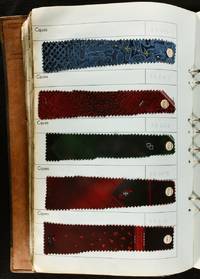
1930831F44Not Stated: Not Stated c1930 . Cloth. Very Good. 21" by 14.5". Not Stated. A very scarce and unique fabric sample book consisting of just under one-thousand striking silk samples. A very scarce and wonderfully extensive collection of decorative and unique silk fabric samples.Collated with nine-hundred and fifty-five samples attached to two-hundred and twenty pages.With examples of fabrics in a full spectrum of colours with numerous featuring abstract designs floral motifs paisley patterns and stripes and with areas of embroidery to a small number.These crimped fabric samples are each attached to the pages by staples with a small numbered label attached to each. There is some fraying to cuttings with a small number partially detached or torn.To the front pastedown is the French language binder's label 'Gallus'. In the original cloth binding with metal corners to fore edges of boards. Light rubbing to joints and boards. Binder's label to head of front board. Internally firmly bound. Fabric samples attached by staples with a small proportion partially detaching or torn. With handwritten ink numbers accompanying each fabric sample. Very Good Not Stated hardcover
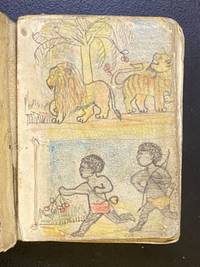
19204211s.l. Germany or Austria s.d. late 19th or early 20th century. Poor. 64mo 70 x 55 mm. Homemade binding cloth spine loosening front cover perished; back cover: board covered with glazed paper present on the pastedown inside detaching but the glazed paper on the outside is torn away. VERY WORN see the 44 IMAGES on our website the back cover becoming unstable but all the leaves are attached. Preserved in a fine cloth case which is perfectly fitted to allow the manuscript to be correctly removed and completely protected. HIGHLY CURIOUS LILLIPUTIAN ALBUM CONTAINING JUVENILE DRAWINGS OF THE MOST UNLIKELY ASSEMBLAGE OF UNDER-REPRESENTED PEOPLES NAMELY AFRICANS NATIVE AMERICANS AND ABORIGINAL AUSTRALIANS ALL DEPICTED IN THEIR NATIVE HABITATS AND INDIGENOUS ATTIRE. <br /> <br /> We have never encountered a manuscript such as this one either in permanent collections on in the trade. Our album contains 41 colored drawings and b/w sketches on 35 leaves with a number of blanks bound in. They include:<br /> <br /> AFRICANS: 28 drawings and b/w sketches including hunting scenes some on horseback; nude and partially clothed Africans; African landscapes with lions tigers and great birds some devouring each other; an African child being saved from a tiger by an angel; and a man and woman dancing in a garden; three Africans cultivating grapes; several Africans fighting and much more. Some of the drawings feature palm trees and rounded huts. The caption on one of the drawings reads "In die Jagt" sic.<br /> <br /> NATIVE AMERICANS: 9 drawings and b/w sketches including hunting scenes with the hunters in full headdress with feathers; in one of the drawings a group of three men are in combat with a tiger who leaps from a large tree. Interestingly some of the drawings likewise feature palm trees. The caption on one of the drawings reads "Zweiter Theil vom dem Ameriganer oder Idianer."<br /> <br /> ABORIGINAL AUSTRALIANS: 4 drawings and b/w sketches the most remarkable being a scene of two men seated beneath a tree a large dinosaur bird flies immediately above and in the sky a peaceful sun sees all. The caption on one of the drawings reads "Dritter Theil von dem Australiener." <br /> <br /> GNOME: 1 b/w sketch. The gnome wears a backpack and carries a gnarled walking stick his conical hat bearing a heart-shaped ornament in the background a laughing sun peers over the horizon.<br /> <br /> That Parts II and III have a divisional title suggests that there were one or more leaves at the beginning of Part I as well now no longer extant. Nonetheless this is a fascinating little children's manuscript and remains A REMARKABLE SURVIVAL. <br /> <br /> CATALOGUER'S NOTE: We are grateful to Dr. Claudia Bubenik for helping us transcribe the juvenile German inscriptions. unknown
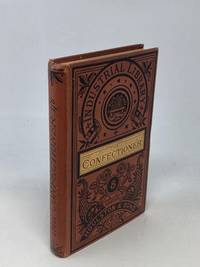
188088217London England: Houlston and Sons Paternoster Square 1880. First Edition. Hardcover. Very Good. NOTE: Includes: "Cooling Drinks for Balls and Routs".<br /> <br /> 16mo. Boards 6 1/2 in. x 4 1/4 in. Brick-red boards stamped with black and gilt designs laden cornucoipiae flowers a beehive etc.central floral motif cornerpieces and ruled borders featuring The number "8" boldly appears on the cover because this treatise is in fact No. 8 in Houlston's Industrial Library a pointed effort on the part of the publishers to disseminate information in a no-frills practical way making it available to the beginning tradesman or in this case baker-confectioner. Lettering to spine also includes price "1/6" - one shilling sixpence.<br /> <br /> viii pp. 160 4 pp. adverts. Some staining to top margin and some of the leading edges of the leaves. Very solidly bound with only a hint of shelfwear -- some shelf-foldover at top of spine. Apparently used but very carefully perhaps not that extensively. Small decorated initials and headpieces at chapter beginnings. One full-page illustration of "Modelling Tools" on p. 123.<br /> <br /> Topics covered include but are not limited to Syrup Crystallilzation Candy Crack and Caramel On Sugar Spinning Chocolate Lozenges Pastile Drops Jelliles Marmalades or Jams Compotes Brandy Fruits Cooling Drinks for Balls or Routs Essences Meringues Mixing Colours Distillation of Essential Lils Spirits for Liqueurs Ratafias Comfits plus sections on the Oven and The Stove.and more.<br /> <br /> Worldcat finds only two copies of the actual book in libraries worldwide and Library Hub Discover formerly COPAC locates three: The British Library and the Wellcome Collection. A rare work on Confectionary. It was the publisher's stated opinion and intention see Preface that "Much as there has been written in Cookery Books on the art of Confectionary there are few works on the subject which are practically written and these are for the most part expensive and beyond the reach of men of limited means. The object of the present Treatise is to supply a cheap but reliable work which shall convey instruction in as plain and concise a manner as possible to the inexperienced or those young men who have served their apprenticeships at provincial towns and are not acquainted with the metropolitan practice and its improvements; and also to apprentices that they may be enable to learn their business more efficiently than many masters can or will instruct them in it. Houlston and Sons, Paternoster Square hardcover