253 630 résultats
17877France first half of the 15th century. Single column 21 lines of text written in black and red in a beautiful gothic book hand. Illuminated initial in gold red blue green and white; ruled in red rubrics in red an numerous initials in red and blue. Contemporary blind-stamped calf over wooden boards raised bands two brass fore-edge clasps missing. A very beautiful manuscript from the library of antiquary William Henry Blacking and of George Dunn of Woolley Hall near Maidenhead with their 2 bookplates with coat of arms on paste down. A very attractive collection of sermons and homilies preserved in its original panel-stamped binding with tools. Presumably the personal pocket manuscript of a preacher presbyter Johannes Venuto. Venuto is an Italian originally Tuscan name. The note on the front flyleaf is an invocation to the Lord for having the sins forgiven and removed. The big initial was clearly drawn later as it covers the original text. Originally it is assumed that a calendar occupied the first 77 pages and that calendar has been removed.<br /> <br /> George Dunn 1865-1912 of Woolley Hall near Maidenhead Berkshire was an English bibliophile and keen student of paleography and early printing. Throughout his life he built up an impressive library at Woolley Hall collecting early English law books medieval manuscripts early printed books including volumes from unusual towns and presses. After his death in 1912 his library was broken up and sold off at Sotheby's between 1913 and 1917 realising over £30000. unknown
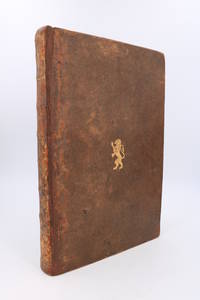
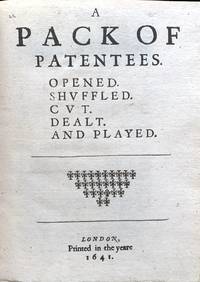
164117940London: n.p. 1641. FIRST EDITION. Type ornament device on title and woodcut headpiece. Polished calf signed “F. Bedford triple gilt fillet round sides spine gilt a.e.g. From the library of Lord Fairfax of Cameron with his armorial bookplate and the Huth bookplate lot 5630 Sotheby’s sale of July 17 1917. First edition of the very rare satire on the granting of monopolies. The anonymous author piles on the criticism of monopolies and patents granted on goods such as coal soap starch leather wine salt tobacco and butter. By the reign of James I patents had become so numerous and unfairly granted that they were considered oppressive and unjust to certain classes of people especially tradesmen and manufacturers. Except for “novel inventions†the King was finally forced to revoke all existing monopolies and declare that henceforth patents were only to be used for “projects of new invention.†This “Statute of monopolies†enacted in 1624 became the foundation for all later developments in patent law in England and elsewhere. It was a fundamental landmark in the transition of Britain’s economy from the feudal to the capitalist.<br /> <br /> Unfortunately James’s successor Charles I continued to abuse the patent system and it was only during the Restoration that the abuse was finally curtailed. The present work written during the reign of Charles I bitterly describes the injustices within certain trades and industries.<br /> <br /> Wing P156; ESTC locates 4 copies in North America Harvard Huntington NYPL McGill. n.p. unknown
201381725Valencia: Scriptorium S.L s. XIII - -2013. Scriptorium, S.L unknown
1880859371880 | 33.50 x 45.50 cm | relié
1920845121920 | 15 x 869 cm | autre
CNAP063bSan Francisco: The Arion Press 2002. First and Limited Edition. Hardcover. New. Conner Bruce. Octavo 10.25 by 7 inches. The type is English Old Style composed and cast in Monotype by Mackenzie & Harris San Francisco. The text paper is Ruysdael an all-cotton machine-made sheet. The paper for the prints is T. H. Saunders buff loan an all-cotton mouldmade sheet. The ink-blot drawings in gray beneath the folios and the rebus on the title page were printed from photopolymer plates. Printing of the type and plates was by letterpress. The book is bound in yellow cloth with an ink-blot pattern in black from a drawing by an anonymous artist that is continuous front to back interrupted by a black cloth spine. The book is enclosed in a black slipcase. Both book and slipcase have yellow spine labels. The six images are photogravures from collages of wood engravings. The original collages are ovals 6.5 by 4.5 inches. The scale of the images for the book is the same as the original collages. Book with suite of six larger photogravures by Conner on handmade paper with prose-poems by Todd. The book is octavo in format 10-1/4 by 7 inches. The six images in the extra suite are 17-1/4 by 12-3/4 inches. The edition of the suite of prints with the book is limited to 30 numbered sets for sale. . "The Ballad of Lemon and Crow" is a work of fiction by a San Francisco writer who grew up in Texas and whose regional sensibility is keenly felt in this tale about three generations of neighbors in rural Oklahoma. This limited edition is its first publication. <br /> <br /> The illustrations are by Bruce Conner a native of Kansas and longtime San Francisco artist whose distinctive vision has won him a large and devoted audience over more than forty years. The artist and author first met in Omaha in 1953 as members of a Midwestern literary and artistic circle that became associated with the Beat Generation. Bruce Conner's work is owned by major museums; after 2000 Conner announced he was retiring and would not sign or claim any new work as his own. Since then anonymous artists have collaborated to create additional work in a manner similar to that of Bruce Conner. <br /> <br /> ___POSTAGE: International customers please note that additional postage may apply as the standard does not always cover costs; please inquire for details. <br /> <br /> ___Swan's Fine Books is pleased to be a member of the ABAA ILAB and IOBA and we stand behind every book we sell. Please contact us with any questions you may have we are here to help. The Arion Press hardcover
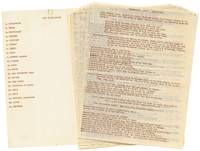
19405238661940. Near Fine. An original unpublished typescript of a mid-20th Century minstrelsy together with six mimeographed copies of the typescript. The original typescript consists of 12 quarto pages typed in orange on rectos only paginated in ink by hand and a one-page List of Characters. In fine condition. The six mimeographed copies consist of 12 folio sheets 9" x 14" stapled at the topedge onto a cardboard back cover accompanied by two mimeographed copies of the list of characters on separate quarto sheets. The mimeographed copies are lightly toned three or four copies have some slight staining one copy has an owner name in ink and one is lightly annotated near fine or better overall.<br /> <br /> The list of 21 characters includes: The Interlocutor Hambones Tambo Shakespeare of Harlem Seven-Up Jackson Suntan Cootie-Locks Dimwit Muskrat Geo. Washington Jones and others. The single-spaced typescript with about 50-60 lines per page is laced with racist language and stereotypes and includes dialogue musical cues stage directions and narration of the Interlocutor; it ends with one of two poems by Shakespeare of Harlem: “Honey dis am Rufus Tappin’ on yoh window-pane … †and a skit by Seven-Up Jackson: “the only known real live gold-fish swallowing act in history … .â€<br /> <br /> Internal evidence including references to an atomic bomb attack on Tokyo suggests that the play was likely written late in or soon after the Second World War. In 1953 two popular films with similar titles were released: Walt Disney’s Thanksgiving Day Mirthquakes and Merry Mirthquakes featuring a young Liberace as Master of Ceremonies. It is also possible that the character “Shakespeare of Harlem†is an allusion to Langton Hughes whose book of poems “Shakespeare of Harlem†was first published in 1942. An unpublished and unrecorded American minstrelsy well-preserved in near fine condition. The presence of multiple copies inveighs strongly that these scripts were actively used in a group production. unknown
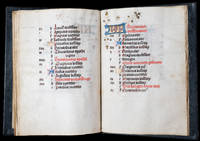
14250526><p>i 12 i leaves ruled in ink written in Gothic textualis in seventeen lines per page in brown and red ink; two-line KL initials in burnished gold on red grounds with blue borders and pen-drawn flourishing of geometric and foliate forms accented with liquid gold. Bound in modern black leather over boards the spine lettered in gilt capitals "16th Century Manuscript Calendar."</p><p>Dimensions: 147 × 110 mm.</p> Manuscript (Book of Hours) hardcover
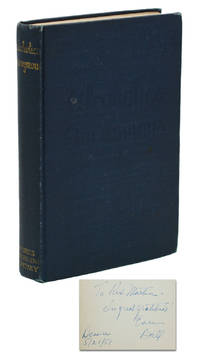
1945140938015New York: Works Publishing Inc 1945. Very Good. Signed by Bill Wilson and inscribed to a former owner on the front free end paper. First edition eighth printing. 400 pp. Bound in publisher's dark blue cloth with title stamped in blind on the front cover and in gilt on the spine; lacking the dust jacket. Very Good. Cloth lightly rubbed at corners and spine ends lightly rubbed and with a few small stains and a small crease to the bottom of the front board. Spine gilt partially rubbed. Previous owner name to front paste down and several notations written in pencil on the front free end paper. Light tidemark to top corner of text block affecting margins in varying degrees throughout. A nice copy of the AA Big Book signed by the co-founder of Alcoholics Anonymous Bill W. Works Publishing, Inc unknown books
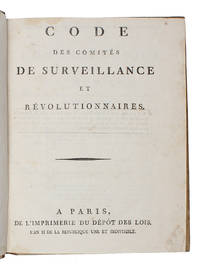
179360748Paris Impremerie du depot des lois An II 1793. 4to. In contemporary half calf with gilt lettering and ornamentation to spine. Wear to extremities. Upper part of back hinge split with minor loss of letters. Small dampstain to upper inner margin otherwise a nice copy. 2 VII 2-116 100 8 pp. <br/><br/><em>Exceedingly rare first edition of this highly interesting document being the Code of the Committees of Surveillance containing 106 regulations and guidelines for the functioning of these committees during the French Revolution. The Committees of Surveillance were established during the Reign of Terror September 5 1793 - July 27 1794 as part of the revolutionary government's efforts to identify and suppress counter-revolutionary activities. These committees were tasked with monitoring individuals' behavior enforcing revolutionary laws and ensuring loyalty to the revolutionary government. The document outlines the powers duties and procedures of these committees as well as the penalties for those found to be opposing the revolution providing a unique and fascinating insight into the legal and administrative framework of revolutionary France – arguable one of the most profound and radical moments in modern European history. The Committee of Surveillance in France during 1793 was established as a part of the radical phase of the French Revolution. Its function was to oversee and monitor the activities of suspected counter-revolutionaries and enemies of the Revolution as well as to enforce laws related to internal security and revolutionary principles. The committee was tasked with identifying individuals or groups deemed to be a threat to the revolutionary government often leading to arrests interrogations and in some cases executions by the Revolutionary Tribunal. It played a significant role in the Reign of Terror a period marked by extreme political violence and repression in France. The present work is of the utmost scarcity. We have not been able to trace a single copy at auction and OCLC only lists one copy in Paris. Nadaillac Catalogue d’une Collection Importante Sur la Revolution Francaise 724 </em> unknown
179360748Paris, Impremerie du depot des lois, An II (1793). 4to. In contemporary half calf with gilt lettering and ornamentation to spine. Wear to extremities. Upper part of back hinge split, with minor loss of letters. Small dampstain to upper inner margin, otherwise a nice copy. (2), VII, (2)-116, 100, 8 pp.
184545055Sunflower County Mississippi: Privately printed 1845-1869. 1845-1869. MISSISSIPPI BRAND BOOK. First edition. 12" x 8" quarter leather spine and blue paper over boards n. p. 36 pp. 4 pp. blank 4 pp. All brands and description are in manuscript. This is a most unusual brand book. Some actual brands are shown as drawn and others are described. Some writing on the covers mentions Sun Flower County Mississippi. Perhaps there were ranchers in the vicinity. This is the first and only manuscript brand book we have seen or heard about for Mississippi or a printed version. This manuscript brand book with reference to Sunflower County Mississippi presents numerous hand-drawn brands and descriptions. We are unaware of any printed or manuscript brand books from Mississippi. The period of 1845 to 1869 is very early for any brand book! Sunflower County was formed 15 Feb 1844 from Bolivar County. It was named for the Sunflower River which flows through it. One early settler B.G. Humphries later became the Govenor. Other notable settlers were: James J. Chenning Chewning G.B. Wilds Col. Eli Waits J.Y. McNeill mcMeal Col. Hezekiah McNabb Ezekiel McNabb Mayor Frank Hawkins and Capt John Hawkins. Research of an 1847 tax list and a list of federal land grants given to individuals in the area offer names of early landowners . Several of these names and brands are included in this brand book. lists included Not listed in Adams' Rampaging Herd. We feel this is a very rare brand book. Original blue cover paper is chipped else a very good copy housed in a cloth clamshell case with leather label on the spine and titles stamped in gilt. Privately printed, 1845-1869. hardcover
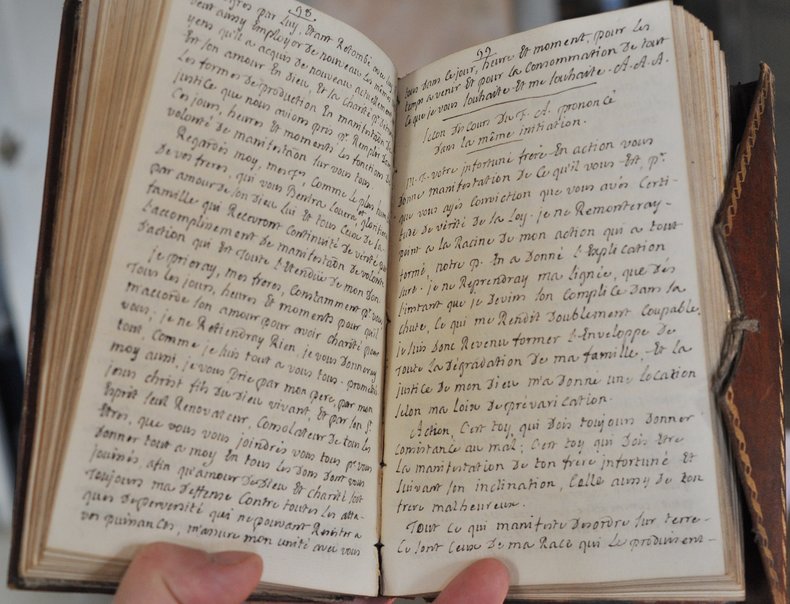
180046405264, vers 1800 ; in-12, relié dans un portefeuille en basane brune, plats et rabat encadrés d’un motif géométrique doré, dos orné du même motif, tranches dorées. 194 pp.Lettre écrite par Mr. A... à Grenoble, adressée à M. F. 2 pp. «... Heureux si le métal a assez de pureté pour en soutenir l'épreuve, mais quel est le métal qui peut souffrir une extension la plus soutenue, la plus égale et la plus facile. Distinguez dans les sept métaux celui qui a le plus de facultés (…) je puis vous assurer, M. F. que l'affinité que vous avez avec celui que je touche, ne me fasse désirer d'avoir le même avantage que vous mais quel qu'obstacle qu'il se trouve rien ne peut résister à nos désirs mutuels. Rappelez-vous toujours que trois désirs sont trois feux. Et que si ces trois feux ne forment une fois par leur contact qu'un seul faisceau ils ne peuvent que produire une grande clarté puisque le soleil est l'unité des trois et qu'il n'est trois que parce que celui qui l'a produit est trois (...)»p. 2 à p. 6: explications de citations des psaumes de David.p. 6 à 9: explication d'un passage du Talmud (avec un fragment du texte en grec)p. 9 à 17: Lettre écrite à Grenoble par M. F. au … «L'état dans lequel vous me faites connoitre où vous êtes est certainement bien critique, car en l'état de l'homme éclairé, d'avec celui qui ne voit point, la lumière est le guide de l'un et les ténèbres sont le partage de l'autre (…) si vous avez des obstacles levés, vous verrez la vérité et la vérité vous verrez. Alors toutes les misères n'existeront autour de vous que pour vous prouver qu'elles ne sont que poussière, et que vous n'avez que vous soyez vérité, et alors vous verrez le chemin qui vous conduit à la porte étroite et celui qu'il lui même fait de lui à vous. Entendez M. F. et comprenez, vous avez deux loix à suivre comme Dieu les a tracées en vous (…)»p. 17-21. Relation. C'est le récit d'un rituel auquel a assisté le narrateur, impliquant des bougies, des caractères tracés au sol, une grande croix en or, des lectures de S. Jean, etc. Au cours cette cérémonie une apparition est entrée dans la pièce avec qui l'officiant a pu discuter pendant plusieurs minutes.p. 21-25 . 2e histoire. Autre séance avec les mêmes. Le narrateur donne d'autres détails sur le rituel, la disposition des objets, etc. Avec cette fois l'apparition de deux esprits.p. 25-27. Texte non titré sur l'histoire des sociétés occultes et la franc-maçonnerie.p. 27-34. extrait du Schasta d'après la traduction littérale faite par Monsieur le ch. de St. Lubin. C'est la description des 6 livres qui composent ce texte sacré de l'Inde: récit de la Genèse, création des trois incarnations de Dieu et des anges, révolte d'une partie des anges, intervention des bons anges et création de la terre, expiation des anges, mission de Brama, doctrine des Brames, connaissance du sanskrit, la pierre salagrame, etc. Suivi de remarques sur les coutumes des Indiens, castes, culte de l'Indus et du Gange, religieux errants...Le chevalier de Saint Lubin était un aventurier et trafiquant qui a séjourné dans le Sud de l'Inde en 1778-79. Il s'était emparé du commandement du vaisseau de commerce français Le Sartine en se faisant passer pour un agent du roi, afin de se livrer au trafic d'armes. Il fut embastillé à son retour en 1780 après une vie d'aventurier en Inde dans un contexte de conflit franco-anglais. Ses traductions de textes sanskrits n'ont jamais paru.p. 35-55. Lettre écrite par Mr A. «M. T. C. F. & F. en Ch.» Il s'agit de recommandations d'un maître à ses disciples suivi d'une exégèse de l'évangile de Jean, en particulier sur la signification des nombres (les 3 femmes, 22000 boeufs, 153 poissons, 66 qui est le nombre de la bête dans l'Apocalypse, etc.), les 7 planètes, les 7 branches du chandelier, la trinité... Calcul pour prouver que nombre 9 n'est rien, le cercle d'expiation ou de purification. Considérations sur les évangélistes. Émanation de l'homme, prévarications. Rôle des sens, la nature de l'homme...p. 55-95. Lettre à un F. C'est la poursuite des considérations développées dans la lettre précédente. Sur la correspondance entre les organes du corps humain, les scènes de la vie du Christ, des passages de l'Ancien testament, les nombres, l'architecture des temples et des églises et les principes d'action, de pensée, de volonté, etc.p. 95-99. Discours du F. A. prononcé dans une assemblée d'inauguration. p. 99-105. Second discours du F. A. prononcé dans la même initiation.p. 105-119. Copie d'une lettre d'un chercheur avancé à un homme qui annonce quelques désirs. Considérations sur la nature de l'homme, de Dieu, selon Mercure Trismegiste. Sur les différences entre hommes et femmes, l'amour, le mariage, etc. « … la distinction que je vous présente éloigne toute espèce d'idée de convention humaine pour établir la supériorité de l'homme sur la femmes; ces deux êtres n'en font qu'un, ainsi ne cherchons point de différence dans leur nature... Regardons comme une méprise essentielle toute idée qui porteroit à croire la femme d'une nature différente de celle de l'homme...»p. 119-121. Principes de la morale des Juifs. La sagesse des Juifs est énoncée en 14 principes.p. 121-124. Copie d'une lettre de Mr. de St. M. [de Saint-Martin?] - p. 124-126. Fragment d'une autre lettre du même.La fin du volume est constituée de courtes observations, de notes de lecture de la bible, de travail sur les nombres, le calendrier, etc. La dernière porte une écriture d'une autre main qui a noté: «Couleur rouge et blanche – l'écriture regarde la première comme le symbole du péché et la seconde comme celui de la pureté – Sur les prières sacramentelles. Le concile de Rome tenu sous le pape Zacharie dans le VIIIe siècle, condamna les hérétiques Albert & Clément. On y lut une prière employée par eux, dans laquelle se trouvait ces paroles Supplico vos Angelos Uriel, Raguel, Tubuel, Michael, Adimis, Eubuas, Sabaoth, Simiel. Cette prière fut condamnée par le concile tamquam Magica, erroris & Superstitionis plena.»La pointe du rabat a été découpée, peut-être pour faire disparaître une marque de provenance.
1790846<p>n/a: n/a 1790. First Edition. Cardboard covers. Very good. Early Manuscript Defense of the Critique of Pure Reason <br /><br />Original one-of-a-kind handwritten manuscript defense of Kants Epistemology. 196-page manuscript in clear German cursive with some deletions and corrections ink on clean paper. 1790 Quarto. <br /><br />An extensive presentation and defense of Kant's theory of knowledge probably written as the basis for a lecture or series of lectures. There are five main sections: <br /><br />Einleitung 34 paragraphs <br />Theorie des Vorstellungsvermögens überhaupt 30 paragraphs <br />Theorie der Sinnlichkeit 35 paragraphs <br />Theorie des Verstandes 64 paragraphs <br />Kritik der bisherigen Methaphisick 21 paragraphs <br /><br />Many of the paragraphs contain numbered Anmerkungen" further reflections. In these the author shows himself to be a stout defender of Kant's controversial new theories: "Vor Kant ist es keinem eingefallen die Gemüthsvermögen zu untersuchen die Erkenntniße aus dem Erkennbaren zu schöpfen und die Philosophie nicht von den so genannten Objeckten zu erbetteln. Man begehet keine tolle Freiheit wenn man behauptet daß es vor Kant wohl resonierende Köpfe und philosophische Versuche aber eigentlich keine Philosophie und Philosophen gegeben habe. <br /><br />The identity of the author remains unknown. Interestingly the final sentence announces a sequel: "Näher darüber in unseren zukünftigen moralischen Untersuchungen wo wir für das Ens Entium einen begreiflicheren Gott wieder finden werden. <br /><br />CONDITION: Very good or better in contemporary plain boards with minimal spotting edges untrimmed. <br /><br /><br />PHOTOS AVAILABLE UPON REQUEST</p> n/a
18209232London 1820. Engraving printed in bistre on linen with contemporary cloth edging tape. A beautiful ephemeral and very rare angling print on linen.<br/> <br/>At the centre of the print is a Hogarthian scene of an angler in his winter closed-season sitting-room. He is laid-up in his arm-chair with gout his foot rests on a gout stool a toddy warms on the grate above a blazing fire whilst he tries to re-live the long-gone halcyon days of summer by fishing for apples in a large coopered barrel full of water. Scattered around him are the accoutrements of his art: creels nets rods an open fly-case. This image is surrounded by a decorative border of scrolling stylised foliage. Beyond this is a surround of 13 ovals each with a picture of a different British freshwater fish giving the fish's name and the season when it can be fished joined to these ovals are shaped 'labels' that give brief details of where and when each fish is to be found what time of day it should be fished for and which hooks and flies/bait should be used. The outermost rectangular border includes the title an oval portrait of Sir Izaak Walton at each corner and a series of shaped boxes containing details of flies and baits under the headings 'Flies' 'Pastes' 'Worms' and 'Fishes and Insects'. Sir Izaak Walton 1595-1683 was the author of the most famous book on fishing and a classic of English literature: The Compleat Angler ; or the Contemplative Man's Recreation. It was written during the horrific English Civil War and was Walton's attempt to draw attention to the benevolence of a simple virtuous life. unknown books
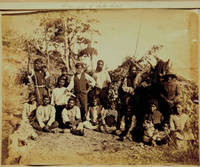
188815347Australia 1888. Wonderful photograph album of Victoria New South Wales and Tasmania with large photographs and manuscript titles. A total of 47 photos with 33 of Victoria 6 of New South Wales 5 of Tasmania 1 of New Zealand and 2 others. Each photograph is lightly tipped on to the album paper with blank verso. Most of the photographs are by an unknown photographer; there are also some signed by J.W. Beattie Thomas Foster Chuck Frank Arnold Coxhead C. Rudd and J.P. possibly John Paine.<br /> <br /> Beginning with a large photograph is of "Aboriginals of Lake Tyers". It is an outdoor view of a family group of aborigines from children to grand parents dressed in western clothing with spear boomerangs and lean-to behind them. Others include some rather poetic views of woodcutters at Black Spur & Fernshaw; a couple of gold mining at Bendigo including Garden Gully United Gold Mining Company with houses in fore and background. <br /> <br /> Melbourne 33 photos including the Empire Building Collins St. West; Prell's Building<br /> corner of Queen St. and Flinders Lane; Austral Chambers Queen St. with Austral Chambers sign and "Offices to Let" by Selby & Co. 97 Queen St.; Grand Hotel Spring St. with carriages at the front; Federal Coffee Palace Collins St. #102 showing electrical workers 3 of whom have climbed electrical poles; "Tuck's Buildings" or Luck's Elizabeth & Flinders St with the caption "Rent of Shop L 22.10 per week"; Government Public Offices Melbourne #48 with a dirt road in the foreground; Melbourne Hospital with a train moving past in the foreground; Centennial Exhibition Procession August 1st 1888 with Victorian Confectioner's Society banner in front; St. Kilda Jetty busy with people fishing; another showing neighboring jetty Hegerty's Railway Baths for Gentlemen and fishermen with the town behind them; The New Prince's Bridge with scattered construction debris; The Melbourne Hotel #10 with the #220 Carlton and Abbotsford tram in the foreground; Collins St. from Elizabeth St. looking east #73 with a busy street scene and a George & George flag flying; Modern Permanent Building Society offices with Kilpatrick & Co. Watchmakers & Jewelers a police box and Auchalps Sales Rooms; Bourke St. Melbourne full length looking west with trams a horse and cart Mayger's Imperial Hotel at the right and Old Whitehart Hotel at the left; Town Hall Melbourne a view looking down with 2 trams & Martin & Leasances Pharmacy sign visible; Elizabeth St. Melbourne a great snap shot view of people traffic a wagon and cart electric lights and a large Cullis Hill & Co. sign; Elizabeth St. Melbourne a snap shot view with street traffic a tram the Sunbeam Tea and Luncheon Rooms in the foreground and Lincoln Stuart & Co. in the distance; Bourke St. Melbourne a snap shot view toward E. A. Petherick Booksellers & Publishers with trams and traffic.<br /> <br /> There are three views of clipper ships - H. M. S. Calliope in Port Philip Hobson's Bay with 3 yachts a tender and row boat; The Liverpool largest sailing ship afloat sailing under the Red Ensign. Steamship Cavo Romano New Orleans Feb 26th 94 docked with several crew sitting on barrels with a tear. <br /> <br /> The NSW photographs are taken in and around Sydney mostly signed "J.P." possibly John Paine 1834 - 1915 including Manly Cove; Harbour from Neutral Bay with a building under construction in the foreground and harbour and ships in the distance; Harbour from Mr McMahon's Hill with flags ferries row boats and sailing ships; Farm Cove with ships and Government House in the distance; Coogee with a hut in the foreground; trams in a turning circle a beach and vacant land in the distance and an unidentified grand public building with a horse and carriage visible. <br /> <br /> The Tasmanian photographs are unsigned. "Port Arthur Tasmania" is a small panoramic view with the Penitentiary ruins of Church and Model Prison noted in the margins. Hobart from the lower slopes of Mt. Wellington overlooking the harbour River Derwent; a beautifully artistic photograph "Glimpse of Port Arthur shewing side entrance to Peninsula & ruined church in distance" is framed by trees and bushes the buildings visible in the distance. <br /> <br /> The photographs vary in size - the largest is 29 x 23 cm; the smallest 9.5 x 15 cm; most are approximately 20 x 15 cm. Most are bright and unfaded while some have some fading. The album is bound in red cloth with title in blue and gold gilt and black decoration at front cover. A little loose in binding with the last few pages blank. Overall a very interesting album in very good condition. Full details of each photo and size available on request. unknown
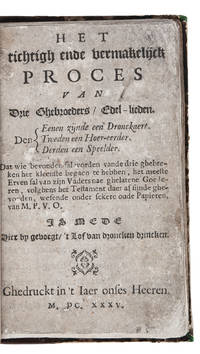
16351616Amsterdam 1635. Small 8vo 14.5 x 9 cm. Jacob Aertsz. Colom Half calf ca. 1830s with the binder's stamp on an endleaf F. DUQUESNE À GAND chemical marbled sides 2 black spine labels marbled endpapers. With 2 decorative initial letters castings made from woodcuts and a decoration made from cast fleurons on the title-page. The main text is set in roman type with long passages in italic and textura. 136 1 1 blank; 30 pp. Second known copy of the third edition 1635 of a rare satirical Dutch adaptation first and second editions 1634 of a moralistic story in Latin by Filippo Beroaldo 1453-1505 possibly intended in this adaptation to satirize the Princes of Orange. The quotations from classical sources are given in Latin each followed by a Dutch verse translation that takes some liberties with the text. Pieter Nootmans active 1627-1635 contributed a verse about the book printed on the back of the title-page. Following the main text is a drinking song by H. Rulant active 1632-1634 with its own part-title which had been published separately in 1632. We have located only one other copy of the present edition in the library of Tresoar in Leeuwarden.The British Library database of bindings includes one binding by this Ghent binder. The title-page is worn and dirty with a small abrasion obliterating the letter S in "Stichtigh" and the upper outside corner of the last leaf has been restored with the loss of a few words of the text of the added drinking song. The binding is good with some cracks in the hinges and minor damage along the edges.l KVK & WorldCat 1 copy; cf. Kruyskamp Jan Mommaert en het "Stichtelyck Proces" in: Het Boek XXX pp. 306-312 1640 ed. unknown
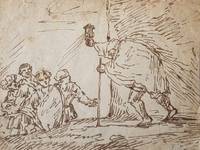
16502105Dutch mid-17th century drawing possibly by Rembrandt pupil Willem Drost. Depicted is Diogenes in robes with his lantern in his left hand and a staff in his right and a group of four figures. Diogenes the Cynic 4th cent. BC renounced material possessions and lived in poverty. He would go out with a lighted lantern in broad daylight to look for an honest man instead he would only find that everyone around him was morally corrupted. He would scare passersby with his lantern causing them to lose their mask and reveal their true intentions.In the present drawing the group of four is clearly scared by the lantern of Diogenes who seems to be towering over them. In fact the artist has placed Diogenes on a higher plane than the passersby an invention that effectively enhances the morality of the scene. This is not found in other contemporary depictions of the same story by artists like Rubens Sandrart Castiglione and Jordaens.The artistdisplays a masterful understanding and application of chiaroscuro. Not only does he use it for the composition he also applies it to benefit the narrative. Light is literally and figuratively at the center of the scene. The artist from the "Rembrandt school" who made most use of stark chiaroscuro in his drawings was Willem Drost 1633-1659. He became a student of Rembrandt around 1650 which corresponds with the dating of the watermark. The style of drawing is also close to drawings attributed to Drost. The facial type of Diogenes in particular the pointy nose corresponds with that found in each of Drost's drawings in the Rijksmuseum. Also the hatchingsmatch those in other works by Drost who made much use of individual lines instead of a continuous zig-zagging stroke and penstrokes of varying thickness to create depth in his compositions Bonny van Sighem 2000.<i>Condition: Number 3 in pencil at the bottom previous attribution to Ferdinand Bol written in pencil on the back. Several small brown spots and a couple minor defects including one on the face of the central figure in the group top edge slightly frayed and creaded. Old repair with tape on the back at the top.Literature: B. van Sighem 'attributed to Willem Drost David Prevents Abishai from Killing Saul Amsterdam c. 1650 - c. 1655' in J. Turner ed. Drawings by Rembrandt and his School in the Rijksmuseum online coll. cat. Amsterdam 2000 Bonny van Sighem 2000; for the watermark cf. Churchill fig. 305; Heawood 305 & 307.</i>
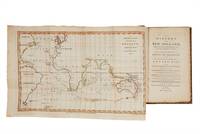
17875001050London: John Stockdale 1787. Octavo with two folding maps hand coloured in outline; a very good copy edges uncut in contemporary calf gilt spine neatly repaired. <p><p>An important book and a sometimes neglected precursor to the Australian First Fleet: this was one of the earliest descriptions of Australia published to coincide with the departure from England of the First Fleet. "It is an extremely interesting work and an essential inclusion in all comprehensive collections" Davidson. In discussing the fleet's imminent departure the anonymous compiler lists numbers and equipment as well as the principal officers and there is also material in both preface and text about transportation as well as an "Introductory Discourse" on the subject by William Eden which has often led to the misattribution of the whole book to him.</p> <p>This is an example of the important second edition published the same year as the first and after parliamentary approval of the Botany Bay plans and with a very significant new section: an additional ten prefatory pages appear for the first time in this edition discussing in detail the hopes for the new settlement. The anonymous writer reports that many of the convicts awaiting transportation have embraced the idea with excitement: "strange to tell! there have not been wanting voluntary candidates for banishment to that remote shore.".</p> <p>The "Eden" as it is often called was written "to present at one view a connected description of the whole country of New Holland". The book is clearly aimed at a public eager for information on the new colonial venture and for details of Botany Bay itself which is here described at length. This is the form in which many of the participants in the First Fleet must have absorbed what little information existed about conditions in Australia. The maps show the continent Botany Bay and most interestingly the "passage from England to Botany Bay in New Holland 1787" highlighting the route that the fleet must take.</p> <p>The book is of some importance too for its Cook material: as Cook's bibliographer Holmes points out "the greater part of the book is devoted to Cook's discoveries.". His charting of the east coast of Australia is here put into context in a form anticipating the actual settlement of the new coastline.</p> </p> . John Stockdale unknown
2006mon0000099883Public Health Institute 2006-01-01. Spiral-bound. Good. 0.2000 in x 8.9000 in x 6.9000 in. 2004 Spiral-bound Paperback. Pages are in nice condition. Some minor surface/edge wear to cover. Public Health Institute unknown
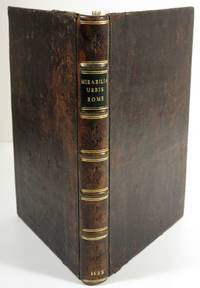
15229527Rome: Marcello Silber. Very Good with no dust jacket. 1522. Leather. Very scarce post-incunable edition of the famous marvels of the City of Rome bound as is common with a work on the indulgences of the churches of Rome. With 8 full page woodcuts papal arms and large initial. In two parts: 55 of 56 8 ff. A8-g8 missing a1 plus the 8 unnumbered leaves of the Mirabilia without signatures or catch phrases. Printing information on the Indulgentiae on g8 lacks title with image of wolf feeding the twins. Leaves have old hand-inked page numbers continuous through both parts. Small marks and occasional light stainsfirst few leaves have damp mark at bottom edge first leaf has marginal losses at bottom and stronger marks old neat ink notation at top of leaf date of 1522 written in top of leaf has papal seal of Hadrian VI 1522-1523. The Mirabilia has no title colophon nor illustration it is 22/23 lines with the only woodcut being the small first initial. In renewed leather boards with a new handsome spine with 5 raised bands and gilt. Renewed endpapers. Handsomely printed in Gothic type with 8 magnificent full page woodcuts plus the insignia on a2. The lines on the legendary Pope Joan have been neatly crossed out. The Mirabilia Romae is a rare text one of the first printed guide books to the marvels of the Eternal City. The tradition of the Mirabilia started in the medieval period as a guide for the use of Pilgrims combining Christian beliefs and the mythology and history of Rome. "Unhampered by any very accurate knowledge of the historical continuity of the city the unknown author has described the monuments of Rome displaying a considerable amount of inventive faculty" according to the Catholic Encyclopedia. The printer of this work is Marcello Silber who ran the family establishment in Rome until 1527. His father Eucharius Silber had printed a number of earlier editions of the Mirabilia including a 1491 incunable edition. This work with its wonderful woodcut illustrations is scarce in any edition. The Indulgentie conforms to G-250 of Rossetti's Rome I with 24 lines. We have not been able to identify which Mirabilia Rome Urbis this is: although the printing looks like Silber the paper is not the same as the Indulgentiae and as far as we can tell it does not conform to any of the Mirabilia in OCLC Rossetti Sander nor USTC. A very attractive copy inside and out. Provenance: the Joseph Mendham collection. ; Woodcut; 8vo 8" - 9" tall; 55 8 pages . Marcello Silber hardcover
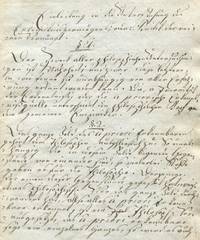
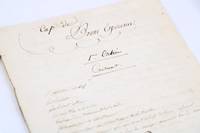
183091260n. l.: s. n. 1830. Fine. s. n. n. l. s. d. 1830 16.3 x 20.6 cm En feuilles sous chemise et étui Complete anonymous manuscript of 23 pages plus title page and table from the first half of the 19th century entitled: Cap de Bonne Espérance. 1er cahier.Our manuscript is presented in a navy blue half shagreen folder marbled paper boards housed in a slipcase edged with navy blue shagreen marbled paper boards.An account of a stopover at the Cape a city under British rule which according to the anonymous author retains many traces of its Dutch past.Description of the town its geographical setting its buildings churches and houses whose cleanliness contrasts with the dirt and the smell of meat prevailing in most of the streets.This is followed by the narrative of an excursion in the surrounding area to Constance where the author appreciates the wine of the proprietors he visits and then of the ascent of the famous Table Mountain overlooking the Cape. s. n. hardcover
175090724n. l.: s. n. 1750. Fine. s. n. n. l. s. d. 1750 20.5 x 31 cm Relié Eighteenth-century manuscript second half comprising 258 foliated pages. Contemporary binding expertly restored in full tan calf with a smooth spine adorned with gilt compartments and decorative gilt tooling some now faded; signs of rubbing; title label missing; gilt rampant lion at the centre of both boards; handmade paper endpapers and pastedowns; gilt double fillets on board edges; corners slightly worn. Notable manuscript featuring extracts and summaries of orders and dispatches issued by the Ministry of the Navy during the Regency and the first year of Louis XVs reign. Collated from original documents carefully dated and with folio references these extracts are written in a highly legible hand. Topics covered include: general armament; the War of the Quadruple Alliance 1718 1719 1720; Barbary States; Guinea Coast; colonies; trade Spain Portugal Guinea Compagnie dAfrique Compagnie des Indes; justice police and discipline; munitions; goods and timber; fishing; ports and roadsteads; prizes and more. The manuscript is in excellent condition preserved in its original binding. Contemporary pencil note on the front endpaper: ""Aux armes du Maréchal Duc de Duras de lAcadémie française"" 17151789. s. n. hardcover
1880840941880. Fine. 1880 21 x 24 cm autre Album bringing together 10 original paintings on beige silk in colors mounted on gold paper. The pastedowns of embossed and gold paper with flowers and leaves. The final work of the collection bears 2 red seals. The majority of these collections are never signed due to censorship so it is extremely rare to find a seal therefore the painter's signature. Each painting is a square of silk measuring 16.8x16.8cm. The erotic scenes contain no decor no background concentrating all attention on the couples. 3 however have drapery or a screen. The paintings are extremely stylized and finely executed of great quality. A few fine strokes draw the figures clothed in fabrics that partially cover them. With a few red touches the colors used are browns harmonizing with the beige background. It is almost impossible to date this type of work precisely and it is likely older by several decades although its very refined style seems to reflect the end of the nineteenth century in Japan. Accordion album covered in blue silk with gold motifs. Wooden case in 2 parts 24.5x28.5cm a base and a lid with manuscript writing on the lid. For the album: Rubbed manuscript label. Worn corners with fabric loss. The gold paper with rubbing. In the margins the paintings have some soiling or light dampstains. It is very rare that these collections always hidden from view have preserved their storage box. Compared to the well-known production of erotic prints the paintings while respecting a certain number of codes of Japanese eroticism size of genitals swooning women fabrics partially masking nudity sexual positions. show greater creativity and originality expressing more of the technique and vision of the painter. The series thus demonstrates extreme refinement and great purification especially when compared to shunga from the Edo period. Furthermore even if the erotic scenes respect the codes of shunga representation one can clearly distinguish an evolution in the vision of sexuality: women hold a more equal place and the whole tends more toward harmonious sexuality perfectly rendered in these paintings by the choice of brown gradations punctuated with touches of more violent colors thus representing a form of serenity inhabited by the violence of desire. Shunga is the generic Japanese term designating erotic art it literally means Spring Image spring being a euphemism and figure of speech expressing sexuality. The term Shunga having long been reserved for prints collections or albums have often been designated by the appellation Pillow Books or pillow notes etc. Utamaro: The Song of the Pillow 1788. Precious and rare ensemble. hardcover