AnonymousBiblio.com
253 541 résultats
1140117572New. Brand new and still unused unknown
1411607740New. Brand new and still unused unknown
1140500414New. Brand new and still unused unknown
1140039334New. Brand new and still unused unknown
0882709062New. Brand new and still unused unknown
1347000259New. Brand new and still unused unknown
1343857694New. Brand new and still unused unknown
114031176XNew. Brand new and still unused unknown
1343558832New. Brand new and still unused unknown
1343548527New. Brand new and still unused unknown
1343543851New. Brand new and still unused unknown
B0030ZRJJ2New. Brand new and still unused unknown
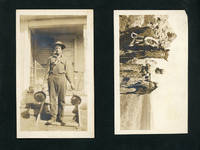
151948641Sentinel Butte: 1915-1916. 1915-1916. NORTH DAKOTA. Eighty-one black and white photographs most sized 4 1/2" x 2 3/4" and glued directly to pages of the album. Also includes one postcard also mounted directly to the page. It appears that several of the photographs have writing on the back. Also it does not seem that it would be too difficult to removed the photos to see exactly what is written. Gently lifting the edges of the first photograph in the album I can see "Cook for the G.H. Triangle outfit." Below the statement is a hand-drawing of the ranch's brand. Only a couple of the photos are labeled on the face of the photograph but the album for the most part involves the ranching life at the turn of the 19th century in North Dakota. The album was most likely compiled by an eastern gentleman by the name of Fred who traveled to Sentinel Butte in 1915. One of the photos states he arrived at the Sentinel Butte's train station on March 9 1915. Many of the photos are of cowboys wearing "woolies" leather cuffs carrying rifles shooting a cow saddles with lariats the ranch bugler a cowboy with a Navajo Indian blanket around him holding a rifle the train station at Sentinel Butte feeding a calf cowboys holding cattle on free range steam thresher being pulled by horses a large group of mounted cowboys watching some sort of competitions and several scenes of a quarry. Another photo shows a cowboy wearing wrist cuffs and caring a gun and holding coyote pelts while still another shows two cowboys unloading grain from a buckboard. There is a long range photo showing the ranch house the silo windmill and barns and another labeled "The First Harvest in Golden Valley N.D. - Sentinel Butte." The post card is labeled Dedication of St. Joseph's Hospital Dickenson N.D. March 31 1912 and then written over the card is "This is where Fred was when he had Typhoid Fever while out West in 1916." In a photo showing the main street of Sentinel Butte is the Blazed Trail Store with several cowboys on horses in front of it along with a lone gas pump. It is scarce to find North Dakota ranching albums featuring the actual day to day operations of a cattle ranch. Founded in 1902 along the transcontinental rail line of the Northern Pacific Railway the town in the 2010 census only had 56 residents. Its name comes from the prominent butte three miles to the south which had been named in honor of two Arikara sentinels killed nearby in 1864 by the Sioux. A rather remarkable cowboy photo album giving a sense of how desperate ranching was and still is in the western part of North Dakota. Most photos having very good contrast. 1915-1916. hardcover
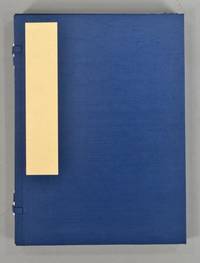
1793899051793. EHON. TOBA-E SANGOKU-SHI. 3 Vols. Osaka Kawachiya Kihei and Kawachiya Eisuke Kansei 5 1793. 25.8 x 18.5 cm. Original dark blue covers string-bound Japanese style fukuro toji with the pink printed paper title labels. A nice 18th century edition of this work in good impression. Originally published in the 1720's. Though the artist is unnamed several candidates have been mentioned including Ooka Shumboku. 18th century editions of Toba-e books are becoming increasingly uncommon. In a custom clasped chitsu case. The covers are worn but overall a good copy of this book. An excellent example of the somewhat madcap humor of the Toba-e genre. With a bookseller's advertisement at the end which indicates this edition of the book was part of a series of Toba-ehon brought out by the same publisher - SANGOKUSHI OGI NO MATO and TOBA GURUMA. unknown
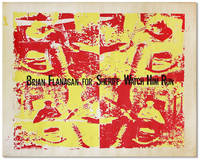
19730N.p. Chicago: 1969. Original silk-screened poster in three colors 23" x 29". Professionally backed on archival tissue; minor toning at margins still Near Fine. <br /> <br /> Brian Flanagan b. 1946 was a member of both SDS and the Weathermen and directly connected to the fatal Greenwich Village apartment explosion in which three Weathermen were killed while preparing for a bomb attack on Fort Dix Flanagan had reputedly left the apartment briefly for more supplies. This rare poster promotes Flanagan's parodic write-in campaign for Mayor of Chicago during the Days of Rage. Following a fateful run-in with City Attorney Richard Elrod on the streets of Chicago in which Elrod was left with a broken neck and partial paralysis Flanagan was tried for attempted murder and inciting mayhem. He was eventually acquitted on all charges but the case became a cause celebre for the Weathermen and other radical left groups. An extremely ephemeral piece likely produced in tiny quantities and posted even less. unknown
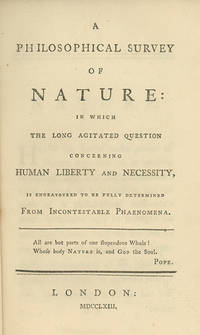
28449London: MDCCLCIII. First and only edition. ESTC T99774 BL Cambridge Congregational Library National Library of Scotland Bodleian Huntington Chicago Penn Texas-HRC Yale National Library of Australia. One signature foxed; very good copy. Small 8vo modern marbled wrappers printed paper spine label untrimmed 120 pages. Without half-title. An interesting and unusual nonsectarian tract on natural philosophy which examines the mechanisms of nature animal existence and the structure of the earth as they relate to the will of man liberty happiness pleasure pain social and political structures. The anonymous author cites John Locke Thomas Browne Henry Power Anthony Collins and others but theological texts are not referred to and it is likely the author was a radical free-thinker who preferred not to be known. This is supported by the intriguing inscription on the front blank presumably to the publisher William Strahan: "To Mr. Strahan from his greatly obliged & humble servant under the Rose." There are numerous footnotes enlightening the text with passages from the poetry of Alexander Pope with the final lines of the essay citing the famous first lines of "An Essay on Man": "ALL are but parts of one stupendous whole / Whose body Nature is and God the soul." Manuscript correction probably in the same hand as the inscription to one word in the text. Book label of John Stephens inside the front wrapper. <br/><br/> London: MDCCLCIII unknown books
319883Printed in Florence Italy: Micheal Angelino Press. Illustrated by Mahlon Blaine. 254pp. 8vo. Pictorial wrappers some wear. Illustrated by Mahlon Blaine. 254pp. 8vo. Micheal Angelino Press unknown books
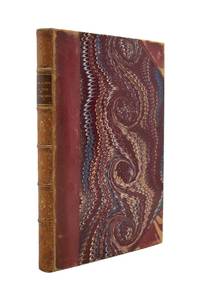
1815297244London 1815. hardcover. near fine. By a Gentleman Just Arrived From Paris. 52 pages scattered foxing small slim 8vo bound in 3/4 green morocco marbled boards. London : Printed for J. Johnston 1815. First Edition. Scarce.<br/><br/> unknown books
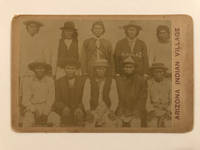
188952865Globe Arizona: Circa 1889. Circa 1889. First edition. Cabinet Card. 5.5" x 3.875" Mount 6.5" x 6.25". White lettering on the negative identifies the group of 10 men as "Apache Prisoners" and one man is additionally labeled "Apache Kid". This classic photograph was taken after the conclusion of a trial at the territorial court in Globe Arizona. The Apache Kid Es-ki-bi-nadel or Haskay-bay-nay-ntayl a San Carlos Apache had served as a scout for the U.S. Cavalry in Arizona Territory under Al Sieber Chief of the Army Scouts from about 1882. An altercation among the Apache scouts in 1887 resulted in the deaths of one or two. When Sieber attempted to arrest them he shot in the ankle and crippled for life blaming the Apache Kid for his injury. At a trial in Globe Arizona in 1888 the Kid along with 3 other scouts was convicted of assault and ordered to serve 10 years in jail. Their convictions were overturned and they were released. A new trial was ordered in October 1889 again in Globe at the territorial court. The 4 were convicted once more and they were locked up in the county jail presided over by Sheriff Glenn Reynolds along with 6 other Apaches. Presumably that is the group of prisoners depicted in this photograph likely the last known image of the Apache Kid. Sheriff Reynolds with his deputy William Holmes were charged with transporting the prisoners to the railway station at Casa Grande on their way to Yuma Territorial Prison. Sheriff Reynolds enlisted Gene Middleton to drive the stagecoach. Along the way the Apache prisoners overpowered their guards killed the sheriff and the deputy and escaped. Though some were recaptured the Apache Kid remained at large and was suspected of various crimes. A $5000 reward for him dead or alive was promised by the Arizona territorial legislature but the Apache Kid was never found. Image is uniformly and moderately faded. Mount is lightly tanned with "Arizona Indian Villages" printed on blank end of mount. [Circa 1889]. unknown
179069478London: J. Parsons 1790. Full Description:<br> <br> ANONYMOUS. Authentic Memoirs Memorandums and Confessions. Taken from the Journal of His Predatorial Majesty the King of the Swindlers. London: J. Parsons n.d.c.a. 1790.<br> <br> First edition. Octavo 8 x 5 inches; 204 x 125 mm. viii 184 195-300 1 errata 1 blank pp. With skips in pagination but collates complete. Although the final leaf reads "End of the First Part" no second part is known. This Journal covers the years 1780-1784.<br> <br> Contemporary half calf over marbled paper boards. Spine stamped in gilt. Brown leather spine label lettered in gilt. Top edge gilt. Marbled endpapers. Some minor rubbing to boards along edges and joints. Title-page repaired along inner gutter margin. Some light toning throughout. Previous owner's old ink signature on title-page. Overall very good.<br> <br> This journal by the anonymous "King of the Swindlers gives a detailed account on the various scams and swindles in which the subject was implicated. Most of names in the text being lightly disguised. According the the introduction by the publisher "This singular miscellany fell into the Editor's hands through the carelessness of its owner who left it on the seat of a hackney coach. He was instantly succeeded by a lady who took possession of his journal and after satisfying her own curiosity gave it to the Editor; earnestly recommending the exposure of its contents for the information and benefit of the community. Tue mere possession under these circumstances did not in the Editor's opinion authorize his publishing or justify his retaining it: he therefore advertised the manuscript -offering to resign it to the bearer of any memorandum or confession agreeing in substance and character with the original ; and declaring his determination if not claimed in a given time to prepare it for the press and to publish it as soon as possible. Having thus satisfied every punctilious consideration and no claim being made; he hath fulfiled his promise and discharged his duty to the public by promulging its contents."<br> <br> HBS 69478.<br> <br> $1500. J. Parsons unknown
1651302281Venice: Presso li Guerigli 1651. hardcover. very good. 290 pages all rather fine and clean blue edges. Thick tall 8vo copper engraved illustration on title page engraved decorative chapter initials and tail pieces. Full vellum lightly soiled hand-lettered title on spine. Small ex-libris on inside front cover. Venice: Presso le Guerigli 1651. First Edition. Scarce.<br/> <br/> Presso li Guerigli unknown
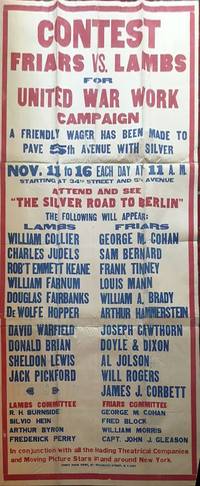
261819New York: Carey Show Print. Poster. Page measures 85 1/2" x 40".<br/> <br/> This large scale World War I poster features patriotic red white and blue fonts to underscore its message. The Friars and the Lambs two organizations operating at the time of the War and still today participated in fundraising contests for the United War Work Campaign or UWWR. That 1918 campaign was charged with raising $170000000 to help demobilize the army and maintain morale in the final few years of the war. The campaign was a success and was at the time recognized as the largest fundraising event in history. This poster is a wonderful vestige that illustrates the willingness of all different organizations to demonstrate their devotion to the nation's troops. It is in very good condition and is creased at the folds as issued. Scarce.<br/> <br/> Carey Show Print unknown
261819New York: Carey Show Print. Poster. Page measures 85 1/2" x 40".<br/><br/> This large scale World War I poster features patriotic red white and blue fonts to underscore its message. The Friars and the Lambs two organizations operating at the time of the War and still today participated in fundraising contests for the United War Work Campaign or UWWR. That 1918 campaign was charged with raising $170000000 to help demobilize the army and maintain morale in the final few years of the war. The campaign was a success and was at the time recognized as the largest fundraising event in history. This poster is a wonderful vestige that illustrates the willingness of all different organizations to demonstrate their devotion to the nation's troops. It is in very good condition and is creased at the folds as issued. Scarce.<br/><br/> Carey Show Print unknown books
179719586Paris: Le Clerc 1797. FIRST AND ONLY EDITION. Engraved frontispiece in first volume. Partially printed on blue paper. Contemporary russet calf- backed marbled boards spines gilt marbled endpapers. An excellent copy. First and only edition of this rare treatise on the controversial subject of suicide. The anonymous author hopes to shed more light on this cultural taboo. He begins by providing statistics of suicides that have been announced in France 500 suicides in 6 years or 20000 suicides in the last century which he believes are consistently underreported by families and newspapers due to public and religious shame. The author sets forth examples to support his conclusion that suicides are a systemic problem in French society as illustrated by Madame L’s suicide a woman with a seemingly happy life who drowned herself in the river. He claims her death to be a combination of boredom with life disgust at her needs and mood swings brought on by dramatic novels. Our author disagrees with contemporaneous scholarly and popular opinions on suicides and concludes the first part with a historiographical critique of literature including Dubois Delaunay’s Dissertation sur le Suicide Jean Henri Samuel Formey’s Mélanges philosophiques M. Funck’s commentary on Johan Robeck’s 1672–1739 theological interpretation of suicide and Jean Dumas’s Traité du suicideou du meurtre volontaire de soi-même. The author defines fourteen causes of suicide including disgust at the satedness of life loss of property a feeling of humiliation an unfortunate or ill-fated passion the abuse of the pleasure of the senses envy or jealousness anger guilt of crimes fear and terror belief in suicide as just and deserved punishment madness and cruel fanaticism. A rich section of discursive notes fills the second half of the second volume. Le Clerc unknown
140943566No Place: No Publisher 1970. 4.25" x 5.5" single-sided handbill flyer. Good horizontally creased missing triangular chips at corners wrinkled toned. No other copies located in commerce or in institutional collections such as University of Washington's Vietnam War Era Ephemera Collection.<br /> <p>A scarce piece of propaganda from the American anti-Vietnam War movement demanding the freeing of the protestors that would become famous as The Seattle Seven. On February 17 1970 the Seattle Liberation Front organized a protest of about 2000 people against the imprisonment of the Chicago Seven including Black Panther Bobby Seale converging on the Seattle federal courthouse. About 200 protestors chanting "Free Bobby!" attacked the building with rocks and paint and were reputedly tear-gassed by Seattle Police. Eight protestors would later be indicted: Jeff Dowd Michael Abeles Joe Kelly Michael Lerner Susan Stern Roger Lippman Chip Marshall and Michael Justesen. Jutesen skipped town and was never found so the group became known as The Seattle Seven. Most of the charges would eventually be dropped.<p>Jeff Dowd though would become a film producer and later gain cult fame as an inspiration for "The Dude" in The Coen Brothers' 1998 film The Big Lebowski. Hence The Dude's lines "Ever heard of the Seattle Seven That was me. Well me and six other guys." <p>One was actually a lady but otherwise the reference was quite real. [No Publisher] unknown