[ANONYME]Livre Rare Book
253 541 résultats
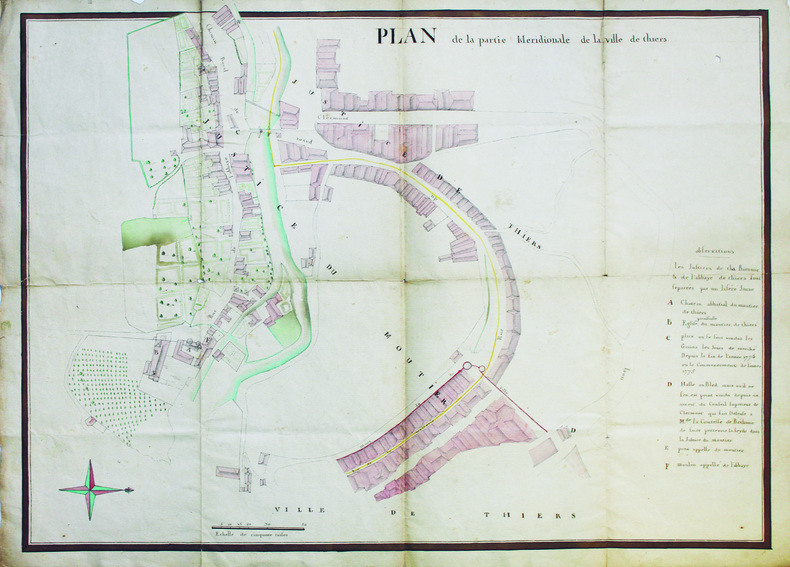
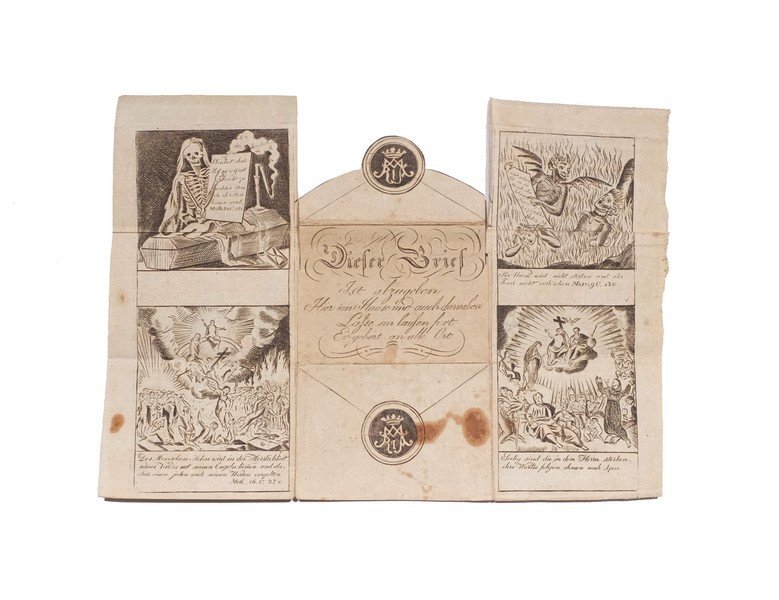
970S. l. : s. d. (fin du XVIIIe siècle-début du XIXe siècle). UNE INQUIÉTANTE MISSIVE
1780LBW-6561[vers 1780]. 53 x 70,5 cm.
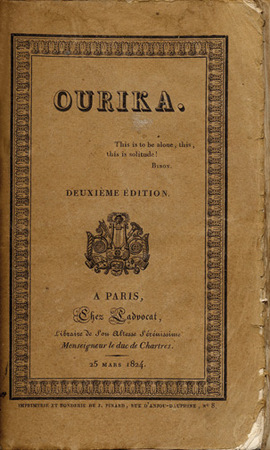
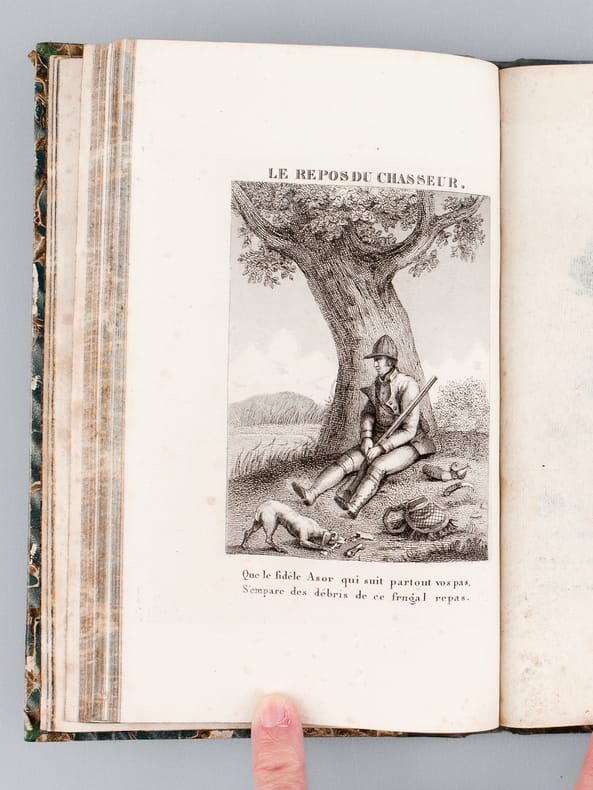
18249443Paris, Ladvocat, 25 mars 1824 (Imprimerie de J. Pinard) ; in-12 ; demi-chagrin bleu-marine, dos à nerfs orné de roulettes décoratives de style romantique, fleurons à froid, filet doré sur les plats, plats de couverture marron illustrés conservés, non rogné (reliure fin XIXe-début XXe) ; 172 pp. y compris le faux-titre et le titre ; au verso du faux-titre on lit "Publié au profit d'un établissement de charité".
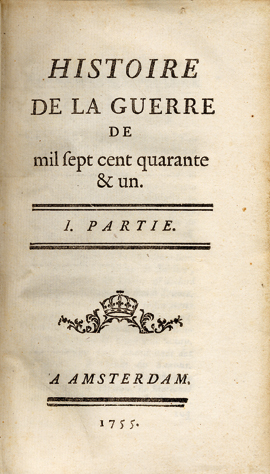
175514498Amsterdam (Paris), s.n., 1755 ; 2 parties reliées en un volume in-12 ; plein veau havane marbré, dos lisse décoré et doré, pièce de titre grenat, tranches marbrées (reliure de l'époque) ; (4), 278 pp. ; (4), 208 pp.
177089139Sans nom d'éditeur | Sans lieu d'édition s. d. (ca 1770) | 17.5 x 23 cm | Une feuille
187091296Fred Lewis, Calcutta central press company | Calcutta 1870 | 11 x 17.5 cm | Reliure de l'éditeur
186288711Imprimerie Impériale (1851-1870) | Paris 1862 | 21.4 x 27.5 cm | Relié
188073119s. l. [Japon] s. d. [circa 1880] | 17 x 12 cm | un album contenant 12 photographies
177090715s. n. | s. l. s. d. [1770] | 70 x 59 cm | Une feuille rempliée
020279Anonyme, L'Office de la Vierge Marie pour tous les temps de l'année, reveu et corrigé de nouveau selon de Sainct Concile de Trante Avec toutes les prières des heures du jour et de la nuict composées par le R.P. Coton de la Compagnie de Jésus, enrichy de figures de nouvelles invention [suivi de] Pierre Coton, Oraisons pour tous chrestiens et catholiques. Paris, Guillaume Loyson [et pour le second titre] Paul Mansan, sd [1624]. In-8, [32]-244-48ff (nombreuses erreurs de pagination). Belle édition répertoriée nulle part, et donc non signalée dans la Bibliothèque de la Compagnie de Jésus (Bruxelles, Schepens, 1891. Tome 2, col.1555-1556). L'ouvrage nous indique une première édition en 1618 puis des rééditions en 1619, 1627, 1628, etc. Une édition Loyson est signalée en 1640. On notera que le lien entre les deux éditeurs n'est pas inédit. Mansan publie un Théâtre français en 1624 et on trouve des exemplaires à l'adresse de Loyson datés 1625 (éditions partagée ? Remise en vente ? Réimpression ?). Nous avons toutefois identifié un ouvrage proche, dont la première partie était à l'adresse de Philippe Gaultier en 1630 (Alde, 8 juin 2012, n°156) sans pouvoir affirmer qu'il s'agit du même ouvrage. Notre édition est donc illustrée de 26 figures de nouvelle invention que nous n'avons, là aussi, retrouvé nulle part. Le titre-frontispice est signé Roussel, les gravures des mois sont signées « D », « Dauuel » ou « Estienne Dauuel ». Certains gravures à pleine page sont signées Roussel mais il semble qu'une autre signature ait été gratté et que ce Roussel se soit approprié ces gravures. Quoi qu'il en soit, ces gravures sont à rapprocher de celles de Jean Messager (1572-1649) pour l'édition latine de 1610. Deux pages (234R° et 239V°) sont restées blanches. Il est probable que des gravures étaient destinées (début des litanies de Jésus et de celles de la Vierge). Plein maroquin rouge à la Duseuil, dos lisse ornée (sans titre), roulette sur les coupes, traces de fermoirs, tranches dorées. Frottements aux coiffes, mors très légèrement craquelés (en surface), un coin cassé, usures aux coins. Titre avec manque comblé anciennement avec un morceau d'une autre gravure, quelques rousseurs, certains cahiers légèrement brunis. Une garde blanche en partie détachée. Très bel ouvrage, rare.
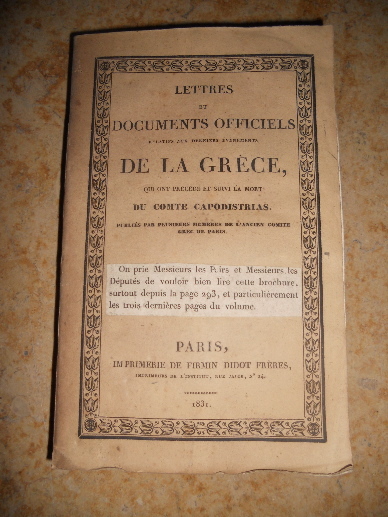
11835Paris, imprimerie Firmin-Didot, 1831. In-8* broche, de 313 pages.Bon etat ( couverture tres legerement sale).
192069411Chine s. d. [1920] | 24 x 250 cm | autre
LCI-607640 x 50 Oubliez la simple décoration. Voici la pièce d'art majeure de notre sélection, une œuvre qui exige d'être regardée.Le secret du pinceau : Bien que non signée, la qualité technique de cette toile est absolument stupéfiante. Le trait impeccable, la densité de la peinture et la maîtrise des drapés et de l'anatomie évoquent les plus grands ateliers du début du XXe siècle. C'est l'émotion pure d'une œuvre potentiellement majeure.Acquérir l'unique : Vous n'achetez pas un nom, mais la qualité visuelle rare qui captive immédiatement l'œil expert. Posséder cette toile, c'est détenir le potentiel d'une grande découverte artistique et affirmer votre œil averti .La toile est proposée à l'état brut (sans châssis). C'est l'œuvre dans sa forme la plus pure. Cette condition vous offre la liberté totale de choisir la mise en valeur qui transformera votre intérieur (encadrement sur mesure, entoilage).Avec ses 50 x 40 cm, elle est suffisamment présente pour attirer le regard tout en étant facile à intégrer dans un salon, un bureau, ou à proximité de votre bibliothèque. Elle est le pont parfait entre votre collection littéraire et votre passion pour l'art.Une opportunité à saisir Une œuvre d'une telle qualité, même anonyme, est une chance rare. Ne laissez pas passer l'opportunité d'acquérir une étude de Maître à un prix qui reste accessible compte tenu de son potentiel.
122071741 Chez Jean Dessaint & Charles Saillant libraires Reliure plein cuir restaurée, 5 nerfs, caissons décorés, 1page de titre, 24p + 616p + 58p. bon état.
16647286Bruxelles: Fopens 1664. Hardcover — Tapa dura. 128x74mm. 5x3". Ratisbona Mathias Kerner pero Bruxelles Fopens 1664. En 12º 128 x 74mm. 8 336 pp. 1 lámina plegada. Encuadernación de finales del siglo dieciocho o principios del diecinueve en tafilete rojo lomera cuajada de adornos dorados cabeza y cortes también dorados. Sátira contra la Liga Católica publicada originalmente en 1593. Dice Palau: "Contribuyó al fracaso de las aspiraciones de Felipe II al trono de Francia en oposición a Enrique de Borbón. No obstante el catolicismo francés se salvó sin duda por la intervención filipista que indujo al axioma "ParÃs bien vale una Misa". Los autores son Pierre Le Roy del Catholicon Gillot Passerat Rapia Florent-Chretien y Pithon". La Liga Católica fue un movimiento polÃtico armado de carácter católico de las guerras de religión de Francia cuyo objetivo era imponer el catolicismo como única religión y eliminar el protestantismo de Francia. Contaba con el apoyo del papa Sixto V los jesuitas la reina Catalina de Médicis y el rey Felipe II de España. Este partido católico se formó con el fin de contraponerse al Edicto de Saint-Germain 1570 y al Edicto de Beaulieu 1576 considerados ambos demasiado favorables a los protestantes. MagnÃfico ejemplar muy bien encuadernado. Fopens hardcover
178633904Rome ( ?) Nancy ? Imprimerie du Vatican ( ?) [ Sabellius ] ] 1786 Rome, de l'imprimerie du vatican, 1786 et 1790. 2 tomes en 1 fort Volume in-8, 236 pp + 98 pp et 1 frontispice et 50 gravures pour chaque volumes soit cent-deux planches gravée sur cuivre hors-texte. Cohen 200-201. Edition avec le format réduit de l'édition in-4° mais bien appréciée par les amateurs. Évidemment tout les médaillons érotiques sont imaginaires quoique fort vraisemblables pour certains. La deuxième partie est intitulée Culte secret des dames romaines Reliure demi chagrin à coins du XIX eme siècle
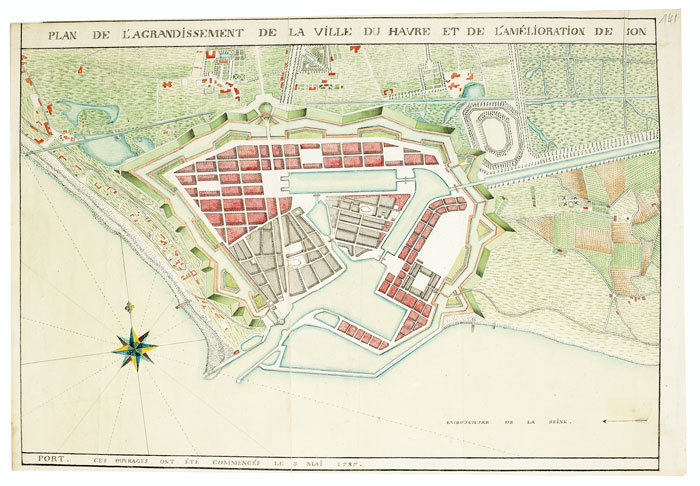
1787LBW-512[circa 1787]. 305 x 437 mm.
8674Eds. Reales Sitios. El formato es exacto al original 62 folios miniaturas por toda la obra de excepcional calidad. Impresión a todo color en pergamenata especial para la obra. Encuadernación plena piel de cabra repujada cosido artesanal. Le acompaña un Libro de Estudios conteniendo: Estudio codicológico histórico y artístico. Tirada limitada a 821 ejemplares.This codex of the fifteenth century contains a miscellany of Alchemy from an old treaty that served as source to Ramon Llull and comments it in some of his works. The Manuscript is a "vademecum" used by some practising alchemists. The format is exact as original 62 folios miniatures: All through the book of exceptional quality. The printing is to all its colour in pergamenata special for this work. Binding in leather raised in relief. Artisan handsewn. Book of Studies: Artistic and Historic codex study. Print run: Limited to 821 copies. Eds. Reales Sitios hardcover
182030251820. Watercolor heightened with india ink repaired tear lower left small spots of gum arabic lower center otherwise in good condition the colors very fresh. This fine Biblical scene is from the Book of Ruth chapter 2 in which Boaz owner of the fields being worked tells Ruth that she is welcome to glean there gather what has been left behind and that she will be safe. Ruth kneels to the ground: "Then she fell on her face and bowed herself to the ground and said unto him 'Why have I found grace in they eyes that thou shouldst take knowledge of me seeing I am a stranger" verse 3. Boaz answers in effect that it is because he knows she is an orphan and a stranger that he welcomes her. unknown
11641Kimonos. Kimonos. SEVEN ALBUMS OF INK DRAWINGS FOR KIMONO DESIGNS. Anonymous artist or artists. Japanese likely late 19th Century. Seven thin albums each about 11 x 16 inches thread bound in the Japanese manner each with paper covers and each containing about 12 sheets with black ink and brush drawings on one or both sides of the sheet the drawings being designs for the various panels of kimonos several withh inserted sheets of similar drawings. All in very good condition except that a few sheets show evidence of worm damage. unknown
0081401809: Printed for W. Clarke Book. Very Good. Hardcover. New Edition. 8vo - over 7¾" - 9¾" tall. One of the classics of British Gothic literature. SCARCE in either the first or second editions this second edition in English published 1809 the more uncommon currently. Frontispiece illustration engraved by Isaac Taylor from a drawing by Isaac Taylor Jr. Spine label title reads "Caliph Vathek" . Bound in contemporary polished calf intricate decorations in gilt back triple gilt rules bordering covers all edges gilt dark blue end papers with period small label " Sold by Geo. Clarke Bookseller.". Very Good corners a bit rubbed and bumped gilt dulled two early prior owner names in ink moderate toning verso of frontispiece illus. lighter toning scattered throughout early pencil notation rear end page rear hinge starting. Printed for W. Clarke Hardcover
16873835Lugduni imprint false: likely printed in Germany 1687. First Edition. Very good. 8vo 180 x 100 mm. 8 295 pp. Later German quarter calf over decorated blue paper boards actually two different sheets were utilized printed waste utilized as spine lining the text is in Latin and French vellum corner tips black spine label gilt binding a bit worn all edges stained red. Paper defect on fol. H3 pp. 101/2 affecting five lines of text with loss paper stock foxed and somewhat browned as is common with Germany medical books at this date but a good unsophisticated copy with a few leaves unopened. UNKNOWN PHYSICIAN ARGUES AGAINST HEAVY SMOKING IN 1687. <br /> <br /> This curious medical book discusses in 65 chapters an uncharacteristically broad array of afflictions: vertigo vomiting stomach complaints "hypochondria" "melancholia hypochondriaca" ailments of the liver and spleen arthritis fever coughing grief scurvy bloody urine epilepsy asthma and much more. <br /> <br /> To these discussions are added a series of bewildering letters to various unknown recipients including an argument addressed to a young student AGAINST SMOKING TOBACCO "Ad juvenem quendam studiosum cui Nicotianae fumum dissuaseram" pp. 231-236. Here the anonymous author argues against the "noxious" smoke of tobacco "Nicotiana" which is an "enemy to human nature." But the author conceeds that "No one of a sound mind will deny that this plant has been endowed with amazing strength by God the greatest Creator." Also: "All other plants were created in vain and the earth was crushed by the useless weight of millions of plants in vain because the faculties of all other plants were in this one plant . that can by itself remove and quench both cold and hot disease." However the conclusion is that even "Moderate smoking is harmful but much more harmful to those who sin in excess." We learn that the tobacco plant "not only has the power of subverting the stomach but also has a certain narcotic capacity and if we are to believe the writers of Indian affairs it often produces wonderful visions." Such however should very rarely be put to use. Furthermore tobacco is harmful to the skin and flesh; if smoked frequently the brain is weakened by the narcotic power; nor does it help the eyes. Finally the author implores his young recipient to "abstain from daily smoking."<br /> <br /> No copy in the U.S. The BL copy lacks the title-page. <br /> <br /> BnF Catalogue des sciences médicales II p. 258. unknown
18653882Philadelphia: W.W. Harding 1865. Album 5 x 6 x 2.5 in. Title-page a little foxed verso blank Index to portraits 2 pp. followed by 25 thick cards creating 50 slots; all are filled with 47 cartes-de-visite 2 views and one chromolithograph a little foxed. Bound in original blue-green roan over deeply embossed carved boards covers and spine gilt edges dazzlingly gilt and gauffered each board with four porcelain beads two working catches and clasps with luxuriously wrought mounts and two porcelain beads moire pastedowns and endpapers. Minor scuffing to binding extremities. SUPERB CIVIL WAR ERA PHILADELPHIA BINDING THE GILT AND GAUFFERED EDGES GLEAM AMAZINGLY. <br /> <br /> The assemblage of the present album may be localized to Minnesota or neighboring Wisconsin owing to the surprising inclusion of two small views by Benjamin Franklin Upton 1818-1910 of the St. Croix River which demarks the two states. One of the images is entitled "Views of the Dells on the St. Croix River" a stereoscopic copy dated 1865 is at the Getty; the other is a log jam downriver from the bridge with a group of loggers posed in the foreground two stereoscopic copies of this scene are view held by NYPL Photography Collection. <br /> <br /> While it is not certain that the family who assembled the album are from either Minnesota or Wisconsin it seems self-evident that the St. Croix River was of considerable significance. Was the last name of this family "Quincy" We are perplexed by a third surprising inclusion namely a chromolithograph of a "Quince Blossom" probably not at random. The present album is far more luxurious than Harding's more common and much more inferior "Universal Photograph Album" 1861 and ours is distinguished by its exceptional condition. W.W. Harding unknown
1827655271 vol. in-8 reliure de l'époque demi-veau vert, toutes tranches marbrées, Chez Victor Thiercelin, Urbain Canel, Paris, 1827, 131 pp. avec titre gravé et 5 planches hors texte
1731693623 vol. in-12 reliure de l'époque plein veau marbré brun, dos à 5 nerfs orné, Chez Jacques Guérin, Paris, 1731, I : 2 ff., XVIII-426-XII pp. et 1 f. n. ch. avec une carte dépliante ; II : 2 ff., pp. [428]-562 et 1 f. blanc, 322 pp. et 1 f. n. ch. avec une carte dépliante ; III : 2 ff., pp. [323]-842, 3 ff. n. ch.