119 846 résultats
92292aafNurnberg, Stettner, Entstanden um 1816/17. 2x 5 cm Durchm. / 2x 3 cm Durchm., Boden wie Deckel jedes Zinnmedaillons mit Reliefdarstellung und Umschrift, im Innern beidseitig beschriebene Textblätter und handkolorierte Stiche in Form und Grösse des Medaillons, ein Stich signiert G(eorg) Adam, insges. 15 Bl. (16 kolorierte Stiche), dazu noch eingeklebte Textbl. in jedem Medaillon, die Medaillons tragen die Herstellerangabe Stettner, im passenden Etui mit Leder, wohl aus der Zeit. (1 Schliesse von 2).
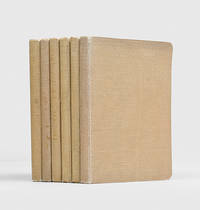
1941144403London: 2 September 1939 - 26 July 1941. Had he been a great man Winston would have accepted the blame himself A thorough and honest narrative by an Admiralty insider well-placed to document the onset of total war and the attitudes - in his view sometimes misguided - that shaped the navy's decision-making. In October 1939 Bell b. 1892 transferred from the Plans Division to Phillips's staff. The diary opens a month earlier one day before the declaration of war and during its two-year span Bell writes with a candour only possible in private. In the war's early months he handled "stupid questions from our ambassadors" 11 October 1939 and viewed British defensive preparations for a German invasion as "nonsense" 29 October 1939. By 1940 amid air-raid warnings there was far too much to do each day Bell like Phillips working late and more and more "dining at his desk". Pervading the account is a scepticism common to mid-ranking officers towards high-level decision makers "Admiralty suggested an attack now and then at the last moment and God knows why called off the operation" 8 April 1940. Not even Churchill is immune especially when the prime minister tries to blame the Royal Navy for decisions he took himself: "Had he been a great man Winston would have accepted the blame himself - since it lies on him squarely" 8 October 1940. In October 1941 Bell became Captain of the Fleet Eastern Fleet serving under Phillips onboard HMS Prince of Wales. After the disastrous sinking of the ship and Phillips's death Bell remained with the Eastern Fleet until the end of hostilities assuming the post of Director of Service Conditions at the Admiralty in peacetime. A note on the front endpaper of the final volume records that Bell left these volumes in London when he joined Prince of Wales. A further volume kept at sea went down with the ship. 6 vols quarto. Each vol. 240 pp. filled in neat manuscript or with tipped-in manuscript sheets rear pastedown of first vol. with affixed duplicated-typescript letter from Bell to Rear-Admiral H. C. Allen summarizing Bell's naval career. Original light brown cloth marbled edges. Slight rubbing to spines ends generally internally clean and fresh; a well-preserved diary. hardcover
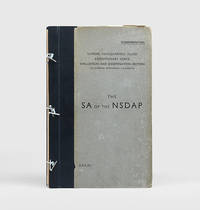
1944184333London: 1944. Know your enemy A confidential Anglo-American intelligence report on the SA produced as the Allies advanced into Germany. It provides considerable detail on the organization and Allied understanding of it. The report warns that the SA as a paramilitary organization so deeply embedded in Germany poses a serious threat to the Allies and must be totally destroyed. The Military Intelligence Research Section MIRS was a joint Anglo-American intelligence agency established in 1943 to analyze and exploit captured Axis documents. MIRS produced a series of handbooks on Nazi military and paramilitary organizations for Allied intelligence officers and military officials. This report covers the origin of the SA the rise of the rival SS the purge of Röhm its declining power in the latter 1930s and its wartime revival. It offers detailed information on the SA's regiments and commanders training and records uniforms and insignia and terminology. The report stresses that the SA still numbered roughly 500000 active members and concluded that the organisation must be "not only disbanded but completely wiped out. the SA with its ramified structure and wide range of duties is not only a valuable defence and security organisation on the German home front today but presents a substantial counter-intelligence problem as a potential source of disturbance and conspiracy during and after the initial stages of the Allied occupation of Germany". Provenance: contemporary pencilled signature of "Captain Kettler" probably Hans Kettler transferred to the Intelligence Corps in 1942 and who worked at the London Cage Britain's interrogation centre for captured Nazis. "In the summer of 1944 he was listed as a captain on a regular emergency commission. Strong die-hard Nazis were said to quail before him. Kettler was regarded as 'outstanding in his rough treatment of prisoners'" Fry p. 43. There are numerous ink annotations to the text presumably Kettler's. The report was afterwards in the collection of Evgenii Semenovich Mollo 1904-1985 a military historian specializing in uniforms and insignia with his "Mollo Collection" bookplate to the front pastedown and his stamps throughout. Folio. With 3 coloured and 4 uncoloured plates folding map. Original black quarter cloth grey boards printed in black string tied ties renewed. Rubbed and a little worn at extremities title page loose browned occasional chipping and closed tears. A good copy. Helen P. Fry The London Cage 2017. hardcover
1901303348VP including Ladysmith Geluk Farm Vluchfontein et al. 1901. Nine ALS three TLS eight carbons. 64 pp in total. Folio & 4to. Very good some tiny chips to carbons and one two spots of minor dampstaining not affecting legibility. In manilla folder. Nine ALS three TLS eight carbons. 64 pp in total. Folio & 4to. A fine group of letters by an English intelligence officer steadily rising through the ranks. In 1899 he is "sleeping in the open air only one blanket & one waterproof sheet." Within a year he was Lord Roberts' private clerk and in December 1900 he is stationed at the Commander-in-Chief's Office Kitchener's doing "confidential military work for the Military Secretary to Lord Kitchener." <br /> <br /> Although part of the intelligence service Carter saw more than his share of fighting. He describes the march to Ladysmith and the action at Elands Laagte Station noting "a bullet going through the top of my helmet and cutting off some of my hair but without even scratching the skin."<br /> <br /> The next four letters were written from Ladysmith and provide a full account of the siege. "The Boers had big siege guns mounted on the hills around Ladysmith which quite outclassed our light field guns . They'd completely invested Ladysmith & cut the telegraph lines & pulled up the Railway . Then began the long dreary siege." Carter reports using "a lot of pigeons" and the cost of Kaffir and Zulu runners to get letters out of Ladysmith and at least one of his letters not here was published in the Hamilton Spectator.<br /> <br /> The siege is depicted much like a holiday camp citing football matches swimming races water polo cricket. "We got so indifferent to the Boer 'snipers' that you would see most of our chaps having an afternoon siesta behind their trenches while bullets would be chipping the stones around them. We also used to organise pools when we could see some of the Boers and have a long range shooting match the man who bowled the first Boer over taking the pool." Yet there is also much on troops movements information on the Boers the conditions of Ladysmith accounts of engaging the enemy and reflections on the experience of combat: "the actual fighting is all right as the excitement deadens your faculties but after a battle when . you see your poor companions who a few hours before were joking with you lying dead or else writhing in the agonies of pain caused by frightful wounds then you feel your courage leaving you and your nerves getting like wax." <br /> <br /> The remaining correspondence includes three letters as Carter's regiment treks across the Transvaal through August and September 1900. These too are full of detail of life in the field bivouacking scouting enemy positions and action: "There was a grand opportunity for our Field Artillery. They simply pumped shrapnel into them the Artillery Officers going mad at the sight and shrieking to the gunners 'fire! fire! hurry up you b----- fools you never had such a chance fire!' . You could see at every discharge of the guns the Boers falling and at the same time our splendid Infantry running for all they were worth trying to get at them with the bayonet . It is very seldom the Boers leave any wounded or dead behind them and it proves how hard we pressed them . It was like a shambles . one two or more bodies horribly mutilated by the effects of the Lyddite."<br /> <br /> The final group commences with Carter being stationed at the Commander-in-Chief's office and he wastes no opportunity to use the special mail service for his own correspondence. He describes Kitchener at work and provides insight to life in the office. Yet beneath this is a yearning for the war to end and a frustration that it can't be done in one swift battle: "We cannot get a good fight out of the beggars they simply have a few shots at us and as soon as we get near enough to do some damage off they go helter-skelter." <br /> <br /> This group were all addressed to Carter's long time friend we know only by the name of Jose. Given the warmth and detail included here it's possible that he was using these letters as a substitute for a diary. Carter served with some distinction in 1st Manchester Regiment and was mentioned in the despatches. unknown
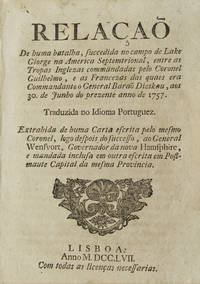
1757303318Lisboa: Domingos Rodrigues 1757. First edition. Woodcut vignette to title-page. 7 blank pp. Small 4to. A very good copy some very faint dampstaining. First edition. Woodcut vignette to title-page. 7 blank pp. Small 4to. A Portuguese translation of General William Johnson's "Letter to the Governours of the Several Colonies who raised Troops on the Present Expedition" signed in the text "Wilhelmo Gonson." <br /> <br /> Not long after the commencement of the Seven Years' War Johnson was appointed British agent to the Iroquois. On 28 August 1755 he renamed Lac Saint Sacrement Lake George in honor of the British monarch and proceeded north as part of a four-pronged attack on the French specifically to capture the French-held Fort St. Frédéric at Crown Point. <br /> <br /> "It was not the greatest battle of the French and Indian War but it came when a victory was needed and the results were momentous. It retrieved both the glory and morale so badly depleted when Braddock fell at the forks of the Ohio the previous July. It blunted a French drive which menaced Albany and the northern frontier set up a new English outpost in that area and the capture of a distinguished French general Dieskau was triumph for the victors and humiliation for the enemy" Hamilton.<br /> <br /> The publication of this letter was of course a remarkable source of propaganda for the English and boosted Johnson's career signficantly. The letter was reprinted in London an engraved plan of the battle was produced as well as portrait. This Lisbon printing is however very rare and little known. It's not in COPAC there wasn't a copy in the Streeter Sale. In fact the last copy on the market we can find was in 1928. Not in Church; Sabin 38661; Maggs "Biblioteca Americana" IV 2998; Milton W. Hamilton "Battle Report: Genreal William Johnson's Letter to the Governors Lake George September 9-10 1755" in Proceedings of the American Antiquarian Society April 1964 pp 19-36 [Domingos Rodrigues] unknown
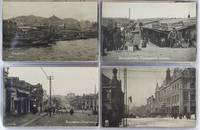
19223734Vladivostok Russia; China; Japan; Philippines; Cuba; Panama; and Egypt 1922. Very good plus. Ninety-six real photo postcards postcards and photographs each about 3.5 x 5.5 inches or slightly smaller. A very well-preserved group arranged in clear plastic sleeves in a brad-bound folder. An informative and ultimately unique collection of mostly annotated images documenting the military exploits of Lester W. Soden of Portland Oregon a Navy Midshipman serving in important locations in Asia and elsewhere in the years immediately following World War I. Soden sent the postcards and photographs home to various family members and friends in Portland Oregon. On the verso of the great majority of the postcards and photographs Soden has added vital typed or handwritten captions describing the subject location or other important information for each image as well as occasionally adding a personal note about them. Most of the images do not exhibit postmarks so were likely sent along by Soden with letters.<br /> <br /> Most important among Soden's experiences here and encompassing almost half of the images forty-seven in fact was his time in Vladivostok Russia in 1918-1920 as part of the American Expeditionary Force Siberia. All but four of the postcards and photographs from Russia have typed captions on the verso providing critical background information on Soden's experiences. Soden's captions run from one line "Street scene in Vladdie" to a couple of lines "View of Vladivostok Siberia showing section of the city along the tracks of the Siberian railroad and one of the fine Russian churches in the back ground. This was taken but a week ago" to detailed much longer efforts for example: "Since coming to Siberia I have not seen a single saw mill where modern machinery such as power driven saws and etc was used. Here is a picture I took the other day in Vladivostok showing the Asiatic method of making lumber. The Chinamen do the work two men to a saw one on top of the framework that serves for a work bench the other stands on the ground and away they saw on logs turning out lumber of various thicknesses. When first I witnessed such ancient methods it seemed as tho I had stepped into a land of long ago but time has accustomed me to such sights in Siberia."<br /> <br /> Soden's other images provide a deep picture of the Vladivostok area at a crucial time in its history picturing street scenes the funeral of "a deceased shipmate who died at Vladivostok" the Bay of the Golden Horn Japanese headquarters and a Japanese market in the city troops and ships from other Allied countries a YMCA train car serving coffee to soldiers a Bolshevik armored car stuck in the mud a portrait of Czech leader General Radola Gajda here spelled Gaida two images of Gajda's armored train car which he used in a failed attempt to occupy Vladivostok in 1918 and much more. Part of the Allied mission in Vladivostok involved protecting and providing passage for Czech troops who had fought for their own freedom against Lenin and the Russian revolutionaries. One of Soden's captions concern these freedom fighters: "Czech troops along the trans-Siberian R.R. coming into Vladivostok. They have some sort of decorations on the cars. You will notice the odd style of cars used with single axeled wheels that are not solid steel like the car wheels we have in the States where only double tracks are used. The cars here are very short tho once in a while one notices standard sized cars with double tracks identical to the ones used in the States in fact they were built there."<br /> <br /> In addition to his time in Siberia Soden also served in China Japan Manchuria the Philippines Egypt Panama and Cuba. Seventeen postcards document his experiences in China as well as sixteen in Japan and Manchuria eight in the Philippines and the remainder from Egypt Panama and Cuba. Most of these images are also captioned on the verso picturing street scenes a Peking sawmill the city of Shanghai Tartar Wall Hankow a Dragon Festival in Hong Kong the Nanking Road and more in China. Most of the Japanese images show the celebrations in Tokyo for the return of Hirohito from a tour of Europe but also temples in Nikko the American fleet in Yokohama and two street views of Dairen City Manchuria. Other images depict a child's funeral "The other day I was lucky enough to see a native funeral one of the strangest sights I've ever seen. You would think it's a parade" and a Manila river scene in the Philippines; Guantanamo Bay in Cuba; the United Fruit Company's offices in Panama; and more. The only non-visual item included with the postcards and photographs is a black ribbon reading "U.S.S. Scorpion" presumably Soden's ship. unknown
1901303348VP including Ladysmith Geluk Farm Vluchfontein et al. 1901. Nine ALS three TLS eight carbons. 64 pp in total. Folio & 4to. Very good some tiny chips to carbons and one two spots of minor dampstaining not affecting legibility. In manilla folder. Nine ALS three TLS eight carbons. 64 pp in total. Folio & 4to. FIRST-HAND ACCOUNT OF THE SIEGE OF LADYSMITH. A fine group of letters by an English intelligence officer steadily rising through the ranks. In 1899 he is "sleeping in the open air only one blanket & one waterproof sheet." Within a year he was Lord Roberts' private clerk and in December 1900 he is stationed at the Commander-in-Chief's Office Kitchener's doing "confidential military work for the Military Secretary to Lord Kitchener." <br/><br/>Although part of the intelligence service Carter saw more than his share of fighting. He describes the march to Ladysmith and the action at Elands Laagte Station noting "a bullet going through the top of my helmet and cutting off some of my hair but without even scratching the skin."<br/><br/>The next four letters were written from Ladysmith and provide a full account of the siege. "The Boers had big siege guns mounted on the hills around Ladysmith which quite outclassed our light field guns . They'd completely invested Ladysmith & cut the telegraph lines & pulled up the Railway . Then began the long dreary siege." Carter reports using "a lot of pigeons" and the cost of Kaffir and Zulu runners to get letters out of Ladysmith and at least one of his letters not here was published in the Hamilton Spectator.<br/><br/>The siege is depicted much like a holiday camp citing football matches swimming races water polo cricket. "We got so indifferent to the Boer 'snipers' that you would see most of our chaps having an afternoon siesta behind their trenches while bullets would be chipping the stones around them. We also used to organise pools when we could see some of the Boers and have a long range shooting match the man who bowled the first Boer over taking the pool." Yet there is also much on troops movements information on the Boers the conditions of Ladysmith accounts of engaging the enemy and reflections on the experience of combat: "the actual fighting is all right as the excitement deadens your faculties but after a battle when . you see your poor companions who a few hours before were joking with you lying dead or else writhing in the agonies of pain caused by frightful wounds then you feel your courage leaving you and your nerves getting like wax." <br/><br/>The remaining correspondence includes three letters as Carter's regiment treks across the Transvaal through August and September 1900. These too are full of detail of life in the field bivouacking scouting enemy positions and action: "There was a grand opportunity for our Field Artillery. They simply pumped shrapnel into them the Artillery Officers going mad at the sight and shrieking to the gunners 'fire! fire! hurry up you b----- fools you never had such a chance fire!' . You could see at every discharge of the guns the Boers falling and at the same time our splendid Infantry running for all they were worth trying to get at them with the bayonet . It is very seldom the Boers leave any wounded or dead behind them and it proves how hard we pressed them . It was like a shambles . one two or more bodies horribly mutilated by the effects of the Lyddite."<br/><br/>The final group commences with Carter being stationed at the Commander-in-Chief's office and he wastes no opportunity to use the special mail service for his own correspondence. He describes Kitchener at work and provides insight to life in the office. Yet beneath this is a yearning for the war to end and a frustration that it can't be done in one swift battle: "We cannot get a good fight out of the beggars they simply have a few shots at us and as soon as we get near enough to do some damage off they go helter-skelter." <br/><br/>This group were all addressed to Carter's long time friend we know only by the name of Jose. Given the warmth and detail included here it's possible that he was using these letters as a substitute for a diary. Carter served with some distinction in 1st Manchester Regiment and was mentioned in the despatches. unknown books
186146001N.p. n.d. but circa 1861. A few splits along the short joints of the top half of the box; otherwise very nice. Approx. 14 x 11 x 1". Original hand-colored lithographed game board and original pictorial lithographed two-part box. The pictorial folding board measures 20-1/2 x 26 inches consisting of 61 numbered squares each with a lithographed vignette depicting a scene from the Civil War. The box is decorated with a large pictorial onlay with hand-colored vignettes and cameo portraits of Union Generals McClellan Dix Banks Lyon Wool Anderson Fremont and Buttler sic. and two battle scenes Mill Spring and the naval battle Port Royal. The game lacks the instructions and playing pieces. Only one other copy located in the New York Historical Society Playing Card and Game Collection. unknown
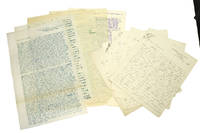
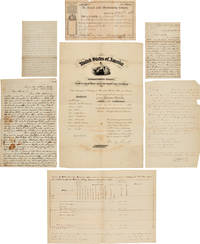
1881WRCAM50270Various locations 1881. Manuscript map; three autograph letters signed; and five related documents. All three autograph letters are accompanied by full typed transcriptions. Usual mailing folds. Generally very good. An interesting archive relating to Capt. James Cooke's experiences in the Civil War. Cooke mustered in on Sept. 5 1861 and eventually served as captain in Company "F" 52nd Regiment Pennsylvania Volunteers. He served in several battles most notably the Battle of Seven Pines in Virginia and resigned on Oct. 21 1863. The individual items included in the archive are as follows: <br> <br> 1 Manuscript map of the Seven Pines Battlefield. 15 3/4 x 12 1/2 inches. Some fold separations with minor loss of paper noticeable stain in the middle of the map straddling the vertical fold. A wonderful hand-drawn map by Cooke showing the area around Fair Oaks Station. He has designated the positions of both the 52nd and 104th Pennsylvania infantries marking places such as "Fight commenced here" "Fighting all through here" "52 Pennsylvania in line of Battle" and "the way the Rebs came." He also has marked topographical details such as roads a railroad track woods and the Chickahominy River. He has written a short explanatory note on the verso initialed by him to the same recipient as the following letter. <br> <br> 2 Autograph letter signed to "Dear Friend Joe." Camp Near Bottoms Ridge. June 18 1862. A wonderful sixteen-page letter with details regarding the Battles of Williamsburg and Seven Pines. The Union army had laid siege to Yorktown Virginia from April 5 1862 until Confederate forces silently withdrew in the night hours of May 3. Cooke was there as Federal troops entered the town the following morning and describes the scene: "We went through the woods cautiously with our skirmishers in advance but we could see no signs of life in any of the Forts and our men went along without any opposition.we had no idea that it was a general evacuation of the whole place." The rebels however had not left the place totally unguarded: <br> <br> "I was just agoing sic when I heard a stunning report behind me.and the men in my company falling down.I supposed right away that it was a masked battery on the opposite side of the road.I then went to the rear of the company and found.a deep hole in the ground showing it was one of those infernal machines near Williamsburg Virginia the first known use of modern land mines that the Black Hearted Traitors planted all along the roads leading to Williamsburg." <br> <br> The next day May 5 Cooke and his men found themselves held in reserve near the fighting at the Battle of Williamsburg. They advanced and "as we were going up I could hear the roar of the musketry and the yells of the boys when they made the charge." The men of the 52nd never joined the fight since when they reached the field "the fight was over for that day and.as the rebels still occupied a large fort we would go at them in the morning." <br> <br> Two days after arriving at Williamsburg they "struck out for Richmond" and reached the Chickahominy River on May 19 meeting some light resistance along the way: "Our men.drove the pickets of the enemy.and skirmished up to the bank of the river in the face of a severe fire of infantry and artillery by the Rebs." On Saturday May 31 they "took the advance toward Richmond.and uncovered the enemy in force in front of us." <br> <br> The Battle of Seven Pines was about to commence. Cooke writes about it in great detail: <br> <br> "Skirmishers from the 52nd.were sent out and soon drew the fire of the enemy's pickets and.a battery that was hid behind a woods. The 104th Pennsylvania Infantry was sent forward on our left.and we were ordered to advance along the road.the balls went howling over our heads like something mad. This being the first time many of the boys had heard a ball scream.it made a good many look white.but not a man flinched." <br> <br> The men advanced over the hill "the Rebels.gave us the full benefit of three or four guns.We filed off to the right.to get out of range but they followed us with their shots which fell all around us." After assuming line of battle the men "marched directly toward the rebel guns." Help arrived when "One of our batteries.came up and commenced answering the speeches that had been made on the other side. It soon silenced their guns." They experienced very little action after that and two days later June 2 they "took possession of the railroad at Fair Oaks Station." He does add that he "was not with my Regt in the fight nor did I see any of our Brigade in the fight Cooke had been separated and used as a skirmisher as where they were fighting was at the real seven pines and.I was at Fair Oaks a half mile to the right." He concludes by giving an account of the 52nd's action during the battle as he knows it. <br> <br> 3 Autograph letter signed to "Dear Brother." Virginia Fairfax Seminary. Aug. 20 1861. A friendly letter to his brother with some military content. Cooke writes that he is currently "quartered about 2 1/2 miles from Alexandria" near the house where Gen. Kearney is headquartered. The Virginia Seminary where he is staying was abandoned after the Union troops took Alexandria according to Cooke. He then relates information about working the picket lines "about 2 miles from the camp then Rebel Scouts came down some days inside our pickets" a potential court- martial of one of the Union colonels related to Cooke's division and news that Cooke expects "another battle in about two weeks but there can be nothing definite about it there is any quantity of reports about but if they the government are only prepared for it the sooner it comes the better as I would like to see the thing ended and not be kept in suspense." <br> <br> 4 Autograph letter signed to "Dear Sister." Camp Dodge. Dec. 14 1862 Cooke writes that he is well having gotten over a "light touch of Intermitent Fever." He send $10 from a fellow soldier for his sister to give to the soldier's wife. Cooke spends the last portion of the letter writing about army pay. <br> <br> 5 Retained copy of a Return of Ordnance Form for Company "F" 52nd Pennsylvania Regiment for the quarter ending Dec. 31 1862 mismarked 1863. <br> <br> 6 Fair copy of Special Orders No. 149 May 18 1862 regarding the sick and surplus arms and baggage. <br> <br> 7 Military Appointment for Cooke as captain of Co. "F" Nov. 5 1862. Fold separations. <br> <br> 8 Passaic Falls Manufacturing Company Stock Certificate May 30 1866. <br> <br> 9 James Cooke's passport Jan. 10 1881 giving a detailed physical description of Cooke. <br> <br> A wonderful archive relating a Pennsylvania captain's experiences during the Civil War most notable for the manuscript map of the Seven Pines battlefield and an enthralling letter to a friend regarding battle experiences. unknown books
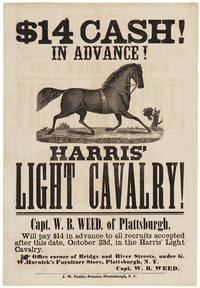
1861WRCAM54022Plattsburgh N.Y. 1861. Printed broadside 13 3/4 x 20 inches. Matted. Mild offsetting of text from being previously folded minor restoration in left margin light folds and toning. Very good. A rare Civil War recruitment broadside stating that Captain W.B. Weed will pay $14 in advance to all Union recruits accepted after October 23 in the Harris' Light Cavalry. Signed in type by Captain Weed who enlisted with the 2nd New York Cavalry in September 1861 only to be discharged less than a year later on June 24 1862. The broadside includes a large and well-executed engraving of a cavalry horse. <br> <br> Named in honor of Senator Ira Harris of Albany Harris' Light Cavalry the 2nd New York Cavalry was organized at Scarsdale New York during the summer of 1861 and over the course of four years' service earned one of the most illustrious records in the Army of the Potomac. The 2nd Cavalry lost heavily during Pope's Campaign in the late summer of 1862 and again before and after Gettysburg losing almost 50 at Aldie alone with equal losses later in the year at Liberty Mills and Buckland Mills. During the summer of 1864 the regiment took part in Wilson's raid on the South Side and Danville Railroads and it fought in the Shenandoah Campaign when the tide was finally turned against the Confederates. The 2nd New York Cavalry is one of the 300 fighting regiments mentioned by Colonel Fox and ranks eighth in the list of mounted regiments which lost the most men killed and fatally wounded in action during the Civil War. unknown books
1864WRCAM53096Richmond 1864. Broadside 18 x 12 inches. Printed in three columns. Previously folded with a couple small separations along old fold lines. Light toning and foxing. About very good. A very scarce and quite interesting broadside circular printing of the act which allowed slaves and free blacks to be used in certain tasks by the Confederate Army during the Civil War as well as instructions for the conscription and induction of those men into the armed forces. The Confederacy was loath to arm any of its slave population but by 1864 could not spare any further manpower from their infantry to perform menial tasks and the government therefore passed a law allowing slaves to be used "in certain capacities" such as the construction of fortification the production of arms and the transport of materiel. The first column of this broadside comprises a full printing of that law while the remainder sets forth the rules for the impressment of slaves into military service for their care while in service and for the compensation of their owners. <br> <br> A fascinating piece that lays bare the desperation of the Confederacy for labor and supplies in early 1864. Not in Parrish & Willingham. unknown books
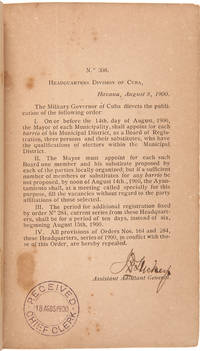
1900WRCAM51843Havana 1900. Approximately 520; 600pp. including several folding charts. Over 200 separate imprints. Original half leather and brown cloth boards spine gilt. Corners and edges worn spine rubbed boards scuffed. Initial leaves of first volume torn away but present. Several other leaves chipped and torn throughout. With many official signatures and docketing stamps. Good. Two volumes of orders promulgated in 1889 and 1900 by the American military government of Cuba after the cessation of hostilities in the Spanish-American War. Under the terms of the Teller Amendment to the Congressional Joint Resolution for war with Spain in 1898 the United States denied the intention of using the conflict as a pretext for the annexation of Cuba and promised to leave the island following the termination of the war. The American military therefore oversaw the creation of the new independent Cuban government before departing in 1902. The documents contained in this collection consist of over two hundred orders in both English and Spanish from the Headquarters Division of Cuba that helped to shape the emerging civilian government. They include instructions for the running of elections the organization of the courts and school system the appointments for various government offices provisions for tax regulations and many other critical issues facing Cuba at its independence. The directives cover two periods from January to July in 1899 and from July to September in 1901. Many of the orders are signed in manuscript by the assistants to the military governor for the island Gen. Leonard Wood including assistant adjutant generals J.B. Hickey and L.W.V. Kennon and Brig. Gen. Chief of Staff Adna R. Chaffee. An interesting documentation of the first American occupation of Cuba. hardcover books
1757303318Lisboa: Domingos Rodrigues 1757. First edition. Woodcut vignette to title-page. 7 blank pp. Small 4to. A very good copy some very faint dampstaining. First edition. Woodcut vignette to title-page. 7 blank pp. Small 4to. THE BATTLE OF LAKE GEORGE. A Portuguese translation of General William Johnson's "Letter to the Governours of the Several Colonies who raised Troops on the Present Expedition" signed in the text "Wilhelmo Gonson." <br/><br/>Not long after the commencement of the Seven Years' War Johnson was appointed British agent to the Iroquois. On 28 August 1755 he renamed Lac Saint Sacrement Lake George in honor of the British monarch and proceeded north as part of a four-pronged attack on the French specifically to capture the French-held Fort St. Frédéric at Crown Point. <br/><br/>"It was not the greatest battle of the French and Indian War but it came when a victory was needed and the results were momentous. It retrieved both the glory and morale so badly depleted when Braddock fell at the forks of the Ohio the previous July. It blunted a French drive which menaced Albany and the northern frontier set up a new English outpost in that area and the capture of a distinguished French general Dieskau was triumph for the victors and humiliation for the enemy" Hamilton.<br/><br/>The publication of this letter was of course a remarkable source of propaganda for the English and boosted Johnson's career signficantly. The letter was reprinted in London an engraved plan of the battle was produced as well as portrait. This Lisbon printing is however very rare and little known. It's not in COPAC there wasn't a copy in the Streeter Sale. In fact the last copy on the market we can find was in 1928. Not in Church; Sabin 38661; Maggs "Biblioteca Americana" IV 2998; Milton W. Hamilton "Battle Report: Genreal William Johnson's Letter to the Governors Lake George September 9-10 1755" in Proceedings of the American Antiquarian Society April 1964 pp 19-36 [Domingos Rodrigues] unknown books
Very Good English Modern full leather each volumes in traditional Ottoman style. Roy. 8vo. (25 x 17 cm). In Ottoman script. Last 2 volumes are in Modern Turkish. 10 volumes set: ([23], 674, [10] p.; 479, [5] p.; 534, [5] p.; 432, [4] p.; 602, [6] p.; [4], 554, [5] p.; [21], 912 p.; [1], [5], 786, [4] p.; 892 p.; 1112 p)., folding maps, b/w plates. 1896 - 1938. Their contents are: Vol. 1: Description of Contantinople and environs, as of 1631. Vol. 2: Journey to Brousse and Nicomedia, 1640, Pontus, Caucasus and Crimea, 1640-44.i expedition to Crete, 1645; journey to Erzerum and Caucasus, 1648. Vol. 3: Syria, Kurdistan, Armenia, 1650; Roumelia, Bulgaria and Dobrudja, 1655-56. Vol. 4: Persia and Iraq, 1655-56. Vol. 5: Journey to Moldavia and expeditions to Transylvania and Russia, 1658; to Anatolia, then across the Dardanelles to Adrianople, 1659; expeditions to Moldavia and Dalmatia, 1660. Vol. 6: Expedition to Transylvania and journey to Albania, 1661-62; expeditions to Hungary, Montenegro and Croatia, 1663-64. Vol. 7: Austria, Crimea, Daghestan, Caucasus, Astrakhan. Vol. 8: Crimea, Crete, Salonica, Roumelia (Greece). Vol. 9: Pilgrimage to Mecca and Medina. Vol. 10: Egypt. Evliya Çelebi was son of the chief court jeweler, he was educated in a madrasah (Islamic college) and a Qur?an school in Constantinople; and, excelling as a Qur'ân reciter, he was shown favour by the reigning sultan, Murad IV. Entering the Ottoman palace school, he developed skills in Arabic, calligraphy, and music. Under the patronage of the court he began the journeys that took him from Belgrade to Baghdad and from Crimea to Cairo, sometimes as an official representative of the government and sometimes on his own. The result of these travels was his masterwork, the Seyahatname (1898-1939; 'Book of Travels'). This work is also referred to as the Tarih-i seyyah ('Chronicle of a Traveler'). Evliya possessed a vivid imagination, occasionally mixing fact and fantasy; he described places he could not possibly have visited. Noted for his fascinating anecdotes and charming style, he wrote about the ethnography, history, and geography of the Ottoman Empire and neighbouring lands and about the inner workings of the Ottoman government during the 17th century. (Source: Britannica). Currently there is no English translation of the entire Seyahatname, although there are translations of various parts. The longest single English translation was published in 1834 by Joseph von Hammer-Purgstall, an Austrian orientalist: it may be found under the name "Evliya Efendi." Von Hammer-Purgstall's work covers the first two volumes (Istanbul and Anatolia) but its language is antiquated. Other translations include Erich Prokosch's nearly complete translation into German of the tenth volume, the 2004 introductory work entitled The World of Evliya Çelebi: An Ottoman Mentality written by University of Chicago professor Robert Dankoff, and Dankoff and Sooyong Kim's 2010 translation of select excerpts of the ten volumes, An Ottoman Traveller: Selections from the Book of Travels of Evliya Çelebi. Evliya is noted for having collected specimens of the languages in each region he traveled in. There are some 30 Turkic dialects and languages cataloged in the Seyâhatnâme. Çelebi notes the similarities between several words from the German and Persian, though he denies any common Indo-European heritage. The Seyâhatnâme also contains the first transcriptions of many languages of the Caucasus and Tsakonian, and the only extant specimens of written Ubykh outside the linguistic literature. First Printed Set of Evliya Chalabi's book(s) of travels. Voyages and Travels in Greece, the Near East and adjacent regions made previous to the year 1801; being a part of a larger catalogue of work on geography, cartography, voyages and travels, in the Gennadius Library in Athens, compl. by Shirley Howard Weber, Vol. II: 1631.; TBTK 10360.; Özege .; Only 2 copies located in OCLC as set: 80395042. Rare as set.
140997London: His Majesty's Stationary Office. Softcover. near fine. 1st Editions. Folio. 146 separate reports. Original blue wrappers where issued. Small ex-libris stamp to front wrapper of some. The vast majority of these reports are in near fine condition although there is some minor chipping and wear to some. Black and white illustrations maps charts and tables in many of the reports. Overall this collection is in impressively fine condition. near fine The first report--Papers Relating to the Complaints of British Subjects in the South African Republic--is from June 1899 and the final reports are from 1906. Some other noteworthy reports include: "Further Correspondence Relating to the Political Affairs of the South African Republic" from October 1899 which includes a declaration of war; "South African War: Telegrams from Field-Marshall Lord Roberts to the Secretary of State for War" contains a discussion on the abuse of the white flag; "Correspondence Relating to the Prolongation of Hostilities in South Africa" 1901 with a proclamation to Boers continuing to carry out guerrilla warfare that unless they surrender they will be banished from South Africa upon capture. Please contact us for a complete list of the reports in this collection. His Majesty's Stationary Office paperback
1865222651865. Hardcover. Very Good. Book. Bound collection of separately printed General Orders from the Adjutant General's office for 1865. Containing 168 of 175 consecutive orders and a 94-page index at front. Bound for Major General William Scott Ketchum with his name in gilt on the spine and his markings or wartime notes on numerous pages. 4 3/4 x 7 in. Early resolutions concern the rates of pay for officers' servants equal clothing allowances for commissioned and non-commissioned officers and widow's rights to prize money and equal pay for both black and white volunteers Order No. 31/Public No. 57 and freedom for the wives and children of any army or navy volunteer Order No. 33/Public Resolution No. 25. Also includes several orders relating to the assassination of President Lincoln: Order No. 66 announcing the assassination; Order No. 67 announcing Andrew Johnson's ascent to President; and Order No. 69 announcing the closing of military bases in observance of the funeral of Abraham Lincoln with the official Order of the Procession for the ceremony on April 19th; also includes a Special Order regarding the transportation of President Lincoln's remains to Springfield Illinois and Order No. 72 assigning the Honor Guard to accompany the casket.Orders signed in type by Andrew Johnson concern ending the blockade and restrictions on internal commerce with the exceptions of weapons and gray cloth.Lacking order numbers 15 97 128 133 140 148 & 168 apparently never bound in.Condition Very good. Minor rubbing some staining to top of index pages. Later ink stamps of the Office of the Chief of Finance on front endpapers.William Scott Ketchum 1813-1873 graduated from West Point in 1834. He served in the Seminole Wars and on the Western frontier. As a captain he fought in the 1857 Expedition against the Cheyenne and the Battle of Solomon's Fork where he commanded the 6th Infantry Regiment. During the Civil War in February 1862 he was appointed brigadier General of Volunteers serving in Washington DC. hardcover
186427011Washington 1864. Folded map 24 x 33 inches in thirty-two segments mounted on linen. Original card covers with printed paper label. Contemporary ownership inscription on label. Some light wear and minor soiling. Detailed field map for the Union Army in Northern Mississippi and Alabama.<br/> <br/>A highly detailed map of the northern half of Mississippi and Alabama showing the border with Tennessee and all points south to Vicksburg and Montgomery produced to support the operations of the Union Army there in 1864. This is one of several maps compiled by the U.S. Coast Survey in an attempt to adequately map the South during the Civil War for military purposes. A note on the map indicates that the present map was compiled from various sources including "campaign maps and information furnished by Capt. O.M. Poe Chief Engineer Military Division of the Mississippi and by Capt. W.E. Merrell Chief Engineer Department of the Cumberland." Merrill was Sherman's chief topographical engineer and he contributed to several important maps of the area including one of Northern Georgia produced in Chattanooga following the vital capture of that city. With the beginning of the Civil War the United States Army found itself scrambling to obtain adequate field maps for military operations in the South. The most established cartographic branch of the Government the Coast Survey was pressed into service to provide these maps some with a coastal component but mainly for landlocked locations. The cartographers of the Coast Survey reviewed all of the existing cartography available but also drew on military and scouting reports and covert agents to assemble the most detailed possible maps of places roads railroads natural features. The topography is illustrated with hachured and shaded relief and railroads shown in red. The circulation of these maps was controlled and only officers ranking major or higher were supposed to control copies. As a result they are rare today. Two key figures in the Coast Survey effort during the War were Henry Lindenkohl and his brother Adolph who were responsible for actually drawing many of the field maps. The Lindenkohls were born in Germany but emigrated to the United States as teenagers and became American citizens. Adolph had already worked at the Coast Survey before the War began and Henry joined in 1861. Together they made a huge contribution to the war effort through their superb cartographic work producing and revising maps of different theatres of operations through 1865. Both continued with the survey for the rest of their lives; Adolph died in 1904 after fifty years on the job and Henry in 1920 after fifty-nine. This map has the ownership inscription of Col. Joseph Corson Read 1831-1889. Read was one of the first wave of men to take up Abraham Lincoln's call for volunteers to put down the rebellion in April 1861. He remained continuously in the army serving first on General Jesse Reno's staff and rising to the rank of Chief Commissary for the Army of the Cumberland commanded by Gen. George H. Thomas. Thomas was impressed with Read and on May 1 1864 with the spring campaign against Atlanta imminent Thomas named Read Chief Commissary of the Army of the Cumberland in the Field. This meant that although Col. A.P. Porter was the Army's overall chief Read would serve alongside Thomas in the field and had the responsibility to supply the entire army as it moved South. During the long and arduous Atlanta campaign he was the man on the ground making the supply side work. Read developed a close relationship with Thomas one with both personal and professional aspects. An important map of Northern Mississippi and Alabama particularly interesting as part of the greater project undertaken by the Coast Survey to map out the South during the Civil War and with excellent provenance and associations. unknown books
221827S.l., s.d. (vers 1860) in-4, titre (détaché), 202 pp., couvertes d'une écriture fine, régulière, extrêmement soignée (environ 25 lignes par page), présentant aussi des notes infra-paginales de la même main, des biffures et ajouts au crayon de bois semblent postérieurs à la rédaction, de même que quelques ajouts marginaux à l'encre d'une autre main, demi-chagrin Bradel bouteille, dos muet orné de filets à froid, encadrements de filets à froid sur les plats de toile chagrinée, titre poussé en lettres dorées au centre du plat supérieur, tranches jaunes (reliure de l'époque). Plat supérieur un peu taché.
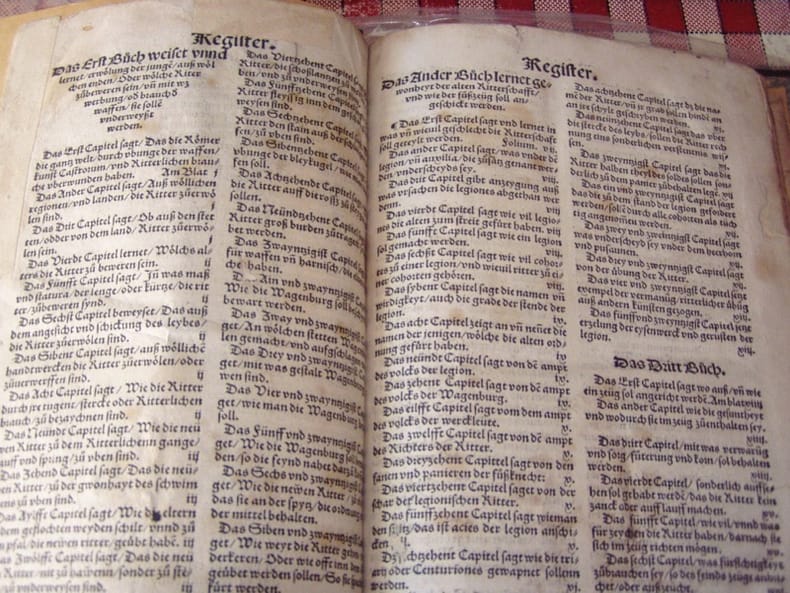
1534278361534 Heinrich Stainer?, Augsbourg Augspurg, 1534 Folio; pleine toile posterieure ( fin XIXE s)- [295 x 210 mm], 34 Pages de texte + 121 illustrations ht (recto-verso) + 3 in texte (gravures sur bois) are issue (250 x 175 mm) illustrating Vegetius’ treaty. Diving suit, bathyscaph and inventive war machines. A very rare series of 121 woodcuts of very nice craftsmanship due to Hans Knapp and M. Scharzenberg.A superb series, very rare, defauts ; page de titre, frontispice; 2 pages de texte de la table et 2 feuillets d'illustrations manquants ,derniére planche dechirée mais restaurable.Very rare,dans l'etat.Il faut 129 planches ht ?-: [4], XXX, [66] Blatter : zahlreiche Illustrationen ; 2It is around the years 1511- that Hans Knapp printed this series in Erfurt.In 1511, he edited a German version of Vegetius’ text illustrated with 121 full-page woodcuts. The illustration of the 1511 German edition served as a model for the 16th century edition but without the 74 extra woodcuts (1512). Of beautiful craftsmanship, this is a wonderful display of the art of war at the beginning of the 16th century. The soldiers are represented in action, with their armors and machines of war.The lively scenes, full of picturesque details, are for the most part due to Hans Knapp himself, whereas some are signed with the monograms PVM et MS (Melchior Scharzenberg). The most surprising engravings are dedicated to contemporary diving equipment: diving suits, underwater fishing, underwater combat, waterproof boots, ancestor of the bathyscaph. On two very intriguing figures, we can see the use of flint and the first version of an inflatable mattress.
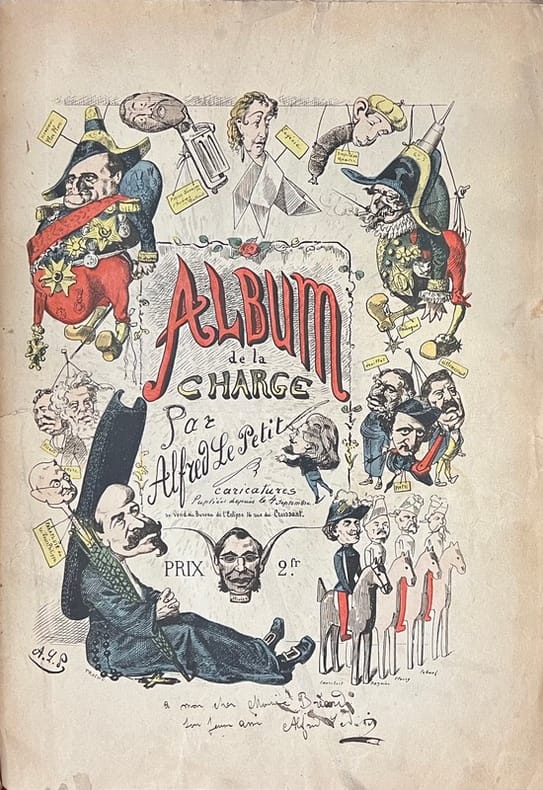
187043116Paris, Typ. de Rouge frères et comp., 1870. 2 séries de 13 et 24 livraisons montées en 1 vol. in-folio, demi-basane rouge, dos lisse, premier plat de couverture illustrée conservé portant Album de la Charge (reliure de l'époque).
192715017War Office Geographical Section General Staff 1927. 745 by 995mm. 29.25 by 39.25 inches. Coloured lithograph map dissected into 32 4 by 8 sections mounted on linen. Scale 1:250000 Nanking in 1927 was a treaty port located on the southern shores of the Yangtze River. Because the foreign interests in China were largely American and European squadrons of foreign naval vessels were stationed along the Yangtze to protect their citizens doing business at the treaty ports. The British Royal Navy operated the China Station under Rear Admiral Sir Reginald Tyrwhitt and the United States Navy the Yangtze Patrol; both lasted for around 80 years until World War II. War Office, Geographical Section, General Staff unknown
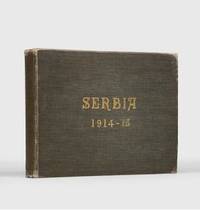
1915142361Various places: c. 1915. We had seen the awful need. and we were itching to begin An interesting record of British involvement in the south-eastern front with photographs captured in the field. The British Red Cross arrived in Uskub now Skopje in North Macedonia in 1914 and spent the following year treating the wounded and typhus sufferers. The photographs show their journey the hospitals doctors and patients and the local scenery. The Serbian Campaign was ignited in July 1914 when Austria-Hungary invaded the kingdom. They were defeated by the Serbs in August considered the first Allied victory of the war. In October 1914 six doctors and twelve St John's Ambulance orderlies were sent to the front line equipped with supplies for a field hospital. Arriving at the front line via Malta and Greece they were instructed to take charge of four full hospitals in Uskub. Despite the great logistical challenge they kept the wards functioning and eventually opened a dedicated typhus hospital before returning in 1915. This mission was recounted by one of the doctors James Johnston Abraham in his 1921 autobiography My Balkan Log. Plates IV VI XIV and XV were produced from photographs in this album and as Abrahams mentions bringing a camera on Page 130 perhaps the album was compiled by him. A number of images show the hospitals and their doctors treating wounded and infected soldiers. Five of the six doctors Abraham Banks Benbow Higginson and Kadish are pictured and identified in the captions as are many of the orderlies interpreters and house staff. It opens with images of Malta Athens and aboard the SS Caucase in stark contrast to the rest of the album filled with shots of the wards patients being bandaged and the graves of typhus victims. There are also many photographs of village life and of the Austrian prisoners of war who worked on the wards. Oblong quarto. With 66 gelatin silver photographs approximately 86 x 137 mm mounted landscape and portrait on recto of 45 leaves 5 blank manuscript captions in white ink. Original grey-green cloth front board lettered in gilt rear board stamped with double-fillet border in blind. Minor silvering of photographs otherwise bright a few marks on mounts binding a little rubbed at extremities: a very well-preserved example. hardcover
pp. [vi], 52. First printing. "War is a racket. It always has been. It is possibly the oldest, easily the most profitable, surely the most vicious." - p. 1. Butler [1881-1940] knew his subject intimately, having served in numerous military actions around the world while coming to his conclusion. He died five years after publication as the most decorated Marine in U.S. history until that time, having received not one but two Congressional Medals of Honor. "Probably the most concise indictment of non-defensive warfare ever written." - Robert H. Weems. Half-inch chip from bottom corner of page one. Faint library writing to base of backstrip. Faint one-inch diameter moisture mark at black titling upon front board. Library blind stamp atop title page, otherwise clean and unmarked with moderate wear to publisher's red buckram. Binding intact. Backstrip professionally restored. New endpapers. Dust jacket not included. Weems p.16. 7.75 x 5.25 inches. Book
3122P., Demonville, 1803, un volume in 8 relié en demi-basane mouchetée, dos orné filets dorés (reliure moderne à l'imitation), 10pp., (1), 480pp., 2 planches hors texte
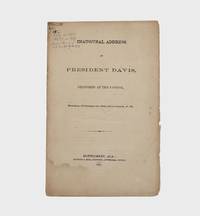
1861377687Montgomery: Shorter & Reid 1861. First edition. 8pp. 8vo. Unbound. Minor staining. Early 20th century price annotations on upper corner of the title in ink and pencil. First edition. 8pp. 8vo. Once secession became a reality in late 1860 the rebellious states had to decide what form of government they would take. As in 1787 when the original thirteen states wove themselves into the United States through a constitution the South wove itself into a Confederacy by creating their own constitution. In early February 1861 representatives of the six seceded states Alabama Georgia Louisiana Mississippi South Carolina and Florida met in Montgomery to draft a provisional constitution and officially establish the Confederate States of America. The document would be unanimously ratified on February 8th and the following day Jefferson Davis would be unanimously elected to the provisional presidency of the Confederacy. Davis was not among the members of the convention however having returned to Mississippi from Washington after resigning his Senate seat. He immediately traveled to Montgomery delivering his inauguration address on February 18 the same day that the delegates signed the provisional constitution.<br /> <br /> Delivered on the steps of the Capitol building Davis invoked the principles of the 1776 Declaration of Independence to justify the secession and independence of the southern states: "It illustrates the American idea that governments rest on the consent of the governed and that it is the right of the people to alter or abolish them at will whenever they become destructive of the ends for which they were established. The declared purpose of the compact of the Union from which we have withdrawn was to "establish justice insure domestic tranquillity provide for the common defense promote the general welfare and secure the blessings of liberty to ourselves and our posterity;" and when in the judgment of the sovereign States composing this Confederacy it has been perverted from the purposes for which it was ordained and ceased to answer the ends for which it was established a peaceful appeal to the ballot box declared that so far as they are concerned the Government created by that compact should cease to exist."<br /> <br /> His address continued by further linking the actions of the seceding states to the Founding Fathers noting that the provisional constitution they have drafted was in the spirit of the original: "We have changed the constituent parts but not the system of government. The Constitution framed by our fathers is that of these Confederate States. In their exposition of it and in the judicial construction it has received we have a light which reveals its true meaning."<br /> <br /> He defended secession by arguing that their sole purpose is the protection of their social and economic system though does not mention the word slavery and "actuated solely by the desire to preserve our own rights and promote our own welfare the separation by the Confederate States has been marked by no aggression upon others and followed by no domestic convulsion."<br /> <br /> Just a few weeks later on the steps of the Capitol in Washington Abraham Lincoln would deliver his own first inaugural address: "In your hands my dissatisfied fellow-countrymen and not in mine is the momentous issue of civil war . We are not enemies but friends. We must not be enemies. Though passion may have strained it must not break our bonds of affection. The mystic chords of memory stretching from every battlefield and patriot grave to every living heart and hearthstone all over this broad land will yet swell the chorus of the Union when again touched as surely they will be by the better angels of our nature." <br /> <br /> While Lincoln's inaugural is quite common published as a government document the first separate printing of Davis's inaugural address although well represented institutionally is quite scarce on the market. Parrish & Willingham 895; Crandall 607; Sabin 15274 Shorter & Reid unknown