Livre Rare Book
119 846 résultats
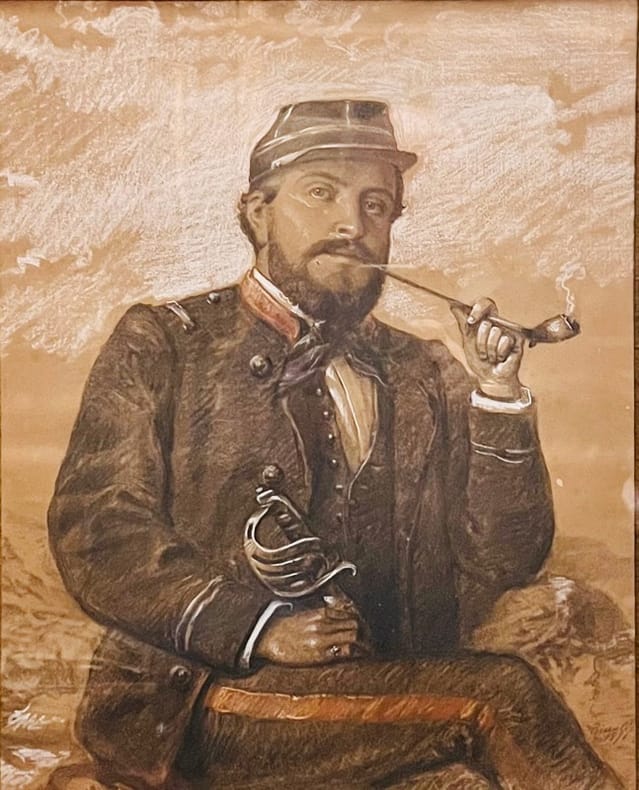
187144734, , 1871. Fusain sur papier brun avec rehauts de gouache blanche et rouge (43 x 34 cm); sous verre, cadre de bois doré.
pp. (12) 348, 1 cb, in-8°, piena pergamena con titolo ms al dorso
Due volumi, folio (552 x 360). Volume I: titolo litografato, pagina di dedica, 12 pagine (descrizione delle tavole ) e 39 litografie a colori (alcune con esplicazioni ), numerate 2-40 (il numero 1 è la pagina del titolo); Volume II: titolo litografato, 12 pagine (descrizione delle tavole) e 40 litografie a colori (alcune con esplicazioni ), numerate 1-41 (la tavola numero 37 è la pagina del titolo). Legatura coeva in mezza pelle rossa, dorso riccamente ornato, piatti marmorizzati, tagli dorati (la parte inferiore del dorso del secondo volume abilmente restaurata). Qualche brunitura e piccole e macchie, ma ottimo esemplare. Prima edizione. Durante la guerra di Crimea William Simpson fu inviato dai tipografi Colnaghi e Son, su raccomandazione di Day. In Crimea e Balaklava divenne un artista di guerra pionieristico, registrando le battaglie navali e facendo schizzi accurati sul posto. I suoi disegni furono poi sottoposti a Lord Raglan e mostrati alla regina Vittoria dal ministro della guerra, il duca di Newcastle. Ottanta dei suoi disegni di Crimea sono stati litografati in The Seat of War in the East, dedicato con il permesso alla regina Vittoria. Di questa edizione vennero stampati esemplari di lusso con le tavole colorati a mano.. .
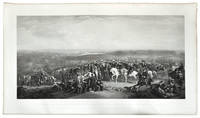
82925Garle Browne Leicester and M. Newman Manchester 18th June 1860. . Large print engraved by Charles G Lewis after Barker with etching engraving and stipple engraving 145 x 86 cm; some closed tears in the lower margin not affecting the plate.<br /> An impressive and scarce large-format engraving of the winners of the Crimean War shown on horseback set in a military camp with Sebastopol and its bay in the background. Published by John Garle Browne the owner of the original oil painting which was sold at auction in London in 1997.<br /> Garle Browne, Leicester, and M. Newman, Manchester, 18th June 1860. unknown
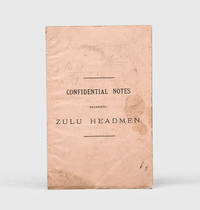
1879167372Pietermaritzburg: Printed by P. Davis & Sons 1879. Detailed intelligence issued shortly before Isandlwana First and only edition unrecorded institutionally this the only copy known. "This small pamphlet contains considerable detail on its subject: 'Compiled from information obtained from the most reliable sources and published by direction of the Lieut.-General Commanding Lord Chelmsford for the information of those under his command'" Raugh. The brief but informative notes are followed by a tabulation of the headmen detailing their father age regiment tribe principal residence and finally remarks expanding on the notes as to the number of men they command their relationships to Cetewayo and status within the Zulu political and military structure. Provenance: Pencilled inscription to the front panel of the wrappers of "Major Grenfell Deputy Assistant Adjutant General 14.1.79" this was Francis Wallace Grenfell 1841-1925 60th Rifles later field-marshal lord Grenfell and commander at Suakin and Toski in the Mahdist War. Grenfell had gone out to South Africa in 1874 and was aide-de-camp to Sir Arthur Cunnynghame commander-in-chief; he saw action at Quntana in the Xhosa War of 1878 and in the Anglo-Zulu War at Ulundi having witnessed the aftermath of the debacle at Isandlwana remarking that "officers and men behaved splendidly - dying back to back - and at the last rallying round the colours not a man of the regulars attempted to escape till all was lost" Emery p. 106. Part of lot 421 Quentin Keynes Sale Christie's 8 April 2004. Octavo pp. 6; 4 double-page tables on 5 leaves. Sewn in original printed pink paper wrappers. Some "service wear" wrappers soiled and rubbed mildly damp cockled back panel with vertical crease where once folded back and consequent soiling to the last blank page contents with pale toning and lightly rippled at the edges from atmospheric damp overall very good. Raugh 575. Frank Emery The Red Soldier: Letters from the Zulu War 1879 1977. unknown
1898134209Umtata and Cape Town: issue 1 A. L. Middleton Umtata; the remainder Dennis Edwards & Co. 1898-99. Chronicling regimental life in South Africa An unusual near-complete run of this rare regimental periodical created for and by the Cape Mounted Rifles preserved with notable ephemera from the Boer War and originating from its "prime mover" Sir Harry Charles St Lo Malet who served as a corporal in the regiment. Provenance is recorded in an inscription by his son Sir Edward William St Lo Malet noting his father's role in founding the magazine before joining the 8th King's Royal Irish Hussars. Harry St Lo Malet transferred from the CMR in December 1900 later serving with distinction in both the Boer War and the First World War earning the DSO and OBE. Additional postal evidence links the volume to the family home in Maidenhead. The run comprises 17 of 19 issues: the complete sequence from May 1898 to August 1899 plus the final number November 1899. Only four institutions in South Africa appear to hold complete sets. Qakamba - apparently a Xhosa or Nguni-derived term referring to the regiment's distinctive bullet-shaped forage cap - was a comparatively polished regimental magazine offering news verse sports and regimental "chit-chat". The Cape Mounted Rifles originated as a colonial gendarmerie in 1855 and became part of the regular army in 1878. During the Second Boer War they served in Colonel Brabant's Colonial Division praised by the Marquess of Anglesey as "the most important body of colonials". Contemporary observers admired their combination of regular-army discipline with deep knowledge of Boer tactics and the terrain. The accompanying ephemera is of particular interest. It includes Francis William Reitz's manifesto of the Orange Free State an eight-page bilingual open letter attacking British policy reportedly circulated widely and read in Parliament annotated as having been "picked up in the Town Hall on the occupation of Ficksburg". Also present is a satirical "Government Gazette Extraordinary Vryheid District 17 August 1901" ridiculing Kitchener's 7 August surrender proclamation and threatening in mock-official style to "banish" British officers unless they depart by 15 September. Further items include a Boer identity card for Carl Pieter van Rooyen of the Vryheid Commando; a brief manuscript receipt by Lt. Geo. W. Ogilvie acknowledging 49 prisoners on 15 May 1900; and a contemporary newspaper cutting on the Siege of Wepener April 1900 annotated in pencil. The 16-day defence of Wepener - later commemorated by a clasp to the Queen's South Africa Medal - was a key action for the Cape Mounted Rifles. 17 issues bound in 1 vol. quarto 245 x 183 mm; extent of each issue between 16 and 24 pages with continuous pagination. Illustrated throughout from photographs original artwork and line-drawings wrappers carrying advertisements for local businesses. Contemporary dark brown half morocco for H. Sotheran & Co. preserving the original printed wrappers tawny morocco twin labels Double Marble gold vein patterned sides and endpapers top edge gilt. Binding just a little rubbed wrappers slightly dusty overall very good. Chris Ash Kruger Kommandos & Kak: Debunking the myths of the Boer War 2014; The Marquess of Anglesey A History of the British Cavalry 1816-1919 Volume IV 1899 to 1913 1998; Bud-M'Belle Kr Scholar's Companion 1903; Mansell South African Bibliography vol. IV p. 16 for Reitz's pamphlet 1979; Christopher Wilkinson-Latham The Boer War 1977. unknown
1915132388Aldershot: Gale & Polden Ltd Art Printers for the Brigade 1915. First and only edition no other copy traced. This copy owned by Capt. John Fox Brigade Veterinary Officer signed by him on the first blank together with seven other senior officers including Brig.-General Heyworth Commanding XXth Brigade. A few pencilled annotations to the portrait plates noting wounded or killed. The text is essentially a calendar for 1914 with brief notes as to significant events relating to the Brigade through the year accompanied by snippets of text humorous and factual. Landscape small folio 186 x 245 mm. Illustrated throughout with numerous portraits of officers from photographs colour uniform studies and humorous sketches from the Front. Contemporary black diced skiver title and owner's name gilt to the front board pale grey-green pastedowns original dun wrappers bound in title and brigade badge embossed and gilt to the front wrap silk ribbon in brigade colours attached. Brigade office and censor stamps applied to the verso of the front wrap. A little rubbed and bumped both boards with minor creases wrappers browned and slightly stained first few leaves with some minor finger-soiling overall very good. hardcover
Bologna, Licinio Cappelli Editore, 1937. A cura di Celso Maria Garatti. In folio (cm. 33x42,5); legatura in tutta tela, dorso in rame, raffigurante un fascio littorio; l'ascia in acciaio satinato bianco é applicata al piatto anteriore. Disegni di Gigi (Luigi Del Giudice); pp. 570 completamente illustrate prevalentemente da fotografie. Edizione numerata di questo che si può definire il più importante ed efficace “LIBRO OGGETTO” pubblicato e studiato per comunicare la potenza dell’Italia Imperiale durante il Fascismo. Il testo è corredato da bellissime fotografie dell’Istituto Luce. Si tratta del capolavoro tipografico di propaganda più importante del Novecento italiano. Bellissima copia numerata. Axs
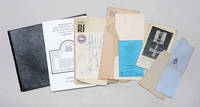
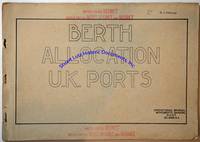
5396MEYER J. FRECHIE 1907-1988. An American Army Lieutenant Colonel in World War Two Frechie was Chief of the Operational Branch of the Transportation Office and was responsible for coordinating the transportation logistics of the Normandy Invasion D-Day. Archive. More than 1600 pieces. 1942-1953. The archive of Lieutenant Colonel later Colonel Meyer J. Frechie. The archive primarily dates from 1942 to 1945. It includes letters to and from his family in Philadelphia including his wife young son parents and sister and military papers including some interesting material directly related to his work in Allied transportation.Frechie a graduate of the Wharton School of Business at the University of Pennsylvania worked as a traffic manager for the railroad and steamship industries before the war. After the United Statess entry into World War Two the military actively courted Frechie for his skill in transportation logistics. He joined the war effort as a civilian traffic manager for the Army in 1941 before officially joining the Army at the rank of Captain in February 1942 and being sent to London. There he was put in charge of coordinating the covert transport of Allied servicemen and supplies from England to Normandy for D-Day. According to the lengthy text accompanying his citation for the Legion of Merit Frechies war-time activities were in part as follows:The Operational Branch Movements Division Office of the Chief of Transportation was activated in August 1943. Lt. Col. Frechie being the only officer available with amphibious operational experience was designated Chief of said Branch. He developed his staff by sending his officers and men thru a series of strenuous exercises with the British and American Forces at various places in the United Kingdom in preparation for D-DayLt. Col. Frechie as Chief of the Operational Branch was responsible for the movement of all troops vehicles equipment and supplies for movement OVERLORD. From D-Day to 7 September 1944 a total of 1302954 personnel 260433 vehicles and 1272532 deadweight tons of supplies have been shipped from the United Kingdom ports to the Continent. The entire OVERLORD movement program was executed by the movement instructions issued by the Operational BranchLt. Col. Frechie arranged for the building of scale models of various landing craft and scale wood blocks of various general purpose and special purpose vehicles to be used in movement OVERLORDParticipating in actual exercises where one or more of the plans were tested by actual execution Lt. Col. Frechie analysed the results and proceeded t make final plans for movement to implement Army requirements. Lectures were made to the Air Force and Ground Services outlining movement plans; ports and depots were visited and careful studies made of their capacity to handle the vast quantity of supplies vehicles and personnel necessary to sustain the operation. Many obstacles were confronted and surmounted by Lt. Col. Frechie in perfection of operation OVERLORDThis required the greatest flexibility in operation which the Operational Branch under Lt. Col. Frechie was able to exert with dispatchAt all times Lt. Col. Frechies superior judgment keen foresight expert planning and unselfish devotion to duty maintained an exceedingly high state of morale among the officers and men associated with him and his efforts can be directly attributed to the prolonged success of this vitally important mission of the Transportation Corps.Frechie was discharged from active duty in November 1945 and served in the Army Reserves until 1953. He was promoted to Colonel in 1946.The archive contains two large boxes and three small boxes of letters and documents. All are in at least good condition with the exception of a few torn letters. Highlights are as follows:One large box of military paperwork. The highlight is a book entitled Berth Allocation Ports UK and marked Most Secret on the cover; it examines many British ports and their capacity in preparation for the D-Day Landings. It includes a booklet of secret maps and information about ports in the United Kingdom. There is also a thick file of diverse paperwork relating to Frechies military career a mix of originals and copies some of it quite mundane such as records of his travel within the UK booklets written by Frechie including Preliminary Analysis and Recommendations Cargo Documentation Procedure and Historical Critique of the United Kingdom Overlord Movements three copies certificates of appointment as Lieutenant Colonel and Colonel copies of his Honorable Discharge citations for the Bronze Star and Legion of Merit and a thick file of documents relating directly to his work on the Normandy landings. Much of the most interesting and unique material can be found in this box. The two thick files are hundreds of pages each.One large box of hand-written letters and copies of V-Mail to and from Frechies wife Rita and son Allen. There are 659 letters from Frechie to Rita and Allen including many duplicates. They are dated 1942-1945 and 1947 and there are also numerous letters dated only with the month and day. The greatest number are dated late 1942 and 1943 when he wrote multi-page letters to her every day often more than once per day. There are also 230 letters to Frechie from his wife and son the majority dating to 1942. This is the bulk of the archive both in number of unique items and in quantity of pages.One small box of hand-written letters and copies of V-Mail to 144 and from 246 Frechies parents Bessye and Jack. There are numerous copies of V-Mail from Frechies mother including some duplicates.One small box of hand-written letters and copies of V-Mail to 43 and from 206 Frechies sister Fleurette Lang brother-in-law Stanley and niece Jackie. The majority is copies of V-Mail letters from Fleurette.One small box of miscellaneous cards newspaper clippings assorted Army-related pamphlets etc.This is the substantial archive of a man who made a unique and valuable contribution to the Allied victory in World War Two. unknown
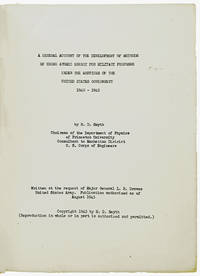
1945S13207Washington D.C.:: Government Printing Office 1945. 1945. 10x7 inches Sm. 4to. 193 pp. With page IV-7 printed upside down IV-8 positioned correctly. After the unpaged front matter which is printed on one side of the leaf each chapter has separate pagination and the pages of the Appendices are numbered A1-1 and so forth." Original cream-colored textured card-wrappers lithoprinted on the front "Released for Publication on _________" side-stapled 2; corners curled variously soiled representative of 'normal' exposure. Signature of M.J. Coffee. Good. / PROVENANCE: "M.J. Coffee / Rm 213 Chemistry Bldg. / Ohio State Univ. / Columbus Ohio" With an inscribed index card "This is my copy of the A-Bomb record sent to all the people who were instrumental in perfecting the bomb used on Hiroshima Nagasaki. It was sent out after the war to people who worked for the Manhattan Project. I was at the Ohio State University in Columbus Ohio." FIRST OFFICIAL PUBLIC ANNOUNCEMENT ON THE MANHATTAN PROJECT :: THE CREATION OF THE ATOMIC BOMB. LIMITED EDITION of about 1000 copies. Jones. First official government statement printed and released on August 12 1945 solely for persons related to the project and the press being the first printed account of the development of the Manhattan Project and the atomic bomb issued just six days after the bombing of Hiroshima. The lithoprinting was done in the Adjunct General's Office in the Pentagon. / Coleman describes the conditions by which this book was put together "It is apparent that gathering the leaves for binding was done in haste under the pressure of tight security precautions. Pages are lacking or repeated in several copies that have been seen." :: p. 206. This copy is complete. / "Researchers should note that correspondence dealing with the writing and editing of the Smyth Report is mainly located in Series V Smyth Report. This correspondence appears to have been filed by Smyth with related materials i.e. notes draft manuscripts early printings for several reasons. His primary intent appears to have been continuity; the correspondence discussing his work on the Smyth Report often refers to specific drafts now also filed in Series V. These letters were also often classified "Secret" and "Top Secret" along with his various manuscript versions from 1944 through 1945. These materials remained together over the years while in Smyth's possession periodically undergoing review for declassification as a group by the U.S. AEC. For these reasons as well as the fact that Smyth meticulously arranged Series V himself the correspondence dealing with the Smyth Report has been maintained in its original order and assigned to this separate series. Cross referencing has been done for correspondents who appear in Series V Smyth Report; the existence of letters in Series V has been noted under the appropriate correspondent's name in the Series I section of the container list." :: American Philosophical Society Henry DeWolf Smyth Papers. / In addition page VI-12 contains the sometimes missing "secret" classified content dealing with plutonium production rates. This copy contains both the entire section V and the plutonian production rates from VI-12. / "The story of the development of the atomic bomb by the combined efforts of many groups in the United States is a fascinating but highly technical account of an enormous enterprise. Obviously military security prevents this story from being told in full at this time. However there is no reason why the administrative history of the Atomic Bomb project and the basic scientific knowledge on which the several developments were based should not be available now to the general public. To this end this account by Professor H. D. Smyth is presented./ All pertinent scientific information which can be released to the public at this time without violating the needs of national security is contained in this volume . . ." :: Major General L.R. Groves foreword. / "There was published on 12 August 1945 six days after the atomic attack on Hiroshima the remarkably full and candid account of the development work carried out between 1940 and 1945 by the American-directed by internationally-recruited team of physicists under the code name of 'Manhattan District' which culminated in the production of the first atomic bomb. . . Compiled by Professor Smyth of Princeton a consultant to the 'Manhattan District' project at Los Alamos whose commandant General L.R. Groves provided the foreword 'the Smyth Report' as it is familiarly known was published at one dollar by the U.S. Superintendent of Documents" :: Printing and the Mind of Man 422e. / Smyth 1898-1986 Professor of Physics at Princeton served as a consultant to the Manhattan Project from 1943-45. After the war he was appointed Commissioner of the U.S. Atomic Energy Commission from 1949-54. / REFERENCES: Coleman 3 and earliest obtainable issue see: Earle E. Coleman "The 'Smyth Report': A descriptive checklist" Princeton University Library Chronicle vol. 37 1976 pp. 204-218; Smyth "The 'Smyth Report'" Princeton University Library Chronicle 37 1976 pp. 173-189. Jones Vincent Manhattan: The Army and the Atomic Bomb. Washington DC: United States Army Center of Military History 1985 pp. 560-1. Government Printing Office, 1945. unknown
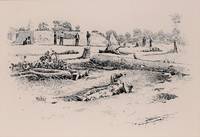
1884W2434New York: The Century Co. 1884. The image is 4 5/8 inches by 7 1/4 inches on artist board measuring 14 1/2 inches by 12 1/4 inches. Original ink drawing by Walton Taber 1857-1933 after a post-battle photograph. The scene shows dead Confederate soldiers in front of Battery Robinette on October 5 1862 the morning after the battle at Corinth Mississippi. Civil War historians J. Matthew Gallman and Gary W. Gallagher attributed the photograph to Ohio born and Corinth based photographer George Washington Armistead . However the Library of Congress has a virtually identical photographic negative that is attributed to Nicholas D. Brown. Although the photographer's identity remains uncertain it is clear that the drawing is by Walton Taber and is signed by him in the lower left corner of the image. Taber did the drawing for the Century Company who published it on page 751 of volume 2 of Battles and Leaders of the Civil War. This drawing along with others by Taber that were included in the Century Collection of Civil War Art was auctioned by Christie's in New York in 1988. Born in New Bedford Massachusetts Taber was one of the most important American illustrators during the late nineteenth and early twentieth centuries. His pen and ink drawings provided the Century Company almost 250 illustrations for Battles and Leaders. The drawing offered here is in near fine condition: clean and bright on artist board that is lightly and uniformly toned on the recto; there is some minor soiling on the verso along with notations made by Century editors and a later framer. The drawing is now archivally matted and ready for a 16" by 16" frame. SIGNED. Original. Single Sheet. Near Fine. Illus. by Isaac Walton Taber. 4 5/8" by 7 1/4". Fine Art Print. The Century Co.
194019884Various ca. 1940s. Thirteen brown paper leaves loose from a presumably perished scrapbook holding 57 black and white silver print photographs and dozens of ephemeral articles clippings postcards documents etc. tape-mounted to rectos and versos. Prints ranging in size from approximately 1.5” square to approximately 8” x 10” 42 of the 57 photos approximately 1.5” square contact prints. WITH Two ALS totaling approximately 650 words. Letters good to very good. WITH About 35 pieces of loose ephemera: military correspondence personal clippings and photographs etc. Scrapbook pages worn flaking at edges loose contents often with tape remnants or residue from previous mounting. Contents overall about good. Pearl Harbor letter very good with folds from mailing light toning and a small chip from right margin. <br/><br/>A small archive of World War II service and personal materials belonging to a Gerald Maynard Watkins of Memphis Tennessee highlighted by a monumental Pearl Harbor eyewitness letter written by Watkins to his mother less than 2 weeks after the Japanese attack. <br /> <br />Watkins was stationed at the Kanehoe Naval Air Station on the East side of the island of O’ahu site of the first Japanese attack carried out just minutes prior to Pearl Harbor approximately 30 miles to the West. His approximately 575 word letter of December 20 1941 describes the surprise onslaught in vivid and revealing detail exceprt: <br /> <br />"Then it happened. Never til my dying day will I forget. Bombers. They came from nowhere – Seemed to just be there. I looked up just in time to see them drop their eggs. For one startling second the world stood still as I followed the bombs line of drop with my eyes. I couldn’t help it. Fascinated by it all I watched until thy hit. That broke the spell. Courage – Every man there was a hero. <br /> <br />I rushed over to the hangar after the debris had settled. The first person I saw was Lawrence. He was just lying there kind of white looking and awful still. My throat tightened until it was hard to swallow. I knew he was dead." <br /> <br />This remarkable eyewitness account one of the best pieces of World War II correspondence we’ve seen is certainly the highlight of the group and its remaining contents are largely typical of World War II-era scrapbooks and archival material with several dozen photographs of his later service in the War many from Canton Island airfield in the Pacific with the decorated Patrol Bombing Squadron VPB-52. The balance of contents consist of personal clippings marriage photographs 3 pages seeming to be the fitful beginnings of an attempt at an early draft of a memoir of his Pearl Harbor Day experience and a second wartime ALS written on Christmas Eve 1941 in which he follows up his December 7 experience with a report on a mild injury he suffered during the attack: “Now that I am well and health once more I can tell you this. I had a very small piece of shrapnel from one of the bombs that were dropped here hit me in the shoulder. I didn’t even have to go to bed. I feel like a veteran now.” <br /> <br />Watkins left the Navy in 1946 after six years of service and went on to a career as a commercial airline pilot. His 2006 obituary notes he entered the University of Miami Law School at 67 years old passing the Florida Bar at 70 to become a practicing lawyer in retirement. <br /> <br />A handful of primary written accounts of the Pearl Harbor attack are known notably the diary of George Macartney Hunter whose family privately holds the manuscript but have made it available in multiple venues including for use in the 2003 PBS documentary THE PERILOUS FIGHT. The offering of similar materials in commerce appears to be rare with a significantly less impressive letter by a civilian witness to Pearl Harbor several miles from the battle itself making approximately $1200 nearly tripling its high estimate at a small regional auction in 2011. <br /> <br />A rare thoughtful and exceptionally revealing participant account with important supporting documentation lending additional context of arguably the defining event of the 20th century. unknown books
186327010Washington: Coastal Survey Office 1863. Folding map 24 x 25 1/2 inches mounted in twenty-four sections on linen. Original card covers with printed paper label. Contemporary ownership inscription on label. Light wear. Minor foxing. Rare field operations map of Mississippi.<br/> <br/> This rare Civil War map was created by the Coast Survey office the main cartographic arm of the Union Army for use in the Union campaigns into the South. This copy was owned and used by Colonel Joseph Corson Read the Chief Commissary of the Army of the Cumberland. In November 1863 the Union armies captured Chattanooga the "Gateway to the South" enabling them to stage a prolonged offensive into the Southern heartland. Grant moved very quickly to overwhelm the South and immediately ordered Sherman to move against Atlanta and its vital railroad supply lines at the same time as he sent Nathaniel Banks to attack Mobile Alabama. Joseph Corson Read 1831-1889 was one of the first wave of men to take up Abraham Lincoln's call for volunteers to put down the rebellion in April 1861. He remained continuously in the army serving first on General Jesse Reno's staff and rising to the rank of Chief Commissary for the Army of the Cumberland commanded by George H. Thomas. Thomas was impressed with Read and on May 1 1864 with the spring campaign against Atlanta imminent Thomas named Read Chief Commissary of the Army of the Cumberland in the Field. This meant that although Colonel A.P. Porter was the Army's overall chief Read would serve alongside Thomas in the field and had the responsibility to supply the entire army as it moved South. During the long and arduous Atlanta campaign he was the man on the ground making the supply side work. Read developed a close relationship with Thomas one with both personal and professional aspects. This map scaled at ten miles to the inch shows Mississippi and Alabama from Jackson to Montgomery starting about fifty miles north of those two points and continuing south to New Orleans and the Gulf of Mexico. Rivers roads and rail lines and all the towns they connect are detailed with waterways printed in blue. Two of the railroads the Mobile & Pensacola and the Mobile & Great Northern construction and removal dates during the war. An important map that would have been used by the Union Army in the field specifically by the Chief Commissary of the Army of the Cumberland.<br/> <br/> Library of Congress Civil War Maps 260.1; Library of Congress Railroad Maps 140. Coastal Survey Office unknown
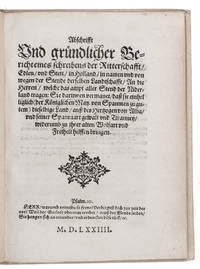
157417001Germany 1574. Modern boards. 4to. With a woodcut arabesque ornament on the title-page woodcut interlaced tailpiece at the end and 1 woodcut gothic decorated initial. Set in fraktur types with incidental schwabacher. Rare second or third edition of the German translation of an anti-Alva anti-Spain pamphlet written by the nobility of Holland and representatives of its cities addressed to the States in Dutch Staten the provincial governments of and all magistrates in the seventeen provinces of the Low Countries promulgated at Delft on 12 September 1573 as noted at the end of the text but not printed even in the original Dutch before 2 October 1573 when William the Silent Prince of Orange wrote to his brothers that the pamphlet was being printed Groen van Prinsteren. That is just before Alva was dismissed on 19 October and left the country on 18 December 1573. The text was first published in Dutch: Delft Aelbrecht Hendricksz. October 1573 TB 1289 Knuttel 210 and soon after: Dordrecht Jan Canin 1573 TB 1290 Knuttel 211 both under the title: Copie eens Sendtbriefs der Ridderschap Edelen ende Steden van Hollandt aen die Staten vanden Landen van Herwaerts overe hough it has sometimes been supposed it was printed in Delft it seems more likely to have been printed in Germany so that it does not appear in Valkema Blouw Typographia Batava or the various pamphlet catalogues. There appears to be only one copy in the Netherlands at Utrecht University Library.Blind stamp on the title-page. Apart from some browning a very good copy of an important but little-known pamphlet.l USTC 608308 3 copies; VD16 N1634 same 3 copies; cf. N1632-33; WorldCat 257783005 630546807 837235844 730242093 6 copies including the same 3; 1130127579 links to images of an Utrecht UL copy; cf. Groen van Prinsteren Archives 4 p. 215 1573 Dutch ed.; Knuttel 212 1573 German ed. Picarta 1573 German ed.; TB 1289-1290 1573 Dutch eds.; Wagenaar Vaderlandsche historie 6 pp. 452-453 Dutch ed. hardcover
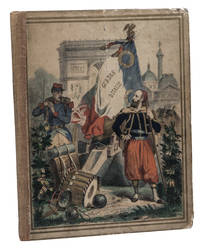
1863ABC_47223Pont-à-Mousson France 1863. Size of the whole when folded and closed: 22.5 x 18 cm. Élie Haguenthal colophon: Paul Toussaint Half red cloth and hand coloured lithographed paper sides. Lithographed folding panorama showing 8 different lithographed scenes captioned in and beneath the illustrations of the Italian War of 1859 from the French-Italian perspective.The 8 scenes 5 3-leaf scenes and 3 single leaf scenes are assembled to make a single long foldout as assembled with the text: 21.5 x 395 cm; image size 19 x ca. 310 cm coloured by a contemporary hand. 5 ll. of letterpress text and the lithographed folding panorama. Second known copy of a lithographic panorama of the Italian War of 1859 also known as the Second Italian War of Independence. This war was fought in the northwest Piedmont region of Italy pitting the Second French Empire and Savoy-Piedmont-Sardinia against the Austrian Empire and it proved crucial in the process of Italian unification. The text and following hand-coloured lithographs describe and depict eight stages of the war from the departure of French troops for Italy to their return some months later and highlighting several important battles including those at Magenta and Solferino. As a result the influence of the Austrian Empire in Italy was greatly reduced.The present work is extremely rare: we have located only one other copy at the Bibliothèque Nationale de France and it moreover differs slightly from the present one.The title-page functions as the front paste-down the text and illustration of the panorama fold out from there. The text and illustration have been printed on one side of the paper. With a French inscription in pencil at the head of the first page. The binding is somewhat foxed and browned the front board is slightly cracked the red cloth around the spine is slightly faded the back hinge is weakened some occasional staining and very slight foxing throughout. Otherwise in good condition.l Cf. WorldCat 461406796 1 copy of a later ed.: Bibliothèque Nationale de France; for the publisher Haguenthal: Dictionnaire des imprimeurs-lithographes du XIXe siècle http://elec.enc.sorbonne.fr/imprimeurs/node/25785. ABE CAT Art History hardcover
P., Imprimerie royale, Antoine Etienne, 1649. In folio (43,5 x 29,5 cm) divisé en trois parties : - 2 pp. de t. gravées, 62 pp. n.c.comprenant la préface avec bandeaux et lettres ornées d’Estienne de la Bella, l’ode au roi avec une gravure représentant Hercule et louis XIV enfant par Natalis, l’ode à la reine avec un portrait gravé de la reine Anne d’Autriche avec ses devises, et une suite de stances et poèmes d’auteurs divers, suivies de 87 pp. présentant 20 gravures allégoriques à pleine page montrant les hauts faits militaires de Louis XIII, cette partie se terminant par une gravure du mausolée du roi. -142 pp. Comportant une p. de t. gravée, 35 portraits à pleine page de rois, princes et généraux, avec leurs devises dans 3 médaillons gravées sur la p. en vis-à-vis, 4 pp. n. c. et une gravure allégorique sur les malheurs de la guerre. - 51 doubles pages de sièges, batailles sur mer, cartes. Les folios F, O, Mm, Oo, Ccc, Fff, Hhh, sont absents comme habituellement ; 3 folios sont insérés après le folio Ggg (3 plans de bataille dont la prise de Collioure), la dernière p. est numérotée 110. Reliure d’époque plein veau, dos orné de fleurons, tranches dorées, plats à la Duseuil avec les armes de François de BOYER de FORESTA, marquis de BANDOL. Dos anciennement refait, restaurations anciennes. Galeries de vers marginales pour la plupart, à plusieurs endroits. Exemplaire à grandes marges. Première édition d’un livre des plus remarquables du XVII° siècle, œuvre collective où collaborèrent P. de Corneille, C. Berys, R. Bary, H. Estienne, Estienne de la Bella. Le texte est en français et en latin. Jean Valdor le jeune (1616-1670), né à Liège, séjourne longuement au Vatican et s’installe à Paris l’année de la mort de Louis XIII (1643). C’est avec l’appui de la reine Anne d’Autriche qu’il réalise les triomphes de Louis le Juste. François de BOYER de FORESTA, marquis de BANDOL, né à Aix-en-Provence le 2 janvier 1673, décédé le 10 septembre 1748, Conseiller au parlement d'Aix (1693), président à mortier (1699). Il était le filleul de la célèbre marquise de SÉVIGNÉ. Armes : D'azur à l'étoile d'or, chargée d'un écusson d'azur à la fleur de lis d'or ; au chef d'argent. Cf. OLIVIER, HERMAM & ROTON, Manuel de l'amateur de reliures armoriées françaises, Planche N° 1507, fer N° 2. Parmi les 51 plans de sièges on trouve ceux de Négrepelisse, Saint Antonin, Montauban, La Rochelle, …
8vo., First Edition, with frontispiece (original tissue guard present), plate and full-page map (all original tissue guards present); handsomely bound in full dark brown crushed morocco, sides with gilt frame border, back gilt with raised bands, second and fourth compartments lettered and ruled in gilt, all other compartments tooled in gilt, gilt top, hand-made endpapers, ribbon marker, original backstrip preserved and mounted on new leaf at front, a most attractive copy ideal as a gift or for presentation. A PRESENTATION COPY FROM THE AUTHOR WITH HIS SIGNED AND DATED HOLOGRAPH INSCRIPTION ON FRONT FREE ENDPAPER, AND ADDITIONAL SIGNATURE ON TITLE. THIS COPY IS PRESENTED BY JONES TO POLLY PEABODY ['Polly Peabody with love; signature; London 1 Jan. 1941'].
186427011Washington 1864. Folded map 24 x 33 inches in thirty-two segments mounted on linen. Original card covers with printed paper label. Contemporary ownership inscription on label. Some light wear and minor soiling. Detailed field map for the Union Army in Northern Mississippi and Alabama.<br/> <br/> A highly detailed map of the northern half of Mississippi and Alabama showing the border with Tennessee and all points south to Vicksburg and Montgomery produced to support the operations of the Union Army there in 1864. This is one of several maps compiled by the U.S. Coast Survey in an attempt to adequately map the South during the Civil War for military purposes. A note on the map indicates that the present map was compiled from various sources including "campaign maps and information furnished by Capt. O.M. Poe Chief Engineer Military Division of the Mississippi and by Capt. W.E. Merrill Chief Engineer Department of the Cumberland." Merrill was Sherman's chief topographical engineer and he contributed to several important maps of the area including one of Northern Georgia produced in Chattanooga following the vital capture of that city. With the beginning of the Civil War the United States Army found itself scrambling to obtain adequate field maps for military operations in the South. The most established cartographic branch of the Government the Coast Survey was pressed into service to provide these maps some with a coastal component but mainly for landlocked locations. The cartographers of the Coast Survey reviewed all of the existing cartography available but also drew on military and scouting reports and covert agents to assemble the most detailed possible maps of places roads railroads natural features. The topography is illustrated with hachured and shaded relief and railroads shown in red. The circulation of these maps was controlled and only officers ranking major or higher were supposed to control copies. As a result they are rare today. Two key figures in the Coast Survey effort during the War were Henry Lindenkohl and his brother Adolph who were responsible for actually drawing many of the field maps. The Lindenkohls were born in Germany but emigrated to the United States as teenagers and became American citizens. Adolph had already worked at the Coast Survey before the War began and Henry joined in 1861. Together they made a huge contribution to the war effort through their superb cartographic work producing and revising maps of different theatres of operations through 1865. Both continued with the survey for the rest of their lives; Adolph died in 1904 after fifty years on the job and Henry in 1920 after fifty-nine. This map has the ownership inscription of Col. Joseph Corson Read 1831-1889. Read was one of the first wave of men to take up Abraham Lincoln's call for volunteers to put down the rebellion in April 1861. He remained continuously in the army serving first on General Jesse Reno's staff and rising to the rank of Chief Commissary for the Army of the Cumberland commanded by Gen. George H. Thomas. Thomas was impressed with Read and on May 1 1864 with the spring campaign against Atlanta imminent Thomas named Read Chief Commissary of the Army of the Cumberland in the Field. This meant that although Col. A.P. Porter was the Army's overall chief Read would serve alongside Thomas in the field and had the responsibility to supply the entire army as it moved South. During the long and arduous Atlanta campaign he was the man on the ground making the supply side work. Read developed a close relationship with Thomas one with both personal and professional aspects. An important map of Northern Mississippi and Alabama particularly interesting as part of the greater project undertaken by the Coast Survey to map out the South during the Civil War and with excellent provenance and associations. unknown
178579297Council=Chamber January 19 1785. handsomely matted. Very fine condition. Approx. 3-1/2 x 5-1/2 inches . The printed date 1784 was altered in ms. to 1785. unknown
1934055677London: War Office Geographical Section - General Staff No. 2957 1934. No Binding. Very Good. Original chromo-lithographed map mounted on cloth consisting of 50 adjoining sheets folded in light brown original wrappers. 1405 x 1315 cm. Light tear and water stain on the cover label slightly loose on connections of the cloth. Otherwise a very good copy. A rare colour lithographed fiftyfold wall map of the Middle East centred on the Arabian Peninsula with North and East African shores the Gulf of Aden the Persian Gulf the Red Sea the Sinai Peninsula the Mediterranean Turkey Iran Saudi Arabia Aden Yemen the Gulf of Oman. The map was produced with the method of Conical Orthomorphic Projection by the War Office probably in London. To its maximum extent it includes the complete Middle East of the 1930s as well as the European side Balkans and Italy etc and the Caucasus. The War Office was a department of the British Government responsible for the administration of the British Army between 1857 and 1964 when its functions were transferred to the new Ministry of Defence MoD. The Topographical Section was responsible for the series consisting mainly of topographical maps produced for British intelligence and military use. As of December 2023 we could not trace any copies of this map in the OCLC although the LoC includes newer editions 40s & 50s. <br/> <br/> War Office, Geographical Section - General Staff No. 2957 unknown
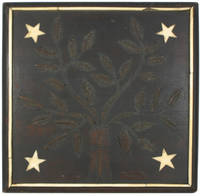
1863List308N.p. 1863. Dark carved wood 11 ½ x 11 ½ x 1 inches with bone border and star inlays in corners an inlaid tree with carved names of Civil War battles as leaves. During the Civil War wounded or captured soldiers would often pass their time waiting to return to duty carving relics. The practice was fairly common with pipes being the most commonly carved object and the quality of the relics varied wildly depending on the talent of the soldier. A.H. Barber from Wisconsin was wounded at Antietam and most likely carved this memorial piece while recovering from his wounds. Each leaf notes a different battle during the 1861-1862 campaigns. Barber enlisted in Company C of the 2nd Wisconsin in 1861 and was discharged in 1863 following wounds suffered at Antietam. The trunk reads Battles for the Union and the four branches read Dept. of the South Army of Virginia & of the Potomac and Dept. of the West with twenty-nine leaves naming battles. <br /> <br /> The resultant plaque is exceptional in timeliness craftsmanship and overall aesthetic beauty. Barber's metaphorically growing tree is particularly timely for the Union cause as the 1863 failure of the Maryland Campaign would serve as inspiration to Lincoln to issue the Emancipation Proclamation. Wonderfully preserved in excellent condition with no notable flaws. From the collection of Norm Flaydernman the noted Americana dealer who personally collected carved Civil War pipes and had been planning to write a book on the subject at the time of his death. unknown books
1862WRCAM54585Washington D.C.: War Department Adjutant General's Office 1862. Three volumes with over 300 individual imprints. 12mo. Uniformly bound in contemporary three- quarter roan and marbled boards gilt leather labels. Wear to leather and edges boards somewhat rubbed front hinges tender. Contemporary ownership inscriptions and binder's tickets on front endpapers of second and third volumes; later bookplate on front pastedown of first volume. Light toning in places otherwise internally clean. Very good. A uniformly-bound set of General Orders issued by the Adjutant General's Office of the War Department in Washington D.C. previously owned by Brig. Gen. John Pope Cook. The orders cover 1861 and 1862 and comprise a nearly complete run of orders for the Union Army during the first two years of the Civil War. Undoubtedly the most significant General Order in this collection is a preliminary printing of the Emancipation Proclamation. <br> <br> A handful of the orders are signed in ink by the various adjutant generals. The Emancipation Proclamation bound in the third volume is as follows: <br> <br> GENERAL ORDERS No. 139. THE FOLLOWING PROCLAMATION BY THE PRESIDENT IS PUBLISHED FOR THE INFORMATION AND GOVERNMENT OF THE ARMY AND ALL CONCERNED: BY THE PRESIDENT OF THE UNITED STATES OF AMERICA A PROCLAMATION caption title. Washington D.C.: War Department Adjutant General's Office ca. September 24 1862. 3pp. This work is one of the earliest printings of the Preliminary Emancipation Proclamation issued to regimental commanders in the field during the Civil War in the week after President Lincoln's official manuscript version was finished. Here the third paragraph rings out with Lincoln's timeless words: "That on the first day of January in the year of our Lord one thousand eight hundred and sixty- three all persons held as slaves within any State or designated area of a State the people whereof shall then be in rebellion against the United States shall be then thenceforward and forever free." <br> <br> Following the Seven Days Battle and Gen. McClellan's retreat from the Peninsula at the end of June 1862 President Lincoln realized that there would be no early end to the war and found himself "as inconsolable as it was possible for a human to be and yet live." Anxious for news from the army and needing to escape the constant interruptions at the White House he frequently visited the telegraph office in the War Department building to await dispatches. It was during one such visit early in July that he asked the chief of the telegraph staff Maj. Thomas Thompson Eckert for some paper to "write something special" and began the first draft of the Emancipation Proclamation completing it in a few weeks. <br> <br> Lincoln had long hoped to resolve the slavery issue through a congressional act of emancipation compensating slave owners for their loss of "property" but that approach was roundly rejected by representatives from the border states leaving the President who had decided upon the necessity of emancipation with a presidential proclamation as the only option. The extraordinary document he conceived would announce the liberation on January 1 1863 of all slaves in those states still in rebellion against the Union and promised compensation to slave owners in those states that returned to the fold before that time if they adopted "immediate or gradual abolishment of slavery." This proclamation would be followed by a final proclamation issued on the 1st of January identifying those states still in rebellion and confirming the liberation of all slaves therein. <br> <br> On Tuesday July 22 Lincoln presented his draft to the Cabinet telling them that he had resolved firmly upon the course of action it specified and asking them not for advice but suggestions. The only observation he had not anticipated came from Secretary of State Seward who proposed that it might be best to wait for a military victory before issuing the Proclamation as it could otherwise seem like "the last measure of an exhausted government." Immediately recognizing the wisdom of the suggestion Lincoln held back. On September 17 after an anxious wait of nearly two months he received the victory he needed at the bloody Battle of Antietam. Completing his final draft Lincoln presented it to his cabinet for refinement on September 22. Following the meeting Seward took the amended draft with him to the State Department where a formal manuscript copy was made then signed by Lincoln and Seward. <br> <br> The first edition of the Preliminary Emancipation Proclamation Eberstadt #1 a small three-page circular intended for distribution within the government and to the local press was likely printed on September 22. At the time that Charles Eberstadt published his study of the Proclamation 1950 he was able to locate only one copy which he himself owned and as nearly as we have been able to determine no other copies have come to light since then. <br> <br> Eberstadt #2 is a supposed second edition no copy of which Charles Eberstadt was able to locate whose existence he inferred from the standard State Department practice of printing a folio edition consisting solely of the text of the proclamation followed by another printing consisting of the text of a letter of transmittal from the Secretary of State as well as the text of the proclamation. While there may be a copy of Eberstadt #2 in the National Archives as he speculated it is not recorded in their online catalogue nor have we been able to find a copy in any other online catalogue including OCLC the Library of Congress and the Abraham Lincoln Library. <br> <br> Eberstadt's third printing of the Preliminary Emancipation Proclamation is without a doubt the earliest obtainable printing. It consists of Secretary of State Seward's one-page letter of transmittal addressed "To the Diplomatic and Consular Officers of the United States in foreign countries" and the text of the proclamation. Eberstadt located a total of only five copies in institutions at the Library of Congress the National Archives Yale the Clements Library and Brown. OCLC does not record any additional copies nor is it recorded in Monaghan. This firm sold a copy several years ago. <br> <br> The present copy of GENERAL ORDERS No. 139 is Eberstadt's fourth printing of the Preliminary Emancipation Proclamation dated in print on September 24. Charles Eberstadt surmises that this field order printing could have been accomplished as late as September 29 or 30 and produced in as many as 15000 copies. It is however rather uncommon in the market and this is the first copy of this printing of the Preliminary Emancipation Proclamation offered by this firm. <br> <br> "From the first days of the Civil War slaves had acted to secure their own liberty. The Emancipation Proclamation confirmed their insistence that the war for the Union must become a war for freedom. It added moral force to the Union cause and strengthened the Union both militarily and politically. As a milestone along the road to slavery's final destruction the Emancipation Proclamation has assumed a place among the great documents of human freedom" - National Archives. "The proclamation has been called by responsible persons one of the three great documents of world history ranking with Magna Carta and the Declaration of Independence" - Eberstadt. <br> <br> Besides including about 300 orders on all manner of Union military activity at the outset of the Civil War the present collection also contains the 1861 printing of REGULATIONS FOR THE UNIFORM AND DRESS FOR THE ARMY OF THE UNITED STATES. Set out in GENERAL ORDERS No. 6 this twenty-four-page printing of the Army dress regulations was the first to set out uniform requirements for the Union during the conflict. The first sentence of the first section requires officers to "wear a frock coat of dark blue cloth." Thus the Blue and the Gray begins. <br> <br> This set was collected and bound by John Pope Cook who began the Civil War as a colonel in command of the 7th Illinois Volunteer Regiment. He was promoted to brigadier general after his troops played a key role in the Union victory at Fort Donelson early in 1862. After his promotion he was transferred to a command in the Department of Iowa and Dakota Territory where he remained until early 1863 conducting campaigns against the Sioux from his base in Sioux City Iowa. These orders must have been bound near the end of this period since contemporary labels note the binder one William F. Kiter as being from relatively close by Council Bluffs. <br> <br> A very early printing of one of the most important political acts in the Civil War and indeed in American history contained in a set of General Orders contemporaneously assembled by a significant Union Army commander. EBERSTADT LINCOLN'S EMANCIPATION PROCLAMATION 4. War Department, Adjutant General's Office hardcover books
181536137Portland Maine: Argus Office 1815. Letterpress broadside approximately 15 1/2 x 10 inches. Wide margins with deckle edges. Rare Maine broadside announcing the signing of the Treaty of Ghent which ended the War of 1812.<br/> <br/>This broadside announcement begins with a statement by the publishers of the Argus newspaper office in Portland: "At eleven o'clock last evening an express arrived in this town in Thirteen Hours from Boston with the following letter and Handbill to Capt. William Webb &c. containing the joyful tidings of Peace. By the favor of an esteemed friend we are enabled thus early to lay them before the Public." This is followed by a letter from Thomas Motley in Boston forwarding the hand bill from the Boston Centinel quoting New York publisher Jonathan Goodhue's 11 February announcement of the arrival of H.M.S. Favorite in New York with American commissioner Carroll aboard with a signed treaty in hand. Maine sat on the front lines of the War of 1812 making this news of the Treaty of great significance. By the fall of 1814 the British had invaded and occupied eastern Maine and formally brought all of the District east of the Penobscot River back into the British Empire. Much to the ire of Maine's citizens Massachusetts did nothing to defend its eastern District which in turn led directly to Maine's seeking separation and statehood following the war. Although the Treaty of Ghent ended the War of 1812 in December 1814 Moose Island remained under British control since the issue of ownership of the islands in Passamaquoddy Bay was in dispute until settled in June 1818. A rare Maine broadside: OCLC locates only the Indiana University copy; American Imprints locating only the Massachusetts Historical Society copy.<br/> <br/>Shaw & Shoemaker 36115; Williamson 9913. Argus Office unknown books
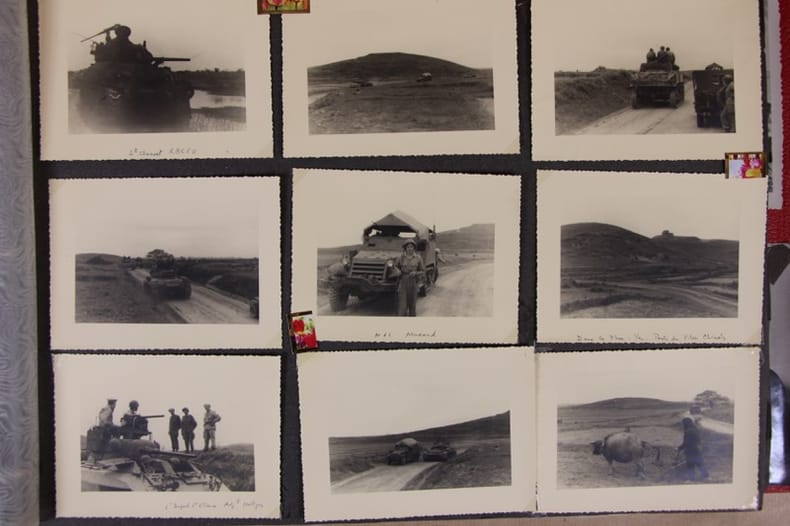
1954135183Sn 1954 Deux albums in-folio oblong, 411 & 607 photographies contrecollées en 40 & 50 planches, format divers : ca 6 x 6 à 17 x 24 cm., majorirtairement 8,5 x 11 cm., tirages argentique et mat, près d’une trentaine de retirages. Nombreuses légendes, en pastilles ou en marge de la photographie. Témoignage photographique d’un officier du 1er escadron du 8ème GSAP 8ème RSA en janvier 1953 au long de deux séjours 4 années et des multiples engagements de cette unité d’intervention : opérations Bissextile, Sablé, Porto, Lorraine, Artois-Bretagne, Corse, Mouette, etc. Le “récit” débute à Alger en 1942 sur quelques photographies familiales puis Saumur en 1949, les étapes du voyage : près de 145 vues prédédent son arrivée. Quelques portaits et scènes de groupe, prises d’arme, etc. précèdent le coeur du reportage : les engagements de son peloton sur half-tracks à l’appui de nombreuses vues de combat, ce qui est rare. Des coupures de presses enrichissent le récit, avec quelques correctifs manuscrits. En point d’orgue : l’opération Mouette. Le second album est agrémenté de près de 300 photographies de correspondants de guerre Camus, Corcuff, Ferrai, Varoqui, etc. de format divers et de très belle facture, débordant le cadre du 8ème spahis : opérations du 3ème BPVN, du 8ème BPC opérations Bambou et Hirondlelle, vue célèbre du 2ème classe Lardillier, le 2ème BEP au Laos, etc. Un document emblématique au coeur du conflit, de toute rareté.
Very Good Turkish, Ottoman (1500-1928) Original wrappers. Foolscap 8vo. (18 x 13 cm). In Ottoman script (Old Turkish with Arabic letters). 112 p. On the first page, written 'copies without seals are fake', and this copy is with a seal. Slightly faded and chipped on extremities. Foxing on first pages. Uncut marginal extremities Otherwise a good copy. Exceedingly rare first edition of the first Ottoman voyage to Cape of Good Hope and first-hand travel account of the Ottoman qadi Abubakr Effendi (1814-1880) of South Africa and Mozambique, who was sent in 1862 by Sultan Abdulaziz at the British Queen Victoria's request in order to teach and assist the Muslim community of the Cape Malays. The presence of the Muslim population in South Africa dates back to the 16th century, South Africa and the Cape of Hope have become a colony of Western countries such as Portugal, the Netherlands, and the United Kingdom. The Ottoman Empire was interested in the Far East, Javanese, and South African regions in the 16th century and then tried to establish a relationship. The direct relationship between the Ottoman Empire and South Africa in the 19th century, upon the request of the Muslim people and England, was formed through Abubakr Effendi. The Muslims in conflict with various religious issues have found the remedy by consulting a scholar from the Ottoman Empire through England. After all, Abubakr Effendi reached Cape Town in 1862 and tried to resolve the conflicts among the Muslim people. (Abubakr Effendi: An Ottoman Scholar in South Africa in the Nineteenth Century: Yilmaz, Yusuf). "Abubakr Efendi was sent to Cape Town by Ottoman Sultan Abdulaziz. When chaos reigned in the Islamic society because of the imams who declared themselves as leaders in the region, Muslim leaders in Cape of Good Hope conveyed their letters to the Queen of England in 1862 declaring that they needed a religious leader. Since they had not been educated for years, they had forgotten their Java language and could not read their own books. They sent a letter to the Queen of England, informing them that help could be sought from the Ottoman court, the center of Muslim countries in the period. The issue was refused in the Parliament and the Ottoman Ambassador Musurus Pasha was offered it to the Ottoman Sultan. Abubakr Effendi's mission was to prevent Muslims in Cape of Good Hope to clash with each other and teaching them authentic Islamic knowledge free of superstition. Although Abubakr Efendi had some Arabic translators in his service, he still learned English and African languages in a short time and wrote books in order to benefit the Muslims there. On the fifteenth day he set foot on the continent, he opened a madrasah called the "Ottoman School" and enrolled three hundred students in twenty days. He traveled to Mauritius and Mozambique. He wrote his famous book 'Bayan al-Din' (a sort of catechism) in Afrikaan in Arabic letters. Then he married Rukiye Hanim, but they divorced after a while since they had to communicate by using an English and Arabic dictionary. Then he married James Cook's nephew Tahota Saban Cook. In his memoir, Ömer Lütfi wrote down all the travels of Abubakr Efendi for two years. Abubakr Efendi stayed in South Africa for 22 years and died there." (140 yillik miras: Güney Afrika'da Osmanlilar: Uçar, Ahmet). Abubakr Efendi first traveled to London and then to South Africa by a ship with his assistant Omar Lutfi. He established the first Ottoman School in Cape Town and then wrote his work Bayan Al-Din in Afrikaans with Arabic letters and distributed it to the Muslim population of South Africa. Four printed copies in OCLC: 427674106 (Three copies); 635151131 (One copy). Özege 22397. First Edition. Extremely rare.