Livre Rare Book
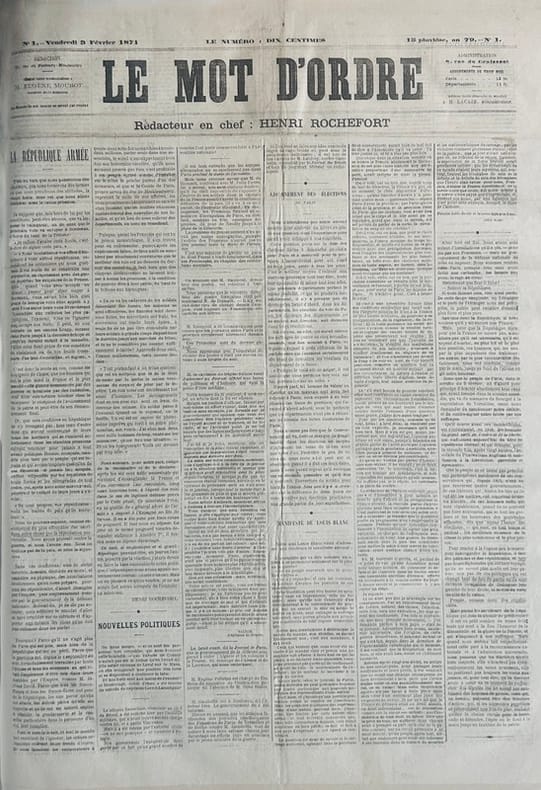
Le Mot d'ordre. Collection complète.
18718263Paris, Imp. Schiller, 1871. 86 livraisons reliées en 1 vol. grand in-folio, demi-veau blond.
Bonnefoi Livres Anciens · Paris, France3 000,00 €
119 833 résultats
Very Good Turkish, Ottoman (1500-1928) Original manuscript autograph handwritten document sealed 'Hüsrev Mehmed' sent to (and responded by) Serkâtib Mustafa. Written in special paper with 'ahar'. 39x21 cm. In Ottoman script. Slightly tear on folded place and slightly stains. Otherwise a very good manuscript paper. The document was written in accordance with the Ottoman state correspondence tradition prior to modernization. However, it is an indication of modernization that it is written to the serkâtib of Humâyûn (head clerk of the Ottoman / Turkish court) and not to the Sultan directly. The importance of this document is that it has many hints of modernization movements of the last period of Empire, depiction of the division of the first modern Ottoman army (Asakir-i Mansure-i Muhammediye) that's before one year of Egyptian Campaign by Koca Husrev Pasha and before eight years of proclamation of Reform (Tanzimat) and after only 22 years of Turkish Magna Carta (Sened-i Ittifak). Husrev Pasha was 'serasker' (commandant and head) of Assakir-i Mansure-i Muhammediye Army in that year. Husrev's text starts as 'Devletlü, inayetlü, atufetlü, oglum.." in 'Elqab'. In the Ottoman diplomacy, first person who used 'oglum' [i.e. my son] in elqab of the documents was Koca Hüsrev Pasha. (Source: Osmanli Arsiv Belgeleri, Orhan Sakin). Koca Hüsrev Pasha (Khosrew Pasha) was an Ottoman Kapudan Pasha ("Grand Admiral") of the Ottoman Navy and statesman who reached the position of Grand Vizier rather late in his career, between 2 July 1839 and 8 June 1840 in the reign of Abdülmecid I. However, during the 1820s, he occupied key administrative roles in the fight against regional warlords, the reformation of the army, and the reformation of Turkish attire. In 1801, Hüsrev Pasha commanded the 6,000 Ottoman troops who assisted the British in removing the French from Rashid (Rosetta). For this, he was made governor of Egypt Eyalet (province), in which position he was charged with assisting Hüseyin Pasha in the killing or imprisoning the surviving leaders of the Mamluks. Many of these were freed by or fled with the British, while others held Minia between Upper and Lower Egypt. [.] He was later made governor again by Muhammad Ali for 2 days [.] After Diyarbekir and Salonica, in 1806 he was governor of Bosnia Eyalet, before being reappointed as governor of Salonica in 1808. Hüsrev Pasha held the rank of Kapudan Pasha of the Ottoman Navy from 1811 to 1818. He was then appointed governor of the Eyalet of Trabzon twice, during which time he conducted for the Black Sea region of Turkey the struggle the central Ottoman state was waging against local feudal rulers (Derebeys). During the Greek War of Independence, he was appointed Kapudan Pasha again in the end of 1822. In 1826, Husrev Pasha played vital roles both in the Auspicious Incident (the annihilation of the Janissary Corps in 1826) and in the formation of the new "Mansure Army" modeled after those of European Powers. Appointed as seraskier (commander the army) of the Mansure in May 1827, Husrev reformed and disciplined the corps. Himself ignorant of modern military methods, he assembled a staff of foreign experts and other personnel to assist him, the "Seraskeriye", which constituted the first staff in Ottoman history. Due to his early championing of military reform and virtual control over the new Ottoman army, Husrev was able to install many of his protégés in senior military positions. Husrev Pasha was also instrumental for the near-abandonment of the turban and the adoption of the fez as a universal headgear for Muslim men of the Ottoman Empire (excluding the religious classes) under Sultan Mahmud II. (Wikipedia). Möltke talks about him in famous book includes his personal letters as 'he is more powerful than sultan'. Following the suppression of the Janissaries in 1826, Sultan Mahmud II transferred the functions of the old Agha of the Janissaries to the seraskier.
1927613396Berlin, Mittler, 1927/32. OHlwd/OKart.
18718263Paris, Imp. Schiller, 1871. 86 livraisons reliées en 1 vol. grand in-folio, demi-veau blond.
No Date (1860) 1st edition. No cover, as issued, with simple caption title at top, 8vo, 32 pages. The first Jew to serve in the U. S. Senate who did not renounce his Judaism, and future secretary of State for the Confederacy, Louisiana Senator Benjamin levels both barrels at Senator Stephen A. Douglas and his Popular Sovereignty doctrine. An important marker in the dismantling of the National Democratic Party. Signaling Southern repudiation of the Illinois Senator as the Democratic Party's presidential candidate, Benjamin argues that the South will be satisfied only by guarantees for the protection of slavery-- regardless of popular feeling-- in the Territories. In the course of arraigning Douglas, Benjamin discusses in some detail the former's debates with Abraham Lincoln in the Illinois senatorial contest two years earlier (the famous the Lincoln-Douglas Debates) . Sabin; 4701. SUBJECT(S) : Campaign literature -- United States. Slavery -- United States -- Extension to the territories. Presidents -- United States -- Election -- 1860. Campaign literature. Politics and government Presidents -- Election. Slavery -- Extension to the territories. Though several editions of the speech were published, this is the longest (32 pages) and scarcest edition, with only 15 copies listed in OCLC/Worldcat. Tiny notches in spine from earlier binding, Good+ Condition. (kh-5-59)
Cartella completa contenente 12 acqueforti e due disegni firmati Decroix che raffigurano due dei ritratti incisi. “Il a été tiré de cette suite 75 exemplaires numérotés sur papier de hollande. Exemplaire n. 3” con firma autografa dell’autore. I ritratti raffigurano siberiani, tartari, coreani, “enfants de troupe” ecc. Ogni acquaforte (il foglio misura cm 33x26) reca la firma di Decroix a matita, e il titolo del ritratto. Lo stesso Decroix (Lille 1878-1936 Parigi) fu prigioniero di guerra e passò due anni in un campo in Germania, liberato nel 1916 raggiunse la familgia a Berna per poi trasferirsi a Parigi. Assai raro.
187944942Londres, Imp. Delatre, Howland st. 23, 1879. 20 planches en feuilles, couverture bleue illustrée.
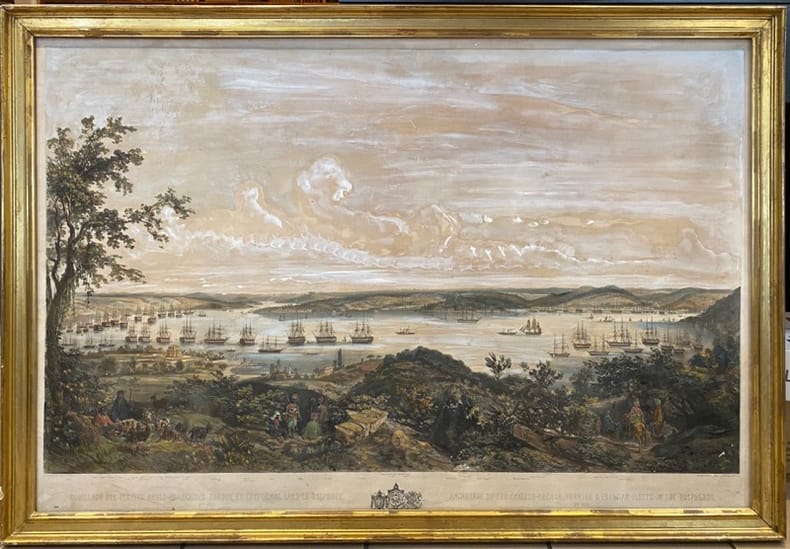
210664A Constantinople, A. Percheron et J. Schranz, Paris, Imp. de Jacomme & Cie, (1854) 89 x 129 cm, lithographie en deux tons, mise en coloris de l'époque, en feuille, sous cadre doré ancien. Sans verre.
1831PHO-2405Paris, Arthus Bertrand, 1831-1840, 20 tomes reliés en 10 vol. in-8 (21 × 12,5 cm), demi-veau fauve marbré à coins, super-libris doré, dos à nerfs ornés, pièces de titre rouges et de tomaison vertes, tranches mouchetées rouge (reliure anglaise du XIXe s). Aux contres-plats, étiquette pour cote. Petites rousseurs. Légers frottements aux reliures. Provenance « Society of Writers to His Majesty’s Signet », célèbre association privée d’avocats écossais, fondée en 1594.
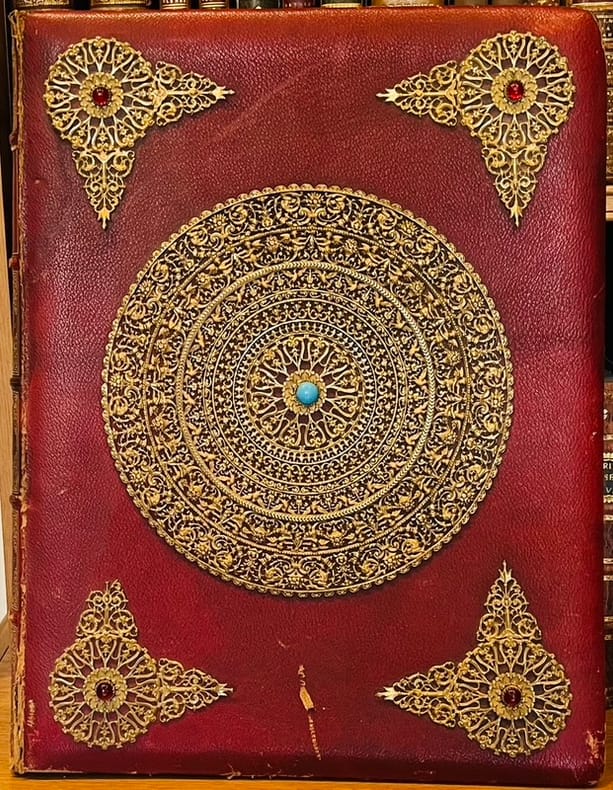
188044443, , (Vers 1870-1880). Grand in-folio manuscrit (54 x 41 cm) de 52, 50 ff. enluminés sur peau de vélin à l'encre et aqurelle rouge, vert, bleu et or, chagrin rouge, dos orné à nerfs, décor sur le plat supérieur d'écoinçons et d'une grande plaque circulaire ajourés en laiton avec incrustations de cabochons de pierres, sur le second plat quatre plaques d'angles circulaires ajourés en laiton avec incrustations de cabochons de pierres, dentelle intérieure, gardes de papier dominoté (reliure de l'époque).
198016109Austin: Univ of Texas Press 1980. First edition. Hardcover. Fine/Near fine. 192 pages index. Blue cloth boards. Dust jacket with price intact has couple of small rubs and edgewear at spine. <br/><br/> Univ of Texas Press hardcover
1829259017Roma : Tipografia della Società Editrice 1829. First Edition. Hardcover. Finely bound set in half gilt-blocked vellum over marble boards with leather gilt-blocked titles. Some wear and tear as with age. Remains well-preserved overall; tight bright clean and sharp-cornered. Physical description; 8 vols. : ill. ; 43 cm. Notes; Engraved title pages. Subjects; Vatican. Painting — Vatican City. Sculpture — Vatican City. Roma : Tipografia della Società Editrice hardcover
1509Pharsale-Lucain-1509Édition rare et authentique de la Pharsale de Lucain, en format in folio, reliée en plein vélin blanc d’époque. Dos à 5 nerfs, reliure Janséniste, titré à la main au dos. Toutes tranches mouchetées, très frais. Petit trou d'envol au mors du plat supérieur arrière, trois dernières pages fendues en bas de marge, ainsi qu'un petit trou dans la marge. Rousseurs en marge sur le dernier cahier. Texte sur deux colonnes, lettrines.
193052798NP: NP 1930. Original photographs. poor to very good condition. fair to fine. Oblong Quarto. 23 plates with tissue guards. String bound photo album remains of leather fitting on cardboard. Personal photo-album of Isadore Nebenzahl war correspondent for Agence Havas later: French News Agency in Ethiopia containing 310 b/w original photographs documenting Ethiopia during the Second-Italo-Ethiopean War of 1935. The photographs measure 3 1/2 x 2 1/2" with one measuring 9 x 6" Son of the emperor and one at 3 1/4 x 5 1/4" <br /> <br /> Some 200000 Italian troops invaded Ethiopia in October 1935 under the command of Italian Marshall Emilio de Bono who was soon replaced by General Pietro Badoglio by Mussolini. The Ethiopian forces were defeated and on May 7 1936 the Italian King Victor Emmanuel III was declared emperor and the provinces of Eritrea Italian Somaliland and Abyssinia Ethiopia were united to form the Italian province of East Africa. The fighting between Italian troops and rebels continued until 1939.<br /> <br /> The British war correspondent George Steer had reported on the use of chemical weapons by the Italian forces and subsequently had been deported together with Nebenzahl and other reporters on grounds of anti-Italian propaganda and espionage see original Reuters bulletin of May 18th 1935 enclosed in the album. The Reuters bulletin was covered by several newspapers including the New York Times mentioning Steers and Nebenzahl in their reporting. Several of the photographs included in this album show Isadore Nebenzahl.<br /> <br /> The photographs depict everyday life in Addis Abebba show Nebenzahl and his colleagues in business settings or on portrait photographs construction sites armed patrol activities gatherings and diner settings military personnel official events actions to extinguish fires friends and families airplanes during air raids victims and destruction from air raids army exercises refugees and troops train stations and ships the harbor and navy ships an airfield and scenarios on the ship after being expelled.<br /> <br /> The album includes a small set of documents and photographs loosely laid in:<br /> <br /> 1. Two official press credentials Service des la Presse for Isadore Nebenzahl both with passport photo of Nebenzahl<br /> <br /> 2. A photograph of what seems to be the son of Heila Selassie laid in with two other photographs.<br /> <br /> 3. A formal invitation of the Foreign Ministry of Ethiopia for Isadore Nebenzahl to attend an evening at the "Noveau Palas Imperial".<br /> <br /> The leather padding of the front cover of the album is missing the back padding barely attached with heavy wear along edges. Front cover cardboard with water staining along top edge not affecting album or photographs. Light age-toning. The binding in overall poor photos and interior in good to very good condition. Binding protected in modern mylar. NP unknown
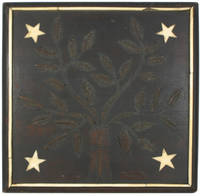
1863List308N.p. 1863. Dark carved wood 11 ½ x 11 ½ x 1 inches with bone border and star inlays in corners an inlaid tree with carved names of Civil War battles as leaves. During the Civil War wounded or captured soldiers would often pass their time waiting to return to duty carving relics. The practice was fairly common with pipes being the most commonly carved object and the quality of the relics varied wildly depending on the talent of the soldier. A.H. Barber from Wisconsin was wounded at Antietam and most likely carved this memorial piece while recovering from his wounds. Each leaf notes a different battle during the 1861-1862 campaigns. Barber enlisted in Company C of the 2nd Wisconsin in 1861 and was discharged in 1863 following wounds suffered at Antietam. The trunk reads Battles for the Union and the four branches read Dept. of the South Army of Virginia & of the Potomac and Dept. of the West with twenty-nine leaves naming battles. <br /> <br /> The resultant plaque is exceptional in timeliness craftsmanship and overall aesthetic beauty. Barber’s metaphorically growing tree is particularly timely for the Union cause as the 1863 failure of the Maryland Campaign would serve as inspiration to Lincoln to issue the Emancipation Proclamation. Wonderfully preserved in excellent condition with no notable flaws. From the collection of Norm Flaydernman the noted Americana dealer who personally collected carved Civil War pipes and had been planning to write a book on the subject at the time of his death. unknown
11091Half-sheep over marbled boards. Spine label: Speeches. Presentation inscription on fly-leaf from James B. Smallwood to the Hon. John P. Hale U.S. Senator dated April 4 1861. Bound volume of 37 individual speeches and 1 folded broadside made between 1860 and 1861 by various elected officials including Hon. Andrew Johnson of Tennessee Hon. Stephen A. Douglas of Illinois Hon. Jefferson Davis of Mississippi William H. Seward and Hon. Milton S. Latham of California among many others. unknown
1865List2438Camp Low 1865. Original partially printed document 26cm x 77cm. Printed on both sides of the sheet completed in manuscript. Darkening at folds from old tape repairs; partial splits to folds and extremities; complete and quite Good. Docketed verso signed in ink by Lieutenant Morgan Owen. Lists twelve enlisted soldiers most with Spanish surnames two with French surnames. Fine. The formation of the California Native Cavalry in 1863 marked a significant chapter in the state's history. Comprising primarily Mexican-American individuals colloquially referred to as "native" Californians the California Native Cavalry unit was formed 1863. Initially commanded by Maj. Andreas Pico a distinguished hero from the Mexican-American War and later under Salvador Vallejo the regiment drew its ranks from diverse backgrounds. Recruitment efforts began with vaqueros from southern California expanding to include individuals from San José and San Francisco. The unit boasted a varied composition encompassing not only Mexican-Americans but also Chilenos California and Yaqui Indians and even French legionnaires.<br /> Company "B" a contingent largely recruited from the northern part of the state is reflected in the existing muster roll. The company assembled at Camp Low near San Juan Bautista in 1865 making a striking entrance into the town. Described as "gay and gallant Spanish lancaroes" the cavalrymen presented a formidable sight with lances in hand and flags flying leaving a lasting impression on the townspeople who had never before encountered soldiers."The gay and gallant Spanish lancaroes sic came dashing through the town with the lances in their hand a flag flying from each of them. I assure you that they presented a war like appearance the people here had never seen a soldier in their lives – Yes Sir!." letter Maj. Michael O'Brien to Gov. Frederick Low January 1865; quoted in Prezelski "Lives of the Californio Lancers: the First Battalion of Native California Cavalry" in Journal of Arizona History v.40 no.1 Spring 1999. <br /> Under the command of Capt. Porfirio Jimeno Company B swiftly engaged in a critical mission: dismantling the notorious Mason-Henry Gang that had terrorized the San Juan region in the preceding months. Despite successfully wounding John Mason in early April 1865 the gang persisted for another month until Mason met his demise at the hands of a miner he sought to kidnap.<br /> However Company B faced challenges including low morale and a high rate of desertions with over 40 men leaving the company in 1865 alone. Transferred to Tubac Arizona Territory to confront the Apaches the company encountered further desertions along the way. The muster roll listing only twelve soldiers alongside Capt. Porfirio Jimeno reflects this tumultuous period. Overall the muster roll provides scarce documentation of the role of Mexican-Americans in the Civil War with few other examples in the trade or institutionally. unknown
186335961Richmond: West and Johnston 1863. 8vo. 546pp. 33 plates. Contemporary leather upper cover tooled in gilt rebacked.<br/> <br/>Provenance: General William Preston binding<br/> <br/>A substantial Confederate military manual covering all aspects of ordnance from artillery and transport to small arms and gunpowder. With distinguished provenance from Confederate General and Ambassador William Preston.<br/> <br/>"Adopted with some necessary changes omissions and alterations from the Ordnance Manual of the United States service of 1861. . It may be added that the labor of Ordnance officers has contributed to this new edition" Preface. Kentucky-born William Preston 1816-1887 studied at Yale and Harvard law school and led a regiment of Kentucky volunteers in the Mexican American war. He was a one-term U.S. Congressman and was named Envoy Extraordinary and Minister Plenipotentiary to Spain by Buchanan in 1858. In 1861 he resigned his post and returned to the U.S. He was from a prominent Kentucky family with close ties to many Confederate officials and officers. He help organize the Confederate state government of Kentucky which fell in December 1861. Preston joined the C.S. Army and rose to the rank of major general. In 1864 he was appointed Envoy Extraordinary and Minister Plenipotentiary from the Confederacy to Maximilian Emperor of Mexico. After the Civil War he served two terms in the Kentucky state legislature.<br/> <br/>Parrish & Willingham 2491. West and Johnston unknown books
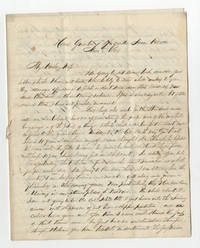
186423878<p>"<i>Just make up your mind that negro nature & human white nature are very near alike.</i>"</p><p>"<i>Every now & then it is proclaimed with great joy that Mr So & so some northern nabob or speculator has purchased some rebel plantation & prepares to work the same. … It's of more consequence locally & nationally thus the negro should buy & toil as he surely will on his acre of land than that princely men in Illinois should have inserted his loose change in a southern plantation.</i>"</p><p>Connecticut native William H. Noble writing to his wife responds to rumors of the fountain of youth vilifies northerner plantation renters who continued the Southern system as new feudal barons and calls for the redistribution of plantations to former slaves to ensure national stability. Jacksonville Florida was occupied and then abandoned by the Union four times. The result was a broken skeletal city at the Civil War's conclusion.</p><p>Noble reflects on how the African Americans' freedom will change Southern and national life and that regardless of race he believed human nature was the same. Further the former slaves needed an interest in and responsibility for their own advancement. Presaging Booker T. Washington he thinks developing industry more important than carpetbaggers coming south offering education. With a detailed sketch of headquarters in Jacksonville including tents stables and the brigade flagstaff.</p> <b>CIVIL WAR. WILLIAM H. NOBLE.</b>Autograph Letter Signed to his wife Jacksonville Fla. April 8 1864. 16 pp. 8 x 10 in. on 4 folding sheets stitched together.<p><b>Excerpts</b></p><p>"<i>An artillery officer told me yesterday that there is a spot down the coast somewhere at which people never die. I am going to live down there. I want to see how this country I am helping to save and remake gets along and grows & flourishes in the coming years.</i></p><p>"<i>The truth is there are but very few men as old as I really am in point of years in the army and I have no doubt I look old to them. But I am not in point of the elements of youth & age & their manifestations more than half the years…. <b>I think very likely however that the change in the Status of the negro will show that race to occupy the place now accorded to the Irish and push up the Irish girls a peg or two. That is just what the Irish did for the American help. When I was young there were no Irish field or house servitors. All were Yankeys.</b></i></p><p><b><i> Well the irish are dreadfully down on the negroes. American laborers used to be very hard on the Irish. But</i></b><i><b> God works wonders in spite of mans blindness</b> <b>and I have no doubt in more ways than one he will do so with the Negro. But I see but very few contrabands. My Regiment has never yet penetrated into a virgin Ethiopian place. In fact wherever we have been the yanks have one time & another been before us and culled them out for soldiers or Sambo has taken his chance and gone north.</b></i></p><p><i> The fact is the quicker Sambo learns to take care of himself and is made so to do the better. But it wont by apprenticeing him to some one who only cares to get the most possible out of him. Forcing him to work for set wages to remain in a fixed place & to toil for a man who buys of the government his industry is but a mockery of Freedom. Sambo has the same right & must be treated like any other human & not as if his skin hid under its somber hue a different nature or a soul governed by different impulses passions & motives.</i></p><p><i> <b>Who cares whether the world has cotton princes or not. Let the production run out if need be. Don't bother yourself about obtuse fancies on the negro question & his industry. Take no thought about large Estates going to waste & without culture.</b> <b>Have no anxiety but that human nature & niger nature will work out its own salvation if you give it a chance. Sambo wont work if you feed him a plumb pudding and send down a lot of infatuated people who should make little nigs. fully acquainted with general geography the distribution of offices universal History in 24 lessons</b>.</i>"Additional excerpts below</p><p><b>Historical Background</b></p><p>Jacksonville Florida suffered mightily as it changed hands several times during the Civil War. With the Union Navy blockading the port for most of the war the army alternately occupied and abandoned the city deeming its defense too costly and non-essential. Despite the blockade the city remained a key Confederate supply point becoming the "breadbasket" of the Confederacy and shipping large quantities of pork beef molasses corn potatoes and other supplies to troops via rail. In an attempt to take the railroads and stop the flow of foodstuffs and supplies on February 7 1864 Union soldiers occupied Jacksonville for a fourth time. Politically Lincoln hoped to establish a Unionist government after cutting the Confederate supply lines. He even sent John Hay one of his personal secretaries as his representative. But Union troops suffered a devastating loss 45 miles away at the Battle of Olustee on February 20 and veteran soldiers on both sides remarked that they had never experienced such terrible fighting.</p><p>As the Union forces were still retreating the 54th Massachusetts US Colored Troops USCT was ordered to march back to a broken-down train carrying wounded Union soldiers. When the USCT troops arrived the men attached ropes to the engine and cars and manually pulled the train approximately three miles to camp where horses then helped pull the train the ten miles back to Jacksonville.</p><p><b>Additional Excerpts </b>Full Transcript Available</p><p>"<i>…<b>Just make up your mind that negro nature & human white nature are very near alike.</b> Find out its appetites & fancies & give them play. <b>The negro has toiled as the chattel & possession of some body who </b></i><6><b><i>owned him & his toil & the soil on which he lived. He has never known the manhood & the anchorage which comes of the ownership deep down & high as heaven of a little piece of Gods footstool.</i></b><i>He longs for this purchase next after the freedom for himself & his household. Till he has this he does not feel himself fastened any where but still a moveable whom the whim of the white man may tote about. <b>But once let him have his little fast anchored piece of mother Earth and you will find him planting therein his faith not only in being free but in the reality of that freedom which has no seeming substance for him but in calling a little piece of land his own & the home of him & his.</b> When he has got the time he will toil to get that which he also covets the beasts to help his tillage. The negro saves they are found to get & keep money. At Hilton Head they have more cash than any body else. Let him plant it in a home.</i>"</p><p> "<i>What are you keeping these immense plantations leased out to farmers to whom you have the impudence & effrontery to lease freed men whom you would fasten to the soil. The terrible horror is manifested lest Estates should go uncultivated. <b>Every now & then it is proclaimed with great joy that Mr So & so some northern nabob or speculator has purchased some rebel plantation & prepares to work the same. You had proclaimed a more welcome fact if you could tell me that you had cut up our Rebel hosts plantations & that his chattels had bought it in pieces with cash or with </b></i><b><7><i> the right of prescription which they proposed to make secure & perfect by their toil & its products. </i></b><i><b>It's of more consequence locally & nationally thus the negro should buy & toil as he surely will on his acre of land than that princely men in Illinois should have inserted his loose change in a southern plantation.</b> As an item of national health as an element of Public currency the latter has to my mind much the less significance. <b>Give me the divided & subdivided proprietorship of the soil as the best element of national strength and the surest index of national happiness & prosperity. The small proprietors of the lands make no rebellions they are looking for no exclusive privileges. They have no schemes to enhance the importance & consequence of a big landed aristocracy.</b></i></p><p> "<i>Then <b>cut up their big possessions. Parcel out the sugar & the cotton land into small proprietorships. Let the poor white man or the poor negro have the chance. If they cannot pay to day let them have the chance to earn their living & the money to do so at a more convenient season.</b> Confiscate every rebel Estate down to a certain amount to be reserved for him & his family Declare forfeited the possesses of every one who cant prove his loyalty especially of all who have aided and abetted the Rebellion turning only a small proportional account for the innocent of his own household. <b>Render no man but a willful arrant rebel in arms homeless.</b> But open up his rich possessions to the part of the white & the negro in such limited quantities as the </i><i>population</i> <i>& the desire to purchase seem to demand</i></p><p> "<b><i>The Ethiopian will then see in the ownership of the soil his interest in the government & the reality of freedom which without this is only in airy theory & which this makes solid and practical.</i></b></p><p> "<i>You need not trouble yourself then about what to do with the freedmen. They will take care of themselves exceptions there will be. <b>Poor miserable lazy wretches there will be wearing both white & black skins. These can be taken care of by wise laws if found necessary.</b></i></p><p> "<i>But enough if you will watch you will find among wise men there is a great deal of tomfoolery & very little common sense when you try to render their wisdom practical. Genl </i>George Henry <i>Gordon told me he had known of all men first class legislators & lawyers come out & utterly break down in the care of a Regiment. They were <u>old</u> dogs & could not learn new tricks. They had a great deal of uncommon but a very little common sense</i>."</p><p><b>William H. Noble </b>1813-1894 was born in Connecticut and graduated from Yale University with a law degree in 1836. He established a practice in Bridgeport and helped the city secure its charter. He served as state's attorney in the late 1840s and when his father died he entered into an agreement with P. T. Barnum to develop land in East Bridgeport that Noble had inherited. A conservative Democrat but strong Unionist Noble obtained a commission as colonel of the 17th Connecticut Infantry on July 23 1862. He led his regiment in the Battle of Chancellorsville where his horse was killed under him and he was severely wounded. Before completely recuperating at Bridgeport Noble rejoined his regiment and led it at the Battle of Gettysburg and later in the sieges of Fort Wagner and Fort Sumter. In February 1864 the regiment transferred to Jacksonville Florida where Noble served as commander of the first brigade of Adelbert Ames's division. On December 24 1864 Noble was captured while traveling between Jacksonville and St. Augustine Florida and sent to the prisoner-of-war camp at Andersonville Georgia where he was the highest ranking officer. Exchanged early in 1865 he returned to the service before mustering out in July 1865. After the war General Ulysses S. Grant brevetted Noble as a brigadier general. Returning to his law practice Noble lived in Bridgeport until his death. In 1870 his family had an African American domestic servant named Anthony Seymour b. 1835 who was born in South Carolina and had likely been a slave.</p><p><b>Harriet J. Brooks Noble</b> 1818-1901 was born in Bridgeport Connecticut. She married William H. Noble in October 1839. They had five children born between 1840 and 1859.</p><p><b>Condition</b></p><p>Fine.</p> books
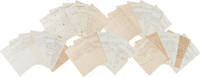
1861WRCAM55931Charleston & Morris Island S.C. 1861. Twenty-nine manuscript documents a few on Confederate military stationery the remainder on plain paper totaling 37pp. Original folds. Minor edge wear chipping to four letters resulting in minor loss. Overall very good. An uncommonly-early collection of Confederate manuscript military correspondence from the opening moments of the Civil War. The orders emanate from all levels of the Confederate military - Provisional Army Battalion and Brigade. Ten of the present orders come from Gen. P.G.T. Beauregard the commander of Confederate troops at Charleston in the spring of 1861. Beauregard led the Confederate attack on Fort Sumter on April 12 a decisive victory for the Confederacy in the first battle of the Civil War. Especially interesting are the first few orders dated between April 6 and April 11. These orders concern the movement of troops to Morris Island in Charleston harbor in anticipation of the attack on nearby Fort Sumter. <br> <br> The first order on April 6 is marked "Secret" and instructs Colonel Hagood to "establish signals for the assembling of each company in the shortest possible time and necessary arrangements made for prompt transmission of orders.Arms and equipments will be furnished on your arrival here with your command.In order to keep down any excitement consequent upon this order you are directed to execute it in as secret and quiet a manner as the nature of the case will admit of." The secrecy of the order itself and the call for swiftness and quiet movements of the troops clearly indicates an imminent attack. <br> <br> Some of the later orders also focus on the management and positioning of Confederate military units on Morris Island along with issues such as additional appointments troop inspections including the German Hussars commanded by Capt. Theodore Cordes and later in April the troops at Fort Sumter permissions for furloughs and removals movements and command transfers of officers regimental organizations and reports on troop organization and conduct. An April 23 order instructs Colonel Hagood's regiment to report to General Simons for posting "to the best advantage for the defence of the north End of the Island and Batteries from Vinegar Hill to Cummings Point." <br> <br> Most of the orders are addressed to Colonel Johnson Hagood who enlisted in the South Carolina troops as a thirty-two-year-old lawyer from Barnwell County. He was commissioned colonel of the 1st South Carolina Infantry earned a promotion to Brigadier General in July 1862 and was present at the surrender of the Confederate Army at Appomattox Court House. Besides those by Beauregard the other orders were issued by South Carolina Adjutant General States Rights Gist son of Nathaniel Gist General Simons and General Nelson. All of the orders are signed by adjutants or aides to these various officers. Still they represent a significant and important source for early Confederate military concerns around Charleston at the outset of the war. <br> <br> A typed note dated March 1956 indicates that these were found among the papers of Dr. H.M. Bassett by his descendants but there was no record of how he acquired them. <br> <br> An uncommon collection of Confederate manuscript artifacts from the opening moment of the "War for Southern Independence." unknown books
16296EAST GERMANY. Die Kaserne. Bonn: Verlag „Ganz offene Worte" 1957-1963. 26 issues of an East German propaganda magazine. 1957 Heft 3; 1958 Heft 1-5; 1960 Heft 7; 1961 Heft 4-10 12; 1962 Heft 1-7 9-11; 1963 Heft 2. 7 ½ x 5 ½ in. Three smaller format. Staplebound. All have color covers and illustrations throughout. "Die Kaserne" was an East German magazine targeted specifically for young men in the West German military; the main object of the magazine was a disinformation campaign aimed at creating distrust of the West.<br/><br/>Kaserne English translation Barracks was created with the goal of creating dissent within the West German military by targeting conscripts. Some articles explicitly question the validity of required military conscription service which the West instituted in 1956; while others expose Nazi histories of West German leaders such as ambassadors; and many issues have strong criticisms for BRD politicians one even calls Willy Brandt who later became Chancellor of West Germany an American boot-licker Stiefelputzer. Most of the content was not overtly controversial and sought to establish common ground with low-ranking drafted soldiers. The issues are filled with jokes about military life and references to shared German culture i.e. Goethe They also feature notable East Germans such as cosmonaut Yuri Gagarin and include stories about the high quality of life for workers women and families. Appealing to their target audience of young men over a dozen of the issues feature models or pinup girls on the covers.<br/><br/>Rather than try to explicitly convert soldier to full East German ideology the objective of these magazines was to create loyal readers who would disrupt overall West German military strategy. In the ideal situation this would be the first step in converting these Bundeswehr soldiers to East German political ideology and possibly becoming a Communist spy.<br/>Pristine information cards in several issues encourage readers to subscribe to the free publication and to share copies with their fellow West German soldiers. Light reading wear. All in very good condition. unknown books
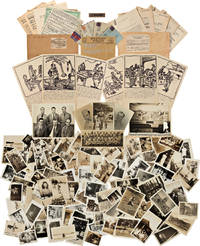
1948WRCAM54508Various places including North Carolina San Francisco but mostly Hawaii 1948. 225 photographs; thirteen photographic negatives; six letters and telegrams; two folders of Brotherton's military paperwork; three original pencil sketches; eight large- format ink and pencil captioned cartoons of the 551st Ordnance H.M. Co.; Brotherton's wife's identification card for Fort McPherson Georgia; a small nameplate for "Lt. Henry Brotherton"; and a Nov. 27 1948 issue of the ARMY TIMES newspaper listing Brotherton as a major under the "Warrant List." Some insect damage to the pencil sketches and one cartoon otherwise generally very good or better condition. A nice collection of material on the wartime experiences of Maj. Henry Alton Brotherton 1920-86 a Warrant Officer from Iredell North Carolina. The numerous photographs feature a variety of settings and subjects. The majority of the photographs emanate from Hawaii showing Brotherton and his wife who apparently joined him at some point after his assignment there either to live for a while or visit other officers and soldiers at work and play studio portraits of Brotherton a handful of 8 x 10-inch press photos and a 4 x 10-inch panorama of the 551th Ordnance Company. Over thirty of the photographs are annotated mostly identifying Brotherton his wife or military subjects in Hawaii in 1945 with three photographs showing the 551st at a "Beer Party." <br> <br> Among the letters and telegrams are a small handwritten note by Brotherton to his wife in North Carolina wishing her congratulations on their wedding anniversary and a Western Union telegram wishing the same dated a day apart from each other; a Dec. 31 1945 telegram from Brotherton to his wife saying that he expects to "be home soon." <br> <br> A Dec. 22 1944 five-page letter from Brotherton's wife Polly includes extremely romantic and borderline racy content from a homefront wife to her husband while he was in training in San Francisco: "My Darling Husband I'm wanting you so terribly much tonight I hardly know how to begin my letter.If I dared put all my emotions on paper this letter would be scorched with passion Brother. I love you I love you I love you!!" <br> <br> The folders of documents include official army service forms rosters reports etc. Notable among the papers are a packet of documents relating to the visit of the President of Mexico to Kansas City in 1947 which Brotherton was tasked with coordinating; a certificate of training for "Mess Management;" a 1946 application for commission in the regular army as well as one for extended active duty; a list of Brotherton's ordnance depot bowling league in which Brotherton is listed near the top with a 163.1 average; and a snarky letter from Brotherton's superior commenting on a traffic citation received by Brotherton: "If all officers had the same attitude as Lt. Brotherton toward parking rules this post would have to have an M.P. on every street and intersection which is neither feasible nor desirable." <br> <br> Perhaps the most notable portion of the archive lies in the nine large black-and- white ink and pencil cartoons on eight sheets. They depict soldiers performing various ordnance tasks on a base presumably somewhere in the central Pacific accompanied by humorous commentary. Six of the cartoons directly reference either the Pacific or California. One cartoon pictures "the men most commonly called as the Bull Gangers who work on the big weapons which give Japs lead poisoning." A few cartoons picture palm trees or reference pineapples. Another cartoon shows two soldiers in conversation with a thought bubble above them showing the Golden Gate Bridge; the caption reads: "I figure that my new tool will speed this war up so fast that we will see the Golden Gate in forty eight." One of the cartoons includes a sign reading: "551st Ord. H. M. Co" Heavy Maintenance Company. These pieces are unsigned so it is unclear if they are Brotherton's work but some of the soldiers depicted are named e.g. Eddie Blackford Mullins and "Big Joe" Galecki. <br> <br> An unusually dense and diverse World War II archive with photographs military documents and original artwork relating to the Pacific Theater of the war. unknown books
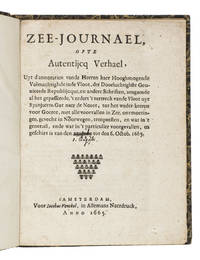
1665ABC_49489Amsterdam 1665. 4to. Jacob Venckel Modern marbled boards. 2 69 pp. Rare pamphlet written by an anonymous author discussing the fascinating Battle of Vågen the main port area of neutral Bergen in Norway in August 1665 during the Second Anglo-Dutch War 1665-1667 including its background and aftermath. The Second Anglo-Dutch war was a war at sea caused by conflicts in colonial territories of the Dutch Republic and England. This naval war consisted mainly of protecting their own merchant ships capturing enemy ships and trying to sink mutual warships. The Battle of Vågen was an important naval battle between a rich treasure fleet of the Dutch East India Company VOC and an English flotilla of warships. Twice a year the Dutch VOC sent a treasure fleet from the East Indies to the Dutch Republic with money and goods. On 24 December 1664 one of the richest-laden fleets in Dutch history departed from Batavia for the homeland with a cargo estimated to be worth millions. This fleet was intended to support the Dutch Republic financially and therefore should not fall into enemy hands. Since the tensions with England were already high in 1664 an experienced officer the rear admiral Pieter de Bitter ca. 1620-1666 was appointed to command this fleet.The present pamphlet gives an account of the events before and after the Battle of Vågen and also in broad lines of the battle itself including all kinds of correspondence and notes from high-ranking figures. The dating in the title is incorrect as the story took place from August 1 to August 20 which is why the title has been corrected by hand in the present copy. The present edition is one of two both printed in 1665 but with a different imprint the present one with the publisher and place of publication and the other with only the year and the alignment of the text. However they were both likely printed by the same printer. The present edition is very rare. We've not been able to find other copies in sales records and only a few in institutions. A highly interesting pamphlet on one of the most important and fascinating 17th-century sea battles in Dutch naval history and in the history of the Dutch VOC.The date "13. Juny" has been crossed out on the title page and replaced by "1. Augusti" in manuscript. The work is slightly browned throughout a small hole in the lower margin of the title-page and an ink drop in the lower margin of page 65. Otherwise in very good condition.l Knuttel 9102; STCN 842169458 8 copies incl. 1 incomplete; Tiele 5265; USTC 1802668 9 copies incl. 1 incomplete; WorldCat 85201870 747664026 4 copies; cf. for Venckel: H.F. Wijnman De Amsterdamsche boekverkooper Jacob Vinckel 1627-1680 in: Vondel-kroniek 5 1934 p. 192. hardcover
280 pages. Signed and inscribed upon front free endpaper by author to Roman Fast in June of 1949. Gouzenko was the Soviet embassy cipher clerk whose defection in 1945 marked the beginning of the Cold War. His revelations resulted in major investigations and dozens of arrests. Above-average wear to red boards. Binding intact. Unmarked. What appears to be a clipping from the dust jacket of a Second Printing copy is neatly affixed at half-title page. Said clipping provides major contemporary media reviews of this work. A treasure for your Espionage or Cold War collection. Book
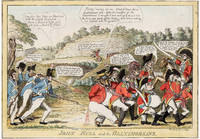
181425448<p>"<i>Mercy! mercy on me. What fellows those Baltimoreans are. After the example of the Alexandrians I thought I had nothing to do but enter the Town and carry off the Booty. And here is nothing but Defeat and Disgrace!!</i>"</p><p>A masterpiece of design and composition.</p> <b>WAR OF 1812. WILLIAM CHARLES.</b>Print. <i>John Bull and the Baltimoreans</i>. Satirical engraved aquatint cartoon. Philadelphia Pennsylvania October 1814. 1 p. 12½ x 9 in.<p><br /></p><p>Per Wikipedia's extensive entry on these prints "Charles despite being a native Scot had no compunction in displaying Scots accents out of the mouths of the enemy in the dialogue here perhaps for humorous reasons as well as accuracy." Italicized text is a transcript from our print.</p><p><b>Transcript</b></p><p>American soldier prodding John Bull: "<i>Oh! hoh! -- Johnny you thought you had Alexandrians to deal with did you -- But we'll teach you to know what a flogging is!!!</i>"</p><p>John Bull: "<i>Mercy! mercy on me -- What fellows those Baltimoreans are -- After the example of the Alexandrians I thought I had nothing to do but enter the Town and carry off the Booty -- And here is nothing but Defeat and Disgrace!!!</i>"</p><p>Mounted officer possibly Admiral Cockburn urging the British on: "<i>What's the Matter! you Cowardly rascals! Back back and execute the orders of your Government --We must attack every point that's assailable!</i>"</p><p>a Highlander replies: "<i>In gude troth Admiral I think ye are as mad as our government Dinna ye ken the General's kilt -- ye must only attack sie places as Hampton Havre de Grace & Alexandria.</i>"</p><p>an American sniper in the background firing at General Robert Ross: "<i>Now for this Chap on Horseback with the plaid Bonnet on -- There – there's a Rifle pill for you -- Thats a quietus.</i>"</p><p>Ross: "<i>Deil sic tak that Republican rascal wi his Rifle gun for he's blawn my brains out.</i>"</p><p><b>Historical Background</b></p><p>Having burned the Capitol and captured Alexandria without a fight the British sailed up the Chesapeake. On September 12 their army and navy attempted a combined assault on Baltimore. Thanks in part to a storm likely a hurricane that hit the fleet right after the burning of Washington and in part due to the foray into Alexandria the Americans had just enough time to strengthen critical American defenses and organize resistance. The bombardment of Fort McHenry in Baltimore harbor failed and General Ross was killed by an American sniper. The British retreat provided America with a major morale boost after the destruction of Washington.</p> books
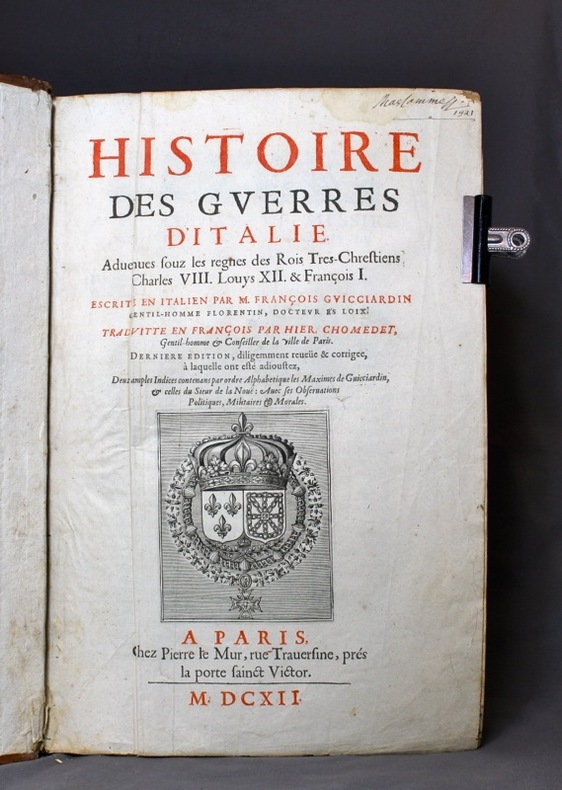
16127503Paris, Pierre Le Mur, 1612. 1 volume in-folio de [4]-958-38 p. de table. Plein veau fauve, dos à nerfs orné de fleurons dorés, double filet doré d'encadrement sur les plats.