TURPIN DE CRISSE (Lancelot)Livre Rare Book
30 332 résultats
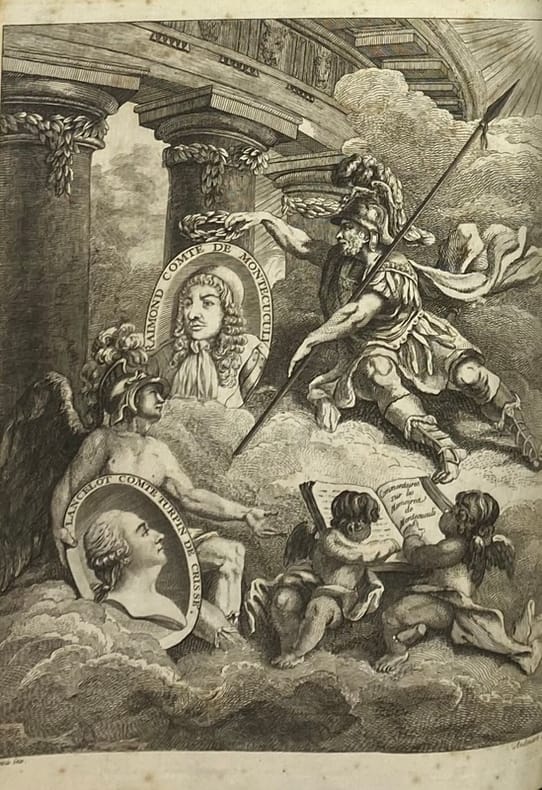
222862Paris, Lacombe, Lejay, 1769 3 tomes en 2 vol. in-4, titre, XXI pp., 397 pp., 438 pp. ; 523 pp., 3 pp. n. ch. de privilège, avec 44 planches hors texte, dont un frontispice allégorique gravé par Andouard d'après Casanova, sous serpente, et 21 plans de bataille en dépliant, 3 culs-de-lampe et 3 vignettes en-tête, demi-chevrette cerise à coins, dos lisses ornés de guirlandes et fleurons dorés (rel. de la fin du XVIIIe).
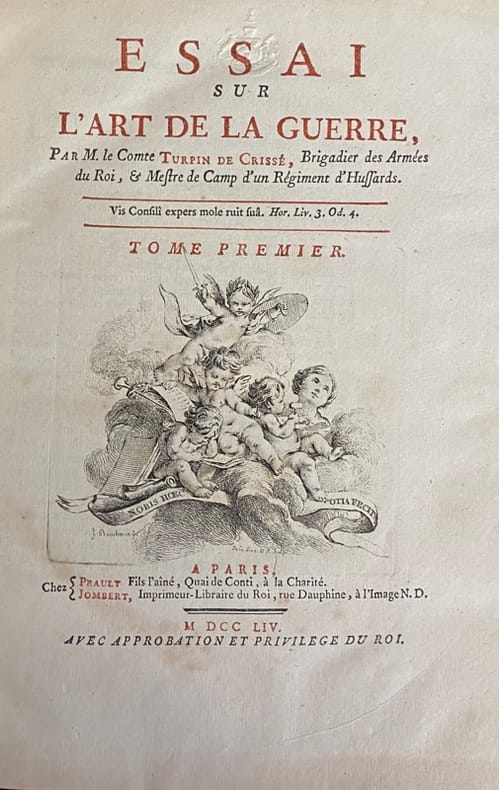
155990Paris, Prault, Jombert, 1754 2 vol. in-4, [6] ff. n. ch. (faux-titre & titre, privilège, f. blanc, dédicace à Louis XV), 443 pp. ; [4]-4-204 pp., avec 25 pl. dépl. gravées sur cuivre par Dheulland, légendées chacune d'un f. en regard (sauf la XXV - légendée de 2 ff. -, et les pl. XX-XXII, sans légende), veau moucheté, dos à nerfs ornés, pièces de titre et de tomaison cerise refaites au XIXe s., tranches mouchetées de rouge (reliure de l'époque). Dos un peu frottés, mais bon exemplaire.
18083Paris Edouard Pelletan, Editeur (1897-1898) 1897 in 8 (28,5x19,5) 2 volumes reliures plein maroquin vert de l'époque, dos à nerfs (dos très légérement passé), tête dorée, gardes intérieures doublées de maroquin rouge, et ornées d'un encadrement doré, double filet doré sur les tranches, couverture conservées, étuis bordés. Superbes reliures signées de René Aussourd. Tome 1: Souvenirs de servitude militaire, 286 pages [1], avec 84 illustrations de L. Dunki, gravées par Clément Bellanger. Tome 2: Souvenirs de grandeur militaire, 218 pages, avec 51 illustrations de L. Dunki, gravées par Clément Bellanger. Tirage limité à 320 exemplaires in 8 jésus, ceux-ci issus du tirage de tête à 15 exemplaires sur papier japon impérial, avec une suite sur japon de toutes les gravures, pour chaque volume. Superbes exemplaires
Abundant black and white illustrations and reproductions of photos. Features: Beyond the Law - Part I of the First True Account of the Exploits of the World's Most Noted Outlaws, by Emmett Dalton, the only survivor of the "Dalton Gang" - article with photos and great cover illustration; Wonders of the Teleferica - an interesting account of the remarkable aerial lines/cableways used by the Italians to transport men, guns, and provisions in the high Alps - article with many photos; The Youngest Soldier in the French Army - photo of 11-year-old Charles Meux of the French Army; Tales of the Service - Part I - A Night in a Vat; A Woman's Journey Across Africa - Part II - Eva J. Jordan, F.R.G.S. travelled with her husband for four-thousand miles through the great Equatorial Forest of Central Africa, becoming the first woman to penetrate this area - article with photos; A Night of Terror - an associate of Izaak Walton sinks into quicksand while fishing; Buried in a Snowdrift - a mining engineer is caught in an avalanche in the Andes; "Hooshta!" - the Tragedy of an Australian camel race - a stirring story from the West Australian goldfields; Exploring the Ice-Wilds of Eastern Karakoram - Part I - Fanny and William Workman describe their Himalayan mountaineering exploits - article with map and great photos; Thrice Through the Jaws of Death - Sergeant J. Harte of the Inland Water Transport relates hair-breadth escapes at sea and on land; How We Built the Bridge - War story related by a corporal of the canadian Overseas Railway Construction Corps; Crossing the Canal - A despatch orderly attempts to cross the Suez Canal at night; Some Adventures of a Newspaper Woman - Marie Harrison provides a graphic and thrilling account of her startling adventures in search of 'copy'; The Railway Conquest of the Bay - a photo-illustrated account of the building of the Hudson Bay Railway; A Happy Family - humorous account of the antics of a number of strange pets belonging to a party of colonials in Singapore; A Modern Grace Darling - Miss Ella Trout rescues a sailor from a torpedoed ship off the coast of Devon - article with nice photos of Miss Trout; Photo of a group of Solomon Islands head-hunters reading The Wide World Magazine; Interesting four-page illustrated stock offering by Guaranteed Tractors, Inc., Edmund G. Soward, President; and more. pp. 8 [ads], [3], 4-88, 9-24 [ads]. Clean and unmarked with moderate wear. A quality vintage copy of this wonderful issue. Book
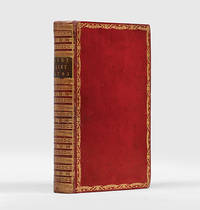
1783124569London: War-Office 28 April 1783. First edition compiled just a few months before the conclusion of the War of Independence. These eighteenth-century Army Lists are becoming increasingly elusive those with relevance to the American Wars being particularly desirable and especially so when as here they are printed on thick paper and presented in the style of binding which seems to have been reserved by the War Office for presentation copies. A very handsome piece indeed. Octavo 228 x 138 mm. Contemporary red morocco green morocco label flat spine elaborately gilt with gilt pentaglyph and metope stylised quatrefoil and plain reeded rolls gilt panel of swags and sunflowers to the boards gilt edge-roll all edges gilt palm branch and quatrefoil roll gilt to the turn-ins marbled endpapers Greek key roll to boards floral roll to turn-ins and all edges gilt. Lightly rubbed spine a touch sunned small chip from the lower edge of the label no loss of lettering corners just a little bumped but a very good copy. hardcover
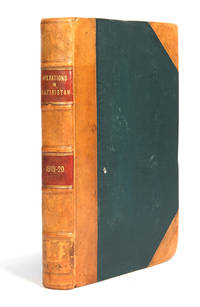
115601Calcutta Superintendent Government Printing India 1921. . First edition; 8vo 25 x 16.5 cm; complete with 32 photogravure plates including frontispiece 16 of which folding 4 of which large panoramic views 8 folding panoramas sketched on the spot 7 folding maps 3 of which loose in rear pocket 2 of which large coloured 75x92cm & 77x64cm previous ownership inscription to both endpapers with underlining to a few passages wide tear to margin of p97-8 not affecting text; typical contemporary half calf green cloth boards gilt morocco lettering pieces to spine remains of a shelf mark to spine extremities slightly rubbed from use binding tight due to quantity of maps and plates a very good copy; x 187 1pp.<br /> The scarce official account of the Waziristan campaign 19191920 and the preceding 1917 conflict with copious views and maps of the scarcely traversed terrain and landscape of Waziristan including Jandola Palosina Kotkai Kaniguram Barari Tangi Ahnai Tangi and Badergoi Valley. Also included are twelve Appendices detailing the units of the British forces in 1917 and 1919 the terms delivered to the Waziris and Mahsuds lists of British casualties and approximate numbers of the different specific tribes of the Mahsuds and Waziris involved in the conflict. <br /><br />In 1919 the short-lived Third Anglo-Afghan War concluded with the British ceding legal control of Afghan foreign affairs in return for the recognition by the Afghans of the Durand Line. Despite this a rumour spread amongst the Waziri and Mahsud tribesmen that the British intended to cede their territory to the British. They quickly conducted a series of raids against neighbouring settlements in the North-West Frontier in late 1919 causing over 400 casualties. <br /><br />Major-General Sir Andrew Skeen led the British response against the Tochi Waziris and Mahsuds in November of 1919. The campaign a took over 12 months due to the inexperience of the British units mainly comprised of light Indian divisions. The decisive eight-day battle of Ahnai Tangi involving the stand of the 2nd/5th Gurkhas immortalised in several paintings broke the Mahsud offensive and quickly resulted in a calming of violence and allowed the British to deliver their terms of control. <br /><br />Despite the apparent British victory the 1919-1920 campaign led to a change of policy in Waziristan. Britain decided to station permanent garrisons and have a much closer relationship with the irregular military units used. A large number of the locally raised troops had defected to the Waziris and Mahsuds during the campaign and it was hoped these measures would prevent further desertion. Britain also attempted a road construction effort in the region but this was seen as invasive and caused further conflict up to 1924.<br /><br />This copy was used by a member of the 1st Battalion of The Royal Scots during the time they were station in Secunderabad Hyderabad between 1922 and 1925.<br /> Calcutta, Superintendent Government Printing, India, 1921. hardcover
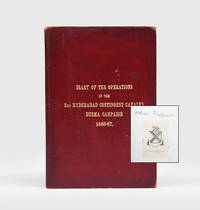
1889174435Bombay: Printed at the Times of India Steam Press 1889. Presented by the contingent's commander to his son Sole edition association copy inscribed to his son by Colonel Charles FitzGerald commander of the 3rd Hyderabad Contingent on the front free endpaper "To dearest Arthur from Father 1902." The recipient 1891-1967 was the author's son by his second wife. We have traced only the British Library copy of this account. Charles John Oswald FitzGerald 1840-1912 joined the Indian Army in 1857 and served in the Rebellion. He was appointed Adjutant 3rd Hyderabad in 1862 commanded the contingent during the Second Anglo-Afghan War and was promoted to colonel in 1883. The majority of the text comprises FitzGerald's reports on the course of the Burma campaign during which his cavalry had 27 separate encounters with enemy forces and is accompanied by extracts from brigade orders praising FitzGerald and his contingent: "the names of Colonel FitzGerald and the 3rd Hyderabad Contingent Cavalry will be remembered in Burma and I trust will be written in the history of the country" p. 37. Octavo. With folding 215 x 277 mm albumen group portrait bound in on card as issued. Original red roan boards front cover lettered in gilt. Leather retouched in places a few stains on boards albumen photograph somewhat yellowed: a very good copy. hardcover
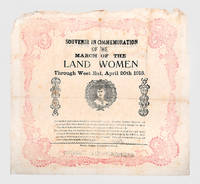
1918170820London: Sarah Burgess 1918. An ephemeral piece of wartime memorabilia A souvenir tissue napkin advertising a parade through London of the Women's Land Army intended to promote the organization and encourage agricultural volunteers. Napkins were commonly printed for large public ceremonies: "the most spectacular napkins were the souvenir issues of Mrs S. Burgess of London who created items for various historical and period events" Florey p. 108. The march was an enormous undertaking consisting of over 200 women and farmers: "the war has afforded many stirring spectacles in the streets but these processions could hardly be excelled for picturesqueness or the appeal they made to national gratitude" The Times p. 4. The focus of the procession was promoting agricultural pursuits; the women were flanked by a myriad farmyard animals hay-balers and tractors. Recruitment speeches were delivered imploring women to support troops abroad by ensuring that industry and agriculture were appropriately maintained at home. "The soldiers are giving their lives for England. All that we ask of you girls is to give one year of your lives in the Land Army in the same noble cause" ibid. Known as "Auntie" in the trade Sarah Burgess operated from premises in Bishopsgate and later off the Strand as here advertising as a "manufacturer of paper switches cut tissues lace paper and shelf trimmings & confetti and stationer wholesale and export" Crawford. The napkin squares were imported into London from Japan already printed with a decorative border in up to five colours and a blank central area. After being printed with the appropriate commemorative design they were sold for about one penny by street traders lining the route of the event. Burgess was particularly involved with producing commemorative napkins for the suffrage movement including for the march to the House of Commons on 29 June 1909 the Suffrage Coronation Demonstration on 17 June 1911 and Emily Wilding Davison's internment in Morpeth on 14 June 1913. However "the WSPU had mixed feelings about Burgess's efforts. Disturbed by her producing an 'unauthorized official programme' for the June 29 event they nevertheless pointed it out as an example of 'how the movement interests the public'. Mrs Burgess's products demonstrated quite clearly how important the concept of a suffrage 'souvenir' or collectible had become to suffrage sympathizers who wanted to retain a tangible memory of a major event that they might have participated in" ibid. Square of plain crepe paper 325 x 360 mm. Central printed illustration depicting a portrait of Queen Mary of Teck set within oak and laurel leaves and flanked by two scrollwork motifs surrounded by decorative floral border printed in red. Some nicks and creases at extremities mostly to top edge gently creased from folding and a couple of small damp stain patches offset from ink lettering; overall a very good and intact example of a fragile product. Elizabeth Crawford "Ephemera: Mrs Sarah Burgess Printer" Woman and Her Sphere blog 12 Sep. 2019 accessible online; Kenneth Florey Women's Suffrage Memorabilia: An Illustrated Historical Study 2013; "Women War Workers. Munition Makers at St. Paul's. Land Army Procession" The Times 22 Apr. 1918. unknown
17555788A Paris, chez Le Rouge, s.d. [1755]. 1755 1 vol. in-8° (194 x 120 mm.) de : [3] ff. (titre gravé, table) et 89 ff. comportant au total 134 plans de villes fortifiées. Ex libris gravé "St Marcel Eysseric". Reliure de l'époque recouverte de papier marbré, dos à nerfs titré à l'encre brune.
1929Alibris.0042782THE PENN PUB CO 1929. signed by author. Hard cover. Good. No dust jacket. Ex-library. Signed by previous owner. A WEST POINT CADET BY MAJ GEN PAUL MALONE U S ARMY 1929--SIGNED AUTHOR-HARDCOVER CONDITION GOOD EX-LIBRARY BOOK; WALTER REED U S ARMY GENERAL HOSPITAL LIBRARY; SIGNED TO DAUGHTERS OF THE U S. 419 p. A WEST POINT CADET BY MAJ GEN PAUL MALONE U S ARMY 1929--SIGNED AUTHOR-HARDCOVER CONDITION GOOD EX-LIBRARY BOOK; WALTER REED U S ARMY GENERAL HOSPITAL LIBRARY; SIGNED TO DAUGHTERS OF THE U S ARMY LIBRARY WITH MY COMPLIMENTS; MAJ GEN PAUL MALONE U S A WEST POINT CADET BY MAJ GEN PAUL MALONE U S ARMY 1929--SIGNED AUTHOR-HARDCOVER CONDITION GOOD EX-LIBRARY BOOK; WALTER REED U S ARMY GENERAL HOSPITAL LIBRARY; SIGNED TO DAUGHTERS OF THE U S ARMY LIBRARY WITH MY COMPLIMENTS; MAJ GEN PAUL MALONE U S ARMY-PUBLISHED BY THE PENN PUB CO-BOOK SIZE 7 1/4 X 5-419 PAGES Paul Bernard Malone May 8 1872 October 16 1960 was a highly decorated officer in the United States Army with the rank of major general. Following his graduation from the United States Military Academy USMA he participated in the Spanish American and Philippine American Wars and commanded an infantry brigade in the last year of the World War I. Malone reached the rank of brigadier general during that conflict and distinguished himself during the Battle of Soissons. 1 He received the Distinguished Service Cross and the Distinguished Service Medal and several foreign decorations. Malone remained in the Army following the war and completed his service as commanding general Fourth United States Army in 1936. Paul B. Malone was born in Middletown New York on May 8 1872 the son of Irish immigrants John and Hannah Malone. His parents ran a dairy and young Paul received his early education at Saint James Parochial School and the De La Salle Institute. He received an appointment to the United States Military Academy at West Point New York on June 17 1890 and graduated in 1894. 14 Among his classmates who also became general officers were Butler Ames John W. Barker Oliver Edwards George H. Estes Hamilton S. Hawkins III Samuel Hof Ora E. Hunt Frank Parker Briant H. Wells and Clarence C. Williams. 1 He was commissioned second lieutenant in the Infantry branch on June 12 1894 and was ordered to Fort Jay on Governors Island New York where he joined 13th Infantry Regiment. Malone was promoted to first lieutenant on April 26 1898 and sailed with his regiment to Cuba in June that year. He distinguished himself during the Battle of San Juan Hill within Spanish American War and received Silver Star citation for bravery. 35 With the outbreak of Philippine American War Malone was transferred to the newly established 27th Infantry Regiment in the Philippines in mid-1901 and took part in the chasing of rebel leader Emilio Aguinaldo to the swamps and morasses of the Luzon. He was ordered back to the United States and following his promotion to captain on November 2 1901 he was appointed an instructor of chemistry at the United States Military Academy at West Point New York. While in this capacity Malone taught a future General of the Army and Medal of Honor recipient Douglas MacArthur. Malone remained in this capacity for five years and sailed back to Cuba for occupation duty as a member of his old 27th Infantry Regiment in late 1906. He was later appointed a judge advocate and provost marshal general of the Army of Cuban Pacification and remained in that capacity for two years before he was sent back to the United States. 1 Upon his return stateside Malone attended the Army School of the Line at Fort Leavenworth Kansas and graduated with honors in May 1909. He then completed the Army Staff College in Washington D.C. and was assigned to the War Department General Staff. While in this capacity Malone and two other captains John McAuley Palmer and George Van Horn Moseley were ordered to Germany in September 1912 and observed German Imperial Army maneuvers northeast of Dresden. In mid-1913 Malone was transferred to Honolulu Hawaiian Islands and served with 2nd Infantry Regiment until June 1916. He was promoted to major on July 12 1916 and appointed chief of staff Eagle Pass District Texas. Malone served in this capacity on the Mexican Border during the Pancho Villa Expedition until January 1917 when he was appointed Officer-in-charge of Training Camps in the Central Department. He also served for brief period at the Citizens' Military Training Camp the first businessmen's. THE PENN PUB CO hardcover
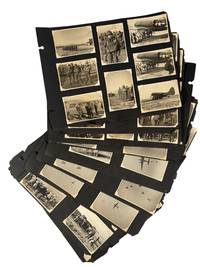
1943214541943. United States Army airborne training operations documented in photographs created during World War II at Laurinburg Maxton Army Air Base in North Carolina. The images record the preparation and execution of paratrooper training jumps carried out as part of the rapid expansion of American airborne forces during the war. Photographs show soldiers receiving equipment checks boarding transport aircraft deploying from the air and regrouping on the ground after landing illustrating the coordinated logistical and training processes required to prepare airborne infantry units for combat operations. Airborne training facilities such as Laurinburg Maxton served as major preparation sites where paratroopers and troop carrier crews rehearsed the procedures that would later be used in large scale combat operations across multiple theaters of the war.<br /> <br /> Photograph album consisting of 45 black and white photographs mounted on eight unbound album pages. The images depict paratroopers wearing standard issue M1 steel helmets jump boots and M42 paratrooper jump uniforms equipped with web gear. Several photographs show soldiers conducting pre flight checks and assembling near transport aircraft before boarding. Aircraft visible in the photographs include a Douglas C-47 Skytrain bearing markings associated with the 317th Troop Carrier a transport unit that trained at Laurinburg Maxton before deployment overseas during the war. Multiple photographs capture the moment of airborne deployment with paratroopers descending beneath round canopy parachutes consistent with the T-5 parachute used by U.S. airborne forces during most of the war. Ground level images document soldiers gathering after landing and coordinating recovery operations providing visual evidence of the training routines that prepared airborne units for operational deployment.<br /> <br /> During World War II the United States military rapidly expanded its airborne capabilities developing specialized training programs that combined parachute infantry units with troop carrier aviation groups responsible for delivering soldiers and equipment by air. Troop carrier units such as the 317th Troop Carrier Group later played an important role in Allied airlift and airborne operations in the Pacific theater transporting troops and supplies and participating in airborne missions during campaigns in New Guinea and the Philippines. Photographs documenting airborne training exercises therefore provide important evidence of the preparatory phase that preceded combat deployment of these units. Album pages remain unbound with photographs mounted to paper leaves. Minor edge wear and light handling marks visible on several prints; overall very good condition. The album preserves detailed visual documentation of American airborne training procedures during the Second World War. unknown
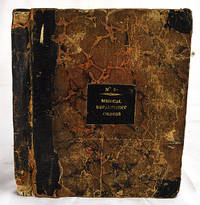
18352602240007UNIQUE MANUSCRIPT 1835. First Edition. Hardcover. Good. A rare and unique medical manuscript titled "No. 2 Medical Department Orders." This journal was written January 14 1835 - February 7 1838. 154 pages. Hand written in cursive black ink. Bound in contemporary leather-backed boards. Wear / fray with loss to head and tail of spine. Binding shaken. <br> 13 General Orders for the Medical Department. The orders relate to convening an assembly. The manuscript begins with a "Schedule of Particular Orders" from 1835 - 1838. Many of the entries are signed John H. Jones Assistant Inspector of Hospitals Principal Medical Officer or by other Principal Medical Officers. It includes Doctor's signatures and orders. <br> Great Britain occupied the island of Mauritius in 1810 during the Napoleonic Wars. The islands had been a hotbed of French corsairs and their piracy threatened British shipping from India. Britain continued to control Mauritius until independence in 1968. Port Louis Harbor remained an important port of call until the opening of the Suez Canal in 1869. UNIQUE MANUSCRIPT hardcover
4857Plate vol.: one folding engraved title-leaf 47 folding engraved plates & a second series of 47 engraved pages printed on each side of military music. Text vol.: One folding engraved plate. xxxi 680 pp. Two vols. Thick 8vo cont. green half-sheep maroquiné & marbled boards flat spines gilt red leather lettering pieces on spines. Munich: Lindauer 1822. First edition and very rare. The official book of instruction and regulations providing details of military field exercises and maneuvers for the Bavarian infantry. These exercises were designed so that the infantry would respond predictably and effectively. The fine series of plates depict uniforms of all ranks formations designed to deal with all eventualities and terrains positions of the soldier with and without arms marching and alignment opening and closing rank etc. Also provided are 47 engraved pages of marching music. Fine set from the Wittelsbach library of the dukes and kings of Bavaria. Ownership mark of Duke Maximilian Joseph of Bavaria 1808-88 dated 1825. WorldCat locates no copy in the U.S. hardcover books
Very Good Turkish, Ottoman (1500-1928) Collection includes six postcards by him sent to Mehmed RAsih Bey, Âli Türkgeldi (Sofia, Bulgaria), Satvet Lütfi Tozan, one newspaper clipping about Gerede, eight autograph letters signed 'Hüsrev' sent to Satvet Lütfi Tozan, (1889-1975), Âli Türkgeldi, 1867-1935) and beside ones which came from them to him. Some letters are more than one page. Full text. In Ottoman script. Items dated from 1920 to 1929/30 on letters and postcards. All in one envelope with Ottoman script autograph notes and name of Hüsrev Gerede on it. Letters and other material include mostly important diplomatic contents and early Republican Turkish historical info. These material is not published. Gerede was a Turkish career officer, who served in the Ottoman Army and the Turkish Army. He was also a politician and diplomat of the Republic of Turkey. He has Medal of Independence with Red-Green Ribbon.
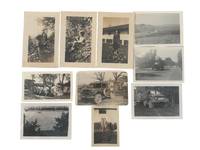
1945225281945. Women History World War II WWII Women's Army Corps photo archive documenting women's military service during World War II and the expansion of women's logistical and technical roles within the United States Army. The photographs record daily activity surrounding Women's Army Corps personnel including ambulance operation vehicle maintenance military training environments and informal moments of rest and recreation. Established in 1943 Women's Army Corps enabled women to enter the Army in noncombat roles that were essential to wartime mobilization including clerical work communications mechanics and medical transport. The images document this institutional transformation through scenes of uniformed women working with military vehicles operating ambulances and participating in the broader infrastructure of wartime military camps. One photograph shows a WAC standing in full service uniform before a low administrative building while others depict women outdoors in wooded settings during moments of leisure illustrating both the disciplined and personal dimensions of wartime service.<br /> <br /> Archive of 20 gelatin photographs created during the 1940s depicting Women's Army Corps personnel military vehicles and associated Army training activities. Photographs measure approximately 3.5 x 5 inches. The photographs show WAC members in both uniform and off duty settings including outdoor portraits and camp scenes. Several images focus on military ambulances and transport vehicles bearing visible Army markings such as "U.S. ARMY 432621" and "AMB-34." Verso inscriptions provide firsthand commentary on military duties and equipment including one caption reading "This is my new AMBULANCE hope you like it sis. safe & OK" and another written beside an ambulance photograph noting "good old Baker 5 kept me from walking." Operational scenes include soldiers crouched behind sandbags with a handwritten note identifying personnel as "Eselinger Conrad Palmer Carvey Boss." Other photographs document the broader military environment surrounding WAC activity including a drill or parade ground and a large motor pool with rows of Army trucks one marked "U.S. Army 008909" positioned in front of a multi story barracks. Additional annotated images identify fellow servicemen and technical details of equipment including "Hines Gallop and myself. Gallop is a jeep driver from North Carolina" and another describing "my radio on right fender" while one photograph is labeled simply "motor pool."<br /> <br /> Women's Army Corps personnel served throughout the United States and overseas during World War II performing essential logistical and administrative work that supported Allied military operations. Ambulance drivers such as the woman referenced in the captions transported wounded soldiers during training exercises and operational deployments and were often responsible for maintaining their own vehicles in field conditions. WAC members later served across European theaters including England France and Italy after the Allied landings in 1944 contributing to the wartime medical evacuation system that moved casualties from combat zones to field hospitals and rear medical facilities. Light edge wear mild surface handling and faint silvering to some prints; overall very good condition. These photographs document both the operational infrastructure of wartime motor transport and the presence of women within that system illustrating how the mobilization of female personnel expanded the technical and logistical capacities of the U.S. Army during the global conflict. unknown
1945214301945. WWII era Women's Army Corps photo archive documenting servicewomen including two African Americansand four partially identified individuals. Creation of the WAC in 1942 marked the first permanent institutional incorporation of women into the U.S. Army placing female personnel into administrative communications intelligence and logistical roles across both domestic bases and overseas commands. One photograph identified on the verso as "Gynnie Polly Corsica '45" provides additional documentation of Black women serving overseas in segregated Army units during the final year of the war.<br /> <br /> Archive of 18 silver gelatin photographs from W.W.II. Photographs measure approximately 3 x 2 inches to 6 x 3.5 inches. The images depict American servicewomen in a range of wartime contexts including official uniform portraits informal snapshots and scenes taken in European cities damaged by combat. Several photographs show women wearing standard WAC dress uniforms with garrison caps and enlisted insignia while others depict personnel wearing British style battledress associated with American administrative units stationed in Europe. One photograph shows three uniformed personnel two women and one man standing at attention before a formal government building likely in Britain. Another image places a uniformed American servicewoman before the gilded equestrian statue of Joan of Arc in Paris a landmark associated with Allied presence in liberated France. Additional photographs depict ruined urban landscapes with bombed churches and collapsed structures suggesting scenes from Germany or France shortly after liberation. A photograph inscribed "Chattanooga Tenn." shows a woman standing in civilian clothing at the entrance of a home indicating a stateside context connected to the servicewoman's life before or after deployment. Another photograph labeled "Ann & Lillie Mother" shows two women standing outside a residence likely relatives of one of the servicewomen. <br /> <br /> Women's military service expanded rapidly during World War II as the War Department created organizations such as the Women's Army Corps and the Navy's WAVES to address labor shortages across the armed forces. Overseas deployments placed WAC personnel in newly liberated European cities and military headquarters throughout the Allied command structure. Light toning minor edge wear and occasional handling marks. Overall very good condition. Although African American women served within segregated units their participation in overseas assignments including Mediterranean theater postings marked a significant shift from earlier military policy which had typically limited Black women's service to domestic assignments within segregated support units. unknown
1856OVO7712Philadelphia: Henry Carey Baird. Good. 1856. Hardcover. Signed by W. Wade who submitted many of the reports as the superintendent of weapons casting and experiments at government foundries at top of title page. He had this book sent to the original owner Easton Hodgkinson whose name he wrote at the top of the title page. A copy of a letter dated from 1856 that is about the book and signed by W. Wade and addressed to Easton Hodgkinson is attached to a string that was run down the spine. Hard cover published by Henry Carey Baird in 1856. No dust jacket. Black covers with embossed designs on front and back and gilt lettering and design on spine. Covers have some scuffing corners are bumped and worn and front cover is torn at top along the spine. Back cover has an indentation and tear along top edge and two tears along side edge. Spine is cocked some and is worn at the ends with some tearing and fraying. Endpapers have some writing in pencil. There are some pencil markings on title page and several other pages. Endpapers have foxing and spotting. Pages have some tanning and some pages have spotting. There are two foldout drawings in middle of book. Side edge of pages has some staining near bottom corner and bottom edge of pages has some soiling by corner. Book is in good condition. 428 pages 5.8 lb.; 4to 11" - 13" tall; 428 pages; Signed by Author . Henry Carey Baird hardcover
181336362colophon: Cadiz: en la Imprenta Tormentaria á cargo de Juan Domingo Villegas 1813. 8vo 21.5 cm; 8.125". 2 281385 15 pp. fold. plts. numbered xxxix lxviii. <br><br>At the base of the title-page of this infantry manual is printed "Reimpreso por disposicion del . . . señor don Carlos Doyle teniente general de los reales exercitos." => That is Lt. Gen. Charles William Doyle 17701842 ordered this work to be printed.<br>Â Â Â Â Doyle was an Irish-born British lieutenant-colonel who in 1808 was ordered to Portugal to help fight Napoleon in the Peninsular Campaign. He very successfully aided the Spanish army in instilling discipline and organizing light infantry and was made a lieutenant general in the Spanish army. In 1811 Britain ordered him home but when he reached Cadiz Sir Henry Wellesley convinced him to command a camp at which a new army was being organized for action in the south of Spain. Again he was highly successful in his military instruction of new troops and as a result was promoted to full colonel in the British army; he remained in Spain till the end of the war in 1814.<br>Â Â Â Â The present work extracted from the larger one of the same title printed at Madrid by the Imprenta Real in 1808 was clearly printed for the instruction of Doyle's southern army.<br>Â Â Â Â At the rear of the volume are => 30 folding plates setting forth various dispositions and movements of infantry troops; clear careful verbal explanations of these precede them.<br>Â Â Â Â Searches of NUC WorldCat and the CCPBE locate => only three copies worldwide of which only one is in the U.S. West Point.<br>Â Â Â Â Provenance: Contemporary signature of "Velez" on title-page. <br>Â Â Â Â <br>Â Â Â Â Not in Palau. On Doyle see: DNB online. Dark brown speckled calf black gilt-lettered title-label a little chipped to gilt-ruled spine marbled endpapers; binding lightly rubbed. Age-toning and general light soiling occasionally a dog-ear or a spot all plates clean well-attached and whole at folds. => A very sound very good copy. en la Imprenta Tormentaria á cargo de Juan Domingo Villegas unknown books
19198686Cleveland OH: Scientific Illus. Studios 1919. Limited Edition. fair to good. Quarto 117 profusely illus. index bkplate & sm stains ins fr bd fr bd creased bds & spine scuffed & edges worn binding shaken. Copy #571 of a Limited Edition of 1 000. Not in Dornbusch. Also includes the 7 May 1917 issue of the Cleveland Plain Dealer newspaper with the headline "Lakeside Hospital Unit Is on Way " about Lakeside unit Base Hospital No. 4 Cleveland's first force for overseas duty. Also contains a12-page pamphlet by Dr. Harry D. Piercy on "History of the Lakeside Unit ofWorld War I " published in 1962. Scientific Illus. Studios unknown
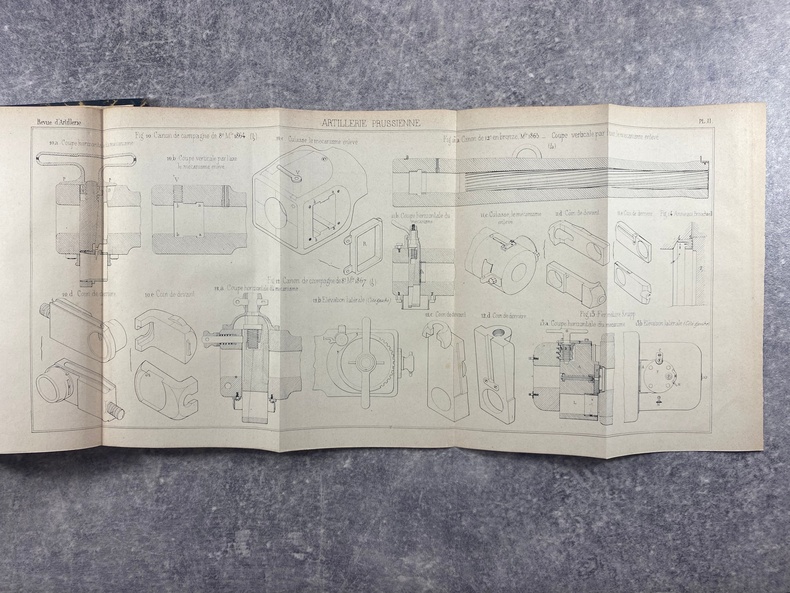
18723731PARIS-NANCY. BERGER-LEVRAULT ET CIE, LIBRAIRES-EDITEURS. 1872-1902. 30 ANNEES COMPLETES, DEPUIS LA PREMIERE ANNEE, EN 60 VOLUMES IN-8 (14,5 X 22 CENTIMETRES ENVIRON), RELIURE D’EPOQUE 1/2 CHAGRIN VERT, PUIS 1/2 VEAU VERT, DOS LISSE ORNE DE FILETS DORES, TITRE DORE. ILLUSTRE DE TRES NOMBREUSES PLANCHES DEPLIANTES HORS TEXTE, REPRESENTANT L’EVOLUTION DE L’ARTILLERIE DURANT CETTE PERIODE RICHE EN INVENTIONS ET SYSTEMES NOUVEAUX. ON JOINT LA « PARTIE OFFICIELLE » DE LA REVUE DE 1872 A 1894, EN 8 VOLUMES RELIES A L’IDENTIQUE. ENSEMBLE RARE EN 68 VOLUMES. QUELQUES TRACES D'USURE EXTERIEURE, QUELQUES DOS PASSES, SINON BEL EXEMPLAIRE. .
234138S.l. [Saumur], s.d. (1894) in-4 oblong (30 x 35 cm), [8] ff. n. ch., regroupant 46 petits tirages photographiques (8 x 5 cm) sur carton fort monté sur onglet, tous légendés au crayon de bois, [2] ff. vierges, maroquin bleu nuit, dos à nerfs muet orné de filets à froid, encadrement de simple filet doré sur les plats, plat supérieur orné de quatre ferrures en argent aux angles, dont l'une comportant l'inscription gravée "Les officiers du 5e Régiment de chasseurs à leur colonel. 19 février 1894", chiffre EP en lettres d'argent poussé au centre du plat supérieur, tranches dorées, encadrement de guirlande à froid sur les contreplats, gardes doublées de moire bleue (reliure de l'époque). Charnière supérieure légèrement frottée.
226504Turin, Imprimerie royale, s.d. (1759) in-8, XXXX pp., 372 pp., [2] ff. n. ch. (imprimatur et errata), avec un portrait gravé de Charles-Emmanuel III en médaillon en haut de la dédicace, basane fauve marbrée, dos lisse cloisonné et fleuronné, armes sur les plats, pièce de titre, tranches rouges Armes un peu usées au premier plat.
1374060Leipzig: Verlag von M. Hessling, 1884 album in folio (32,5 x 40,5 cm), titre sur feuillet cartonné et 15 photographies (29,5 x 16,5 cm) montées sur carton. Chemise d'éditeur à rabats en percaline rouge, décorée du portrait du Kaiser et du titre, petites usures, petite trace jaune sur le 1er plat, manque le rabat inférieur, photographies en parfait état, bel exemplaire. (Reliure de Fr. Legel, Leipzig).
17003201A AMSTERDAM. CHEZ HENRI SCHELTE. 1700. BEL ENSEMBLE DE 13 AQUARELLES, 12 A PLEINE PAGE ET UNE ILLUSTRANT LE FEUILLET DE TITRE, TOUTES MONTEES SUR ONGLET EN UN VOLUME (32,5 X 41 X 2 CENTIMETRES ENVIRON) RELIURE A LA BRADEL 1/2 CHAGRIN ROUGE A COINS, PLATS RECOUVERTS DE PERCALINE GRISE, TITRE DORE SUR DOS LISSE. COMPREND:- FEUILLET DE TITRE MANUSCRIT, ILLUSTRE PAR UN TROMPETTE DU 9° CUIRASSIERS (1828).- TROMPETTE DU 1° REGIMENT DE CUIRASSIERS DE LA GARDE ROYALE (1824).- TROMPETTE DU 2° REGIMENT DE CUIRASSIERS DE LA GARDE ROYALE. TENUE DE SERVICE. (1825-1830). REMONTE SUR DES CHEVAUX GRIS VERSES AU REGIMENT PAR LA COMPAGNIE DES GRENADIERS A CHEVAL DE LA MAISON DU ROI, LORS DE SON LICENCIEMENT.- MARECHAL-DES-LOGIS TROMPETTE DU 2° REGIMENT DE CUIRASSIERS DE LA GARDE ROYALE. GRANDE TENUE. (1825).- TROMPETTE DU 1° REGIMENT DE CUIRASSIERS DE LA GARDE ROYALE. PETITE TENUE DE SERVICE (1825).- TROMPETTE DU REGIMENT DE CUIRASSIERS DE LA REINE. (1° REGIMENT. 1816).- TROMPETTE DU REGIMENT DE CUIRASSIERS DU DAUPHIN. (2° REGIMENT). GRANDE TENUE. (1816).- JEUNE TROMPETTE DU REGIMENT DE CUIRASSIERS D’ANGOULEME. (3° REGIMENT). GRANDE TENUE. (1816).- TROMPETTE DU REGIMENT DE CUIRASSIERS DE BERRY. (4° REGIMENT). GRANDE TENUE. (1816).- TROMPETTE DU REGIMENT DE CUIRASSIERS D’ORLEANS. (5° REGIMENT). PETITE TENUE DE SERVICE. (1816).- TROMPETTE DU REGIMENT DE CUIRASSIERS D’ORLEANS. (5° REGIMENT). GRANDE TENUE. (1816).- TROMPETTE DU REGIMENT DE CUIRASSIERS DE CONDE. (6° REGIMENT). GRANDE TENUE. (1818).- TROMPETTE DU REGIMENT DE CUIRASSIERS DE CONDE. (6° REGIMENT). GRANDE TENUE. (1816). D’APRES UNE AQUARELLE DU LIEUTENANT-COLONEL JOLY (CABINET DES ESTAMPES).TRES BEL ENSEMBLE, D’UNE TRES BELLE QUALITE D’EXECUTION.
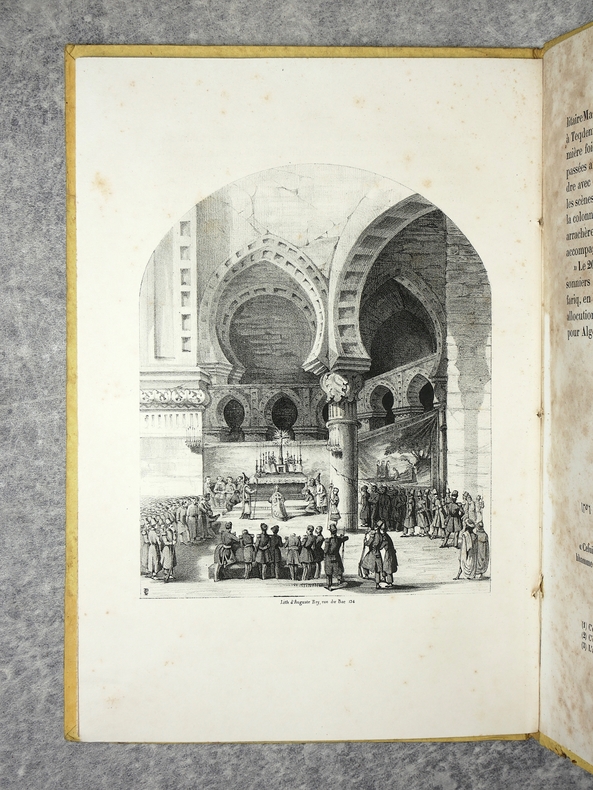
18441793A PARIS. CHEZ J. DELAHAYE, EDITEUR. 1844. IN-8 (16,5 X 24 X 0,5 CENTIMETRES ENVIRON) DE (4) + 59 PAGES, RELIURE A LA BRADEL DE L’EDITEUR, CARTONNAGE JAUNE AVEC TITRE IMPRIME EN NOIR. ILLUSTRE DE DEUX PLANCHES EN NOIR HORS TEXTE LITHOGRAPHIEES PAR AUGUSTE BRY. EDITION ORIGINALE. OUVRAGE TRES RARE. LE MARECHAL BUGEAUD AVAIT AUTORISE MONSEIGNEUR DUPUCH A NEGOCIER L’ECHANGE DE PRISONNIERS. L’UN DES DELEGUES EST BERBRUGGER QUI LIVRE ICI UN COMPTE-RENDU DETAILLE DE CETTE MISSION. «LES DELEGUES NE FURENT PAS RECUS PAR ABD-EL-KADER MECONTENT DE CE QU’ILS VINSSENT NEGOCIER SEULEMENT L’ECHANGE DES PRISONNIERS ET NON TRAITER DE LA PAIX. CE FUT LE DEY DE MILIANA QUI ECHANGEA AVEC EUX LES SIGNATURES.» PETITS DEFAUTS SANS GRAVITE, SINON BON EXEMPLAIRE.