ROUSSEL (Claude).Livre Rare Book
30 333 résultats
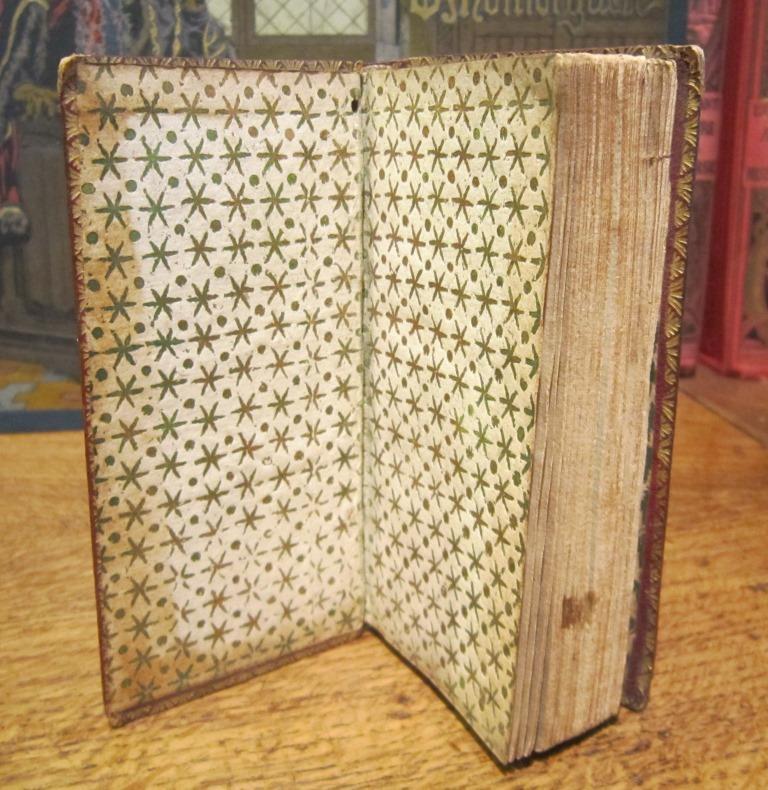
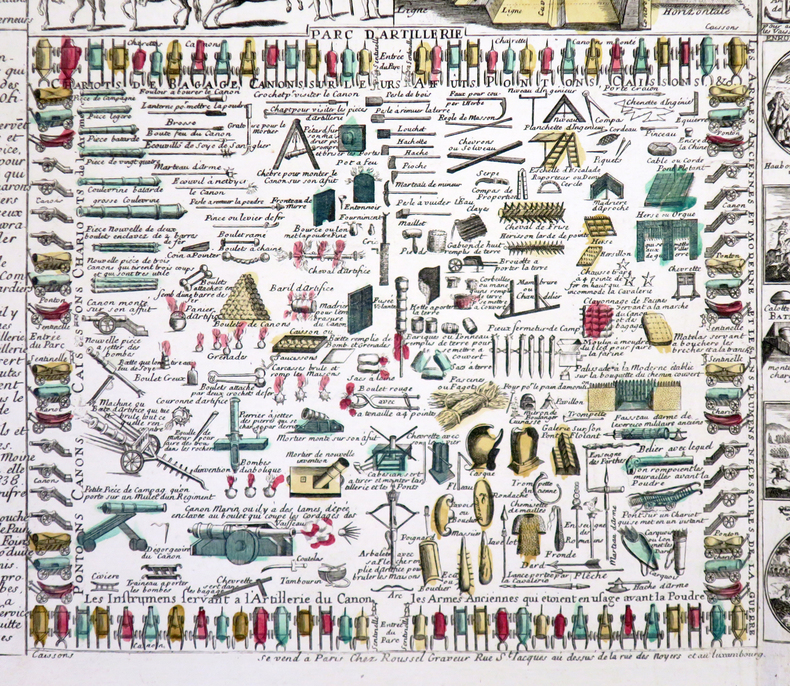
1720LBW-4315Paris, Roussel, [circa 1720]. 485 x 720 mm.
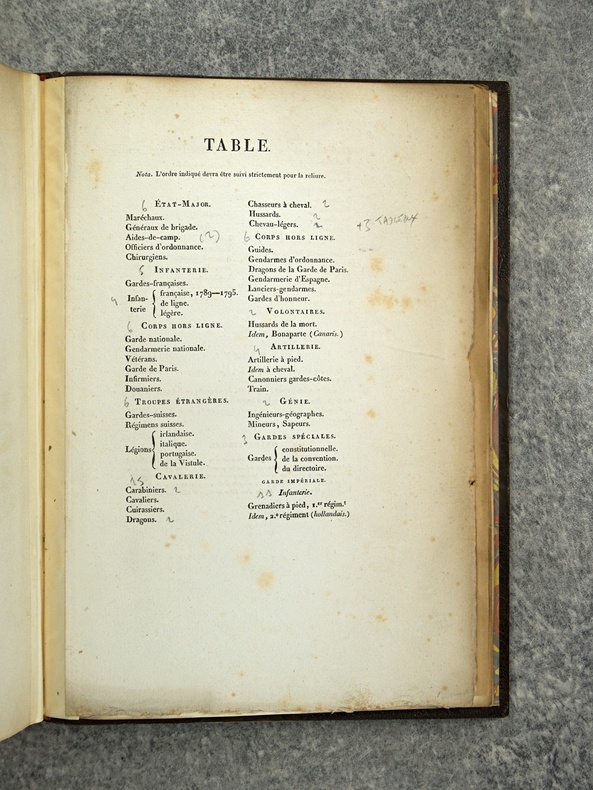
18223602PARIS. GIDE FILS, LIBRAIRE. ANSELIN ET POCHARD, LIBRAIRES. 1822-1825. 2 VOLUMES GRAND IN-8 (20,5 X 27,5 X 10 CENTIMETRES ENVIRON) DE (4) + XV + (185) + 12 + (4) ET (4) + 6 + (77) PAGES, ENTIEREMENT MONTES SUR ONGLET, RELIURE DEPOQUE 1/2 MAROQUIN BRUN FONCE A COINS, DOS A CINQ NERFS, TITRE ET TETE DORES, NON ROGNE, RARES COUVERTURES GENERALES CONSERVEES (PETITOT RELIEUR). ILLUSTRE DE 100 + 48 LITHOGRAPHIES HORS TEXTE COLORIEES AU POCHOIR, TIREES SUR PAPIER GRIS, COUPEES PUIS COLLEES SUR PAPIER VELIN AU MOMENT DE LA RELIURE. EDITION ORIGINALE ET PREMIER TIRAGE. « L’OUVRAGE DE LAMI ET VERNET EST SANS CONTREDIT L’UN DES PLUS BEAUX QUI AIENT ETE FAITS SUR L’ARMEE FRANCAISE » (GLASSER 253-257). BEL EX-LIBRIS GRAVE DANS CHACUN DES VOLUMES DE HENRI MARCUS. RARE ENSEMBLE COMPLET DE SA SECONDE PARTIE CONCERNANT LES UNIFORMES DE LA RESTAURATION. QUELQUES FROTTEMENTS D’USAGE AUX NERFS, SANS GRAVITE, QUELQUES ROUSSEURS EPARSES SUR LES FEUILLETS DE TEXTE, SINON TRES BEL EXEMPLAIRE.
223191S.l., s.d. (vers 1910) in-8, titre et 58 planches en couleurs, toutes légendées, en feuilles sous chemise demi-toile chagrinée bleu à lacets, dos lisse muet (reliure de l'époque). Un mors inférieur fendu.
1939192368Edinburgh: 1939-45. Digging for victory A small but evocative collection tracing the war work of the artist Mary Paton who served with the Women's Land Army in Scotland throughout the Second World War. The highlight of the collection is a pair of standard-issue corduroy breeches made by Redman Bros in January 1943. Other than a couple of small oil stains to the right inner thigh they are well-preserved and have been supplemented with non-standard leather reinforcing patches to the inner knees. Two certificates in the collection are addressed to "Frances M. R. Paton" the full name of Mary Paton 1920-1990 who studied at the Edinburgh College of Art before and after the war and later lived in Aberdeenshire. A letter of thanks records her service as having lasted from 11 October 1939 to 10 October 1945 while the two WLA armbands show her service at 3 1/2 and 5 1/2 years respectively. The collection also includes two enamelled WLA lapel badges and a silver gelatine photograph 86 x 57 mm showing a young woman with "Mave. Freiburg '37" inscribed on the verso. Together eight items. One certificate with storage folds overall in very good condition. hardcover
432 pages. Index. Biographical Notes. List of Abbreviations. Chart. Tables. Fourteen reproductions of black and white photos in text. Color map of Canada, Alaska and Greenland stored in back pocket. Describes in detail how Canada and the United States joined to thwart the Axis threat and stresses the very significant work of the Permanent Joint Board on Defense, Canada-United States. Inside front board a 9.25" x 6.25" typed presentation letter, dated 16 February 1960, to Lieutenant General Samuel Findlay Clark, Canadian Army, is signed by L.L. Lemnitzer, Chief of Staff of the United States Army. Letter was originally glued inside front board but is now loose. Yellow glue discoloration to perimeter of letter and front fixed endpaper. Light wear and no markings to this extraordinary association copy. Book
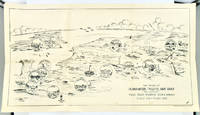
19452442Bad Wildungen Germany: Tac Echelon HQ 12th Army Group 1945. First Edition. Single Sheet Paper. Very Good Plus/4-mil clear mylar envelope. This is an ORIGINAL folded MAP showing the travels of the "Tac Echelon" Headquarters 12th Army Group in WWII through England France Luxenbourg Belgium and Germany from 15 July 1944 through 9 May 1945. On the verso of the map is the description of the "VICTORY IN EUROPE" Dinner Dance presented in honor of General Omar N. Bradley by the Officers of Tac Echelon Headquarters 12th Army Group at the Hotel Furstenhof in Bad Wildungen Germany on 12 May 1945; i.e. 4 days after the Surrender of Germany. The document is SIGNED in ink by General Omar Bradley "O N Bradley". The map measures 11 1/2" x 20" opened and 6 3/4" x 5 1/2" folded.<br /> <br /> One of the MOST REMARKABLE MAPS of WW2 the map was hand-drawn by an artist who signs his name RWD in the print. The document was produced by "Engr. Repro. Det. 12 A Gp." The map shows the various locations of the Headquarters 12th Army Group during its progress in combat in WWII from the "Staging Area" in England to Bad Wildungen Germany. Beverages are described for most of the locations ending in "V-E Specials" for Germany. We believe this map was distributed at the dinner dance celebrating the "Victory in Europe" just 4 days after the War in Europe ended and was signed by General Bradley at the dinner. The 12th Army Group was the largest military formation of the United States in the history of the Country. The 12th Army Group was deactivated shortly afterward on July 12 1945 upon General Bradley’s departure to become Director of the Veterans Administration. <br /> <br /> NOTE: This map will be accompanied by a CERTIFICATE OF PROVENANCE dated and signed by Debbie Chapman Luckinbill certifying that the map was brought home as a souvenir by her aunt the late Helen Chapman who was a member of Red Cross Clubmobile Group C which served in Europe during WW2. Red Cross Clubmobiles were large food trucks which were driven by Red Cross women to troop assembly areas where the women would open up the sides and serve doughnuts coffee and snacks to the fighting men. <br /> <br /> We have not found this map anywhere on the internet or other research. The map is foldedrubbed and lightly soiled from handling but is Very Good or better and now in a 4mil clear mylar protective envelope. Tac Echelon, HQ 12th Army Group unknown
19452080202102707404Not Available 1945. Soft Cover. Fine. The book is in fine condition. Not Available paperback
2009BRG-22_5_982Skyhorse 2009-06-23. paperback. Very Good. 6x0x9. Very Good condition.Crisp pages. Clean cover and pages. Book shows minimal shelf wear. No highlighting/marking. Not Satisfied Contact us to get a refund. Skyhorse paperback
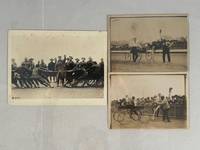
1918215381918. African African MilitaryWWI African American soldiers of the 811th Pioneer Infantry Regiment in France three original photographs circa 1918 documenting Black American troops during World War I. These images illuminate the racialized structure of the U.S. Army in which African American regiments were disproportionately assigned to labor and stevedore work while simultaneously participating in regimented recreational activities designed to sustain morale. The photographs support research in African American military history and racial segregation in the armed forces offering contemporaneous press documentation of Black soldiers' presence in France.<br /> <br /> Three original silver gelatin photographs. France: circa 1918. Versos with applied Brown Brothers New York credit labels and ink release stamps; one stamped as released by the Committee on Public Information April 17 1918. The photographs measure approximately 8.5 x 6.5 inches and 7 x 5 inches. One image captures a tug-of-war competition among African American infantrymen identified in the caption as members of an infantry regiment encamped "across the shore in France" with a captain of a machine gun company serving as referee. The men in mixed military and work attire strain collectively against the rope visually staging discipline and unity. The remaining two photographs depict ostrich-drawn cart races attended and handled by Black soldiers and civilians; one shows a uniformed rider seated in a two-wheeled cart drawn by an ostrich while another captures the animal rearing as a handler steadies it before a crowd. All three prints bear Brown Brothers agency attributions linking them to one of the earliest American stock photography firms supplying images to newspapers and public agencies.<br /> <br /> Produced at a moment when the federal government actively shaped public perception of the war through the Committee on Public Information these photographs participate in a broader visual narrative presenting African American troops as disciplined cooperative and integrated into the Allied war environment even as the U.S. military remained segregated and structured by racial hierarchy. The 811th Pioneer Infantry Regiment largely assigned to stevedore and labor duties in France exemplifies the constrained combat opportunities afforded Black units; yet these images foreground physical strength spectacle and communal recreation rather than manual labor alone. As press-distributed photographs they bridge military documentation and civilian consumption contributing to the visual archive of Black military service at a time when photographic representation of African American soldiers in non-combat settings was comparatively limited. Light edge wear minor surface creasing and scattered handling marks; versos with agency labels and ink stamps as issued. Very good. Collectively the group offers concentrated visual evidence of African American wartime service morale culture and state-mediated representation during World War I. unknown
1944185601944. WWIIPhilippine Occupation Harwell Lee W. World War II military archive 1941-1945 recording the service of a North Carolina enlisted artilleryman from prewar mobilization through the American occupation of the Philippines following Japan's surrender. Harwell born in 1918 in Mooresville North Carolina enlisted in April 1941 and trained at Fort Bragg Camp Blanding Camp Shelby and Fort Sill before deployment overseas in August 1944 with the 694th Field Artillery Battalion. His unit participated in operations in New Guinea and the Philippines during the final year of the Pacific campaign. The archive's most historically concentrated materials consist of five letters written in September 1945 from Luzon where Harwell was assigned to guard Japanese prisoners of war north of Baguio in the immediate aftermath of surrender. These letters describe the logistics and atmosphere of POW stockades the movement of captured Japanese naval personnel civilian hostility toward prisoners in recently liberated areas and the conditions of sick and wounded detainees. Writing to his fiancée Louise Harwell records the daily realities of occupation duty including the presence of hundreds of prisoners under armed guard and the tensions surrounding their confinement. A sixth letter was written aboard the U.S.S. General Mitchell as he returned home closing the wartime sequence.<br /> <br /> Archive is comprised of approximately 150 photographs of varying sizes; six autograph letters totaling seventeen pages; and assorted military documents and ephemera 1941-circa 1946. Photographs depict stateside training camps in North Carolina Florida Mississippi and Oklahoma; artillery training operations; camp life; fellow enlisted men; scenes in New Guinea and the Philippines; images of indigenous civilians in the Pacific theater; and a substantial grouping of family photographs likely dating to Harwell's postwar life. Letters retain original folds and were written in ink to his fiancée. Ephemera include military paperwork a shoulder patch a Fort Sill pamphlet an American Red Cross pamphlet and related service materials. Many photographs were removed from a disbound album some trimmed with occasional captions on the verso or on surviving album fragments affixed to images.<br /> <br /> The letters from September 1945 are contemporaneous accounts of the transition from active combat to custodial and occupation responsibilities in the Pacific. Harwell describes passing large groups of surrendered Japanese personnel under military police supervision guarding stockades housing hundreds of prisoners and transporting detainees through Luzon towns where Filipino civilians attempted reprisals. His observations of disease exhaustion and discipline within the camps provide primary testimony to the conditions under which American forces processed surrendering Japanese units at war's end. Together with visual documentation from training through occupation the archive traces the trajectory of a Southern enlisted soldier from prewar expansion to Pacific victory and demobilization. Letters show minor wear and original creasing; photographs exhibit handling wear consistent with album removal some trimmed; documents with expected age toning; overall very good condition. Substantial Pacific Theater service archive centered on POW guard duty in the Philippines during the closing weeks of World War II. unknown
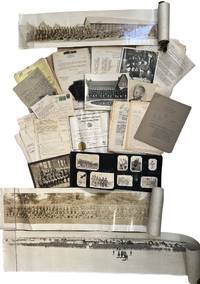
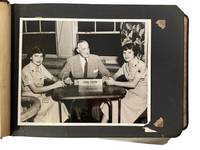
1917190211917. WWINational GuardWWII Primary-source archive documenting U.S. Army transportation command operations supporting Allied logistics following the Normandy landings centered on the development of Cherbourg as a critical supply hub. Assembled from the career of Lieutenant Colonel George C. Sullivan the collection spans World War I mobilization through World War II and into postwar reserve service with particular emphasis on mid-twentieth-century military infrastructure and coordination. The archive comprises hundreds of pages of official documents correspondence and service records alongside a substantial photographic component including large-format panoramic rolls depicting assembled training formations and unit organization at scale. Together the materials provide detailed evidence of the administrative and logistical systems that sustained Allied operations in Europe situating individual service within broader frameworks of wartime transportation supply distribution and postwar military restructuring.<br /> <br /> Archive comprises hundreds of pages of military documents dated primarily from the 1940s through the 1950s; three panoramic photographic rolls from World War I service; one photograph album containing 83 photographs from 1917-1918; four loose photographs; and three letters dated 1945-1948. The World War I album depicts training at Fort Sill Oklahoma mounted artillery drills including a three-inch field gun mounted cavalry movement across desert terrain doughboy uniformed infantry and a Peace Parade in Lawton Oklahoma in November 1918. Sullivan's own written service summary records his federal call-up transfers promotion to corporal commissioning and discharge in December 1918. The panoramic rolls measuring approximately 44 to 56 inches in length show large assembled formations at Camp Cody New Mexico and officer training at Camp Taylor Kentucky including the 25th Battery Central Officers Training School. World War II and postwar materials include commendations transfer requests rosters promotion records certificates and administrative correspondence. A 1949 silver gelatin photograph of Headquarters Company 371st Support Group summer training personnel includes a roster naming forty-eight officers among them First Lieutenant Catherine M. Henry documenting the integration of women officers in postwar reserve structures.<br /> <br /> Sullivan's World War II documentation centers on transportation command responsibilities essential to sustaining Allied operations in Normandy and the rapid development of Cherbourg as a logistical hub following D-Day. The archive traces the evolution of the United States Army from early twentieth-century National Guard mobilization to logistics work in World War II. Postwar papers reflect Sullivan's continued reserve duty into the mid-1950s and his civilian engagement in the sale of military surplus goods in Seattle Washington illustrating the reintegration of career officers into postwar commercial life. Documents generally clean and legible with occasional edge wear; panoramic photographs show some cracking but remain intact; photograph album well preserved; loose photographs with light handling wear. Overall very good condition. Extensive archive chronicling four decades of a United States Army officer's career. unknown
1950231531950. WACKorean War Women's Army Corps photo album compiled by Sgt. Elizabeth Adamek of Cairnbrook PA ca. early to mid 1950s extensively recording enlisted women in post-1948 U.S. Army administrative operations at Camp Zama Japan during the Korean War period. Elizabeth Adamek later Elizabeth Adamek Pierce 1932-2016 served approximately twenty years in the United States Army as an administrative assistant and instructor including service in Japan and the Korean Theater during the Korean War. Adamek is shown several times in uniform with her twin sister Cpl. Cristania Adamek indicating the sisters served in the WAC around the same time period. This album documents postwar U.S. Army overseas base administration showing how clerical labor recordkeeping and office management were carried out by WAC personnel during the Korean War. Images of Hill and fellow servicewomen engaged in office work reveal women's roles in the Army's daily bureaucratic and logistical functions while stationed abroad. A comprehensive primary-source documentation of the operational role of women within permanent peacetime Army structures following the formal establishment of the Women's Army Corps in 1948.<br /> <br /> Photo archive of approximately 240 silver gelatin photographs from Camp Zama Japan and the United States circa early to mid 1950s. The album is housed in a Japanese lacquer-style postbound binding with black paper leaves containing a mixture of small snapshot prints deckle-edge photographs and larger mounted images. The visual content centers on Hill frequently shown in WAC uniform posed in front of barracks administrative buildings and landscaped areas as well as inside office environments seated at desks surrounded by stacked files paperwork and card index systems. Several images explicitly depict clerical workspaces including a servicewoman operating a typewriter beside filing drawers reinforcing the administrative function of WAC personnel. A clearly legible building sign reads "Camp Zama 8030th Army Unit APO 50" situating the album within a specific military unit structure. Additional photographs include formal military reviews with officers and dignitaries group portraits of uniformed women before display walls and social scenes in dining facilities and clubs. Off-duty life is extensively documented through images of Japanese urban streets market stalls rail platforms commercial signage shrine gateways temple architecture zoo enclosures and landscaped gardens alongside recreational scenes such as swimming roadside travel and barracks exteriors collectively illustrating both the operational and social dimensions of overseas Army life. Adamek is posed throughout the album with a romantic partner one Sgt. Kidder whose service at Camp Zama is also documented extensively.<br /> <br /> The album captures the workings of U.S. Army overseas base administration demonstrating the process by which women in the Women's Army Corps sustained military infrastructure through administrative labor. Camp Zama functioned as a major logistical and support installation during the Korean War era and the photographs provide insight into the women that maintained its operations while also recording the social networks and cultural encounters experienced by American service personnel in postwar Japan.<br /> <br /> Elizabeth Adamek Pierce's obituary in The Oklahoman indicates she was honorably discharged from the US Army in 1971 after which she relocated to Oklahoma City and worked in an administrative role with the OKC Police Department. Adamek was a member of the Civil Air Patrol the VFW Post 1335 and a volunteer at Tinker Air Force Base in Oklahoma City. Light edge wear and chipping to album leaves occasional corner wear scattered fading and softness to prints and general handling wear to the binding; overall good condition. A cohesive and well-identified visual record of women's military service in the U.S. Army in East Asia. unknown
170163606CBOhne Ort, ohne Verlag, 1701/1702. 4°. 31,5 x 20 cm. [132] Blatt. Halblederband der Zeit auf vier Bünden, mit floraler Blindprägung und späterem, privat beschriftetem Papierschild auf dem Rücken. [7 Warenabbildungen]
1905c2410150320xbvkU.S.A., St. Paul - Minnesota, Ingersoll View Company, 1905. 100 colour-stereograph plates (ca. 9 x 18 cm) with captions under the photographs and extensive description on the rear, loose in the publisher's black cardboard box (ca. 9,5 x 19 x 7,5 cm).
1919158France: Published by the Office of the American Expeditionary Forces 1919. Seven volumes folio each in original printed wrappers. Bound into this impressive set are several lithographic plates and numerous large folding maps prepared by the U.S. Army 29th Engineers. A well-preserved set from the Hoover Library with duplicate stamps to the front covers. Also bearing the old ownership signature of Lt.-Colonel R.H. Williams. Numbers 1 to 286 of field military intelligence reports prepared during the first war here printed collectively towards the close of the hostilities or shortly afterwards and arranged with continuous pagination. The reports cover the date range from January to November 1918.</p> <p>Also bearing the old ownership signature of Lt.-Colonel R.H. Williams. Published by the Office of the American Expeditionary Forces unknown
223417S.l., s.d. petit in-4, 167 pp., couvertes d'une écriture fine, soigneusement calligraphiée et très lisible (environ 30 lignes par page),, avec quelques rayures et biffures, [13] ff. vierges, vélin souple à lacets, dos lisse muet orné d'un filet noir en long, encadrement de double filet noir sur les plats, titre poussé à l'encre noire sur le plat supérieur (reliure moderne).
2309111815 à vue : 20.5 x 29 cm - cadre : 47.5 x 55 cm , cadre en bois doré contemporain.
228628Paris, Goupil, Vibert & Cie [Imprimé par Lemercier], s.d. (1848) grand in-folio (50 x 39 cm), 12 planches lithographiées sur papier teinté, et rehaussées de couleurs, montées sur onglets, manque le feuillet de titre, demi-chagrin havane, dos à nerfs fleuronné, tête dorée (Lemardeley). Dos uniformément insolé.
18938169Institut Cartographique Militaire 140 x 120 Bruxelles 1893 Plan de Bruxelles et de ses environs en 1893, à l'échelle 1/5000, réalisée par l'Institut Cartographique Militaire de Bruxelles, sous un emboîtage relié demi-chagrin bordeaux, dos lisse orné de fleurons et de filets pointillés dorés, "1893" dorée en queue, plats de papier marbré de l'époque, composé de 4 parties toilées dépliantes, comprenant chacune 12 sections, soit un ensemble de 48 sections. Le plan, dont la largeur est de 120 cm et la hauteur de 140 cm, est encadré d'une frise décorative. La liste des rues, sur deux colonnes, figure de part et d'autre du plan. Les limites des communes et des paroisses sont en rouge. Sont indiquées les lignes de tramway et chemin de fer. Plan intéressant par sa précision quartier par quartier, rue par rue, pour toute étude urbanistique ou topographique de Bruxelles à la fin du XIXe siècle. Emboîtage en très bon état, bon exemplaire. Rare.(B32) PHOTOS NUMERIQUES DISPONIBLES PAR EMAIL SUR SIMPLE DEMANDE-DIGITAL PHOTOGRAPS MAY BE AVAILABLE ON REQUEST
18938169Institut Cartographique Militaire 140 x 120 Bruxelles 1893 Plan de Bruxelles et de ses environs en 1893, à l'échelle 1/5000, réalisée par l'Institut Cartographique Militaire de Bruxelles, sous un emboîtage relié demi-chagrin bordeaux, dos lisse orné de fleurons et de filets pointillés dorés, "1893" dorée en queue, plats de papier marbré de l'époque, composé de 4 parties toilées dépliantes, comprenant chacune 12 sections, soit un ensemble de 48 sections. Le plan, dont la largeur est de 120 cm et la hauteur de 140 cm, est encadré d'une frise décorative. La liste des rues, sur deux colonnes, figure de part et d'autre du plan. Les limites des communes et des paroisses sont en rouge. Sont indiquées les lignes de tramway et chemin de fer. Plan intéressant par sa précision quartier par quartier, rue par rue, pour toute étude urbanistique ou topographique de Bruxelles à la fin du XIXe siècle. Emboîtage en très bon état, bon exemplaire. Rare.(B32) PHOTOS NUMERIQUES DISPONIBLES PAR EMAIL SUR SIMPLE DEMANDE-DIGITAL PHOTOGRAPS MAY BE AVAILABLE ON REQUEST
185622552Angers Lainé Frères 1856-60 -in-folio demi-chagrin deux volumes, reliure d'époque demi-chagrin rouge sombre in-folio Editeur (binding half shagreen in-folio Editor)(44,7 x 31,5 cm), dos 5 nerfs (spine with raised bands,) décoré or (gilt decoration) et à froid (blind-stamping decoration),Titre et Tomaison frappés "or" dans un encadrement d'un filet "or", entre-nerfs à fleurons "or" dans un encadrement à double filets "or" avec rinceaux "or" aux angles, filet "or" en place des nerfs avec un filet à froid de part et d'autre des nerfs, filet "or" en tête et en pied, plats de percaline vieux rose décorés à froid, de 2 filets fins reliés aux angles par un filet fin à froid, le tout dans un encadrement d'un filet large à froid, 1er plats titrés "or" au centre avec des fleurons "or" de part et d'autre des deux lignes de titre, toutes tranches lisses dorées, gardes blanches moirées, orné de 125 lithographies hors-texte en deux teintes par Daniaud d'après les dessins de Tom DRAKE montées sur onglets (manque la N° 85 et la N° 95, oubliée par le relieur), Première partie: faux-titre, titre, 108 p., [4p. Table, Errata]; Deuxième partie: faux-titre, titre, 92p., [2p. Table], 1856 - 1860 Angers: Imprimerie et Librairie Lainé Frères Editeur,
1756000021Paris, Moreau ou Versailles, Lefebvre. In-18 (124 x 65 mm), 96 pp., maroquin rouge, dos à cinq nerfs orné, plats ornés d'une plaque or très décorative, dentelle intérieure, tranches dorées (reliure d'époque). Les quatre Compagnies de Gardes du corps du roi (la Compagnie écossaise, créée par Charles VII, la première et la seconde Compagnies françaises, créées sous Louis XI, et la troisième Compagnie française, créee sous François Ier), ont respectivement pour capitaines en 1756 : le Maréchal Louis de Noailles, le Duc de Villeroy, Paul-François de Béthune duc de Charost et le Duc de Luxembourg. Un feuillet manuscrit ancien, en fin de volume, donne les dates de promotions de 22 gardes, entre 1729 et 1734. Bel exemplaire (malgré des défauts d'usage, charnière du premier plat fendue dans le haut sur 6 mm, coins usés, petite trace noire sur le second plat, dorure des tranches en partie effacée, une brunissure sur une tranche et en marge des pages 19 à 62, petit trou dans la marge supérieure p. 87, quelques rousseurs). // 18o (124 x 65 mm), 96 pp., red morocco, spine tooled in gilt raised on five bands, very decorative gilt tooling on covers, dentelle inside, gilt edges (contemporary binding). The four "Gardes du corps du Roi" life guards companies ("Compagnie écossaise", created by Charles VII, first and second "Compagnies françaises", created under Louis XI, and the third under François Ier), were in 1756 respectively directed by the following "Capitaines" : Maréchal Louis de Noailles, Duc de Villeroy, Paul-François de Béthune duc de Charost, and Duc de Luxembourg. An old handwritten leaf in the end gives the dates of promotions for 22 guards, between 1729 and 1734. Nice copy (despite defects of use, first hinge cracked on 6 mm on top, corners bumped, small dark stain on second cover, gilt of edges partly faded, a foxing on one edge from p. 19 to p. 62, small hole on top margin p. 87, some brownings). Cet état de 1756 manque à la Bibliothèque Nationale.
114-Ao.J. 2 Blatt Radierungen, auf Bütten. 39:24,2 cm. Aus: Antonio Laferi, Speculum Romanae magnificentiae. Rom, ca. 1546-1600 (vgl. Brunet III, 765 f.).- Prachtvolle Abdrucke. Beide Blätter mit geglätteten, kaum sichtbaren Vertikkalfalten, ein Blatt mit sorgfätig restauriertem Einriß im Unterrand, sonst ausgezeichnet erhalten.
214136À La Haye, Isaac Beauregard et Chez Jaques van den Kieboom, 1771-1740 12 vol. in-12, basane fauve, dos lisse orné, pièce de titre de maroquin rouge et vert (reliure de l'époque).
173380Berlin, Hermann Meidinger, [Paris], Adolphe Legoupy, s.d. (vers 1872) in-4, [2] ff. n. ch. (titre, table des planches), et 50 planches en couleurs, numérotées, et légendées en allemand, en feuilles dans chemise demi-toile cerise à rubans, dos lisse muet, titre poussé au centre du plat supérieur, (reliure de l'éditeur). Mors supérieur fendu, dos renforcé maladroitement en intérieur.