86 357 résultats
8vo. 300, (4) pp. (2), 332, (4) pp. Both issues with numerous portraits of members of the revolutionary movement, such as Egor Sazonov, Ivan Kaliaev (the assassin of Grand Duke Sergei Aleksandrovich), E. K. Breshkovskaia and A. O. Sytsianko. Original printed wrappers (no. 4 in duplicate, on thin paper stock, without wrappers). The last two issues of this journal published by the Socialist Revolutionary movement in Paris (four issues appeared in total). Edited by Viktor Mikhailovich Chernov (1873-1952), it was apparently issued on thin Bible paper as well as on glossy paper stock, with the former variant intended for being smuggled into Russia. The contents include memoirs by B. Savinkov; an article on anarchism in Russia; contributions by Viktor Chernov, the founder of the Russian Socialist-Revolutionary Party; a sketch of the history of the Socialist Revolutionary Party (St. Nechetnyi); "Memories and thoughts" (E. Breshkovskaia); articles on the Cooperative movement by Boris Voronov and N. A. A., as well as an article on Tolstoy's social ideals by N. Maksimov. - Issue four very good; issue three shows some wear and small tape repair to wrappers.
4to. 4 parts in 1 volume. (8), 208 pp. (12), 128, (4) pp. (8), 129, (5) pp., 1 blank leaf. (8), 51, (1) pp. With repeated vignette of a vessel on titles. Contemporary Italian full with gilt spine title. All edges sprinkled red. One of Hertz's two 1697 issues of this important instructional work on bookkeeping (first printed in 1638; part three, here still issued under its original title "I frutti d'Albaro", is in its third edition; part four, first printed in 1665, in its second edition). "Peri was the first to be independent of the Venetian school" (Hausdorfer 188). Palgrave notes that the work "has much wider aims than the author would lead us to believe. It is a technical handbook for merchants, to teach them trading and book-keeping, treating at much length of the method of mercantile accounts called the system of double entry. It contains also interesting historical notices on the exchanges between the principal Italian and foreign cities [...] Following the impulse given to comparatively liberal opinions in public economy and commerce, as by Scaccia, Stracca, and other followers of commercialist doctrines, Peri demonstrates the importance of merchants, and pleads for them and commerce." Although this edition announces an additional part on commercial correspondence by Mattia Cramer, the present copy does not contain it. - Occasionally slightly browned and foxed; some wrinkles and dog-ears, otherwise well-preserved. Rare. Goldsmiths'-Kress 3400 (without the additional part). Kress 2039 (idem). Kress, Italian 193 (idem). Einaudi 4393 (with the additional part). HAL lists editions of 1649, 1662, 1682 and 1707, but not the present one. Palgrave III, 94. Riccardi V, 120.
Folio (260 x 380 mm). 25 (instead of 27) numbered issues bound in one volume. 8 pp. each (except no. 27, comprising 4 pp., and a supplement to no. 9, also comprising 4 pp.). With numerous woodcut illustrations. Later full cloth with giltstamped spine title. The first year of "Reynolds's Political Instructor", the leading newspaper of the post-Chartist era. Each issue included a signed editorial by Reynolds, featuring "radical commentaries on the week's events" (Brake/Demoor). Essentially a Chartist periodical, the "Instructor" argued for "the Charter and Something More", advocating universal suffrage and the rights of the working class. The paper "was part of the culture of radical internationalism, supporting revolutionary and liberal movements in Europe, and as such was also published in Paris by the Galignani brothers" (ibid.). Each issue features woodcut portraits of important political activists, among them Giuseppe Mazzini (1805-72), Julian Harney (1817-97) and John Mitchel (1815-75). Launched in 1849, the periodical became "Reynolds's Weekly Newspaper" in May 1850, ceasing publication in 1967 as the "Sunday Citizen". The present series omits only nos. 8 and 11. - A few tears repaired with adhesive tape. Somewhat browned. Provenance: from the collection of Chimen Abramsky (1916-2010), London. Brake/Demoor, Dictionary of Nineteenth-Century Journalism in Great Britain and Ireland 540.
Folio (227 x 358 mm). 14 pp. With 1 folding map ("Sketch map shewing the position of Russia in Central Asia in 1863 and 1883"). Recent half calf over marbled boards, gilt-lettered spine label, original wrapper with manuscript endorsement "Central Asia Question by Sir F. Roberts" bound in, blank leaves bound at end. Rare confidential report on the Russian threat to the Raj, written at the close of 1883 by Sir Frederick Roberts (1832-1914), then Commander-in-Chief of the Madras Army. Having won the Victoria Cross in India in 1858, much of Roberts's career was occupied by the Great Game, in the Second Afghan War, and later as long-serving Commander-in-Chief of India. Adopting a broad strategic perspective, the hawkish general here writes: "It seems scarcely possible that any one, who has studied the question, can view unconcernedly the position which Russia is so rapidly gaining; or that anyone interested in India should now object to a reconsideration of our Indian frontier policy [...] Russian officers are free to traverse India, and doubtless furnish full information to their Government as to all our weak points. Of the strength and resources of the Russian armies in Central Asia we know literally nothing [...] It is time for us to throw off the feeling of confident security in which we seem to be living, and to realise that an ambitious Power, confident in the might of her two millions of armed men, is approaching nearer and nearer to our borders". - Horizontal creases where once folded, a few light spots. Some marginal pencil markings, pencil note to p. 9. Of extreme rarity: we have been unable to trace a copy on OCLC, though a few copies are known in special manuscript collections such as the Royal Pavilion Libraries (Hove Library, Wolseley Mss, W/MEM/2.17) and the Balliol College Archives (Papers of RBD Morier, Box 41, no. 20).
2 Bde. VII [recte: VI], 434, (2) SS. (2), IV, (2), 236, (2), (237)-439, (1) SS. Originalleinenbände mit goldgepr. Rückentitel. 8vo. Seltene erste Ausgabe. - Der erste Band bringt die Schilderung seiner Fahrt von Dresden über Nürnberg, Bruckberg, Würzburg, Köln nach Paris, in "die Wiege des neuen Europa's", die Kapitel über den "Salon der Democratie pacifique", "Fourier und das Problem der bürgerlichen Gesellschaft", die "Alliance intellectuelle mit den Franzosen" (über Schelling, Hegel, Strauß, Bruno Bauer und Feuerbach), "Audienzen bei Lamennais und Louis Blanc", "Helvetius und wir" etc. Der zweite Band beginnt mit "Unsre letzten zehn Jahre". Es folgen "Briefe", darunter an den "Telegraphen in Hamburg: Ueber die neueste deutsche Poesie" (Heinrich Heine) sowie die umfangreiche Abhandlung "Der Patriotismus"; den Abschluß bilden "Aphorismen". - Kapitale, Gelenke und Ecken minimal bestoßen, sonst tadellos erhaltenes Exemplar. Aus dem Besitz des Rechtswissenschaftlers, Rechtsanwalts und Unternehmers Viktor Achter (1905-81) mit dessen Exlibris auf den vorderen Innendeckeln. Goedeke XVII, 1226, 205. Stammhammer I, 209. Wilhelm/Galley II, 1833. Steinbacher (Hegel) 1587. Silberner (Moses Heß) 396.
8vo. (20), 90, (2), 91-554, (6), 555-645, (19) pp. With engraved frontispiece, 7 engraved plates (5 double-page, including a view of Dejima) and 3 folding maps (China, Japan and the Philippines, Moluccas and Sulawesi). Contemporary calf, spine gilt with red and green label, gilt double fillets on both covers. First volume of the first Dutch edition of Thomas Salmon's "Modern History, or The Present State of All Nations". The original English edition was continued, expanded, abridged, and republished under various names; by 1803, the Dutch translation would encompass 43 volumes. This first volume deals extensively with China, Japan, the Philippines, the Moluccas and Celebes (now Sulawesi) with its capital Makassar. All parts except that about China were rewritten and enlarged bJPYy Matthias van Goch, who based his work on information given by Gerrit Voogt (second in command in Dejima from 1706 to 1714), by the physician Willem ten Rhijne, and others. - A fine copy with good impressions of the maps and plates. From the library of the Dutch Finance Minister Jan Jacob Rochussen (1797-1871), Governor-General of the Dutch East Indies from 1845 to 1851 and Prime Minister from 1858 to 1860 (his handwritten visiting card inserted). Tiele 1033. Cordier (Japonica) 431. Cordier (Sinica) I, 44.
8vo (166 x 255 mm). 46, (4) pp. Original printed wrappers. First edition. Apparently a gift from the author, inscribed by the owner on the upper wrapper: "Je fis la connaissance de l'auteur cette année-çi à Baden. Pâques Russes 1888". - "The idea of a nation is not what it thinks of itself in time, but instead what God thinks of it in eternity" (p. 6). Solovyov (1863-1900) was one of the greatest religious and political thinkers of 19th century Russia, a poet and mystic. In the 1880s he sought to revive the mystical-gnostic elements in the Russian Church, yearning for the spiritual nature of the world and universal religion. Solovyov never broke up with Orthodoxy but he promoted the reunification of the Russian Orthodox and Roman Catholic Churches. - Though an intimate friend of Fyodor Dostoevsky, Solovyov was highly critical towards the Dostoevsky's nationalism, shrewdly observing that "national self-consciousness is a great thing, but when self-consciousness turns into complacency, and complacency into self-admiration, it can only end in national self-destruction". He enjoyed little success in Russia, where he had to struggle against Tsarist censorship, nor did his ideas encounter much appreciation when he visited Paris in 1888. However, Solovyov's ideas would be of great importance for the Russian spiritual renaissance at the beginning of the 20th century. During the Soviet regime his works were forbidden. - Wrappers foxed. Stamp on title-page.
8vo. 2 vols bound in 4. (24), 496 pp. (2), 497-980 pp. (2), 456 pp. (2), 457-808, 47, (1) pp. With numerous tables, one folding. Finely bound in contemporary full calf, spines gilt with red label, gilt double filets on both covers. Marbled edges. First and only Dutch edition. A translation of Süssmilch's seminal work on demography, "Die göttliche Ordnung in den Veränderungen des menschlichen Geschlechts", following the third German edition, the last one published during the author's lifetime. It was "the first complete and systematic treatise on the subject". - Hinges starting to crack, but well preserved. This translation not in Kress, Goldsmiths' or EHB.
4to. (12), 75, (1) pp. Engraved title-page. Contemporary full vellum with handwritten spine-title. Only edition. Rare account of the bridal journey of Maria Anna (1606-46), Spanish Infanta and bride of Ferdinand III (1608-57), later Holy Roman Emperor, through the Papal States in 1631. Talucci (1602-44) was a scholar active at the court of Cardinal Carlo Emanuele Pio di Savoia (1585-1641). - At the end of 1626, Maria Anna was betrothed to Ferdinand, the younger brother of her first fiancé and the new heir to Emperor Ferdinand II. Maria Anna departed Madrid for Vienna in December 1629, a full three years after her engagement. The journey took more than a year to complete, her first stop in Italy being Genua, where the Infanta was met with all honours: "Questa Signora [...] per congiungersi seco in Matrimonio, partitasi da Spagna, doppo haver solcati molti mari, giunse in Italia, et il primo luogo, che vi toccasse fù Genova, dove fù accolta da quei Signori con ogni splendidezza" (p. 2). A plague epidemic that erupted in the Italian Peninsula shorty after the party's arrival rendered a stop in Bologna impossible, causing the party to turn towards Naples instead. Leaving the Kingdom of Naples, the Infanta then crossed the Papal States, including a pilgrimage to the Basilica della Santa Casa. On this section of her journey, Maria Anna was accompanied by Roman aristocracy led by a nephew of Pope Urban VIII, Taddeo Barberini, Prince of Palestrina. - Binding slightly soiled; 4 tiny wormholes to spine. Engraved title-page trimmed rather closely, paper occasionally waterstained, somewhat browned throughout. Small marginal annotation to p. 20 showing ink corrosion; some small creases; pastedowns slightly wormed. Still an attractive copy. H. Watanabe-O'Kelly/A. Simon, Festivals and Ceremonies (2000), p. 123. Early Modern Festival Books Database (University of Oxford) 689. Catalogo di libri rari della biblioteca del sig. Camillo Minieri Riccio I, 199. OCLC 1065069788. Not in Ruggieri.
demi-basane marron, tit. & années dorés sur dos à 5 nerfs soulignés par fers à froid, au chiffres de la « B.N.C.I. » puis « B.N.P. », (qq. mors fendus et recollés au ruban adhésif, qq. autres mors partiellement fendus, plusieurs épidermures, qq. coins émoussés, reliure usagée, des feuilles jaunies, marques d’utilisation)
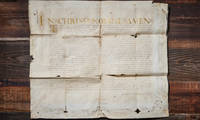
15852363525/09/1585. <blockquote><p>The Renaissance was a period of crucial cultural artistic social and financial development in late Medieval and Renaissance Italy and particularly the affluent cities of Florence Venice Genoa and Padua.</p></blockquote><p>The Holy Roman Empire spanned central Europe in one form or another for the span of a millennia. For much of that time it contained vast swaths of Italy mainly in the north and included the Italian city of Padua which would become a hub in the Renaissance in that country and a major university center. As the Middle Ages bled into the period of the Renaissance the Empire slowly lost direct control over Italy. It managed to maintain its power into the 16th century in part via old established orders that maintained local control.</p><p>Among these Holy Roman imperial titles was the ""comes palatinus caesareus"" or the imperial count palatine. The office of imperial count palatine was hereditary and the emperors seem to have used it to create an Italian aristocratic class loyal to the empire. In 1357 the Emperor Charles IV added the power of conferring licenses and doctorates of civil law to those of the counts palatine. Later on they acquired the power to confer doctorates in general. In 1363 Charles himself bestowed this honor to Giacomo Santacroce. His heir to this title and power given by it which was significant was Giovanni Santcroce who in addition to being the benefactor for religious and cultural efforts in the region was a businessman.</p><p>The Facino or Facini family was a prominent one from the town of Feltre. The Ioannes Baptista Facinus namd in the document was prominent in the cultural community. There remains today a church bearing the crest of this family constructed shortly before his birth.</p><p>Francisco Fabriano and Andreas Tinto were important functionaries and notaries of the period in Padua.</p><p><strong>Document signed</strong> September 25 1585 in Latin using the Latin names of the people involved including The Holy Roman Emperor Charles signed by important figures of the late Italian renaissance. In it <em>""Ioannes Sancta Cruce""</em> bestows the position of <em>""comes palatinus caesareus""</em> on <em>""Ioannes Baptista Facinus""</em> and all his male heirs. The document is witnessed and signed not only by Santa Cruce himself described as <em>""the most excellent lawyer lord count soldier knight horseman of the Court of Caesar""</em> but also by Fabriano and Tinto. The document is likely in the hand of Tinto himself.</p><p>Such Italian Renaissance documents are very uncommon. The most direct comparable was acquired by J.P. Morgan and is now in the Morgan Library.</p><p>There is an extended portion in the middle about Holy Roman Emperor Charles IV who it describes in 1357 added the power of conferring licenses and doctorates of civil law to the position.</p><p><img class=""alignnone wp-image-23609 size-post-window"" src=""https://cdn.raabcollection.com/wp-content/uploads/20231204153244/Folder-site-6-1600x1327.jpg"" alt="""" width=""1600"" height=""1327"" /></p> unknown
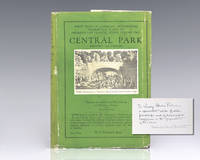
1928129463New York and London: G. P. Putnam's Sons 1928. First edition of the second volume of the autobiography of one of the foremost figures in American landscape architecture Frederick Law Olmsted. Octavo original cloth illustrated tissue-guarded frontispiece portrait of Olmsted. Edited by Frederick Law Olmsted Jr. and Theodora Kimball. Association copy inscribed by Frederick Law Olmsted on the front free endpaper “To George Haven Putnam in appreciation alike of old friendships and of his constant helpfulness in the preparation of this book. Frederick Law Olmsted.†The recipient American publisher George Haven Putnam was the eldest son of George Palmer Putnam the founder of G. P. Putnam's Sons. Putnam published the books of many classic American authors including his close friend Washington Irving William Cullen Bryant James Fenimore Cooper and Edgar Allan Poe. Upon his father's death in 1872 George Haven Putnam took over the business with his brothers John Bishop and Irving. He was made president of the firm a position he held for the next fifty-two years. In 1884 he hired 26-year-old Theodore Roosevelt as a special partner; Roosevelt would write several works published by Putnam. Putnam had already retired from the family firm at the time of this volume’s issue but was clearly still involved with this publication. Near fine in the rare original dust jacket which is in very good condition. An exceptional association copy. Frederick Law Olmsted Senior was one of America's foremost artists and a founder of the profession of landscape architecture in the U.S. The Park as a work of art - designed by Olmsted and partner Calvert Vaux - and as a great and novel public enterprise undertaken by the City of New York has played a vital part in the political history and cultural life of the metropolis and exerted a far-reaching influence on outdoor recreation and the landscape art in America. G. P. Putnam's Sons hardcover
163456057Kiøbenhaffn, Tyge Nielssøn, 1634. 4to. Samtidigt helldrbd. Ophøjede bind på ryggen. Rygforgyldning. Reparationer ved kapitæler. Falsen ved nederste rygfelt med revne og reparation. Indre false med gl. forstærkning således at det ikke helt kan afgøres, om teksten er indsat i et andet bind end det oprindelige. Titelbladet trykt i rødt og sort indenfor en røskenramme. (16),158 pp. (= 1-157, (158) er Errata. Ganske velbevaret og bredrandet. Tekst lettere brunet.
(= l. årg.ff.). 1863-1946 i forskellige hldrbd. m.guldtryk på rygge. 1983-90 i orig.helshirtbd. Nogle ældre bind med lidt rifter i ryg, 3 bind med løs ryg. Ellers fin stand.
Kiøbenhaffn, Tyge Nielssøn, 1634. 4to. Samtidigt helldrbd. Ophøjede bind på ryggen. Rygforgyldning. Reparationer ved kapitæler. Falsen ved nederste rygfelt med revne og reparation. Indre false med gl. forstærkning således at det ikke helt kan afgøres, om teksten er indsat i et andet bind end det oprindelige. Titelbladet trykt i rødt og sort indenfor en røskenramme. (16),158 pp. (= 1-157, (158) er Errata. Ganske velbevaret og bredrandet. Tekst lettere brunet.
København, 1867-2006. Årgang 1867 - 1949 indbundet i halvlæder. Årgang 1950 - 2006 i helshirt. Et pænt sæt.
1933213609Berlin, Weidmann, 1859-1933. Ab Jg. 1921 in 4°. Verschied. geb. Einbde. teils angeschmutzt u. m. Rsign. Teilw. berieben u. bestoßen. Es fehlt: 1923 Nr. 18.
15212954Mainz: Johann Schöffer 1521. Bound with: Undergerichts ordnung des Ertzstiffts Meyntz. Mainz: Johann Schöffer 23 May 1534. 2 vols. in one small folio 278 x 193 mm. 1 23 leaves of 24 final blank removed. Woodcut title border composed of ten blocks. incorporating whimsical scenes ornamental borders and at bottom the arms of the Archbishop-Elector Albrecht of Brandenburg gothic types two typographic Fraktur initials. Bound at end is a leaf with a one-page contemporary manuscript commentary wider than the text block and folding. Title-leaf rehinged slightly darkened and with effaced marginal inscriptions initial on A2r hidden in gutter initial on A2v shaved quire E with a couple of small corner repairs. 2 35 leaves of 36 final blank removed. Large woodcut white-on-black pointillé opening initial Fraktur initials throughout. Marginal dampstaining last quire on a guard. Early 20th-century pastepaper over boards manuscript spine label.First Edition of the judicial statutes of the Electorate of Mainz the largest ecclesiastical province of Germany and one of the most prestigious and powerful states of the Holy Roman Empire; bound with the First Edition of the statutes of the lower court of the Mainz Prince-Bishopric or Erzstift. The archbishops under the Holy Roman Empire wielded secular as well as pastoral power. Part of the Emperor's program of consolidation of the far-flung empire was the codification and standardization of provincial laws. Both these procedural codes explicitly adopted the ius commune gemeines Recht a combination of Roman and canon law. Both establish precise rules for court procedure and include copious down-to-earth details including where the courts reside who should serve in them and how trials are to be conducted. As is common for German law books these editions are handsomely printed.1 The Mainz Hofgerichts Ordnung was drawn up in 1516 by Albrecht of Brandenburg Archbishop and Elector of Mainz and by his chancellor Johann Fürderer and approved in 1521 by the Emperor Charles V. The latter's ratification is printed at the beginning and end of the statutes. These cover the location of the court required functionaries a judge and a jury of at least 11 members of the nobility although a Doctor or university graduate would suffice duties of other judicial administrators including the court scribes frequency and timing of sessions and jurisdiction by subject and area. Also included are a dozen varieties of oaths for different court officials including the scribe and for special segments of the population e.g. poor people witnesses legal representatives and Jews for whom there is a special preface to the oath itself in which the Jewish defendant or witness must swear that should he not be telling the truth he must renounce all rights to the Holy Land or to participation in the coming of the Messiah. One statute establishes the right of the poor to legal representation which must be covered by the court. Procedural instructions are provided for every activity and eventuality including the recording of testimony of plaintiffs and witnesses fines and punishments for those who don't show up at court proper written documentation and forms rules for appeals execution of sentences and payment of attorneys. OCLC lists three copies in the US Harvard Law LC and Indiana U. VD 16 M 262; Otto Stobbe Geschichte der deutschen Rechtsquellen 1860-64 2: 410-11.  2 The 1534 lower court rules prescribe further details for the conduct of court business. These include how to handle the "law books" i.e. the court records which are to be maintained in "two volumes with locks kept in a safe place." f. 4r; more procedures to follow for uncooperative defendants a long section: evidently a common occurrence; bonds and bail; more oaths; and formularies for various charges appeals and judgments. These Mainz laws were adopted in 1538 by the archdiocese of Cologne and influenced other lower court statutes including those of Württemberg issued in 1555 Stintzing.OCLC locates one US copy Harvard Law. VD 16 M 273; Stobbe 2: 258 note & 411; Stintzing and Landsberg Geschichte der deutschen Rechtswissenschaft 1880 I:543. Johann Schöffer unknown books
51410, Lugduni [Lyon], Gulielmum Rouillium 1554, in-folio, pl. vélin ivoire, tit. manuscrit sur dos à 3 nerfs, inscription sur la tr. inf., tit. gravé pl. p. en frontispice, portrait hors-texte en noir & blanc de l’auteur, (rel. fragile partielt détachée, qq. mq. et trous de vers non traversants au dos, coins émoussés, coin inf. droit de la page de tit. déchiré sur 6x4cm), int. très bien conservé, XXI-360- [Tab. mat]p.
1810710341810. Paris 1810. Quarto. Interleaved and annotated. Paris 1810. Quarto. Interleaved and annotated. Interleaved 1810 Printing of the French Code of Criminal Procedure with Contemporary Annotations France. Criminal Law. Code d'Instruction Criminelle. Edition Originale et Seule Officielle. Paris: De l'Imprimerie Imperiale 1810. ii 310 pp. Interleaved. Quarto 10" x 7-3/4". Contemporary quarter calf over marbled boards gilt spine with lettering piece. Moderate rubbing with wear to spine ends and corners joints starting at ends hinges cracked front free endpaper lacking. Light toning somewhat heavier in places light foxing in a few places light edgewear to preliminaries and final leaves light soiling to title page. Occasional annotations to interleaves and text in neat contemporary hand. $3750. Third printing. The 1808 Code d'Instruction Criminelle a code of criminal procedure was one the four codes of civil and criminal law issued under Napoleon's direction after the Code Napoleon Code Civil 1804. The annotations the latest dated 1827 range from a few words to several interpretive paragraphs. Most of these note modifications to the articles by imperial decrees or court decisions. The most extensive annotations which fill three full interleaves in a tiny hand concern juries. They are interleaved with first eleven articles of Chapter V "Du Jury et la Maniere de la Former" pp.133-136. unknown books
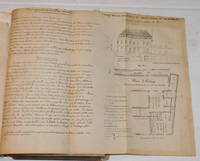
182897115Paris: impr. Dezanche and impr. Pihan Delaforest and Delangle Freres 1828-1835. 1828-1835. Fair. - Octavo 8-1/4 inches high by 5-1/4 inches wide. Four pamphlets bound into early brown calf with an elaborate floral device embossed in blind at the center of both the front and rear covers within an elaborate outer gilt ruled frame with formal decorations. All edges are marbled. The rubbed & worn covers are detached and the spine has perished and thus lacking. The pagination is as follows: i-xii 1-96 pp.; 5 6-45 1 pp.; 5 folding plates; 5 6-66 pp.; 4 pp. 1-82. There is foxing throughout.<p>The ownership name of James Stewart and the faded date of "1881" is penned on the front blank. In what appears to be his hand the statement "From Pierre Soule" is penned along the top of the verso of the front endpaper. Additionally the attractive sienna-toned ex-libris bookplate of "R.G.S." is mounted on the front pastedown. <p>Stated to be from the library of Pierre Soule with his name signature at the head of the first pamphlet. Soule 1801-1870 was the French-born New Orleans attorney and Louisiana Senator.<p>The lawyer involved in these 4 cases Gustave Louis Chaix d'Est-Ange 1800 - 1876 was the son of the attorney general at the court of criminal justice of Reims. As a lawyer his oratorical talent was noted at the Paris bar where he practiced. He was entrusted with a number of important cases and from 1842-1844 was president of the Paris Bar Association.<p>1 Plaidoyer et réplique de Me Chaix-d'Est-Ange dans le procès d'Émile de La Roncière précédés d'une Note de M. le lieutenant-général Clément de la Roncière d'Esquisse préliminaire de M. Eugène Roch et d'une lettre de M. Émile de La Roncière adressée à "l'Observateur des tribunaux". Paris: De L'Imprimerie De Dezauche 1835. The sensational trial of Emile de La Ronciere 1803 - 1874 was most recently memorialized by John Fowles in his novel "The French Lieutenant's Woman". In chapter 28 of the novel he discusses the trial of the young cavalry officer who was accused of raping Marie the sixteen-year-old daughter of his commanding General Baron de Morell. The trial itself revolved around a series of anonymous letters threatening the Morell family and signed "E. de La R.". La Ronciere was found guilty and sentenced to ten years in prison. The verdict was controversial and has been debated for many years. In the pamphlet at hand is included the text of a letter to the l'Observateur des Tribunaux written by La Ronciere's father Clement de La Ronciere on August 25 1835 and one written by the imprisoned La Ronciere himself on September 10 1835. These are followed by a preliminary outline by Eugene Roch. The text from the trial is based on reporting in l'Observateur des Tribunaux journal des documens judiciaires. It begins with the plea of La Ronciere's attorney Chaix d'Est-Ange. Although misbound later in this collection of pamphlets facsimiles of items used as evidence in the trial are included. These include 4 folding facsimiles on which are printed 8 samples of handwriting of La Ronciere and of Marie de Morell. Also included on a fifth folding plate is a remarkable plan of the home of the Morells with a view of the floor where Marie's room was located.<p>2 Plaidoyer de Me Chaix-d'Est-Ange pour M. le ministre du Commerce et des Travaux publics intervenant contre M. Victor Hugo. Paris: Imprimerie De Pihan Delaforest 1832. Victor Hugo's play "Le Roi s'amuse" was the basis for the libretto of Verdi's opera Rigoletto. The opening of the play on November 22 1832 was highly anticipated. The opening night box office receipts were an enormous success but the play was not. Both the audience and the critic's responses were negative. However the most devastating response came from the Minister of the Interior. He saw the play as an attack on the royal family and ordered it suspended i.e. banned. In the Charter of 1830 censorship was stipulated to "never be re-established". This conflict led to a trial on December 19 1832. Odilon Barrot represented Hugo and Chaix d'Est-Ange represented the Ministry of Commerce. He took the unpopular stand that the State had the authority to examine dramatic works before production. His plea is published here. Hugo lost this free-speech debate and the play was banned for 50 years.<p>3 Plaidoyer de M. Chaix d'Est-Ange pour le sieur Auguste Labauve et les sieur et dame Formage plaignans et parties civiles contre Frédéric Benoît accusé. Paris: Imprimerie De Pihan Delaforest Morinval 1832. A VIVID ACCOUNT OF MATRICIDE! Frederic Benoit 1810 - 1832 known as "Le Parricide" was executed by the guillotine at the Place St. Jaques in the 14th arrondisement of Paris on August 30 1832. The story of Benoit's killing of his mother in November 1829 and that of his male lover seventeen-year-old Joseph Formage on July 22 1831 is well documented and need not be repeated here. In this civil plea of June 14 1832 on behalf of the butcher Auguste Labauve and also on behalf of Joseph Formage's parents Chaix d'Est-Ange outdoes himself in painting with vibrant colors the slaughter by Benoit of his own mother. Labauve was the second victim of this crime. In January of 1830 an anonymous letter was found threatening Benoit's father a justice of the peace as well as Labauve with the same fate as that of Madame Benoit. The letter was said to be in the hand of Labauve. He was brought to trial for murder and was acquitted by a divided jury. However he was sentenced to a 5 year prison term for having written the threatening letter.<p>4 Procès fait à la lettre adressée au duc d'Orléans par Cauchois-Lemaire. Paris: Delangle Freres Libraires 1828. In December 1827 the editor of the Constitutionnel Louis Francois Auguste Cauchois-Lemaire 1789 - 1861 published a notorious 69 page pamphlet "Sur la crise actuelle lettre a S.A.R. le duc d'Orleans". The pamphlet addressed to Louis-Philippe the Duke of Orleans was a powerful attack on the ultra-royalist government of Joseph de Villele and a denunciation of the so-called "massacre" that took place on the rue Saint-Denis on July 27 1827. Cauchois-Lemaire concludes his essay paraphrasing the French "Thus liberty awaits the day which should let it emerge from its prison. And we who are tired of the long wait together we call for a favorable star to hasten it." The result was that Cauchois-Lemaire was accused of trying to persuade the duc d'Orleans the "favorable star" to lead the opposition to the government and have it overthrown. He and the two publishers Ponthieu and Schubart were brought to trial on January 12 1828. Cauchois-Lemaire was sentenced to 15 months in La Force prison in addition to a fine. In defense of Cauchois-Lemaire Chaix d'Est-Ange given that the facts of the matter were difficult to vindicate delivered a brilliant thesis on constitutional law. The press at the time praised his eloquence. Cauchois-Lemaire himself was so impressed that he wrote Delangle Freres from prison on January 28 1828 requesting that they publish a transcript of the trial. That letter together with the proceedings of the trial are published here. Paris: impr. Dezanche, and impr. Pihan Delaforest, and Delangle Freres, 1828-1835. unknown
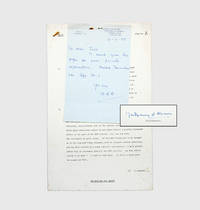
1955162675London: March 1955. The security they think they have in Europe today is a pure facade Copy number 2 of an unknown but inevitably small distribution signed by Montgomery on the final sheet and classified "private and top secret" together with a covering note dated 17 March 1955 in Montgomery's hand: "My dear Jock: I send you this paper for your private information. Harold Macmillan has copy No. 1. Yrs ever M of A". Sir John "Jock" Colville 1915-1987 was the wartime private secretary to Winston Churchill and rejoined him when he became prime minister in 1951 receiving this paper from Montgomery one month before Churchill resigned from office. A powerful mandarin Colville formed with Christopher Soames the duumvirate that effectively ran the country for several months following Churchill's stroke in June 1953. He was personally as well as professionally close to Montgomery their correspondence including for example a playful bet on the outcome of the 1956 US election. Montgomery's memo presented some stark warnings about NATO's capabilities. "It is in no position today March 1955 to fight a war and succeed. We would lose Western Europe if attacked" p. 1. He argues that in light of the reality that defence spending will not be increased money should be used more wisely. NATO members should pool resources and avoid overlap "joint defence". The three branches of the armed forces should be integrated and harmonized - rather than "squabble about who should do the task" and "get in each other's way" p. 6 - and the military's leadership should cultivate new attitudes. "Let us put pride prejudice inter-racial and inter-Service jealousies aside; these are instruments of the enemy and of the devil" p. 8. After Macmillan became Minister of Defence in 1954 Montgomery was one of the first officials with whom he met. "On his first incursion into NATO enclaves Macmillan found himself immediately at one with the abrasive little Field-Marshal on the NATO ministers of defence" Horn p. xlix. We have traced only other copy from the distribution held in the papers of Major-General Percival Napier White 1901-1982 at the Liddell Hart Centre for Military Archives. Eight sheets of duplicate typescript 330 x 205 mm text on one side only wire-stitched top left. With autograph cover letter signed 195 x 125 mm from Montgomery to John Rupert "Jock" Colville on single sheet of Ministry of Defence printed letterhead written on one side only affixed to first sheet with pin. Folded horizontally browning at staples and pin light toning and foxing: very good. Alistair Horn Macmillan: The Official Biography 2012. unknown
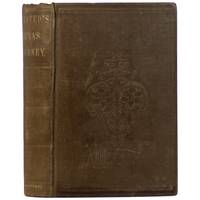
1857365383New York: Dix Edwards & Co 1857. First Edition. Very good. One of the best accounts of antebellum Texas written as a series of letters about life in the slave states commissioned for the New York Times. This is the second of three volumes issued separately in Olmsted's "Our Slave States" series. While not a radical Olmsted in sending a copy of this book to Edward Everett Hale said that he hoped that his book would help slavery to "retreat upon itself" and collapse under its own weight with "masters running away from the slaves" Quoted in Papers of Frederick Law Olmsted vol. 2 p. 398.<br /> <br /> Jenkins in Basic Texas Books calls this "the most civilized of all 19th century books on Texas" and "the most interesting and most dependable." He also says Olmsted "gives one of the earliest descriptions of the Texas cattle ranch." Greene in the 50 Best Books on Texas writes "the book is both good reading and good sociology."<br /> <br /> Larry McMcMurtry in his book In a Narrow Grave called Olmstead "perhaps the most readable of the nineteenth century travelers."<br /> <br /> The book includes a small folding map of the state titled "Map of Part of the State of Texas" prepared by J. H. Colton & Co. of New York. The Salt River fork on the Brazos river marks the northern and western boundary of the map. <br /> <br /> This book sold well. It was published at the beginning of 1857 and by February 16 Olmsted reported to his brother who had accompanied him on the journey and who edited the letters for this publication that only 200 of the first printing of 2500 copies remained. He also wrote that the paper ordered by the publisher of which Olmsted was an investor had "been a month on the way not yet arrived." A second printing of this book in 1857 is not referenced in any of the bibliographies known to your cataloguer. <br /> <br /> There are two variants of the book with 1857 on the title page. The most obvious difference is that one variant has plain endpapers and another has endpapers printed with reviews for the first volume in Olmstead's travels. I think it is most likely that the variant with ads is the second printing. On the title page of the copies with ad endpapers the counters empty spaces in the capital 'A's of the list of Olmsted's previous books are mostly filled in which is common when stereotype plates reproduce small letters the publishing agreement for this book survives and it required the publisher to make stereotype plates. The endpaper variant is also much more common which would also seem to fit this narrative; given that the first printing sold out in weeks the publisher is much more likely to have printed a larger number of the second printing which apparently lasted until 1859 when the book was reprinted for a third time a fourth printing appeared in 1860. Likely first printing with no ads on the endpapers. A very good copy worn at the corners and bumped on the spine ends. Small illegible previous owner's name on the front free endpaper; original price $1.25 marked above in pencil. Rather scarce; copies with ads on the endpapers are much more common. Dix, Edwards & Co unknown
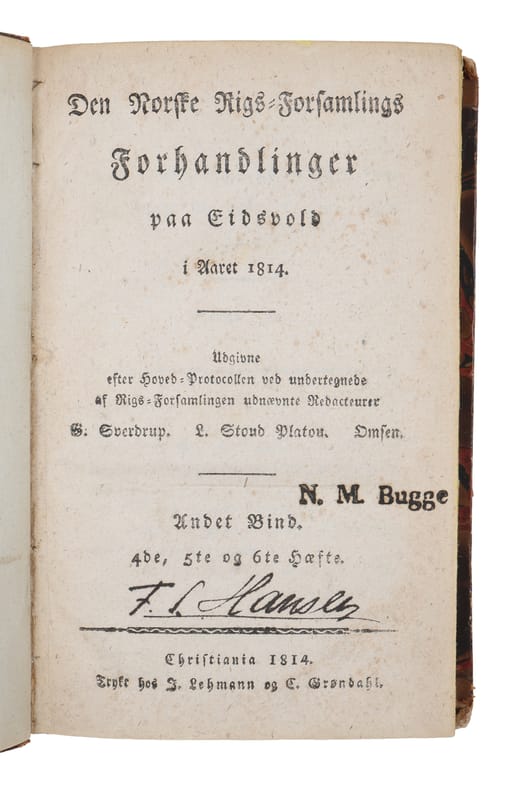
181461660Christiania, Lehmann & Grøndahl, 1814. 8vo. Six parts uniformly bound in two contemporary half calf bindings with red leather title-label and gilt lettering to spines. Previous owner's names to front free end-papers and title-pages. Previous owner's stamp (N. M. Bugge) to title-pages. Wear to extremities, boards with scratches. Leaf A1 in the fifth part with reapir in inner margin, slightly touching text, otherwise internally very nice and clean. Part 1-2: (2), 67, (2), 104, 104 pp. Part 3-6: (2),108, (2), 107, (2), 128 pp.
Very Good Turkish, Ottoman (1500-1928) Original manuscript paper. Double elephant folio. (79 x 58 cm). In Ottoman script. Hegira: [1]233-[1]234 = Gregorian: 1818. Burdurlu Dervish Mehmed Pasha, who was grand vizier held office under Mahmud II between the years of 1818-1820. Dervis Mehmed Pasa had gained a reputation among the 'vüzerâ' (Grand-viziers) would be the grand vizier as previously planned by Sultan Mahmud II according the 19th-century historian of Sânîzâde. He dealt with like cases the Aleppo revolution, confusions in Diyarbekir and Çildir, conquest of the Castle of Dir'iye, the center of the Wahhabis by Ibrahim Pasha, the son of Kavalali Mehmed Ali Pasha, the governor of Egypt and confusions in Sivas city. (Türkiye Diyanet Vakfi Islâm Ansiklopedisi). Buyuruldu (or Buyrultu, Buyurildi, Buyurdu etc.) is the order of an Ottoman grand vizier, vizier, beglerbegi , defterdâr , or other high official to a subordinate. The term is derived from the word 'buyuruldi', it has been ordered, in which the order usually ends and which gradually developed into a conventional sign. Buyuruldus are of two main types: a) decisions written in the margin (der kenâr) of an incoming petition or report, often ordering that a fermân (firman) (or berât , etc.) be issued to a certain effect... (Brill, Encyclopedia of Islam). "Menzils" were early post organization in the Ottoman Empire before Reform period. In the Ottoman Empire, every 35 kilometers - the distance one could travel in a day - on the main roads, there were buildings called "menzil" or "menzilhane" (destination, post station). Surrounded by walls, these yards had a hostelry, barn, market, bath and restaurant. Hosted at the complex for free, travelers shopped, took baths and fed their animals and continued their journeys the following day. At the complex, officials - registered and paid by the state - served the guests. Within time, menzils turned into bazaars where locals sold their products. Then, villages and towns started pop up around them. Commodities needed by the army for expeditions were preserved at menzils and soldiers were accommodated at these facilities if needed during expeditions. Mailmen operating between two faraway destinations changed their horses with those waiting at menzils and went on their route without losing time. (Source: Ekrem Bugra Ekinci). This huge sized budget paper (defter) written on paper with 'ahar'. Used black and red inks. It's written from Harmancik qaza (district) in Bursa vilayet (city) and sent to court of Istanbul for grand vizier confirmation. It's a budget defter of Harmancik 'menzil'. Apprx. 250-300 articles (registers) in notes as expenses like Tatar postmans, horses, Kütahya beglerbegi (beylerbeyi), qadis (judges) and other ones. At the end of registers, there is qadi signature (seal), qadi's name is Mehmed es-Seyyid Samed (?). He was probably Turkish judge in its period in that menzil of Bursa, Harmancik. Budget registers start as '[1]233 senesi Saban-i Muazzama'nin gurresinden [1]234 senesinin Saban-i Serif'inin menzil kuyudu'. Registers had been sent to the Ottoman court for approval from Bursa to Istanbul. Grand vizier's hand writing is in 'diwanî' script. An extremely rare autograph manuscript about the earliest postal history as well.