48 779 résultats
193360349Chicago IL: Century of Progress International Exposition Committee Kaufmann-Fabry Photographers 1933. Folio. 12.25 x 14.5 in. 52 leaves unnumbered. silver gelatin photo title w/calligraphic name of recipient added 51 warm-toned silver prints with 8 x 11 in. images in center with 1.5 in. blank borders each captioned in pencil all mounted on white linen hinges. Full blue-gray morocco gilt ruling & Art Deco lettering on front cover & spine rounded corners blue silk moire endpapers lower margins of title first two leaves renewed w/paper repairs poorly removed former owner’s bookplate on verso of silk moire front flyleaf carefully repaired still a VG- exemplar from the library of General Robert Elkington Wood 1879-1969 who served in the Philippine Insurrection Quartermaster for the Panama Canal Railroad Company during the construction with the 42nd Rainbow Division in the AEF in World War I and after retirement with the du Point de Nemours Co. in Venezuela and then as President of Sears Roebuck from 1928-1939 and chairmen until 1954. First edition of this spectacular presentation souvenir album for the Century of Progress which influenced modernist architects for decades and served as an invaluable exhibit of art deco design motifs. The limited number of presentation albums appear to have been created as gifts by the photographers for the Board of Trustees Officers and Founder Members for the Exposition. These remarkable images include a night shot of the Grand Fountain; aerial views of the grounds; the facade of the Hall of Science which typified the linear geometric Art Deco style of the Fair designed by architect Paul Philippe Cret and one of the interior shots showing the Great Hall announcing Planck’s Quantum and Einstein’s Relativity theories; the General Electric buildings; the stunning Transportation Building with it’s amazing Art Deco facade and a nighttime view of the Planetarium and Terrazzo Reflecting Pools. The photographers have also included an excellent photo of Italo Balbo’s squadron of 24 Savoia-Marchetti SM.55X flying boats above Lake Michigan next to the fairgrounds. His planes had left Italy on June 30 1933 and finally arrived over Chicago on July 15 1933 and even carrying airmail of which the commemorative envelopes are still very desired items by collectors. Also included are views of the Streets of Shanghai Swift’s Orchestra Shell Admiral Byrd’s South Pole Ship the “City of New York†The Chrysler Motors Building Swiss Village Electrical building with fireworks in a night scene and many others. Kaufmann & Fabry was an active commercial photographic firm specializing in architectural photography in Chicago from before 1910 and are still an active company. Founders were Charles D. Kaufmann b. 1888 an Austrian-American and Herman Fabry 1879-1955 German-American who are perhaps best remembered as the official photographers of the 1933 Century of Progress World’s Fair and were awarded not only the rights for publishing and distributing photographs and photos in publications but also operated a camera shop and film processing lab on the Exhibition grounds through 1933 and 1934. Century of Progress International Exposition Committee, [Kaufmann-Fabry Photographers], unknown
161-Do.J. Deckfarbenmalereien, die Ecken braun gouachiert, auf Velin. Je ca. 15,5 : 12,3 cm. Bei dem Herrenporträt linke obere Ecke außerhalb der Darstellung ergänzt, bei dem Frauenporträt sind die Ränder ringsum ergänzt. - Porträts von feinster malerischer Qualität, für die z. B. Anton Graff (1736 Winterthur - Dresden 1813) als Autor infrage kämen.
440-Eo.J. Feder in Braun, grau und braun laviert, auf cremefarbenem Velin. 28,4:15,9 cm. Fehlstelle im linken Rand ergänzt. Die in elegant-modische Abendrobe gekleidete Dame der Pariser Gesellschaft ist in Guys charakteristischer sicherer und schnell hingeworfener Zeichenweise bei sparsamster Kolorierung fixiert.
363-Eo.J. Feder in Schwarz, über Bleistift, auf chamoisfarbenem Velin, links unten signiert und datiert ?E. Lugo. April. 67.?. 19,3:23,3 cm. Verso in den Ecken Reste alter Verklebung, die recto etwas durchscheinen. Vergleichsliteratur: Ausst. Katalog: Emil Lugo 1840-1902. Ausstellung zum 75. Todestag, Freiburg i. Br. 1977, Nr. 125 mit Abb.; Ausst. Katalog: Emil Lugo (1840-1902) - Landschaften auf Papier, Heidelberg 2003, Nrn. 28 und 29, Abb. S. 90.
249-Eo.J. Bleistift, auf chamoisfarbenem Bütten mit Wasserzeichen: La Briglia. 20,7:27,7 cm. Etwas fleckig und mit leichten Gebrauchsspuren, verso am Oberrand Reste alter Verklebung. Provenienz: Sammlung Friedrich August von Sachsen, Lugt 971; L mit Eule im Rechteck sowie JK im Kreis, beide nicht bei Lugt. Literatur: Klassiker der Kunst ?, S. 83. Nach ?Szenen aus dem Leben des Hl. Nikolaus von Bari? (Pinacoteca Vaticana, Rom) von Frau Angelico (ca. 1387-1455). Auf Angelicos Predellatafel des Triptychons von San Domenico in Perugia sind von links nach rechts drei Szenen aus dem Leben des Hl. Nikolaus von Bari dargestellt: Geburt, Erziehung durch den Bischof und Nikolaus wirft goldene Kugeln in das Zimmer dreier Jungfrauen. Naeke wählte den Mittelteil für seine Zeichnung als Vorlage, an die er sich weitgehend hielt. Allein der auf der Kanzel stehende Bischof ist nicht Bestandteil der Komposition wie auch die Architektur, die bei Naeke aufgrund des näheren Ausschnitts nur angedeutet ist.
044-Ho.J. Feder in schwarzer Tusche, mit breiter Federlinie umrandet, auf beigem Zeichenkarton, links oben monogrammiert ?JV (ligiert)?. 25: 19,1 cm. Illustrationsentwurf; mit Deckweißkorreturen innerhalb der Darstellung.
443-Eo.J. Feder in Grau über Bleistift, auf Karton. Darstelluingsgröße 31:7,5 cm, Blattgröße 38,6:14,7 cm. Provenienz: Slg. Johann Georg Prinz von Sachsen, Lugt Suppl. 1162c.- Ryland wird von Singer als ?Der eigentliche Schwarzweißkünstler des Rossettischen Prae-Raphaelismus? angesehen. Möglicherweise handelt es sich bei dem Blatt um eine Vorzeichnung für eine Tapisserie.
EN-128o.J. Kaltnadelradierung, 1913, auf chamoisfarbenem Kupferdruckkarton, signiert, nummeriert und mit ?Pl. vern.? Bezeichnet, sowie unter der Darstellung von Carl Hauptmann signiert. 18,8:16,9 cm.- Im Passepartoutausschnitt leicht gebräunt. Literatur: Stix 32; Pabst R 32. Eines von 50 Exx., Platte vernichtet. ? Brillanter Abdruck mit scharfzeichnender Plattenkante, vollrandig. [2 Warenabbildungen]
0808-Co.J. Kaltnadel, 1924, signiert. 15:19,8 cm. Müller 858, mit der typographischen Bezeichnung ?Verlag Ernst Arnold, Dresden? in der Platte, auf chamoisfarbenem Velin. ? Eins von 200 Exx. für die Vorzugsausgabe: Gg. Biermann, Der Zeichner Lovis Corinth. Dresden, E. Arnold 1924.
580-Eo.J. Kohle, mit Wischton und Kreidehöhungen in Weiß, auf graugrünem Papier; verso mit handschriftlicher Inventarnummer ?Inv. 287?. 33,8:45,2 cm. Provenienz: Aus dem künstlerischen Nachlaß, ?Inv. 287?.
594-Eo.J. Kohle und Pastell, auf grautonigem Bütten, rechts unten signiert und datiert ?Leighton PRA 1887?. 37,3:30,9 cm. Mit Lichtrand rundum.
FH-458o.J. Farbholzschnitt, auf Japan-Bütten, mit Bleistift signiert und als ?Holzschnitt, Handdruck.? bezeichnet. Darstellungsgröße 35,8:44,6 cm, Blattgröße 44,5:52 cm. ? Mit leichtem Lichtrand rundum, Papier vergilbt. Vergleichsliteratur: Ausst. Katalog: Die Frühzeit des modernen Holzschnitts. Holzschnitte aus den Beständen der Stiftung Museum Schloß Moyland ? Sammlung van der Grinten ? Joseph Beuys Archiv des Landes Nordrhein-Westfalen. Apeldoorn/Koblenz/Kornwestheim/Neuß, 1993, Nr. 252, Farbabb. S. 119; Ausst. Katalog: Wege zu Gabriele Münter. Holzschnitte von Künstlerinnen des Jugendstils und des Expressionismus. Reutlingen, 2013, Farbabb. Ss. 9, 46-48, 50; Ausst. Katalog: Daniel Studer, Faszination Farbholzschnitt. St. Gallen, 2016/17, S. 227.
67582ABo.J. 67582AB Tadelloses Exemplar.
258-Eo.J. Feder in Braun, grau und ein wenig braun laviert, auf chamoisfarbenem Bütten mit Wasserzeichen: Vogel. 16,9:29,9 cm. Verso: Italienische Ortschaft mit einer Kirchenkuppel. Feder in Braun, grau und braun laviert. Minimal fleckig und knitterfaltig, mit kleinen dünnen Papierstellen an den unteren Ecken, mit einigen winzigen Löchlein, die oberen Ecken ergänzt. Wohl Skizzenbuchblatt. Mit sicherem und flottem Strich hat der Zeichner den Blick über die Baumwipfel und Bäume hinweg auf eine italienische Ortschaft eingefangen. Das Wechselspiel von grau lavierten zu den allein mit braunem Federstrich umrissenen Partien verleiht dem Blatt großen Reiz.
66682ABo.J. Alle Titel jeweils in den Originaleinbänden., 66682A 14 Bände. Alle Bände oben links am Rücken gelocht. Zwei Bände mit Gebrauchspuren, sonst erstaunlich saubere uind wohlerhaltene Exemplare.
199763423ABHachenburg., Lesezeichen-Edition Norbert Schmalen., 1997 - 2002. 63423AB
PETIT IN 4. BR [MOY]. 310 PP. 8 PPL EN NOIR. [BE]
Very Good Turkish, Ottoman (1500-1928) Original b/w map from Kitab-i Cihannuma which is one of the most important Turkish incunabula. Oblong large 4to. (31 x 37 cm). In Ottoman script. It shows Venice and Venetian Bay and Algerian shores at North Africa (Maghrib). Toponyms are in Turkish with Arabic letters. Written directions (Simal, Cenûb, Sark and Garb) on corners of the map, and decorative compass on Mediterranean Sea. Scale can be seen at left upper side (El-mikyas: Mil-i Islâmiyân Mil-i Frençe, and Mil-i Italiya]. It's one of the thirteen maps and plates from the book of Cihannuma. The story of Cihannuma can be considered as an effort to keep up with the speed that knowledge spread around the world at a time when literacy was highly limited. Kâtip Çelebi began to rewrite Cihannuma in 1654. During the next six years, he added to his books the knowledge he gained from the books he read. Kâtip Çelebi was vastly influenced by nonreligious positive knowledge, especially by the Atlas and later the Atlas Minor of Gerardus Mercator. He had the book translated from Latin to Turkish by a French recruit andenriched his own book with the new information. He brought together in Cihannuma the knowledge of geography and astronomy existing in Western sources (1654). Cihannüma has 13 charts and 27 maps. Mercator's maps are distinguished by their distinct properties. However, there are such maps which depict Istanbul, Anatolia, the Caucasus and the Orient that have to have been borrowed from other sources and there are those with relatively less detail that might have been prepared by Muslim geographers. Sources cite Ahmed El Kirimî (Ahmed the Crimean) and Galatali Migirdich as mapmakers for Cihannüma. Their names are placed on the maps. Another name that is mentioned is Tophaneli Ibrahim. Researchers agree on the fact that he is Ibrahim Müteferrika. Perhaps he wished to hasten the printing of the book. Perhaps he enjoyed making this contribution to a book he half owned. There is one map in Cihannüma which definitely does not belong to Mercator. Nor is there any information that it was originally charted by Müteferrika's team. Historians state that the 'invertedness' can be found in other maps made by Muslim cartographers. Since it is amap of Turkey, the difference can easily be perceived. The Mediterranean coasts of Turkey are at the top of the map while the Black Sea coasts are at the bottom. The compass on the map correctly indicates the North. The map seems to be inverted but it is not considered scientifically wrong to draw maps in this fashion...". (Source: Boyut; Kitab-i Cihannuma). Extremely rare.
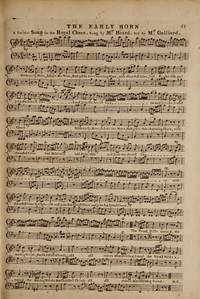
41155Folio. 19th half black leather with marbled boards spine in compartments gilt with titling gilt. Engraved throughout with the exception of the ninth songsheet which is typeset. <br /> <br /> Provenance<br /> Evan Charles Sutherland-Walker 1835-1914 with his armorial bookplate to front pastedown.<br /> <br /> Contains 25 songs including works by Arne Bride Dibdin Clarke Galliard Handel Harington Hook Jackson Leveridge Selby Smith and others. With occasional ornamentation filling out of chords and corrections in contemporary manuscript. <br /> <br /> 1. Clark. "The Broom on Cowdenknows" "When Summer comes the Swains on Tweed". London ca. 1780. 1f. recto music verso blank pp. BUC p. 1075. Jeremiah Clarke ca. 1743-1809 English composer violinist and organist; his published works all printed in London consist of songs and keyboard sonatas with instrumental accompaniment. <br /> <br /> 2. Dibdin. "While the Lads of the Village . Sung by Mr. Bannister." "J.W." printed to foot of music. London: John Welcker ca. 1775. 1f. recto music verso blank pp. BUC p. 1078. Charles Dibdin 1745-1814 English composer dramatist poet actor singer and entertainer wrote many songs.<br /> <br /> 3. Arne. "Water Parted from the Sea . Sung by Mr. Tenducci in Artaxerxes." London ca. 1765. 1f. recto music verso blank pp. BUC p. 57. Alfred Thomas Augustine Arne 1710-1778 an English composer violinist and keyboard player was "the most significant figure in 18th-century English theatre music." Peter Holman and Todd Gilman in Grove Music Online<br /> <br /> 4. Jackson. "Delia . Sung by Mr. Squibb at Marybone! Gardens. Set to Music by Mr. Wm. Jackson of Exeter." London ca. 1770. 1f. recto music verso blank pp. BUC p. 552. William Jackson 1730-1803 an English composer and organist wrote a number of songs canzonets etc. "His best music is to be found in his secular vocal works where he demonstrates an ability to blend a natural melodic style with a sensitivity to text." Richard McGrady in Grove Music Online<br /> <br /> 5. Galliard. "The Early Horn . A Fav'rite Song in the Royal Chace. Sung by Mr. Beard. Set by Mr. Galliard." London ca. 1737. 1f. recto music verso blank pp. Paginated 31 at upper outer corner. BUC p. 358. John Ernest Galliard ca. 1687-1749 German composer and oboist "certainly played a significant role in London's musical life in the first half of the 18th century." Roger Fiske revised by Richard G. King in Grove Music Online<br /> <br /> 6. Smith. "Zoreb and Zaida . Sung by Mr. Morgan." London ca. 1770. 1f. recto music verso blank pp. JISC one copy only at Oxford University.<br /> <br /> 7. Handel. "Let me Wander . L'Allegro Il Penseroso." London: Printed for J. Bland No. 45 Holborn ca. 1790. 1f. recto blank verso music pp. HWV 55. BUC p. 433. George Frideric Handel 1685-1759 English composer of German birth was "one of the greatest composers of his age." Anthony Hicks in Grove Music Online<br /> <br /> 8. Handel. "L'Allegro il Penseroso ed il Moderato Or Let the Merry Bells." London: Bland ca. 1790. 1f. recto music verso blank pp. HWV 55. BUC p. 433.<br /> <br /> 9. Bride. "The Joy-Inspiring Horn . A Favorite Hunting-Song. Set by Mr. Bride." London: R. Falkener ca. 1775. i blank 2 i blank pp. BUC p. 135. Typeset with an arrangement for two German flutes in score on the second page. Tear extending from lower margin into three systems of music; small loss to lower outer corner of first page of music; imprint trimmed but possibly the Falkener edition where the imprint appears at the foot of the second page of music. OCLC 43123680.<br /> <br /> 10. Handel. "Sung by Mr. Beard in Alexander's Feast" "Happy happy pair". London ca. 1740. i blank 2 i blank pp. HWV 75. Not in BUC.<br /> <br /> 11. Leveridge. "The Roast Beef Cantata." London ca. 1770. 4 pp. BUC p. 1026. Richard Leveridge 1670-1758 English bass and composer was "a leading singer on the London stage and a popular composer of songs." Olive Baldwin revised by Thelma Wilson in Grove Music Online<br /> <br /> 12. "The Camp Medley" "The Lark was up the Morn was grey". London: Longman & Broderip ca. 1780. BUC p. 595. 4 pp. With trill markings in contemporary manuscript.<br /> <br /> 13. "The Banks of the Dee A favorite Song" "It was summer". London: Bland ca. 1780. 1f. recto music verso blank pp. BUC p. 549 other editions. <br /> <br /> 14. "He Stole my Tender Heart Away . A Favorite Song" "The Fields were green". London ca. 1780. 1f. recto music verso blank pp. BUC p. 334. <br /> <br /> 15. Hook. "The Favorite Song Sung by Miss Brown in the Scheming Lieutenant" "Beneath a green shade". London: CST handstamp Charles and Samuel Thompson ca. 1775. 1f. recto music verso blank pp. JISC two copies at the British Library and the National Library of Scotland. James Hook 1746-1827 was a noted English composer whose songs were "regularly performed at the main London pleasure gardens." Pamela Gairl in Grove Music Online<br /> <br /> 16. "Social Pow'rs . A Favourite Song" "Come now all ye Social Pow'rs". London: Printed for J. Bland No. 45 Holborn ca. 1785. 1f. recto music verso blank pp. BUC p. 208.<br /> <br /> 17. "The Invitation Sung at Marybone Gardens by Mrs. Vincent. Mr Lowe. Miss Davis. Mr Raworth. and Mr Taylor" "Come ye party Jangling Swains". London ca. 1766. 1f. recto music verso blank pp. BUC p. 209. <br /> <br /> 18. Selby. "The Chace of the Hare . A New Hunting Song." 1f. recto music verso blank pp. BUC p. 940. Minor loss to flute line.<br /> <br /> 19. "Fair Hebe. Sung by Mr. Beard at Ranelagh Gardens" "Hebe I left with a cautious Design". London ca. 1750. 1f. recto music verso blank pp. BUC p. 324. With "Fair Hebe" in contemporary manuscript to blank verso. <br /> <br /> 20. Harington. "Air. by Mr. Harington of Bath" Gentle Airs sweet Joys impart". London ca. 1780. 1f. recto music verso blank pp. BUC p. 446. Henry Harington 1727-1816 English composer physician and author was a leading contemporary composer of glees catches and duets.<br /> <br /> 21. Arne. "The favourite Hymn of Eve. In the Oratorio of Abel" "How Chearful along the gay Mead". London ca. 1755. 1f. recto music verso blank pp. JISC one copy only at Oxford University. <br /> <br /> 22. "The Cotillon" "Hail Politeness pow'r divine". London: Rd. B__e ca. 1770. 1f. recto music verso blank pp. BUC p. 416.<br /> <br /> 23. Arne. "The Echoing Horn in Thomas & Sally." London: Printed and sold by S. Phillips in St. Martins Court ca. 1765. 1f. recto music verso blank pp. BUC p. 45. <br /> <br /> 24. Arne. "Hebe . Set by Dr. Arne" "When forc'd from dear Hebe". London: Walsh 1752. 1f. recto music verso blank pp. BUC p. 47 <br /> <br /> 25. "Anna A Particular Favourite Irish Song. Sung by Miss Catley - and - Mr. Leoni." "Shepherds I have lost my Love". London: I. F.entum ca. 1775. 1f. recto music verso blank pp. BUC p. 943.<br /> <br /> Bound with: <br /> Clark. Eight Songs with Instrumental Parts in Score Composed by Jeremiah Clark Organist in Birmingham Opera Seconda. London: Printed for the Author and Sold by Messrs. Straight & Skillern Music Engravers and Printers in St. Martins Lane near Charing Cross ca. 1775. 1f. recto title verso blank 34 pp. Engraved throughout. BUC p. 94. RISM C2618 and CC2618 two copies in the U.S. at Cornell University and the Library of Congress. <br /> <br /> Index in pencil to front free endpaper. <br /> <br /> Binding worn rubbed and bumped. Slightly worn; occasional minor imperfections including small tears soiling and stains. unknown
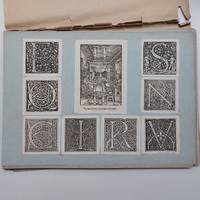
19721<p><strong>Superb set of hundreds of cut-out letterplates mounted on strong paper.</strong></p><p>Paris XVIe : 26 planches certaines légendées <em>Josse Bade 1520 1532 Carolus Stephanus 1558 Michaelis Vascosani 1543 Michel de Vascosan 1534 et 1543 Christophe Van Sichem Simon de Colines 1522 1527 1528 </em>3 planches<em> Thomas Richard 1552 1558 Robert Estienne 1549 A. Wechel 1559 Copiées sur Geoffroy Tory </em>2 planches<em> Robert Estienne 1551 Dessinées par Geoffroy Tory Carolae Guillardae 1540 Jacques Kerver 1567 Pierre Vidoue 1519 Kerver 1567 Attribuées à Jean Cousin Josse Bade 1514-1520 pour Guillaume Budé </em>3 planches</p><p>Paris XVIe suite : 17 planches certaines légendées <em>Henri Estienne 1566 Wechelum 1554 Jehan Petit 1514 Iacobum Gazellum 1548 Jehan Barbier 1515 Gulielmum Cavellat 1562 Wechel 1529 Antonii le Marié 1605 Claude Chevallon 1527 Henri Estienne 1512 1568 Félix Colonia 1512</em></p><p>Bâle Allemagne et divers en deux dossiers : 26 planches certaines légendées <em>And. Cratander 1531 3 planches Ioannem Oporinum 1557 Hervagiana 1541 Jean Schoeffer 1528 Mayence</em> 3 feuillets d'alphabet <em>Cologne Cervicorne 1539 Francfort Christian Egenolff 1545 Ingolstadt Weissenhorn 1550 Anvers Plantin 1571 Ingolstad Apian 1534 Cologne Cervicorne 1539 Francfort Les Feierabend 1568 Cologne Cervicorne 1532 Basileae Io Beb. et Mich. Ising. 1550. Guillaume Rouillé 1581 Guillaume Rouillé 1551.</em></p><p>Venise et Florence : 6 planches certaines légendées Venetiis per Ioannem de Fridino de Cereto Facuinum 1500 1536 Per Piero de Zuanne di Quarengii da Palazago Bergamasco 1797 <em>ie</em> 1497 .</p>
Acquaforte, 1932, esemplare unico terminato ad acquarello. Lastra 130x220 mm. Firmata e datata in lastra 1932. Titolo autografo a matita in basso a sinistra dove riportata l’iscrizione “unica a colori”. Firma a matita in basso a destra “Luigi Bartolini”. Un esemplare unico della stampa viene descritto in diversi repertori (vedi bibliografia sotto) e riprodotto ne Gli esemplari unici o rari (Casini editore, Roma 1952). Il presente esemplare sarebbe dunque l’unico terminato a colori da Bartolini. Luigi Bartolini è considerato uno dei maggiori incisori italiani del Novecento, insieme a Giorgio Morandi e Giuseppe Viviani. Oltre ad essere un prolifico incisore (al suo attivo oltre mille acqueforti), fu anche pittore e scrittore. Partecipò sia come pittore che come incisore a diverse edizioni della Biennale di Venezia dal 1928 al 1962. Presente a varie manifestazioni artistiche, sviluppò diverse maniere definite: ‘maniera bionda’, ‘lineare’ e ‘nera’. Ricordiamo soprattutto le acqueforti della serie Marche e della serie Sicilia. Iniziò la sua produzione grafica nel 1914 e il suo stile si rifà alla tradizione naturalistica dell’Ottocento. Molte sue incisioni si possono ricollegare ad alcune opere del Goya, di Telemaco Signorini e di Giovanni Fattori. Eccellente nella rappresentazione della natura morta e del paesaggio, spesso il Bartolini rappresentò dolcemente le cose e gli oggetti più umili, i soggetti di natura più dimessi. In essi ritroviamo il sentimento che diviene immagine e la forma che si sviluppa in espressione. Con Bartolini l’incisione torna ad essere un mezzo di espressione poetica libera dal simbolismo e dal vedutismo allora in voga presso le accademie. Nelle sue acqueforti prevale ora un tratteggio leggero (genere biondo), ora una ricerca del chiaroscuro alla Rembrandt (genere nero). Magnifica prova, con margini, in ottime condizioni. Il presente esemplare proviene dalla mostra di Bartolini presso la Galleria d’Arte Moderna Viotti di Torino, tenutasi il 22 febbraio 1969. Viene allegata la targhetta della galleria. Etching, 1932, unique example finished in watercolor. 130x220 mm plate. Signed and dated on plate 1932. Autograph title in pencil at lower left where inscribed "unique in color". Signature in pencil at lower right "Luigi Bartolini". A unique example of the print is described in several repertories and is reproduced in (Casini editore, Roma 1952). The present example would therefore be the only one finished in color by Bartolini. Magnificent proof, with margins, in excellent condition. The present example comes from Bartolini's exhibition at the Galleria d'Arte Moderna Viotti in Turin, on February 22, 1969. The gallery plaque is enclosed. Born in Cupramontana near Ancona, Luigi Bartolini was the twentieth century Italian etcher, who came closest to the stature of his great rival, Morandi. As a teenager, he saw the collection of etchings, including work by Callot, owned by the Corradi family in Iesi. From 1907 to 1910 Bartolini studied at the Istituto di Belle Arti in Siena, and started to etch c. 1909. He moved to Rome in 1910, where until 1912 he frequented the Accademia di Belle Arti, while also attending lectures on literature and the history of art, and courses on anatomy at the University in Rome. Bartolini studied the etchings of Goya and took lessons on drawing at the Accademia di Spagna. From there, he went to Florence in 1913, where he attended the Scuola del nudo. Bartolini continued his anatomical research, as well as studying architecture, making himself the most assiduous student of all Italian twentieth century printmakers. He also visited the Uffizi and Florentine print dealers to look at the etchings of Rembrandt and Fattori. Bartolini painted his first oils just before the outbreak of the First World War. Although he painted pictures throughout the rest of his career, and was awarded the Premio Marzotto for them in 1956, they have been far eclipsed in fame by his etchings and writings. During the First World War, Bartolini published his first collection of poetry. A very prolific and accomplished writer, in this field he is best known today as the author of the novel, 'Ladri di biciclette' (Bicycle thieves), of 1946, which was quickly turned into a celebrated film by Vittorio de Sica and Cesar Zavattini. After the First World War, Bartolini held a series of minor teaching posts in Macerata, Sassari, Avezzano, Pola, and Caltagirone, while he continued to etch, and started a long career as a polemical journalist and critic of art and architecture. From 1923 to 1929, he wrote for the Naples periodical, 'Cimento', but he also contributed to 'Il Selvaggio', 'Quadrivio', 'Italia letteraria', and 'L'Ambrosiana'. Bartolini's 1924 exhibition of etchings at the Casa d'Arte Bragaglia in Rome was a great success, and later that year he showed 70 etched landscapes of the Marches at the Casa Palazzo di Roma. The following year he visited Paris, where he paid particular attention to the paintings of Van Gogh. Bartolini's political convictions led him to being assaulted by Fascists and hospitalised in 1928. Two years later, he won a prize at the Venice Biennale, where he had exhibited a portfolio of etchings. In 1930, the Turin publisher, Buratti, began to issue a series of portfolios of etchings by contemporary Italian artists under the editorship of Cipriano Oppi, selecting Bartolini for the first album. The following year, Buratti published 'Le carte parlanti', a portfolio of 10 of Bartolini's etchings, which was published in an edition of 20. In 1932, Bartolini shared the first prize at the Prima mostra dell'incisione moderna at the Uffizi with Morandi and Boccioni. His close friend, the leading anti-Fascist art historian, Lionello Venturi, acted as his agent selling his etchings in Paris. Bartolini's correspondence with his compatriots in exile led to his imprisonment, from which he was released on Mussolini's personal intervention. He was then placed under political surveillance. From 1933 to 1938, Bartolin... Gli esemplari unici o rari, Casini editore, Roma 1952; C.A. Petrucci, Le incisioni di Luigi Bartolini, Calcografia Nazionale Roma (1951), n. 379 (e.u.); G. Ronci, Le incisioni di Luigi Bartolini, Calcografia Nazionale Roma (1962), n. 379 (e.u.); C. Barsan
0905-Co.J. Radierung, um 1920, auf chamoisfarbenem Japan, mit Bleistift signiert und nummeriert. 44,8:28,3 cm. ? Im Rand knitterfaltig und in den Außenrändern Papier etwas vergilbt und angeschmutzt. Nr. 18 von 30 Exx. Im unteren Rand rechts mit Widmung in brauner Feder ?A M. Albert Sarrant, cet ?Esprit des Ténèbres? / Hommage de son bien reconnaissant / Paul Souchon?. Bei Albert-Pierre Sarrant (1872-1962) handelt es sich um einen Juristen und Politiker, bei Paul Souchon (1874-1951) um einen Dichter, Schriftsteller und Dramaturgen.
FH-319o.J. Farblinolschnitt, um 1924/25, auf cremefarbenem Velin, mit Bleistift signiert und betitelt. Darstellungsgröße 22,7:37,4 cm, Blattgröße 30,2:40,4 cm. ? Zwei Falten links oben im weißen Rand geglättet, sonst tadellos. Literatur: Andreas Johns, The Art of Emma Bormann, 2016, Abb. S. 80.
647-Eo.J. Aquarell über Bleistift, auf gelblichem Velin, rechts unten be-zeichnet und signiert ?Boulogne. Eug Béjot?. Darstellungsgröße 13:17,2 cm, Blattgröße 16,7:21 cm. Im Rand etwas fleckig. Verso am Rand Rest einer alten Verklebung. Bei dem vorliegenden sehr typischen Aquarell widmet der Künstler seine Aufmerksamkeit ei-ner anderen französischen Stadt - nämlich der am Atlantik gelegenen Hafenstadt Boulogne.
205-Eo.J. Bleistift, auf festem chamoisfarbenem Velin. 33,8:26 cm, oben zweimal eingezogene Ecken, die unteren Ecken schräg geschnitten. Provenienz: Süddeutsche Privatsammlung. Literatur: M. Lehmann, Louis Catoir (1792-1841), ein unbekannter Mainzer Maler. Sonderdruck aus Mainzer Zeitschrift 71/2, 1976/77, S. 138, Nr. 75, Abb. Tafel 42 a.