184 823 résultats
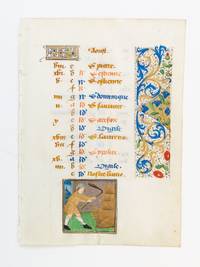
ST17245-02France probably Rouen second half of 15th century. 162 x 117 mm. 6 3/8 x 4 5/8". Single column 17 ruled lines text in a bâtarde hand. <br/> Text in gold blue and red "KL" in scrolling white letters on a gold ground with small blue and red blossoms both sides with panel border of acanthus flowers small ink dots and gold bezants WITH TWO SMALL MINIATURES showing the labor of the month Threshing on recto and the zodiac sign Virgo on verso. ◆Small wrinkle in lower margin just touching the lower edge of the miniatures trivial smudging but IN VERY FINE CONDITION the vellum especially clean and bright the paint quite rich and the miniatures extremely well preserved.<br/> <br/> With clean white vellum small but appealing miniatures and attractive lettering and decoration this is a desirable example of a calendar leaf from a high-quality Book of Hours likely made in Rouen. According to Roger Wieck far fewer than half the Books of Hours of the period contain illustrated calendars "even in manuscripts with otherwise lavish cycles of miniatures"; when they do appear they are invariably charming as is the case here. In the lower margin of the recto is a small miniature depicting the typical labor for August "Threshing" in which a young layman brings down his grain flail two hinged pieces of wood the longer one called a helve and the other a beater joined by a thong in an effort to separate the grain while neatly stacked unprocessed clumps of straw appear just behind it. On the verso we see a representation of Virgo as a young woman holding appropriately a long sheaf of grain in her hand. While most of the feast days that appear in the calendar are typical for the period the inclusion of St. Sauveur i.e. Transfiguratio Domini on 6 August is characteristic of a calendar for the use of Rouen suggesting that the parent manuscript may have been produced in that place or the region around it. unknown
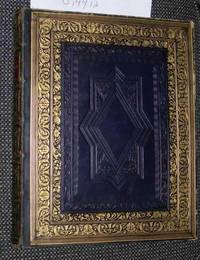
014412Nuremberg: Christoph Weigel Full mid-19th century dark blue calf leather binding with compartmented and tooled design to spine which is titled "Album". Elaborate filleted blind stamped covers. Mild wear to extremities with the leather starting at the bottom at spine. Boards distended from plates. Gilt dentelling to board edges and inside of boards. No title page. These are 183 uncolored black & white mounted plates one loose of costumes of Knights & Courtiers Orders of Chivalry and religious orders university alumni etc. costume plates engraved by Christoph Weigel. Ca 1700 Johann Christoph Weigel 1654-1725 was a famous Neurenberg engraver and publisher who had learnt his trade with Matthias Küsel at Augsburg. Apart from the present fine costume book Weigel published a large number of fine engraved print-series among others a picture bible emblem books as well as many hand colored engraved maps. . First Edition. Full Calf Leather. Very Good. Illus. by Christoph Weigel. 4to - over 9¾" - 12" tall. Hardcover. Christoph Weigel Hardcover
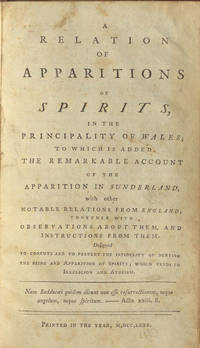
1780007385Trevecka: The Old Family 1780. 1st Edition 1st Printing. Hardcover. Very Good. 8vo - over 7¾ - 9¾" tall. First Edition First Issue VG 1780 in mid 20c half calf over contemporary red marbled boards. Re-spined with the old laid down gilt tooling & titles. Internally 2 iii-viii 1 2-133 pp 1 2 contents interesting ms note to fpd stating that it was printed privately by The Rev Edmund Jones & that it was reprinted in 1813 without all the Relations listed here bookplate to fpd George Montgomery Traherne - possibly his ms notes remains of removed bookplate to verso fep marbled endpapers some light browning mark to p42. p75 miss-numbered 57 small print run The First edition was published in the same year as this & there was a facsimile edition of the first edition published in 1813. This the 2nd issue was probably published without the authors knowledge or consent. Adding the English apparitions to make Wales appear less superstitious. 200121 mm. ESTC T130273. Title continues: together with Observations about them and Instructions from them: Designed to Confute and to Prevent the Infidelity of Denying the being and Apparition of Spirits; which tends to Irreligion and Atheism <br/> <br/> [The Old Family] hardcover
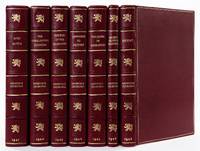
65650London: Cassell and Company Ltd. 1941-1946. FIRST EDITIONS. 7 vols. 8vo. 22 x 14.5 cm. Handsomely bound in modern full red morocco spines with raised bands gilt lettering and lions rampant all edges gilt. Photographic frontispiece portraits. A handsomely bound set of Churchill's War Speeches an extraordinary record of the twentieth century's greatest orator full of memorable phrases many of which have entered into common parlance. The titles in this series are Into Battle; The Unrelenting Struggle; The End of the Beginning; Onwards to Victory; Victory; The Dawn of Liberation and Secret Session Speeches. London: Cassell and Company, Ltd. 1941-1946. hardcover
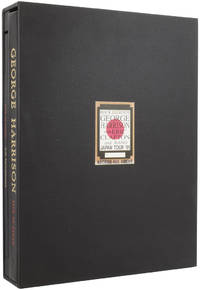
63763Guildford: Genesis Publications 1993. Rock and Pop SIGNED LIMITED EDITION. Folio 35 x 27cm pp.274. Number 1205 of 3500 copies thus SIGNED by George Harrison in brown ink to a label on the front pastedown. With a foreword by Eric Clapton and text by George Harrison plus members of the touring band and with colour photographs throughout. Original black full morocco blocked in red and gilt all edges gilt together with a cloth bound music booklet with CD trays. 'Live in Japan' features almost 500 previously unpublished photographs. A fine as new copy. Eric Clapton explains how George was persuaded to return to touring after a break of 17 years and the the first and longest chapter is written by George and details his thoughts and feelings on taking to the road after such a long absence and providing personal recollections of the tour and memories of times on the road with The Beatles. The final chapter by John Harris who engineered the live double CD provides a revealing account of working with George in the studio. The book also includes a full itinerary of the tour and a souvenir pack containing a laminated 'After Show' pass and Eric's and George's guitar picks. This volume sold out quickly and is a Genesis 'Hall of Fame' title. Guildford: Genesis Publications, 1993 unknown
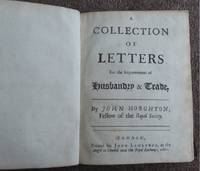
168152963<p>London printed for JOHN LAWRENCE at the Angel in Cornhill near the Royal Exchange 1681. VOLUME 1 ONLY The first trade & agriculture periodical in England 1681 complete with all 15 parts VOLUME 2 which is missing had six parts no more published. Although the title page is dated 1681 each issue has a separate imprint the last number 15 is dated 1683. Small 4to approximately 190 x 140 mm 7½ x 5½ inches pages: title page 1-184 bound in contemporary sheep rebacked with paler leather 2 black leather gilt lettered labels and gilt pattern dots to spine 2 bookplates of previous owners. Binding rubbed and lightly scuffed corners slightly worn 1 with small repair occasional pale age-browning strip of browning to edges of pastedowns and endpapers "Winchilsea" in old ink to top of first page free endpapers slightly chipped at edges otherwise a very good copy. Part 12 has a chapter by JOHN EVELYN pages 127-136: An Account of bread from the Learned John Evelyn Esquire; Entituled Panificium or the several manners of making Bread in France. Where by universal consent the best Bread in the World is eaten: Benit O Brioche Household-Bread Mountrau D'Esprit D'Citroville D'Cousin. Pages 35- 38 mention the Plantations in America. Part 14 pages 163-167 "An Experiment of the Ingenious Mr. John Worlidge for improving and Fyning of Syder" fining of cider; No.15 consists of lists of imports exports and ship movements in and out of London from Feb. 1683-March 1684; Other chapters History of Malting and the Method of making Malt; Improving Land by Marle; Some Account of the Plague 1665; The Manner and Advantage of Planting Liquorice; A Catalogue of the Books in the Library of the Royal Society relating to Agriculture; articles on trade agriculture the poor Ireland and all kinds of grain etc. See: Geoffrey Keynes John Evelyn A Bibliography of his Writings pages 261-62 No. 127; Mary Aslin Catalogue of the Printed Books on Agriculture 1471-1840 page 64; Forum Auctions lot 373 11th July 2018; Fussell 1523-1730 pages 81-82; Donald McDonald Agricultural Writers 1200-1800 pages 122-124; Catalogue of the Goldsmiths Library of Economic Literature Volume 1 page 140; The Kress Library of Business and Economics page 86 No. 1538; ESTC P2335. MORE IMAGES ATTACHED TO THIS LISTING ALL ZOOMABLE FURTHER IMAGES ON REQUEST. POSTAGE AT COST AND ALL PARCELS SENT FULLY TRACKED AND FULLY INSURED.</p> London, printed for JOHN LAWRENCE, at the Angel in Cornhill near the Royal Exchange, 1681. hardcover
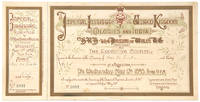
110625London Waterlow and Sons Ltd. 10 May 1893 & 17 May 1893. . Two over-sized colour-printed illuminated card invitations numbered addressed in pen & ink 22.7 x 31.2 cm; 16.5 x 32.6 cm; a printed manila envelope for replying to 'The Secretary / Imperial Institute / London SW'; a letter printed in red on Imperial Institute 4to headed paper requesting a reply to the invitation to the opening ceremony in order to reserve seats; single folio sheet 'General Outline of the Ceremonial' for the opening; 2 copies of printed folio sheet verso blank 'General Arrangements for the Reception of HRH the Prince of Wales. Wednesday May 17th 1893'.<br /> The first of these two over-sized invitations received by Louisa Da Costa was to the opening of the Imperial Institute on 10th May 1893 with Queen Victoria and the Prince of Wales in attendance. Since the Great Hall of the Institute wasn't completed in time a temporary hall was constructed for the opening. The second evening invitation from HRH the Prince of Wales invites Miss Da Costa and a friend to an evening reception from 9pm with 'Instrumental and Vocal Music. and Refreshments' in the illuminated gardens of the Imperial Institute in South Kensington - now the site of Imperial College London. The accompanying 'General Arrangements.' sheet give details of the evening's entertainments as well as travel arrangements special trains on the Inner Circle Line at 1am and 1:30am and the arrangements for 'Cold Suppers'.<br /><br />Louisa Da Costa was the sister of Mr Benjamin Mendes Da Costa both being descendants of the well-known wealthy Portuguese-Jewish trading dynasty. After his great success with real estate in Adelaide Australia Mr Da Costa sold his business there and sailed to England together with his sister. He died in Brighton in 1868 and his sister was the sole beneficiary of his will. Miss Da Costa died in 1898 bequeathing all her real estate in Adelaide to the Governor of South Australia to establish a Samaritan fund for convalescents from the Adelaide Hospital - the Louisa DaCosta Trust still operating today.<br /> London, Waterlow and Sons Ltd., 10 May 1893 & 17 May 1893. unknown
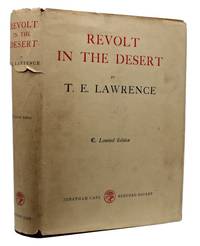
1927AQ22016London: Jonathan Cape 30 Bedford Square 1927. 2 445pp 1. With half-title/limitation coloured frontispiece portrait of Lawrence eighteen further illustrations nine of which are coloured and a large folding map to rear. Original publisher's brown quarter-pigskin over sand-coloured buckram boards gilt. Dustwrapper. T.E.G. others uncut. A remarkably preserved copy with only the slightest of shelf-wear externally bookplate a skull with the initials PMF and slight marking to FEP else fine. Dustwrapper correctly displaying 'Limited Edition' to spine and upper board panels with some loss and tearing tape removal marks to verso inner flaps trimmed at both corners. In an effort to recoup some of the costs of the production of the 1926 edition of Seven Pillars of Wisdom British army officer diplomat and man of letters T.E. Lawrence 1888-1935 first contemplated selling his library at Pole Hill Chingford before settling on the publication of an abridgement of Seven Pillars entitled Revolt in the Desert. This effort undertaken by the author himself saw the first seven chapters dropped entirely; reducing the size of the text by around a third. However suggestions that Lawrence refused to countenance publication of any more copies than were necessary to clear the debts owing from the production of the larger Seven Pillars suggests he was not altogether happy with the reduction. This First English edition limited in number to 300 copies was nevertheless a lavish production finely printed on large paper dictated by the inclusion of the 10 beautiful colour plates from the 1926 subscriber's edition of Seven Pillars depicting Lawrence Storrs Tafas el Hazimi Emir Shakir and Jaafar Pasha amongst others was published at the high price of five guineas. Neither the price of this edition nor the abridgement appeared to have harmed the appeal of this large paper limited edition or the trade edition published a few days later: both sold out almost instantly only further cementing the fame of the retiring 'Lawrence of Arabia'. This is only the second copy in a dustwrapper that we have encountered during our 13 years of trading; the majority were presumably discarded to reveal the more lavish pigskin-backed binding. O'Brien A101. First English edition Limited edition no. 63/300. Quarto. Jonathan Cape 30 Bedford Square hardcover
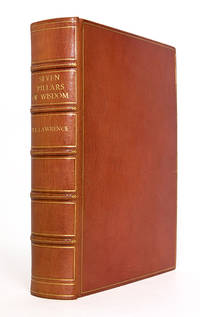
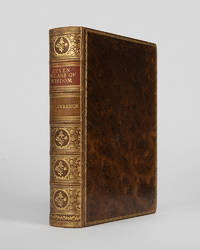
120425London Jonathan Cape 1935. . First trade edition first impression; 4to 25.5 x 20 cm; 4 folding maps printed in red and black 54 plates including portrait frontispiece occasional light spotting; crushed-brown morocco by Sangorski & Sutcliffe covers ruled in gilt spine lettered in gilt in 6 banded compartments all edges gilt spine a little faded slightly marked very good; 672pp.<br /> A handsome copy of T.E. Lawrence's classic memoir Seven Pillars of Wisdom bound in crushed red-brown morocco by Sangorski & Sutcliffe.<br /><br />Following his extraordinary military and diplomatic career in Arabia and having already become a legendary figure in the public imagination T.E. Lawrence purchased his Dorset cottage retreat Clouds Hill in 1924 to write his book about the war. The first draft of Seven Pillars was completed by November 1919 but was soon lost according to the author at Reading Station. A second draft was finished during 1922 and finally appeared as a private edition reflecting Lawrence's love of fine printing in 1926.<br /><br />'Subtitled "A triumph" its climax is the Arab liberation of Damascus a victory which successfully concludes a gruelling campaign and vindicates Lawrence's faith in the Arabs. In a way Seven Pillars is a sort of Pilgrim's Progress with Lawrence sustained by his faith in the Arabs successively overcoming physical and moral obstacles' ODNB.<br /> O'Brien A042. London, Jonathan Cape, 1935. unknown
122526London Jonathan Cape 1935. . First trade edition first impression; 4to 25.5 x 20 cm; 4 folding maps printed in red and black 54 plates including portrait frontispiece light spotting throughout; contemporary tree calf gilt by Riviere & Son gilt spine in 6 compartments contrasting red and brown morocco lettering-pieces all edges gilt a little rubbed with the odd chip and occasional slight loss very good; 672pp.<br /> A very handsome copy of the first trade edition of T.E. Lawrence's classic memoir Seven Pillars of Wisdom bound in full tree calf gilt by Riviere & Son.<br /><br />Following his extraordinary military and diplomatic career in Arabia and having already become a legendary figure in the public imagination T.E. Lawrence purchased his Dorset cottage retreat Clouds Hill in 1924 to write his book about the war. The first draft of Seven Pillars was completed by November 1919 but was soon lost according to the author at Reading Station. A second draft was finished during 1922 and finally appeared as a private edition reflecting Lawrence's love of fine printing in 1926.<br /><br />'Subtitled "A triumph" its climax is the Arab liberation of Damascus a victory which successfully concludes a gruelling campaign and vindicates Lawrence's faith in the Arabs. In a way Seven Pillars is a sort of Pilgrim's Progress with Lawrence sustained by his faith in the Arabs successively overcoming physical and moral obstacles' ODNB.<br /> O'Brien A042. London, Jonathan Cape, 1935. unknown
lennon-and-mccartney-shar<p data-mce-fragment="1"><span data-mce-fragment="1">On the 19th of February 1963 John Paul George and Ringo discovered that 'Please Please Me' had reached Number One on the UK singles chart. On that very day photographer Michael Ward embarked on a journey from London to photograph them</span></p><p data-mce-fragment="1"><span data-mce-fragment="1">"I didn't know who they were; I'd never heard of them" he quipped. "I wasn't interested in them and they weren't remotely interested in me — or in having their photographs taken!"</span></p><p data-mce-fragment="1"><span data-mce-fragment="1">After becoming acquainted Ward's photographs beautifully captured The <span class="il" data-mce-fragment="1">Beatles</span> on the brink of Beatlemania performing one of their final gigs at The Cavern. This is one of those famous and highly sought after shots. Here signed titled and dated by the famous photographer Michael Ward the print s</span><span data-mce-fragment="1">hows John Lennon and Paul McCartney onstage the Cavern Club sharing the microphone.</span></p><p data-mce-fragment="1">Michael Ward 1929-2011 documented renowned musicians actors and visual artists such as Pattie Boyd Julie Christie Marianne Faithfull Gary Cooper Hugh Grant David Hockney and Pauline Boty. He captured iconic images of The Beatles at The Cavern Club in 1963 and went on to photograph The Rolling Stones a year later.</p><p data-mce-fragment="1">Ward was a contributor to The Evening Standard for 4 years and then worked at The Sunday Times for 30 years until retirement covering many events from the Troubles in Northern Ireland to the Turkish invasion of Cyprus. He was married to Elizabeth Seal an award-winning actress for 40 years before passing away in 2011. His works reside in the National Portrait Gallery’s permanent collection.</p> unknown
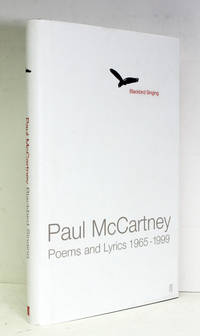
031664UK: Faber 2001. First Edition 2nd Printing. Cloth. Fine/Near Fine. 8vo - over 7¾" - 9¾" tall. 1st Edition 2nd Imp 2001. Signed by Paul McCartney to the endpaper. Inscription reads 'Cheers! Paul McCartney. Book is fine and bright. The complete wrapper is near fine and bright. Full provenience. Ref A1234 <br/> <br/> Faber hardcover
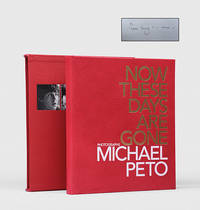
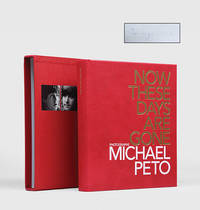
167179Guildford: Genesis Publications Limited 2006. First edition first impression no 61 of 350 deluxe copies signed by Alan Langlands Principal and Vice-Chancellor of the University of Dundee and Richard Lester director of Help and A Hard Days Night with three additional photographic prints of John Lennon and Peter Cook presented in a red envelope from a total edition of 2500. When Peto died in 1970 he left the University of Dundee a collection of 130000 prints and negatives including photos of the Beatles taken in 1965 while shooting their film Help. Quarto. Full page photographs by Peto throughout. Original full red leather lettering to front cover in white and gilt all edges gilt printed on 200 gsm matt art paper. With the red leather tipped slipcase inset with four portraits of The Beatles. All housed in a printed draw-string cloth bag. All in fine condition. hardcover
176208Guildford: Genesis Publications Limited 2006. First edition first impression number 336 of 350 deluxe copies signed by Alan Langlands Principal and Vice-Chancellor of the University of Dundee and Richard Lester director of Help and A Hard Days Night with three additional photographic prints of John Lennon and Peter Cook presented in a red envelope from a total edition of 2500. When Peto died in 1970 he left the University of Dundee a collection of 130000 prints and negatives including photos of the Beatles taken in 1965 while shooting their film Help. Quarto. Full-page photographs by Peto throughout. Original full red leather lettering to front cover in white and gilt all edges gilt printed on 200 gsm matt art paper. With the red leather tipped slipcase inset with four portraits of The Beatles. All housed in a printed draw-string cloth bag. A fine copy. hardcover
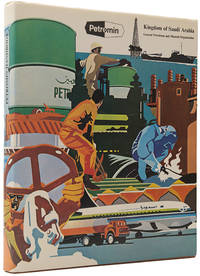
111289Riyadh Petromin 1977. . First edition. 4to 324 pp. illustrated throughout original brown cloth gilt pictorial dustwrapper a fine copy.<br /> Original issued in English as here French and Arabic this is a fine copy of the history of Petromin The General Petroleum and Mineral Organization from its foundation in 1962 up to 1977. The Kingdom's first national oil company Petromin was founded to develop petroleum and mineral resources to the optimum economic advantage of the Kingdom of Saudi Arabia guided by the Government.<br /> Riyadh, Petromin, 1977. hardcover
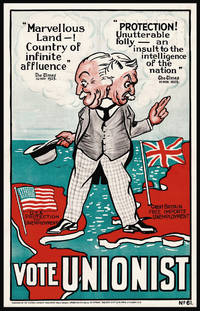
192412879London: National Unionist Association Palace Chambers ND but 1924. 844 by 535mm 33.25 by 21 inches. Lithograph printed in blue red and black at neat line plus margins folds flattened a bit of offsetting at top backed with poster canvas. The poster depicts David Lloyd George leader of the Liberal Party in 1924. He had previously been the Prime Minister of a Conservative-Liberal coalition during the war and kept much of that coalition with the Conservative party in order to win the 1918 election which he did. The coalition had broken down by 1922 and Lloyd George had mended his fences with the other Liberal politician H.H. Asquith. In the 1924 election a reunited Liberal party ran against the Conservative party led by Stanley Baldwin which was advocating tariffs on imported goods. Free Trade had been a British policy for most of the Victorian and Edwardian area especially within the Liberal party. This Conservative poster quotes David Lloyd George's opinions on protectionism and the dynamism of America when interviewed by The Times newspaper and makes the point that the USA have high tariffs and lots of employment whilst the UK has no tariffs and unemployment. National Unionist Association, Palace Chambers, unknown
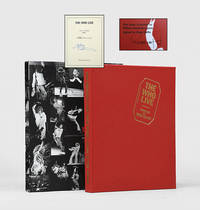
165640Guildford: Genesis Publications Limited 2000. Signed by Pete Townshend First edition first printing. No. 100 of 250 deluxe copies signed by Pete Townsend and Halfin together with a CD "Live at Leeds" inside a pocket on the front pastedown. Quarto. Photographs compiled by Halfin include George Bodner Jim Cummins Ian Dickinson Carl L. Dunn Robert Ellis Harry Goodwin Ross Halfin Laurens van Houten Jim Marshall Paul Natkin Terry O'Neill Gilbert Nencioli Barry Plummer Ron Pownall Chuck Pulin Micheal Putland Jean-Louis Rancurel Christian Rose Chris Walter Barrie Wentzell Michael Zagaris and Neil Zlozower. Original full red leather lettering to front cover and spine gilt. Housed in an illustrated slipcase. With the original packing box. Fine in fine slipcase. hardcover
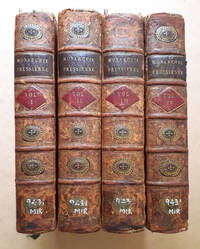
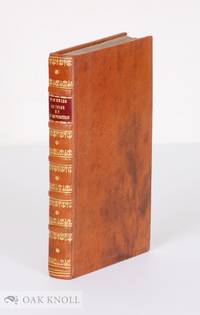
#BIBLIO-1316<p>De la Monarchie Prussienne sous Frédéric le Grand; avec un appendice contenant des recherches sur la situation actuelle des principales contrées De L'allemagne. Par le Comte de Mirabeau. Tome I-IV.</p> On the Prussian Monarchy under Frederick the Great; with an appendix containing research on the current situation of the principal countries of Germany. By Honoré Gabriel Riqueti the Count of Mirabeau. Volume I-IV. Four-volume set. First edition. Quarto/4to. Each volume measures around 8" x 10 1/4" x 2" 203mm x 260mm x 50mm. Pagination: 4 xliv 522 2; 4 566 6; 4 710; 4 560 3 pp. Published in London 1788. Hardback full mottled calf. Raised bands. Gilt-tooled borders to boards gilt decoration to spines and gilt-blocked titles with brown title labels and red volume labels. All page edges gilt. Marbled endpapers. Frontispiece portrait of Frederick the Great to first volume engraved by H. Marais in 1788 after A. Graf and a plate of the "Metropolis of Scotland Colledge" opposite page 489 of the third volume. Contains numerous foldout tables. Notes of errata at rear. Green silk ribbon markers to volumes I II and IV lacking in volume III.Ex-library books containing typical markings including white library numbering to spines labels and cards to front pastedowns and endpapers and stamps to titles & final leaves. A little pencil writing to endpapers. Scuffing and marking to binding some tearing. Other signs of wear rubbing at edges and on hinges. Bumped and torn corners and some chipping and loss to heads and tails of spines. Some cracking to hinges but binding quite firm. Some scuffing and marking to page edges but gilt detail still vivid. A little tearing to the odd page. Some toning foxing soiling and staining to endpapers. A little grub here and there and minor toning to outer edges throughout but otherwise page surfaces generally quite clean with no underlining marginalia etc. A lovely set. See pictures for further information. About the author:<em>Honoré Gabriel Riqueti Count of Mirabeau French: miÊabo; 9 March 1749 – 2 April 1791 was a French writer orator statesman and a prominent figure of the early stages of the French Revolution.</em><em>A member of the nobility Mirabeau had been involved in numerous scandals that had left his reputation in ruins. Well-known for his oratory skills Mirabeau quickly rose to the top of the French political hierarchy following his election to the Estates-General in 1789 and was recognized as a leader of the newly organized National Assembly. Among the revolutionaries Mirabeau was an advocate of the moderate position of constitutional monarchy built on the model of Great Britain. He was also a leading member of the Jacobin Club.</em><em>Mirabeau died of pericarditis in 1791 and was regarded as a national hero and a father of the Revolution. He received a grand burial and was the first to be interred at the Panthéon. During the 1792 Trial of Louis XVI the discovery that Mirabeau had secretly been in the pay of the king brought him into posthumous disgrace and two years later his remains were removed from the Panthéon. Historians are split on whether Mirabeau was a great leader who almost saved the nation from the Terror a venal demagogue lacking political or moral values or a traitor in the pay of the enemy.</em> Source: Wiki hardcover
1972cj2p3c43xbvkKiev, 1972. Titlesheet, 22 graphic sheets, few coloured; printer's device. - Loose in typographic designed publisher's cloth-box; large Folio (ca. 46 x 39 x 2cm; ca. 2 kg.).
1759137120Paris: J. Barbou 1759. Full period French binding in Calf five raised bands gilt ornamentation on spine author and title in gilt on red leather spine label in second compartment. 8vo. Full period French binding in Calf five raised bands gilt ornamentation on spine author and title in gilt on red leather spine label in second compartment. 263 pages. First edition Bigmore and Wyman p.228. Minor soiling to the text block else a fine copy.<BR> <br /> <BR> <br /> In this volume Fournier sets out to prove that Gutenberg was not the inventor of the printing press by examining the history of printing. He believes that the technology Gutenberg made popular existed long before the German printer's work. <BR> <br /> <BR> <br /> "Peter Simon Fournier a French engraver and letter-founder was born at Paris 1712 and died 1768. He studied under Colson painter of the Academy of Saint Luc and devoted himself first to the art of wood-engraving; he afterwards as an engraver on steel rendered himself famous in all countries. In some of his works he seeks to prove that Gutenberg is not the inventor of printing and maintains that long before Gutenberg engraving on wood had been employed for printing images and inscriptions; that during his residence in Strasburg Gutenberg attempted the application of this art to the printing of books and that on his return to Mayence he first printed the Donatus and the Catholicon of Johannes de Janua with engraved and solid blocks. Fournier's ingenious theories were ably refuted by Baron Heinecken in his "Idée Générale d'une Collection complette d'Estamples" Leipsic: 1771" Bigmore & Wyman p 229. J. Barbou unknown
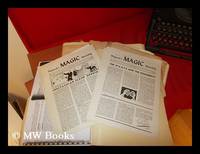
280956Various Publishers. First Edition. Softcover. Near fine archive in the original stiff-card wrappers; edges very slightly dust-dulled and toned. Remains particularly and surprisingly well-preserved; tight bright clean and especially sharp-cornered. Physical description; 8 folders. Notes; Various dates and publishers. Subjects; Magic. Conjuring Tricks. Mac the Magician. Wilfred MacEwan. Various Publishers paperback
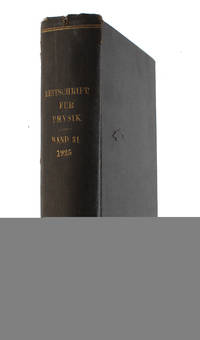
192547417Berlin, Julius Springer, 1925. 8vo. Contemp. full cloth. Gilt spine. Wear to top of spine and with 2 tears to hinges at upper spine. Inner backhinge nearly broken. A stamp to foot of a few leaves In: 'Zeitschrift für Physik', Volume 31. VIII,952 pp., textillustr. (Entire volume offered). Pauli's paper: pp.765-783. Internally clean and fine.
192547417Berlin Julius Springer 1925. 8vo. Contemp. full cloth. Gilt spine. Wear to top of spine and with 2 tears to hinges at upper spine. Inner backhinge nearly broken. A stamp to foot of a few leaves In: 'Zeitschrift für Physik' Volume 31. VIII952 pp. textillustr. Entire volume offered. Pauli's paper: pp.765-783. Internally clean and fine. <br/><br/><em>First edition of the first announcement of Pauli's Exclusion Principle which gives a criterion for the electronic structure of atoms and explains the periodic table and the combining properties of the elements.Pauli first formulated his exclusion principle in this article in an attempt to explain the structure of the periodic table. By introducing an additional quantum number namely the spin of an electron to the already known three quantum numbers in Bohr's atom model and by postulating that no two electrons can have the same four quantum numbers Pauli could explain the number of electrons allowed in the outermost shell e.g. explaining the varying lengths of successive periods in the table. The exclusion principle turned out to be applicable to all fermions and thus plays a role in a variety of physical phenomena. For example it explains the formation of degenerate matter in white dwarfs and neutron stars. In 1945 Pauli received the Nobel Prize in physics "for the discovery of the Exclusion Principle also called the Pauli Principle".This volume also contains a paper by Heisenberg: 'Über eine Anwendung des Korrespondenzprinzips auf die Frage der Polarisation des Floureszenzlichtes' A. Einstein: "Bemerkung zu P. Jordans Abhandlung "Zur Theorie der Quantenstrahlung"and another paper by Pauli: 'Über den Einfluss der Geschwindigkeitsabhängigkeit der Elektronenmasse auf den Zeemaneffekt' Zeeman-Effect and the Dependence of Electron-Mass on the Velocity. </em> hardcover
Druck der Kelmscott Press in 350 Exemplaren auf Bütten. Gesetzt aus der Chauser-Type, gedruckt in Rot und Schwarz. Mit zahlreichen Bordüren und Initialen von William Morris. Tadellos erhalten. - Tomkinson 120,47.
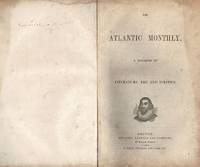
185731942AB1857. Boston The Atlantic Monthly 1857-1858. Octavo. IV 768 pages. Hardcover / Original Half-leather with gilt lettering on spine. Binding in poor but still good condition with some stronger signs of wear spine starting mild foxing throughout and some faded damp-staining to the outer paper-margins inside only. Endpaper Half-title and titlepage slightly detached. This is the very rare inaugural Atlantic Volume with a wonderful irish provenance possibly even a relation to Fitz-James O'Brien. The Atlantic is an American magazine and multi-platform publisher based in Washington D.C. It features articles on politics foreign affairs business and the economy culture and the arts technology and science. It was founded in 1857 in Boston as The Atlantic Monthly a literary and cultural magazine that published leading writers' commentary on education the abolition of slavery and other major political issues of that time. Its founders included Francis H. Underwood and prominent writers Ralph Waldo Emerson Oliver Wendell Holmes Sr. Henry Wadsworth Longfellow Harriet Beecher Stowe and John Greenleaf Whittier. James Russell Lowell was its first editor. During the 19th and 20th centuries the magazine also published the annual The Atlantic Monthly Almanac. Wikipedia _________________________________ O'Brien Fitz-James 182862 writer was born Michael Fitzjames O'Brien in Cork the only child of James O'Brien 17801839 county coroner and his wife Eliza daughter of Michael O'Driscoll of Baltimore Co. Cork. They were well off and lived at 58 South Mall Cork city. Eliza's father was a wealthy landowner from an old well established family and was known locally as The O'Driscoll. His grandson always called Fitzjames which he later wrote as Fitz-James was his sole heir. After James O'Brien's death c.1839 his widow a noted beauty married a wealthy Corkman De Courcy O'Grady. They settled in Castleconnell Co. Limerick and Fitzjames was educated privately and enjoyed an active sporting life. His first published poem was inspired by the famine and advocated escaping English tyranny by flight to America. Charles Gavan Duffy qv published it in The Nation 15 March 1845 under the caustic introduction: This might be called The Coward's Resource. Undeterred O'Brien continued to send in verse under pseudonyms such as Heremon and Fineen Dhuv. His most celebrated poem was the romantic I know a lake which appeared on 26 July 1845. Its unattributed inclusion in Edward Hayes's popular The ballads of Ireland 1855 ensured it lasting fame. From July 1848 he also contributed to the Cork Magazine and sent patriotic verse to the Irishman. O'Brien always claimed falsely to have attended TCD. He probably spent some time in France as he was fluent in the language. On his twenty-first birthday in 1849 he came into his inheritance of around £8000 and left for London. There he ran through his money in two years of luxurious living. He had work published in the Metropolitan and the Parlour magazines but later complained of the difficulty of breaking into literary London. His first story The phantom light made good use of Irish peasant superstition and appeared in the Home Companion. Afterwards he seldom used Irish settings in his stories and turned his back on his earlier patriotism. American friends noted that he seemed ashamed of his nationality and was delighted when mistaken for an Englishman. After an unhappy love affair with the wife of an officer he left London penniless at the end of 1851 for New York. He never returned never again lived within his means and never again fell in love although he had numerous affairs. O'Brien's entrée into New York's literary scene was swift and successful. He first contributed to the Lantern a comic magazine established by a fellow Irishman the actor John Brougham qv. For this he provided an autobiographical sketch of himself as The sentimental poet: of medium height with large eyes large nose and a head shaped like an isoceles triangle Wolle 37. This was a reference to his tiny chin caricatured by contemporary artists. Within months he was drama critic of the Saturday Press and by the end of the year was on the staff of the New York Daily Times to which he contributed stories poems literary reviews and essays. Other publications with which he was sporadically associated included Young Americans the Saturday Whig Review and the Atlantic Monthly. His play A gentleman of Ireland a picaresque tale of an Irishman in London opened Christmas 1854 and was a resounding success. The role of Gabriel Fitzmaurice was one of Brougham's favourites and he revived it frequently. At one such revival O'Brien reviewed his own play as a wonderfully crude production . . . the dialogue is sometimes smart but never witty . . . There is no characterisation everybody talks like everybody else Saturday Press 13 Nov. 1858. His most important connection was to the Harper brothers owners of Harpers Monthly and Harpers Weekly. To this he contributed his Man about town column from January to September 1857. A gossipy exuberant account of his adventures in which he amusingly satirises his poverty it made him famous; his biographer Francis Wolle credits him with initiating the column of personal comment . . . America's first columnist in the modern sense Wolle 133. However he was unable to sustain it for longer than nine months; though brilliant he was erratic and undisciplined. His friend the journalist R. H. Stoddard wrote: No American writer ever had such chances of success as Fitzjames O'Brien and but one American writer Poe ever threw such chances away so recklessly New York Tribune 6 Mar. 1881. O'Brien was among the most colourful characters in the circle centred on Pfaff's Cellar tavern at 653 Broadway where a table seating thirty was permanently reserved for bohemians including Henry Clapp Ada Clare and Walt Whitman who referred to O'Brien as very bright and the talk as very good. O'Brien always well dressed and generally well mannered got into brawls when drunk. He appeared thinly disguised in two novels of the period William North's The slave of the lamp 1855 and Bayard Taylor's John Godfrey's fortunes 1864. The three stories on which O'Brien's fame rests were written in 1858 and 1859. The diamond lens deals with a man who commits murder to obtain the perfect lens. This enables him to see a sylph in a drop of water; when the water evaporates he goes mad. What was it concerns an encounter with an invisible monster while The wondersmith is about diabolic toys which eventually attack their creator. Cleverly blending scientific rationalism with gothic horror they electrified readers and are still anthologised. O'Brien was named the Celtic Poe. Hoffmann Dickens and Sheridan Le Fanu qv were other discernible influences while he foreshadowed de Maupassant and H. G. Wells. On the outbreak of civil war in 1861 he enlisted in the 7th Regiment of the New York National Guard. Anxious for active service in June he began recruiting for a New York volunteer regiment to be called the McClellan Rifles. Numbers failed to reach the minimum regimental requirement but in January 1862 he was taken on to the staff of Gen. Frederick W. Lander and departed for Western Virginia. His high spirits athleticism and ability to turn out marching songs made him a great favourite. He received honourable mention for his bravery at the battle of Bloomery Gap 13 February 1862 and three days later his audacious behaviour during a skirmish led to a shoulder wound. This was improperly treated and he died of tetanus in camp on 6 April 1862 . His body was brought back to New York and held in the vault of Greenwood cemetery until it was finally interred on 27 November 1874. A compilation with biographical sketch by his friend William Winter was published in 1881 and brought him back to public notice. Since then his stories have survived in anthologies of the supernatural. His poetry has been largely dismissed as facile and derivative. His 1940s Dictionary of American Biography entry characterises him as minor and more significant as a personality than a writer and he is not included in American National Biography 1999; but his work has proved stubbornly popular with niche audiences. He has been translated into French Japanese Spanish and Italian and a new American edition of his stories appeared in two volumes in 1988. His literary criticism was recently compiled in Fitz-James O'Brien: selected literary journalism 18521860 edited by Wayne R. Kime 2003. Source: Bridget Hourican for THE DICTIONARY OF IRISH BIOGRAPHY hardcover