Lieut-General The Hon C GreyBiblio.com
184 824 résultats
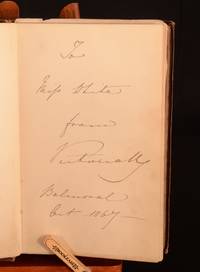
1867733K31London: Smith Elder and Co. 1867. Cloth. Good. 9" by 6". Sir W. Ross. A highly sought after example of this biographical work being signed and dedicated by Queen Victoria in her own hand. Truly a unique piece of history relating to the life of Prince Albert containing a scarce example of Queen Victoria's signature. Signed and dedicated to the front blank from Queen Victoria: "To Mssr. White from Victoria R. I. Balmoral Oct: 1867" Whilst little is known regarding Mssr. White this is the only known copy to contain the whole dedication written in Queen Victoria's hand with other copies containing her signature alone leading us to believe that White had a personal relationship to the Queen. Despite Queen Victoria's long reign it is extremely unusual to find items signed in her hand which are separate from administrative documents or letters. Queen Victoria did not give her autograph to waiting members of the public so examples such as this reflect a relationship between the recipient and the monarch. Collated complete with a frontispiece of Prince Albert at aged four and Prince Albert at aged twenty from a miniature by Sir W. Ross. Half title is present. The fourth edition of the work. First compiled and published the same year under the Queen's direction for private circulation among members of her own family. The fascinating biographical work was commissioned by Queen Victoria and written by British Army officer and private secretary to first Prince Albert and later Queen Victoria Charles Grey. The work covers the Prince's life from his birth in 1819 to their first year of marriage in 1840. The work was published six year after the death of Prince Albert; Queen Victoria is famed for disappearing from public appearances and entering deep mourning after the death of Albert. A very scarce example of a work signed by Queen Victoria commissioned by the Queen and relating to the early life of her husband Prince Albert. In the original burgundy cloth with gilt detail to the spine and boards. Externally sound with slight bumping to the extremities and the head and tail of the spine resulting in some slight loss to the cloth. Joints strained but sound resulting in some splitting to the cloth particularly to the upper extremity of the front board. Slight splitting to the cloth to the spine. Small area of damp staining to front board. The odd mark to the board. Hinges strained. Booksellers label to rear pastedown. Internally generally firmly bound although slightly strained in places. Frontispiece is detached but present. Pages generally bright and clean with the odd spot slightly heavier to the first and last few pages. Good Smith, Elder and Co. hardcover
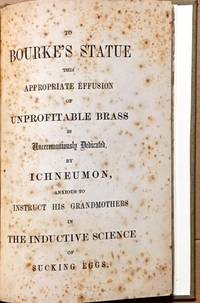
185564046Sydney N.D.1855. 1855. Hardcover. 8vo. hardcover. original papers bound in cloth. 31pp. Very good foxing heaviest on first 4 pages & last page. Ingleton bookplate on front pastedown. Ferguson 12666. From Ferguson: This satirical verse commentry on the Sydney personalities of the day was sent to various people by mail in January 1855. Three such copies in D.L bear a Sydney postmark with dates of 19 to Judge Therry 20 & 22 Jan 1855. Two such copies in M.L bear the postmark date 20 Jan. This original edition may be easily distinguished from later facsimiles by poorer paper no better than newsprint by occasional broken letters. Susspicion immediately fell on Sir Thomas Livingston Mitchell Surveyor General as the most likely author although he denied any knowledge.Mitchell's daughter married J.F. Mann whose son G.V.F Mann in a letter to Miss Windeyer. 17 April 1924 in M.L. states "the satire 'Ichneumon' was written by Livingston Mitchell son of Sir Thos." . Sydney, N.D.[1855] hardcover
5 vols., 8vo., First Edition thus, with coloured frontispieces, 35 fine coloured plates and grey endpapers; pictorial boards, buckram backs lettered in silver, a fine set in publisher's board slip-cases. FIRST VOLUME SIGNED BY THE AUTHOR. One of the best-loved and most highly regarded children's sequences of the late twentieth century, Susan Cooper's pentalogy was first published between 1965 and 1977. Here each volume benefits from a new preface by the author. COMPLETE SETS ARE EXTREMELY SCARCE; SIGNED COPIES THE MORE SO.
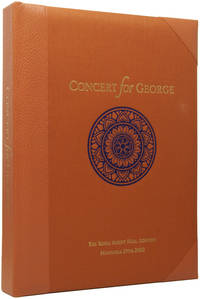
50426UK: Genesis Publications 2004. Rock photo-documentary DELUXE EDITION signed by Olivia Harrison. Folio pp.306 STRICTLY LIMITED; No 21 of 350 numbered copies not to be confused with the 'Collector' edition which was numbered up to 2500. Deluxe copies were bound in half-terracotta goatskin over padded cloth sides with rose gold edges housed in a silk-screen printed clamshell box. Inside a pocket in the box is four laminated back-stage passes and an original concert programme from the Royal Albert Hall November 29th 2002. The 28-page commemorative booklet is printed on art paper bound in an embossed cover and fastened with an orange silk ribbon. A loose printed envelope contains a poster with facsimile signatures of many of the musicians involved and two hand-signed prints by Jill Furmanovsky and Richard Young. Fine/as new. The loose envelope has the usual minor crinkling from being oversized. The official limited edition celebrating the life of George Harrison with contributions from Michael Palin Tom Petty Jeff Lynne Eric Idle. Ravi Shankar and many more. Illustrated with hundreds of rare photos of George throughout his life. UK: Genesis Publications, 2004 unknown
1949355490720348Edmund Ward 1949. First Edition. Hard Cover. Dust Jacket. Leicester: Edmund Ward n.d. 1949. First UK Edition First Impression. Oblong duodecimo. Publisher's original pale blue with vignette and title to front cover in gold turquoise. A neat name to the front paste-down and just the merest hint of rubbing at the spine tips otherwise a near fine copy. In the RARE D/W priced 4/-net to the inside flap as called for. The D/W is a lovely bright and attractive example. There are a couple of tiny closed tears to the bottom edge and minuscule loss/rubbing at the spine tips. A much nicer copy than normally seen of the fourth book in the Reverend Awdry's Railway Series. Uncommon in this lovely collectable condition and scarce with these attributes. Photographs/scans available upon request. Edmund Ward hardcover
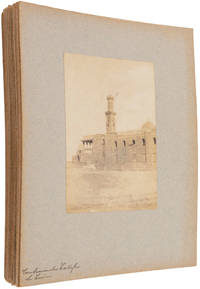
2112323Loose original gelatin silver photos measuring c. 11 x 16 cm mounted on card measuring c. 20 x 27. All photos with period pencil or ink captions in French on recto or verso of the mounts; most photos with period ink or pencil numbers on the mounts; two photos dated ""1905"" on the mounts. Several images mildly faded or with mild silvering several mounts with minor creases small tears or chipping on the extremities but overall a very good collection of interesting and unusual photos.Original large vernacular not commercial as more often encountered photos of Egypt taken by a French traveller in the early 20th century. Unlike most collections of Egyptian travel photos from this period these ones don't cover ancient temples and sites but instead focus on the life of contemporary Arabic Egypt. An unusual collection showing everyday life of Egypt with evocative street scenes in the early 20th century.Twenty-one photos depict Cairo and environs showing the Nile with feluccas and buildings on the banks narrow streets and shops of old Cairo the gate to the Delta Barrage Al-Rifa'I Mosque mausoleums and tombs of the Mamluks in Cairo Necropolis mud-brick buildings in Cairo environs and scenes with the local people. Four photos show native mud-brick houses in Memphis and local people; two photos depict Muslim inhabitants of Ismailia and their huts made of dried grass. Eight depict the beach at Attaka modern-day Suez Governorate of Egypt the Red Sea and steamers coming in or out of the Suez Canal and a native camel rider portrayed near Attaka. unknown
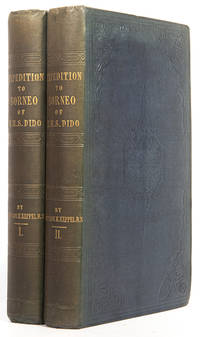
109121London Chapman and Hall 1846. . First edition; 2 vols 8vo xii 337 xxviii viii 230 cii appendix at rear 11 lithographed plates including frontispieces 6 folding maps & plans original blind-stamped blue ribbed cloth neat repairs to spine extremities a very good set.<br /> Henry Keppel's Expedition to Borneo is a primary account for the suppression of piracy off Borneo. 'In August 1841 Keppel commissioned the corvette Dido for the China station where he served with distinction during the latter part of the First Opium War under Sir William Parker. When peace was made in August 1842 Keppel was sent to Singapore as senior officer on that part of the station. There he made friends with Sir James Brooke with whom he returned to Sarawak. For eighteen months he co-operated with Brooke for the suppression of Borneo piracy and after many engagements the Dido together with the East India Company's steamship Phlegethon destroyed the chief stronghold of the pirates together with some 300 prahus' ODNB.<br /> Hill 918. London, Chapman and Hall, 1846. hardcover
john-lennon-and-george-ha<p data-mce-fragment="1"><span data-mce-fragment="1">On the 19th of February 1963 John Paul George and Ringo discovered that 'Please Please Me' had reached Number One on the UK singles chart. On that very day photographer Michael Ward embarked on a journey from London to photograph them</span></p><p data-mce-fragment="1"><span data-mce-fragment="1">"I didn't know who they were; I'd never heard of them" he quipped. "I wasn't interested in them and they weren't remotely interested in me — or in having their photographs taken!"</span></p><p data-mce-fragment="1"><span data-mce-fragment="1">After becoming acquainted Ward's photographs beautifully captured The <span class="il" data-mce-fragment="1">Beatles</span> on the brink of Beatlemania performing one of their final gigs at The Cavern. This is one of those famous and highly sought after shots. Here signed titled and dated by the famous photographer Michael Ward the print s</span><span data-mce-fragment="1">hows John Lennon and Paul McCartney onstage the Cavern Club sharing the microphone.</span></p><p data-mce-fragment="1">Michael Ward 1929-2011 documented renowned musicians actors and visual artists such as Pattie Boyd Julie Christie Marianne Faithfull Gary Cooper Hugh Grant David Hockney and Pauline Boty. He captured iconic images of The Beatles at The Cavern Club in 1963 and went on to photograph The Rolling Stones a year later.</p><p data-mce-fragment="1">Ward was a contributor to The Evening Standard for 4 years and then worked at The Sunday Times for 30 years until retirement covering many events from the Troubles in Northern Ireland to the Turkish invasion of Cyprus. He was married to Elizabeth Seal an award-winning actress for 40 years before passing away in 2011. His works reside in the National Portrait Gallery’s permanent collection.</p> unknown
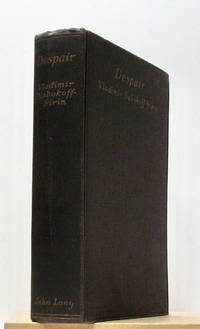
1937NABOKOVV000741John Long London. 1937. First English edition. The U.S. edition didn't appear for another 29 years. Translated by the author. Octavo. 287 pages. 24-page publisher's catalogue at rear.Edges faintly spotted. Slightly rubbing to head and tail of spine. Very good. No dustwrapper. John Long, London. unknown
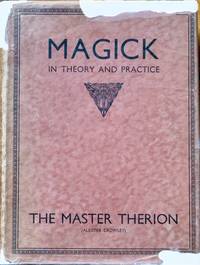
193010586Paris: Printed at The Lecram Press 1930. Subscriber's Edition Published for Subscribers Only. First Hardbound Edition. Maroon cloth-covered buckram boards with gilt lettering on spine. Top edge of textblock gilt. Includes several tables and illustrations in the Appendix. Boards slightly splayed with light wear along edges and brief exposure at lower front corner. Fading to about the top 4.5cm of spine along with a touch of fading at bottom of spine. Textblock edges lightly soiled. Hinges tender. Free endpapers toned. Two contemporary ownership inscriptions on front free endpaper. In the scarce unrestored dust jacket with a few areas of loss including about 11cm along top edge of front panel about 4cm along bottom edge of front panel and about 4.5cm at the top of spine. Spine a tad faded and soiled and edges with some wear and fading. Internally clean. Better than Very Good in a Good dust jacket scarce in any condition. <br /> <br /> There seems to be several variants of the Subscriber's Edition and while priority is difficult to establish or perhaps not exist this copy in the buckram appears to be the First State of the Subscriber's Edition. Cornelius explains that the difference may "reflect the consequence of Crowley's practice of binding in batches."<br /> <br /> Crowley's highly influential work where he presents magick as a disciplined scientific method for harnessing the "will" to achieve transformation. Crowley outlines both the philosophy and the practical techniques he believed could align the practitioner with their true purpose. Printed at The Lecram Press unknown
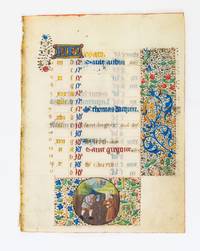
ST17245-04France possibly Rouen mid-15th century. 173 x 130 mm. 6 3/4 x 5 1/8". Single column 16 ruled lines text in a gothic book hand. <br/> Text in gold blue and dark pink "KL" in blue with white tracery on a gold ground decorated with dark pink baubles and leaves and with a floral spray extension both sides with panel border composed of densely packed acanthus flowers and hairline vines with gold bezants WITH A SMALL ROUNDEL MINIATURE at the bottom depicting the labor of the month Pruning set on a panel of flowers hairline vines and gold bezants. With numbering to the left of the golden numbers and a few calendar entries in a later hand. ◆Light soiling to vellum a few small smudges in the borders a little paint transfer affecting a couple lines of text and margins of the verso but these issues all very minor and on the whole in fine condition with a particularly well-preserved miniature with rich uneroded paint.<br/> <br/> With lovely panel borders and a particularly charming roundel miniature showing the labor of the month this leaf likely comes from a high-quality manuscript made for a person of means. Though miniatures depicting the labors of the month are often illustrated with just a single person performing the task here we are treated to two laypeople--a man and a woman--working together to prune and break ground in their field. The man appears to be carrying an axe for trimming branches while the woman carries a long stick to loosen dirt for spring plantings. The names of several saints have been added to the calendar by a later hand though it would appear that they were erroneously placed in March: St. Hugh belongs on 9 April Pope Leo on 11 April and St. Tiburtius on 14 April. While almost all of these feast days are commonly found in Books of Hours of this period Hugh Bishop of Rouen is slightly unusual suggesting that the manuscript may have been made in or at least ended up in Rouen. unknown
Hardcover Like New. Ships directly from publishers being a new release book . Pls. allow a minimum of 25 business days delivery time.
Very Good Russian Original dark green cloth bdg. Oblong folio. (28 x 36 cm). Eight languages of the title on the colophon, the text is completely Russian. [6], [ii], 108 p., [36] maps in various sizes, some of folded: (62x47 cm, 52,5x45,5 cm, 49,5x27 cm [x3], 61x47 cm; other maps are 36x28 cm). Four unnumbered leaves with half-title and contents for each section. Two small millimetric cuttings on two text pages. Ex-owner's name is on the title page. Markings on the index. Otherwise a very good and clean copy. Rare complete and the first atlas including a fine collection of 36 attractive chromo-lithograph maps mostly with tissue papers of the Soviet Union, edited by the Central Executive Committee and Enukidze (1877-1937), who was a prominent Georgian "Old Bolshevik". One of 11000 copies. Being published only 10 years after the USSR was established, this is the earliest atlas of the country. It seems to have been published with a wider audience in mind, with a title page in various European languages. The borders of many areas -including not just administrative regions throughout the USSR, but also entire autonomous republics (especially in Central Asia)- were in a state of flux; as such, the borders in this Atlas (including the wax-paper overlays meant to update various maps with changes made between when they were drawn and when the Atlas was published) often don't look anything like the borders they were set at the end of the Soviet Union and have continued on to modern times. Since the boundaries were often ideologically- (sometimes ethnically-, less so economically-) motivated, this offers an interesting insight into the mindset of the administration that was making these changes. Map list: World map, General USSR, USSR in Europe, Asia and USSR, Karelian Autonomous Soviet Socialist Republic, Komi-Zyryan Autonomous Oblast, Avt, Votskaya Oblast, Maryinskaya, Cherepovetsky District, Vologda Oblast, Avt. Chuvashskaya SSR (Chuvashia), Avt. Tatarskaya SSR (Tatarstan), Avt. Bashkirskaya SSR (Bashkiria), ASSR Nemchev Povoljiya, Kalmykia (Kalmykia), Krimskaya SSR (Crimea), Adigeiskaya (Tscherkeskaya) Obl. (Cherkesia), Kabardino-Balkarskaya Avt. Obl. (Kabardino-Balkarian Rep.), Karachayskaya Avt. Obl. & Tscherkesskiy Nation. Okrug (Karachay-Cherkessia), Chechenskaya Avt. Obl. (Chechnya), Ingushetiya, Severo-Osetiya, Avt. Daghestanskaya SSR, Avt. Kazakskaya SSR, Kyrgyzkaya ASSR, Avt. Oiuratskaya Oblast, Burito - Mongolskaya SSR (Kazakhstan), Avt. Yakustkaya SSR (Yakutia), Beloruskaya SSR (Belarus), Ukrainskaya, SSR (Ukraine), Moldavskaya SSR (Moldovia), Zakavkazkaya SSR (Abkhazia), Azerbaijanskaya SSR (Azerbaijan), Arminskaya SSR (Armenia), SSR Gruzii (Georgia), Central Asian SSR (Karakalpakstan, Kyrgyzstan, Turkmenistan, Uzbekistan), Uzbekistan, Turkmenistan. OCLC shows copies in twenty-three libraries worldwide: 7852120, 968755133, and 822577467.
Very Good Turkish, Ottoman (1500-1928) Original wrappers. Light stains on the front cover. Otherwise a good copy. Cr. 8vo. (20 x 11 cm). In Ottoman script (Old Turkish with Arabic letters). 48 p. First printed edition of this earliest travel account of China in the Islamic world and description of the early 16th century China and the Ming Dynasty by Nakkâs, the leader of the delegation sent by Mirza Shahruh (son of Tamerlane). This book is known also "Hitaynama" [i.e. The book of China], which was translated by Çelebizâde and published by Ali Emirî. Hitay, or Hitai, is the name given to northern China by the Uyghurs, Mongols, and some peoples in Medieval Europe. This area contains northern China, Beijing, and certain regions of Manchuria, between the Great Wall of China and the Yellow River (Huang He). Ming dynasty and Tamerlane relations were always tense. After Tamerlane's death (at last his Chinese campaign), his son Mirza Shahruh sent a delegation to the Chinese emperor, which included Nakkâs. His book written in Persian was completed in 1422. In his book, he described their three year-voyage which started from Herat to Pekin. There is valuable information in this travel book on many topics such as the size of the Chinese court of the Ming dynasty in Han-Balik-Pekin, the multitude of the emperor's servants, the emperor's wooden seating ceremonies, banquets for the ambassadors, the characteristics of the rooms they stayed in, the emperor's religion and the way of worship, etc. At the beginning of the 15th century, the book was presented to Sultan Suleiman the Magnificent and Sultan Selim. (Source: Osmanlida seyahatname yazarligi ve Ümit Burnu seyahatnamesi: Kantas, Mehmet Ziya). Özege 31.
Very Good Turkish, Ottoman (1500-1928) Original quarter black leather. Ottoman title-lettered gilt on the spine with decorative elements in compartments. Demy 8vo. (22 x 14 cm). In Ottoman script (Old Turkish with Arabic letters). 459 p., 32 woodcut plates with tissue papers and a folding color map of Khiva calligraphed by Mehmed Vasfi. AH 1292 = Gregorian: 1875. Extremely rare first Turkish edition of this richly illustrated eye-witness travel account of the 1873 Russo-Khivan war and the fall of the Khivan Khanate, by the American war correspondent MacGahan (1844-1878), which was first published in New York in 1874 as "Campaigning on the Oxus and the fall of Khiva", translated by Ahmed Sükrü (?-1876-77) who was the first Postmaster General. After a daring journey through the Kyzil Kum desert, McGahan joined von Kaufmann's army on the banks of the Amu-Darya, shortly before the fall of Khiva. Interesting and lively report with a description of Kazakh- (systematically called "Kirghiz", following the confusing habit of Russian historians) and Yomud Turkmen nomads, as well as of the settled Uzbek, Sart - and enslaved Persians of the Khanate. Probably one of the most complete and objective descriptions of the fall of the Khivan Khanate to three Russian columns which reach it from North and from East, after difficulties due to the climate and the huge distances. The young American makes many friends with Russian officers and gets a lot of information directly from the horse's mouth. There is also a well-documented report about previous Russian attempts to conquer Khiva, which all turned into disasters. The rather civilized behavior of the Russian army with the vanquished Khivans contrasts very much with their cruel and unfair treatment of the brave Yomud nomads, who offer only serious military opposition despite their heavy losses. The Khivan oasis is described as being very fertile and outstandingly well-cultivated. While Mac Gahan is impressed by the beautiful gardens and orchards of the Khanate, he is disappointed by the city of Khiva, the capital, the main residence of its ruler, and the second largest city of the Khanate. Even the Khan's palace (in which he is allowed to spend a few days by the Russian authorities) is disappointing. He visits the treasury room of the palace, in which the fleeing Khan left most of his possessions. He also left his whole harem behind, in his precipitous escape. The text is illustrated with numerous engravings from original designs and paintings by artists (and Russian officers), like Vereschagin and Feodoroff, and enriched with a great number of anecdotes. MacGahan was an American journalist and war correspondent working for the New York Herald and the London Daily News. His articles describing the massacre of Bulgarian civilians by Turkish soldiers and irregular volunteers in 1876 created public outrage in Europe and were a major factor in preventing Britain from supporting Turkey in the Russo-Turkish War of 1877-78, which led to Bulgaria gaining independence from the Ottoman Empire. He learned in 1873 that Russia was planning to invade the khanate of Khiva, in Central Asia. Defying a Russian ban on foreign correspondents, he crossed the Kyzyl-Kum desert on horseback and witnessed the surrender of the city of Khiva to the Russian Army. There he met a Russian Lieutenant Colonel, Mikhail Skobelev, who later became famous as a Russian commander during the Russian-Turkish War of 1877-78. In 1874 he spent ten months in Spain, covering the Third Carlist War. In 1875, he voyaged with British explorer Sir Allan William Young on his steam yacht HMS Pandora on an expedition to try to find the Northwest Passage from the Atlantic to the Pacific. The expedition got as far as Peel Sound in the Canadian Arctic before it met pack ice and was forced to return. OCLC 1014870496.; Özege 7682.; Atabey 744 (Ed. in English).
Very Good Serbo-Croatian Paperback. Roy. 8vo. (23 x 15 cm). In Aljamiado (Serbo-Croatian in Arabic letters), Arabic, and Persian with an introduction in Arabic. The third revised edition of the Waqf Directorate in Sarajevo. 104 p., 4 unnumbered b/w plates. "Ilmihal" [i.e. Catechism] recommended to all who want to know and learn Islamic ceremonies and practice. Learn how to pray, what are basic principles of the Islamic faith, what are the Islamic duties, what are the Islamic holidays, what constitutes proper Islamic behavior, and lots more. This extremely rare catechism book printed in Sarajevo in Croatian with Arabic letters (Aljamiado). This book is one of the late examples of Aljamiado literature beginning in early Andalusia and constitutes one of the rarest examples of the Ottoman book tradition. Aljamiado or Aljamía texts are manuscripts that use the Arabic script for transcribing European languages, especially Romance languages such as Mozarabic, Portuguese, Spanish or Ladino, and Bosnian with its Arebica script. According to Anwar G. Chejne, Aljamiado or Aljamía is "a corruption of the Arabic word ?ajamiyah (in this case it means foreign language) and, generally, the Arabic expression ?ajam and its derivative 'Ajamiyah are applicable to peoples whose ancestry is not of Arabian origin". During the Arab conquest of Persia, the term became a racial pejorative. In linguistic terms, the Aljamía is the use of the Arabic alphabet to transcribe a Romance language. It was used by some people in some areas of Al-Andalus as an everyday communication vehicle, while Arabic was reserved as the language of science, high culture, and religion. The systematic writing of Romance-language texts in Arabic scripts appears to have begun in the fifteenth century, and the overwhelming majority of such texts that can be dated belong to the sixteenth century. A key aljamiado text was the mufti of Segovia's compilation Suma de los principales mandamientos y devediamentos de nuestra santa ley y sunna, of 1462. In later times, Moriscos were banned from using Arabic as a religious language and wrote in Spanish on Islamic subjects. Examples are the Coplas del alhichante de Puey Monzón, narrating a Hajj, or the Poema de Yuçuf on the Biblical Joseph (written in Aragonese). Aljamiado played a very important role in preserving Islam and the Arabic language in the life of the Moriscos. After the fall of the last Muslim kingdom on the Iberian peninsula, the Moriscos (Andalusian Muslims in Granada and other parts of what was once Al-Andalus) were forced to convert to Christianity or leave the peninsula. They were forced to adopt Christian customs and traditions and to attend church services on Sundays. Nevertheless, some of the Moriscos kept their Islamic belief and traditions secretly through the usage of Aljamiado. In 1567, Philip II of Spain issued a royal decree in Spain, which forced Moriscos to abandon using Arabic on all occasions, formal and informal, speaking and writing. Using Arabic in any sense of the word would be regarded as a crime. They were given three years to learn the language of the Christian Spanish, after which they would have to get rid of all Arabic written material. Moriscos translated all prayers and the sayings of their prophet Mohammed into Aljamiado transcriptions of the Spanish language while keeping all Qur'anic verses in the original Arabic. Aljamiado scrolls were circulated amongst the Moriscos. Historians came to know about Aljamiado literature only in the early nineteenth century. Some of the Aljamiado scrolls are kept in the Spanish National Library in Madrid. The word aljamiado is sometimes used for other non-Semitic languages written in Arabic letters. For example, Bosnian and Albanian texts written in Arabic script during the Ottoman period have been referred to as aljamiado. However, many linguists prefer to limit the term to Romance languages, instead of using Arebica to refer to the use of Arabic script for Slavic languages... Not in OCLC.
Very Good Turkish, Ottoman (1500-1928) Original color manuscript calendar prepared on a fine special paper with 'ahar'. 36x22,5 cm. In Ottoman script (Turkish with Arabic letters). 2 p. Several ink stains on paper, chipped on extremities. A very good manuscript. It shows astronomic situations, locations of planets and stars, and climates in 1324 [AD 1908]. It starts with high praise to Sultan Abdülhamid II with an old style of color moon & crescent icon. Sealed by Mehmed Pasazâde A. Ihsan. On the verso of paper, can be seen detailed calendar and details of 'ruzname'. Written on 'printed' down of the paper, probably it's prepared for the printing, therefore it's understood that Ihsan and Refet were thinking to print this 'taqwim'. Prepared in the year of the Second Constitutional Regime (II. Mesrutiyet) which was Abdul Hamid II's fall came as a result of the 1908 Young Turk Revolution, and the Young Turks put the 1876 Constitution back into effect. It seems, it's prepared before fall of the Sultan, and for the present to the Sultan. The Second Constitutional Period spanned from 1908 until after World War I when the Ottoman Empire was dissolved. "The starting year of the Hijrî calendar (al-taqwim al-hijri), the fundamental Islamic lunar calendar still in use among Muslims until today, is 622 CE. Its beginning corresponds to the Hijra or emigration of Prophet Muhammed and his followers from Mecca to Medina. It is based on the revolution of the moon around the Earth and consists of twelve months of 29 or 30 days: Muharram (30), Safar (29), Rabî' al-awwal (30), Rabi' al-thani (29), Jumâda al-awwal (30), Jumâda al-thani (29), Rajab (30), Sha'ban (29), Ramadhan (30), Shawwal (29), Dhul-'l-qi'da (30) and Dhul-hijja (29 or 30). The lunar year consists of 354 days, which is 11 days less than the solar year, and every 33 years it falls one year behind the Gregorian calendar. The discrepancy with the solar year, which follows the seasons, meant that Muslim countries also used the solar calendar, and some calendars drawn up by astronomers include the dates according to the European Gregorian calendar named after Pope Gregory XIII in 1582. Ottoman Turkey used both the Islamic lunar calendar and a solar calendar known as the Rumî or Roman calendar, which was based on the Julian calendar introduced since the times of Julius Caesar in 46 BC. The Roman calendar was inherited from the Byzantines and was used by the Ottomans for the taxation of agricultural revenues. The year according to the Rumî or Julian calendar began on 1 March, and the Ottomans took the starting year to be that of the Hijra. To make up for the gain of 11 days made by the solar Rumî calendar over the Islamic calendar, a leap year was deducted from the Rumî calendar every 33 years. A rûzname is a set of tables giving the first days of the months in both the Islamic and Rumî calendars, the date on which the sun enters each sign of the zodiac, and eclipses of the sun and moon. Also known as takvîm-i dâimî (perpetual calendar) or takvîm-i devr-i dâim (calendar of perpetual motion), the ruzname were permanently valid whatever the year. There is no evidence that such calendars were produced in pre-Ottoman times, and they may, therefore, be regarded as a type unique to Ottoman Turkey.". (Source: Glances on Calendars and Almanacs in the Islamic Civilisation by Salim Ayduz).
Very Good Turkish, Ottoman (1500-1928) Contemporary two-cloth bindings. Folio. (40 x 29 cm). In Ottoman script (Old Turkish with Arabic letters). Extremely rare complete ran of the first episode in Arabic letters, of this richly illustrated pre-Republic Turkish satyric magazine including 90 issues in two folio volumes, published between 2 Kanun-i Sânî 1338 [February 2, 1922] - 9 Ikinci Tesrîn 1339 [November 9, 1923]. The Ottoman Turkish satirical magazine "Aydede" appeared in the first episode from January to November 1922 twice a week in 90 issues. Its founder, owner, and publisher Refik Halit Karay (1888-1965), a well-known poet and journalist, criticized through the published articles, poems, and caricatures not only the social inconveniences and imbalances within the Turkish society but also the young Turkish republic in general. One of the contributors to Aydede was Ratip Tahir Burak, a well-known Turkish cartoonist. Despite the short period of its publication, the magazine influenced the satirical style of many intellectuals and subsequent satirical magazines, including Akbaba. In 1922, the publication of the magazine ceased when Refik Halit was forced by the Turkish Government into exile in Aleppo and Beirut. The reason was Refik Halit's overt opposition to the ongoing Turkish War of Independence. After his return, he published the magazine 1948 and 1949 for another ten months in the second episode in 125 issues, but with little success. (Wikipedia). Duman 0156.
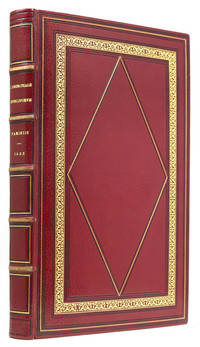
1633306616Paris: Societatis Typographic Librorum Officii Ecclesiastici . 1633. Engraved title numerous small and large engraved vignettes head-and tail-pieces one full-page engraving; text printed in black running headlines and chapter headings in red numerous large decorated initial capitals. 1 vols. Folio. Full red crushed morocco covers decorated with single black and gilt fillets including a central diamond in black and gilt with a gilt-rolled frame spine in six compartments with raised bands gilt lettered in two others with simple frame of black and gilt fillets wide gilt turn-ins with large gilt cornerpieces a.e.g. gilt-stamped on the turn-in of the inside front cover "French Binders Garden City NY" and on that of the rear cover "H. Hardy Relieur 1934 G. Pilon Doreur." Very slight rubbing to extremities still near fine with some toning to text. In a quarter morocco slipcase with chemise. Engraved title numerous small and large engraved vignettes head-and tail-pieces one full-page engraving; text printed in black running headlines and chapter headings in red numerous large decorated initial capitals. 1 vols. Folio. Beautifully bound in full red morocco by The French Binders successors to The Club Bindery and signed on the rear turn in by two of the firm's most distinguished binders Henry Hardy and Gaston Pilon. <br /> The French Binders traces its lineage back to The Club Bindery founded in 1895 by members of the Grolier Club to provide exceptionally fine bindings for American collectors. The Club Bindery moved to Cleveland where it was successively renamed the Rowfant Bindery 1909-1913 the Booklover's Shop 1914-1917 and finally The French Binders 1918-1920s as in-house bindery to Doubelday in Garden City New York. Henry Hardy worked for all incarnations of the bindery starting with The Club Bindery; his brother-in-law Gaston Pilon worked with Chambolle-Duru in Paris and came over to America to join the Rowfant Bindery. Both Hardy and Pilon were named Officers of the French Academy in 1933 the highest recognition given by the French government to naturalized Americans see Martin Antonetti's essay in Bound to Be the Best: The Club Bindery. Provenance: Estelle Doheny red morocco booklabel; Carl C. Kalbfleisch brown morocco booklabel Societatis Typographic Librorum Officii Ecclesiastici .. unknown
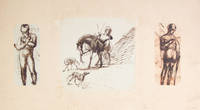
18479675n.p. 1847. 1 vols. Folio. Sewn into original brown wrappers worn. 1 vols. Folio. The artist from internal evidence seems to be Rev. H.L. Bennet--clearly an ardent and well-connected sportsman as most of his sketches are portraits and caricatures of well-known hunting men and women of the day many of whom are identified. These include a portrait of Lord Jersey who Nimrod called "perhaps the most elegant rider for hounds the world has ever seen" and many others. The drawings are skilfully executed and are often amusing. A unique production of one of the golden ages of British sport.<br /> <br /> Including : Examples of 2 pages 7 images: Mrs. Rowley's Groom on his Compact Mare Rush Esq Farthgghoc Col. Joddsch Lord Anson's steward M-- Wyatt. J.H. Jr T.T.D.<br /> <br /> Another: 2 pages; Rev. G. Loyd T.T Darke Esq. 2 others<br /> <br /> Another: 2 pages; Col. Goodell 4 others Mr. Drakes Grey's horse. unknown
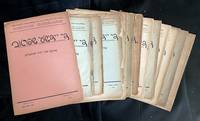
193042139Kiev: Katedr far Yidisher Kultur ba der Ukr. Visnshaftl. Akademye Filologishe Sektsye 1930. Paper Wrappers. 1st edition. Original printed publisher’s color paper wrappers 4to large ca 72-116 columns ca 36-58 pages per issue. 28 cm. In Yiddish. Title translates roughly as “The Yiddish Language.†Succeeded in 1931 by “Afn shprakhfront.â€Di Yidishe Shprakh was a “Yiddish linguistic journal published in Kiev from 1927 to 1930. A bimonthly journal Di yidishe shprakh The Yiddish Language was published by the cooperative publishing house Kultur-lige and was the main philological publication of the Kiev Yiddish academic center. Its editor was the veteran Yiddishist Nokhem Shtif a founder of YIVO who had returned to Kiev from Germany in 1926. The journal’s inaugural issue March–April 1927 was published under the auspices of the Central Yiddish Bureau of the Ukrainian Commissariat for Education. With the next issue Di yidishe shprakh was an organ of the Chair and from July to October 1929 it was an organ of the Institute for Jewish later Proletarian Jewish Culture at the Ukrainian Academy of Sciences. Initially defined as a 'journal for practical Yiddish linguistics' from May to June 1927 it appeared as simply a 'journal for Yiddish linguistics. 'Shtif distinguished three language registers: the vernacular of the old generation partly represented in the works of Sholem Aleichem and predecessors; the highbrow language of modern writers such as Dovid Bergelson; and the contemporary 'culture language' most notably of the press. Although Shtif sought to target speakers of the mass 'culture language' the journal’s circulation hovered around 500 copies read mainly by Yiddish teachers.Apart from Shtif who published articles on various language-planning problems the most active contributors to Di yidishe shprakh were Ber Slutski Ayzik Zaretski Elye Falkovitsh Lipe Reznik and Shimen Dobin. In early 1929 Moscow literary critic Aron Gurshteyn criticized the journal for its purist approach to language planning. In the July–October 1929 issue Shtif published his article 'Di sotsyale diferentsiatsye in yidish' The Social Differentiation in Yiddish heralding an intensification of Soviet linguists’ anti-Hebraist campaign. That issue of Di yidishe shprakh adopted completely reformed Soviet spelling omitting for example final consonant letters.Although the last—twenty-fifth—issue of the journal was dated November–December 1930 it included materials from the First All-Union Yiddish Language Conference convened in Kiev from 8 to 13 February 1931 that issue is present here. Published under the imprint of the Central Publishing House this issue also signaled the demise of the remaining vestiges of the Kiev Kultur-lige. Yoysef Liberberg’s article 'Far parteyishkayt in der yidisher visnshaft-arbet' For a Party Approach to Yiddish Linguistics marked a full break with YIVO scholars particularly with YIVO director Max Weinreich whom Liberberg ridiculed for presenting Yiddish as an emanation of the Ashkenazic Jews’ soul. The Yiddish Language Conference decided to change the name of the journal. Between 1931 and 1939 it appeared sporadically under the title Afn shprakhfront On the Language Front reflecting its new more aggressive and politically charged approach' Gennady Estraikh in YIVO Encyclopedia of Jews in Eastern Europe 2010. For more see David Shneer “Yiddish and the Creation of Soviet Jewish Culture 1918–1930†Cambridge and New York 2004. SUBJECTS: Yiddish language -- Periodicals. Title also listed on covers in Russian “Ievreis'ka Mova†and German “Jiddische Sprachâ€. OCLC: 22840298. Most holdings in OCLC appear to be fragmentary. Covers are browning and fragile as expected but are otherwise very well preserved with very little edgewear. Internal text pages are also toning but remain relatively strong as pulp paper. Very important journal scarce in this degree of completeness Note that Estraikh suggests a circulation of only 500!. B YID-43-5-E. Kiev: Katedr far Yidisher Kultur ba der Ukr. Visnshaftl. Akademye, Filologishe Sektsye unknown
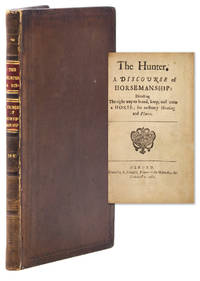
1685321988Oxford: Printed by L. Lichfield Printer to the University for Nicholas Cox 1685. First edition. 2 98 pp. A-F8G2. Printer's device on the title-page. 1 vols. 8vo 175 x 97mm. Later calf red spine labels boards with borders in blind. Slightly rubbed at joints. Nice clean copy. First edition. 2 98 pp. A-F8G2. Printer's device on the title-page. 1 vols. 8vo 175 x 97mm. A rare copy of the first edition of Langbaine's treatise which not only treats horse breeding horsemanship and farriery but it also horse-racing and training for matches "plates". ESTC R1219; Wing L-374; Podeschi 33; Loder 4391 with inaccurate collation and the inaccurate statement that Langbaine's book was included in the 1674 first edition of Cox's Gentleman's Recreation; Smith p. 344 Printed by L. Lichfield, Printer to the University, for Nicholas Cox unknown
58075Very Good. 417-423; 416pp. 52 numbers averaging 8pp. each. Folio 39 cm Contemporary 1/4 leather binding with limp boards which maintain some of the original marbled paper. Professionally recased. Restoration work to spine ends. Formerly exposed boards skillfully restored with handmade paper at the extremities. Hinges reinforced with Japanese tissue. Missing front front free endpaper. Periodic minor markings to the pages else internally very good. Flake 2822. A complete run of this volume of particular significance due to the historical events embraced by the year 1857-58: the Mormon "War" the Mountain Meadows massacre the incursion of federal troops against Utah the Reformation etc. Included is a major portion of the serialized "History of Joseph Smith" and the beginning of the serialization of Brigham Young's autobiography numerous documents by Young dispatches from the outside press relevant to the situation discourses by Elders etc. Also noteworthy is the printing of Young's December 15 1857 Governor's Message in the Dec. 23 issue; the Memorials to the President of the United States printed in the October 7 issue; and other major items relating to the conflict possibly in their earliest printings as well as much material related to overland travel freighting commerce and more. unknown
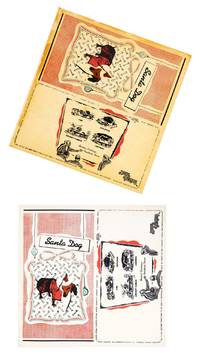
140949332San Francisco: Ralph Records 1972. Two color silkscreen prints measuring 14.5 x 15" intended to house two 7" records each. Near Fine with light wear to corners. One of the prints has been varnished by the publisher as issued; this varnish would cause all sort of problems often sticking to itself. One can see the artwork sullied as it was meant to be and unsullied. <br /> <p>The Santa Dog EP was the very first official release of The Residents and their label Ralph Records. An experimental pop album it was lo-fi and utilized tape loops long before this became a common musical practice. The album art by the design wing of The Residents Porno/Graphics which is to say the members of the group with imaginary "artist" hats on was meant to resemble a Christmas card from an insurance company so all four songs are titled after potential disasters that can befall one's home. It advertises The Residents' uncompleted film Vileness Fats. Copies were sent out gratis mostly including to celebrities such as Frank Zappa and Richard Nixon who refused his copy. It remains one of The Residents most accessible releases and the title track "Santa Dog" whatever its official name is is quite catchy-- recommended listening for any and all. Copies of the original album are bona fide collectibles and quite rare.<br /> <p>From the estate of late Residents member Hardy Fox. [Ralph Records] unknown
184433797London: William Clowes and Sons 14 Charing Cross For Her Majesty's Stationery Office 1844. Folio. 13 1/8 x 7 7/8 inches. First edition. a-b2 B-Z4. i-x 1-176. 186 pp. Diplomatic messages with the USA on pages 19-144. One full-page engraved map titled "Route of the Egyptian Army under Ahmed Pasha on a Slaving Expedition February 1843" by Standidge and Co. p. 169. Later black half morocco binding over black cloth with five raised bands forming six compartments on spine with gilt-lettered title in second and fourth compartments and date in sixth with the binder's ticker of Monastery Hill Bindery on back pastedown<br/> <br/> Important documents letters and reports regarding Great Britain's efforts to curtail the African slave trade across the globe including over 100 pages of diplomatic cables with the USA.<br/> <br/> "Class D. Correspondence" referred to diplomatic letters between the Foreign Office and nations that had not signed treaties with Great Britain regarding the slave trade. Every year from 1830 to 1859 this correspondence was presented to both Houses of Parliament and published: this is the annual compendium covering the year 1843. And though the importation of slaves was illegal in the United States at that time there is a considerable amount of American-British interaction. Great Britain had abolished slavery in toto throughout its colonies in 1834 after the passage of the Abolition Act of 1833. It had been home to a powerful abolition movement that held influence in government for some time prior. Great Britain's economy had grew less dependent on slavery than its rivals like the US were and slave revolts on its far-flung colonies had been costly to put down. Those reasons coupled with domestic religious and social sentiment had led the British Empire to take action. Insistent British diplomatic correspondence is included here with other key major powers who had not yet signed on to trying to halt the slave trade. The present work covers contacts with Central America Equator New Granada Peru various consulates in the United States the Barbary States Egypt Turkey Crete Albania and Muscat. Much detail is provided about individual ships involved in the trade. William Clowes and Sons, 14, Charing Cross, For Her Majesty's Stationery Office unknown