DESNOS, Robert - MASSON, AndréLivre Rare Book

53 307 résultats
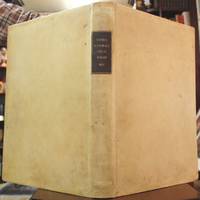
19571839Louis Broder, Paris 1957. Collection "Miroir du poète" n° VI. Un volume in-12 carré (167 x 136 mm), en feuilles, 42 pages, sous couverture de papier japon à rabats titrée en rouge sur le premier plat. Chemise et étui de l'éditeur noir et gris titré en rouge sur le dos. Édition originale de ce recueil de 7 poèmes de Robert Desnos inédits en volume. 4 GRAVURES ORIGINALES À L'EAU-FORTE ET AQUATINTE EN COULEURS (150 x 120 mm). La typographie est dûe à l'imprimerie Union et le tirage de la gravure à Robert Dutrou. Édition : 120 exemplaires numérotés sur vélin de Rives BFK. Celui-ci, l'exemplaire n°2 est signé par André Masson au colophon. Il comporte UNE SUITE COMPLÈTE DES GRAVURES ET DE LA DÉCOMPOSITION DES COULEURS : chaque épreuve de l'état final est justifiée 5/7 et signée au crayon par l'artiste, chaque épreuve de la décomposition des couleurs est justifiée 5/7 et monogrammée au crayon par l'artiste. 16 planches signées au total. Sixième volume de la collection "Miroir du poète" qui en comporte 7. Un huitième volume prévu n'a jamais vu le jour, mais la maquette existe. Le volume en parfait état, l'emboîtage de même (Saphire-Cramer 42). ENGLISH : André Masson - Robert Desnos, : Mines de Rien, Collection Miroir du Poète VI, Louis Broder, Paris, 1957. 4 aquatints printed in colours, 1957, on BFK Rives, title, text, list of contents, justification and the set of four, the justification signed in pencil by André Masson. copy numbered on vélin de Rives paper, from the total edition of 130. This one, copy no. 2, includes A COMPLETE SUITE OF THE ENGRAVINGS AND DECOMPOSITION OF COLORS: each proof of the final state is justified 5/7 and signed in pencil by the artist, each proof of the decomposition of colors is justified 5/7 and monogrammed in pencil by the artist. There is 16 signed plates in total. The set is in mint++ condition in its original slipcase, perfect. overall S. 177 x 153mm. (Cramer 42).
156564830Frankfurt a. M., Georg Rab für Sigmund Feyerabend u. Simon Hüter, 1565. 4°. Titel in Rot u. Schwarz m. großer Holzschn.-Vignette. Mit zahlr. schemat. Holzschn.-Illustrationen im Text u. großer Holzschn.-Druckermarke am letzten Blatt. 12 nn., 349 num., 1 nn. Bll., Flex. Pgmt. d. Zt. m. durchzogenen Bünden, spanischen Kanten u. handschriftl. Deckeltitel.
1699ABC_46554Leiden 1699. Folio. Peter van der Aa Contemporary sprinkled quarter calf sewn on 8 supports with the corresponding raised bands on the spine a red morocco title label on the spine lettered in gold sprinkled paper sides red and blue sprinkled edges. With an engraved frontispiece to part 1 2 engraved title vignettes 2 full-page engraved dedicatory plates 1 engraved headpiece vol. 1 with 211 engravings 4 folding maps 1 folding plan 14 folding plates and 192 views in the text; vol. 2 with 1 folding map and 7 engraved illustrations in the text. 2 parts in 1 volume. 6 143 4 108 ll. Enlarged edition of a famous and extensively illustrated work on the duchy of Brabant including Louvain Brussels Antwerp and 's-Hertogenbosch and their surroundings by the historiographer Jacob le Roy 1633-1719. This rare work contains maps plans and fine views of the castles and county seats of the nobility of Brabant including their parks and gardens as well as the main monasteries and abbeys.The engravings are excecuted by several artists such as Jacob Harrewijn 1660-1727 a student of Romeyn de Hooghe Lucas Vorsterman II 1595-1675 who worked with Peter Paul Rubens and Robert Whitehand. Amongst the castles and houses depicted are views of Bonlez Beersel Bois-Seigneur-Isaac Corroy-le-Château Vilvoorde Cleydael Berchem and many others as well as views of monasteries and cloisters such as St Michael's Abbey Corsendonck and the Groenendael Priory. Other than castles and monasteries the work also contains a large view of the city of Turnhout and a folding plate of the St. Rumbold's Tower at Mechelen.It is bound as usual with Le Roy's L'erection de toutes les terres giving extracts of letters of Charles V Phillippe II Charles II and other emperors and kings on conference about titles of barons viscounts and counts and the setting up of lands in baronies marquisates and principalities. It contains a large double-page map of Brabant and 7 engraved illustrations of Héverlé Hoogstraten Walhain Grobbendonck Trazegnies Grimberghen and Westerloo identical to the map and engravings of these country houses in the first work.With the bookplate of Ivan Plissart late 19th-early to mid-20th century mounted on the front pastedown and a round shelfmark label mounted on the back board. The boards and spine are somewhat rubbed the edges and corners of the boards are scuffed the spine ends are slightly worn. The map of Tongerlo is somewhat browned but otherwise internally very clean. Overall in good condition.l Bibl. Belg. III pp. 852-854; Hollstein VII pp. 221; Hollstein LII pp. 56-63; Ad 1: STCN 832271780 6 copies; USTC 1841122 4 copies; ad 2: STCN 832271861 4 copies; USTC 1841121 4 copies. hardcover
99-0159Paris: L. F Delatour 1769-1775. First edition. Folio. 28.5 x 43 cm. 4 parts bound in 3 vols. Contemporary tree calf spines with later goatskin covers. Very good. 1312 pp. 365 of 382 plates. Interiors finely toned with some creasing more at edges and intermittent marginal foxing and staining throughout.Ref. Cole & Watts. Handicrafts of France p. 34-35 ; Halleux R. Académie royale des sciences de Paris p. 522-525; OCLC Number 562990791:pt. 1-2. L’art du menuisier;pt. 3 sec. 1. L’art du menuisier-carrossier;pt. 3 sec. 2. L’art du menuisier en meubles;pt. 3 sec. 3. L’art du menuisier ébéniste;pt. 4. L’art du treillage ou menuiserie des jardins;……Paged continuously; some additions and corrections inserted"Recueil de planches sur le sciences les arts libéraux et les arts méchaniques avec leur explication : ébénisterie-marqueterie" 2 p. 10 leaves of plates--inserted at end. These are plates from Encyclopedie ou Dictionnaire raisonné des sciences des arts et des metiers………………………….André Jacob Roubo 1739–1791 was a French carpenter cabinetmaker and author. Roubo was born and died in Paris and was the son and grandson of master cabinetmakers. Roubo wrote several highly influential books on woodworking an achievement which was especially notable given his relatively poor background and self-taught methods.His career was at its zenith in 1774 when he published his masterwork treatise on woodworking titled L’Art du Menuisier. This lseminal work covered practically all methods and trades associated with woodworking. Another of Roubo’s legacies still used today is a design for a workbench which has proven to be popular amongst modern woodworkers….Provenance: bookplates of Robert Stanton FAIA – Architect. Robert Stanton 1900-1983 was an American architect. A resident of Carmel-by-the-Sea California he practiced primarily in the central California coastal region and was responsible for a variety of eclectic buildings most notably the Monterey County Court House and the King City Joint Union High School Auditorium both listed on the National Register of Historic Places. Paris: L. F Delatour, 1769-1775 unknown
19842846PABEL/MOEWIG VERLAGSUNION 1984-89. 1. softcover. Doppelwelt 36403662367936963876 PABEL/MOEWIG VERLAGSUNION paperback
20142-0985456744Jacob Hefner 2014. Paperback. New. 66 pages. 10.80x8.40x0.30 inches. Jacob Hefner paperback
1812B5180Milano: F. Artaria c. 1812. A handsome example of this important work. . Edition: First Edition. Binding: Contemporary full vellum. Gilt text on morocco label on spine. All edges dyed red. Notes: Text is in Italian with French and German translations for the plates. This book often considered to be one of the most important books on Natural History published during the Napoleonic Era delves into the origin and habits of different species of apes and monkeys from both the Old and the New World. The dedication page is for Eugene Napoleon the viceroy of Italy. <br><br>Nicolas Henri Jacob 1782-1871 was a French painter draftsman and lithographer. He was the cousin of the famous cabinetmaker Georges Jacob. He taught drawing at the National Veterinary School of Alfort. He was famous for his anatomical drawings culminating in his opus in collaboration with Bourgery: Complete Treatise on the Anatomy of Man and furniture design. <br><br>Luigi Rados 1773–1840 was an Italian engraver. He was born in Parma and was educated in the Academy of that city. His principal engravings are those depicting Emperor Francis II and King Ferdinand after Jean-François Bosio.<br> Size: Folio 450x325mm. Illustration: Illustrated with an engraved title page an engraved dedication page and a series of 73 fine monographs of apes and monkeys by the respected French painter Nicholas Henri Jacob and stipple-engraved by Luigi Rados. Pages: P. Engraved title page. Engraved dedication page. IV preface. 1-73 numbered III-V and I-LXX. Category: Book Europe Italy; Book Natural History; Book Plate Books General; F. Artaria hardcover
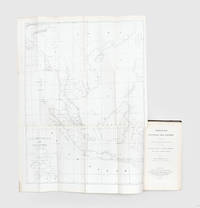
1844186843London: James Nisbet and Co. 1844. The novelty of his teachings apparently attracted considerable interest First edition arguing that the main benefit of British military expansion in Asia lay in the new opportunities for religious conversion rather than increased freedom of trade. A member of the London Missionary Society Tomlin 1793-1880 accompanied the German Karl Gützlaff during most of his pioneering journey through Thailand in 1828 - the first visit to the country by Protestant missionaries. In Thailand Tomlin "distributed religious tracts and preached but was unable to build a church. In a period of religious freedom the novelty of his teachings apparently attracted considerable interest. After visiting Bali he returned to Bangkok although as little more than a visitor. By 1833 Tomlin was principal at the Anglo-Chinese College in Malacca when he abolished the stipend the mission paid to students. His relationship with the London Missionary Society came to an end in 1834 after which he ran his own school in Malacca" Howgego. Tomlin's prefatory remarks appeal for greater missionary work in China following the First Opium War. "That vast empire which has been closed against us and the pure Gospel for many ages is at last thrown open" p. xiv. The subscriber's list at the rear lists only 177 copies distribution focused on the Liverpool area. Octavo. Folding frontispiece map. Original brown horizontal-grain cloth spine lettered in gilt and stamped in blind covers blocked in blind yellow coated endpapers edges untrimmed binder's ticket of Westleys & Clarke. Front free endpaper with near-contemporary ink annotation referencing pp. 315 & 361 marginalia on those pages; recent pencillings on endpapers. Cloth perhaps lightly cleaned a few marks to boards head of front joint just starting contents clean: a very good attractive copy. Cordier 1325 incorrectly listing the date as 1845; Howgego IV T10; Lust 944; not in Löwendahl. hardcover
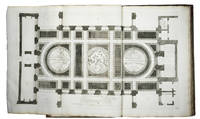
1780K6QE3E6Q77WKAmsterdam 1780. Large folio 49.5 x 30 cm. Johannes Covens Cornelis Mortier and Johannes Covens junior Contemporary half red roan sheepskin brown sprinkled paper sides. With the title page printed in red and black with J. Covens & C. Mortiers engraved device by Bernard Picart JCCM cypher monogram in a laurel wreath carried by 6 putti dated 1730; 2 preliminary plates containing portraits of Jacob van Campen by Lutma and Arthus Quellinus by Henricus Quellinus; CIX 109 numbered engraved and etched architectural plates 7 folding 30 double-page and 72 single-page a few printed from 2 or 3 copper plates distinguished by arabic numerals showing plans elevations tympana ceilings floors statues festoons and other ornamentation mostly engraved by Hubertus Quellinus after Arthus Quellinus but some after R.V.H. Rombout Verhulst. All plates have French captions some with laudatory verses below and are described in Dutch in the letterpress text pp. 3-15. 15 pp. A comprehensive collection of plates showing all architectural features and sculpture of the Amsterdam City Hall since 1808 the Royal Palace here in the Covens & Mortier firm's rare ca. 1780 issue with the engravings newly printed from the original copper plates from the years 1655 to 1664 and the text reissued from Leonardus Schenk's 1747 Dutch language edition the whole with a new title-page. ''This version has not been seen'' BAL. At least most of the plates were engraved for and first published in Jacob van Campen's masterpiece Afbeelding van 't stadt huys van Amsterdam Amsterdam Frederick de Wit 1664 Hubert Quiellinus's Prima et secunda pars praecipuarum . curiae Amstelrodamenis Amsterdam Frederick de Wit 1655-1663 and Afbeelding van 't stadt huys van Amsterdam in dartigh coopere plaaten . geteeckent door Jacob Vennekool Amsterdam Dancker Danckerts 1661.It includes the famous plate showing the extraordinary cartographic mosaic floor of the Burgerzaal of the Amsterdam City Hall designed by Jacob van Campen with a celestial map in the centre and the magnificent map of the world in 2 hemispheres on either side. The engraving was first published in 1661 and the map shows Tasman's recent discoveries in Australia and Tasmania and depicts California as an island. Many discoveries from his second voyage remained otherwise unpublished until the end of the 17th century. The drawing of the floor was made by Jacob Vennekool who worked closely with Van Campen and since his drawings were first published even before the building was completed they may reflect Van Campen's plan more closely than the finished building itself. They also of course show it before the alterations made at various times in later years.Binding a little worn untrimmed otherwise in good condition. The Amsterdam city hall in full glory with all its architectural features and sculpture.l BAL 132 note description of 1719 French language ed. but citing Berlin Kat. & Kuyper for unseen "1730" Dutch ed.; Berlin Kat. 2236; Kuyper Dutch Classicist architecture Delft 1980 pp. 212- 215 and note 25 p. 318; STCN 3 copies; cf. for dating the impressum: Van Egmond Covens & Mortier 2005 pp. 66 83-88. ABE CAT Architecture ABE CAT Art History unknown
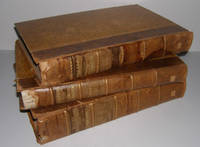
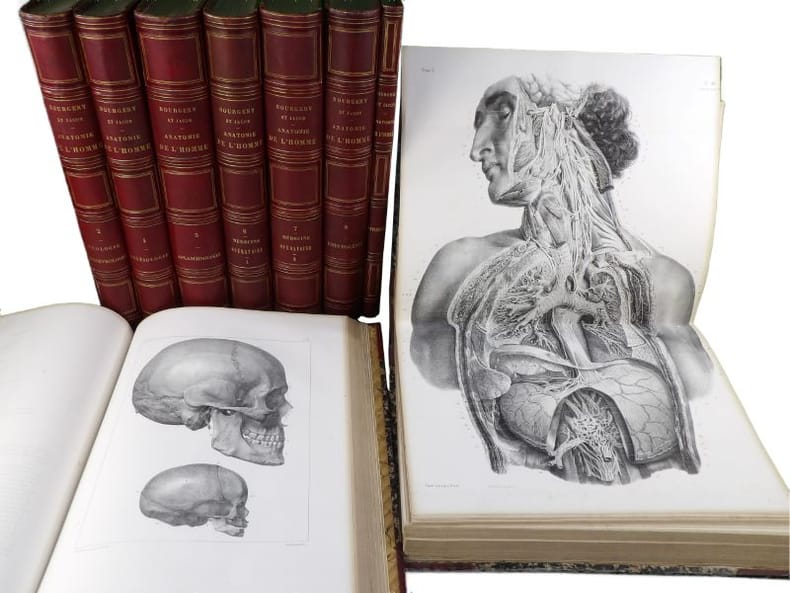
18662789Paris, L. Guérin, 1866-1871. 9 Volumes in-folio + 1 Supplément. COMPLET. In-folio - 44 x 34 cm. Reliure de l'époque en demi-chagrin rouge à coins, dos à 4 nerfs orné de caissons à filets dorés. Ouvrage orné de 750 planches lithographiées en noir d'après nature par Jacob (726 gravures + 24 gravures in Supplément). Rehauts de couleur bleu et rouge pour différencier veines et artères sur quelques planches. Cette collection se divise ainsi : Tome 1 : Anatomie descriptive et physiologique. Appareil de relation. Organes de la locomotion. Ostéologie. Syndesmologie. 191 pages + 59 planches (N°1-59) ; Tome 2 : Appareil de locomotion. Myologie. Aponévrologie. 141 pages + 100 planches (N°60-159) ; Tome 3 : Appareil de relation. Névrologie ou organes de l'innervation. 341 pages + 115 planches [100 planches (N°1-100) + 15 bis] ; Tome 4 : Appareil de nutrition. Angéiologie. 162 pages + 98 planches [91 planches (N°1-91) + 7 bis] ; Tome 5 : Appareil de nutrition. Splanchnologie. 342 pages + 96 planches [76 planches (N°1-76) + 20 bis] ; Tome 6 : Sclérotomie. Ophtalmologie. Ténotomie (1e partie). 280 pages + 93 planches [91 planches + 2 bis] ; Tome 7 : Sclérotomie. Ophtalmologie. Ténotomie (2e partie). 356 pages + 98 planches [77 planches + 5 bis + 16 lettrées de A à P] ; Tome 8 : Embryogénie. 335 pages + 67 planches [60 planches (N°1-60) + 7 bissées] ; Suppléments, par le Dr Duchaussoy : 108 pages + 24 planches (1 déchirure restaurée page 31 sans manque de texte, 1 petit manque en marge dans la page de texte de la planche 19, sans conséquence pour le texte). Claude Bernard collabora à cette somme médicale à partir de 1845, en présentant des pièces anatomiques.
182864042Leipzig, F. A. Brockhaus, 1822-1828. Kl.-8°. Zus. ca. 6.000 S., Etw. spätere HLdr.-Bde. m. reicher Rückenverg., goldgepr. Rückenschildern u. dreiseitigem Rotschnitt.
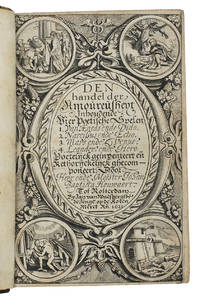
162122956Rotterdam: Jan van Waesberghe III 1621. Contemporary calf spine richly gold-tooled in compartments with red title label lettered in gold gold-tooled board edges. 8vo. With an engraved ornamental title-page with the title in an oval cartouche and 4 roundels in the corners with scenes from the four plays; 4 full-page engraved plates with similar scenes one in the preliminaries of each play. Each of the four parts starts with a letterpress title-page with the publisher's device of Van Waesberghe. Further with woodcut tailpieces woodcut decorated initials 3 series and headpieces built up from arabesque typographic ornaments. 4 parts in one volume. First and only edition of four morality plays or dialogues often wrongly attributed to the famous Antwerp rhetorician Jean Baptiste Houwaert 1533-1599. In fact they were written by Antwerp rhetoricians ca. 1550 when Houwaert was only about seventeen. It has mistakenly been described as a second edition of Houwaert's Den handel der amoureusheyt Brussels 1583 - see Bibl. Belg. III p. 538 H 189 bis but in fact it has nothing to do with that work: if Houwaert wrote anything for the present edition it would be the entr'actes of the third play.After four preliminary poems on 5 pages by a poet calling himself Niet Snel Al-be-recht four plays follow:1. Verscheyden schoone spelen van zinnen van Aeneas ende Dido A1-F3; 43 ll. written by the rhetorician Jacob de Mol of the Chamber of rhetoric De Goudsblom in Antwerp performed for the first time in 1552 cf. Vinck-Van Caeckenberghe in her book on Cornelis van Ghistele 1996 who attributes this play to Van Ghistele.2. Verscheyden schoone spelen van zinnen van Narcissus ende Echo &c. F4-P7; 76 ll.: three separate plays together 2193 verses by Colyn Keyart with entr'actes possibly by Johan Baptiste Houwaert.3. Verscheyden schoone spelen van zinnen van Mars ande Venus &c. Q1-Z1; 57 ll.: three separate plays together 1128 verses probably by Smeecken.4. Vier schoone spelen van zinnen van Leander ende Hero Z2-Gg2; 57 ll.: this play according to Knuttel also by Colyn Keyart is preserved only in this edition.The book is a very important source for the history of the rhetoricians in the Southern Netherlands.One plate shaved otherwise in good condition.l Bibl. Belg. III pp. 538-539 H 26; G. Kalff in: Tijdschrift Ned. letterk. 8 1888 pp. 231-235; STCN 9 copies incl. 1 incompl.; F. van Veerdeghem in: Tijdschr. Ned. letterk. 12 1893 pp. 202-205 320; W. de Vreese in: Tijdschr. Ned. letterk. 12 1893 pp. 206-211; Te Winkel Ontwikkelingsgang 2nd ed. II p. 395; J.A. Worp in: Tijdschr. Ned. letterk. 20 1901 pp. 27-29. Jan van Waesberghe III, unknown
H913Halle Curts Witwe 1791. 8vo. 488 S die 4 Bl‰tter S.43-48 und 113/114 fehlen sind aber als Kopie miteingbunden mit 3 gefalteten Karten die beiden groflen Karten auf st‰rkerem Papier und 4 gefalteten Tafeln. Neuer Halbblederband kl.Fleck am Titel ein sauberes Exemplar. Die Karten zeigen: 1. Karte von der Dagistanische und Schirwanischen Provintz . 2. Vom Astrachanschen Gouvernement. 3. Das Abschersonsche Ufer des Caspischen Meeres. "Lerche wurde 1724 an der Univ. Halle immatrikuliert und schlofl sein Studium 1730 mit der Promotion ab. Nach kurzem Aufenthalt in Wien trat er als Feldmedikus in russ. Dienste; im Sept. 1731 traf er in Moskau ein und wurde in Astrachan und in Persien eingesetzt. Bis August 1734 hielt er sich in Baku auf und reiste anschlieflend nach Derbent zur Behandlung des grusin. Zaren. 1735-40 war L. Generalstabsarzt in der Armee des Generalfeldmarschalls v. Lacy im Krieg gegen die T¸rken. 1738/39 war er maflgeblich an der Bek‰mpfung und Eind‰mmung der Pest in S¸druflland beteiligt. F¸r diese Verdienste wurde er 1739 mit dem Titel "Hofrat" ausgezeichnet. 1741 wurde L. der Armee Lacy im Russ.-schwed. Krieg zugeteilt. 1745-47 begleitete er als Arzt eine russ. Gesandtschaft nach Persien. 1750/51 wurde er zum Stadtphysikus von Moskau ernannt und seit 1751 war er Stadtphysikus in St. Petersburg. Gleichzeitig wurde er zum Medicus consiliarius beim Direktor der Medizinischen Kanzlei in Petersburg berufen. Das Amt des Stadtphysikus behielt er bis zu seinem Tode. Seit 1760 verwaltete L. vertretend das Amt des obersten Medizinalbeamten in Ruflland. Die administrative T‰tigkeit fand hˆchste Anerkennung: 1764 wurde er zum Kollegienrat ernannt. - Neben seiner ‰rztlichen T‰tigkeit besch‰ftigte sich L. mit mineralogischen meteorologischen und botanischen Studien." DBE unknown
169555262Amsterdam: Be-veit ha-meshutafim Asher Anshil ben Eliezer ve-Yisakhar Ber ben Avraham Eliezer/ Moses Wiesel 1695. First edition. Hardcover. fair. Small folio 29 by 18.5 cm. Collation: aleph-vav4 zayin2 = 26 numbered leaves. Additional engraved title page engraved folding map at rear; main title with woodcut vignette; 14 half-page engraved illustrations in the text. Contemporary quarter calf over dark brown pastepaper boards skilfully rebacked. Images of Moses and Aaron at engraved title excised the seven small engraved vignettes along with letterpress text of engraved title and imprint mounted on old paper. Old marginal repairs at main title resulting in slight loss of initial letters along right margin and several leaves; slight strictly marginal worming and occasional tears. Stained throughout sometimes heavily though not impairing legibility. Map mounted to reinforce tears with virtually no loss of text or engraved imagery apart from printed border at right side. A fair copy at best; despite all defects the half-page engraved illustrations have survived intact with minimal staining. Housed in new maroon buckram slipcase.<br /> <br /> First edition of this gorgeously illustrated work now referred to simply as the Amsterdam Haggadah. The first such work to be illustrated with copperplate engravings it ranks among the most imitated of the Jewish manuals for the Passover seder. The popularity of these illustrations can be attested by the huge number of reprint editions over the centuries. Fourteen finely printed half-page engravings appear throughout the text. Some of these images illustrate the traditional content of the Passover seder or the Exodus story while others reference other biblical tales. Images include: the Rabbis of Bene Brak discussing the Passover story the four sons Abraham smashing the idols of his father Abraham welcoming the three angels Moses slaying the Egyptian overseer the rescuing Moses from the river Moses and Aaron coming to Pharaoh w/ staves turning to snakes the ten plagues the Egyptian army drowning in the Red Sea the Exodus the receiving of the Ten Commandments at Mt. Sinai the eating of the Pascal Lamb King David composing his psalms and finally an exterior view of the Jewish Temple with the cityscape of Jerusalem in the background. All images are captioned with relevant passages in Hebrew. The engravings were all created by Abraham ben Jacob a German convert to Judaism who had moved to Amsterdam although some sources over the years misattributed them to financier Moses Wiesel 6 of which were adaptations and/or modifications of previous images by Swiss artist Matthäus Merian 1593-1650 from his original work "Icones Biblicae" 1625-30.<br /> <br /> In addition to the in text engravings there is famously fold-out engraved biblical map of the Holy Land in a notable format. Measuring a total of 19.5 by 11.5" the map shows the land of Israel the Wilderness of Sinai and Egypt in landscape orientation looking eastward towards the top of the map. It traces the journey of the Israelites starting with the Exodus from Egypt through the Sinai and into the Land of Israel. The map is detailed showing the areas of the twelve tribes important locations and cities as well as geographic features including the Red Sea Mount Sinai the Dead Sea the Sea of Galilee and many others. Additional illustrations appear near the bottom along with a legend. This beautiful work also by Abraham ben Jacob is considered among the earliest if not the first map of its kind to be printed within a Hebrew publication. It is now known to have been heavily based on the previously printed 1620 map in Hebrew by Jacob ben Abraham Zaddiq and Abraham Goos 1590 - ca. 1643 which itself was based on the map of 1590 by Christian Kruik van Adrichom Adrichem printed in Latin.<br /> <br /> Text throughout is printed in Hebrew with smaller text in Rashi script underneath containing famous commentary on the Passover Haggadah by acclaimed Portuguese Rabbi and scholar Isaac ben Judah Abarbanel 1437-1508. The verso of the title page contains the order of the Passover seder with brief instructions in both Ladino Judeo-Spanish and Yiddish Judeo-German a nod to the subtitle which references both the Ashkenazi and Sephardi traditions.<br /> <br /> Provenance and annotations: Full page of text appx. 1500 words in neat Hebrew cursive at front endleaf which discusses aspects of the Haggadah text; inscription in German at front endleaf by Isidor Adler who mentions his friend Hermann Mechlenburg dated March 1906; old annotations throughout in at least two hands. In one notable instance the Hebrew phrase l'shana ha-ba'ah be-hamburg next year in Hamburg! has been added in fine block characters above the traditional phrase l'shana ha-ba'ah bi-yerushalayim next year in Jerusalem. Hebrew title: סדר הגדה של פסח ×›×ž× ×”×’ ××©×›× ×– וספרד <br /> Alternate transliterations: Seder Hagadah shel Pesah Seder Hagadah sel Pesah<br /> <br /> References: Friedberg 278 Fuks HTN II 521; Yudlov Haggadah 93; Vinograd Amsterdam 627; Ya'ari no. 59; Laor 876 Map; Nebenzahl pp.138-1389 Map; Yerushalmi plate 59-62; Rosenau "Vision of the Temple" p.135 146-7. Be-veit ha-meshutafim [Asher Anshil ben Eliezer ve-Yisakhar Ber ben Avraham Eliezer]/ Moses Wiesel hardcover
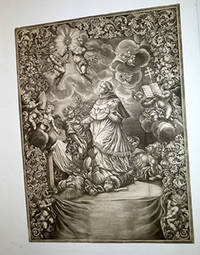
16-594317th- early 18th Century. Mezzotint on old laid paper. Very large format. 65.5 x 48.3cm. Born: Vienna Vienna state Austria ; Died: Breslau Dolnośla̜skie Poland.St. Norbert was born at Santen in the duchy of Cleves in 1080. His father Heribert count of Gennep was related to the emperor and his mother derived her pedigree from the house of Lorraine. The rank which his birth gave him was rendered more illustrious by the excellent qualifications of his mind and body. His application to his studies was equal to the quickness of his parts and he went through his academic exercises with extraordinary ability. 17th- early 18th Century, unknown
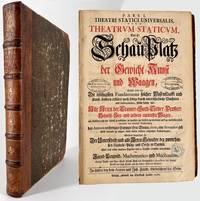
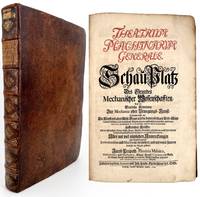
17261595Leipzig: Christoph Zunkel 1726. First Edition. Near fine. 4 parts in one volume; Folio13 1/3 x 8 7/8 inches 337 x 228 mm; half title title printed in back and red 57 copperplate engravings thus divided:<br /> Theatrum Staticum Universalis 1726 half title blank title blank dedication to Charles VI 3 Foreword 3 Contents 2 92 pp 19 plates; <br /> Theatrum Hydrostaticum pp. title blank 2 197 - 236 7 plates <br /> Theatrum Aërostaticum: title blank contents 2 241 - 308 23 plates<br /> Theatrum Horizontostaticum: title blank Contents 1 blank pp. 313 - 332 Index 3 Errata 8 plates. <br /> Contemporary half-binding in brown leather with speckled boards spine with gilt decorations in compartments and gilt title; contemporary leather binding with gilt decorations in compartments on spine and gilt title; edges red; corners bumped and some scratches on boards; binding tight and square with a surface split at title page. Pages clean and supple with very light and even toning. Stamps of the Royal Engineering Artillery Library of Hanover on half title and title pages.<br /> <br /> Poggendorf I 1438; Ferguson p. 45-46. The Theatrum Staticum Universalis is the 6th volume of the 10-volume magnum opus of Jacob Leupold 1674 - 1727. It is extensively illustrated with copper plate engravings that fold out so that they can be viewed while consulting the text. What is particularly striking is the strong systematization that is lacking in most works of this period. The technical devices are always described in such a way that the isolated basic elements are first explained and then placed in their functional context. The illustrations show among other things draw wells water wheels pumping stations excavators pumps valves and fountains.<br /> <br /> Leupold was a German physicist mathematician instrument maker engineer and was director of mines to the Elector of Saxony. His seminal work Theatrum Machinarum Generale "The General Theory of Machines" was published in Leipzig between 1724 and 1739 with the last volumes issued after his death. The Theatrum was the first systematic analysis of mechanical engineering the most complete and the most extensively illustrated work on mechanical engineering hitherto published. It included ahead of its time a design for a high-pressure non-condensing steam engine the likes of which were not built until the early 19th century. Christoph Zunkel unknown
17241596Leipzig: Ch. Zunkel 1724 1724. First Edition. Very Good . Folio; 14 1/16 x 9 1/4 inches 360 x 234 mm; 11 240 pp. 2 II; title printed in back and red with 71 copperplate engraving by Krügner Böcklin Uhlich and others after Leupold. Most of the plates are folding and attached to a blank so that they may be consulted while reading the accompanying text. The plate at page 71 has a revolving volvelle. Contemporary speckled calf rebacked but retaining its original spine with gilt floral decorations in compartments and gilt title on tan calf label. Pages supple and evenly toned with scattered foxing some dampstain and occasional ink marks; first leaf with wormholes in the lower margin without loss of text or image plate LXVII with expertly supplemented corner tear; corners bumped and some scratches on boards; stamped on front endpaper illegible. All conditions consistent with the nature and age of the volume.<br /> Poggendorf I 1438; Ferguson p. 45-46. The Theatrum Machinarum Generale is the first volume of the 10-volume magnum opus of Jacob Leupold 1674 - 1727. It is extensively illustrated with copper plate engravings that fold out so that they can be viewed while consulting the text. What is particularly striking is the strong systematization that is lacking in most works of this period. The technical devices are always described in such a way that the isolated basic elements are first explained and then placed in their functional context. The illustrations show among other things draw wells water wheels pumping stations excavators pumps valves and fountains. Leupold was a German physicist mathematician instrument maker engineer and was director of mines to the Elector of Saxony. His seminal work Theatrum Machinarum Generale "The General Theory of Machines" was published in Leipzig between 1724 and 1739 with the last volumes issued after his death. The Theatrum was the first systematic analysis of mechanical engineering the most complete and the most extensively illustrated work on mechanical engineering hitherto published. It included ahead of its time a design for a high-pressure non-condensing steam engine the likes of which were not built until the early 19th century. Ch. Zunkel, 1724 unknown
6306One large woodcut diagram in the text. 24 unnumbered leaves. Small 4to modern boards. Nuremberg: G. Schenck 21 September 1502. First edition; this is the first of only two books known to have been printed by Georg Schenck and the author's only book. "In 1502 there was printed at Nürnberg a defense of astrology by Jakob Schonheintz a doctor of arts and medicine and a Franconian. He signs his preface at Würzburg. The immediate occasion of this defense was 'the impudence of a certain man who wishes himself to be considered a theologian although he is anything else than one who had attacked astrology and its professors. Pity for the unlearned who may take his attack seriously has moved Schonheintz to reply. He furthermore regards this preliminary skirmish as a preparation for a future encounter 'not with a cursed scribbler but with the most learned and most eloquent Giovanni Pico Mirandola most generous count of Concordia.' Schonheintz proceeds to say that no one has attacked astrology more bravely no one more learnedly no one with greater force and contention than Pico has."-Thorndike IV pp. 542-43. This book was much read and quoted in the early 16th century. Fine copy. ❧ Zinner 818. hardcover books
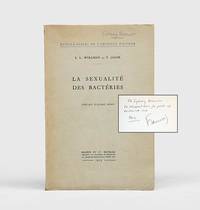
1959150141Paris: Masson et Cie Libraires de l'Académie de Médecine 1959. The meeting of two Nobel laureates prior to their discovery of mRNA First edition first printing presentation copy humorously inscribed by Wollman on the first blank "To Sydney Brenner to disgust him / a good of bacterial sex Élie" likely missing the word "dose" after "good". Wollman's co-author François Jacob has signed beneath. Brenner's signature is on the front cover in pencil. After receiving his doctorate from Oxford in 1954 Brenner 1927-2019 joined Francis Crick's laboratory focusing his research on how DNA is decoded by cells. He met Élie Léo Wollman 1917-2008 and François Jacob 1920-2013 both well-established bacteriologists at the Institut Pasteur at a symposium on microbial genetics in Copenhagen in 1959. An uncommon monograph on bacterial genetics this work was possibly presented to Brenner on this occasion or shortly thereafter. Though nothing concrete came of the Copenhagen conference Jacob met with Brenner Crick and other biochemists at Cambridge the following spring. As Jacob recalled when he pointed out recent experimental results suggesting that the DNA messenger molecule was unstable "Francis and Sydney leaped to their feet. Began to gesticulate. To argue at top speed in great agitation. A red-faced Francis. A Sydney with bristling eyebrows. The two talked at once all but shouting. Each trying to anticipate the other. To explain to the other what had suddenly come to mind" Jacob p. 312. Brenner and Jacob used their overlapping time as visiting scholars at Caltech to prove that the intermediary in the DNA decoding process was the newly discovered unstable RNA. They partnered with the American molecular biologist Matthew Meselson who had just developed a method for marking bacterial macromolecules with heavy isotopes. During the summer of 1960 the trio finally proved that short-lived RNA molecules - which they called messenger RNA mRNA - carry the genetic instructions from DNA to ribosomes. This feat is considered one of the most elegant experiments in the history of biochemistry. Jacob shared the Nobel Prize in Medicine with Jacques Monod and André Lwoff in 1965; Brenner received the Nobel Prize in 2002. Octavo. With 3 double-sided photographic plates. Original buff wrappers printed in black. Extremities rubbed and a little creased a few small spots and marks faint marginal crease in first half of contents: a very good copy. François Jacob The Statue Within: An Autobiography trans. Franklin Philip 1987. unknown
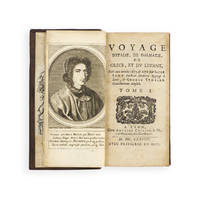
1678T5108<p><strong>Very rare first edition of 'one of the most important accounts of travels in the Levant and the first description of Athens which was systematic detailed and trustworthy' Blackmer. </strong></p><p>'Spon and Wheler met in Italy in 1675; they travelled together with Francis Vernon to Zakynthos where the two groups separated. Spon and Wheler continued by sea to Constantinople and Vernon travelled overland. The great merit of Spon's work is due to its combination of a careful and knowledgeable interest in classical antiquity with an accurate observation of men manners and topography in modern Greece. The whole of vol. II is devoted to Greece and includes a glossary of Modern Greek words and phrases with instruction on pronunciation. Spon's interest in Greece was longstanding. He had already published Babin's description of Athens which had been communicated to him by the Abbé Pecoil of Lyon with his own notes and preface' <em>ibid.</em>.</p><p>From Venice Spon and Wheler's itinerary took them along the Dalmatian coast and the Ionian islands. They set anchor at Zakynthos and later Cythera visited Delos and eventually reached Istanbul where they visited the French ambassador Charles-François Olier Marquis de Nointel who had already visited Athens and was able to give them valuable information about the city. They also visited Bursa and Thyateira in Asia Minor and stayed in Izmir for some time. On their return journey they crossed over to Patras from Zakynthos visited Delphi travelled to Athens and toured the region of Attica.</p><p>Jacob Spon 1647–1685 physician archaeologist and collector was the archetypal French 'curieux' like his father before him. He collected medals manuscripts and inscriptions with immense enthusiasm acquiring an entire coin hoard of seven hundred pieces found at Lyons. George Wheler 1652–1724 who published his own account of their travels in 1682 'was a man of many interests and practical skills. As a boy he had amused himself with woodwork constructing a birdcage and a small harpsichord and had taken an interest in plants; the latter he maintained in Oxford by frequent visits to the physic garden … On his travels he displayed keen curiosity and took the opportunity to collect plant specimens … He gave to his Oxford college more than thirty Greek manuscripts acquired mainly in Athens and Constantinople; they included a priceless illuminated typicon the foundation charter of a convent established in Constantinople about 1300. His plant specimens were given to the Oxford Physic Garden. Wheler occupies a significant position in the history of botany since he introduced to Britain some plants hitherto unknown including St John's wort' ODNB.</p><p><em>Provenance</em>: John Hay second Marquess of Tweeddale 1645–1713 MP and Lord Chancellor of Scotland in 1704-5 with his bookplates Franks 14192/566. The purchase note on the front flyleaf of vol. I 'payd for thes 3 volums 0–12–00' <em>i.e</em>. 12 shillings is probably his.</p><p><em>Physical description:</em><br />Three vols 12mo pp. I: xxiv 405 3 blank II: 417 13 2 blank III: 204 '226' <em>recte </em>228 with a copper-engraved frontispiece portrait in vol. I 30 plates many folding and two folding maps; paperflaws in outer margin of two leaves vol. I C10 and R6 no loss of text some occasional very pale marginal foxing but an excellent set; in contemporary British speckled calf double fillet frames ruled in blind on covers and in compartments of spines small blind-stamped floral tool in corners of covers board-edges ruled in gilt edges speckled red; lightly rubbed one corner bumped headcap of vol. I very slightly chipped.</p><p><em>References:</em><br />Weber 405. Blackmer 1586 records the second edition.</p> Antoine Cellier
198639495BERTELSMANN CARL 1986. 1. hardcover. Kinder- und Hausmärchen der Brüder Grimm BERTELSMANN, CARL hardcover
88381Köpenhamn 1761-62. Tvär folio. 60 grav. planscher varav en stor utvikbar. Den utvikbara vyn över Köpenhamn med liten reva i nedre veck. Lätt nött samtida marmorerat pappband ryggen med tryckt pappersetikett. Pärmarna med lätta stänk. FrÃ¥n Ericsbergs bibliotek med Carl Jedvard Bondes exlibris. Bibl. danica II sp. 603. Ehrencron-Müller II 112. Med de sällsynta planscherna till andra delen! Titelbladet till första delen och 4 blad med förord av Jacob Langebek saknas. Med alla de 50 planscher pÃ¥ danska slott och städer som blev utgivna till första delen samt de tio extra som var allt som utkom till andra delen. Inget titelblad gjordes till den andra. Trots att det aldrig blev färdigställt är det ändÃ¥ ett av de viktigaste danska topografiska arbetena. Del ett som omfattar Själland med 50 planscher var allt som blev färdigställt. Av del tvÃ¥ som skulle omfatta Fyn blev endast 10 av planerade 88 planscher graverade. Dessa tio är mer sällsynta men Ã¥terfinns här. Konstären Johan Jacob Bruun 1715-89 gjorde även planscherna till Thuras â€Den danske Vitruviusâ€. unknown
54852HIGH QUALITY. 1. K. Maloftege! HIGH QUALITY unknown
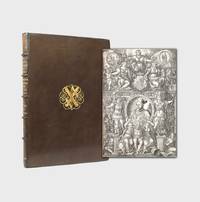
1603376588Innsbruck: Daniel Baur 1603. First edition in German after the Latin edition published in 1601. With frontispiece engraved portrait of Archduke Ferdinand II privilege on verso title page two preliminary leaves and 121 of 125 elaborate engraved portraits each with facing biographical notice printed within woodcut border. Lacking 4 leaves portraits 3 24 64 71. Two preliminary leaves printed for William Sterling Maxwell his extensive bibliographical note and index of portraits; a facsimile folding view of Innsbruck inserted after title. Full dark brown morocco spine titled in gilt upper board with Sterling Maxwell arms in gilt a.e.g. by XXXX. Sterling Maxwell's largest bookplate on front pastedown. A few portraits possibly in old facsimile or restrike. 11 leaves loose or slightly sprung a few marginal paper flaws one portrait poorly inked. First edition in German after the Latin edition published in 1601. With frontispiece engraved portrait of Archduke Ferdinand II privilege on verso title page two preliminary leaves and 121 of 125 elaborate engraved portraits each with facing biographical notice printed within woodcut border. Lacking 4 leaves portraits 3 24 64 71. Two preliminary leaves printed for William Sterling Maxwell his extensive bibliographical note and index of portraits; a facsimile folding view of Innsbruck inserted after title. The celebrated portrait gallery of the Archduke Ferdinand II of Austria with portraits of emperors kings nobles and war heroes in historic suits of armor in the Archduke's collection at Schloß Ambras. Compiled by the Archduke's secretary Schrenck von Notzing and translated into German by J.E. Noyse van Campenhouten. With an interesting full page printed bibliographical notice by Sterling Maxwell dated 1870 printed within facimile borders matching the text pages of the portraits. Colas 2691; Brunet V 224; Vinet 2046; Grässe VI 317; Lipperheide 499 Daniel Baur unknown
1603100584Innsbruck: Daniel Baur 1603. First edition in German after the Latin edition published in 1601. With frontispiece engraved portrait of Archduke Ferdinand II privilege on verso title page two preliminary leaves and 121 of 125 elaborate engraved portraits each with facing biographical notice printed within woodcut border. Lacking 4 leaves portraits 3 24 64 71. Two preliminary leaves printed for William Sterling Maxwell his extensive bibliographical note and index of portraits; a facsimile folding view of Innsbruck inserted after title. Full dark brown morocco spine titled in gilt upper board with Sterling Maxwell arms in gilt a.e.g. by XXXX. Sterling Maxwell's largest bookplate on front pastedown. A few portraits possibly in old facsimile or restrike. 11 leaves loose or slightly sprung a few marginal paper flaws one portrait poorly inked. First edition in German after the Latin edition published in 1601. With frontispiece engraved portrait of Archduke Ferdinand II privilege on verso title page two preliminary leaves and 121 of 125 elaborate engraved portraits each with facing biographical notice printed within woodcut border. Lacking 4 leaves portraits 3 24 64 71. Two preliminary leaves printed for William Sterling Maxwell his extensive bibliographical note and index of portraits; a facsimile folding view of Innsbruck inserted after title. The celebrated portrait gallery of the Archduke Ferdinand II of Austria with portraits of emperors kings nobles and war heroes in historic suits of armor in the Archduke's collection at Schloß Ambras. Compiled by the Archduke's secretary Schrenck von Notzing and translated into German by J.E. Noyse van Campenhouten. With an interesting full page printed bibliographical notice by Sterling Maxwell dated 1870 printed within facimile borders matching the text pages of the portraits. Colas 2691; Brunet V 224; Vinet 2046; Grässe VI 317; Lipperheide 499 Daniel Baur unknown books