53 307 résultats
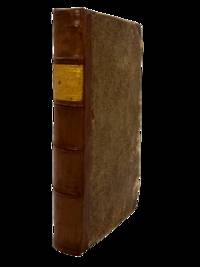
175232978-1197Zurich Heidegger and Comp. 1752. With engr. frontispiece in part 1 woodcut title-vignette repeated and 32 engravings of which 25 are foldings 1 with a over-slip including views town plans and maps by Joh. Meyer Joh. Melchior Füssli and J. G. Seiller. 4 268 pp. 4 leaves; 16 480 6 pp.; 16 336 pp. 4to. Contemp. half calf gilt lettering on spine. Engraved bookplate Joh. Kaspar Weyss owner's entry Hermann Werdmüller Elgg on inner from cover. Title-pages printed in red and black. Zurich Heidegger and Comp. 1752. The first edition was published in 1716-18. This present second edition of J. J. Scheuchzer's 1672-1733 scientific description of Switzerland is greatly enlarged and much rarer. The plates are mainly views and maps although there are also plates of geological profiles and samples scientific equipment and regional flora and fauna. From 1702 until 1711 Scheuchzer undertook yearly expeditions accompanied by friends and pupils. He was the first to systematically explore the Alps and became a pioneer in the fields of geology palaeontology and glaziology. The work offers historical details and together with Tschudi's chronicle it became one of the main sources for Schiller's "Wilhelm Tell". - A few tears in the folds of some maps and plates repaired. Otherwise a fine and clean copy. - Nissen ZBI 3655; Haller I 1047; Barth 17218. SCIENCE: GEOLOGY / MINERALOGY ; HELVETICA ; Zurich, Heidegger and Comp. unknown
19331668891933. CHERNYKOV Iakov. Arkhitekturniie Fantazii Architectural Fictions. 102 pp. Illustrated with numerous textual illustrations and 101 colour plates. Small folio 300 x 200 mm bound in original blue embossed cloth. Leningrad: "Meshdunarodnaja Kniga" Leningrad Section 1933. First Edition of this landmark work of Soviet architectural fantasies lavishly illustrated with dramatic designs of possible cities factories monumental buildings and more. This is the best and most important publication by Chernykov and one of the most exciting books on architecture issued in the twentieth century "an amazing compendium of one hundred and one coloured inventions which still excite the imagination today. The verdict must surely be that Tchernykov's almost unlimited imagination for architectural forms provides a pattern book for modernist architecture rather than a repertoire of viable designs" Compton Russian Avant-Garde Books 143-4. Published in collaboration with D. Kopanitzin and E. Pavlova this first edition was limited to 3000 copies although very few now exist in permanent or private collections. Binding with some minor professional restoration overall in excellent condition. Senkevitch Soviet Architecture 1917-1967 Charlottesville 1974 205. Centre Pompidou Paris-Moscou 1900-1930 Paris 1979 567. Andel Avant Garde Page Design 301-302. hardcover books
163989174Ex Officina Elzeviriana | Lugduni Batavorum [Leyde] 1639 | 15.3 x 20.8 cm | 2 volumes reliés en 1
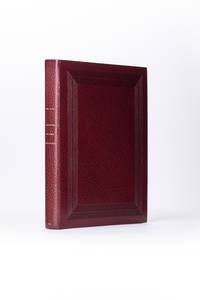
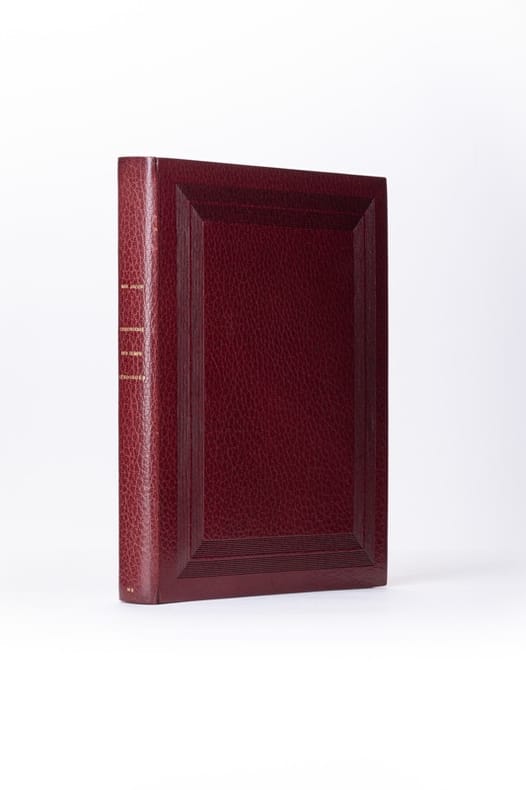
28110Saint-Benoît-sur-Loire vers 1936-1937. Manuscrit autographe à l'encre noire de 70 feuillets in-4 numérotés 23-92 avec un f. 74 bis f. 70 manquant montés sur onglets. Maroquin bordeaux dos lisse double encadrement de filets à froid sur les plats encadrement intérieur de même maroquin orné de filets à froid tranches dorées Semet et Plumelle. . Important manuscrit autographe de travail avec corrections ratures ainsi que variantes et passages inédits et ayant appartenu à Louis Broder premier éditeur du texte. Monté en tête : portrait photographique de Max Jacob le montrant dans sa chambre de la rue Gabrielle en 1917 selon la légende manuscrite au dos tirage argentique 239 x 180 mm. Il a servi à l’établissement du texte pour la version publiée en 1956. . Ce témoignage capital et de première main sur le cubisme devait initialement introduire les mémoires du marchand d'art Paul Guillaume disparu en 1934. Max Jacob y travailla plusieurs années mais n'en publia qu'un fragment en janvier 1937 dans la revue Les Feux de Paris sous le titre « Le Tiers transporté ». Pour le quatre-vingtième anniversaire de la naissance de l'auteur en 1956 Louis Broder en publia la version intégrale avec des illustrations de Picasso l'ami historique de Max Jacob. Les pages 36-38 offrent plusieurs passages raturés restés inédits. Par ailleurs le manuscrit diffère légèrement de l'édition dans l'emplacement des titres et sous-titres. C'est à partir de ce jeu que Broder publia ces Chronique des temps héroïques en y ajoutant la partie publiée dans Les Feux de Paris en 1937 dont le manuscrit lui manquait à l'époque p. 1-33 feuillets 1-22. Propriété du libraire Bernard Loliée il fut vendu lors de la vente de la bibliothèque 22 mai 2019 n° 27. À l'issue de la publication du volume Broder fit relier l'ensemble de ses manuscrits à l'identique de l'exemplaire unique sur papier japon qu'il s'était dessiné : un décor de filets à froid composé par Plumelle sur une reliure de maroquin bordeaux établie par Semet. Dans l'idée d'y adjoindre un jour les 22 feuillets du début du texte Broder demanda à son relieur de réserver la place nécessaire en tête de volume ou figurent autant de feuillets vierges prêts à les recevoir. Le manuscrit Broder commence donc à la page 33 du texte publié et offre toute la suite des Temps héroïques - à l'exception du chapitre VI qui est ici remplacé par trois pages inédites intitulées « Voyage en Suisse » p. 71-73 acquises chez un libraire parisien en 1966 : « Ils sont inédits et doivent prendre place avant la page 99 de la Chronique des temps héroïques en début de chapitre » et du folio 70 « page de titre de la seconde partie ». Le catalogue de la vente Loliée mentionne deux chapitres des Temps héroïques conservés dans des collections publiques : « Mouvement moderne » à la bibliothèque d'Orléans et « Art nègre » au fonds Gompel-Netter de la BnF. Après consultation c'est inexact : ces manuscrits ne constituent pas des parties originales du manuscrit mais sont de simples notes et des articles préparatoires à leur rédaction. Le manuscrit Broder est donc le seul document autographe existant et le seul qui ait servi à l'établissement [Saint-Benoît-sur-Loire, vers 1936-1937]. Manuscrit autographe à l'encre noire de 70 feuillets in-4, numérotés 23-92 [avec u unknown
193628110Manuscrit autographe complet. Exemplaire Broder [Saint-Benoît-sur-Loire, vers 1936-1937]. Manuscrit autographe à l'encre noire de 70 feuillets in-4, numérotés 23-92 [avec un f. 74 bis, f. 70 manquant], montés sur onglets. Maroquin bordeaux, dos lisse, double encadrement de filets à froid sur les plats, encadrement intérieur de même maroquin orné de filets à froid, tranches dorées (Semet et Plumelle). Important manuscrit autographe de travail, avec corrections, ratures, ainsi que variantes et passages inédits, et ayant appartenu à Louis Broder, premier éditeur du texte. Monté en tête : portrait photographique de Max Jacob, le montrant dans sa chambre de la rue Gabrielle en 1917, selon la légende manuscrite au dos (tirage argentique, 239 x 180 mm). Il a servi à l’établissement du texte pour la version publiée en 1956.
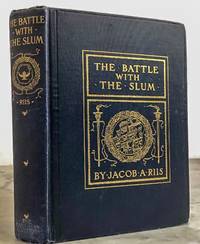
1902021995New York: The Macmillan Company 1902. First Edition. Hardcover. Minor wear to covers. Near Fine. Second Printing in publisher's original decorated blue cloth. Illustrated. This copy is SIGNED "with the best wishes of/Theodore Roosevelt/Dec 1906." Jacob Riis a significant contributor to the cause of urban reform in the United States of America at the turn of the twentieth century was among the most dedicated advocates for America's oppressed and downtrodden. He arrived in New York from his native Denmark at the age of 21 in 1870. A pioneer in photojournalism Riis photographed and wrote about the slums and tenements of a New York in the dawn of a new century. Riis came to Roosevelt's attention through his 1890 book HOW THE OTHER HALF LIVES. As Commissioner of the New York City Police Department Roosevelt accompanied Riis on his evening travels through the slums and witnessed firsthand the inhumane conditions endured by many of New York's inhabitants. In his 1901 book MAKING OF AN AMERICAN Riis wrote of Roosevelt: "It could not have been long after I wrote HOW THE OTHER HALF LIVES that he came to the Evening Sun office one day looking for me. I was out and he left his card merely writing on the back of it that he had read my book and had 'come to help.' That was all and it tells the whole story of the man. I loved him from the day I first saw him; nor ever in all the years that have passed has he failed of the promise made then. No one ever helped as he did. For two years we were brothers on Mulberry Street." Roosevelt in turn wrote of Riis after his death: "It is difficult for me to write of Jacob Riis only from the public standpoint. He was one of my truest and closest friends. I have ever prized the fact that once in speaking of me he said 'since I met him he has been my brother.' I have not only admired and respected him beyond measure but I have loved him dearly . and I mourn him as if he were one of my own family." <br/><br/> The Macmillan Company hardcover
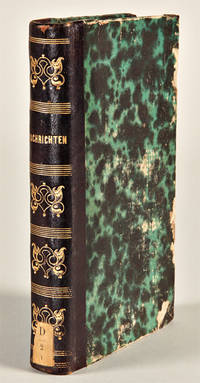
1773WRCAM48817AMannheim: Churfurstl. Hof-und Academie-Buchdruckerey 1773. 16358pp. plus two engraved plates and folding map. Contemporary black half calf and marbled boards spine gilt. Extremities lightly worn small paper label at foot of spine. Small ink stamp on titlepage and verso of map. Minor scattered foxing. Very good. Second issue with some corrections after the first printing of the previous year of this rare account of Lower California by the German Jesuit Jacob Baegert. Baegert lived in Baja California for seventeen years 1751- 68 and spent most of his time at the Mission of San Luis Gonzaga leaving after the expulsion of the Jesuits in 1767. He provides some important details on the culture of the Indians of Baja California including the Pericues Guiacuras and Cochiemes. Wagner states that the German Jesuits were especially dissatisfied toward the end of the Jesuit regime in California and Baegert's bitterness is evident in his book: ".it was a land full of ferocious beasts and even more ferocious Indians the soil was poor the water undrinkable and there was no fuel to be had." The fine and important map was made by the fellow Jesuit Ferdinand Consak and is described by Streeter as "most helpful in giving the location of the many Jesuit missions in Lower California. It also shows the route along the west coast of Mexico followed by Baegert in going to California in 1751 and his route out in 1768 after the expulsion of the Jesuits." The top right corner of the territory present-day Arizona is labeled rather ominously "Los Apaches Barbari." The excellent plates which were apparently not issued with all copies depict male and female California Indians. The NUC locates only three copies of this second issue. <br> <br> A prime early account of Baja California with an important map and plates of the region. HOWES B29. HILL 46. COWAN p.27. SABIN 4363. BELL B5 1772 ed. STREETER SALE 2442. BARRETT 129. WAGNER SPANISH SOUTHWEST 157. MEADOWS BAJA CALIFORNIA 1. GRAFF 137 1772 ed. Churfurstl. Hof-und Academie-Buchdruckerey hardcover books
1773WRCAM48817Mannheim: Churfurstl. Hof-und Academie-Buchdruckerey 1773. 16358pp. plus two engraved plates and folding map. Contemporary patterned paper boards expertly rebacked and recornered to style preserving original leather label. Internally clean. Very good plus. Second issue with some corrections after the first printing of the previous year of this rare account of Lower California by the German Jesuit Jacob Baegert. Baegert lived in Baja California from 1751 to 1768 and spent most of his time at the Mission of San Luis Gonzaga leaving after the expulsion of the Jesuits in 1767. He provides some important details on the culture of the Indians of Baja California including the Pericues Guiacuras and Cochiemes. Wagner states that the German Jesuits were especially dissatisfied toward the end of the Jesuit regime in California and Baegert's bitterness is evident in his book: ".it was a land full of ferocious beasts and even more ferocious Indians the soil was poor the water undrinkable and there was no fuel to be had." The fine and important map was made by the fellow Jesuit Ferdinand Consak and is described by Streeter as "most helpful in giving the location of the many Jesuit missions in Lower California. It also shows the route along the west coast of Mexico followed by Baegert in going to California in 1751 and his route out in 1768 after the expulsion of the Jesuits." The top right corner of the territory present-day Arizona is labeled rather ominously "Los Apaches Barbari." The excellent plates which were apparently not issued with all copies depict male and female California Indians. The NUC locates only three copies of this second issue. <br> <br> A prime early account of Baja California with an important map and plates of the region. <br> <br> The Streeter copy sold to Dawson's Book Shop of Los Angeles for $150 in 1968. HOWES B29. HILL 46. COWAN p.27. SABIN 4363. BELL B5 1772 ed. STREETER SALE 2442. BARRETT 129. WAGNER SPANISH SOUTHWEST 157. MEADOWS BAJA CALIFORNIA 1. GRAFF 137 1772 ed. Churfurstl. Hof-und Academie-Buchdruckerey hardcover books
177328630Mannheim: Churfurstl. Hof-und Academie-Buchdruckerey 1773. 12mo. 16 358pp. Two engraved plates folding map. Contemporary patterned paper boards expertly rebacked and recornered to style preserving original leather label.<br/> <br/>Rare early account of Lower California by a German Jesuit.<br/> <br/>Second issue with some corrections after the first printing of the previous year. Baegert lived in Baja California for a period of seventeen years 1751-68 and spent most of his time at the Mission of San Luis Gonzaga leaving after the expulsion of the Jesuits in 1767. He provides some important details on the culture of the Indians of Baja California including the Pericues Guiacuras and Cochiemes. Wagner states that the German Jesuits were especially dissatisfied toward the end of the Jesuit regime in California and Baegert's bitterness is evident in his book: ".it was a land full of ferocious beasts and even more ferocious Indians the soil was poor the water undrinkable and there was no fuel to be had." The fine and important map was made by the fellow Jesuit Ferdinand Consak and is described by Streeter as "most helpful in giving the location of the many Jesuit missions in Lower California. It also shows the route along the west coast of Mexico followed by Baegert in going to California in 1751 and his route out in 1768 after the expulsion of the Jesuits." The top right corner of the territory present day Arizona is labeled rather ominously "Los Apaches Barbari." The excellent plates which were apparently not issued with all copies depict male and female California Indians. The NUC locates only three copies of this second issue. A prime early account of Baja California with an important map and plates of the region.<br/> <br/>Howes B29; Hill p.12; Cowan p.27; Sabin 4363; Bell B5; Streeter Sale 2442; Barrett 129; Wagner Spanish Southwest 157; Meadows Baja California 1; Graff 137; Pilling Proof Sheets 203. Churfurstl. Hof-und Academie-Buchdruckerey unknown books
17080000284TiguriZurich: Sumptibus authoris typis Gessnerianis 1708. <br/><br/>First unequivocal demonstration that images contained in rock were from prehistoric animals mainly fish. Sumptibus authoris, typis Gessnerianis unknown books
LANDAU'S RAREST AND MOST IMPORTANT GRAPHIC SERIES. This is a suite of 10 haunting and enigmatic original lithographs by Jacob Landau, each one justified and signed in pencil by the artist. From an edition of 20 sets printed on fine BFK Rives wove paper, this is set 20/20. Additionally signed by Landau in the colophon. Furthermore, this is an outstanding association copy, with Landau's signed presentation inscription to Sylvan and Lilyan Cole. Sylvan Cole (1918-2005) was the most important dealer in American prints of his (or any) generation, and as director of Associated American Artists he published and sold many of Landau's prints. Lilyan was his second wife. *** "I did a suite of lithographs called CharadesÖ I associated the name Charades with what Goya had called Caprichos, Öriddles, puzzles. He also did a series called Proverbs, where he picked up on sayings that were common in the land, but dealt with them in mysterious, puzzling ways. And, I dealt with what came out of my obsessions, things that I did not fully understand. Fear of death, for instance, and a sort of frustrated feeling of love. These are obsessions that manifest themselves in various ways and images. The reason they seem to appeal to others is because apparently other people share some of the same obsessions. Thatís where the archetypal aspect comes in." --Jacob Landau. *** Folio. FINE AND BRIGHT WITH NO DEFECTS. Housed in the original cloth folding case, by Schuberth Bookbindery of San Francisco. An outstanding item. Since all of the lithographs are signed, most sets have been broken up. This set, however, was in Sylvan Cole's private collection from the day it was presented to him by the artist until his death in June, 2005. IMPORTANT NOTE: During March, 2006, hundreds of prints represented as being from "the Sylvan Cole collection" were sold at public auction. In fact, ALL of these items were from his leftover gallery inventory, not his private collection. As far as I know, the few items I offer from Sylvan's collection are the ONLY items anywhere on the market which are actually from his private collection (which he kept in his apartment, not his gallery). I acquired them all directly from Sylvan (my uncle), mainly in spring, 2005.
1773822371773. BAEGERT JACOB. Nachrichten von der Amerikanischen Halbinsel Californien. Mannheim: Churfurstl Hof-und Academie-Buchdruckerey 1773. 2nd issue. 12mo. 16 358pp. 2 engraved folding plates and 1 engraved folding map. Three-quarter tan morocco over contemporary paper-covered boards rebacked and recornered in period-style leather morocco spine label stamped in gilt. One leather tab in margin marking the folding map; stain marking where a tab once was at the folding plates. Very good or better. Howes B-29; Hill p. 12; Cowan p. 27; Sabin 4363; Bell B5; Streeter Sale 2442; Barrett 129; Wagner Spanish Southwest 157; Meadows Baja California 1; Graff 137; Pilling Proof Sheets 203. Second printing with some corrections after the first printing of the previous year of an early account of Lower California by the Jesuit Jacob Baegert. Baegert lived in Baja California from 1751 to 1768 and spent most of his time at the Mission of San Luis Gonzaga leaving after the expulsion of the Jesuits in 1767. He provides important details on the culture of the Native Americans of the region including the Pericues Guiacuras and Cochiemes. Wagner states that the German Jesuits were especially dissatisfied toward the end of the Jesuit regime in California and Baegert's bitterness is evident in his book: ".it was a land full of ferocious beasts and even more ferocious Indians the soil was poor the water undrinkable and there was no fuel to be had." The fine and important map was made by a fellow Jesuit Ferdinand Consak and is described by Streeter as "most helpful in giving the location of the many Jesuit missions in Lower California. It also shows the route along the west coast of Mexico followed by Baegert in going to California in 1751 and his route out in 1768 after the expulsion of the Jesuits." The two plates apparently not issued with all copies depict male and female Californian Native Americans. Rare. The National Union Catalogue locates only three copies of the second issue. unknown
18601726401860. CHEVREUL Michel-Eugène and M. JACOB editors. Le teinturier universel: echo des applications des Matières colorantes. 96 fascicles in four volumes. 192; 192; 192; 192 pp. together with 192 specimens of various dyes on paper cotton silk rope and leather. Folio 310 x 228 mm. bound in original printed wrappers together in a new red cloth box. Paris: Teinturier Universel 1860-1864. Complete set containing every issue from 1 année no. 1 1 avril 1860 through 4 année no. 24 15 mars 1864. The periodical was issued semi-monthly; each issue includes lecture notes from M.E. Chevreul's "Cours de teintures des Gobelins" here in its first printing. Chevreul's colour studies made him one of the most influential scientists in France during the nineteenth century. From 1824 he was director of dyeing at the Manufactures Royales des Gobelins where he taught chemistry for nearly sixty years. "Chevreul's immediate task at Gobelins was to work on the improvement of colour intensity and fastness in wools. He had been selected for this position because he was an outstanding chemist; and his initial studies were on the chemical aspects of dyes and dyeing attempting to place the art of dyeing on a more rational basis than the complicated and empirical procedures then employed.Chevreul rendered an important service to the dye industry during the years prior to the advent of synthetic dyestuff" DSB. With nearly two hundred specimens of various colour dyes on paper cotton silk rope and a few illustrating the tanning and colouring of leather. The final volume investigates a large number of contrasting colours on the same type of sample Échantillon de Papier. Fragile spines somewhat worn but an excellent copy in original condition with many gatherings unopened. A desirable copy of a rare and important work. Bibliotheca Tinctoria 1218. hardcover
1850100093Philadelphia 1850. 60 1 pp. plus plate of gold coinage. Frontispiece. 8vo. Original printed boards gilt-lettered cover with illustrations of gold coins expertly rebacked in matching paper a.e.g. Covers slightly rubbed. Very good. In a cloth clamshell case leather label. 60 1 pp. plus plate of gold coinage. Frontispiece. 8vo. Original Sample of California Gold. Included as illustrative material is a sample of genuine gold from the California mines as well as an inserted leaf illustrating California and Mormon coins in gilt. The authors were the official assayers for the Philadelphia Mint at the time of this work's publication and the book was intended as a guide for those unfamiliar with recent advances in coinage and assaying. The text includes much data regarding the recent strikes in California and devotes an entire chapter to the analysis of the quality of ore coming from California. The sample is included so that the novice can discriminate between alloyed and unalloyed gold. There is also a discussion of the coinage of various countries of the world including the TONG TSIEN of China a "trashy coin.extremely convenient for alms-giving a single piece being the usual quietus for a beggar." ".An extraordinary and colorful souvenir of the Gold Rush" - Wheat. WHEAT GOLD RUSH 67. HOWELL 50:74. STREETER SALE 2629. KURUTZ 217a. COWAN p.76 unknown books
1828BBO23<p><b><i>German Popular Stories</i></b> Translated from the Rinder sic und Hans sic Märchen Collected by M. M. Grimm from Oral Tradition. With original etchings by George Cruikshank. </p><p><b>First American edition</b> an earlier selection of additional stories from Grimm's Tales was issued by the same publishers two years earlier.</p><p>Reference: Shoemaker 33441; OCLC records 6 copies Peabody Essex Middlebury Coll VT Free Library Phila Penn State Univ Yale-Beinecke AAS<br /></p><p><br /></p> Charles S Francis, and Munroe & Francis, hardcover books
211191New York: Limited Editions Club 1989. First edition. Large folio hardcover. Number 184 of only 400 copies printed on handmade paper by Cartiere Enrio Magnani. Features eight stunning color silkscreen illustrations by Jacob Lawrence. A clean and tight very near fine copy in blue cloth boards and in a near fine black linen covered clamshell box lined with suede but that has some slight sunning and other very minor wear and with laid in newsletter for the Limited Editions Club. Signed by Lawrence on the colophon page. A very nice copy of one of the most sought after books from this long running Please note that this is a very heavy and oversized book and will require extra shipping. Limited Editions Club unknown
1973BB012PRESENTATION COPY the first volume inscribed by the artist on the half-title: "For dear Judy - with all my love! Maurice Sendak Dec. '73" which was actually the earliest month the book was available. ALSO INCLUDED is a folded paper chemise inscribed by the artist "For Judy from her loving friend Maurice / Oct. 2002." Inside is a complete set of all 27 page illustrations as individual prints handsome impressions on large paper each sheet measuring 8-3/4 x 6-5/8 inches compared to the published sheet size in the book of 6-7/8 x 5-1/2 inches.<br />The recipient of these two inscriptions is Sendak's close friend Judy Taylor his British editor The Bodley Head from 1960 onwards who is largely credited with having helped to promote and popularize Sendak's illustration art in Europe. Farrar, Straus & Giroux hardcover books
156550854Frankfurt a. M. 1565. auff den Linien und Ziffern sampt der Welschen Practic und allerley vortheilen neben der extraction Radicum und von den Proportionen mit vilen lustigen Fragen und Auffgaben.Drei Teile Erste vollständige Ausgabe aller drei Teile Teil 1 war bereits 1557 erschienen Vorsatz u. Titelbl. M.Wasserr ansonsten sehr guter Zustand im Originaleinband mit Renaissance-Bildprägung.Besitzereintrag a.Vors.von Lorentz Wietzell von Zutz Lurainz Wietzel Zuoz anno 1577 Feyerabend & Hüter 8°. Ldr.m.Prg. Naturwissenschaften unknown
136590aafLondini, impensis Henrici Clements, ad insigne Lunae Falcatae in Coemeterio D. Pauli, 1708, petit in-4to, (24 x 18 cm), VI + 58 S.; II + 72 S.; II + 22 S., illustriert mit insgesamt 45 teils gefalteten Kupfertafeln einschliesslich des Porträts des Verfassers als Frontispiz, und 3 Titeltafeln (gestochen von Jos. Nutting nach Mechior Füssli und Anna Waser, auf Tafel 17 vom 2. Teil ist eine Figur im Zentrum handkoloriert, rezenter Kalbsledereinband, dem frühen 18. Jhd nachempfunden, beide Buchdeckel mit Blindpressung, Rücken reich vergoldet, Vorsätze erneuert, ein sehr schönes Exemplar.
89380aafZürich, bey Heidegger und Comp., 1752, kl. in-4to, komplett mit 2 gest. Front. und 32 (10 gefalt., davon 1 mit gr. Klappteil) Kupfertafeln. Bd. 1: IV + 268 S. + 2 Bl. Register / Bd. 2: VIII + 480 S. + 4 Bl. Register / Bd. 3: VIII + 336 S., Halbleder der Zeit mit Lederecken und Rückenschildchen, Buchdeckel mit Schabspuren, sonst sehr schönes Exemplar.
29341Paris Louis Broder coll. « Écrits et Gravures » n° 2 24 octobre 1956. 1 vol. 185 x 250 mm de 126 p. 8 f. En feuilles sous couverture illustrée chemise illustrée et étui de l'éditeur. . Édition originale posthume du texte de Max Jacob considéré comme ses « Mémoires ». Elle est illustrée par Pablo Picasso de 3 lithographies originales en couleurs et en noir étui couverture et portrait-frontispice 3 pointes-sèches originales et 24 dessins inédits gravés sur bois par Georges Aubert qui rappellent les illustrations du Chef-d’œuvre inconnu. Tirage unique à 170 exemplaires sur vergé de Montval celui-ci un des 30 numérotés en chiffres romains auxquels sont joints 2 états de la lithographie pour l’étui exemplaire n° II signé par Picasso. . Max Jacob livre ici un témoignage de premier ordre celui de ses souvenirs littéraires et artistiques de Montmartre. Il rencontre Pablo Picasso en 1901 à Paris et s'en suit une fraternelle amitié qui fait de lui le témoin quasi quotidien du travail de Picasso désigné comme son héros aux côtés d'Apollinaire lorsqu'il doit écrire sur l'époque de la rue Ravignan. À la mort du marchand Paul Guillaume sa veuve lui demande une préface à un volume des mémoires de son mari. C'est ce projet qui est l'acte fondateur du texte et deviendra ce récit fondamental sur le cubisme : La Chronique des temps héroïques. On y croise outre Picasso et Apollinaire les futuristes et les avant-gardes du XXe siècle. Arrêté et déporté à Drancy où il périra le 5 mars 1944 Jacob ne verra jamais la publication de ces lignes rédigées en 1936-37. Louis Broder se chargera de l'édition d'après un manuscrit complet des huit chapitres et Pablo Picasso se fera un honneur de l'illustrer : il composera une lithographie sur papier report 3 pointes sèches et 2 lithographies en couleurs pour la couverture et l'étui ; 24 gravures sur bois dans le texte de Georges Aubert d'après les dessins de Picasso. Signalons qu'il existe un exemplaire unique sur japon réalisé pour Louis Broder. Il n'existe pas de témoignage aussi vivant et direct que celui-ci sur l'aventure de l'art moderne depuis la bohème montmartroise jusqu'aux frasques des années folles. Complet du bulletin de souscription. Habiles restaurations à la chemise-étui. Paris, Louis Broder, coll. « Écrits et Gravures », n° 2, (24 octobre) 1956. 1 vol. (185 x 250 mm) de 126 p., [8] f. En feuil unknown
195629341Trois lithographies et 24 dessins de Picasso Paris, Louis Broder, coll. « Écrits et Gravures », n° 2, (24 octobre) 1956. 1 vol. (185 x 250 mm) de 126 p., [8] f. En feuilles, sous couverture illustrée, chemise illustrée et étui de l'éditeur. Édition originale, posthume, du texte de Max Jacob considéré comme ses « Mémoires ». Elle est illustrée par Pablo Picasso de 3 lithographies originales en couleurs et en noir (étui, couverture et portrait-frontispice), 3 pointes-sèches originales et 24 dessins inédits gravés sur bois par Georges Aubert qui rappellent les illustrations du Chef-d’œuvre inconnu. Tirage unique à 170 exemplaires sur vergé de Montval, celui-ci un des 30 numérotés en chiffres romains, auxquels sont joints 2 états de la lithographie pour l’étui (exemplaire n° II), signé par Picasso.
103909Amsterdam Robert de Baudous 1608. Folio. Three parts in one volume. Engraved title-page 12 pp. 114 of 117 engraved plates. Contemporary vellum. Text and first 13 plates in part one water-stained in lower margin not affecting plates. 16 plates in part two water-stained in upper margin not affecting plates. . hardcover
1789247021Paris: Chez Barrois 1789. First edition in French. Avec trente-quatre planches. 34 finely etched plates by Copia EXQUISITELY COLORED by a contemporary hand. 4 324; 4 295 pp. 2 vols. 8vo. Contemporary tan polished calf triple gilt-filet borders smooth spines richly gilt with 2 black leather spine label by Bozerien jeune. First edition in French. Avec trente-quatre planches. 34 finely etched plates by Copia EXQUISITELY COLORED by a contemporary hand. 4 324; 4 295 pp. 2 vols. 8vo. Extremely Rare with Hand-colored Plates. An extremely rare if not unique copy of Engel's classic treatise on acting with the plates colored by hand. This is the very scarce first French edition of Engel's famous Ideen Zu Einer Mimik first printed in German in 1785-86 and one of the most important works on the theory and psycho-physiology of acting. Engel 1741-1802 was a German philosopher who was professor of moral philosophy in the Joachimstal Gymnasium in Berlin and following that tutor to the crown prince of Prussia the future Frederik William III. In 1787 he became director of the Royal Theater in Berlin where he wrote many plays which enjoyed considerable success as well as many essays on aesthetic subjects<br/><br/>ONE OF A VERY FEW COPIES WITH HAND-COLORED PLATES. Cohen-De Ricci 346-347; Brunet III 982; Magriel p. 179 Chez Barrois unknown books
1789247021Paris: Chez Barrois 1789. First edition in French. Avec trente-quatre planches. 34 finely etched plates by Copia EXQUISITELY COLORED by a contemporary hand. 4 324; 4 295 pp. 2 vols. 8vo. Contemporary tan polished calf triple gilt-filet borders smooth spines richly gilt with 2 black leather spine label by Bozerien jeune. First edition in French. Avec trente-quatre planches. 34 finely etched plates by Copia EXQUISITELY COLORED by a contemporary hand. 4 324; 4 295 pp. 2 vols. 8vo. An extremely rare if not unique copy of Engel's classic treatise on acting with the plates colored by hand. This is the very scarce first French edition of Engel's famous Ideen Zu Einer Mimik first printed in German in 1785-86 and one of the most important works on the theory and psycho-physiology of acting. Engel 1741-1802 was a German philosopher who was professor of moral philosophy in the Joachimstal Gymnasium in Berlin and following that tutor to the crown prince of Prussia the future Frederik William III. In 1787 he became director of the Royal Theater in Berlin where he wrote many plays which enjoyed considerable success as well as many essays on aesthetic subjects<br /> <br /> ONE OF A VERY FEW COPIES WITH HAND-COLORED PLATES. Cohen-De Ricci 346-347; Brunet III 982; Magriel p. 179 Chez Barrois unknown