(LAWRENCE, Jacob) BIBLEBiblio.com
53 307 résultats
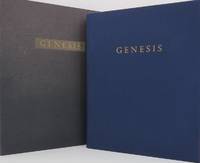
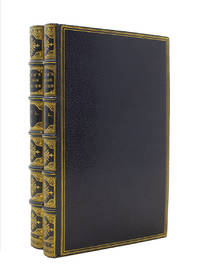
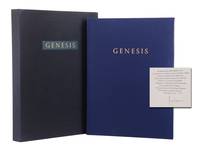
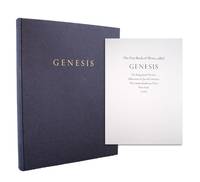
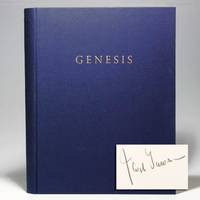
020738New York: Limited Editions Club 1989. hardcover. Fine in a Fine suede-lined linen clamshell box with leather label. Jacob Lawrence. Large folio bound in full midnight blue Japanese cotton. Copy #160 of only 400 numbered copies SIGNED on the colophon by Jacob Lawrence who has contributed 8 ORIGINAL SILKSCREENS to this massive 16" x 22" and truly magnificent work one of the high points of the press. These silkscreens are identical except for not being individually signed to the very few portfolios of 8 prints currently selling for upwards of fifty thousand dollars. According to the publisher anywhere from 17 to 21 screens were required to bring out the coloring of each illustration making a total of 144 separate stencils all of which were destroyed after the strictly limited number of some 400 original sets of prints had been achieved on the fine Whatman paper specified by the Osiris Printing Studio in New York. The text was printed on a heavy handmade paper from Cartiere Enrico Magnani of Pescia Italy. Monthly Letter laid in. A gorgeous book. <br/><br/> Limited Editions Club hardcover
1776WRCAM47955London: Sayer & Bennett 1776. Single sheet 29 x 22 inches. Some light toning and offsetting. Very good. A highly important chart of the entrance into the St. Mary's River showing the soundings shoals and navigational details as well as Tiger Island Marteirs Islands part of Amelia and Cumberland Islands and the ruins of Fort William which was built by James Oglethorpe. It shows settlements and named plantations including that of the Countess Dowager of Egmont with the slave quarters labeled in the map key. The map also includes a key to the rivers buildings etc. indicated on the map and sailing directions into the harbor. This chart was originally published in the second part of THE NORTH- AMERICAN PILOT. In 1776 shortly after news of American Independence reached Great Britain publishers Sayer & Bennett issued a second part to their previously published THE NORTH-AMERICAN PILOT to encompass the coastline of the American colonies. The maps issued here include famed cartographic productions by John Gascoigne Joshua Fisher Anthony Smith and others. Many maps include additions reflecting the early battles of the war such as the plan of Charlestown showing the attack on Fort Sullivan. This second part of THE NORTH-AMERICAN PILOT was first published in 1776 and subsequently reissued with additional maps in 1777. SELLERS & VAN EE 1632. Sayer & Bennett unknown books
1609WRCAM38891Amsterdam: Cornille Nicolas 1609. Two parts. 228 leaves second part with its own titlepage. Folio. Modern three-quarter morocco and marbled boards spine gilt. A few leaves with worm tracks expertly repaired. Very good. Second French edition following the first French edition of 1601 of this important voyages narrative describing the initial Dutch exploration and expansion to the East Indies a significant element in a global commercial enterprise which was to develop throughout the 17th century. Van Neck who represented the Verre Company commanded three ships which were part of the first successful Dutch trading voyage to the region. The other two ships were commanded by Wybrand Van Warwijck and Jacob Van Heemskerk. Van Neck's vessel became separated from the other two after rounding the Cape of Good Hope and the three did not reunite again until his arrival in Java in late December 1598. Unlike his Dutch predecessor Cornelis Houtman who three years earlier had seized the port of Bantam Van Neck dealt diplomatically with the natives. "Rather than rejecting the inflated prices asked by the local ruler he offered to pay over the odds in order to cement a lasting relationship.Van Neck's was the most profitable of the pre-VOC Dutch East India Company voyages. Despite the apparently high price paid for spices he netted a profit of 300 per cent on his overall costs. In 1601 fourteen fleets comprising sixty-five ships sailed for the East Indies but by that time competition between rival Dutch operators as well as with the Portuguese had inflated prices and none were as successful as Van Neck's first enterprise" - Howgego. While focused on activity in the East Indies EUROPEAN AMERICANA notes that the text includes references to Brazil and tobacco from the West Indies. The second part of this 1609 French edition which has its own titlepage is an eight-page appendix of words spoken in Java and Malay including word lists in French printed in roman type Malay in italic type and Javanese in civilité. EUROPEAN AMERICANA 609/93. TIELE 786. TIELE-MULLER 129. HOWGEGO N13. JCB 3II:64. Cornille Nicolas hardcover books
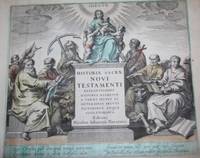
005220Amsterdam: Edente Nicolao Iohannis Piscatore. First Edition. Full Vellum. Ribbon ties. Very Good. One later title bearing the date of 1638; the only copy found on line bearing the primary title is dated 1674. 4to oblong 30 by 38 cm. Partially hand-colored title page 206 copper engraved plates not counting five later title pages and 101 manuscript leaves. In essence then this is two works -- a printed illustrated plate book and a highly scarce one at that and a manuscript commentary on the plates. The captions of the printed plates are in Latin while the manuscript text is in Dutch. The manuscript portion is beautiful with an abundance of ornate letter devices virtually one on each manuscript leaf and the writing besides being rendered generally with a calligraphic hand. These Dutch exegeses are written in a vernacular non-stilted manner. Not referenced in Brunet nor Landwehr. We could locate only one copy of the Visscher work on OCLC. It is at the Herzogin Anna Amalia Bibliothek-Klassik in Weimar Germany. It would appear that copy has the same number of plates as ours yet given the higgely piggely ordering of the plates which are often numbered within a series yet there are several instances of numbers missing we can not state with confidence that our printed matter is identical with that of the German library. In terms of the printed work contained herein it is arguable that this is in fact a collection of smaller works as there are other printed title pages. Contraverting this view is that it was not uncommon in the seventeenth century for something issued as a single work to have multiple title pages as was often the case with bibles. In the present work the other printed titles include "Memorabilium Novi Testamenti In Templo Gestorum Icones Tre Decim Elegentissimi AC Ornatissimi"; "Vita Passio et Resurrectio Jesu Christi . . . " ab Adriano Collart and this bearing a date of 1638; "Acta Apostolorum Elegantissimis Iconibus Summo Artificio Delineata a Duobus Praestantissimis Pictoribus Belgis . . . "; "XII. Fidei Apostolicae Symbola Iconibus Artificiosissimis"; manuscript title "Martelisatie der Apostolen"; and "Visiones Apocalyticae Exhibitae Johanni Apostolo in Insula Pathmo Elegentissimis Iconibus Expressae". There are also manuscript title pages among them "De Seven Wonderen der Weerelt" or "The Seven Wonders of the World" which is curiously followed by eight plates of eight different wonders. The bulk of the work as suggested both by the primary title and subsequent title pages covers scenes from the new testament but the first six plates depict the first six days of creation as recounted in Genesis. Notwithstanding the religious thrust of the plates many of them have an appeal that may excite even those not moved by pietistic imagery. More than anything many of the plates provide a window to the landscape society economy and culture of the seventeenth century Low Lands. A good number of the plates have fantastical imagery as well. Finally the plates represent a Baroque artistry tour de force. Rebacked. The older vellum of the boards is soiled and has some smallish chips and edge tears. Browning to the pages. A few tape repairs and some leaves with roughness along their edges. Edente Nicolao Iohannis Piscatore unknown
20254The Limited Editions Club. Fine. 1989. Hardcover. Rare. Signed by the illustrator. Limited edition of 400 copies this being copy #83. Navy cloth cover is nearly flawless. Boards and spine are straight. Binding is tight. Two text pages with a thumbprint otherwise pages are clean and pristine. 8 beautiful color lithographic plates. Publisher's notes laid-in. Slipcase has sunning but is in near fine condition. ; Signed by Artist . The Limited Editions Club hardcover
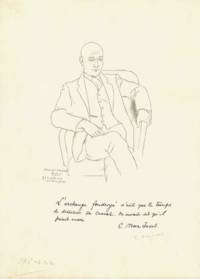
191033635Montrouge Paris: 1910 1910. Original Litho. Original Litho. PICASSO. MAX JACOB. Double Signed Litho. Montrouge Paris Seine. 1910. 14" 7/8 X 10" 3/4 on plain paper stock with the lithograph printed in two tones: Greenish grey for Picasso's drawing and handwriting and black for Max Jacob. Number 17 of only 30 copies. A rare early illustration of Picasso's close friend Max Jacob done in celebration of Jacob's conversion to Christianity. Jacob who had Jewish origins claimed to have had a vision of Christ in 1909 causing his conversion. The illustration of Jacob the first of Picasso's drawings of Max Jacob seated comfortably in a fine armchair dressed in his three piece suit. The printed text: Top A mon ami Max Jacob / Picasso .10 / 22 R. Victor Hugo / Montrouge Seine - Middle L'archange foudroyé n'eut que le temps / de desserrer sa cravate . On aurait sit qu'il / priait encore./ C. Max Jacob. Signed in pencil with his new Christian name: "C. Max Jacob" and by "Picasso" at the bottom. A very good or better example of this rare piece - Max Jacob is regarded as an important link between the symbolists and the surrealists as can be seen in his prose poems Le cornet à dés The Dice Box 1917. Throughout the year of 1901 Picasso traveled to Barcelona & Paris for art exhibitions. During an exhibition in Paris Picasso met Max Jacob. Max Jacob was a poet painter & art critic with connections in the Parisian cultural scene. The two artists developed a friendship after Jacob left an admiring note for Picasso at the art gallery displaying Picasso's work Richardson Vol. I 203. Jacob introduced Picasso to the French language and to French theatre; Jacob was also an actor. Jacob took Picasso to see operas which possibly included I Pagliacci & La Bohème Richardson Vol. I 338. "At night there were frequent visits to the cabarets of Montmartre such as the Chat Noir and when tickets could be found to the Moulin Rouge" Penrose Picasso 76. Picasso & his friends also enjoyed the artistic atmosphere of Le Lapin Agile. Artists & writers would congregate at the small café to listen to recitals exchange ideas & celebrate special occasions such as the opening of an exhibition Penrose Picasso 117. The walls of the café were lined with work by artists that were used as payment for debts. Theatrical entertainment was a prominent part of Picasso's social life in Paris. By 1904 Picasso had established a foothold in Paris and would remain in the cultural center of Europe for the rest of his life. Picasso & Max Jacob cultivated their talents in a dwelling known as the Bateau Lavoir. According to Penrose this place was ". . . composed it seemed of nothing but lofts & cellars all in such a sad state of repair. . . " Picasso 96. Artists of all endeavors were attracted to this bohemian style of living. Picasso's neighbors included painters sculptors writers & actors Penrose Picasso 102. One of Picasso's most influential friends entered his life in 1905: Guillaume Apollinaire. "From the first encounter Pablo Picasso and Guillaume Apollinaire established a creative dialogue that fostered and inspired some of their finest art & poetry". Apollinaire was a poet & playwright identified as a Surrealist who kept close connections with literary & artistic figures in Paris including Max Jacob & André Salmon. He was a great source for Picasso to meet writers & theatre artists. Many of Picasso's friends encouraged him to frequent the theatre with artists & poets from Paris Picasso Penrose 177. Even though Picasso was not in Paris he managed to find groups of artistic individuals to stay abreast of cultural gossip & happenings. Picasso's connections with writers led him to create several illustrations for books of poetry for friends. For example during summer 1910 in Cadaques Catalonia painting with Derain Picasso was commissioned to illustrate a poetic novel written by Max Jacob titled Saint Matorel issued by Daniel-Henry Kahnweiler in 1911. Penrose Picasso 179. This was only the first of a collections of poetry they collaborated on. 1910 unknown
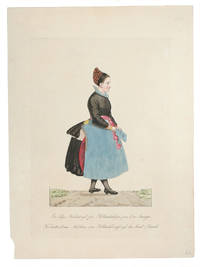
180536079(København, ca. 1805-08). 4to. Varierende bladstørrelser. Trykflade ca. 20x15 cm. Med 59 kobberstukne og håndkolorerede dragtplancher samt 6 tillægsplancher i tusch og akvarel. Alle med dansk og tysk tekst under billedet. Indlagt i bogæske af helshirt.
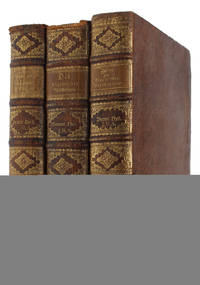
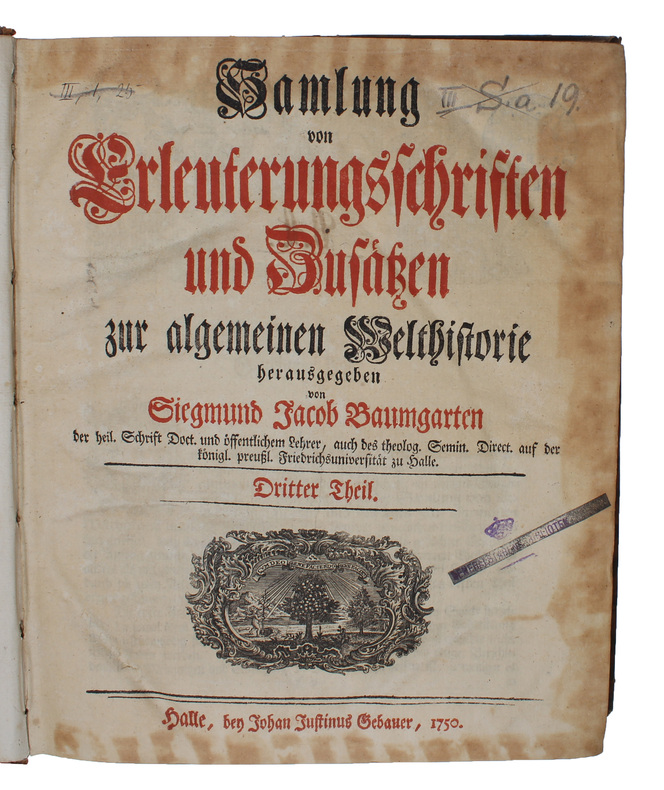
174456102Halle Johann Justinus Gebauer. 1744-1793 4to. Bound in 65 Theil 48 in 3 volumes nice contemporary full calf with raised bands and richly gilt spines. A few volumes have some wear to upper spines. With 58 frontispices 124 engraved plates and 103 engraved folded maps. Internally nice and clean. <br/><br/><em>Brunet III: p. 233 - Graesse III: 309 Both bibliographies erroneously state that the first part was printed in 1746. </em> hardcover
174456102Halle, Johann Justinus Gebauer. 1744-1793 4to. Bound in 65 (Theil 48 in 3 volumes) nice contemporary full calf with raised bands and richly gilt spines. A few volumes have some wear to upper spines. With 58 frontispices, 124 engraved plates, and 103 engraved folded maps. Internally nice and clean.
180536079København ca. 1805-08. 4to. Varierende bladstørrelser. Trykflade ca. 20x15 cm. Med 59 kobberstukne og håndkolorerede dragtplancher samt 6 tillægsplancher i tusch og akvarel. Alle med dansk og tysk tekst under billedet. Indlagt i bogæske af helshirt. <br/><br/><em>Af største sjældenhed. Der udkom i alt 72 blade af denne Danmarks første arbejde om vore nationaldragter men en komplet serie kendes kun i ganske få eksemplarer - kun et eksemplar forefindes i offentlige biblioteker UB mens eksemplaret i KB ikke er fuldstændigt. Titlen kendes kun fra de 12 hefteomslag som medfulgte udgivelsen de er ikke til stede her. Rieter og Senn som begge var født og uddannet i Schweitz ankom til København i 1804 de gjorde dragtstudier på Sjælland på Vesterhavsøerne og i Holsten. Serien af dragtplancher er opdelt i 2 afdelinger den første viser københavnske med Amager og sjællandske dragter mens den sidste gengiver sønderjydske Holsten og de nordfrisiske øer. Denne sidste afdeling med ialt 37 plancher foreligger her komplet og blev genudgivet 1909 af Karl Häberlin i "Volkstrachten der nordfriesischen Inseln". Rieter forlod København allerede i 1805 således måtte Senn fuldføre udgivelsen. Antageligt har Senn udført de fleste af tegningerne. De medfølgende 6 originale akvarel-plancher supplerer serien således at den omfatter ialt 65. Disse kopier fra Det 19.årh. har flg. numre hos Krohn: 1317233234 og 35.An extremely scarce series of the first Danish work on National Costumes only known in a few copies.Bibl. Danica II: 1080 incomplete - Colas: 2557 only 56 plates. - Krohn: 873-944 </em> unknown
191678127Paris 12 août 1916 | 6.30 x 8.60 cm | une feuille
1987671BASTEI-LÜBBE 1987-07/89. 1.-2. softcover. Inkarnation der Unsterblichkeit Die 2209822104241022411424119 BASTEI-LÜBBE paperback
45783Nürnberg : Johann Jacob Wolrab circa 1720. Original wooden box 270 x 105 x 40 mm with two compartments containing removable cards: 6 double-sided cards for the months and 16 smaller double-sided cards for the days; each card is engraved and hand-coloured but the larger cards also have hand-painted gouache decorations illustrating the months and signs of the zodiac; the verso of the sixteenth day card i.e. the card with '31' on the recto has the engraved imprint of 'Nürnberg zu finden bey Johann Jacob Wolrab'; the cards have an expected amount of rubbing and handling wear one has a recent tape repair but overall they have been remarkably well preserved the colours still vibrant; the wooden box has a short crack on the underside. A rare and charming perpetual calendar made and sold by Johann Jacob Wolrab 1675-1746 a Nuremberg bookseller publisher and art dealer who is perhaps best known for his engravings of dwarf caricatures. The cards for the months contain printed information about each month including variations in day length. It is almost certain that the calendar was issued in an uncoloured state and without illustrations as some traces of the printed text show through the overpainted motifs. However the appeal of this particular calendar lies in these attractive naively executed decorations - unquestionably fully contemporary with the printed cards - that transform it into a unique artwork. No other example traced. unknown
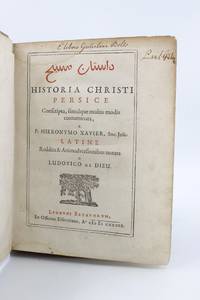
163989174Lugduni Batavorum Leyde Leiden: Ex Officina Elzeviriana 1639. Fine. The very first Persian grammar. Ex Officina Elzeviriana Lugduni Batavorum Leyde Leiden 1639 15.3 x 20.8 cm 2 volumes reliés en 1 Rare first edition. Full vellum binding over boards with flaps smooth spine title inked partly faded at the spine head some blemishes on the boards edges spotted red.A fine and rare copy. Booksellers descriptive labels pasted on an endpaper.Backer & Sommervogel VIII 1339-1340 considers the two parts as separate works. Willems 490 clearly explains that the two parts form a single title published at once and 477 for the Persian grammar which forms a separate title and constitutes the second attempt of its kind for Western use. A most curious composition by the Spanish Jesuit Jeronimo Espeleta 1549-1617 who adopted the name Javier out of deference to his relative the famous Apostle of the Indies presented by a Dutch Protestant Louis Dedieu 1590-1642 with the aim of demonstrating that Catholics in the missions of the East deliberately altered sacred texts and intermixed them with non-canonical fables. Consequently this very first account of the life of Christ and Saint Peter in Persian produced by this devoted missionary at the request of the Mughal emperor Akbar the Great attracted the attention of the Index particularly on account of Dedieus comments. This publication notably offers readers the very first Persian grammar issued ten years before John Greaves together with an excerpt from the first book ever printed in Persian: Jacob Tawuss translation of the Pentateuch. Provenance: William Bolts with his autograph ownership inscription at the head of the title-page: Gulielmi Bolts.William Bolts 1739-1808 a Dutch merchant active in India is best known for his celebrated Etat civil politique et commerçant du Bengale 1775. Ex Officina Elzeviriana hardcover
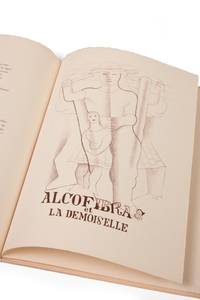
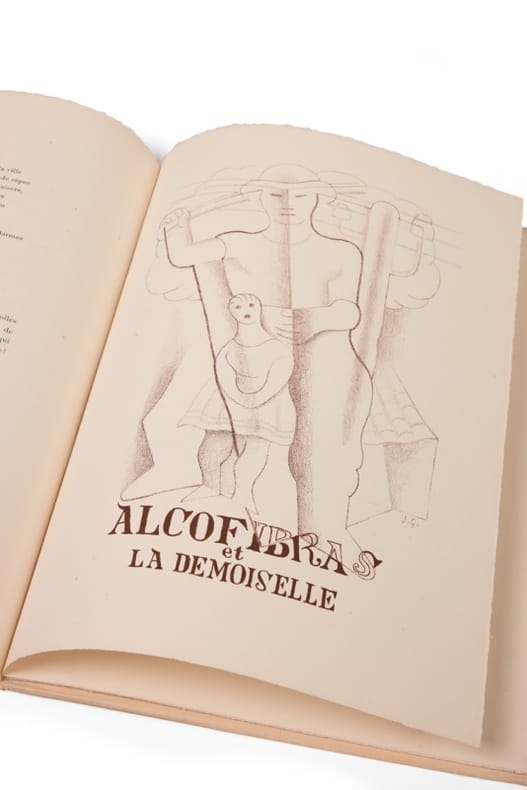
29047Paris Editions Galerie Simon 1921. 1 vol. 235 x 325 mm. Broché. . Édition originale. Illustré de quatre lithographies hors-texte par Juan Gris. Un des 90 exemplaires sur hollande signé au colophon par l'auteur et l'artiste. Premier livre illustré de gravures originales par Juan Gris et première apparition de la couleur dans la production éditoriale de Kahnweiler : le bleu le vert le bistre et l’ocre sont utilisés. C'est également la première fois que les illustrations portent clairement un titre ou une légende. . « L'ouvrage sera souscrit notamment par Paul Guillaume Jacques Doucet et Paul Poiret. Encore un détail éditorial c'est la première fois que les illustrations portent clairement un titre : aucun des livres précédents n'avait de légende ou de titre pour les hors-texte. Et ici Kahnweiler privilégie le papier de Hollande à l'exclusion du papier Japon. » Librairies Illi et l'Exemplaire Daniel-Henry Kahnweiler éditeur 9. Paris, Editions Galerie Simon, 1921. 1 vol. (235 x 325 mm). Broché. unknown
192129047Premier livre illustré par Juan Gris Paris, Editions Galerie Simon, 1921. 1 vol. (235 x 325 mm). Broché. Édition originale. Illustré de quatre lithographies hors-texte par Juan Gris. Un des 90 exemplaires sur hollande signé au colophon par l'auteur et l'artiste. Premier livre illustré de gravures originales par Juan Gris, et première apparition de la couleur dans la production éditoriale de Kahnweiler : le bleu, le vert, le bistre et l’ocre sont utilisés. C'est également la première fois que les illustrations portent clairement un titre ou une légende.
172910151Leipzig Johann Heinrich Zedler/Register: Leipzig Bernhard Christoph Breitkopf 1729-1733/1740. 12 bindings containing 22 volumes and a register 10 16 588 8 834 8 4 674 14 608 10 16 640 8 674 10 4 548 8 636 14 744 12 576 10 32 664 6 8 651 8 16 742 8 680 6 8 620 6 621 10 720 6 534 6 708 2 380 8 736 2 592 4 224 26 144 882 280 p. Contemporary Vellum Folio H. 345 x L. 225 x W. 7-85 cm. -the complete set is ca. 90 cm. wide- A single wormhole in the bottom margin of volume 13 top of the back covers of volume 19/20 21/22 and the register lack a small piece of vellum the text blocks are slightly browned at some places but not nearly as browned as usual page 451/452 of volume 9 is present a second time in volume 8 all 22 volumes are illustrated with a large engraved head-piece depicting Luther at the beginning of the main text. Firm and complete set of the works of Martin Luther 1484-1546. Included is a useful register which was specially made for this edition by Johann Jacob Greiff 1699-1767. The set is uniformly bound in firm vellum bindings which are in very good condition and surprisingly clean. Altogether a beautiful set of the life's work of the renowned Martin Luther. Leipzig Johann Heinrich Zedler/Register: Leipzig, Bernhard Christoph Breitkopf hardcover
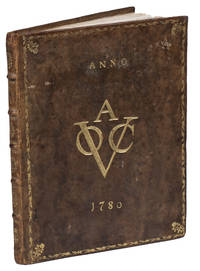
1780ABC_48891The Netherlands 1780. Late 18th-century gold-tooled brown mottled calf sewn on 5 supports bound by the so-called Acorn-and-Foliage Tool Bindery in Amsterdam Storm van Leeuwen. Both boards show the large gold-tooled monogram of the Amsterdam chamber of the VOC as a centre piece sandwiched between the gold-tooled date Anno 1780 all within a gold-tooled floral frame with floral corner pieces in the inside corners spine gold-tooled in six compartments red sprinkled edges. 4to ca. 19 x 15 cm. Manuscript in French written in black ink on paper in a neat cursive script by one hand. With chapter divisions numbered 39-75 and headings. The text is written upside down in relation to the binding. Most leaves show an identical watermark depicting a lion rampant on a pedestal with Vryheyt in a crowned ring with Pro Patria Eiusque Libertate and the letters CR below which is very close to Heawood 3149 date: 1753. Late 18th-century manuscript copy of a French childrens catechism by the Swiss theologian Jacob Vernet 1698-1789 bound in a remarkable late 18th-century binding originally produced for the Amsterdam Chamber of the Dutch East India Company VOC by the so-called Acorn-and-Foliage Tool Bindery which was active between ca. 1760 and ca. 1784 Storm van Leeuwen.It shows the large monogram of the Amsterdam Chamber of the VOC sandwiched between the date "Anno 1780" on both boards. These bindings were usually commissioned as gifts to persons important to the VOC often containing an almanac for the relevant year but possibly also produced as blank notebooks. The present work comprises chapters 39-49 and 58-75 of Vernet's work which form almost the second half of printed editions. The chapters included in the present work are complete and exactly follow the order of the printed text in the Geneva 1742 edition pp. 75-140 checked using a digital copy with a slightly different spelling and replacing some words. For unclear reasons chapters 50-57 dealing with the fourth through tenth commandment have not been copied and several leaves between the end of chapter 49 and the beginning of chapter 58 have been left blank.Vernets religious text was first published in 1741 under the title Instruction chrétienne ou catechisme familier; avec quelques prières a lusage des petits enfans . In 1742 a revised edition appeared with a slightly different title Instruction crhetienne ! ou catechisme familier. Avec quelques passages de lEcriture Sainte & quelques prières à lusage des petits enfans. Nouvelle edition. Revuë corrigée & augmentée. Both works were printed in Geneva for the Swiss bookseller Emanuel Du Villard Emmanuel Duvillard 1693-1776 and subsequently reprinted several more times until 1769. With the book block showing the remnants of 12 removed leaves probably already removed before the manuscript was finished. Both pastedowns partly detached an old annotation Ao. 44305 in black ink on the lower pastedown some foxing. Otherwise in good condition.l For the binding: Landwehr/Van der Krogt VOC pp. XXVII-XXVIII; Storm van Leeuwen I p. 175 p. 196 VOC A-stamp and pp. 612-616 the bindery; for Vernet's work: Google Books digital copy of the 1742 ed. title: Instruction crhetienne ! ou Catechisme familier; physical copy at the Biblioteca Universitaria di Torino; WorldCat 951908419 1 copy 1767 ed.; WorldCat 1040828976 1 copy 1769 ed. no author noted; for the watermark: Heawood 3149. hardcover
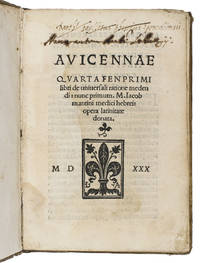
1530ABC_47222colophon: Venice: Lucantonio Giunti 1530. Later vellum with more recent end leaves. 8vo. With Giunti's printer's device on the title page a Florentine lily with the L. A. initials. First edition of Jacob Mantino's translation into Latin of the fourth part of the first book of Ibn Sina's Canon of Medicine original title: al-Qanun fi at-Tibb divided into 31 chapters. Mantino dedicated it to the Doge of the Venetian Republic Andrea Gritti 1455-1538.Jacob Mantino 1490-1549 was a Jewish doctor rabbi and philosopher. He was born in Spain but he his family and the Jewish community in Tortosa were forced to flee after refusing catholic baptism as decreed by the catholic King Ferdinand II and Queen Isabella I of Spain. Mantino grew up in Italy and studied philosophy and medicine at the universities of Bologna and Padua. Most of his adult life was spent being a doctor to the pope and other prominent members of society like cardinals bishops and ambassadors in Bologna Verona Venice and Rome. He was also involved in the religious controversy over Henry VIII's divorce from Catharine of Aragon. In 1549 just before his death he moved to Damascus as ambassador of Venice. Mantino's intellectual production focused on the translation of scientific works from Hebrew and Arabic into Latin especially medical and philosophical treatises by leading authors of the medieval period including Moses ben Maimon Maimonides Ibn Rushd Averroes and Ibn Sina Avicenna.The present work was printed by one of the most successful and important late fifteenth and early sixteenth century Italian publishers Lucantonio Giunti 1457-1538. He was originally from Florence but was active in Venice from 1489. He was a member of the Giunti family of printers publishers and booksellers who were active throughout Europe.With owner's inscriptions on the front and back paste-downs and on the title-page and some marginal annotations in brown ink. The paste-downs are partially covered by the newer slightly foxed end leaves. The binding is somewhat stained light water staining to the first half of the work small restored tears in the outer margin of leaves d1 and d2 without affecting the text. Otherwise in good condition.l Catalogue of Sixteenth Century printed books in the National Library of Medicine 397; EDIT16 CNCE 3543; USTC 811590; WorldCat 13827163 320734580 634588783 1150715666. Lucantonio Giunti, hardcover
1772WRCAM46993Mannheim: Churfurstl. Hof-und Academie-Buchdruckerey 1772. 163581pp. plus two engraved plates on one sheet and folding map. Small octavo. Modern half vellum and marbled boards spine gilt. A bit of light age toning an occasional light fox mark. Three small purple ink spots in lower portion of map. Near fine. First printing of this rare and important account of Lower California by the German Jesuit Jacob Baegert. Baegert lived in Baja California for seventeen years 1751-68 and spent most of his time at the Mission of San Luis Gonzaga leaving after the expulsion of the Jesuits in 1767. He provides some important details on the culture of the Indians of Baja California including the Pericues Guiacuras and Cochiemes. Part one is an overview of California its climate and products; part two describes the inhabitants; and the third part contains an account of the introduction of Christianity to California. Wagner states that the German Jesuits were especially dissatisfied toward the end of the Jesuit regime in California and Baegert's bitterness is evident in his book: ".it was a land full of ferocious beasts and even more ferocious Indians the soil was poor the water undrinkable and there was no fuel to be had." <br> <br> The fine and important map was made by fellow Jesuit Ferdinand Consak and is described by Streeter as "most helpful in giving the location of the many Jesuit missions in Lower California. It also shows the route along the west coast of Mexico followed by Baegert in going to California in 1751 and his route out in 1768 after the expulsion of the Jesuits." The top right corner of the territory present-day Arizona is labeled rather ominously "Los Apaches Barbari." The excellent plates which were apparently not issued with all copies depict male and female California Indians. <br> <br> A prime early account of Baja California with an important map and plates of the region. HOWES B29 "b." HILL 46. COWAN p.27. SABIN 4363. BELL B5. STREETER SALE 2442. BARRETT 129. WAGNER SPANISH SOUTHWEST 157. WAGNER NORTHWEST COAST pp.154-155 & item 631. MEADOWS BAJA CALIFORNIA 1. GRAFF 137. PILLING PROOF SHEETS 203. PALAU 358393. Churfurstl. Hof-und Academie-Buchdruckerey hardcover books
169555736Amsterdam: Be-veit ha-meshutafim Asher Anshil ben Eliezer ve-Yisakhar Ber ben Avraham Eliezer/ Moses Wiesel 1695. First edition. Hardcover. g to near fine. Small folio 30 by 18.8 cm. Collation: aleph-vav4 zayin2 = 26 numbered leaves. Full period brown paper boards re-backed with a brown leather spine with raised bands.<br /> <br /> Letterpress title-page with ornate floral woodcut device; additional engraved title-page mounted depicting Moses and Aaron along with six small biblical scenes within round borders all against an architectural background. Engraved folding map at rear mounted; main title with woodcut vignette; 14 half-page engraved illustrations in the text.<br /> <br /> This gorgeously illustrated work is the first edition of the famous and highly influential Passover Haggadah printed in Amsterdam in 1695. Simply known as the Amsterdam Haggadah this edition stands as among the most imitated and copied haggadahs in history and was the first to be illustrated with copperplate engravings. Previous illustrated haggadahs had used woodcuts. The popularity of these illustrations can be attested by the huge numbers of reprint editions over the centuries. There are 14 finely printed large in-text engravings plus the full page engraved title page showing Moses Aaron and Adam in the Garden of Eden. Some of these images illustrate the traditional content of the Passover seder and/or the exodus story while some are other biblical stories less directly related. Images include: the Rabbis of Bene Brak discussing the Passover story the four sons Abraham smashing the idols of his father Abraham welcoming the three angels Moses slaying the Egyptian overseer the rescuing Moses from the river Moses and Aaron coming to Pharaoh w/ staves turning to snakes the ten plagues the Egyptian army drowning in the Red Sea the Exodus the receiving of the Ten Commandments at Mt. Sinai the eating of the Pascal Lamb King David composing his psalms and finally an exterior view of the Holy Temple with the cityscape of Jerusalem in the background. All images are captioned underneath with relevant passages in Hebrew. The engravings were all created by Abraham ben Jacob a German convert to Judaism who had moved to Amsterdam although some sources over the years misattributed them to financier Moses Wiesel 6 of which were adaptations and/or modifications of previous images by Swiss artist Matthäus Merian 1593-1650 from his original work "Icones Biblicae" 1625-30.<br /> <br /> In addition to the in text engravings there is famously a phenomenal fold-out engraved biblical map of the holy land. Measuring a total of 19.5x11.5" the map shows the land of Israel the Sinai desert and Egypt in landscape orientation looking eastward towards the top of the map. It traces the journey of the Israelites starting with the Exodus from Egypt through the desert and into the Land of Israel. The map is detailed showing the areas of the twelve tribes important locations and cities as well as geographic features including the Red Sea Mount Sinai the Dead Sea the Sea of Galilee and many others. The map is decorated with additional illustrations near the bottom and includes a key. This beautiful work also by Abraham ben Jacob is considered among the earliest if not the first map of its kind to be printed within a Hebrew publication. It is now known to have been heavily based on the previously printed 1620 map in Hebrew by Jacob ben Abraham Zaddiq and Abraham Goos 1590 - ca. 1643 which itself was based on the map of 1590 by Christian Kruik van Adrichom Adrichem printed in Latin.<br /> <br /> Text throughout is printed in Hebrew with smaller text in Rashi script underneath containing famous commentary on the Passover Haggadah by acclaimed Portuguese Rabbi and scholar Isaac ben Judah Abarbanel 1437-1508. The verso of the title page contains the order of the Passover seder with brief instructions in both Ladino Judeo-Spanish and Yiddish Judeo-German a nod to the subtitle of Haggadah which references the both Ashkenazi and Sephardic traditions.<br /> <br /> This copy with binding in beautiful condition with being professionally restored includining spine re-backed to style. Book block tight. Interior with some staining to pages throughout from use. Binding in very good to near fine inteiror in good condition overall. Hebrew title: סדר הגדה של פסח ×›×ž× ×”×’ ××©×›× ×– וספרד <br /> Alternate transliterations: Seder Hagadah shel Pesah Seder Hagadah sel Pesah<br /> <br /> References: Friedberg 278 Fuks HTN II 521; Yudlov Haggadah 93; Vinograd Amsterdam 627; Ya'ari no. 59; Laor 876 Map; Nebenzahl pp.138-1389 Map; Yerushalmi plate 59-62; Rosenau "Vision of the Temple" p.135 146-7. Be-veit ha-meshutafim [Asher Anshil ben Eliezer ve-Yisakhar Ber ben Avraham Eliezer]/ Moses Wiesel hardcover
182368858London: Published by C. Baldwyn 1823. CRUIKSHANK George. . GRIMM Wilhelm. ZAEHNSDORF binder. German Popular Stories. Translated from the Kinder und Haus Marchen Collected by M.M. Grimm from Oral Tradition. London: Published by C. Baldwyn 1823.<br> <br> Full description:<br> <br> GRIMM Jacob and Wilhelm. CRUIKSHANK George illustrator. German Popular Stories Translated from the Kinder und Haus Marchen Collected by M.M. Grimm from Oral Tradition. London: Published by C. Baldwyn 1823; James Robins & Co. London and Joseph Robins Junr. & Co. Dublin 1826.<br> <br> First English edition with the second issue title-page for Volume I with an umlaut over the "a" in "Märchen" in the title. "A few copies of the engraved title were printed off before the umlaut was added in 'Märchen'" Otherwise with the following first issue points: With a list of plates on page 218; the title to the tale of "The Travelling Musicians" on p. 9 has no additional words; in the "Notes" at the end of the volume the note referring to "Preface p. vii" comes last; and Baldwyn's advertisement at the end begins "On the First of November was published Price 5s. No. XII. Completing the Sixth Volume of The Retrospective Review."<br> <br> Two twelvemo volumes 7 3/8 x 4 3/8 inches; 190 x 110 mm. 2 xii 240 12 publisher's advertisements; 2 iv 256 1 1 printer's imprint 1 ads 1 blank 12 publisher's advertisements pp. Half-titles in each volume. With twenty-two etched plates by George Cruikshank including two vignette title-pages. The plates in Volume I are printed in brown and black in Volume II.<br> <br> Bound by F. Bedford in full navy crushed levant morocco. Covers triple-ruled in gilt. Spines tooled and lettered in gilt in compartments board edges ruled in gilt turn-ins decoratively tooled in gilt. Top edge gilt others uncut. Maroon coated endpapers. Leaves D2 and D3 in volumes I and B10 and page iv in Volume II with small closed tears to fore-edge margins invisibly repaired and not affecting text. Text is very clean and margins are large. The drab printed pictorial front and back wrappers for Volume I along with the spine are bound in to the end of volume I. The printed paper spine label from volume II is bound in to the end of that volume. Overall an about fine set.<br> <br> "The stories that we know today as Grimm's Fairy Tales were collected from oral tradition by the brothers Jacob and Wilhelm Grimm philologists and pioneer folklorists. They began to publish the results of their work in 1812 in Germany under the title Kinder- und Haus-Märchen. The tales first appeared in English in 1823 with the publication of the first volume of German Popular Stories. The translator was Edgar Taylor and the book's publication was an auspicious event for at least two reasons. It launched an era in which folklore and the fairy tale would stimulate writers to produce an increasingly imaginative literature for children. And German Popular Stories also put before the public the remarkable illustrations-perhaps his best work-of George Cruikshank. The illustrations evoke wonderfully the grotesque awesome yet matter-of-fact qualities of witch and goblin of Frog Prince Rapunzel Rumpelstiltskin and all the other characters that people the tales. As illustrations to these fairy tales Cruikshank's etchings have never been surpassed" Morgan Library Early Children's Books.<br> <br> Cohn 369. Morgan Library Early Children's Books 197. Ray The Illustrator and the Book in England 112.<br> <br> HBS 68858.<br> <br> $10000. Published by C. Baldwyn unknown
140947127New York: The Limited Editions Club 1989. Limited Edition. Fine. Copy number 384 of a limited 400 copies signed by Jacob Lawrence. Bound in publisher's blue cloth stamped in gilt on the upper board. Housed in the publisher's navy blue coarse linen velvet lined solander case with title label stamped in gilt. Illustrated with eight original silkscreens by Jacob Lawrence printed on fine Whatman paper by Osiris Printing. 23.5 x 18" elephant folio. Light rubbing to covers else Fine in a Near Fine case with slight wear to corners trivial fading and trivial wear to cloth. A monumental fine press edition of Genesis enhanced with vivid wildly expressive illustrations by Harlem Renaissance artist Jacob Lawrence that express the narrative of the King James Version. The Limited Editions Club unknown
324488New York: The Limited Editions Club 1989. Edition limited to 400 numbered copies signed by Lawrence. This is number 341. Illustrated with eight original silkscreens by Jacob Lawrence printed on fine Whatman paper by Osiris Printing. Original prospectus laid in. Folio. Original blue cloth clamshell box by Karl Folkes at the Spectrum Bindery and John Isakovics of Jovonis Bindery. Fine. Edition limited to 400 numbered copies signed by Lawrence. This is number 341. Illustrated with eight original silkscreens by Jacob Lawrence printed on fine Whatman paper by Osiris Printing. Original prospectus laid in. Folio. The prints illustrate and accompany the King James version of the book of Genesis. "The silk-screen stencils of Jacob Lawrence's paintings were expertly processed in New York City. Anywhere from 17 to 21 screens were required to bring out the coloring of each illustration making a total of 144 separate stencils all of which were destroyed after the strictly limited number of some 400 original sets of prints had been achieved on the fine Whatman paper. Jacob Lawrence one of the great figurative painters of the 20th century. rose to fame in 1941 after creating one of the most original and forceful series of narrative works in the history of American art - the 'Migration of the Negro.' He was the first African American artist to be represented by a major New York gallery and one of the first to have a solo exhibit at the Metropolitan Museum of Art" Regina Hackett. The Limited Editions Club unknown
1729041022Leipzig Johann Heinrich Zedler/Register: Leipzig Bernhard Christoph Breitkopf 1729-1733/1740 1729. Hardcover. Very Good. Des Theuren Mannes Gottes D. Martin Luthers Sämtliche Theils von Ihm selbst Deutsch verfertigte theils aus dessen Lateinischen ins Deutsche übersetzte Schriften und Werke Welche aus allen vorhin Ausgegangenen Sammlungen zusammen getragen Und Anietzo in eine bequemere und nach denen Materien eingerichtete Ordnung gebracht nach denen ältesten und besten Exemplarien mit Fleisz übersehen und verbessert mit verschiedenen in denen Altenburgischen und andern Tomis ermangelnden Schrifften vermehret und mit nöthigen Vorberichten versehen. WITH in Volume XXII: M. Johann Jacob Greiffs Pastoris in Mölbis Vollständige Register über die XXII Leipziger Theile der gesammten Schriften Des seligen D. Martin Luthers Nebst einem auf die Wittenbergischen Jenischen 1740. 22 volumes in 22 bound vellum bindings. Marble endpapers. Interior very good pages evenly browned. Leipzig Johann Heinrich Zedler/Register: Leipzig, Bernhard Christoph Breitkopf 1729-1733/1740 hardcover