24 761 résultats
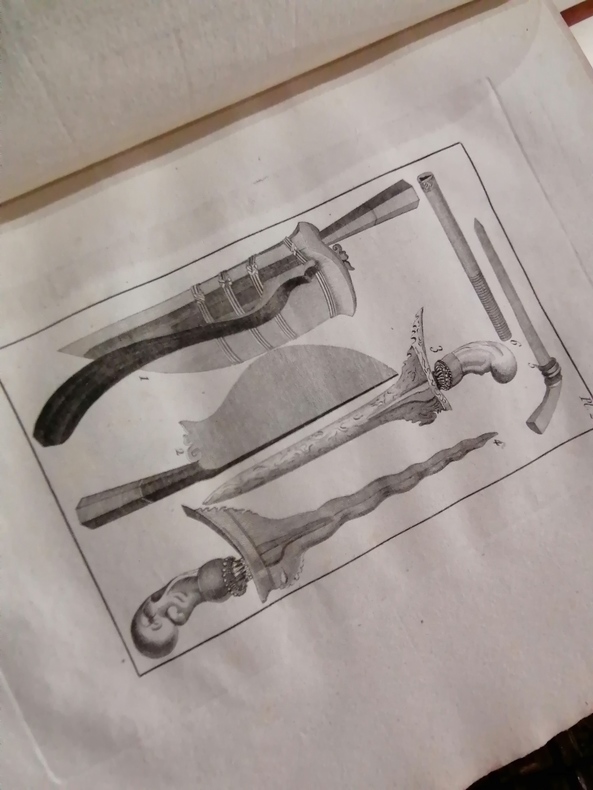
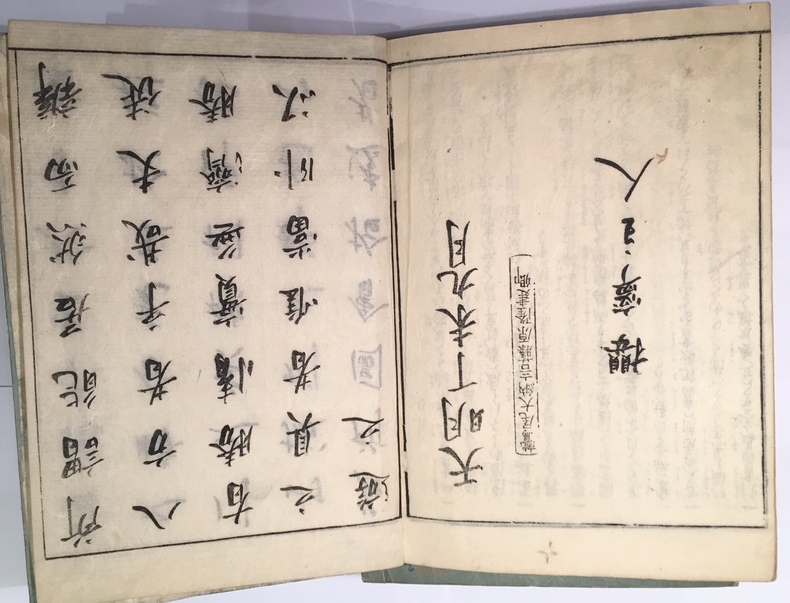
17804225Kyoto, 1780 (1786). 1780 5 vol. in-8° (260 x 184 mm.) de : [60] ff.; [51] ff.; [52] ff.; [58] ff.; [76] ff.; plus de 250 gravures sur bois dont une grande partie sur double-page; texte gravé sur bois. Brochage éditeur dépoque, cartonnage bleu, pièces de titre en japonais, titre manuscrit en français sur les couvertures.
173812027ABAugspurg (Augsburg), Franz A. Ilger, 1738. Gr.-4°. 12 n.n. Bll. + 534 + Leerbl. + 559 + 1 S. OLd. der Zeit, mit zwei Orig. Schließen., Abbildung
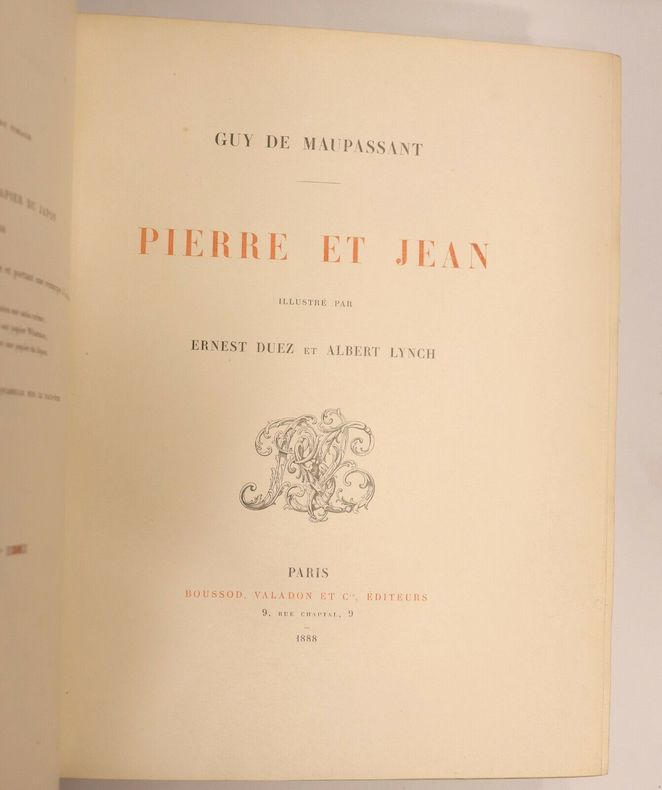
1888AMO-4199Illustré par Ernest Duez et Albert Lynch. Paris, Boussod, Valadon et Cie, 1888 1 volume grand in-4 (33 x 27 cm) de 170-(1) pages. 18 hors-texte par Albert Lynch et 18 en-tête et culs-de-lampe par Ernest Duez. Reliure demi-maroquin chocolat à larges coins, dos à nerfs janséniste. Auteur, titre et millésime dorés au dos, tête dorée. Couvertures conservées en parfait état (les deux plats et le dos). Reliure strictement de l'époque signée Victor CHAMPS. Quelques légers frottements sur les coins et coupes. Reliure fraîche. Intérieur très frais. Quelques rousseurs presque uniquement au verso des tirages sur satin contrecollés sur vélin fort. Première édition illustrée. Edition de grand luxe tirée à 50 exemplaires sur Japon avec 3 suites de toutes les illustrations (sur satin en bleu, sur Japon en bistre et sur Whatman en mauve) avec remarques. Les illustrations définitives tirées sur Japon dans le texte (E. Duez) et hors-texte (A. Lynch) sont toutes avec remarques. Avec une grande aquarelle originale signée E. Duez sur le faux-titre (fleurs de pavot). "Écrit en quelques mois à partir de l’été 1887, Pierre et Jean est le quatrième roman de Maupassant. Il constitue un tournant dans la production romanesque de l’auteur qui verse dans l’analyse psychologique. Prépublié dans La Nouvelle Revue à partir de décembre 1887, il paraît en volume chez Ollendorff, précédé d’une étude sur « Le Roman » (qui ne se trouve pas dans cette édition de luxe). [...] L’intrigue du récit peut paraître banale et est sans doute tirée d’un fait divers : petits boutiquiers parisiens, les Roland se sont retirés au Havre pour profiter de la mer. Leurs fils Pierre, étudiant en médecine, et Jean, futur avocat, viennent les retrouver. L’annonce du décès de Maréchal, un ami de la famille qui lègue tout son héritage à Jean, va être à l’origine d’un drame familial. Pierre comprend que sa mère a été infidèle et que Jean est le fils de Maréchal. L’aîné étant peu à peu dépossédé de l’amour maternel, de celui de Mme Rosémilly, jeune veuve que Jean épousera, puis de tous les avantages que son statut de fils légitime pourrait laisser supposer, il décide de quitter sa famille pour s’engager sur un paquebot transatlantique. [...] Succès littéraire, les critiques étant unanimes dans l’éloge, Pierre et Jean repose certes sur une intrigue ténue et des thèmes déjà abordés dans les contes et nouvelles, comme la bâtardise, la trahison de la femme, ou les conséquences désastreuses d’un legs dans une famille. Mais le roman vaut pour l’analyse psychologique des personnages et les magnifiques descriptions du Havre et de ses alentours, reflets de l’état d’âme du héros, rendues avec une écriture picturale. Il livre également une étude de mœurs sur la petite bourgeoisie de province. « Roman-drame » selon Jules Lemaitre, ayant le « schéma d’une tragédie antique » pour Paul Bourget, Pierre et Jean est aussi un « roman de mœurs » (Antonia Fonyi) tout autant qu’un roman familial, où la vision pessimiste de Maupassant se fait plus sombre que dans ses précédents livres. Comme la plupart des œuvres de Maupassant, Pierre et Jean connut aussitôt de nombreuses traductions et une fortune artistique importante, avec de multiples adaptations sous différents supports." (À propos de l’œuvre, Noëlle Benhamou, Les Essentiels de la littérature, Bibliothèque nationale de France, 2015). "La fratrie et la bâtardise occupent une place de choix dans les écrits de Maupassant. « Petit roman » ou « longue nouvelle » de neuf chapitres seulement, Pierre et Jean publié en 1888 aborde donc un sujet rebattu, constituant une structure obsessionnelle de l’œuvre maupassantienne. Le lecteur suit les pensées de Pierre Roland, le fils légitime, aux prises avec une enquête de filiation qui l’exclura de sa famille. Roman psychologique, mais aussi roman de la mer, Pierre et Jean peut se lire comme une réécriture de la parabole du fils prodigue." (Pierre et Jean, Les Essentiels de la littérature, Bibliothèque nationale de France, 2015). « Le romancier d’analyse, le romancier psychologique naissait donc, dans Pierre et Jean, du romancier observateur et du romancier de mœurs. Aussi la qualité du romancier psychologue comporte-t-elle, en Maupassant, une spécification qui oppose vigoureusement cet auteur à Bourget et à Edmond de Goncourt vieillissant par exemple. Maupassant conçoit et pratique l’analyse psychologique de telle façon qu’elle soit non point une satisfaction gratuite pour l’intelligence ou la subtilité chercheuse du lecteur, mais un moyen pour le progrès même de l’œuvre, l’élément moteur de l’action. Dès l’instant où Pierre cesserait de tendre mille prétextes entre son regard et ses vérités intimes, dès l’instant où, selon une démarche inverse mais complémentaire et nécessaire, il cesserait de s’interroger et de se répondre sincèrement, dès l’instant où les passions cesseraient de solliciter, par leur violence même, son clair jugement, et , en retour, de s’exaspérer dans ce jeu qui fait bon marché de leurs mensonges, le roman s’arrêterait, car les événements qui composent la substance du récit ne sont rien que les moments successifs et les effets immédiats de cette partie de cache-cache avec soi-même. Et, de fait, le roman s’arrête au moment où Pierre, en dépit de tant d’efforts pour le travestir, n’a plus rien à apprendre de sa « seconde âme », et où cette âme instinctive goûte enfin un inavouable assouvissement. Il en résulte, second trait de l’originalité de Maupassant, que l’analyste n’est point l’auteur mais le personnage lui-même. Il demeure de bout en bout son propre témoin, et seul le résultat de son observation est confié au lecteur, comme une sorte de prélèvement opéré au plus vif de sa conscience. » (André Vial, Maupassant et l’art du roman, Paris, Nizet, 1954, p. 404-405.) On joint à notre exemplaire un feuillet publicitaire paru dans Le Livre pour les étrennes (décembre 1888) donnant le détail de cette luxueuse édition. Les exemplaires ordinaires tirés sur vélin teintés étaient vendus 60 francs quand notre exemplaire sur Japon du tirage à 50 ex. avec 3 suites étaient vendus au prix très élevé de 500 francs l'exemplaire. Il a été fait un tirage sur Japon à 150 ex. avec seulement 2 suites (sans la suite sur satin donc) au prix de 200 francs. La reliure d'amateur était proposée à 20 francs. Les aquarelles d'Ernest Duez et d'Albert Lynch sont fidèlement reproduites par le procédé héliographique développé par la maison Goupil (maison Boussod et Valadon). Albert Lynch avait commencé dans l'illustration du livre aux côtés d'Octave Uzanne pour La Française du Siècle (1885). "Les aquarelles, dessinées par Albert Lynch, pour Pierre et Jean, sont des chefs d'œuvre de grâce, d'élégance, de finesse, de distinction et de modernité ; il y a plaisir à suivre les progrès de ce très jeune peintre depuis les compositions faites par lui pour les livres d'Octave Uzanne jusqu'aux incomparables tableaux qu'il vient de signer aujourd'hui. L'ouvrage de Maupassant était cependant assez malaisé à illustrer ; sa psychologie serrée, la passion concentrée dans une âme d'Hamlet moderne, prêtaient peu à la manifestation du peintre ; Albert Lynch a revécu le roman au Havre même, et il est parvenu, après un long labeur, à nous donner cette admirable série de tableaux qui méritent de lui faire un nom consacré dans le monde des artistes et des amateurs. [...] MM. Boussod et Valadon ont fait, avec Pierre et Jean, une œuvre d'art véritable, en dépit même de l'héliogravure qui chagrine tant d'amateurs ; il faut espérer que le succès de ce livre les poussera à nous donner fréquemment des ouvrages de cette rare valeur." (Le Livre, Livres d'étrennes pour 1889, livraison de décembre 1888, p. 626). Bel exemplaire du tirage le plus rare avec trois suites supplémentaires et une aquarelle originale d'E. Duez, sobrement relié à l'époque par Victor Champs.
193320041933 Edité sous la direction de Jacques de Brunhoff, chez Jules Meynial, Paris , 1933. Grand in-4 broché, 95 pages. 48 iillustrations en noir dans le texte, 32 planches doubles hors-texte, tirées par l'imprimerie Coulouma en héliogravure bistre et noir de Iacovleff, le texte d'Elisséeff (éminent orientaliste)
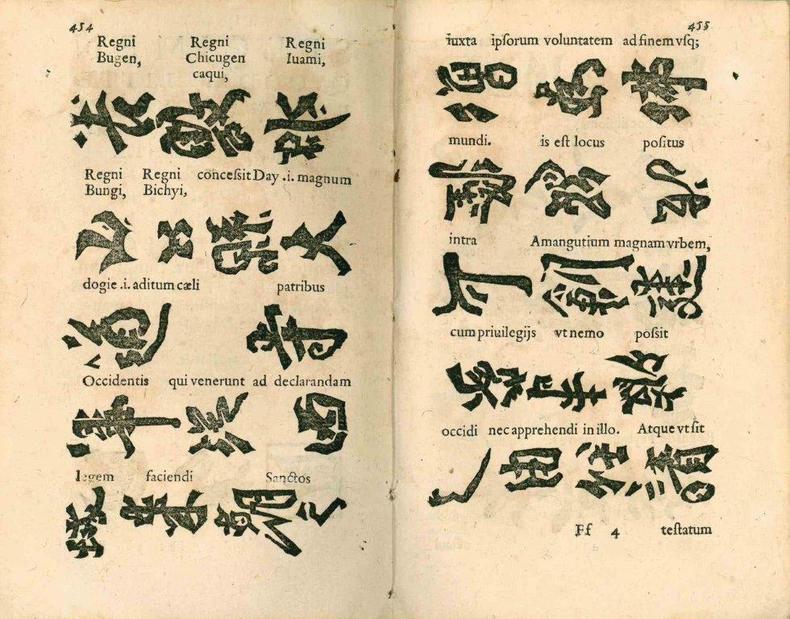
15742459Cologne, G. Calenius, 1574. 1574 1 vol. in-8° (164 x 111 mm) de : [16] ff. (titre avec vignette de bois gravé, epîtres, index) ; 472 pp. ; nombreuses lettrines historiées de bois gravé, 5 planches de caractères japonais de bois gravé. Plein vélin d'époque, dos titré à l'encre brune. (Restauration de papier à l'angle inférieur de la page de titre avec très léger manque de texte).
1900AMO-3700par Octave Uzanne, illustrations dans le texte et hors-texte de Eugène Courboin. Nombreuses reproductions d'estampes anciennes. Paris, Société d'Editions Littéraires et Artistiques, Librairie Paul Ollendorff, 1900 [impr. Renouard et Chamerot]. 1 volume grand in-4 (31 x 22,5 cm) de XX-281-(2) pages. 20 gravures hors-texte aquarellées au pochoir sous forme de triptyques aquarellées par Eugène Courboin (volets décorés Art Nouveau par Léon Rudnicki). Reliure moderne bradel plein papier rouge texturé, dos muet, relié sur brochure. Parfait état. ÉDITION ORIGINALE. Tirage à 1.570 exemplaires numérotés (1.500 ex. sur vélin teinté ; 60 ex. sur Japon Impérial et 10 ex. sur Japon, format colombier). CELUI-CI, UN DES 10 EXEMPLAIRES SUR JAPON COLOMBIER AVEC UNE SUITE DES 20 HORS-TEXTE SUR CHINE IMPRIMÉS EN NOIR NON MIS EN COULEURS. Après quelques Propos avant-coureurs ou Documents accumulateurs de ce livre ou encore Essai bibliographique et iconographique (en réalité bibliographie des plus complètes sur le sujet des transports en tous genres depuis l'antiquité jusqu'à la fin du siècle, qui occupe les XX premières pages), on trouve les chapitres suivants : La locomotion dans l'antiquité (origines - Chine - Egypte - Inde - Perse - etc.) - La locomotion à travers l'univers (hier et aujourd'hui) - La locomotion publique, privée et royale, les transports en commun tant au moyen-âge que pendant la Renaissance et jusques à Henri IV (la cavalerie, la chevalerie et l'artillerie - routes et voies de communication) - Carrosses et entrées solennelles (fêtes de gala, cérémonies funèbres, religieuses et militaires, cavalcades, carroussels et coches) - XVIIIe siècle (les chaises à porteurs, les carrosses sous Louis XV (la locomotion sous la révolution, les premières diligences, etc.) - La locomotion depuis la révolution - Les chemins de fer (emploi de la vapeur - les premières locomotives) - Tramways, Automobiles et Cycles (importance de la locomotion parisienne - etc.) - La locomotion à côté (véhicules de divers usages) - La locomotion au XXe siècle (les progrès de l'automobilisme). Compte tenu de la date d'édition de cet ouvrage, l'aviation n'est pas traitée dans ce volume. Il faudra attendre la nouvelle édition de 1911 (et sa réédition augmentée - édition populaire) pour avoir une dernière partie entièrement consacrée à ce sujet. On trouvera difficilement un ouvrage aussi complet et aussi richement et artistiquement illustré sur le sujet. SUPERBE EXEMPLAIRE DE CE TIRAGE DE TÊTE RARISSIME. EXEMPLAIRE PORTANT LE N°I. (sur X).
198867515ABDüsseldorf., Takako Saito., 1988. 67515AB 1 Schachstäbchen mit ausgebesserter Bruchstelle. Sonst sehr gutes Exemplar.
98019A Paris, Javal et Bourdeaux, 1928, 1 volume in-folio de 325x255 mm environ, 88 pages, en feuillets sous couverture rempliée imprimé en vert avec vignette sur le premier plat, dans un écrin de soie vieux rose titré or, avec intérieur molletonné en soie vert olive et ruban assorti (ruban détaché), fermé par deux boutons pressions, notes manuscrites sur la première garde blanche. Edition illustrée de 15 compositions en couleurs de Cappiello gravées sur cuivre par Lorrain, dont 14 hors texte. Toutes les gravures sont en quadruple état : en bleu, en noir, en deux couleurs et état définitif en couleurs. Exemplaire N° 37, un des 40 exemplaires sur Japon Impérial, portant la signature de Cappiello. Toile de l'écrin insolée et tachée, coins frottés, mors en partie fendus, intérieur bon état.
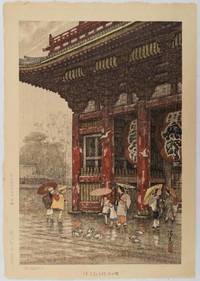
1935218363Yokohama.: Self published. 1935. Colour woodblock print 41.1 x 28.5 cms including margins title in the lower margin publisher's seals in the left margin with artist's signature lower left and chop lower right limited edition stamp on the verso 177 of 300 sheet a little age-toned but the image in very good condition. Exceedingly rare limited edition woodblock print by Ginnosuke Yokouchi also known as Kiyoharu Youkouchi a Yokohama-based artist who began his career as a watercolour landscape painter before producing eight self-published woodblock prints in the 1930s. See "Guide to Modern Japanese Woodblock Prints: 1900-1975" by Helen Merritt and Yamada Nanako. Little is known of his life but his work is representative of the Shin Hanga movement. This beautiful playful composition has a great delicacy of tone and a painterly fluidity of line. <br> <br>From the collection of the late John Caiger 1930-2022 lecturer in Asian studies ANU. . Self published. unknown
1971106524BBTokyo, Shuei-sha, (1971). Quer-Imperial-Folio (38 x 54 cm.). [52] Bl. mit Frontispiz auf mont. Aluminiumplatte, 3 farb. Illustrationen u. 40 (3 farb.) ganzs. Abb. nach Fotografien. Schwarzer Orig.-Samteinband mit farb. Deckelbild in Orig.-Leinen-Flügelmappe mit Deckeltitel u. 5 farb. Illustrationen auf dem Innendeckel und den Flügeln mit Orig.-Versandkarton mit Deckelschild. - Black original velvet cover with color cover image in original linen wing folder with cover title and 5 color illustrations on the inner cover and the wings with original shipping box with cover label. [13 Warenabbildungen]
191257542ABKyoto, Unsodo, Meiji 45 (1912). With numerous toned and coloured woodblock illustrations. Orig. sewn stiff wrappers with title label to front wrapper in 3 clamshell boxes.
1854WRCAM52135Yokohama 1854. 1p. Oblong folio sheet previously folded. A couple minor creases with very light dampstaining at foot of sheet. Very good. An impressive survival from Commodore Perry's expedition a decorative manuscript menu from the banquet that celebrated the agreement of the Treaty of Kanagawa between the United States and Japan in 1854. Although an official and extensive trade agreement between the two countries was not reached until 1858 the Treaty of Kanagawa achieved Perry and the United States government's primary goal of opening Japan to U.S. trade by allowing the use of two ports at Shimoda and Hakodate by American ships granting a degree of freedom of movement to American sailors while in port and establishing diplomatic relations via the appointment of an American consul. <br> <br> The banquet was held in the Treaty House at Yokohama which had been purpose-built for negotiating the agreement between the two countries. It was a return engagement following a first event hosted by the Americans on board Perry's flagship the U.S.S. Powhatan at which copious amounts of lamb beef and whiskey were reportedly served. The menu for the Japanese meal reflected the country's altogether different culinary tastes offering a long series of soup and seafood courses including sea bream and a number of other fish. It is unclear which side found the other's food more distasteful but Perry remarked that the Japanese offerings "Seemed particularly meager in comparison with American fare and soup however desirable in its proper place was found to be but a poor substitute for a round of beef or a haunch of mutton." For their part the Japanese were unimpressed by the Americans' loud and uncouth behavior at the event and were amused by their inability to use chopsticks. <br> <br> Despite the reservations of each side the banquet served as a capstone to one of the most critical moments in the development of Japanese-American relations. This possibly unique piece of ephemera is a wonderful document of that entertaining cross-cultural episode and the culmination of the Perry expedition. unknown books
19109110C[ca. 1910]. (Albummaße: ca. 27 x 36,5 cm). 29 Architekturphotos / 50 Photos von architektonischen Plänen und Grundrissen. 2 großformatige Alben mit Halbledereinband der Zeit. Erster Band mit einem Dreikantgoldschnitt. [5 Warenabbildungen] Einbände mit Abrieb und an den Kanten etwas bestoßen. Innen Trägerkarton mit fest montierten Photographien leicht wellig, sonst gut erhalten. Altersentsprechend guter Zustand.
2082402113501906Not Available N.A. Soft Cover. Fine. Number of books: 90 Not Available paperback
48131Paris.Dandré.Garnery.Obré.AN IV.(1796).2 vols.in-4 demi-reliés1 portrait.28 planches De la Bibliothèque du Roi ,Louis-Philippe. Neuilly.Tampons sur la page de titre.Exemplaire avec brunissures et piqûres.Ex-libris.Demi-cuir de Russie ,aux dos ornés de l'aigle impérial.Papier sur les plats,insolés par endroits.Coiffes sans défauts. Très belle provenance, belles reliures, intérieurs moyens mais complets.
Traduites par un P. de la mesme Compagnie, 1 vol. fort in-8 reliure de l'époque plein vélin blanc à lacets, Chez Sebastien Cramoisy, Paris, 1628, 20 ff., 907 pp., 11 ff. n. ch.. Rappel du titre complet : Lettres du B. Père Sainct François Xavier, de la Compagnie de Iesus, Apostre du Iapon [ Lettres du B. Père Saint François Xavier de la Compagnie de Jésus, Apostre du Japon ] [ Edition originale de la traduction française - First edition of the french translation] Rare exemplaire de la première traduction française de l'intégralité de la correspondance de Saint François Xavier. Torsellini avait donné en 1596 un première édition latine. La canonisation de Saint François Xavier en 1622 favorisa les traductions à travers l'Europe ; on se rappellera que François Xavier fut étudiant à Paris, à la Sorbonne, logeant au collège Sainte-Barbe avec Pierre Favre et Ignace de Loyola. Les lettres de Saint François Xavier demeurent une source d'information remarquable sur l'Inde (à Goa), Malacca et le Japon. Exemplaire en belle reliure d'époque (sans les lacets, plusieurs galeries de vers marginales n'affectant pas le texte hormis deux lettres affectées partiellement, qq. mouill. angulaires). Cordier, Bibliotheca Japonica, 172 (qui cite Sommervogel : "J'inclinerais à croire que la traduction est du P. Solier"). Routhier, L'espace missionnaire, 53. Rare copy of the first French translation of the entire correspondence of Saint Francis Xavier. Torsellini had given in 1596 a first Latin edition. The canonization of St. Francis Xavier in 1622 favored translations throughout Europe; It will be remembered that François Xavier was a student at the Sorbonne in Paris, living at the College Sainte-Barbe with Pierre Favre and Ignace de Loyola. The letters of St. Francis Xavier remain a remarkable source of information on India (in Goa), Malacca and Japan. Français
16920184951692 - 1779. First Edition. Wraps. Wrappers with some soiling and slight loss. Contents Fine bright and fresh. A string-tied manuscript 7-3/4" x 10-1/2" of Japanese Flower Arrangements Kadou author unknown from the middle of the Edo era 1692-1779 consisting of 32 leaves with no text and a total of 63 lovely hand-colored drawings one per page of flower arrangements. <br/><br/> paperback
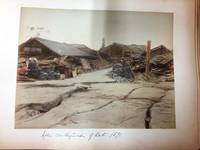
1892019216@1892. Hardcover. Cardboard pages in album have a slight wave; prints have light toning along edges and light silvering a few prints with light soiling and foxing affecting content; all prints have good exposure. Heavy fraying and wear to covers spine dry with moderate chipping and a tear along one edge. Covers Fair but overall the photographs themselves are Very Good. Oblong Folio 13-1/2" x 10-1/2" in worn decorative cloth over heavy wooden boards and leather spine with tissue guards for the photos. A personalized travel album from 19th century Japan with 50 hand-colored 10" x 7-5/8" albumen photographs laid down onto heavy cardboard pages with titles in the negative and occasionally in manuscript below the image all in English. This was the album of Frank Leslie Coombs 1853-1934 who was a United States Minister ambassador to Japan from June 1892 to August 1893. Most images found within this album depict peaceful scenes of landscapes temples tea houses and roads. Five images however illustrate the aftermath of the Mino-Owari earthquake also known as the Great Earthquake of 1891. With a magnitude of 8.0 this quake left significant damage some of it recorded here. Images include views of twisted bridges crumpled buildings and the town of Osaka burned to the ground. <br/><br/> hardcover
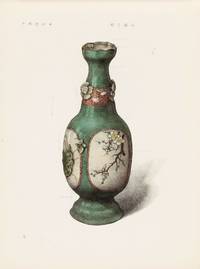
1876018471Tokyo 1876-1877 and 1879-1880. First Edition. Wraps. Wrappers of Part I quite worn with one title label mostly lost; front wrapper of Part III creased. Some offsetting and color bleedthrough; occasional edge browning; a few leaves very slightly moisture warped from coloring. Tape or glue residue in places on the versos of the plates in Part I. Near Fine with stunning hand-colored plates. First edition of Ninagawa's study of Japanese pottery arranged in chronological order from ancient times onward. Apparently one of only 300 copies published. Seven oblong folio parts 15-1/4" x 10-3/8" stitched as issued in the original blue paper wrappers with lithographed title labels on the front wrappers in French and Japanese Parts I-V and in English and Japanese Parts VI and VII. Each part with lithographed text in Japanese 5; 10; 11; 9 11; 10; and 14 leaves respectively. Printed on rectos only. Ninagawa's red stamp appears on the last leaf of text in each part. Illustrated with 125 numbered hand-colored lithographed plates several heightened with gum arabic 17 plates in Part I and 18 plates each in Parts II-VII. Some plates and items numbered with small printed labels. An excellent copy of this fragile set with the extremely scarce Parts VI and VII. This copy without the five octavo booklets containing the French translation of Parts I-V Tokyo: H. Ahrens & Co. 1876-1878 or the publisher's silk chitsu or portfolio issued with the first five parts. <br/><br/> paperback
44211<p>Japan and Western Medicine. Oranda jin Geka ryoji no zu Dutch Surgery in Nagasaki. Original pen ink and watercolor drawing on light brown-toned silk with 4 vertical lines of Japanese characters in the upper left corner. Japan: late 18th or early 19th century. 483 x 363 mm. mounted as a scroll at a modern date on light grey silk backed with paper with a half-round hanging rail with braided ribbon attached at the top and a suspension bar at the foot measuring 914 x 443 mm. overall; preserved in a custom-made wooden box. A few tiny pinholes in upper corners of image but fine with the coloring fresh and bright.</p> <p> This striking image showing an amputation carried out by a Dutch surgeon in Japan was most likely painted in the late eighteenth or early nineteenth century during Japan's self-imposed period of national isolation. The hand-painted image is related but by no means identical to a Nagasaki woodblock print titled "Surgery by a Dutch Physician" one of many popular souvenir prints depicting scenes unique to Nagasaki which at the time was the sole point of contact between Japan and the outside world. See our reproduction of the print. It may be that our scroll is the original of the image; however it is also possible that both hand-painted and woodcut versions of the image were produced simultaneously.</p> <p> Western surgery came to Japan in the sixteenth and seventeenth centuries via the Portuguese who in 1543 became the first Europeans to make direct contact with Japan and the Dutch who became the only European nation allowed to trade with Japan after Japan's expulsion of the Portuguese in 1639. Surgeons attached to the Dutch East India Company established practices at the island of Dejima in Nagasaki Bay which led to the formation of several Japanese schools of surgery based on European methods. "This aspect of Western medicine known as K m -ry geka or 'Surgery of the Red-Haired' has had a profound effect on the development of surgical practice in Japan" Van Gulik p. 37. Van Gulik "Dutch surgery in Japan" in Red-Hair Medicine: Dutch-Japanese Medical Relations ed. Beukers et al. pp. 37-50. </p> <p>. unknown
44211<p>Japan and Western Medicine. Oranda jin Geka ryoji no zu Dutch Surgery in Nagasaki. Original pen ink and watercolor drawing on light brown-toned silk with 4 vertical lines of Japanese characters in the upper left corner. Japan: late 18th or early 19th century. 483 x 363 mm. mounted as a scroll at a modern date on light grey silk backed with paper with a half-round hanging rail with braided ribbon attached at the top and a suspension bar at the foot measuring 914 x 443 mm. overall; preserved in a custom-made wooden box. A few tiny pinholes in upper corners of image but fine with the coloring fresh and bright.</p> <p> This striking image showing an amputation carried out by a Dutch surgeon in Japan was most likely painted in the late eighteenth or early nineteenth century during Japan's self-imposed period of national isolation. The hand-painted image is related but by no means identical to a Nagasaki woodblock print titled "Surgery by a Dutch Physician" one of many popular souvenir prints depicting scenes unique to Nagasaki which at the time was the sole point of contact between Japan and the outside world. See our reproduction of the print. It may be that our scroll is the original of the image; however it is also possible that both hand-painted and woodcut versions of the image were produced simultaneously.</p> <p> Western surgery came to Japan in the sixteenth and seventeenth centuries via the Portuguese who in 1543 became the first Europeans to make direct contact with Japan and the Dutch who became the only European nation allowed to trade with Japan after Japan's expulsion of the Portuguese in 1639. Surgeons attached to the Dutch East India Company established practices at the island of Dejima in Nagasaki Bay which led to the formation of several Japanese schools of surgery based on European methods. "This aspect of Western medicine known as K m -ry geka or ‘Surgery of the Red-Haired' has had a profound effect on the development of surgical practice in Japan" Van Gulik p. 37. Van Gulik "Dutch surgery in Japan" in Red-Hair Medicine: Dutch-Japanese Medical Relations ed. Beukers et al. pp. 37-50. </p> <p>. unknown books
1897103407BBBoston, Mass, J. B. Millet, (1897-1898). Folio (41 x 32 cm.). Mit 15 farb. Tafeln (Orchideen und andere Blumen, Collotypes), 30 handkol. Orig.-Photographien (Albuminabzüge, jeweils ca. 25 x 19 cm.), 220 Abb. im Text u. 15 farblithogr. Ornament-Tafeln auf Tonpapier. OHln. mit goldgepr. illustr. Deckelsch. (als Blockbuch gebunden). 10 Bände.
1963105146BBTokyo, Shueisha, (1963). Folio (42 x 27 cm.). [104] S. mit 43 Tafeln in Sheet-fed gravure. Illustr. OLn. mit Klarsichtschutzumschlag in illustr. Orig.-Pappkassette.
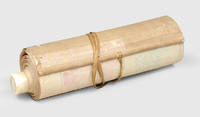
1870127747Japan: c.1870. The feudal lordships of Meiji Japan Highly attractive and distinctly uncommon early Meiji-period scroll showing the flags of 29 daimy s feudal lordships and giving details of annual revenue recorded in kokus of rice approximately 280 litres originally defined as enough to feed one person for one year provinces capitals of their respective territories or han and the cadet branch of each clan illustrated with flags for each both the -uma-jirushi "great standard" and ko-uma-jirushi "lesser standard". The scroll opens with the Hinomaru "circle of the sun" and imperial chrysanthemum mon or crest above the standards of the Tokugawa shogunate three hollyhock leaves within a circle. The sixteen-petalled Imperial Chrysanthemum Crest was first recognized as the exclusive emblem of the imperial household in 1868; the Hinomaru was adopted officially in 1854: "Japan had no national flag until 1854 when upon a petition by the lord of Satsuma han Shimazu Nariakira the bakufu military government determined that Japanese ships should fly a white flag bearing the Rising Sun emblem in order to identify themselves as Japanese. In 1870 the Meiji government following the late Tokugawa precedent decreed that Japanese ships ought to use the Rising Sun flag as the national flag" Takashi Fujitani Splendid Monarchy: Power and Pageantry in Modern Japan 1998 p. 49. The British Museum notes that the flags are presented here "on western-style horizontal flags mounted on flag poles" and not in the Japanese manner. This is a fascinating record dating to the advent of the Meiji Restoration 1868 which curtailed the power of the daimy s: "On paper the abolition of the old domains and with them the daimy as well and the creation of the new administrative units called prefectures seemed to be in 1868 the most politically dangerous of the Meiji reforms. Great care and planning went into this reform announced in 1871 lest the daimy s fight it" Louis G. Perez The History of Japan 1998 p.98. Among British and Irish institutional libraries Library Hub cites only the copy at the Society of Antiquaries of London WorldCat adds Harvard both this and the SoA copy bound in book form; we have traced a copy at the British Museum catalogued as "Flags of the different Daimyos of Japan" which survives as a scroll; only one entry on auction records 2013 apparently the present copy. A superb survival from the period of the opening of Japan perhaps intended for the tourist market when foreign trade was being established in effect acting as a guide to the leading families of Japan. Scroll 180 x 400 mm. 88 hand-coloured woodblock flags on paper text in English and Japanese. Original polished bone jikugi central cylindrical rod pale brown silk tie. Exterior a little darkened otherwise in remarkably good condition. unknown
19822091502135700896Fukuoka Prefecture Western Japan Cultural Association 1982. Soft Cover. Fine. The book is in fine condition. Fukuoka Prefecture Western Japan Cultural Association paperback