Jefferson ThomasABAA
48 402 résultats
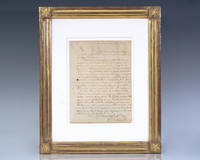
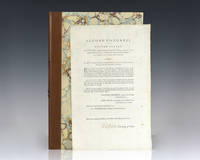
1792125388Philadelphia: Childs & Swaine 1792. Scarce printing of an early United States law providing for the funding of the national debt signed by Thomas Jefferson as Secretary of State. Folio one page. The document which also carries the printed signatures of President George Washington Vice President John Adams and House Speaker Jonathan Trumbull was approved January 23 1792. Individual acts and bills of the first Congresses were routinely printed for public consumption. A provision was made however to print a few copies of each act for dissemination to the states and to have each copy signed by Secretary of State Thomas Jefferson. One of the main priorities of the federal government in the early national period was to pay down the debt of the United States. The national debt was incurred during the Revolution and augmented in 1790 when the Congress passed the Assumption Act in accordance with a plan devised by Alexander Hamilton. Because contacting the numerous and geographically dispersed holders of the debt proved more difficult than expected it became necessary to extend the time allowed by law for making the relevant financial arrangements. The present act accomplished this and made a special extension of five months for Vermont which gave the new state time to calculate the amount of debt. Despite Jefferson's vehement opposition to Hamilton's plan when it was formulated his position as Secretary of State necessitated his signature on the presentation copies of the acts that effected it. In fine condition. Housed in a custom half morocco folding case. Scarce with only one other example signed by Jefferson located. American Founding Father Thomas Jefferson was the principal author of the Declaration of Independence and later served as the third President of the United States from 1801 to 1809. Prior to his presidency he was elected the second Vice President of the United States serving under John Adams from 1797 to 1801. A proponent of democracy republicanism and individual rights motivating American colonists to break from Great Britain and form a new nation he produced formative documents and decisions at both the state and national level. Jefferson was an avid bibliophile and by the end of his life had amassed a large library and wine collection. Childs & Swaine unknown books
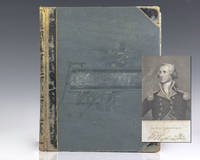
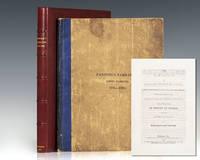
129509Rare late 19th century folio album containing an extensive collection of Presidential autographs letters carte-de-visites and portraits in addition to those of each Cabinet. Folio bound in three quarter morocco with five raised bands and gilt titles to the spine. The album contains: a clipped signature of President George Washington with a four-page letter of provenance dated July 13 1948 several portraits of him including two rare carte-de-visites as well as a carte-de-visite of Martha Washington; and autograph letter signed by John Adams as President to Benjamin Lincoln Quincy July 23 1799; a clipped document signed by Thomas Jefferson as President and James Madison as Secretary of State with numerous portraits of each; a trimmed ship's passport signed by James Monroe; clipped signatures of Andrew Jackson and Martin van Buren; autograph letter signed by William Henry Harrison North Bend March 4 1840; clipped signature of James Tyler; clipped document signed by James H. Polk as President and countersigned by James Buchanan as Secretary of State with the Presidential Seal intact; a card signed by Zachary Taylor and members of his cabinet; slipped signature of Millard Fillmore; autograph letter signed by James Buchanan; clipped signature of Franklin Pierce; clipped signatures of Abraham Lincoln William Seward and Andrew Johnson; clipped signature of Ulysses S. Gran with numerous portraits of him including a rare carte-de-visite; clipped signature and autograph not signed by Rutherford B. Hayes March 21 1892; autograph note signed by James Garfield Menton Ohio June 22 1880; signature card of Chester A. Arthur dated November 15 1881; an autograph letter signed by Grover Cleveland on White House stationery dated September 1 1887; a card signed by Benjamin Harrison; a signature card signed by Grover Cleveland; and a letter signed by William McKinley 27 February 1892. The Presidential autographs and portraits are followed by extensive section of cabinet officials including: a clipped signature of Alexander Hamilton as Secretary of the Treasury; an autograph letter signed by Albert Gallatin; clipped signatures of Aaron Burr John Armstrong John Calhoun and Henry Clay; autograph note signed by Daniel Webster; card signed by James Polk James Buchanan and other members of his cabinet; autograph letter signed by Edward Everett; autograph note signed by Jefferson Davis and other members of the Confederacy including Howell Cobb and James Thompson; autograph note signed by William H. Seward dated 1855; and a note signed by Gideon Welles on Navy Department stationery in addition to dozens of other notable American public figures including cabinet officials and Vice-Presidents. In very good condition. An exceptional rarity. hardcover
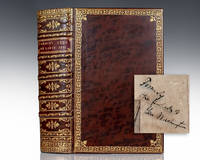
1628149725A Paris: Chez Pierre Billaine 1628. First edition of Corbin's legal compilation of ordinances and judgments issued during the reign of Louis XIII of France from the library of General George Washington. Folio bound in full mottled calf morocco spine label lettered in gilt elaborate gilt tooling to the spine in six compartments within raised gilt bands double gilt ruling and scrolling to the front and rear panels gilt turn-ins and inner denelles marbled endpapers title page printed in red and black engraved vignette to the title page illustrated with numerous wood-engraved initials and headpieces. From the library of General George Washington with a notation to the title page "Formerly the property of Gen. Washington" and subsequently the Library of the New York Law Institute Special Collections early notation on title-page near gutter stamps. According to the Mount Vernon Library George Washington signed many books in his library in the upper corner of the title-page but not all of his books have signatures or bookplates. Upon Washington's death his library was left to his nephew Bushrod Washington. When Bushrod died the books and papers were passed to Bushrod's two nephews George Corbin Washington and John Augustine Washington II. In 1834 George Corbin sold the presidential papers and military focused books to the US government becoming part of the Library of Congress. In 1847 George Corbin sold 359 of Washington's remaining books to the rare book dealer Henry Stevens who sold the collection to the Boston Athenaeum. The other half of the original library inherited by John Augustine passed to his son in 1832 who later sold the nearly 300-volume collection at auction in 1876 scattering it to various private collectors and institutions. Corbin's compilation of the ordinances of Louis XIII of France was significant in the development of French legal literature and served as a valuable resource for understanding the legal context of early 17th-century France. Title page laid down. In very good condition. Rare and desirable. Books from Washington's library rarely come to market. Chez Pierre Billaine unknown
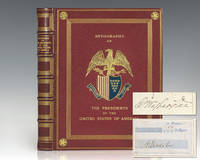
17831253841783-1956. Elaborately bound collection of Presidential autographs containing the autograph of each of the first 34 Presidents of the United States from George Washington to Dwight D. Eisenhower. Quarto bound in full red morocco by Riviere & Son with gilt titles and ruling to the spine in six compartments within raised gilt bands gilt presidential seal to the front panel with white and blue morocco onlays gilt arms and motto of George Washington to the rear panel with white and blue morocco onlays and his gilt signature in facsimile centerpieces within quintuple gilt ruling with star emblems at each corner blue morocco doublures with multiple gilt presidential signatures blue silk endpapers. This complete series of autographs of the first 34 Presidents of the United States contains the signature of each mounted on an album leaf opposite a loosely tissue-guarded engraved portrait of each. The collection includes: the signature of George Washington on an envelope addressed to Major General Knox as Secretary of the Society of the Cincinnati November 3 1783; a clipped signature of John Adams; clipped signature of Thomas Jefferson; the signature of James Madison on an envelope addressed to Reverend Frederick Freeman of Manayunk Pennsylvania; and inscription signed by James Monroe; the signature of John Quincy Adams on an envelope addressed to William Plumer jun. Esq. in Epping New Hampshire; a partially printed land grant signed by Andrew Jackson dated 1831 registering the purchase of 20 acres in Detroit by Peter Aldrich; clipped signature of Martin Van Buren; clipped signature of William Henry Harrison; signed inscription from John Tyler; signed inscription from James Polk; clipped signature of Zachary Taylor dated Baton Rouge March 5 1841; clipped signature of Millard Fillmore; clipped signature of Franklin Pierce; clipped signature of James Buchanan on a document dated July 18 1858; clipped signature of Abraham Lincoln; endorsement signed by Andrew Johnson as President; clipped signature of Ulysses S. Grant; card signed by Rutherford B. Hayes; inscription signed by James Garfield; large card signed by Chester A. Arthur and dated May 22 1884; autograph noted signed by Grover Cleveland declining an invitation dated November 16 1890; an Executive Mansion card signed by William McKinely; clipped signature of Theodore Roosevelt; clipped signature of William Howard Taft; clipped signature of Woodrow Wilson; typed letter signed by Warren G. Harding as President dated June 4 1923 on White House letterhead; card signed by Calvin Coolidge; White House card signed by Herbert Hoover; typed letter signed by Franklin D. Roosevelt as Assistant Secretary of the Navy February 15 1917. Laid in is a typed letter signed by Harry S. Truman as President June 30 1950 on White House stationery and a typed letter signed by Dwight Eisenhower. TLS as President November 13 1956 on White House stationery. In fine condition. Housed in a custom folding chemise and half morocco slipcase. An exceptional collection and presentation. Note_ unknown
17831253841783-1956. Elaborately bound collection of Presidential autographs containing the autograph of each of the first 34 Presidents of the United States from George Washington to Dwight D. Eisenhower. Quarto bound in full red morocco by Riviere & Son with gilt titles and ruling to the spine in six compartments within raised gilt bands gilt presidential seal to the front panel with white and blue morocco onlays gilt arms and motto of George Washington to the rear panel with white and blue morocco onlays and his gilt signature in facsimile centerpieces within quintuple gilt ruling with star emblems at each corner blue morocco doublures with multiple gilt presidential signatures blue silk endpapers. This complete series of autographs of the first 34 Presidents of the United States contains the signature of each mounted on an album leaf opposite a loosely tissue-guarded engraved portrait of each. The collection includes: the signature of George Washington on an envelope addressed to Major General Knox as Secretary <span class="match">of</span> <span class="match">the</span> Society <span class="match">of</span> <span class="match">the</span> Cincinnati November 3 1783; a clipped signature of John Adams; clipped signature of Thomas Jefferson; the signature of James Madison on an envelope addressed to Reverend Frederick Freeman of Manayunk Pennsylvania; and inscription signed by James Monroe; the signature of John Quincy Adams on an envelope addressed to William Plumer jun. Esq. in Epping New Hampshire; a partially printed land grant signed by Andrew Jackson dated 1831 registering <span class="match">the</span> purchase <span class="match">of</span> 20 acres in Detroit by Peter Aldrich; clipped signature of Martin Van Buren; clipped signature of William Henry Harrison; signed inscription from John Tyler; signed inscription from James Polk; clipped signature of Zachary Taylor dated Baton Rouge March 5 1841; clipped signature of Millard Fillmore; clipped signature of Franklin Pierce; clipped signature of James Buchanan on a document dated July 18 1858; clipped signature of Abraham Lincoln; endorsement signed by Andrew Johnson as President; clipped signature of Ulysses S. Grant; card signed by Ru<span class="match">the</span>rford B. Hayes; inscription signed by James Garfield; large card signed by Chester A. Arthur and dated May 22 1884; autograph noted signed by Grover Cleveland declining an invitation dated November 16 1890; an Executive Mansion card signed by William McKinely; clipped signature of <span class="match">The</span>odore Roosevelt; clipped signature of William Howard Taft; clipped signature of Woodrow Wilson; typed letter signed by Warren G. Harding as President dated June 4 1923 on White House letterhead; card signed by Calvin Coolidge; White House card signed by Herbert Hoover; typed letter signed by Franklin D. Roosevelt as Assistant Secretary <span class="match">of</span> <span class="match">the</span> Navy February 15 1917. Laid in is a typed letter signed by Harry S. Truman as President June 30 1950 on White House stationery and a typed letter signed by Dwight Eisenhower. TLS as President November 13 1956 on White House stationery. In fine condition. Housed in a custom folding chemise and half morocco slipcase. An exceptional collection and presentation. unknown books
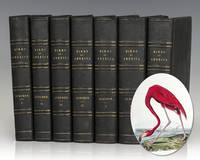
1840111832New York: Published by J.J. Audubon 1840. First octavo edition of this landmark work. Octavo bound in original publisher's morocco 7 volumes gilt titles and ruling to the spine marbled endpapers complete with 500 hand-colored lithographed plates by J.T. Bowen after J.J. Audubon; woodcuts in the text. From the library of Boston businessman and Ambassador T. Jefferson Coolidge with his bookplate to the front pastedown. Coolidge was born to a prominent Boston Brahmin family and was a great-grandson of the 3rd United States President Thomas Jefferson through his maternal grandparents Thomas Mann Randolph Jr. and Martha Jefferson Randolph. His uncles were Thomas Jefferson Randolph George Wythe Randolph Andrew Jackson Donelson and a relative of Calvin Coolidge. <sup id="cite_ref-2" class="reference"></sup>He was an uncle to Archibald Cary Coolidge through his older brother Joseph Randolph Coolidge. He was appointed by President Benjamin Harrison as United States Ambassador to France on May 12 1892 a role his great-grandfather had held from May 1785 to September 1789. Coolidge presented his credentials on June 10 1892 and he presented his recall on May 4 1893 terminating his mission. <sup id="cite_ref-state_6-0" class="reference"></sup>In 1898 and 1899 he was a member of the American delegation to the commission to resolve the Alaska boundary dispute. <sup id="cite_ref-7" class="reference"></sup>Historian Ernest May says Coolidge was "a prototype member of what today we call the foreign policy establishment." In 1898 Coolidge donated a collection of Thomas Jefferson's personal papers to the Massachusetts Historical Society in Boston. The collection contained more than 8000 items: Correspondence including 3280 letters that Jefferson had written and 4630 letters that he had received; Jefferson's garden book 1766-1824 and farm book 1774-1824; annotated almanacs from 1771-1776; account books for 1783-1790; manuscript expense accounts from 1804-1825; notes on the weather spanning the years 1782-1826; plans of American forts in 1765; law treatises 1778-1788; legal papers 1770-1772; and Jefferson's 1783 catalog of his personal library. In near fine condition. An exceptional set with noted provenance rare in the original publisher's morocco. One of the most spectacular collections of ornithological prints ever produced and a landmark attempt to document the birds of North America. "The most splendid book ever produced in relation to America and certainly one of the finest ornithological works ever printed. Audubon insisted on drawing from life never from stuffed specimens and was much in advance of his time in portraying the birds in many cases unrecorded species in their natural surroundings. The courage and faith of the Audubon family is breathtaking. This immense undertaking this unparalleled achievement was not the production of a great and long-established publishing house nor was it backed by a wealthy institution. It was the work of a man of relentless energy with no private fortune. It is a story without equal in the whole history of publishing" Great Books and Book Collectors 210-13. Published by J.J. Audubon unknown books
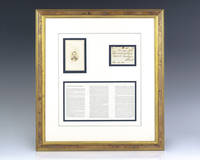
1864132045Washington D.C.: War Department Adjutant General's Office 1864-1869. Rare autograph Oath of December 8 endorsement signed and entirely in the hand of the 16th President of the United States Abraham Lincoln with an exceedingly rare contemporary printing of Lincoln's Amnesty Proclamation which includes the wording of the oath itself and a rare carte-de-visite of Lincoln Providence RI: Salisbury Bro. & Co. n.d. One page the endorsement is signed and inscribed by Lincoln “Let these men take the oath of Dec. 8 1863 & be discharged – A. Lincoln Dec. 30 1863.†One page disbound the contemporary printing of the Amnesty Proclamation consists of 6 pages printed by order of the Secretary of War: E.D. Townsend Washington D.C.: War Department Adjutant General's Office February 18 1864. Lincoln issued the Proclamation of Amnesty and Reconstruction in his annual message to Congress on December 8 1863. In the message Lincoln declared that he would offer a pardon to any man who would swear without coercion his allegiance to the Union. This provided then a general pardon to soldiers in the Rebellion and to those too who deserted the Union cause. All Southerners except for high-ranking Confederate army officers and government officials could be granted a full pardon by taking the oath and Lincoln guaranteed Southerners that he would protect their private property though not their slaves. The oath read in part “I do solemnly swear in presence of Almighty God that I will henceforth faithfully support protect and defend the Constitution of the United States and the Union of the States thereunder; and that I will in like manner abide by and faithfully support all acts of congress passed during the existing rebellion with reference to slaves so long and so far as not repealed modified or held void by Congress or by decision of the Supreme Court; and that I will in like manner abide by and faithfully support all proclamations of the President made during the existing rebellion having reference to slaves so long and so far as not modified or declared void by decision of the Supreme Court. So help me God.†Double matted and framed. The entire piece measures 17 inches by 19 inches. The autograph pardon is in very good condition. The carte-de-visite is in fine condition. The contemporary printing of the Amnesty Pardon is in fine condition and is exceedingly rare with only one other copy appearing at auction over the course of the past century. An exceptional grouping of Lincolnalia. Abraham Lincoln served as the 16th President of the United States from March 1861 until his assassination in April 1865. He led the United States through the American Civil War the country's greatest moral cultural constitutional and political crisis and in doing so preserved the Union of the United States of America abolished slavery and strengthened the federal government. Lincoln ran for President in 1860 sweeping the North in victory. The South was outraged by Lincoln's election and in response secessionists implemented plans to leave the Union before he took office in March 1861. War began in April 1861 when secessionist forces attacked Fort Sumter in South Carolina just over a month after Lincoln's inauguration and after years of deadly military conflict officially ended on April 9 1865 when Confederate General Robert E. Lee surrendered to Union General Ulysses S. Grant at the Battle of Appomattox Court House. On April 14 1865 just days after the war's end at Appomattox Lincoln was attending a play at Ford's Theatre with his wife Mary when he was assassinated by Confederate sympathizer John Wilkes Booth. Lincoln is remembered as the martyr hero of the United States and is consistently ranked as one of the greatest presidents in American history. War Department, Adjutant General's Office unknown
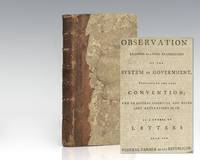
1787106800New York 1787. Rare first edition of the definitive and most important work in the Anti-Federalist canon; the antithesis of the The Federalist Papers. Octavo bound in the original calf over original boards with six raised bands edges speckled red. In very good condition. An exceptional example. On November 8 1787 the New York Journal began to advertise a new pamphlet entitled Observations Leading to a Fair Examination of the System of Government Proposed by the Late Convention; and to Several Essential and Necessary Alterations in It. In a Number of Letters from the Federal Farmer to the Republican. This pamphlet contained the first five Federal Farmer letters dated October 8 to 13. The first edition was replete with errors and a second corrected printing appeared within a week. Among the Federalists Alexander Hamilton as Publius Edward Carrington and Noah Webster acknowledged the Federal Farmer as in Hamilton's words the "most plausible" Anti-Federalist. Only one Federalist Timothy Pickering took the time to develop a complete critical response to the Federal Farmer. Though this was not published during the course of the constitutional debates it survives in a personal letter. Pickering described the Federal Farmer as "a wolfe in sheep's cloathing" and too focused on a misplaced fear of aristocracy. The work has been attributed to Richard Henry Lee a presiding officer of the Continental Congress writing under the pseudonym 'Federal Farmer'. Through these the first five letters the Federal Farmer argues that the plan of the Constitution while claimed to be a federal system and seeming to be so in some respects will in the end annihilate the states by consolidating them into one national government. This concern over consolidation was among the most important of the Anti-Federalist objections to the Constitution; they saw the destruction of state sovereignty as inimical to freedom. Honest federalists in the view of the Federal Farmer wished for the substantial preservation of the state governments but sought a federal government that was more than merely advisory. The letters indicate that the Federal Farmer ascribed to the compact theory of federalism. The Federal Farmer letters are among the best-written and convincing pieces in the Anti-Federalist canon and make regular appearances in collections of Anti-Federalist writing. "Though sometimes discursive and repetitious the letters skillfully written moderate in tone and thoughtful were perhaps the most eloquent and persuasive anti-federalist writings" Ketcham 256. hardcover books
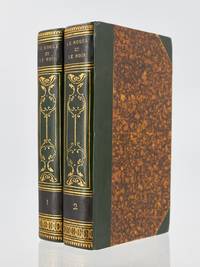
183187102Paris: A. Levavasseur 1831. Fine. A rare copy with no foxing A. Levavasseur Paris 1831 13.10 x 20.80 cm 2 volumes reliés First edition ""very rare and extremely sought-after"" Clouzot one of 750 copies on laid paper with title vignettes engraved by Henri Porret after Henry Monnier. Skilful restoration of a tear at the foot of a page with slight damage to a letter. A rare copy with no foxing. Green half calf binding smooth spines with arabesques stamped in gilt black title labels and volume labels; marbled paper boards spine boards and endpapers speckled edges later bindings in the Romantic style. Stendhal began writing 'Le Rouge et le Noir' under the Restoration and completed it just four months after the July Revolution of 1830. The seminal novel was published in the last weeks of 1830. All critics immediately praised the novel's exceptional qualities although even its most enthusiastic supporters were shocked by the hero's harsh judgment of society and Jacobinism. A handsome first-edition copy of this great classic of French literature. A. Levavasseur hardcover
1787106800New York 1787. Rare first edition of the definitive and most important work in the Anti-Federalist canon; the antithesis of the The Federalist Papers. Octavo bound in half calf over boards with six raised bands edges speckled red. In very good condition. An exceptional example. On November 8 1787 the New York Journal began to advertise a new pamphlet entitled Observations Leading to a Fair Examination of the System of Government Proposed by the Late Convention; and to Several Essential and Necessary Alterations in It. In a Number of Letters from the Federal Farmer to the Republican. This pamphlet contained the first five Federal Farmer letters dated October 8 to 13. The first edition was replete with errors and a second corrected printing appeared within a week. Among the Federalists Alexander Hamilton as Publius Edward Carrington and Noah Webster acknowledged the Federal Farmer as in Hamilton's words the "most plausible" Anti-Federalist. Only one Federalist Timothy Pickering took the time to develop a complete critical response to the Federal Farmer. Though this was not published during the course of the constitutional debates it survives in a personal letter. Pickering described the Federal Farmer as "a wolfe in sheep's cloathing" and too focused on a misplaced fear of aristocracy. The work has been attributed to Richard Henry Lee a presiding officer of the Continental Congress writing under the pseudonym 'Federal Farmer'. Through these the first five letters the Federal Farmer argues that the plan of the Constitution while claimed to be a federal system and seeming to be so in some respects will in the end annihilate the states by consolidating them into one national government. This concern over consolidation was among the most important of the Anti-Federalist objections to the Constitution; they saw the destruction of state sovereignty as inimical to freedom. Honest federalists in the view of the Federal Farmer wished for the substantial preservation of the state governments but sought a federal government that was more than merely advisory. The letters indicate that the Federal Farmer ascribed to the compact theory of federalism. The Federal Farmer letters are among the best-written and convincing pieces in the Anti-Federalist canon and make regular appearances in collections of Anti-Federalist writing. "Though sometimes discursive and repetitious the letters skillfully written moderate in tone and thoughtful were perhaps the most eloquent and persuasive anti-federalist writings" Ketcham 256. hardcover
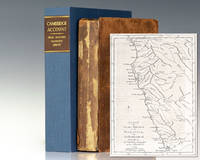
1761137375London: Printed for T. Jefferys 1761. Benjamin Franklin's first edition copy of Cambridge's account of the progression of the Seven Years' War in India from Franklin's private library. Quarto bound in full contemporary calf marbled endpapers illustrated with 12 engraved maps and plans and 6 plates mostly folding. From the private library of Benjamin Franklin. Franklin's contributions to science and politics were immense and his passion for making books more available to a broader audience prompted him to establish North America's first subscription library. In 1731 Franklin convinced the members of his Junto a mutual improvement club he founded to pool their money to purchase books they would collectively share. The collection became the Library Company of Philadelphia and is now regarded as the predecessor to the public library. Franklin was also instrumental in the establishment of the Library of the Pennsylvania Hospital North America's first medical library the Pennsylvania State Library The Library of the American Philosophical Society and the Library of the University of Pennsylvania. Franklin's private library has a long and complex history and although he was known to have produced a list its contents shortly before his death it has never been discovered. After his death in 1790 a large portion of his library became the property of his grandson William Temple Franklin who upon receiving it quickly sold it to financier and Signer of the Declaration of Independence Robert Morris. When Morris went bankrupt at the end of the decade the collection went into the hands of Philadelphia bookseller and former French tutor Nicholas G. Dufief in 1801 who began offering volumes for sale to the public. Dufief attempted to interest Congress in obtaining most of the library but ultimately sent most of it to auction. On March 12 1803 Philadelphia auctioneers Shannon & Poalk sold the library and Philadelphia attorney William Rawle purchased the present volume inscribing it: "W. Rawle 1803 – bo't at sale of Dr. Franklin's library." Dufief was also known to have compiled a list of the contents of Franklin's library but it has never been recovered and although printed catalogs were known to be issued advertising the contents of the 1803 Shannon & Poalk auction a copy has not been located. Philadelphia autograph collector Ferdinand J. Dreer obtained this copy and in 1886 and presented it to the Society of the Sons of St. George. In good condition. With Dreer's bookplate and presentation inscription. Housed in a custom clamshell box. Rare and desirable from Franklin's private library and with noted provenance. Benjamin Franklin earned the title of "The First American" for his early and indefatigable campaigning for colonial unity initially as an author and spokesman in London for several colonies. As the first United States Ambassador to France he exemplified the emerging American nation. Franklin was foundational in defining the American ethos as a marriage of the practical values of thrift hard work education community spirit self-governing institutions and opposition to authoritarianism both political and religious with the scientific and tolerant values of the Enlightenment. In the words of historian Henry Steele Commager "In a Franklin could be merged the virtues of Puritanism without its defects the illumination of the Enlightenment without its heat." To Walter Isaacson this makes Franklin "the most accomplished American of his age and the most influential in inventing the type of society America would become." Printed for T. Jefferys unknown
1790141583January 24 1790. Rare autograph letter signed by George Washington as the first President of the United States. Quarto one page the letter reads in full "New York Jany 24th 1790 Sir Capt. Burnett delivered me your letter of the 18th and is so obliging as to take charge of this answer - It is my sincere opinion that the land mentioned in it is worth what I asked for it--to wit four dollars per acre and once would have sold for it; but if in the present scarcity of cash it rather fetch that sum let those who are really inclinable to buy come forward like men that are in earnest and say what they will give--If they or their Agent have seen the land and without this it is useless to name any price have examined its qualities and improvements they can say what they will give and ought to act with candour. -On these terms I am ready to treat with them. It is not my intention to dispose of the land for a song nor is it my wish to higgle or make many words to the bargain--for which reason I pray them to come to a decision at once and that you would inform me of the result. At any rate it would be proper for you to write to me & soon that I may not miss any other offer should any be made to. Sir Yr most Obed. Hble Serv G Washington." In very good condition silked on recto and verso. Matted and framed. The entire piece measures 18 inches by 15 inches. An exceptional letter. American statesman and soldier George Washington served as the first President of the United States from 1789 to 1797 and was one of the Founding Fathers of the United States. He served as Commander-in-Chief of the Continental Army during the American Revolutionary War and later presided over the 1787 convention that drafted the United States Constitution. He is popularly considered the driving force behind the nation's establishment and came to be known as the "father of the country" both during his lifetime and to this day. unknown
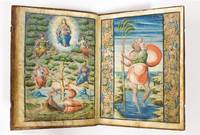
156957498s. l. Grenade Granada: S. n. 1569. Fine. S. n. s. l. Grenade Granada 1569 21.50 x 30.50 cm relié ILLUMINATED MANUSCRIPT ANONYMOUS Regla y Constitutiones de la Cofradia del Sanctissimo Sacramento de la Yglesia de San Christoval de Granada Autograph manuscript with three miniatures no publisher Granada 1569 folio 21.5 x 30.5 cm upper margin: 35 mm bottom margin: 50 mm interior margin: 30 mm exterior margin: 40 mm 31 ff. 16th-century full calf gilt Manuscript on vellum comprising 31 leaves: 50 pages of text ruled and lined and 3 full-page miniatures in colours heightened in gold. The four final leaves were numbered and partly ruled but left empty. Contemporary manuscript ex-libris on front endpaper. In Spanish throughout written in Caroline minuscule on 24 lines the text is very readable and very regular. The manuscript begins with a three-page summary covering the 24 chapters that comprise the Regla y constitutiones de la cofradia del Sanctissimo sacramento de la yglesia de San Christoval de Granada. One illuminated capital in red and blue indents and pagination in red small sketch in black ink to the inner margin. The verso of the final page of the summary has been ruled and lined in red but left blank. There follow the three full-page miniatures. The first shows a Communion scene on the recto of one leaf the second the Tree of Jesse verso of the same leaf and the third Saint Christopher bearing the baby Jesus recto of the following leaf. The verso of the miniature bears a short manuscript text explaining that these rules are those of the confraternity and brotherhood of the Holy Sacrament established in the Church of Saint Christopher of Granada on the 1st of May 1568. This is followed by the prohemio a prologue of two and a half pages in which the confraternity takes an oath; this starts with an imposing illuminated capital in red and blue. The chapters then follow on directly each with a tidy initial. The important terms are heightened in red allowing for quick navigation in the text. A long manuscript annotation to the outer margin of leaf 24. The aforementioned rules take up 23 ruled leaves ruled and lined in red. Leaf 27 bears two manuscript privileges. We have not been able to read the signature on the first dated May 1569 though quite elaborate. The second later one May 1596 is signed by Justino Antolinez de Burgos 1557-1637 at the time the Chaplain Royal charged with the inspection of ecclesiastical lodges. Long contemporary manuscript note to reverse of leaf 24. Contemporary light-brown calf spine in five compartments with gilt fillets and fleurons gilt fillet frame to boards small gilt fleurons to corner and a larger gilt fleuron to centre of covers. One clasp preserved. A few very skilful repairs and regilding practically invisible. This manuscript has three spectacular full-page miniatures in gouache heightened in gold. The first shows the Holy Communion with Christ himself establishing the Eucharist with the words This is my body this is my blood. The Apostles and Jesus with a halo blessing them are seated around a table set with bread and fish. This motif became a major theme of Christian art in the Renaissance as this miniature also shows. The second miniature shows the Tree of Jesse which symbolises the genealogy of Christ traced from Jesse Xese shown as an old man reclining. In keeping with the iconographic tradition a tree protrudes from his side the main branches of which bear some of Jesus's ancestors. Here they are: Zachary Jeremiah David an unidentified king and at the pinnacle Mary holding the Christ child within a mandorla. The third miniature presents a scene with Saint Christopher the patron of the Church in Granada to which the Confraternity of the Holy Sacrament was attached with a child on his shoulders as he was commonly represented. The iconography derives from a passage in the Golden Legend in which St Christopher helps a small b S. n. hardcover
177696237J. Almon J.S. Jordan and J. Stockdale: London 1776-1793. Finely bound collection of the works of Thomas Paine including the rare first British editions of Common Sense and Plain Truth London: J. Almon 1776 second editions of Rights of Man Parts I & II London: J.S. Jordan 1791-1792 complete with half-titles present and a rare early printing of John Quincy Adams' response to Paine's Rights of Man London: J. Stockdale 1793 attributed to his father John Adams and written when John Quincy Adams was 26 years old. Octavo bound in three quarters morocco over marbled boards with gilt titles and tooling to the spine red morocco spine label all edges speckled black. In near fine condition. A rare and desirable collection. One of the founding fathers of the United States Thomas Paine authored two of the most influential pamphlets at the start of the American Revolution which ultimately inspired the 1776 Declaration of Independence. Virtually every American rebel read Paine's powerful pamphlet Common Sense which crystallized the American Revolution and demand for independence from Britain. John Adams asserted "without the pen of the author of Common Sense the sword of Washington would have been raised in vain." London hardcover books
177696237J. Almon J.S. Jordan and J. Stockdale: London 1776-1793. Finely bound collection of the works of Thomas Paine including the rare first British editions of Common Sense and Plain Truth London: J. Almon 1776 second editions of Rights of Man Parts I & II London: J.S. Jordan 1791-1792 complete with half-titles present and a rare early printing of John Quincy Adams' response to Paine's Rights of Man London: J. Stockdale 1793 attributed to his father John Adams and written when John Quincy Adams was 26 years old. Octavo bound in three quarters morocco over marbled boards with gilt titles and tooling to the spine red morocco spine label all edges speckled black. In near fine condition. A rare and desirable collection. One of the founding fathers of the United States Thomas Paine authored two of the most influential pamphlets at the start of the American Revolution which ultimately inspired the 1776 Declaration of Independence. Virtually every American rebel read Paine’s powerful pamphlet Common Sense which crystallized the American Revolution and demand for independence from Britain. John Adams asserted "without the pen of the author of Common Sense the sword of Washington would have been raised in vain. London hardcover
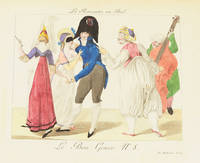
182787629Paris: chez l'éditeur boulevard Montmartre no 1Vassalet EsslingImprimeurs 1827. Fine. Princess Murat's copy chez l'éditeur boulevard Montmartre no 1 Vassal et EsslingImprimeurs Paris 1801-1827 ; 1827 pour le texte 41.20 x 27.80 cm relié Complete set of 115 copper-engraved plates with an additional plate 116 plates all printed on either laid or wove paper all hand-colored with watercolor. Two entirely different plates 39 follow each other in first issue: ""Les Titus et les cache-folies"" was published in the 1817 and 1822 sets and the other ""La Politicomanie"" appeared in 1827. This is the most complete series which also includes the 11 new plates published from 1818 to 1822 numbered 105 to 115. According to Vicaire the plates were probably all printed between 1801 and 1822 and only the text preceding the plates was reprinted in 1827. 3/4 long-grained cherry half-morocco smooth spine elaborately framed in gilt lentghwise gilt tooled center of spine gilt lettered title at head of spine framed in gilt marbled boards marbled paper endpapers and flyleaves. Minor brown spots are mainly confined to the 24 pp. of text with very few on the plates mainly on the margins and versos. A rare and famous collection of costumes genre and entertainment scenes from the French First Empire and Restoration eras with very wide margins and magnificently hand-colored at the time. A veritable encyclopedia of thrills pleasures and pageantry published by Pierre de la Mésangère leading fashion editor at the turn of the century. This copy includes two versions of plate 39 both of which are extremely scarce. These magnificent copper-engraved prints by Georges Jacques Gatine Schenker and others were based on drawings by the greatest painters of Parisian fashion: Carle Vernet Philippe-Louis Debucourt Jean-Baptiste Isabey Louis-Marie Lanté Dutailly. They were initially sold as a supplement to the successful magazine Le Journal des Modes before being published as a collection. Some plates bear the engraver's name and several the draftsmen's. This gallery of figures is singularly representative of a period of upheaval in French history in terms material but also moral and intellectual values - depicting a frivolous and daring part of feminine society eager to please and well-versed in the games of love. The ensemble perfectly combines social satire with the refinement expected of fashion engravings. It includes the famous portraits of the extravagantly dressed Directoire women called ""Merveilleuses"" and ""Incroyables"" - representations that have henceforth served as a reference. From beautiful silhouettes reclining on Greek-style beds to provocative and undressed courtesans everything is designed to illustrate the finery of these pretty coquettes often followed by a host of suitors and servants. Dresses hats and furs rub shoulders with elegant male figures in frock coats and even a few transvestites Trois grâces parisiennes no. 16. Many of the scenes have a clear erotic connotation especially the salon games featuring suggestive embraces and positions. Dancing takes pride of place: no fewer than twenty plates feature fashionable ballroom dances ""Danse du Schall"" named after the popular scarf quadrille figures such as ""La Poule"" ""La Trénis"" or more daring ones like ""La Sauteuse"" ballets or even the famous tightrope dancers Ravel and Forioso. The movement of the characters is reflected in the drapery of the large Empire muslin gowns and hair flowing in the wind. Among the dozens of hand-colored plates a great many are devoted to leisure and entertainment activities available at the beginning of the 19th century. Gastronomy games of skill sports acrobatics circus tricks music and even real sensational attractions: several plates depict the very first Parisian roller coaster installed in Belleville then at the Odeon for the 1817 Carnival. Clowns pierrots and masked figures are seen dancing in front of the structures and hurtling down steep slopes on small carriages. Anothe chez l'éditeur, boulevard Montmartre, no 1Vassalet EsslingImprimeurs hardcover
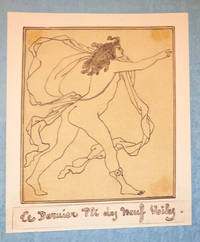
1920759331920. Fine. A priceless poetic testament from Marcel Proust's mentor hidden away and out of sight since the death of the author. s. d. ca 1920 25 x 33 cm en feuilles sous chemises The set of largely unpublished autograph poems by Robert de Montesquiou-Fezensac is brought together by the Count in a collection entitled Le Dernier Pli des neuf voiles whose composition extends from his very first collection Les Chauves-Souris 1892 to his last trilogy Offrandes 1915. Set of 620 autograph leaves. 532 unpublished first draught handwritten on the recto and numbered in pencil preserved in 3 chemises in half red contemporary morocco red morocco labels with gilt author and title; the poems are then placed in the chemises with a handwritten title and a number for publication. According to a note from the author the differences in ink have no meaning mere change of copy. Rare pages from the hand of his secretary Henri Pinard: p. 20 of Huitième voile and p. 29 of Neuvième voile. 23 pages present the printed or typewritten texts of the poems and are enriched with Montesquiou's handwritten corrections. A set of printed proofs are found at the top of the first chemise as well as a pencil tracing after Aubrey Beardsley drawn by the author and accompanied by his handwritten indications. Sublime ode to dandyism to homosexuality and beauty this worldly and poetic promenade by Montesquiou embarks the reader into the decadent fin-de-siècle Paris described in In Search of Lost Time by his friend Marcel Proust. Imbued with his legendary enthusiasm for pictorial decorative theatrical and floral art the collection also delivers hundreds of mournful verses after the disappearance of Montesquiou's lover Gabriel Yturri. Thanks to this collection of poems by Robert de Montesquiou-Fezensac all of which had been lost since 1986 it is now possible to complete the rehabilitation of the aristocratic poet who has long embodied and shaped the Parisian spirit. In May 1920 Montesquiou left handwritten instructions for the posthumous publication of the collection initially announced in two volumes and never produced. On his death a year later the poems were bequeathed to his secretary Henri Pinard who in turn sold them on an unknown date. Auctioned on 24 November 1986 they were mentioned in the LoWire-Littérature colloquium in 1989. This considerable manuscript by Montesquiou forms a veritable home of poetry like his famous aesthetic apartments described by Huysmans. The series of Voiles contain dozens of unpublished poems written in parallel with his previous collections. The author himself indicated the kinship of each voile with a published set of poems announcing here the total completion of his work by the addition of poems which still lay dormant in his papers. The three thick chemises contain rare and curious treasures sometimes drawn on colored sheets often pasted on larger sheets rigorously ordered while awaiting their publication. The poems are written without crossings-out they are fluid with rounded and precious handwriting and stand alongside other first-draught manuscripts: redactions and corrections also bear witness to the work in progress on the new poems; they were applied in the printed proofs of the work present at the top of the manuscript's first chemise. Some poems are taken as they are from collections already published but are slightly modified according to the explanations given by the author. Montesquiou also adds some handwritten notes detailing his intentions. The manuscript contains a poetic anthology of sacred art of extremely rare flowers and of antique furniture adorning his famous Parisian apartments around which so many legends were built Jacques Saint-Cère which fuelled the personalities of Des Esseintes Baron Charlus Dorian Gray and the vain peacock in Edmond Rostand's Chantecler. Moreover Montesquiou was overwhelmed by the features of these famous fictional ghosts of w unknown
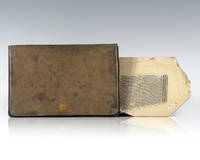
17591342281759. Original swatch from Martha Washington's golden yellow silk wedding dress given by her as a gift to Mrs. Alexander Hamilton Elizabeth and handed down through generations of the Hamilton family. The silk swatch measures roughly 2.75 inches by 2 inches mounted on a stiff paper card inscribed in pencil on the verso "A bit of Martha Washington's wedding dress Wh. was Mrs. Alex Hamilton's" in the hand of Hamilton's granddaughter-in-law Mrs. Allan McLane Hamilton and from her collection. Hamilton’s grandson Allan McLane Hamilton was a prominent psychiatrist and founded the New York Psychiatric Society. In 1910 he published The Intimate Life of Alexander Hamilton which was published by Scribner & Sons. In very good condition. Housed in an antique leather carrying case. An exceptional association with wonderful provenance. On May 15 1750 at age 18 Martha Dandridge Custis married Daniel Parke Custis a rich planter two decades her senior and moved to his residence White House Plantation in New Kent County Virginia. The couple had four children together and Daniel Parke Custis's death in 1757 left Martha a rich young widow at age 26 with independent control over a dower inheritance for her lifetime and trustee control over the inheritance of her minor children. In all she was left in custody of some 17500 acres of land and 300 slaves apart from other investments and cash. Martha Custis age 27 and George Washington age 26 married on January 6 1759 at the White House plantation after only three months of courtship. The wedding was grand. George's suit was of blue and silver cloth with red trimming and gold knee buckles. The bride wore purple silk shoes with spangled buckles which are displayed at Mount Vernon. The couple honeymooned at the Custis family's White House plantation for several weeks before setting up house at George's Mount Vernon estate. hardcover
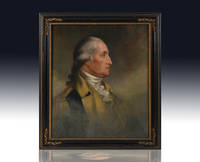
18621492021862. Fine oil portrait of George Washington as General and Commander-in-Chief of the Continental Army by Joseph Alexander Ames. Oil on canvas the portrait depicts Washington in profile in his Continental Army uniform. Signed and dated by the artist in the lower right corner "J. Ames 1862." Ames a self-taught artist born in 1816 in Roxbury New Hampshire was known for his portraits and genre scenes. He was influenced by Washington Allston's "old master" techniques which is evident in the rich layered colors and detailed rendering of this portrait. Ames's works were exhibited in prominent venues such as the Boston Athenaeum and the National Academy of Design. His portraits including those of Daniel Webster and Abraham Lincoln were widely recognized and reproduced during his lifetime. In near fine condition with a repair on the right side of the painting. Framed. The painting measures 30.25 inches by 25 inches. The entire piece measures 35.75 inches by 30 inches. As Commander-in-Chief of the Continental Army from 1775 to 1783 George Washington played a critical role in shaping the military and political outcomes of the American Revolutionary War. His leadership was marked not by tactical brilliance alone but by strategic endurance organizational discipline and an acute understanding of the symbolic and practical dimensions of command. Faced with chronic shortages of manpower supplies and financial support Washington focused on sustaining the army through long periods of adversity most notably during the winter encampment at Valley Forge. He emphasized professionalization working closely with figures like Baron von Steuben to impose standardized training and drill procedures. Washington’s decision to engage in a war of attrition rather than direct confrontation with the superior British forces reflected a broader political strategy aimed at maintaining colonial unity and prolonging resistance until foreign aid—particularly from France—could be secured. His leadership during the culminating siege of Yorktown in 1781 conducted in coordination with French forces marked a decisive turning point and demonstrated his ability to integrate diplomatic logistical and military considerations into a coherent wartime strategy. unknown
1861125637Richmond VA: Printed for Private Distribution Only 1861. First edition of the first book printed in the Confederacy. Quarto original stiff paper wrappers one of approximately 50 copies issued on regular paper. Ten being issued on thick paper and twenty copies destroyed in a fire. In very good condition reinforcement to the hinges. Housed in a custom full morocco clamshell box. Howes F26. Sabin 23778. Exceptionally rare. David Fanning was one of the most infamous of the Southern Tories raiding Patriots throughout the Carolinas. His guerilla warfare only paused when he was captured but following each of his multiple escapes he would quickly resume his vengeful predation. His narrative was to be the first in a series but the Civil War intervened and only this initial volume was produced. It was reprinted by Sabin in 1865 but this original edition was noted by Goodspeed's "as one of the finest of Confederate imprints." Printed for Private Distribution Only unknown books
1861125637Richmond VA: Printed for Private Distribution Only 1861. First edition of the first book printed in the Confederacy. Quarto original stiff paper wrappers one of approximately 50 copies issued on regular paper. Ten being issued on thick paper and twenty copies destroyed in a fire. In very good condition reinforcement to the hinges. Housed in a custom full morocco clamshell box. Howes F26. Sabin 23778. Exceptionally rare. David Fanning was one of the most infamous of the Southern Tories raiding Patriots throughout the Carolinas. His guerilla warfare only paused when he was captured but following each of his multiple escapes he would quickly resume his vengeful predation. His narrative was to be the first in a series but the Civil War intervened and only this initial volume was produced. It was reprinted by Sabin in 1865 but this original edition was noted by Goodspeed's "as one of the finest of Confederate imprints. Printed for Private Distribution Only unknown
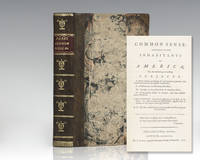
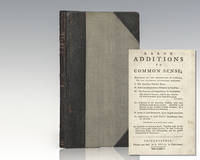
1776106523Philadelphia: Printed and sold by R. Bell in Third-Street 1776. Scarce 1776 separate edition of the Large Additions to Common Sense. The title reads in full: Large Additions To Common Sense: Addressed To The Inhabitants Of America On The Following Interesting Subjects. I. The American Patriot's Prayer. II. American Independancy defended by Candidus. III. The Propriety of Independancy by Demophilus The dread of Tyrants and the sole resource Of those that under grim Oppression groan. Thomson. IV. A Review of the American Contest with some Strictures on the King's Speech. Addressed to All Parents in the Thirteen United Colonies by a Friend To Posterity And Mankind. V. Letter to Lord Dartmouth by an English American. VI. Observations on Lord North's Conciliatory Plan by Sincerus. To Which Is Added And Given An Appendix to Common Sense; Together with an Address to the People Called Quakers on their Testimony concerning Kings and Government and the Present Commotions in America. Octavo bound in three quarters morocco over boards gilt titles and five raised bands to the spine marbled endpapers. In very good condition internally very clean. Rare with only two examples appearing at auction in the last 80 years. One of the founding fathers of the United States Thomas Paine authored two of the most influential pamphlets at the start of the American Revolution which ultimately inspired the 1776 Declaration of Independence. Virtually every American rebel read Paine's powerful pamphlet Common Sense which crystallized the American Revolution and demand for independence from Britain. John Adams asserted "without the pen of the author of Common Sense the sword of Washington would have been raised in vain." The 1776 Large Additions lends insight into the fascinating publishing history of the most important and popular tract of the American Revolution. After the publication of the first edition of Common Sense by Bell in 1776 in a small edition of 1000 copies Paine was greatly disappointed when Bell advised him there were no profits. He had intended to donate the proceeds to the causes of liberty and independence. Paine and Bell 44 had an immediate falling out and Paine subsequently hired Bradford to print a competing edition. This naturally infuriated Bell who included an attack on the still anonymous author in his next printing. The controversy between Bell and Paine played out in the press over the next several weeks and in no small part helped further ignite the popularity and widespread dissemination of Common Sense. Bell tried to compete against Bradford with a second unauthorized edition and gathered these additions to differentiate his work for the purpose of marketing. Nevertheless Bell could not easily compete since Paine refused to copyright the work and granted free permission for anyone to reprint it. Howes P22 states that "Paine was not the author of these Additions; they were gathered from various sources by Bell to make his edition 3 times larger than the enlarged edition issued at Philadelphia by Bradford to whom Paine had turned after his estrangement from Bell. Some copies were issued separately - and paged" as in the present example " . to permit their being bound with the first and second editions of Common Sense. Printed and sold, by R. Bell in Third-Street hardcover books
1776106523Philadelphia: Printed and sold by R. Bell in Third-Street 1776. Scarce 1776 separate edition of the Large Additions to Common Sense. The title reads in full: Large Additions To Common Sense: Addressed To The Inhabitants Of America On The Following Interesting Subjects. I. The American Patriot’s Prayer. II. American Independancy defended by Candidus. III. The Propriety of Independancy by Demophilus The dread of Tyrants and the sole resource Of those that under grim Oppression groan. Thomson. IV. A Review of the American Contest with some Strictures on the King’s Speech. Addressed to All Parents in the Thirteen United Colonies by a Friend To Posterity And Mankind. V. Letter to Lord Dartmouth by an English American. VI. Observations on Lord North’s Conciliatory Plan by Sincerus. To Which Is Added And Given An Appendix to Common Sense; Together with an Address to the People Called Quakers on their Testimony concerning Kings and Government and the Present Commotions in America. Octavo bound in three quarter morocco over boards gilt titles and five raised bands to the spine marbled endpapers. In very good condition internally very clean. Rare with only two examples appearing at auction in the last 80 years. One of the founding fathers of the United States Thomas Paine authored two of the most influential pamphlets at the start of the American Revolution which ultimately inspired the 1776 Declaration of Independence. Virtually every American rebel read Paine’s powerful pamphlet Common Sense which crystallized the American Revolution and demand for independence from Britain. John Adams asserted "without the pen of the author of Common Sense the sword of Washington would have been raised in vain." The 1776 Large Additions lends insight into the fascinating publishing history of the most important and popular tract of the American Revolution. After the publication of the first edition of Common Sense by Bell in 1776 in a small edition of 1000 copies Paine was greatly disappointed when Bell advised him there were no profits. He had intended to donate the proceeds to the causes of liberty and independence. Paine and Bell 44 had an immediate falling out and Paine subsequently hired Bradford to print a competing edition. This naturally infuriated Bell who included an attack on the still anonymous author in his next printing. The controversy between Bell and Paine played out in the press over the next several weeks and in no small part helped further ignite the popularity and widespread dissemination of Common Sense. Bell tried to compete against Bradford with a second unauthorized edition and gathered these additions to differentiate his work for the purpose of marketing. Nevertheless Bell could not easily compete since Paine refused to copyright the work and granted free permission for anyone to reprint it. Howes P22 states that “Paine was not the author of these Additions; they were gathered from various sources by Bell to make his edition 3 times larger than the enlarged edition issued at Philadelphia by Bradford to whom Paine had turned after his estrangement from Bell. Some copies were issued separately - and paged†as in the present example “ . to permit their being bound with the first and second editions of Common Sense. Printed and sold, by R. Bell in Third-Street hardcover
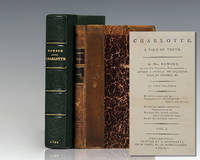
1794125183Philadelphia: Printed by D. Humphreys for M. Carey 1794. Exceedingly rare first American edition and the earliest obtainable example of the first American bestseller. Octavo two volumes bound into one in three quarter calf over marbled boards morocco spine label lettered in gilt marbled endpapers. Although it was preceded by the first English edition published in 1791 no examples of the first English edition have been traced at auction. In very good condition. Bookplate to the pastedown bibliographic description tipped in. Housed in a custom cloth chemise and half morocco clamshell slipcase. Exceedingly rare with only one other example of the first American edition traced at auction in the last 75 years. Susana Rowson's best-selling novel Charlotte Temple relates the tale of 15-year-old English schoolgirl Charlotte Temple who is lured away from her prestigious boarding school by British army officer John Montraville. While en route to New York Montraville seduces Charlotte who he swiftly abandons upon arrival to his post and after a downward spiral into remorse illness poverty and the birth of a child she dies. Seduction novels were popular in the 18th century and the widely read Charlotte Temple went through more than 200 editions. Rowson a committed republican used the success of the novel to protest the sexual double standard that ruined the lives of women like Charlotte. Later in life she wrote a sequel that was published posthumously. Printed by D. Humphreys for M. Carey hardcover books
1794125183Philadelphia: Printed by D. Humphreys for M. Carey 1794. Exceedingly rare first American edition and the earliest obtainable example of the first American bestseller. Octavo two volumes bound into one in three quarter calf over marbled boards morocco spine label lettered in gilt marbled endpapers. Although the first American edition was preceded by the first English edition published in 1791 no examples of the first English edition have been traced at auction. In very good condition. Bookplate of D. Appleton to the pastedown bibliographic description tipped in. Housed in a custom cloth chemise and half morocco clamshell slipcase. Exceedingly rare with only one other example of the first American edition traced at auction in the last 75 years. Susana Rowson's best-selling novel Charlotte relates the tale of 15-year-old English schoolgirl Charlotte Temple who is lured away from her prestigious boarding school by British army officer John Montraville. While en route to New York Montraville seduces Charlotte who he swiftly abandons upon arrival to his post and after a downward spiral into remorse illness poverty and the birth of a child she dies. Seduction novels were popular in the 18th century and the widely read Charlotte Temple went through more than 200 editions. Rowson a committed republican used the success of the novel to protest the sexual double standard that ruined the lives of women like Charlotte. Later in life she wrote a sequel that was published posthumously. Printed by D. Humphreys for M. Carey hardcover