Stephane MALLARMEBiblio.com
48 402 résultats
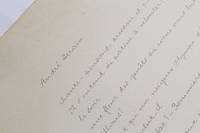
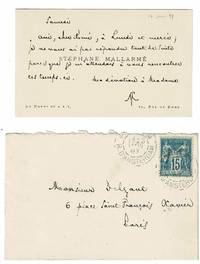
189776333Paris: S. n. 1897. Fine. S. n. Paris 23 janvier 1897 10.20 x 6.30 cm une carte de visite et son enveloppe Signed autograph visiting card from Stéphane Mallarmé addressed to Alidor Delzant. Envelope included. Alidor Delzant was a lawyer collector and bibliophile. Friend of the Goncourts he devoted a work to them and was Edmond's secretary and testamentary legatee. ""Ami cher ami à lundi et merci ; je ne vous ai pas répondu tout de suite parce que je m'attendais à vous rencontrer ces temps-ci."" ""Friend dear friend until Monday and thank you; I did not answer you right away because I expected to meet you these days."" S. n. unknown
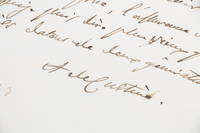
184386702s. l.: S. n. 1843. Fine. S. n. s. l. 29 Novembre 1843 13.50 x 20.50 cm une page Autograph letter signed by Astolphe de Custine 16 lines in black ink regarding the republication issued by the same publisher Amyot in the same year as the first edition of his prophetic and famous work ""La Russie en 1839"". Fold marks inherent to posting the ink of the year in the date having faded. Due to the great success of his work ""La Russie en 1839"" whose first edition was published in 1843 by Amyot Custine had difficulty obtaining a copy of the republication printed a few months later the same year of his masterpiece which he intended for his correspondent: ""Here sir is the second copy of La Russie that I have been able to wrest from Amyot since the new edition went on sale."" Like his publisher the author insists to his correspondent certainly a literary critic on the importance of this new edition which contains some parts in first edition so that he might review it: ""Amyot is very keen that emphasis be placed on the new anecdotes with which this edition is enlarged: and I am especially keen not to neglect any opportunity to show you my confidence in your goodwill."" A handsome letter testifying to the immediate and resounding success of this very important work by Astolphe de Custine considered the counterpart to the celebrated ""De la démocratie en Amérique"" by Alexis de Tocqueville; the accuracy of certain of Custine's analyses being verified even in Stalinist Russia up to that of Vladimir Putin. S. n. unknown
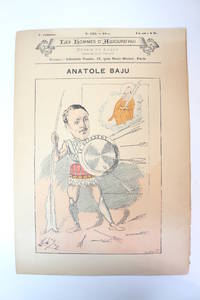
188873942Paris: Léon Vanier 1888. Fine. Léon Vanier Paris Août 1888 20 x 29.50 cm en feuilles First edition of this issue of the magazine consisting of two folded sheets. Light marginal tears and minor lacks of no consequence to the sheets. On the first a color woodcut depicting Anatole Baju by Manuel Luque. On the following ones text by Paul Verlaine in first edition entitled ""Anatole Baju"". Paul Verlaine always impecunious would be the only contributor to the magazine that Léon Vanier its director would agree to pay in order to provide him with financial assistance. Léon Vanier unknown
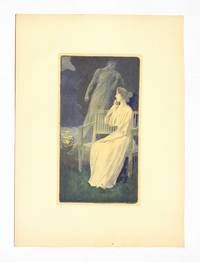
189773971Paris: Imprimerie Champenoispour CH. MassonH. Piazza 1897. Fine. Imprimerie Champenois pour CH. Masson H. Piazza Paris Octobre 1897 19 x 25 cm une feuille et une serpente Rare original color lithograph executed by Auguste François-Marie Gorguet for L'Estampe Moderne series number 6 published in October 1897. One of 50 deluxe proofs printed on Japan paper with wide margins artist's signature and date in the plate publisher's embossed stamp representing a child's profile in the lower margin numbered stamp of the deluxe printing on the reverse; engraving preceded by a tissue guard captioned with the artist's name title a poem and a presentation text; and another blank tissue guard. Magnificent French monthly publication edited between May 1897 and April 1899 L'Estampe moderne consists of original chromolithographs which unlike other magazines such as Les Maîtres de l'Affiche and as stipulated on the tissue guards were created especially by each artist for the magazine. Thus 100 prints appeared in total covering the major artistic movements of the late 19th century: Symbolism Art Nouveau Pre-Raphaelites Orientalists and Belle Epoque. Each delivery of four prints was printed in 2000 copies sold for 3.50F and 100 on Japan paper offered at 10F. Henri Piazza also planned a confidential printing of very great luxury: 50 copies on Japan paper with wide margins and 50 in black on China paper at the considerable price of 30F. This print of handsome format is superbly printed in colors on the most prestigious of papers: Japan paper. Thick silky satiny and pearlescent it contributes to making each page a work in its own right. Its quality of ink absorption and its affinity with colors also make it the ideal support for these very beautiful lithographs. The interest of French collectors in artistic posters grew at the beginning of the 1890s. Octave Uzanne to describe this fever invented the term ""affichomanie."" The poster originally popular and posted in the streets of the capital then became an art object and its ephemeral medium became precious and destined for preservation. Piazza decided to remove the poster from its advertising vocation and elevate it to the rank of a complete work of art on the same level as the luxury illustrated book. He thus composed a prestigious collection of entirely original works by the most prominent European artists of the moment: Georges de Feure Eugène Grasset Henri Detouche Emile Berchmans Louis Rhead Gaston de Latenay Lucien Lévy-Dhurmer Gustave-Max Stevens Charles Doudelet Hans Christiansen Henri Fantin-Latour Steinlen Ibels Engels Willette Henri Meunier Evenepoël Bellery-Desfontaines Charles Léandre etc. Handsome copy in the artist's symbolist style. Imprimerie Champenoispour CH. MassonH. Piazza unknown
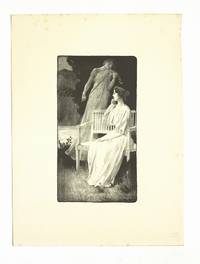
189773972Paris: Imprimerie Champenoispour CH. MassonH. Piazza 1897. Fine. Imprimerie Champenois pour CH. Masson H. Piazza Paris Octobre 1897 19 x 25 cm une feuille Rare original lithograph executed by Auguste François-Marie Gorguet for L'Estampe Moderne series number 6 published in October 1897. One of 50 deluxe proofs printed on China paper with wide margins artist's signature and date in the plate publisher's embossed stamp representing a child's profile in the lower margin mounted on a sheet of laid paper with the numbered stamp of the deluxe printing on the reverse light marginal foxing. Magnificent French monthly publication edited between May 1897 and April 1899 L'Estampe moderne consists of original chromolithographs which unlike other magazines such as Les Maîtres de l'Affiche and as stipulated on the tissue guards were created especially by each artist for the magazine. Thus 100 prints appeared in total covering the major artistic movements of the late 19th century: Symbolism Art Nouveau Pre-Raphaelites Orientalists and Belle Epoque. Each delivery of four prints was printed in 2000 copies sold for 3.50F and 100 on Japan paper offered at 10F. Henri Piazza also planned a confidential printing of very great luxury: 50 copies on Japan paper with wide margins and 50 in black on China paper at the considerable price of 30F. This print of handsome format is superbly printed on one of the most prestigious papers: China paper. ""Despite all its qualities China paper too inconsistent owes its reputation not to its own beauty but rather to its particular affinities with printing ink. Its texture smooth and soft together is more apt than any other to receive beautiful printing. This property makes China paper sought after for printing engravings."" Anatole France. The interest of French collectors in artistic posters grew at the beginning of the 1890s. Octave Uzanne to describe this fever invented the term ""affichomanie."" The poster originally popular and posted in the streets of the capital then became an art object and its ephemeral medium became precious and destined for preservation. Piazza decided to remove the poster from its advertising vocation and elevate it to the rank of a complete work of art on the same level as the luxury illustrated book. He thus composed a prestigious collection of entirely original works by the most prominent European artists of the moment: Georges de Feure Eugène Grasset Henri Detouche Emile Berchmans Louis Rhead Gaston de Latenay Lucien Lévy-Dhurmer Gustave-Max Stevens Charles Doudelet Hans Christiansen Henri Fantin-Latour Steinlen Ibels Engels Willette Henri Meunier Evenepoël Bellery-Desfontaines Charles Léandre etc. Handsome copy in the artist's symbolist style. Imprimerie Champenoispour CH. MassonH. Piazza unknown
1917642651917. Fine. circa 1917-1918 22.30 x 27.60 cm une feuille sous chemise et étui André Breton's remarkable autograph youth poem entitled ""André Derain"" in black ink on laid paper composed in March 1917. Our manuscript was written between March 1917 and the beginning of 1918. An essential poem of the pre-Dadaist contemporary of the author it is part of a coherent set of seven manuscript poems by Breton referred to as Coll.X. in André Breton's Complete Works Volume I of La Library of the Pleiades Gallimard 1988 1071. These poems from his youthful writing are carefully calligraphed in black ink on watermarked laid paper. This set was sent to his circle of friends and writers including Valery Apollinaire Theodore Fraenkel and his brother André Paris. It was later published in his first collection Mont de Piété which appeared in June 1919 at the publishing house Au sans Pareil newly founded by his friend Rene Hilsum. The exact dating of this set of autograph poems is determined by the writing of the last poem of the collection ""André Derain"" composed March 24 1917 which offers a terminus post quem absolute. In addition an older version of the poem ""Age"" dedicated to Leon-Paul Fargue appears in our collection under its original name ""Poème"". Dated by the author of February 19 1916 - the day of his twenty years - and created 10 days earlier according to his correspondence it was renamed and reworked only for its publication in July 1918 in The Three Roses . In all likelihood prior to the publication of this last poem the seven autograph poems were probably written during 1917 or early 1918 while Breton continues his internship at the Val-de-Grace and makes the decisive meeting of Louis Aragon. The poems that will constitute Mount of Piety represent a rare and precious testimony of his youthful influences at the dawn of his adherence to the Dada movement and his discovery of automatic writing. Quite short and sometimes sibylline we can see symbolic accents borrowed from Mallarme which he rediscovers during poetic mornings at the Antoine theater at the Vieux-Colombier in the company of his high school classmate Théodore Fraenkel. During the first month of the war Breton also devoted himself to Rimbaud and immersed himself in The Illuminations the only work carried away in the confusion and haste that followed the declaration of war. From his Rimbaldian readings came the poems ""December"" ""Age"" and ""André Derain"" while he borrowed from Apollinaire his muse Marie Laurencin to whom he dedicates ""The Sweet Year"". Moreover the poetic legacy of the author will be particularly marked by the figure of Paul Valéry with whom he enters into correspondence in 1914. Valery plays in the writing of the poems of Mont de Piété a considerable role by the attention and the advice he lavishes on the young poet. Admiring the audacity of his disciple who addressed each of his poems he appreciates the poem ""Facon"" 1916 in these terms: "" Theme language aim metric everything is new future mode way "" Letter of June 1916 Complete Works of André Breton Volume I of The Library of the Pléiade Gallimard 1988 p. These essential jewels of the youth of Breton were composed between his seventeenth and twenty-third year. Surprised in Lorient by the declaration of war he became a military nurse then officiated in several hospitals and on the front during the offensive of the Meuse. He made Nantes acquainted with Jacques Vaché who inspired him with a project of collective writing as well as the illustration of the future collection Mont de Piété finally realized by André Derain. The frequentation of this ""revolted dandy against art and war"" which shares his admiration for Jarry and the contact of the lunatics of the neuro-psychiatric center of Saint-Dizier mark a decisive step in the genesis of surrealism. Assigned to the Val-de-Grâce from 1917 Breton finds in Paris the literary effervescence necessary for unknown
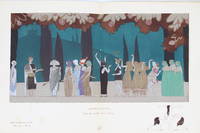
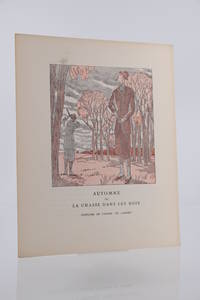
191484770Paris: Lucien Vogel éditeur 1914. Fine. Lucien Vogel éditeur Paris Mai 2014 36.50 x 24 cm une feuille Original double color print heightened with gold printed on laid paper unsigned. Some small stains at bottom left of the plate. Original engraving created for the illustration of La Gazette du bon ton one of the most beautiful and influential fashion magazines of the 20th century celebrating the talent of French creators and artists at the height of the Art Deco movement. Famous fashion magazine founded in 1912 by Lucien Vogel La Gazette du bon ton was published until 1925 with an interruption during the War from 1915 to 1920 due to the mobilization of its editor-in-chief. It consists of 69 issues printed in only 2000 copies and is illustrated notably with 573 color plates and 148 sketches representing models by great couturiers. From their publication these luxurious publications ""addressed bibliophiles and worldly aesthetes"" Françoise Tétart-Vittu ""La Gazette du bon ton"" in Dictionnaire de la mode 2016. Printed on fine laid paper they use a typeface specially created for the magazine by Georges Peignot the Cochin character adopted in 1946 by Christian Dior. The prints are created using the metal stencil technique heightened in colors and some highlighted in gold or palladium. The adventure begins in 1912 when Lucien Vogel man of fashion and society - he had already participated in the magazine Femina - decides to found with his wife Cosette de Brunhoff sister of Jean father of Babar the Gazette du bon ton whose subtitle was then ""Art modes et frivolités."" Georges Charensol reports the words of the editor-in-chief: ""In 1910 he observes there existed no fashion journal that was truly artistic and representative of the spirit of its time. I was therefore thinking of creating a luxury magazine with truly modern artists . I was certain of success because for fashion no country can rival France."" ""Un grand éditeur d'art. Lucien Vogel"" in Les Nouvelles littéraires n°133 May 1925. The magazine's success is immediate not only in France but also in the United States and South America. Originally Vogel therefore brings together a group of seven artists: André-Édouard Marty and Pierre Brissaud followed by Georges Lepape and Dammicourt; and finally his friends from the École des beaux-arts who are George Barbier Bernard Boutet de Monvel or Charles Martin. Other talents quickly join the team: Guy Arnoux Léon Bakst Benito Boutet de Monvel Umberto Brunelleschi Chas Laborde Jean-Gabriel Domergue Raoul Dufy Édouard Halouze Alexandre Iacovleff Jean Émile Laboureur Charles Loupot Charles Martin Maggie Salcedo. These artists mostly unknown when Lucien Vogel calls upon them would subsequently become emblematic and sought-after artistic figures. These same illustrators create the drawings for the Gazette's advertisements. The plates highlight and sublimate the gowns of seven creators of the era: Lanvin Doeuillet Paquin Poiret Worth Vionnet and Doucet. The couturiers provide exclusive models for each issue. Nevertheless some of the illustrations feature no real model but only the illustrator's idea of contemporary fashion. La Gazette du bon ton is a decisive stage in the history of fashion. Combining aesthetic excellence and visual unity it brings together for the first time the great talents of the worlds of arts letters and fashion and establishes through this alchemy a completely new image of woman slender independent and audacious also carried by the new generation of couturiers Coco Chanel Jean Patou Marcel Rochas. Taken over in 1920 by Condé Montrose Nast La Gazette du bon ton would largely inspire the new composition and aesthetic choices of the ""dying little journal"" that Nast had purchased a few years earlier: Vogue magazine. Lucien Vogel éditeur unknown
191454789Paris: Lucien Vogel éditeur 1914. Fine. Lucien Vogel éditeur Paris Mai 2014 36.50 x 24 cm une feuille Double original color print heightened with gold printed on vergé paper non signed. An original print used to illustrate the Gazette du bon ton one of the most attractive and influential 20th century fashion magazines featuring the talents of French artists and other contributors from the burgeoning Art Deco movement. A celebrated fashion magazine established in 1912 by Lucien Vogel La Gazette du bon ton appeared until 1925 with a hiatus from 1915 to 1920 due to the war the editor-in-chief having been called up for service. It consisted of 69 issues printed in only 2000 copies each and notably illustrated with 573 color plates and 148 sketches of the models of the great designers. Right from the start this sumptuous publication was aimed at bibliophiles and fashionable society Françoise Tétart-Vittu La Gazette du bon ton in Dictionnaire de la mode 2016 and was printed on fine vergé paper using a type cut specially for the magazine by Georges Peignot known as Cochin later used in 1946 by Christian Dior. The prints were made using stencils heightened in colors some highlighted in gold or palladium. The story began in 1912 when Lucien Vogel a man of the world involved in fashion he had already been part of the fashion magazine Femina decided with his wife Cosette de Brunhoff the sister of Jean creator of Babar to set up the Gazette du bon ton subtitled at the time: Art fashion frivolities. Georges Charensol noted the reasoning of the editor-in-chief: 'In 1910' he observed there was no really artistic fashion magazine nothing representative of the spirit of the time. My dream was therefore to make a luxury magazine with truly modern artists I was assured of success because when it comes to fashion no country on earth can compete with France.' Un grand éditeur d'art. Lucien Vogel in Les Nouvelles littéraires no. 133 May 1925. The magazine was immediately successful not only in France but also in the United States and Latin America. At first Vogel put together a team of seven artists: André-Édouard Marty and Pierre Brissaud followed by Georges Lepape and Dammicourt as well as eventually his friends from school and the School of Fine Arts like George Barbier Bernard Boutet de Monvel and Charles Martin. Other talented people soon came flocking to join the team: Guy Arnoux Léon Bakst Benito Boutet de Monvel Umberto Brunelleschi Chas Laborde Jean-Gabriel Domergue Raoul Dufy Édouard Halouze Alexandre Iacovleff Jean Émile Laboureur Charles Loupot Chalres Martin Maggie Salcedo. These artist mostly unknown when Lucien Vogel sought them out later became emblematic and sought-after artistic figures. It was also they who worked on the advertising drawings for the Gazette. The plates put the spotlight on and celebrate dresses by seven designers of the age: Lanvin Doeuillet Paquin Poiret Worth Vionnet and Doucet. The designers provided exclusive models for each issue. Nonetheless some of the illustrations are not based on real models but simply on the illustrator's conception of the fashion of the day. The Gazette du bon ton was an important step in the history of fashion. Combining aesthetic demands with the physical whole it brought together for the first time the great talents of the artistic literary and fashion worlds; and imposed through this alchemy a completely new image of women: slender independent and daring which was shared by the new generation of designers including Coco Chanel Jean Patou Marcel Rochas and so on Taken over in 1920 by Condé Montrose Nast the Gazette du bon ton was an important influence on the new layout and aesthetics of that little dying paper that Nast had bought a few years earlier: Vogue. Lucien Vogel éditeur unknown
189874359Paris: Imprimerie Champenoispour CH. MassonH. Piazza 1898. Fine. Imprimerie Champenois pour CH. Masson H. Piazza Paris Février 1898 23.50 x 34.50 cm une feuille Rare original lithograph executed by Auguste Donnay for L'Estampe Moderne series number 10 published in February 1898. One of 50 deluxe proofs printed on China paper with wide margins artist's signature and date in the plate publisher's dry stamp representing a child's profile in the lower margin mounted on a sheet of laid paper with the numbered stamp of the deluxe edition on the verso pale marginal foxing. Lithograph inspired by a poem by José Maria de Heredia. Magnificent French monthly publication issued between May 1897 and April 1899 L'Estampe Moderne consists of original chromolithographs which unlike other periodicals such as Les Maîtres de l'Affiche and as stipulated on the tissue guards were created specially by each artist for the review. Thus 100 prints appeared in total covering the major artistic movements of the late 19th century: Symbolism Art Nouveau Pre-Raphaelites Orientalists and Belle Epoque. Each issue of four prints was printed in 2000 copies sold at 3.50F and 100 on Japan paper offered at 10F. Henri Piazza also planned a confidential deluxe edition: 50 copies on Japan paper with wide margins and 50 in black on China paper at the considerable price of 30F. This print of handsome format is superbly printed on one of the most prestigious papers: China paper. ""Despite all its qualities China paper too insubstantial owes its reputation not to its own beauty but to its particular affinities with printing ink. Its texture smooth and soft together is more apt than any other to receive a beautiful impression. This property makes China paper sought after for printing engravings."" Anatole France. French collectors' interest in artistic posters intensified in the early 1890s. Octave Uzanne to characterize this fever invented the term ""postomania."" The poster originally popular and displayed in the streets of the capital then became an art object and its ephemeral medium became precious and destined for preservation. Piazza decided to remove the poster from its advertising purpose and elevate it to the rank of a complete work of art on the same level as the deluxe illustrated book. He thus composed a prestigious collection of entirely original works by the most prominent European artists of the moment: Georges de Feure Eugène Grasset Henri Detouche Emile Berchmans Louis Rhead Gaston de Latenay Lucien Lévy-Dhurmer Gustave-Max Stevens Charles Doudelet Hans Christiansen Henri Fantin-Latour Steinlen Ibels Engels Willette Henri Meunier Evenepoël Bellery-Desfontaines Charles Léandre etc. Handsome copy in the Art Nouveau style. Imprimerie Champenoispour CH. MassonH. Piazza unknown
189874358Paris: Imprimerie Champenoispour CH. MassonH. Piazza 1898. Fine. Imprimerie Champenois pour CH. Masson H. Piazza Paris Février 1898 23.50 x 34.50 cm une feuille et une serpente Rare original lithograph printed in colors executed by Auguste Donnay for L'Estampe Moderne series number 10 published in February 1898. One of 50 deluxe proofs printed on Japan paper with wide margins artist's signature and date in the plate publisher's dry stamp representing a child's profile in the lower margin numbered stamp of the deluxe edition on the verso; engraving preceded by a tissue guard inscribed with the artist's name title and a poem; blank tissue guard. Lithograph inspired by a poem by José Maria de Heredia reproduced on the tissue guard of the print. Magnificent French monthly publication issued between May 1897 and April 1899 L'Estampe Moderne consists of original chromolithographs which unlike other periodicals such as Les Maîtres de l'Affiche and as stipulated on the tissue guards were created specially by each artist for the review. Thus 100 prints appeared in total covering the major artistic movements of the late 19th century: Symbolism Art Nouveau Pre-Raphaelites Orientalists and Belle Epoque. Each issue of four prints was printed in 2000 copies sold at 3.50F and 100 on Japan paper offered at 10F. Henri Piazza also planned a confidential deluxe edition: 50 copies on Japan paper with wide margins and 50 in black on China paper at the considerable price of 30F. This print of handsome format is superbly printed on the most prestigious of papers: Japan paper. Thick silky satiny and pearlescent it contributes to making each page a complete work in itself. Its quality of ink absorption and its affinity with colors also make it the ideal medium for these very beautiful lithographs. French collectors' interest in artistic posters intensified in the early 1890s. Octave Uzanne to characterize this fever invented the term ""postomania."" The poster originally popular and displayed in the streets of the capital then became an art object and its ephemeral medium became precious and destined for preservation. Piazza decided to remove the poster from its advertising purpose and elevate it to the rank of a complete work of art on the same level as the deluxe illustrated book. He thus composed a prestigious collection of entirely original works by the most prominent European artists of the moment: Georges de Feure Eugène Grasset Henri Detouche Emile Berchmans Louis Rhead Gaston de Latenay Lucien Lévy-Dhurmer Gustave-Max Stevens Charles Doudelet Hans Christiansen Henri Fantin-Latour Steinlen Ibels Engels Willette Henri Meunier Evenepoël Bellery-Desfontaines Charles Léandre etc. Handsome copy in the Art Nouveau style. Imprimerie Champenoispour CH. MassonH. Piazza unknown
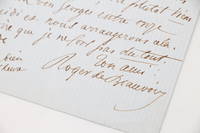
184887237s. l. 1848. Fine. s. l. s. d. circa 1848 10 x 15.90 cm une page sur un bifeuillet Autograph letter signed by Roger de Beauvoir. One page in black ink on a bifolium of blue paper. Discrete folds inherent to the mailing. The writer and chronicler is preparing his Mémoires de Mademoiselle Mars the immense actress who counted among his intimates. In this letter he invites his correspondent to go to the actress's residence with Alexandre Dumas to study her correspondence. ""Mon cher ami Hier soir à cinq heures j'ai appris une nouvelle si triste qu'elle a influé subitement sur ma santé ; j'ai combattu vainement cette impression on m'a tant tourné le sang que je viens d'appeler un médecin. Il m'a fait une ordonnant indiquant 3 mois de régime excusez du peu ! . Soyez donc allez bon vous deux Dumas pour venir demain relever dans les lettres de Melle Mars ce qui sera utile . "" My dear friend Yesterday evening at five o'clock I learned such sad news that it suddenly affected my health; I fought this impression in vain my blood has been so disturbed that I have just called a doctor. He has given me a prescription indicating 3 months of regimen excuse me for so little! . So please be so good you two Dumas to come tomorrow to extract from Mademoiselle Mars's letters what will be useful . unknown
194586737s. l.: S. n. 1945. Fine. S. n. s. l. s. d. ca 1945 9 x 13.50 cm une page recto verso Autograph letter signed by Henri Michaux in two parts 45 lines in black ink on recto and in pencil on verso written over two days Sunday and Monday on bristol paper. Transverse fold in right margin of the bristol. Deletions and corrections in black ink on the recto of the letter Henri Michaux refuses what is asked of him: ""Now you're asking me for 20"" pages. ""It's impossible. I've done 6 which represent 7 or 8 of your magazine. I can do 2 more it seems to me so 10 More I'll think about it. But I cannot promise them to you at all."" and asks some questions to his correspondent: ""You still haven't told me the writers who are collaborating on the 1st issue anthology section. I'm curious and worried about it."" On the verso the writer has completed his work: ""And well there you have it I have 10 pages. but I can no longer write anything about this country - enough to have lived there a year"" in 1928 ""and to have made a book from it. So don't ask me for more. Just having to transcribe my letter ! gives me a headache. In me it refuses."" S. n. unknown
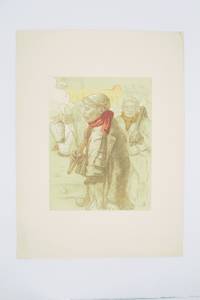
189874855Paris: Imprimerie Champenoispour CH. MassonH. Piazza 1898. Fine. Imprimerie Champenois pour CH. Masson H. Piazza Paris Juin 1898 24.50 x 32 cm une feuille et une serpente Rare original color lithograph executed by Jules-Gustave Besson for L'Estampe Moderne series number 14 published in June 1898. One of 50 deluxe proofs printed on Japan paper with wide margins artist's signature in the plate publisher's blind stamp depicting a child's profile in lower margin numbered luxury edition stamp on verso; engraving preceded by a tissue guard captioned with the artist's name title and text. Lithograph inspired by an extract from Germinal by Emile Zola reproduced on the print's tissue guard. Magnificent French monthly publication edited between May 1897 and April 1899 L'Estampe moderne consists of original chromolithographs which unlike other periodicals such as Les Maîtres de l'Affiche and as stipulated on the tissue guards were created specifically by each artist for the review. Thus 100 prints appeared in total covering the major artistic movements of the late 19th century: Symbolism Art Nouveau Pre-Raphaelites Orientalists and Belle Époque. Each delivery of four prints was issued in 2000 copies sold for 3.50F and 100 on Japan paper offered at 10F. Henri Piazza also planned a confidential deluxe printing: 50 copies on Japan paper with wide margins and 50 in black on China paper at the considerable price of 30F. This print of handsome format is superbly printed on the most prestigious of papers: Japan. Thick silky satiny and lustrous it contributes to making each page a work in its own right. Its ink absorption quality and affinity with colors also make it the ideal support for these very beautiful lithographs. French collectors' interest in artistic posters intensified at the beginning of the 1890s. Octave Uzanne to describe this fever invented the term ""poster mania"". The poster originally popular and plastered in the streets of the capital then became an art object and its ephemeral support became precious and destined for preservation. Piazza decided to remove the poster from its advertising vocation and elevate it to the rank of a complete work of art on the same level as the deluxe illustrated book. He thus composed a prestigious collection of entirely original works by the most prominent European artists of the moment: Georges de Feure Eugène Grasset Henri Detouche Emile Berchmans Louis Rhead Gaston de Latenay Lucien Lévy-Dhurmer Gustave-Max Stevens Charles Doudelet Hans Christiansen Henri Fantin-Latour Steinlen Ibels Engels Willette Henri Meunier Evenepoël Bellery-Desfontaines Charles Léandre etc. Handsome copy. Imprimerie Champenoispour CH. MassonH. Piazza unknown
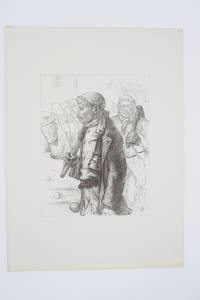
189874856Paris: Imprimerie Champenoispour CH. MassonH. Piazza 1898. Fine. Imprimerie Champenois pour CH. Masson H. Piazza Paris Juin 1898 24.50 x 32 cm une feuille Rare original lithograph executed by Jules-Gustave Besson for L'Estampe Moderne series number 14 published in June 1898. One of 50 deluxe proofs printed on China paper with large margins artist's signature in the plate publisher's dry stamp showing a child's profile in the lower margin mounted on a sheet of laid paper with the numbered stamp of the deluxe edition on verso some foxing. Lithograph inspired by an extract from Germinal by Emile Zola. Magnificent French monthly publication edited between May 1897 and April 1899 L'Estampe moderne consists of unpublished chromolithographs which unlike other magazines such as Les Maîtres de l'Affiche and as stipulated on the tissue guards were created specially by each artist for the magazine. Thus 100 prints appeared in total covering the major artistic movements of the late 19th century: Symbolism Art Nouveau Pre-Raphaelites Orientalists and Belle Époque. Each delivery of four prints was printed in 2000 copies sold at 3.50F and 100 on Japan paper offered at 10F. Henri Piazza also planned a confidential very deluxe printing: 50 copies on Japan paper with large margins and 50 in black on China paper at the considerable price of 30F. This print of handsome format is superbly printed on one of the most prestigious papers: China. ""Despite all its qualities China paper too insubstantial owes its reputation not to its own beauty but indeed to its particular affinities with printing ink. Its texture smooth and soft together is more apt than any other to receive a beautiful printing. This property makes China paper sought after for printing engravings."" Anatole France. The interest of French collectors in artistic posters intensified at the beginning of the 1890s. Octave Uzanne to qualify this fever invented the term ""affichomanie."" The poster originally popular and posted in the streets of the capital then became an art object and its ephemeral medium became precious and devoted to conservation. Piazza decided to remove the poster from its advertising vocation and elevate it to the rank of a complete work of art on the same level as the deluxe illustrated book. He thus composed a prestigious collection of entirely original works by the most prominent European artists of the moment: Georges de Feure Eugène Grasset Henri Detouche Emile Berchmans Louis Rhead Gaston de Latenay Lucien Lévy-Dhurmer Gustave-Max Stevens Charles Doudelet Hans Christiansen Henri Fantin-Latour Steinlen Ibels Engels Willette Henri Meunier Evenepoël Bellery-Desfontaines Charles Léandre etc. Handsome copy. Imprimerie Champenoispour CH. MassonH. Piazza unknown
189773990Paris: Imprimerie Champenoispour CH. MassonH. Piazza 1897. Fine. Imprimerie Champenois pour CH. Masson H. Piazza Paris Novembre 1897 23 x 33 cm une feuille Rare original lithograph executed by Henri Evenepoel for L'Estampe Moderne series number 7 published in November 1897. One of 50 deluxe proofs printed on China paper with full margins artist's signature in the plate publisher's dry stamp showing a child's profile in lower margin mounted on a sheet of laid paper with numbered luxury edition stamp on verso pale marginal foxing tiny harmless corner loss and small tears in upper margin. Magnificent French monthly publication edited between May 1897 and April 1899 L'Estampe moderne consists of unpublished chromolithographs which unlike other magazines such as Les Maîtres de l'Affiche and as stipulated on the tissue guards were created specially by each artist for the magazine. Thus 100 prints appeared in total covering the major artistic movements of the late 19th century: Symbolism Art Nouveau Pre-Raphaelites Orientalists and Belle Epoque. Each issue of four prints was printed in 2000 copies sold for 3.50F and 100 on Japan paper offered at 10F. Henri Piazza also planned a confidential deluxe printing: 50 copies on Japan paper with full margins and 50 in black on China paper at the considerable price of 30F. This print in a handsome format is superbly printed on one of the most prestigious papers: China paper. ""Despite all its qualities China paper too insubstantial owes its reputation not to its own beauty but indeed to its particular affinities with printing ink. Its texture smooth and soft together is more apt than any other to receive a beautiful printing. This property makes China paper sought after for printing engravings."" Anatole France. French collectors' interest in artistic posters intensified at the beginning of the 1890s. Octave Uzanne to describe this fever invented the term ""affichomanie"". The poster originally popular and pasted on the streets of the capital then became an art object and its ephemeral medium became precious and destined for preservation. Piazza decided to remove the poster from its advertising vocation and elevate it to the rank of a complete work of art on the same level as the deluxe illustrated book. He thus composed a prestigious collection of entirely original works by the most prominent European artists of the moment: Georges de Feure Eugène Grasset Henri Detouche Emile Berchmans Louis Rhead Gaston de Latenay Lucien Lévy-Dhurmer Gustave-Max Stevens Charles Doudelet Hans Christiansen Henri Fantin-Latour Steinlen Ibels Engels Willette Henri Meunier Evenepoël Bellery-Desfontaines Charles Léandre etc. Handsome copy in Belle époque style. Imprimerie Champenoispour CH. MassonH. Piazza unknown
1894714791894. Fine. 1894 11.50 x 17.40 cm une feuille Signed autograph letter from the painter Jules Breton one folded sheet a marginal tear. Academically trained a realist then naturalist painter Jules Breton was one of the first artists of the peasant world. The painter addresses a childhood friend of his daughter the artist painter Virginie Demont-Breton: ""Thank you for your kind letter of congratulations about Virginie's decoration your former little companion who has kept such affectionate memories of you. I can still see you playing on the sand of Douarnenez during that horrible war . My wife . has just lost her youngest brother whom we loved tenderly. Today one laughs and tomorrow one cries such is life ."" unknown
189778160Paris 1897. Fine. Paris s. d. après 1897 13.80 x 9 cm une carte autographe recto et verso Autograph card by Pierre Louÿs signed with his initial addressed to Georges Louis and written in violet ink on both sides. Note addressed to his brother Georges Louis with whom Pierre Louÿs maintained a very intimate relationship and whom he considered as his own father. The question of Pierre Louÿs's real paternal identity still fascinates biographers today: ""His father Pierre Philippe Louis . had married in 1842 Jeanne Constance Blanchin who died ten years later after giving him two children Lucie and Georges. In 1855 he remarried Claire Céline Maldan and from this union was born in 1857 a son Paul; then in 1870 our writer who received the given names Pierre Félix. This late birth the differences in character between father and son the former's disaffection toward the latter the profound intimacy that always reigned between Louÿs and his brother Georges all this has led certain biographers and critics to suspect that the latter was in reality the writer's father. The exceptionally intimate and constant relationship that Pierre and Georges maintained between themselves throughout their lives could be an argument in this direction. Of course no irrefutable proof has been discovered and probably never will be. Nevertheless certain letters . are quite troubling. In 1895 for example Louÿs writes seriously to his brother that he knows the answer to 'the most poignant question' he could ask him a question he has had 'on his lips for ten years.' The following year in the full triumph of Aphrodite he thanks Georges effusively and ends his letter with this sentence: 'Not one of my friends has a FATHER who is for him what you are for me.' Arguing from the close intimacy of Georges and Claire Céline during the year 1870 and the jealousy that the father never ceased to show toward his younger son Claude Farrère did not hesitate to conclude in favor of Georges Louis. And what to think of this dedication by Louÿs to his brother on a Japan paper copy of the first edition of Pausole: To Georges his eldest son / Pierre."" Jean-Paul Goujon Pierre Louÿs Pierre Louÿs revolutionizes his living conditions: ""I am taking serious care of myself. For two days now I have been going to bed at half past midnight to wake up between 9 and 10. Today after a day that has already lasted 11 hours I have only smoked half a pack of cigarettes. That's a quarter of my usual consumption during the same time. Moreover I walked more than a league on foot I took the air as much as I could.Well with all that I feel quite unwell or rather as if I were the day after a long and serious illness. Neither strength nor nerves. I have trouble listening speaking following an idea. Should this be attributed to my cigarette rationing It's possible. But honestly I don't think I have felt so low since '97 since the month when you came to see me in Algiers."" Amusing note from the most tobacco-addicted of writers nearly 60 cigarettes per day.! who wrote in Une volupté nouvelle: ""One night as I found myself there in silent conversation with two blue porcelain cats crouched on a white table I hesitated to choose between two pastimes of solitude: write a regular sonnet while smoking cigarettes or smoke cigarettes while looking at the ceiling carpet. The important thing is to always have a cigarette in hand; one must envelop objects in a celestial and fine cloud that bathes lights and shadows erases material angles and by a perfumed spell imposes on the agitated mind a variable balance from which it can fall into reverie."" unknown
183077791Tours 1830. Fine. Tours 23 juin 1830 13.20 x 19.90 cm une feuille Unpublished autograph letter: As soon as I had arrived in Tours I was thrown on the coasts of Brittany by the best conditioned desire that had ever seized a man to shut off the atmosphere of Paris and its ideas by going to run on the beautiful rocks that border the sea in Brittany Tours 23 June 1830 13.2 x 19.9cm one leaf Unpublished handwritten letter signed by Honoré de Balzac one and a half pages written in black ink on a leaf of white paper. Transversal folds and ink a little faded at the bottom of the first page without making it difficult to read. The man from Tours poetically recounts his wanderings on the Breton coast during a trip he took in the company of Madame de Berny. Together they sailed up the Loire in a boat all the way to Le Croisic: As soon as I had arrived in Tours I was thrown on the coasts of Brittany by the best conditioned desire that had ever seized a man to shut off the atmosphere of Paris and its ideas by going to run on the beautiful rocks that border the sea in Brittany and there once arrived I stayed a fortnight the most delicious in the world running on the bays on the kelp collecting the pucelages that are in large numbers on the sea sand in reverse of the rue Vivienne. The pucelages here are shellfish so named because of their vulvoid shape allowing Balzac an allusion to the prostitution very popular at the time that occupied the Galerie Vivienne. This amusing letter is addressed to one of the editors of La Silhouette magazine as evidenced in particular by the sign off at the end of the letter mentioning the founder of the periodical: A thousand good friendships do not forget to give a large part to our friend Victor Ratier. Balzac also mentions several articles: I am writing to give you a sign of life proof of interest and of friendship but I write to you briefly because I have twenty letters to answer and I promise you a letter for.1st July which will contain the end of the charlatan issue 2 la bella dona and finally the articles that will have passed through my head and with which you will be furnished so as to not ask anything of me for a month or two and so that around August you will be my publisher. We have not found any trace of said letter in the writer's correspondence no more besides than the continuation of the Charlatan the first part of which was published in the second issue of La Silhouette. No article under the title of Bella Dona appears in the following issues either although Balzac emphasizes in his letter the desire to provide other texts given that the charms of the Loire must not make him forget that he is the poorest of those who live on a quill pen. A beautiful and spicy unpublished letter. unknown
192284839Paris: Lucien Vogel éditeur 1922. Fine. Lucien Vogel éditeur Paris 1922 19.50 x 24.50 cm une double page Original colour print printed on laid paper signed at bottom left of the plate. On a double leaf text by Georges Armand Masson ""Le bain des enfants"" ""Children's bath"" illustrated with 5 sketches in the text by Helen Smith. La Gazette du bon ton one of the most beautiful and influential fashion magazines of the 20th century celebrating the talent of French creators and artists during the full flowering of Art Deco. Famous fashion magazine founded in 1912 by Lucien Vogel La Gazette du bon ton was published until 1925 with an interruption during the War from 1915 to 1920 due to the mobilization of its editor-in-chief. It consists of 69 issues printed in only 2000 copies and is illustrated notably with 573 colour plates and 148 sketches representing models by great couturiers. From their publication these luxurious publications ""s'adressent aux bibliophiles et aux mondains esthètes"" ""were addressed to bibliophiles and worldly aesthetes"" Françoise Tétart-Vittu ""La Gazette du bon ton"" in Dictionnaire de la mode 2016. Printed on fine laid paper they use a typeface specially created for the magazine by Georges Peignot the Cochin character adopted in 1946 by Christian Dior. The prints are produced using the metal stencil technique enhanced in colours and some highlighted in gold or palladium. The adventure begins in 1912 when Lucien Vogel man of the world and fashion - he had already participated in the magazine Femina - decides to found with his wife Cosette de Brunhoff sister of Jean the father of Babar the Gazette du bon ton whose subtitle was then ""Art modes et frivolités"" ""Art fashion and frivolities"". Georges Charensol reports the words of the editor-in-chief: ""En 1910 observe-t-il il n'existait aucun journal de mode véritablement artistique et représentatif de l'esprit de son époque. Je songeais donc à faire un magazine de luxe avec des artistes véritablement modernes . J'étais certain du succès car pour la mode aucun pays ne peut rivaliser avec la France."" ""In 1910 he observed there existed no fashion journal that was truly artistic and representative of the spirit of its time. I therefore thought of making a luxury magazine with truly modern artists . I was certain of success because for fashion no country can rival France."" ""Un grand éditeur d'art. Lucien Vogel"" in Les Nouvelles littéraires n°133 May 1925. The success of the magazine is immediate not only in France but also in the United States and South America. Originally Vogel therefore brings together a group of seven artists: André-Édouard Marty and Pierre Brissaud followed by Georges Lepape and Dammicourt; and finally his friends from the École des beaux-arts who are George Barbier Bernard Boutet de Monvel or Charles Martin. Other talents quickly join the team: Guy Arnoux Léon Bakst Benito Boutet de Monvel Umberto Brunelleschi Chas Laborde Jean-Gabriel Domergue Raoul Dufy Édouard Halouze Alexandre Iacovleff Jean Émile Laboureur Charles Loupot Charles Martin Maggie Salcedo. These artists unknown for the most part when Lucien Vogel calls upon them will subsequently become emblematic and sought-after artistic figures. These same illustrators create the drawings for the Gazette's advertisements. The plates highlight and sublimate the dresses of seven creators of the period: Lanvin Doeuillet Paquin Poiret Worth Vionnet and Doucet. The couturiers provide exclusive models for each issue. Nevertheless some of the illustrations feature no real model but only the idea that the illustrator has of contemporary fashion. La Gazette du bon ton is a decisive stage in the history of fashion. Combining aesthetic excellence and plastic unity it brings together for the first time the great talents of the worlds of arts letters and fashion and imposes through this alchemy a completely new image of woman slender independent and bold also ca Lucien Vogel éditeur unknown
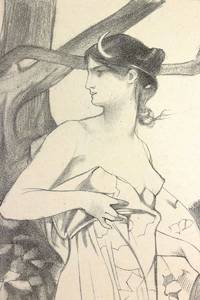
189773907Paris: Imprimerie Champenoispour CH. MassonH. Piazza 1897. Fine. Imprimerie Champenois pour CH. Masson H. Piazza Paris Mai 1897 33 x 24.50 cm une feuille Rare original lithograph executed by René Ménard for L'Estampe Moderne series number 1 published in May 1897. One of 50 deluxe proofs printed on China paper with wide margins artist's signature in the plate publisher's dry stamp depicting a child's profile in the lower margin mounted on a sheet of laid paper with the numbered stamp of the deluxe issue on the verso some foxing. Magnificent French monthly publication issued between May 1897 and April 1899 L'Estampe moderne consists of original chromolithographs which unlike other periodicals such as Les Maîtres de l'Affiche and as stipulated on the tissue guards were created specially by each artist for the review. Thus 100 prints appeared in total covering the major artistic movements of the late 19th century: Symbolism Art Nouveau Pre-Raphaelites Orientalists and Belle Epoque. Each issue of four prints was produced in 2000 copies sold for 3.50F and 100 on Japan paper offered at 10F. Henri Piazza also planned a confidential deluxe printing: 50 copies on Japan paper with wide margins and 50 in black on China paper at the considerable price of 30F. This print in a handsome format is superbly printed on one of the most prestigious papers: China paper. ""Despite all its qualities China paper too insubstantial owes its reputation not to its own beauty but rather to its particular affinities with printing ink. Its texture smooth and soft at once is more suited than any other to receive a fine impression. This property makes China paper sought after for printing engravings."" Anatole France. The interest of French collectors in artistic posters grew at the beginning of the 1890s. Octave Uzanne to describe this fever invented the term ""affichomanie."" The poster originally popular and pasted in the streets of the capital then became an art object and its ephemeral medium became precious and destined for preservation. Piazza decided to remove the poster from its advertising purpose and elevate it to the rank of a complete work of art on the same level as the luxury illustrated book. He thus composed a prestigious collection of entirely original works by the most prominent European artists of the moment: Georges de Feure Eugène Grasset Henri Detouche Emile Berchmans Louis Rhead Gaston de Latenay Lucien Lévy-Dhurmer Gustave-Max Stevens Charles Doudelet Hans Christiansen Henri Fantin-Latour Steinlen Ibels Engels Willette Henri Meunier Evenepoël Bellery-Desfontaines Charles Léandre etc. Handsome copy in the symbolist style of the artist. Imprimerie Champenoispour CH. MassonH. Piazza unknown
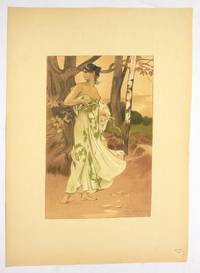
189773906Paris: Imprimerie Champenoispour CH. MassonH. Piazza 1897. Fine. Imprimerie Champenois pour CH. Masson H. Piazza Paris Mai 1897 33 x 24.50 cm une feuille Rare original color lithograph executed by René Ménard for L'Estampe Moderne series number 1 published in May 1897. One of 50 deluxe proofs printed on Japan paper with wide margins artist's signature in the plate publisher's dry stamp depicting a child's profile in the lower margin numbered stamp of the deluxe issue on the verso. Magnificent French monthly publication issued between May 1897 and April 1899 L'Estampe moderne consists of original chromolithographs which unlike other periodicals such as Les Maîtres de l'Affiche and as stipulated on the tissue guards were created specially by each artist for the review. Thus 100 prints appeared in total covering the major artistic movements of the late 19th century: Symbolism Art Nouveau Pre-Raphaelites Orientalists and Belle Epoque. Each issue of four prints was produced in 2000 copies sold for 3.50F and 100 on Japan paper offered at 10F. Henri Piazza also planned a confidential deluxe printing: 50 copies on Japan paper with wide margins and 50 in black on China paper at the considerable price of 30F. This print in a handsome format is superbly printed in colors on the most prestigious of papers: Japan paper. Thick silky satiny and pearlescent it contributes to making each page a work in its own right. Its ink absorption quality and its affinity with colors also make it the ideal support for these very fine lithographs. The interest of French collectors in artistic posters grew at the beginning of the 1890s. Octave Uzanne to describe this fever invented the term ""affichomanie."" The poster originally popular and pasted in the streets of the capital then became an art object and its ephemeral medium became precious and destined for preservation. Piazza decided to remove the poster from its advertising purpose and elevate it to the rank of a complete work of art on the same level as the luxury illustrated book. He thus composed a prestigious collection of entirely original works by the most prominent European artists of the moment: Georges de Feure Eugène Grasset Henri Detouche Emile Berchmans Louis Rhead Gaston de Latenay Lucien Lévy-Dhurmer Gustave-Max Stevens Charles Doudelet Hans Christiansen Henri Fantin-Latour Steinlen Ibels Engels Willette Henri Meunier Evenepoël Bellery-Desfontaines Charles Léandre etc. Handsome copy in the symbolist style of the artist. Imprimerie Champenoispour CH. MassonH. Piazza unknown
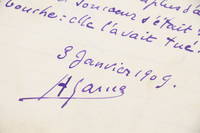
190987880s. l.: S. n. 1909. Fine. S. n. s. l. Mai 1909 19.50 x 24.50 cm une page Two autograph poems from youth dated and signed with fourteen stanzas each in alexandrines by Abel Gance then aged 20 18 and 21 lines written in violet ink for each of the poems; these poems written on a sheet detached from a schoolboy's exercise book. On the recto the first poem is dated 3 January 1909 and it is dedicated to a couple of friends: ""To Myriam Deroxe to Victor Fransses pious admirers of Salomé this testimony of a spirit almost understanding their enthusiasm. "" The second on the verso is entitled ""Vague Song""; it is dated Brussels 28 January 1909 and signed AGance. Fold marks inherent to postal folding. These poems were probably published in 1909 in his only and very rare collection of poems: ""A Finger on the Keyboard"" when Abel Gance was considering beginning a career in theatre in Brussels. ""In that time Salomé lived in Palestine . Her eyes were of the gold from which sorrows are made She had a rose on her lips pallors a supple body burning with feline voluptuousness. . And in my life. she will come. I think I see her! - Did she have a heart No for she was a woman! But yet. I remember. it was an evening: "" The second which has a strip of tape at the level of the title is equally imbued with melancholy: ""I will let some flowers trail this evening On the marble parvis where I will come to wait for her; My heart softly grey will be so gentle so tender That to slip from the world to the infinity of tears On the marble parvis where I will come to wait for her; It will suffice to surprise a little of her mouth I will let some flowers trail this evening."" Influenced by John Keats Charles Baudelaire and Arthur Rimbaud Abel Gance then in Brussels to pursue a career in theatre stops his poetic activity judging his production too impersonal and returns despairing to Paris. S. n. unknown
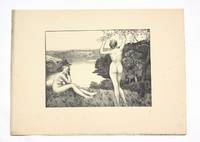
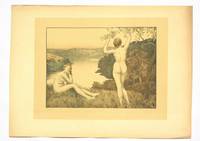
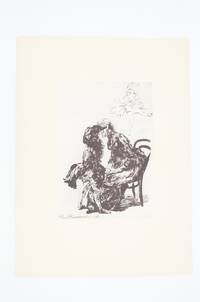
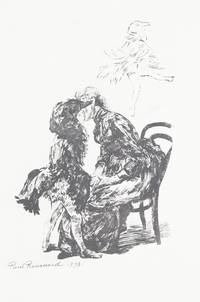
189874581Paris: Imprimerie Champenoispour CH. MassonH. Piazza 1898. Fine. Imprimerie Champenois pour CH. Masson H. Piazza Paris Septembre 22.50 x 31.50 cm une feuille et une serpente Rare original lithograph executed by Paul Renouard for L'Estampe Moderne series number 17 published in September 1898. One of 50 deluxe proofs printed on Japan paper with wide margins laid paper mounted on Japan paper artist's signature in the plate publisher's dry stamp representing a child's profile in the lower margin numbered stamp of the deluxe printing on the reverse; engraving preceded by a tissue guard inscribed with the artist's name the title and a text extract. Lithograph inspired by an extract from La Danse et les Ballets by J. Reading reproduced on the print's tissue guard. Magnificent French monthly publication edited between May 1897 and April 1899 L'Estampe moderne consists of original chromolithographs which unlike other magazines such as Les Maîtres de l'Affiche and as stipulated on the tissue guards were created specifically by each artist for the magazine. Thus 100 prints appeared in total covering the major artistic movements of the late 19th century: Symbolism Art Nouveau Pre-Raphaelites Orientalists and Belle Époque. Each delivery of four prints was issued in 2000 copies sold for 3.50F and 100 on Japan paper offered at 10F. Henri Piazza also planned a confidential deluxe printing: 50 copies on Japan paper with wide margins and 50 in black on China paper at the considerable price of 30F. This print of handsome format is superbly printed on the most prestigious of papers: Japan paper. Thick silky satiny and pearlescent it contributes to making each page a complete work in itself. Its quality of ink absorption and its affinity with colors also make it the ideal support for these very beautiful lithographs. The interest of French collectors in artistic posters intensified at the beginning of the 1890s. Octave Uzanne to describe this fever invented the term ""affichomanie."" The poster originally popular and posted in the streets of the capital then became an art object and its ephemeral support became precious and destined for preservation. Piazza decided to remove the poster from its advertising vocation and elevate it to the rank of a complete work of art on the same level as the deluxe illustrated book. He thus composed a prestigious collection of entirely original works by the most prominent European artists of the moment: Georges de Feure Eugène Grasset Henri Detouche Emile Berchmans Louis Rhead Gaston de Latenay Lucien Lévy-Dhurmer Gustave-Max Stevens Charles Doudelet Hans Christiansen Henri Fantin-Latour Steinlen Ibels Engels Willette Henri Meunier Evenepoël Bellery-Desfontaines Charles Léandre etc. A handsome copy. Imprimerie Champenoispour CH. MassonH. Piazza unknown
189874582Paris: Imprimerie Champenoispour CH. MassonH. Piazza 1898. Fine. Imprimerie Champenois pour CH. Masson H. Piazza Paris Septembre 1898 22.50 x 31.50 cm une feuille Rare original lithograph executed by Paul Renouard for L'Estampe Moderne series number 17 published in September 1898. One of 50 deluxe proofs printed on China paper with wide margins artist's signature in the plate publisher's dry stamp representing a child's profile in the lower margin mounted on a sheet of laid paper with the numbered stamp of the deluxe printing on the reverse pale marginal foxing. Lithograph inspired by an extract from La Danse et les Ballets by J. Reading. Magnificent French monthly publication edited between May 1897 and April 1899 L'Estampe moderne consists of original chromolithographs which unlike other magazines such as Les Maîtres de l'Affiche and as stipulated on the tissue guards were created specifically by each artist for the magazine. Thus 100 prints appeared in total covering the major artistic movements of the late 19th century: Symbolism Art Nouveau Pre-Raphaelites Orientalists and Belle Époque. Each delivery of four prints was issued in 2000 copies sold for 3.50F and 100 on Japan paper offered at 10F. Henri Piazza also planned a confidential deluxe printing: 50 copies on Japan paper with wide margins and 50 in black on China paper at the considerable price of 30F. This print of handsome format is superbly printed on one of the most prestigious papers: China paper. ""Despite all its qualities China paper too inconsistent owes its reputation not to its own beauty but to its particular affinities with printing ink. Its texture smooth and soft at once is more apt than any other to receive a beautiful printing. This property makes China paper sought after for printing engravings."" Anatole France. The interest of French collectors in artistic posters intensified at the beginning of the 1890s. Octave Uzanne to describe this fever invented the term ""affichomanie."" The poster originally popular and posted in the streets of the capital then became an art object and its ephemeral support became precious and destined for preservation. Piazza decided to remove the poster from its advertising vocation and elevate it to the rank of a complete work of art on the same level as the deluxe illustrated book. He thus composed a prestigious collection of entirely original works by the most prominent European artists of the moment: Georges de Feure Eugène Grasset Henri Detouche Emile Berchmans Louis Rhead Gaston de Latenay Lucien Lévy-Dhurmer Gustave-Max Stevens Charles Doudelet Hans Christiansen Henri Fantin-Latour Steinlen Ibels Engels Willette Henri Meunier Evenepoël Bellery-Desfontaines Charles Léandre etc. A handsome copy. Imprimerie Champenoispour CH. MassonH. Piazza unknown
191073656s. l. 1910. Fine. s. l. s. d. 20.70 x 10.60 cm une feuille Autograph note signed by Sacha Guitry to the actor Louis Bouchené known as Baron fils. 7 lines in blue ink on ""Basseau Strong"" watermarked paper. ""O Grand Baron. Je vous dédie en témoignage de reconnaissance cette bouffonnerie dont vous avez incarné le rôle principal avec ce naturel incomparable que l'on a pris souvent pour du talent et qui n'est que du génie comique"". ""O Great Baron. I dedicate to you in token of gratitude this buffoonery in which you embodied the leading role with that incomparable naturalness which has often been mistaken for talent and which is nothing but comic genius"" The actor Baron fils embodied numerous roles in Sacha Guitry's plays notably La Prise de Berg-op-Zoom La Pèlerine écossaise L'Illusionniste Deburau Le Mari la Femme et l'Amant Nono and Faisons un rêve. unknown