Renee VIVIENBiblio.com
48 402 résultats
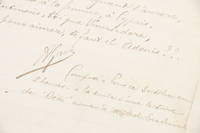
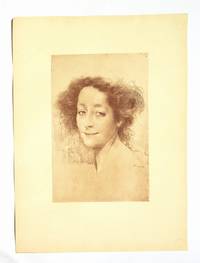
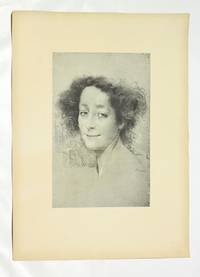
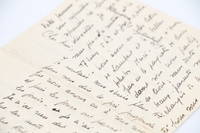
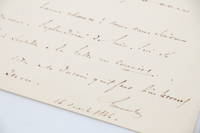
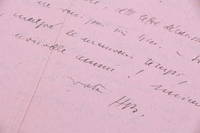
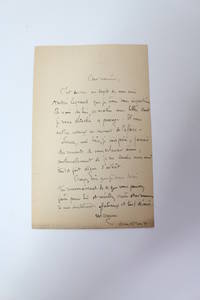
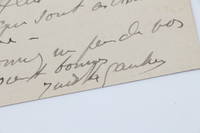
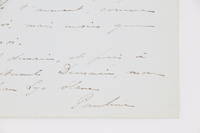
190078919s. l. Paris 1900. Fine. s. l. Paris s. d. ca. 1900 12.30 x 16.50 cm 4 pages sur un double feuillet Autograph letter signed ""Pauline"" by Renée Vivien addressed to Natalie Clifford Barney and written in black ink on a double sheet with the poetess's silver monogram letterhead. Very beautiful and poetic love letter from the Muse of violets languishing for her ""dear white Lily"": ""Je n'ai pas pu te demander cet après-midi si je te verrais demain mon doux Avril mais tu as bien compris n'est-ce pas qu'il me serait aussi impossible de vivre un jour sans toi que de me priver des lumières du soleil ou des fleurs. . Avril mon doux petit Avril chaque fois que tu t'en vas tu emportes un peu de mon cur qui ne peut se détacher de toi et te suit tristement. Tu es pour moi la poésie la consolation et le rêve. Tu mets de la beauté dans ma vie et dans mon âme - quand je me réveille chaque jour et je pense à toi c'est la perpétuelle éclosion de quelque miraculeuse amour. Je vis dans un conte de fées un pays où tout est bleu et d'où la tristesse a disparu. Pense à moi ce soir avant d'aller rêver dans l'au-delà et le lointain du sommeil."" ""I could not ask you this afternoon if I would see you tomorrow my sweet April but you understood didn't you that it would be as impossible for me to live a day without you as to deprive myself of light sun or flowers. . April my sweet little April each time you leave you take with you a piece of my heart which cannot detach itself from you and follows you sadly. You are for me poetry consolation and dream. You bring beauty into my life and into my soul - when I wake each day and think of you it is the perpetual blossoming of some miraculous love. I live in a fairy tale a country where everything is blue and from which sadness has disappeared. Think of me tonight before going to dream in the beyond and the distance of sleep."" The letter then takes on a more sensual tone: ""J'aime tes cheveux blonds. Je leur envoie un long baiser. Les lys que j'ai dans ma chambre sont tristes parce que tu n'es plus là. Ils t'envoient leur âme dans un parfum. Ils t'aiment comme moi ; mais moins que moi."" ""I love your blonde hair. I send them a long kiss. The lilies I have in my room are sad because you are no longer there. They send you their soul in a fragrance. They love you like me; but less than me."" During their first night of love Renée had filled her room with lilies transforming it into a ""chapelle ardente"" N.Clifford Barney Je me souviens. Jean-Paul Goujon notes: ""The choice of lilies was very much in the taste of the period: let us remember Mucha's posters Schwabe's paintings Lorrain's poems. But Vivien who certainly remembered certain pages filled with flowers and perfumes from Zola's La Faute de l'abbé Mouret seems to have wanted to celebrate mystical nuptials coupled with a sort of perfumed death."" It was at the end of 1899 and through Violette Shillito that Renée Vivien - then Pauline Tarn - made the acquaintance of Natalie Clifford Barney ""cette Américaine plus souple qu'une écharpe dont l'étincelant visage brille de cheveux d'or de prunelles bleu de mer de dents implacables"" ""this American more supple than a scarf whose sparkling face shines with golden hair sea-blue eyes implacable teeth"" Colette Claudine à Paris. Natalie who had just lived through a summer idyll with the scandalous Liane de Pougy who initiated her into Sapphism paid only discreet attention to this new acquaintance. Renée however was totally captivated by the young American and would relate this coup de foudre in her autobiographical novel Une Femme m'apparut: ""J'évoquai l'heure déjà lointaine où je la vis pour la première fois et le frisson qui me parcourut lorsque mes yeux rencontrèrent ses yeux d'acier mortel ses yeux aigus et bleus comme une lame. J'eus l'obscur prescience que cette femme m'intimait l'ordre du destin que son visage était le visage redouté de mon avenir. Je sentis p unknown
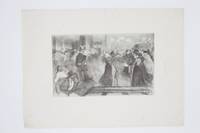
189874859Paris: Imprimerie Champenoispour CH. MassonH. Piazza 1898. Fine. Imprimerie Champenois pour CH. Masson H. Piazza Paris Juin 1898 34.50 x 21 cm une feuille Rare original lithograph executed by Théophile Alexandre Steinlen for L'Estampe Moderne series number 14 published in June 1898. One of 50 deluxe proofs printed on China paper with wide margins artist's signature and date in the plate publisher's dry stamp depicting a child's profile in the lower margin mounted on a sheet of laid paper with the numbered stamp of the deluxe printing on the verso some foxing. Lithograph inspired by an excerpt from Germinie Lacerteux by the Goncourts. Magnificent French monthly publication edited between May 1897 and April 1899 L'Estampe moderne consists of unpublished chromolithographs which unlike other magazines such as Les Maîtres de l'Affiche and as stipulated on the tissue guards were created specially by each artist for the magazine. Thus 100 prints appear in total covering the major artistic movements of the late nineteenth century: Symbolism Art Nouveau Pre-Raphaelites Orientalists and Belle Epoque. Each delivery of four prints is published in 2000 copies sold for 3.50F and 100 on Japan paper offered at 10F. Henri Piazza also provides a confidential printing of very high luxury: 50 copies on Japan paper with wide margins and 50 in black on China paper at the considerable price of 30F. This print of handsome format is superbly printed on one of the most prestigious papers: China paper. ""Despite all its qualities China paper too inconsistent owes its reputation not to its own beauty but indeed to its particular affinities with printing ink. Its texture smooth and soft together is more apt than any other to receive a fine printing. This property makes China paper sought after for printing engravings."" Anatole France. The interest of French collectors in artistic posters amplifies at the beginning of the 1890s. Octave Uzanne to qualify this fever invents the term ""affichomanie"". The poster originally popular and posted in the streets of the capital then becomes an art object and its ephemeral support becomes precious and devoted to conservation. Piazza decides to remove the poster from its advertising vocation and to elevate it to the rank of a complete work of art on the same level as the luxury illustrated book. He thus composes a prestigious collection of entirely original works by the most prominent European artists of the moment: Georges de Feure Eugène Grasset Henri Detouche Emile Berchmans Louis Rhead Gaston de Latenay Lucien Lévy-Dhurmer Gustave-Max Stevens Charles Doudelet Hans Christiansen Henri Fantin-Latour Steinlen Ibels Engels Willette Henri Meunier Evenepoël Bellery-Desfontaines Charles Léandre etc. Handsome copy. Imprimerie Champenoispour CH. MassonH. Piazza unknown
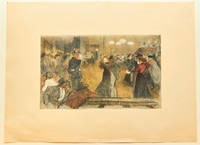
189875859Paris: Imprimerie Champenoispour CH. MassonH. Piazza 1898. Fine. Imprimerie Champenois pour CH. Masson H. Piazza Paris Juin 1898 19.50 x 36 cm une feuille Rare original lithograph executed by Théophile Alexandre Steinlen for L'Estampe Moderne series number 14 published in June 1898. One of 50 deluxe copies printed on Japan paper with wide margins artist's signature and date in the plate publisher's dry stamp depicting a child's profile in the lower margin with the numbered stamp of the deluxe issue on verso some foxing. Lithograph inspired by an extract from Germinie Lacerteux by the Goncourts. A magnificent French monthly publication edited between May 1897 and April 1899 L'Estampe moderne consists of previously unpublished chromolithographs which unlike other magazines such as Les Maîtres de l'Affiche and as stipulated on the tissue guards were created specially by each artist for the magazine. Thus 100 prints appeared in total covering the major artistic movements of the late 19th century: Symbolism Art Nouveau Pre-Raphaelites Orientalists and Belle Epoque. Each delivery of four prints was issued in 2000 copies sold at 3.50F and 100 on Japan paper offered at 10F. Henri Piazza also planned a confidential deluxe issue: 50 copies on Japan paper with wide margins and 50 in black on China paper at the considerable price of 30F. This print of handsome format is superbly printed on one of the most prestigious papers: China paper. ""Despite all its qualities China paper too inconsistent owes its reputation not to its own beauty but to its particular affinities with printing ink. Its texture smooth and soft together is more apt than any other to receive a beautiful impression. This property makes China paper sought after for printing engravings."" Anatole France. French collectors' interest in artistic posters intensified at the beginning of the 1890s. Octave Uzanne to describe this fever invented the term ""affichomania."" The poster originally popular and posted in the streets of the capital then became an art object and its ephemeral medium became precious and devoted to preservation. Piazza decided to remove the poster from its advertising purpose and elevate it to the rank of a work of art in its own right on the same level as the luxury illustrated book. He thus composed a prestigious collection of entirely original works by the most prominent European artists of the moment: Georges de Feure Eugène Grasset Henri Detouche Emile Berchmans Louis Rhead Gaston de Latenay Lucien Lévy-Dhurmer Gustave-Max Stevens Charles Doudelet Hans Christiansen Henri Fantin-Latour Steinlen Ibels Engels Willette Henri Meunier Evenepoël Bellery-Desfontaines Charles Léandre etc. A handsome copy. Imprimerie Champenoispour CH. MassonH. Piazza unknown
189974134Paris: Imprimerie Champenoispour CH. MassonH. Piazza 1899. Fine. Imprimerie Champenois pour CH. Masson H. Piazza Paris Février 1899 19.40 x 33.40 cm une feuille L'Estampe Moderne Imprimerie Champenois pour C H Masson & H Piazza Paris july 1897 subject: 22.5 x 34 cm plate : 40.8 x 55 cm one leaf Rare original lithograph by Edward Burne-Jones for L'Estampe Moderne series no. 3 published in July 1897. One of the 50 grand luxe proofs printed on China paper with wide margins printed in brown ink signed and dated by the artist in the stone. Embossed stamp of the publisher showing a child in profile to lower margin laid down on a leaf of vélin paper with the numbered stamp of the tirage de luxe to verso occasional spotting to margins. A magnificent monthly French publication that appeared between May 1897 and April 1899 L'Estampe moderne comprised unpublished chromolithographs that unlike those in other magazines like Les Maîtres de l'Affiche and as is stipulated on the guard sheets were specially made by each artist for the magazine. There are thus 100 prints that appeared in total covering the major artistic currents of the late 19th Century: Symbolism Art Nouveau the Pre-Raphaelites Orientalists and the Belle Epoque. Each fascicule of four prints was printed in 2000 copies and sold for 3.50F with 100 on Japan paper sold at 10F. Henri Piazza also planned a very luxurious secret printing of 50 copies on Japan paper with wide margins and 50 in black and white on China paper at the considerable price of 30F. This well-sized print is superbly printed on one of the most prestigious of papers: China. ""Despite all its qualities China paper all too inconsistent owes its reputation not to its own beauty but to its particular affinity for printing ink. Its consistency both smooth and soft is more suitable than any other for receiving a good impression. It is this property that makes it sought-after for printing engravings. Anatole France. The interest of French collectors for artistic posters grew from the beginning of the 1890s. Octave Uzanne invented a term for this growing interest: affichomanie or poster mania. The poster originally not rare and posted up in the streets of the capital thus became a work of art and its ephemeral background became precious and essential for conservation. Piazza decided to extract the poster from its advertising role and to elevate it to a form of art similarly to luxury illustrated artists' books. He thus put together a prestigious collection of entirely original works by the most fashionable European artists of the age: Georges de Feure Eugène Grasset Henri Detouche Emile Berchmans Louis Rhead Gaston de Latenay Lucien Lévy-Dhurmer Gustave-Max Stevens Charles Doudelet Hans Christiansen Henri Fantin-Latour Steinlen Ibels Engels Willette Henri Meunier Evenepoël Bellery-Desfontaines Charles Léandre etc. A fine copy in the artist's Art Nouveau style. Imprimerie Champenoispour CH. MassonH. Piazza unknown
190987828s. l.: S. n. 1909. Fine. S. n. s. l. s. d. 1909 21 x 27 cm une page Autograph manuscript of a youthful poem signed by Abel Gance comprising twenty-four stanzas in alexandrines written when he was 20 years old 32 lines written in black ink on a torn sheet from a school notebook. Manuscript note by Abel Gance at the beginning and end of the poem: ""A false idea can have such arguments that reason can only combat them to the detriment of the reasoner's feelings"". Composed in Paris this October 3rd in 2 hours following a reading of Dédé a novel by Essbach"" sic actually Achille Essebac. Fold marks inherent to envelope insertion one black ink deletion in the lower left corner of the sheet. Beautiful poem inspired by Achille Essebac's great homosexual novel: ""Dédé"" published in 1901 by Ambert. ""Beautiful ephebe with matte brow candid pure lover Radiating from his flesh in rosy and blonde clarity An intoxicating network of profound voluptuousness; In your sensual turmoil nothing impure germinates. . Among these seduced eyes drinking from your eyes Have you not noticed dressed in simple serge Haloed in blonde a humble and gentle virgin Who since your beauty no longer gazes at the heavens"" Influenced by John Keats Charles Baudelaire and Arthur Rimbaud Abel Gance then in Brussels pursuing a career in theatre stops his poetic activity judging his production too impersonal and returns disheartened to Paris. S. n. unknown
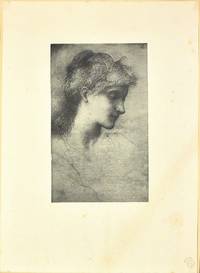
189774009Paris: Imprimerie Champenoispour CH. MassonH. Piazza 1897. Fine. Imprimerie Champenois pour CH. Masson H. Piazza Paris Décembre 1897 22.50 x 34.50 cm une feuille et une serpente Rare original lithograph in sanguine manner executed by Lucien Lévy-Dhurmer for L'Estampe Moderne series number 8 published in December 1897. One of 50 deluxe proofs printed on Japan paper with large margins laid paper mounted on Japan paper artist's signature in the plate publisher's dry stamp representing a child's profile in the lower margin numbered stamp of the deluxe edition on the reverse; engraving preceded by a tissue guard inscribed with the artist's name title and text trace of an angular fold; blank tissue guard. Lithograph inspired by an extract from Bachaumont which is reproduced on the print's tissue guard. Magnificent French monthly publication issued between May 1897 and April 1899 L'Estampe moderne consists of unpublished chromolithographs which unlike other periodicals such as Les Maîtres de l'Affiche and as stipulated on the tissue guards were specially created by each artist for the periodical. Thus 100 prints appeared in total covering the major artistic movements of the late 19th century: Symbolism Art Nouveau Pre-Raphaelites Orientalists and Belle Epoque. Each delivery of four prints was issued in 2000 copies sold at 3.50F and 100 on Japan paper offered at 10F. Henri Piazza also planned a confidential deluxe edition: 50 copies on Japan paper with large margins and 50 in black on China paper at the considerable price of 30F. This print of handsome format is superbly printed on the most prestigious of papers: Japan paper. Thick silky satiny and pearlescent it contributes to making each page a work of art in its own right. Its quality of ink absorption and its affinity with colors also make it the ideal support for these very beautiful lithographs. The interest of French collectors in artistic posters grew at the beginning of the 1890s. Octave Uzanne to describe this fever invented the term ""affichomanie."" The poster originally popular and posted in the streets of the capital then became an art object and its ephemeral support became precious and destined for preservation. Piazza decided to remove the poster from its advertising vocation and elevate it to the rank of a complete work of art on the same level as the luxury illustrated book. He thus composed a prestigious collection of entirely original works by the most prominent European artists of the moment: Georges de Feure Eugène Grasset Henri Detouche Emile Berchmans Louis Rhead Gaston de Latenay Lucien Lévy-Dhurmer Gustave-Max Stevens Charles Doudelet Hans Christiansen Henri Fantin-Latour Steinlen Ibels Engels Willette Henri Meunier Evenepoël Bellery-Desfontaines Charles Léandre etc. Handsome copy. Imprimerie Champenoispour CH. MassonH. Piazza unknown
189774010Paris: Imprimerie Champenoispour CH. MassonH. Piazza 1897. Fine. Imprimerie Champenois pour CH. Masson H. Piazza Paris Décembre 1897 22.50 x 34.50 cm une feuille Rare original lithograph executed by Jacques Wely for L'Estampe Moderne series number 8 published in December 1897. One of 50 deluxe proofs printed on China paper with wide margins laid paper mounted on China artist's signature in the plate publisher's blind stamp representing a child's profile in lower margin mounted on a sheet of vellum paper with numbered stamp of the deluxe edition on verso pale marginal foxing. Magnificent French monthly publication edited between May 1897 and April 1899 L'Estampe moderne consists of original chromolithographs which unlike other magazines such as Les Maîtres de l'Affiche and as stipulated on the tissue guards were created specifically by each artist for the magazine. Thus 100 prints appeared in total covering the major artistic movements of the late 19th century: Symbolism Art Nouveau Pre-Raphaelites Orientalists and Belle Epoque. Each issue of four prints was printed in 2000 copies sold at 3.50F and 100 on Japan paper offered at 10F. Henri Piazza also planned a confidential deluxe edition: 50 copies on Japan paper with wide margins and 50 in black on China paper at the considerable price of 30F. This print of handsome format is superbly printed on one of the most prestigious papers: China. ""Despite all its qualities China paper too insubstantial owes its reputation not to its own beauty but rather to its particular affinities with printing ink. Its texture smooth and soft together is more apt than any other to receive a beautiful impression. This property makes China paper sought after for printing engravings."" ""Malgré toutes ses qualités le papier de Chine trop inconsistant doit sa réputation non pas à sa propre beauté mais bien à ses affinités particulières avec l'encre d'impression. Son tissu lisse et mou tout ensemble est plus apte qu'aucun autre à recevoir un beau tirage. Cette propriété fait rechercher le papier de Chine pour le tirage des gravures."" Anatole France. The interest of French collectors in artistic posters grew in the early 1890s. Octave Uzanne to describe this fever invented the term ""affichomanie."" The poster originally popular and posted in the streets of the capital then became an art object and its ephemeral support became precious and devoted to conservation. Piazza decided to remove the poster from its advertising purpose and elevate it to the rank of a work of art in its own right on the same level as the illustrated luxury book. He thus composed a prestigious collection of entirely original works by the most prominent European artists of the moment: Georges de Feure Eugène Grasset Henri Detouche Emile Berchmans Louis Rhead Gaston de Latenay Lucien Lévy-Dhurmer Gustave-Max Stevens Charles Doudelet Hans Christiansen Henri Fantin-Latour Steinlen Ibels Engels Willette Henri Meunier Evenepoël Bellery-Desfontaines Charles Léandre etc. Handsome copy. Imprimerie Champenoispour CH. MassonH. Piazza hardcover
192984821Angers 1929. Fine. Angers 25 Septembre 1929 13.50 x 20.50 cm quatre pages sur un feuillet double Autograph letter dated and signed by Renée Guilloux about friendship that transcends and sublimes human relationships 80 lines written in black ink on four pages. Folds inherent to mailing small tears at foot without any damage to the text. For Renée Guilloux the friendship she feels for her correspondent dominates distance and silence: "". est-ce que les mots ont su dire la joie des coeurs."" ""have words been able to express the joy of hearts."" and momentary disagreements: ""Mais tous ces mois toutes ces années nous pesaient douloureusement. J'avais l'impression que vous vous étiez mis d'un seul coup à parler très vite avec beaucoup d'agitation dans une langue qui m'était étrangère. mais je savais que ce n'était qu'un moment et qu'après nous reprendrions notre conversation rentable."" ""But all these months all these years weighed on us painfully. I had the impression that you had suddenly started speaking very quickly with great agitation in a language that was foreign to me. but I knew it was only a moment and that afterwards we would resume our profitable conversation."" Despite life's vicissitudes Louis Guilloux and his wife have always shown confidence in the brotherhood that unites them above all: ""J'attendais votre retour dans la certitude dans la paix et bien qu'il n'y ait pas de paroles écrites entre nous votre amitié m'apportait toujours sa même force et sa même joie."" ""I awaited your return with certainty in peace and although there were no written words between us your friendship always brought me the same strength and the same joy."" and in the serenity acquired after so many ordeals endured: ""Vous nous avez trouvés transformés dites-vous grandis. cette paix c'est notre conquête la plus belle. après les inquiétudes et les souffrances."" ""You found us transformed you say grown. this peace is our most beautiful conquest. after the anxieties and sufferings."" Renée Guilloux praises this radiating peace that she shares with her friend: ""Cette paix qui est en nous elle est aussi vôtre cher ami et vous avez grandi comme nous. je pense au rêve de Don Quichotte aux paroles qu'il echange avec Dulcinée. Elles sont pleines de cette lumière."" ""This peace that is in us it is also yours dear friend and you have grown like us. I think of Don Quixote's dream of the words he exchanges with Dulcinea. They are full of this light."" Finally she is reassured by her husband's health which is improving and which allows him to return to his writing work. unknown
184684820Mâcon 1846. Fine. Mâcon 26 Décembre 1846 13.50 x 20.50 cm une page sur un feuillet Autograph letter dated and signed by Alphonse de Lamartine; one page with his monogram blind-stamped in the upper left corner and written in black ink on one leaf 15 lines. Folds inherent to mailing. In this letter Lamartine shows his happiness to collaborate with their mutual friend's journal and confirms a financial agreement. unknown
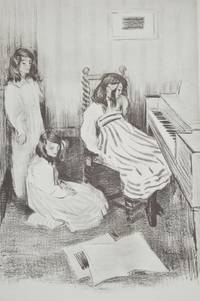
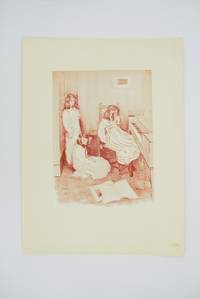
189874597Paris: Imprimerie Champenoispour CH. MassonH. Piazza 1898. Fine. Imprimerie Champenois pour CH. Masson H. Piazza Paris Octobre 1898 25 x 35 cm une feuille Rare original lithograph executed by Alfredo Müller for L'Estampe Moderne series number 18 published in October 1898. One of 50 deluxe proofs printed on China paper with wide margins artist's signature in the plate publisher's dry stamp depicting a child's profile in the lower margin mounted on a sheet of laid paper with the numbered stamp of the deluxe printing on the verso pale marginal foxing. Lithograph inspired by an extract from Nos petites filles by Alfred Le Roux. Magnificent French monthly publication edited between May 1897 and April 1899 L'Estampe moderne consists of original chromolithographs which unlike other magazines such as Les Maîtres de l'Affiche and as stipulated on the tissue guards were created specially by each artist for the magazine. Thus 100 prints appeared in total covering the major artistic movements of the late 19th century: Symbolism Art Nouveau Pre-Raphaelites Orientalists and Belle Époque. Each installment of four prints was issued in 2000 copies sold at 3.50F and 100 on Japan paper offered at 10F. Henri Piazza also planned a confidential deluxe printing: 50 copies on Japan paper with wide margins and 50 in black on China paper at the considerable price of 30F. This print in a handsome format is superbly printed on one of the most prestigious papers: China paper. ""Despite all its qualities China paper too inconsistent owes its reputation not to its own beauty but to its particular affinities with printing ink. Its texture smooth and soft at once is more apt than any other to receive a beautiful printing. This property makes China paper sought after for printing engravings."" Anatole France. French collectors' interest in artistic posters intensified in the early 1890s. Octave Uzanne to describe this fever invented the term ""postomania."" The poster originally popular and plastered on the streets of the capital then became an art object and its ephemeral medium became precious and destined for preservation. Piazza decided to remove the poster from its advertising purpose and elevate it to the rank of a work of art in its own right on the same level as the deluxe illustrated book. He thus composed a prestigious collection of entirely original works by the most prominent European artists of the moment: Georges de Feure Eugène Grasset Henri Detouche Emile Berchmans Louis Rhead Gaston de Latenay Lucien Lévy-Dhurmer Gustave-Max Stevens Charles Doudelet Hans Christiansen Henri Fantin-Latour Steinlen Ibels Engels Willette Henri Meunier Evenepoël Bellery-Desfontaines Charles Léandre etc. Handsome copy. Imprimerie Champenoispour CH. MassonH. Piazza unknown
189874596Paris: Imprimerie Champenoispour CH. MassonH. Piazza 1898. Fine. Imprimerie Champenois pour CH. Masson H. Piazza Paris Octobre 1898 25 x 35 cm une feuille et une serpente Rare original lithograph in sanguine manner executed by Alfredo Müller for L'Estampe Moderne series number 18 published in October 1898. One of 50 deluxe proofs printed on Japan paper with wide margins laid paper mounted on Japan paper artist's signature in the plate publisher's dry stamp depicting a child's profile in the lower margin numbered stamp of the deluxe printing on the verso; print preceded by a tissue guard captioned with the artist's name title and an extract from a work. Lithograph inspired by an extract from Nos petites filles by Alfred Le Roux reproduced on the print's tissue guard. Magnificent French monthly publication edited between May 1897 and April 1899 L'Estampe moderne consists of original chromolithographs which unlike other magazines such as Les Maîtres de l'Affiche and as stipulated on the tissue guards were created specially by each artist for the magazine. Thus 100 prints appeared in total covering the major artistic movements of the late 19th century: Symbolism Art Nouveau Pre-Raphaelites Orientalists and Belle Époque. Each installment of four prints was issued in 2000 copies sold at 3.50F and 100 on Japan paper offered at 10F. Henri Piazza also planned a confidential deluxe printing: 50 copies on Japan paper with wide margins and 50 in black on China paper at the considerable price of 30F. This print in a handsome format is superbly printed on the most prestigious of papers: Japan paper. Thick silky satiny and pearlescent it contributes to making each page a work in its own right. Its quality of ink absorption and its affinity with colors also make it the ideal support for these very beautiful lithographs. French collectors' interest in artistic posters intensified in the early 1890s. Octave Uzanne to describe this fever invented the term ""postomania."" The poster originally popular and plastered on the streets of the capital then became an art object and its ephemeral medium became precious and destined for preservation. Piazza decided to remove the poster from its advertising purpose and elevate it to the rank of a work of art in its own right on the same level as the deluxe illustrated book. He thus composed a prestigious collection of entirely original works by the most prominent European artists of the moment: Georges de Feure Eugène Grasset Henri Detouche Emile Berchmans Louis Rhead Gaston de Latenay Lucien Lévy-Dhurmer Gustave-Max Stevens Charles Doudelet Hans Christiansen Henri Fantin-Latour Steinlen Ibels Engels Willette Henri Meunier Evenepoël Bellery-Desfontaines Charles Léandre etc. Handsome copy. Imprimerie Champenoispour CH. MassonH. Piazza unknown
189974625Paris: Imprimerie Champenoispour CH. MassonH. Piazza 1899. Fine. Imprimerie Champenois pour CH. Masson H. Piazza Paris Janvier 1899 24.50 x 35.50 cm une feuille et une serpente Rare original color lithograph executed by Firmin Bouisset for L'Estampe Moderne series number 21 published in January 1899. One of 50 deluxe proofs printed on Japan paper with wide margins artist's signature in the plate publisher's dry stamp representing a child's profile in the lower margin numbered stamp of the deluxe printing on the verso; engraving preceded by a tissue guard captioned with the artist's name the title and an extract from the work. Lithograph inspired by an extract from L'or des couchants by Silvestre Armand reproduced on the tissue guard of the print. Magnificent French monthly publication edited between May 1897 and April 1899 L'Estampe moderne consists of unpublished chromolithographs which unlike other magazines such as Les Maîtres de l'Affiche and as stipulated on the tissue guards were created specially by each artist for the magazine. Thus 100 prints appeared in total covering the major artistic movements of the late 19th century: Symbolism Art Nouveau Pre-Raphaelites Orientalists and Belle Époque. Each delivery of four prints was printed in 2000 copies sold at 3.50F and 100 on Japan paper offered at 10F. Henri Piazza also planned a confidential deluxe printing: 50 copies on Japan paper with wide margins and 50 in black on China paper at the considerable price of 30F. This print of beautiful format is superbly printed on the most prestigious of papers: Japan paper. Thick silky satiny and pearlescent it contributes to making each page a complete work in itself. Its quality of ink absorption and its affinity with colors also make it the ideal support for these very beautiful lithographs. The interest of French collectors in artistic posters grew in the early 1890s. Octave Uzanne to describe this fever invented the term ""affichomanie"". The poster originally popular and plastered in the streets of the capital then became an art object and its ephemeral medium became precious and destined for preservation. Piazza decided to remove the poster from its advertising vocation and elevate it to the rank of a complete work of art on the same level as the luxury illustrated book. He thus composed a prestigious collection of entirely original works by the most prominent European artists of the moment: Georges de Feure Eugène Grasset Henri Detouche Emile Berchmans Louis Rhead Gaston de Latenay Lucien Lévy-Dhurmer Gustave-Max Stevens Charles Doudelet Hans Christiansen Henri Fantin-Latour Steinlen Ibels Engels Willette Henri Meunier Evenepoël Bellery-Desfontaines Charles Léandre etc. Handsome copy. Imprimerie Champenoispour CH. MassonH. Piazza unknown
189974626Paris: Imprimerie Champenoispour CH. MassonH. Piazza 1899. Fine. Imprimerie Champenois pour CH. Masson H. Piazza Paris Janvier 1899 24.50 x 35.50 cm une feuille Rare original lithograph executed by Firmin Bouisset for L'Estampe Moderne series number 21 published in January 1899. One of 50 deluxe proofs printed on China paper with wide margins artist's signature in the plate publisher's dry stamp representing a child's profile in the lower margin mounted on a sheet of laid paper with the numbered stamp of the deluxe printing on the verso some foxing. Lithograph inspired by an extract from L'or des couchants by Silvestre Armand. Magnificent French monthly publication edited between May 1897 and April 1899 L'Estampe moderne consists of unpublished chromolithographs which unlike other magazines such as Les Maîtres de l'Affiche and as stipulated on the tissue guards were created specially by each artist for the magazine. Thus 100 prints appeared in total covering the major artistic movements of the late 19th century: Symbolism Art Nouveau Pre-Raphaelites Orientalists and Belle Époque. Each delivery of four prints was printed in 2000 copies sold at 3.50F and 100 on Japan paper offered at 10F. Henri Piazza also planned a confidential deluxe printing: 50 copies on Japan paper with wide margins and 50 in black on China paper at the considerable price of 30F. This print of beautiful format is superbly printed on one of the most prestigious papers: China paper. ""Despite all its qualities China paper too inconsistent owes its reputation not to its own beauty but to its particular affinities with printing ink. Its texture smooth and soft together is more apt than any other to receive a beautiful printing. This property makes China paper sought after for printing engravings."" Anatole France. The interest of French collectors in artistic posters grew in the early 1890s. Octave Uzanne to describe this fever invented the term ""affichomanie"". The poster originally popular and plastered in the streets of the capital then became an art object and its ephemeral medium became precious and destined for preservation. Piazza decided to remove the poster from its advertising vocation and elevate it to the rank of a complete work of art on the same level as the luxury illustrated book. He thus composed a prestigious collection of entirely original works by the most prominent European artists of the moment: Georges de Feure Eugène Grasset Henri Detouche Emile Berchmans Louis Rhead Gaston de Latenay Lucien Lévy-Dhurmer Gustave-Max Stevens Charles Doudelet Hans Christiansen Henri Fantin-Latour Steinlen Ibels Engels Willette Henri Meunier Evenepoël Bellery-Desfontaines Charles Léandre etc. Handsome copy. Imprimerie Champenoispour CH. MassonH. Piazza unknown
195084621Paris 1950. Fine. ""Bref je suis terrifié ne sachant pas que faire pour survivre"" ""In short I am terrified not knowing what to do to survive"" Paris 31 décembre 1950 20.80 x 27 cm deux pages sur deux feuillets enveloppe jointe Autograph letter by Hans Bellmer signed ""H.B"" addressed to Claude Richard dated by the author December 31 1950. Two pages in black ink on two sheets of fine pink paper with autograph envelope enclosed. Discrete fold marks inherent to the sending of the letter. Exceptional lament of a cursed artist sacrificing his life to his art. Endangering his health Bellmer carefully supervises the printing of the first retrospective catalogue of his works Vingt-cinq reproductions of which he had received the first copies ""le soir de la Noël"" ""on Christmas evening"". He addresses his Bordeaux collector-patron Claude Richard from his modest Latin Quarter studio which had seen the birth a year earlier of his masterpiece Les Jeux de la Poupée. Bellmer takes up his pen and transcribes his malaise onto these two old rose pages similar to the color covering some of his Doll photographs as well as to that of the band surrounding the collection of this famous suite of photographs. The words themselves finely chiseled with pen strokes disarticulate in the image of his works; the letters come undone and reveal the extreme distress of the artist at the end of his strength and resources: ""Excusez je vous prie cette lettre décousue mais je ne vais pas très bien"" ""Please excuse this rambling letter but I am not very well"" . ""ma vie est redevenue très très dure"" ""my life has become very very hard again"" . ""vous ai-je remercié des 16000 que vous avez eu l'amitié de m'envoyer il y a deux semaines environ - Cela m'a permis d'activer la fabrication du recueil une fois de plus"" ""did I thank you for the 16000 that you were kind enough to send me about two weeks ago - This allowed me to accelerate the production of the collection once again"" This concerns a work laid out by his own hand bringing together twenty-five of his works accompanied by texts by Nora Mitrani Gisèle Prassinos Jehan Mayoux Jean Brun André Pieyre de Mandiargues Jacques de Caso and Yves Bonnefoy. Bellmer had received the first copies a few days earlier: ""J'y avais mis un effort affreux ; depuis trois semaines je traîne une grippe qui par le froid glacial de la rue Mouffetard et de l'atelier d'impression chez Larrive a pris depuis 10 jours un tour dangereux. Pour l'instant je ne tiens plus debout mais pour ne pas me déclarer vaincu je suis obligé de courrir sans cesse pour trouver le minimum d'argent nécessaire pour ne pas mourir de faim"" ""I had put a terrible effort into it; for three weeks I have been dragging around the flu which due to the freezing cold of rue Mouffetard and the printing workshop at Larrive's has taken a dangerous turn for the past 10 days. At the moment I can no longer stand up but so as not to declare myself defeated I am obliged to run constantly to find the minimum amount of money necessary so as not to die of hunger"". The manuscript also contains a beautiful passage on the artist's relationship with his patron and also mentions Cocteau as well as his partnership with the Hugo Gallery in New York directed since 1944 by former dancer Alexandre Jolas: 1907-1987: ""Quant à l'encadrement de mon tableau c.à.d le vôtre je m'en occuperai avec plaisir car c'est très important pour la mise en valeur de la chose. Je connais bien un des meilleurs encadreurs il a encadré les choses que Cocteau et Morihien m'avaient achetées il y a quelques années que la Hugo-gallery m'a pris cette année. Il ne doit peut-être trop bien marché sic. Dès que je trouverai deux tickets de métro je vous dirai le prix qu'il demanderait. Ces jours-ci j'ai pu récupérer un expl. de tête de mon Album de Revel sous emboîtage avec un dessin original. Le prix est de 6000. Si vous le voulez je peux vous l'envoyer de unknown
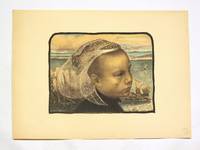
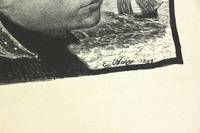
189773953Paris: Imprimerie Champenoispour CH. MassonH. Piazza 1897. Fine. Imprimerie Champenois pour CH. Masson H. Piazza Paris Août 1897 33 x 26 cm une feuille et une serpente Rare original color lithograph executed by Emile Auguste Wéry for L'Estampe Moderne series number 4 published in August 1897. One of 50 deluxe proofs printed on Japan paper with wide margins artist's signature and date in the plate publisher's dry stamp representing a child's profile in the lower margin numbered stamp of the deluxe edition on the reverse; engraving preceded by a tissue guard inscribed with the artist's name title and presentation text; and another blank tissue guard. Magnificent French monthly publication edited between May 1897 and April 1899 L'Estampe moderne consists of original chromolithographs which unlike other reviews such as Les Maîtres de l'Affiche and as stipulated on the tissue guards were created specially by each artist for the review. Thus 100 prints appear in total covering the major artistic movements of the end of the 19th century: Symbolism Art Nouveau Pre-Raphaelites Orientalists and Belle Époque. Each delivery of four prints is issued in 2000 copies sold for 3.50F and 100 on Japan paper offered at 10F. Henri Piazza also provides for a confidential deluxe printing: 50 copies on Japan paper with wide margins and 50 in black on China paper at the considerable price of 30F. This print of handsome format is superbly printed in colors on the most prestigious of papers: Japan. Thick silky satiny and pearlescent it contributes to making each page a work in its own right. Its quality of ink absorption and its affinity with colors also make it the ideal support for these very beautiful lithographs. The interest of French collectors in artistic posters intensifies at the beginning of the 1890s. Octave Uzanne to qualify this fever invents the term ""affichomanie"". The poster originally popular and plastered in the streets of the capital then becomes an art object and its ephemeral support becomes precious and destined for preservation. Piazza decides to remove the poster from its advertising vocation and elevate it to the rank of a work of art in its own right on the same level as the luxury illustrated book. He thus composes a prestigious collection of entirely original works by the most prominent European artists of the moment: Georges de Feure Eugène Grasset Henri Detouche Emile Berchmans Louis Rhead Gaston de Latenay Lucien Lévy-Dhurmer Gustave-Max Stevens Charles Doudelet Hans Christiansen Henri Fantin-Latour Steinlen Ibels Engels Willette Henri Meunier Evenepoël Bellery-Desfontaines Charles Léandre etc. Handsome copy. Imprimerie Champenoispour CH. MassonH. Piazza unknown
189773954Paris: Imprimerie Champenoispour CH. MassonH. Piazza 1897. Fine. Imprimerie Champenois pour CH. Masson H. Piazza Paris Août 1897 33 x 26 cm une feuille Rare original lithograph executed by Emile Auguste Wéry for L'Estampe Moderne series number 4 published in August 1897. One of 50 deluxe proofs printed on China with wide margins artist's signature and date in the plate publisher's dry stamp representing a child's profile in lower margin mounted on a sheet of laid paper with on the verso the numbered stamp of the deluxe edition pale marginal foxing and a very slight lower marginal tear. Magnificent French monthly publication issued between May 1897 and April 1899 L'Estampe moderne comprises unpublished chromolithographs which unlike other magazines such as Les Maîtres de l'Affiche and as stipulated on the tissue guards were created specially by each artist for the magazine. Thus 100 prints appeared in total covering the major artistic movements of the late nineteenth century: Symbolism Art Nouveau Pre-Raphaelites Orientalists and Belle Epoque. Each delivery of four prints was issued in 2000 copies sold for 3.50F and 100 on Japan paper offered at 10F. Henri Piazza also planned a confidential deluxe printing: 50 copies on Japan with wide margins and 50 in black on China at the considerable price of 30F. This print of fine format is superbly printed on one of the most prestigious papers: China. ""Malgré toutes ses qualités le papier de Chine trop inconsistant doit sa réputation non pas à sa propre beauté mais bien à ses affinités particulières avec l'encre d'impression. Son tissu lisse et mou tout ensemble est plus apte qu'aucun autre à recevoir un beau tirage. Cette propriété fait rechercher le papier de Chine pour le tirage des gravures."" ""Despite all its qualities China paper too inconsistent owes its reputation not to its own beauty but to its particular affinities with printing ink. Its texture smooth and soft together is more apt than any other to receive a fine printing. This property makes China paper sought after for printing engravings."" Anatole France. French collectors' interest in artistic posters grew in the early 1890s. Octave Uzanne to describe this fever invented the term ""affichomanie"". The poster originally popular and plastered on the streets of the capital then became an art object and its ephemeral medium became precious and destined for preservation. Piazza decided to remove the poster from its advertising purpose and elevate it to the rank of a complete work of art on the same level as the deluxe illustrated book. He thus composed a prestigious collection of entirely original works by the most prominent European artists of the moment: Georges de Feure Eugène Grasset Henri Detouche Emile Berchmans Louis Rhead Gaston de Latenay Lucien Lévy-Dhurmer Gustave-Max Stevens Charles Doudelet Hans Christiansen Henri Fantin-Latour Steinlen Ibels Engels Willette Henri Meunier Evenepoël Bellery-Desfontaines Charles Léandre etc. Fine copy. Imprimerie Champenoispour CH. MassonH. Piazza unknown
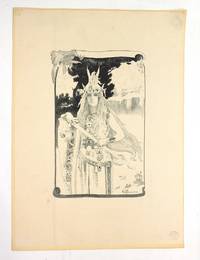
189874392Paris: Imprimerie Champenoispour CH. MassonH. Piazza 1898. Fine. Imprimerie Champenois pour CH. Masson H. Piazza Paris Mai 1898 21 x 34 cm une feuille Rare original lithograph executed by Gaston Bussière for L'Estampe Moderne series number 13 published in May 1898. One of 50 deluxe proofs printed on China paper with wide margins artist's signature in the plate publisher's dry stamp representing a child's profile in the lower margin mounted on a sheet of laid paper with the numbered stamp of the deluxe printing on the verso pale marginal foxing. Lithograph inspired by some verses entitled La Valkyrie extracted from L'Anneau du Nibelung by Richard Wagner translated by A. Ernst. Magnificent French monthly publication edited between May 1897 and April 1899 L'Estampe moderne consists of original chromolithographs which unlike other magazines such as Les Maîtres de l'Affiche and as stipulated on the tissue guards were created specially by each artist for the magazine. Thus 100 prints appeared in total covering the major artistic movements of the late 19th century: Symbolism Art Nouveau Pre-Raphaelites Orientalists and Belle Epoque. Each delivery of four prints was issued in 2000 copies sold for 3.50F and 100 on Japan paper offered at 10F. Henri Piazza also planned a confidential deluxe printing: 50 copies on Japan paper with wide margins and 50 in black on China paper at the considerable price of 30F. This print of handsome format is superbly printed on one of the most prestigious papers: China paper. ""Despite all its qualities China paper too insubstantial owes its reputation not to its own beauty but to its particular affinities with printing ink. Its texture smooth and soft at the same time is more apt than any other to receive a fine printing. This property makes China paper sought after for printing engravings."" Anatole France. The interest of French collectors in artistic posters amplified at the beginning of the 1890s. Octave Uzanne to describe this fever invented the term ""affichomanie."" The poster originally popular and posted in the streets of the capital then became an art object and its ephemeral medium became precious and destined for preservation. Piazza decided to remove the poster from its advertising vocation and elevate it to the rank of a complete work of art on the same level as the deluxe illustrated book. He thus composed a prestigious collection of entirely original works by the most prominent European artists of the moment: Georges de Feure Eugène Grasset Henri Detouche Emile Berchmans Louis Rhead Gaston de Latenay Lucien Lévy-Dhurmer Gustave-Max Stevens Charles Doudelet Hans Christiansen Henri Fantin-Latour Steinlen Ibels Engels Willette Henri Meunier Evenepoël Bellery-Desfontaines Charles Léandre etc. Handsome copy in the Art Nouveau style. Imprimerie Champenoispour CH. MassonH. Piazza unknown
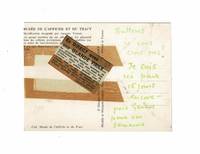
197173355Sommières 1971. Fine. Sommières 12-02-1971 10.50 x 14.50 cm une carte postale et enveloppe Autograph postcard from Lawrence Durrell addressed to Jani Brun written in red felt-tip pen on the reverse of a reproduction of a small poster Mystification conceived by Jacques Yonnet "". Keep your head above water - Prolonged immersion of nose and mouth can cause fatal asphyxia"" with attached press clipping ""direct with a virile gland."" envelope included. The writer informs his young Montpellier lover about his upcoming travels: ""Buttons. Je ne vous crois pas ! je suis ici pour 15 jours encore - puis Genève pour une semaine"" ""Buttons. I don't believe you! I'm here for another 15 days - then Geneva for a week"". After many years spent in Greece Egypt and Rhodes the traveling writer Lawrence Durrell was forced to flee Cyprus following popular uprisings that led the island to independence from the British Crown. Rich only with a shirt and a typewriter but crowned with the success of his novel Bitter Lemons of Cyprus he arrived in France in 1956 and settled in the Languedoc village of Sommières. In the ""Tartès house"" his grand residence surrounded by trees he wrote the second part of his work his monumental Avignon Quintet devoted himself to painting and received his illustrious friends including the couple Henry Miller and Anaïs Nin violinist Yehudi Menuhin London publisher Alan G. Thomas and his two daughters Penelope and Sappho. Among the olive trees and under the Mediterranean sun he met in the mid-1960s the young and sparkling ""Jany"" Janine Brun a woman from Montpellier in her thirties with devastating beauty who worked at the Antiquities department of the Sorbonne in Paris. She was nicknamed ""Buttons"" in memory of their first meeting where the young woman wore a dress covered with buttons. Henry Miller also fell under the charm of ""Buttons"" praising her beauty and eternal youth in exceptional letters that remain unpublished. The three companions spent memorable Parisian evenings of which we retain precious autograph traces through their epistolary exchanges. Recommended by Durrell she made numerous trips particularly to England from where she received extensive correspondence from the writer as well as original works of art signed with his artist pseudonym Oscar Epfs. unknown
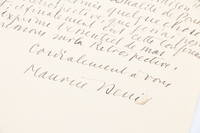
193886601s. l.: S. n. 1938. Fine. S. n. s. l. 6 Février 1938 21.50 x 27.50 cm une page Autograph letter dated and signed by Maurice Denis 20 lines in black ink regarding an article he must provide to a magazine. Folding trace inherent to envelope insertion. The painter profusely thanks his correspondent for the interest shown to him: ""Je vous remercie de suivre avec bienveillance toutes mes ""productions"". Vous accepterez celle-ci - d'ailleurs promise à la vie depuis trop longptemps - et vous lui ferez un sort toujours dans le même sentiment amical."" I thank you for following all my ""productions"" with such kindness. You will accept this one - which has been promised to life for far too long - and you will give it its due always in the same friendly spirit. Maurice Denis explains the content of his article: ""C'est un fragment - ou plutôt deux fragments d'une conférence que j'ai donnée à cercle catholique d'étudiants ""La maison"" rue du Montparnasse. Actualité de Poussin : je vous avais promis quelque chose sur la Rétrospective que je n'ai point fait et finalement c'est cette conférence qui exprime l'essentiel de nos impressions sur la rétrospective."" It is a fragment - or rather two fragments from a lecture I gave to the Catholic students' circle ""La maison"" on rue du Montparnasse. The relevance of Poussin: I had promised you something on the Retrospective which I did not do and finally it is this lecture that expresses the essence of our impressions on the retrospective. S. n. unknown
1890715551890. Fine. 25 mars 1890 11.10 x 17.50 cm une feuille Autograph letter from painter Pascal Dagnan-Bouveret to painter Lucien Monod. The painter seeks his friend's help for painter André Legrand who was also fond of Breton scenes in his paintings and reproduced through his works the Parisian nightlife of the Belle Époque. One sheet. Trained in the studios of Alexandre Cabanel and Jean-Léon Gérôme Dagnan-Bouveret received the second Prix de Rome. Of naturalist inspiration he devoted himself to religious painting and had a prolific career as a portraitist at the end of his life. He received prestigious commissions from the Countess of Béarn and the New York Frick family. unknown
191080833Alger Algiers 1910. Fine. Alger Algiers s. d. ca 1910 16.30 x 10.60 cm une carte Autograph card signed by Judith Gautier addressed to Céleste Chrétien her housekeeper written in black ink on both sides of a card with letterhead from 30 rue Washington in Paris. Judith regrets leaving her house in Dinard: ""It was kind of you to send us flowers from the garden. It gave us pleasure and regrets because there must still be beautiful days there."" She expresses here her passion for horticulture: ""Every evening I burn a eucalyptus leaf from your trees to perfume my room. The terrace is full of chrysanthemums in bloom and there were three tomatoes that are ripening on my wardrobe."" unknown
195088348Paris: s. n. 1950. Fine. s. n. Paris 29 Août 1950 21 x 27 cm une feuille Autograph letter dated and signed one page by Jean-Louis Barrault addressed to Thierry Maulnier 34 lines in blue ink on a recto verso sheet Central folds inherent to the mailing some foxing spots on the letter. Jean-Louis Barrault returning from a tour in South America hastens to respond to Thierry Maulnier in order to consider a radio adaptation and possibly theatrical adaptation of his text Une ville sous la mer: ""I do not know if this purity would remain in a theatrical realization but this confirms to me that you must absolutely give us the opportunity as soon as possible to serve you directly on the theatrical plane."" The theatre man therefore proposes to his correspondent to meet soon to make concrete this nascent project: ""I would be happy this winter if we could see each other sometimes and begin this rapprochement which must lead one day soon to a beautiful work by you realized with love on our stage."" and invites him to come and absorb the atmosphere of the troupe he directs: ""Tell yourself that you are at home at the Marigny. You can drop by at any hour - even during rehearsals. It is the best way to know each other thoroughly."" This project would indeed come to fruition but without the participation of Jean-Louis Barrault: Une ville sous la mer which became La Ville au fond de la mer was broadcast on radio by RTF on July 1st 1950 with as principal interpreters Maria Casares Roger Blin and Marcelle Tassencourt Thierry Maulnier's wife and Michel Witold. A theatrical adaptation would see the light during the Normandy festival in Caen in August 1953 with in the principal roles Monique Mélinand Jean Servais Jean Martinelli and Michel Piccoli. s. n. unknown
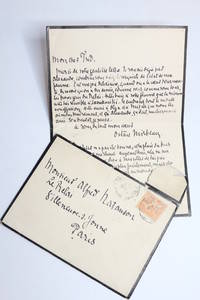
190173686s. l. cachet de Seine-et-Marne 1901. Fine. s. l. cachet de Seine-et-Marne 15 Septembre 1901 12.50 x 17.60 cm une feuille Moving autograph letter signed by Octave Mirbeau addressed to the playwright and founder of the Revue Blanche Alfred Natanson. 15 lines in black ink on a folded sheet mourning paper with black border watermarked ""JDL & cie"" envelope attached. ""Thank you for your kind letter. I already knew from Alexandre Natanson how worried you had been about my wife's condition. It is a delicious joy when one's heart is tormented to know that one has friends like you like all of you the good people of the Relai. Please tell your wife that mine was very touched by her friendship. And embrace everyone with effusion. Also tell Olga Alexandre Natanson's wife and Misia Thadée's wife that we love them tenderly and Alexandre that he is a charming friend."" Long postscript on the poor health of his wife the former actress Alice Régnault: ""Yesterday was not a good day and the wound on her arm presented a nasty appearance. Today it is a little better. But it is something to watch very closely. Movements are made a little more easily but she still suffers extremely at night at the slightest play of the muscles"". Mirbeau had been particularly close to the Revue Blanche group since its launch in Paris in 1891. But it was during the Dreyfus affair that his intimate and lasting friendship with the Natanson brothers Thadée Alexandre and Alfred was strengthened. After aesthetic disagreements over Art Nouveau and the Nabis Mirbeau finally reunited with Thadée around 1900 in a now shared inclination for the young Nabis painters of the Revue Blanche Bonnard Vallotton and Vuillard. The ""Relai"" corresponds to a former coaching inn in Villeneuve-sur-Yonne purchased by Thadée Natanson in 1897 which became a destination for all their writer and artist friends. One could encounter the Nabis painters Vuillard Vallotton Bonnard or Roussel as well as Toulouse-Lautrec. The Revue Blanche played an essential role in France as historian Paul-Henri Bourrelier confirms: ""Most of the most prominent writers painters musicians politicians intellectuals of the late nineteenth and early twentieth centuries collaborated with it or were associated with it. Created financed and directed by the three Natanson brothers young Polish Jews with the enthusiastic complicity of their fellow students from the Condorcet lycée La Revue blanche quickly became a place of debate on all the subjects that stirred France. It led political battles under the impetus of anarchists like Fénéon Mirbeau; socialists such as Blum G. Moch Péguy; Dreyfusards and founders of the League of Human Rights like Reinach and Pressensé."" unknown
189686610Paris 1896. Fine. Paris 1896 13 x 20.50 cm 3 pages sur un double feuillet Autograph letter signed by Pierre Louÿs addressed to his publisher Alfred Vallette 50 lines written in purple ink on a double sheet. Pierre Louÿs responds to his friend and publisher Alfred Vallette after a controversy launched by a journalist from Comoedia a controversy that could damage their friendship: ""Je ne suis pour rien dans l'écho publié par Comoedia. Mais ce que vous en citez suffit à me montrer que le rédacteur s'est mal informé."" ""I had nothing to do with the piece published by Comoedia. But what you quote from it is enough to show me that the writer was misinformed."" and he intends to remind him that they had not been able to agree on the publishing terms for Aphrodite and that he envisioned only a confidential distribution for his latest book: ""L'histoire de notre édition est très simple. Vous m'avez proposé un traité que je n'ai pas trouvé bon ; j'ai préféré le ""compte d'auteur"" et je ne peux pas vous accuser d'avoir mal prévu le succès du livre puisque moi-même j'avais écrit mon roman pour vingt amis et quelques inconnus."" ""The story of our edition is very simple. You offered me a contract that I did not find good; I preferred the 'author's account' and I cannot accuse you of having poorly predicted the book's success since I myself had written my novel for twenty friends and a few strangers."" This is why the father of Aphrodite is astonished by the triumph achieved by the work: ""Si une diseuse de bonne aventure nous avait prédit alors qu'Aphrodite dépasserait un jour le 300e mille nous l'aurions traitée comme une pauvre folle."" ""If a fortune teller had predicted then that Aphrodite would one day exceed 300000 copies we would have treated her as a poor madwoman.""; the latter consecrating his fame and wealth in the literary world: ""J'ai en outre une seconde raison pour ne pas vous en vouloir du traité que j'ai signé avec vous : c'est qu'en préservant mes droits d'autuer sur ce roman j'ai fait sans le savoir ma fortune. C'est à cela seul que je dois mon indépendance littéraire et cette inestimable liberté du silence qui n'est pas l'idéal de tous mais qui me paraît être le bonheur du poëte."" ""I have furthermore a second reason for not resenting the contract I signed with you: it is that by preserving my author's rights on this novel I made my fortune without knowing it. It is to this alone that I owe my literary independence and this invaluable freedom of silence which is not everyone's ideal but which seems to me to be the poet's happiness."" Very fine autograph on Pierre Louÿs's literary triumph. unknown
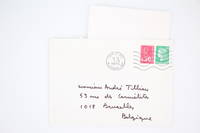
197476777Paris: S. n. 1974. Fine. S. n. Paris 7 Octobre 1974 21 x 29.50 cm une feuille une enveloppe Handwritten letter dated and signed with 20 lines from Alphonse Boudard to his great friend and companion of well-watered lunches the Brussels journalist André Tillieu who was like Alphonse Boudard a great friend of Georges Brassens but also of Louis Nucéra. Envelope included a fold mark inherent to the letter's placement in the envelope. ""Ami merci de ton petit mot. Ca fait toujours plaisir de savoir que la Cerise a des lecteurs compétants sic. les autres achètent n'importe quoi. Papillon Sagan ou Guy Descar. Le ""Cinoche"" est en panne. Il faudrait qu'ils me filent le Renaudot pour bien faire. mais ils ont d'autres hommes de lettres à fouetter. ""L'ami"" de Louis Nucéra mérite l'Interallié. etc. Je ne crois guère au miracle. aussi je me suis remis au cinoche cassecroûte. une adaptation de ""Flic Story"" pour Alain Delon. à bientôt j'espère devant le verre de l'amitié. Aboudard."" ""Friend thanks for your little note. It's always a pleasure to know that la Cerise has competent readers. the others buy anything. Papillon Sagan or Guy Descar. The 'Cinema' is broken down. They should give me the Renaudot to do things right. but they have other men of letters to flog. 'L'ami' by Louis Nucéra deserves the Interallié. etc. I hardly believe in miracles. so I've gone back to cinema bread-and-butter work. an adaptation of 'Flic Story' for Alain Delon. see you soon I hope over a glass of friendship. Aboudard."" André Tillieu the Brusselian very close friend and biographer of Georges Brassens maintained an epistolary correspondence with Alphonse Boudard for almost thirty years from 1972 until the latter's death in 2000. The cheeky Parisian writer quickly showed him his friendship considering him one of the rare critics to understand him perfectly to the point of explaining clearly in his chronicles what he himself expressed only incompletely and sometimes confusedly in his books. André Tillieu thus became part of the small circle of Alphonse Boudard's true friends on the same level as le Gros Georges Georges Brassens le Niçois Louis Nucéra and René Fallet with whom he loved to share hearty well-watered meals and cycling trips. As death gradually took away his best friends one by one André Tillieu would remain one of Alphonse's very last mates. S. n. unknown