Andre BRETONBiblio.com
48 402 résultats
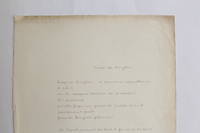
1917642671917. Fine. circa 1917-1918 22.30 x 27.60 cm une feuille sous chemise et étui A remarkable poem of autograph youth by André Breton entitled ""Coqs de Bruyère"" verse in black ink on laid paper composed in. Our manuscript was written between March 1917 and the beginning of 1918. An essential poem of the pre-Dadaist contemporary of the author it is part of a coherent set of seven manuscript poems by Breton referred to as Coll.X. in André Breton's Complete Works Volume I of La Library of the Pleiades Gallimard 1988 1071. These poems from his youthful writing are carefully calligraphed in black ink on watermarked laid paper. This set was sent to his circle of friends and writers including Valery Apollinaire Theodore Fraenkel and his brother André Paris. It was later published in his first collection Mont de Piété which appeared in June 1919 at the publishing house Au sans Pareil newly founded by his friend Rene Hilsum. The exact dating of this set of autograph poems is determined by the writing of the last poem of the collection ""André Derain"" composed March 24 1917 which offers a terminus post quem absolute. In addition an older version of the poem ""Age"" dedicated to Leon-Paul Fargue appears in our collection under its original name ""Poème"". Dated by the author of February 19 1916 - the day of his twenty years - and created 10 days earlier according to his correspondence it was renamed and reworked only for its publication in July 1918 in The Three Roses . In all likelihood prior to the publication of this last poem the seven autograph poems were probably written during 1917 or early 1918 while Breton continues his internship at the Val-de-Grace and makes the decisive meeting of Louis Aragon. The poems that will constitute Mount of Piety represent a rare and precious testimony of his youthful influences at the dawn of his adherence to the Dada movement and his discovery of automatic writing. Quite short and sometimes sibylline we can see symbolic accents borrowed from Mallarme which he rediscovers during poetic mornings at the Antoine theater at the Vieux-Colombier in the company of his high school classmate Théodore Fraenkel. During the first month of the war Breton also devoted himself to Rimbaud and immersed himself in The Illuminations the only work carried away in the confusion and haste that followed the declaration of war. From his Rimbaldian readings came the poems ""December"" ""Age"" and ""André Derain"" while he borrowed from Apollinaire his muse Marie Laurencin to whom he dedicates ""The Sweet Year"". Moreover the poetic legacy of the author will be particularly marked by the figure of Paul Valéry with whom he enters into correspondence in 1914. Valery plays in the writing of the poems of Mont de Piété a considerable role by the attention and the advice he lavishes on the young poet. Admiring the audacity of his disciple who addressed each of his poems he appreciates the poem ""Facon"" 1916 in these terms: "" Theme language aim metric everything is new future mode way "" Letter of June 1916 Complete Works of André Breton Volume I of The Library of the Pléiade Gallimard 1988 p. These essential jewels of the youth of Breton were composed between his seventeenth and twenty-third year. Surprised in Lorient by the declaration of war he became a military nurse then officiated in several hospitals and on the front during the offensive of the Meuse. He made Nantes acquainted with Jacques Vaché who inspired him with a project of collective writing as well as the illustration of the future collection Mont de Piété finally realized by André Derain. The frequentation of this ""revolted dandy against art and war"" which shares his admiration for Jarry and the contact of the lunatics of the neuro-psychiatric center of Saint-Dizier mark a decisive step in the genesis of surrealism. Assigned to the Val-de-Grâce from 1917 Breton finds in Paris the literary effervescence necessary unknown
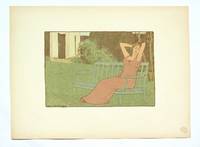
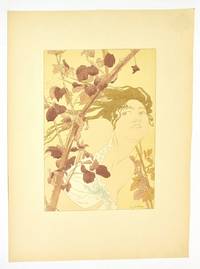
189773908Paris: Imprimerie Champenoispour CH. MassonH. Piazza 1897. Fine. Imprimerie Champenois pour CH. Masson H. Piazza Paris Mai 1897 33 x 23 cm une feuille Rare original color lithograph executed by Maurice Réalier-Dumas for L'Estampe Moderne series number 1 published in May 1897. One of 50 deluxe proofs printed on Japan paper with wide margins artist's signature and date in the plate publisher's dry stamp representing a child's profile in the lower margin numbered stamp of the deluxe printing on the verso. Magnificent French monthly publication edited between May 1897 and April 1899 L'Estampe moderne consists of previously unpublished chromolithographs which unlike other magazines such as Les Maîtres de l'Affiche and as stipulated on the tissue guards were created specially by each artist for the magazine. Thus 100 prints appeared in total covering the major artistic movements of the late 19th century: Symbolism Art Nouveau Pre-Raphaelites Orientalists and Belle Epoque. Each delivery of four prints was issued in 2000 copies sold for 3.50F and 100 on Japan paper offered at 10F. Henri Piazza also planned a confidential deluxe printing: 50 copies on Japan paper with wide margins and 50 in black on China paper at the considerable price of 30F. This print of handsome format is superbly printed in colors on the most prestigious of papers: Japan paper. Thick silky satined and pearlescent it contributes to making each page a complete work in itself. Its quality of ink absorption and its affinity with colors also make it the ideal support for these very beautiful lithographs. The interest of French collectors in artistic posters grew at the beginning of the 1890s. Octave Uzanne to qualify this fever invented the term ""affichomanie."" The poster originally popular and pasted on the streets of the capital then became an art object and its ephemeral medium became precious and destined for preservation. Piazza decided to remove the poster from its advertising vocation and elevate it to the rank of a complete work of art on the same level as the deluxe illustrated book. He thus composed a prestigious collection of entirely original works by the most prominent European artists of the moment: Georges de Feure Eugène Grasset Henri Detouche Emile Berchmans Louis Rhead Gaston de Latenay Lucien Lévy-Dhurmer Gustave-Max Stevens Charles Doudelet Hans Christiansen Henri Fantin-Latour Steinlen Ibels Engels Willette Henri Meunier Evenepoël Bellery-Desfontaines Charles Léandre etc. Handsome copy in the artist's Art Nouveau style. Imprimerie Champenoispour CH. MassonH. Piazza unknown
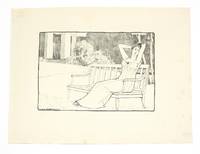
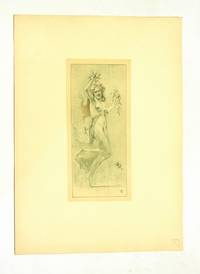
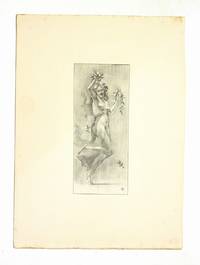
189773909Paris: Imprimerie Champenoispour CH. MassonH. Piazza 1897. Fine. Imprimerie Champenois pour CH. Masson H. Piazza Paris Mai 1897 33 x 23 cm une feuille Rare original lithograph executed by Maurice Réalier-Dumas for L'Estampe Moderne series number 1 published in May 1897. One of 50 deluxe proofs printed on China paper with wide margins artist's signature in the plate publisher's dry stamp representing a child's profile in the lower margin mounted on a sheet of laid paper with the numbered stamp of the deluxe printing on the verso some foxing. Magnificent French monthly publication edited between May 1897 and April 1899 L'Estampe moderne consists of previously unpublished chromolithographs which unlike other magazines such as Les Maîtres de l'Affiche and as stipulated on the tissue guards were created specially by each artist for the magazine. Thus 100 prints appeared in total covering the major artistic movements of the late 19th century: Symbolism Art Nouveau Pre-Raphaelites Orientalists and Belle Epoque. Each delivery of four prints was issued in 2000 copies sold for 3.50F and 100 on Japan paper offered at 10F. Henri Piazza also planned a confidential deluxe printing: 50 copies on Japan paper with wide margins and 50 in black on China paper at the considerable price of 30F. This print of handsome format is superbly printed on one of the most prestigious papers: China paper. ""Despite all its qualities China paper too insubstantial owes its reputation not to its own beauty but rather to its particular affinities with printing ink. Its texture smooth and soft together is more apt than any other to receive a beautiful printing. This property makes China paper sought after for printing engravings."" Anatole France. The interest of French collectors in artistic posters grew at the beginning of the 1890s. Octave Uzanne to qualify this fever invented the term ""affichomanie."" The poster originally popular and pasted on the streets of the capital then became an art object and its ephemeral medium became precious and destined for preservation. Piazza decided to remove the poster from its advertising vocation and elevate it to the rank of a complete work of art on the same level as the deluxe illustrated book. He thus composed a prestigious collection of entirely original works by the most prominent European artists of the moment: Georges de Feure Eugène Grasset Henri Detouche Emile Berchmans Louis Rhead Gaston de Latenay Lucien Lévy-Dhurmer Gustave-Max Stevens Charles Doudelet Hans Christiansen Henri Fantin-Latour Steinlen Ibels Engels Willette Henri Meunier Evenepoël Bellery-Desfontaines Charles Léandre etc. Handsome copy in the artist's Art Nouveau style. Imprimerie Champenoispour CH. MassonH. Piazza unknown
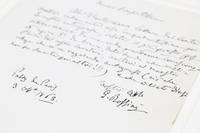
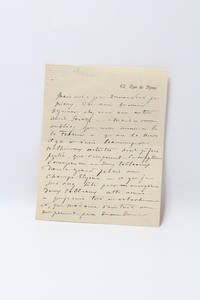
186384579Passy Paris 1863. Fine. Music before all else Passy Paris 3 octobre 1863 17 x 21.50 cm une feuille Autograph letter signed addressed to a friend written from the village of Passy now Paris on October 3 1863. Having received news from Count Cesare Mattei he begs his correspondent to come see him as soon as possible regarding a mysterious matter that brings them together. Indeed during his stay in France Rossini who was both patient and friend of Mattei attempted to patent his potion against rheumatism. For the ""alchemist count"" was the inventor of a miracle remedy ""electro-homeopathy"". This complex technique based on granules and ""electric fluids"" was the most widely used alternative medicine in the world from 1870 to 1930 and was marketed by Mattei laboratories until 1968. The remedy was even mentioned by Dostoevsky in The Brothers Karamazov in which the Devil himself claims to be cured by the potion: ""Que faire J'ai recouru aux remèdes de bonnes femmes ; un médecin allemand me conseilla de me frotter après le bain avec du miel et du sel : j'allai aux bains pour le plaisir et me barbouillai en pure perte. En désespoir de cause j'ai écrit au comte Mattei à Milan ; il m'a envoyé un livre et des globules. Que Dieu lui pardonne ! Imagine-toi que l'extrait de malt de Hoff m'a guéri. Je l'avais acheté par hasard j'en ai pris un flacon et demi et tout à disparu radicalement. J'étais résolu à publier une attestation la reconnaissance parlait en moi mais ce fut une autre histoire : aucun journal ne voulut l'insérer ! ""C'est trop réactionnaire me dit-on personne n'y croira le diable n'existe point. Publiez cela anonymement."""" ""What to do I resorted to old wives' remedies; a German doctor advised me to rub myself after bathing with honey and salt: I went to the baths for pleasure and smeared myself to no avail. In desperation I wrote to Count Mattei in Milan; he sent me a book and globules. God forgive him! Imagine that Hoff's malt extract cured me. I had bought it by chance took a bottle and a half and everything disappeared completely. I was resolved to publish a testimonial gratitude spoke within me but that was another story: no newspaper would insert it! 'It's too reactionary' they told me 'no one will believe it the devil doesn't exist. Publish it anonymously.'"" It should also be noted that Rossini gave his piano to Count Mattei it is now preserved in his castle at Rocchetta. Fine and rare autograph letter very visual mounted on cream-colored mat. unknown
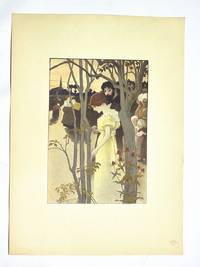
189773924Paris: Imprimerie Champenoispour CH. MassonH. Piazza 1897. Fine. Imprimerie Champenois pour CH. Masson H. Piazza Paris s. d. Juillet 1897 23 x 33 cm une feuille et une serpente Rare original color lithograph executed by Paul Balluriau for L'Estampe Moderne series number 3 published in July 1897. One of 50 deluxe proofs printed on Japan paper with wide margins artist's signature in the plate publisher's dry stamp representing a child's profile in the lower margin numbered stamp of the deluxe printing on verso; print preceded by a tissue guard bearing the artist's name title an excerpt from the work and a presentation of the artist traces of folds and another blank tissue guard. Magnificent French monthly publication edited between May 1897 and April 1899 L'Estampe moderne consists of original chromolithographs which unlike other magazines such as Les Maîtres de l'Affiche and as stipulated on the tissue guards were specially created by each artist for the magazine. Thus 100 prints appeared in total covering the major artistic movements of the late 19th century: Symbolism Art Nouveau Pre-Raphaelites Orientalists and Belle Epoque. Each issue of four prints was printed in 2000 copies sold at 3.50F and 100 on Japan paper offered at 10F. Henri Piazza also planned a confidential deluxe printing: 50 copies on Japan paper with wide margins and 50 in black on China paper at the considerable price of 30F. This print of handsome format is superbly printed in colors on the most prestigious of papers: Japan. Thick silky satin and pearlescent it contributes to making each page a work in its own right. Its quality of ink absorption and its affinity with colors also make it the ideal support for these very beautiful lithographs. The interest of French collectors in artistic posters intensified in the early 1890s. Octave Uzanne to qualify this fever invented the term ""affichomanie."" The poster originally popular and posted in the streets of the capital then became an art object and its ephemeral support became precious and destined for conservation. Piazza decided to remove the poster from its advertising vocation and elevate it to the rank of a work of art in its own right equal to the deluxe illustrated book. He thus composed a prestigious collection of entirely original works by the most prominent European artists of the moment: Georges de Feure Eugène Grasset Henri Detouche Emile Berchmans Louis Rhead Gaston de Latenay Lucien Lévy-Dhurmer Gustave-Max Stevens Charles Doudelet Hans Christiansen Henri Fantin-Latour Steinlen Ibels Engels Willette Henri Meunier Evenepoël Bellery-Desfontaines Charles Léandre etc. Handsome copy in the artist's symbolist style. Imprimerie Champenoispour CH. MassonH. Piazza unknown
189773926Paris: Imprimerie Champenoispour CH. MassonH. Piazza 1897. Fine. Imprimerie Champenois pour CH. Masson H. Piazza Paris Juillet 1897 23 x 33 cm une feuille Rare original lithograph executed by Paul Balluriau for L'Estampe Moderne series number 3 published in July 1897. One of 50 deluxe proofs printed on China paper with wide margins artist's signature and date in the plate publisher's dry stamp depicting a child's profile in the lower margin mounted on a sheet of laid paper with the numbered stamp of the deluxe printing on verso occasional marginal foxing. Magnificent French monthly publication issued between May 1897 and April 1899 L'Estampe moderne consists of original chromolithographs which unlike other magazines such as Les Maîtres de l'Affiche and as stipulated on the tissue guards were created specifically by each artist for the magazine. Thus 100 prints appeared in total covering the major artistic movements of the late 19th century: Symbolism Art Nouveau Pre-Raphaelites Orientalists and Belle Époque. Each issue of four prints was printed in 2000 copies sold for 3.50F and 100 on Japan paper offered at 10F. Henri Piazza also planned a confidential deluxe printing: 50 copies on Japan paper with wide margins and 50 in black on China paper at the considerable price of 30F. This print of handsome format is superbly printed on one of the most prestigious papers: China. ""Despite all its qualities China paper too insubstantial owes its reputation not to its own beauty but to its particular affinities with printing ink. Its texture smooth and soft at once is more apt than any other to receive a beautiful printing. This property makes China paper sought after for printing engravings."" Anatole France. French collectors' interest in artistic posters intensified in the early 1890s. Octave Uzanne to describe this fever invented the term ""affichomanie."" The poster originally popular and posted in the streets of the capital then became an art object and its ephemeral support became precious and destined for preservation. Piazza decided to remove the poster from its advertising vocation and elevate it to the rank of a work of art in its own right on the same level as the deluxe illustrated book. He thus composed a prestigious collection of entirely original works by the most prominent European artists of the moment: Georges de Feure Eugène Grasset Henri Detouche Emile Berchmans Louis Rhead Gaston de Latenay Lucien Lévy-Dhurmer Gustave-Max Stevens Charles Doudelet Hans Christiansen Henri Fantin-Latour Steinlen Ibels Engels Willette Henri Meunier Evenepoël Bellery-Desfontaines Charles Léandre etc. Handsome copy in the artist's symbolist style. Imprimerie Champenoispour CH. MassonH. Piazza unknown
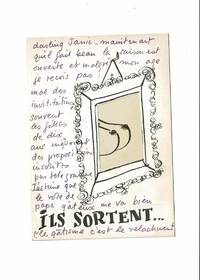
197173354Sommières 1971. Fine. Sommières 20-04-1971 10.50 x 14.50 cm une carte postale et enveloppe Autograph postcard by Lawrence Durrell signed ""Dracula"" addressed to Jani Brun written in blue ink reproduction of a drawing by Marcel Vaysse ""Ils sortent.tous les soirs"" ""They go out.every evening"" envelope included. The writer teasingly mocks his young Montpellier mistress with humor: ""Darling Janie - maintenant qu'il fait beau la saison est ouverte et malgré mon age je reçois pas mal des invitations; souvent les filles de dix ans m'envoient des propositions inscrites par télégramme. J'estime que le rôle de papa gâteux me va bien ""le gâtisme c'est le relachment des sphinctères"" Dictionnaire medicale - Pujot"". Je vais en Grèce avec une 2 3 4 filles plus fidé que vous pour faire des reportages appellation contrôlée. D'avoir soixante ans et d'être aimé très mal d'ailleurs par les vampires - n'est pas que c'est splendide Dracula"" ""Darling Janie - now that the weather is fine the season is open and despite my age I receive quite a few invitations; often ten-year-old girls send me proposals written by telegram. I think the role of a doting daddy suits me well 'dotage is the loosening of the sphincters' Medical Dictionary - Pujot. I'm going to Greece with one 2 3 4 girls more faithful than you to do some appellation contrôlée reporting. To be sixty years old and to be loved very badly moreover by vampires - isn't that splendid Dracula"" After many years spent in Greece Egypt and Rhodes the traveling writer Lawrence Durrell was forced to flee Cyprus following popular uprisings that led the island to its independence from the British crown. Rich only with a shirt and a typewriter but crowned with the success of his novel Bitter Lemons of Cyprus he arrived in France in 1956 and settled in the Languedoc village of Sommières. In the ""Tartès house"" his large dwelling surrounded by trees he wrote the second part of his work his monumental Avignon Quintet devoted himself to painting and received his illustrious friends including the couple Henry Miller and Anaïs Nin violinist Yehudi Menuhin London publisher Alan G. Thomas and his two daughters Penelope and Sappho. Among the olive trees and under the Mediterranean sun he met in the mid-1960s the young and sparkling ""Jany"" Janine Brun a woman from Montpellier in her thirties with devastating beauty who worked at the Department of Antiquities at the Sorbonne in Paris. She was nicknamed ""Buttons"" in memory of their first meeting where the young woman wore a dress covered with buttons. Henry Miller also fell under the charm of ""Buttons"" praising her beauty and eternal youth in exceptional unpublished letters. The three companions spent memorable Parisian evenings of which we retain precious autograph traces through their epistolary exchanges. Recommended by Durrell she made numerous trips particularly to England from where she received extensive correspondence from the writer as well as original artworks signed with his artist pseudonym Oscar Epfs. unknown
197574311s. l.: S. n. 1975. Fine. S. n. s. l. s. d. circa 1975 15.50 x 11 cm une feuille Autograph card of 11 lines signed by Julien Gracq addressed to Roland Cailleux regarding the sending of his latest work possibly A moi-même inconnu published in 1978 for which Julien Gracq congratulates him: "". ouvrage d'une grande richesse et d'un éclairage très singulier."" expressing an unusual sense of complicity between reader and writer: "". un courant de sympathie s'établit ici entre l'auteur et le lecteur qui ne se rencontre que rarement."" A fine tribute from Julien Gracq acknowledging and appreciating the sensitivity and talent of Roland Cailleux. S. n. unknown
189974826Paris: Imprimerie Champenoispour CH. MassonH. Piazza 1899. Fine. Imprimerie Champenois pour CH. Masson H. Piazza Paris Mars 1899 19.50 x 22 cm une feuille et une serpente Rare original color lithograph executed by Eugène Grasset for L'Estampe Moderne series number 23 published in March 1899. One of 50 deluxe proofs printed on Japan paper with wide margins artist's signature in the plate publisher's dry stamp depicting a child's profile in the lower margin numbered stamp of the deluxe edition on the verso small tears at head fold marks at lower corners; print preceded by a tissue guard captioned with the artist's name the title and a poem. Lithograph inspired by a poem Les tendresses by Armand Sylvestre reproduced on the print's tissue guard. Magnificent French monthly publication edited between May 1897 and April 1899 L'Estampe Moderne consists of original chromolithographs which unlike other magazines such as Les Maîtres de l'Affiche and as stipulated on the tissue guards were created specially by each artist for the magazine. Thus 100 prints appeared in total covering the major artistic movements of the late 19th century: Symbolism Art Nouveau Pre-Raphaelites Orientalists and Belle Époque. Each delivery of four prints was issued in 2000 copies sold for 3.50F and 100 on Japan paper offered at 10F. Henri Piazza also planned a confidential deluxe printing: 50 copies on Japan paper with wide margins and 50 in black on China paper at the considerable price of 30F. This print of handsome format is superbly printed on the most prestigious of papers: Japan paper. Thick silky satiny and pearlescent it contributes to making each page a complete work in itself. Its quality of ink absorption and its affinity with colors also make it the ideal support for these very fine lithographs. The interest of French collectors in artistic posters intensified at the beginning of the 1890s. Octave Uzanne to describe this fever invented the term ""poster-mania."" The poster originally popular and posted in the streets of the capital then became an art object and its ephemeral medium became precious and destined for conservation. Piazza decided to remove the poster from its advertising purpose and elevate it to the rank of a complete work of art in the same way as the illustrated deluxe book. He thus composed a prestigious collection of entirely original works by the most prominent European artists of the moment: Georges de Feure Eugène Grasset Henri Detouche Emile Berchmans Louis Rhead Gaston de Latenay Lucien Lévy-Dhurmer Gustave-Max Stevens Charles Doudelet Hans Christiansen Henri Fantin-Latour Steinlen Ibels Engels Willette Henri Meunier Evenepoël Bellery-Desfontaines Charles Léandre etc. Handsome copy in the Art Nouveau style. Imprimerie Champenoispour CH. MassonH. Piazza unknown
189974827Paris: Imprimerie Champenoispour CH. MassonH. Piazza 1899. Fine. Imprimerie Champenois pour CH. Masson H. Piazza Paris Mars 1899 19.50 x 22 cm une feuille Rare original lithograph executed by Eugène Grasset for L'Estampe Moderne series number 23 published in March 1899. One of 50 deluxe proofs printed on China paper with wide margins printed in blue ink artist's signature in the plate publisher's dry stamp depicting a child's profile in the lower margin mounted on a sheet of laid paper with the numbered stamp of the deluxe edition on the verso some foxing. Lithograph inspired by a poem Les tendresses by Armand Sylvestre. Magnificent French monthly publication edited between May 1897 and April 1899 L'Estampe Moderne consists of original chromolithographs which unlike other magazines such as Les Maîtres de l'Affiche and as stipulated on the tissue guards were created specially by each artist for the magazine. Thus 100 prints appeared in total covering the major artistic movements of the late 19th century: Symbolism Art Nouveau Pre-Raphaelites Orientalists and Belle Époque. Each delivery of four prints was issued in 2000 copies sold for 3.50F and 100 on Japan paper offered at 10F. Henri Piazza also planned a confidential deluxe printing: 50 copies on Japan paper with wide margins and 50 in black on China paper at the considerable price of 30F. This print of handsome format is superbly printed on one of the most prestigious papers: China paper. ""Despite all its qualities China paper too inconsistent owes its reputation not to its own beauty but to its particular affinities with printing ink. Its texture smooth and soft together is more apt than any other to receive a fine printing. This property makes China paper sought after for printing engravings."" Anatole France. The interest of French collectors in artistic posters intensified at the beginning of the 1890s. Octave Uzanne to describe this fever invented the term ""poster-mania."" The poster originally popular and posted in the streets of the capital then became an art object and its ephemeral medium became precious and destined for conservation. Piazza decided to remove the poster from its advertising purpose and elevate it to the rank of a complete work of art in the same way as the illustrated deluxe book. He thus composed a prestigious collection of entirely original works by the most prominent European artists of the moment: Georges de Feure Eugène Grasset Henri Detouche Emile Berchmans Louis Rhead Gaston de Latenay Lucien Lévy-Dhurmer Gustave-Max Stevens Charles Doudelet Hans Christiansen Henri Fantin-Latour Steinlen Ibels Engels Willette Henri Meunier Evenepoël Bellery-Desfontaines Charles Léandre etc. Handsome copy in the Art Nouveau style. Imprimerie Champenoispour CH. MassonH. Piazza unknown
189774015Paris: Imprimerie Champenoispour CH. MassonH. Piazza 1897. Fine. Imprimerie Champenois pour CH. Masson H. Piazza Paris Décembre 1897 24 x 33.50 cm une feuille et une serpente Rare original color lithograph executed by Henri Boutet for L'Estampe Moderne series number 8 published in December 1897. One of 50 deluxe proofs printed on Japan paper with wide margins laid paper mounted on Japan paper artist's signature in the plate publisher's dry stamp representing a child's profile in the lower margin numbered stamp of the deluxe edition on verso; print preceded by a tissue guard inscribed with the artist's name title and an extract from a work; blank tissue guard. Lithograph inspired by an extract from a work by Ludovic Halévy which is reproduced on the tissue guard of the print. Magnificent French monthly publication edited between May 1897 and April 1899 L'Estampe moderne consists of original chromolithographs which unlike other magazines such as Les Maîtres de l'Affiche and as stipulated on the tissue guards were created specially by each artist for the magazine. Thus 100 prints appeared in total covering the major artistic movements of the late 19th century: Symbolism Art Nouveau Pre-Raphaelites Orientalists and Belle Époque. Each delivery of four prints was printed in 2000 copies sold for 3.50F and 100 on Japan paper offered at 10F. Henri Piazza also planned a very limited deluxe edition: 50 copies on Japan paper with wide margins and 50 in black on China paper at the considerable price of 30F. This print of handsome format is superbly printed on the most prestigious of papers: Japan. Thick silky satiny and pearlescent it contributes to making each page a work of art in its own right. Its quality of ink absorption and its affinity with colors also make it the ideal support for these very beautiful lithographs. French collectors' interest in artistic posters intensified in the early 1890s. Octave Uzanne to describe this fever invented the term ""affichomanie."" The poster originally popular and pasted on the streets of the capital then became an art object and its ephemeral support became precious and destined for preservation. Piazza decided to remove the poster from its advertising vocation and elevate it to the rank of a work of art in its own right equal to the illustrated deluxe book. He thus composed a prestigious collection of entirely original works by the most prominent European artists of the moment: Georges de Feure Eugène Grasset Henri Detouche Emile Berchmans Louis Rhead Gaston de Latenay Lucien Lévy-Dhurmer Gustave-Max Stevens Charles Doudelet Hans Christiansen Henri Fantin-Latour Steinlen Ibels Engels Willette Henri Meunier Evenepoël Bellery-Desfontaines Charles Léandre etc. Handsome copy. Imprimerie Champenoispour CH. MassonH. Piazza unknown
189774016Paris: Imprimerie Champenoispour CH. MassonH. Piazza 1897. Fine. Imprimerie Champenois pour CH. Masson H. Piazza Paris Décembre 1897 24 x 33.50 cm une feuille Rare original lithograph executed by Henri Boutet for L'Estampe Moderne series number 8 published in December 1897. One of 50 deluxe proofs printed on China paper with wide margins artist's signature in the plate publisher's dry stamp representing a child's profile in lower margin mounted on a sheet of laid paper with on verso the numbered stamp of the deluxe printing pale marginal foxing. Magnificent French monthly publication edited between May 1897 and April 1899 L'Estampe moderne consists of original chromolithographs which unlike other magazines such as Les Maîtres de l'Affiche and as stipulated on the tissue guards were created specifically by each artist for the magazine. Thus 100 prints appeared in total covering the major artistic movements of the late 19th century: Symbolism Art Nouveau Pre-Raphaelites Orientalists and Belle Epoque. Each delivery of four prints was printed in 2000 copies sold for 3.50F and 100 on Japan paper offered at 10F. Henri Piazza also planned a confidential printing of very deluxe quality: 50 copies on Japan paper with wide margins and 50 in black on China paper at the considerable price of 30F. This print of handsome format is superbly printed on one of the most prestigious papers: China paper. ""Despite all its qualities China paper too inconsistent owes its reputation not to its own beauty but indeed to its particular affinities with printing ink. Its texture smooth and soft together is more apt than any other to receive a beautiful printing. This property makes China paper sought after for printing engravings."" Anatole France. French collectors' interest in artistic posters grew at the beginning of the 1890s. Octave Uzanne to qualify this fever invented the term ""affichomanie"". The poster originally popular and plastered in the streets of the capital then became an art object and its ephemeral support became precious and devoted to conservation. Piazza decided to remove the poster from its advertising vocation and elevate it to the rank of a work of art in its own right on the same level as the deluxe illustrated book. He thus composed a prestigious collection of entirely original works by the most prominent European artists of the moment: Georges de Feure Eugène Grasset Henri Detouche Emile Berchmans Louis Rhead Gaston de Latenay Lucien Lévy-Dhurmer Gustave-Max Stevens Charles Doudelet Hans Christiansen Henri Fantin-Latour Steinlen Ibels Engels Willette Henri Meunier Evenepoël Bellery-Desfontaines Charles Léandre etc. Handsome copy. Imprimerie Champenoispour CH. MassonH. Piazza unknown
189874382Paris: Imprimerie Champenoispour CH. MassonH. Piazza 1898. Fine. Imprimerie Champenois pour CH. Masson H. Piazza Paris Avril 1898 24.50 x 35 cm une feuille Rare original lithograph executed by Henry Detouche for L'Estampe Moderne series number 12 published in April 1898. One of 50 deluxe proofs printed on China paper with large margins artist's signature in the plate publisher's dry stamp representing a child's profile in the lower margin mounted on a sheet of laid paper with the numbered stamp of the deluxe edition on verso pale marginal foxing small dark dampstain in corner slight trace of the stamp from the previous engraving on recto. Magnificent French monthly publication edited between May 1897 and April 1899 L'Estampe moderne consists of original chromolithographs which unlike other journals such as Les Maîtres de l'Affiche and as stipulated on the tissue guards were created specially by each artist for the journal. Thus 100 prints appeared in total covering the major artistic movements of the late 19th century: Symbolism Art Nouveau Pre-Raphaelites Orientalists and Belle Epoque. Each delivery of four prints was issued in 2000 copies sold for 3.50F and 100 on Japan paper offered at 10F. Henri Piazza also planned a confidential deluxe printing: 50 copies on Japan paper with large margins and 50 in black on China paper at the considerable price of 30F. This print of handsome format is superbly printed on one of the most prestigious papers: China. ""Despite all its qualities China paper too insubstantial owes its reputation not to its own beauty but to its particular affinities with printing ink. Its texture smooth and soft at once is more apt than any other to receive a beautiful printing. This property makes China paper sought after for printing engravings."" Anatole France. French collectors' interest in artistic posters grew at the beginning of the 1890s. Octave Uzanne to describe this fever invented the term ""affichomanie."" The poster originally popular and pasted on the streets of the capital then became an art object and its ephemeral support became precious and devoted to preservation. Piazza decided to remove the poster from its advertising vocation and elevate it to the rank of a complete work of art on the same level as the deluxe illustrated book. He thus composed a prestigious collection of entirely original works by the most prominent European artists of the moment: Georges de Feure Eugène Grasset Henri Detouche Emile Berchmans Louis Rhead Gaston de Latenay Lucien Lévy-Dhurmer Gustave-Max Stevens Charles Doudelet Hans Christiansen Henri Fantin-Latour Steinlen Ibels Engels Willette Henri Meunier Evenepoël Bellery-Desfontaines Charles Léandre etc. Handsome copy in Art Nouveau style. Imprimerie Champenoispour CH. MassonH. Piazza unknown
189874381Paris: Imprimerie Champenoispour CH. MassonH. Piazza 1898. Fine. Imprimerie Champenois pour CH. Masson H. Piazza Paris Avril 1898 24.50 x 35 cm une feuille et une serpente Rare original lithograph printed in colors executed by Henry Detouche for L'Estampe Moderne series number 12 published in April 1898. One of 50 deluxe proofs printed on Japan paper with wide margins artist's signature in the plate publisher's dry stamp representing a child's profile in lower margin numbered stamp of the deluxe edition on verso light trace of the stamp from the previous engraving on recto; engraving preceded by a tissue guard captioned with the artist's name title and text by the artist; blank tissue guard. Magnificent French monthly publication edited between May 1897 and April 1899 L'Estampe moderne consists of original chromolithographs which unlike other periodicals such as Les Maîtres de l'Affiche and as stipulated on the tissue guards were created specially by each artist for the magazine. Thus 100 prints appeared in total covering the major artistic movements of the late 19th century: Symbolism Art Nouveau Pre-Raphaelites Orientalists and Belle Époque. Each issue of four prints was published in 2000 copies sold at 3.50F and 100 on Japan paper offered at 10F. Henri Piazza also planned a very confidential deluxe printing: 50 copies on Japan paper with wide margins and 50 in black on China paper at the considerable price of 30F. This print in a handsome format is superbly printed on the most prestigious of papers: Japan. Thick silky satiny and pearlescent it contributes to making each page a work of art in its own right. Its quality of ink absorption and its affinity with colors also make it the ideal support for these very fine lithographs. French collectors' interest in artistic posters intensified in the early 1890s. Octave Uzanne to describe this fever invented the term ""affichomanie."" The poster originally popular and pasted in the streets of the capital then became an art object and its ephemeral support became precious and destined for preservation. Piazza decided to remove the poster from its advertising purpose and elevate it to the rank of a complete work of art on the same level as the illustrated deluxe book. He thus composed a prestigious collection of entirely original works by the most prominent European artists of the moment: Georges de Feure Eugène Grasset Henri Detouche Emile Berchmans Louis Rhead Gaston de Latenay Lucien Lévy-Dhurmer Gustave-Max Stevens Charles Doudelet Hans Christiansen Henri Fantin-Latour Steinlen Ibels Engels Willette Henri Meunier Evenepoël Bellery-Desfontaines Charles Léandre etc. Handsome copy in Art Nouveau style. Imprimerie Champenoispour CH. MassonH. Piazza unknown
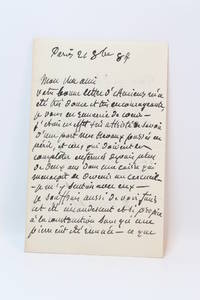
188471462Paris 1884. Fine. Paris 21 octobre 1884 11.40 x 17.80 cm une feuille Moving autograph letter signed by the painter Pierre Puvis de Chavannes two pages on a folded leaf lamenting the fate of his paintings stored at the Amiens Museum while awaiting exhibition. The painter addresses a recipient probably connected with the Musée de Picardie in Amiens who had given him news of his works kept in the museum still undergoing expansion: ""J'étais en effet très attristé de savoir d'une part mes tableaux en péril et ceux qui doivent les compléter enfermés depuis plus de deux ans dans une caisse qui menaçait de devenir un cerceuil - je m'y sentais avec eux - je souffrais aussi de voir fuir cet été incandescent et si propice à la construction sans qu'une pierre eût été posée ce que vous dites me rassure pour l'avenir."" He also mentions his friend Charles Borély the first curator of the Musée de Picardie who did not live to see the museum completed: ""Puisse Dieu me porter vie et me permettre de voir s'achever ce monument - mon pauvre ami Borély si dévoué à son musée n'aura pas eu cette joie"". unknown
189773973Paris: Imprimerie Champenoispour CH. MassonH. Piazza 1897. Fine. Imprimerie Champenois pour CH. Masson H. Piazza Paris Octobre 1897 13 x 31 cm une feuille et une serpente Rare original color lithograph executed by Armand Rassenfosse for L'Estampe Moderne series number 6 published in October 1897. One of 50 deluxe proofs printed on Japan paper with wide margins artist's signature in the plate publisher's dry stamp depicting a child's profile in the lower margin numbered stamp of the deluxe edition on the verso; print preceded by a tissue guard captioned with the artist's name title a poem and presentation text; and another blank tissue guard. Lithograph inspired by verses from Leconte de Lisle extracted from his collection Poèmes antiques an extract of which is reproduced on the print's tissue guard: ""Les cheveux noués d'un lien de fleurs."" ""Hair bound with a garland of flowers."" Magnificent French monthly publication edited between May 1897 and April 1899 L'Estampe moderne consists of original chromolithographs which unlike other journals such as Les Maîtres de l'Affiche and as stipulated on the tissue guards were created specially by each artist for the journal. Thus 100 prints appeared in total covering the major artistic movements of the late 19th century: Symbolism Art Nouveau Pre-Raphaelites Orientalists and Belle Époque. Each issue of four prints was printed in 2000 copies sold for 3.50F and 100 on Japan paper offered at 10F. Henri Piazza also planned a confidential deluxe printing: 50 copies on Japan paper with wide margins and 50 in black on China paper at the considerable price of 30F. This print of handsome format is superbly printed in colors on the most prestigious of papers: Japan paper. Thick silky satiny and pearlescent it contributes to making each page a work in its own right. Its quality of ink absorption and its affinity with colors also make it the ideal medium for these very beautiful lithographs. The interest of French collectors in artistic posters intensified at the beginning of the 1890s. Octave Uzanne to describe this fever invented the term ""affichomanie"" ""poster mania"". The poster originally popular and posted in the streets of the capital then became an art object and its ephemeral medium became precious and destined for preservation. Piazza decided to remove the poster from its advertising purpose and elevate it to the rank of a work of art in its own right equal to the illustrated deluxe book. He thus composed a prestigious collection of entirely original works by the most prominent European artists of the moment: Georges de Feure Eugène Grasset Henri Detouche Emile Berchmans Louis Rhead Gaston de Latenay Lucien Lévy-Dhurmer Gustave-Max Stevens Charles Doudelet Hans Christiansen Henri Fantin-Latour Steinlen Ibels Engels Willette Henri Meunier Evenepoël Bellery-Desfontaines Charles Léandre etc. Handsome copy in the artist's symbolist style. Imprimerie Champenoispour CH. MassonH. Piazza unknown
189773974Paris: Imprimerie Champenoispour CH. MassonH. Piazza 1897. Fine. Imprimerie Champenois pour CH. Masson H. Piazza Paris Octobre 1897 13 x 31 cm une feuille Rare original lithograph executed by Armand Rassenfosse for L'Estampe Moderne series number 6 published in October 1897. One of 50 deluxe proofs printed on China paper with wide margins artist's signature in the plate publisher's dry stamp depicting a child's profile in the lower margin mounted on a sheet of laid paper with the numbered stamp of the deluxe edition on the verso light marginal foxing. Lithograph inspired by verses from Leconte de Lisle extracted from his collection Poèmes antiques: ""Les cheveux noués d'un lien de fleurs."" ""Hair bound with a garland of flowers."" Magnificent French monthly publication edited between May 1897 and April 1899 L'Estampe moderne consists of original chromolithographs which unlike other journals such as Les Maîtres de l'Affiche and as stipulated on the tissue guards were created specially by each artist for the journal. Thus 100 prints appeared in total covering the major artistic movements of the late 19th century: Symbolism Art Nouveau Pre-Raphaelites Orientalists and Belle Époque. Each issue of four prints was printed in 2000 copies sold for 3.50F and 100 on Japan paper offered at 10F. Henri Piazza also planned a confidential deluxe printing: 50 copies on Japan paper with wide margins and 50 in black on China paper at the considerable price of 30F. This print of handsome format is superbly printed on one of the most prestigious papers: China paper. ""Despite all its qualities China paper too fragile owes its reputation not to its own beauty but rather to its particular affinity with printing ink. Its texture smooth and soft together is more suited than any other to receive a fine impression. This property makes China paper sought after for printing engravings."" ""Malgré toutes ses qualités le papier de Chine trop inconsistant doit sa réputation non pas à sa propre beauté mais bien à ses affinités particulières avec l'encre d'impression. Son tissu lisse et mou tout ensemble est plus apte qu'aucun autre à recevoir un beau tirage. Cette propriété fait rechercher le papier de Chine pour le tirage des gravures."" Anatole France. The interest of French collectors in artistic posters intensified at the beginning of the 1890s. Octave Uzanne to describe this fever invented the term ""affichomanie"" ""poster mania"". The poster originally popular and posted in the streets of the capital then became an art object and its ephemeral medium became precious and destined for preservation. Piazza decided to remove the poster from its advertising purpose and elevate it to the rank of a work of art in its own right equal to the illustrated deluxe book. He thus composed a prestigious collection of entirely original works by the most prominent European artists of the moment: Georges de Feure Eugène Grasset Henri Detouche Emile Berchmans Louis Rhead Gaston de Latenay Lucien Lévy-Dhurmer Gustave-Max Stevens Charles Doudelet Hans Christiansen Henri Fantin-Latour Steinlen Ibels Engels Willette Henri Meunier Evenepoël Bellery-Desfontaines Charles Léandre etc. Handsome copy in the artist's symbolist style. Imprimerie Champenoispour CH. MassonH. Piazza unknown
189874502Paris: Imprimerie Champenoispour CH. MassonH. Piazza 1898. Fine. Imprimerie Champenois pour CH. Masson H. Piazza Paris Juillet 1898 31 x 25.50 cm une feuille Rare original lithograph executed by Henri Martin for L'Estampe Moderne series number 15 published in July 1898. One of 50 deluxe proofs printed on China paper with wide margins artist's signature in the plate publisher's dry stamp representing a child's profile in the lower margin mounted on a sheet of laid paper with the numbered luxury edition stamp on the verso pale marginal foxing. Lithograph inspired by an extract from Dante's Divine Comedy. Magnificent French monthly publication edited between May 1897 and April 1899 L'Estampe Moderne consists of unpublished chromolithographs which unlike other magazines such as Les Maîtres de l'Affiche and as stipulated on the tissue guards were specially created by each artist for the magazine. Thus 100 prints appeared in total covering the major artistic movements of the late 19th century: Symbolism Art Nouveau Pre-Raphaelites Orientalists and Belle Epoque. Each delivery of four prints was issued in 2000 copies sold for 3.50F and 100 on Japan paper offered at 10F. Henri Piazza also planned a confidential very deluxe printing: 50 copies on Japan paper with wide margins and 50 in black on China paper at the considerable price of 30F. This print of handsome format is superbly printed on one of the most prestigious papers: China paper. ""Despite all its qualities China paper too inconsistent owes its reputation not to its own beauty but rather to its particular affinities with printing ink. Its texture smooth and soft at once is more apt than any other to receive a beautiful printing. This property makes China paper sought after for printing engravings."" Anatole France. French collectors' interest in artistic posters intensified at the beginning of the 1890s. Octave Uzanne to qualify this fever invented the term ""affichomanie."" The poster originally popular and posted on the streets of the capital then became an art object and its ephemeral medium became precious and devoted to conservation. Piazza decided to remove the poster from its advertising vocation and elevate it to the rank of a complete work of art on the same level as the luxury illustrated book. He thus composed a prestigious collection of entirely original works by the most prominent European artists of the moment: Georges de Feure Eugène Grasset Henri Detouche Emile Berchmans Louis Rhead Gaston de Latenay Lucien Lévy-Dhurmer Gustave-Max Stevens Charles Doudelet Hans Christiansen Henri Fantin-Latour Steinlen Ibels Engels Willette Henri Meunier Evenepoël Bellery-Desfontaines Charles Léandre etc. Handsome copy in the symbolist style. Imprimerie Champenoispour CH. MassonH. Piazza unknown
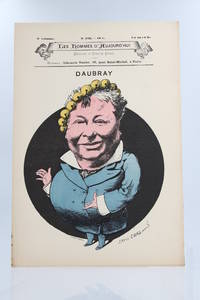
188779319Paris: Léon Vanier 1887. Fine. Léon Vanier Paris s. d. circa 1887 20 x 29.50 cm en feuilles First edition of this issue of the magazine consisting of two folded sheets. Handsome copy. On the first a color lithograph representing Daubray by Emile Cohl. On the following ones text by Pierre et Paul in first edition entitled ""Daubray"". Léon Vanier unknown
1880714731880. Fine. s. d. après 1880 10.50 x 13.50 cm une feuille Autograph letter signed by the Orientalist painter Georges Clairin to a fellow painter complaining about the harsh selection imposed by the Salon des artistes français the official and obligatory gathering of French painting. "". jusqu'au 20 mars il y a à Paris beaucoup de malheureux artistes dont je fais partie qui s'imposent le supplice d'envoyer un ou deux tableaux au palais des Champs Elysées et que je suis assez bête pour envoyer deux tableaux cette année - je suis en retard et madame peinture ne me permet pas de me donner les plaisirs que m'offrent l'amitié. ."" "". until March 20th there are in Paris many unfortunate artists of whom I am one who impose upon themselves the torment of sending one or two paintings to the Palais des Champs Elysées and I am foolish enough to send two paintings this year - I am running late and lady painting does not allow me to indulge in the pleasures that friendship offers me. ."" unknown
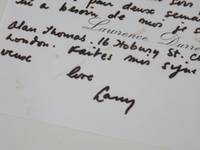
1970703391970. Fine. s. d. circa 1970 12.70 x 8.10 cm une carte de visite Autograph signed calling card addressed to Jani Brun written in black felt-tip pen and bearing some stains. The writer informs his young French mistress of an imminent departure to London where he frequently visited his publisher: ""Je suis chez Alan Thomas. 16 Holbury St. Chelsea. Faites moi signe quand tu veux sic Love Larry"" ""I am at Alan Thomas's. 16 Holbury St. Chelsea. Let me know when you want to meet. Love Larry"". After many years spent in Greece Egypt and Rhodes the travel writer Lawrence Durrell was forced to flee Cyprus following popular uprisings that led the island to its independence from the British crown. Rich only with a shirt and a typewriter but crowned with the success of his novel Bitter Lemons of Cyprus Les citrons acides he arrived in France in 1956 and settled in the Languedoc village of Sommières. In the ""maison Tartès"" his large house surrounded by trees he wrote the second part of his work his monumental Avignon Quintet devoted himself to painting and received his illustrious friends including the couple Henry Miller and Anaïs Nin the violinist Yehudi Menuhin the London publisher Alan G. Thomas and his two daughters Penelope and Sappho. Among the olive trees and under the Mediterranean sun he met in the mid-1960s the young and sparkling ""Jany"" Janine Brun a thirty-something woman from Montpellier of devastating beauty who worked in the Department of Antiquities at the Sorbonne in Paris. She was nicknamed ""Buttons"" in memory of their first meeting where the young woman wore a dress covered with buttons. Henry Miller also fell under the charm of ""Buttons"" praising her beauty and eternal youth in exceptional unpublished letters. The three companions spent memorable Parisian evenings of which we keep precious autograph traces through their epistolary exchanges. Recommended by Durrell she made numerous trips notably to England from where she received extensive correspondence from the writer as well as original works of art signed with his artist pseudonym Oscar Epfs. unknown
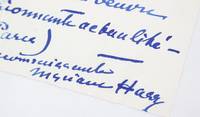
194786689Neuilly-sur-Seine 1947. Fine. Neuilly-sur-Seine s. d. ca 1947 20.50 x 13.50 cm Une page Autograph letter signed by Myriam Harry addressed to a fellow writer competing for the Hélène Vacaresco prize certainly Pierre Belperron for his work published by Plon in 1947 ""La guerre de Sécession"". Postal fold mark inherent to mailing. From the height of all her timidity Myriam Harry did not want to solicit her fellow writer and receiving his inscribed work fills her with happiness : ""Combien je suis heureuse de recevoir votre beau livre et même si aimablement dédicacé. Depuis quelque temps déjà je le désirais et n'osait vous le demander"" ""How happy I am to receive your beautiful book and even so kindly inscribed. For some time already I desired it and dared not ask you for it"" Juror of the prize that Hélène Vacaresco had created to reward a literary essay and whose first prize was awarded to Marguerite Teillard-Chambon in 1935 Myriam Harry will not fail to support with her voice the candidacy of her correspondent: ""vous pensez que je serai charmée d'apporter ma voix à une oeuvre profonde et d'une si passionnante actualité."" ""you think that I will be delighted to give my voice to a profound work and one of such compelling topicality."" unknown
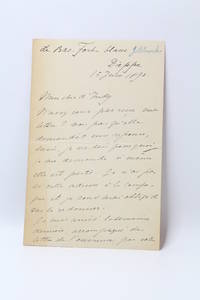
1890714741890. Fine. 15 juin 1890 11.50 x 17.70 cm une feuille Long autograph letter signed by the painter Jacques-Emile Blanche from his childhood villa in Dieppe Bas-Fort Blanc. He describes the atmosphere of Dieppe and evokes the popular songs of the sailors. 4 pages on a folded sheet. ""J'ai essayé de prendre ce qu'on appelle du repos. J'avais un peu compté sur le grand spectacle de la mer : pour ne rien faire que lire un peu mais mon âmes est décidément impropre à jouir des nobles aspects de la nature et je suis en train de constater une fois de plus mon peu de disposition pour le paysage. Le soir quelques fois des farceurs de matelots qui sont à la pêche dans de petites barques chantent des choses émouvantes qu'on voudrait noter ."" ""I have tried to take what is called rest. I had counted somewhat on the great spectacle of the sea: to do nothing but read a little but my soul is decidedly unfit to enjoy the noble aspects of nature and I am once again confirming my lack of disposition for landscape. In the evening sometimes joking sailors who are fishing in small boats sing moving things that one would like to note down ."" unknown
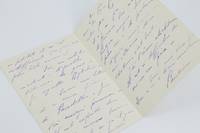
190679014Villa Clos fleuri Nice Nice 1906. Fine. Villa Clos fleuri Nice Nice 3 mars 1906 12.40 x 16.80 cm 3 pages sur un double feuillet Autograph letter signed ""Pauline"" by Renée Vivien addressed to Natalie Clifford Barney and written in violet ink on a double sheet with violet letterhead the Parisian address on the letterhead crossed out. Transverse folds inherent to mailing. Fine letter evoking Renée Vivien's execration for Nice: ""Ici un soleil insolent d'ignobles bâtisses des gens Je regrette Mytilène . Mon Dieu entre Nice et Paris il n'y a pas de différence bien marquée quelques oranges de plus ici des palmiers d'opéra comique - une illusion de chaleur c'est tout."" ""Here an insolent sun ignoble buildings people I miss Mytilene . My God between Nice and Paris there is no marked difference a few more oranges here comic opera palm trees an illusion of warmth that's all."" The evocation of Mytilene where the two lovers had traveled the previous summer continues in this missive: ""Encore une lettre de ce vieux filou de Paradellis Je l'ai envoyé promener Il est capable de faire main basse sur tout ce qu'il y a dans la maison "" ""Another letter from that old rogue Paradellis I sent him packing He's capable of making off with everything in the house "" It was Passagisti Paradellis who rented a villa on site with a two-year lease to Renée and Natalie. ""The villa had been tastefully furnished. Collections of rare porcelain mother-of-pearl inlaid furniture a dining room with high-backed armchairs."" J.-P. Goujon Tes blessures sont plus douces que leurs caresses In this letter the Violet Muse also gives the key to one of the characters in Une femme m'apparut whose revised version had just appeared: ""Dis à Madame Mardrus pas de ma part de la tienne ! que Doriane c'est elle telle qu'elle s'est révélée à moi un jour dans l'ardeur et dans la tristesse."" ""Tell Madame Mardrus not from me from you! that Doriane is her as she revealed herself to me one day in ardor and in sadness."" The work whose rewriting had nevertheless tried the poetess is here devalued by the latter: ""En somme je n'aime pas ce volume ou plutôt il m'est indifférent ce qui est plus triste encore "" ""In sum I don't like this volume or rather it is indifferent to me which is even sadder "" It was at the end of 1899 and through the intermediary of Violette Shillito that Renée Vivien - then Pauline Tarn - made the acquaintance of Natalie Clifford Barney ""cette Américaine plus souple qu'une écharpe dont l'étincelant visage brille de cheveux d'or de prunelles bleu de mer de dents implacables"" Colette Claudine à Paris. Natalie who had just lived through a summer idyll with the scandalous Liane de Pougy who had initiated her into sapphism paid only discreet attention to this new acquaintance. Renée on the other hand was completely captivated by the young American and would relate this love at first sight in her autobiographical novel Une Femme m'apparut: ""J'évoquai l'heure déjà lointaine où je la vis pour la première fois et le frisson qui me parcourut lorsque mes yeux rencontrèrent ses yeux d'acier mortel ses yeux aigus et bleus comme une lame. J'eus l'obscur prescience que cette femme m'intimait l'ordre du destin que son visage était le visage redouté de mon avenir. Je sentis près d'elle les vertiges lumineux qui montent de l'abîme et l'appel de l'eau très profonde. Le charme du péril émanait d'elle et m'attirait inexorablement. Je n'essayai point de la fuir car j'aurais échappé plus aisément à la mort."" ""Winter 1899-1900. Beginning of the idyll. One evening Vivien is invited by her new friend to Mme Barney's studio Natalie's mother 153 avenue Victor-Hugo at the corner of rue de Longchamp. Natalie ventures to read verses of her composition. When Vivien tells her she loves these verses she replies that it is better to love the poet. A response quite worthy of the Amazon."" J.-P. Goujon op. cit. Two ye unknown
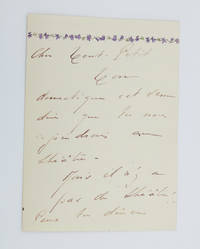
190679017s. l. Paris 1906. Fine. s. l. Paris s. d. ca 1906 11.50 x 15.90 cm 4 pages sur un double feuillet Autograph letter signed ""Paul"" from Renée Vivien addressed to Natalie Clifford Barney and written in black ink on a double sheet bordered with violets. Baroness Hélène de Zuylen has added a small manuscript message signed at the end of the letter: ""Paule a raison vous êtes un être charmant et féerique !"" ""Paule is right you are a charming and fairy-like being!"" Transverse folds inherent to mailing. ""Cher Tout-Petit Ton domestique est venu dire que tu nous rejoindrais au théâtre. Mais il n'y a pas de théâtre ! Peux-tu dîner avec nous jeudi ou vendredi Si dans la soirée de jeudi tu n'es libre qu'après le dîner viens nous rejoindre à n'importe quelle heure. Donne-moi un petit coup de téléphone pour me dire ce que tu feras et si je dois te faire chercher et à quelle heure Dis à tes cheveux que je les aime."" ""Dear Little One Your servant came to say that you would join us at the theater. But there is no theater! Can you dine with us Thursday or Friday If on Thursday evening you are only free after dinner come join us at any hour. Give me a little telephone call to tell me what you will do and if I should have you collected and at what time Tell your hair that I love it."" It was at the end of 1899 and through Violette Shillito that Renée Vivien - then Pauline Tarn - made the acquaintance of Natalie Clifford Barney ""cette Américaine plus souple qu'une écharpe dont l'étincelant visage brille de cheveux d'or de prunelles bleu de mer de dents implacables"" ""this American more supple than a scarf whose sparkling face shines with golden hair sea-blue eyes implacable teeth"" Colette Claudine à Paris. Natalie who had just experienced a summer idyll with the scandalous Liane de Pougy who initiated her into sapphism paid only discreet attention to this new acquaintance. Renée on the other hand was totally captivated by the young American and would relate this coup de foudre in her autobiographical novel Une Femme m'apparut: « J'évoquai l'heure déjà lointaine où je la vis pour la première fois et le frisson qui me parcourut lorsque mes yeux rencontrèrent ses yeux d'acier mortel ses yeux aigus et bleus comme une lame. J'eus l'obscur prescience que cette femme m'intimait l'ordre du destin que son visage était le visage redouté de mon avenir. Je sentis près d'elle les vertiges lumineux qui montent de l'abîme et l'appel de l'eau très profonde. Le charme du péril émanait d'elle et m'attirait inexorablement. Je n'essayai point de la fuir car j'aurais échappé plus aisément à la mort. » ""I evoked that already distant hour when I saw her for the first time and the shiver that ran through me when my eyes met her deadly steel eyes her sharp blue eyes like a blade. I had the obscure prescience that this woman was giving me destiny's order that her face was the dreaded face of my future. I felt near her the luminous vertigo that rises from the abyss and the call of very deep water. The charm of peril emanated from her and attracted me inexorably. I did not try to flee her for I would have escaped death more easily."" « Hiver 1899-1900. Débuts de l'idylle. Un soir Vivien est invitée par sa nouvelle amie dans l'atelier de Mme Barney mère de Natalie 153 avenue Victor-Hugo à l'angle de la rue de Longchamp. Natalie s'enhardit à lire des vers de sa composition. Comme Vivien lui dit aimer ces vers elle lui répond qu'il vaut mieux aimer le poète. Réponse bien digne de l'Amazone. » ""Winter 1899-1900. Beginning of the idyll. One evening Vivien is invited by her new friend to the studio of Mme Barney Natalie's mother 153 avenue Victor-Hugo at the corner of rue de Longchamp. Natalie grows bold enough to read verses of her own composition. When Vivien tells her she loves these verses she replies that it is better to love the poet. A response quite worthy of the Amazon."" J.-P. Goujon Tes blessures sont plus douces qu unknown