Andre BRETONBiblio.com
48 402 résultats
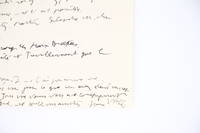
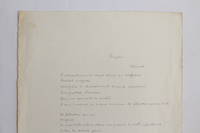
1917642291917. Fine. circa 1917-1918 22.30 x 27.60 cm une feuille sous chemise et étui André Breton's remarkable autograph youth poem not always signed in black ink on laid paper dated or probably composed around . Poem copied from the hand of the author probably before its publication head of in his first collection Mount of Piety which appeared in June 1919 at the publishing house Au sans Pareil newly founded by his friend Rene Hilsum . The poems of Mont de Piety essential jewels of the Breton youth were composed during the contemporary 1913-1919 between his seventeenth and twenty-third year that he passes as mobilized in the heart of the bloody chaos of the First World War. This piece carefully handwritten by Breton's hand in black ink is part of a set of handwritten copies addressed for criticism to his circle of friends and writers including Valéry Apollinaire Theodore Fraenkel and his brother in arms André Paris. The poems of the collection have for the most part subsequently been published in literary journals North-South The Three Roses Solstices . They render a tribute tinged with irony to the masters of Breton to whom he dedicates some of his poems: Leon-Paul Fargue Apollinaire Gide Vaché Derain Valéry but also Reverdy. Quite brief and sometimes cryptic they expose the poetic heritage of the author to which are added his correspondence with the great figures of contemporary poetry and notably Paul Valéry who exerted a fascination on the young Breton. Although the interpretations remain numerous there is no doubt through these poems of the filiation of the author to his great models such as Rimbaud or Mallarmé and his half belonging to a family of Symbolist poets he still wants emancipate. Breton multiplies the cross allusions dedicating to one a poem inspired by the other and constantly oscillating between ""piety"" and ""impiety"" towards his ""gods"" of poetry. The poems of Mount of Piety are a rare and precious testimony of the author's journey through his youthful influences at the dawn of his discovery of automatic writing and his adherence to the Dada movement. unknown
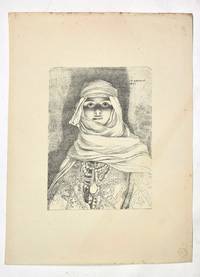
189773891Paris: Imprimerie Champenoispour CH. MassonH. Piazza 1897. Fine. Imprimerie Champenois pour CH. Masson H. Piazza Paris Mai 1897 23 x 32 cm une feuille Rare original lithograph executed by Louis-Auguste Girardot for L'Estampe Moderne series number 1 published in May 1897. One of 50 deluxe proofs printed on China paper with wide margins artist's signature and date in the plate publisher's dry stamp depicting a child's profile in the lower margin mounted on a sheet of laid paper with on the verso the numbered stamp of the deluxe issue occasional marginal foxing. Magnificent French monthly publication issued between May 1897 and April 1899 L'Estampe moderne consists of original chromolithographs which unlike other magazines such as Les Maîtres de l'Affiche and as stipulated on the tissue guards were created specially by each artist for the magazine. Thus 100 prints appeared in total covering the major artistic movements of the late 19th century: Symbolism Art Nouveau Pre-Raphaelites Orientalists and Belle Époque. Each issue of four prints was printed in 2000 copies sold for 3.50F and 100 on Japan paper offered at 10F. Henri Piazza also planned a confidential very deluxe printing: 50 copies on Japan paper with wide margins and 50 in black on China paper at the considerable price of 30F. This print of handsome format is superbly printed on one of the most prestigious papers: China paper. ""Despite all its qualities China paper too inconsistent owes its reputation not to its own beauty but rather to its particular affinities with printing ink. Its texture smooth and soft at once is more apt than any other to receive a beautiful impression. This property makes China paper sought after for printing engravings."" Anatole France. French collectors' interest in artistic posters grew at the beginning of the 1890s. Octave Uzanne to describe this fever invented the term ""affichomanie."" The poster originally popular and pasted on the streets of the capital then became an art object and its ephemeral medium became precious and destined for preservation. Piazza decided to remove the poster from its advertising purpose and elevate it to the rank of a complete work of art on the same level as the deluxe illustrated book. He thus composed a prestigious collection of entirely original works by the most prominent European artists of the moment: Georges de Feure Eugène Grasset Henri Detouche Emile Berchmans Louis Rhead Gaston de Latenay Lucien Lévy-Dhurmer Gustave-Max Stevens Charles Doudelet Hans Christiansen Henri Fantin-Latour Steinlen Ibels Engels Willette Henri Meunier Evenepoël Bellery-Desfontaines Charles Léandre etc. Handsome copy in the orientalist style of the artist. Imprimerie Champenoispour CH. MassonH. Piazza unknown
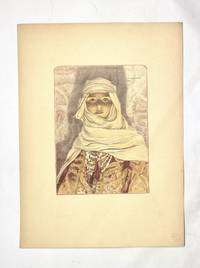
189773889Paris: Imprimerie Champenoispour CH. MassonH. Piazza 1897. Fine. Imprimerie Champenois pour CH. Masson H. Piazza Paris Mai 1897 23 x 32 cm une feuille Rare original color lithograph executed by Louis-Auguste Girardot for L'Estampe Moderne series number 1 published in May 1897. One of 50 deluxe proofs printed on Japan paper with full margins artist's signature and date in the plate publisher's dry stamp representing a child's profile in the lower margin numbered stamp of the deluxe issue on verso; print preceded by tissue guard. Magnificent French monthly publication issued between May 1897 and April 1899 L'Estampe moderne consists of original chromolithographs which unlike other magazines such as Les Maîtres de l'Affiche and as stipulated on the tissue guards were created specifically by each artist for the magazine. Thus 100 prints appeared in total covering the major artistic movements of the late 19th century: Symbolism Art Nouveau Pre-Raphaelites Orientalists and Belle Époque. Each delivery of four prints was issued in 2000 copies sold at 3.50F and 100 on Japan paper offered at 10F. Henri Piazza also planned a confidential deluxe issue: 50 copies on Japan paper with full margins and 50 in black on China paper at the considerable price of 30F. This print of handsome format is superbly printed in colors on the most prestigious paper: Japan. Thick silky satin and pearlescent it contributes to making each page a complete work in its own right. Its ink absorption quality and its affinity with colors also make it the ideal support for these very fine lithographs. French collectors' interest in artistic posters grew in the early 1890s. Octave Uzanne to describe this fever invented the term ""affichomanie."" The poster originally popular and displayed in the streets of the capital then became an art object and its ephemeral medium became precious and destined for conservation. Piazza decided to remove the poster from its advertising purpose and elevate it to the rank of a complete work of art on the same level as the deluxe illustrated book. He thus composed a prestigious collection of entirely original works by the most prominent European artists of the moment: Georges de Feure Eugène Grasset Henri Detouche Emile Berchmans Louis Rhead Gaston de Latenay Lucien Lévy-Dhurmer Gustave-Max Stevens. Handsome copy in the artist's orientalist style. Imprimerie Champenoispour CH. MassonH. Piazza unknown
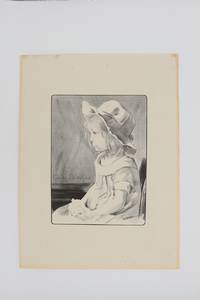
189874591Paris: Imprimerie Champenoispour CH. MassonH. Piazza 1898. Fine. Imprimerie Champenois pour CH. Masson H. Piazza Paris Octobre 1898 24 x 33 cm une feuille Rare original lithograph executed by Louise Breslau for L'Estampe Moderne series number 18 published in October 1898. One of 50 deluxe proofs printed on China paper with wide margins artist's signature in the plate publisher's dry stamp representing a child's profile in lower margin mounted on a sheet of laid paper with the numbered stamp of the deluxe issue on verso pale marginal foxing. Lithograph inspired by three stanzas of a poem by Victor Hugo. Magnificent French monthly publication edited between May 1897 and April 1899 L'Estampe moderne consists of original chromolithographs which unlike other reviews such as Les Maîtres de l'Affiche and as stipulated on the tissue guards were created specifically by each artist for the review. Thus 100 prints appeared in total covering the major artistic movements of the late 19th century: Symbolism Art Nouveau Pre-Raphaelites Orientalists and Belle Époque. Each delivery of four prints was issued in 2000 copies sold for 3.50F and 100 on Japan paper offered at 10F. Henri Piazza also planned a confidential deluxe issue: 50 copies on Japan paper with wide margins and 50 in black on China paper at the considerable price of 30F. This print in a beautiful format is superbly printed on one of the most prestigious papers: China paper. ""Despite all its qualities China paper too inconsistent owes its reputation not to its own beauty but rather to its particular affinities with printing ink. Its texture smooth and soft at the same time is more apt than any other to receive a beautiful printing. This property makes China paper sought after for printing engravings."" Anatole France. French collectors' interest in artistic posters grew in the early 1890s. Octave Uzanne to qualify this fever invented the term ""affichomanie."" The poster originally popular and pasted in the streets of the capital then became an art object and its ephemeral medium became precious and destined for preservation. Piazza decided to remove the poster from its advertising purpose and elevate it to the rank of a complete work of art on the same level as the illustrated deluxe book. He thus composed a prestigious collection of entirely original works by the most prominent European artists of the moment: Georges de Feure Eugène Grasset Henri Detouche Emile Berchmans Louis Rhead Gaston de Latenay Lucien Lévy-Dhurmer Gustave-Max Stevens Charles Doudelet Hans Christiansen Henri Fantin-Latour Steinlen Ibels Engels Willette Henri Meunier Evenepoël Bellery-Desfontaines Charles Léandre etc. Fine copy. Imprimerie Champenoispour CH. MassonH. Piazza unknown
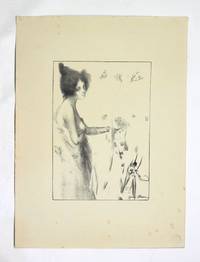
189773952Paris: Imprimerie Champenoispour CH. MassonH. Piazza 1897. Fine. Imprimerie Champenois pour CH. Masson H. Piazza Paris Août 1897 32 x 23 cm une feuille Rare original lithograph executed by Paul Herrmann also known as Henri Héran for L'Estampe Moderne series number 4 published in August 1897. One of 50 deluxe proofs printed on China paper with wide margins artist's signature and date in the plate publisher's dry stamp representing a child's profile in the lower margin mounted on a sheet of laid paper with the numbered stamp of the deluxe edition on the reverse occasional marginal foxing. Magnificent French monthly publication edited between May 1897 and April 1899 L'Estampe moderne consists of original chromolithographs which unlike other reviews such as Les Maîtres de l'Affiche and as stipulated on the tissue guards were created specially by each artist for the review. Thus 100 prints appear in total covering the major artistic movements of the end of the 19th century: Symbolism Art Nouveau Pre-Raphaelites Orientalists and Belle Époque. Each delivery of four prints is issued in 2000 copies sold for 3.50F and 100 on Japan paper offered at 10F. Henri Piazza also provides for a confidential deluxe printing: 50 copies on Japan paper with wide margins and 50 in black on China paper at the considerable price of 30F. This print of handsome format is superbly printed on one of the most prestigious papers: China. ""Despite all its qualities China paper too inconsistent owes its reputation not to its own beauty but rather to its particular affinities with printing ink. Its texture smooth and soft together is more apt than any other to receive a beautiful printing. This property makes China paper sought after for printing engravings."" Anatole France. The interest of French collectors in artistic posters intensifies at the beginning of the 1890s. Octave Uzanne to qualify this fever invents the term ""affichomanie"". The poster originally popular and plastered in the streets of the capital then becomes an art object and its ephemeral support becomes precious and destined for preservation. Piazza decides to remove the poster from its advertising vocation and elevate it to the rank of a work of art in its own right on the same level as the luxury illustrated book. He thus composes a prestigious collection of entirely original works by the most prominent European artists of the moment: Georges de Feure Eugène Grasset Henri Detouche Emile Berchmans Louis Rhead Gaston de Latenay Lucien Lévy-Dhurmer Gustave-Max Stevens Charles Doudelet Hans Christiansen Henri Fantin-Latour Steinlen Ibels Engels Willette Henri Meunier Evenepoël Bellery-Desfontaines Charles Léandre etc. Handsome copy in the Belle Époque style. Imprimerie Champenoispour CH. MassonH. Piazza unknown
189773951Paris: Imprimerie Champenoispour CH. MassonH. Piazza 1897. Fine. Imprimerie Champenois pour CH. Masson H. Piazza Paris Août 1897 23 x 33 cm une feuille et une serpente Rare original color lithograph executed by Paul Herrmann also known as Henri Héran for L'Estampe Moderne series number 4 published in August 1897. One of 50 deluxe proofs printed on Japan paper with wide margins artist's signature in the plate publisher's dry stamp depicting a child's profile in the lower margin numbered luxury edition stamp on verso; engraving preceded by a tissue guard inscribed with the artist's name title a poem and presentation text; and another blank tissue guard. Magnificent French monthly publication issued between May 1897 and April 1899 L'Estampe moderne consists of original chromolithographs which unlike other magazines such as Les Maîtres de l'Affiche and as stipulated on the tissue guards were created specially by each artist for the magazine. Thus 100 prints appeared in total covering the major artistic movements of the late 19th century: Symbolism Art Nouveau Pre-Raphaelites Orientalists and Belle Époque. Each issue of four prints was produced in 2000 copies sold for 3.50F and 100 on Japan paper offered at 10F. Henri Piazza also planned a confidential deluxe printing: 50 copies on Japan paper with wide margins and 50 in black on China paper at the considerable price of 30F. This print in handsome format is superbly printed in colors on the most prestigious of papers: Japan paper. Thick silky satiny and pearlescent it helps make each page a work of art in its own right. Its ink absorption quality and affinity with colors also make it the ideal support for these very fine lithographs. French collectors' interest in artistic posters intensified in the early 1890s. Octave Uzanne to describe this fever invented the term ""affichomanie."" The poster originally popular and pasted on the streets of the capital then became an art object and its ephemeral medium became precious and destined for preservation. Piazza decided to remove the poster from its advertising purpose and elevate it to the rank of a complete work of art on the same level as the luxury illustrated book. He thus composed a prestigious collection of entirely original works by the most prominent European artists of the moment: Georges de Feure Eugène Grasset Henri Detouche Emile Berchmans Louis Rhead Gaston de Latenay Lucien Lévy-Dhurmer Gustave-Max Stevens Charles Doudelet Hans Christiansen Henri Fantin-Latour Steinlen Ibels Engels Willette Henri Meunier Evenepoël Bellery-Desfontaines Charles Léandre etc. Handsome copy in the Belle Époque style. Imprimerie Champenoispour CH. MassonH. Piazza unknown
189773994Paris: Imprimerie Champenoispour CH. MassonH. Piazza 1897. Fine. Imprimerie Champenois pour CH. Masson H. Piazza Paris Novembre 1897 24 x 35 cm une feuille Rare original lithograph executed by Jacques Wely for L'Estampe Moderne series number 7 published in November 1897. One of 50 deluxe proofs printed on China with wide margins artist's signature and date in the plate publisher's dry stamp representing a child's profile in lower margin mounted on a laid paper sheet with on the back the numbered stamp of the deluxe printing pale marginal foxing. Magnificent French monthly publication edited between May 1897 and April 1899 L'Estampe moderne consists of original chromolithographs which unlike other magazines such as Les Maîtres de l'Affiche and as stipulated on the tissue guards were created specially by each artist for the magazine. Thus 100 prints appeared in total covering the major artistic movements of the late 19th century: Symbolism Art Nouveau Pre-Raphaelites Orientalists and Belle Époque. Each delivery of four prints was printed in 2000 copies sold at 3.50F and 100 on Japan paper offered at 10F. Henri Piazza also planned a confidential deluxe printing: 50 copies on Japan with wide margins and 50 in black on China at the considerable price of 30F. This print of handsome format is superbly printed on one of the most prestigious papers: China. « Malgré toutes ses qualités le papier de Chine trop inconsistant doit sa réputation non pas à sa propre beauté mais bien à ses affinités particulières avec l'encre d'impression. Son tissu lisse et mou tout ensemble est plus apte qu'aucun autre à recevoir un beau tirage. Cette propriété fait rechercher le papier de Chine pour le tirage des gravures. » ""Despite all its qualities China paper too insubstantial owes its reputation not to its own beauty but rather to its particular affinities with printing ink. Its texture smooth and soft at once is more apt than any other to receive a beautiful printing. This property makes China paper sought after for printing engravings."" Anatole France. The interest of French collectors in artistic posters amplified at the beginning of the 1890s. Octave Uzanne to describe this fever invented the term « affichomanie » ""poster mania"". The poster originally popular and plastered on the streets of the capital then became an art object and its ephemeral medium became precious and destined for preservation. Piazza decided to remove the poster from its advertising vocation and elevate it to the rank of a complete work of art on the same level as the deluxe illustrated book. He thus composed a prestigious collection of entirely original works by the most prominent European artists of the moment: Georges de Feure Eugène Grasset Henri Detouche Emile Berchmans Louis Rhead Gaston de Latenay Lucien Lévy-Dhurmer Gustave-Max Stevens Charles Doudelet Hans Christiansen Henri Fantin-Latour Steinlen Ibels Engels Willette Henri Meunier Evenepoël Bellery-Desfontaines Charles Léandre etc. Handsome copy in the Belle Époque style. Imprimerie Champenoispour CH. MassonH. Piazza unknown
189773993Paris: Imprimerie Champenoispour CH. MassonH. Piazza 1897. Fine. Imprimerie Champenois pour CH. Masson H. Piazza Paris Novembre 1897 24 x 35 cm une feuille et une serpente Rare original color lithograph executed by Jacques Wely for L'Estampe Moderne series number 7 published in November 1897. One of 50 deluxe proofs printed on Japan paper with wide margins artist's signature and date in the plate publisher's dry stamp depicting a child's profile in the lower margin numbered stamp of the deluxe printing on the verso minimal corner damage of no consequence; engraving preceded by a tissue guard captioned with the artist's name title and a poem; blank tissue guard. Lithograph inspired by a text by Pierre Loti from his novel Mon frère Yves of which an extract is reproduced on the print's tissue guard. Magnificent French monthly publication issued between May 1897 and April 1899 L'Estampe moderne consists of original chromolithographs which unlike other magazines such as Les Maîtres de l'Affiche and as stipulated on the tissue guards were created specially by each artist for the magazine. Thus 100 prints appeared in total covering the major artistic movements of the late 19th century: Symbolism Art Nouveau Pre-Raphaelites Orientalists and Belle Époque. Each issue of four prints was printed in 2000 copies sold for 3.50F and 100 on Japan paper offered at 10F. Henri Piazza also planned a confidential deluxe printing: 50 copies on Japan paper with wide margins and 50 in black on China paper at the considerable price of 30F. This print in a handsome format is superbly printed on the most prestigious of papers: Japan. Thick silky satin and pearlescent it contributes to making each page a work in its own right. Its quality of ink absorption and its affinity with colors also make it the ideal support for these very fine lithographs. French collectors' interest in artistic posters intensified in the early 1890s. Octave Uzanne to describe this fever invented the term ""affichomanie."" The poster originally popular and plastered on the streets of the capital then became an art object and its ephemeral medium became precious and destined for preservation. Piazza decided to remove the poster from its advertising vocation and elevate it to the rank of a complete work of art on the same level as the luxury illustrated book. He thus composed a prestigious collection of entirely original works by the most prominent European artists of the moment: Georges de Feure Eugène Grasset Henri Detouche Emile Berchmans Louis Rhead Gaston de Latenay Lucien Lévy-Dhurmer Gustave-Max Stevens Charles Doudelet Hans Christiansen Henri Fantin-Latour Steinlen Ibels Engels Willette Henri Meunier Evenepoël Bellery-Desfontaines Charles Léandre etc. Handsome copy in the Belle Époque style. Imprimerie Champenoispour CH. MassonH. Piazza unknown
189387914Paris: S. n. 1893. Fine. S. n. Paris 30 Septembre 1893 10 x 19.50 cm trois pages et demie sur un bifeuillet une enveloppe Autograph letter signed by Jean Lorrain 47 lines written in black ink on a double sheet addressed to the café-concert singer Yvette Guilbert. Fold marks inherent to the envelope enclosure envelope included. Jean Lorrain is recovering with difficulty and very slowly from his operation: ""Not yet healed! All the misfortunes all the complications all the relapses. Operated on June 30th fifty-eight days of filth anguish and suffering and two dressings per day."" and feels aged by this harsh physical ordeal: ""Vous me retrouverez avec des cheveux blancs et plus mince que vô."" His convalescence will take him outside Paris: ""Je pars demain pour Plombières et j'y resterai un mois. Je n'assisterai donc pas à vos débuts de septembre."" and he worries about his author's rights for ""Fleur de berge"" a song for which he wrote the lyrics and which Yvette Guilbert performs and for which she composed the music: ""Fleur de Berge a été chantée plus de mille fois par tous et partout et je n'ai jamais jamais touché un sou ! Avouez que c'est peu je voudrais pourtant qu'elle me rapporte de quoi vous envoyer une fleur. Est-ce que pour Morphinée et celles que je compte vous faire ce sera toujours peau de balle comme ça."" The writer completely foreign to and lost in these legal intricacies asks the singer for advice: ""Vous devez être très au courant vous. Ecrivez-moi un peu comment on fait comment vous faites. Consultez au besoin votre imprimeur éditeur."" Fine autograph letter from a dandy writer confronted with the mysteries of material and pecuniary considerations. S. n. unknown
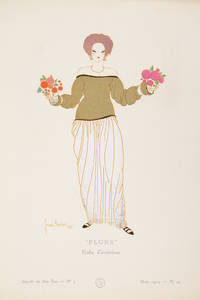
191484691Paris: Lucien Vogel éditeur 1914. Fine. Lucien Vogel éditeur Paris Mars 1914 19 x 24.50 cm une feuille Original color print heightened with gold printed on laid paper signed lower left on the plate. Original engraving created to illustrate La Gazette du bon ton one of the most beautiful and influential fashion magazines of the 20th century celebrating the talent of French creators and artists during the flourishing of Art Deco. Famous fashion magazine founded in 1912 by Lucien Vogel La Gazette du bon ton was published until 1925 with an interruption during the War from 1915 to 1920 due to the mobilization of its editor-in-chief. It consists of 69 issues printed in only 2000 copies and is illustrated notably with 573 color plates and 148 sketches representing models by great couturiers. From their publication these luxurious publications ""were addressed to bibliophiles and worldly aesthetes"" Françoise Tétart-Vittu ""La Gazette du bon ton"" in Dictionnaire de la mode 2016. Printed on fine laid paper they used a typeface specially created for the magazine by Georges Peignot the Cochin character later adopted in 1946 by Christian Dior. The prints were created using the metal stencil technique heightened in colors and some emphasized with gold or palladium. The adventure began in 1912 when Lucien Vogel a man of society and fashion - he had already participated in the magazine Femina - decided to found with his wife Cosette de Brunhoff sister of Jean father of Babar the Gazette du bon ton whose subtitle was then ""Art modes et frivolités"". Georges Charensol reports the editor-in-chief's words: ""In 1910 he observed there existed no fashion journal that was truly artistic and representative of the spirit of its time. I was therefore thinking of making a luxury magazine with truly modern artists . I was certain of success because for fashion no country can rival France."" ""Un grand éditeur d'art. Lucien Vogel"" in Les Nouvelles littéraires n°133 May 1925. The magazine's success was immediate not only in France but also in the United States and South America. Originally Vogel therefore assembled a group of seven artists: André-Édouard Marty and Pierre Brissaud followed by Georges Lepape and Dammicourt; and finally his friends from the École des beaux-arts who were George Barbier Bernard Boutet de Monvel and Charles Martin. Other talents quickly joined the team: Guy Arnoux Léon Bakst Benito Umberto Brunelleschi Chas Laborde Jean-Gabriel Domergue Raoul Dufy Édouard Halouze Alexandre Iacovleff Jean Émile Laboureur Charles Loupot Maggie Salcedo. These artists mostly unknown when Lucien Vogel called upon them would subsequently become emblematic and sought-after artistic figures. These same illustrators created the drawings for the Gazette's advertisements. The plates highlight and sublimate the dresses of seven creators of the period: Lanvin Doeuillet Paquin Poiret Worth Vionnet and Doucet. The couturiers provided exclusive models for each issue. Nevertheless some of the illustrations featured no real model but only the idea that the illustrator had of contemporary fashion. La Gazette du bon ton was a decisive step in fashion history. Combining aesthetic demands and plastic unity it brought together for the first time the great talents of the worlds of arts letters and fashion and imposed through this alchemy a completely new image of woman slender independent and audacious also carried by the new generation of couturiers Coco Chanel Jean Patou Marcel Rochas. Taken over in 1920 by Condé Montrose Nast La Gazette du bon ton would largely inspire the new composition and aesthetic choices of the ""dying little journal"" that Nast had bought a few years earlier: Vogue magazine. Lucien Vogel éditeur unknown
192358091Paris: Stock 1923. Fine. Stock Paris 1923 9.50 x 14 cm broché First edition one of 25 numbered copies on Holland paper initialed by the publisher the only deluxe copies. Spine sunned endpapers lightly and entirely shaded a shadow on the page facing the justification page. Stock unknown
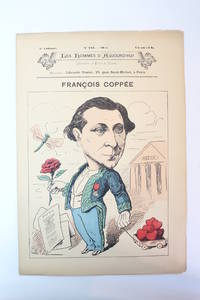
188573937Paris: Léon Vanier 1885. Fine. Léon Vanier Paris Décembre 1885 20 x 29.50 cm en feuilles First edition of this issue of the review consisting of two folded sheets. Minor marginal tears of no consequence to the sheets. On the first a color woodcut depicting François Coppée by Emile Cohl. On the following text by Paul Verlaine in first edition titled ""François Coppée"". Paul Verlaine perpetually impecunious would be the only contributor to the review whom Léon Vanier its director would agree to remunerate in order to provide him financial assistance. Léon Vanier unknown
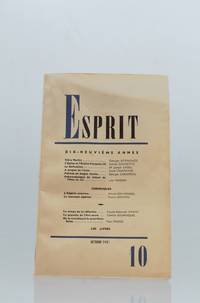
195175507Paris: Esprit 1951. Fine. Esprit Paris Octobre 1951 14.50 x 22.50 cm broché First edition of this issue of the important humanist review founded by Emmanuel Mounier one of 50 numbered copies on alma du Marais paper the only deluxe copies. Contributions by Georges Bernanos ""Frère Martin"" Adrien Dansette ""L'Eglise et l'Action Française II"" Louis Casamayor ""A propos de l'aveu"" Ahmed Boumendjel ""L'Algérie unanime"" Francis Jeanson ""Le tournant algérien"". Occasional foxing mainly marginal copy slightly warped. Esprit unknown
193877505Paris 1938. Fine. Paris 13 janvier 1938 14 x 18.20 cm 2 pages sur un feuillet enveloppe jointe Autograph letter signed by Jean Wahl addressed to Marc Barbezat two pages written in black ink on a sheet. Envelope enclosed. Transverse fold inherent to the mailing. Jean Wahl was Marc Barbezat's examiner for the philosophy examination at the baccalaureate it was then that the two men became friends. In 1940 shortly after writing this letter Barbezat would found the review L'Arbalète to which the philosopher would collaborate by entrusting his very first poems to his young protégé. This review would subsequently become a publishing house that would notably publish the first and sulfurous texts of Jean Genet. The letter mentions another philosopher: ""I spoke about your previous letter to Gabriel Marcel . - And he told me that he knows your father. How curious."" Wahl also speaks of the essayist Marcel Brion and other of his illustrious acquaintances: ""I do not entirely share your opinion on Marcel Brion perhaps I know him poorly but I greatly appreciate Pierre Jean Jouve whom I see often moreover. . I have also seen recently Gide and Bergson . Gide is going to leave for Africa. He seems to have risen above politics."" The philosopher gives an account of his reading of André Malraux's L'Espoir published the previous month: ""I tried in vain to read the Malraux which must nevertheless contain beautiful pages. I even saw or glimpsed a few"" He concludes his letter with a consideration concerning the Marx Brothers: ""I do not much like the Marx Brothers."" unknown
1999100140544Periplus Publishing London Ltd 1999 352 pages in folio. 1999. Cartonné jaquette. 352 pages.
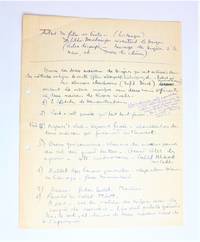
1950738671950. Fine. s. d. circa 1950 21 x 27 cm 3 pages sur 3 feuillets perforés agrafés Unpublished autograph manuscript of a film screenplay project by Boris Vian. 3 pages on 3 leaves written in black and blue ink and blue ballpoint pen. Deletions corrections and marginal notes. Central fold without damage. One vertical cut on the first leaf without loss of text. Amusing film project mocking the ruthless world of record companies while Boris Vian was getting to know Jacques Canetti who would open the doors of Polydor which would become Philips to him. The second page presents a few lines outlining the synopsis of the project: « Deux maisons de disques rivales se trouvent enlisées dans une guerre de concurrence acharnée. Chacune attend pour agir de savoir ce que prépare l'autre . » ""Two rival record companies find themselves bogged down in a fierce war of competition. Each waits to act until it knows what the other is preparing ."" Boris Vian seems to have a very precise idea of the film's atmosphere already indicating important technical details: « Début du film en bistre historique . arbre découpé voix des chênes . ou à la guillotine ombre dans la cour . côté cinémassacre-ballet Hitchcock dans l'action » ""Film opening in sepia historical . cut-out tree voice of the oaks . or at the guillotine shadow in the courtyard . cinémassacre-ballet Hitchcock side in the action"". He also has a fairly settled idea of the actors chosen to interpret the different characters: « Jacques Dufilho Hubert Deschamps . Personnage de Georges Cravenne Y.ves Robert ou Darry Cowl » ""Jacques Dufilho Hubert Deschamps . Character of Georges Cravenne Y.ves Robert or Darry Cowl"" although he does not yet seem decided on the interpreter of the « personnage de Barclay » ""Barclay character"". True to his humor he imagines punctuating the plot with « sketches de démonstration » ""demonstration sketches"" a « parodie du ballet M.G.M. » ""parody of the M.G.M. ballet"" or even « sketches satiriques venant couper le burlesque » ""satirical sketches breaking up the burlesque"". Pride of place is given considering the subject to music and more precisely to rock'n'roll: « Un seul orchestre spécialisé dans le rock et chacune des deux maisons essaie de se l'approprier . Rock et Roll sont associés » ""Only one orchestra specialized in rock and each of the two companies tries to appropriate it . Rock and Roll are associated"". Influenced by the masters of post-war American science fiction whom he admired Vian introduces into this screenplay elements specific to the anticipation genre; the « Maisons de disques s'espionnent à coup de téléviseurs perfectionnés » ""Record companies spy on each other with sophisticated televisions"" and there are even « Martiens » ""Martians"". The rapid writing and marginal additions of this manuscript testify to Boris Vian's vivacity an indefatigable worker with a prolific imagination. In his non-conformist language he multiplies ideas on paper: « il faut moderniser notre organisation. On fait défiler les mecs et on les abat à coup de presse-papier quand ils sont trop vieux . chacun des maisons pousse au cul son grand docteur ». ""we must modernize our organization. We parade the guys and we shoot them down with paperweights when they're too old . each of the companies pushes its great doctor from behind"". As Noël Arnaud emphasizes in his Vies parallèles de Boris Vian « Boris Vian s'est . intéressé au cinéma de manière active et à plusieurs reprises. Il a composé des scénarios certains ont même été tournés il est apparu comme acteur dans différents films et il a écrit des commentaires de courts métrages. » ""Boris Vian was . actively interested in cinema and on several occasions. He composed screenplays some were even filmed he appeared as an actor in different films and he wrote commentaries for short films."" A documentary entitl unknown
197373501Erker Press 1973. Fine. Erker Press 1973 55.50 x 76 cm une feuille Original woodcut printed on watermarked BFK de Rives laid paper. Signed by the artist and numbered 1/10 in pencil at bottom of plate. Dry stamp of publisher Erker Press. Erker Press unknown
189577509Paris 1895. Fine. Paris 12 novembre 1895 12.50 x 20 cm 4 page sur un double feuillet Autograph letter signed by Pierre Louÿs signed with his initial addressed to Georges Louis. Four pages written in blue ink on a double sheet. Envelope enclosed bearing on the verso the intact wax seal with the writer's cipher. Transverse fold inherent to the mailing. Important letter addressed to his brother Georges Louis with whom Pierre Louÿs maintained a very intimate relationship and whom he considered as his own father. The question of the real identity of Pierre Louÿs' father still fascinates biographers today: ""His father Pierre Philippe Louis . had married in 1842 Jeanne Constance Blanchin who died ten years later after giving him two children Lucie and Georges. In 1855 he remarried Claire Céline Maldan and from this union was born in 1857 a son Paul; then in 1870 our writer who received the first names Pierre Félix. This late birth the differences in character between father and son the former's disaffection towards the latter the profound intimacy that always reigned between Louÿs and his brother Georges all this has led certain biographers and critics to suspect that the latter was in reality the father of the writer. The exceptionally intimate and constant relationship that Pierre and Georges maintained between them all their lives could be an argument in this sense. Of course no irrefutable proof has been discovered and probably never will be. Nevertheless certain letters . are quite troubling. In 1895 for example Louÿs writes seriously to his brother that he knows the answer to 'the most poignant question' he could ask him a question he has had 'on his lips for ten years.' The following year in the midst of Aphrodite's triumph he thanks Georges effusively and ends his letter with this sentence: 'Not one of my friends has a FATHER who is for him what you are for me.' Arguing from the close intimacy of Georges and Claire Céline during 1870 and the jealousy that the father never ceased to show towards his younger son Claude Farrère did not hesitate to conclude in favor of Georges Louis. And what to make of this dedication by Louÿs to his brother on a Japan paper copy of the first edition of Pausole: To Georges his eldest son / Pierre."" Jean-Paul Goujon Pierre Louÿs As attested by the enclosed envelope Pierre Louÿs sends this letter to his brother while the latter is exercising the function of France's delegate to the International Commission of Egyptian Debt and is in Cairo. Like a good socialite Pierre tells his brother about his new encounters: ""I met yesterday at a friend's house one of the sons of your minister Marcellin Berthelot. I have known all four of them for a long time but I see little of them. One of them André is a friend of Henri Mougeot with whom he has rented along with two or three other young men a house in Chevreuse and a mistress in Paris. . The other Daniel is a professor at the School of Pharmacy. A remarkable chemist they say. Philippe does nothing special . Finally René the youngest is Blum's oldest friend and his great rival of former times in the general competition. . It is Philippe who formed five or six years ago with Léon Daudet and Georges Hugo such a famous trinity. He is also known for having written a sonnet containing six rhymes in omphe which stupefied Heredia."" But these worldly matters do not distance Pierre Louÿs from literature. Indeed his first novel entitled Aphrodite is about to appear and he wonders to whom he could dedicate it. He first thought of José Maria de Heredia but. ""H. refuses . the dedication of Aphr. because he still has two daughters to marry. I myself had put a thousand reservations in my offer and his response after all is not unobliging. I know on the other hand that he repeats before strangers and indifferent persons everything he told me about the book and in the same hyperbolic terms. Finally he gave me unknown
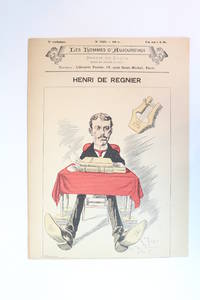
188873946Paris: Léon Vanier 1888. Fine. Léon Vanier Paris s. d. circa fin 1888 19 x 26 cm en feuilles First edition of this issue of the review consisting of two folded sheets. Inevitable minor marginal tears of no consequence to the sheets. On the first a color woodcut representing Henri de Régnier by Manuel Luque. On the following ones text by Léon Vanier under the pseudonym Pierre et Paul in first edition entitled ""Henri de Régnier"". Léon Vanier unknown
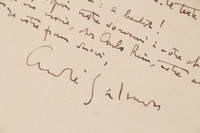
193883437Paris 1938. Fine. Paris Mars 1938 15.50 x 17.50 cm une feuille Autograph letter 33 lines in black ink on one leaf signed by André Salmon congratulating his friend Carlo Rim on his screenplay for the film Hercule directed by Alexandre Esway: Fold marks inherent to mailing. In the upper right margin Carlo Rim inscribed in pencil the date ""Mars 1938"" ""March 1938"" probably the date he received the letter. ""Cher Carlo Rim En vain ai-je espéré pouvoir vous féliciter un soir même d'un si grand et si légitime succès. Mais vous tardiez beaucoup retenu sans doute par ceux qui ayant eu la chance de vous saisir les premiers ne vous lâchaient pas volontiers. Merci d'avoir offert la primeur d'Hercule au spectateur solitaire de Justin à Aix et à Toulon. Hercule vaut Justin et vous pouvez croire que Jeannot et moi avons applaudi de bon coeur. Je ne suis pas qualifié pour parler de technique. En revanche je vous disais qu'il m'est impossible de suivre un film photographiquement parfait dont le thème est imbécile. C'est m'a-t-on dit ne pas aimer le cinéma. Hercule me persuade du contraire. Si le cinéma est écriture je veux qu'on écrive comme dans les livres les plus belles histoires du monde. J'aime que la trouvaille de l'esprit continue de dominer le gag. Exemple : le groupe Guirel. Trouvaille de l'esprit et non vulgaire gag. L'odeur d'imprimerie est juste et bonne. Le texte est du bon Carlo Rim. Bravo merci ! En l'espérance d'un : à bientôt ! Veuillez offrir notre souvenir à notre charmante femme et me croire cher Carlo Rim votre ami content de votre grand succès André Salmon."" ""Dear Carlo Rim In vain have I hoped to be able to congratulate you one evening on such a great and legitimate success. But you were very late probably detained by those who having had the chance to get hold of you first did not let you go willingly. Thank you for offering the preview of Hercule to the solitary spectator of Justin in Aix and Toulon. Hercule is worth Justin and you can believe that Jeannot and I applauded heartily. I am not qualified to speak of technique. On the other hand I told you that it is impossible for me to follow a photographically perfect film whose theme is stupid. That is I was told not loving cinema. Hercule convinces me of the contrary. If cinema is writing I want people to write as in books the most beautiful stories in the world. I like the invention of the mind to continue to dominate the gag. Example: the Guirel group. Invention of the mind and not vulgar gag. The smell of printing is right and good. The text is good Carlo Rim. Bravo thank you! In the hope of a: see you soon! Please offer our regards to our charming wife and believe me dear Carlo Rim your friend happy with your great success André Salmon."" Provenance: from the Carlo Rim collection who was a Provençal writer author notably of ""Ma belle Marseille"" a caricaturist a filmmaker and friend of Fernandel Raimu and Marcel Pagnol as well as Max Jacob and André Salmon whom he met in Sanary. unknown
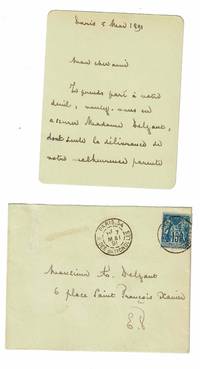
189176346Paris 1891. Fine. Paris 5 mai 1891 11.40 x 8.80 cm une carte recto-verso et une enveloppe Signed autograph card from Stéphane Mallarmé addressed to Alidor Delzant written on both sides in black ink. Envelope included. Alidor Delzant was a lawyer collector and bibliophile. Friend of the Goncourts he devoted a work to them and was Edmond's secretary and testamentary legatee. ""Je prends part à votre deuil voulez-vous en assurer Madame Delzant dont seule la délivrance de votre malheureuse parente par elle entourée de soins peut adoucir le chagrin. . Heureusement vous êtes un de ceux avec qui l'on se sent partout et même loin."" ""I share in your grief would you please assure Madame Delzant of this for whom only the deliverance of your unfortunate relative surrounded by her care can soften the sorrow. . Fortunately you are one of those with whom one feels comfortable everywhere and even from afar."" unknown
1917642701917. Fine. circa 1917-1918 22.30 x 27.60 cm une feuille sous chemise et étui Remarkable autobiographical poem of André Breton entitled ""Hymn"" to black ink on laid paper composed in April 1914. Our manuscript was written between March 1917 and the beginning of 1918. An essential poem of the pre-Dadaist contemporary of the author it is part of a coherent set of seven manuscript poems by Breton referred to as Coll.X. in André Breton's Complete Works Volume I of La Library of the Pleiades Gallimard 1988 1071. These poems from his youthful writing are carefully calligraphed in black ink on watermarked laid paper. This set was sent to his circle of friends and writers including Valery Apollinaire Theodore Fraenkel and his brother André Paris. It was later published in his first collection Mont de Piété which appeared in June 1919 at the publishing house Au sans Pareil newly founded by his friend Rene Hilsum. The exact dating of this set of autograph poems is determined by the writing of the last poem of the collection ""André Derain"" composed March 24 1917 which offers a terminus post quem absolute. In addition an older version of the poem ""Age"" dedicated to Leon-Paul Fargue appears in our collection under its original name ""Poème"". Dated by the author of February 19 1916 - the day of his twenty years - and created 10 days earlier according to his correspondence it was renamed and reworked only for its publication in July 1918 in The Three Roses . In all likelihood prior to the publication of this last poem the seven autograph poems were probably written during 1917 or early 1918 while Breton continues his internship at the Val-de-Grace and makes the decisive meeting of Louis Aragon. The poems that will constitute Mount of Piety represent a rare and precious testimony of his youthful influences at the dawn of his adherence to the Dada movement and his discovery of automatic writing. Quite short and sometimes sibylline we can see symbolic accents borrowed from Mallarme which he rediscovers during poetic mornings at the Antoine theater at the Vieux-Colombier in the company of his high school classmate Théodore Fraenkel. During the first month of the war Breton also devoted himself to Rimbaud and immersed himself in The Illuminations the only work carried away in the confusion and haste that followed the declaration of war. From his Rimbaldian readings came the poems ""December"" ""Age"" and ""André Derain"" while he borrowed from Apollinaire his muse Marie Laurencin to whom he dedicates ""The Sweet Year"". Moreover the poetic legacy of the author will be particularly marked by the figure of Paul Valéry with whom he enters into correspondence in 1914. Valery plays in the writing of the poems of Mont de Piété a considerable role by the attention and the advice he lavishes on the young poet. Admiring the audacity of his disciple who addressed each of his poems he appreciates the poem ""Facon"" 1916 in these terms: "" Theme language aim metric everything is new future mode way "" Letter of June 1916 Complete Works of André Breton Volume I of The Library of the Pléiade Gallimard 1988 p. These essential jewels of the youth of Breton were composed between his seventeenth and twenty-third year. Surprised in Lorient by the declaration of war he became a military nurse then officiated in several hospitals and on the front during the offensive of the Meuse. He made Nantes acquainted with Jacques Vaché who inspired him with a project of collective writing as well as the illustration of the future collection Mont de Piété finally realized by André Derain. The frequentation of this ""revolted dandy against art and war"" which shares his admiration for Jarry and the contact of the lunatics of the neuro-psychiatric center of Saint-Dizier mark a decisive step in the genesis of surrealism. Assigned to the Val-de-Grâce from 1917 Breton finds in Paris the literary effervescence necessary for his po unknown
19929211NY: Henry Holt and Co. As New in As New dust jacket. 1992. Stated First Edition. First Printing. Hard Cover. 0805010858 . Inscribed by author on title page. Quarter bound in publisher's black cloth over red boards red lettering on spine. . Both the volume and the unclipped dust jacket are in perfect unmarked condition. AS NEW/AS NEW. Kinsey Millhone Mysteries Series. 8vo 8" - 9" tall. viii 283 2 pp. Signed by Author . Henry Holt and Co. hardcover
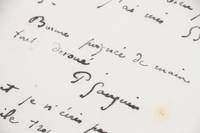
189684738s. l. Tahiti 1896. Fine. ""I'm gifted he says to the point of making others jealous."" s. l. Tahiti août 1896 20.50 x 27 cm quatre pages sur deux feuillets Yes I have sarcasm in my words yes I do not know how to flatter and bend my back how to beg in official salons I am nothing but a braying schemer but if I had submitted - yes I would be comfortable."" Long autograph letter dated August 1896 and signed by Paul Gauguin to painter Daniel de Monfreid. Four pages in black ink on two lined sheets. Small tears to margins not affecting the text traces of folds inherent to sending. In the midst of his descent into hell abandoned in his Tahitian artificial paradise Gauguin feels cursed : Definitely I was born under a bad star. he laments. His quest for primitive freedom leaves him in destitution and misery. Suffering agony the painter sends paintings to one of his few supporters his faithful friend Daniel de Monfreid - but writes the wrong address. Published in Lettres de Paul Gauguin à Georges-Daniel de Monfreid 1918 p. 146 n° XXIII; our letter reveals the name of Émile Schuffenecker his friend and associate on the Paris stock exchange and then Pont-Aven - anonymized in the published version - whom Gauguin vilifies on numerous occasions in these pages. This exceptional missive was written in Tahiti where the painter had returned the previous year bidding a final farewell to the old Europe. Gauguin had just come out from a stay in hospital in Papeete to treat his bruised legs following the beating he had received in Concarneau two years earlier for defending his muse Annah the Javanese. The painter could not escape the aftermath of this altercation and suffered from a terrible purulent eczema on his leg as well as syphilis drowning his torments in alcohol. The letter is a perfect example of Gauguin's correspondence from the summer of 1896 which ""smells of the fever that has seized a mind overheated by pain and lack of sleep"" David Haziot. In his confusion the painter misspelt the address of Monfreid's studio at the Cité Fleurie a famous chalet-like artists' residence where Gauguin had stayed : I sent you a bunch of paintings last month. I'm afraid for them because it seems to me that I put 55 Bd Arago instead of 65 This mailing included his composition Eihaha Ohipa painted in his studio in Punaauia and now kept at the Pushkin Museum in Moscow. Shipped via a naval officer - fees to be paid by Monfreid - the paintings did not arrive until November. Beyond his feverish fears Gauguin delivers in these lines a true manifesto of his integrity as an artist - the perfect counterpart to his famous Christlike self-portrait Near Golgotha painted around the same period. To him his destiny and generosity are nothing short of Christ-like: in the most difficult moments of my life I more than shared with unfortunate people and never had any reward other than complete abandonment. He had in fact helped display Schuffenecker's paintings in Impressionist exhibitions saved his friend Laval from suicide and opened his purse to so many others. Instead of returning the favor Schuffenecker prefers to feel sorry for himself: Schuff really wrote me a crazy and unfair letter and I don't know what to answer because he is a sick mind . he would be more unhappy than me who has glory strength and health. Let's talk about it! I'm good at making others jealous he says. Gauguin who had always refused to make concessions and compromise is finally betrayed by one of his closest relations Schuffenecker who becomes in the letter a true Judas Iscariot: Schuff has just made a useless petition I believe for the State to come to my aid. This is the thing that can offend me the most. I'm asking friends to help me out for the time it takes to get back the money I'm owed and their efforts to recover it but begging the State was never my intention. The painter reaches a point of no return not only bruised in his flesh but also unknown
197084436Ravello 1970. Fine. Ravello s. d. ca 1970 14.50 x 10.50 cm une carte postale Signed autograph postcard by Maurice Béjart written in blue ballpoint pen on the verso of a photographic reproduction depicting Villa Rufolo in Ravello on the Amalfi coast. Villa Rufolo was immortalized by Richard Wagner in his ""Parsifal"" as Klingsor's enchanted castle. unknown