78 260 résultats
12501Music Zoran Antonio. PAYSAGE SIENNOIS. S.39 Lithograph 1953. Edition of 250 published by Guilde de Gravure Paris. Signed in pencil and numbered 199/250. unknown
Un volume in 4to piccolo (23,5x15 cm) di 20 pagine non numerate + 126 pagine + XL pagine (+1 pp per l'errata) con 6 TAVOLE INCISE FUORI TESTO su carta pesante - Ilustrado con 6 grabados calcograficos dibujados por G. Ferro y grabados por J. Ballester, M.S. Carmona, F. Selma - BELLA LEGATURA in piena pelle marmorizzata del tempo, cornice dorata ai piatti, dorso liscio ornato e dorato. Tagli dorati. Manca la cuffia superiore, qualche usura agli angoli, ma nel complesso molto buone le condizioni di questa lussuosa legatura - Alla risguardia EX LIBRIS nobiliare inglese - Prima edizione
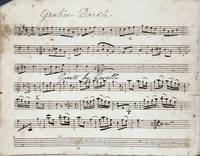
D17833Hardcover. Fair. 106 manuscript pages. Oblong narrow 8vo 3 x 7 1/2 inches contemporary handmade calf with stiff yapp edges worn top leather detached; first leaf worn 3 leaves with early stitched repairs likely lacking some leaves edges rounded soiling and dampstaining to early leaves. Massachusetts or Vermont circa 1800-10 <br/><br/>Noahdiah Merritt 1782-1854 was born in Templeton MA and removed to Vermont by the time of his marriage in 1807. He later settled in upstate New York. Some of his family papers are at Cornell University. Most of the songs in this volume have only melodies with no lyrics. An exception is "An Elegy on the Death of a Child 4 Years Old who was Kil'd by the Roling of a Cartwheal" which fills 15 pages. It may be an original composition; we are unable to trace any of the lyrics. Many of the other compositions in the book were part of the core repertory of American sacred music and had previously been published. Oliver Holden's "Coronation" for example had first appeared in 1793. See Britton American Sacred Music Imprints page 685. Also included near the end are the words only for "Mount Vernon Hymn" by Stephen Jenks a tribute to the late President Washington first published in 1802. Noahdiah's father Noah Merritt was a Revolutionary War veteran claimed in a family history to have been personally acquainted with Washington Edwin Atkins Merritt Recollections page 187. Provenance: The present volume is not inscribed but an inserted card written by his granddaughter reads "Noahdiah Merritt's Song Book about 130 years old property of Mrs. Oliver A. Milner." Cornelia Eliza Merritt Milner 1866-1951 was daughter of Noahdiah's son William Wallace Merritt 1832-1922 who went west to Iowa. An added note on the card explains that the book was purchased in Lincoln NE in 1993. hardcover
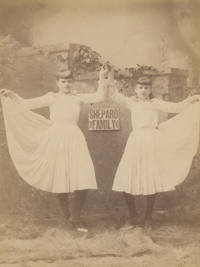
1890List1620Mostly New England: Various Photographers 1890. Cabinet cards measuring 6 ½ x 4 ¼ inches. Various settings showing the band members posed with their instruments including banjos violins trumpets drum and tubas. Varying wear but generally very good with some normal age-related fading. Very Good. Originally from Lawrenceville New York the Shepard Family Band toured throughout the Northeast in the 1880s and 1890s eventually settling in South Royalton Vermont. All members of the family were apparently musically inclined: “In addition to Minnie mother and matriarch Mary “Minnie†Shepard and her husband patriarch James Monroe Shepard all of the children were pressed into service. Daughter Laura Belle the ‘violiniste’ was getting better all the time under the instruction of a ‘competent master.’ Her fans “will be astonished at the improvement in style tone and expression.†It was said of little Lessie that ‘Among lady cornetists she has no equal.’ The darling little son of the family Master Burtie could not help but please for he was well-known to be ‘The youngest Tuba soloist in the world; only nine years of age; scarcely larger than the instrument he plays.’ He was also a ‘clever comedian singer and character artist.†The baby little Flossie “a sweet little miss of four summers’ was said to be a “wonderful mimic and impersonator…a veritable little fairy.’ Daughters Kittie and Georgia were also part of the troupe.†- Henry Sheldon Museum. A very nice collection. Various Photographers unknown
19264528Various locations in Texas and elsewhere 1926. Very good. Approximately 130 manuscript letters totaling 275 pages written on a variety of paper sizes and stationery many with original transmittal envelopes plus a handful of printed ephemera. Letters arranged chronologically in several manila folders and housed in an archival folder. Original mailing folds general wear. A unique collection of manuscript letters mostly sent to Larkin C. Rogers of Mineral Wells Texas. Larkin C. Rogers Charlie or Larkin to his family began studying at the Kidd-Key Conservatory of Music at Sherman Texas in 1915. Friends and family write to him there occasionally sending him notices of musical events and throughout the correspondence are receipts for his orders for musical scores. Larkin’s mother and sister Nancy try to get him musician jobs in the Mineral Wells area but times are hard. His mother’s letters are long chatty and detailed; as such she provides good local color on her particular area in North Texas. In May 1917 Larkin’s mother writes: “How are you all coming in about the War excitement Think you’ll have to go And are you patriotic enough to want to go I see all musicians who can read music well are wanted and will be trained after joining on some instrument - I suppose suitable for the bands. Then when they’re not needed in the one they’re used in the hospitals. I like that better for you - if you do go - than to have to be in the fighting. They say the music is a necessary thing - so they have to have them. You’d better get to learning some band instrument - how do you like a piccolo†<br /> <br /> Larkin’s brother Edwin is already in the Army training near Waco and is overseas by June of 1918. In May 1918 Larkin’s mother again suggests he might like to enlist. By April she is urging him: “For we can never have universal peace till the Huns and all such are conquered. No one part is as essential as another - and where you are best fitted to serve it is your duty to get into - so leave no stone unturned to get into a band either in Waco or Camp Bowie.†By May he has enlisted but is not yet in a band - training at Camp Travis near San Antonio where he asks his mother to come in order to help him find a band. By October 1918 he is overseas. Larkin’s mother continues to provide motherly advice in her letters including lecturing him against smoking. At this point there is a long absence of news from him - and his family fears the worst.<br /> <br /> By May 1919 Larkin is shipped back to the States and admitted to the Army hospital at Oteen North Carolina. His mother writes with home remedies and fears that he is in for an “unmentionable disease.†In a sign of the times however he has influenza and bronchial complications. By this time his parents him they have moved to Dallas mentioning that although they still get mineral water to drink from their hometown of Mineral Wells the Dallas area is flat and at a lower altitude. Larkin’s sisters are friendly and sometimes humorous; they write him about music recitals and tease him about a “cootie garage†under his nose. Larkin informs them that a woman near the hospital is allowing him to practice at her piano. His mother visits him at the hospital and is quite upset that he is sometimes bedded down with a patient with hereditary syphilis. In January 1920 his mother learns that all places of amusement in Ashville have been closed because of flu which worries her as he is still not completely recovered. She knows about the flu as they all have had it in Dallas. His mother reads that there is complete vocational pay for disabled soldiers; she tries to obtain the disability pay for Larkin in order to take a concert pianist course. Larkin’s sister Lois in Williamsburg Virginia wants him to apply to a new music school in Richmond where she gets a teaching job - not to go to the Domrosch School in New York as she complains that it is "full of Jews and has an atmosphere which kills fineness." However she highly recommends New York in general: "Boston is a place. New York is life - a world - an experience which must be in every life before it is complete. You are an atom – but there is no place where life as a tiny atom receives such consideration and such kindness if its good!"<br /> <br /> By January 1921 Larkin is out of hospital and studying again in Sherman. He gives his first post war recital in April. His brother Edwin has a job with the Dallas engineering department. In 1923 Nancy causes a flap and panic when she quarrels with her sister Lois and the music school in Virginia and goes off alone. Lois begs her mother to stop writing her altogether as it is too stressful. Both Nancy and Larkin end up in New York City in the music scene and their parents end up back in Mineral Wells. Their mother writes Larkin a very nasty anti-Semitic letter about the rumor Nancy is going to marry a Jew. She fulminates also about the illicit and dreadful drinking that Americans seem to have slipped into. The last letter from Larkin’s father indicates that the two sisters and Larkin plan to combine households and stay in New York. An interesting collection of one Texas family’s correspondence centering on a young musician who also served in the First World War before returning to his life in music. Worthy of further and deeper research. unknown
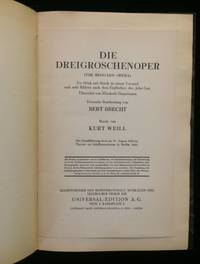
1928011176Vienna: Universal- Edition A. G. 1928. Hardcover. Near Fine. Rebound copy lacking paper covers with 220 stamped in the middle of the right margin on page 31 thus indicating either one of 300 copies of the first printing or perhaps less likely one of 500 copies of the second printing. Rebound in 1/4 cloth over dark beige and black marbelized boards oversized to original leaf dimensions with separate sheets bound in between each leaf of text. 79 pp 1. Internally fine. Covers a wee soiled. Universal- Edition A. G. hardcover
1949139871Los Angeles: Twentieth Century-Fox 1949. Revised Final script for the 1950 film. Bound presentation script belonging to producer Sol C. Siegel with his name in gilt on the front board. With 53 studio still photographs tipped in throughout four pages of retakes and added scenes tipped in at the rear as well as a number of manuscript annotations primarily denoting the titles of various musical numbers. <br /> <br /> Based on the short story "Stork Don't Bring Babies" by S.K. Lauren Grable and Dailey play a showbiz couple who discover in successive order that they cannot have children that they can adopt children and that they aren't really fit to raise children. But things get better with the help of several musical numbers scored by Harold Arlen. <br /> <br /> Bound in green faux leather boards with gilt titles and rule and marbled endpapers. Title page present dated Dec. 1 1949 noted as Revised Final with credits for screenwriters Trotti and Binyon. 191 leaves with last page of text numbered 130. Mimeograph duplication with blue revision pages throughout dated variously between 12/21/19 and 1/5/50. Pages Very Good plus photographs Near Fine with some bruising or chipping to the verso of the preceding page on either the top or bottom edge. Boards Near Fine with a bump to the upper rear corner. <br /> <br /> Hirschhorn The Hollywood Musical. Twentieth Century-Fox unknown
1955149900Beverly Hills CA: Metro-Goldwyn-Mayer MGM 1955. Four vintage candid reference photographs from the 1955 film showing variously actors Marlon Brando Frank Sinatra composer Frank Loesser and director Joseph L. Mankiewicz on the set. <br /> <br /> The first photo double weight shows Marlon Brando as Skye Masterson surreally <br /> socking one of his gangster companions in the nose. <br /> <br /> The second photo shows Brando rehearsing "Luck Be a Lady" with sheet music in hand and with the song's composer Frank Loesser at the piano.<br /> <br /> The third photo shows Sinatra and Brando in a candid moment.<br /> <br /> The fourth photo single weight shows director Joseph L. Mankiewicz and dancer Carey Leverette relaxing contemplatively Mankiewicz sitting and smoking his pipe Leverette inside a large industrial exhaust pipe.<br /> <br /> Based on the 1950 Broadway musical which was in turn based on Damon Runyon's short stories "The Idyll of Miss Sarah Brown" and "Blood Pressure." A serial gambler wins a bet that he can get a Christian missionary to travel with him to Havana where the pair begin to fall for each other. Nominated for four Academy Awards.<br /> <br /> Set in New York and Havana.<br /> <br /> All photos: 8 x 10 inches. Very Good to Near Fine overall variously with a few pinholes and very shallow creasing. Metro-Goldwyn-Mayer [MGM] unknown
1966141924New York: Stuart Company 1966. Draft script for the 1966 Broadway musical. <br /> <br /> A series of three playlets tied together by themes such as dissatisfaction with getting what one wants and repeated references or design elements such as the color brown. Each playlet based on an existing work with the first act based on "The Diary of Adam and Eve" by Mark Twain the second based on "The Lady or the Tiger" by Frank R. Stockton and the final act based on "Passionella" by Jules Feiffer. <br /> <br /> The musical first premiered at the Shubert Theater on October 18 1966 and ran for 463 performances before closing November 25 1967 directed by Mike Nichols and starring Alan Alda Barbara Harris and Larry Blyden. Nominated for seven Tony Awards including Best Musical Best Direction of a Musical for Nichols and Best Actor in a Musical for Alda and winning Best Actress in a Musical for Harris. <br /> <br /> Revived December 14 2006 by the Roundabout Theatre Company running for 99 performances through March 11 2007 starring Kristin Chenoweth. Nominated for a Best Revival of a Musical Tony Award. <br /> <br /> Green titled wrappers. Title page present with credits for playwrights Sheldon Harnick Jerry Bock Jerome Coopersmith and director Mike Nichols. 82 leaves with last page of text numbered 22. Mechanical duplication. Pages Near Fine wrapper Very Good plus bound with two silver brads. Stuart Company unknown
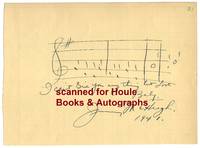
19412221693<p>4 bars of "I Can't Give You Anything But Love Baby" boldly signed and inscribed 1941. 7 1/4" x 10" 1 page on yellow ledger sheet. Fine and superb example.</p><p>McHugh 1894-1969 was an American songwriter and sometime screen actor "The Helen Morgan Story" 1957; collaborated with lyricist Dorothy Fields for a number of well-known standards "I Can't Give You Anything But Love Baby" and "On the Sunny Side of the Street" both written in 1928.</p> books
19412221693<p>4 bars of "I Can't Give You Anything But Love Baby" boldly signed and inscribed 1941. 7 1/4" x 10" 1 page on yellow ledger sheet. Fine and superb example.</p><p>McHugh 1894-1969 was an American songwriter and sometime screen actor "The Helen Morgan Story" 1957; collaborated with lyricist Dorothy Fields for a number of well-known standards "I Can't Give You Anything But Love Baby" and "On the Sunny Side of the Street" both written in 1928.</p>
19473116763New York: Wittenborn Schultz Inc. Publishers. Fine with no dust jacket. 1947. First Edition; First Printing. Softcover. First edition. Fine in yellow printed wrappers with white & orange titles. 111pp. 7 1/2" X 9 3/4" Features work by Mark Rothko Miro Joan Jean Hans Arp. Jackson Pollock Robert Motherwell Virgil Thomson Oscar Niemeyer Richard Huelsenbeck David Smith and others. Cover design by Paul Rand. Remarkably nice as new copy of this rare journal. ; 7 1/2 x 9 3/4"; 111 pages . Wittenborn, Schultz Inc. Publishers. paperback
197014433Poughkeepsie NY ca. 1970. Near fine. Two albums each oblong 4to. Measuring approximately 10.25” x 7” with 155 color photographs loosely mounted rectos only in corners. Album 1: Green faux-leather covers gilt title decoration to front sting bound 59 black paper leaves each with two photographs recto mounted 118 prints total; well preserved near fine. Album 2: Ivory faux-leather covers gilt title decoration to front 20 black paper leaves 19 with recto mounted photographs most two to a page final leaf blank; crease through center of front cover otherwise clean contents near fine. <br/><br/>A fantastic pair of albums capturing 1970 Poughkeepsie NY area regional country music acts venues and patrons. Prints almost entirely uniform in size measuring approximately 3.5” square many date stamped outside the image area. The first album shows spots in and around Poughkeepsie primarily the Brand X Corral bar on Rt. 94 in Vails Gate NY. Acts include Gil Rogers whose albums we suspect these were based on internal evidence The Country Cousins and Country Skyline. The second album follows Rogers down to West Virginia for his performance during the 1970 Eastern States Country Music Convention on the famed WWVA Jamboree in Wheeling’s Capitol Theater. Rogers recorded a handful of honky-tonk singles in the early 1970’s on the Stop label and enjoyed regional success as a performer for decades. These amateur images show the elaborate stage dress music gear and social settings of Woodstock-era country music. That famed festival was held less than a year earlier and some 35 miles from where most of the images shown here were snapped though one could be forgiven for guessing they were taken years and miles apart. An album that demonstrates how this blue collar form adhered to traditions and fans throughout the cultural sea changes of the late 1960s and early 70s and a colorful portrait of a working regional musician. hardcover books
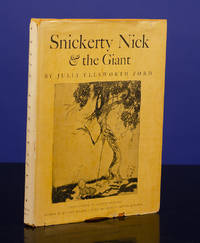
04912Los Angeles: Sutton House 1935. Snickerty Nick with the Music<br/>Near Fine in original Printed Dust Jacket<br/><br/>RACKHAM Arthur illustrator. Snickerty Nick & the Giant. By Julia Ellsworth Ford. Rhymes by Witter Bynner. Music by Charles Arthur Ridgway. Los Angeles San Franciso: Sutton House 1935.<br/><br/>Third edition the first with the music included. Quarto 9 1/2 x 7 3/16 inches; 242 x 183 mm. viii 1-81 1 blank 83-132 pp. Three full-page monotone plates facing pp. 16 20 & 42 eight full-page black & white drawings and two line drawings. Original 'bright yellow' cloth with pictorial stamping in black on the front cover in black. A near fine copy in the original yellow pictorial dust jacket some light chipping to extremities some tiny tape repairs otherwise an excellent example of a dust jacket that we have never seen before.<br/><br/>The differences between this and the 1933 edition are as follows: The title-page of the 1933 edition has the imprint Suttonhouse: Los Angeles 1933 whilst the 1935 edition has Suttonhouse Los Angeles San Francisco and no date the date 1935 is on the verso of the title-page. The text and illustrations are identical but the 'Suggestion for Production' p. 77- 80 in the 1933 edition has now been changed and extended to p. 81. Following p. 81 is an additional title-page for the music which follows from p. 85 through p. 132.<br/><br/>"The idea of the Selfish Giant in this play has been taken from the story of Oscar Wilde's Selfish Giant. Spring would not come to his garden because he would not let the children play in it. It was always winter there. One morning he woke up hearing the music of a linnet singing in his garden. He jumped out of bed and saw a most wonderful sight "flowers were looking up through the green grass and laughing" and in every tree was a little child; but one little boy was too tiny to climb the tree and the Giant's heart melted and he helped the little child into the tree. The little child kissed him and forever after the children played in the Giant's garden because his heart had softened through love of the little child. The children never saw the child again. But one day he came to the Giant who saw on the palms of the child's hands "the prince of two nails and the prince of two nails were on the little feet". The little child had come to take the Giant to play in his garden "which is Paradise." My indebtedness to this story is the character of the Selfish Giant. The little play of Snickerty Nick is not a dramatization of The Selfish Giant. <br/><br/>The character of Snickerty Nick is an original character and the play centers around him. The little boy is only a loving and beloved child and Spring and Winter are personified by faeries and gnomes. To Arthur Rackham I tender my most sincere thanks whose magic touch as in Peter Pan Grimm's Faery Tales and Undine making real all faeries and gnomes endears all child life to grown-ups as well as to children." Forward by Julia Ellsworth Ford.<br/><br/>This edition with the music not recorded in Riall<br/><br/>In over fifty-five years of specializing in the work of Arthur Rackham I have never seen the 1933 edition and I have only seen this 1935 edition once before - this copy which I sold in 1989. According to Riall see p. 180 the 1933 edition is listed as a "reprint of 1919 edition with same coloured illustrations. Bound in bright yellow cloth. 3 full page illustrations in full colour. 8 drawings in black and white. This edition has the music added at the end of the book."<br/><br/>OCLC locates just seven copies of the 1933 edition and twelve copies of the 1935 edition in libraries and institutions worldwide - none of the copies cited have any bibliographical details other than the book has 80 pp. 1933 or 132 pp. 1935. Both of these editions are unknown to The Arthur Rackham Society.<br/><br/>The two books were produced in 1933 & 1935 to accompany the first Hollywood production of Snickerty Nick on April 8th 1933. Julia Ellsworth Ford's famous little 'folk' play was directed by Pauline Parker. Los Angeles: Sutton House, 1935 unknown books
04912Los Angeles: Sutton House 1935. Snickerty Nick with the Music<br /> Near Fine in original Printed Dust Jacket<br /> <br /> RACKHAM Arthur illustrator. Snickerty Nick & the Giant. By Julia Ellsworth Ford. Rhymes by Witter Bynner. Music by Charles Arthur Ridgway. Los Angeles & San Francisco: Sutton House 1935.<br /> <br /> Third edition the first with the music included. Quarto 9 1/2 x 7 3/16 inches; 242 x 183 mm. viii 1-81 1 blank 83-132 pp. Three full-page monotone plates facing pp. 16 20 & 42 eight full-page black & white drawings and two line drawings. Original 'bright yellow' cloth with pictorial stamping in black on the front cover in black. A near fine copy in the original yellow pictorial dust jacket some light chipping to extremities some tiny tape repairs otherwise an excellent example of a dust jacket that we have never seen before.<br /> <br /> The differences between this and the 1933 edition are as follows: The title-page of the 1933 edition has the imprint Suttonhouse: Los Angeles 1933 whilst the 1935 edition has Suttonhouse Los Angeles San Francisco and no date the date 1935 is on the verso of the title-page. The text and illustrations are identical but the 'Suggestion for Production' p. 77- 80 in the 1933 edition has now been changed and extended to p. 81. Following p. 81 is an additional title-page for the music which follows from p. 85 through p. 132.<br /> <br /> "The idea of the Selfish Giant in this play has been taken from the story of Oscar Wilde's Selfish Giant. Spring would not come to his garden because he would not let the children play in it. It was always winter there. One morning he woke up hearing the music of a linnet singing in his garden. He jumped out of bed and saw a most wonderful sight "flowers were looking up through the green grass and laughing" and in every tree was a little child; but one little boy was too tiny to climb the tree and the Giant's heart melted and he helped the little child into the tree. The little child kissed him and forever after the children played in the Giant's garden because his heart had softened through love of the little child. The children never saw the child again. But one day he came to the Giant who saw on the palms of the child's hands "the prince of two nails and the prince of two nails were on the little feet". The little child had come to take the Giant to play in his garden "which is Paradise." My indebtedness to this story is the character of the Selfish Giant. The little play of Snickerty Nick is not a dramatization of The Selfish Giant. <br /> <br /> The character of Snickerty Nick is an original character and the play centers around him. The little boy is only a loving and beloved child and Spring and Winter are personified by faeries and gnomes. To Arthur Rackham I tender my most sincere thanks whose magic touch as in Peter Pan Grimm's Faery Tales and Undine making real all faeries and gnomes endears all child life to grown-ups as well as to children." Forward by Julia Ellsworth Ford.<br /> <br /> This edition with the music not recorded in Riall<br /> <br /> In over fifty-five years of specializing in the work of Arthur Rackham I have never seen the 1933 edition and I have only seen this 1935 edition once before - this copy which I sold in 1989. According to Riall see p. 180 the 1933 edition is listed as a "reprint of 1919 edition with same coloured illustrations. Bound in bright yellow cloth. 3 full page illustrations in full colour. 8 drawings in black and white. This edition has the music added at the end of the book."<br /> <br /> OCLC locates just seven copies of the 1933 edition and twelve copies of the 1935 edition in libraries and institutions worldwide - none of the copies cited have any bibliographical details other than the book has 80 pp. 1933 or 132 pp. 1935. Both of these editions are unknown to The Arthur Rackham Society.<br /> <br /> The two books were produced in 1933 & 1935 to accompany the first Hollywood production of Snickerty Nick on April 8th 1933. Julia Ellsworth Ford's famous little 'folk' play was directed by Pauline Parker. Los Angeles: Sutton House, 1935 unknown
20956Known as "Gentleman Jim" this influential Country Western singer of the '50s and '60s achieved great popularity with such hits as "He'll Have to Go" 1960; he died at age 40 in a plane crash in Tennessee. Color IPS verso heavy stock 3½" X 5½" n.p. n.d. Near fine. Handsome color picture postcard issued by RCA Victor Records the recto featuring a nice half-length portrait of Reeves in tie and red sweater. Verso features message and address portions and across this in bold large script as red as his sweater Reeves writes "To / Donald / Best of luck always / Gratefully / Jim Reeves." The signature itself which runs from the lower left corner to the upper right corner measures a full 5½"! A superb example of this rarity. unknown books
20956Known as "Gentleman Jim" this influential Country Western singer of the '50s and '60s achieved great popularity with such hits as "He'll Have to Go" 1960; he died at age 40 in a plane crash in Tennessee. Color IPS verso heavy stock 3½" X 5½" n.p. n.d. Near fine. Handsome color picture postcard issued by RCA Victor Records the recto featuring a nice half-length portrait of Reeves in tie and red sweater. Verso features message and address portions and across this in bold large script as red as his sweater Reeves writes "To / Donald / Best of luck always / Gratefully / Jim Reeves." The signature itself which runs from the lower left corner to the upper right corner measures a full 5½"! A superb example of this rarity. unknown
013000NY: Playbill 1981. Soft cover. Very Good. Playbill for the original 1981 Broadway production of Merrily We Roll Along that was distinguished when it was first produced as one of Sondheim's least successful musicals opening on November 16 1981 and closing after just 16 performances and 44 previews. It was also the last musical that Sondheim and producer/ director Hal Prince worked on together after collaborating on a phenomenal string of critically acclaimed musicals Company A Little Night Music Follies. SIGNED BY SONDHEIM on the front cover. A production directed by Maria Friedman that began at the Menier Chocolate Factory in 2013 which came to Broadway in 2023 changed critical reaction bringing Merrily more stature in the Sondheim canon than before. Sondheim's signatures without inscriptions are uncommon. Given the short run of the original production one of the more collectible Playbills and uncommon signed by the master. Stapled spine 130 pages gently toned short tear bottom rear cover closed with archival tape. Playbill unknown
1820651501820. Original calf-backed marbled boards 7 x 10 inches. "Universal Church" stamped in gilt on spines. Five Volumes with first page indexes approx. 225 pp. plus 8 additional loose leaves. Signatures loose page numbers erratic covers well worn. Text pages have been printed with staves musical notation and lyrics are added in ink. Manuscript music in various hands consisting mostly of hymns with some secular pieces from the origins of the Universal and Unitarian churches. Three of the books are titled for "treble" two with a printed label one hand-written and two of these have a similar song set although they include some different titles in different order so that the books do not appear to be a completely matched set for choristers. One book has the word "tenor" written in ink on the rear board with the ink ownership name of David West on the front pastedown and "Lyander W. Webb 15 August 1824" at the head of the index page. The fifth notebook is unmarked on the outside but has a manuscript note on the front pastedown: "Lyander W. Webb one of the members of the Universalist Church Choir." Some titles from these volumes: Surry Thanksgiving Miriams Song Canaan several versions Lancaster Dedication Exaltation- approximately twenty-five titles per book. The loose sheets have secular tunes primarily musical notation without lyrics with a few of the titles being: Hail Columbia "Nora's Song in the Poor Soldier" Washington's March Yankee Doodle The Plough Boy and Ramah Droog from the comic opera. Hail Columbia was originally written for and performed at Pres. George Washington's first inauguration in 1789.<br/>One book includes the hymn "Union" with words by "Rev. A. Kneeland" and by W. Dixon. Abner Kneeland 1774-1844 a pioneer evangelist and minister was a powerful if inconsistent advocate of Universalism for a quarter of a century beginning with the Winchester Convention of 1803. Kneeland Hosea Ballou and Edward Turner combined efforts to compile a new Universalist hymnal with Kneeland contributing about a third of the hymns "most of which have been judged to be inferior." After he left the Universalist fellowship in the 1830s he became the last man to be convicted of blasphemy in the state of Massachusetts. see his brief biography in the Unitarian Universalist Dictionary online <br/>Another tune called "Mount Vernon" comes from the psalms of David and was originally written by Isaac Watts 1674-1748 known as the founder of English hymnody. "This life's a dream an empty show; But the bright world to which I go Hath joys substantial and sincere; When shall I wake and find me there" Lyander W. Webb whose name appears in two of the notebooks may be Lyander Westram Webb 1805-1858 who was born in Philadelphia. Rev. Abner Kneeland was pastor of the Lombard Street church in Philadelphia from 1818 until his move to New York City in 1825. Webb later moved to Baltimore Maryland where the 1850 Census lists him as an engineer. <br/><br/> hardcover books
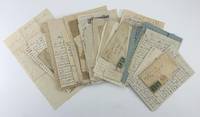
Various formats. Altogether 11 pp. on 15 ff. Includes one autograph letter to a female relative of Godard. 8vo. 2½ pp. on bifolium. Letters by Jean-Paul Barbier, Vincent Capoul, Joseph Dupont, Charles Grandmougin, Ernest Guiraud, Jean Lasalle, Raoul Pugno, Jean-Alexandre Talazac and one unidentified correspondent. - Two of the letters revolve around Godard's greatest success, the opera "Jocelyn", which premiered in Bruxelles on 25 February 1888. In the earlier letter the famous playwright and librettist Jean-Paul Barbier asks for permission to include some pieces by Jocelyn in a concert: "Je voulais vous demander s'il serait possible de faire exécuter le 9 Mai, à notre Soirée d'Henri IV [...] quelques morceaux de Jocelyn? J'ai été plusieurs fois président de l'association, je fais encore partie du comité, et je serais heureux de donner à nos quinze cents invités un régal de cette valeur! [...]" (Paris, 9 March 1888). - In the second letter, the composer and music teacher Ernest Guiraud takes Godard up on the promise of a ticket for a performance of Jocelyn at the Théâtre Lyrique in Paris: "Je vous rappelle l'aimable promesse que vous m'avez faite de me donner demain jeudi une place pour Jocelyn. So vous voulez bien, pour ne pas trop vous déranger, la laisser à mon nom chez le concierge du théâtre [...]" (Paris, 17 Oct. 1888). - Godard's librettist for Jocelyn, the famous tenor Victor Capoul, who sang the leading role in the Paris production, is also among the correspondents. He invites Godard to a salon with a reading of Józef Antoni Poniatowksi's "Pierre de Medicis", here wrongly titled "Marie de Medicis": "Je suis arrivé hier soir. Aujourd'hui j'au rencontré au Salon [...] - Voulez vous être de cette petite fête - après le Café je les lirai Marie de Medicis opera lyrique en 4 acts et sept tableaux!!!! [...]". - The famous tenor Jean-Alexandre Talazac presents his excuses for not being able to join a soirée with the mezzo-soprano Pauline Viardot because of the imminent premiere of Édoard Lalo's "Le roi d'Ys" with Talazac in the role of Mylo: "Je n'ai pu répondre plus tôt à votre lettre du 14 cour.t à cause du Roi d'Ys dont la première représentation aura sans doute lieu du 1er au 5 Mai. Je ne puis donc vous assurer mon concours pour la Soirée du 3 Mai chez Madame Viardot et vous prie d'agréer encore avec tous mes regrets l'expression de mes sentiments bien devoués [...]" (n. p., Dimanche, 22 Avril [1888]). The successful premiere of "Le roi d'Ys" took place on 7 May. Talazac's most important role was Samson in Saint-Saëns "Samson et Delila", which he sang both in the French premiere on 3 March 1890 in Rouen and in the first production in Paris later that year. - In an undated letter, the poet and librettist Charles Grandmougin (1850-1930) invites Godard to join the jury of a music competition: "La société franc-comtoise les Gaudes me charge de vous demander d'être juré pour juger au petit concours musical fait par un de nos poètes. Je crois qu'il y a 12 mélodies environ à juger. Puis je répondre oui? [...]" (n. p. o. d.). - Godard's own letter is the latest dated object in the collection, inviting a young singer to a rehearsal: "Mademoiselle, si vous voulez bien me faire l'honeur de venir chez moi, 6, Bd. de Clichy, mercredi prochain, 1er Avril, à 11 h du matin, je serai charmé de vous recevoir et de vous entendre [...]" (n. p., 28 March 1891). - Varying conditions. Several letters with some foxing and minor tears. Godard's and Guiraud's letters show more substantial tears in the folds. No text loss overall.
192413334Berlin: Horodisch & Marx 1924. A beautiful book with 15 original etchings by ERNST OPPLER each one individually signed in pencil. Statement on the colophon:"Der Carnaval von Robert Schumann mit 15 Radierungen von Ernst Oppler und einem Nachwort von Oscar Bie erschien in einer einmaligen Auflage von 420 Exemplaren. Present copy is number #46. Nr. 21 -120 wurden auf handgeschoepftem Zandersbuetten abgezogen und tragen die Unterschrift des Kuenstlers unter jeder Radierung. Den Notendruck besorgte die Berliner Musikalien-Druckerei den Kupferdruck Georg schneider den Buchdruck die Reichsdruckerei in Berlin. Der Satz des Nachwortes und des Druckvermerkes wurde in einer eigens hierzu neugegossenen Ronde des 18. Jahrhunderts hergestellt. Erschienen im Herbst 1924 in Berlin." Bound in original vellum with ornate gilt blindstamping on cover and spine. The book measures 9 X 12 inches and is in Fine condition except for sime minor bowing of the front cover. Comes in original green paper slipcase. Ernst Oppler 1867-1929 was a well-known German Expressionist painter and etcher who lived in Berlin and who is known for his portraits particularly Nijinsky and Karsinova-Russian ballet dancers landscapes interiors and harbor scenes. First Edition. Illus. by Ernst Oppel. Horodisch & Marx hardcover
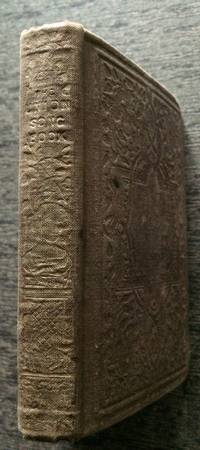
18578705N.Y.: Leavitt and Allen no date c 1857. Good. 1857. Hardcover. 160 pp.; 24mo; blind stamped pattern on brown cloth; spine lettered and decorated in gilt which is dulled. Dampstain from top & bottom edges near spine head affecting text pages particularly prelims and rear endpapers diminishing as one works into the center of the book. Song notes and ownership name of "Thomas M. Elliott Grass Valley Nevada County California" in pencil front endpaper; rough sketch of a map in pencil back pastedown showing east coast states near and including New York; leading bottom corner tip of text block a bit chewed. Overall binding is solid and the bulk of the text relatively clean. Appears to be rare in the original. Without music: tunes for part of the songs indicated by title. . Leavitt and Allen no date (c 1857) hardcover
1822000011Paris Le Fuel, Delaunay 1822
1878248277Bayreuth, Wagner-Verein, 1878 ff. M. einigen Notenbeisp. Versch. geb. 1 Jg. in Heften. Teilw. angeschmutzt, bestoßen, eingerissen, stockfl., m. St. u. Anstreich. Fehlen: Jg. 1: 2 Beil.; 2 sämtl. Beil.; 3: 4 Beil.; 5 sämtl. Beil.; 6: 2 Beil.; 7: 2 Beil.; 8: 6 Beil.; 9: 5 Beil.; 10: H. 7 u. 5 Beil.; 12-13: sämtl. Beil.; 14: 3 Beil.; 15: 3 Beil.; 16: 3 Beil.; 17: 1 Beil.; 18: sämtl. Beil.; 19: 2 Beil.; 20: 2 Beil.; 21: 5 Beil.; 22: 2 Beil.; 23: 2 Beil.; 24: 2 Beil.; 25: 1 Beil.; 27: 2 Beil.; 28 Beil.; Inh.-Verz. fehlen zum großen Teil.
18430020# AUTEUR: # ILLUSTRATEUR: Trimolet (1812-1843) et divers # ÉDITEUR: Deloye - Paris # ANNÉE ÉDITION: 1843 # COUVERTURE: cartonnage lithographié en couleur. # DÉTAILS: 3 volumes grand in 8°, cartonnage lithographié en couleur de l'éditeur avec motifs différents pour chaque. Chemise demi-chagrin bleue et étui pour chaque exemplaire. Très rares encartonnages d'éditeur reproduits chacun â pleine page (Carteret III pp 147 149 151). Exemplaire enrichi de trois dessins très fins â la plume et réhaussés ayant servi â l'illustrateur. ”Existe-t-il aujourd'hui, même parmi les artistes, beaucoup de personnes qui connaissent les si spirituelles, si légères et si mordantes planches dont Trimolet, de mélancolique, dotait, il y a quelques années les almanachs comiques d'Aubert ? (Baudelaire, Curiosités esthétiques , Pléiade p. 845) # PHOTOS visibles sur www.latourinfernal.com