[PHOTOGRAPHY - AUSTRALIA].Biblio.com
108 944 résultats
1885ABC_49517Australia 1885. Folio ca. 44 x 36.5 cm. Contemporary gold-tooled black morocco with the title lettered in gold on the front gold-tooled turn-ins gilt edges watered-silk end papers. With 65 albumen prints. 29 ll. Late 19th-century photo album with views of New South Wales. The album contains 65 albumen prints of highlights in the region primarily in Sydney and the Blue Mountains. It was bought by the civil engineer Clément van de Velde dates unknown who was born in Belgium and moved to Australia in 1884 where he attempted to set up a sugar-beet industry. He also served as the vice-consul for Belgium. He gifted the album to his friend Cobus in 1885 possibly as a keepsake for a trip they undertook together.At least a third of the photographs show important buildings and other landmarks in Sydney including the Government House the Town Hall the General Post Office the Australian Museum the different colleges of the University of Sydney the Department of Lands building and the public library in Bent Street that has been demolished in 1967. Most of these buildings were relatively new at the time these photographs were taken. Also included are photographs of Hyde park and the Captain Cook monument the Man O'War steps Argyle cut Mrs Macquarie's Chair and the botanic gardens. The other photographs in the album show the towns and nature surrounding Sydney such as the Katoomba Falls the Three Sisters Govetts Leap and Mount Victoria in the Blue Mountains the Zig Zag railway the Fitzroy Falls Fort Denison Broken Bay various views of the Nepean River as well as four portraits of Australian Aboriginals.With a contemporary French inscription on the verso of the first flyleaf "Mon cher Cobus Je prie de vouloir accepter cet album en souvenir de nos bons rapporte. Votre dévote Clément van de Velde. Sydney 10 may 1885.". The binding has been professionally restored the boards are somewhat scratched and dented. The leaves are warped and foxed the lower corners of some of the leaves are torn without affecting the photographs the photographs have somewhat discoloured. Otherwise in good condition.l Cf. McLennan N. T. "Henri van de Velde 1878-1947" in: Australian Dictionary of Biography 16 2002. hardcover
2 années en 21 livraisons (sans la dernière livraison de l'année 1872) : troisième année en 10 fascicules de 319-[1] pp, quatrième année en 11 (sur 12) fascicules de 384 pp (sur 420), 37 (sur 38) + 31 (sur 36) tirages photographiques contrecollés en feuilles, sous couvertures de papier vert pâle de l'éditeur, boîte demi-toile brique moderne, pièce de titre noire en long. AVEC : 2 planches photographiques sous cadres janvier 1871 - novembre 1872, janvier 1871 - novembre 1872, in-8, 2 années en 21 livraisons (sans la dernière livraison de l'année 1872) : troisième année en 10 fascicules de 319-[1] pp, quatrième année en 11 (sur 12) fascicules de 384 pp (sur 420), 37 (sur 38) + 31 (sur 36) tirages photographiques contrecollés, en feuilles, sous couvertures de papier vert pâle de l'éditeur, boîte demi-toile brique moderne, pièce de titre noire en long. AVEC : 2 planches photographiques sous cadres, Troisième et quatrième années de cette revue médicale précieuse et rare, illustrée de photographies originales : plus rare encore, les livraisons sont ici TELLES QUE PARUES, non coupées et conservées sous les couvertures imprimées de l'éditeur. Notre ensemble est incomplet de la livraison de décembre 1872 (n° 12 de la quatrième année) et de la planche XXXI de la troisième année. Les planches XXIV et XXXI de la quatrième année sont présentées ici séparément, dans des cadres sous verre. La publication de la Revue photographique des hôpitaux de Paris commence en 1869. Elle change de titre à partir de 1873 pour prendre celui de Revue micro-photographique... et continuera ses livraisons jusqu'en 1876. Cette publication est le prolongement de la Clinique photographique créée en 1868 par Montméja et l'éminent dermatologue Alfred Hardy ; Arthur de Montméja, chef du service photographique de l'hôpital Saint-Louis, réussit pour sa Revue à convaincre le directeur de l'Assistance publique d'installer à Saint-Louis le premier atelier photographique des hôpitaux de Paris. Son dessein est de confier à des spécialistes des articles décrivant des cas pathologiques remarquables qui seraient illustrés chacun d'une photographie : celles-ci montrent ainsi les figures du corps, de ses maux et de sa pathologie dans ce qu'elle a de plus intéressant et de plus rare. La revue, qui parait en livraisons, est d'abord publiée en collaboration avec Jules Rengade (1841-1915), autrement connu sous son nom de romancier Aristide Roger, rejoint dès 1870 par Désirée-Magloire Bourneville, qui sera plus tard à la rédaction d'une autre fameuse revue illustrée de photographies, l'Iconographie photographique de la Salpêtrière. Pujade Sicard & Wallach, pp. 16 et 106 ; Canguilhem, Le merveilleux scientifique, p. 46
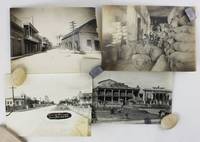
19305942Various locations in the Dominican Republic 1930. Very good. Eighty-three smaller-format photographs each around 5 x 7 inches or smaller; seventy-two larger-format photographs each about 8 x 10 inches. Most images with manuscript or printed captions either in the image or on verso often with photographer's studio stamp. Minor to moderate wear occasional minor chipping to margins varying degrees of curling twelve images adhered to album leaves. A voluminous collection of over 150 photographs picturing the people cities landscapes and commercial activity in the Dominican Republic in the early-20th century. The images capture indigenous Dominican peoples street views waterfront views road construction sugar and other plantations various buildings landscapes and so forth. The photos were produced by a few photographers active in the Dominican Republic and the Caribbean at the time including the Brown Brothers "Fotografia Manon Santo Domingo" whose embossed blindstamp can be seen in the image area of some image and Palau of Santo Domingo City. Most of the images exhibit some kind of manuscript or typed captions either in the negative or on the verso providing critical identification information for the content and/or settings in the pictures. The images identify street scenes on "Avenida Bolivar" "San Pedro de Macoris" and in various other cities as well as shots of "Teatro Independencia" "Palacio Municipal de Moca" "Hipodromo de Santo Domingo" a "Factoria" in La Romana "Palacio Consistorial" in the capital city of Santo Domingo "Cafe Eden" in Santiago de los Caballeros "The Citadel at Santo Domingo" "An American sugar plantation near San Pedro de Macoris" "Laboratorio de Fitopatologia" several views of old ruins and other commercial scientific educational or religious structures.<br /> <br /> Important Dominican landmarks pictured here include the "God Tree" "where legend says Columbus tied his vessel upon his first visit to the island in 1492 the wishing stone of Queen Anacaona who was executed by Bartolome de las Casas the "Puerta de San Diego" and the lighthouse at Santo Domingo City the Cathedral of Santo Domingo begun in 1504 and completed in 1550 and various sites relating to Columbus's arrival and time on the island. Other shots capture inventories in various warehouses or in agricultural fields of sugar cane tobacco onions or cotton an interior shot of a match factory in Puerto Plata a Ford dealership in Monte Cristi large stores of tobacco in La Vega laborers constructing a railroad track near Puerto Plata the old fort and other structures at Santo Domingo various shots of the Dominican Republic's federal army and military band locals picking coconuts and wild oranges along the Macoris River shots of various street vendors several shots of the "School children of Santo Domino" and more. Most of the commercial scenes feature numerous native Dominicans at work and the street scenes often picture locals as well.<br /> <br /> Though we have handled various groups of photographs featuring Cuba Jamaica Bermuda and other Caribbean locations this is the first collection picturing the Dominican Republic that we have offered and the largest we have encountered in the trade. The images provide an excellent opportunity for further study of the people places businesses churches and more in the Dominican Republic during the early part of the last century. unknown
192751953Shanghai: The Commercial Press Limited 1927. First edition. Hardcover. Very good condition. Elephant Folio. 154 1pp. Original Royal Blue brocade with lettering imagery and decorative frame woven into covers; housed in custom-made black cloth slipcase. Frontispiece. Historiated initials at acknowledgments introduction and preface historiated initials and endpiece drawings on text pages. Comprising Seventy Photographic Studies of the Celebrated Monuments of China's Northern Capital and Its Environs Complete with Descriptive and Historical Notes. Introduction by Dr. Hu Shih. Printed in b/w collotype.<br /> <br /> Working as missionaries for eight years the White brothers Herbert Clarence and John Henry took more than four thousand photographs of the city establishing schools to train young Chinese men and women in employable skills. "Students were taught to print and hand-color their photographs in oil. after 1930 the brothers relocated themselves and their publishing concern to ST. Helena California. The sepia photos in this volume each highlighted by a decorative border and captioned simply in Chinese only are described extensively on facing pages in English. The "northern capital" of the subtitle is Bejing referencing the shift of 1927 when the Republicans moved the seat of government to Nanjing southern capital". It was returned to Bejing in 1937 ending the so-called "Nanjing Decade." This decade roughly corresponds to the period when the White brothers lived in Bejing and photographed a truly beautiful–and now irreparably altered–incarnation of the city that is known today almost solely through old photographs such as theirs." Parr & Lundgren The Chinese Photobook pages 44-47.<br /> <br /> An exceptional copy of this intricate photographic homage to the Forbidden City. Slipcase near perfect. Spine lightly cocked and light scuffing with some very light foxing on endpapers and foredge. The Commercial Press, Limited hardcover
104972Tokyo, Izara-shobo (à compte d’auteur), 1974. Premier volume : 288x428mm, 126p., 62 photographies prises entre 1966-73. Pleine toile noire de l’éditeur avec disque en métal bombé poli sur le premier plat. Deuxième volume : 181x256mm, 128p., 54 photographies prises entre 1964-65. Couverture souple noire avec étiquette collée. Notes manuscrites en fac-similé par Takanashi, poèmes de Gôzô Yoshimatsu. Conception graphique de Kohei Sugiura. Rare exemplaire signé et dédicacé d’époque à Yusuke Otake (né en 1939).Ref: Parr & Badger I p 302, Les livres de photographies japonais p 168. MEP, une bibliothèque p.86-87. (104972)
- Alger 1898, 26x19,5cm, relié. - Photograph album - Algiers 1898, photographs taken during the Anti-Semitic Riots. [Photographer's personal album with handwritten captions] Algiers 1898 | 26 x 19.5 cm | half shagreen Unique album containing 47 original photographs printed at the time on albumen paper, in various sizes (15 x 11 cm, 15.5 x 11 cm, 11 x 7.5 cm). The majority of the photographs have the information "Phot. Leroux Alger" on the plate. Each shot, with the exception of the last thirteen, is captioned in French in pencil on the lower right corner of the album. These captions, very precise since they are dated and even show the time of each event, make us think that it could be the photographer's personal copy. Contemporary binding in half burgundy shagreen, spine evenly sunned except a small area, double gilt fillets on the old pink boards lightly discoloured and foxed, gilt title and date on the first board, marbled endpapers. Some rubbing on the corners and grooves. Rare photographic report showing the anti-Semitic riots that took place in Algiers between 20 and 25 January 1898, following the Dreyfus Affair, the appointment of the former Prefect Lépine as Governor and the Crémieux Decree. "From 20 to 25 January, the mob rules the city's streets, roads and squares. The momentum of the police allows the Anti-Semites, sometimes helped by the Muslims, to undertake a war on the Jewish (the "youpinades"), plundering shops, vandalising homes, lighting fires and caning or stoning any passer-by thought to be Jewish. While the tension is at its height, there are many confrontations between the Jewish and anti-Jewish, resulting in injuries and one death, a Spaniard, Félix Cayrol who was stabbed by a Jew." (Catherine Bruant, La Valise en carton ou Les Deux Exils du père, 2016) The album that we have to offer shows precisely the plundering of the Jewish business, Cayrol's funeral procession and the military control of the demonstrations (cavalry, infantrymen, etc.). Several photographs in this album were used to illustrate the article dedicated to the riots published in Le Monde illustré n°2132 on 5 February 1898. The photographer, Alexandre Leroux, sent them to the newspaper who had them reproduced by the artist Louis Tinayre. It is a completely surprising album, Leroux mostly being known for his panoramas and portraits of natives; from here on he becomes a real journalist-reporter, using his photographic skills as part of his journalism. We have only found one other copy of this type of album in the Museum of the Art and History of Judaism (ahJ, Paris) which contains slightly different photographs. [FRENCH VERSION FOLLOWS] Très rare album contenant 47 photographies en tirage d'époque sur papier albuminé, de formats divers (15 x 11 cm, 15,5 x 11 cm et 11x7,5cm). La plupart des photographies présentent l'indication «?Phot. Leroux Alger?» dans la plaque. Chaque cliché, à l'exception des treize derniers, est légendé en français au crayon de papier dans le coin inférieur droit de l'album. Ces légendes, très précises car datées et précisant même l'heure de chaque évènement, permettent de supposer qu'il s'agit de l'exemplaire personnel du photographe. Reliure de l'époque en demi chagrin bordeaux à coins, dos lisse uniformément insolé hormis une petite zone où se trouvait une étiquette, doubles filets dorés sur les plats de cartonnage vieux rose légèrement décolorés et piqués, titre et date dorés sur le premier plat, gardes et contreplats de papier peigné. Quelques frottements au niveau des coins et des mors. Rare reportage photographique témoignant des émeutes antisémites, ayant eu lieu à Alger du 20 au 25 janvier 1898, à la suite notamment de l'Affaire Dreyfus, de la nomination de l'ancien préfet Lépine en tant que gouverneur et du décret Crémieux. «?Du 20 au 25 janvier, la foule est maîtresse des rues, artères et places de la ville. L'inertie de la police permet aux antisémites, parfois aidés des musulmans, de procéder à une vé
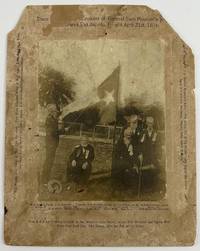
19065502Houston: Nelson Art Studio 1906. About good. Albumen photograph 9.25 x 7.25 inches on a printed studio mount measuring 14 x 11 inches. Substantial rubbing and soiling to printed mount with some loss of printed text top two corners chipped right corner chip costing a few words of text. Extremities of photograph worn and a bit chipped with some soiling to the image area. Overall a battered but charming survivor. A stunning original photograph of the final five survivors of the crescendo of the Texas Revolution the Battle of San Jacinto on a detailed printed mount which provides important information on the subjects. These five Texian veterans are all identified in the printed caption at the bottom. From left to right they are: William Physick Zuber of Austin John Washington Darling of Taylor Stephen Franklin Sparks of Rockport Levi T. Lawlor or Lawler of Florence and Alfonso or Alphonso Steele of Mexia. Each man's age is listed as well. The latter man Alfonso Steele was the last surviving participant in the battle when he died in 1911. Zuber stretches the Texas flag out from the flag staff while the other four men sit or stand at right facing the camera. One of the veterans sits on the cannon used by Colonel James Fannin at Goliad. The photograph was taken at the final annual meeting of the Texas Veterans Association on April 21 1906 the seventieth anniversary of the battle.<br /> <br /> According to the online Portal to Texas History: "The Texas Veterans Association an organization of those who had served prior to during and immediately after the Texas Revolution held its first convention in Houston on May 13-15 1873 with about seventy-five veterans present. After 1876 the annual meetings held in some seventeen different Texas cities always took place in the week including April 21 San Jacinto Day. The association dissolved in Austin on April 19 1907 during its thirty-fifth annual convention. With its dissolution its work was taken over by the Daughters of the Republic of Texas."<br /> <br /> The present card mount containing the photograph is printed with important information on all four sides though some of the information at the top has been chipped away. We would prefer to know the handful of missing words but we cannot find another example of this photograph on the same mount for comparison. Still the heading of the photograph identifies the subjects as survivors of General Sam Houston's Army from the Battle of San Jacinto fought April 21 1836. The caption in the left margin states that "This Picture Was Taken at Their Last Reunion. They Have Resolved Never to Meet Again Being Too Old to Travel. This Picture Can Be Had for One Dollar. Address V.C Terry Houston Texas General Delivery." A few words in the right margin are obscured but can be easily inferred: "These are the Remnant of General Houston's Army. Five Living Out of Six Hundred and Eighty-Six Who Captured Santa Ana and His Murderers Twenty Miles Below Houston." The last portion of text below the identifying captions at bottom addresses the other Texas war relic in the photograph: "This is Colonel Fannin's Cannon at the Massacre near Goliad where Two Hundred and Eighty Men Were Shot Next Day Two Weeks After the Fall of the Alamo."<br /> <br /> The present photograph is decidedly rare but not completely unknown. The only other version of the image we can locate measures roughly the same size but includes a sixth Texas veteran named Asa Collinsworth Hill who holds the flag staff but was not part of Houston's forces during the Revolution and is affixed to a different printed mount with identifying captions for the veterans but with a simple title reading "Veterans of the Mexican War -- 1836" above two lines of poetry. This other version contains a photo credit and copyright notice from C.A. Major of Goliad who apparently took the original photograph at the reunion.<br /> <br /> The present example pictures only the five surviving veterans of San Jacinto is affixed to a much more verbose printed mount with a blindstamp in the center of the bottom margin credited to Nelson Art Studio in Houston. Curiously Asa Hill may have been removed from the middle of this version of the photograph through photographic development methods. In any case these are the only two versions of this photograph we can find. We locate examples of the six-man version on the simpler mount at the Bee County Historical Commission in Beeville with an image hosted by the University of North Texas's Portal to Texas History the Texas State Library and the Daughters of the Republic of Texas Library which may own more than one copy. We have been unable to locate any other examples of the present photograph on the same printed mount as seen here. This somehow appropriately-wounded photographic relic featuring the heroes of the Texas Revolution should positively sing to collectors of Texas history. Nelson Art Studio unknown
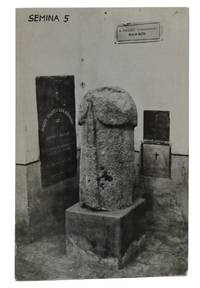
1959140945520Los Angeles: Wallace Berman 1959. Folded pictorial covers with interior printed manila pocket housing 18 loose poems and images. 18.5x12 cm 7 1/2" x 5". One of 350 copies. Contents complete. Near Fine light wear and soiling to wrappers; some pieces with toning or offsetting a few with creases at corner tips<br /> <br /> <br /> <p>The fifth installment of Wallace Berman's legendary artist's magazine. Contributors include Berman John Wieners David Meltzer Ruth Weiss Sor Juana Ines De La Cruz Christopher Maclaine Anne McKeever Antonin Artaud Larry Jordan Kirby Doyle Philip Lamantia John Chance Bob Kaufman Michael McClure John Reed Wm. Margolia and John Hoffman. Semina was published for nine issues between 1955 to 1964. All are now rare. Wallace Berman unknown
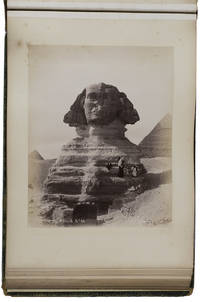
1895ABC_475631895. Oblong folio 28 x 39 cm. Contemporary gold-tooled black morocco gilt edges. With 58 photograph prints ca. 21 x 25.5 to 13.5 x 20 cm. Mounted on both sides of the leaves in the album. 60 pp. The album contains 15 silver albumen photographs of Melbourne taken mainly from the series C. Rudd's new views of Melbourne 1886-1887 by Charles Rudd 1849-1901. They show Collins Street Melbourne town hall the public library Parliament House the Court of Law Government House and various other buildings and infrastructure as well as botanical gardens such as Fitzroy Gardens. The photographs of Sydney were the work of the renowned Australian photographer Henry King 1855-1923 born in England in 1855 who emigrated to Australia with his family in 1856. He worked as a photographer at J. Hubert Newman's studio in Sydney before opening his own studio in 1880. King gained recognition for his photographic studies of Australian Aboriginal people and his scenic views of Sydney. He died in 1923 leaving behind his wife son and three daughters. His glass negatives were acquired by J.R. Tyrrell after his death and are now held by the Powerhouse Museum. King is one of Australia's most significant early photographers. The album contains seventeen of Kings photographs of the harbour including Farm Cove and the Circular Quay Government House and interior and exterior photographs of the town hall King and George Street the Mutual Life Association Building the General Post Office and the Ferner Botanical Garden. Rural New South Was appears in nine photographs including images of Illawarra National Park the Hawkesbury River and a series of outdoor photographs taken along the coast at Blackwall and dated July 1895.This curious album of 58 photographs from France Egypt and most importantly Australia opens with a section with six photos from Marseille showing street views the city harbour the Avenue du Prado and the castles.The ten photographs from Egypt depict both the cultural highlights of the country such as the Pyramids the Sphinx the Citadel of Cairo and the Palace of Gizeh as well as ordinary Arabian villages and street scenes. They stemmed from the ateliers of the Abdullah brothers of Constantinople. The Abdullah Frères namely Viçen 1820-1902 Hovsep 1830-1908 and Kevork 1839-1918 Abdullahyan were three Ottoman brothers of Armenian heritage who gained international fame as photographers during the late Ottoman Empire. Some evidence suggests that he may have collaborated with the Zangaki Brothers and he may have been the official photographer for the Universal Company of the Suez Canal. Later he worked in partnership with the British-Italian photographer Antonio Beato.With an owners inscription in pencil "a appartenu Alfred Schmid" some photographs are captioned in black ink or pencil detailing the places. With a small label from the bookshop that sold the album: "Papeterie Sauwen-Jehotte" in Antwerp. The edges are somewhat bumped and some browning and foxing throughout. Otherwise in good condition. unknown
16249,, , pp., 1 vol. in grand in 4 relié Album grand in-quarto oblong, reliure en plein maroquin bordeaux, dos à nerfs et plats ornés de larges filets dorés, tranches dorées, (tache ancienne sur un plat mais peu visible et très petite auréole à la marge de 3 cartons), formats des épreuves: 29x 22cm (20) , 19x10 cm (5) , 20x13 cm (3) , 14,5x10,5 cm (1) . Vue du port du Pirée (ce panorama du port et de la ville du Pirée a été pris de la colline Sainte-Elie ; très rare, peu de panoramas du port du Pirée au XIXème siècle existent), Athènes, Mycènes et leurs antiquités, portraits colorisés de Corinthiennes, soldat grec. Les photographes, Dimitrios Konstantinou qui oeuvra à Athènes entre 1858-1870 et Konstantinos Athanasiou jusqu'en 1898 sont les deux auteurs de cet album. Les prises de vue furent réalisées entre les années 1865 et 1880 et les épreuves, pour les plus anciennes, furent réalisées vers les années 1880 par Athanasiou, le successeur de Konstantinou. Pas de signature sur aucune photographie mais, un numéro de classement gravé dans la plaque (sur presque toutes) par Athanasiou devient ainsi visible sur les tirages. 'Ces photographies datent des années 1860 et 1870 et représentent des monuments et des sculptures découvertes à Athènes. 'En effet, Constantin est le premier photographe à travailler pour la Société Archéologique grecque et sa tâche consistait à photographier les sites et les découvertes archéologiques. Ses photographies de cette époque ne sont pas signées mais comportent souvent un numéro de négatif caractéristique'. (Georges Gressot wiki sbu 2015, Université de Strasbourg) - 1 Guerrier grec (pas de numéro) 20,5x13,5 cm - 2 Grande amphore funéraire de marbre (numéro 808) 29x22 cm - 3 Demetria et Pamphile (numéro 6) 29x22 cm - 4 Hegeso (numéro 4) 29x22 cm - 5 Gorallion (numéro 2) 29x22 cm - 6 Dexileos, jeune guerrier athénien (numéro 1 et légende) 29x22 cm - 7 Stele funéraire représentant un banquet (pas de numéro) 29x22 cm - 8 Tombeau de Philopappos (numéro 34) 29x22 cm - 9 Grand Bas Relief trouvé à Eleusis représentant Demeter, Persephone et l'enfant Triptolème (numéro 126) 29x22 cm - 10 à 18 Mycènes objets et bijoux dont masque d'or massif "dit d'Agamemnon" (pas de numéro) 29x32 cm - 19 Vue du Pirée prise de la colline saint-Elie (numéro 2h) 2 photos formant un panorama de 58x22 cm - 20 et 21 Hermès Bacchophone de Praxitele tête de profil (pas de numéro) et en pied (numéro 10) 29x22 cm - 22 Statue d'Hermès trouvée à Andros (numéro 218) 29x22 cm - 23 à 27 Corinthienne, portraits en pied rehaussés de couleurs (pas de numéro) 19x10cm - 28 et 29 soldats grecs (pas de numéro) 14,5x10,5 cm .
193878411s. d. [1938] | 31.80 x 39.50 cm | une photographie contrecollée sur carton
1871MEDI1349Paris, H. Lauwereyens 1871. Lex.-8°. VIII, 275(1) S. Mit 190 Textholzstichen und 22 Tafeln mit aufgewalzten Orig.-Albuminabzügen. Brauner Halblerband der Zeit auf 4 Bünden mit goldgeprägtem Rückentitel und Fileten, Kopfgoldschnitt, Kanten berieben, Exemplar aus einer Spitalsbibliothek mit den entsprechenden Kennzeichnungen, stockfleckig. 8° de Lex. VIII, 275(1) p. avec 190 gravures sur bois en texte et 22 planches avec des épreuves en albumine originales laminées. Demi-reliure brune de l'époque à 4 nerfs avec titre doré au dos et filets, tête dorée, bords frottés, exemplaire provenant d'une bibliothèque d'hôpital avec les marquages correspondants, mouillures. Erste und einzige Ausgabe des weltweit ersten fotoillustrierten Werks zur Augenchirurgie. Diese neu Technologie war zwar in der Herstellung teurer als gestochene Tafeln oder Litographien, lieferte aber auch eine wirklichkeitsgetreuere Darstellung. Lange Zeit gab es in keinem chirurgischen Bereich ein vergleichbares Werk. Die photographischen Aufnahmen zeigen verschiedenen Operationen am Auge (Kystotomie, Sortie de la cataracte, Strabisme, Cantoplastie etc). Da die Photoausrüstung der Zeit noch nicht so ausgereift war, führte man die Operationen an Leichen durch. - Meyer (1838?1902), berühmter Augenarzt in Paris, verheiratet mit der Tochter der Familie Rothschild, deren Ophthalmologe er auch war, studierte in Halle und später in Berlin bei Graefe, wo er 1860 zum Augenarzt promovierte. Dann ließ er sich auf Rat Graefes 1863 in Paris nieder, fast gleichzeitig mit Liebreich und L. Wecker. ?Aber nur E. Meyer besaß das ganze Herz Graefe?s, der ihm folgendes Zeugnis mit auf den Weg gab: ,Ich freue mich, dass E. Meyer durch seine Arbeit sich die Beherrschung aller Zweige der Ophthalmologie angeeignet hat?. Arthur de Montméja, Augenarzt im Pariser 'Hospital Saint Louis', begann 1865 photographische Aufnahmen von Patienten zu machen um einen besseren Austausch mit seinen Kollegen zu ermöglichen. So wurde er zum führenden Verleger im Bereich der Medizinphotographie. Ab 1869 gab er auch die erste medizinphotographische Zeitschrift heraus ('Revue photographique des hôpitaux de Paris'). Albert 1555; Hirschberg/Blodi 1267-68. Sehr selten, NUC verzeichnet weltweit lediglich zwei komplette Exemplare (Harvard, NLM). - Première et unique édition du premier ouvrage photo-illustré au monde sur la chirurgie oculaire. Cette nouvelle technologie était certes plus chère à produire que les planches gravées ou les litographies, mais elle fournissait également une représentation plus fidèle de la réalité. Pendant longtemps, il n'existait aucun ouvrage comparable dans le domaine de la chirurgie. Les photographies montrent différentes opérations de l'?il (cystotomie, sortie de la cataracte, strabisme, cantoplastie, etc). Comme l'équipement photographique de l'époque n'était pas encore aussi perfectionné, les opérations étaient réalisées sur des cadavres. - Meyer (1838-1902), célèbre ophtalmologue à Paris, marié à la fille de la famille Rothschild, dont il était également l'ophtalmologue, fit ses études à Halle puis à Berlin sous la direction de Graefe, où il obtint son doctorat en ophtalmologie en 1860. Puis, sur le conseil de Graefe, il s'installa à Paris en 1863, presque en même temps que Liebreich et L. Wecker. "Mais seul E. Meyer possédait tout le c?ur de Graefe, qui lui apporta le témoignage suivant : Je me réjouis que E. Meyer ait acquis par son travail la maîtrise de toutes les branches de l'ophtalmologie". Arthur de Montméja, ophtalmologue à l'hôpital Saint-Louis à Paris, commença en 1865 à prendre des photos de patients afin de permettre un meilleur échange avec ses collègues. Il est ainsi devenu le principal éditeur dans le domaine de la photographie médicale. A partir de 1869, il publia également la première revue de photographie médicale ('Revue photographique des hôpitaux de Paris').
196835041968 aucune reliure 9 tirages gélatino-argentiques d'époque. Feuilles : 37,5 x 28,5 cm (environ), images : 34 x 24 cm (environ). Tous les tirages comportent au verso le tampon d'Ugo Mulas ainsi que diverses annotations. Huit d'entre eux comportent dans les angles des tirages des repères tracés à l'encre visant à les caler lors de leur reproduction et au verso, l'annotation "tel" : ce sont ces tirages qui ont été reproduits, exactement au même format, dans le catalogue de la Galerie de France (pp. 6, 7, 8, 9, 10, 11, 12 et 13). Le dernier tirage, représentant trois dessins de Folon posés sur sa table de travail, ne figure pas dans le catalogue : il est inédit.
1948104585BBBeverly Hills, Copley Galleries, 1948. 4°. 12 S., [2] Bl. mit 5 Abb., 2 Illustrationen u. 1 signierten und num. Heliogravure ("autographed photograph by the artist", Bildgröße 23,2 x 13,6 cm.). Hellblauer OKart. mit gelbem umgelegten OKart.
5520"P., P. de Lacroix, sans date (1890). 8 volumes grand in-4, demi-chagrin rouge à coins, dos à nerfs richement orné et doré, titre doré. (Reliure signée ""Magnier"") (épidermures et quelques accidents aux reliures). Un des rares exemplaires complets des photoglypties annoncées (ou procédé Woodbury) de Nadar, Carjat, Bertall, Goupil. ""La photoglyptie est le seul procédé de reproduction mécanique à posséder des gradations de tons continues, et donc est très difficile à distinguer des images photographiques (notamment des tirages au charbon)"" (source : Atelier de Conservation et de Restauration des Photographies de la Ville de Paris). Outre un témoignage unique de la vie culturelle du XIXème siècle, cet ouvrage est une magnifique galerie de 125 portraits photographiques (64 en grand format 22 x 18 cm). Notre exemplaire comporte, comme souvent, des rousseurs intermittentes sur le spages de texte. Les planches photographiques reproduites (montées sur onglets) sont d'une saisissante fraîcheur et en parfait état. IL contient les portraits de Baudelaire photographié par Carjat avec la notice biographique rédigée par Théodore de Banvielle, Victor Hugo, Rossini, François Coppée, Gounod, le Duc d'Aumale, Corot, Edmond About, Puvis de Chavannes, Gustave Droz, Bartholdi, Rouget de l'Isle, Thiers, Alexandre Dumas, Gustave Doré, Edmond de Goncourt, Ferdinand de Lesseps, Baron Taylor, Le Cardinal Lavigerie, Jules Janin, Ernest Renan, Octave Feuillet, Ambroise Thomas, Alexandre Dumas fils, Alphonse Karr, Pierre Loti, Champfleury, Georges Sand, Emile Littré, Théodore de Banville, Louis Figuier, Lous Blanc, Alphonse Daudet, Louis Pasteur, Gustave Eiffel, Emile Zola, Hector Malot, etc... "
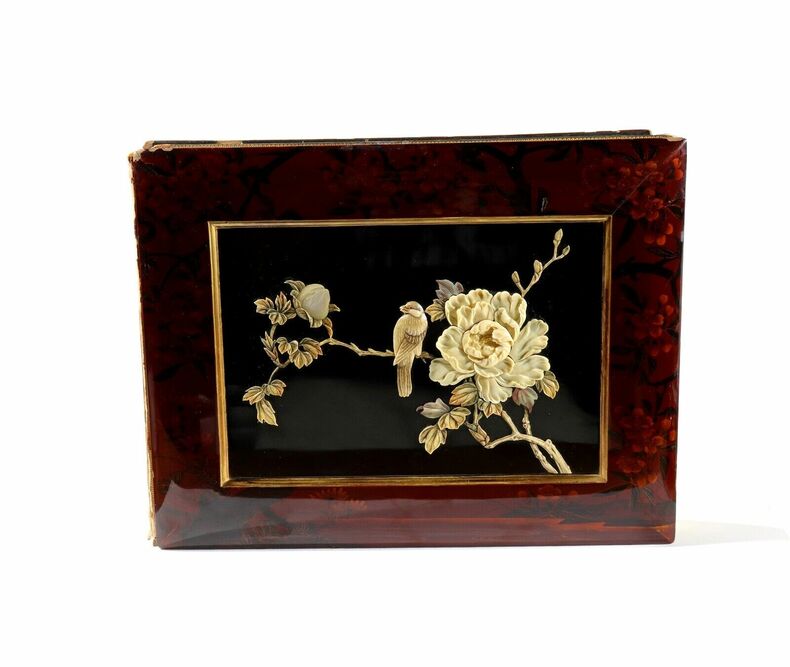
1890AMO-4520[Japon, Yokohama ?, vers 1890] Très beau spécimen en grand format (36 x 27 cm environ pour l'album et 26,5 x 20,5 cm pour les tirages). Complet. Très bel album très bien conservé malgré quelques chocs sur quelques bords et le dos de l'album manquant (bande de cuir), parfaitement solide et très décoratif. Très belle esthétique d'ensemble, superbe décor sur le premier plat (rare aussi beau et fin). Intérieur d'une grande fraîcheur. Beau coloris au pinceau à la main.
19321025651932 Aus Unserem Leben Fotobuch der Munka.(De Notre Vie, Le premier livre de photo de Munka)Ed. Munka, Budapest, mai 1932. 240x175 mm, couverture souple. 64 pages, 44 photographies. Texte en hongrois et allemand de Lajos Kassák, Typographie de Lajos Kassák, mise en page Lajos Lengyel. Traduction en allemand László György. Les photographes: Bass Tibor, Bergmann Teréz, Bruck Laszlo, Frühof Sandor, Haar Ferenc, Schmidt Anna, Lengyel Lajos, Tabak Lajos.
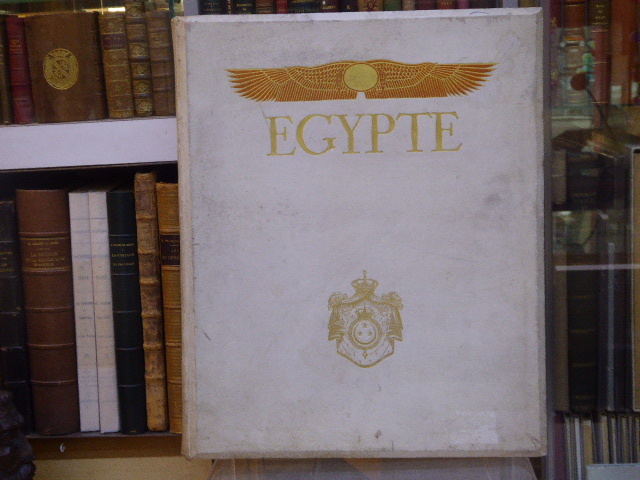
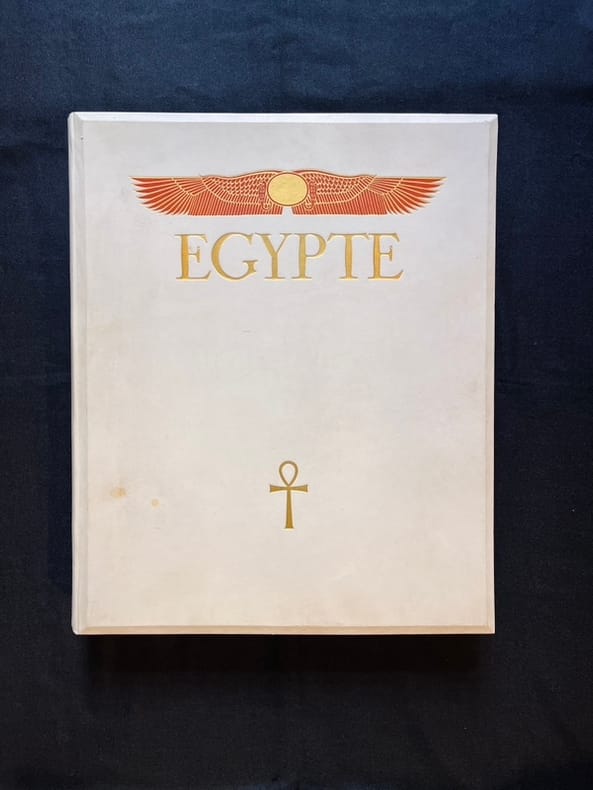
469748Editions Paul Trembley Genève 1932 Grand et fort in-folio ( 502 X 420 mm ) de 195 pages, cartonnage de vélin crème de l'éditeur décoré en couleurs et chiffré en lettres d'or ( Jacques WENDLING ). Très nombreuses photographies dans le texte et 40 magnifiques planches en héliogravure sous serpentes légendées hors-texte de Frédéric BOISSONNAS ( Les photographies ne seront jamais réimprimées ). EDITION ORIGINALE, un des 300 exemplaires numéroté à la presse en chiffres arabes. Reliure un peu frottée, très beau et imposant livre, un des plus beau sur l'Egypte, entièrement monté sur onglets, somptueuse publication signée par l'artiste et l'éditeur, rédigée par d'éminents spécialistes de l'époque, en 6 chapitres : 1. L'Egypte pittoresque, par Fred Boissonnas 2. L'Egypte des pharaons, par Gustave Jequier l'Egypte gréco-romaine, par P. Jouguet l'Egypte copte-byzantine, par H. Munier l'Egypte musulmane par Gaston Wiet l'Egypte moderne par P. Trembley.*****ATTENTION, vu le poids élevé de l'exemplaire ( Plus de 11,00 kg ), des frais de port supplémentaires seront demandés. Nous demandons aux amateurs étrangers de nous contacter avant de passer commande.*****
1961911401961 | collage : 16.2 x 24.7 cm ; cadre : 35.2 x 42.6 cm | Une feuille sous cadre
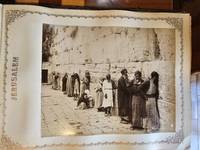
18800213201880s. First Edition. Hardcover. Photographs Very Good to Near Fine with good contrast. Moderate wear to binding but front hinge is broken with cover still attached. Over all Very Good. Oblong folio album 15" x 11" in morocco-backed olive wood panels with a carved Jerusalem cross and inlaid border containing a letterpress title and 48 large @9" x 11" albumen photographs with caption and photographer's credit in the negative mounted recto/verso to stiff printed album cards all protected with tissue guards. Attractive Nineteenth-century tourist album of Zangaki brothers' photography compiled for sale at Boulos Méo's antique and souvenir shop at the Jaffa Gate of Old City Jerusalem. Best known for their photographs of Egypt the Greek Zangaki brothers also documented the construction of the Suez Canal with their photographs as well as scenes in Palestine as in this album. Images include the Wailing Wall Jaffa Gate Bab el-Khalil Church of the Flagellation Gethsemane Mount Olive Al-Aqsa Mosque Mosque of Omar and the Tower of David. <br/><br/> hardcover
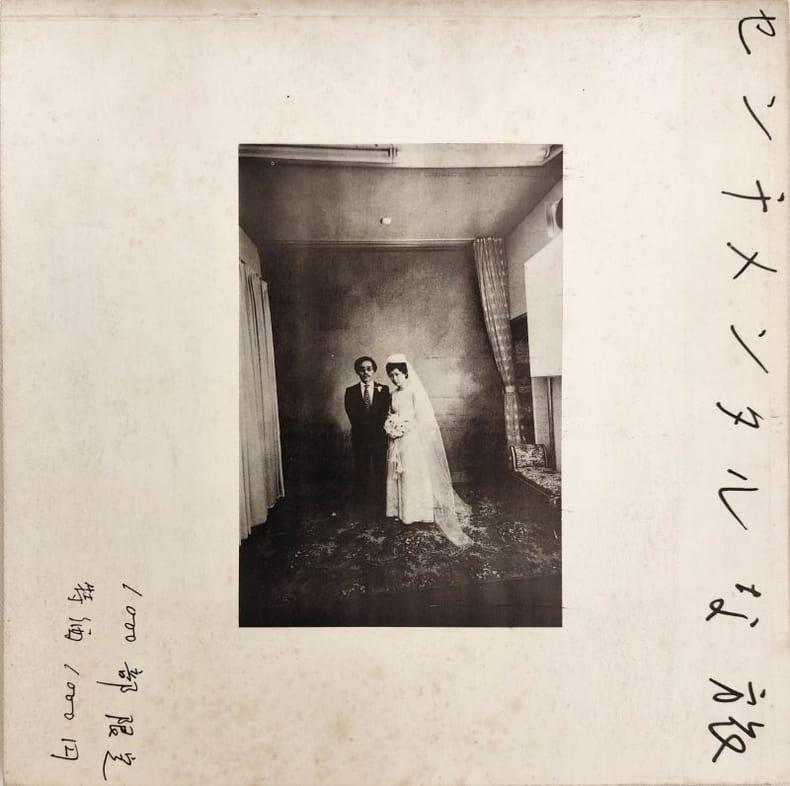
101097S.l.n.d. (Tokyo, chez l’auteur, 1971), 240x240mm, 108p, 108 photographies pleinepage. Broché, dos carré, couverture illustrée de la photographie du mariage. Unfeuillet de texte sur papier vert d’eau de la main d’Araki, les motivations de sonchoix pour la photographie comme activité professionnelle. Signature imprimée surla couverture.
1936147033Burbank CA: Warner Brothers 1936. Collection of nine vintage oversize photographs from the 1936 film. Each with a mimeo snipe on the verso. <br /> <br /> Based on the 1930 Pulitzer Prize winning play by Marc Connelly itself based on "Ol' Man Adam an' His Chillun" a 1928 collection of pseudo African American folk tales by Roark Bradford. One of only a handful of films to feature an all-Black cast made by a major Hollywood studio during the Golden Age becoming the highest grossing such film and remaining so until surpassed by "Carmen Jones" in 1954. <br /> <br /> 14 x 11 inches. Very Good with light edgewear and light vertical creasing down the center. Warner Brothers unknown
- Par l'auteur, s.l. 1981-1982, 22x22cm sur papier Ilford 30x40cm, une planche photographique. - Portrait of Andy Warhol. Original photograph printed by the artist Marc Trivier | 1981-1982, 22 x 22 cm | on Ilford paper 30 x 40 cm Large original photograph portrait in black and white, made and printed by Marc Trivier. Unsigned silver print, as most of Trivier's works. Unique print from the artist. Small stain on the upper margin. Artists, madmen, abattoirs, trees - Marc Trivier photographed each of his subjects with the same interrogative intensity. All his photographs are in the same square format, simple and confined, with no retouching or alteration of the framing, and seem less to show off a subject - famous or unknown, in or out of power, dead or alive - than to seek out a presence. "Thirty-five years of photographic practice, obsessions, this is maybe what remains; a singular recording mode of light burning, from one picture to the other, in a series of proposals looking alike, though each one as singular as the fraction of time it refers to" (Marc Trivier). Marc Trivier takes facial photographs of figures from the eighties. The subject looks right into the lens. These are not portrait star photographs, but they are the result of a will of desacralisation: "Instead of being a writer's or artists' portraitist among many others, he marginalises himself with his device: under the pretext of settings, he keeps his models waiting, he makes them pose several minutes, which gives them a worn look. Maybe he expects a more natural attitude. Here is Francis Bacon in a delicate balance, Samuel Beckett, Jean Dubuffet or even Michel Foucault, more or less sagged back in their chairs. Intimate pictures." ("Picture of tiredness at Marc Trivier's", S. Rousselle-Tellier, in Marges, 2004). Most of the time photographed in their personal space, the subjects loosen up, no longer mastering their image. The resulting unbalance reveals these figures' frailties and allows Trivier to render the unity of the intimate body and the public artworks. "I was reading Genet; to me, Genet was letters in a book. And then one day I saw his portrait, and there was like a rupture. How could it be possible that these signs were also somebody? Making a portrait is reuniting the name and the face" (Marc Trivier). Many items seem to oppose Warhol and Trivier. Andy Warhol is the artist of the multiple. His art was born from the metamorphosis of the consumerist artificial and mocks the proliferation of the identical. Marc Trivier is an adept of rarity, and each one of his photographs comes down to some rare prints, all differing in time and the artist's prints. Andy Warhol knows the importance of image, which even ends up replacing the individual. He knows people play roles and this is the image he captures. His various series on Elvis Presley, Marilyn Monroe or Mao show the transition to the icon status which makes these human beings immortal, and destroys their humanity to change them into pieces of art. On the other hand, Trivier's photographs strengthen the presence of an unwieldy body the artist cannot get rid of, an obstacle to sacralisation. Warhol's known photographic clichés, faithful to his spirit, represent him either as a rock star, proudly wearing his perfecto and sunglasses as his protégé Lou Reed, or as an eccentric artist with his tousled hair, or simulating a boxing match against Basquiat. Each one of his photographs is a clever exposure of his character, pushed to excess, image of his own image, which the modern icon master fully controls. Warhol's photography made by Marc Trivier shows a complete different person. Unbalanced by a slight low-angle view, projected on a black canvas behind him, cutting out the scene in a triptych, Andy Warhol's body seems to emerge from this dark background, whereas his legs and heavy boots, slightly oversized by the shooting, take pride of place in the foreground. Surprised by the lengthy wait Trivier imposes t
193221382Genève, Editions Paul Trembley, 1932. Un volume in-folio, de 190-[6] pages montées sur onglets, plein parchemin blanc, ornements orange et dorés, titre doré au premier plat.
1901124137Kyoto Yokohama & Tokyo: 1901. A fine Japanese tourist album in original lacquer binding A magnificent Japanese export album with large hand-coloured albumen prints of Meiji-era Japan offering a vivid representation of people with arresting portraits accompanied by landscapes sites and everyday life; housed in a beautifully decorated binding and housed in an equally impressive custom box. Of particular interest are the images devoted to "types" life and people including a street peddler hauling his cart of goods by Felice Beato a beach scene on Enoshima Island showing fishermen as well as a splendid image of a shoemaker by Shusaburo Usui. Also featured are city scenes showing Main Street in Yokohama by Izawa Shuji and the royal gardens in Tokyo with the 500-year-old wisteria in bloom. Photography arrived in Japan shortly before the 1867 Meiji Restoration which marked the beginnings of a period of dramatic change with westerners and Japanese setting up studios. Although the photographs were aimed at the tourist market they revealed the dress style and nature of the country. The present albumen prints are mainly from the studios of five different photographers: Tamamura K zabur 1856- was a noted Japanese photographer who originally opened his studio in Asakusa before moving to Yokohama where he began commissioned photography of the tea industry. Kozaburo was probably the most successful of Japanese photographers in marketing his work to foreign residents and visitors. Another photographer is Usui Shusaburo fl. 1877-1894 who had a Yokohama-based studio which operated until the mid-1890s. Izawa Shuji was an amateur photographer active in Tokyo during the 1890s who also edited the photographic periodical Shashin-Sowa. Ueno Hikoma 1838-1904 and Felice Beato 1832-1909 were two of the most successful and well-known purveyors of images based in Nagasaki and Yokohama respectively. The album has an ownership inscription in Spanish on the front pastedown of Ramon Concepcion Lozano 1880-1963. Lozano was a Puerto Rican who served as mess attendant in the US Navy. He purchased the album in Tokyo in 1901 and shortly thereafter concluded his career with the USS Uncas a fleet tug in the Caribbean. A typed note on the front free endpaper notes that Lozano had the present wooden display box made in June 1956. The note also written in Spanish lists the bottom as marine plywood; the box sides as mahogany; lid panels as cypress; inlaid panels on the lid as English pine black cypress oak red mahogany black walnut white pine cherry and birds-eye maple. This is a particularly attractive presentation for this highly evocative album. Landscape folio 305 x 393 mm. With 48 hand-coloured albumen prints landscape or portrait 200 x 250mm; 250 x 200mm. 26 featuring human subjects and large colour print of Hirosaki by Kronfeld all mounted recto and verso on thick cream-coloured boards with tissue guards many with captions or glass plate negative numbers in lower margin of image each with small printed number mounted at lower margin. Contemporary gold-flecked black lacquer boards velveteen spine inlay designs of fans on front cover and floral scene on lower cover gilt dentelles gold-flecked endpapers each leaf with alternating blue and red silk tabs attached to the fore-edge all edges gilt. Housed in wooden display box with eight inlaid panels. Minor rubbing and wear to spine small cracks of lacquer edges of boards with neat retouching of colour corners and inner hinges expertly repaired some occasional foxing slight wear or toning of mounts an excellent example with the photographs retaining strong contrast. Terry Bennett Photography in Japan: 1853-1912 Singapore 2006. hardcover