1 237 résultats
38525n. p. n. d. 1st edition thus. Black lacquered album with peacock and Mount Fuji mother-of-pearl inlay to front cover silk ties. Black mounting paper with red photo corners. Some glassine layers between leaves. Album rubbed and silk ties gone from top rear board hinge almost detached. Photographs generally Very Good or better with glassine layers mostly torn. A Good to VG item. 22 leaves. 300 b/w photographs ranging in size mainly 3" x 4-1/2" and 2" x 2". Few photographs missing. Some photographs contained in an envelope in rear of album. 10-3/4" x 16" <br/><br/>Unless they were on the front lines equipped with C-Rations members of the U. S. Army stationed in Japan in the 1950s enjoyed hearty well-prepared meals - particularly the officers. This photograph album titled by its compiler "Far East Command 1951 - 1952 - 1953" contains snapshots and formal staff pictures of what appears to be the officers' mess of Pershing Heights - HQ for the Far East Command in Tokyo. The photographs show large kitchens Japanese cooks and waitresses in starched uniforms dining rooms and elaborate desserts on serving tables. During his time in Japan this officer also seems to have enjoyed some leisure time - trips to the beach with bikini-clad women temples sacred springs and other tourist attractions. He also photographed the interior of his own quarters some locals and many of the official buildings and their grounds. During the "Third Korean Winter" however he was sent North with the army as General Ridgway began "meatgrinder" tactics to regain the Korean peninsula. This second part of the album with pasted-in typewritten title "Pictures Taken in Korea 1952 - 1953" shows a rougher outfit with jeeps and artillery in the snow sandbagged quarters bundled-up Korean soldiers and what appears to be a portable mess. Despite the circumstances the cooks must have had efficient facilities in which to work; there is one small photograph of an elaborately iced and decorated cake proudly held by two chefs in white toques. At this time the major generals ordered food for their officers from Japan. The basic fare was apparently popular and was even said to be enjoyed by visiting entertainers like Jack Benny and Debbie Reynolds. There are several pictures of USO performances in this part of the album. unknown books
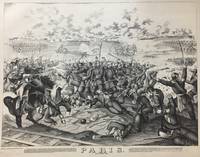
1890287982New York: H. Schile 1890. Original lithograph backed with linen. 24" x 30".<br/><br/> Dramatic and unusual battle scene between the French and the Prussians on November 29th 1870 during the Franco-Prussian War. Text below details "On the morning of Tuesday November 29th the garrison of Paris under the command of Generals Trochu Ducrot and Vinoy made their first sally. For three days the French held their positions and they nearly succeeded in breaking the German lines. But along the line of railroad they had to yield and after a desperate fight were repulsed losing about 4.000 men." An excellent example of the theatrics of war this view shows moustached men falling histrionically to the ground sans the gore an usual depiction of a battle scene might show. Possible proof print due to variation in dating.<br/><br/> H. Schile unknown books
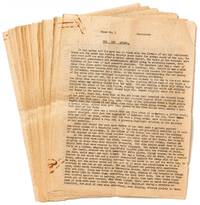
19304221391930. Unbound. Very Good. Typed manuscript. Ribbon or top copy. 27 1 leaves typed rectos only last leaf is blank. Many corrections visible in type. Unsigned. Old folds paperclip stains in the margins the paper is well-thumbed with small tears and creases but is overall supple and very good. Complex literate and detailed sex story about a man who meets a beautiful foreign woman in a park in an American city and is brought back to a luxurious abode where to his surprise he is called upon to pleasure the woman's lovely friend repeatedly and in a variety of ways. He later wakes up in the park and thinks he has dreamed the encounter but discovers a gold watch has been left in his pocket as a gift. The following day the events are repeated but this time with his friend and the beautiful foreign woman joining in. Spoiler Alert!: when they are thrown over after the dalliance the men learn that the young woman was the princess of a European country soon to be a queen and that she was visiting America for a last fling in anticipation of her upcoming wedding to the crown prince of another nation and that her companion was a countess who traveled everywhere with her as a chaperone.<br/><br/>Porn of this sort was made exponentially more common when American servicemen gained wide access to mimeograph machines during WWII but this is a typed manuscript and our best guess is that it predates the War. Little from the text indicates the possible age of the manuscript. An OCLC and broad internet search locates no copies although admittedly OCLC is an insufficient source for tracking this sort of material. Possibly unique. unknown books
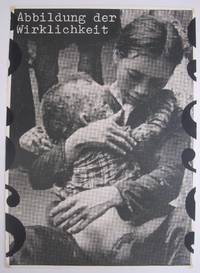
51239Germany 1972. Original silk-screened poster partially painted measuring 86 à 61 cm. Trace of glue to corners else about very good. Satirical political poster issued to coincide with the documenta 5 held in 1972 in Kassel. The contemporary art fair's theme during the 1972 iteration revolved around the concepts of "Depiction" and "Reality" "Abbildung" and "Wirklichkeit" which are here being subverted in reference to the horrors perpetrated in Vietnam by the US. The fair's official title was "Questioning Reality - Pictorial worlds today" "Befragung der Realität - Bildwelten heute". Curated by Harald Szeemann it is considered to have been the most important exhibition of contemporary art after World War II. In contrast to documenta 4 the show also included numerous happenings and fluxus events. The silk-screened poster has been partially painted over possibly alluding to dollar signs. The artist's or publisher's name to the lower right corner has been obscured by the paint.<br/><br/>We were unable to find further information about the poster and as of February 2021 it could not be traced via KVK or OCLC. unknown books
1857295315London: Smith Elder 1857. First. hardcover. very good. Illustrations by John Leech. 299 pages 16 pages of advertisements 8vo blind and gilt-decorated red cloth spine faded and worn at ends. London: Smith Elder 1857. Scarce. First Edition. Very good.<br/><br/> Smith Elder unknown books
2483London: Printed and Sold by the Booksellers of London and Westminster. Price 2 Pence . . 8vo disbound showing evidence of previous pamphlet binding. One of several 1709 printings. This is ESTC 19866 and Foxon C19. No Priority established.This was also issued as part of: ÕA collection of the best English poetry by several handsÕ London 1717. The poem objects to the passing of the Foreign Protestants Naturalization Act 1708 7 Ann c 5 sometimes referred to as the Foreign and Protestants Naturalization Act 1708. It was an Act of the British Parliament and was passed to allow the naturalisation of French Protestants Huguenots who had fled to Britain after the revocation of the Edict of Nantes. It was one of the British Subjects Acts passed in the years 1708 to 1772. The Whig majority in Parliament passed the Act with the support of both Houses of Parliament despite some opposition that a "conflux of aliens that would be invited over". The counter-argument is presented in the preamble of the bill "that the increase of people is a means of advancing the wealth and strength of a nation." London: Printed and Sold by the Booksellers of London and Westminster. Price 2 Pence, . unknown books
183319161likely New England ca. 1833. Oblong 8vo. self-wrappers. Awkwardly hand-stitched in a rather ad-hoc manner. 21 leaves of manuscript penned in a neat and legible hand recto and verso. 42pp. in all. Mild toning infrequent foxing moderate edgewear. Overall very good. <br/><br/>A plea from unknown author offering statistics historical contect and warnings of the dangers of a half-way approach to temperance. Advocating for the kind legal ban of alcohol that would finally come to fruition during Prohibition the anonymous lecturer mixes a potent cocktail sorry had to of morality and patriotism: "Intemperance is the severest scourge with which our nation was ever visited. It has for many years rolled its waves of desolation over us spreading poverty ruin death and devestation around. Intemperance has filled our lands with widows and orphans. Under his black banner crime has stalked abroad at mid day and worked in darkness he has fed the hungry man of pestilence and nourished disease while they have done his deeds of cruelty . He hath filled our prisons and jails our poorhouses and penitentiaries with his unhappy visitors." Reference to Reuben Mussey Professor at Dartmouth College who left Dartmouth in 1838 and the "recent establishment of the Congressional Temperance Society" which was established in 1833 appear to date the manuscript to the mid 1830s; the paleography is consistent with this period as well. The lack of corrections suggests either fair copy or utilized in delivery. An apparently unpublished lecture bordering on sermon from the early years of the American temperance movement. unknown books
37257CHIAROSCURO ANONOMYOUS. LA VIERGE ACCOMPAGNEE DE QUELQUES SAINTS after Francesco Mazzuoli Parmigianino. N.P.: n.d. Broadsheet. 11.7 x 8.31 inches. Bartsch 64.24.I. Images of the virgin Mary were very popular for artists of the period. There are two other interpretations of this version by Parmigianino one by Alexand Ghandini and the other by Niccolo Vicentino that are recorded by Bartsch. O the three this is more representative of a Renaissance drawing with a simple and more delicate line block using parallel lines and cross--hatching to prod the shadow effects. The print was made from two blocks using a fairly evenly inked tan for tone. The plate has been damaged with two small areas filled i Despite this serious defect the print itself is of considerable charm and merit. unknown books
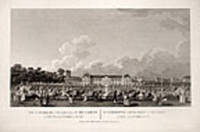
180316091London: Richard Phillips 71 St. Pauls Church Yard 1803. Engraving. Printed on wove paper. In excellent condition with the exception of two skillfully mended tears on the top margin outside the platemark. Top left corner has been expertly in-filled. Small mended tear on left margin outside platemark. Three tiny mended tears on bottom edge of sheet. A charming view of the Luxembourg Gardens in Paris published by Richard Phillips the infamous Jacobite printseller.<br/> <br/>Towards the middle of the eighteenth century a trend developed amongst English and European artists and printmakers which sought to visually record their country's natural beauties. Sparked by a sense of national confidence and patriotism artists and printmakers began to publish topographical prints of important sights and architectural attractions. In addition to being a visual record of the countryside they were meant to encourage public recognition of national treasures. These topographical prints were aimed at English and foreign tourists who desired a memento of their travels or at those vicarious tourists who collected topographical prints instead of traveling. Published in both English and French this charming view is a superb example of the popular topographical prints which Phillips sold in great quantity in his London shop. A true jack-of-all-trades Sir Richard Phillips 1767 - 1840 was one of the most fascinating men of his day. Born in London to a Leicestershire family his original name was Philip Richard. He began his career as hosier but in 1790 established himself as a publisher and bookseller in Leicester. In 1792 he founded the "Leicester Herald" which he used as a platform for his radical beliefs. An ardent Jacobite Phillip's shop became a depot for radical literature of the revolutionary period. In 1795 he was imprisoned for selling Paines' "Rights of Man" but he continued to edit the Leicester Herald throughout his imprisonment. After his release he set up his business in London where he established the infamous "Monthly" magazine. In 1807 he became a sheriff of the City of London and was knighted in 1808. His publications included a vast number of elementary class books and cheap manuals as well as fine art prints and maps.<br/> <br/>Dictionary of National Biography. Richard Phillips, 71 St. Pauls Church Yard unknown books
73463London: Privately Printed. hardcover. very good. Containing the Second Edition of A Poetical Sketch of the Campaign of 1793 revised and considerably enlarged.also a Similar Sketch of the Campaign of 1794; to which is added A Narrative of the Retreat of 1795. 2 volumes bound in one. Hand-colored frontispieces and 4 full-page black and white engravings. 8vo marbled boards recently rebacked in period style with title in gilt on spine. London: printed for the author.--Published by Cadell et al no date ca. 1795. Very good .<br/><br/> Not in Cockle BM Catalogue nor listed by Halket and Laing. Apparently uncommon.<br/><br/> Privately Printed unknown books
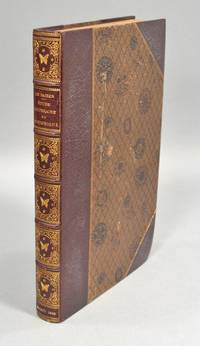
1888888541888. FRAIPONT Gustave. ANONYMOUS. LE BAISER. ETUDE LITTERAIRE ET HISTORIQUE. STIKEMAN binding. Nancy & Paris: Berger-Levrault et Cie 1888. 4to. 316 pp. Headpieces by Gustave Fraipont 1849-1923. #74 of 300 on Holland paper of a total edition of 315. The author is unknown but the dedication is signed by "Docteur ". Signed binding by Stikeman & Co. of half brown crushed morocco over patterned silkcovered boards. Spine in 5 raised bands with elaborate gilt compartments featuring butterflies. Top edge gilt. Marbled endpapers. Original printed wrappers bound-in. Minor wear to silk over boards otherwise near fine. unknown books
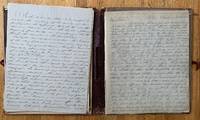
030073quarto 37 pp. bound in half leather embossed cloth covered boards binding worn rubbed scuffed small tear to spine entries dated 16 October - 11 November 1845 and 23 September 1847.<br /><br /><p>Copies of these journal entries-letters were made with a "<i>Wedgwood's highly improved manifold writer</i>." According to an online site at the Yale Center for British Art1 a crude form of carbon paper was patented by Ralph Wedgwood in 1806. The Wedgwood Patent Manifold Writer was patented in 1806 and initially intended as a means of helping blind people to write. But it was very quickly adapted for business use and similar systems that were sold from 1806 until around the end of the 19th century enabled users to retain a copy of outgoing letters made with this carbon paper. </p> <p> The original Wedgwood system used manifolds consisting of a sheet of transparent paper followed by a sheet of ordinary writing paper. To write a letter and make a carbon copy simultaneously the user would insert a sheet of double sided carbon paper between the transparent sheet and the writing paper. When the user wrote with an agate-tipped stylus on the transparent paper he would produce an outgoing letter on the ordinary paper under the carbon. He would also produce a copy in reverse on the back of the transparent sheet and because the sheet was transparent the copy could be read from the front. Mark Twain wrote some of his stories on Manifold Writers in the early 1870s. </p> The item offered here does not include the "agate-tipped stylus" but does include some of the carbon paper and a piece of metal the size of a piece of writing paper that presumably was placed under the letter carbon paper and tissue copy paper in order to have a hard surface to write on. <p> <b>Description of Journal-Letters</b> </p> <p> While the manuscript is not signed clues within the text tell us that the writer was from New York ".us Yankees" & "I find myself as comfortable in London as I do in New York" and likely worked on the steamer <i>Washington</i>. In the first section of the journal when our writer is on board the steamer <i>Cambria</i> he mentions that he is sharing a room with a British nobleman. He does not necessarily know the man but they are sharing a room on the voyage. Thus we can infer that the writer is a male from New York who is of the upper class or upper middle class and knowledgeable about ships but he also appears to be a merchant as the journal shows him placing orders with commission houses in Liverpool Leeds and elsewhere in England. </p> <p> There are two different sections of this volume. The first section of the journal carries entries from 16 October to 11 November 1845 and consists of 32 pages with everyday entries beginning while aboard the Steamer <i>Cambria</i> on 16 October followed by other entries while on board the steamer and afterwards entries made during his trip to England from the Waterloo Hotel at Liverpool on 27 October followed by postings from Huddersfield 28 Oct. London 6 Nov. Dover 10 Nov. and finally Brussels Belgium on 11 November 1845. </p> <p> The <i>Cambria</i> left the port of Boston on 16 October 1845. Our writer states he will keep a journal for the amusement of the person he addresses it to which is simply "My Dear." On the second page of the journal our author writes that Fanny Kemble the famous actress is on board his ship: </p> <p> <i>"We have as passenger Mrs. Fanny Kemble Butler - who has for the 3rd or 4th time parted from her husband & is now returning disconsolate without her children to her friends upon the other side of the Atlantic. It is said that her husband has weaned the affections of their children from their mother & that she is going back to England quite broken hearted the truth of which I can not vouch for - But if the statement is true as regards her a circumstance that occurred today might by many be considered quite ominous. Mrs. B. has been reclining by the starboard side of the saloon on a mattress part of the time engaged in reading say Stearns Tristram Shandy or some other work no matter what & part of the time ensconced in the arms of that goddess yclept Morpheus. She was habitat in a velvet cloak which almost entirely covered her dress of red & blk fig'd cashmere. Upon her head rested a gentleman's blue cloth cap which was destitute' of visor ornamented with a bank of fur which gave her quite a Lady Gay Spanker appearance. As it was she was fast asleep a few hours previous."</i> </p> <p> Adding to the Fanny Kemble story our writer goes on to state that a hawk was flying about the rigging of the ship. A young lad climbed up and caught the bird with his cap. He clipped the hawk's wings and let it run around the deck for the amusement of the children on board. Then at one point the bird got into the saloon where Fanny Kemble was sleeping: </p> <p><i>".he at last in utter despair perched himself upon the shoulder of the unfortunate Fanny & so congenial to the feelings of this poor persecuted bird appeared his resting place that it was with great difficulty that he could be compelled to vacate it - As poor Fanny lay in the above position I could not but say to myself is that hawk an emblem of the workings of thy spirit."</i> </p> <p> The writer then tires of writing about Kemble stating <i>"No more of Fanny for the present."</i> He then writes about everyday shipboard events a sermon he attended people drinking in the ship's saloon etc. He mentions other ships he sees the fact that "the captains of the packet ships detest the steamers." Our writer tells us the <i>Cambria</i> will make the transatlantic trip in "11 days" the shortest transatlantic trip prior was made earlier by the <i>Cambria</i> in "10 days and 18 hours." </p> <p> Our author gives a description of some of the people he meets on the ship; in particular he spends time with three Scotch parsons one of whom the clergyman that gave the sermon on the ship he takes a liking to. The writer arrives in Liverpool spends the night at a hotel then in the morning takes a train to Manchester. At Manchester he calls on the commission houses that he "does business with." On 30 October he writes: </p> <p> <i>"</i><i>Have done but little business today. Shall be compelled to wait here until market day which is next Tuesday when all the small manufacturers of the neighboring villages bring in their samples& goods a large building having been provided for their accommodation by Sir John Ramsden who in fact owns most all the Real Estate in the town." </i> </p> <p> The writer then takes a carriage trip to Leeds from Liverpool for the day where he places some orders with different commission houses. He mentions that Leeds is: </p> <p><i>".the principal market for cloths blankets and stuff goods - aside from its manufacturers it is a place of but little interest. It is a dirty smoky town & I hurried out of it at ½ pass 3 PM by the same coach upon which I went up."</i> </p> <p> He then goes to Barnsly "the seat of the principal linen manufactories of England." He places his orders for "linen drillings thus our author appears to be a cotton goods merchant or textile merchant. </p> <p> After Liverpool Leeds and Huddersfield he takes a train to London where he tours the city with a friend from New York that he meets on the train. After a day or two transacting business he takes a train to Dover spends the night and heads to Brussels Belgium in the morning. This is the end of the first section of the journal. </p> <p> The second section is much smaller and is headed: <i>"Voyage of Steamer Washington"</i> and dated for September 23-25 1847 4 pp. This is only the second voyage of the <i>Washington</i> her maiden voyage being back on June 1st 1847. The entries are for the first three days of the voyage the ship eventually arrived at Southampton on October 9th. </p> <p> The <i>Washington</i> leaves from "Pier 5 North River." A newspaper advertisement in the <i>New York Evening Post</i> dated 22 Sept 1847 p.3 states that "Steamer Washington will positively start for Southampton and Bremen on.the 23d September." It was a ship for the Ocean Steam Navigation Company at 45 William Street in NYC. The "Washington" was a side-wheeler built by Westervelt & Mackay and launched on 31 January 1847 the two engines were built by the Novelty Works of Stillman & Allen New York NY. This entry mentions a "Mr. Stillman" and that he built the engines. Much of the four pages concern the engines of this ship its speed the amount of coal being used the fact that the coal was no good etc. The <i>Washington</i> appears to have been the first regularly scheduled connection between the United States and mainland Europe. </p> <p> The <i>Washington</i> was also involved in a very famous U.S. Maritime postal history event. The Ocean Line was established in the U.S. with the British & North American Royal Mail Packet Co. better known as The Cunard Line. As an American Packet line the rating of letters was planned to follow the British plan vis. and the prepayment of a 24 cent Packet Letter charge plus inland postage in the U.S. with the letters to be received in England as Ship Letters at the 8d. rate where the captain would receive the 2d "Captain's pence" for each letter. However when the <i>Washington</i> arrived at Southampton on her maiden voyage and the 1st voyage of the line the British authorities declared that her letters were "Packet Letters" subject to the one shilling 24 cents Packet rate and not eligible for any "Captain's pence." This happened in spite of the fact that these incoming mails had been transported by a U.S. Packet. After all Royal Mails coming into American ports were rated as Ship Letters. This infuriated the U.S. postal authorities and resulted in the Retaliatory Rate period whereby all letters by British Packets in or out of American posts were charged 24 cents plus inland postage in the U.S. as well as being charged 1/- 24 cents in Britain. This lasted until a treaty was signed in 1848. </p> <p> It appears the writer is either on board to check the engines or that he worked on the ship itself. The entries do not sound as if he is simply a passenger. On board with him are about thirty passengers including a "Mr. McC and his lady and son" and many "Germans" heading to Bremen and a "Miss Henick" who is going on a tour of Europe. There is much mention of the workings of the ship's engine coal breeze wind speed etc. </p> <p>1. Yale Center for British Art. http://collections.britishart.yale.edu/vufind/Record/4009986</p> hardcover books
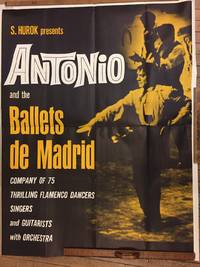
261505Original poster. Color lithograph. 52.75 x 40.75 inches.<br/><br/> This dance performance poster for the S. Hurok program of Antonio and the Ballets de Madrid is yellow and black with dancers on the right side and text on the left. Antonio Ruiz Soler 1921-1996 professionally known as Antonio was a Spanish flamenco dancer choreographer and director. Antonio and the Ballets de Madrid performed extensively in London and later toured internationally under American impresario Sol Hurok. Good condition with original folds as issued.<br/><br/> unknown books
1803297212London: Egerton 1803. hardcover. 2 volumes bound together 176pp 72pp. Small 8vo rebound in 3/4 brown calf marbled boards front corners badly scratched spine evenly faded but otherwise fine. London; T. Egerton 1803. Scarce. Very good.<br/><br/> Egerton unknown books
1827295324London: Murray 1827. Third. hardcover. very good. 385 pages 12mo 3/4 brown calf marbled boards red leather spine label. Heraldic bookplate previous owners small neat signature on title page. Page "B" first page of text has been repaired with no loss of text. London: John Murray. Third Edition. Corrected and Revised. Very good.<br/><br/> Murray unknown books
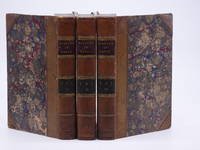
1832008686Paris: A. and W. Galignani 1832. SCARCE. cxxxviii 360 548 508. Three volumes bound by J. Carss and Co. Glasgow their small ticket front paste downs in contemporary half calf over marbled boards armorial bookplate of Kershaw with motto "Trust in God". Very Good Plus light spotting throughout light rubbing and soiling to boards. Second Edition. Half Calf. Very Good Plus. 8vo - over 7¾" - 9¾" tall. A. and W. Galignani Hardcover books
1914295488London: Published by Illustrated London News and Sketch Ltd London 1914. hardcover. very good. 5 volumes. Black & white plates and maps thick oblong 4to green cloth. London: Illustrated London News and Sketch Ltd 1914 - 1915. Very good .<br/><br/> Volume 1: August 12 - November 4 1914. Volume 2: November 11- February 3 1915. Volume 3: May 5 1915. Volume 4: May 12 - August 4 1915. Volume 5: August 11 - October 27. 1915.<br/><br/> Published by Illustrated London News and Sketch Ltd, London unknown books
1844214686Edinburgh: Fullerton 1844. hardcover. very good. Large folding map of Scotland and numerous steel engravings. 2 volumes 814 852 pages double column tall thick 8vo 3/4 black calf ornate gilt and blind stamped pattern on spines marbled boards. Edinburgh: Fullerotn 1844. Very good .<br/><br/> Previous owner's bookplate.<br/><br/> Fullerton unknown books
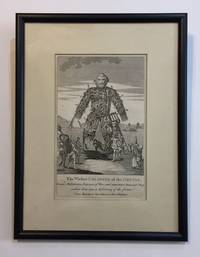
17712992London: printed for J. Cooke 1771. First Edition. Very good. Engraved print framed behind glass. Print size: 215 x 133 mm slightly cropped affecting several letters. Frame size: 342 x 263 mm. Slight foxing some browning along edges upper left corner slightly curled in. A striking 18th century engraving of a great and terrible Wicker Man. It would appear that an image of the iconic Wicker Man first appeared in print in 1610 with the publication of John Selden's "Jani Anglorum." We find it again in Aylett Sammes's "Britannia Antiqua Illustrata" 1676 which clearly influenced the anonymous artist of the present engraving -- and many others who followed. <br/><br/>It is believed that so-called Wicker Man statues were ritually burned by the ancient Druids; that they were at times filled with human sacrifices may be an early modern fabrication. The caption of our print promotes these wild and terrifying claims: "The Wicker Colossus of the Druids wherein Malefactors Prisoners of War and sometimes Innocent Persons when there was a deficiency of the former were Burnt as Sacrifices to their Deities."<br/><br/>This particular print appeared opposite page 77 in the 1771 edition of Spencer's "Complete English Traveller. printed for J. Cooke unknown books
11491822. From the journal "La Foudre". Lithograph. Proof before the letters. Touched with pen. Image: 7 x 9 3/4. Margins: 8 1/2 x 11/ unknown books
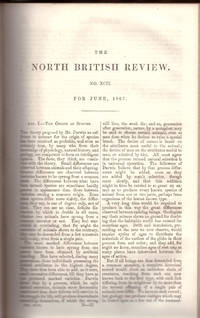
186728384New York: Leonard Scott Publishing Company 1867. First Edition. Three Quarter Leather. Very Good. Fleeming Jenkin 1833-1885 was an English engineer and scientist who discovered and exposed an error in Darwin's statement of his Theory of Evolution. Not knowing about genetics Darwin believed that evolution took place through the "blending" of inherited characteristics. Jenkin showed that this blending would lead to the inability of individual mutations to survive in the population. 282 282 pp. 4to. Three quarter leather binding with light tan corners and spine gold embossed titling on dark black and dark red patches five raised bands. Marbled paper insets to front and rear boards marbled endpapers. Clean within. Leonard Scott Publishing Company unknown books
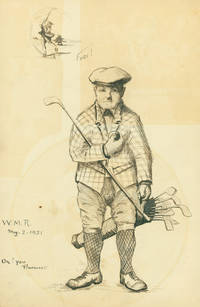
1921165081921. 1 vols. Pen and black ink initialled "W.M.R." dated May 2 1921 and inscribed "Oh! you Pinehurst"; 13-3/4 x 9. The drawing depicts a 1920s golfer clutching his ball and clubs; it is highly probable that this is a caricature of a Pinehurst North Carolina Golf Club figure. 1 vols. Pen and black ink initialled "W.M.R." dated May 2 1921 and inscribed "Oh! you Pinehurst"; 13-3/4 x 9" Amusing Golfing Drawing. unknown books
185519759N. p.: Jan. 4th 1855. Autograph address in ink on an unbound fascicle of 15 folia 30 leaves stitched. These arguments it is believed fairly prove that a man can be at the same time both a slave-holder and a Christian or stated in the abstract that the particular relation of superior & inferior known as slavery is not in itself necessarily sinful." An extensive detailed legal and ethical apology for American slavery arguing that a reciprocal relationship exists between the enslaver and the slave; the speak tentatively argues that Congress does have power to regulate slavery in the territories and had words against the doctrine of Popular Sovereignty. The anonymity of this argument and the popular setting of the lyceum stage perhaps as a student production seems altogether fitting as a reflection of the widespread currency of legalistic equivocation over chattel slavery in America prior to the Civil War. With revisions and interpolations and corrections to the text throughout. Jan. 4th, books
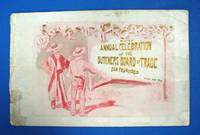
189640343n. p. 1896. 1st printing thus. Not found on OCLC. Original publisher's chromolithographed glazed pale-blue paper wrappers sewn. Wear & soiling to wrappers with old tape repair along lower portion. Some edgewear & thumbing to leaves. Prior owner pencil annotations to the "Racing Programme at the Oakland Trotting Park." Prior owner address label to rear wrapper. An About VG copy. Unpaginated though 40 pp. Adverts interspersed. Illustrated with many photographic portraits of prominent men in the local butcher trade. Oblong format: 6-5/8" x 10-1/4" <br/><br/>"'Butchers' Day' is the Independence Day of the wholesale and retail meat dealers of San Francisco Oakland and Alameda. It commemorates the time when the butchers acting in self-defense organized a 'Butchers' Board of Trade.' They had been threatened by the big Baden combine. . The struggle has now been on for three years. . The Butchers' Board of Trade is FIGHTING THE PEOPLE'S FIGHT. . The men advertising in this Souvenir are FRIENDS OF THE BUTCHERS." unknown books
1741TB31732London: n.p. 1741. First Edition. Very good in full leather covered boards with a rebacked leather spine with gilt double borders around the edges of the boards. A small quarto of 9 1/2 by 7 3/4 inches with moderate wear and rubbing around the edges of the boards two early prior owner's names on the first free end page and the ghost of what may have been an owner's book plate on the last paste down. There is evidence of this volume having been an exlibrary copy which evidence is limited to the notation "Case 2 B972gb" on the verso of the title page. The full title of this printing is: "Extracts From the Several Treaties Subsisting Between Great-Britain And Other Kingdoms and States Of Such Articles and Clauses as relate to the Duty and Conduct of the Cammanders of the King of Great-Britain's Ships of War. Together With Such Articles of Later Treaties as Revive or Confirm any Former Treaties which bear any Relation to the same.180 pages including an index appendices and text. Illustrated with a color frontispiece and with images from black 264 pages of text summarizing treaties with France Spain Holland Austrian Netherlands Russia Sweden Denmark Savoy Turky sic Morocco Algiers Tripoly and Tunis. Illustrated with an engraved nautically related frontispiece. n.p. hardcover books