CAVACEPPI, BartolomeoMareMagnum

692 496 résultats
Tre voll., cc. (1), (9), (1) tav. ripiegata, 60 tavv. (v.1); cc. (17), (1) tav., 60 tavv.; cc. (11), (1) tav., 60 tavv. Molte tavole presentano degli appunti a matita con riferimenti numerici; molto probabilmente riferibili allo stesso Cavaceppi. Potrebbe trattarsi di riferimenti ad un suo inventario personale o forse anche di prezzi. Prima e unica edizione di questa rara opera, una sorta di “catalogo ragionato ante litteram” voluto e prodotto dal più importante restauratore di sculture del Settecento, il romano Bartolomeo Cavaceppi (1716-1799), personaggio originale nella sua triplice veste di imprenditore/restauratore/studioso, e centrale non solo nella nascente cultura del restauro, ma proprio tout court nello scenario della storia dell’arte e nel dibattito artistico del suo tempo. I tre volumi, prodotti separatamente fra il ’68 e il ’72, hanno un’importanza che concorre solo con la loro estrinseca bellezza, un totale di oltre 180 incisioni a piena pagina che fin dall’inizio e probabilmente pure nell’intenzione editoriale, furono destinate a essere vendute anche separatamente, e dunque rarissime da trovare rilegate integralmente come nel presente insieme. I tre volumi, nella parte iconografica e testuale, hanno enorme importanza nella storia del restauro, ma più in generale nella storia dell’arte e della scultura, sia per il loro opulento apparato iconografico, sia per la parte di testo, testo che precede ciascuna delle tre raccolte e consiste di una serie di monografie destinate a discutere (e risolvere) questioni sul restauro e sul commercio dell’antichità molto dibattute all’epoca di questi scritti e già affrontate, ma solo in parte, circa il restauro di dipinti. Chiaramente le questioni teoriche sul restauro di sculture estende l’orizzonte temporale del dibattito, che riguardava fino allora solo dipinti e affreschi, e quindi opere d’arte non altrettanto antiche. Non meno originale è l’intento commerciale che spinse l’autore alla creazione di questo libro: già noto e apprezzato (e ricco) al tempo della pubblicazione del primo volume, Cavaceppi cataloga i suoi restauri anche con lo scopo di reclamizzare la qualità del suo lavoro e vendere le opere stesse (quelle pubblicate nel primo volume erano già state tutte vendute o quasi, mentre nel secondo quelle acquistabili sono almeno 41 e nel terzo 23). La parte testuale conferma quest’intenzione: la “Raccolta è destinata a un pubblico selezionato di sovrani, nobili, collezionisti specialmente inglesi e tedeschi rispetto ai quali l’autore cerca da un lato di accreditare la propria elevatissima professionalità, dall’altro di porsi su un piano collaborativo, fornendo ad esempio indicazioni utili a smascherare i falsi” (si veda Meyer, S.A. - Piva, C., “L’arte di ben restaurare. La ‘Raccolta d’antiche statue di Bartolomeo Cavaceppi”, 2011). La scelta e lo svolgimento degli argomenti che costruiscono la parte di testo sostiene, insomma, l’originalità dell’operazione editoriale: di seguito a un’introduzione, contenuta in ciascun volume con testo diverso, e diretta “Agli amatori dell’antica scultura”, l’autore entra subito, nel primo volume, in argomento con un saggio, “Dell’arte di ben restaurare le antiche statue”, che è insieme premessa teorica al lavoro di restauratore e autopromozione del suo lavoro e della sua bottega; nel secondo volume (stampato nel ’69) troviamo un altro scritto “Degli inganni che si usano nel commercio delle antiche sculture” volto chiaramente a rassicurare possibili mecenati, collezionisti e clienti, nonché quello che poi sarebbe stato lo scritto più noto del C., ovvero la “Descrizione del viaggio in Germania” compiuto nel ’68 insieme all’amico Winckelmann: viaggio che sarebbe stato, fra l’altro, l’ultimo episodio della vita del W., assassinato a Trieste proprio sulla via del ritorno verso Roma; l’omicidio di Winckelmann ebbe un’eco enorme all’epoca, e la tempestiva pubblicazione del resoconoto di questo tour, compiuto dai due nelle corti tedesche prima appunto della morte dell’archeologo tedesco, era destinata a suscitare un’enorme curiosità (al punto che di tutto il libro questo testo è l’unico che sarebbe stato, negli anni, ristampato autonomamente). Interessantissimo è il saggio introduttivo al terzo volume nel quale C. entra nel merito di un dibattito ancora “in fasce” come quello sul restauro conservativo o interpretativo, e si spinge a formulare dettagliate indicazioni su come e quanto un pezzo d’arte antica debba essere valutato (“Una bella Testa Imperiale, che non abbia altro ristauro che la punta del naso […] suol valutarsi ordinariamente Zecchini cinquanta. Se poi la medesima fosse affatto intatta, potrebbe stimarsi il doppio. Una Testa Greca vale sempre di più”, ecc. ecc.). A sostegno dell’originalità dell’operazione editoriale, è stato anche notato come “Cavaceppi rinuncia a porre la sua opera […] sotto la protezione di qualche mecenate e la dedica Agli Amatori dell’antica scultura. Una scelta coraggiosa. Come quella di rivolgersi a un editore che era stato incarcerato per aver pubblicato libri di orientamento anticuriale. Rivendica con fierezza la sua professione di restauratore. Pur se, riferisce Giovanni Gherardo De Rossi, ‘gli movevano guerra gli artisti di quel tempo, e lo chiamavano scarpellinello della scultura, ma egli ne rideva, e contentavasi di essere piuttosto abile ciabattino che imperito calzolajo’” (Meyer-Piva, cit.). Di ciascuno di questi volumi sono state stampate due diverse tirature: la parte iconografica è identica, mentre la parte testuale è stata ricomposta; è ragionevole pensare, in base a riscontri testuali, che la presente copia sia quella stampata per prima, visti gli interventi di pulizia tipografica chiaramente determinati dall’autore e riportati nell’altra serie d’impressioni, che sembrerebbe essere più comune di questa. La Raccolta fu pubblicata in tre volumi fra 1768 e 1772. Per la precisione il primo volume è del 1768, il secondo del 1769 e il terzo del 1772. La prima cosa da dire è che l’apparato iconografico vi gioca sicuramente un ruolo fondamentale: ogni volume contiene infatti sessanta tavole che presentano altrettante statue antiche restaurate da Cavaceppi, con l’indicazione degli eventuali acquirenti (le opere pubblicate nel primo volume erano già state tutte vendute; nel secondo sono acquistabili quarantuno lavori e nel terzo ventitre). Ogni “album” è accompagnato da una serie di scritti; a volte si tratta di veri e propri brevi trattati; in altre circostanze di avvertenze al pubblico; in altre ancore di scritti chiaramente volti a soddisfare la curiosità del lettore. Ciò che importa segnalare è che gli scopi della pubblicazione sono chiaramente autopromozionali. Cavaceppi è uno scultore (anzi, un restauratore – vedremo meglio poi - ) di fama internazionale, e la sua Raccolta è destinata a un pubblico selezionato di sovrani, nobili, collezionisti specialmente inglesi e tedeschi rispetto ai quali l’autore cerca da un lato di accreditare la propria elevatissima professionalità, dall’altro di porsi su un piano collaborativo, fornendo ad esempio indicazioni utili a smascherare i falsi. Decisamente sperimentale dal punto di vista editoriale, la Raccolta […] unisce un catalogo promozionale delle sculture restaurate dall’autore (per la verità, almeno per il primo volume tutte le opere illustrate erano già state vendute al momento della stampa) con una serie di considerazioni teoriche non solo sul restauro, ma più in generale sulla storia dell’arte e del gusto. «Gli movevano guerra gli artisti di quel tempo, e lo chiamavano scarpinello della scultura, ma egli ne rideva, e contentavasi di essere piuttosto abile ciabattino che imperito calzolajo» Come ha già da tempo rilevato Orietta Rossi Pinelli, Cavaceppi si presentò quale «primo restauratore-scultore capace di imporsi nel panorama artistico come figura di specialista oramai equiparata sul piano della dignità professionale a quella degli artisti-creatori» Cavaceppi rinuncia a porre la sua opera […] sotto la protezione di qualche mecenate e la dedica Agli Amatori dell’antica scultura. Una scelta coraggiosa. Come quella di rivolgersi a un editore che era stato incarcerato per aver pubblicato libri di orientamento anticuriale. Rivendica con fierezza la sua professione di restauratore. Pur se, riferisce Giovanni Gherardo De Rossi, «gli movevano guerra gli artisti di quel tempo, e lo chiamavano scarpellinello della scultura, ma egli ne rideva, e contentavasi di essere piuttosto abile ciabattino che imperito calzolajo» https://warburg.sas.ac.uk/pdf/ckn1102v1.pdf https://catalogue.libraries.london.ac.uk/record=b2238065 Three vols., Cc. (1), (9), (1) pl. folded, 60 plates (v.1); cc. (17), (1) pl., 60 pl .; cc. (11), (1) pl., 60 pl. Many tables have pencil notes with numerical references; most likely referable to Cavaceppi himself. It could be references to his personal inventory or maybe even prices. Scattered light foxing. First and only edition of this rare work, a sort of "catalogue raisonné ante litteram” wanted and produced by the most important sculptor restorer of the eighteenth century, the Roman Bartolomeo Cavaceppi (1716-1799), an original character in his triple role as entrepreneur / restorer / scholar, and central not only in the nascent culture of restoration, but tout court in the scenario of the history of art and in the artistic debate of his time. The three volumes, produced separately between '68 and '72, have an importance that concurs only with their extrinsic beauty, a total of over 180 full-page engravings that from the beginning and probably also in the editorial intention were destined to be sold also separately, and therefore very rare to find fully bound as in the present set. The three volumes, in the iconographic and textual part, have enormous importance in the history of restoration, but more generally in the history of art and sculpture, both for their opulent iconographic apparatus, and for the text part, text that precedes each one of the three collections and consists of a series of monographs intended to discuss (and resolve) issues on the restoration and trade of antiquity much debated at the time of these writings and already addressed, but only in part, about the restoration of paintings. Clearly the theoretical questions on the restoration of sculptures extends the temporal horizon of the debate, which until then only concerned paintings and frescoes, and therefore works of art that were not as ancient. No less original is the commercial intent that prompted the author to create this book: already known and appreciated (and rich) at the time of the publication of the first volume, Cavaceppi catalogs his restorations also with the aim of advertising the quality of his work and sell the works themselves (those published in the first volume had already been sold or almost all, while in the second there are at least 41 purchasable works and in the third 23). The textual part confirms this intention: the "Collection is intended for a selected audience of sovereigns, nobles, especially British and German collectors with respect to whom the author tries on the one hand to accredit his very high professionalism, on the other to put himself on a collaborative plan, providing for example useful information to unmask the false "(see Meyer, SA - Piva, C.," The art of well-restored. The 'Collection of ancient statues by Bartolomeo Cavaceppi ", 2011). The choice and development of the arguments that make up the part of the text supports, in short, the originality of the editorial operation: following an introduction, contained in each volume with a different text, and directed "To the amateurs of ancient sculpture" , the author immediately enters, in the first volume, on the subject with an essay, “On the art of well restoring the ancient statues”, which is both a theoretical premise to the work of restorer and self-promotion of his work and his workshop; in the second volume (printed in '69) we find another writing "Of the deceptions that are used in the trade of ancient sculptures" clearly aimed at reassuring possible patrons, collectors and customers, as well as what would later be the most famous writing of Cavaceppi, or the "Description of the trip to Germany" made in '68 together with his friend Winckelmann: a trip that would have been, among other things, the last episode in Winckelmann’s life, as he was murdered in Trieste on the way back to Rome; Winckelmann's murder had a huge echo at the time, and the timely publication of the account of this tour, carried out by the two in the German courts before the death of the German archaeologist, was destined to arouse enormous curiosity (to the point that of the whole book this text is the only one that would have been reprinted independently over the years). The introductory essay to the third volume in which Cavaceppi enters into the merits of a debate still "in its infancy" such as the one on conservative or interpretative restoration is very interesting, and goes on to formulate detailed indications on how and how much an ancient art piece should be evaluated ("A beautiful Imperial Head, which has no other restoration than the tip of the nose [...] usually in Zecchini is evaluated as fifty. If the same were completely intact, it could be estimated twice as much. A Greek Head is always worth more", etc. . etc.). In support of the originality of the publishing operation, it was also noted how "Cavaceppi renounces placing his work [...] under the protection of some patron and dedicates it to the Amateurs of ancient sculpture. A courageous choice. Like turning to a publisher who had been jailed for publishing anti-curial books. He proudly claims his profession as a restorer. Although, reports Giovanni Gherardo De Rossi, 'the artists of that time waged war on him, and called him a stonecutter, but he laughed at it, and was content to be rather a skilled cobbler than an imperishable shoemaker' "(Meyer-Piva, cit. ). Two different editions of each of these volumes have been printed: the iconographic part is identical, while the textual part has been recomposed; it is reasonable to think, based on textual evidence, that this copy is the one printed first, given the typographic cleaning interventions clearly determined by the author and reported in the other set of impressions, which would seem to be more common than this one. As Orietta Rossi Pinelli had already pointed out for some time, Cavaceppi presented himself as "the first restorer-sculptor capable of establishing himself in the artistic panorama as a figure of specialist now equated in terms of professional dignity to that of artists-creators". https://warburg.sas.ac.uk/pdf/ckn1102v1.pdf https://catalogue.libraries.london.ac.uk/record=b2238065
Large folio (456 x 592 mm). Modern half morocco over marbled covers, spine gilt around raised bands with gilt spine title. 9 tinted lithographs on 8 plates (2 on 1 leaf) after Robert Clive. 3 leaves (1 repeat) of letterpress printed on rectos only. First edition of this rare lithographic plate book of Mesopotamian antiquities and views. The first instalment of a total of three, containing nine lithographs: 1. Sculptures at Nimroud-Lions; 2. Moosul; 3. Hît; 4. Distant view of Mount Ararat; 5. Arab encampment near the Birs Nimroud (on one sheet); 6. Sheikh Adi; 7. Baghdad; 8. Roman ruin on the way to Palmyra; 9. Sculptures in the Mount at Nimroud. The Victoria and Albert Museum ascribes this work to the artist Robert Charles Clive (1827-1902). - Original torn and somewhat defective front wrapper laid down on heavy paper and bound into a modern half calf binding; plates and binding fine. The two-page list of plates with descriptions is also laid on heavy paper. OCLC 785146909. Not recorded in Atabey, Blackmer, Tooley, Röhricht or Tobler.
Royal folio. 2 vols. XXVI, 290 pp. XXIV, 300 pp. With 251 plates and numerous text illustrations. Publisher's original green cloth. First edition, printed in 550 copies only. Principal work of the great architectural historian of Muslim Egypt. Beginning where his "Early Muslim Architecture" left off, this monumental two-volume set traces the history of Egyptian Islamic architecture from the dynasty of the Ikhshids and Fatimids (A.D. 939-1171) to that of the Ayyubids and early Bahrite Mamluks (A.D. 1171-1326). Creswell had begun his work in 1920 with a generous grant of King Fuad I; the present publication is dedicated to Fuad's son, Farouk I. - The publisher's voucher copies: numbers 4 and 2 of 550 copies printed, removed from Printer's Library of Oxford's famous Clarendon Press. In perfect condition. - Rare, the last complete copy sold in 1999 (Sotheby's, Oct 14, lot 185). OCLC 1105072.
4to. (20), 360 pp. Title-page within a border of cast fleurons, woodcut arms of the dedicatee Charles II of Spain, and several woodcut initials and tailpieces. Modern gilt blue morocco by the leading Barcelona binder Emilio Brugalla (1901-87), also active in Madrid, signed at the foot of the front turn-in: "Brugalla 1946", with the arms of the Spanish bibliophile Isidoro Fernandez (1878-1963) stamped in gold on front and back in a blind-stamped panel, double fillets on binding edges and richly gold-tooled turn-ins, gilt edges. First edition of an interesting and detailed account of the first overland journey from Spain to the East Indies (1671-80) made by the Spanish missionary Sebastian Pedro Cubero. Interestingly, Cubero covered most of his route by land, as would later Careri, thus constantly being able to observe the customs, religions, ceremonies and costumes of the peoples he visited, describing them in considerable detail. After spending time in Italy, where he was appointed as a missionary to Asia and the East Indies, Cubero travelled by way of Istanbul and Moscow to Iran, visiting Isfahan ("Hispaham") and Bandar Abbas, after which he finally arrived in India. After crossing to Malacca he was imprisoned by the Dutch and later banished from the city. He then proceeded to the Philippines and ultimately, by way of Mexico, back to Europe. "After a stint as confessor in the imperial army in Hungary, Cubero became one of the notable travellers of the seventeenth century. What set him apart was the variety of his traveller's hats. Most obviously a missionary [...], he also became [...] a representative figure of the whole exploratory enterprise. By circumnavigating the globe in his travels, he was recognized in his own time to be another Magellan, Drake, or Cavendish" (Noonan). - With bookplates on pastedown; t. p. has contemporary ownership of Pere de Ribes-Vallgomera de Boixadors, Marques de Alferras, ennobled by Philip V in 1702. Some occasional foxing and a small restoration, replacing the outer lower corner of the title-page in a subtle facsimile. Very narrow margins, occasionally just shaving the headlines and quire signatures, otherwise in very good condition. Rare in the market: two copies appeared at auction in the last 50 years. Palau 65756. Sabin 17819. OCLC 14110894. Howgego C225. Lach & Van Kley III, 360. Maggs cat. 495, 303. This ed. not in Salvá. For the author cf. F.T. Noonan, The road to Jerusalem: pilgrimage and travel in the age of discovery (2007), p. 104.
4to (157 x 202 mm). (8), 339, (5) pp. With additional engraved title and 2 portraits. Original papered boards with handwritten lettering to spine. First Italian edition of a fascinating and detailed account of the first overland journey from Spain to the East Indies (1671-80) made by the Spanish missionary Sebastian Pedro Cubero. Interestingly, Cubero covered most of his route by land, as would later Careri, thus constantly being able to observe the customs, religions, ceremonies and costumes of the peoples he visited, describing them in considerable detail. After spending time in Italy, where he was appointed as a missionary to Asia and the East Indies, Cubero travelled by way of Istanbul and Moscow to Iran, visiting Isfahan ("Hispaham") and Bandar Abbas, after which he finally arrived in India. After crossing to Malacca he was imprisoned by the Dutch and later banished from the city. He then proceeded to the Philippines and ultimately, by way of Mexico, back to Europe. "After a stint as confessor in the imperial army in Hungary, Cubero became one of the notable travellers of the seventeenth century. What set him apart was the variety of his traveller's hats. Most obviously a missionary [...], he also became [...] a representative figure of the whole exploratory enterprise. By circumnavigating the globe in his travels, he was recognized in his own time to be another Magellan, Drake, or Cavendish" (Noonan). Included are three very three very detailed chapters of devoted to China, Tartary and the Chinese-Tartarian wars. Additionally, there are important discussion of Persia, India, Malacca, the Philippines, and Mexico; chapter XX (pp. 136-156) contains an extensive discussion on Islam, the birth and death of Mohamed and Mecca and Medina. Chapter XXXIII (p. 225-229) contains a discussion of the the Kingdom of Ormuz and Bandar Abbas, the city on the Straits of Hormuz at the mouth of the Persian Gulf. - Bookplate of the New York "Explorers Club" (James B. Ford Library) to pastedown. Old inscriptions to front flyleaf; occasional stains. Lacks lower flyleaf; small tear to corner with loss of some text to fol. O4. This is the only copy of this edition that appears in the auction records over 30 years, no copy in the trade. Howgego C225. Cf. Sabin 17820. Palau 65757. For the author cf. F.T. Noonan, The road to Jerusalem: pilgrimage and travel in the age of discovery (2007), p. 104.
Oblong folio (245 x 375 mm). 2 engr. title pages and 22 + 20 engr. plates by Pfeffel after Danreiter. - (Bound with) II: Steingruber, Johann David. Architecture civile. Erster Theil [= all published]. Architecturally engr. title-page, engr. preface (misbound before title-page), and 25 numbered engr. plates by J. D. Ringlin after Steingruber; explanatory text engraved within the plate in German and French. - (Bound with) III: Charmeton, Georges. Plans de divers edifices et corniches choisies. Abriße unterschiedener Gebälcke und Kronwercke. 12 engr. plates, including the title-page. Contemporary German half vellum over paste boards and beige paper covers (a little foxed); slightly faded red stained gilt lettered label tooled directly onto spine. Red speckled edges. A remarkable sammelband of three rare architectural and garden ornament works (the first in two parts), all of which were published by the important Augsburg print publisher Johann Andreas Pfeffel. I: First and only edition of a very scarce ornamental garden pattern book by the newly appointed court gardener and inspector of the Salzburg gardens, Franz Anton Danreiter (1695-1760). In 1728 Danreiter was appointed court gardener and inspector to related buildings by the ducal bishop of Salzburg. He translated Dezallier's "La Theorie et la Pratique du Jardinage" into German and became one of the more important mediators of French garden design to the German-speaking countries. His own designs issued in the present work, in two parts, with the second part particularly rare, show more than 100 ornamental and fanciful planting patterns on 42 plates. This was his first and rarest model book with garden plans for parterres. They show that far from endlessly repeating the strict symmetrical canon of French Baroque garden design, Danreiter developed a never-ending variety in ornamental designs which herald the German rococo. Danreiter served five successive bishops in Salzburg. Between 1727 and 1735 he also engraved a number of large-scale views of the city which represent a unique documentation of Salzburg in its 18th century baroque glory. - II: First edition of Steingruber's first published architectural book, showing designs for town houses and palaces. In total Steingruber shows seven scaled designs from a garden pavilion in an aristocratic park (2), several ever more lavish town houses for the haute bourgeois (4), and finally a ducal residence (1). Each design is shown in as much detail as possible with elevations and plans, but also several sections. The grander houses are shown with views of street and garden elevations; some designs have differently laid out plans. The architect J. D. Steingruber (1702-87) was appointed court architect by the Margrave of Brandenburg-Ansbach in 1734. In the course of his near sixty-year tenure of this position he was able to transform the townscape of Ansbach after his own designs. He is best remembered for his playful "Architektonisches Alphabet" (1773), a remarkable series of designs in which each building has a ground plan based on a different letter in the alphabet. - III: Scarce 18th century copy of Charmeton's rare "Diverses corniches choisies sur l'anticque", originally issued in 30 plates in c. 1670 (cf. Guilmard, 68). Pfeffel decided to issue only a selection of the designs. - Very rare: the only three complete copies of Danhauser's work located in libraries worldwide are at Augsburg (cf. KVK), Dumbarton Oaks (cf. OCLC), and the National Gallery, Washington (cf. Millard, Northern, no. 18). The Bavarian State Library and the British Library have only the first part; Olschki, Choix, 645 offered a copy with the second part, but lacked 2 plates in that part. - First leaf with near-contemporary aristocratic illegible ownership stamp. A fine architectural sammelband in excellent fresh condition with the plates in strong impressions, all printed an thick paper. I: Kat. der Ornamentstichslg. Berlin 3332 (wrong collation). II: Kat. der Ornamentstichslg. Berlin 2006. Cicognara 676. OCLC records copies at Avery and Getty; as well as 4 copies in Germany (including Berlin). III: Kat. der Ornamentstichslg. Berlin 3929.
2 volumes. Large 4to (37.5 x 31 cm). With ca. 80 lithographed plates and numerous illustrations and decorations in text, many beautifully coloured by hand and some highlighted with silver and/or gold. [16], 172, [18], [2 blank]; [14], 221, [1 blank], [17], [1 blank] pp. Original publisher's gold-blocked blue cloth, with a coloured hooded hawk on front boards, upper edges gilt, other edges untrimmed. Very rare, limited first and only edition of an exquisitely produced work on falconry and equestrian sports, a showpiece of Dutch art nouveau book illustration. The first volume, on falconry, contains reproductions of the plates from Schlegel and Wulvenhorst's "Traité de fauconnerie" (1844-53), "the finest work on falconry which has ever been produced" (Harting), and opens with a section devoted to the Dutch Prince Alexander van Oranje-Nassau (1818-48), president of the Royal Hawking Club, and ends with a list of terms together with their translation into English, French and German. The second volume treats the equestrian sports in the Netherlands, England, France, Germany and Belgium, with illustrations of races and hunts. Much of the information derived from previously unpublished sources concerning the Dutch Royal family and their horse- and falconry related activities. - It is a separately published follow-up to the ten volume set Het historisch museum van het Korps Rijdende Artillerie (1898-1904), that was published to celebrate the 100th anniversary of the Dutch Horse Artillery Corps (The Yellow Riders). The complete series ranks "among the most beautiful military publications in the world" (Sloos). - The book was financed and privately published in a limited number by Nicolaas Jan Adriaan Pieter Helenus van Es (1847-1921), Captain of the Dutch Horse Artillery Corps and amateur painter. He was assisted artistically by Jan Hoynck van Papendrecht (1858-1933), Hendrik Maarten Krabbé (1868-1931), Willem Constantijn Staring (1847-1916). The first was famed for his military art. - With a presentation inscription from the author to Colonel Harhoff dated 1913, in each volume, and with library stamps of the Royal Garrison Library Copenhagen ("Det Kgl. Garnisons Bibliothek i Kiøbenhavn" and "Artillerie bibliothek"). Bindings only slightly scuffed at the foot of the spine, otherwise in very good condition. NCC (4 copies). Sloos, Gewapend met kennis, pp. 376-379. Cf. Harting 194.
8vo (154 x 223 mm). (4), 371, (5) pp. Modern full morocco binding with gilt cover rules, spine gilt, leading edges gilt, all edges gilt. First edition of Freud's 'Interpretation of Dreams'. "Unquestionably Freud's greatest single work" (PMM). Here, Freud introduces the idea of the unconscious, and leaves an indelible mark on culture, advancing the idea that dreams have symbolic meaning to the dreamer beyond their literal content. - In perfect condition, preserved in a tasteful modern binding. Garrison/Morton 4980. PMM 389. Grinstein 277. Grolier/Horblitt 32. Grolier (Medicine) 87. Norman F33.
Oblong 1mo (48 x 63.5 cm). With 6 tinted lithographed plates by Frisch, with captions in German and French below. The first three in the deluxe issue printed by B. Dondorf, Frankfurt am Main, the last three in the regular issue printed by G. Küstner. Original publisher's letterpress printed wrappers, with a list of subscribers and advertisements on the back of the front wrapper. Extremely rare set of six beautifully lithographed plates showing scenes made on a journey to the Middle East to procure Arabian horses for the Royal Wuerttemberg stud farms, by Friedrich Frisch (1813-86), court painter in Darmstadt. In 1840/41 he accompanied the Wuerttemberg chamberlain Wilhelm von Taubenheim (1805-94), the writer Friedrich Wilhelm Hackländer (1816-77) and the physician Karl Bopp (1817-47) on a journey to the Middle East to procure Arabian horses for the Royal Wuerttemberg stud farms Weil and Marbach. They first went to Constantinople, where they were welcomed by Sultan Abdülmecid I, continuing to Beirut, Damascus and Jerusalem. In Jaffa they met the Ottoman general Ibrahim Pasha. - The set was originally published in two instalments and available in two issues: a deluxe issue printed with a larger tinted background with white highlights (plates 1-3) and a regular issue (plates 4-6). They show: (1) a rider on a dromedary with a letter to Ibrahim Pasha; (2) the camp of Ibrahim Pasha; (3) three Bedouin horse riders; (4) another scene with Bedouins; (5) the group's passage through the Balkans; and (6) a Turkish courier. All views, except the first, include horses. - Hackländer wrote a short text to accompany the set, but it is not included. Two plates slightly soiled in the margins and some tiny tears along the extremities, otherwise in very good condition. Engelmann, Bibliotheca geographica, p. 123. Thieme/Becker XII, p. 491. Not in Dejager; Huth; Mennessier de la Lance; Podeschi. WorldCat (2 copies, incl. 1 with text only).
Large 4to (23 x 28 cm). 2 vols. XII, XXXIV, (2), "681" [= 683], (1 blank) pp. VIII, 978 pp. Contemporary half calf, rebacked with the original backstrips laid down. Rare revised and expanded penultimate edition of a massive navigational directory, with exhaustive information on the Arabian Sea, the Red Sea, and the Arabian (Persian) Gulf. Including detailed entries on Sharjah, Dubai, Abu Dhabi ("Abothubbee") and Bahrain, not only covering navigational details, but also the inhabitants, pearl fishery, geography, commerce etc., and shorter entries on islands such Sir Bani Yas, Zirku etc. For this edition expanded from the "extensive surveys along the N.E. coasts of Africa and Arabia, and into the Gulf of Cutch, compiled from the meritorious labours of Captain Haines, Carless, and Sanders, Commander Campbell, Lieutenant Grieve, and other officers of the East-India Company's Marine service" (preface). It was compiled chiefly from recent journals of ships employed by the East India Company, by James Horsburgh (1762-1836), hydrographer and chart maker to the Company. "As hydrographer Horsburgh was primarily responsible for supervising the engraving of charts sent back to London by marine surveyors in India and ordered by the company to be published, and for examining the deposited journals of returning ships for observations which would refine the oceanic navigation charts currently in use, besides other duties of provision of information laid on him by the court" (Cook). The book appeared in a total of eight editions between 1809 and 1864 before being superseded by Findlay's "A directory for the navigation of the Indian Ocean" (1869). - With the seller's ticket of George Sweetser, "dealer in sextants, quadrants, telescopes and compasses, nautical books & charts, …" and the early owner's inscription of "Wm. A. Ordway, Bradford, Mass.". Some browned corners in the opening leaves and some tiny waterstains in the head margin of volume two, otherwise in very good condition. Bindings rubbed and rebacked. Cf. Cat. NHSM, p. 73 (5th ed.); Sabin 33047 (5th ed.). For the author: Cook, "Horsburgh, James (1762-1836)", in: ODNB (online ed.).
Tall 8vo (104 x 220 mm). Arabic manuscript on polished paper. (1), 185, (1) ff. Naskh script in black and occasional red ink, with catchwords and extensive marginal notes in a contemporary hand. 19th century leather, ruled and decoratively stamped in blind. Popular and influential mediaeval Arabic handbook for medical students by the great Damascus anatomist Ibn al-Nafis (1210-88). Long considered a commentary on Avicenna, this is now viewed by scholarship as an original work which also discusses Avicenna's ideas, and thus as "an independent book meant to be a handbook for medical students and practitioners, not as an epitome of Kitab Al-Qanun of Ibn Sina as thought by recent historians" (Abdel-Halim, 2008). One of the author's most widely received works, it provides a useful sum of medical knowledge to aspiring physicians of the mediaeval and early modern periods alike. It was still being copied centuries on from the death of Ibn al-Nafis, who is famous for first describing the pulmonary blood circulation, thereby anticipating by many centuries the efforts of William Harvey. - Not dated by the scribe, but one of the ownership dates on the first leaf is dated Shawwal 1100 AH (July/August 1689 CE), and the date of copying would be estimated around 950 AH, or possibly later. Covers lightly scuffed, interior shows marginal paper repairs and slight trimming to outermost marginal notes. The main text is clean and unmarred. GAL I, 493, 37, 2 & I, 457 (s. v. Ibn Sina). Rabie E. Abdel-Halim, "Contributions of Ibn Al-Nafis (1210-1288 AD) to the Progress of Medicine and Urology. A Study and Translations From his Medical Works", in: Saudi Medical Journal 29.1 (2008), pp. 13-22.
4to (170 x 214 mm). (4), 65, 51 ff. Early 19th century half calf with marbled covers and fore-edge flap. Pink paper pastedowns. The seventh book printed by Ibrahim Müteferrika: a history of Egypt from antiquity to early modern times, prepared by the Turkish scholar Ahmed Süheylî (1562?-1632). The modern section (bound first, as usual) is in fact an Ottoman Turkish translation of the chronicle of the Ottoman-Mamluk war of 1516/17, "Fath Misr" (Tarikh as-sultan Selim al-Utmani ma'a as-sultan Qansuh al-Ghawri) by Ibn Zunbul (d. 1574/75). - Handwritten ownership of the French diplomat Louis Lagarde (dated 1923 CE) to front flyleaf. Occasional light browning and fingerstains, but mostly an excellent copy on good, crisp paper. Özege 19868-19869. GAL S II, p. 409. Toderini III, p. 85, no. VI.
8vo. (6), IV, (16), 69, (3) pp. With 30 engraved plates (some depicting cuts of diamonds) and tables. Contemporary mottled calf with gilt dentelle border and corner fleurons (rubbed); modern spine on 5 raised bands. Rare first edition of the "first book in English to describe how diamonds and pearls can be evaluated on the basis of the factors of size (or weight) and style of cut" (Sinkankas). The London jeweller Jeffries is also the first author to provide "a clear statement of the principle that the value of pearls should be calculated to the square of their weight [...] This principle is implicit in the valuation tables given by earlier authors, including Tavernier and others, but Jeffries is the first to state it explicitly. At the back of his book, he provides tables allowing the calculation of the value of individual and batches of pearls of different size or quality. This is effectively a 'chau' book, as used by merchants in the Gulf and India until the mid-20th century, and fulfils exactly the same function" (Carter). - "The text explains the [diamond] cutting procedure, how the evaluation rules were derived, the importance of imperfections and flaws as affecting price, notes on rough diamonds [...] and finally, a somewhat similar procedure for the valuation of pearls, with highest values accorded to pearls of closest approach to spherical perfection, luster, etc. The mathematical rule used for the pearl is known as the 'square of the weight' multiplied by a per-carat base price" (Sinkankas). - Includes a list of subscribers in the preliminaries. Occasional spotting, a few small stains. Small tape repair to title, plates 5 & 6 with short repaired tears (no loss). Professional repairs to corners; modern spine (repairs including the first inch of the covers); modern endpapers. Removed from the Library of the Birmingham Assay Office, one of the four assay offices in the United Kingdom, with their library stamp to the title-page. Sinkankas 3195. Carter, Sea of Pearls, p. 83, 125f., 251 (with illustrations). Goldsmiths' 8500. Hoover 453 (note). Cf. Roller/G. II, 10.
Oblong royal folio (536 x 445 mm). Engraved title-page, engraved dedication to Ludwig Wilhelm August, Grand Duke of Baden, (4), XX pp. of letterpress text, 25 plates (= 24 lithogr. plates of horse portraits and 1 anatomical plate). Contemporary half calf with handwritten cover label; publisher's original illustrated lithogr. wrappers bound within. First edition, self-published by the author in Karlsruhe, with Ebner's Stuttgart address pasted on the wrapper's upper cover. All that was published of this splendid and rare work about the principal breeds of horses, issued in what must have been a very small press run by Kuntz (1797-1848), Painter to the Court of Karlsruhe, Baden, who is also known for drawing the full-blooded Arabian horses of the Royal Württemberg Stud, the first Arabian stud in Europe. For the present work Kuntz made extensive travels in Hungary, London and Paris to draw his exquisite portraits of Arabian, Persian, Egyptian, Nubian, English and many other thoroughbred horses from life. - Binding professionally repaired at the edges. Interior somewhat foxed and fingerstained. From the officers' library of the Württembergian Uhlan (light cavalry) regiment no. 19. Nissen, ZBI 2328. Thieme/Becker XXII, 116. Wells 4313. Graesse I, 87.
Large folio. (4), 20 pp. With 35 engraved botanical plates (8 folding), 20 drawn by Pierre-Joseph Redouté, 1 each by J. P. and L. J. Redouté, 10 by James Sowerby, 2 by J. G. Bruyière, and 1 by B. Pernotin. Engraved by Fr. Hubert, Maleuvre, Juillet, J. B. Guyard, Stephane Voysard and Milsan. Contemporary half red roan (sheepskin), blue paper sides, green parchment corners. Preserved in custom-made box. Second edition, usually called the second issue, of a flower art book by the French botanist Charles Louis L'Héritier de Brutelle (1746-1800). In this book, L'Héritier describes 35 genera and 124 species of rare plants in Kew Gardens and the herbarium of his fellow botanist Joseph Banks, which he studied in 1786 together with Pierre Joseph Redouté. His text also refers to the 35 plates, which depict some of the flowers. L'Héritier mostly describes horticultural plants, including many exotic plants from South Africa. Most of the plates were provided by the two most gifted botanical artists of the age: the Frenchman Pierre Joseph Redouté and the Englishman James Sowerby. - The "Sertum Anglicum" was published as a token of the author's gratitude for the hospitality shown by Banks and other fellow botanists on his visit to England. Remarkably, 13 genera and 65 species of exotic plants are here described for the first time. Furthermore, no fewer than 31 of the plates are the first published illustrations of the species, and seven remain the only illustration of the species ever published. The book therefore remains an irreplaceable botanical reference work today, beyond its value as a work of botanical art of the highest quality, containing beautiful flower illustrations by two of the greatest masters of all time. - Although the imprint gives 1788 as the year of publication, Stafleu & Cowan call the present version of the "Sertum Anglicum" both a "reprint" and a "reissue", probably published as a whole after L'Héritier's death in 1800. It differs from the earlier version in the number of pages for the main text. The first version was published in five parts with the entire letterpress text in part 1. Its main text occupies 35 pages, while the main text of the present second version occupies 20 pages. But the title-page and the other preliminary leaf are apparently true reissues of the first printing, for both are dated 1788 and have the same imprint (giving the printer as Pierre-François Didot, although he died in 1795, and the same booksellers). While the imprint of the first issue suggests that it was printed and published as a whole in 1788, it was actually published in five parts between 1789 and 1792: in early January 1789 (the complete text and plates 1-2), May 1790 (plates 3-12), April 1792 (plates 13-24 & 15 bis) and late in 1792 (plates 25-34), respectively. Some types on the "1788" title-page were also out of date by 1800. - With a hand-written inscription on the first endleaf. Binding, especially the edges, slightly rubbed; the paper sides are slightly discoloured. With only a few stains and the edges of the paper slightly frayed. Spine professionally reinforced. A large paper copy of a rare work in good condition. Dunthorne 248. Great Flower Books 65. Hunt 692. Nissen (BBI) 1189. Pritzel 5270. Stafleu/Cowan 4492.
4to. (16), 540, (10), (2 blank) pp. With a woodcut and an engraved author's portrait, 34 woodcut illustrations in text, including several full-page, and some woodcut initals, head- and tailpieces. Contemporary calf, gold-tooled spine. Rare first edition of a travelogue by the French explorer, merchant and diplomat François de la Boullaye-Le Gouz (ca. 1610-69). The largest part of the book deals with his travels through the Middle East and India, while a smaller parts treats Le Gouz's travels through Europe. In 1643 he travelled the Middle East under the name Ibrahim Beg, visiting Syria, Palestine, Persia, Egypt, Anatolia and Armenia. "Like so many European travellers in the east he adopted oriental clothes and an oriental name ... Unlike most European travellers to the east, however, La Boullaye-Le Gouz continued to wear his Persian clothes in his return to France and was consequently regarded as something of a curio" (Hamilton). A few years later he was sent by the French king with an embassy to the Mogul emperor Shah Jahan, where he met and became great friends with the Jesuit Alexandre de Rhodes (1591-1660). - La Boullaye-Le Gouz describes the routes he takes, the cities he visits and the people he meets along the way, with frequent observations on religion, natural history and commerce. The illustrations show various Indian deities, some city views or buildings, Indian and Eastern costumes, plants and trees. Pages 243-255 deal with plants, fruits and trees in India, including several palm trees, a fig tree, a jack tree and a melon tree. "The work is notable for its information on northern India and its relations to Persia, and for its inclusion of a summary of the Ramayana" (Howgego). - In Europe, Le Gouz travelled Italy, Greece, Poland, England, Ireland, Germany, and the Netherlands. In his later years he travelled again to Persia and died in Isfahan probably in 1669, whereafter the Shah ordered a splendid funeral to be held. Included at the end of the book is a list of names of the people La Boullaye-Le Gouz met, sorted by country; a list of uncommon words, and a table of contents. A second, enlarged edition was published in 1657 at Troyes. - Binding rubbed, restored and front hinge partly cracked. Occasional small (water) stains, otherwise in very good condition internally. Atabey 645. Hage-Chahine 2526. Hamilton, Europe and the Arab world 22. Howgego, to 1800, L4. Slot, The Arabs of the Gulf 1602-1784, p. 410. WorldCat (5 copies). Not in Blackmer.
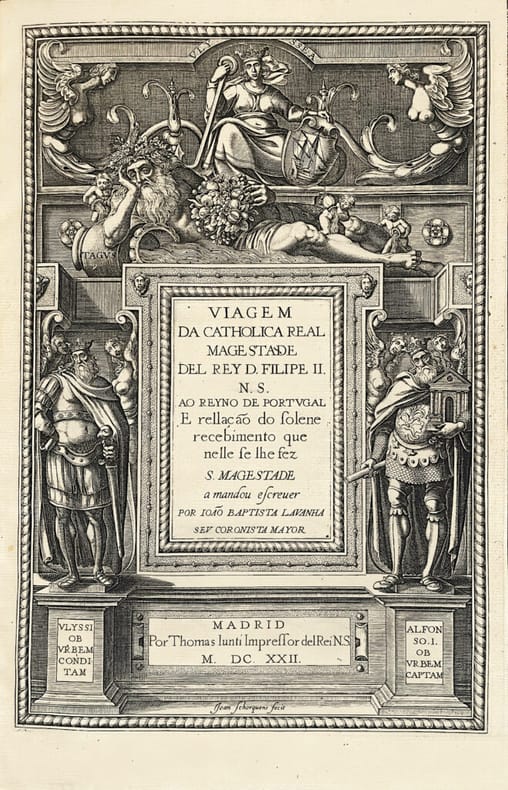
LCS-18430Très bel exemplaire conservé dans son élégante reliure en maroquin rouge signée de Lortic fils. Madrid, Thomas Junti, 1622 (fin 1621). In-folio de (2) ff. bl., titre frontispice, (2) ff. d’approbation et de dédicace, 78 feuillets de texte, 15 planches gravées dont 3 dépliantes, petit trou f. 25. Plein maroquin rouge, triple filet doré autour des plats, dos à nerfs fleurdelysé, double filet or sur les coupes, roulette intérieure, tranches dorées. Lortic fils. 329 x 222 mm.
¾ S. auf Doppelblatt. Mit eh. Adresse und rotem Siegel verso (Faltbrief). An seinen Schwiegervater, Stanislas Leszczynski, den König von Polen, bezüglich der Niederkunft seiner Tochter, der Kronprinzessin Maria Josepha von Sachsen: Um ein Uhr morgens sei ein kleiner Bub geboren worden, sein Enkel (der zukünftige Ludwig XVIII.), und es bereite ihm, Ludwig XV., überaus große Freude, die Nachricht dieses glücklichen Ereignisses, das ihnen gemein sei, zu überbringen; er hoffe, seinen Enkel in einigen Tage selbst in den Arm nehmen zu können: "Monsieur mon frere, et beau Pere j'annonce par cellecy à Votre Majesté l'accouchement de ma fille la dauphine qui nous a donné ce matin à une heures un petit fils. Sur de ces sentiments dans une occasion qui nous est commune quel plaisir n'aj-je à lui apprendre un si heureux evenement. Dans quelques jours j'espere l'embrasser moy même, mais en attendant je m'en acquitte bien sincerement et lui renouvelle les sentiments de tendresse avec lesquels je suis Monsieur mon frere, et beau Pere, De Votre Majesté, bon frere et Gendre Louis". - Alle Enkelsöhne Ludwigs des XV. und Urenkelsöhne von Stanislas Leszczynski, aus der Vereinigung des Dauphins Ludwig Ferdinand (1729-65) und seiner Gemahlin Maria Josepha von Sachsen, sollten den Thron Frankreichs besteigen: Ludwig XVI. (1754-93), Ludwig XVIII. (1755-1824) und Karl X. (1757-1836). - Mit kleinem Ausriss durch Brieföffnung und minimalem Tintenabklatsch.
8vo. VII, (1), 272, 12 pp. With a folding hand-coloured map and a plate (view of Mount Ararat). Contemporary polished calf, spine gilt, rebacked retaining original spine. Marbled endpapers. First edition. - Rare travel report by the British lieutenant Thomas Lumsden, who journeyed from Meerut near Delhi down the Ganges to Calcutta, then onwards by boat to the Arabian Gulf and by land through Persia (Iran), the Caucasus, and southern Russia. A German translation appeared in the same year (and was republished in 1824). The author gives a detailed account of his voyage through the Gulf from Muskat to Bushire immediately after the British Navy's controversial 1819 campaign against Ras al-Khaimah, and notes approvingly the Arabs' kindness and hospitality toward their foreign guests ("which could hardly have been the case, had their detestation of Christians been in reality as great as the Koran tends to inspire"), as well as the entire absence of the cruel mistreatment of the sailors so common on European ships. - Plate slightly browned; a fine copy. Wilson 131. Salmaslian 135. Miansarov 3022 Lowndes 1413. Western Travellers in the Islamic World AR-2028. Cf. Griep/L. 840. Engelmann 124. Not in Macro.
2 vols. VIII, (6), 484, (2) pp. (16), 456 pp. (6), XXXXI, (1), 408, (14) pp. With 2 engraved title-pages, each with an engraved vignette (that for volume 2 from the plate of the 1774 "Beschryving" with the lettering revised; that for volume 1 copied from it and unsigned), 125 engraved plates numbered I-LXXII, [LXXIII] (vol. 1) & I-LII (vol. 2) (38 folding), showing topographic views, watermills, people, Egyptian and Persian antiquities, Egyptian, Persian, cuneiform and other inscriptions, etc. by C. F. Fritsch, C. J. de Huyser, Th. Koning, G. H. Koning, C. Philips, O. de Vries, Baurenfeind and others. The unnumbered folding map of Yemen ("Tabula Itineraria", plate size 48.5 x 41.5 cm), with the trade routes coloured by hand, covers a smaller area at a larger scale than that in the Beschryving. - (Bound with) II: Niebuhr, Carsten. Beschrying van Arabie, uit eigene waarnemingen en in 't land zelf verzamelde narigten opgesteld. Amsterdam, Steven Jacobus Baalde; Utrecht, Johannes van Schoonhoven & Co. (colophon: printed by Johan Joseph Besseling), 1774. With engraved title-page showing an engraved vignette by N. van der Meer (2 female figures with a globe and other instruments) and 25 engraved plates numbered I-XXIV, (XXV), including 7 folding showing 1 view of military exercises, 2 Kufic inscriptions (coloured by hand) and 4 maps. The unnumbered map of Yemen (plate size 58.5 x 39 cm) is coloured by hand in outline. The full-page plates include maps, topographic views, costumes, coins, Arabic inscriptions, etc. All by C. J. de Huyser, N. van der Meer, Th. Koning and C. Philips. 2 works in 3 volumes. 4to. Contemporary half tree calf, sides covered with paste paper; rebacked, with original gold-tooled backstrip laid down. One of the very rare large paper copies of the first and only editions of the Dutch translation by Jacob van Ekers of Niebuhr's famous account of a voyage to Arabia and surrounding countries (ad 1) and his description of Arabia, Egypt and the Middle East (ad 2). Both works were originally written by the Danish traveller and surveyor Carsten Niebuhr (1733-1815) and published in German, in Copenhagen in 1772 under the titles, "Beschreibung von Arabien" and "Reisebeschreibung nach Arabien und anderen umliegenden Ländern". Both works were also translated in French and English. - In 1760 Niebuhr was invited to join a scientific expedition to Egypt. Other members of the expedition were Friedrich Christian von Haven (a Danish linguist and orientalist), Christian Carl Kramer (a Danish physician and zoologist), Georg Baurenfeind (an artist from southern Germany), Berggren (a Swedish ex-soldier) and Pehr Forrskal (a Swedish botanist). In January 1761, the expedition sailed from Copenhagen, Denmark to Alexandria, Egypt. The members of the expedition spent a year in Egypt, visiting Suez and Mount Sinai. They left Suez in October 1762 and sailed to Yemen. In May 1763 they reached Mocha where Von Haven and Forrskal died from malaria. In August 1763 Baurenfeind and Berggren died, followed by Kramer in February 1764. Niebuhr was the only one left to continue the expedition. In 1764, he explored India, sailing from Bombay to Muscat, as well as Shiraz, Babylon, Baghdad, Mosul, and Aleppo. He spent some time in Persepolis in 1765 where he has made very detailed drawings and maps, which were used for more than a hundred years. In 1766, he explored Palestine before finally returning to Copenhagen on 20 November 1767, after a journey of seven years. When he returned to Copenhagen the Swedish government warmly welcomed him and paid the costs of engraving the plates to illustrate his accounts of the voyage. Both works are lavishly illustrated, having together 2 large maps of Yemen and 148 beautifully engraved maps, plans and views of all the regions Niebuhr visited. - The present set has both works printed on the same large watermarked paper (Strasbourg bend above VDL) and is only slightly trimmed, measuring 296 x 242 mm with the tranchefiles still visible (regular copies are printed on unwatermarked paper measuring 275 x 217 mm). Not even Tiele mentions the existence of copies on large paper. - Binding slightly rubbed on the sides and rebacked as noted; otherwise good. With a few occasional spots, the half-titles slightly thumbed and a few mm of minor browning in the upper margins; a very good large paper copy, only slightly trimmed. Howgego, to 1800, N24. Tiele, Bibl. 795f. Cf. Atabey 873f. Cox I, 237f. Gay 3589. Hamilton, Europe and the Arab world 48.
Folio. (188), (34), CCCCCXXXVI [= CCCCCXXXVIII; 538] pp. Title-page in red and black and separate title-page to index, both with woodcut border. Elaborately decorated calf, with image of the crucifixion on both panels. Blinrd-tooled spine. First and only Paris edition of "Historiae naturalis", with the annotations by Hermolaus Barbarus (1454-94), an Italian Renaissance scholar. His discussions of Pliny's "Naturalis Historia" was first published as "Castigationes Plinianae" in 1492, in which he made over 5000 corrections to the original text. Due to this work and other classical works he translated or edited he was considered a leader authority on Latin and Greek work on antiquity. The present copy was published by Jean Petit, in his days a leading bookseller in Paris, whose name and device are shown on the title-page with decorative woodcut border. The title-page to the index, here bound before the text, has the initials of the printer Nicolaus Sauetier. - The original text was by Gaius Plinius Secundus (AD 23-79), better known as Pliny the Elder. He was a Roman author, naturalist, and natural philosopher, as well as naval and army commander of the early Roman Empire, and personal friend of the emperor Vespasian. - The "Naturalis Historia" is one of the largest single works to have survived from the Roman empire to the modern day and purports to cover the entire field of ancient knowledge, based on the best authorities available to Pliny. He claims to be the only Roman ever to have undertaken such a work. It comprised 37 books in 10 volumes and covered over 20,000 facts on topics including the fields of botany, zoology, astronomy, geology and mineralogy as well as the exploitation of those resources. It remains a standard work for the Roman period and the advances in technology and understanding of natural phenomena at the time. Some technical advances he discusses are the only sources for those inventions, such as hushing in mining technology or the use of water mills for crushing or grinding corn. Much of what he wrote about has been confirmed by archaeology. ''We know from Pliny that there were important pearl fisheries in the Gulf [...] Pliny identifies Tylos (Bahrain) as a place famous for its pearls [... He] attests that pearls were the most highly rated valuable in Roman society, and that those from the Gulf were specially praised [...] The pearl related finds at the site of El-Dur indicate the site was integrated into the maritime trade routes linking the Roman Empire, the Persian Empire, India and South Arabia'' (Carter). Book 6 holds a chapter that gives the first detailed account of the regions around the Gulf, including what are now Qatar, the Emirates and Oman. - Not only is it virtually the only work which describes the work of artists of the time, and has it become an important reference work for the history of art, due to the wide range of topics, the referencing system and index it became a model for later encyclopaedias. - Panels shaved, affecting the decoration, spine cracked on the hinges. With manuscript ownership on title-page of the index. A good copy. Bird 1910. USTC (2 copies). Not in Adams, BMC French, Durling, Hunt, Wellcome.
Large 8vo (300 x 220 mm). 6 vols. bound as 3. With 250 numbered plates (image size 120 x 170 to 150 x 220 mm), including a tinted lithographed portrait of the artist, 6 tinted lithographed title-pages, 2 stone-engraved maps and 239 tinted and double-tinted lithographed and 2 chromolithographed views. Contemporary, richly gold-tooled reddish-brown morocco, side-stitched and oversewn, then sewn on 5 recessed cords, with a hollow back, 5 false bands on the spine, gold-tooled turn-ins, combed and curled marbled endpapers, headbands in red and yellow, gilt and gauffered edges. With thin paper guard leaves facing each plate. Second edition, with reduced illustrations but with more of them double-tinted or chromolithographed, of one of the most splendid and historically important visual records of the Middle East, after drawings by David Roberts (1796-1864) from the sketches he made from life during his travels through what is now Egypt, Israel, Jordan, Saudi Arabia, Syria and Lebanon in 1838 and 1839. In Egypt he ventured up the Nile as far as the Nubian temples at Abu Simbel, near the present border with Sudan and travelled by camel through the Sinai to the extraordinary carved-rock buildings of Petra. These had been unknown to Europeans until Burckhardt discovered them in 1812 and 1813, so Roberts's views are among the earliest and are in many ways better than the few predecessors. In Lebanon he ventured as far as Baalbek, which had seen few European visitors before Egypt annexed it in 1832. Other sites he visited and drew include Cairo, Suez, Gaza, Jerusalem and Beirut. He was one of the first Europeans allowed to make drawings of the interior of mosques, so even in well-known cities these too opened a new world to European eyes. His views also provide a very detailed visual record of many sites that were afterward destroyed or disturbed. He drew them during the infancy of photography, before it reached the Middle East and long before it reached maturity there. His views of the modern cities also preserve records of both their architecture and their daily life and he shows spectacular landscapes in the mountains, around the Dead Sea and along the Nile and the Jordan. Roberts, born to a poor (Welsh?) family in Edinburgh, was apprenticed as a house painter, moved to London and worked his way up to paint sets for the Drury Lane Theatre and others. Thanks to patrons who appreciated his talents and hard work he was able to make the expensive and dangerous voyage through the Middle East. George Croly (in volumes 1-3) and William Brockedon (in volumes 4-6) provided explanatory and historical notes on the sites shown in Roberts's views. - Roberts's views were originally published in two separate works, issued in parts in the years 1842 to 1849 and often found together. One centred on the Holy Land, though also including views in other parts of the Middle East, while the other was devoted to Egypt and Nubia. The views in the former were made with only a single tint block and even the latter used fewer tint blocks than the present second edition and only one chromolithograph. The present edition, with sometimes very intricate double tints and two chromolithographs (with black and three tint blocks) is a masterpiece of tinted lithography. Since the lithographers used photographic reductions of the lithographic views of the first edition as an aid to their work, the book also pioneered the use of photography in graphic reproduction. The lithographed title-pages are dated 1855 except for those of vol. 3 (from the simultaneous New York issue, undated) and 6 (1856) but volumes 2-6 include plates dated 1856. The dates of the plates in all six volumes range from 16 April 1855 to 15 December 1856. - The title-page of volume 3 was intended for the simultaneous New York issue, but appears to have always been part of the present copy. In very good condition, with occasional light foxing, mostly on the backs of the plates, and with a faint marginal water stain in the lower outside corner of many plates in volumes 3 and 4, not approaching the printed image. The inside front hinge of the second volume as bound has separated from the book block and the bindings show some wear at the hinges and extremities, but they are otherwise also very good. 250 mostly tinted and double-tinted lithographs providing stunning early views of the Middle East, including Petra, Abu Simbel and the interiors of several mosques. Abbey, Travel 388 (lacking vols. 5-6). Blackmer 1432 (note). Gay 25. Hiler 205. Cf. Hamilton, Europe and the Arab world 66 (1842-49 ed.); Lipperheide, Lc 12 & Ma 27 (1842-49 ed.); Tooley 401f. (1842-49 ed.); not in Colas.
21 album leaves with 1 drawing mounted on each recto. Album: full-sheet leaves (oblong folio, 395 x 525 mm); drawings: oblong folio and oblong 4to. An album with 21 watercolour drawings on paper with views of sea coasts from the shore (240 x 310 mm to 295 x 465 mm), one with a 22nd watercolour drawing on the back with a similar view, and one with about 15 human figure drawings in graphite pencil on the back. All bear the artist's stamp on the front (Lugt 3703) and 4 are signed or initialled by the artist. Richly gold- and blind-tooled green goatskin morocco, sewn on 3 recessed cords (not aligned with the six flat raised bands on the spine), each board with a blind-tooled inner oval frame of interlaced abstracted leaves and vines, surrounded by a gold-tooled frame of similar decoration (oval inside and rectangular outside), surrounded by 2 frames of thick-thin fillets, the front board with the owner's initials in textura capitals in the centre: "A.L.", signed at the foot of the spine, "A. Giroux & C:" (last recorded in 1856), white watered silk endleaves (the paste-down in the form of a doublure). The whole in a protective folder lined with thick leather, with green goatskin morocco where it wraps around the 2 short ends, and chemical-marbled paper sides (black papier croise d'Annonay: cf. Wolfe XXI, 1-3: France, 1830s-50s), with remains of a green cloth tie on the flap. A richly gold- and blind-tooled album (ca. 1850/56) containing 22 excellent and detailed watercolour views of rocky sea coasts, all or nearly all in New Caledonia and Peru (plus 1 graphite pencil drawing of about 15 human figures), the coastal views made from the shore. All were executed by Osmond Romieux (1826-1908), a leading amateur artist who made them during his tours of duty as a French naval officer. At least 18 have a pencil note on the back identifying the location: 15 "Nouvelle Caledonie", 2 "Pérou" (drawings 18, 20) and 2 "Callao" in Peru (drawings 17, 18). We have found no location indicated on drawings 3 (with views on both sides), 8 and 19 (with figure drawings on the back). Most of the drawings were made from the sea shore, looking out over both the sea and the nearby coasts, nearly all with rocky cliffs or outcroppings and some with trees or other plants. Many were made along bays or inlets where one can see the coast on both sides and the water in one view. Some show fortifications or other buildings, a few show boats in the water or on the shore and several show people on the shore, all or nearly all in European dress. Drawings 2, 8, 15 and 17 are signed or initialled by the artist. - No drawing in the album bears a date, but the album shows no signs of other items having been removed, so the drawings probably date from before or soon after the album was manufactured. The album leaves are made of wove paper with no watermark, but A. Giroux & Cie is not recorded after 1856 and the binding style suggests the album is not much older. Most of the drawings are made on thick wove paper with no visible watermarks and with a rough surface texture much like many of today's watercolour papers. Drawing 4 is on thinner and smoother wove paper with no watermark visible and drawings 9 and 11 are on laid paper watermarked (in the centre of a half-sheet): grapes on a crowned shield (20 grapes plus stem, rendered naturalistically, with grapes arranged in an irregular pattern rather than a honeycomb and sometimes overlapping), about 118 x 70 mm (chainlines 26 mm apart). Unfortunately, the watermark literature does not cover this period well, but the crown is in the general style of those used much earlier for a fleur-de-lis on a crowned shield, such as Heawood 1822. Drawings 20 and 21 may be on the same stock as 9 and 11 but show no watermark, though 20 was made in Peru and the others in New Caledonia. Drawings 9, 20, 21 and probably 3 and 19 are executed on oblong 4to leaves; at least most of the others are on oblong folio leaves. Drawing 13 may be backed with smoother wove paper. - Prosper Halvor Henri Oscar Romieux, who used the first name Osmond, joined the French navy at Rochefort (less the 30 km from his native La Rochelle) in 1841 and passed his exams at the École Navale in 1843. He made his first tour of duty in Polynesia during the Franco-Tahitian War (1844-47), at least from 1845 aboard the ship "La Virginie". We find no record of Romieux or the ship visiting New Caledonia during this period, although it is "only" 4500 km from Tahiti. Romieux must have shown artistic skill from early childhood, for already on this first tour he made excellent watercolour drawings, and he continued to make watercolour views around the world until he retired from duty in 1891. He was made a chevalier of the Légion d'Honneur in 1863 and later an officier. Other undated drawings also record him in New Caledonia and Peru (including Lima and Callao). He is documented in New Caledonia in 1880 and 1882, but the present drawings are unlikely to be that late, and we have found no date for his visit(s) to Peru. We have little record of Romieux's movements from 1848 to 1850, but if he left the South Pacific he soon returned, for he is recorded in Hong Kong in 1851 and the Philippines in 1852 (in 1851 he was an Enseigne on the ship "l'Algérie"). He must have left in 1852, however, for he is recorded in the Seychelles (in the Indian Ocean) in 1852 and Italy in 1853 and 1854. In this last year he was promoted to Lieutenant, but we have another gap in the records of his movements from that time to 1860. He may have made the present drawings during this period, for he set off for the Levant on the ship "Redoutable", apparently in or shortly before 1860, since he is regularly recorded in Syria, Lebanon, Greece, Algeria and Jerusalem from 1860 to 1864. He was promoted to Capitaine in 1867 and continued his travels, but since the present album was probably bound in or before 1856 we think it unlikely that he made the drawings after 1864. - Although the binding is signed by Giroux, the firm operated primarily as suppliers of artists' materials and Ramsden plausibly suggests that they "commissioned bindings by the best executants of the day". Alphonse Giroux established the firm by 1799, but his son Alphonse Gustave Giroux (1809-86) managed it from at least 1838 and the father died in 1848. - We have not identified the "A.L." who apparently acquired these watercolours and had the album made in the 1850s: Lugt lists several French collectors with those initials active at the time. One watercolour has a small corner torn off at the lower right, another is slightly frayed along the right edge and the one on thin wove paper is very slightly browned, but the watercolours are otherwise in very good condition. The binding may have been expertly rebacked, preserving the original backstrip, but so unobtrusively that one must wonder if the binding was originally made that way. It is further in very good condition and even the folder is olny slightly rubbed.A lovely and finely executed series of large watercolour drawings of the coasts of New Caledonia and Peru, probably made in the 1850s and mounted in a stunning gold- and blind-tooled contemporary album. For Romieux: Lugt 3703. For Giroux: Flety, Dictionnaire des relieurs francais p. 82; Ramsden, p. 94.
4to (225 x 264 mm). X, 42 pp. With 4 lithogr. folding plates. (And:) Beitraege [...] Zweites, Drittes, Viertes, Fünftes Heft. Systema Astronomiae Aegyptiacae Quadripartitum. Ibid., 1833. XXX, 445, (10) pp. (series titles and separate half-title for no. 2). With hand-coloured frontispiece and 10 large folding plates, lithographed throughout. Contemporary polished red morocco, spine, leading edges, inner dentelle and covers richly gilt and blind-tooled in the Romantic style. Glazed green endpapers; all edges goffered and gilt. Bound by the Leipzig master Anton Stumme with his label on the first flyleaf. A fine morocco volume comprising the first five of Seyffarth’s monographic "Contributions" to Egyptology (apparently all published at the time of binding; two more were to follow by 1840). While the first fascicle contains the earliest catalogue raisonnée of the substantial Berlin collection of papyri, fascicles 2-5 (published with continuous pagination) constitute a bold investigation into early Egyptian astronomy and its all-pervading cosmological cult. This section includes a hand-coloured frontispiece of astronomical animal forms and ten large folding plates, all lithographed, showing important pieces of archeological evidence: the Navicula astronomica (Paris), Zodiacus Tentyriticus (Paris), Zodiacus Taurinensis (Turin), Sarcophagus Sethi (London), Sarcophagus Ramsis (Paris), Monolithus Amosis (Paris), Mensa Isiaca (Rome), and a Papyrus funeralis formerly in the d'Hermand collection. The final part is an astronomical lexicon, a typographical masterpiece that fits more than 1300 lithographed hieroglyphs precisely into their letterpress explanations. - Seyffarth, an opponent of Champollion's, emigrated to the U.S. in 1855. His thousands of transcriptions and sketches are preserved in the Brooklyn Museum as the "Bibliotheca Aegyptiaca Manuscripta". - A luxury copy printed entirely on wove paper and bound in elaborate morocco with finely goffered edges (unusual for a secular binding of the time) by the Leipzig master Anton Wilhelm August Stumme (1804-67), who also worked for Robert Schumann. Minor wear to binding, occasional foxing as typical for wove paper. Coloured frontispiece browned evenly; largely insignificant gutter tears to four folding plates. A crisp, unused copy in a magnificent binding. Ibrahim-Hilmy II, 229f.
Large 4to (195 x 268 mm). Title and 30 captioned plates, engraved throughout (image size ca 110 x 170 mm). Late 19th century half calf with gilt spine rules and 18th or early 19th c. giltstamped lozenge label on upper cover. Charming, rare suite of engravings showing the costumes of the Turks, including the Sultan and various courtiers of the Porte, Ottoman soldiers and janissaries, an Arabian preacher, a falconer, street salesmen, a porter smoking a long meerschaum pipe, and several Turkish ladies (one in surprisingly revealing attire). - Charles-Francois Silvestre (1667-1738) held the title of "Maître à dessiner du Roi" (Drawing Master to the King) and was in 1695 appointed art instructor to the young Dukes of Burgundy, Anjou and Berry, the grandsons of Louis XIV. The present suite, dedicated to Louis, Duke of Burgundy, reflects the orientalist fashion of its time but is also a highly original work of art demonstrating a vivid, flamboyant style and not apparently based on earlier illustrations. The title and 21 of the plates are signed in full with the Royal privilege: "F. Silvestre inv. et ex. C.P.R.", while eight are simply signed "S." and one ("Janissaire de la garde, Solac ou Pzyc") is not signed, though it is clearly executed in the same style as the others. Uncommon thus with 31 plates including the title: the copies listed by both Hiler and Colas, as well as that in the Gennadius Library at the American School of Classical Studies at Athens, are oblong volumes containing only 30 plates including the title, on a total of 15 leaves (Colas: "titre compris [...] Ces planches sont tirées à deux sur la même feuille"), while the Lipperheide copy comprised a mere 22 plates including the title, making this the most complete set known. - Insignificant browning and fingerstaining, more pronounced in title but on the whole confied to the wide margins. Hiler 799; Colas 2744 (both listing 30 plates including title). Lipperheide Lb 25 (listing title and 21 plates).