692 496 résultats
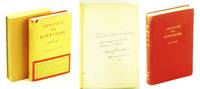
1953214h6109Appleton Wisconsin: C.C. Nelson Publishing Company. Fair in Good dust jacket. 1953. Second Printing With Revisions. Hardcover. Charles A. Lindbergh's copy signed and inscribed to him by his fellow seeker of peace justice and historical truth Harry Elmer Barnes 1889-1968 whom Murray Rothbard eulogized as "the last of the truly erudite historians." A truly magnificent provenance for this work which "shows how the extension of military operations to civilian populations and property and the increasingly destructive nature of total warfare menace the very future of humanity and Western civilization. This work makes it clear how the Nuremberg war-crimes trials far from curbing the barbarism of present-day warfare will make it absolutely certain that every known form of destructiveness and mass-murder however fiendish and devastating will surely be brought forth in the desperate effort to avoid a defeat which in all future wars will mean the summary liquidation of the political leaders and top military officers of the vanquished countries." - dust jacket. Saddam Hussein and Muammar Gaddafi among others would probably concur. As the most prominent spokesman for the America First Committee which sought to keep America out of WWII Lindbergh most likely endorsed the conclusions of this book first issued in England in 1948 under a nom de plume by Veale "a lawyer and student of history with a lifelong interest in the cause of peace and international justice." - xi. On page vii Veale refers specifically to Barnes by stating "in accordance with what Dr. Harry Elmer Barnes has called 'The Historical Blackout' the bulk of the British press newspaper and periodical alike rigidly ignored the first edition of this book. Not one London newspaper with a nation-wide circulation reviewed it." Eventually this work was issued in 18 editions and three languages. pp. xvii 1 305. Index. Bibliography. Black and white reproductions of photos. Unmarked with average wear to publisher's red cloth lettered in gilt. Narrow openings along each hinge bear narrow remnants of earlier tape repairs. Small erasure patch atop front free endpaper. Tanning to photo endpapers. Moderate wear to dust jacket now preserved in archival-grade Brodart. Housed in new custom acid-free slipcase. An extraordinary memento from the collection of Charles Lindbergh 1902-1974 the legendary American aviator who rose to global prominence in 1927 by being the first to fly nonstop from New York to Paris. Stimely p.61 Select Bibliography of Revisionist Books p.21.; 8vo; Signed by Notable Personage Related . C.C. Nelson Publishing Company hardcover
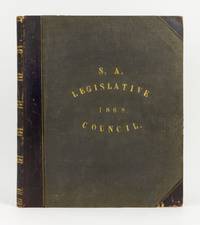
1868142860Adelaide: Townsend Duryea 1868. First Edition. Hardcover. Very Good. Adelaide Townsend Duryea 1868. A large quarto album approximately 415 × 365 mm containing 18 albumen paper portraits each approximately 280 × 210 mm mounted on the rectos of cloth-hinged thick card leaves interleaved with guards plus one leaf of letterpress see below. Contemporary half roan and cloth lettered and tooled in gilt with a binder's ticket on the front pastedown 'Bound at the "Register" Office Grenfell Street Adelaide'; covers slightly worn; leaves slightly cockled; one guard missing; most photographs lightly discoloured near the right-hand edge; a few light spots of foxing mainly to the guards and the versos of the mounts and some minor signs of age and handling but overall in excellent condition. The subjects include some of the most prominent figures in early colonial South Australia. In order of appearance the portraits depict John Morphett President Henry Ayers Charles Hervey Bagot John Henry Barrow Charles George Everard John Baker William Wedd Tuxford Thomas Elder William Peacock William Morgan Thomas Hogarth John Tuthill Bagot Thomas English Henry Mildred John Crozier William Parkin John Hodgkiss and Emanuel Solomon. <p>The 'South Australian Advertiser' for 20 August 1868 records that: 'Mr. Duryea is preparing a parliamentary group containing the members of both Houses of the Legislature which promises to be an effective affair. The members of the Council have already given him sittings and a fine series of portraits is the result'. In the subsequent months Duryea exhibited the photographs at his King William Street studio but most accounts refer to them assembled as a group around Morphett. This photo-collage with the portraits all heavily cropped is almost certainly the basis for a contemporary carte de visite published by Duryea see SLSA B 9258. However most of the images in this album appear to be rare or even unrecorded in their uncropped form; indeed the only other examples we located were of Henry Ayers and Charles Hervey Bagot. It is also rare to find photographs of early colonists at all let alone of this size quality and quantity. <p>The guard leaves for the portraits of Morphett Hogarth J.T. Bagot and Mildred contain manuscript biographical details in a single hand. Although we have not identified the writer it is likely to be one of the eighteen MLCs as he refers to 'our chamber' in the entry for Morphett. The portrait of C.H. Bagot is accompanied by a similar short biography but this time in letterpress and misspelling his middle name as 'Harvey'. C.H. Bagot English Mildred Crozier Parkin and Solomon are identified in another hand on the mounts beneath the image. Townsend Duryea] hardcover
170 x 263 mm. With gilt rosette and numerous gilt floral ornaments between the letters and in the margins. Vocalisation marks (dots) in red. 5 lines. Illuminated leaf from a once-magnificent Quran manuscript with fine gilt flower and leaf illustrations as space fillers and ornamental border around the large Kufic script written in black ink (line height ca. 25-30 mm). The ornamentation mainly consists in leaf designs with the occasional blossom. Illumination of this type is exceedingly rarely encountered among the preserved Abbasid Kufic manuscripts pre-dating the year 1000. The script style belongs to subgroup D.I, according to Déroche's classification. Manuscripts in this style are normally dated to the 9th century CE (cf. François Déroche, The Abbasid Tradition, London 1992. The Nasser D. Khalili Collection of Islamic Art, Vol. I, nos. 19-23, pp. 67-71). The red dots are vocalisation marks: diacritic marks were not used until later. - Some browning and staining. Brittle in places due to ink corrosion (slight loss to individual letters). Verso rubbed, but still legible. Cf. Fingernagel (ÖNB 2010), p. 33.
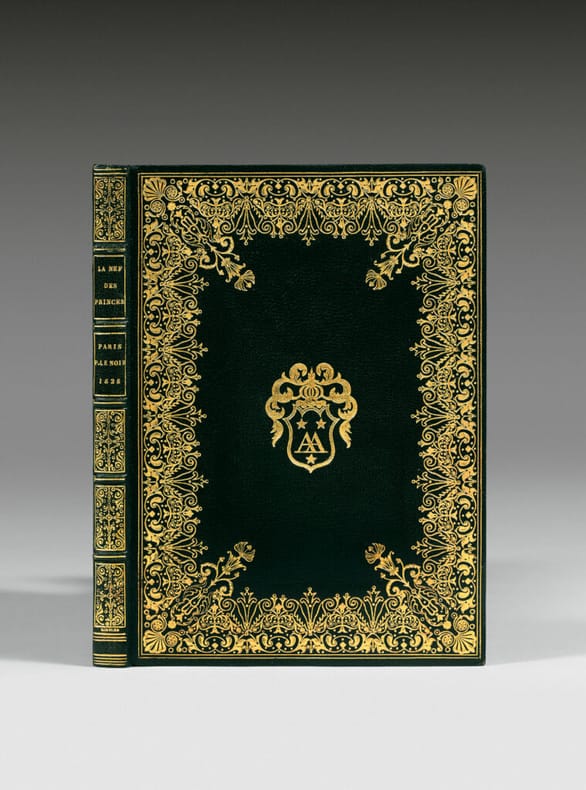
LCS-18410Bel exemplaire de ces très plaisantes et rares éditions gothiques illustrées, relié avec élégance par Koehler au chiffre de A. Audenet (1839, n°40). Paris, Philippe Le Noir, 1525. In-8 de: I/ (72) ff. comprenant 1 titre frontispice et 7 bois gravés dans le texte; II/ (14) ff. y compris 1 titre frontispice et la marque de Philippe Le Noir. Titre général en rouge et noir, caractères gothiques. Maroquin vert, large dentelle dorée encadrant les plats avec motifs en écoinçons, armes frappées or au centre, dos à nerfs orné de fleurons dorés, coupes décorées, large roulette intérieure dorée, tranches dorées. Reliure signée de Koehler. 166 x 117 mm.
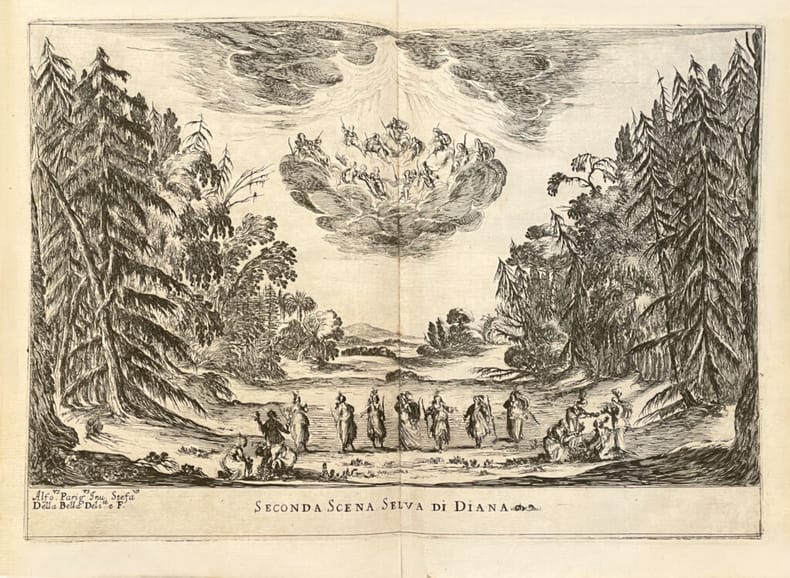
LCS-18534Rare édition originale de ce très beau livre de fête italien ecrit par coppola a l’occasion du mariage du grand duc ferdinand ii et de la princesse d’urbino, complet du rare livret du spectacle. Firenze, Amadore Massi et Lorenzo Landi, 1637. [Avec:] Relazione delle nozze degli dei favola dell abate Gio: Carlo Coppola […]. Firenze, Amadore Massi et Lorenzo Landi, 1637. Livret du spectacle. In-4 de: I/ (1) f.bl., (4) ff. dont 1 frontispice gravé, 104 pp. et 7 planches gravées sur double page; II/ 50 pp., (1) f., (2) ff.bl. Restaurations au feuillet de titre et à 3 autres ff. Relié en veau blond du XVIIIe siècle, dos à nerfs restauré, pièce de titre de maroquin rouge, roulette dorée sur les coupes, tranches marbrées. Coins restaurés. 231 x 164 mm.
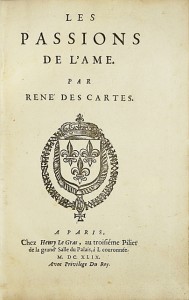
LCS-8065Édition originale des Passions de l’âme de Descartes conservée dans son vélin à recouvrement de l’époque. Paris, chez Henry Le Gras, 1649.In-8, de (24) ff., titre compris, 286 pages, (1) f.bl. Relié en plein vélin ivoire à recouvrement de l’époque, dos lisse. Reliure de l’époque. 159 x 90 mm.
In folio (435x300). Occhietto, antiporta allegorico in acquaforte disegnato da Campiglia, ritratto dell'autore entro ovale disegnato da Maria Maddalena Gozzi, il tutto inciso da Pazzi; frontespizio in rosso e nero con grande vignetta paesaggistica di soggetto marino. Dedica a Francesco III Medici. 5 parti in un volume ognuna con proprio frontespizio, ciascuno con vignetta ovale, 8 tavole in rosso e nero raffiguranti coralli, madrepore e 110 raffinate tavole a piena pagg. numerate incise in rame raffiguranti conchiglie, tutte entro una bordura con doppio filetto, disegnate da Menabuoni e incise da Pazzi con a fronte il testo; 16 belle tavv. nel testo sempre in acquaforte, su disegno di Menabuoni ed incise da Bernardo Sgrilli. Legatura in piena pelle coeva con dorso a sei nervi, titolo su tassello in oro, dorso a 7 scomparti con ricchi fregi di carattere floreale, dentelle dorate, alla cuffia inf. e impresso uno stemma gentilizio raffigurante una torre inscritta in un ovale sormontata da corona. Prima edizione di questa magnifica opera del Gualtieri (1688-1744) che fu medico personale di Cosimo III de' Medici, il quale, grande collezionista ed estimatore di rarità, possedeva un magnifico gabinetto di conchiglie includendo circa 360 specie, che gli furono mandate da Rumphyus; il Duca diede al Gualtieri molti dei suoi duplicati. Gualtieri fu inoltre professore all'università di Pisa, dedicando i suoi studi alla botanica, geologia ed alla zoologia. Assai raffinato l'apparato iconografico, che illustra dettagliatamente centinaia di molluschi e fossili che appartenevano alla collezione privata dell'autore.Splendido esemplare stampato su carta forte. Lievi tracce d'uso alla legatura (allo spigolo del piatto posteriore).<BR>Nissen ZBI 1736; Cobres p. 110, n. 23.
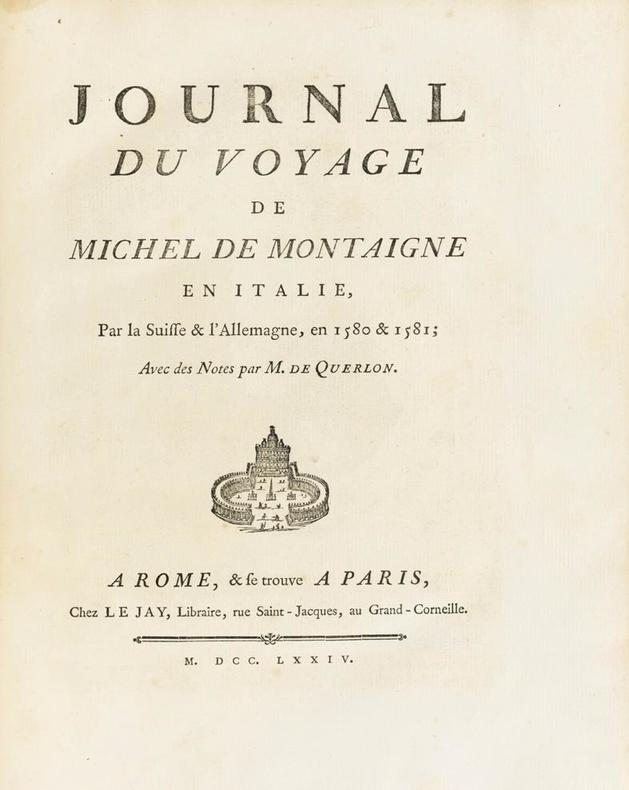
1774YTB-5Le Jay - J. Tonson & J. Watts (1774) 2 ouvrages en 4 volumes in-4 de : I/ (1) f. pour le portrait, (2) ff., XV pp., (4) ff., 363 pp., (6) ff., XVIII pp., (1) f. bl., (1) f., 95 pp. ; II/ 538 pp., (8) ff. de table.; III/ (1) f.,411 pp., (12) pp. de table ; IV/ (1) f. pour le portrait, (4) ff., LIV et 416 pp. Maroquin bleu nuit, triple filet or encadrant les plats, dos lisses richement ornés, pièces de titre et de tomaison en maroquin rouge, double filet or sur les coupes, roulette intérieure dorée, tranches dorées. Reliure de l’époque. 289 X 230 mm. EXCEPTIONNELLE REUNION, EN TRES BELLE RELIURE HOMOGENE EN MAROQUIN DU TEMPS, DE L’EDITION ORIGINALE IN-4 DU VOYAGE DE MONTAIGNE ET DE LA PREMIERE EDITION COMPLETE DES ESSAIS. LES EDITIONS ANCIENNES DES « Essais » DE MONTAIGNE EN MAROQUIN DE L’EPOQUE ONT DE TOUT TEMPS ETE RECHERCHEES. SUPERBE ET PRECIEUX EXEMPLAIRE, GRAND DE MARGES (hauteur : 289 mm), SUR GRAND PAPIER, CONSERVE DANS SON MAROQUIN BLEU NUIT DE L’EPOQUE. L’exemplaire répertorié par Philippe Desan mesurait 283 mm de haut et l’exemplaire répertorié par André Pottiée-Sperry : 285 mm. Tchemerzine ne cite que 3 exemplaires, tous reliés en veau ancien : « Bénard, 4000 frs ; Roussel, 1300 frs ; De Backer, 3650 fr. ». EXCEPTIONNELLE REUNION DES ESSAIS ET DU JOURNAL DE MONTAIGNE CONSERVES DANS LEUR RELIURE HOMOGENE EN SUPERBE MAROQUIN BLEU NUIT DU TEMPS.
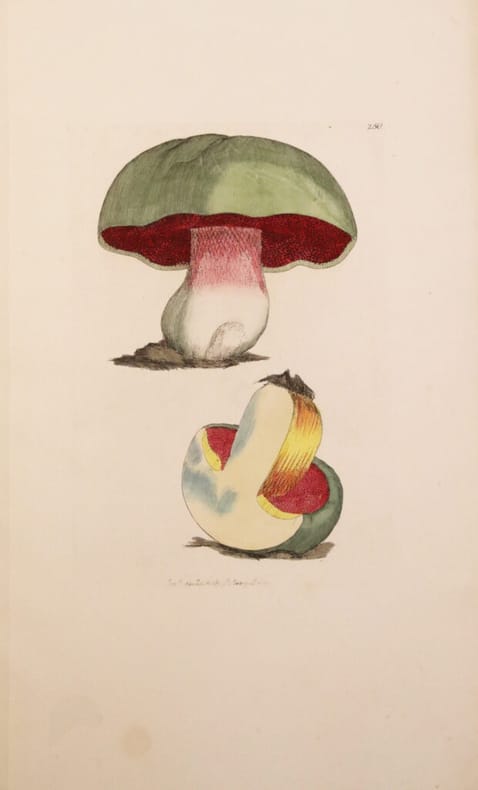
LCS-17868Première et unique édition de l’un des plus beaux ouvrages de mycologie orné de 440 planches finement coloriées à la main à l’époque. London, J. Davis 1797-1815. 4 tomes en 3 volumes in-folio de : I/ (28) ff. de texte, 120 pl. hors-texte ; II/ (26) ff. de texte, planches 121 à 240 ; III/ (46) ff., (13) ff. de supplément, planches 241 à 440. Pl. 81 barrée. Demi-maroquin aubergine à coins, dos à nerfs ornés de fleurons dorés, non rognés, tête dorée. Reliure du début du XIXe siècle. 335 x 215 mm.
YTB-68[Pierre le Voirrier] for Abel l'Angelier, 1582. In-folio, maroquin havane décoré attribué au relieur du roi Clovis Eve, triple filet doré autour des plats, large motif central composé de branches de laurier et de deux grosses marguerites dorées, larges écoinçons d’angle fermés de branches de laurier, dos lisse entièrement orné de branchages dorés, tranches dorées. Reliure parisienne vers 1585. 356 x 226 mm. EDITION ORIGINALE DE LA PREMIERE TRADUCTION FRANÇAISE DUE A CLAUDE FAUCHET ET A ETIENNE DE LA PLANCHE. Les cinq premiers livres des Annales, traduits par Estienne de La Planche avaient paru pour la première fois en 1548 – les livres XI à XXII, la Germanie et la vie d’Agricola, traduits par Claude Fauchet, se trouvent ici en édition originale. « Lorsque, dans le silence de l'abjection, l'on n'entend plus retentir que la chaîne de l'esclave ou la voix du délateur ; lorsque tout tremble devant le tyran, et qu'il est aussi dangereux d'encourir sa faveur que de mériter sa disgrâce, l'historien paraît, chargé de la vengeance des peuples. C'est en vain que Néron prospère. Tacite est déjà né dans l'Empire. » (Chateaubriand, Article du Mercure). Clovis Eve, actif de 1584 à 1634, fut le relieur de Henri III, de Henri IV et de Louis XIII. Il disposa des deux séries de fers et d'armes gravées en 1579 et en 1583 par Philippe Damphrie, graveur général des monnaies du roi. Ce sont des indices essentiels pour l'identification de sa production. Il fut l'un de ceux qui assurèrent la vogue du décor à semé (on citera, par exemple, les reliures pour les membres de l'ordre du Saint-Esprit, aux armes de Henri IV, de Louis XIII). Il est l'auteur des étonnantes reliures à emblèmes macabres (squelettes, cercueils, têtes de mort) faites pour la Compagnie des confrères de la Mort, créée par Henri III et qui regroupait un petit nombre de pénitents de stricte observance. On a attribué trop généreusement à Clovis Eve un grand nombre de reliures à la fanfare, dues en fait à plusieurs ateliers. Des pièces sûres (fanfares aux armes de Henri III), ainsi qu'une vingtaine d'autres identifiées par les fers, permettent d'y reconnaître l'expression accomplie des modèles prédominants plus que la mise en œuvre d'un style original. La longue carrière de Clovis Eve marque la transition entre les grands relieurs de la Renaissance et les maîtres de la période classique (Le Gascon, F. Badier). The binding is very elegant, combining 'fanfare' with 'feuillage' decoration. It shares several tools, notably the two sizes of a natural lily, with a royal binding of 1585 illustrated on plate XVI of G.D.Hobson, Les Reliures a la Fanfare, 1935, as well as with other bindings belonging to Hobson's 'groupe royale', which are attributed to Nicolas or his son Clovis Eve, the 'relieurs de roi'. Cf. Hobson, op.cit. p.51.
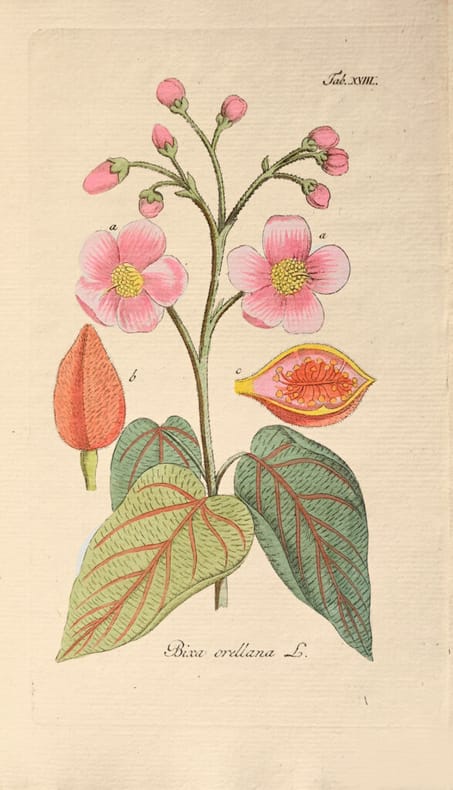
LCS-18180Rare première et unique édition de cette adaptation hollandaise de l’Icones plantarum medicinalium (1779-1790) de Zorn. Bradley III, p. 55; Landwehr, Coloured plates 2; Nissen, BBI 2203; Stafleu & Cowan 3926 ; Pritzel 4502. Amsterdam, chez J. C. Sepp et Fils, 1796 (vol. I-III), 1800 (vol. IV-VI). [Followed by]: Vervolg op de afbeeldingen der Artsenijgewassen, met derzelver Nederduitsche en Latijnsche beschrijvinge. Amsterdam, chez J. C. Sepp et Fils, 1813. Soit 7 volumes in-8 de : I/ vii pp., (1) p., 102 pp., (3) ff., 100 planches numérotés de 1 à 100 ; II/ (2) ff., 101 pp., (2) ff., 100 planches numérotés de 101 à 200 ; III/ (2) ff., 101 pp., (2) ff., 100 planches numérotés de 201 à 300 ; IV/ (2) ff., ii pp., 100 pp., (2) ff., 100 planches numérotés de 301 à 400 ; V/ (2) ff., 100 pp., (2) ff., 100 planches numérotés de 401 à 500 ; VI/ (2) ff., iv pp., 101 pp., 100 planches numérotés de 501 à 600, 36 pp. ; VII/ 1-2 pp., iv pp., 3-4 pp., 1-100 pp., 8 pp., 112 planches numérotés de I à CXII, 101-104 pp. Soit un total de 712 planches gravées. Demi-veau havane à coins, dos lisses ornés de filets dorés, pièces de titre et de tomaison rouges, nombreux témoins. Reliure de l’époque. 218 x 134 mm.
LCS-A13Première édition de cet ouvrage publié sur ordre du ministère de l’Agriculture, illustré de 2 planches pliantes et 10 figures hors pagination. Paris, Imprimerie royale, 1837. In-8, xxii pp., (1) f., 1 planche et 1 tableau pliés, 224 pp., 10 planches hors pagination. Maroquin rouge à grain droit, nombreux filets dorés autour des plats, armes dorées au centre, dos plat décoré de motifs dorés, encadrement intérieur doré, doublures et gardes en soie bleu moirée, tranches dorées. Reliure contemporaine. 229 x 140 mm.
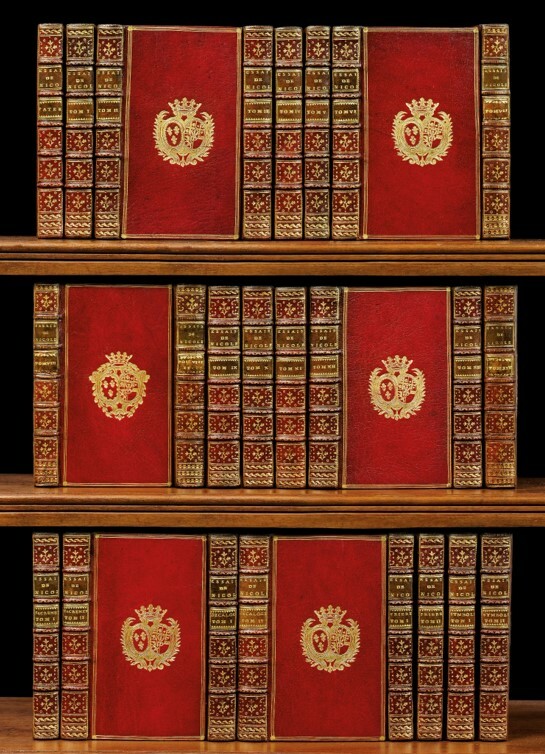
YTB-90Paris, Deprez, 1755, Paris [tomes IX à XII] et Liège, 1767 [tome XIV]. 14 tomes en 15 volumes. Paris, G. Desprez, 1761. 2 volumes – Instructions théologiques et morales sur l'oraison dominicale... Paris, G. Desprez, 1761. 1 volume. – Instructions théologiques et morales sur les sacremens. Paris, G. Desprez, 1767. 2 volumes. – Traité de la prière… Paris, G. Desprez, 1768. 2 volumes. – Instructions théologiques et morales sur le premier commandement du décalogue... Paris, G. Desprez, 1768. 2 volumes. Réunion de 24 tomes in-12, maroquin rouge, armes poussées au centre des plats, triple filet doré en encadrement, dos à nerfs orné de fers dorés, pièces de titre et de tomaison de maroquin olive, tranches dorées. Reliure de l'époque. 166 x 96 mm. EDITION COLLECTIVE DE CETTE ŒUVRE CELEBRE IMPRIMEE EN 24 VOLUMES ENTRE 1755 ET 1768. Elle est fort rare. Un 25è volume, non écrit par Nicole, n’est pas joint. La première édition des Essais de Morale parut en 9 volumes entre 1693 et 1700. La publication en fut continuée à titre posthume jusqu’en 1714. « Les « Essais » représentent une des sources les plus importantes de l’abondante littérature moraliste du XVIIè siècle. De plus, ils constituent un document précieux : finesse psychologique, acuité d’observation et profonde connaissance de l’âme que teinte toujours ce pessimisme propre aux disciples de La Grâce. Cette attitude pourtant n’engendre pas la négation, non plus que la suppression des meilleures activités humaines : exemple, l’analyse de l’intolérance dans la contradiction (« Sur la façon de conserver la paix parmi les hommes ») et les observations contenues dans l’essai « Sur la faiblesse humaine ». Nicole examine les problèmes moraux que traitent les orateurs sacrés ; il y apporte cette méthode scolastique de distinctions subtiles qui est le propre des aristotéliciens et son objectivité est plus grande encore que la leur. Il lui manque seulement cette ferveur de sentiments que l’espérance inspire aux grands prédicateurs, tels Bourdaloue et Fléchier. PRECIEUX EXEMPLAIRE RELIE EN MAROQUIN ROUGE AUX ARMES DE LA COMTESSE DE PROVENCE (1753-1810).
155547735Romae, (Colophon: Apud Ioannem Mariam de Viottis Parmensem, in aedibus Birgitttae), 1555. Folio. Bound to style in later (around 1950) full vellum with 4 raised bands to spine. Endpapers renewed. Old owners name on foot of titlepage. 42 unnumb. leaves + 815 pp. (p. 815 is the full page woodengraved printers device, verso blank). With 472 fine woodcuts in the text, the greatest part measuring 59x93 mm, a few half-page and some 1/3-page, among these the full-page map over Scandinavia (the smaller sized ""Carta Marina""). Only few scattered brownspots, probably lightly washed by the rebinding. From ab. p. 500 the upper margins have some faint dampspots, which on ab. 25 leaves has left some small loss of paper, and on a few places the loss of a letter in the caption title, but everywhere professionally repaired with paperpulp where needed.
Romae, (Colophon: Apud Ioannem Mariam de Viottis Parmensem, in aedibus Birgitttae), 1555. Folio. Bound to style in later (around 1950) full vellum with 4 raised bands to spine. Endpapers renewed. Old owners name on foot of titlepage. 42 unnumb. leaves + 815 pp. (p. 815 is the full page woodengraved printers device, verso blank). With 472 fine woodcuts in the text, the greatest part measuring 59x93 mm, a few half-page and some 1/3-page, among these the full-page map over Scandinavia (the smaller sized ""Carta Marina""). Only few scattered brownspots, probably lightly washed by the rebinding. From ab. p. 500 the upper margins have some faint dampspots, which on ab. 25 leaves has left some small loss of paper, and on a few places the loss of a letter in the caption title, but everywhere professionally repaired with paperpulp where needed.
Holmiae, Laurentius Salvius, 1758-59 + 1768. 8vo. Beautifully bound in two recent full mottled calf bindings, in pastiche, with five raised bands, and gilt title-labels to spine. Gilt borders to boards and blindstamped ornamental borders to inside of boards. Title-page of volume 1 with two neatly repaired tears, no loss. Very discreet stamp in blind to title-page (Boston Society Natural History). A few leaves lightly brownspotted, otherwise exceptionally clean (vol. 1 presumably cleaned). All in all a lovely copy. (4), 823, (1, -errata, being p. (824)) " (4) pp, pp. 825-1384 + 236, (20, -Index) pp. + 3 folded, engraved plates.
1792494721792 Paris, chez Dufart, Favre, 1792 - Edition Originale - In-16 -Reliure 1/2 chagrin rouge postérieure- dos lisse - Gravure en frontispice - XXXVI-107 pages - Bon exemplaire - Réf. 49472
159942935, , 1599-1790. Collection de 492 pièces brochées ou déreliées sous 4 chemises, pièces de titre manuscrites.
YTB-109Paris, 1780-1783. 26 volumes in-12, veau granité, filet à froid autour des plats, dos à nerfs orné, pièces de titre et de tomaison en maroquin, tranches jaspées. Reliure de l’époque. 168 x 97 mm. “Volumes VI to IX inclusive, relate to America. J. R. Bartlett’s Catalogue of J. C. Brown’s Library gives a copious list of the contents of each volume. This edition is generally preferred to the original, because it has the advantage of being systematically arranged. “Fontenelle said ‘that he had never read a work which answered better to its title’. Of the accuracy of those ‘Lettres’ and the works of Du Halde and Gaubit, the author has often heard the late Sir G. Staunton speak in the highest terms.” Charles Butler – (Sabin. 40698) « Of the great value of these “Lettres”, as illustrating the early history and settlement, not only of Canada, but of Central New York, Ohio, Michigan, Illinois, and Wisconsin, it is unnecessary to speak. These “Lettres” were collected by the Fathers Le Gobien, Du Halde, Ingoult, De Neuville, and Patouillet. For the missions among the American Indians, Charlevoix refers to volumes X, XI, XII, XIII, XVII, XX and XXIII ; see his notice in “Liste des Auteurs”. See also Shea’s “Charlevoix”, Sabin’s “American Bibliopolist”, and a very full history of the “Lettres Edifiantes” in Backer’s “Bibliothek de la Comp. de Jésus, octavo edition, vol. II., appendice, and in the folio edition, 1857-60, vol. III, cols. 1737-53, Backer gives in detail the contents of the edition of 1838 ; and in cols. 1753-1860, he gives the contents of the German version and extension of the “Lettres”” (Sabin 40697 à propos de l’édition 1702-1776). Cette seconde édition de 1780-1783 « est généralement préférée à l’ancienne, parce qu’elle a sur cette première l’avantage d’avoir été mise en ordre : 60 à 72 fr., et beaucoup moins quand les cartes et fig. n’y sont pas » (Brunet III-1028). Elle est ici complète des 54 estampes. Quatre volumes traitent exclusivement de l’Amérique (VI à IX) : Ils sont illustrés d’une carte dépliante de la Mer de Californie, d’une carte dépliante des côtes du Pérou et du Chili, d’une carte dépliante de la Terre de feu et du détroit de Magellan, d’une grande carte dépliante de l’Amazone, d’une grande carte dépliante du Paraguay, d’une autre du Cap Français, de la Mission des Moxes dans le Pérou etc… Six volumes décrivent l’Inde et onze volumes sont consacrés à la Chine. REMARQUABLE EXEMPLAIRE COMPLET CONSERVE DANS SES ELEGANTES RELIURES DE L’EPOQUE, DESTINE A LA FAMILLE D’HAUTEVILLE.
8vo (ca. 120 x 174 mm). 69 entries on 71 ff. Contemporary boards covered with green coloured paper. An important and highly interesting Italian friendship album assembled between July 1919 and June 1924, realized in Klecksography throughout, by folding in half the signatures while still damp to create symmetrical ink blots, similar to the one used for the Rorschach test. - Among the personalities here represented is Emperor Hirohito, who visited Italy accompanied by his uncle, Prince Kanin Kotohito, during a six-month state visit to Europe before assuming the regency of Japan in November 1921. The album also contains also a series of signatures collected in Fiume (Rijeka) in August 1920, at the height of the Italian Regency of Carnaro, including Gabriele D'Annunzio himself as well as Sante Ceccherini, Viganò, the commander of the defected destroyer Espero, and other legionaries and military heroes. The collection further comprises members of the Italian royal family, represented almost in its entirety, and the ministers of Mussolini's first government, including Costanzo Ciano, Armando Diaz and Giovanni Gentile. - Light marginal dampstaining. Spine and binding professionally restored. Full list of contributors is available upon request.
Oblong 8vo (ca 100 x 160 mm). 181 entries. With an armorial watercolour with motto, title with watercolour decoration, 5 drawings (3 of which full-page), and 1 engraved coat of arms, all on ca 300 ff. Contemporary calf binding with giltstamped cover borders, leading edges gilt, spine elaborately gilt, edges goffered and gilt. Gilstamped initials "MZCT" and date "1680" to upper cover (slightly rubbed). A wonderfully preserved Baroque friendship album giving a fairly precise record of its owner's youth and university years, containing numerous entries by eminent statesmen and scholars, especially at the University of Wittenberg in the 1680s. The first entry by "Ulricus Comtes a Kinsky et Tettau" (dated 12 April 1685; likely count Franz Ulrich Kinsky, 1634-99, Bohemian diplomat) is followed by those of several professors, including Abraham Calovius (1612-86), Johannes Andreas Quenstedt (1617-88), Johannes Deutschmann (1625-1706), Werner Theodor Martini (1626-85), Caspar Ziegler (1621-90), Conrad Samuel Schurzfleisch (1641-1708), Constantinus Ziegra (1617-91), Georg Caspar Kirchmaier (1635-1700), Michael Strauch (1635-1709), and Balthasar Stolberg (1640-84). There are also numerous scholars from Leipzig and Leiden, such as Georg Lehmann (1616-99), Johann Benedict Carpzov (1639-99), Valentin Alberti (1637-87), August Pfeiffer (1640-98), Adam Rechenberg (1642-1721), Gottfried Nicolaus Ittig (1645-1719), Jacob Trigland the younger (1652-1705), Frederik Dekkers (1644-1720), and Jacob Gronovius (1645-1716). Furthermore, there are entries by colleagues as well as by important men from Dresden (Christoph Bernhard, composer and music scholar), Magdeburg (Christian Scriver, hymnwriter), Hamburg (Joachim F. Gerstenbüttel, theologian), Jena (Joachim Andreas Danz, theologian and oriental scholar), Magdeburg (Balthasar Kindermann, theologian and poet), Erfurt (Christoph Klesch, theologian and poet), Kronstadt (Georg Wilhelm Löffelholz von Kolberg), Amsterdam, Bergfestung Königstein, and Buxtehude. - Martin Ziegler, a baker's son (born in Kronstadt [Brasov] in 1660, died in Brenndorf [Bod] in 1716), attended the Kronstadt grammar school before studying at Wittenberg from 1679 onwards. After nearly twelve years abroad he returned home, soon being named director of his old grammar school. He later became a priest at Tartlau but was suspended following a scandal. In 1713 he was elected priest of Brenndorf, but died a few years afterwards. He is remembered as a historian of his native city and of Transylvania (cf. Wurzbach). - Slight browning; occasional offsetting. Complete save for two removed leaves (likely empty, as they have left no trace of offsetting). Cf. Wurzbach LX, 62.
LCS-17654Précieux exemplaire de cette rare bible illustrée du début du XVIe siècle. Lyon, Jacques Sacon, expensis Antonii Koberger, 10 mai 1518. In-folio gothique à 2 colonnes de (14) ff. pour le titre frontispice, la table, l’épitre et le prologue ; CCCXVII ff., (1) f.bl., (25) ff., relié sans le dernier feuillet (CC10) qui est blanc. Manchettes doubles. Pte. brulure marge inf. f. CCLXXXV. Titre imprimé en rouge au-dessus d’un grand bois à pleine page représentant Saint Jean-Baptiste, 2 bois à pleine page représentant les six jours de la Création (face au premier feuillet de la Genèse) et l’Adoration des bergers (au début du Nouveau Testament), nombreuses vignettes, nombreuses initiales gravées. Veau granité, encadrement de filets à froid autour des plats, dos à nerfs et coins refaits, tranches mouchetées. Reliure du XVIIIe siècle. 340 x 247 mm.
Folio (220 x 334 mm). 9-462, (2) pp. With 149 text woodcuts by Leonardo Parassole after Antonio Tempesta. Early 20th century half vellum. The first Gospel printing in the interlinear Arabic and Latin version, prepared at the same time and printed by the same press as the first Arabic-only Gospel. These were the first works ever produced by Ferdinando de' Medici's "Medicea" press, founded by Pope Gregory XIII to spread the word of Christ in the Orient. Supervised by the able scholar Giovambattista Raimondi (1536-1614), its strength lay in oriental, especially Arabic, printing. After Raimondi's death, the press relocated to Florence. - The Arabic text is printed in Robert Granjon's famous large fount, generally considered the first satisfactory Arabic printing type; as all early printed editions of the Arabic Gospels, it is based on the Alexandrian Vulgate (cf. Darlow/M. 1636). The Latin version is by Leonardo Sionita. The work begins with page 9, without a title page or any preliminary matter at all: "the intended prefatory matter was apparently never published" (Darlow/M.); these first eight pages were not supplied until the 1619 re-issue. - Light browning as common; a light waterstain to the margin of the first leaves, but a good, fairly wide-margined copy. Provenance: handwritten ownership "C. R. Lies" (?), dated Rome, 1931, on upper pastedown; later bookplate of Guy Evans. Darlow/Moule 1637. Mortimer 64 (note). Streit XVI, p. 866, no. 5138. Ebert 7198. Graesse II, 531. Nagler XX, 326. Not in Adams.
Folio. 8 watercolours (365 x 300 mm) and 3 pen and ink drawings (375 x 235 mm) mounted in album. Half calf with gilted title "Chinese drawings" to spine. The watercolours show various stages of the process of producing rice and paper, including the irrigation of the fields by foot mill, grinding, separating the rice from the chaff, etc. The ink drawings are mounted on smaller paper leaves, numbered 9 - 11, each provided with a detailed description of the parts of the machines in English. They show sketches of a Refiner & Silver Furnace at Canton, a section of a Chinese furnace to refine the dross of tin or lead and a section of a Chinese lime Kiln and its wind fan. - Bookplate of the Society for Promoting Arts and Commerce (Royal Society of Arts) on front pastedown. Occasional spotting.