MAGINI Giovanni AntonioMareMagnum

692 467 résultats
In folio (mm. 425 x 288), p. pergamena moderna con legacci, 4 cc.nn. (compreso il bel frontespizio inc. in rame da Oliviero Gatti, e l’Indice), 24 pp.num. (di descrizione generale dell’Italia), con 61 carte geografiche dedicate agli stati italiani, pure inc. in rame e a doppia pag. [salvo 2 a una pag. (Territorio Cremasco - Il Cadorino) e 1 in ‘quarto’ (Elba isola)]. L'opera è dedicata da Fabio Magini a Ferdinando Gonzaga, Duca di Mantova e di Monferrato. Al “verso” della 4a c.nn. si ha la scritta: In Bologna, MDCXXX, presso Clemente Ferroni. La prima edizione si pubblicò nel 1620 a Bologna, per Sebastiano Bonomi; le edizioni successive recarono al frontespizio la data dell'edizione originale portando invece al verso della 4a carta la data reale. "Seconda edizione" di questo celebrato Atlante. Cfr. Almagià “L’Italia di G.A. Magini” (1922), p. V: “La più vasta e importante opera cartografica sull’Italia.. messa insieme dall’astronomo padovano Giovanni Antonio Magini (1555-1617)” e a p. 7: “Ristampa che porta il nome dello stampatore bolognese Clemente Ferroni.. Il Ferroni dovette poi, negli anni successivi, continuare a dar fuori l’opera, perchè se ne hanno molteplici esemplari ma senza più la data 1630 e accresciuti invece di un ritratto del Magini.. Il testo della descrizione dell’Italia è ovunque il medesimo, e quel che più importa, le carte sono sempre identiche e riprodotte sempre dagli stessi rami”. Cat. Piantanida,1350: "Atlante rinomato e pregiato al quale l'A. dedicò gran parte delle sue fatiche nell'ultimo ventennio della sua vita.. egli preparò carte in gran parte originali, delineate cioè in base a rilievi ufficiali fatti eseguire dai vari governi italiani e che egli riuscì a procurarsi per il benevolo interessamento dei Gonzaga. Il lavoro di raccolta, di coordinazione, di revisione e di disegno e incisione non fu molto semplice: l'A. dovette mantenere presso di sè abili incisori specializzati; alcune carte furono stampate e messe in circolazione isolatamente per saggio; nel 1608 fu pubblicata col titolo di "Italia Nuova" una carta generale, insigne lavoro di sintesi; ma la definitiva elaborazione dell'intero atlante tardò ancora e la stampa era appena avviata quando l'A. mori'. Esso pertanto fu pubblicato postumo dal figlio Fabio. Questo atlante esercitò un'immensa influenza: le sue tavole furono ricopiate, contraffatte, imitate moltissime volte in Italia e all'estero; entrarono, senza modificazioni, a far parte di atlanti stranieri notissimi, come quelli del Bleau; in Italia rimasero monumento insuperato per oltre un secolo”. Le seguenti 5 carte presentano: Ducato di Mantova (aloni e fiorit.) - Ducato di Ferrara (qualche alone solo margin.) - Dominio Fiorentino e Stato della Chiesa (restauri per picc. strappi margin.) - Regno di Napoli (con alone) e, sul margine di alc. carte, sbavature di inchiostro tipografico. A parte questi difetti, il ns. esemplare è ben conservato.
4to (185 x 262 mm). Persian manuscript on polished, unsophisticated wove paper. (12), 282, (6) leaves. 18 lines of black and occasional red Nast'aliq within double red rules. Numerous marginal glosses in black ink. Contemporary full leather binding with blind-stamped oriental decorations to both covers. A comprehensive Persian-language manual of therapeutics, discussing the diseases of the various organs. The physician Sultan Ali practiced medicine for 40 years in his native Khorasan as well as in Transoxiana (Central Asia). He began writing his medical treatise "Dastur al-‘ilaj" in the year 933 AH (1526 CE) at the request of Abu al-Muzaffar Mahmud-Shah Sultan, whom he had successfully treated in Samarqand. - "The treatise consists of two sections (maqalahs), the first divided into 25 chapters (babs) concerning diseases specific to particular parts of the body. The second section, in 8 babs, is on diseases affecting the entire body and not specific to a particular part. After completing the treatise, Khurasani subsequently added an introductory essay (muqaddimah) composed of 16 chapters (babs) concerned with the preservation of health and hygiene. The introductory essay has a dedication to Abu al-Ghazi Sultan Abu Sa'id Bahadur Khan who ruled Samarqand from 1530 to 1533" (National Library of Medicine, online). - Leaves 253-254 bound in reverse order and upside-down after fol. 247; fol. 248 bound upside down after fol. 252, but complete. Some waterstaining to lower corner, entirely confined to margins. A few old stamps, some obliterated with correction fluid or felt-tip pen. The colophon is dated the 2nd of Shawwal 1217 AH, stating the copyist as Mirza Abdullah Tablah (reading of the last name uncertain).
12 x 7.5 cm; containing a notebook, 10 ff. (blank) and two satin-lined pockets. Binding in straight-grain red morocco, the covers edged with an applied gold frame, the upper cover with a mounted plaque reading "Souvenir", the lower cover similarly decorated but reading "D'Amitie", fastened at the foredge with a gold pencil. The covers and doublures bear a total of four mounted miniatures framed in gold under glass. These are (upper cover) Queen Maria Theresa of Habsburg-Lorena-Este (wife of Victor Emmanuel I of Sardinia), the miniature signed by Angelo Vacca; (front doublure) Maria Theresa of Savoy, Duchess of Lucca; (rear doublure) Maria Anna of Savoy, later Empress of Austria (as wife to Ferdinand I); the young Maria Christina of Savoy (rear cover, also signed by Vacca). - Maria Christina appears to be five or six years old in her portrait, which places the production of this charming keepsake at about 1817-1818. The artist was presumably the same for all four, Angelo Vacca (the younger) of Turin. He was one of the principal painters for the court of King Victor, which helps place the production of this charming piece squarely in the royal milieu. Stylistically, this is a precursor of the popular twentieth century Cosway bindings. A few earlier French examples exist, but as a class 18th and early 19th century bindings with original miniature paintings are rare, and we have not seen any with attached gold plaques and decoration such as the present example. - Light wear, but overall in very attractive condition. An extraordinary survival, presumably a gift from the Italian royal family.
- Eugène & Victor Penaud frères, Paris 1849-1850, 13,7x22,5cm, 12 volumes reliés. - Eugène & Victor Penaud frères, Paris 1849-1850, 13,7x22,5cm, 12 volumes, bound. Rare and sought after first edition, first printing. Half blond calf binding, spines gilt and blind tooled, black Russian morocco title and volume pieces, marbled boards, mould-made paste downs and endpapers. This copy is complete with the "avertissement" to the reader and the list of subscribers, removed from most copies after transferring the rights to publisher Dion-Lambert. Some foxing throughout the entire set, sometimes more pronounced to a few leaves; a few discrete restorations on the bindings, skilfully restored margins on pages 335-336 (vol. 5). 32 illustrations by Staal and Moraine (Clouzot mentions only 30) exceptionally added to this copy. An autograph letter by Chateaubriand to the Duchess Amédée de Duras mounted at the head of the first volume. 7 lines on one leaf, trace of wax stamp and autograph address on the back. "I wanted to go yesterday evening to your house. Mrs. de Ch.[ateaubriand] was ill and had to stay. Do we know anything about the unfortunate young man? I beg you for a word. I am leaving in the morning at eleven o'clock for the Valley with the Giant (?); I would like it to be with you. Thursday 9 a.m." "J'ai voulu aller hier au soir chez vous. Mme de Ch. s'est touvée mal il a fallu rester. Sait-on quelque chose du malheureux jeune homme ? Un mot je vous en supplie. Je pars le matin à onze heures pour la Vallée avec le Géant (?) ; je voudrais bien que ce fut avec vous. Jeudi 9 heures du matin" Chateaubriand writes to Claire de Duras, one of the most important women in his life. Only daughter of the Girondin Count of Kersaint, she was a cousin by marriage of Chateaubriand's mistress Natalie de Noailles. Confidante and soon rival of Madame Récamier, Chateaubriand's great love, Claire de Duras was the most faithful of his admirers and fell under his spell from their first meeting at the Château de Méréville in April 1808. The physically unprepossessing Duchess was quickly spurned by the writer who was then still under Madame de Noailles' influence. Nevertheless, she concluded a friendly agreement with him and was an attentive sister for years, holding the privilege of being first reader of many of his works, notably Les Aventures du Dernier Abencérage [The Last of the Abencerrajes], inspired by his love affair with the Countess of Noailles. For her part, the Duchess managed to cope with this unrequited love despite her consuming passion for Chateaubriand, who was the subject of her best-selling novel Ourika, about the tragic and impossible love of a young African woman for a Frenchman. Rare first printing copy with an autograph letter by the author, and a complete set of engravings of one of the most important texts of 19th-century French literature, set in elegant contemporary bindings. [FRENCH VERSION FOLLOWS] Edition originale rare et recherchée, exemplaire de première émission. Reliures en demi veau blond, dos à quatre fins nerfs sertis de pointillés dorés et ornés de doubles caissons estampés à froid, frises dorées en queues des dos, pièces de titre de maroquin de Russie noir, pièces de tomaison du même maroquin, plats de papier marbré, contreplats et gardes de papier à la cuve, reliures de l'époque. Notre exemplaire est bien complet de la liste des souscripteurs et de l'avertissement qui furent supprimés lorsque le solde de cette édition passa aux mains d'un autre éditeur : Dion-Lambert. Quelques rousseurs sur l'ensemble des volumes, parfois plus prononcées sur certains feuillets ; quelques très discrètes restaurations sur les reliures, pages 335-336 du cinquième volume marginalement et habilement restaurées. Notre exemplaire est enrichi des 32 figures sur acier par Staal et de Moraine, Clouzot n'en annonce que 30, qu'exceptionnellement présentes dans cette édition. Il a aussi été monté sur onglet en tête du premier lume une let
- Michel Lévy frères, Paris 1873, 15,5x24cm, broché sous chemise et étui. - Édition originale, mention de deuxième édition. Notre exemplaire est présenté sous étui et chemise avec dos de toile verte et plats de papier marbré, ex-libris H. Bradley Martin encollé en pied du verso du premier plat de la chemise. Nous joignons la couverture du catalogue de la vente de la bibliothèque de George et Maurice Sand en 1890 sur lequel a été encollée la fiche descriptive de notre exemplaire avec son prix d'adjudication au crayon de papier. Exceptionnel envoi autographe signé de Victor Hugo à George Sand. «?Mais que pensaient-ils l'un de l'autre, ces deux personnalités marquantes de la vie littéraire du 19è siècle ?? Parce qu'ils ne se sont jamais rencontrés ces deux-là, pourtant ils étaient parfaitement contemporains?: Victor Hugo (1802-1885), George Sand (1804-1876). Certes il y eu les aléas de la vie?: George Sand ne publie réellement qu'en 1832, à un moment où Victor Hugo est déjà au fait de sa gloire ; et puis il y eut l'exil de Victor Hugo de 1851 à 1870, mais cela n'explique pas tout?! Au début, ils ne font pas vraiment parti de la même coterie?: Victor Hugo, Pair de France, soutien de Louis-Philippe d'un côté, George Sand socialiste de l'autre. Ils ne s'apprécient pas vraiment même si George Sand porte une certaine admiration agacée à Victor Hugo, traité de grandiloquent?: «?le plus bavard des poètes sublimes?» tandis que Hugo lui, trouve carrément que «?Sand ne sait pas écrire?»?! Puis, avec le coup d'état de Napoléon III, Victor Hugo évolue politiquement ; rapidement il déborde George Sand sur sa gauche, s'exile alors que George Sand s'accommode de l'exil intérieur. Leur relation ne se réchauffe que très, très faiblement?: «?George Sand a du talent, c'est tout?». En exil Victor Hugo publie Les Châtiments, uvre très critique qui est évidemment interdite en France. George Sand aimerait bien que Victor Hugo soit moins intransigeant dans ses écrits de façon à être publié. La publication des Contemplations en 1856, nettement moins polémique, est saluée par George Sand et marque une nouvelle phase de leurs relations. En fait, leur premier contact épistolaire ne concerne pas la vie littéraire. Nini la petite fille de George Sand meurt en 1855, Victor Hugo toujours très marqué par le décès de sa fille Léopoldine compatit ; la perte d'un être cher les rapproche. Les voici amis, George Sand devient un «?génie?», elle sera souvent invitée à Guernesey ... sans suite, leur relation ne sera jamais familière. Victor Hugo lui apporte son soutien lors de la parution des Beaux Messieurs de Bois Doré (1858), mais George Sand s'énerve quand il refuse l'amnistie de 1859 alors que de son côté elle cherche à adoucir la situation des proscrits. Lors de la publication des Misérables (1862) Victor Hugo cherche le soutien de George Sand mais ce soutien lui fera défaut. Victor Hugo en est attristé, George Sand affirmera préférer la poésie de Victor Hugo à son uvre en prose. Au retour d'exil, avec la Commune, voici une nouvelle incompréhension ; Victor Hugo soutient, George Sand est horrifiée?: légaliste et choquée par la violence, elle condamne avec des termes extrêmement durs cette Commune de Paris. Néanmoins, à partir de là, ces deux-là se soutiennent et se défendent dès que l'un ou l'autre est attaqué. En 1876, c'est Victor Hugo qui prononcera le célèbre éloge funèbre de George Sand?: «?Je pleure une morte, je salue une immortelle ...?» Les relations de George Sand et de Victor Hugo ont donc beaucoup évolué au cours de leur vie. C'est sans doute le reflet de leurs évolutions personnelles mais peut-être que leur entourage, les idées politiques ou l'opinion que l'autre avait de sa propre uvre interféraient aussi avec la critique littéraire ; même nos grandes personnalités sont sous influence?! «?Victor Hugo et George Sand, et s'ils s'étaient rencontrés???» Voilà une uvre de théâtre fictionnelle que nous propose Danièle Gasiglia. Mais peut-être que, com
183911053Coblenz: Verlag Von K. Baedeker. 1839. First Edition. Hardcover. Very Good-. Yellow boards a bit browned and worn. Spine ends and corners lightly chipped. Pages clean and tight with occasional browned pages not affecting contents ; In 1839 with the publication of Holland Belgium and Rheinreise 3rd Edition the Baedeker series was launched. An extremely rare book in the original Biedermeier boards including a list of Baedeker's books in front and with a steel engraved fold out map in the back ; 16mo 6" - 7" tall; 212 pages . Verlag Von K. Baedeker hardcover
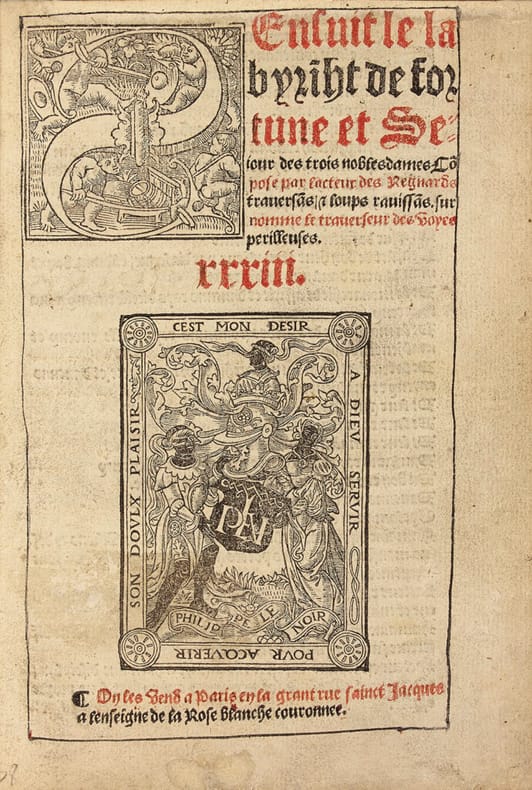
LCS-18409Précieux exemplaire cité par Tchemerzine, ayant appartenu au baron Seillière puis à Marcel Bénard, et ayant figuré à l’exposition Dix siècles de Livres français en 1949. Paris, Philippe le Noir, s.d. [c. 1526]. Petit in-4 gothique de (4) ff. prél. titre compris, (145) ff., 1 mm. de la marge bl. sup.du titre a été anciennement renforcé sans manque. Maroquin rouge, somptueux décor à la fanfare sur les plats, armes frappées or au centre, dos à nerfs richement orné, double filet or sur les coupes, roulette dorée intérieure, tranches dorées sur marbrures. Reliure signée Belz-Niedrée. 187 x 132 mm.
LCS-186452
Magnifica e celebrata opera, in folio, sulla storia di 150 grandi famiglie italiane, iniziata da Pompeo Litta nel 1819; interrotta con la morte dell'illustre scrittore nel 1852, fu ripresa tre anni dopo e continuata, sempre col suo nome da coloro che erano stati suoi collaboratori, fino al 1883. Questo lungo e poderoso lavoro, uscito a fascicoli, durò esattamente 64 anni, ma le 150 "Famiglie" descritte conservarono sino in ultimo un tutto omogeneo, per cui quest'opera è apprezzatissima dai bibliofili. Il ns. esemplare, con "superba coloritura a mano d'epoca", è cosi' composto: - dalla dispensa n. 1 alla n. 136, fascicoli sciolti conservati nelle brossure originali, - 1 volume, legatura in mz. pelle, contenente 18 (su 19) dispense della famiglia “Savoia”. Manca l’ultima dispensa. Cfr. Ferrante Boschetti "I cataloghi dell'opera di Pompeo Litta "Famiglie celebri italiane"" - Brunet,III,1099: "Un des livres les plus remarquables qui aient paru dans ces derniers temps en Italie". .
LCS-724Première édition parisienne extrêmement rare de ce livre protestant, illustrée de 97 vignettes sur bois attribuées à Jean Cousin, conservée dans sa séduisante reliure parisienne de l’époque. Paris, Galliot du Pré, 1544. [Relié avec]: -IGNACE D'ANTIOCHE (Saint). Sancti Martyris Ignatii, Antiochiae Archiepiscopi, Epistolae. Paris, Guillaume Morel, 1558. Soit 2 ouvrages en 1 volume in-8 de [4]ff., 160 ff. ; [2] ff.bl., [4], 80 pp.Relié en veau havane de l’époque, double jeu de filets d’encadrement à froid sur les plats avec fleurons dorés au centre et aux angles, dos à nerfs orné de filets à froid et de fleurettes dorées. Quelques taches sur la reliure. Reliure du type des reliures réalisées pour Marcus Fugger. 155 x 101 mm.
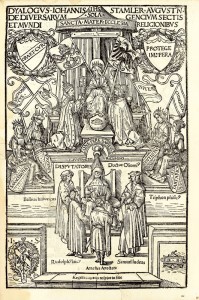
LCS-618L’édition originale du premier livre traitant des religions et des croyances des divers peuples du monde, avec un passage concernant la découverte de l’Amérique par Christophe Colomb. [i.e. 1508]. Augsburg, Oeglin et Nadler, 22 mai 1508.In-folio de (1) f.bl., (3) ff. avec le frontispice et le titre, ff. numérotés 2 à 32, (2) ff. d’index, (1) f.bl. Pâle mouillure en marge de 5 ff. Déchirure sans manque au frontispice. Cachet d’appartenance dans la marge du frontispice. Relié en plein vélin souple du XVIe siècle, quelques taches au plat inférieur, titre manuscrit au dos.308 x 212 mm.
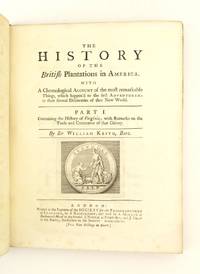
1738ST16322London: Printed for the Society for the Encouragement of Learning by S. Richardson 1738. FIRST EDITION. 240 x 186 mm. 9 1/2 x 7 1/4". 4 p.l. 187 1 pp. <br/> Contemporary sprinkled calf raised bands red morocco label. With engraved device of the Society on title page and final page engraved tailpiece and TWO FOLDING MAPS. Church 930; Howes K-36; Sabin 37240; ESTC T115083. Front joint cracked but the cover still firmly attached thin half-inch chip to spine at tail of front joint other minor signs of wear to the leather but the original unsophisticated binding sound and pleasing. Light scattered foxing mostly confined to margins one leaf with a tiny hole affecting a couple of words other trivial imperfections but A FINE COPY INTERNALLY the paper fresh and clean the maps remarkably free from any tears.<br/> <br/> Tracing the history of Virginia from the earliest English settlements through the first quarter of the 18th century with valuable notes on the colony's economy and trade this is a scarce and valuable work by a former colonial official with direct knowledge of the region. The history draws on earlier accounts most notably the 1705 work of Jamestown-born historian Robert Beverley ca. 1667-1722 but the more contemporary observations including those related to agriculture and economy come from the firsthand experiences of author William Keith 1680-1749 who went to Virginia in 1714 upon his appointment as surveyor-general of customs for the southern colonies in North America. According to ANB he toured Virginia the Carolinas Pennsylvania and Jamaica over the next two years charming all he met. In 1717 he became governor of Pennsylvania and ANB notes "for five years from 1717 to 1722 Keith was the most popular governor since the founding of the colony." During his service in the American colonies Keith wrote reports to the British government that ANB says "helped shape royal policy well into the 1760s." Knowledge gleaned in producing these reports is shared in the present work which features two fine maps: "A New and Correct Map of America" measuring 560 x 475 mm. showing North and South America with California as an island with inset views of Port Royal Boston Georgia North Pole and a Newfoundland cod fishery as well as "A New Map of Virginia" measuring 340 x 235 mm. by Thomas Fairfax dated 1738 showing the Tidewater region of the Mid-Atlantic states centering on Virginia with Maryland and New Jersey to the north and North Carolina to the south. Thomas Jefferson was familiar with this work remarking in "Notes on Virginia" that it is "agreeable enough in style and passes over events of little importance." Keith intended this to be the first in a series on the British colonies in North America--thus the "End of Vol. I" notation on the final page--but the project was abandoned for lack of funds. This work is rare in the marketplace: just two copies complete with maps one of these in a modern binding have appeared at auction since 1991. [Printed for] the Society for the Encouragement of Learning by S. Richardson unknown
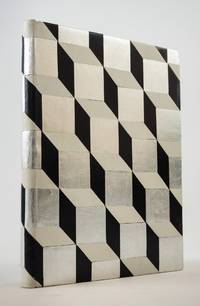
1912ST20811Paris: Eugène Figuière et Cie 1912. FIRST EDITION. PRESENTATION COPY. 240 x 185 mm. 9 1/2 x 7 1/2". 44 pp. 2 leaves. <br/> STRIKING 3-D OPTICAL ILLUSION BINDING BY A. CONTRERAS stamp-signed on front turn-in WITH AN ALL-OVER DESIGN OF CUBES rendered in black white and silver morocco smooth spine. In older probably original brown woodgrain drop-back box backed with black buckram. With 26 black & white photographic reproductions of works by Cézanne Picasso Derain Braque Metzinger Laurencin Gleizes Léger Duchamp Picabia and original owner Juan Gris printed on glossy white paper. WITH A HALF TITLE INSCRIPTION in French OF GREAT IMPORTANCE FROM ONE OF THE CO-AUTHORS translated as: "To the painter Juan Gris with all my best wishes Metzinger." Occasional underlinings in blue pencil. Text leaves with overall light browning and occasional foxing due to paper stock lower corner of half title restored and fore edge with minor chipping otherwise a fine copy the plates clean and bright and the binding unworn.<br/> <br/> Penned by two Cubist artists this is a highly resonant association copy of the first major treatise on the Cubism movement presented to noted Cubist painter Juan Gris and later put into an illusionistic binding composed of variably colored cubes that seem to jump off the surface. Albert Gleizes 1881-1953 and Jean Metzinger 1883-1956 had painted in both Post-Impressionist and Fauvist styles before their interest in exploring form and structure as well as light and color led them to the style that would become Cubism. Influenced by Cézanne's "brick-by-brick" technique and Poincaré's writings on space and time the new movement sought to examine objects from a mobile perspective and to depict multiple views of a subject in one painting. In "On Cubism" they explain: "An object has not one absolute form; it has many. It has as many as there are planes in the region of perception." The work features black & white illustrations of Cubist paintings by the authors and by fellow pioneers Picasso Braque Derain and Juan Gris to whom this copy was presented by Metzinger. Born in Madrid as José Victoriano González-Pérez 1887-1927 Gris studied engineering before moving to Paris to pursue art. First working as an illustrator for periodicals he was inspired by Metzinger to begin painting seriously. His training in engineering helped him appreciate the importance of mathematics in painting a realization triggered according to art historian John Richardson by Metzinger's painting "Le Goûter Tea Time" exhibited at the Salon d'Automne in 1911. Our volume was later in the collection of and probably bound for Chilean architect and collector Carlos Alberto Cruz 1939-2022. We have been unable to find more information on our binder "A. Contreras" but it seems possible that he was also Chilean as the Valparaiso-based Cruz owned a number of bindings signed with that name. Eugène Figuière et Cie unknown
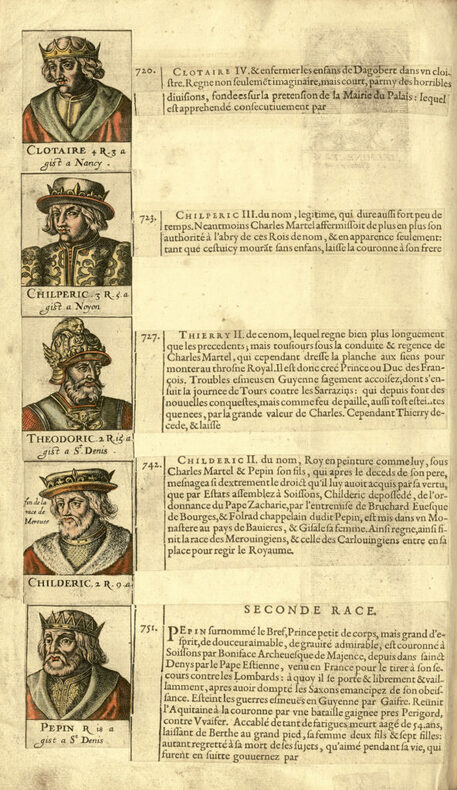
LCS-18334Précieux recueil de 1271 portraits parfois appelé « chronologie collée » en raison de sa composition toute particulière et variant pour chaque exemplaire. Paris, chez Jean Le Clerc, 1612-1615. In-folio de (2) ff. dont 1 titre frontispice manuscrit, 1271 portraits collés répartis en 14 suites sur 250 pages non numérotées. Les portraits sont numérotés mais sont dans un ordre disparate dans les premières suites de l’ouvrage. Relié avec une suite de 19 planches de portraits en noir et blanc. Quelques restaurations de papier. Basane rouge façon maroquin du XIXe siècle, décor à la Duseuil sur les plats, dos à nerfs orné de fleurons dorés, des restaurations. 343 x 209 mm.
LCS-18570De la bibliothèque de Louis de Monteynard, secrétaire d’Etat à la guerre de 1771 à 1774. Amsterdam, chez Marc-Michel Rey, 1769. In-8 de xvi pp., 147 pp., (9), 3 planches hors-texte dont 1 dépliante, 3 cartes dépliantes. Plein veau marbré, filet à froid encadrant les plats, dos à nerfs orné, pièce de titre rouge, tranches rouges. Reliure de l'époque. 200 x 120 mm.
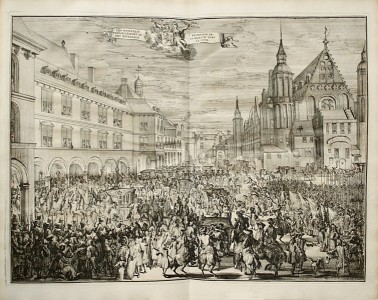
LCS-17088L’arrivée de Sa Majesté Guillaume III d’Angleterre à La Haye en 1691. L’un des plus beaux livres de fêtes baroques hollandais orné de 16 somptueuses gravures en premier tirage. La Haye, Arnout Leers, 1692. In-folio de 1 frontispice, 1 titre, (4) ff., 1 portrait, 108 pp., 3 planches à pleine page et 11 planches sur double-page. Relié en demi-vélin de l’époque, plats de cartonnage, dos à nerfs, pièce de titre de maroquin bordeaux, date frappée or en pied du dos. Reliure de l’époque. 375 x 245 mm.
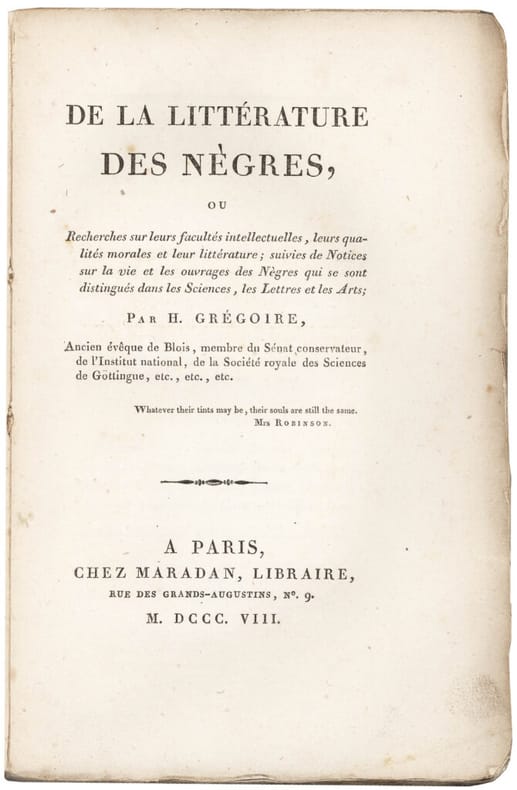
LCS-17646Exemplaire à toutes marges, très pur, conservé dans sa brochure bleue d’éditeur, condition d’exception. Paris, chez Maradan (de l’Imprimerie des Sourd-muets), 1808. In-8 de xvi pp., 287, (1) p. d’errata. Conservé broché tel que paru sous couverture de papier bleu, étiquette imprimée sur le dos, non coupé à l’exception des premier et dernier cahiers, non rogné. Brochure de l’époque, condition des moins communes. 213 x 140 mm.
LCS-1864025
1930112h6061Durham NC U.S.A.: Duke University Press. Very Good in Fair dust jacket. 1930. First Edition. Hardcover. "The notion of identifiable 'lost tribes' involves certain presuppositions concerning Hebrew history and masses of supposed local evidence in many parts of the world. These presuppositions and the assumed evidence require a candid and searching anthropological historical examination. This book has no other purpose or method. But the examination brings to light a great body of the real facts of Hebrew history." - Preface. "The main thrust of Godbey's work is to disprove the assumption that the northern tribes taken into captivity by Sargon II in 722/1 B. C. were lost in the welter of international movements following that event." - J. M. Myers. "Godbey is fascinating. He is well worth reading - for his consummate passion for detail for his marvelously intricate tapestry of scholarship in an area where so much is tricky territory. He tells us a great deal about the horizontal development of Judaism." - Dr. Morris Epstein. "Fascinatingly erudite." - Michael Pollack in "Mandarins Jews and Missionaries. "Allen Howard Godbey 1864-1948 of Missouri was a Methodist minister Methodist historian and teacher writer and scholar in the field of the Old Testament Hebrew history archeology and Semitics. He was a professor at Duke University 1926-1932." - SNAC. pp. Xx 2 802 42 black and white plates. Extensive bibliography. Index of scripture passages. Topical index. Footnotes. Errata slip affixed at xi. All three foldout maps present and in excellent condition. Bright gilt lettering upon backstrip. Akkadian bust embossed upon front board. Fore- and bottom edges untrimmed. Binding tight. Clean and unmarked with light wear to publisher's black cloth. Two-inch clear archival-tape repair to fore-edge of page 429. Above-average wear to dust jacket now in archival protection. A quality copy of this extraordinary work.; 8vo - over 7¾" - 9¾" tall; Lost Tribes Jews Jewish HIstory Revisionism . Duke University Press hardcover
2011347H4160Singapore: Straits Times Press. Very Good in Very Good dust jacket. 2011. Fifth Impression. Hardcover. 9814266728 . Signed and dated 2012 by Lee Kuan Yew without inscription upon title page. "Lee Kuan Yew's name is nearly synonymous with modern Singapore. Prime Minister for 31 years from 1959 to 1990 he was in the public eye for over 60 years as a revolutionary leader who steered Singapore to independence as a determined Prime Minister who transformed the country and finally as an elder statesman. This book picks up from his memoirs of 2000 as Lee engages a group of journalists over issues that a younger more critical population has raised." - dust jacket. Clean bright and unmarked with very light wear. Unopened DVD inside back board. A wonderful memento of this extraordinary statesman.; 8vo - over 7¾" - 9¾" tall; Lee Kuan Yew - Interviews Lee Kuan Yew - Political And Social Views Prime Ministers - Singapore - Interviews Singapore - Politics and Government - 21st Century Singapore - Social Conditions - 21st century Signed; Signed by Authors . Straits Times Press hardcover
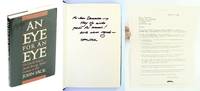
1993214h1742USA: Basic Books. Very Good in Very Good dust jacket. 1993. First Edition. Hardcover. 0465042147 . Signed and inscribed upon front free endpaper by John Sack to producer Jean Doumanian. "Set in Poland in the last days of World War II and the period immediately thereafter when the USSR was ethnically cleansing the region of Germans this book tells of the internment camps set up by the Soviets in Poland sometimes re-using camps captured from the Germans in which they placed captured Germans and over which they set as administrators several of the Jews who had been interned in the Nazi camps. James Bacque sparked controversy in 1989 with his book 'Other Losses' about Germans who died in internment camps under General Eisenhower in roughly the same period. Sack's book was for reasons that should be plain even more controversial. Sack it should be noted was of Jewish ethnicity." - Gerry T. Neal. "Nothing has ever been written about this. To unearth the story the author spent seven years doing research and conducting interviews in Poland Germany Israel and the United States. Sixty-five pages of notes and sources testify to the accuracy of the reporting." - dust jacket. An unattributed online synopsis states "Not for sixty years has a book been so brutally and in the end unsuccessfully suppressed as 'An Eye for an Eye'. One major newspaper one major magazine and three major publishers paid $40000 for it but were scared off. One printed 6000 books then pulped them. Two dozen publishers read and praised it but all rejected it. Once published it became a best-seller in Europe but was so shunned in America that it became in the words of New York Magazine 'The Book They Dare Not Review'". "John Sack 1930-2004 was an American literary journalist and war correspondent." - Wikipedia. Laid-in is a signed letter on Sack's letterhead to Doumanian in which he explains "The story is true. It has been corroborated by 60 Minutes and The New York Times. From this day on let no one say 'They don't write parts for women'". He goes on to itemize the actions of "real-life heroine Lola" which are recounted in this book. Perhaps Doumanian who produced several Woody Allen films considered making a movie based on this book. In a 1999 talk available online Sack describes visiting Yad Vashem in 1989 to conduct research saying "As you know Yad Vashem has fifty million documents about the Holocaust. I asked what they had about Jews in the Office of State Security. They said 'Nothing'. I said 'It had Jewish Commandants and Jewish Directors.' The Chairman of Yad Vashem replied 'It sounds rather imaginary' and the Director of Archives said to me 'Impossible.'" p. xii 2 252. Clean bright tight and unmarked with light wear. Dust jacket now preserved in archival-grade Brodart. A very special example.; 8vo; Signed by Author . Basic Books hardcover
12mo. XXX, 161, 113 pp. Contemporary half calf with title to giltstamped spine and marbled boards. Endpapers and edges marbled. First edition of "Sind-Bâd" and the first independent printing of any part of the Arabian Nights in Arabic. Although traditionally included in the corpus of the Thousand and One Nights (Alf Layla wa Layla) as told by Scheherazade, it is thought that the series of stories that make up the voyages of Sindbad have older and separate origins, incorporating elements of Homer, Panchatantra, other Persian, Arab and Indian literary material as well as historical material relating to trade and navigation. Set traditionally during the reign of Haroun al-Rashid, Sindbad undertakes seven voyages from Basra, each leading one to the other, encounters fabulous creatures, faces exhaustive ordeals and amasses fabulous wealth. The publisher of the present edition, Louis-Mathieu Langlès (1763-1824), an important figure in the study of Middle-Eastern and Oriental languages and literature, was a correspondent of William Jones in Calcutta, co-founder of the École des Langues Orientales Vivantes in Paris, and the keeper of the Indian manuscript department in the Bibliothèque Nationale in Paris. "Un ouvrage classique, et d'une certaine importance sous le point de vue scientifique, historique ou littéraire" (preface). Chauvin VII, p. 2. Brunet III, 820. OCLC 4433261.
Folio (387 x 242 mm). 49 hand-coloured illustrations on 6 plates and hand-coloured folding lithographed backdrop (desert scene; ca. 580 x 224 mm). Original blue wrappers with lithographed cover label. Charming Mignon Theatre of the kind popularized by the Viennese publisher Trentsensky around the mid-19th century and distributed throughout England by their London agent Myers, & Co. on the corner of Oxford and Berners Street. The desert landscape backdrop is to be populated by the pilgrims, camels, resting horses, etc., with plants, a large tent, a cooking fire, and many other details, all to be cut out from the present set of plates. Issued as "Exercises in Colouring", this set was clearly coloured by a trained contemporary artist rather than a dilettante. - The front cover is stained, spine splitting, but the plates are clean and well-preserved. Rarely encountered complete, well-coloured, and in the original state. Another example, prominently featured in the 2012 Hajj exhibition at the British Museum, was cut and mounted. Hajj. Journey to the heart of Islam. London, British Museum 2012, p. 125 (fig. 125).
8vo. (16), 220, (12) pp. With full-page woodcut illustration at the end of the preliminaries. Contemporary blindstamped calf over wooden boards with two clasps. Exceptionally rare Arabic Psalter, the first of several reprintings of 'Abd Allah ibn al-Fadl al-Antaki's translation which had first appeared in Aleppo in 1706. Translated from the Greek Septuaginta Version, with the kathismata interspersed between the Psalms and with the Canticles following them. Edited, with a Paschalion for the years 1709-39 at the end, by Philipp Ghailán. - Only two copies known in institutional collections; collation agrees with that of the British Library copy (Biblioteca Marciana collation omits 116 pp. of preliminary matter). Binding professionally repaired; noticeable worming, mainly confined to margins. Some browning throughout; slight waterstaining near end. A few early 19th century inked notes in Hebrew. Provenance: 18th-century bookplate "Ex bibliotecha Johannis Marchioni Plebani Veneti" on final endpaper. Darlow/Moule I, 1653 (note). BL shelfmark: Asia, Pacific & Africa 14501.a.31. Marciana shelfmark: 133-C-176. OCLC 945484585 (digital reproduction only).
Latin ms. on vellum. 378 x 210 mm. Papered seal. Signed by Charles Soillot (1434-93?), secretary to Charles the Bold. Letter of "sauf conduit" (safe conduct) for the merchant and diplomat Anselm Adornes (1424-83) for a Burgundian embassy to Persia: "[...] Universis principibus baronibus militibus et plebeis quibus hec nostre littere fuerint ostense, benivolenciam nostram et salutem universitatem vestram et vestrum quemlibet. Rogamus quatenus dilectum et fidelem consiliarium, oratorem et cambellanum nostrum dominum Anselmum Adornes militem, dominum de Corthuy, harum latorem, quem ad nonnullas orientales partes impresentiarum mittimus cum penes vos venerit seu per terras et dominia vestra iter fecerit benevole recipere, amoreque nostri et contemplatione favorabiliter tractare et tractari mandare velitis eumdem unacum viginti personis et totidem equis seu aliis equitaturis aut inferius, permittendo transire sine pedagio, gabella, fundonavis, datia aut alia exactione quacunque [...]". - From March to June 1474, Adornes, Lord of Cortachy, led an embassy in the name of Charles the Bold to the Shah of Persia Uzun Hassan (1423-78), whom the Duke of Burgundy sought to persuade to engage in a new military expedition against the Ottomans, following a campaign in the previous year which had ended in Uzun Hassan's defeat by Mehmed II. Adornes was chosen for this mission due to his knowledge of Muslim territories; he had made a pilgrimage to the Holy Sepulchre in Jerusalem in 1470/71 (the account of his journey written by his son Jan is still preserved). - One of the most illustrious members of the Adornes-Adorno family, of Genoese origin, and a wealthy patron, Anselm was closely involved in international trade (mainly in alum and cloth from Tournai and England). He maintained commercial relations with Genoa as well as Spain and played an important role in Burgundian diplomacy. - Some wrinkling as common; traces of folds. Well preserved. Messager des sciences historiques ou Archives des arts et de la bibliographie de Belgique (1881), pp. 41-42. Cf. Nationaal biografisch woordenboek XII, 2/25. C. van Hoorebeeck, Livres et lectures des fonctionnaires bourguignons (Turnhout, 2014), passim.