DE GAYFFIER, Eugene (fl 19th century)Biblio.com

48 788 résultats
187341043Paris: Rothschild 1873. Large folio. 17 1/8 x 12 5/8 inches. Two volumes comprising 200 collotypes printed by G. Arosa et Cie. each approx. 9¼ x 7¼ in. or the reverse printed titles with publishers' and printers' credits on mounts with letterpress titles and text. Contemporary half black morocco<br/> <br/> One of the first books illustrated with collotypes rather than photolithography or photogravure.<br/> <br/> The present work stands out as one of the few publications that unequivocally attribute the collotype plates to the exceptionally rare Motay and Maréchal process. Cyprien Tessié du Motay and Charles-Raphaël Maréchal pioneers in the field are widely recognized as the trailblazers behind the practical implementation of the collotype process in 1865. By adopting what was then a new process De Gayffier's project holds a unique position as one of the early examples of works featuring illustrations created through the innovative collotype process setting it apart from the prevalent techniques of photolithography and photogravure of the time. The Motay and Maréchal process played a pivotal role in advancing the art of photography. The process involved the meticulous transfer of an image onto a sensitized lithographic stone using a multi-step process that allowed for the creation of detailed and high-quality prints. Collotype's distinct characteristic was its exceptional ability to reproduce fine tonal gradations and intricate details making it particularly well-suited for capturing the nuances of forest foliage as is evident in the beautifully detailed plates in this work. De Gayffier's project is also notable for its pioneering approach to documenting true forest foliage a departure from the more conventional choice at the time of documenting large parks. This endeavor represented a significant shift in the subject matter of early photography focusing on the richness of natural environments and their botanical diversity. Léon de Gayffier who was appointed by the Minister of Agriculture for the specific purpose of undertaking "special photographic operations" in 1867. Complete copy of this rare work. The Musée français de la Photographie has an album of only 54 plates.<br/> <br/> Voignier Répertoire des Photographes de France au Dix-Neuvième Siècle p.113; Eder Josef M and Edward Epstean translator History of Photography by Josef Maria Eder. p. 617; Hanson David Checklist of photomechanical processes and printing 1825-1910 p. 133. Rothschild unknown
FH-341o.J. 4 Folgen á 10 Blatt Farbholzschnitte, auf Japan bzw. Bütten, bis auf 1 Blatt sämtlich mit Bleistift signiert. Darstellungsgrößen: 7,6:9,2 cm bis 12:13,4 cm. Werknummern: 91, 99, 163, 164, 165, 166, 167, 168, 169, 170, 171, 172, 173, 174, 175, 176, 177, 178, 179, 180, 181, 182, 183, 184, 185, 186, 187, 188, 189, 190, 191, 192, 193, 194, 195, 196, 197, 198, 199 und 200. Literatur: Ausst. Katalog: Fürstenfeldbruck, 1999.
184202-G1842. Öl auf Leinwand, links unten signiert und datiert ?F.C. Kiaerskou 1842.?, verso bezeichnet ?i Noerheden af Inspruck F C Kiaerskou 1842.?. 34,5:49 cm. Mit Vergolderrahmen. Mit zwei kleinen Retuschen, sonst gut erhalten.
006-Io.J. Aquarell und Deckweiß, der Vordergrund und die Bäume rechts mit Gummi arabicum lasiert, auf festem Velin, rechts unten signiert ?Müller f?. 37,8:31,1 cm. Literatur: J. Fichter, Weisslingen/Schweiz, wird das Aquarell in das in Vorbereitung befindliche Werkverzeichnis aufnehmen. Provenienz: Laut Auskunft des Vorbesitzers aus der Sammlung R. Rubinstein, London.
EN-168o.J. Radierung und Aquatinta, um 1930, auf festem, chamoisfarbenem Velin, mit Bleistift bezeichnet ?Probedruck?, betitelt ?Hildegard? und signiert ?Nesch?. Darstellungsgröße 32,2:25 cm, Blattgröße 38,2:30,2 cm. Mit Werkstattspuren. - Von größter Seltenheit! - Provenienz: Auktion Ketterer, München, 25.11.1991, Los 764; Kunsthandel Marion Grcic-Ziersch, München. - Literatur: Helliesen/Sorensen 392. - Bei der Dargestellten handelt es sich um die Schwester des Künstlers Hildegard Nesch.
EN-074o.J. Lithographie, 1920, auf chamoisfarbenem Kupferdruckpapier, mit Bleistift signiert und datiert. Darstellungsgröße 15,6:11,2 cm, Blattgröße 32:23,2 cm. - Der linke Blattrand mit einem kleinen Braunfleck. Minimal stockfleckig. Provenienz: Sammlung MO oder OM, nicht bei Lugt. Literatur: Georg Scholz, Das druckgraphische Werk. Karlsruhe, Künstlerhaus Galerie, 1982, Nr. 44, S. 90.
EN-100o.J. 8 Handdrucke. Mit 9 (inkl. Titel) Holzschnitten, 1920/21, auf hauchdünnem Papier, auf Kartonblätter montiert, mit Bleistift signiert, datiert und betitelt. München, 1920-21. Lose in späterer Halbleinwandmappe, 28:28 cm. Titelblatt bezeichnet als ?Mappe No. 1?, die übrigen 8 Holzschnitte tragen folgende Titel: ?Karussell?, Schiffschaukel?, ?Schleifenbahn?, ?Brand?, ?Verkehr?, ?Flut?, ?Sturzflug? und ?Zyklon?. Ohne Angabe einer Auflagenhöhe. ? Drei Holzschnitte datiert ?1920?, sechs Holzschnitte datiert ?1921?. ? Sehr gutes Exemplar dieser sehr seltenen Holzschnitt-Folge. [5 Warenabbildungen]
119-Ho.J. Pastell, auf blauem Bütten, rechts unten signiert und datiert ?Ackermann 58?. 49:31,2 cm. Verso mit eigenhändiger Widmung ?für Dieter Hoffmann 8. XI. 68 Max Ackermann?.
194-Wo.J. Aquarell, über Bleistift, um 1810, auf Papier mit Wasserzeichen: Whatman Turkey Mill. 58:74,5 cm. Mit kleineren Restaurierungen. Provenienz: Schweizer Privatbesitz. Literatur: Ausst. Katalog: P.-A. Guerretta: Pierre-Louis De la Rive ou la belle nature. Vie et oeuvre peint (1753-1817). Genf 2002, Farbabb. 290, S. 267; Karl Viktor von Bonstetten. Bonstettiana XI 1811-1817. Historisch-kritische Ausgabe der Briefkorrespondenzen Karl Viktor von Bonstettens und seines Kreises (1753-1832), hrsg. von Doris und Peter Walser-Wilhelm, Heinz Graber, Göttingen 2007, S. 505.
195-Wo.J. Aquarell, über Bleistift, um 1810, auf Bütten mit Fragment des Wasserzeichens: C & I Honig. 56,5:68,5 cm. Links ein ca. 1,8 cm breiter Papierstreifen zur Vergrößerung der Darstellung angesetzt. Mit kleineren Restaurierungen. Provenienz: Schweizer Privatbesitz. Literatur: Ausst. Katalog: P.-A. Guerretta: Pierre-Louis De la Rive ou la belle nature. Vie et oeuvre peint (1753-1817), Genf 2002, Farbabb. 289, S. 267; Karl Viktor von Bonstetten. Bonstettiana XI 1811-1817. Historisch-kritische Ausgabe der Briefkorrespondenzen Karl Viktor von Bonstettens und seines Kreises (1753-1832), hrsg. von Doris und Peter Walser-Wilhelm, Heinz Graber, Göttingen 2007, S. 505.
058-Ho.J. Kohle, mit einzelner Umfassungslinie in Kohle, auf chamoisfarbenem dünnem Japan, links unten monogrammiert ?LvH?. Darstellungsgröße 40:32 cm, Blattgröße 46:36 cm. - Gering knitterfaltig, mit Reißnagellöchlein in den Ecken und mit einigen Strichproben im weißen Rand rechts unten. Provenienz: Peter Hüssy, Zürich. Die Folge erschien in Leipzig, Fritz Dehne Verlag 1919. - ?Mit seinem zweiten Mappenwerk "Rhythmen" greift Ludwig von Hofmann erneut das bereits für die vierzehn Jahre zuvor erschienene Mappe "Tänze" maßgebliche Thema des bewegten Körpers auf, um es durch die inzwischen entwickelten künstlerischen Mittel zu vertiefen. Auf den zehn Blättern entfaltet Hofmann figurative Gefüge, die in ihren übergreifenden Strukturen den einzelnen Körper übersteigen, durch den sie zugleich getragen werden. Vor dem Hintergrund der Eurhythmie fungiert der Körper hier nicht als Mittel eines subjektiven Ausdruckstanzes, sondern tritt - dem namensgebenden Titel der Mappe entsprechend - als Medium einer übergeordneten, daseinsbestimmenden Rhythmik in Erscheinung, wodurch dem bewegten menschlichen Körper eine symbolische, auf den geheimnisvollen Sinn des Daseins bezogene Dimension verliehen wird. Daher ist der menschliche Körper bei Hofmann auch nicht - wie dies für den Expressionismus charakteristisch ist - dezentriert oder in Fragmente aufgelöst, sondern er bleibt - der Kunst Hans von Marées' vergleichbar - intakt und wird aufgrund eines neuen metaphysischen Menschenverständnisses gerade in seiner Anthropomorphizität aktiviert. Dies macht den inmitten des Stromes der Moderne als Einzelgänger agierenden Hofmann zu einem klassischen Künstler.? (Zit. aus: Saur, AKL - Allgem. Künstlerlexikon. Bd. 74. Berlin, 2012, S. 144ff.).
0889-Co.J. Kaltnadelradierung, 1956, auf cremefarbenem Japan, von Picasso mit brauner Kreide u. von Lemagny mit Bleistift signiert. 39,5:27,6 cm.- Nr. 9 von 32 Exx. Vorzüglicher Abdruck mit vollem Rand.- Literatur: Geiser/Baer 955a (von c); Bloch 823.
676-Eo.J. Feder in Graubraun und Blau, grau, braun und blau laviert, über Bleistift, um 1796, auf Bütten mit Wasserzeichen : C & I Honig mit Posthornwappen, unten mit brauner Feder betitelt. Darstellung im Hochoval 37,5:33,5 cm, Blattgröße 44,5:36,4 cm, aufgezogen. - Im Ganzen nicht ganz frisch, links mit bis in die Darstellung reichendem Einriss, gelber Farbfleck innerhalb der Darstellung. - Rechts oben mit eigenhändiger Widmung: ?Für Fräul. Wilhelmine von Hugo?.- Vergleichsliteratur: I. Feuchtmayr, Johann Christian Reinhart 1761-1847. Monographie und Werkverzeichnis, München 1975, Z 224, Abb. 277, Z 398, zur Handschrift Reinharts vgl. Abb. 37; op. cit.; Ausst. Katalog: Johann Christian Reinhart. Ein deutscher Landschaftsmaler in Rom. Hamburg/München 2012, Kat. Nr. 219 und 220, Abb. S. 320 und 321.
091-Do.J. Gouache, auf Bütten. 47,5:38,5 cm. Verso an den Rändern Reste einer alten Verklebung.
Signed, without inscription, by both authors upon half-title page. [xiv], 382 pages. Footnotes. Index. "Offers an utterly persuasive prophecy about a new American era that will begin just after the millennium." - dust jacket. Yellow high-lighting to eight pages. Light overall wear. Binding tight. Dust jacket now preserved in archival-grade Brodart. Today, Neil Howe applies the Strauss-Howe generational theory with consulting companies he founded with Strauss, who passed away in 2007. Book
009-Io.J. Aquarell über Bleistift, auf Velin. 47:59,8 cm. Verso Reste einer alten Montierung. Literatur: Vgl. Ausst. Katalog: Kennst Du das Land... Zürcher Künstler in Italien. Zürich, Schweizerisches Institut für Kunstwissenschaften. Zürich 1977, Nr. 56, Abb. p. 31. Ausst. Katalog: Carl Morgenstern und die Landschaftsmalerei seiner Zeit. Frankfurt am Main, Museum Giersch, 2011, Nr. 37 mit Farbabb.
008-Io.J. Aquarell und Deckweiß, über Bleistiftskizze, auf bräunlichem festem Zeichenpapier, rechts unten monogrammiert, bezeichnet und datiert ?HTh (ligiert) Pompei 80?. 35:46,8 cm. Verso an den Ecken Reste alter Verklebung. Literatur: H. Thode: Thoma. Des Meisters Gemälde, Stuttgart/Leipzig, DVA, 1909, Abb. S. 152 unten.
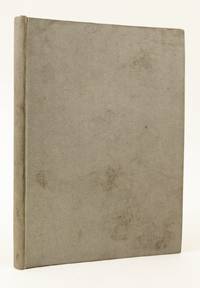
1597ST15850London: Printed by the Widow Orwin for Thomas Man 1597. FIRST EDITION. PRESENTATION COPY. 187 x 130 mm. 7 3/8 x 5 1/8". 5 p.l. 93 pp. <br/> 20th century gray paper boards. Printer's device on title page. Title page inscribed "Gyven to name inked through but perhaps "Thomas Langham" by the aucthor Jo. Norden"; tail margin of title inscribed "Constantin Adyn his booke"; 19th century ink signature of Benjamin Hynam on recto and verso of title. Front pastedown with early 20th century bookseller's description pasted on. STC 18614; ESTC S113322. ◆Boards a bit soiled but otherwise unworn minor dust-soiling or browning to head margins one quire a little browned occasional trivial smudges or tiny rust spots but an excellent copy generally clean and fresh.<br/> <br/> Written during a fallow period in the author's regular career as a cartographer this work emphasizing the importance of service to God for all leaders and common soldiers in the sovereign's army was inscribed by the author to a friend or patron. One of several works Norden dedicated to the earl of Essex it got our author into professional difficulties when Essex's enemy Robert Cecil rose to power and was in a position to impede Norden's career as a mapmaker. Norden quickly tried to push responsibility onto a "false Norden" from Kent he was from Somerset but biographer Frank Kitchen has established that the shared "interests backgrounds written expression everyday circumstances and style" indicate there was but one author. Though best known for his surveys and maps--including the first county maps of England to include roads--the pious Norden ca. 1547-1625 also produced numerous works of devotion and prayer among them the enormously popular "A Pensive Mans Practice" which went to 40 editions in his lifetime. While his sincere religious sentiments are not to be doubted it must be acknowledged that Norden was most moved to write these manuals when he was between surveying jobs and short of money. Aimed at soldiers of every rank the present work urges the "necessity of the fear and service of God" and "the use of all divine virtues both in commanding and obeying practicing and proceeding in the most honorable affairs of war." Norden also encourages civilians to support and respect the military and to pray for men-at-arms. This is an especially rare work: OCLC and ESTC find five copies in U.S. libraries and except for the two copies in the Cottesloe Library there seems to have been only one other--defective--copy at auction listed by RBH and ABPC. The present item is even more desirable as an extremely uncommon presentation copy signed by a 16th century English author. The Constantin Adyn who owned our copy is likely the early seventeenth-century schoolmaster otherwise known as Constantine or Constantinus Adyn fl. 1605-25 whose school was situated in Brighton according to Church of England records. The latest owner is likely the Anglo-Russian writer bibliophile and watchmaker Benjamin Hynam 1769-1859 a prominent figure in the distinguished Hynam family imperial watchmakers to Russian royalty. In the late eighteenth century the Hynams maintained a presence in both St Petersburg and London. Printed by the Widow Orwin for Thomas Man unknown
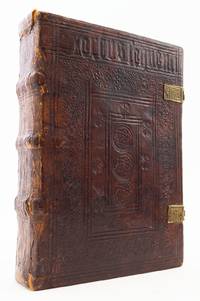
1504ST18751Basel: Michael Furter 1504. 220 x 138 mm. 8 x 5 1/2". CXXII 10 LXX 1 leaves. <br/> EXCELLENT CONTEMPORARY BLIND-TOOLED CALF covers panelled in blind title stamped in gothic letters at head of upper cover central panel with vertical row of three large rosettes EBDB tool s013635 this enclosed by a frame with eight carnation stamps EBDB tool s013643 then by a roll-tooled frame filled with circles containing flowers fruit and stars EBDB tool r000675; Kyriss 84 Roll 6 lower cover similarly framed but with central panel divided by diagonal blind rules into four compartments each containing a large rosette raised bands spine panels with one or two floral medallion stamps upper cover with original brass catches stamped "IVIII" newer clasps and leather straps probably newer pastedowns fore edge with the number "75" in ink subtle repairs to head and tail of spine as well as lower corner on back cover. Title and opening page with decorative woodcut initials main title and sectional title each with woodcut vignette and full-page woodcut on verso. VD16 T-653; VD16 H-6510; Adams L-1124 L-1123. For the binding: Kyriss 84 Tafel 171 Rolle 6; EinbandDatenbank EBDB tools s013635 and r000675 workshop w002075. An ink stain touching text on one leaf and slightly affecting four adjacent leaves but the vast majority of the contents clean fresh and in fine condition. Quarter-inch crack at top of each joint with leather across the spine consequently becoming a small flap light signs of wear to leather hinges mostly open--but the binding entirely sound with almost no wear at all to the joints. An extremely attractive volume THE REMARKABLY WELL-PRESERVED BINDING FEATURING FINE DEEP IMPRESSIONS OF ITS STAMPS.<br/> <br/> This is a rare early compilation of Medieval liturgical chants in an appealing binding by an Augsburg workshop. Kyriss dubbed this bindery Hirsch-Rolle I for its distinctive deer i.e. "hirsch" roll tool and noted it was active 1483-1532. EBDB the bindings database of the Berlin State Library has identified 26 bindings in German libraries from this workshop. The wide attractive floral roll here is most unusual among the binding's wide array of design elements from flowers and plants to stars all contained in tightly packed circles that bring bubbles to mind. Our two texts contain "sequences"--words sung between the Gradual and the Gospel on festival occasions--written by among others Gregory the Great the fourth century bishops Hilarius of Poitiers and Ambrose of Milan and fifth century Latin Christian poet Coelius Sedulius. They were printed by Michael Furter d. ca. 1516-17 who operated a press in Basel from 1489 into the second decade of the 16th century. He was especially known for the decorative nature of his volumes. Haebler's "Typenrepertorium" counted 12 sets of embellished woodcut initials Furter employed; examples from two of these sets may be seen here on the title page of the first work and at the opening of the text in both. The woodcut illustrations here are also notable. The title woodcut Schramm XXII 1263 on the first work is a depiction of the Magi presenting gifts to the Christ Child and his mother done early in the career of Albrecht Dürer 1471-1528. It was one of the "Basel Prayer Book Woodcuts" 25 illustrations likely meant for a "Hortulus Animae" Johann Bergmann von Olpe intended to print in 1494 but never issued. A large striking woodcut depicting the Christ Child at the center of a sunburst surrounded by medallions with the devices of the four Evangelists appears on the verso of the title in the first work and on the title page of the second. On the verso of the second title page is a woodcut of the Crucifixion from the "Postilla" by Guillelmus Parisiensis Basel 1491 Schramm XXII 336. This is an especially affecting and detailed scene: Mary Magdalene clings to the foot of the cross while Jesus looks serenely down at the Virgin Mary who is collapsing in the arms of another woman as several soldiers jeer. On either side of Christ the souls of the thieves crucified with him are being taken one--who had asked to be remembered when Jesus came into his Kingdom--by angels the other by demons. A banner marked with the SPQR of the Roman Empire flutters in the background. All in all this is a very pleasing exemplar of post-incunabular book-making. Michael Furter unknown
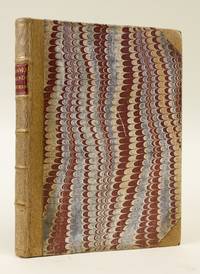
1578ST15632London: Printed by John Kingston for Andrew Maunsell 1578. First Edition in English. 189 x 134 mm. 7 3/8 x 5 1/4". 4 87 1 leaves with foliation errors but complete.Translated from the Latin by Thomas Twyne. <br/> Retrospective half pigskin over marbled boards raised bands red morocco label. Title with woodcut ornament head- and tailpieces many decorative initials. Printed in black letter. Front pastedown with Macclesfield bookplate for the South library; title with inscription in ink "Dulcius ex ipso fonte bibuntur aquae" "Sweetly the waters have been drunk from the fountain itself" and with the initials "D. Fl." see below; a couple of contemporary annotations in ink one slightly shaved; numerous marginal readers' marks in ink and pencil. STC 6231; ESTC S105155. Paper a shade or two less than bright title somewhat soiled a dark stain affecting the upper corner of ff. 24-28 touching text but all is legible; still an overall very good clean copy in a pleasing new binding.<br/> <br/> This is the first appearance in English of Daneau's 1576 "Physica Christiana" the foundational work of "Mosaic physics" which attempted to reconcile the account of creation in Genesis with scientific knowledge of the natural world in order to create a "Christian natural philosophy." Though obviously theological in origin "Christian Physics" is nevertheless substantially a work of natural history generally adopting the Aristotelian worldview then prevalent. The first of two parts is a disquisition on creation a long Socratic dialogue on the meaning of the opening chapters of Genesis. The second part which occupies a good deal more than two-thirds of the volume is a broader treatise on nature including discussion of such things as light and shadow meteors the rainbow thunder precious stones glass gold various trees stars and planets fish birds elephants foxes and many more topics. A Calvinist theologian forced into itinerancy because of his incautiously expressed opinions Daneau 1530-95 produced a considerable number of books mostly commentaries on the Bible and controversial works written against Lutherans and Catholics alike. Our copy has a couple of curious contemporary marginal annotations. On the verso of fo. 2 at the beginning of the second chapter someone noted "Five / speciall / copies of na- / turall phi- / losophye." And at the head of fo. 39 mis-numbered 40 recto is the inscription "Sr. Walter Rawley Laureatus poeta May 4 anno reg. Eliz. 39 anno dom. 1598." There is nothing in Raleigh's biography that can account for his being mentioned as poet laureate in 1598; in that period he was occupied in naval pursuits against the Spanish armada. It has been suggested that our copy was once owned by scholar and translator Andrew Hartwell 1553-1606 a bibliophile who sometimes used the Latin motto which appears on the title page here and who marked passages in his books with the floret-like squiggle seen here on ff. 3-12. At the same time the "D. Fl." inscription on the title page resembles the ownership mark used by the celebrated 17th century bibliophile antiquary politician and magistrate Sir Daniel Fleming 1633-1701. Later the book was securely located in the great library of the earls of Macclesfield which was sold in 12 sales at Sotheby's from 16 March 2004 to 2 October 2008 for some £22 million at the time approximately $40 million. The library was dispersed when the 9th Earl Macclesfield Richard Timothy George Mansfield Parker b. 1943 who was described by the "Independent" as leading an "unconventional lifestyle" was forced to leave his 14th century Shirburn Castle after a protracted family dispute. Called by the paper "a sleeping beauty" his crenellated home had a moat a drawbridge and at the time of the Earl's departure a repair bill of approximately £2.6 million. Despite the building's dilapidation the books in the very large library were distinguished for being uniformly well preserved were almost always in their original bindings and were a sensation at auction for more than four years. The present work is rare: ABPC and RBH locate just one other copy at auction in the past 40 years. [Printed by John Kingston] for Andrew Maunsell unknown
2221848<p>"Ike" 3 pages to wife Mamie no date but ca. 1944. 9" x 6". Fine.</p><p>Eisenhower pens a heartfelt letter to Mamie while in the depths of war: "The Russian fight continues to stir me to the depths of my soul. They're hitting so hard that no one can fail to admire them. I hope they kill a million Huns -- even more! And I wish we could be hammering at the d--- Germans this instant just as hard and on as big a scale as the Russians."</p><p>Dwight D. Eisenhower 1890-1969 was the 34th President of the United States from 1953 until 1961. He was a five-star general in the United State Army during World War II and served as Supreme Commander of the Allied Forces in Europe.</p> unknown books
181633472France 1816. 15 watercolors each with an accompanying manuscript text leaf plus watercolor and gold title leaf on sheets approximately 14 1/2 x 11 inches. Contemporary green morocco spine gilt lettered all edges gilt. Boards a bit scuffed edges somewhat worn spine faded. Occasional faint foxing.<br/> <br/>A lovely album of botanical watercolours.<br/> <br/>An exceptional album of fifteen botanical watercolors which are accompanied by an expertly accomplished manuscript description within blue and gilt borders. Each image depicts a different class of plant life while the text describes families of plants within that class. The images range from agarics mushrooms to ornate roses and camellias and include watercolors of honeysuckle blueberries azalias oaks and marvels-of-peru. Every text leaf contains a detailed analysis of the different families of the depicted plant in a neat and legible French hand. A beautiful example of an amateur artist's book of botanical scholarship. unknown books
FH-339o.J. Folge von 10 Blatt Farbholzschnitten, auf Japan-Bütten, mit Bleistift signiert. Darstellungsgrößen 32:23 cm bis 30:38 cm.werknummern: 61, 73, 76, 81, 84, 85, 93, 94, 104 und 105. Literatur: Führer des Rhein. Landesmuseums: K. A. Reiser, Graphik des deutschen Jugendstils. Düsseldorf, 1972, Nr. 30; Ausst. Katalog: Fürstenfeldbruck, 1999, Nr. 50 mit Farbabb. S. 51.
FH-342o.J. Folge von 19 (von 20 Blatt) Farbholzschnitten, auf Japan, sämtlich mit Bleistift signiert und bezeichnet. Darstellungsgrößen 6,6:8,8 cm bis 24:31,3 cm. Werknummern: 224, 250, 252, 253, 254, 255, 256, 257, 258, 259, 260, 261, 262, 264, 265, 266, 267, 269 und 270. Literatur: Ausst. Katalog: Fürstenfeldbruck, 1999.
022-Io.J. Sepia-Pinsel über schwarzer Kreide, auf Bütten mit Fragment des Wasserzeichens: bekrönter Wappenschild mit Lilie, links unten bezeichnet ?Viterbo près Corchiano?. 22,3:29,8 cm. Auf altem Etikett bezeichnet ?Philipp Hackert 1737-1807?. Verso dünne Stelle im Papier. Literatur: Vgl. Ausst. Katalog: D. Coutagne, Francois-Marius Granet 1775-1849. Une vie pour la peinture. Aix-en-Provence 2008, Abb. Nr. 46, S. 89, ?Vue du Tibre près du Ponte Molle à Rome, (1803?)?.