Preller, Friedrich d.Ä. - 1804 Eisenach - Weimar 1878Antiquariat.de

48 788 résultats
281-Eo.J. Bleistift, weiß gehöht, auf graugrünem Papier, rechts unten signiert, bezeichnet und datiert ?Preller fe. Roma, d. 2. Januar 1860?, links unten bezeichnet ?Domenico Antonio Murgiotti di Picinescu.?, unten mittig alter handschriftlicher Besitzvermerk mit zartem Bleistift ?Elise Sigismund. Weimar d. 6. Sept. 1881?. 44,5:35 cm. Entlang des linken Randes leichte Papierverfärbung, wahrscheinlich ein Wasserrand.
110-Do.J. Gouache mit schwarzer Tuschlinie umrandet, auf Bütten mit Wasserzeichen, verso in der rechten unteren Ecke bezeichnet oder signiert ?Rauscher?. 22,2:27,3 cm. Typische Arbeit des Coburger Hofmalers in makelloser Frische erhalten!
1784055973Konstantiniyye Constantinople: Müteferrika's Basmahâne Dâru't-Tibâati'l-Ma'mûre Râsid ve Vâsif Efendiler Matbaasi. AH 1198 = 1784 CE. 1784. 1st Edition . Leather. Very Good. Folio - over 12 - 15" tall. Bound in original full brown calf with flap miklep by Muteferrika Printing House. Folio. 32 x 22 cm. In Ottoman Turkish Old Turkish with Arabic letters. 2 6 238 leaves. The text is framed with a text block measuring 25.5 x 14.5 cm. Each page contains 33 lines. Printed on a special European watermarked paper acquired during the Ibrahim Müteferrika era. As traditionally done in Islamic bookmaking the title of the book is handwritten along the lower edge. Two leaves containing pp. 90-94 likely completed from another copy with trimmed margins loosely inserted. Occasional foxing on some pages otherwise a fine and well-preserved copy. Exceedingly rare first and only edition of the 19th incunabulum published by the pioneer of book printing in the Islamic world and founder of the first Turkish press Ibrahim Müteferrika 1672-1745 under the direction of his first heirs after his death. In this rare work -the first book published by Rasid and Vâsif Efendis the initial successors of Müteferrika- the events between 1730 and 1744 are chronicled a period during which Ottoman-Habsburg relations were defined by major military conflicts and shifting diplomatic alliances culminating in the Austro-Turkish War 1737-1739 and the Treaty of Belgrade. Following the Treaty of Passarowitz in 1718 the Habsburg Monarchy had expanded its territories into the Balkans acquiring regions such as the Banat of Temesvár northern Serbia including Belgrade and parts of northern Bosnia. However the Ottoman Empire sought to reclaim these territories. The opportunity arose during the Russo-Turkish War 1735-1739 when Austria allied with Russia against the Ottomans leading to the Austro-Turkish War of 1737-1739. The wars concluded with the Treaty of Belgrade 18 September 1739 the Battle of Grocka 21-22 July 1739 the Siege and Capture of Belgrade July -18 September 1739. The first war was a decisive Ottoman victory over the Habsburg forces near Belgrade. The defeat had a substantial psychological impact on the Habsburg court and led to a re-evaluation of their military strategy. Following the victory at Grocka Ottoman forces besieged and recaptured Belgrade a strategic city previously under Habsburg control. These events between 1730 and 1744 significantly impacted the balance of power in Eastern Europe and shaped the subsequent interactions between the Ottoman Empire and the Habsburg Monarchy. "Ibrahim Müteferrika 1674-1745 was an Ottoman müteferrika court official printer publisher author and translator of Hungarian origin. He was the first person in the Ottoman Empire to establish a printing press and publish books in Turkish. In 1720 when Nevsehirli Damat Ibrahim Pasha sent Yirmisekiz Mehmed Çelebi as ambassador to Paris Mehmed Çelebi took his son Mehmed Said Efendi along with him. While Yirmisekiz Mehmed Çelebi's embassy report sefâretnâme provided important information about France his son did not remain idle and contributed to the transfer of many innovations to the Ottoman Empire. During his stay in Paris Mehmed Said Efendi visited a printing press and decided to pursue similar efforts upon returning to Istanbul. After his return he met Ibrahim Müteferrika and together they began working to establish a printing press. Their idea was supported by Grand Vizier Nevsehirli Damat Ibrahim Pasha. Permission to open the press was granted on the condition that only non-religious works would be printed. They obtained a fatwa legal opinion from the Seyhülislam Abdullah Efendi allowing the printing of secular books and an imperial edict ferman of approval from Sultan Ahmed III. On December 16 1727 the foundation was laid for the first printing house named Dârü't-Tibâati'l-Âmire. Machines and Latin-alphabet type were imported from abroad. The source of the Arabic script types is unclear though there is evidence that Müteferrika produced them himself. <br/> <br/> Müteferrika's Basmahâne, Dâru't-Tibâati'l-Ma'mûre (Râsid ve Vâsif Efendiler Matbaasi., AH 1198 = [1784 CE]. hardcover
1951665Los Angeles: Twentieth Century Fox Film Corp 1951. 38 x 24 1/2 inches. Very good condition. Movie poster of the Ben Hogan Story called Follow the Sun. Very rare. See pics. Twentieth Century Fox Film Corp unknown
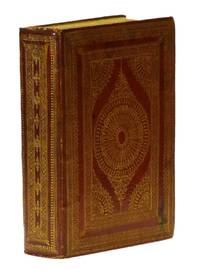
116521Lyon Iean Royaulx 1620. 4to. 16 960 273 76 pp. A small tear on page 181 in the second part. Printed within double frame title in black and red. Illustrated with several small wood cuts in text. Very fine contemporary red morocco fan binding richly gilt spine with four gilt frames with fleurons in the middle boards with gilt “à la eventail†decor with cornerpieces in the shapes of quarter circles around a central â€wheel†within triple gilt frames board edges and all edges gilt. From the library of Victor von Stedingk with his bookplate and signature and some ink annotation on fly-laf a pasted auction entry after Henrik Sederholm 1943 and with the library stamp from Erik Wirén “Bibl. Wiréniana SolÃ¥kraensis†on the title page. USTC 6902799 6 copies. This edition not in Darlow Moule but compare nr. 3743. Very fine contemporary fan-binding often also called â€wheel binding†or â€Ã€ la eventailâ€.This bible is a later reprint of the so called Louvain Bible selon l'edition Latine which was first published in Lyon in 1547. It is a revised translation to French made by members of the theological faculty in Lyon and then promulgated by the Catholics in France as based on the true and complete Latin translation by Saint Jerome in opposition to other huguenotte protestant translations. Several editions were published. hardcover
486-Eo.J. Feder in Schwarz, mit reicher Deckweißhöhung, auf braunem festem Papier, rechts unten Nachlaßstempel (nicht bei Lugt). 39,7:46,6 cm. - Mehrere kleinere Einrissen in den Rändern sorgfältig restauriert. Das alttestamentarische Motiv der Auffindung des Mosesknaben gehört zu den Wandmalereien, die Raffael für die Loggien im Vatikan ausgeführt hat. Sie wurden von zahlreichen Künstlern durch die Jahrhunderte kopiert.
EN-111o.J. Lithographie, 1921, auf Maschinenbütten, mit Bleistift nummeriert ?20/100? und signiert ?Beckmann?. 29,4:22,3 cm. ? Papier leicht vergilbt. Nr. 20 von 100 Exx. Literatur: Hofmaier 202; Beckmann list 180; Glaser 177; Gallwitz 211; Söhn HDO 50410-1. Selten! Als Beilage erschienen zur Vorzugsausgabe in 100 nummerierten Exemplaren zu: DER ARARAT. Glossen / Skizzen und Notizen zur neuen Kunst. München, Goltzverlag, 2. Jg., Elftes Heft, November 1921., Ss. 275-298, 4 Bll. Anzeigen. Rot und Schwarz gedruckter Umschlag mit Fadenheftung nach einem Entwurf von Toni Wendling. Mit Texten von Guido Kaschnitz, Ivan Goll, Marie Tak van Poortvliet, Julius Rottersmann-Krakau, Paula Ludwig, Leopold Zahn und E. von Sydow. Mit Abbildungen nach Max Beckmann, Jeanneret, Ozenfant, T. Czyzewski, Leon Chwistek, Alice Halicka, T. Niesiolowski, H. Gotlib, Z. Pronazko, Jean Cantré, Paula Ludwig, Rudolphe Bresdin, Paul Klee und H. M. Davringhausen. ? Exemplar Nr. 20. ? Umschlag mit leichten Gebrauchsspuren. Beilage: Verlagsanzeige (4 Ss.) vom Folkwang-Verlag G.M.B.H., Hagen i. W. mit Stempel der Buch- u. Kunsthandlung Hans Goltz, München, Briennerstr.? Von dieser wichtigen expressionistischen Zeitschrift erschienen insgesamt 24 Hefte und drei Flugblätter. [3 Warenabbildungen]
497-Eo.J. Aquarell, über Bleistift, auf Papier mit Wasserzeichen: Turkey Mill J Whatman 1819, verso Nachlaßstempel. 25,7:36,4 cm. - Verso: Skizzen von Architekturdetails und Laubwerk.
FH-381o.J. Farbholzschnitt von mehreren Stöcken, 1911, auf Japan, im Stock monogrammiert, mit Bleistift signiert, datiert und als ?Orig. Farbholzschnitt Handdruck? bezeichnet. 17:25 cm, auf die Umfassungslinie geschnitten, rechts und unten mit Rändchen. ? Dabei: 6 Probedrucke der einzelnen Farbstöcke sowie von dem Zeichenstock, sämtlich auf Japan, sämtlich mit Bleistift signiert und von der Künstlerin als ?Farbstockdruck I-VI?, bzw. ?Zeichenstock? bezeichnet, vollrandig. (Insgesamt 8 Bll.). Werknummer 69. - So von größter Seltenheit!
EN-121o.J. Schwarze Kreide und Gouache in Braun und Blau, auf hellbraunem Velin, mit Bleistift betitelt, monogrammiert und datiert ?Camaret E D K 13?. Blattgröße 24,1:31 cm. - Vergleichsliteratur: Ausstellungskatalog: Galerie Joseph Fach, Frankfurt, Edmund Daniel Kinzinger / 1888-1963. Pforzheim, Reuchlinhaus, 1988, Nr. 2 Abb. 2, S. 12. - Edmund Daniel Kinzinger hielt sich zeitweilig studienhalber an der Académie Moderne in Paris auf und unternahm von dort aus 1913 eine Reise in die Bretagne. Camaret-sur-Mer war damals ein lebendiger und viel besuchter Fischereihafen im äußersten Westen der Bretagne auf der Halbinsel Crozon.
EN-122o.J. Tuschpinsel in Schwarz und Aquarell, auf chamoisfarbenem Velin, mit schwarzer Tusche betitelt, datiert und monogrammiert ?Bretagne 1913 / E.D.K.?. Blattgröße 24,1:31,3 cm. Die Tusche ist bei den Zahlen 1 und 9 verwischt. - Vergleichsliteratur: Ausstellungskatalog: Galerie Joseph Fach, Frankfurt, Edmund Daniel Kinzinger / 1888-1963. Pforzheim, Reuchlinhaus, 1988, Nr. 2 und 3, Abb. 2, S. 12 und Farbabb. 3, S. 13. - Edmund Daniel Kinzinger hielt sich zeitweilig studienhalber an der Académie Moderne in Paris auf und unternahm von dort aus 1913 eine Reise in die Bretagne. Camaret-sur-Mer war damals ein lebendiger und viel besuchter Fischereihafen im äußersten Westen der Bretagne auf der Halbinsel Crozon.
011-Io.J. Aquarell, über Bleistift, mit schwarzer Tuschlinie umrandet, auf cremefarbenem Velin, rechts unten signiert und datiert ?F. Knebel fec 1836?. 14,1:20,7 cm. - Farben leicht verblichen und mit kleinen sorgfältigen Restaurierungen.
044-Io.J. Bleistift, 1824, auf Bütten mit Wasserzeichen: Vogel auf Dreiberg im Kreis, auf Untersatz montiert, dort von Richter bezeichnet ?aus Palestrina?. 19,7:27,5 cm. Verso: Bleistiftskizze mit den Konturen des Volskergebirges. Verso an den Ecken alte Leimspuren, an der linken unteren Ecke kleines Stück abgerissen, leichte Quetschfalte im Papier unten (außerhalb der Zeichnung). Provenienz: Nachlaß Frau Helene Kretzschmar, geb. Richter; Sammlung SK im Kreis, nicht bei Lugt sowie weitere unbekannte Sammlung. Die Zeichnung entstand am 20. September 1824, als Richter und Carl Wagner (1796-1867) gemeinsam eine Wanderung nach Olevano unternahmen.
188-Wo.J. Radierung, nach G.A. Sirani (1610-1670), auf Bütten. 26,7:21,7 cm. Mit minimalem Rändchen um die Umfassungslinie. Literatur: Bartsch 8; Nagler 8, mit dem Namen des G.A. Sirani.
155453133ABLugduni (Lyon), Matthias Bonhomme, 1554-1555. C.a. 33,5 x 21 cm. (16) S., (24) Seiten Register, 583 Seiten; (10) S., 242 S., (10) Seiten Register. Mit Druckermarke, Porträt und 470 Holzschnitten . Späterer Ganzpergamentbände. 2 Bände. [8 Warenabbildungen]
1666ALDR0371London, Printed for J. Starkey 1666. Kl.4°. 96 S. [Frontispiz fehlt]. - Angebunden: STUBBE, Henry. The Miraculous Conformist: Or An account of severall Marvailous Cures, performed by the stroaking oft the Hands of Mr Valentini Greatarick (sic!); With A Physicall Discourse thereupon, In a Letter to...Robert Boyle Esq;...By Henry Stubbe, Physician at Stratford upon Avon (etc.) - Oxford, Printed by H. (Henry) Hall Printer to the University, for Ric. (Richard) Davis 1666. Kl.4°. 2 unbedr. Bl., Titelbl., 2 nn. Bll., 44 (= 40) S. (Ss. 35 bis 38 überspr.) - Angebunden: LLOYD, David. Wonders No Miracles; Or, Mr. Valentine Greatrates (sic!) Gift of Healing Examindet, Upon occasion of a Sad Effect of his Stroaking, (etc.) - London, Printed for Sam. (Samuel Speed) 1666. Titelbl., 46 S. Lederband d. Zeit, Einbandrücken restauriert, Reste des früheren Rückenbezugs mit (abgeriebener) Goldprägung und des von alter Hand beschriebenen Rückenschildchens aufgeklebt, Einbanddeckel mit Zierrahmen in Goldprägung, mit dreiseitiger, grossteils abgeriebener Stehkantenverzierung, Buchschnitt rotgefärbt, Vorsatz erneuert. Wenig gebräunt, nur schwach stockfleckig. Mit ausführlichen bibliographischen und biographischen Anmerkungen von alten Händen auf den unbedruckten Blättern (This Book is very Curious & very Scarce), eine Anmerkung betreffend die falsche Seitenzählung am zweiten und eine Autorenangabe (by David Bryde) am dritten Titelblatt. NUC 216,238. 574,340 u. 336,191 - Sammelband mit drei selbständig erschienenen Schriften in Erstausgaben (bzw. im Jahr der Erstausgabe erschienen) von bzw. über den zu seiner Zeit berühmten und umstrittenen - auch noch später immer wieder in Publikationen erwähnten - Wunderheiler - Valentine Greatrakes (1628-1682). Der aus Irland stammende 'Geistheiler', wirkte in Irland und England und hatte neben Erfolgen auch Misserfolge zu verzeichnen. Der Sammelband enthält eine Schrift des Naturwissenschaftlers und anerkannten Altphilologen H. Stubbe (auch Stubbes; 1632-1676), die Greatrakes Heilungen durch Handauflegen ins Bereich des Wunderbaren und Mysteriösen verweisen, sowie eine Schrift, die heute dem Biographen David Lloyd (1635-1692) - nicht David Bryce, wie auf dem Titelblatt vermerkt - zugeschrieben wird, in welcher er gegen Greatrakes Stellung nimmt. Als Reaktion darauf verfasste Greatrakes den vorliegenden 'Brief Account' in Form eines Briefes an den bekannten Naturforscher Robert Boyle. Der aus Irland stammende Boyle (1627-1692) gilt als Mitbegründer der modernen Naturwissenschaften. Diese drei zeitgenössischen, noch zu Greatrakes Lebzeiten erschienenen, Schriften sind überaus selten. - Das fehlende Frontispiz liegt in Kopie bei. - Differenzbesteuert
0833-Co.J. Folge von 10 Radierungen zu dem Buch ?Le Grand? von Heinrich Heine, 1913, sämtlich auf chamoisfarbenem Kupferdruckkarton, sämtlich signiert. Halbpergament-Mappe, Außenmaß 41,8:30 cm. Literatur: Stix 15-24, eins von 30 Exemplaren auf Kupferdruckkarton, ohne Text. Erschienen als 12. Werk der Pan-Presse bei Paul Cassirer, Berlin; Pabst R16-25. Die einzelnen Radierungen haben folgende Titel: 16 Frontispice. 13,3:11,8 cm. - 17 Schlacht bei den Pyramiden. 11,8:12,3 cm. - 18 Der 18. Brumaire. 11,8:9,1 cm. - 19 Die Katze, die Katz? ist gerettet. 12,3:10,8 cm. - 20 Einzug in Düsseldorf. 12,3:11,5 cm. - 21 Valmy, Allons Enfants. 13,5:9,8 cm. - 22 Auf der Brücke von Lodi. 13,4:11,8 cm. - 23 Im Hofgarten zu Düsseldorf. 11,9:12,3 cm. - 24 Lui. 10:8,9 cm. - 25 An der Moscwa. 12,3:11,9 cm. - Das Buch ?Le Grand? war ein Bekenntnis zu Napoleon und den Errungenschaften der Französischen Revolution. Heines Napoleon-Verehrung war dennoch nicht ungeteilt, in den Reisebildern, die zwischen 1826 und 1831 veröffentlicht wurden, heißt es: ?? meine Huldigung gilt nicht den Handlungen, sondern nur dem Genius des Mannes. Unbedingt liebe ich ihn nur bis zum achtzehnten Brumaire ? da verrieth er die Freyheit.? [5 Warenabbildungen]
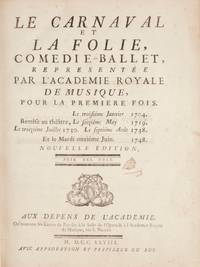
39101Quarto. Full mid-tan mottled calf with coat of arms gilt to both boards raised bands on spine in decorative compartments gilt marbled endpapers. With occasional decorative woodcut initials and head- and tailpieces throughout.<br /> <br /> 1. DESTOUCHES Andre Cardinal 1672-1749<br /> Le Carnaval et La Folie Comedie-Ballet representée par l'Academie Royale de Musique pour le premiere fois. Le troisième Janvier 1704. Remise au théâtre Le seizième May 1719. Le treizième Juillet 1730. Le septième Août 1738. Et le Mardi onziéme Juin. 1748. Nouvelle Édition Prix XXX. Sols. Paris: Aux Depens de l'Academie. On trouvera les Livres de Paroles à la Salle de l'Opera & à l'Academie Royale de Musique rue S. Nicaise. . Avec Approbation et Privilege du Roy. . De l'Imprimerie de la Veuve Delormel & Fils 1748. 1f. recto title verso "Les Paroles de Monsieur de la Motte. La Musique de Monsieur Destouches." 1f. cast list 5-51 i approbation and imprint. With manuscript paraph to title. <br /> <br /> Named cast includes:<br /> - "Acteurs Chantans dans les Choeurs" for the Côté du Roi performance Mlles. Dun Toulou Delorge Larcher Cazeau Rosalie Le Tourneur Duperey and Grimiaux and Messrs. Lefebre Le Page C Laubertie Fel Bourque Duchênet Rochette and Gratin; and for the Côté de la Reine performance Mlles. Cartou Masson Gondré Rôllet Delâtre Lablotiere Daliere Victoire Hery and Folliot and Messrs. S. Martin Le Mesle Bellanger Levasseur Belot Chapotin Favier and Le Roy<br /> - "Acteurs du Prologue" Mlle. Romainvile; Messrs. Person Le Page and de la Tour<br /> - Dancers Mlle. Puvigné in Hebé; Mlles. Lyonnois Courcelle and Thieri in Les Graces; Messrs. Devisse Caillez Laval Feuillade and Mion; Mlles. Dazenoncourt Briseval Minot and Puvigné in "Jeux & Plaisirs." <br /> <br /> A pupil of Campra Destouches achieved considerable success as a composer of stage music. His Isse was greatly admired by King Louis XIV. "Le carnaval et la folie is one of the first examples of a lyric comedy in France." James R. Anthony in Grove Music Online<br /> <br /> 2. CAMPRA André 1660-1744 Monteclair Bourgeois and Rameau<br /> Fragmens de Differens Ballets Représentés par l'Academie Royale de Musique Le Mardi 10 Séptembre 1748. Prix XXX. Sols. Paris: Aux Depens de l'Academie. On trouvera les Livres de Paroles à la Salle de l'Opera & à l'Academie Royale de Musique rue S. Nicaise. . Avec Approbation et Privilege du Roy. . De l'Imprimerie de la Veuve Delormel & Fils 1748. In a prologue and 3 acts.<br /> <br /> - 1f. recto title verso "Les Paroles de M. Danchet. La Musique de M. Campra." 3-4 cast list 5-8 "Prologue des Amours de Venus"<br /> <br /> Named cast includes:<br /> - "Acteurs Chantans dans les Choeurs" for the Côté du Roi performance Mlles. du Toulou Delorge Larcher Cazeau Rosalie Folliot Le Tourneur and Grimiau and Messieurs Lefebvre Le Page C. Laubertie Fel Bourque Duchênet Rochette and Gratin; and for the Côté de la Reine performance Mlles. Cartou Masson Gondré Rôllet Delâtre Lablotiere Daliere Chesdville Hery and Duperey and Messieurs S. Martin Le Mesle Bellanger Levasseur Belog Chapotin Favier and Le Roy <br /> - "Acteurs du Prologue" Mlle. Romainville Jacquet and Met<br /> - Dancers Mlles. Imblot Sauvage Parquet Amedée Carville Devaux Bellot L. and Bellot C; Mrs. Le Febvre Laurent Laval Caillé Feuillade and Bourgeois; Messieurs Le Lievre and Devisse. <br /> <br /> Campra was a leading figure in French theatrical and sacred music in the early 18th century.<br /> <br /> With:<br /> MONTECLAIR Michel Pignolet 1667-1737<br /> 1 Les Soirées de l'Eté tirées du ballet Des Festes de l'Eté: Le Paroles d de M. Pellegrin. La Musique de M. Monteclair. 2 cast list 3-22 pp. <br /> <br /> Named cast includes:<br /> - Actors Mlles. Coupée and Chevalier and Messieurs Person de la Tour and Le Page<br /> - Dancers Mlles. Camargo Lyonois Thierry Dazenoncourt Sauvage Beaufort and Briseval; Mrs. Dupré Dumay Matignon Hamoche and Caillé; Monsieurs Tessier and Levoir<br /> <br /> "Although not prolific Montéclair wrote in most of the genres cultivated during the early 18th century in France excepting only the keyboard. He was one of the most versatile of the generation between Lully's death 1687 and Rameau's advent as a stage composer 1733; composers of this 'préramiste' period are often described as 'imitators of Lully' but Montéclair and Campra are among those who influenced Rameau's dramatic music. In his stage works Montéclair was particularly sensitive to the dramatic function of orchestral colour. His operatic scores are much clearer than those of his contemporaries in giving directions for specific instruments like the off-stage horns 'played very softly to simulate the hunt in the distance' in the second entrée of Les festes de l'été Montéclair added that 'if no cors de chasse are available oboes and violins may play the following and remain in the orchestra'. In the same work a 'Prélude à trois basses' introduces the first scene of the third entrée where the main roles are sung by basses; the prelude to the second scene whose main roles are sung by sopranos is scored for violins and violas without continuo. The parts enter in reverse order and the melodic material is derived from the earlier prelude ex.1. Les festes de l'été and Jephté both contain an a cappella chorus and the former has a large-scale double chorus - an operatic counterpart to the choruses in Lalande's grands motets." James R. Anthony in Grove Music Online<br /> <br /> With: <br /> BOURGEOIS Thomas Louis 1676-1750 or 1751<br /> 1 L'Estime tiré Des Amours Déguisés. Les Paroles de Monsieur Fuzelier. La Musique de Monsieur Bourgeois. 2 cast list 3-14 pp.<br /> <br /> Named cast includes:<br /> - Actors Mlles. Fel Jacquet and Gondré; Messieurs de Chassé Poirier and Person<br /> - Dancers Mlles. Dallemand Thieri St. Germain Minot Sauvage Briseval and Himblot; Mrs. Dupré Lany Devisse Lyonnois Dumat Matignon Hamoche Laval and Feuillade; Mr. Doumoulin.<br /> <br /> A French composer and singer best known for his contributions to the 18th century French cantata Bourgeois also wrote ballets and divertissements.<br /> <br /> With: <br /> RAMEAU Jean-Philippe 1683-1754<br /> 1 Pigmalion Acte de Ballet. La Musique de Monsieur Rameau 2 cast list 3-10 1f. approbation and privilege<br /> <br /> "Rameau was one of the greatest figures in French musical history a theorist of European stature and France's leading 18th-century composer. He made important contributions to the cantata the motet and more especially keyboard music and many of his dramatic compositions stand alongside those of Lully and Gluck as the pinnacles of pre-Revolutionary French opera." Graham Sadler and Thomas Christensen in Grove Music Online<br /> <br /> 3. RAMEAU<br /> Les Festes de l'Himen et de L'Amour; ou Les Dieux d'Egypte Ballet Héroïque Donné à Versailles le quinze Mars 1747. Et Représenté pour la premiere fois par L'Academie Royale de Musique le Mardi 5 November 1748. Prix XXX. Sols. Paris: Aux Depens de l'Academie. On trouvera les Livres de Paroles à la Salle de l'Opera & à l'Academie Royale de Musique rue S. Nicaise. . Avec Approbation et Privilege du Roy. . De l'Imprimerie de la Veuve Delormel & Fils 1748. 1f. recto title verso blank 3 half-title with "La Poëme est de M. de Cahusac. La Musique de M. Rameau. La Danse de M. Laval Compositeur des Ballets du Roi." 4 cast list 5 synopsis 6 cast list 7-58 1f. privilege. With manuscript paraph to title. <br /> <br /> Named cast for the Prologue includes:<br /> - "Acteurs Chantans dans les Choeurs" for the Côté du Roi performance Melles. Dun Tulou Delorge Larcher Cazeau Rosalie Le Tourneur Dupereyand Grimiaux and Messieurs Lefebvre Le Page C. Laubertie Fel Bourque Duchênet Rochette and Gratin; and for the Côte de la Reine performance Mlles. Cartou Masson Gondré Rôllet Delâtre Lablotiere Daliere Victoire Hery Folliot and Messieurs S. Martin Le Mesle Bellanger Levasseur Belot Chapotin Favier and Le Roy.<br /> - "Acteurs du Prologue" Mlles. Coupée and Romainveille; Mr. Poirier<br /> - Dancers Mlles. Carville Courcelle and St. Germain in Les Graces; Mlles. Puvignée Dazenoncourt Himblot and Briseval and Mrs. Laval Laurent le Lievre and Bourgeois in Jeux et Plaisirs; Mlles. Minot Beaufort Thierry and Sauvage in Vertus. <br /> <br /> Named cast for the Premiere Entrée includes: <br /> - "Acteurs Chantans" Mlles. Chevalier and Gondré; Monsieur Jeliote<br /> - Dancers Mlles. Puvignée Derseuille Chevrier Masson Hutte St- Germain Courcelle Thiery Minot Dallemand Belnot C. Parquet Devaus Amedée Camargo Dazenoncourt Beaufort Belnot L. and Belnot C.; Mrs. Dupré F. Barrois Hamoche Mion Matignon Dumay Laval Dupré Feuillade Caillé le Liévre and Laurent; Messieurs Lany and Dumoulin<br /> <br /> Named cast for the Seconde Entrée includes:<br /> - "Acteurs Chantans" Mlle. Romainville; Messieurs le Page De la Tour and Albert<br /> - Dancers Mlles. Lyonnois Amedée Devaux Sauvage L. Belnot and C. Belnot; Mrs. Laval Matignon Dumay le Lievre Hamoche Feuillade Lyonnois Mion Laurent and Bourgeois; Messieurs Lyonnois and Dupré <br /> <br /> Named cast for the Troisieme Entrée includes:<br /> - "Acteurs Chantans" Mlles. Fel Coupée and d'Aliére; Messieurs Jeliote Person Poirier and Lamarre<br /> - Dancers Mlles. Camargo Dallemand Puvignée Lyonois St. Germain Courcelles Thiery Puvignée Desnoncourt and Minot; Mrs. Lany Dumoulin Tessier Laval Hamoche Caillez Feuillade Dumay and Dupré; Monsieur Device<br /> <br /> First Edition. Sonneck p. 500 editions of 1765 and 1778 only. <br /> <br /> 4. RAMEAU<br /> Platée Ballet Bouffon representé par L'Academie Royale de Musique pour le Carnaval De mil sept cent quarente!neuf. Le Mardi quatre Fevrier de la même année. Prix XXX Sols. Paris: Aux Depens de l'Academie. On trouvera les Livres de Paroles à la Salle de l'Opera & à l'Academie Royale de Musique rue S. Nicaise. . Avec Approbation et Privilege du Roy. . De l'Imprimerie de la Veuve Delormel & Fils 1749. 1 title 2 "Les Paroles de Monsieur Autreau. La Musique de Monsieur Rameau." 3-4 cast list 5-55. 1f. approbation and privilege. With manuscript paraph to title.<br /> <br /> Named cast include:<br /> - "Acteurs Chantans dans les Choeurs" for the Côte du Roi performance Mlles. dun Tulou Delorge Larcher Cazeau Rosalie Le Tourneur Deperey and Grimiaux and Messieurs Lefebvre le Page C. Laubertie Fel Bourque Duchênet Rochette and Gratin; and for the Côté de la Reine performance Mlles. Cartou Masson Rôllet Lablotiere Daliere Victoire Hery Folliot s. Martin Le Mesle Bellanger Levasseur Bellot Chapotin Favier and Le Roy<br /> - "Acteurs du Prologue" Mlles. Cartou Chesdeville Coupée and Rozalie; Messrs. Poirier Person De Lamare<br /> - Dancers Mlles L. Belnot C. Belnot Desiré Lyonnois Briseval Dazenoncourt Imblot Parquet and Amedée; Mrs. Laval Caillé Monservin Le Lievre Laurent Hamoche Bourgeois and Milon; Monsieur Lany<br /> - "Acteurs du Ballet" Mlles. Jacquet Fel and Coupée; Messrs. De la Tour Le Page Person Poirier and DeLamare<br /> - Dancers Mlles. Lany Courcelle St-Germain Thiery Minot Beaufort Sauvage Dallemand Carville Devaux L. Belnot C. Belnot Lyonnois Dallemand Desiré Dazenoncourt and Briseval; Mrs. Dumay Dupré Matignon Feuillade le Lievre Laval Hamoche Bourgeois Laurent and Mion; Me. Dourdet; Messrs. Lyonois Dupré Monservain Tessier Dumoulin Devise and Lany<br /> <br /> First Edition of the second version.<br /> <br /> 5. SALOMON Joseph-François 1649-1732<br /> Medée et Jason Tragedie Representée par L'Academie Royale de Musique pour la premiere fpois. Le vingt-quatrième jour d'avril 1713. Reprise le premier de May 1727. Et le vingt-deux Novembre 1736. Remise au Théâtre le Jeudi 20 Février 1749. Prix XXX Sols. Paris: Aux Depens de l'Academie. On trouvera les Livres de Paroles à la Salle de l'Opera & à l'Academie Royale de Musique rue S. Nicaise. . Avec Approbation et Privilege du Roy. . De l'Imprimerie de la Veuve Delormel & Fils 1749. 1 title 2 "Les Paroles de Monsieur Pellegrein. La Musique de Monsieur Salomon." 3-4 cast list 5-64 i approbation and privilege. With manuscript paraph to title. <br /> <br /> Not in Sonneck.<br /> <br /> A French composer and organist "Salomon's operas Medée et Jason and Théonoé are in the tradition of Lully and Campra." Guy Bourligueux in Grove Music Online<br /> <br /> Binding somewhat worn rubbed and bumped; minor loss to head and tail of spine; slightly shaken; hinges partially split. Minor internal wear; edges slightly browned; occasional foxing; two leaves loose. Very good crisp wide-margined copies overall. unknown
WALTER-FILM000093No binding. Very Good. Fine Art Print Vintage original 41 x 81"" 102 x 202 cm. three sheet poster style A USA. Ronald Colman Joan Bennett Colin Clive Nigel Bruce Montagu Love dir: Stephen Roberts; Twentieth Century Fox. The title for the film originated in the popular 1892 song of the same name. This is the story of Paul Gallard Colmen a once artistocratic Russian prince called White Russian displaced during World War I who is living in Paris and earns his living driving a taxi. Traveling to Monte Carlo he gambles with money supplied to him by his compatriots. Fortunately he wins breaking the bank. The casino loves the publicity it could bring them particularly should he return to the tables but instead he warns the public of the hazards of gambling. The film was highlighted by Colin Clive's villainous performance. Film was made at the time of the merger between Twentieth Century and Fox Pictures. Stunning portraiture of Coleman and Bennett with scenario of Coleman at the gambling table. On linen NEAR FINE. unknown books
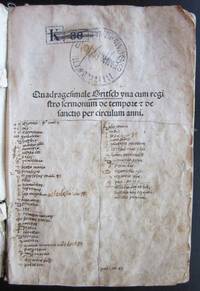
1495SAV133Venice: Lazarus de Suardis 1495. Paperback. Very Good . Venice: Lazarus de Suardis 21 March 1495. 8vo 173 x 116 mm. 284 leaves. Collation: 1-84 a-H in 34 gatherings of 4. Woodblock monogram printers device on colophon leaf. 48 lines double column Gothic type with printed guide letters. Stamp of the St. Charles Borromeo Seminary Library deaccessioned and two library shelfmarks pasted in Q83 and K30. Contemporary limp vellum; lightly soiled with some dampstains backstrip partly perished with partial ms. title and light edgewear; lower outer corner of l5 and D2 torn affecting a few words but in remarkable shape given its extensive use; cloth folding case. Title extensively inscribed in Latin with two columns of a subject index for sermons. The annotator was interested in indexing themes like heaven paradisus and hell infernus or Virgin Mary and Evangelists and easily being able to locate sermons for certain medieval virtues and vices or sins like luxury patience love anger and justice. Early biographical inscriptions on rear blank date to probably to the mid-sixteenth century and venetis gives this book a probable Venice home at one point. There are further scattered annotations notes and references to the index which reflect on sermons of interest. This book likely once belonged to preaching Franciscan monk from northern Italy. This monastic association is further evident with an ownership inscription in the lower margin of a1 Iste Liber est fratus dominici. Preaching was most closely associated with the Franciscans who also traveled extensively to reach audiences. The compact octavo format and lightweight wrappers of this volume would have made transportability much easier. Incunable edition of Johannes Gritschs register of medieval sermons called the Quadragesimale with an interesting period index of subjects probably added by a Franciscan scribe. Johannes Gritsch of Basel himself a Franciscan monk delivered his sermons in German and translated them in simple Latin ready for translation and adaptation to the vernacular. He used scriptural passages supporting texts from classics and fables and exemplary stories to prove moral grounds. Two main themes have been recognized to dominate the medieval sermon: the awareness of death and the need for contrition. Preachers would have relentlessly implored their audience to come to repentance. Brother Dominic the early modern friar who heavily used this book was no exception. He leaves evidence of his moral preaching interests throughout the book. The preliminary subject index is an invaluable glimpse into a composing preachers mindset at the dawn of the sixteenth century. This is the twenty-first edition of Gritschs Quadrigesimale which included fifty numbered sermons and additional sermons for specific church feasts; the first appeared in 1468 and a succession of printings appeared well into the sixteenth century. In fact a Lyons edition of the "Quadragesimale" was produced just one month later after this one in 1495 by Joannes Treschel. Printed sermon compilations were especially popular in monastic communities where volumes of model sermons would have enjoyed wide circulation. ISTC ig00506000. <br/><br/>Incunable edition of Johannes Gritschs register of medieval sermons called the Quadragesimale with an interesting period index of subjects probably added by a Franciscan scribe. Johannes Gritsch of Basel himself a Franciscan monk delivered his sermons in German and translated them in simple Latin ready for translation and adaptation to the vernacular. He used scriptural passages supporting texts from classics and fables and exemplary stories to prove moral grounds. Two main themes have been recognized to dominate the medieval sermon: the awareness of death and the need for contrition. Preachers would have relentlessly implored their audience to come to repentance. Brother Dominic the early modern friar who heavily used this book was no exception. He leaves evidence of his moral preaching interests throughout the book. The preliminary subject index is an invaluable glimpse into a composing preachers mindset at the dawn of the sixteenth century. This is the twenty-first edition of Gritschs Quadrigesimale which included fifty numbered sermons and additional sermons for specific church feasts; the first appeared in 1468 and a succession of printings appeared well into the sixteenth century. In fact a Lyons edition of the "Quadragesimale" was produced just one month later after this one in 1495 by Joannes Treschel. Printed sermon compilations were especially popular in monastic communities where volumes of model sermons would have enjoyed wide circulation. ISTC ig00506000. Lazarus de Suardis paperback books
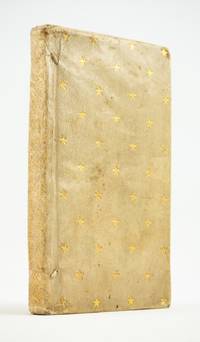
1689ST20606Bordeaux: Pierre Abegou Jean Martel 1689. 156 x 89 mm. 6 1/8 x 3 1/2". 14 p.l. 95 1 80 pp. With a life of the author. <br/> APPROPRIATELY CELESTIAL CONTEMPORARY VELLUM SPRINKLED WITH GILT STARS on covers flat spine densely tooled with repeating Gascon-style fleurette. Two section titles with an excellent woodcut depicting Nostradamus surrounded by the instruments of his trade woodcut tailpieces of stars and moon. Front pastedown with pencilled name and annotations of Nostradamus scholar Daniel Ruzo de los Heros. USTC 6163254. Minor soiling and three small brown stains to covers first quire and last two quires a bit browned due to paper quality one leaf with horizontal crease partially obscuring a line of text though still legible other isolated imperfections but an excellent copy nevertheless the text clean and fresh and the curious binding shining with gilt and showing almost no wear.<br/> <br/> In a particularly charming star-studded binding this is an excellent copy of Nostradamus' famous prophecies which has been part of two major Nostradamus collections. The famous astrologer and physician Michel de Nostre-Dame known as Nostradamus 1503-66 caused a sensation with the publication of his "Centuries" in 1555 a collection of predictions written in nearly impenetrable quatrains that has enjoyed a certain measure of popularity ever since. Published in Bordeaux in 1698 our edition contains the 942 surviving predictions together with a brief biography of Nostradamus. Our copy is distinguished by a strikingly appropriate contemporary "reliure parlante"--a binding designed to mirror the contents of the book it covers; in this case the field of shimmering gilt stars perfectly suits the subject of reading the heavens and wonderfully complements the celestial woodcuts in the book. This copy has been part of two notable libraries of Nostradamus material. Former owner Daniel Ruzo de los Heros 1900-91 was a Peruvian scholar and eccentric whose wide-ranging career included serving as district mayor of Miraflores in Lima publishing numerous works on the possible man-made nature of the geologic formations in Marcahuasi and most relevant here collecting a wealth of Nostradamus material. His 1970 work "El Testamento Autentico de Nostradamus" includes his theories on Nostradamus' prophecies along with a bibliography of published editions of Nostradamus' works including many from his own library; the present copy is not included suggesting it was a later addition to Ruzo's collection. The extensive pencil notations on the front pastedown include Ruzo's cryptographical interpretations of Nostradamus' verses--including an anagram of "Nostradamus" as "Mandat Russo" roughly translated from the Spanish as a "command made by Russo" which Ruzo has further marked with his own name to ensure no one could miss the joke. The present copy subsequently passed into the library of Elmar R. Gruber b. 1955 psychologist researcher and noted collector of mediumistic art. His esoteric research led to an interest in Nostradamus and he built a significant collection of Nostradamus material culminating in his 2003 publication "Nostradamus: Sein Leben sein Werk und die wahre Bedeutung seiner Prophezeiungen.". Pierre Abegou, Jean Martel unknown
413-Eo.J. Bleistift, auf Velin, rechts oben datiert ?23 Juny 41?. 32,4:18,1 cm. Literatur: I. Koszinowski/V. Leuschner, Marburg 1990, I 37. Obwohl der Akt nach rechts gewendet dargestellt ist, handelt es sich bei unserem Blatt vermutlich um eine Vorstudie zu einer Illustration zu ?Dornröschen, die Königin im Bade, um 1840? (op. cit. I 35, I 36).
239-Eo.J. Feder in Grau, Aquarell, über Bleistift, auf cremefarbenem Velin, auf dem Köcher mit Amors Pfeilen monogrammiert ?HK? (ligiert). 14,2:20,7 cm, rundum auf Untersatz montiert, rechte obere Ecke leicht beschädigt. Provenienz: Sammlung L. Blucke, Chemnitz/Dresden. Die Figur des Faust ist angelehnt an J.H. Naekes Faust in der Illustration ?Faust, Szene auf der Straße?, gest. von C.A. Schwerdgeburth (1785-1878), erschienen in: Urania Taschenbuch für Damen?, Leipzig/Altenburg 1815.
301-Eo.J. Aquarell über Feder in Grau und Bleistift, auf bräunlichem festem Bütten. . 26,2:37 cm. Ein stilistisch und farblich sehr verwandtes Blatt zeigt eine topographisch nicht näher bestimmbare ?Hügellandschaft mit Bäumen, Wiese und Hang?, ebenfalls in unserem Besitz (vgl. Kat. 105, Nr. 36 und ist mit ?29 Aug. 72.? datiert.
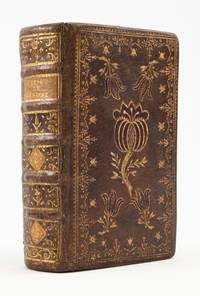
1743ST20461-4Paris: Chez Grange 1743. 136 x 85 mm. 5 5/8 x 3 1/4". 6 p.l. 592 8 pp. <br/> VERY PRETTY CONTEMPORARY PARISIAN BROWN MOROCCO GILT AND INLAID BY THE "ATELIER À LA TULIPE" covers with floral frame accented with heart tool pierced by two arrows a large pomegranate of gilt-tooled inlaid dark red morocco at center four inlaid red morocco tulips at each corner raised bands spine compartments with small gilt botanical tool at center two of these on inlaid tan morocco lozenges tan morocco label marbled endpapers all edges gilt. Text in French and Latin in parallel columns. Front pastedown with ex-libris of Jean Fürstenberg; verso of front free endpaper with early ink inscription: "Bibl. Schol." With a handwritten note once tipped onto the final page of daily prayers with handwritten Latin prayers in a contemporary hand. For the binding: Foot "Henry Davis Gift" III 179 Davis 561; Michon "Les Reliures Mosaiquées du XVIIIe siècle" pp. 51-2 and no. 223. Corners a little rubbed front free endpaper creased one leaf with old thin marginal glue stain from once tipped-in manuscript prayers that are now laid in one lower corner torn away costing a few letters at the ends of seven lines on each side other minor defects from devoted use but an excellent specimen nevertheless the text generally clean and with nothing approaching a major defect and the unsophisticated binding very well preserved.<br/> <br/> This prayer book in French and Latin comes in a charming binding by a workshop Michon dubbed "Atelier à la tulipe" after the distinctive three-petalled flower that appears on the covers here. Foot records a 1752 edition of "Heures Nouvelles" in a binding nearly identical to ours: a large central pomegranate on the covers with a tulip in each corner a delicate gilt frame and a spine in six compartments with a gilt flower or fruit at center in two cases as here on inlaid citron morocco. According to Michon the "tulipe" workshop active from 1740 to 1785 was closer in style to Derome than to Padeloup though it had its own distinctive style one which emphasized harmonious mosaic designs. The pomegranate that dominates the boards is a Catholic symbol of the Passion of Christ and is often featured in Renaissance paintings of the Madonna and Child. This symbolism was no doubt meaningful to the early owner given the signs here of devoted use: in addition to text neatly marked with "" signs at the places where one should make the sign of the cross this person also tipped in a leaf with seven neatly written short prayers in Latin for protection and purification to be said while one is washing getting dressed and preparing for the day ahead. Even dedicated use could not dim the beauty of our binding which attracted the eye of collector and connoisseur Jean or Hans Fürstenberg 1890-1982 a discriminating bibliophile of refined taste who assembled one of the great collections of the 20th century especially rich in fine and historic bookbindings and noted for its outstanding condition. Although not common bindings from this atelier nevertheless appear at auction from time to time invariably in small format like the present book and generally commanding significant sums of money as a typical example and good comparable a 1761 "Heures Royales" of precisely the same size and basic decoration as ours sold in 2017 at Alde for €2375. Chez Grange unknown