15 993 résultats
Folio (325 x 250 mm), [8]pp., followed 30 numbered chromolithographed plates and one further "extra sheet" with 10 mounted albumen photographs, a couple of sheets with slight fraying to blank fore-edge, loose in publisher's printed boards, worn, re-backed with tape. Minton's Ltd, was a major ceramics manufacturing company, originated with Thomas Minton (1765-1836) the founder of "Thomas Minton and Sons", who established his pottery factory in Stoke-upon-Trent, Staffordshire, England, in 1793, producing earthenware. Herbert Minton began experimenting making encaustic tiles in 1828 in addition to the established Mintons pottery and china business, and produced their first catalogue of 62 designs in 1835. "The Tiles in this book are, with the exception of those shown on Sheet 16, which are printed patterns, and on the extra Sheet of Photographs, all Enamelled by a Patent process, know as "Reynold's process," which was adapted in 1848 by the late Mr. Herbert Minton, and has ever since been carried on at Mintons (Limited) China Works... The process for the decoration of Tiles was early favoured by the late Mr. A. Welby Pugin, "the great restorer of Gothic Arts," in the Houses of Parliament and in many other places, and the patterns in that style of ornament in this book are all from his hand. Since the days of Pugin the use of these enamelled Tiles for decorative purposes has greatly increased, and there are now few houses without some examples...".
7747Avignon, 1764. Volume in 4, veau, dos orné, reliure de l’époque. Illustré d’un frontispice gravé et de cartes et planches. Tome premier seul, concernant principalement le commerce du café, du cacao, de l’indigo, du sucre et de ses dérivés, de la tortue, du gingembre et du tabac.
182128571Nantes 1821-1824 2 cahier brochés (débrochés) manuscrits à l'encre brune sur papier vergé crème , ligné et filigrané : " au cornet (cor de postillon) avec courroie simple en pendentif surmonté d'une couronne Royale" pour le cahier : Année 1821 et filigrané "GIRARD FRERES A TIFFAUGES" pour le cahier 1824, de 66 pages (pour 1824) et 48 pages pour (1821), format : 37 x 25 cm, l'année est notée a la main à l'encre brune, en haut de la page de couverture avec la mention "1821 Echeances Nantes", il n'y a pas de couverture pour l'Année 1824, l'année est juste notée en haut de 1ère page à droite , le mois est noté sur chaque en haut de page, DE GAUCHE A DROITE : une colonne avec le jour ou la lettre a été acceptée, une colonne avec la somme notée en livres, une colonne avec le genre de l'effet de commerce, une colonne avec le nom pour le compte de qui elles ont été tirées, une colonne pour le jour du mois ou échouent les traites et une colonne pour le nom du porteur qui la fait accepter ( l'année 1921 s'achève fin octobre le reste des pages de l'année est manquant - l'année 1824 est complète), quelques trace d'acidité du papier en marge, mais l'ensemble est bien lisible,
pp. 78, (6), in-8, piena pergamena
In -8°, pp. (4), 314 + foglio di errata; pelle con titolo al dorso e fregi. È la prima edizione del trattato scritto da Galiani durante il soggiorno a Parigi, il lavoro affronta in forma apparentemente leggera alcuni temi nevralgici dell’economia tardo settecentesca, sul libero mercato e sul monopolio. I Dialogues suscitarono l’attenzione (e il consenso) dello stesso Voltaire, che li descrive come allo stesso tempo divertenti “come un romanzo” ma anche istruttivi “come i nostri migliori libri seri”. Ferdinando Galiani, detto l'abate Galiani (Chieti 1728 – Napoli 1787), importante economista italiano: “Ordinato abate, pubblicò il trattato Della moneta (1751). Nell’opera, che gli diede una immediata fama internazionale, G. respinse le teorie contrattualiste sull’origine della moneta. Considerato un precursore della teoria marginalista, formulò la teoria del valore di un bene in termini di utilità, rarità e lavoro necessario per produrlo (‘fatica’). Segretario all’ambasciata del Regno di Napoli a Parigi, frequentò i maggiori intellettuali dell’epoca. Rientrato a Napoli, ricoprì vari incarichi pubblici”. (Dbi, s.v.) Cossa 139 (47); Einaudi 2334; Gosdsmiths' 10640; Higgs 4941; INED 1948; Kress 6730 First edition of the Galiani’s treaty, written during his Paris stay, in which in an outwardly light form the most nevralgic economic subject of the time are discussed, particularly on freedom of commerce and monopoly. The “Dialogues” pulled the attention of Voltaire, that describes the book as pleasant “like a novel” but at the same time useful as like “our best serious books”. The “Abate” Galiani (Chieti 1728-Naples 1787) was an important Italian economist: his treaty on money (“Della moneta”, 1751) gave him international celebrity since his youth. Secretary of the Naples embassy in Paris, he was in touch with the most important thinkers of his time.
1951014789Paris Editions Jeanne Bucher 1951 En feuilles, couverture rempliée illustrée Dédicacé par l'illustrateur
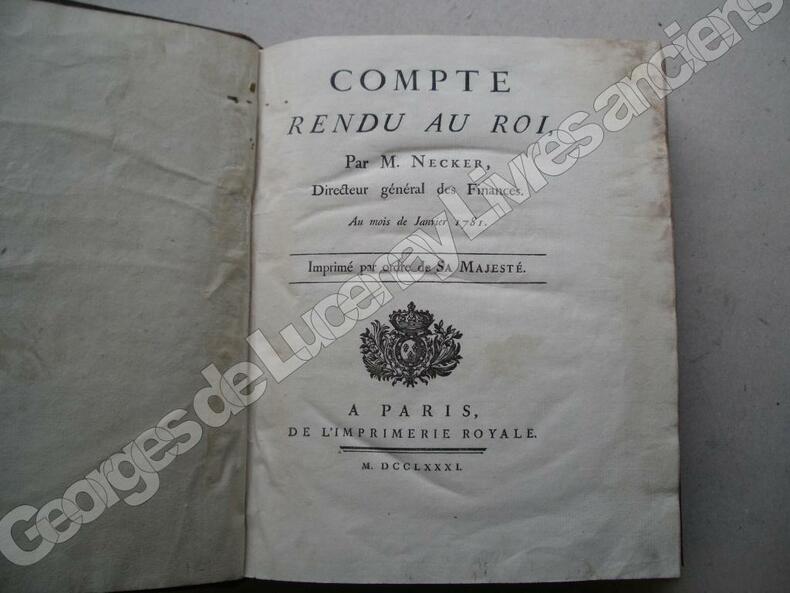
1781166651781 basne marbrée, dos à nerfs. (mouillure marginale au coin supérieur du Compte rendu). in-4, (2ff.), 116pp., 1 tableau dépliant, 2 grandes cartes aquarellées sur papier fort. et Raynal : (2ff.), 28pp., 50 cartes aquarellées., 23 tableaux économiques - la plupart dépliants - ont été reliés in-fine. P. 1781
237441Genève, Jean-Léonard Pellet, 1780 5 forts vol. in-4, XVI-742, [4]-VIII-486, XV-629 et [4]-VIII-770-[2] pp., avec 5 frontispices gravés, dont un portrait de Raynal [volumes de texte], et [4]-28 pp. de texte, avec 50 cartes gravées (la plupart à double page), et 23 tableaux, en général dépliants [volume d'atlas], veau fauve moucheté, dos à nerfs orné, tranches rouges (reliure de l'époque). Bel exemplaire.
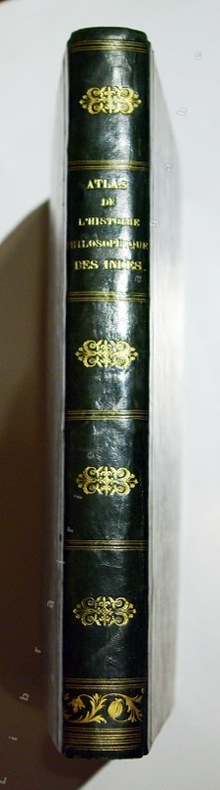
11470Genève, sans nom (probablement Pellet), 1781 ; 10 tomes in-12 et Atlas in-4 (1780) ; demi-basane fauve, dos à faux-nerfs dorés, pièces de titre et de tomaison bleu-canard, tranches jaunes ; ON AJOUTE : Atlas : demi-veau glacé vert-Empire, dos décoré de fleurons dorés, titre doré (reliure début du XIXe siècle) ; XII, 452 ; VIII, 516 ; VIII, 471 ; VIII, 391 ; VIII, 352 ; VIII, 404 ; XII, 471 ; 426 ; VIII, 362 ; IV, 447 ; portrait de Raynal par F.G. Lardy en frontispice du tome Ier et 9 frontispices gravés, un à chaque tome, eux aussi par Lardy ; Atlas : (4), 22 pp., (1) f. blanc, 50 cartes dépliantes (49 + 17 bis).
172420319Amsterdam David Paul Marret 1724 -in-folio plein-veau un volume, reliure plein veau havane marbré in-folio (binding full calfskin in-folio)(38 x 24,5 cm), RELIURE D'ÉPOQUE, dos à nerfs (spine with raised bands), décoré "or" et à froid (gilt and blind stamping decoration), titre frappé "or" (gilt title), pièce de titre sur fond bordeaux (label of title) avec double filet "or" en encadrement, entre-nerfs à fleuron "or" au fer évidé dans un encadrement à double filets "or" avec fleurette "or" aux angles et soleil "or" au centre des côtés, roulette "or" en place des nerfs avec un filet à froid de part et d'autre des nerfs, six roulettes feuillage "or" en pied, 6 filets "or" en tête, petit manque à la coiffe de tête, coiffe inférieure manquante, plats trés légère épidermés, coins émoussés (corners blunt), double filets or sur les coupes (gilt line on the cuts), avec manque de dorure (blurred gilding), toutes tranches lisses rouges (all edges red), marque-page en tissu (bookmark in tissue), titre imprimé en rouge et noir, orné d'un frontispice + trois vignettes front de chapitres (illuminated of headpieces) gravés sur bois en noir par G. QUINEAU + une vignette en bas du titre gravée sur bois en noir par C. Van Den Kem "à la Renommée" + de trés nombreux tableaux, (3) + 96 + (2) + 113 + (1 ff de titre : Journal B) + 1 ff : Jounal B + [8 p. de Tables des articles du Journal A] + (1 ff :Titre Grand Livre A) + [31 doubles pages] + (2 p. d'Alphabet du Grand Livre A) + Grand Livre B [1 p. de titre + 6 doubles pages] pages, 1724 Amsterdam : David Paul Marret Editeur,
191722395Paris Pierre Lafitte 1917 -in-8 demi-Maroquin mosaïqué 1 volume, reliure demi-maroquin cerise in-octavo carré à coins (half morocco binding in-8 with corners) (17 x 21,4 cm), EXCEPTIONNELLE RELIURE D'EPOQUE MOSAÏQUEE SIGNEE : (JEAN) STROOBANTS, dos long (spine without raised band), décoré or et mosaïque de cuir bleu-foncé, Auteur et titre frappés "or" avec un filet arrondi "or" de part et d'autre, orné d'une branche de laurier "or" tout au long du dos avec un casque de poilu mosaïqué bleu-marine comme accroché à la branche en partie moyenne basse du dos, le tout dans un encadrement d'un filet "or", date "or" en pied dans un encadrement d'un filet "or", plats décorés "or" d'un filet "or" au mors et aux coins, papier peigné vieux rose et vert aux plats, tête lisse dorée, gouttière et tranche de queue non-rognées, dos imprimé en noir et couverture imprimée en bleu ciel et noir et illustrée en couleurs par SEM conservée, Exemplaire sur grand papier "NON DESTINE AU COMMERCE", avec un dessin original à l'encre brune signé SEM, Exemplaire illustré de 150 Dessins par Sem, la plupart aquarellés en couleurs, 247 pages + 1 p. de Table, 1917 Paris, Pierre Lafitte Editeur,
19252091502135500562Mukden Chamber of Commerce 1925. Soft Cover. Fine. Number of pages: 5 Size: 19x26 cm Mukden Chamber of Commerce paperback
19222091502135500790Not Available 1922. Soft Cover. Fine. Size: A6 size 11x15 cm Number of books: 8 Not Available paperback
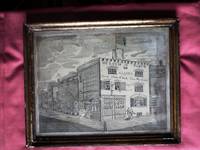
65413. The flag on Allin's shop appears to be a variant of the Union Jack and assuming that is correct it would imply that the date for the print is 'not before' 1801 when the Union Jack was designed following the Act of Union 1801 which united the Kingdom of Great Britain and the Kingdom of Ireland previously in personal union to create the United Kingdom of Great Britain and Ireland. The architecture and the design of the clothes of a couple of figures shown would indicate a time frame of the first couple of decades of the 19th century. The slogan 'LADIES NEW INVENTED STAYS' provides another clue as 'Stays' was the term used for the fully boned laced bodices worn under clothes from the late 16th or early 17th century until the end of the 18th century. A related view dated 1822 may be seen on BIRMINGHAM HISTORICAL FORUM. The copyright imprint is not recorded in the BRITISH BOOK TRADE INDEX. hardcover
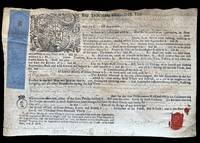
17363222Lichfield England 1736. Oblong document on vellum upper edge scallopped 143 x 214 mm. recto with letterpress form accomplished in manuscript in brown ink slightly faded but legible one passage erased large woodcut armorial initial and 2 pence duty mark strip of three blue sixpence stamps red wax seal paper stamp on verso. Slight soiling to corners and part of top edge.<br /> <br /> A bookseller joins the toy trade: Robert Shaw son of the Lichfield bookseller of the same name agrees to an apprenticeship of seven years during which he promises to serve his master keep his secrets to not waste or lend his Goods; and “Taverns Inns or Ale-houses he shall not haunt At Cards Dice Tables or any other unlawful Game he shall not playâ€. For this the toymaker Richard Robinson agrees to pay 5 pounds into the public charity pledges to feed and lodge his new Apprentice and added in manuscript promises his father Robert Shaw Sr. “to fund and provide for his said Son wearing apparell of all sorts as well Linens as Woolens during the said term.â€<br /> <br /> Lichfield Staffordshire was the childhood home of Samuel Johnson 1709-1784 whose father Michael Johnson was also a bookseller; as a boy Johnson sometmes bound books for his father to help earn money. Contemplation of the latter’s debt-ridden career may throw light on the motives of his colleague Shaw Sr. in sending his son out to learn another profession. <br /> <br /> A bookseller Robert Shaw is known from archival sources including a payment to him in 1737 by Lichfield Cathedral for lettering books in the library cf. Peter Hanks The Bookbinder and Historical Invisibility: Bookbinding and the Staffordshire book trade 1750-1850 thesis University of Wolverhampton 2024. Booksellers in this period were more involved in actual book production and their duties included supplying bookbindings. <br /> <br /> A colleague who previously owned this document remarked: “I have not been able to determine how Robert Shaw the Younger fared in the toy trade or if he was able to follow the indenture’s commandment `Taverns Inns or Ale-houses he shall not haunt’ which he never could have done if he’d followed his father into bookselling.†unknown
30107Philadelphia: Press of J. B. Lippincott & Co n. d. 1st edition Romaine p. 301. Ca 1871 - 72. Original publisher's pebbled terra-cotta cloth binding with gilt stamped lettering to spine & front board. Beveled edges. Overall VG slightly shaken/some shelfwear. 134 pp. T.p. printed in red & black. Text within rectangular red-rule border. Illustrated with wood engraved frontis depicting the 'Baldwin Locomotive Works' factory 11 intratextual cuts & 16 pasted-in photographs of divers Baldwin locomotives. 4to: 11" x 7-5/8" <br/><br/>The Baldwin Locomotive Works an American builder of railroad locomotives was located in Pennsylvania originally Philadelphia then moving in 1906 to nearby Eddystone. The company was the largest US producer of custom made-to-order steam locomotives. Founded in the early 1830s by Matthais Baldwin the firm stopped producing locomotives in 1956 ceasing business in 1972 having produced over 70000 engines the vast majority powered by steam. This one of the firm's first photograhically illustrated catalogues a lavish production issued in the ealy 1870s as Baldwin overtook Rogers as the premier locomotive manufacturer in the United States. Herein will be found photographs of their divers products including fill in with some names of locomotives. While not a particularly rare catalogue it's importance & desirablility lies in documenting the ascent to prominence of this significant US heavy equipment manufacturer as well as being an early trade catalogue illustrated with actual photographs. Press of J. B. Lippincott & Co hardcover books
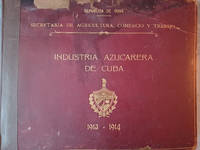
19153017<p>Portafolio azucarero de la industria azucarera de cuba 1912-1914 primera edicion libreria e imprenta la moderna poesia 1915 esta obra ha sido realizada siendo presidente de la republica de cuba dr mario garcia menocal y secretario de agriculturacomercio y trabajo el general emilio nunez caratulas originalesrestauradasgran libro ilustrado 424 pgs mas graficos libro con peso de 13 librascon 16 cm de largo por 12.5 cm de anchoes una obra super rarade colecciondonde se describen todos los centrales azucareros de cubacon fotos y sus caracteristicas publicada en el ano 1915 por la libreria e imprenta la moderna poesiaes una de las rarezas de la bibliografia cubana</p> Libreria e imprenta la moderna poesia hardcover
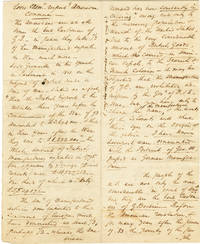
1807WRCAM56123Great Britain 1807. Manuscript written in eight columns on rectos and versos of two quarto sheets. Old folds two smalls spots of light soiling. Accompanied by four leaf typed transcription. Very good. An interesting but unattributed and apparently unpublished manuscript essay with a caption title reading "Loose Memo. Respectg. American Commerce." The gist of the memo is set forth in the first sentence: "The Americans are at all times the best customers of G.B. - in peace they take 1/3 of her manufactured exports - in War much more." In addition to the eager American market for British goods the author notes that British goods are often trans-shipped via America to other markets where Great Britain would not normally have access thanks to America's neutral status: ".you have only to change the name of the manufacturer & the wants of the Colonists will shut their eyes on the origin of the fabric. I have known Liverpool ware ornamented with the Portrait of Geo. III passed as German manufactures." <br> <br> The author notes that while the understandable economic downturn during the Revolution and for several years after the "peace of '83" resulted in some problematic credit relations between the U.S. and the British market much has changed. "The industry & the enterprise of our countrymen aided no doubt by the enjoyment of a neutral position has enabled them to throw off their dependence on the British merchant or manufacturer. They now have a sufficient capital of their own and a very important proportion of their imports are now paid for in ready money or in bills at short sight." The author explains that American merchants are able to export their surpluses of their own production and surplus British goods to the Continental market and transfer that money directly to creditors in Great Britain with an added perk: "The result of this species of trade must be ruinous to France. She is drained of her wealth to enrich & invigorate her enemy." <br> <br> Finally the author provides a specific example of this favored trading relationship with regard cotton. At this time the author estimates that Great Britain imports three- fifths of all cotton from the United States - some 150000 bags of cotton annually weighing 250lbs. each. The U.S. buys back nearly one-third of all cotton goods manufactured in Great Britain yielding a net profit of over £2.5 million to Great Britain. The author adds that this ratio holds for almost all raw materials produced in the United States. <br> <br> This essay was almost certainly written during the earlier part of the Napoleonic Wars; the author cites an 1801 speech by Lord Grenville which helps narrow the date range and it seems unlikely the Embargo Act of 1807 had been passed yet. Regardless the essay promotes Anglo-American trade and cooperation at least insofar as it enriches Britain and cripples France at a time when other forces were driving the two countries toward war. unknown books
198870271Chicago IL: Commerce Clearing House Inc. Fine. 1988. Paperback. FREE UPGRADE to Courier/Priority Shipping Upon Request - IN STOCK AND IMMEDIATELY AVAILABLE FOR SHIPMENT - TEXT PRISTINE - 407 pages. -- with a bonus offer-- . Commerce Clearing House, Inc. paperback
198870270Chicago IL: Commerce Clearing House Inc. Fine. 1988. Paperback. FREE UPGRADE to Courier/Priority Shipping Upon Request - IN STOCK AND IMMEDIATELY AVAILABLE FOR SHIPMENT - TEXT PRISTINE UNMARKED - 230 pages -- with a bonus offer-- . Commerce Clearing House, Inc. paperback
194738468New York: Want List - the Book Trade Weekly. As New. 1947. Hardcover. FREE UPGRADE to Courier/Priority Shipping Upon Request IN STOCK AND IMMEDIATELY AVAILABLE FOR SHIPMENT - -- with a bonus offer-- . Want List - the Book Trade Weekly hardcover
24270A Amsterdam, Et se trouve à Paris chez Duchesne, 1756. xlvii, (1), 352 pp. 12mo. Contemporary marbled calf, spine richly gilt with raised bands, red label with gilt lettering, red edges. Echerverria & Wilkie 56/40; Sabin 75520; Chadenat 4121; JFBL S61; INED 4034; Higgs 1501; Kress 5567; Conlon 56:1257; not in Goldsmiths; not in Einaudi. First edition, and very rare, of this work which discusses in 18 letters and at the moment the Seven Years' War was about to start, the consequences of the presence of various European nations in North America with the aim to find some sort of balance of power between the various colonizing European nations, to avoid a war and to encourage commerce and trade. 'There are several issues of this edition occasioned by cancellanda (D4-5, D11-12, E10, G11, and I5-8, all of which are present in this copy). No copy is known, however, that is not a mixture of both canellanda and cancellantia: thus, what the original text was as first printed is problematic. (.....) In the two BN copies, (....), the imprint date has been alterted in manuscript to read M.DCC.LVII. (This is also the case with the present copy where the second 'I' has been added in manuscript.) This is a series of letters dated July-September 1756, forming an essay on international power politics with special reference to European colonial systems in America' (Echeverria & Wilkie).'Intéressant pour l'origine de la guerre du Canada' (Chadenat). 'A consideration of Europe's involvement in North America with a view to establishing a balance of power among the colonizing nations which would eliminate war and encourage commerce' (JFBL). 'Déterminer la nature des divers équilibres propres aux différentes colonies septentrionales et méridionales des peuples de l'Europe, en étudiant les variations de leurs cultures, leur commerce, leur population, leurs différentes distances, etc.' (INED). - Contemporary signature and author's name in blank portion of title.
ORD-16352Sans indication de lieu ni de date [Genève. Pellet. 1780]. In-4 (183 x 261mm) dos lisse maroquin rouge orné de filets et d'un semis d'étoiles or, plats veau raciné à double encadrement de filets or, gardes marbrées, bien complet des 23 tableaux et des 50 cartes dressées par Bonne, la plupart dépliants. Menus défauts mais bon exemplaire.
11307A Avignon, Et se vend à Lyon, Chez REGUILLIAT, Libraire, Place Louis Legrand, 1770 - In-8 dans une sobre et saine reliure demi chagrin cognac, dos à cinq nerfs et titre au petit fer dans le second caisson, signet de soie, bel exemplaire de reliure postérieures, XVJ - 272 pages, piqûres sporadiques, petits manques papier sur les 4 premières pages, mouillures sans gravité sur les dix première pages. Très agréable.
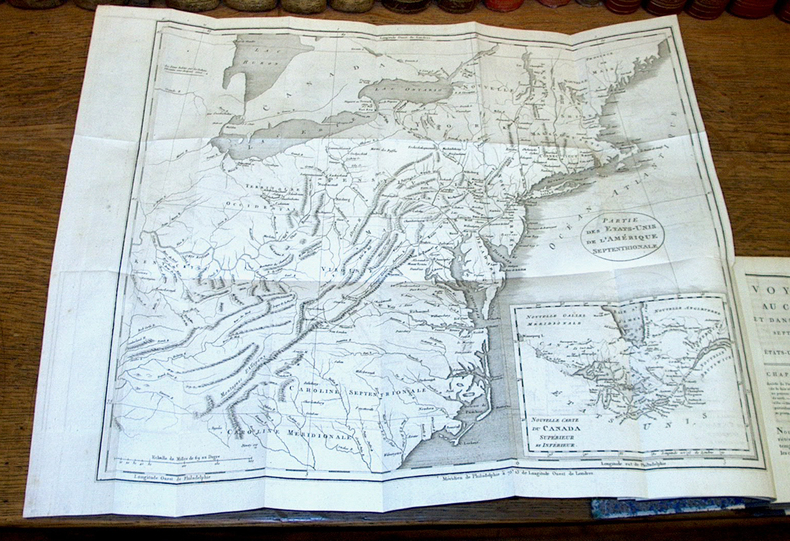
1803001778Paris Chez Gérard, Imprimerie de Munier 1803. Trois volumes in-8 (205 x 130 mm), demi-veau glacé bleu marine, dos lisse orné or et à froid, tranches mouchetées (reliure milieu 19e s.). Seconde édition française, ornée d'une carte dépliante et de 11 planches gravées sur acier d'après les dessins de l'auteur, représentant le Mont Vernon et la maison du Général Washington, les Chutes du Niagara, le Cap-Diamant, etc. Ex-libris Mr de Gaudechart. (dos très légèrement passé, quelques défauts, frottements sur les plats, quelques manques de cuir tome 1, quelques petites déchirures marginales, t. 3 sur les 30 premières pages mouillure angulaire, rousseurs). // Three octavo volumes (205 x 130 mm), dark blue glazed half calf, smooth spine tooled in gilt and blind, sprinkled edges (middle of 19th-cent. binding). Second french edition, illustrated with a folding map and 11 plates engraved on steel after the author's drawings, depicting Mont Vernon and General Washington's house, Niagara Falls, Cap-Diamant, etc. Bookplate Mr de Gaudechart. (spine a little bit faded, some defects, rubbings on covers, some lack of leather vol. 1, some little tears, vol. 3 water-stain on top corner of the 30 first pages, spots).