48 402 résultats
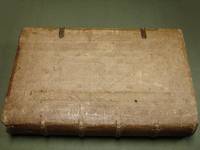
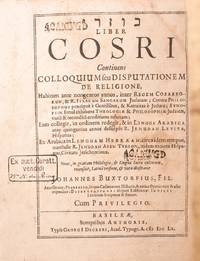
166066808Basileae Bâle Basel: Sumptibus authoris l'auteurtypis Georgi Deckeri 1660. Fine. Sumptibus authoris l'auteur typis Georgi Deckeri Basileae Bâle Basel 1660 16 x 20.50 cm relié Sumptibus authoris. Typis Georgi Deckeri Basileae Basel 1660 4to 16 x 20.5 cm 50 pp. 455 pp. 29 pp. modern vellum First edition of the Latin translation by Johannes Buxtorf The Younger of the first translation into Hebrew by Juda ibn Tibbon Juda Halevi's Arabic text not being rediscovered till 1887 today in the Bodleian. Modern vellum binding flaps. Skillful restoration to inside margin of final third of work without loss to text. A few small wormtracks filled in to lower margins of pastedowns as well as first and final endpapers. A few dampstains to lower portion and some pages browned. Stamp of the University Library at Leiden «Acad. Lugd.» to edges and title. Stamp of the restorer Willem Nicolaas du Rieu «Ex auct. Curatt. vendidi W. N. du Rieu» indicating its deaccession. A very rare copy of this classic of Medieval Jewish philosophy presenting the fears of Spanish Jews faced with two powerful religions Christianity and Islam. Written in 1140 in Arabic the Kuzari is couched in the form of a dialogue in five books. Charles Touati in his 1994 preface to the text summarizes the narrative thread of the work thus: «The king of the Khazars or Kuzari tormented by the religious question interrogates in turn a philosopher a Christian theologian and a Muslim one. Disappointed in their answers he feels he must turn to a learned man of the mocked and vilified minority a Rabbi who ends up convincing him at which the king converts to Judaism and continues his studies with the aid of this teacher.» This apologia allowed Juda Halevi to critique the appeal of philosophy Christianity and Islam for his contemporaries. According to him «philosophy denies all possibility of dialogue between Man and God and does not understand the religious phenomenon» ibid. Right from his starting point a proof of the existence of God he believes that we need only look to history and the revelation of God on Mount Sinai witnessed by thousands. Christianity and Islam are for him nothing but forgeries of Judaism: «they jeer at the humiliations and suffering of the Jews without realizing that they exalt in the founder of their own religions precisely that humiliation and suffering» ibid. The Kuzari is an emblematic text in the sense that it calls for the exiled community to return to Zion rather than submit. «It is better to leave everything and go back to Zion and there regain Divine favor instead of wearing ourselves out winning the favor of gentiles which in any case we will never have» ibid. Sumptibus authoris [l'auteur]typis Georgi Deckeri hardcover
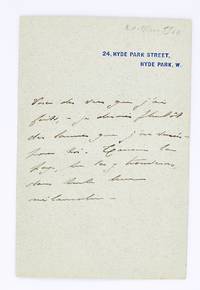
190078737s. l. 1900. Fine. s. l. 20 mars 1900 10 x 15.70 cm 2 pages sur un double feuillet Unpublished handwritten poem to Natalie Clifford Barney « à l'absente » 20 March 1900 10 x 157 cm 2 pages on a double leaf Handwritten poem entitled « à l'absente » To the absent one and addressed to Natalie Clifford Barney. Two pages written in black ink on a double leaf headed 24 Hyde Park Street. To our knowledge this three-verse octosyllabic poem is unpublished. It is preceded on the first section of this double leaf by a little handwritten message: These are the verses I have made I would rather say the tears which I have shed for you. Turn the page you will find them there in all their melancholy. Oui c'est toi mon rêve suprême Pendant ces longs ces mornes jours Où je pleure au fond de moi-même L'exil triste de mes amours! . N'as-tu pas entendu ma blonde Le bruit d'un sanglot qui revient Dans le cur de la nuit profonde C'est mon amour qui se souvient. It is at the end of 1899 and through Violette Shillito that Renée Vivien then Pauline Tarn met Natalie Clifford Barney ""this American woman softer than a scarf whose sparkling face shines with golden hair sea blue eyes never-ending teeth"" Colette Claudine à Paris. Natalie who had just experienced a summer romance with the scandalous Liane de Pougy who introduced her to sapphism paid little attention to this new acquaintance. Renée on the other hand was totally captivated by the young American woman and describes this love at first sight in her autobiographical novel Une femme m'apparut: ""I lived again the hour already well past when I saw her for the first time felt the shiver that ran through me when my eyes met the mortal steel of her look those eyes blue and piercing as a blade. I had a dim premonition that this woman would determine the pattern of my fate and that her face was the predestined face of my Future. Near her I felt the luminous dizziness which comes at the edge of an abyss or the attraction of a very deep water. She radiated the charm of danger which drew me to her inexorably."" ""Winter 1899-1900. Beginnings of the idyll. One evening Vivien is invited by her new friend to Mme Barney's studio Natalie's mother 153 avenue Victor-Hugo on the corner of the rue de Longchamp. Natalie finds the courage to read the verses of her composition. As Vivien tells her to love these verses she tells her that it is better to love the poet. A response worthy of the Amazon."" J.-P. Goujon Tes blessures sont plus douces que leurs caresses Two years of unequal happiness will follow punctuated by Natalie's recurring infidelities and Renée's sickly jealousy the letters of which oscillate between inflamed declarations and painful admissions of guilt. ""Renée Vivien is the daughter of Sappho and Baudelaire she is the 1900 flower of evil with fevers broken-up fights sad delights."" Jean Chalon Portrait d'une séductrice In 1901 a major break-up occurred which lasted almost two years; Renée despite requests from Natalie and the others she sent to win her back resisted. ""The two friends saw each other again and in August 1905 went on a pilgrimage to Lesbos which was a disappointment for Natalie Barney and was short-lived. . The spring was broken once and for all. The two former friends stopped seeing each other in 1907 and Vivien died without them seeing each other again."" J.-P. Goujon ibid. unknown
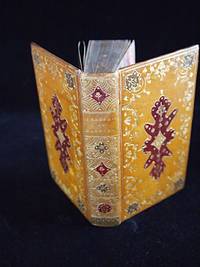
160750084à Paris: Par Jean Fuzy 1607. Fine. Par Jean Fuzy à Paris 1607 8 x 14.70 cm relié New edition. Binding splendid in full morocco mosaic lemon eighteenth in the way Padeloup. Back smooth decorated with small irons small nets curves and angular mosaic suns red central lozenge and quatrefoil hit a flagship red mosaic tail points and nets. Gilt title. boards decorated with small irons component rich garland framing mosaic of red in the spandrels and a decorated central motif of various jewels and petis irons. Lace on cups and interior. The copy was possibly réemboîté suggesting that domestic boards. Sumptuous mosaic binding unsigned master undoubtedly very rare. Par Jean Fuzy hardcover
196866839Paris: Gallimard 1968. Fine. Gallimard Paris 1968 14.50 x 21.50 cm broché First edition one of 23 numbered copies on Hollande the tirage de tête. A very nice copy. Gallimard unknown
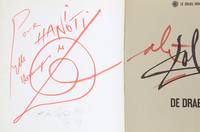
196884456Paris: Le Soleil Noir 1968. Fine. Le Soleil Noir Paris 1968 29 x 31 cm reliure de l'éditeur - Dali's famous snail drawing -First edition. Publisher's binding smooth spine with its illustrated dust jacket. Numerous illustrations. Outstanding signed and inscribed copy across the title page and facing endpaper by Salvador Dali to Ms Elisa Hanioti painter herself and close friend of Gen Paul. Dali's intial D takes the form of his famous ""snail drawing"". Former British officer Captain Moore alleged secret agent during WW2 and Dali's secretary from 1956 to 1974 added the words ""Paris 1969"" and signed at the bottom of the title page. Le Soleil Noir unknown
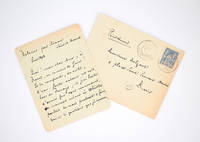
189875918Valvins 1898. Fine. Valvins 23 juin 1898 8.90 x 11.50 cm une carte recto verso - enveloppe jointe Autograph letter-card signed by Stéphane Mallarmé addressed to Alidor Delzant written in black ink on both sides. With the original envelope. Enclosed with this letter is a quatrain in Mallarmés hand: ""Tout en les éternisant / Bracquemond ici fait vivre / Les traits d'Alidor Delzant / A nous ouvert comme un livre."" Alidor Delzant was a lawyer collector and bibliophile. A friend of the Goncourt brothers he devoted a book to them and served as Edmonds secretary and testamentary executor. A delightful card in which the poëte ordinaire refers to the making of his portrait by his friend the painter Whistler: ""j'ai honte d'avoir fui dans ma verdure au moment même où Whistler parlait de mon portrait à faire"". ""On June 1st as he had promised Whistler who in his last letter with an affection verging on tenderness addressed him as mon Mallarmé he went to the painters studio on the rue Notre-Dame-des-Champs. You will see someone from the woods somewhere between the wild boar and the nightingale he had warned playfully in announcing his visit. Painter and poet ended the day dining on the rue du Bac where the all-too-ephemeral Trixie was now absent. In the half-light after dinner Whistler near a lamp seemed to resurrect in appearance the extraordinary Poe. Doubtless he then repeated to Mallarmé his intention of painting him. The next day without waiting for the Monet exhibition soon to be held at Georges Petit the Mallarmés went on to Valvins. Jean-Luc Steinmetz Stéphane Mallarmé This was most likely the execution of another portrait of Mallarmé of which no trace remains Whistler having already produced one that served as the frontispiece to Vers et Prose in 1893. He also alludes to Bracquemonds etched portrait of Delzant: ""Je comprends du reste l'eau-forte valant cet exil de Paraÿs . Redites mon affectueuse admiration toujours à Monsieur Bracquemond."" unknown
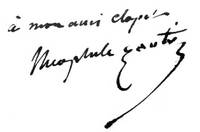
185336659Paris: Eugène Didier 1853. Fine. Eugène Didier Paris 1853 9.50 x 15.50 cm relié Second edition first for some parts: augmented with two poems Contemporary black half shagreen over black paper boards spine in five compartments with triple gilt compartments double gilt fillet frame to covers marbled pastedowns and endpapers Rare autograph inscription from Théophile Gautier: ""A mon ami Clapet.To my friend Clapet"" A little spotting. Eugène Didier hardcover
18620001070HAMILTON PORT STANLEY AMHERSTBURG CANADA WEST. Good. 1862. Hardcover. On offer is a remarkable 1862 - 1865 original handwritten manuscript 'letters book' wherein the author Mr. John Rowe residing in Hamilton Ontario for the most part has kept a meticulous record of his correspondence to friends family business associates and intimates. Local collectors and historians of Canadiana relating to Canada West Ontario Hamilton the Niagara area and the author's hometown of Port Stanley and Canada's attitudes and involvement in the American Civil War will delight in the treasure trove of historic content in his writings and revel in the different threads of correspondence. Mr. Rowe writes of romance commerce and war. He works for the noted Isaac Buchanan of Buchanan Harris and Co. who one on-line source notes: 'In 1863 Buchanan established the 13th Battalion of the militia now the Royal Hamilton Light Infantry. He gave the regiment its first colors and also coined its motto "Semper Paratus". When the 13th Battalion fought in the Battle of Ridgeway in 1866 the wounded were treated at Buchanan's estate 'Auchmar'. Almost eighty years later injured men from the RCAF would also convalesce there.' Rowe in what might seem rather telling kept copies of his love letters too; he writes to women in a courting manner but when rebuffed he can be bitter in his comments to an intimate regarding the woman and her other partners and friends. His letters professing love to 'Lizzie' from Toronto are classic. Then there is the American Civil war and his keen interests in militaria; firearms drilling and action. John corresponds with a very diverse group: Capt John Brown No. 4 Co. 13 Batt'n V Md; his mother his sister in Stoke Devonport England; Grace Rosevear of Guelph Schell of Campbellton and his cousin Sergeant G. Ford 2nd Battal Sco Fusilier Guards Montreal to name just a few. Mr. Rowe is a great writer and provides much detail with much personality and covers many areas with most of his correspondence making this an almost diary like collection. Here are some of the details of his participation regarding the Civil War: to his cousin Sergeant Ford Jan 14 1863: "We have formed several companies of volunteers in Hamilton. We are gazetted a "Light Infantry" and formed into a battalion of which Mr. Buchanan my governor has been appointed Lieut. Colonel. I have joined one of the camps. We were first drilled by a Guardsman Sergt major Henry. he was a splendid drill and we all liked him very much but he has been removed and we have now a Colon. Serg't of the Rifle Brigade." Later he writes: Dear Schell February 7 1863 . Pete Buchanan is ensign. Stuart enjoys the rank of Corporal. he just returned from New York where he went to see his brother who was wounded before Fredericksburg where I believe Stuart has the great honor of drinking with the Governor of Nebraska and some U.S. Generals. Since his return he is full of his exploits - dining with General Char-them-up. There is a spring meeting tonight at Mrs. Thom Clark's." As to the book condition proper someone probably a young girl or woman used pages 1 to 40 as a scrapbook glueing newspaper clippings of poems and verse to both sides of the handwritten pages. Pages 40 to 282 are all handwritten and all the letters are dated addressed and signed. This extraordinary unique book of 240 pages provides a super rendering of life in Southern Ontario at this pre-Confederation time. Condition overall is Good and would be better save for some faults to the cover the worst being chipping and some loss to the spine. Interior is good though Rowe cut some leaves out and there are some tears chips etc to the fragile onion skin type papers. This is truly a one of a kind archive of first hand history given Mr. Rowe's almost compulsive retention of his writings - lucky for us!; Manuscript; 4to - over 9¾" - 12" tall; PORT STANLEY CIVIL WAR WAR BETWEEN THE STATES ONTARIO CANADA WEST BUCHANAN UPPER CANADA NIAGARA PENINSULA PRE CONFEDERATION HANDWRITTEN MANUSCRIPT DOCUMENT LETTER AUTOGRAPH KEEPSAKE WRITER HAND WRITTEN DOCUMENTS SIGNED LETTERS MANUSCRIPTS HISTORICAL HOLOGRAPH WRITERS AUTOGRAPHS PERSONAL MEMOIR MEMORIAL PERSONAL HISTORY AMERICANA ARCHIVE DIARY DIARIES CANADA CANADIANA ECONOMICS COMMERCE ONTARIO DUNDAS HAMILTON AMHERSTBURG TORONTO . hardcover
19850001649CHINA PRC. Good. 1985. On offer is an interesting manuscript workplace diary handwritten by an unidentified man who details his workplace experiences and the changes caused by the economic reform in 1980s. He faithfully records and takes notes during workplace meetings led by the factory workshop director. Of particular interest to historians and researchers of the era are the writer's own perspective and opinions of the economic reforms. Approximatley 92 pages 17.5 cm x 13 cm. Overall VG. ; Chinese Language; 16mo - over 5¾" - 6¾" tall; KEYWORDS: HISTORY OF TIANANMEN SQUARE GREAT PROLETARIAN CULTURAL REVOLUTION CULTURAL REVOLUTION CONFESSIONS RECENT ANTI SOCIALIST ACTIVITIES ANTI CAPITALISM MAO ZEDONG WANG CHEN HUA MAO TSE TUNG GREAT LEAP FORWARD MAOIST SOCIALISM COMMUNISM MOVEMENT OF SUPPRESSING COUNTER-REVOLUTIONARIES MIAO ZI YU COMMUNIST CHINE CHINESE SINO POLITICS JIANG QING GRASSROOTS SOCIALISM PROPAGANDA POST FIVE YEAR PLAN 5 YEAR PLAN GANG OF 4 GANG OF FOUR LIN BIAO BEIJING PENG LUO LU AND YANG ZHONGFA 267 INDOCTRINATION RED CHINA CHAIRMAN MAO MARXISM-LENINISM MAOISM LIN YURONG HANDWRITTEN MANUSCRIPT CHINA DOCUMENT LETTER AUTOGRAPH DIARY JOURNAL LOG KEEPSAKE WRITER HAND WRITTEN DOCUMENTS SIGNED LETTERS MANUSCRIPTS HISTORICAL HOLOGRAPH WRITERS DIARIES JOURNALS LOGS AUTOGRAPHS PERSONAL MEMOIR MEMORIAL PERSONAL HISTORY antiquité contrat vélin document manuscrit papier Antike Brief Pergament Dokument Manuskript Papier oggetto d'antiquariato atto velina documento manoscritto carta antigüedad hecho vitela documento manuscrito . unknown
1723006806London:: Printed for the Author. 1723. 1st Edition . Hardcover. Very Good. Folio - over 12 - 15" tall. STUKELEY William. Symoson. VanderGucht. Kirkall. VG 1st edition 1723 16 pls. In half calf over contemporary worn green marbled boards re-cornered edges rubbed. Re-spined to style raised bands gilt tooling gilt tiles & tooling to red morocco label. Internally portrait frontis Hippocrates 6 4 Pindaric Ode 2 Praeloquium 1 2-108 pp 16 pls in total 5 folding 2 dated 1722 8 of the spleen including 2 printed in colour monochrome by Elisha Kirkall after Stukeley and 8 of the dissection of an elephant paper repairs to frontis margins not affecting portrait some foxing to the elephant plates staining to the lower margin of the text in the first half of the work outer margin of D2 cut away with the partial loss of page numerals. With the Pindaris Ode on the Spleen by the Countess of Winchilsea Finch née Kingsmill Anne 1661-1720. Very Uncommon. 327206 mm. ESTC T26902. Russell 784. Osler 4052. Blake NL of Medicine p437. Stukeley often and probably unfairly considered an eccentric he was reluctant to practice the circumspection necessary in the study of prehistory to temper his imagination or to take the more cautionary advice of friends. However his unstinted enthusiasm dedication and keen eye merited him his position as the father of British field archaeology. See ODNB. <br/> <br/> Printed for the Author. hardcover
151912Basel Basileae Per Ioannem Oporinum 1562 Colophon at the end: 'Basileae Ex officina Ioannis Oporini Anno salutis humanae 1562 mense Martio' Folio. p. 1-667; col. 668-679 1 p. col. 680-845; 23 index p. Contemporary blind-stamped pigskin over wooden boards. 34 cm. <Interesting signed binding. This Euripides edition is the first to offer a Greek text accompanied by a complete translation into Latin. Autograph dedication by the editor Stiblinus on the title>. Ref: VD16 E 4217; Griechischer Geist aus Basler Pressen no. 200; Hoffmann 269; Schweiger 1115; Dibdin 1528; Moss 1416; Brunet 21096; Ebert 7077; Graesse 2519; USTC no. 654877 Details: Signed binding produced between 1562 and 1570 by Hans Rietzsch and probably commissioned by Prince-Bishop of Würzburg Friedrich von Wirsberg or his chancellor Balthasar ab Hellu. See below for the binder and his client Back with 4 raised bands. Boards decorated with 3 rows of blind-stamped rolls the first one with floral motives the second and third comprising portraits of apostles and other biblical figures and floral motives; the portraits are accompanied by short texts which are reasonably legible e.g. King David playing his harp he has the text: 'De fructu ventris tui'; this refers to Psalm 13111 where God promises David: 'iuravit Dominus David veritatem et non frustrabit eum de fructu ventris tui ponam super sedem suam'. Left and right of David's head the initials H and R. Another blind-stamped portrait depicts the apostle Paul whose text is: 'Apparuit beningitas' sic! a quote from a letter of Paul to Titus. Ep. Pauli ad Titum 34 The initials H.R. stand for 'Hans Rietzsch' a Würzburg bookbinder of whom the University library of Würzburg holds a great number of bindings which can be dated between 1555 and 1570. Rietzsch often used on 'his' boards rolls depicting King David John the Baptist the apostle Paul. H. Endres 'Die Zwickauer Buchbinder Hans Rietzsch und Gregor Schenck und ihre Beziehungen zu Würzburg' Archiv für Buchbinderei 26 1926 p. 13-16. Woodcut printer's mark on the title of Oporinus depicting Arion who stands on the dolphin that saved him he plays the violin. Woodcut initials. One woodcut text illustration. Text printed in 2 columns Greek text with parallel Latin translation. Each play is concluded with a short 'praefatio' by Stiblinus who added also short notes. The last 185 columns contain the commentary of Johannes Brodaeus Condition: Vellum age-toned spotted scratched and worn at the extremes. Small piece gone at head of the spine. Leather of the lower corner of the backcover loosening and damaged. The lower clasp has been preserved the upper one is partly gone. Small bookplate on the front pastedown. Ownership entry in ink on the same pastedown. Inscription on the blank lower margin of the title. The right edge of the title slightly thumbed. Paper sometimes yellowing Note: Euripides was one of the three great writers of tragedy in ancient Greece. This Euripides edition of 1562 is the first to offer a Greek text accompanied by a complete translation into Latin. Earlier editions of Euripides had only the bare Greek text. It furthermore is the first Euripides edition to have textual notes. The editor the German humanist Gasparus Stiblinus or Gaspar Stiblin Caspar Stiblin Kaspar Stiblin Kaspar Stüblin who was born in 1526 in the German village Amtzell addressed his 'Dedicatio' to the emperor Ferdinand I 1503-1564 who had supported his career. Stiblinus calls Euripides the best of the tragedians and argues that his tragedies are an emperor worthy. He stresses that Euripides is excellent reading especially for those in power and the wealthy for the vicissitudes of fortune about which the tragedian writes learn the rich and powerful to prepare for misfortune and to lead a virtuous life. The world of power and the republic of letters of the 16th century is a men's world so Stiblinus draws the attention of the emperor to the uncertain and often cruel fate of Polynices Eteocles Theseus Hercules Menelaus Agamemnon and Odysseus. After the dedication follows a preface ad lectorem dated 1558 in which Stiblinus tells the reader that the Basel publisher Oporinus urged him to produce for his press a new translation for a envisaged Euripides edition. Stiblinus honestly admits that he made some use of the Latin translation of Dorotheus Camillus which had been published in 1555 in Basel by the same Oporinus. We may assume that Oporinus was not satisfied with the translation of Camillus and asked Stiblinus to do a better job for the translator boasts in the preface that his translation is more august more reliable and in smoother and more correct Latin p. a4 verso Stiblinus goes on to tell that while preparing the edition the translation which is more or less iambic and the annotations he was able to consult books from the library of the famous classical scholar Beatus Rhenanus 1485-1547. Stiblinus furthermore divided he writes each play into 5 acts to make the reading easier. He added also at the beginning of each play and of every act a short 'argumentum' a kind of plot-summary and notes. He continues with the acknowledgment of his debt to Johannes Hartung his teacher in Freiburg who introduced him to Euripides. He thanks him for lending him his vast collection of notes on Euripides' tragedies and references to other authors. On page 630 at the beginning of the last play the Electra Stiblinus has added a second 'praefatio' now dated Freiburg I.Br. 1560 in which he tells the reader that he inserted into his commentary on the Electra many notes of Johannes Hartung which he dictated to his students. Stiblinus' Latin translation of the Electra is the first to appear. This 1562 edition contains furthermore 2 short texts of Jacobus Micyllus Molsheym of Heidelberg who died 1558 a biography of Euripides and a treatise on tragedy. Added is also a commentary to 11 plays produced by the French scholar Johannes Brodaeus Brodeau of Tours of which the title states that it was never published before. It was however published previously in Paris in 1545. As a scholar and translator of Euripides however Stiblinus met the ill fate of an Euripidean character. In the same year 1562 Holzmann published in Frankfurt a translation in prose of Euripides by the famous German humanist Philipp Melanchthon a translation which was better. And the Dutch scholar Willem Canter 1545-1572 published in 1571 a Greek text that made all earlier editions obsolete. Stiblinus' edition and translation were soon forgotten. § Until 1963 little was known about Stiblinus. In 1559 Stiblinus was called by the Prince-Bishop of Würzburg Friedrich von Wirsberg 1507-1573 to teach Greek at a newly founded 'Paedagogium Illustre'. The bishop who wanted to revive Greek and Latin studies in his town did so on the advice of his chancellor Balthasar ab Hellu. After some delay Stiblinus finally got his chair in Würzburg in spring 1561. His inaugural lecture read before the bishop and other dignitaries was on the Holy Spirit. Stiblinus died shortly after his appointment probably in 1562 in Würzburg about 36 years old. source Firpo 1963 see below § Stiblinus who was of humble origin matriculated at the University of Freiburg i.Br. on January 19th 1548. He became 'magister artium' and was immediately appointed professor of Latin in 1551 at a modest salary of 15 florins a year. In 1553 he fled from the Plague and went to Schlettstatt in the Alsace where he was the next 6 years in charge of the famous humanist school where he taught Latin and had also time to browse and study in the library of Beatus Rhenanus. There he wrote in the summer of 1553 free from dull lecturing his 'De Eudaemonensium Republica Commentariolus' the description of a Happy City called Eudaemonia 'Happinesham' in German 'Seligland' the capital of the utopian island Macaria situated somewhere in the Indian Ocean. It was published by Oporinus in Basle in 1555. This treatise makes Stiblinus the first German Utopist and the first to create a fictional island society after Thomas More's who published his Utopia in 1516. If Stiblinus knew More's Utopia is not sure. Interest in this forgotten 'Utopia' of Stiblinus was revived some 50 years ago by Luigi Firpo who blew the dust from it in an article in 'Les Utopies à la Renaissance Colloque International avril 1961'. Bruxelles Paris 1963 p. 117-134 His article placed Stiblinus in the current and ongoing Utopia discussion and paved the way for the admittance of the humanist Stiblin in the cultural and literary history of Germany. J.J. Berns in 'Literatur und Kultur im deutschen Südwesten zwischen Renaissance und Aufklärung' Amsterdam 1995 p. 153/154. See also: Killy Literaturlexikon Berlin/Boston 2011 Vol. 11 p. 259/61 § The interest in Stiblinus as a classical scholar was revitalized by the American Euripides expert Donald Mastronarde in 2009 when he launched a blog 'Stiblinus Prefaces and Arguments on Euripides 1562'. In it he argues that this 'rare edition is of considerable interest for the early scholarly reception of Euripides because it includes short prefaces and plot-summaries Latin argumenta for each play in addition to the Greek epitomes and prefatory material transmitted in the medieval manuscripts. In contrast most other early printed editions of tragedy simply repeat the scholarly and pedagogical annotations from the manuscripts if they do not simply confine themselves to the text of the plays themselves'. On this website Mastronarde offers Stiblinus prefaces and argumenta accompanied by an English translation 'so that they can be studied in connection with the reception of Euripides and tragedy in the 16th century'. ucbclassics.dreamhosters.com/djm/stiblinus/stiblinusMain.html Provenance: 1. Autograph inscription of Gasparus Stiblinus on the title: 'Egregio et summae spei juveni D. Balthasari ab Hellu B.A.H. amico suo chariss.imo Gasparus Stiblinus D. D'. From this inscription we learn that Stiblinus donated this book to his good friend Balthasar ab Hellu. We assume that Stiblinus gave him the book to thank him for his chair in Würzburg. The name 'Ab Hellu' or in Dutch 'Van Hellu' is found in the Dutch province of Gelderland where Hellu was a centuries old Seigniory. Balthasar ab Hellu was a descendant of empoverished Dutch nobility. His father emigrated to the Elzas where he found refuge in Hagenau. Balthasar was born there in 1518. He studied law in Freiburg i.Br. where he matriculated as 'Balthasarius de Heller ex Haganoia" and in 1555 he participated as 'Syndikus und Stadtschreiber' of the city of Colmar in the important 'Reichstag' of Augsburg of 1555. A year later he was appointed Chancellor of the Prince-Bishop of Würzburg. As Chancellor which meant also Prime Minister and diplomat he travelled a lot to promote the interest of the 'Landsberger Bund' a kind of defense organisation of several states in the South of Germany. His salary was 300 florins. Archiv des Historische Vereins Unterfranken und Aschaffenburg Würzburg 1840 p. 55 'Ab 1570 musste er allerdings mehrfach Termine absagen wegen Erkrankungen so im Oktober 1573 wegen Rückenschmerzen. Wahrscheinlich begann er aber bereits da an einem Geschwür zu leiden denn im Oktober 1574 bezeichnete das Domkapitel den noch nicht 60jährigen bereits als 'unvermüglich und alt' und beriet über seine Ablösung'. K. Karrer 'Johannes Posthius 1537-1597: Verzeichnis der Briefe und Werke' Wiesbaden 1993 p. 153/154. Ab Hellu had an operation in 1575 but remained at his post till the day he died January 9 1577. On the internet we found the following scattered data concerning Balthasar ab Hellu especially in volume V of the correspondence of Petrus Canisius. 'Beati Petri Canisii Societatis Iesu Epistolae et acta' Volume V Freiburg.Br. 1910 edited by O. Braunsberger This volume contains Canisius' correspondence between 1565 and 1567. Canisius does not mention Balthasar by name he refers to him in a few letters letter 1259 1290 & 1309 as the 'Cancellarius' or 'Cancellarius Herbipolensis' = Würzburg of the Prince-Bishop of Würzburg Friedrich von Wirsberg. From the letters and the commentary of Braunsberger we collected the following: Balthasar was a jurist and a strong defender of the Catholic church against the protestants. In a letter of 15 november 1565 Canisius complains that the funding of the new Collegium of the Jesuits in Würzburg did not make any progress because the bishop was too parcimoneous parcus si non tenax. This was said to him by the 'Cancellarius' who asked him to convince his bishop to pump money into the project. Letter 1259. In november 1566 we see Canisius during one of his visits to Würzburg cooperate with the 'Chancellor' in establishing the Collegium and finding money for it. Letter 1290 In February 1566 Canisius writes in a letter that the Chancellor opposed the plans of the bishop to mobilize troops for a war against the Turcs. This story does not end well as we saw. We found the following epitaph for 'Balthasar de Hellu' among the occasional poetry of Johannes Posthius: 'Epitaphium D. BALTHASARIS AB HELLU Cancellarii Wirzeburgici" / Balthasar hoc requiem ducit post fata sepulcro/ Qui genus a claris nobile duxit avis./ Eloquio praestans et rebus natus agendis/ Non sine laude suo praefuit officio./ Novit id Herbipolis novit Germania tota/Huius et est magni Caesaris aula memor./ Haud senio fractus rodente sed ulcere partem/Vesicae lenta morte miser periit./ Nunc gravibus curis omnique dolore solutus/Spiritus astrigeri vivit in arce poli'. Posthius Johannes: 'Parergorum poeticorum pars altera' Heidelberg 1595 p. 201 From this epitaph we learn that Balthasar was considered to be of noble birth known in Würzburg yes even through the whole of 'Germania'; that he spoke well and performed his tasks to the satisfaction of his bishop and the emperor and that he died a most horrible death probably caused by prostate or bladder cancer. Now his soul lives on peacefully in the starry sky. No mention is made in the poem of wife or children. This poem is based on first hand knowledge for Posthius was not only a poet but also a medicin. He was the personal physician of the Prince-Bishop. In a letter of March 1575 letter 45 Posthius tells his addressee Johannes Crato the personal physician of the emperor who had been treating 'Von Hellu' that his Crato's patient will pay with wine next autumn. K. Karrer 'Johannes Posthius 1537-1597: Verzeichnis der Briefe und Werke' Wiesbaden 1993 p. 153 In December the next year letter 74 Posthius writes the classical scholar Joachim Camerarius that Von Hellu is incurably ill. Posthius is looking for a physician who can operate him for the Chancellor suffers from 'urina purulenta'. Three weeks after this letter the poor man died. That Baltasar ab Hellu was a nobleman and that he never forgot that his roots lay in the Netherlands is furthermore confirmed by the Dutch bibliographer Van der Aa. He records that one 'Balthasar van Hellu' Chancellor of Würzburg tried several times to gain possession of the above mentioned Seigniory of Hellu in the 18th century must be 16th century on the ground that he had old family rights to that land. A.J. Van der Aa 'Aardrijkskundig woordenboek der Nederlanden' volume V Gorichem 1844 p. 395 We found indeed in the digital archive of the 'Hof van Gelre en Zutphen' a file 0124/2281 dated 1570 concerning the Chancellor's request to buy the seigniory of Hellu. This village which lies west of Zaltbommel was for centuries the family property of 'Van Hellu's'. Its nowadays called Hellouw. A specimen of the Chancellor's handwriting can be admired in a letter of 1565 held in the Royal Archive in The Hague. The letter is addressed to Prince William of Orange and in it he asks the Prince to recommend him to the Stadholder of Gelderland because he wants to renew the ancestral ties of friendship of his father Adriaan van Hellu. resources.huygens.knaw.nl/wvo/brief/4256 § Bookplate of the German classical scholar Otto Jahn 1813-1869 cut by Ludwig Richter pasted on the front pastedown. Jahn had published in 1852 a biographic sketch of this successful artist. Mittheilungen über Ludwig Richter To thank him Richter cut for Jahn a bookplate. See O.Jahn 'Biographische Aufsätze' Leipzig 1866 p. 221-287 § Name written on the front pastedown: 'Cary W. Bok April 1928' an American magazine man 1904-1970 who unsuccessfully tried to run the Curtis Publishing Company Lady's Home Journal etc. Collation: a-z6 A-Z6. Aa-Ss6 Tt8 leaf Tt8 blank hardcover
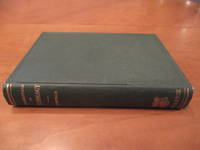
Bookplate of V.M. Turnbull inside front board suggests this copy may have belonged to the owner of the famous collection now held by the Fitzwilliam Museum at Cambridge. Bookplate of Hugh John McLean upon front free endpaper. [4], 443 pages. All six plates present. The entire catalogued Franks bequest contained 35,098 plates. Above-average wear to publisher's black cloth. Innumerable small light pencil marginal tick marks beside items of interest. Narrow opening in binding at page 259. Volume II only of this renowned three volume reference. Book
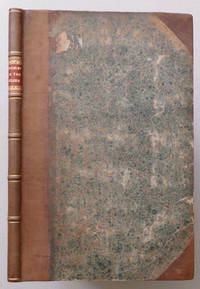
Bookplate of V.M. Turnbull inside front board suggests this copy may have belonged to the owner of the famous collection now held by the Fitzwilliam Museum at Cambridge. Bookplate of Hugh John McLean upon front free endpaper. [6], 387 pages. All six plates present. "Includes several minor and supplementary series, viz., one of about two hundred anonymous plates which it has not been found possible to identify; Royal plates; plates of Universities, Colleges and Schools; Premium or school-prize plates; plates of Ecclesiastical, Parochial, and Public Libraries; Naval and Military and Legal and Medical plates; with those of City Companies and Public Offices, Booksellers, and Circulating Libraries. The volume also furnishes notes of a few family plates supplementary to the main series: these have for the most part been discovered in and transferred from the Foreign portion of the testator's collection. Last comes a Heraldic Index to all those plates which, although anonymous, have been identified and inserted in their proper alphabetical places in the main collection." - from Preface. The entire catalogued Franks bequest contained 35,098 plates. Above-average wear to publisher's black cloth. Binding intact. Innumerable small light pencil marginal tick marks beside items of interest. Intriguing light pencil annotation beside item 32550A, a reproduction of a James Worsley plate, on page 319 reads "a copy of the original is in my collection", possibly adding further weight to the suggested provenance of this volume. Volume III only of this renowned three volume reference. Book
1745000649Toulon France. Good. 1745. Hardcover. On offer is a stunning look into the the mind finances and economy of Rudelle Dalzon a landlord caterer and food supplier in pre Revolutionary France on the French Riviera. Many layered very thick elephant folio list many many hundreds of transactions for rents properties listed supplies purchased traded sums loaned and paid plus many pieces of ephemera stuffed inside. Unpaginated in original boards on thick paper there are at least 200 pages at two inches thick. Rudelle begins in 1745 and writes well into 1780s. There are at least two businesses running and ancilliary loans with corresponding notes. Mentions of trade with members of the King's staff. Many years of research in this ancient ledger. Rudelle diarizes his thoughts regarding most years in a special middle section of the book. Truly fascinating pre-Revolution manuscript and a delight for historians of the French Riviera. This journal boasts a very discreet Ex Libris HPK label identifying it from the library of the famed book collector Hans Peter Kraus.; French; Elephant Folio - over 15" - 23" tall; ANCIENT MANUSCRIPT COMMERCE HANDWRITTEN HAND WRITTEN JOURNAL LEDGER MEMOIR PERSONAL LOG HOLOGRAPH AUTOGRAPH DIARY DIARIES ANCIENT ANTIQUE TOULON LANDLORD APARTMENT REAL ESTATE CATERING PRE FRENCH REVOLUTION FRENCH RIVIERA MONACO . hardcover
19380184531949 1950 1951 1952 1953 1954 1955: Association For Symbolic Logic 1938 1939 1940 1941 1942 1943 1944 1945 1946 1947 1948 1938. First Edition 1st Printing. Grey-blue Wrappers. Very Good. 53 Separate Numbers 1938-1955 In Original Wrappers As Issued. Not Ex-Library Never Bound. Scarce In Original Condition Like This As Almost All Surviving Issues Were Those Bound For Libraries. Condition Varies From Very Good To Fine. Vol 3 1938 Nos. 1 3 And 4; Vol. 4 1939 No. 4; Vol 5 1940 Nos 1 3 4; Vol 6 1941 Nos. 1 2 4; Vol. 7 1942 No. 2; Vol 8 No. 1 2 And 4; Vol 9 1944 Nos. 2 3 4; Vol. 10 1945 Nos 1 2 3 4; Vol 11 1946 Nos. 1234; Vol 12 1947 Nos 1 2 3 4; Vol. 13 1948 Nos. 1 3 4; Vol. 14 1949 No. 2 4; Vol 15 No. 1 2 3 4; Vol 16 1951 Nos 1 2 3 4; Vol 17 1952 Nos. 1 2 3 4; Volume 18 1953 Nos 12 4; Vol 19 1954 Nos 1 2 4; Volume 20 1955 No. 4. " . The Extant Gains Registered By The Modern Symbolic Treatment Of Logic Have Become Such An Essential Factorin Making Pronouncements Regarding The History Of Logic That We Are Constrained To Say That An Essential Knowledge Of Symbolic Logic Have Become An Indispensable Condition For Any And All Fruitful Study Of The History Of Logic" Heinrich Scholz"Concise History Of Logic". As It Is Impossible To Show That The Cause And Effect Of Any Physical Event Can Be Isolated Sufficiently To Make The Effects Of Forces Susceptible To A Complete Logical Analysis The Connection Of Physical Science And Logic Remains Tangential And Tenuous. The Impossibility Of Exactly Physically Limiting Definition Of Sources And Effects Of Forces In Social Science Make Law Economics And Politics Ridiculous And The Rest Of Social Science Merely Entertaining. The Scientific Use Of Logic Is Limited To It's Use In Occam's Razor The Endless Process Of Successive Removal Of Improper Statements Relationships And Associations In Statements About The Physical World And The Refinement Of Unscientific Arguments In The Imaginary World To Make Them More Acceptable To Contemporary Sensibilities. <br/> <br/> Association For Symbolic Logic 1938 1939 1940 1941 1942 1943 1944 1945 1946 1947 1948 unknown
1797035987London: G. Nicol 1797. 1st Edition 1st Printing. Hardcover. Very Good . 11 1/8" Tall. Frontispieces Plates And Illustrations. Ii Xxxiv518; Ii Xx 626. The Two Complete Text Volumes In Full Size Text Blocks 10 5/8" Tall; The Plates Were Issued 1796 In A Separate Volume Not Present Here; But The Plate Of The Camellia Sesanqua Is Present Between Pp 466 And 467. Original Quarter Morocco Binding Five Bands Morocco Spine Labels Over Boards Covered With Marbled Paper Original Off-White Endpapers Preliminary And Final Blank In Each Volume. Bindings With Old Wear But Nicely Furbished Morocco Labels Clean With Brilliant Gilt A Little Loss Of Leather At Tops Of Spines And At Top Right Front Spine Edge Paper Frayed Along All Edges Of Boards Hinges Tight Contents Clean Just A Few Tiny Foxing Spots. Small Very Old Booksellers' Label Of The China Times Bookseller 94 Consular Road Tientsin. And Another From Sydney. Former Owner's Signature Dated 1894 Erased In Volume 1 Of George Ernest Morrison And A Few Marginalia Which Appear To Be His; George Ernest "G. E." Morrison 1862 - 1920 Also Known As Morrison Of Peking Or Chinese Morrison Was An Australian Adventurer Appointed In February 1897 As The Times Correspondent In Peking Despite His Lack Of Knowledge In The Chinese Language. He Traveled To Vladivostok And Reported To The Times That Russian Engineers Were Making Preliminary Surveys From Kirin Towards Port Arthur Then Sent A Telegram To Say That Russia Had Presented A Five-Day Ultimatum To China Demanding The Right To Construct A Railway To Port Arthur. This Was A Triumph For The Times And Its Correspondent But He Had Also Shown Prophetic Insight In Another Phrase Of His Dispatch When He Stated That "The Importance Of Japan In Relation To The Future Of Manchuria Cannot Be Disregarded". After A Visit To Siam And England Then To Australia 1899-1900 He Returned To Peking. When The Boxer Uprising Broke Out And During The Siege Of The Legations From June To August Morrison As An Acting-Lieutenant Showed Great Courage Always Ready To Volunteer For Every Service Of Danger. After A Siege Of 55 Days The Legations Were Relieved By A Multinational Force Which Then Ransacked Much Of The Palaces In Peking With Morrison Taking Part In The Looting. There Was Great Uncertainty Regarding The Future Of China In The Following Months And Through The Times Morrison Managed To Depict A Skewed Picture Before The British Public. While Russia And Japan United In Opposing Any Dismemberment Of China The Country Was Nevertheless Punished By The Imposition Of A Heavy Indemnity. In 1904 Morrison Became A Correspondent With The Japanese Army. He Was Present At The Entry Of The Japanese Into Port Arthur Early In 1905 And Represented The Times At The Usa Peace Conference. In 1907 He Crossed China From Peking To The French Border Of Tonkin And In 1910 Rode From Honan Across Asia To Russian Turkestan. From Andijan He Took A Train To St Petersburg And Then Traveled To London Arriving On 29 July 1910. A Great Chinese Physician Dr. Wu Lien-Teh Succeeded In Staying The Spread Of This Mortal Sickness Which Seemed To Threaten The Whole World. Morrison Published A Series Of Articles Advocating The Launching Of A Modern Scientific Public Health Service In China. When The Chinese Revolution Began In 1911 Morrison Took The Side Of The Revolutionaries. In August Morrison Resigned His Position On The Times To Become Political Adviser To The Chinese Government And Immediately Went To London To Assist In Floating A Chinese Loan Of £10 Million. In China During The Following Years He Had An Anxious Time Advising And Endeavoring To Deal With The Political Intrigues That Were Continually Going On. He Visited Australia Again In December 1917 And Returned To Peking In February 1918. He Represented China During The Peace Discussions At Versailles In 1919 But His Health Began To Give Way And He Retired To England Well Aware That He Had Only A Short Time To Live. He Died On 30 May 1920 . A Nice Historical Association. Later Ownership Signatures Of G B Wilson. <br/> <br/> G. Nicol hardcover
19320001553PHILADELPHIA PENNSYLVANIA PA. Very Good. 1932. On offer is an amazing archive of three 3 original manuscript diaries 1932 1934 and 1935 handwritten by Sidney Irving Brody future medical doctor Naval Captain flight surgeon and the first commanding officer at the Naval Hospital at Quonset Point. Sidney was born in Philadelphia Pennsylvania. Extensive biographic notes follow the description. The first diary was written during his senior year at Northeast High School where he was an excellent student. The other two diaries were written while he was attending the University of Pennsylvania with the latter written during the author's senior year at U of P and he wrote of taking an aptitude test for a medical career and making application to medical school. He eventually graduated from the Hahnemann Medical College in Philadelphia. This diary is a stand out for a number of reasons. On the one hand this is a truly unique study in the beginnings of a young man's adulthood with a considerable future ahead of him that will require him to perform great physical and emotional feats. The author reveals himself intimately expressing his feeling and even base desires. Researchers and historians of men's studies or gender studies of this era will be appreciative of the opportunity to see his psyche revealed even before he ever began his studies of medicine we do note however that Sidney studied anatomy and chemistry in relation to the opposite sex with gusto and successfully so it seems. It really is quite unique to read a young man so expressive in a diary. The 1932 book is quite full and there is an entry for every day. He wrote about his daily activities both school and social. He was an avid tennis player and included in this lot is a framed Tennis Team award. His father bought him a car in his senior year of high school and while attending college the author lived at home. In the summer he was a camp counselor and also traveled to NYC and Atlantic City where his family vacationed each year. Dr. Brody was very interested in all sports and wrote about meeting some baseball greats: April 13."Babe" Ruth and his wife came to school today. We gave him a cup April 19."Mickey" Cochrane came up to school today. Interviewed him. He gave a nice talk Jun 19.Got up early and went to school. The St Louis Cards were there. Met them." He had many girlfriends throughout these years and seemed to put them in two categories - those he took on formal dates and treated with the utmost respect and those that he either picked up in his car or those that would "neck": Jan 24 1932 Got up late and lounged around. Went down to the library about 4:00. After supper went over to Stan's. Took Rochelle to Beth Sholom dance. Was pretty nice. She seemed to take more interest in the other guys. I guess I'll take someone else out next time I go out. Feb 1 Arose late as usual - lounged around in the afternoon. Today was Rochelle's 17 th birthday and I had the extreme honor of taking her out. Bought her an expensive box of candy and we went out with Milt and Eleanor. Went to the State and the Golden Gate. Spent a lot of money tonight. Had a nice time. Sep 21 Drove Stan to the doctor. Then we went to Ethel Horvanti's where I saw Adelle. I then painted the fenders and lights on my car. At night I went over Cooper's where the gang was. Walked Rochelle home. Sat and talked to her. She said that she thought she was in love with me !!! Believe it or not !!!!! Dec 31 Went over to Rochelle's in the afternoon. Had it out with her. Then went to Ruth Koppenheim's. Wright took Rochelle to Harry Grossman's affair at the Ben Franklin. Kissed Rochelle for the first time in over a year. Got in at 9:30 Had a swell time. July 30 Got up at a reasonable hour. Then went to Dittenfast and played tennis with Mort. Had a nice match. After supper at Mort's we went around trying to pick up some broads. Cruised around the whole city including Woodside. Finally got two near home. Took them for a ride and got a good feel. Aug 5 Arose late and sent over to Rochelle's for about an hour with Lena. Left and drove her to get her bathing suit. After supper took family for a ride. Then got Mort and we took the Germantown girls for a ride. Got a good feel and was stopped for driving one handed. May get a summons." A couple of times the author described his sexual experience in clinical terms once adding he didn't have a very good time. He also wrote of problems with girls: "Aug 24 Up early. Was Bernice's birthday. Went over Ruth Koppenheims with Stan Rochelle and Audrey. Audrey fainted on account of Stan not loving her. At night called for Rochelle and Audrey at the Colby theater. Went up to Rochelle's apartment. Audrey tried to take iodine and commit suicide the dope because Stan didn't love her. He had to do some tall convincing to get her to believe him. Took them for a ride. Dec 25 Lounged around in the afternoon. Had the family and friends over for dinner. At night took Mimi to RI . Rochelle was was there and I had my hands full." Although the author wrote much about his experiences with girls social activities parties etc. he approached adulthood with a sense of purpose in both his education and his path towards becoming a doctor. He often wrote about someone named Martin in the diaries. Martin must have been a physician as the author occasionally wrote of going to Philadelphia General with Martin. He once observed an autopsy and wrote of assisting in a couple of very minor surgeries. Martin seemed to have an influence on the author's decision to become a doctor: "Apr 6 Nothing much doing in school. After school went with Harry Green to Convention Hall. Saw General Motors exhibit. Went in Phila General Hospital and saw Martin. Went all around Psychopathic department. Ate supper with him in the hospital. He then gave me material for talk. Came home and did lessons. Aug 11 Got up slightly late. Rochelle called up so I went over there. Stayed there all afternoon. At night got Mort and went over to Rochelle's. Went for a ride and stopped at Kemmer's. Came home and Uncle Steve and Martin and all the girls were here. Took them home. Martin showed me his place at the Hospital. It's swell. Mar 17 Arose pretty early and went to the Philadelphia General Hospital. Saw an autopsy. Apr 20 After school went over to Martin's. We then went to the Phila Gen Hospital and I made the rounds with him. Attended a conference led by Dr. Robinson." Sidney Irving Brody went on to graduate from the Hahnemann Medical College in 1941 He was affiliated with the Frankford Hospital in Philadelphia. The three diaries are all hardcover one is a Wanamaker the other two are slightly larger at 8 1/2" x 5 1/2" and both cover are attached but have detached from the spine on the front hinge. All three diaries have an entry for everyday of the year. Overall VG. BIO NOTES: Obituary: Sidney Brody 1st commanding officer of Quonset Naval Hospital dies at 96. Capt. Sidney I. Brody the first commanding officer of the Naval Hospital at Quonset Point and the first physician to pilot a Navy jet and land on an aircraft carrier died Saturday at his home in Brookline Mass. at the age of 96. A native of Philadelphia and the husband of the former Muriel Myers to whom he was married 69 years Brody was a pioneer in the field of aerospace medicine. When the Navy developed its F-9 jet he was the first to take it to an altitude of 60000 feet. Commissioned a Navy lieutenant junior grade in the Navy Medical Corps in 1942 Brody worked as a Navy flight surgeon in several venues including China and the Philippines when he developed his interest in flying according to his wife. By 1947 he had undergone training as a naval aviator and became the medical officer for Carrier Air Group 4 serving aboard the aircraft carrier Franklin D. Roosevelt. After becoming a physician and test pilot he served as a liaison to the Naval Bureau of Aeronautics and the Bureau of Medicine and Surgery and in the early 1950s was part of team that developed the first pressurized flight suit for pilots for high-altitude flights. Brody eventually became the first senior medical officer aboard the Saratoga. Then influenced by President John F. Kennedy's physician Janet Travell he developed innovative treatments for myofascial pain discovering that sore throat pain often originates in the neck muscles. In 1966 he became the first commanding officer at the Naval Hospital at Quonset Point continuing there until his retirement as a Navy captain in 1970. It was then that he moved to Cumberland where he continued to practice internal medicine for 28 years focusing on chronic pain and immune disorders. He also taught for a short time at Brown Medical School and made rounds at Rhode Island Hospital. Burial with military honors in B'nai Israel cemetery. ; 8vo - over 7¾" - 9¾" tall; KEYWORDS: HISTORY OF USN UNITED STATES NAVY PHYSICIAN FLIGHT SURGEON SIDNEY IRVING BRODY PHILADELPHIA PENNSYLVANIA UNIVERSITY OF PENNSYLVANIA HAHNEMANN MEDICAL COLLEGE QUONSET POINT NAVAL BUREAU OF AERONAUTICS BUREAU OF MEDICINE AND SURGERY MYOFASCIAL PAIN BROWN MEDICAL SCHOOL DEPRESSION ERA JEWISH JUDAICA JEWISH DOCTORS JEWISH SERVICEMEN JEWISH AMERICAN SERVICEMEN DOCTORS MEDICINE TEST PILOTS PRE WORLD WAR II HANDWRITTEN MANUSCRIPT AMERICANA DOCUMENT LETTER AUTOGRAPH DIARY JOURNAL LOG KEEPSAKE WRITER HAND WRITTEN DOCUMENTS SIGNED LETTERS MANUSCRIPTS HISTORICAL HOLOGRAPH WRITERS DIARIES JOURNALS LOGS AUTOGRAPHS PERSONAL MEMOIR MEMORIAL PERSONAL HISTORY antiquité contrat vélin document manuscrit papier Antike Brief Pergament Dokument Manuskript Papier oggetto d'antiquariato atto velina documento manoscritto carta antigüedad hecho vitela documento manuscrito . hardcover
19400001501SENNEVILLE QUEBEC QC CANADA. Good. 1940. On offer is a sensational relic of mystic and occult study and observation being an annotated copy of 'Oracles of Nostradamus' by Charles A. Ward published in New York 1940. The handwritten and typed notes are by the occultist Cecilia Ruth Stevenson of Senneville Quebec Canada. She was a disciple of Prince Rakockzy the Comte de St. Germain. As stated in the book it is one of only 27 specially prepared copies for her occult initiates. Cecilia Ruth Stevenson who owned a vast occult library and was the wife of the Canadian correspondent of the Times London newspaper and her son Professor Ian Stevenson 1918-2007 was Professor of Psychiatry at Virginia University and inherited her interest in the paranormal considered herself to be a disciple of the mysterious Prince Rakoczy also called the Comte de St. Germain the Hidden Ascended Master who is claimed to have appeared and reappeared at intervals throughout history. Her notes predict earthquakes plague famine cataclysm 10% of the world`s population surviving fall of the moon rock etc. Written in the 1940`s her handwritten comments on Nostradamus successfully talk of Hitler and Mussolini an Arab leader World Government etc. There is a bookplate of Madame Blavatsky`s Theosophical Library in London and that of "The New Era Universal Occult Truth Libraries Sponsored By Cecilia Ruth Stevenson. Disciple of The Master Rakoczy. Custodian Emilie M. Cruttenden". VG Condition.; Manuscript; 12mo - over 6¾" - 7¾" tall; KEYWORDS: ARMAGEDDON SORCERY END TIME RAPTURE CATACLYSM PREDICTION MASTER RAKOCZYM EMILIE M. CRUTTENDEN COMTE DE ST. GERMAIN SEERS PROPHECY PROPHESIES CECILIA RUTH STEVENSON NOSTRADAMUS OCCULT SOOTHSAYERS CHARLES A. WARD SPIRITUALISTS ASTROLOGY ASTROLOGICAL GENDER STUDIES SOCIAL STUDIES HERMETIC MAGIC CHALADEAN DEMONOLOGY NEO-PLATONIC WOMEN STUDIES ASTROMANCY CELESTIAL BODIES ASTRONOMY PARAPSYCHOLOGY PSYCHICAL RESEARCH PSYCHIC PHENOMENAHOROSCOPE CHARTS FORECASTING MAGIC ARCANE HANDWRITTEN MANUSCRIPT DOCUMENT LETTER AUTOGRAPH KEEPSAKE WRITER HAND WRITTEN DOCUMENTS SIGNED LETTERS MANUSCRIPTS HISTORICAL HOLOGRAPH WRITERS AUTOGRAPHS PERSONAL MEMOIR MEMORIAL PERSONAL HISTORY ARCHIVE DIARY DIARIES antiquité contrat vélin document manuscrit papier Antike Brief Pergament Dokument Manuskript Papier oggetto d'antiquariato atto velina documento manoscritto carta antigüedad hecho vitela documento manuscrito Papel Horoscopy Divination Michel de Nostredame Clairvoyance Hoax Hoaxes Occultus metaphysical Supernatural mystical Cabalistic Delphian Delphic Arcane Blavatsky Theosophical Library Sibylline . unknown
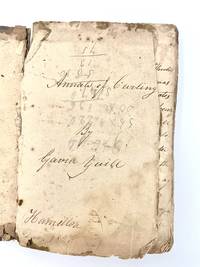
1820000002BHAMILTON SOUTH LANARKSHIRE SCOTLAND. Fair. 1820. On offer is an original 1820 handwritten account giving details of the start of the Curling Club in Hamilton Scotland. The title page reads "Annals of Curling" by Gavin Yuille. Hamilton 1820 In November Seventeen Hundred and Seventy Seven years it was granted by the hon. Magistrates and town council that the Society of Curlers in Hamilton shall have full power and privilege to make and retain a loch of water". The six written pages tell of the start of the Society who the members are and a curling Song of the group. Singularly unique ancient collectible of the sport. The book proper is in only fair condition but the pages are complete and very legible. ; Manuscript; 24mo - over 5" - 5¾" tall; Lanarkshire Glasgow Motherwell The Roaring Game Sports Sporting Curling Scotland History Scottish Rink Briar Handwritten hand written autograph autographs signed letters document documents manuscript manuscripts writers writer author holograph personal Songs Music National Anthem antiquité contrat vélin document manuscrit papier Antike Brief Pergament Dokument Manuskript Papier oggetto d'antiquariato atto velina documento manoscritto carta antigüedad hecho vitela documento manuscrito papel. .
19160001314ENGLAND UK GREAT BRITAIN FRANCE. Very Good. 1916. On offer is an original small archive of four 4 ephemeral items including: two 2 note pad style diaries and two 2 check books with stubs and unused checks all being handwritten and having belonged to General Alfred E. Bradley 1864-1922 Chief Surgeon of the American Expeditionary Force in France during WW1. This archive relates to his serving as a military observer in England during 1916 and1917 just prior to U.S. entrance into war through to the War's end. Historians and collectors of the era will recognize the uniqueness of original material from high ranking officers. The first diary dated "Trip July-Aug. 1916 and has a French stamp on the cover. Bradley has signed his name in pencil on the cover "Bradley". It starts out seeming to be an accounting book but morphs into cryptic notes made covering various subjects including medicine dosages prisoners etc. perhaps notes to jog his memory later. Here are snippets from the first: "Off. auxiliary part of 29th C.S. Georgina Court. 6 A. S. in operation _ to train 500 wounds received in previous riding adjacent 18:20 and German prisoners. German Pris. working in road. camp latrine in operation. Drop pits 14-20 feet with close fly tight box. signed Col. Bradley. bring in trucks not practicable seen by enemy. Anti Gas G____ vacuum tried but not found a success a mixt. of pyogenes & capsulates 2000 cases. German wounded arrived shot by own men. July 26 to Haig . Sir Sloggett . soldiers in France. To Lt. Col. Hording for lunch. Coffin board touch litter operating table with slots removable ext. from litter. Lt. Col. Goddard dinner. General Graham Thomson G.C.P.O. Capt. Prise R. E. of Camp. 60-70000 troops 15000 beds 10 Genl. Hospitals. Jaw cases Dr. Hoit. Dentist Powers Plastic not as good as Valendre and Koscasion judging from what we saw. Darkins-Alexis Carrel- 5% parts are used: Camus notes too severe as originally intended Mrs. W. R. Vanderbilt. Dinner Mrs. Brown Lunch Col Cosby Dinner Logan. Vaseline gauze 1st layer gone. Oct. 12 1916 Visited Blandpool convalescent Hospital. spent 2 hours going about. Capacity 2000 in 4 Divisions 500 each. Condition as a pool. Race course buildings Offices etc. in grand stand. hospital proper for serious cases and local aid 120 beds. all work done in a.m. when finished men have liberty to go and come up to 9:30. Each has a ticket which he hands in when he goes out and reclaims in entering. Tickets left at 9:30 show delinquents. Punishment is meted as at any pool. See to Regs. Lord Derby War Hospital in Warrington ." From book 2 dated: "Dec. Trip 1916. Edinburgh Trip Jany. 7" and is on Note Pad of the Medical Dept. U.S. Army. This is similar to the other "note pad diary." In part: "Left Charing Cross Station 11:30 . left S. S. Victoria about 2 p.m. arrived Balogue 3:30. sleeper to Paris arrived Dec. 12 9 a.m. went to A. Provost Marshal told would not have white pass until Sunday Dec. 17. 11 a.m. called at Embassy saw A.M. Sharpe Sloope. His Sur Commander Sayles Sigbee U.S.N. Capt. Smith U.S. M.C. Col. Cosby Capt. Boyd. Dec. 13 Spent a.m. at Am. Amb. til 12. Luncheon with Capt. Churchill at "Viel". Dec. 14 Rothschild took us to Val de Grace the America School and museum. Then to Issy. then to Embassy: at Cafe Durand on Ave. Victor Hugo. Dec. 15 to Campigue by train. at Horse Palace visit to hospital. Dec. 18 left Paris by train for Armien at 10 a.m. met by officer who took us to H.Q. 4th Army at Quici Lt. Col. Faivens James Lowe Col. Dindoir Genl. O'Keefe.in p.m. visited German Prison Camp at C.C. O. . had tea. back to Armine at Hotel Belfort for night. Dec. 19 to the front. Maj. Howe thought Alfort Frecous Montuban Breton Wood Petit At B. Wood saw a section of Field Artillery. Also at Bagetine Petit an advanced station connected to front by narrow gauge r.r. with little trucks to bring in patients. returned to front and saw German dugout at station of F.A. returned to H.Q. 4th Army for tea and dinner. Officers met- Capt. Hightatoe Maj. Howe Lt. Col. Foncous Col. Sinclair Col. Howes etc. Dec. 21. went with Col. Russell to S. Hosp. No. 3. . Col Heine saw burns and trench feet ox and ambionic . Visited No. 11 S. Hospital in Shooting Club. Lt. Col. Tribacteay: using Carrel pariphin. No. 1 General venereal cases 1500 or more. P.M. visited No. 6 Gen. Col. Archer. More truck of knee injuries and head cases. . at G. H. 6 saw Carrell cases just in from front; doing well . Col. McCrea C.O. Maj. Groves surgeon also Capt. Morrison. At G. Hospital 22 saw Col. Perry Maj. Robinson goes into detail about sanitary measures wounds etc. Blankets in most stations steamed every 2 weeks for men coming from front: every 2 weeks for troops going to front. Average are steamed 1000 a day. Rest Camp for troops on hill huts and tents: 8 camps are under C.O. Same plans as stations. Field Bakery or Boulogue bakes 75000 loaves a day about 1000 men employed sends bread to front by motor 20 loaves to a Culap sand.July 15 arrived Edinburgh 8 a.m. . . went to hospital. Col. Catterill O.C. . a wood house taken over for war purposes. met Prof. Ritchie. Jan. 16 went to Jamor Stiles at 9:30 in his motor to Banguor War Hospital . Dr. Jones in our company. work shops for orthopedic cases. draws diagrams of splints he saw . Brain cases closing up cranial opening with celluloid plastic. 2 cases 20 standing. put into wounds and closed if possible. applied and left open as long as 4 weeks without change. If discharge appears it is simply cleaned up externally and outside dressing put over. Few cases of lead food poisoning. patients in good condition. Left Newcastle at 4:54 arrived Leeds 7:35. message from Sir B. M. to operation infirmary." As to the check books the first is from The Seaboard National Bank and contains some unused checks including notations all in Bradley's hand of checks he used and the purposes for the checks the period is from March 1917 through Feb. 1918. An unused 2 cent stamp is taped in the front cover. The second check book is similar covering the period from July 1917 through May 1918. Bradley apparently used these check in France and there are two unused checks from the Farmers Loan & Trust Co. located in Paris. Again notations on the stubs of those checks he used indicating their use including one "advance for uniform". BIO NOTES: Bradley was born in N.Y. and graduated from Jefferson Medical College in 1887. He entered the Army Medical Corps in 1888 as a 1st Lt. and Asst. Surgeon at Fort Slocum. He then spent most of his early career out West at Fort Omaha Nebraska and Fort Sully South Dakota and was involved in the Sioux uprising at the Rose Bud Indian Agency. As Captain in 1893 he served at Forts Custer and Yellowstone. During the Spanish-American War and the Philippine Insurrection Bradley served on a hospital ship that traveled to Cuba Puerto Rico Gibraltar Japan and Hawaii. He was Attending Surgeon in the Philippines and later Commanding Officer of the Division Hospital in the Philippines. In May 1916 prior to America's entrance into WW1 then Colonel Bradley was sent to England as a Military Observer while Wilson "kept us out of war" he was not stupid to think we would stay out of war and wanted to be prepared in all aspects including military medical. When the U.S. finally entered the war in April 1917 Bradley was promoted to Brigadier General and became Chief Surgeon of the American Expeditionary Force in France. He became ill before the close of the war and returned stateside in 1918 but was awarded the Distinguished Service Medal for his services abroad. He retired from the military in 1920 and died in 1922. His son Major General Follett Bradley was the Commanding General First Air Force in 1942. Fifty or so pages between the diaries less in the financials Overall VG. ; Manuscript; 16mo - over 5¾" - 6¾" tall; AEF AMERICAN EXPEDITIONARY FORCES AMERICA ENTERS WORLD WAR ONE BRADLEY WORLD WAR I WWI DOCTORS AT WAR MEDICAL MEDICINE SURGERY SURGEON HANDWRITTEN MANUSCRIPT DOCUMENT LETTER AUTOGRAPH DIARY JOURNAL LOG KEEPSAKE WRITER HAND WRITTEN DOCUMENTS SIGNED LETTERS MANUSCRIPTS HISTORICAL HOLOGRAPH WRITERS DIARIES JOURNALS LOGS AUTOGRAPHS PERSONAL MEMOIR MEMORIAL PERSONAL HISTORY BRITAIN BRITISH BRITISH EMPIRE RAF World War I WW I TRAVEL GERMANY ANTIQUITÉ CONTRAT VÉLIN MANUSCRIT PAPIER ANTIKE BRIEF PERGAMENT DOKUMENT WESTERN FRONT EUROPEAN THEATRE EASTERN FRONT . unknown
1916000839LONDON ENGLAND UK. Good with no dust jacket. 1916. Decorative Cloth. On offer is an unpublished autograph poem handwritten by English dramatist illustrator and reformer Laurence Housman 18651959 an internationally celebrated playwright pacifist and early queer rights advocate. In 1916 Housman was at a moment of creative and ideological fervor: a queer English moralist witnessing the New World during Europes collapse into war. From the first stanza of his poem his dinner-table gratitude becomes an appeal for peace human fellowship and the suffragists dream of equality beyond empire. Housman sailed to America on the S. S. California and arrived in New York on March 1 1916 for his first ever visit and speaking tour. On the day he arrived on American soil he addressed his peers at the New York Players Club describing himself asan ardent suffragist clarifying his plans to give several talks before suffrage gatherings during his two months in America and stating that he is motivated by the conditions which the war has imposed on women in England has made me stronger in my desire to see women sharing equal rights with men. The war has forced women to work alongside men at occupations that are entirely new to them New York Tribune March 2 1916. Two days later at the National Arts Club on Gramercy Park he gave an interview to Nixola Greeley-Smith for The Evening World published in the Evening World on Mar 6 calling New York an over-masculine city and arguing that the worlds collapse lay in mens worship of hardness and property. Between these public statements and his first scheduled lecture at the National Arts Club on March 8 1916 Housman attended a convivial Monday gathering memorialized in this poem framed as an after-dinner toast yet weighted with moral urgency. The poem simultaneously honours and appeals to his American contemporaries. He opens in light self-mockery: Twas my delight on a Monday night As I chanced to be in the localityOf your chamber of Tubs to sample the clubsHebdamoal hospitality. The lilting rhythm and comic diction are deliberate masks. What begins as social verse quickly turns into transatlantic reflection. Housman contrasts the free fellowship of his New York hosts with the murderous tribalism consuming Europe. Another excerpt: Relaxed from the weight all horror and hate Of Europes bloody necrophilists I tucked in my knees quite smugly at ease With dramatists painters and novelists. There close on one bench sat German and FrenchAnd Japanese come from the Yellow Seas And Russian and Hun were sharing the fun Forgetting their racial jealousies. Across these stanzas the club becomes a microcosm of peace its international ease a rebuke tothe Old Worlds savage diplomacies. The humor ripens into moral vision: Housman sees in America what he no longer sees in European instinct for cooperation un-poisoned by imperial pride. Still neutral in early 1916 the United States represented for him a moral frontier a country that might prove civilization could be sustained by intellect and empathy rather than domination. The poets tone initially genial grows exhortative: Its the Head not the Heart that still keeps us apart Theres Peace knocking sure at Americas door If shell only have courage to open it. In this closing appeal Housman urges America to become the conscience that Europe in its masculine self-destruction had forfeited. From his vantage the United States stood as the possible inheritor of a more humane order one that valued life above property and reason above violence. Beneath its convivial surface the poem reads as a transatlantic sermon: a queer humanists hope that the gentler instincts of art intellect and fellowship might survive in the New World even as they perished in the Old. The reference to a chamber of Tubs and Hebdomadal hospitality likely nods to one of the weekly arts-club dinners around Gramercy Park perhaps the Players or the National Arts Club where dramatists painters and novelists gathered on Monday evenings. The phrase is likely Housmans own humorous coinage. As an artifact this piece stands at the intersection of literature gender history wartime conscience and transatlantic reform. It documents Housmans first week in America his first direct appeal to an American audience and his earliest poetic response to the United Statesa nation he imagined as moral heir to a Europe undone by its own masculinity. Written by a pacifist homosexual suffragist in the middle of the Great War it fuses charm and prophecy dinner talk and diplomacy turning gratitude into theology. The poem remains unpublished and unrecorded and its date five days after arrival makes it the earliest known creative work from his 1916 tour. Autograph poem on two lined leaves in Housmans hand signed and dated March 6 1916; mounted photograph opposite showing Housman with a group of men in formal dress one likely his brother A. E. Housman ; bound in red-marbled boards with cloth spine and manuscript title label. Bright clean and well-preserved; Good condition. BIO NOTES: Laurence Housman 18651959 was a playwright illustrator and reformer whose blend of aestheticism and activism made him one of the moral architects of early-twentieth-century Britain. A founder of the Mens League for Womens Suffrage and later of the British Society for Sex Psychology he championed pacifism socialism and sexual honesty long before such positions were safe. As the brother of poet A. E. Housman he shared the familys literary refinement but turned his art toward ethical theatre and public conscience. His private homosexuality lived in celibate integrity shaped his philosophy of tenderness and reason over force. His fantasy play Prunella 1906 achieved New York success under Winthrop Ames in 1914 paving the way for his American tour of 1916. During the war he lectured widely on art citizenship and peace arguing that the enfranchisement of women and the rejection of militarism were inseparable moral imperatives. A Club Dinner Memory composed in New York during his opening week remains a rare firsthand document linking queer authorship suffrage activism and wartime humanism across the Atlantic. ; Manuscript; 4to - over 9¾" - 12" tall; 3 pages; HANDWRITTEN MANUSCRIPT DOCUMENT LETTER AUTOGRAPH DIARY JOURNAL LOG KEEPSAKE WRITER HAND WRITTEN DOCUMENTS SIGNED LETTERS MANUSCRIPTS HISTORICAL HOLOGRAPH WRITERS DIARIES JOURNALS LOGS AUTOGRAPHS PERSONAL MEMOIR MEMORIAL PERSONAL HISTORY BRITAIN BRITISH BRITISH EMPIRE RAF World War I WW I TRAVEL ANTIQUITÉ CONTRAT VÉLIN MANUSCRIT PAPIER ANTIKE BRIEF PERGAMENT DOKUMENT WORLD WAR ONE WWI SOCIALISM PACIFISM SUFFRAGE SUFFERAGE COMMUNISM BOOK SELLING HOMOSEXUALITY GAY LESBIAN STUDIES ; Signed by Author . hardcover
19480001733FALKLAND ISLANDS MALVINAS STH ATLANTIC ANTARCTICA. Very Good. 1948. On offer is a very unique pair of original 1948 - 1949 manuscript relics of Antarctic exploration being a diary and typed proposal with tucked in ephemera handwritten by "Wm. Gwynn Thomas Base F Argentine Islands West Graham Land" a crew member of the British Falkland Island - Argentine Island Base Camps for supply and research to the Antarctic Region. The main book is a handwritten diary and then there is a typed diary of a special expedition. The author does an exceptional job putting the reader right in the thick of this most interesting and historically well known island group. Dated February 24th 1948 through January 22nd 1949 he writes approximately 100 pages this is a triplicate book ruled feint lines - the carbon has only been used to copy one sheet at a time not triplicate of everyday life from the mundane daily chores on what they ate weather the dogs they had with them the maintenance tasks they had to undertake etc. and the many trials and tribulations of one living in a weather challenged remote and contested area. Along with the book there is a typescript journal on loose sheets of paper. By way of an introduction it begins: 'The John Biscoe arrived at Base F this evening and we met the chaps who were leaving when we took over. I went ashore fairly early and stayed chatting with the boys until quite late. The four who had been here a year seemed very pleased that their time was up & that they were getting out of it at last. Burd met the base leader Watson and Reeve the two general assistants and Stock wireless operator. From their tales I gather they have had quite a pleasant year one or two complaints but nothing serious. Most of the time we were together Stock & I discussed the radio set up here; he said he had managed to keep communications going very well during the year but did not have much to say in praise of the transmitter which in his opinion was too low powered for this job and suggested a bigger transmitter would greatly ease the work. March 31 It has been very cold today but I managed to keep fairly warm. Dave and Frank caught four seals this afternoon and had a bit of a job getting them back through the brash ice. April 1 Frank overhauled the small German engine today but it is of no use there's more rust than engine. I worked on the Villiers and had great success for a change. August 29 Base A party have got back safely so the 'panic stations' is over. Apparently they had been cut off and have had quite a time. September 16 There was a code message in today from base E telling of arrangements for a new Base K and also saying that I would be going to Signy a subantarctic island in the South Orkney Islands next year.Nov 2 .Jumbo brought back some sea urchins a limpet and a very strange looking item in the shape of an overgrown worm. We haven't decided what it might be yet but we have pickled it for future reference. We had penguin steaks livers and hearts today and a few eggs found in the victims. The taste of these compare favourably with the corresponding items in a chicken. Personal opinion only Dave did a pilot balloon ascent using a Langersed 150" balloon it reached 15000 feet before disappearing into some cloud.' Included in the journal are also 2 blank documents entitled 'COLONY OF THE FALKLAND ISLANDS AND ITS DEPENDENCIES JUDICIAL OATH. I. do swear that I will well and truly serve Our Sovereign lord King George VI in the office of Justice and Peace and I will do right to all manner of people after the laws and usages in force in this Colony without fear or favour affection or ill-will. Sworn at. The typed document is entitled Base D Hope Bay Grahamland Diary for the 5th Sledge Journey. The proposal was that a party of five with four teams should set out on a journey to Snow Hill Island with the object of completing the survey and geology of Ross Island.Weds Sept 1st to Thurs Sept 30th including a summary page on number of days miles made good total miles accumulative average etc & a report on the Condition of Hut of Swedish Expedition on Snow Hill Island. This document does not seem to be for the same year as the larger journal as there is no mention of a Sledge trip in there for September. HISTORICAL NOTES: RRS John Biscoe 1944 1584 tonnes operated from 1947-55. Named after the English explorer John Biscoe who discovered parts of Antarctica in the early 1830s. When a party of British scientists attempted to land from John Biscoe at Hope Bay Graham Land on February 2 1952 an Argentine shore party fired shots over their head ref Wikipedia There is a hand drawn map of the Argentine Islands where Base F is marked. The journal measures 11"x 8.25" x 1" has light wear to edges of cover and pages tightly bound. Overall VG.; 4to - over 9¾" - 12" tall; KEYWORDS: HISTORY OF WM. GWYNNE THOMAS WILLIAM GWYNN THOMAS JOHN BISCOE FALKLAND ISLANDS ANTARCTIC EXPLORATION ANTARCTICA ARGENTINE ISLANDS MALVINAS POLAR EXPLORATION ANTARCTIC REGION COLONY OF THE FALKLAND ISLANDS ANTARCTIC RESEARCH STATION TRAVEL SOUTH AMERICA SOUTH ATLANTIC ARGENTINA BRITAIN BRITISH COLONIES BRITISH COMMONWEALTH BASE D HOPE BAY GRAHAMLAND DIARY FOR THE 5TH SLEDGE JOURNEY SNOW HILL ISLAND SWEDISH EXPEDITION HANDWRITTEN MANUSCRIPT DOCUMENT LETTER AUTOGRAPH DIARY JOURNAL LOG KEEPSAKE WRITER HAND WRITTEN DOCUMENTS SIGNED LETTERS MANUSCRIPTS PHOTO ALBUM PHOTOGRAPHIC ALBUM HISTORICAL HOLOGRAPH WRITERS HANDSCHRIFT HANDGESCHRIEBEN MANUSKRIPT DIARIES JOURNALS LOGS AUTOGRAPHS PERSONAL MEMOIR MEMORIAL PERSONAL HISTORY antiquité contrat vélin document manuscrit papier Antike Brief Pergament Dokument Manuskript Papier oggetto d'antiquariato atto velina documento manoscritto carta antigüedad hecho vitela documento manuscrito Papel . unknown
19420001290MUNICH MUNCHEN GERMANY GDR. Very Good. 1942. On offer is the remarkable original World War II manuscript German home front diary handwritten by renowned European Opera star Augusta Gusty Rainhoff Marie Watzlawik later then Hart. The 6 ¼ x 7 ¼"diary written in German is dated 1942 through 1945 with over 67 ½ pp handwritten entries pages Gusty provides a riveting and intimate narrative. Culture and love fate and practicality with the backdrop of war collide as the writer has to deal with the realities of war the tangled web of her personal life as well as concern about her career if she should become pregnant. Intimate and a rather unique perspective on the war from within Germany makes for what collectors and researchers of the era will agree is quite rare coming from the heart of Hitler's favored city of Munich the city known as Hauptstadt der Bewegung "Capital of the Movement". The diary begins with her personal conflict. Here are some snippets: "May 14 This book shall capture my experiences after my parting with Clemmens. I'll be alone I hope.we want to be good friends and help each other in dismal Munich. May 15 Today is a new beginning in my life. I said my farewells with Clemmens and it's serious he's being posted to Africa. These two last days with Clemmens were not so nice they perhaps made me unhappy. in spite of the fact that he said he loves me. but I know and feel it that I love him much more. It is after all a farewell for ever or so I suspect and it's probably for the best. I pray for him that he remains healthy . I tell . I am engaged that my husband is. This is the role I will play now. I'm much more enthusiastic I will write him letters because in hot Africa he will need me. God grant that I don't have a child I don't want one. I want to be free for the Theatre. I was too happy now I have to pay. That's how life is. June 3. Rehearsals.I sing Elixsir. Mr leads . he was nice and very courteous. The men are interested an officer. the work gives me pleasure. June 7. Work and more work. It all works. Often I am lonely. I love him so I pray every evening for him. June 15. The premiere is over. All went well and I am satisfied. . Flowers.I am just tired because of the rehearsals. June 16 . God give me strength. July 23. the intrigues of Margot Adam have they backfired. August 8 Soon I will be 27 years old. I can't give up my career. What's the matter with Clemmens I love him. August 12. A letter came back. Lord God what is the matter I love him. yes I don't know anything it's enough to make me crazy. What is my life without Clemmens There can't be anything I can't stand it. Lord God love him and keep him safe for me. August 17. Clemmens is wounded. I hope he'll be okay. . I can't work how is he" Along with the diary is an autograph letter postmarked Beuthen 1944 addressed to her in Munchen Munich 4 pp written front and back for total of 8 pp. Overall VG. BIO NOTES: Originally from Austria she was a rather famous operetta soubrette soprano in Nürnberg in the late 40's and early 50's. She married an American officer Major Charles J. Hart in 1951 and lived in Texas.; German Language; 8vo - over 7¾" - 9¾" tall; GUSTY HART RAINHOFF OPERA OPERETTAS SINGERS SOPRANOS HOME FRONT WORLD WAR TWO WORLD WAR II WWII WW2 WHITE ROSE MOVEMENT GERMANY GERMAN THIRD REICH NAZIS HITLER WATZLAWIK HANDWRITTEN MANUSCRIPT DOCUMENT LETTER AUTOGRAPH DIARY JOURNAL LOG KEEPSAKE WRITER HAND WRITTEN DOCUMENTS SIGNED LETTERS MANUSCRIPTS HISTORICAL HOLOGRAPH WRITERS DIARIES JOURNALS LOGS AUTOGRAPHS PERSONAL MEMOIR MEMORIAL PERSONAL HISTORY AMERICANA CORRESPONDENCE TAGEBUCH Heimatfront Zweiter Weltkrieg Handgeschrieben antiquité contrat vélin document manuscrit papier Antike Brief Pergament Dokument Manuskript Papier oggetto d'antiquariato atto velina documento manoscritto carta antigüedad hecho vitela documento manuscrito Papel Hauptstadt der Bewegung Capital of the Movement . unknown
19110008136NEW ORLEANS WASHINGTON DC NEW YORK USA. Very Good. 1911. On offer is a rare and absolutely outstanding train log detailing a nearly 10000 mile journey around the United States. The log book measures 11 inches by 8 inches and contains 60 typewritten pages. The heavy paper cover has a small tear but otherwise the journal is in excellent condition. E.M. Martin is the author of the California Conductor's Excursion or A Trip of 9800 Miles. The journal was written immediately following this 1911 odyssey. In 1911 between May 2nd and June 6th 110 railroad conductors from California boarded a California Conductors Special and embarked on an epic journey around the United States. The conductors were travelling with their wives and were members of El Capitan division No 115 of the Order of Railway Conductors ORC a labour union representing train conductors in the United States their destination was ORC National Convention held in Jacksonville in May 1911. In that month they would pass through 27 states and 2 foreign countries covering some 9800 miles. The Special consisted of an Observation Car a Dining Car 4 Sleeping Cars and 1 Baggage Car. Altogether they would travel on tracks owned by 17 different railroad companies. Some of the entries are quite terse: "Los Angeles May 6 Arrived here 7:30 A.M. and made a 25 min stop. Seven of us took an automobile ride through the principal parts of the city." Other entries are much more extensive such those for New Orleans Washington D.C. and New York City. "New Orleans May 6 Arrived here 8:30 A.M. . A crowd of us hired a sightseeing auto and saw the principal points of interest. The longest street also the principal street is called Canal St. It is four miles long. The highest part of the city is three feet below the level of the sea. We saw the Post Office building the cornerstone of which Henry Clay laid Liberty Monument and the Old St. Louis Hotel. . Don Pedro Emperor of Brazil was once its guest. Henry Clay was banqueted here on one occasion at a cost of $20000. Ex President McKinley was banqueted here on his first visit to New Orleans while Governor or Ohio. . While the Hotel was used as the State Capital Gen Phil Sheridan during the troublesome period of reconstruction drove out the Legislature in session at the point of the bayonet. ."; "Washington May 11 . we had no time to lose as the reception at the White House was from five to six. From the reception hall we were ushered out upon the lawn in single file in the President's private grounds where we were presented to the President and Mrs. Taft who stood upon the lawn waiting to welcome us. One of the guards served Mrs. Taft and she drank with us. . After luncheon the waiters passed cigars to the men . While being served the President sat upon a lawn seat talking ." He describes in detail the rooms they visited in the White House as well as other places of interest in the city. They spent several days in New York City and toured extensively. Martin has a sharp eye for detail as this example illustrates: ". One of the main parlours is trimmed in dark Spanish Oak with tapestry panels. The ceiling is decorated with beautiful paintings. In the Louis XVI Dining Room the wainscoting and pilasters are of Circassian walnut enclosing panels of golden silk tapestry." His descriptions in many cases conjure up images of old sepia-coloured photographs: "El Paso May 4th. Here in El Paso we saw for the first time a street car water wagon. We saw the big smelter and the old adobe houses where the Mexicans lived. Between two and three thousand 'insurrectos' were camped just across the river. The hillsides sand gulches were lined with their camps which were very poor. Red Mexican blankets were seen all over the hillsides. Some of the men were bathing in the river; others were washing their clothes. They all seemed very poorly clad. .". Thousands of Mexicans flew to El Paso and the United States following the Mexican Revolution in 1910 which started with insurrection of several states in northern Mexico. It started the first large wave of Mexican immigration into the United States. "Detroit May 24th. . Visited Garhartts Glove and Overall Factory. Here we saw them cut fifty-four pair of overalls at one time with an electric cutter. The head cutter gets from $25 to $35 per week. Workers at the machines get $10 a week. They work by the piece. ." The journey finished back in San Francisco at 7:00 A.M. on June 6th. This is a rare and superb look at life communities all around the United States at one moment in time. Historians and geographers will find in it a goldmine of information and observations. Martin is a very good writer and a keen observer. This Journal can serve as an excellent benchmark for any number of comparisons whether historical geographic the Salton Sea for example economic or social. Whether large industrial cities or small communities across the south or up the Atlantic seaboard Martin lets his reader have a window seat on this epic journey around America.; Manuscript; 4to - over 9¾" - 12" tall; KEYWORDS: HISTORY OF EARLY 20TH CENTURY TRAVEL RAILROADIANA 1910s PROGRESSIVE ERA; UNITED STATES CALIFORNIA; CALIFORNIA CONDUCTORS EXCURSION 1911; E.M. MARTIN; ORDER OF RAILWAY CONDUCTORS OF AMERICA ORC; EL CAPITAN DIVISION NO. 115 ORDER OF RAILWAY CONDUCTORS NATIONAL ORC CONVENTION IN JACKSONVILLE; LABOUR UNION OF TRAIN CONDUCTORS AMERICAN RAILWAY UNIONs RAIL TRANSPORT IN THE UNITED STATES; RAILROADS OF AMERICA; PRESIDENT WILLIAM TAFT; TRAIN TRIPS; AROUND THE UNITED STATES; CALIFORNIA RAIL TOUR; TRAVEL JOURNAL; AMERICA BY TRAIN IN THE EARLY 20TH CENTURY CALIFORNIA CONDUCTORS SPECIAL; TRAINS OF THE EARLY 20TH CENTURY MEXICAN REVOLUTION REFUGEES MEXICAN REFUGEES IN EL PASO WHITE HOUSE IN THE EARLY 20th CENTURY AMERICANA HANDWRITTEN MANUSCRIPT DOCUMENT LETTER AUTOGRAPH WRITER HAND WRITTEN DOCUMENTS SIGNED LETTERS MANUSCRIPTS DIARY DIARIES JOURNALS PERSONAL HISTORY SOCIAL HISTORY HISTORICAL HOLOGRAPH WRITERS AUTOGRAPHS PERSONAL MEMOIR MEMORIAL ANTIQUITÉ CONTRAT VÉLIN DOCUMENT MANUSCRIT PAPIER ANTIKE BRIEF PERGAMENT DOKUMENT MANUSKRIPT PAPIER OGGETTO D'ANTIQUARIATO ATTO VELINA DOCUMENTO MANOSCRITTO CARTA ANTIGÜEDAD HECHO VITELA DOCUMENTO MANUSCRITO PAPEL . hardcover
18450001065Providence Rhode Island RI. Good. 1845. On offer is a remarkable historic handwritten manuscript relic of Rhode Island's involvement in the Mexican War and regional commerce being the journal and ledger of George W. Guild who was a soldier in the Mexican War a merchant and a Justice of the Peace in Providence Rhode Island. This 266 page hand numbered book was used from 1845 - 1850 as a ledger for Mr. Guild's prosperous business. He tended to do most of his invoices notes sales and orders on the right side of the open book. The left side was saved for other notes relating to store operations. It is here on these mostly blank pages than George Guild wrote his Mexican War travels and adventures very soon upon his return from service. There are about a dozen pages of written narrative detailing travel vessels conditions battles brothers-in-arms etc and then more pages of point form notes possible chapter headings etc. It seems without doubt that Guild is documenting his immediate memories with an intent to later flesh out for either a book or memoir. A noted dated 1850 in the book confirms this as Guild makes mention of the cost of publishing 100 copies of a 100 page book at a cost of $1.00 per book. Students of the time period will know that when Congress declared war against Mexico on May 13 1846 volunteers in large numbers enlisted to fight against her. About this period the movement of General Taylor or "Old Rough and Ready" as his men called him from Corpus Christi to the relief of Fort Brown on the Rio Grande River was the theme of general conversation throughout the state. Meetings were called by the commanders of the various military companies after the battles of "Palo Alto" and "Resaca-de-la-Palma" for the purpose of offering their services to the government. The act passed by Congress to increase the strength of the army by adding ten additional regiments to be enlisted for the war defined the "quota" of Rhode Island to be one company of infantry. Now there were four companies in process of organization at this time but only one could be mustered into service. In January 1847 the Legislature of Rhode Island made an appropriation of $2500.00 for volunteers for the Mexican War. To Captain Joseph S. Pitman and Lieutenant John S. Slocum was assigned the duty of preparing the company intended for the field. The Second-Lieutenancy was subsequently filled by the appointment of John Glackin of Woonsocket R. I. George W. Guild was appointed First Sergeant. Frequent changes were made in the "non-commissioned" officers as their various qualifications developed. The following is the "roster" after entering the valley of Mexico. His narrative is first hand and well expressed. This was a fascinating time in Rhode Island history and this rare journal is a unique first hand original relic of that time. Overall G. ; 24mo - over 5" - 5¾" tall; MEXICAN-AMERICAN WAR TEXAS REVOLUTION MEXICAN WAR MEXICO VOLUNTEERS RHODE ISLAND HANDWRITTEN MANUSCRIPT DOCUMENT LETTER AUTOGRAPH DIARY JOURNAL LOG KEEPSAKE WRITER HAND WRITTEN DOCUMENTS SIGNED LETTERS MANUSCRIPTS HISTORICAL HOLOGRAPH WRITERS DIARIES JOURNALS LOGS AUTOGRAPHS PERSONAL MEMOIR MEMORIAL PERSONAL HISTORY AMERICANA ECONOMY COMMERCE MERCHANTILE; Signed by Autograph . unknown