48 402 résultats
18760008154SOMMERVILLE MASSACHUSETTS. Good. 1876. On offer are a group of three 3 original detailed manuscript diaries handwritten by the City Engineer of what was known as the Chicago of New England. The diaries were written in 1876 1878 and 1880. In 1876 George Kimball was the City Engineer of the city of Somerville MA. Just north of Boston Somerville was the scene of significant events in the Revolutionary War. Now it was going through a rapid industrialization that would see its population mushroom from 15000 to 90000. The meatpacking industry was so large that Somerville was dubbed 'The Chicago of New England'. Brick-making was the second largest industry. All of this growth put significant strains on the city's infrastructure and Kimball played a very important role in seeing projects advance. He works tirelessly and his diary reflects the many meetings he attended or participated in: At stable at 7. Then to Cutter St. CB City Hall at 8AM Located drinking fountain at Davis Sq at 9am at bridge with giving grades for wall for 10-11 then to Packer St 3d at the work on drinking fountain Union Sq Dinner at City Hall PM Bd of Health at 4:15 Heywood Hartness called At City Hall to meet Cmtee on Bridges at 8 PM no quorum Aug 21 A stable at 7:15 Dane St sewer City Hall at 7:45 Vine St. Sewer at Dane & Vine 8-9 to City Hall to Summit St to Bow St met with LL Towes and Dr. White and talked about nuisance on Towes land. City Hall Vine St. 11:30 Dane St noon Dinner At City Hall in PM cal. no. Bricks on W Lane sewer At 5PM visited Mr. Towes land on Prospect St with Dr. White to Newton to see Aunt Supper At 7:30 met Dr. White & Mr. Towes at Dr. Whites house. We agreed to put off the case until Monday provided he would fire up immediately Sept 20 At St sewer Linden St catch basin visited Allen St. With Bennett at 9:30 to locate CB City Hall Central St sewer Dinner City Hall in PM At Central St sewer at 3 Meeting of Mayor and Aldermen in evening also Sewer Cmtee Nov 12 He makes reference to dropping by the FRR offices Sept 16 1876. FRR or the Fitchburg Railroad ran right through the city - it's main line is now part of the Massachusetts Bay Transit Authority. Other businesses are mentioned as well such as Marine Britannic A Parker's Stone Factory and others. There are rarely any references to personal matters. He notes: . Home in evening worked on closet Dec 6 Went to City Hall in AM waiting in lot saw Father Mother and Daniel Dinner our case was reached about 3:30 Mother came Dec 11 The 4 1/2 months recorded in his diary gives and excellent picture of the work he is doing in 1876 and people he is interacting with as they work to build the infrastructure of this fast-growing city. In 1879 the pace continues unabated: To City hall at 1 P.M. State House also called on Ald. Gallinan. on 3 P.M. train on L.R.R. Arranging matters with Assistants etc. Jan 2 1879 In early January he journey to 'the West'. He noted stops in Montreal Toronto Detroit and Chicago before reaching his destination in Galesburg IL. In Galesburg he visited several churches including the "African Church". His entry for Han 13th is quite brief: At Galesburg. Having good time. Jan 13 1879 Returning home he is immediately immersed in the demands of his job: At work on Health Report all day. Meeting of Board of Health. Leave Committee at 7 P.M. Board of Ald at 7:30. Feb 3 1879 At City Hall at 8. Writing Annual Report. . Feb 5 1879 At stable at 7. George St. Sewer at 7:30. City Hall at 8 A.M. To Semple's Nursery with Mayor. Called on Dennis O'Connel left word that contract had been awarded for Park Ave. And Chandler St. sewer E Cambridge. City Hall home to Bell School looking over drainage Ald. Dodge and Mr. Page. . Dinner At City Hall at 2. To cutters land Bdg and Arlington fixing grade of street City Hall at 4:30 Home all evening. Apr 29 1879 1880 saw no change in his pace: City Hall at 8:15. Making a Lithograph and finishing the Rules and Regulations. Dinner 1P.M. To Cedar St. sewer near Hall St. Mike crawled through the sewer and took two bricks from drain out of Hall St. . Feb 14 1880 This is a superb resource for municipal historians. It gives a clear picture of the work of a City Engineer in late 19th century America. The scale and scope of his responsibilities and the demands of his position are very clear. An engineering researcher would be able to read the first hand account of the daily demand's on Kimball's time as he juggles major projects the most important being the sewer system being installed as the city grew. These were massive projects for their time. All of this was occurring at the same time that neighbouring Boston was building its first sewer system. Overall these three diaries give an excellent look inside the urban infrastructure development process at this critical juncture in America's history.; Manuscript; 12mo - over 6¾" - 7¾" tall; KEYWORDS: HISTORY OF; GEORGE A KIMBALL SOMERVILLE MASSACHUSETTS REVOLUTIONARY WAR PROSPECT HILL BOSTON MBTA CONSTRUCTION URBAN DEVELOPMENT URBAN MODERNIZATION SEWERS TUNNELS UNDERGROUND INFRASTRUCTURE BRIDGES BEANTOWN FITCHBURG RAILROAD MASSACHUSETTS BAY TRANSIT AUTHORITY PUBLIC TRANSPORTATION BRICK MAKING INDUSTRIAL CITIES OF NEW ENGLAND MIDDLESEX COUNTY; AMERICAN URBAN HISTORY; URBAN PLANNING; CITY ENGINEERS IN LATE 19TH CENTURY AMERICA; SOMERVILLE MUNICIPALITY; CITY GROWTH IN THE LATE 19TH CENTURYAMERICANA HANDWRITTEN MANUSCRIPT DOCUMENT LETTER AUTOGRAPH WRITER HAND WRITTEN DOCUMENTS SIGNED LETTERS MANUSCRIPTS DIARY DIARIES JOURNALS PERSONAL HISTORY SOCIAL HISTORY HISTORICAL HOLOGRAPH WRITERS AUTOGRAPHS PERSONAL MEMOIR MEMORIAL ANTIQUITÉ CONTRAT VÉLIN DOCUMENT MANUSCRIT PAPIER ANTIKE BRIEF PERGAMENT DOKUMENT MANUSKRIPT PAPIER OGGETTO D'ANTIQUARIATO ATTO VELINA DOCUMENTO MANOSCRITTO CARTA ANTIGÜEDAD HECHO VITELA DOCUMENTO MANUSCRITO PAPEL . unknown
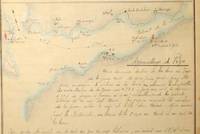
19200001798ABOARD THE USS BORIE. Good. 1920. On offer is a sensational privately-kept deck log and scrapbook of the USS BORIE DD-215 compiled by 20 year old sailor George Vernon Porter. It was kept from the time of the ship's commissioning in 1920 launched 1919 all the way through the end of this sailor's tour on the ship in 1921. The BORIE had an incredible history. Starting in 1920 she conducted a round the world cruise punctuated by fighting in the Black Sea during the Russian Civil War.Then she travelled and served in China During WWII she distinguished herself in near hand-to-hand combat with U-405. History records that the combatants were so close a knife thrown by a BORIE crew member killed a German U-boat sailor. Her Commanding Officer earned the Navy Cross for their brave actions which resulted in the eventual sinking of both U-405 and BORIE. The sailor who kept this log was one of the original crew and kept nearly day-by-day notes on the location and employment of the ship. We note a typed letter signed by his father dated April 1918 giving permission for his 17 year old son to enlist in the Navy. He mentions that being a former past Commander of the Spanish War Veterans he would appreciate any consideration. Adding great depth to the breadth of this log are the copious amounts of artwork he drew and sometimes tipped in including period cartoons scenes he saw during their time overseas and more. He additionally kept well over 100 "scraps" ranging from newspaper clippings to postcards to foreign paperwork and more! Some of the documents are very uncommon and include original Russian Civil War documents official passes etc. many from places and times no longer in existence. The spine cap of the 14 x 9 x 1 inch book is coming away but overall the large book is G.; Manuscript; Folio - over 12" - 15" tall; KEYWORDS: HISTORY OF GEORGE VERNON PORTER USS BORIE DD-215 US NAVY DESTROYER LOG BOOK U-405 NAVAL NAUTICAL MARINE USN POST WORLD WAR I WWI GERMAN U-BOAT RUSSIAN CIVIL WAR RUSSIAN REVOLUTION HANDWRITTEN MANUSCRIPT DOCUMENT LETTER AUTOGRAPH DIARY JOURNAL LOG KEEPSAKE WRITER HAND WRITTEN DOCUMENTS SIGNED LETTERS MANUSCRIPTS HISTORICAL HOLOGRAPH WRITERS DIARIES JOURNALS LOGS AUTOGRAPHS PERSONAL MEMOIR MEMORIAL PERSONAL HISTORY AMERICANA ANTIQUITÉ CONTRAT VÉLIN DOCUMENT MANUSCRIT PAPIER ANTIKE BRIEF PERGAMENT DOKUMENT MANUSKRIPT PAPIER OGGETTO D'ANTIQUARIATO ATTO VELINA DOCUMENTO MANOSCRITTO CARTA ANTIGÜEDAD HECHO VITELA DOCUMENTO MANUSCRITO PAPEL . unknown
19160002148BERLIN GERMANY BROOKLYN NEW YORK. Good. 1916. On offer is a simply fascinating archive of 1916 -1924 manuscript letters journals and related ephemera of a German-Jewish family with extended family in America. The family included Herman Muller the father Mabel the mother and their son Norman plus others that are mentioned include are Uncle Sammy and Grossmama. The family was split between Berlin Germany and Brooklyn New York and Switzerland laater. The group has approximately 90 separate letters equally divided between English and German. There are also letters from a Julius Nickelsburg a family friend. There are another largish group of separate items from school journals to identity papers from Germany included. With the backdrop of World War I and the inherent knowledge of current day readers that World War II is over a not too distant horizon makes for some gripping reading. Add to this that the family is connected to Professor Albert Einstein anecdotally we have learned that Mabel Muller was an administrative assistant to Einstein but we cannot confirm this and he is mentioned at least 3 times that a casual read has noted. The references also seem quite intimate Einstein sent them a letter of condolence regarding the death of Herman we believe in 1927 is mentioned in a letter leading credence to the aforementioned association. We suspect that the German side of the correspondence may hold some more Einstein mentions. Here are some snippets from the three letters mentioning Einstein: Feb .17th 1927; From Mabel Muller on the death of her husband Herman she mentions going to Temple and receiving 150 letters of condolence many from Doctors in Germany in this 3 page letter there is an entry on the second page "Prof. Einstein Letter". For Einstein to have sent a letter of condolence he must have known the family. Yet another letter from Norman's Grandmother mentions Einstein's visit to New York. Writing to Norman Muller in Germany; April 8th 1921 'We are surprised it will take so long for your examination we were in hopes that it would be sooner Prof Einstein and wife are here now I cannot explain to you what a big fuss and lots of attentions the Americans are giving him big big honors big receptions by the city and big dinners by the rich people over here. Many times Sammy and Alice are invited also and he does look so peculiar but the people do not care for that because he is so highly educated. We are in hopes now soon to have peace with Germany which I think will be soon.' Then: Berlin Wed Sept 27th 1922 'It is very nice of Mrs. Wallach to send those papers some time you must write a letter of thanks also should note yesterday I met Prof Einstein he was glad to see me I was wishing you were here.' There are seven journals from a University or college in Germany one titled Physik another titled "No Stem- Mu" in differential calculus; others journals are from a French course and yet others have more advanced calculus and Math problems one has the name of Norman Stienhardt Muller on the front the cover. Also Included are many intriguing calling cards written in German They belonged to different German Doctors for example: Dr. Paul Herzberg Dr Otto Ollendorff Dr Oscar Salomom Dr Leimforfer. Interestingly one of the calling cards mentions in pencil that the individuals were murdered in Auschwitz during the holocaust Herr und Frau Alexander Contizer. Overall G.; Manuscript; 4to - over 9¾" - 12" tall; KEYWORDS: HISTORY OF HERMAN MULLER MABEL MULLER NORMAN STIENHARDT MULLER ALBERT EINSTEIN GERMAN JEWISH COMMUNITY ASSOCIATION HOLOCAUST WWI ERA WORLD WAR I JULIUS NICKELSBURG DR. PAUL HERZBERG DR OTTO OLLENDORFF DR OSCAR SALOMOM DR. LEIMFORFER PRE WORLD WAR II WWII ALEXANDER CONTIZER HANDWRITTEN MANUSCRIPT AUTOGRAPHED AUTHORS DOCUMENT LETTER AUTOGRAPH KEEPSAKE WRITER HAND WRITTEN DOCUMENTS SIGNED LETTERS MANUSCRIPTS HISTORICAL HOLOGRAPH WRITERS AUTOGRAPHS PERSONAL MEMOIR MEMORIAL PERSONAL HISTORY ARCHIVE DIARY DIARIES JOURNAL LOG PRIMARY SOURCE FIRST HAND ACCOUNT SOCIAL HISTORY PERSONAL STORIES LIVING HISTORY ANTIQUITÉ CONTRAT VÉLIN DOCUMENT MANUSCRIT PAPIER ANTIKE BRIEF PERGAMENT DOKUMENT MANUSKRIPT PAPIER OGGETTO D'ANTIQUARIATO ATTO VELINA DOCUMENTO MANOSCRITTO CARTA ANTIGÜEDAD HECHO VITELA DOCUMENTO MANUSCRITO PAPEL . unknown
19050002580Good. 1905. On offer is a superb unique original 1905 French midshipman's manuscript logbook handwritten by 24 year old Hippolyte Joseph Vial. While in many ways this French Frigate's log is a classic midshipman's journal filled with the technical data compiled for centuries by eager men who served aboard a ship of War but the depth and breadth of the well filled journal represents and throughout iterates the talent and 'old salt' nature of Vial who is on the verge of his Lieutenancy and a mere four years from his own command has for the naval life; the 142 page folio book contains 24 hand drawn maps in colored pencil done and further littered with drawing and illustrations with a super eye of a man that will serve his country for nearly 40 years at sea and one day win the Legion of Honour. EDITOR'S NOTE: In our years of handling many 100s of nautical logbooks this is the first time we have seen a French Naval manuscript book. BIO NOTES: One online source: Officiers/Hors EN - Hippolyte Joseph VIAL 1881 - 19. Né le 3 janvier 1881 à CAGNES-sur-Mer - Décédé. Fils de Victor et de Claire ARBIN Marié le 7 octobre 1911 avec Marguerite PUVEREL. Entre dans la Marine en 1898. Promu Enseigne de vaisseau le 1er octobre 1906 Port Toulon. Au 1er janvier 1908 sur le transport "SHAMROCK" détaché au MAROC Cdt Étienne RAFFIER-DUFOUR. Le 11 mars 1908 affecté au Service central de la Flottille de torpilleurs des mers de CHINE. Idem au 1er janvier 1909. Au 1er janvier 1911 port TOULON. Au 1er janvier 1912 sur le cuirassé "SUFFREN" 2ème Escadre Cdt Maurice MERCIER de LOSTENDE. Au 1er janvier 1914 port TOULON. Lieutenant de vaisseau le 8 mai 1915. Au 1er janvier 1917 port TOULON. Chevalier de la Légion d'Honneur. Au 1er janvier 1918 port TOULON. Au 1er janvier 1921 Commandant la canonnière "GRACIEUSE" Escadrille de dragage du 5ème arrondissement maritime à TOULON. Capitaine de corvette le 10 septembre 1922. Capitaine de frégate le 22 septembre 1927. Officier de la Légion d'Honneur. Le 23 septembre 1931 Commandant les compagnies de formation de marins indigènes à BIZERTE. Versé dans le cadre de réserve le 3 janvier 1935 port TOULON. ; French Manuscript; Folio - over 12" - 15" tall; KEYWORDS: HISTORY OF HIPPOLYTE JOSEPH VIAL JOURNAL DE BORD HAND DRAWN MAPS FRIGATE FREGATE NAVAL NAUTICAL MARINE MARINER SAILOR SEAMAN OFFICER MIDSHIPMAN FRANCE FRENCH CADET GARDE MARINE GUARDIA MARINA HANDWRITTEN MANUSCRIPT DOCUMENT LETTER AUTOGRAPH WRITER HAND WRITTEN DOCUMENTS SIGNED LETTERS MANUSCRIPTS HISTORICAL HOLOGRAPH WRITERS AUTOGRAPHS PERSONAL MEMOIR MEMORIAL AMERICANA ANTIQUITÉ CONTRAT VÉLIN DOCUMENT MANUSCRIT PAPIER ANTIKE BRIEF PERGAMENT DOKUMENT MANUSKRIPT PAPIER OGGETTO D'ANTIQUARIATO ATTO VELINA DOCUMENTO MANOSCRITTO CARTA ANTIGÜEDAD HECHO VITELA DOCUMENTO MANUSCRITO PAPEL . unknown
18680009033PANAMA BAY ARICA PERU VALPARAISO CHILE. Good. 1868. On offer are two amazing books kept by the Midshipman James McFadden Grimes aboard the U.S.S. steamer ship Dacotah. The first is a journal on a cruise from Panama Bay down the Coast of South America to Peru and then Chile and the other is an extraordinary notebook of detailed drawings comprehensive diagrams mathematical figures and many other notes dealing with his time aboard the ship and the knowledge that he possessed to be a part of the crew. The first book the journal begins at anchor in Panama Bay with the ship under orders to sail to Arica Peru. Grimes is a Midshipman and was a Naval Academy graduate. He would be promote promoted to ensign in 1868 but until then his rank was midshipman. During the 1868 cruise of the Dakotah Grimes is in charge of the navigation of the vessel and served directly under the ships captain Commander W. F. Spicer. Each page of the journal contains the daily logs of the ships location course changes and headings and notes on atmospheric conditions. In addition Grimes makes notes on daily activities and orders sightings of other naval vessels and commercial ships and reports on crew discipline and punishments. The course and destination ship wind direction Force Barometric pressure and outside temperature are measured hourly and put down in the book. The chart begins at 1 for 1AM and continues to 12 then begins again at 1 for 1PM and then ends again at 12. On occasional pages the observed latitude and longitude course distance traveled that day and Lat D.R. and Long D.R. meaning the Dead Reckoning latitude and longitude are logged as well. A typical log reads like this: At Sea making passage to Arica Peru. Tuesday May 26th 1868. The day opened cloudy rained now and then till 10 A.M. Cloudy and pleasant during remainder of the day. At 5.30 A.M. lighted fires in port boiler and got ship ready for sea. Ships draught 12.9in. Aft. 12ft-5in. At 11.20 made signal to Steamer Saranac Capt. Fraily for permission to get under way which was granted. At 11.25 hove up port anchor. At 12.15 started ahead and stood down bay of Panama in charge of navigation. At 2 P.M. took departure Island of Bona. At 6 P.M. went to quarters. Secured anchor and under-chains. Made sail as wind allowed. Wind light. Sea smooth. Periodically Commander Spicer inspected the journal and signed the book Examined. Wm. Spicer Comdr. On June 24 the Dacotah arrived in the harbor of Valparaiso Chile. The ship remained there throughout the period covered by this journal until October 31 1868. At that time Grimes formally signed and submitted the journal to Commander Spice for examination. There is a chance that the keeping of the journal was a requirement for his promotion to ensign that year. In Valparaiso the officers of the Dacotah received visitors from the British and Chilean natives and the American Consul. The journal reveals the many shipboard activities and duties expected of a young officer. Grimes describes inspections routine ship maintenance the distilling or condensing of fresh water target and musket practice there is also talk of exercising the crew at the great guns dumping rotten food overboard and practice repelling pirates. Crimes also records details of crew members punishments and court martials. Infractions include desertion fighting disobedience neglect of duty and skulkin ignoring ones duties. Punishments include suspension demotion and confinement in double or single irons: At sea Jun 21 1868. At 10 AM mustered the crew and read the articles of war for also the preceding findings and sentences of a summary court-martial convened on board the ship for the trial of John Hickey C.H. coal heaver accused of desertion and John McNeilly C H of disobedience of orders. In each case the accused was found guilty by a plea of guilty and were sentenced. John Hickey to 30 days solitary confinement in double irons on bread and water. And John McNeilly to be discharged the service with a bad conduct discharge and loss of 3 months pay as Coal Heaver which sentences were approved and ordered to be carried into execution by the power ordering the court. The second book the notebook contains detailed mechanical and engineering notes on such topics as iron ship construction the Dickinson Boiler analysis of salt water coal boiler appendages safety valves the Telescopic Smoke Pipe and many others. There are also incredible and immaculately drawn diagrams and drawings of many ship apparatuses including the ships screw propeller superheaters salinometer safety valves and illustrations on the different strains to which iron vessels are subjected when at sea. Many of these diagrams have numbers included on different parts of the drawing with the accompanying notes as to what each number represents. These diagrams and notes show the impressive amount of knowledge needed for a steamboat crewman in the U.S. Navy. It was during Grimess time at the Naval Academy that a Department of Steam Enginery was inaugurated meaning that Grimes may have been one of the first to be trained on steam engines at the U.S. Naval Academy at Annapolis. There are also many pages of mathematical equations done by Grimes near the end of the book. Because the pages of equations tend to involve many different types of equations it is difficult to ascertain what the equations are of. However the many mentions of longitude and latitude it would seem many of the equations were done to calculate distance and position as would be crucial to know as the navigator of a mid-19th century ship. There is also a page with the names of 20 men who most probably served with him on the Dacotah. The notebook also has one 1 loose letter addressed to Rebecca dated July 30th 1865 and signed Affectionately. M. E. Smith. The letter is religious in nature reminding Rebecca of God and Jesus love. Who M. E. Smith was is unknown but Grimes did have a sister named Rebecca so it is possible she sent James Grimes this letter. The first book is titled in ink on front endpaper "Journal of Mids. Grimes Cruise on board U.S.S. Dakotah May 1868." It contains 162 pages of writing in very legible black ink. The cover shows some wear and tear. The book is in very good structural shape. The notebook contains 288 pages with over half containing some sort of writing or drawing. The writing is crisp and clear in ink just like the first book. The notebook is also in excellent structural shape. Background: James M. Grimes was born in 1847 in Cadiz Harrison County Ohio and entered the U.S. Naval Academy at Annapolis in 1863. During Grimes naval career he served on various ships in both the Atlantic and the Pacific and at the navy yard in New York. He was injured in the line of duty and retired with the rank of Lieutenant Commander in 1886. He died on June 17 1924. The U.S.S. Dacotah 1859 was a large 996 long tons 1012 t steam sloop that served the United States Navy in the Atlantic Ocean as well as in Pacific Ocean. When the American Civil War occurred Dacotah assumed the role of a gunship in the Union blockade of the Confederate States of America. Following duty off the coasts of South and Central America Mexico and California until 26 July 1869 Dacotah remained in an inactive status until sold at Mare Island Navy Yard on 30 May 1873.; Manuscript; Folio - over 12" - 15" tall; KEYWORDS:HISTORY OF JAMES MCFADDEN GRIMES MIDSHIPMAN STEAMER DACOTAH GUNSHIP SLOOP-OF-WAR POST CIVIL WAR ERA PANAMA BAY ARICA PERU VALPARAISO CHILE NAVAL ACADEMY ANNAPOLIS MARYLAND COMMANDER W. F. SPICER ENGINEERING DRAWINGS STEAMSHIP DIAGRAMS NAVAL MATHEMATICS 19TH CENTURY NAVAL SCIENCE NAVIGATION FORMULAS US NAVY PUNISHMENTS NAVAL CRIMINAL ENFORCEMENT AMERICANA HANDWRITTEN MANUSCRIPT DOCUMENT LETTER AUTOGRAPH WRITER HAND WRITTEN DOCUMENTS SIGNED LETTERS MANUSCRIPTS HISTORICAL HOLOGRAPH WRITERS AUTOGRAPHS PERSONAL MEMOIR MEMORIAL ANTIQUITÉ CONTRAT VÉLIN DOCUMENT MANUSCRIT PAPIER ANTIKE BRIEF PERGAMENT DOKUMENT MANUSKRIPT PAPIER OGGETTO DANTIQUARIATO ATTO VELINA DOCUMENTO MANOSCRITTO CARTA ANTIGÜEDAD HECHO VITELA DOCUMENTO MANUSCRITO PAPEL . unknown
19560008133HONG KONG KOWLOON CHINA. Good. 1956. On offer is an interesting military diary from the immediate post WWII years. It measures 5.5 inches by 3 inches and contains 365 page plus memoranda. The cover is in good condition and all pages are intact. It is about 66% complete although many entries are quite brief. K.J. Fillery is the author of this diary. In 1956 he is a Corporal in the Royal Electrical and Mechanical Engineers REME. Casual research has not turned up any additional information but he has noted his service ID number which would make a detailed search successful. Fillery belongs to a Light Aid Detachment LAD attached to the 27th HAA Reg't RA Heavy Anti-Aircraft Regiment Royal Artillery. The 27th was stationed in Hong Kong and the REME LAD unit was attached to it to assist with engineering tasks. On Dec 30th 1956 he embarked for Hong Kong to join the Regiment. He arrived Jan 25th: "Total - 9255 miles. Arrived Kowloon about 0800. Very busy harbour good views of the island. Letter from Mum and Sheila. Weather cool - rather cold in fact. Ferry to Victoria arrived about 1100. Transported with mob of gunners to Stanley Bks miles away over twisty hilly road. Impressive scenery. Installed in L.A.D quarters." Jan 25. Almost immediately he is out shipping - important when you consider the rationing in effect in England at the time: "Started work in gunnery sets. Payday - $40.00. . bought cable release and PO medium filter $4.50. Went to tailors place bottles of pilsner steak egg supper in Sailors Mission House went to New York Theatre - saw "A Day to Remember"." Jan 26. All told he spent 9 months in Hong Kong before being rotated back to England Oct 17th. In those 9 months he travelled throughout Hong Kong visiting shops restaurants theatres cinemas etc. He also details his work whether standing guard duty or working with electrical equipment: ". Everyone knocked off at 1100 to attend Regt sports meeting Boundary Road. Stayed there about 5 min walked & then bus back to Ferry. Went to American Library. Spent couple of hours rooting around. Reasonable selection of books." Feb 16 "Went to town with Dave Fishback over to Kowloon visited YMCA etc. then saw King Henry V for free in evening excellent film though the presentation was not exactly 'West End' . apparently blokes caught a snake cobra down by flying dhobi . " May 19 "Hot day. Did minute portion of work on 4/7. Chemical de-bugging session . " July 31. He was present for the Kowloon Riots of 1956. He notes: "Admin put off owing to riots in Kowloon . Many gunners mobilized into riot squads. Curfew on Kowloon 1930-1030." Oct 11 He shipped out Oct 17th on the British troop ship SS Captain Hobson. Hobson had served as a Royal Navy hospital ship HMHS Amarapoora throughout WWII. En route they stopped in Dakar: "Dakar pop. About 295000 of whom 28000 Europeans. French naval base and commercial port." Nov 26. They docked in Liverpool Dec 5th. His last entry is Dec 8th: "Demobbed!!! He is an avid photographer and has purchased camera equipment in Hong Kong. Some of his memoranda pages contain notes about focal lengths etc. This is an excellent first-hand account of post-war garrison duty in the Far East. There is sufficient detail to paint an interesting picture of a young English soldier dropped into the exotic Far East. Historians will appreciate the corroborating information contained within. His description brings to life the bustling port city of Hong Kong.; Manuscript; 24mo - over 5" - 5¾" tall; KEYWORDS: HISTORY OF POST-WW2 1950S EAST ASIA HONG KONG ENGLAND K.T FILLERY; ROYAL ELECTRICAL AND MECHANICAL ENGINEERS; REME; 27TH HAA REG'T RA; ROYAL ARTILLERY; POST-WAR HONG KONG; KOWLOON; HONG KONG RIOTS; SS CAPTAIN HOBSON; HMHS AMARAPOORA; HOSPITAL SHIPS; BRITISH FORCES OVERSEAS; BRITISH MILITARY IN EAST ASIA IN THE 1950S; LIGHT AID DETACHMENT LAD LIFE IN HONG KONG IN 1956; 1956 FILMS; CULTURAL LIFE IN HONG KONG IN 1950; ENTERTAINMENT IN POST-WAR HONG KONG; STANLEY BARRACKS IN HONG KONG; BRITISH SOLDIERS IN HONG KONG HANDWRITTEN MANUSCRIPT DOCUMENT LETTER AUTOGRAPH WRITER HAND WRITTEN DOCUMENTS SIGNED LETTERS MANUSCRIPTS DIARY DIARIES JOURNALS PERSONAL HISTORY SOCIAL HISTORY HISTORICAL HOLOGRAPH WRITERS AUTOGRAPHS PERSONAL MEMOIR MEMORIAL ANTIQUITÉ CONTRAT VÉLIN DOCUMENT MANUSCRIT PAPIER ANTIKE BRIEF PERGAMENT DOKUMENT MANUSKRIPT PAPIER OGGETTO D'ANTIQUARIATO ATTO VELINA DOCUMENTO MANOSCRITTO CARTA ANTIGÜEDAD HECHO VITELA DOCUMENTO MANUSCRITO PAPEL . unknown

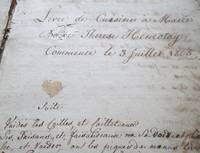
18050002416LIMBOURG BELGIUM. Good. 1805. On offer is a super original begun in 1805 manuscript cookbook with many 100s of European culinary recipes receipts handwritten in French whose origins begin in a castle in Limbourg Belgium. Inscribed 'Livre de Cuisine a Marie Barbe Therese Henrotay Commence le 3 Juillet 1805.' There is one major hand throughout Marie likely with other hands later with other dates of a few entries on the last pages through to the 1840s and remarkably a few from 1915! The recipes are all encompassing: meats desserts baking storage preparation etc. Absolutely stunning in its breadth. We note one pair of very unique to this particular book pages: 263 and 264 enigmatically titled 'Preservatif Contre Cholera morbus - Extrait de la Gaseppe de la D'aip-La Chapelle Du 1st Septembre 1831' which we believe refers to a gastrointestinal illness of cramps diarrhea and sometimes vomiting but not used technically. The well centered inscription bordered with the outline of a wide bottomed flask is otherwise blank of writing. This same page has a hand stamp inscription 'Jos. Dejardin 47 Place St. Georges Limbourg Belgium. We suggest this leads directly back to an ancient food establishment still in use today and we believe called Brasserie St-Georges. The book proper has seen better days. The binding is cracked and loose and someone has what appear to be skewered the book piercing the cover and through several pages but hardly a word of loss but annoying. Otherwise the interiors are legible and as stated several hundreds of ancient recipes. Overall G.; French Manuscript; 8vo - over 7¾" - 9¾" tall; KEYWORDS: HISTORY OF MARIE BARBE THERESE HENROTAY LIMBOURG BELGIUM BELGIAN FLEMISH LOW COUNTIRES HOME ECONOMICS COOKBOOKS COOKERY RECIPES RECEIPTS CURES FORMULAS MEDICAL CHEMICAL CHEMISTRY COOKING REMEDIES PREPARATIONS CULINARY CULINARIA HUSBANDRY EUROPEAN CUISINE CONTINENTAL FOODS ANCIENT RECIPES BAKING FOOD PRESERVATION DESSERTS PATISSERIE KONDITORIE PASTRY SAUCES HANDWRITTEN MANUSCRIPT AUTOGRAPHED AUTHORS AMERICANA MANUSCRIPT DOCUMENT LETTER AUTOGRAPH KEEPSAKE WRITER HAND WRITTEN DOCUMENTS SIGNED LETTERS MANUSCRIPTS HISTORICAL HOLOGRAPH WRITERS AUTOGRAPHS PERSONAL MEMOIR MEMORIAL PERSONAL HISTORY ARCHIVE DIARY DIARIES ANTIQUITÉ CONTRAT VÉLIN DOCUMENT MANUSCRIT PAPIER ANTIKE BRIEF PERGAMENT DOKUMENT MANUSKRIPT PAPIER OGGETTO D'ANTIQUARIATO ATTO VELINA DOCUMENTO MANOSCRITTO CARTA ANTIGÜEDAD HECHO VITELA DOCUMENTO MANUSCRITO PAPEL . unknown
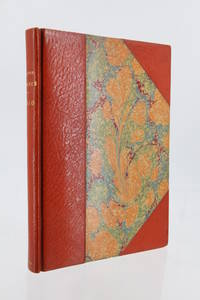
18890002582Good. 1889. On offer is wonderful original manuscript travelogue handwritten by an Englishman who along with seven companions heads to the 1889 Paris Exhibition the World's Fair that introduced the magnificent Eiffel Tower for the very first time. On his trip the author Mr. King meets the creator of the tower Gustave Eiffel as well as Joseph Chamberlain one of the most important politicians orators and reformers in English history. As the diary begins on June 14th Mr. King and 7 others make their way by horse drawn carriage from the Victoria district of London to Newhaven on the southern shore. The very first page contains a stunning drawing of the Eiffel Tower expertly drawn in red ink. As the diary begins on June 14th Mr. King and a party of seven others make their way by horse drawn carriage from the Victoria district of London to Newhaven on the southern English shore. "-June 14th- We were a party of 8 who took return tickets for the PARIS EXHIBITION of '89." They then cross the English Chanel on the SS Rouen. Mr. King shows a talent for descriptive and funny writing here. 'when H.Y. arrived on the boat he was very much troubled with his old complaint viz hunger & it wasn't long before he was licking into cold roast beef & fat pork pickles & anything he could lay his hands on in the cabin this little freak of his cost 2/- & a terrible nightmare in which he found himself griping with grim death.' On arriving in Dieppe France and encountering a 'partially asleep' customs officer they take a walk around the old town of Dieppe. 'We walked all round the Cathedral & never did H.Y. remember anything so picturesque.' They then take a train to Paris. Mr. King draws one cart of this train again with beautiful detail and skill. In Paris the group stays in the Rue Pergolese in the 16th arrondissement. Mr. King draws the layout of the apartment in Rue Pergolese in full architectural detail. It would not be surprising if Mr. King were an architect as his drawing of the layout is remarkable. Each room bed closet and doorway is noted and drawn on this page. Soon after they enter the main grounds of the Exhibition the party of 8 goes about 'looking at the different Oriental styles of architecture which were to be seen on the houses that thickly covered the grounds.' Soon after the Prince and Princess of Wales accompanied by young princes and princesses pass the group as they are walking through the gardens. On the self-same day Mr. King and his party meet Joseph referred to as 'Joey' Chamberlain and his new wife. They then head back to their flat in the afternoon and Mr. King is introduced to a "Mr. Jed Cole trunk maker Covent Garden a quiet looking chap having an appearance of 'rowdy ' disposition." Mr. King draws a little portrait of Jed Cole in the corner of the page. Another day the group goes to the exhibition and climbs the famous Eiffel Tower. As they are climbing up they meet the creator of the tower Gustave Eiffel "the designer of this tower of Babel looking from the summit on the people below which is a height of 1000 feet they looked to us like a lot of ants crawling about." Much of the rest of the exhibition visit is spent remarking on the various attractions with which they entertained themselves though the writer finds much about the exhibition to vividly complain about including the price of food and the unimpressive fountains. Mr. King is most impressed with the international aspect of the exhibition remarking on the Indian Turkish and Egyptian sections as well as the "negroes" and "natives" displayed. The Paris Exhibition did have a "negro village" which displayed 400 indigenous people as a major attraction. They are even taken around the grounds by a 'Chinese carriage.' King draws the carriage. Mr. King and his party do not stay just at the exhibition. They travel to Versailles where Mr. King remarks that the "lake scenery to my mind is perfect landscape gardening & impacts a very please picture to the eye.' They are shown around the grounds by 'a very talkative guide who was very fond of using the word 'doughfin' & when C.O.K. asked him who the dauphin was replied 'he was the grandson of the Emperor & corresponds to your English Prince of Wales' amidst waves of laughter." King and the party go and see the famous actress Sarah Bernhardt but nothing about the play or her acting is noted. Mr. King is quite fond of an excursion to view dead bodies fished from the Seine River. "This is a kind of large fishmongers shop where the dead bodies of those found in the Seine are placed they are laid on an inclined slab of slate so that the water drains off. We saw two bodies there there was a large crowd of people viewing these bodies & I have heard say that French women hold their babies up to see them. There are also plenty of instances of flirting with local Parisian women. King has particular delight with the way his friend pronounces "bonjour monsieur" as "Bong Shoir Monsoo" and eventually refers to it as "B.S.M." King is obviously a very jovial Englishman with a strong sense of human. After a trip to the Louvre in which King writes 'amongst the famous things that took our fancy was Venus a Milo & the Gladiator there was a gigantic collection of pictures by the old masters & after a hearty dinner by the way you will kindly notice that we always enjoyed our meals H.Y. left for home & the others for the 'bon marché'. All throughout the trip there is much written about the food and drink had: "there is no mistake about it we did go in for some fine dinners." Mr. King notes each meal of the day often describing what food and drink were consumed and where. Mr. King and his party return to England the way they came. They take a train to Dieppe and then a ship. The book is in octavo format with a faded spine and marbled endpapers. As noted the journal has small but very accomplished drawings of sights seen including the horse drawn carriage the Eiffel Tower a detailed plan of the layout of the flat at Rue Pergolese and the train at Dieppe. Overall VG. . ; Manuscript; 16mo - over 5¾" - 6¾" tall; KEYWORDS: HISTORY OF TRAVELOGUE TRIP PARIS PARISIAN 1889 EXHIBITION WORLD'S FAIR EXPOSITION UNIVERSELLE EIFFEL TOWER GUSTAVE EIFFEL JOSEPH CHAMBERLAIN HIS ROYAL HIGHNESS SARAH BERNHARDT SEINE RIVER VICTORIA ENGLAND FRANCE LONDON NEWHAVEN ENGLISH CHANNEL DIEPPE RUE PERGOLESE SIXTEENTH ARRONDISSEMENT HUMAN ZOO 'NEGRO VILLAGE' VERSAILLE HANDWRITTEN HANDDRAWN DIARY DIARIES PERSONAL SIGNED DRAWINGS HANDWRITTEN MANUSCRIPT DOCUMENT LETTER AUTOGRAPH WRITER HAND WRITTEN DOCUMENTS SIGNED LETTERS MANUSCRIPTS HISTORICAL HOLOGRAPH WRITERS AUTOGRAPHS PERSONAL MEMOIR MEMORIAL AMERICANA ANTIQUITÉ CONTRAT VÉLIN DOCUMENT MANUSCRIT PAPIER ANTIKE BRIEF PERGAMENT DOKUMENT MANUSKRIPT PAPIER OGGETTO D'ANTIQUARIATO ATTO VELINA DOCUMENTO MANOSCRITTO CARTA ANTIGÜEDAD HECHO VITELA DOCUMENTO MANUSCRITO PAPEL . unknown
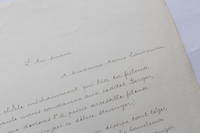
19160009183CAMP COTTON EL PASO TEXAS TX. Good. 1916. On offer is a fascinating journal kept by an officer or high ranking NCO at Camp Cotton in El Paso Texas. He appears to be an officer with the 9th Massachusetts infantry fresh off training from Camp Framingham in Massachusetts who have come down to Camp Cotton. It appears that the troops were sent down to Camp Cotton to take place in the Pancho Villa Expedition attempting to hunt down Mexican Revolutionary Pancho Villa for his role in attacking New Mexico though they may have also been used to provide support for the ongoing Border War between Mexico and America. Beginning in June of 1916 and ending in September of the same year the journal documents the daily every day duties of the officer's command. Such looks into the darily Army command responsibilities in the early 20th century are not easy to come by. Such daily entries offer fantastic glimpses as to the uniform routine and daily activities of the officers and the enlisted men. One entry even goes over each detail of a meeting in which the Infantrys camp was set up:El Paso. Camp Cotton. Sunday July 2 1916. 1st meeting 11 am. Push all work till next meeting later in day. 2nd meeting 5-20 pm. Capt. Lawless will require spare parts and cleaning materials. Tops. 10 pm. Roll call chief and repeat to Regmt. Officers can buy for cash at Depot Quartermaster. Draw for Enlisted Men: 1 hat 1 cord. 1 O.T. shirt. 6 jean undershirts. 6 jean underdrawers. Belt if necessary. 3 breeches - cotton. 1 pr. Leggings. 6 pr. Socks for work. 1 pr. Shoes. 4 pr. Leggings laces. 4 pr. Shoe laces. All men must have one new outfit at all times. The above will be paid for by each man from his ____ of $4.00 for 1set 6 mos. Then $6 or $7 allowance for each 6 mos thereafter. Muster In Rolls. Col. Buck is sending the roll for correction. they must bear names of all officers and men. Ammunition 100 rds must be issued to each man. 6:30 pm. Recd 5 cases of 1200 rounds each from Capt. Lawless same as usual. At 7 pm each man recd 90 rounds which is all they belt can carry. Balance for present will be held by 1st srgt in his tent for immediate distribution. Tents must be ditched and cinders placed in Company seets. Calls Reveiller at 6am and all other calls same as those need used at Framingham. Tents Loop up early in morning drop at 9 am until further advised. Cots Request in for cots. Mess An officers mess will be established. Pay It is understood that Col. Parker is on his way here and will arrange to pay men for 8 days from Mass state funds. There are many more meetings in the new few days as the camp is set up for the soldiers arriving soon to the Camp. The men arrive a few days later around July 11th. There is an officer's meetings: 11 July. Meeting at 10 am. Meat only 2 times a day. Coffee twice a day. Muster and pay bills. Men to keep away from the citizens of the city. Physical inspection this weekend. Thereafter once a week. There is a tremendous amount of information about the nitty gritty details of running a camp full of enlisted men in the early 20th century. What to do if men go AWOL What happens when they are ready to be discharged Who will set up the latrine What supplies to order for the cook staff Who will staff the canteen and what will be served All these details come from the many notes the author took in the twice daily officers meetings held at the camp. The journal ends with notes on a 15 day hike about to take place. This hike may very well be the Infantry getting ready to hunt down Pancho Villa in Mexico though it is unknown: Revelle 4:45 am. Men carry two blankets. One man left believed in prison. Regtl surgeon will decide men who are to be excused. Carry 3 days dry components. Have men report to Capt. Doly 5:30 am. There journal is an absolute wealth of fascinating information and provides a really great amount of daily officer work and details of the life of an enlisted man on the border of the U.S. and Mexico during the Mexican Revolution. The books cover and spine are still in good condition. The covers are marbled paper and show some wear and fading. The book opens from top to bottom not from right to left. There are approximately 65 handwritten pages and the book itself is 110 pages in length. The paper is still in good condition showing only minimal wear and aging. While the binding is still intact it is no longer very tight. The book should be handled with care. The handwriting is clear throughout in pencil. There is so smudging and fading in a few pages but in general the handwriting is clear and legible. The Pancho Villa Expeditionnow known officially in the United States as the Mexican Expedition but originally referred to as the "Punitive Expedition U.S. Army"was a military operation conducted by the United States Army against the paramilitary forces of Mexican revolutionary Francisco "Pancho" Villa from March 14 1916 to February 7 1917 during the Mexican Revolution of 19101920. The expedition was launched in retaliation for Villa's attack on the town of Columbus New Mexico and was the most remembered event of the Border War. OVERALL: G; Manuscript; 8vo - over 7¾" - 9¾" tall; KEYWORDS: HISTORY OF CAMP COTTON EL PASO TEXAS BORDER WAR BORDER CAMPAIGN MEXICAN REVOLUTION PANCHO VILLA EXPEDITION MEXICO-UNITED STATES BORDER U.S.-MEXICAN RELATIONS PERSHING EXPEDITION PUNITIVE EXPEDITION U.S. ARMY 9TH MASSACHUSETTS INFANTRY CAMP FRAMINGHAM WORLD WAR ONE ERA UNITED STATES ARMED FORCES SOUTHERN BORDER RIO GRANDE RIVER HIGH RANKING OFFICER DUTIES ESTABLISHMENT OF ARMY CAMP DAILY OFFICER DUTIES AMERICANA HANDWRITTEN MANUSCRIPT DOCUMENT LETTER AUTOGRAPH WRITER HAND WRITTEN DOCUMENTS SIGNED LETTERS MANUSCRIPTS HISTORICAL HOLOGRAPH KEEPSAKE WRITERS AUTOGRAPHS PERSONAL MEMOIR MEMORIAL ARCHIVE DIARY DIARIES JOURNAL LOG ANTIQUITÉ CONTRAT VÉLIN DOCUMENT MANUSCRIT PAPIER ANTIKE BRIEF PERGAMENT DOKUMENT MANUSKRIPT PAPIER OGGETTO DANTIQUARIATO ATTO VELINA DOCUMENTO MANUSCRITTO CARTA ANTIGÜEDAD HECHO VITELA DOCUMENTO MANUSCRITO PAPEL . unknown
19190002415ALASKA. Fair. 1919. On offer is a fascinating original 100 page or so manuscript diary dated September 3rd 1919 to May 18th 1922 handwritten by an unidentified trapper hunter fisherman in the Alaskan Peninsula. While the writer is unidentified we feel certain that there are enough clues that local researchers or historians of the place and time should be able to ascertain the author's identity. Rather than a solitary worker it appears the unknown author manages traplines and works with other trappers and fisherman. Found in an old cabin in Alaska the paper cover and first page or so has some issues related to damp and poor storage and some small loss of narrative; perhaps 10% of the first page bottom left far less of the second but the rest of the pages are quite good. Here are some snippets: "Arrived at Unagastick at 4 PM with stores discharged and cleaned the house Strong easterly wind clear and fine the natives held church today Quite a bit of ice in the creek glass about 25 Serge came from Illwick and hauled his boat up 3 Drakes arrived from Chignick also one boat from Northbound somewhere around Cape Sennewine the natives did not bring any mail One boat arrived from Illnick at 12 AM Gustia and Boy Gustia left for Illnick this morning I am repairing the wind break Noon blowing quite a breeze from Northwest the natives are going to Illnick to hunt Caraboo Fred Nielson left for his place this morning the natives came back to much wind took quite a few fish out of the net No natives showing up yet no more fish in Unagashack took my net in one bydarkie arrived from Illnick bound for Chignick trying to get the mail at the same time One boat arrived from Illnick with Serge Ocyntia and wife and the boys Fred Nilson left for his camp this morning 8 AM the mail arrived from Chignick at 6 PM Aleck Artinnie and father left for Illnick at 3 PM in a bydarkie .took a look over the trapping grounds shots few ducks Boys out goose hunting a gale from the Southeast no geese in the afternoon Justia and Falmilie arrived from Illnick also Marcie and Ignetty from Bear River Gustier and boys left for Illnick this morning to trapping grounds in bydarkie took out some of my traps and drove stakes Blowing from Northwest a real snowstorm cannot see anything glass down to zero Breeze from North and getting colder at 3:30 PM there teams 1 from Illnick and 2 from Bear River arrived Boys making ready to go to Port Heiden snow drifting .glass 10 above cannot go to Port Heiden today dug out some of my traps and reset them Sent 2 teams to Port Heiden for supplies left at 2 AM Blowing hard from Northeast at 4 PM one team with Gustia and three Natives arrived from Chiswick. One team left for Port moller at 8 AM in the morning 2 teams old and Scotty left at 9 AM for Chiswick and 2 teams for Bear River and Port Moller glass about 20 above team arrived from Bear River bound for Chignick boys arrived from Port Heiden at 9 AM also Mr Culver the teacher bound for Chignick Clear and cold took a walk to Fred Nielson Camp returned from Fred's camp at 9 AM Arrived at trapping ground Hot Spring River cleared a place for cabin and cut grass took a walk to King Salmon and worked at the House Wind finished the adding of the house did not go to Scotty Took out some of my traps water coming over the bank of the creek caught 2 foxes creek is overflowing the banks and I have to go to King Salmon to Chris in the morning at 7 AM during the night caught 1 fox 1 mink Scotty Nick and Gustia arrived last night at 8PM from Chignick Gustia left this morning for Unagastick Chris left at noon for Scotty's place in my skiff put out a few traps Scotty and Nick down to mouth of river caught 1 fox " Overall G.; Manuscript; 4to - over 9¾" - 12" tall; KEYWORDS: HISTORY OF ALASKA TRAPPER HUNTER FISHERMAN PENINSULA ESKIMOS NATIVES CHIGNICK INDIGENOUS PEOPLE ABORIGINALS FIRST NATION ALUTIIQ CIRNIQ KODIAK BERING STRAIT LIVING OFF THE LAND LIVING ROUGH HUNTING TRAPPING ALEUTIAN ISLANDS CAPE SENNEWINE ILLNICK UNAGASHACK PORT HEIDEN FRED NIELSON CAMP NEAR ARCTIC ALASKAN PENINSULA AMERICANA HANDWRITTEN HANDWRITTEN MANUSCRIPT AUTOGRAPHED AUTHORS DOCUMENT LETTER AUTOGRAPH KEEPSAKE WRITER HAND WRITTEN DOCUMENTS SIGNED LETTERS MANUSCRIPTS HISTORICAL HOLOGRAPH WRITERS AUTOGRAPHS PERSONAL MEMOIR MEMORIAL PERSONAL HISTORY ARCHIVE DIARY DIARIES JOURNAL LOG PRIMARY SOURCE FIRST HAND ACCOUNT SOCIAL HISTORY PERSONAL STORIES LIVING HISTORY ANTIQUITÉ CONTRAT VÉLIN DOCUMENT MANUSCRIT PAPIER ANTIKE BRIEF PERGAMENT DOKUMENT MANUSKRIPT PAPIER OGGETTO D'ANTIQUARIATO ATTO VELINA DOCUMENTO MANOSCRITTO CARTA ANTIGÜEDAD HECHO VITELA DOCUMENTO MANUSCRITO PAPELBIOGRAPHY BIOGRAPHICAL AUTOBIOGRAPHICAL AUTOBIOGRAPHY PERSONAL NARRATIVES . unknown
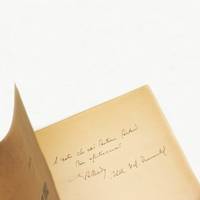
192172006Paris: Editions Rhéa 1921. Fine. Editions Rhéa Paris 1921 25.50 x 33 cm broché sous chemise et étui. First edition of the French translation prepared by Soudeba with no mention of deluxe copies. Illustrated with plates by Colette Nel. The copy is presented in a red half-morocco folder smooth spine slipcase edged with red morocco the whole signed by Goy & Vilaine. Exceptional and highly important presentation copy inscribed and signed by René Allendy a pioneer of psychoanalysis in France whose patients included René Crevel Anaïs Nin and Antonin Artaud further enriched with the handwritten signature of Colette Nel-Dumonchel who married Dr. Allendy after he was widowed by her sister: ""A notre cher ami Antonin Artaud. Bien affectueusement."" Editions Rhéa unknown
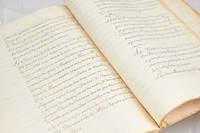
1672750391672. Fine. s. d. 1672-1674 24 x 34 cm relié Complete autograph manuscript of 106 pages entitled: Mémoire de la construction et agrèz d'une galère ordinaire avec l'explication des termes l'usage des manuvres et de toutes les parties qui composent le corps de la galère et son armement. Penned in a neat unrubricated hand with occasional marginal notes in another hand. Contemporary full vellum binding lightly soiled with minor wear smooth spine without lettering. A major and invaluable manuscript chronicling the revival of the French galley fleet written by the most influential galley shipwright of his time: Jean-Baptiste Chabert. We have identified only two other manuscripts bearing this same title: one belonged to Commander Noël Fourquin a master mariner and specialist in nautical lexicography; the other was owned by Louis-Philippe himself. The latter is listed under no. 445 in the catalogue of the sale of his Palais-Royal and Neuilly libraries held in December 1852 and bears a binding identical to ours. This significant manuscript can be attributed to Jean-Baptiste Chabert a Marseille-based galley shipbuilder. Jan Fennis in his work Trésor du langage des galères 1995 relays this attribution made by Jacques Humbert La Galère du XVIIIe siècle who passed the manuscript on to Commander Fourquin: Il nous paraît que cette uvre est celle d'un constructeur de galères travaillant à Marseille car il est question de l'arsenal de cette ville dans le texte. Il nous semble qu'on pourrait assez raisonnablement l'attribuer à Jean-Baptiste Chabert. Jean-Baptiste Chabert was part of a Marseille dynasty of galley builders whose activity dated back to the mid-17th century. He was involved in the construction of the remarkable flotilla on the Grand Canal of Versailles built in Marseille from 1681 onward. In 1682 he was appointed professor at the shipbuilding school in Marseille where officers lieutenants and sub-lieutenants of the galley corps were trained and in 1690 he was awarded the brevet of premier maître constructeur des galères royales. In a letter addressed to the presidents of the parlements dated 11 April 1662 Colbert writes: Le Roi m'a commandé de vous écrire ces lignes de sa part pour vous dire que Sa Majesté désirant rétablir le corps des galères et en fortifier la chiourme par toutes sortes de moyens est que vous teniez la main à ce que votre compagnie y condamne le plus grand nombre de coupables qu'il se pourra et que l'on convertisse même la peine de mort en celle des galères. This letter makes it possible to date the manuscript to around 16721674 confirmed by the author's mention in the opening pages of the nationalisation of the galley fleet: Il faut savoir que le roi a l'économie de ses galères depuis dix à douze ans les capitaines étant auparavant propriétaires du corps et agrès des galères. This dating is also supported by a note in the margin of Commander Fourquins copy reading 1672-74. The text then immediately refers to Monsieur Nicolas Arnoul intendant des galères de France: Du depuis Monsieur Arnoul . a fait construire à Marseille un arsenal très magnifique dans lequel il y a toute sorte de manufactures pour fournir les choses nécessaires pour armer les galères. The construction of the Marseille arsenal took place in three phases between 1665 and 1690 though Arnoul died in 1674. Chabert begins his treatise by listing the various types of galleys: ordinaire Patronne Capitane and Realle. While distinguished by size the author does not dwell on their dimensions reflecting the culture of secrecy surrounding naval construction at the time. He then briefly discusses the state of the galley fleet Louis XIVs renewed interest in these vessels and how the king managed to increase their numberand fill them with convictsover the past ten years. When Louis XIV visited Marseille in 1660 no war fleet remained in the port: the galleys lay rotting in Toulon and on hardcover
195184950Paris: Gallimard 1951. Fine. Gallimard Paris 1951 14.50 x 21 cm broché First edition one of 60 numbered copies on pur fil the only deluxe paper issue. Subtle and skillful minor restorations to the spine. A rare and handsome copy. Gallimard unknown
190081385Paris: Calmann Lévy 1900. Fine. Calmann Lévy Paris 1900 14.50 x 21 cm relié Calmann Lévy Paris 1900 145 x 21 cm half morocco First edition with 13 original illustrations by Alfons Mucha the cover 7 hors-text and 5 banners one of 50 numbered copies on China paper the tirage de tête deluxe copies. Binding in half orange morocco gilt date at the foot of the spine frame of black fillets on the marbled paper boards endpapers in the same marbled paper illustrated covers and spine preserved contemporary binding signed Champs-Stroobants. Pleasant attractively set copy including as stipulated in the print justification its double series of engravings: in colour and line drawings. Calmann Lévy hardcover
1917642631917. Fine. circa 1917-1918 22.30 x 27.60 cm une feuille sous chemise et étui «L'An suave»: autograph youth poem dedicated to Marie Laurencin. «Have I neglected the miraculous Nymph Icarus in the snowy shrubs.» ca 1917-1918 22.3 x 27.6 cm single sheet in custom chemise and slipcase A remarkable autograph poem of youth by André Breton dedicated to Marie Laurencin entitled «L'an suave». 15 verses in ink on vergé paper composed in April 1914. This manuscript was copied between March 1917 and the beginning of 1918. This poem is offered for sale in a chemise and case with paper boards decorated with abstract motifs the spine of the chemise in green morocco pastedowns and endpapers of beige suede a sheet of flexible plexiglass protecting the poem case edged with green morocco piece of green paper with caption «poème autographe» to bottom of upper cover of case the whole by Thomas Boichot. Key poem of the author's pre-Dadaist period it formed part of the set of 7 manuscript poems by Breton known as coll. X. in the uvres complètes d'André Breton volume I in La Bibliothèque de la Pléiade Gallimard 1988 p. 1071. These poems of his juvenilia are carefully copied out in black ink on watermarked vergé paper. The small collection was addressed to his circle of friends and writers most notably including Valéry Apollinaire Théodore Fraenkel and his brother in arms André Paris. They were later published in his first collection Mont de piété which appeared in June 1919 published by Au Sans Pareil established not long before by his friend René Hilsum. The precise dating of this set of autograph poems is made possible by the composition of the final poem in the set «André Derain» written on 24 March 1917 which provides a definitive terminus post quem. An earlier version of the poem «Age» dedicated to Léon-Paul Fargue appears in our collection under its original name «Poème». Dated by the author 19 February 1916 the day of his 20th birthday and composed 10 days previously according to his letters it was not retitled and reworked until its publication in July 1918 in Les Trois Roses. Judging by the similarities to things published before this last poem the seven autograph poems were probably written during 1917 or at the beginning of 1918 while Breton was doing his residency in Val-de-Grâce and where significantly he made the acquaintance of Louis Aragon. The poems that make up Mont de piété represent a rare and valuable insight into his youthful influences at the dawn of his joining the Dada movement and his discovery of automatic writing. Quite short and sometimes sibylline one detects Symbolist highlights borrowed from Mallarmé whom he rediscovered at poetry mornings in the théâtre Antoine and the Vieux-Colombier accompanied by his schoolfriend Théodore Fraenkel. During the first month of the War Breton also dedicated himself to Rimbaud plunging into Les Illuminations the only work he carried with him in the confusion and haste that followed the outbreak of war. From his readings of Rimbaud were born the poems «Décembre» «Age» and «André Derain» while he borrowed Apollinaire's muse Marie Laurencin to whom he dedicated «L'an suave». The author's poetic inheritance was particularly marked by Paul Valéry with whom he corresponded from 1914. Valéry played a considerable role in the writing of the poems of Mont de piété with the advice he gave the young poet. Admiring his disciple's audacity who addressed each of these poems to him he characterized the poem «Façon» 1916 thus: «The theme language scope meter everything is new in the style the manner of the future» Letter of June 1916 uvres complètes d'André Breton vol. I in La Bibliothèque de la Pléiade Gallimard 1988 p. 1072. These essential buds of Breton's youth were written between his seventeenth and twenty-third year. Taken by surprise in Lorient by the declaration of war he became a military nurse serving in several hosp hardcover
1917642621917. Fine. circa 1917-1918 22.30 x 27.60 cm une feuille sous chemise et étui Remarkable autograph poem by a young André Breton signed titled ""Poème"" and dedicated to Léon-Paul Fargue 21 lines in black ink on laid paper dated by the author February 19 1916 and probably composed ten days earlier. Our manuscript was written between March 1917 and early 1918. Presented in a chemise and slipcase covered with abstract-patterned paper boards the chemise spine in olive-green morocco endpapers and pastedowns in cream suede with a flexible plexiglass sheet protecting the poem; the slipcase edged with olive-green morocco bearing on its lower front cover an olive paper label inscribed ""poème autographe""; the whole signed by Thomas Boichot. A key poem from Bretons pre-Dadaist period it belongs to a coherent group of seven autograph poems identified as coll. X. in the uvres complètes d'André Breton vol. I La Bibliothèque de la Pléiade Gallimard 1988 p. 1071. These poems in the authors youthful hand are neatly penned in black ink on watermarked laid paper. The set was addressed to his circle of friends and fellow writers including Valéry Apollinaire Théodore Fraenkel and his comrade André Paris. It was later published in his first collection Mont de piété issued in June 1919 by Au sans Pareil the publishing house newly founded by his friend René Hilsum. The precise dating of this group of autograph poems is established by the composition of the last poem in the series ""André Derain"" completed on March 24 1917 providing an absolute terminus post quem. Moreover the present manuscript is an earlier version of the poem Age dedicated to Léon-Paul Fargue. Dated by the author February 19 1916 his twentieth birthday and composed ten days earlier according to his correspondence it was not retitled and revised until its publication in July 1918 in Les Trois Roses. Most likely preceding this publication the seven autograph poems were probably written during 1917 or early 1918 while Breton was completing his medical internship at the Val-de-Grâce hospital and meeting Louis Aragon. The poems that would later form Mont de piété represent a rare and precious testimony to Bretons early influences on the threshold of his adherence to the Dada movement and his discovery of automatic writing. Brief and sometimes cryptic they reveal Symbolist inflections inherited from Mallarmé whom Breton rediscovered at poetic matinées at the Théâtre Antoine and the Vieux-Colombier with his school friend Théodore Fraenkel. During the first months of the war Breton also devoted himself to Rimbaud immersing himself in Les Illuminations the only book he carried away amid the confusion following the declaration of war. From his Rimbaldian readings were born the poems Décembre Age and André Derain while he borrowed Apollinaires muse Marie Laurencin to whom he dedicated Lan suave. The poetic legacy of Valéry with whom he began corresponding in 1914 was also decisive. Valéry played a crucial role in shaping the poems of Mont de piété through his attentive guidance and advice to the young poet. Admiring his disciples audacity to whom he sent each poem Valéry praised Facon 1916 in these terms: Thème langage visée métrique tout est neuf mode future façon Letter from June 1916 uvres complètes d'André Breton vol. I La Bibliothèque de la Pléiade Gallimard 1988 p. 1072. These essential landmarks of Bretons youth were composed between the ages of seventeen and twenty-three. Caught in Lorient at the outbreak of war he became a military nurse serving in several hospitals and on the front during the Meuse offensive. In Nantes he met Jacques Vaché who inspired a collective writing project and the illustration of the future collection Mont de Piété ultimately carried out by André Derain. His friendship with this dandy revolted against art and war who shared his admiration for Jarry and his encount hardcover
197763259Paris: La Table Ronde 1977. Fine. La Table Ronde Paris 1977 14 x 19.50 cm broché First edition one of 15 numbered copies on Hollande paper the deluxe issue. Spine very slightly sunned not affecting the overall appearance. A rare and attractive copy. La Table Ronde unknown
197563260Paris: La Table Ronde 1975. Fine. La Table Ronde Paris 1975 14 x 19.50 cm broché First edition one of 15 numbered copies on Hollande the tirage de tête. Spine very lightly sunned at head and foot. Rare and nice copy. La Table Ronde unknown
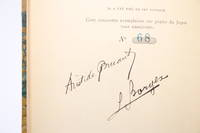
188577552Paris: Furne & Cie 1885. Fine. Furne & Cie Paris 1885-1900 13.50 x 19 cm 4 volumes reliés First edition of each of the four volumes one of 50 copies for the first and third works or one of 150 copies for the second and fourth printed on Japan paper the only deluxe issue. Bradel bindings in citron half morocco with corners smooth spines slightly darkened marbled paper boards pebble-grained endpapers and pastedowns covers and backstrips preserved in one piece contemporary bindings signed Champs. Covers and in-text or full-page drawings by Théophile Alexandre Steinlen for the first and second volumes by Francisque Poulbot for the third and by Louis Borgex for the fourth and final volume. Each volume bears Aristide Bruants autograph signature beneath the colophon; the last volume also includes Louis Borgexs handwritten signature. A handsome complete set of four volumes uniformly bound at the time by Champs. Furne & Cie hardcover
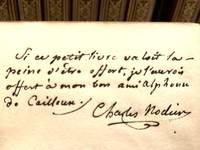
182583365Paris: N. DelangleLadvocatRapilly 1825. Fine. N. Delangle Ladvocat Rapilly Paris 1825-1829 10.20 x 15.50 cm 12 volumes reliés Collective edition dedicated to Duchesse de Berry issued at 500 copies one of 25 copies on hollande. Half long-grained Bradel morocco binding. Smooth spine elaborately gilt lengthwise title lettered in gilt gilt date at foot original green covers preserved except for Les Poésies de Charles Nodier bound without original covers and Poesies de madame Evelines Desormery bound with its covers without the original spine untrimmed. Elegant Romantic imitation bindings signed Carayon. A very fine set rare in this condition. Complete 8-volume collection edited and prefaced for every volume by Charles Nodier: Voyage de Chapelle et Bachaumont La Guirlande de Julie par M. de Montausier Diverses poésies du Chevalier d'Aceilly Conjuration du Comte de Fiesque par le Cardinal de Retz Oeuvres choisies de Sénécé Oeuvres choisies de Sarrasin Madrigaux de Monsieur de la Sablière Relation des campagne de Rocroi et de Fribourg par Henri de Bessé. It includes 4 additional volumes not belonging to the collection Fables de Fénelon Rapilly 1826 Poesies diverses de Charles Nodier Delangle et Ladvocat 1827 Poesies de madame Evelines Desormery Delangle 1828 Esquisses poetiques par Edouard Turquety Delangle 1829. Signed and inscribed by Charles Nodier to Alphonse de Cailleux on the half-title of his collection of poems in first edition: ""Si ce petit livre valait la peine d'être offert je l'aurais offert à mon bon ami Alphonse de Cailleux"" If this little book were ever worth offering I would offer it to my good friend Alphonse de Cailleux. A very fine set of Romantic bindings by Carayon one of the most important bookbinders of the late 19th century. N. DelangleLadvocatRapilly unknown
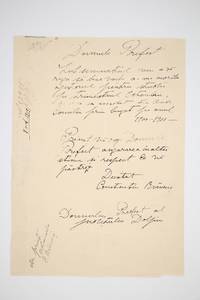
190076380Craïova Roumanie Craiova 1900. Fine. Craïova Roumanie Craiova 9 octobre 1900 14.70 x 22 cm deux feuillets rédigées au recto Two handwritten signed letters addressed to the Dolj County Prefect Craïova Romania 9 October 1900 14.7 x 22 cm & 27 x 19.5 cm two leaves written on the recto Two handwritten letters signed by Constantin Brâncui addressed to the Dolj County Prefect and written in brown and black ink one on a piece of lined paper 14.7 x 22cm and the other on larger size white paper 27 x 195 cm. The first letter is written in ink on a leaf and bears the registration number 12981 followed by the acronym pPG and is signed with the artist's full name: Constantin Brâncu. At the bottom left of the page there is a handwritten note by Brâncui: ""I received the prescription"" followed by his signature ""C. Brâncu"" and not ""Brâncusi"" or ""Brâncusi"" as he signed after his arrival in Paris. The second letter is written in ink on half a sheet of notebook paper and contains the same message the same signature and a similar inventory number. A 10 bani centimes stamp is glued to the top left. The left side below the stamp is cut out as Brâncui used to do: he removed the stamps or erased information that he did not want to keep. These two important letters document a significant chapter of the artist's biography concerning his studies financed in part by the Craiova Department.On 28 September 1898 Brâncui successfully completed his five-year schooling at the Craiova Trade School the capital of his native region and enrolled at the Bucharest School of Fine Arts. He obtained scholarships from the Madonna Dudu church in Craiova which helped him to continue his studies. He was quickly noticed by his teachers in Bucharest who awarded him prizes for making busts such as Laocoon and the antique sculpture Study based on Mars Borghese. In October 1900 Brâncui sent a request for a scholarship to the Prefect of the Dolj County the capital of which is Craiova who helped him to follow ""his studies during the October term"" and specified that this scholarship was granted to him by the County Council 1900-1901 budget. unknown
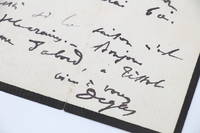
187084728Paris 1870. Fine. An opera painting travels to London; Degas greets his close friend James Tissot Paris s. d. années 1870 10.80 x 17.10 cm trois pages sur un feuillet double Autograph letter dated and signed by Edgar Degas addressed to the dealer Charles Deschamps director of Durand-Ruels London branch. Three pages in ink on a bifolium. Minor marginal tears not affecting the text folds from mailing. Recently returned from New Orleans Degas writes to his London dealer to announce the imminent arrival of a delicate composition of dancers Le Foyer de la danse à lOpéra de la rue Le Peletier now held at the Musée dOrsay: ""In the meantime you will receive the little picture you saw in progress and which you had the idea of selling to Mr. Huth - May you succeed! . As for the price it seems to me that £150 to £200 is fair"" Deschamps fulfilled the painters wishes and sold the painting to Louis Huth financier and patron of Whistler for £140. The canvas would later enter the distinguished collection of Isaac de Camondo. Degas turned towards London at a time when the English art market offered relief from the collapse that followed the Franco-Prussian War of 1870. He placed great hopes in this expanding British market fuelled by lucrative blockbuster exhibitions drawing millions of visitors; Degass canvases were shown in eight exhibitions of the Société des Artistes Français. Although he often mentions financial difficulties in his correspondence ""At the end of the month I have quite a lot to pay. If some money came in I would be delighted . - Take care of me my dear Deschamps I would be most obliged - Tell me also if the season is not too far advanced. I fear it is"" his career across the Channel was flourishing and his sales profitable. The painter does not fail to salute the ""French colony"" of expatriate artists Giuseppe de Nittis and his close friend James Tissot whose financial success provided Degas with an example of how effectively a French painters work could be marketed in England. Unlike Tissot however Degas refused to adapt to market taste focusing instead on defending the Impressionist cause in France and abroad. He also devotes a passage to a voracious collector of his works the baritone Jean-Baptiste Faure patron of his celebrated series of canvases on the Paris Opéra and owner of Manets Déjeuner sur lherbe: ""I ought to have been in London some time ago according to what I said. I am not there because the picture for Jean-Baptiste Faure is not finished and I would not like to meet him there without being able to give him better news and I hardly have time to dawdle if I want not to arrive on the 1st of September with nothing to deliver to him"". Ironically Faure would later reproach Degas for leaving his canvases unfinished ! and even sue him a few years afterwards. A rare and exceptional letter tracing the history of one of Degass celebrated works and his dealings with dealers and collectors on the eve of the first Impressionist exhibition to be held the following year. ""My dear Deschamps I ought to have been in London some time ago according to what I said. I am not there because the picture for Jean-Baptiste Faure is not finished and I would not like to meet him there without being able to give him better news and I hardly have time to dawdle if I want not to arrive on the 1st of September with nothing to deliver to him - He is leaving London on the 18th or 19th I know that - Perhaps at the end of the month a little earlier however I will come to see you as well as the French colony. But nothing is less certain. In the meantime you will receive the little picture you saw in progress and which you had the idea of selling to Mr. Huth - May you succeed! At the end of the month I have quite a lot to pay. If some money came in I would be delighted - As for the price it seems to me that £150 to £200 is fair - I would like to add two other pieces a little vaporous - I am worki unknown
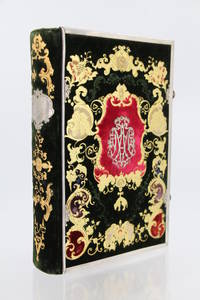
185386977Paris: Librairie Catholique de P.J. Camus 1853. Fine. Green Velvet & Silver Edge Librairie Catholique de P.J. Camus Paris 1853 15.80 x 23 cm relié New edition with 58 illustrated full-page plates including a frontispiece all after P. A. Varin. Full green velvet binding with silver edges elaborately decorated with gilt gauffered rocaille motifs and some blind stamped with abundant onlays of blue purple cream and red velvet ; upper board with silver engraved crowned Ave Maria initials at center ""RGP"" silver engraved initials at center of second board both initials inside a wide red velvet inlay bordered with gilt gauffered motifs displaying the sheepskin of the Order of the Golden Fleece at bottom spine elaborately decorated with gilt rocaille motifs silver engraved title label silver clasps with pierced leafy designs and central roundel light blue watered silk pastedowns and endpapers elaborately decorated with gilt rocaille gauffered motifs all edges gilt. Contemporary binding. Scattered foxing throughout. A masterful piece of Rocaille book-making in velvet and silver opulently gauffered and heavily gilt in exceptional condition. Librairie Catholique de P.J. Camus unknown
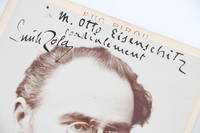
189087793Paris: Eugène Pirou 1890. Fine. Eugène Pirou Paris s.d. ca 1890 10.70 x 15.50 cm une feuille Original inscribed photograph portrait of Emile Zola. Original albumen paper print on cardboard bearing the stamps of the Eugène Pirou studio rue Royale Paris. Signed and inscribed by Emile Zola to Otto Eisenschitz: ""à M. Otto Eisenschitz / cordialement / Emile Zola"". Otto Eisenschitz a leading arts and culture journalist on numerous Viennese periodicals playwright and director of the Josefstadt theater was the author of numerous plays and novels. His translation work from Italian gave preference to contemporary naturalist authors such as Roberto Bracco Guglielmo Ferrero Antonio Fogazzaro Marco Praga and Giovanni Verga. He lost his life in the Theresienstadt ghetto-concentration camp in 1942. Eugène Pirou unknown
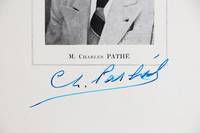
194087015Paris: Pour les amis de Charles Pathé 1940. Fine. Pour les amis de Charles Pathé Paris 1940 16 x 25 cm relié First edition printed in a small run of numbered copies. With two photographic portraits: one of Charles Pathé and the other of his brother Émile and a view of the Kodak-Pathé and Pathé-Cinéma factories. 3/4 beige sheepskin binding spine with four raised bands decorated with black typographical motifs date at foot of spine marbled paper boards endpapers and flyleaves. Discrete restorations to spine some rubbing to upper corners of boards. Signed by Charles Pathé on his photographic portrait. Pour les amis de Charles Pathé hardcover