George SAND - (to Gustave FLAUBERT)Biblio.com
48 402 résultats
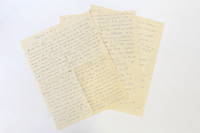
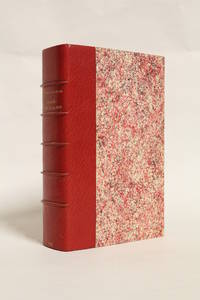
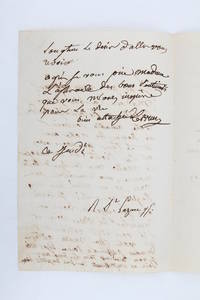
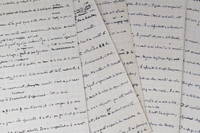
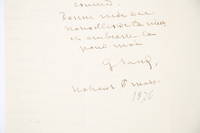
187676872Nohant Nohant-Vic 1876. Fine. Nohant Nohant-Vic 6 mars 1876 13.20 x 20.70 cm deux pages sur un feuillet remplié Autograph letter signed by George Sand addressed to Gustave Flaubert. Two pages written in black ink on a double sheet bearing at the head of the first page the sender's dry stamp. This letter was published in the complete correspondence of George Sand established by Georges Lubin. Fine letter written by George Sand a few months before her death and addressed to her lifelong friend Gustave Flaubert. The writer wishes to offer her friend a seat so he may attend the revival of her play Le Mariage de Victorine : ""Je t'écris en courant ce matin parce que je viens de recevoir de Mr Perrin avis de la 1ère représentation de la reprise du Mariage de Victorine une pièce de moi au théâtre français. Je n'ai ni le temps d'y aller ni l'envie de partir comme cela au pied levé mais j'aurais voulu y envoyer quelques amis et il ne m'offre pas une seule place. Je lui écris une lettre qu'il recevra demain et je le prie de t'envoyer au moins un orchestre."" ""I'm writing to you hurriedly this morning because I've just received notice from Mr Perrin of the first performance of the revival of Le Mariage de Victorine a play of mine at the Théâtre Français. I have neither the time to go nor the desire to leave like that at a moment's notice but I would have liked to send some friends and he doesn't offer me a single seat. I'm writing him a letter which he will receive tomorrow and I ask him to send you at least an orchestra seat."" Letters from the correspondence between George Sand and Gustave Flaubert are renowned and highly sought after. unknown
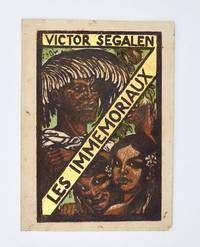
1907787771907. Fine. s. d. 1907 12.40 x 18.90 cm une feuille Original color proof of a woodcut inspired by the work of Gauguin and engraved by George-Daniel de Monfreid for a frontispiece project remaining unpublished of Victor Segalen's Les Immémoriaux. Only one other original color proof and one print run in black and white see below are known to date. Printed in two tones green and brown on old Japan and enhanced with gilt painting by the artist. This engraved woodcut was to illustrate as a frontispiece the original edition of Segalen's Les Immémoriaux an ethnographic novel directly inspired by his trip to Polynesia following in Gauguin's footsteps. Segalen therefore asked the painter's follower and closest friend to produce it to whom he also offered Noa Noa bought in Papeete during the auction sale of Gauguin's goods. A mutual friendship and admiration was then born between Segalen and Monfreid under the tutelary aegis of the late painter. It is also in constant reference to the Master that the two friends produce this frontispiece to which Segalen attached great importance but which he will be obliged to abandon due to publishing costs: This is a lot more interesting for me: what will you do for my plate If I dared to imagine something it would be a formidable full-face figure very plain very worn and of an androgyne with male tendences; in short the Maori type described by Gauguin in his Noa Noa and produced by him in the carved wood that remained in Tahiti face of a woman comparable to that which you possess and of which I gave you a photograph I believe. . Are you in favor of reserving your frontispiece for luxury and friends' copies or of prostituting it in current copies Allow me to renew a timid desire expressed at your Vollard exhibition: if you print some more proofs from your color engravings in pochoir do not forget me. Brest 2 November 1906. Monfreid's response 8 January 1907: I have started looking for your plate. Ah! I will not describe it to you yet: it does not come according to what your book should evoke. Besides I am not rich in imagination let alone in symbolism I remain as you have noticed a naturalist but not a realist and to summarize the impression of your Les Immémoriaux one would have to be Gauguin. Finally even so I am not losing hope of doing something; only that I need a little more time to study it.. Monfreid will produce two trial woodcuts whose sizes 22 x 12 cm and 23 x 16 cm were not adapted to the edition each time using the same formidable and frustrated figures Segalen wanted. Our woodcut seems to be the final version of these studies perfectly adapted to the in-12 format of Mercure de France. However the illustration includes the name of the author at the top yet Segalen a naval officer could not sign a novel and had to choose a pseudonym Max-Anély. This constraint may have contributed to this much-desired frontispiece being abandoned. However in all likelihood it was validated by the two trial woodcuts. Monfreid will also use the same male face to produce the ex-libris requested by Segalen. In his letter dated 2 November the poet already imagined a confidential print for Monfreid's work. In the end only two color copies of this proof enhanced in gold seem to have been preserved the second being today in the collections of the Musée Maurice Denis in Saint-Germain-en-Laye. The artist had likely printed one for himself and offered the other to Segalen who dreamed of owning etching of the one he called his ""Boss"" and to whom he would dedicate his collection of poems Peintures. unknown
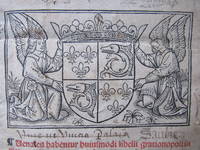
150868717Grationopoli Grenoble Grenoble: Franciscum Pichatum et Bartholomeum Bertoletum François Pichon et Bartholomé Bertholet 1508. Fine. Franciscum Pichatum et Bartholomeum Bertoletum François Pichon et Bartholomé Bertholet Grationopoli Grenoble Grenoble 1508 S.d. 17 x 24 cm relié First edition. Title page in red and black. Title vignette with the arms of Dauphiné flanked by 2 angels. Manuscript inscriptions from the 16th century in the margins of the title page the one at the bottom of the page recalling the history of Humbert bequeathing Dauphiné to the eldest son of the King of France. On the last leaf manuscript ex libris as well as on the verso of the first blank leaf: Je suis l'abbé de Pinet et de Cours ""I am the abbot of Pinet and Cours"". Title inside the volume in the upper margin: Statuta Delphinatus. Gothic printing in 2 columns of 45 lines. Brunet J.-C. Manuel du libraire et de l'amateur de livres 5th ed. II 1812. As Brunet specifies 2 blank leaves at the end one separating the 2 parts. 2 copies in the Harvard Hollis catalog Harvard Law School Library and Brown University nothing in the catalogs of the Bibliothèque Nationale de France one copy located at the Caen library. Full chamois binding 17th century. Jansenist spine with raised bands. Red morocco title label. Holes and worm damage on the spine. Extensive worm damage on the boards. Visible stitching along the inner hinge. Title page browned some stains. A dampstain on the verso of the title page and various traces of brown dampstains throughout the volume. From leaf XVI of the second part wormholes affecting some letters. In 1349 the Dauphin Humbert II without heir bequeathed Dauphiné to the eldest son of the King of France who would henceforth bear the title of Dauphin as sovereign of this province. Louis XII son of Charles VII would be the first Dauphin. Going to Dauphiné would be the first responsibility of the future King of France. From 1447 the Dauphin Louis went to his lands where he resided for 10 years. Louis decided to govern this province and modernized it by having a register of the rights privileges and freedoms of Dauphiné compiled the delphinal register. This register would be the basis of the statutes of Dauphiné found in this customary. In 1461 Louis the Dauphin became Louis XI upon the death of his father. All the customs of Dauphiné were compiled in 1482 in Grenoble. The first part of the work reflects this. The second part largely in French is the result of the meeting of the three estates forming Dauphiné and which met in Tours where Louis XII resided. The text is a response to their requests and grievances establishing new edicts for Dauphiné. There is found at the end as Brunet stipulates a piece dated March 1508 so the publication cannot be earlier: ""Actum quarta martij. Anno domini M. cccccviij"". Franciscum Pichatum et Bartholomeum Bertoletum( François Pichon et Bartholomé Bertholet) hardcover
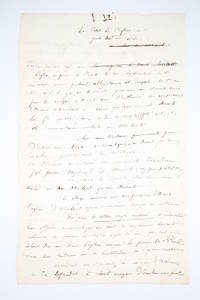
186076834s. l. 1860. Fine. s. l. s. d. ca 1860 19.60 x 31.70 cm deux pages sur un feuillet Autograph manuscript by Gustave Flaubert entitled ""De l'état de l'église en Gaule au Ve et VIe siècle"" written in black ink on both sides of a sheet. Transverse fold. Extensive manuscript notes probably written in preparation for the writing of La Légende de Saint Julien l'Hospitalier. Precious manuscript evidence of the writer's working method. unknown
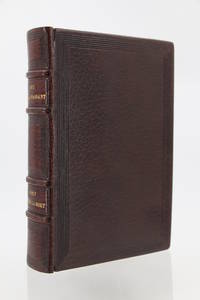
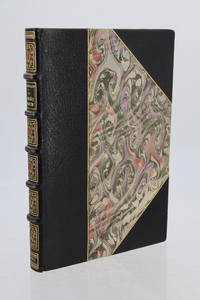
188987739Paris: Paul Ollendorff 1889. Fine. Paul Ollendorff Paris 1889 13.50 x 18 cm relié First edition one of 100 numbered copies on Holland paper the only deluxe copies after 5 Japan. Half-title and final endpaper pages entirely sunned handsome copy. Jansenist binding in full chocolate brown morocco spine with four raised bands set with black fillets and decorated with six black compartments septuple black fillet frame on covers tawny watered silk endpapers and pastedowns quadruple gilt fillet frame on pastedowns original wrappers preserved all edges gilt elegant binding signed Gruel. Handsome copy perfectly executed. Paul Ollendorff hardcover
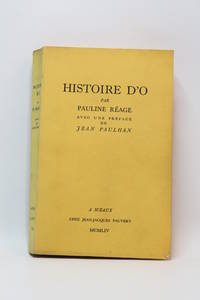
195471627Sceaux: Jean-Jacques Pauvert 1954. Fine. Masterpiece of Eroticism with a capital O Jean-Jacques Pauvert Sceaux 1954 12 x 19 cm broché First edition one of 480 numbered copies on laid paper only grands papiers deluxe copies besides 20 Arches and 100 service de presse advance copies on laid paper. Our copy is complete with the rare vignette etching drawn and engraved by Hans Bellmer printed 'en sanguine' present in only around 200 copies. Preface by Jean Paulhan. Spine very lightly faded. A beautiful copy of this masterpiece of erotic literature. Jean-Jacques Pauvert unknown
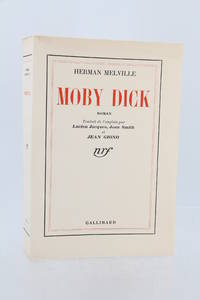
194184279Paris: Gallimard 1941. Fine. Gallimard Paris 1941 14.50 x 21 cm broché Moby Dick Gallimard Paris 1941 145x21cm original wrappers. First edition of the French translation by Lucien Jacques Joan Smith and Jean Giono one of 112 numbered copies on alfa only deluxe copies grand papier after 7 on Chine and 55 on pur fil. A fine and very rare deluxe copy of this masterpiece of American literature. Gallimard unknown
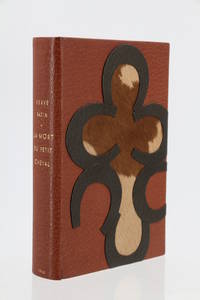
195078969Paris: Grasset 1950. Fine. Grasset Paris 1950 12 x 18.50 cm relié sous chemise et étui First edition one of 75 numbered copies on Montval deluxe copies with 20 on vélin de Rives reserved for Jean Loize bookshop. Full tawny morocco binding smooth spine gilt date at foot boards decorated with curved black morocco plaques representing horseshoes within which pieces of skin evoking the coat of a pinto bay tobiano horse mixture of brown and cream white have been applied brown paper endpapers and pastedowns all edges gilt covers and spine preserved half chocolate brown morocco chemise with bands brown-grey paper boards tawny morocco title label slipcase edged with chocolate brown morocco brown-grey paper boards elegant and spectacular binding signed D. H. Mercher. Very rare and handsome copy perfectly executed. Grasset hardcover
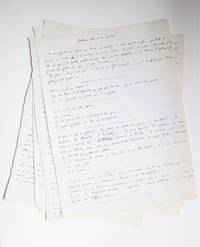
196872719s. l.: S. n. 1968. Fine. S. n. s. l. s. d. circa 1968 22 x 29 cm 6 feuillets 1/4 Unpublished autograph manuscript comprising 6 and a quarter leaves written in black ink containing around twenty notes and digressive reflections relating to the exercise of power. - ""Where does the law come from From power. The law is the voice and instrument of power. Power precedes the law and gives birth to it."" - ""The working masses are not about to accept nor to consider as political the rape of a little girl nor of a little boy. We live in such a moral climate that it first makes us pity the pain of the parents it makes us reject the cruelty of the act. The worker needs a certain respectability in order to stand equal here with the present bourgeois classes the aristocracy has disappeared. We must look ever more closely at what servile labor consists of and what it entails."" - ""Work as a virtue fostered a new morality and if it was all the more distant and disregarded by the aristocrat the people held to it. I am not speaking of what broke out in 1789 but of what was gradually formed as serfs escaped in one way or another from serfdom. In 1789 this new morality had reached its point and what had carried it word illegible to the extreme had become what was called the bourgeoisie. Bound to this new morality of work they also aspired to an 'imitation'but an imitation onlyand the morality was stronger than the still prestigious pretensions of the declining nobility."" - ""If there is an essence of power it remains hidden. But the manifestation of power even if not ostentatious seeks to be recognized and visible. For instinct one must accept the enigma."" - ""Rousseau a foundling abandons his children to public care: no one cares. It is probable that Dostoevsky raped a little girl: no one cares. The Brothers Karamazov is indeed a revolutionary book."" S. n. unknown
188282332Paris: Alphonse Lemerre 1882. Fine. Alphonse Lemerre Paris 1882 13 x 19.50 cm relié First edition one of the extremely rare copies printed on Holland paper We know of at least two unknown to bibliographies deluxe copy. Half black morocco binding with corners spine with five raised bands enhanced with gilt dots richly decorated with double gilt compartments with red morocco inlay in roundel date at foot gilt fillet on boards covers and spine preserved top edge gilt on deckled edges binding signed Blanchetière. Very beautiful autograph inscription by the author to José-Maria de Heredia ""Premier joueur flûte de ces modernes temps antiques au maître ami de Pan et des chèvres-pieds cet humble et lointain écho d'une syrinx adorable. Lorrain Jean"" ""First flute player of these modern ancient times to the master friend of Pan and goat-footed ones this humble and distant echo of an adorable syrinx. Lorrain Jean"" Our copy is expanded with an autograph letter signed by the author running over 2 leaves addressed to Léon Vanier bound at the front of the volume. Exceptional copy superbly established. Alphonse Lemerre hardcover
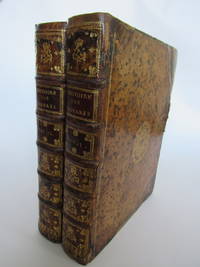
168782412à Paris: Chez Denys Thierry 1687. Fine. Chez Denys Thierry à Paris 1687 9 x 16.20 cm 2 volumes reliés Second collective first edition with continuous pagination containing for the first time Phèdre the Discours prononcé à l'Académie françoise à la réception de Messieurs de Corneille et de Bergeret and the Idylle sur la paix.Brunet IV 1077. Work illustrated with 12 figures including 2 frontispieces most signed by François Chauveau; the frontispiece of the first volume engraved by Le Brun. Edition shared between Barbin Denys Thierry and Pierre Trabouillet. Full midnight blue morocco binding from the late 19th century signed at the foot of the pastedown Thibaron-Joly Former worker of Trautz Thibaron partnered with the gilder Joly in 1874. Spine with raised bands decorated. Boards à la Du Seuil executed with a central rectangle formed by a triple fillet with fleurons in the corners followed by a frame of triple fillets. Rich decorative gilt board-edges. Edges gilt. Minimal traces of rubbing. A few rare leaves slightly more yellowed otherwise magnificent copy in a condition close to perfection. Blue sheepskin bookplate featuring a dolphin in a shield: Bibliothèque Génard. Rare collective edition after the first published in 1676 by Claude Barbin important and sought after for the variants and additions it offers. Chez Denys Thierry hardcover
192679099Paris: Editions Lapina 1926. Fine. What delight for you O reader if La fête arabe pleases you! Editions Lapina Paris 1926 20.50 x 28 cm relié First edition illustrated with 32 color illustrations by Sureda and engraved by Aubert full-page headpieces and fine lettering many of which are enhanced in gold or silver ink. Limited edition of 400 copies. This one marked H. C. V is one of the rare first paper copies on the finest Japon only 15 copies containing every engraving in double state on Vieux Japon and Japon Impérial of all the woodcuts covers and spine. Signed and inscribed on the title page from the authors: ""What a pleasure it is for you O reader if you enjoy La Fête arabe !"" Jérôme and Jean Tharaud. December 1928."" Full morocco midnight blue binding with polychrome inlays depicting Orientalist compositions signed by Yseux pupil of master bookbinder Simier. Gilt edges illustrated covers and spine preserved. Blue paper slipcase lined with blue shagreen leather. Spine slightly darkened. Brown trace over 3 cm on the blank reverse of one plate moderate creasing/paper handling to the lower margin of another plate slight paper defect appearing to be original in the inner margin of 1 or 2 other plates minor light soiling on 2 white leaves. Wide margins superb paper condition. A wonderfully bound travel book of Arabia one of the rarest copies of this edition with two sets of color illustrations Editions Lapina hardcover
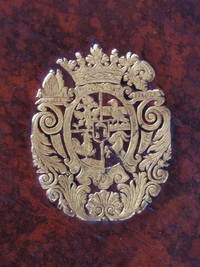
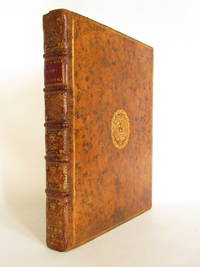
175166681à Paris: chez Jacques Rollinchez Charles Antoine Jombert 1751. Fine. chez Jacques Rollin chez Charles Antoine Jombert à Paris 1751 20.50 x 26.50 cm relié Rare French first edition in the translation by Esprit Pézenas illustrated with 2 title vignettes and 78 folding plates representing instruments used for physics demonstrations. Armorial copy with unidentified coat of arms. Contemporary full porphyry sheep binding. Decorated spine with raised bands. Beige calf title label brown sheep volume label. One lack to foot of volume I. Light lack to head compartment of volume II and to foot compartment. Split to upper joints at foot of both volumes 1cm. Corners with leather losses as well as to edges. The use of acid to achieve the porphyry marbling has caused certain alterations to the leather notably on the spine where the gold appears in relief and some epidermures to the boards. Nevertheless a good copy. Principal exposition of Newtonian physics of which Desaguliers propagated the ideas in his work ideas both scientific and philosophical and political. He was the first to perceive the magnitude of the Newtonian revolution both for physics and for the representation of the world. He assisted Isaac Newton who became his friend in his experimental work from 1713 to 1727 as demonstrator of the Royal Society the year of Newton's death. A skilled experimenter he then opened his own private course which the royal family attended. The prefaces of the two volumes expose the challenges of 18th century physics: the development of experimental physics alongside analytical mechanics in the first the preliminary debates to the birth of the concept of energy in the second. Desaguliers explains that he conducts experiments not to show curiosities but to demonstrate laws in the manner of mathematicians but without using mathematical formalism which repels many people. His method copied from that of Keill consists of building his lessons by reasoning in stages: starting from simple propositions proving them by experiments and not by demonstrations then elaborating more complex propositions which are then confirmed by experimentation. It is appropriate not to present experiments as ""so many curious phenomena"" but to ""make use of them to prove a sequence of philosophical propositions in a mathematical order"" in other words not to make a ""Course of Experiments"" but a ""Course of Experimental Physics"". Desaguliers' lessons deal with mechanics and hydrostatics. The lessons concerning hydrostatics are illustrated by very precise descriptions of varied devices and diverse uses: diving bells the Marly machine or Mr Richard Newsham's machines for extinguishing fires which are found in the plates. An auditor of Desaguliers' courses Abbé Nollet drew inspiration from them to write his lessons in experimental physics but which however dealt more with electricity and optics. chez Jacques Rollinchez Charles Antoine Jombert hardcover
175366726à Paris: De Imprimerie Royale 1753. Fine. De Imprimerie Royale à Paris 1753 20 x 26 cm relié First edition illustrated with a title vignette 6 folding maps and 2 folding plates sun and moon positions diagrams; a map of the coasts of Acadia and Isle Royale one of the Gulf of Saint Lawrence plan of Canseau harbor the southeastern coasts of Isle Royale plan of Chibouctou harbor southeastern point of Acadia Presentation copy with the cipher and arms of Louis XV. Contemporary binding in full marbled and glazed brown sheep. Spine with raised bands decorated with the repeated cipher of Louis XV. Red morocco title label. Boards stamped with the gilt arms of Louis XV. Triple gilt fillet frame on boards. 2 compartments restored partially effacing the cipher. One restoration at foot. Restorations to joints and corners. The work is the most precise hydrographic survey of the eastern coasts of North America that had ever been accomplished. Chabert was appointed to carry out a precise survey of the coasts of Acadia whose contemporary maps were erroneous. The first part is an account of the voyage from Brest to Louisbourg and of Chabert's 4 expeditions to coasts foreign to France to Newfoundland and neighboring islands. The second part contains the observations and astronomical surveys for which the work was highly esteemed and recommended to navigators by the Academy of Sciences. Following the success of the voyage Chabert was promoted to knight of the Order of Saint-Louis De Imprimerie Royale hardcover
192564578Paris: Georges Crès & Cie 1925. Fine. Georges Crès & Cie Paris 1925 15.50 x 24.50 cm relié L'Art décoratif d'aujourd'hui The Decorative Art of TodayGeorges Crès & Cie Paris 1925 15.5 x 24.5 cm contemporary shagreen Second edition with numerous illustrations. Contemporary binding in half burgundy shagreen green shagreen boards in marble paper. Rare autograph inscription dated 1925 and signed by Le Corbusier to the film director Jean Grémillon. Our copy is enhanced on the first free page with a second autograph dated 1928 by Le Corbusier: To Mr E. Mercier. It is not a question here in fact of the decorative art but of the spirit that animates this magnificent epoch and is so poignant. A precious copy in a strictly contemporary binding and enhanced by two successive autographs by Le Corbusier. Georges Crès & Cie hardcover
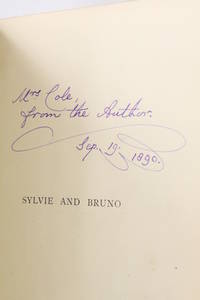
188966780Londres London: Macmillan and co 1889. Fine. Macmillan and co Londres London 1889 12.50 x 19 cm reliure de l'éditeur First edition with 46 illustrations by Harry Furniss. Publisher's binding over flexible paper boards discreet and light repairs on the joints all edges gilt. Autograph inscription dated and signed by Lewis Carroll to Mrs Cole. Macmillan and co hardcover
194764327Copenhage Copenhagen 1947. Fine. Copenhage Copenhagen 10 avril 1947 22.50 x 28.40 cm 6 pages sur 3 feuillets Very long autograph letter signed ""Dest"" to Doctor Tuset and Henri Mahé dated April 10 unknown
193269416Paris: Denoël & Steele 1932. Fine. Denoël & Steele Paris 1932 12 x 19 cm relié First edition on ordinary paper with all the characteristics of the first print. Binding in half red morocco preserved covers and spine first cover plate and lined spine with restorations top edge gilt binding signed by Laurenchet. Nice copy with the publisher's catalog in fine. Denoël & Steele unknown
183286403Paris 1832. Fine. Between two Foremost Women Portraitists Paris s. d. 1832 12.20 x 18.60 cm un bifeuillet Autograph letter signed by painter Elisabeth Vigée-Lebrun addressed to historical painter and portraitist Hortense Haudebourt-Lescot. Two pages in black ink on a bifolium. Autograph address of Mme Haudebourt 19 rue Rochefoucauld on verso of second leaf. Usual horizontal folds tear without damage to the text on the second leaf due to the wax seal. A bibliographer's note in blue pencil on the verso of the last leaf. Vigée Le Brun likely wrote this letter in 1832 upon the death of their mutual friend Guillaume Guillon Lethière a renowned painter born to a free person of color in Guadeloupe and mentor to Hortense Haudebourt: ""I cannot express Madame how touched and grateful I am for your kind remembrance. The drawing by M. Le Thier which you so kindly sent to me this morning moved me deeply sparking both my gratitude for you and my sorrow for him"". Both Vigée Le Brun and Haudebourt-Lescot enjoyed immense fame during their lifetime. The latter was especially in demand for her portraits of high society in addition to neo-classical history scenes. Their destinies reflect each other in many ways: Vigée Le Brun was Marie-Antoinette's official portraitist and Haudebourt followed in her footsteps receiving the honors of the Duchess of Berry the figurehead of legitimist monarchism. This exceptional letter testifies to their shared attachment to the painter Lethière whom Vigée Le Brun had frequented during her exile from France in Rome where he was a resident at the French Académie des Beaux-Arts. Their paths crossed again in Naples and she left in her Souvenirs the anecdote of their memorable ascent of Mount Vesuvius: ""M. Lethière a very skilled history painter was an enthusiast of the volcano. I remember that day was Candlemas. We set off at about three o'clock with two of Mr Lethière's friends. The weather was fine but when we reached the mountain a fog rose up so thickly that it looked like enormous smoke. Everything disappeared before our eyes . Finally the fog lifted revealing the sea and the surrounding islands to the horizona vision of unparalleled beauty. . We went back up to watch the sunset. Its brilliant disc with its immense rays was reflected in the sea. We were ecstatic at the sight of this superb painting and everything that framed it. We returned to Naples with our sketches. Mr Lethière had drawn a picture of me coming down the mountain on my donkey."" As for Haudebourt she followed Lethière to Italy in 1808 after his appointment as director of the Academy in Rome an exceptional trip for a woman at a time when the Prix de Rome did not allow female applicants. She stayed there until 1816 and made friends with the greatest artists of the time notably Ingres and Canova. Her work as a painter allowed her to emancipate herself upon her return to France; she then rented a studio and founded a highly reputed salon in her hotel rue Rochefoucauld - to which this letter is addressed. Another resident of the flourishing Nouvelle Athènes district Vigée Le Brun frequented her colleague's weekly artistic and intellectual gatherings alongside ""painters Picot Drölling and the sculptor David d'Angers . composers Rossini and Auber playwrights Arnault and Scribe and famous actors such as Talma Mademoiselle Mars and Mademoiselle Duchesnois"" Paul Menoux. Probably after the death of their friend Vigée Le Brun received the drawing by Lethière mentioned in this letter: ""I shall be very happy to thank you in person . I will receive you both with joy and eagerness because I have long wanted to see you again. Please accept Madam the assurance of the good feelings you have inspired in me for life."" Precious and probably unpublished record of the bond between two immense artists among the rare women to make a living from their art in the early 19th century. We gra unknown
198135392s. l.: Par l'auteur 1981. Fine. Par l'auteur s. l. 1981-1982 22 x 22 cm une planche photographique Portrait of Andy Warhol. Original photograph printed by the artist Marc Trivier 1981-1982 22 x 22 cm on Ilford paper 30 x 40 cm Large original photograph portrait in black and white made and printed by Marc Trivier. Unsigned silver print as most of Trivier's works. Unique print from the artist. Small stain on the upper margin. Artists madmen abattoirs trees Marc Trivier photographed each of his subjects with the same interrogative intensity. All his photographs are in the same square format simple and confined with no retouching or alteration of the framing and seem less to show off a subject famous or unknown in or out of power dead or alive than to seek out a presence. Thirty-five years of photographic practice obsessions this is maybe what remains; a singular recording mode of light burning from one picture to the other in a series of proposals looking alike though each one as singular as the fraction of time it refers to Marc Trivier. Marc Trivier takes facial photographs of figures from the eighties. The subject looks right into the lens. These are not portrait star photographs but they are the result of a will of desacralisation: Instead of being a writer's or artists' portraitist among many others he marginalises himself with his device: under the pretext of settings he keeps his models waiting he makes them pose several minutes which gives them a worn look. Maybe he expects a more natural attitude. Here is Francis Bacon in a delicate balance Samuel Beckett Jean Dubuffet or even Michel Foucault more or less sagged back in their chairs. Intimate pictures. Picture of tiredness at Marc Trivier's S. Rousselle-Tellier in Marges 2004. Most of the time photographed in their personal space the subjects loosen up no longer mastering their image. The resulting unbalance reveals these figures' frailties and allows Trivier to render the unity of the intimate body and the public artworks. I was reading Genet; to me Genet was letters in a book. And then one day I saw his portrait and there was like a rupture. How could it be possible that these signs were also somebody Making a portrait is reuniting the name and the face Marc Trivier. Many items seem to oppose Warhol and Trivier. Andy Warhol is the artist of the multiple. His art was born from the metamorphosis of the consumerist artificial and mocks the proliferation of the identical. Marc Trivier is an adept of rarity and each one of his photographs comes down to some rare prints all differing in time and the artist's prints. Andy Warhol knows the importance of image which even ends up replacing the individual. He knows people play roles and this is the image he captures. His various series on Elvis Presley Marilyn Monroe or Mao show the transition to the icon status which makes these human beings immortal and destroys their humanity to change them into pieces of art. On the other hand Trivier's photographs strengthen the presence of an unwieldy body the artist cannot get rid of an obstacle to sacralisation. Warhol's known photographic clichés faithful to his spirit represent him either as a rock star proudly wearing his perfecto and sunglasses as his protégé Lou Reed or as an eccentric artist with his tousled hair or simulating a boxing match against Basquiat. Each one of his photographs is a clever exposure of his character pushed to excess image of his own image which the modern icon master fully controls. Warhol's photography made by Marc Trivier shows a complete different person. Unbalanced by a slight low-angle view projected on a black canvas behind him cutting out the scene in a triptych Andy Warhol's body seems to emerge from this dark background whereas his legs and heavy boots slightly oversized by the shooting take pride of place in the foreground. Surprised by the lengthy wait Trivier imposes to his models Andy Warhol Par l'auteur unknown
1945483521945. Fine. 1945 22 x 11.50 cm 8 feuillets foliotés Autograph manuscript by the author of 16 octavo pages published in number 8 August 1945 of L'Arche under the title: Some Reflections on Surrealism. Complete recto-verso manuscript with very dense writing containing numerous deletions corrections and additions. Some Reflections on Surrealism forms the first important text that Maurice Blanchot devoted to André Breton's movement. He rehabilitates surrealism which placed at the center of its activity the question of language and experience - aspects that could not leave Blanchot indifferent - without forgetting to make the following observations: it carries within it a part of failure and its ""situation . remains ambiguous"". Now increasingly asserting his aesthetic positions Blanchot fully recognizes the poetic and experimental value of automatic writing for its very radicalism: ""Automatic writing is . a war machine against reflection and language. It is destined to humiliate human pride particularly in the form that traditional culture has given it. But in reality it is itself a proud aspiration to a mode of knowledge and it has opened to words a new unlimited credit."" Blanchot continues his reflection and insists on the questionings of surrealist writers and poets regarding discourse: ""Surrealism was haunted by this idea: that there was that there had to be a moment . when language was not discourse but reality itself without however ceasing to be the proper reality of language . The surrealists drew brilliant literary consequences from this 'discovery' but for language the effects are more ambiguous and more varied. In this domain they still seem above all to be destroyers. They are unleashed against discourse; they withdraw from it the right to signify something; as a means of social of precise designation they break it ferociously. Language appears somewhat alone annihilated or sacrificed but humiliated. In reality it is a matter of something quite different and even the contrary: language disappears as instrument but that is because it has become subject. Through automatic writing it has benefited from the highest promotion ."" The text would be reprinted in The Work of Fire 1949 not without Blanchot having taken care to attenuate the reservations he expressed in the initial article. First important monographic study devoted by Maurice Blanchot to the question of surrealist language. unknown
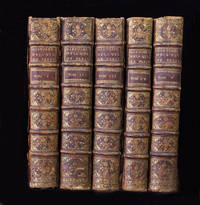
172548099à Paris: Chez Guillaume Desprezet Jean Desessartz 1725. Fine. Chez Guillaume Desprez et Jean Desessartz à Paris 1725 25.50 x 38 cm 5 volumes reliés First edition illustrated with a frontispiece engraved by Simonneau after Hallé 3 vignettes by Cochin or Simonneau a large folding plan by Coquart and 32 plates most often folding engraved by Hérisset Lucas or Avéline; they offer a view of all the principal monuments of the capital including three beautiful views drawn ""sur le naturel"" by Chaufourier showing the Pont Neuf and the Quai Conti from Saint-Germain l'Auxerrois the Île Saint-Louis and the Quai Saint-Bernard the Collège des Quatre Nations up to the Pont Royal from the Louvre. The famous plan of Paris 68 x 90 cm predates that of Turgot by fifteen years. The last three volumes contain the numerous supporting documents and proofs and were organized by Lobineau; these form the public archives of the city. Contemporary bindings in full brown calf. Spines with six raised bands decorated with gilt compartments and fleurons as well as red morocco title and volume labels. Joints cracked and most headcaps missing. All edges red. The most monumental work and undoubtedly the finest book published on Paris in the early 18th century. Although death surprised the author during the writing of his work it was continued by Lobineau another member of the famous scholarly congregation of the Benedictines of Saint Maur who himself died in 1727. This major study which Paris was lacking was originally commissioned by the provost of merchants Jérôme Bignon 1711-1772 and it forms the first official history of the capital and an unprecedented documentary source; and it is undoubtedly through this that this history shines with particular brilliance: the extremely important documentation devoted to the history of Paris the rigor of the analyses and hypotheses. It was following this work that Turgot made the decision to gather at the registry of the Hôtel de Ville a library devoted to the city of Paris in order to continue the work of the two historians giving birth to the Historical Library of the city of Paris. The history of the city is preceded by two dissertations the first by Le Roy on the origins of the hôtel de ville which was the first political government of Paris the second on the explanation of the antiquities found at Notre-Dame. Chez Guillaume Desprezet Jean Desessartz hardcover
185670874Paris: Imprimerie Impériale 1856. Fine. Imprimerie Impériale Paris 1856-1860 32 x 46 cm relié Rare collection of five tracts and eleven original posters from the Italian Campaign gathered under a half green percaline binding with smooth unlettered spine and marbled paper boards: - Proclamation - The Emperor to the French people: 3 pages on a folded sheet imperial printing house May 1859 - Speech pronounced by His Majesty the Emperor at the opening of the Legislative Session of 1856 on March 3 1856: 4 pages on a folded sheet imperial printing house March 1856 - Speech pronounced by His Majesty the Emperor at the opening of the Legislative Session on February 4 1861: 4 pages on a folded sheet imperial printing house February 1861 - Speech pronounced by His Majesty the Emperor at the opening of the Legislative Session of 1858 on January 18 1858: 7 sewn pages imperial printing house January 1858 - Speech pronounced by His Majesty the Emperor at the opening of the Legislative Session on March 1st 1860: 4 pages on a folded sheet imperial printing house March 1860 - Poster ""Army of Italy - Order of the day"": imperial printing house May 1859 - Poster ""Army of Italy - Telegraphic dispatch. Novara June 4 11:30"": imperial printing house June 1859 - Poster ""Army of Italy - Proclamation"": imperial printing house June 1859 - Poster ""Army of Italy - Proclamation"": imperial printing house June 1859 - Poster ""Army of Italy - Combat of Melegnano Marignan"": imperial printing house June 1859 - Poster ""Army of Italy - Telegraphic dispatch. The Emperor to the Empress. Cavriana June 24 1859 9:15 in the evening"": imperial printing house June 1859 - Poster ""Army of Italy - Order of the day. At the imperial headquarters at Cavriana June 25 1859"": imperial printing house June 1859 - Poster ""Army of Italy - Proclamation"": imperial printing house July 1859 - Poster ""Army of Italy - Telegraphic dispatch. The Emperor to the Empress. Valeggio July 11 1859"": imperial printing house July 1859 - Poster ""Army of Italy - Telegraphic dispatch. The Emperor to the Empress. Desenzano July 13 1859 11:03 in the morning"": imperial printing house July 1859 - Poster ""Speech by H.M. the Emperor to the great bodies of the State pronounced at the Palace of Saint-Cloud July 19 1859"": imperial printing house July 1859 Some paper lacks to boards otherwise documents in very good condition despite small marginal tears without loss on the last folding poster. We have been unable to find any copies of these documents in public archives. Imprimerie Impériale hardcover
175658799à Paris: Imprimerie Royale 1756. Fine. Imprimerie Royale à Paris 1756 - 1758 20 x 26 cm 2 volumes reliés The rare first edition of these two volumes published two years apart the continuation of which would never see the light of day. With one frontispiece and one large folding genealogical chart. Copy with the arms of Louis XV stamped on the boards and his cipher repeated on the spine a presentation copy. Contemporary full marbled brown calf bindings. Spine with raised bands decorated with Louis XV's cipher repeated four times with angular fleurs-de-lys. Red morocco title and volume labels. Armorial boards. Triple gilt fillet frame on boards. Headcaps restored. Several splits along the upper joint of volume I and volume II. Corners and certain areas of the leading edges restored. Lacking the right corner of the first endpaper. Very faint dampstain trace in margin extending onto text from page 217 to the end; from page viiij to xxxviij in margin; similarly on the rear endpapers of volume II. Despite the mentioned defects a rare copy with the arms and cipher of Louis XV. The work contains a long introduction that clarifies Chevalier d'Arcq's project as a historian. His critical method of examining texts is scrupulous he rejects what is not proven and openly aligns himself with the most reliable hypotheses. This method and his work were praised by Le Journal des scavants which reviewed the first book in 1756 then the second in 1758 with numerous compliments notably on the author's elegant style and his way of creating a vividly colored narrative from stark facts. Beyond history and geography the author seeks the essentially military aspect and shows how wars between victories and defeats have shaped the geography of peoples and precipitated the end and birth of kingdoms. Volume I deals with Greater and Lesser Armenia Cappadocia etc. the second with the kingdoms around Pontus Phrygia Paphlagonia Heraclea Pergamon. Although the work treats a rare ancient history and its reading is fascinating the book did not meet with success and the editorial project was not carried through to completion. Imprimerie Royale hardcover
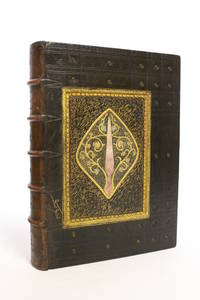
190363887Paris: L'édition d'art 1903. Fine. An exceptional binding in the Arabo-Andalusian style L'édition d'art Paris 1903 16 x 22.20 cm relié sous étui New illustrated edition 300 numbered copies printed ours on marble Vellum paper. The book is embellished with 50 drawings in color by Pablo Roig and decorated with a frame in the Art Nouveau style by Riom. Full brown shagreen the spine sunned in five compartments completely blindtooled from half circle embellished with golden carnations fillets by cold soldering outline the raised band date and place of publication to foot covers are completely framed with a grid pattern of blindtooled fillets forming decorative compartments in their center a golden hoop the large plate achieved by Saint-André in the center of the first chiseled cover in a sunken Andalusian pattern representing golden roots surrounding a phantom tree like in the novel of P. Louys the women are surrounded by a phantom man in the double golden frame signed by the artist on the outside of the plate golden wheels outline the headband and the spine head the end pages and the fly pages of silk with a painted rose pattern by Saint- André the golden fillets and the wheels and the pattern incised in emerald morocco and garnet in frames the end pages the fly pages doubled with paper in a grey and orange floral pattern the covers preserved gilt edges. The slipcover is covered in silk to give the effect of iridescence trimming in brown shagreen. Binding by Noulhac in collaboration with Saint-André. Manuscript note by Saint-André: this binding was probably presented at the Salon of French artists at the Grand Palais Beaux-Arts at the Champs-élysées it was probably not submitted to the competition and to the members of the jury. Moreover a note on the manuscript written by the artist on a broad-sheet explains the meaning of the central pattern of the first cover. Very light repair on the foot of a joint. Exceptional Andalusian inspired Art Nouveau binding presented at the Salon of French artists. L'édition d'art hardcover