NEWTON, SIR HARRY KOTTINGHAM:Biblio.com

48 402 résultats
5511Oxford: at the University Press 1934. One of only 101 copies printed. Etched frontispiece and tailpiece. Large 8vo pp. 324 original gray textured cloth with leather lettering piece to spine top edge gilt others uncut; fine in slipcase. With later inscription from his sons presenting this volume to the Girdlers Company. Sir Harry Newton's fine library which this volume catalogues giving also details of their acquisition and other anecdotal observations was auctioned at Dukes of Dorchester in 2007. Oxford: at the University Press, 1934. hardcover
1930038241Circa 1930 1930. Original Artwork . No Binding. Very Good. 10" X 8". Original Painting Of A Young Girl Circa 1930 Signature Indistinct But Likely "M N Hunter". <br/> <br/> unknown
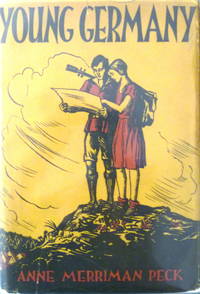
1931002116New York: Robert M. McBride & Company 1931. Unique provenence to this volume. Presentation copy. Bound into book prior to title page is a presentation page: This copy is dedicated to Mr. Shelby G. Southland as a reward and contest prize for one of the fifty best 300-word essays on the subject: "Why I Want to Spend My Vacation in Germany" This contest was arranged by "The American Boy" magazine" German Tourist Information Office and Hamburg American Line. His Excellency von Prittwitz Ambassador of the German Reich at Washington was an honorary judge. 8vo size red clothbound hardcover with dust jacket; 195 toned pages with black and white illustrations by the author and black and white photographs throughout. Color endpapers illustrate popular tourist attractions. From back: "What is happening to the youth of a country which is being made over since the First World war The author spent last summer abroad finding out just what is going on in this fascinating country. She took to the road with the boys and girls on their wander trips lodged all night in the Jugendherbergen and spent a night in a Black Forest farmhouse eating cherries and milk on a bench by a great porcelain stove while the whole party sang folk songs to pay for their night's lodging." Illustrated jacket is covered in mylar has some chipping at top and bottom of spine and corners plus edgewear. We noted pencil underlining on pages 40 42 and 46 and fingermarks in the margins of pages 13 14 30 and 31. There may be a tone of national socialist propaganda or philosophy to this book in how the Germans are characterized. Thanks for shopping with us. 100% of your purchase benefits charity and supports literacy and life-long learning. First. Cloth. Good/Good. Illus. by Peck Anne Merriman. 8vo - over 7¾" - 9¾" tall. Robert M. McBride & Company Hardcover
19167391London: A. Brown & Sons 1916. 1st edition. V.g./No Jacket. Hard covers Scarce. 8 233 pp. London: A. Brown & Sons hardcover
42567DAVID FIRTH 2009. SMALL QUARTO. A FINE SOFTBACK COPY. SIGNED BY THE AUTHOR. VERY SCARCE. DAVID FIRTH, 2009 unknown
1888288364John T. Hull 1888 Period Calf With Red Title Plates Spine 3/4 Marbled Boards. Maine State Embossed. All Boards Tight Some Scuffing Discoloring Per Normal. Pics Avaliable Rare Set. 8vo - over 7¾ - 9¾" tall. 1st Edition. Hardcover. Very Good. John T. Hull hardcover
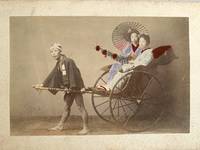
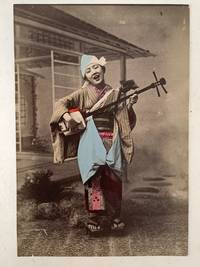
189071697Yokohama 1890. Fine. Yokohama 1890 12 x 18 cm autre Collection composed of 12 wet collodion photographs printed on albumen paper and hand-colored. The coloring of the photographs uses the traditional technique of distemper painting natural pigments mixed with glue applied with a brush. Photographers thus employed painters rather than the watercolorists used for prints. Album formed of two wooden boards covered with brown fabric showing visible fibers bound Japanese-style as an accordion. Each fold-out recto and verso presents 6 photographs: on the recto animated scenes views of landscapes and cities on the verso figures. This presentation is traditional for travel albums ""views and costume"" which the Japanese would later adopt. Each photograph: 8.7x13.2cm. The first 2 photographs have faded making the red pigments of the paint very visible as a result. For the second panel the first and 6th photographs have also faded likewise leaving the red pigments used very visible. The fifth has 2 scratched areas revealing the white of the paper. Foxing in the margins and on some photographs. The views represent famous sights along the Tokaido route the Meiji temple twice a busy street with lanterns a view of Mount Fuji with the famous wooden bridge. The earliest collections with Felice Beato showed only views of old Japan in black and white and representation and demand evolved. These Japanese views are very close in their staging and framing to the art of printmaking. One finds the Japanese taste already illustrated by prints for famous sites. Furthermore one sees almost no men in photographs from this period because the photographs were meant to represent contemporary Japan and men were now dressed in Western fashion; there were no more samurai. This is why women are represented in more than 70 percent of photographs from this period and in this collection one sees only one man a rickshaw puller. On this subject it was always geishas who were used for the photographs. All the studios thus had contracts with geisha houses whom they had pose for all scenes: musicians etc. The photographs of women: A woman with a fan 3 women holding hands 2 women in a carriage 3 women dancing the women of a geisha house. One must note that any attribution to a photographer is difficult due to the very history of photography in Japan because all the European studios and the first Japanese studios were bought by Japanese and the plates continued to be exploited under the name of the new photographer. Few albums and photographs bear a signature or studio mark. For example we know that Beato left professional photography in 1872. Baron von Stillfried left Japan definitively in 1881. The same year Kimbei Kusakabe 1841-1934 student of Beato and Stillfried opened his own studio in Yokohama. He would buy back part of his two masters' negatives four years later and regularly reprint them. hardcover
1890716901890. Fine. 1890 14.60 x 19.50 cm autre Collection composed of 24 wet-plate collodion photographs printed on albumen paper and hand-colored. The coloring of the photographs uses the traditional technique of distemper painting natural pigments mixed with glue applied with a brush. Photographers thus called upon painters rather than the watercolorists used for prints. Album formed of two wooden boards lacquered in red and bound Japanese-style in accordion format. Front cover lacquered with a scene depicting a man pulling a jinrikisha with a woman carrying a parasol. In the background Mount Fuji in silver color. Back cover with flowers. Edges gilt. Each fold-out recto and verso presents 12 photographs on the recto animated scenes views of landscapes and cities on the verso figures. This presentation is traditional for travel albums ""views and costume"" which the Japanese would later adopt. Each photograph: 9.5x13.7cm. The photographs are in very fine condition well preserved. Some pale spotting in the margins. The first board is slightly detached from the front lacquered cover. The ivory faces have attracted covetousness and have been removed leaving only bare wood where the faces once were. A small lack on the back cover. The views represent Yokohama and Nagasaki some are animated with figures others not showing temples the gate of the Shinto temple in Nagasaki streets a Japanese boat Mount Fuji a view of Lake Hakone and some contemporary views with modern buildings a street in Nagasaki the customs house in Yokohama which is a novelty in the Yokohama shashin of this late 19th century. The first collections showed with Beato only views of ancient Japan in black and white and both representation and demand evolved. These Japanese views are very close in their staging and framing to the art of printmaking. One finds there the Japanese taste already illustrated by prints for famous sites. Furthermore one sees practically no more men in photographs of this period because the photographs are meant to represent contemporary Japan and men are now dressed in Western style there are no more samurai. This is why women are represented in more than 70 percent of photographs from this period. In this regard it is always Geisha who are used for photos. All studios thus had contracts with Geisha houses whom they had pose for all scenes: musicians etc. One thus sees a blind woman playing the Shiansen as was practiced in Japan and the blind woman is here played by a Geisha. Other photographs show women practicing Ikebana Japanese floral art the tea ceremony painting on silk the game of Onigokko blind man's bluff. Kusakabe Kimbei one of the most important photographers of this period more commonly called by his first name Kimbei due to the difficulty experienced by foreigners in pronouncing his name was first known as Beato's colorist before opening his own studio in Yokohama in 1881. When opening his studio he bought Beato's and Stillfried's plates the first European photographers to establish themselves in Japan. Tamamura Kasaburo first established himself in Tokyo then in 1883 in Yokohama. It is not known how the two artists came to collaborate or how their photographs came to be mixed in several collections. It should be noted however that any attribution to a photographer is difficult due to the very history of photography in Japan because all the European studios and the first Japanese studios were bought by Japanese and the plates continued to be exploited under the name of the new photographer. However this album is comparable by its subjects and its binding to already known examples by the same photographers; see at C. Baxley album 111111. Few albums and photographs bear a signature or studio mark. For example we know that Beato left professional photography in 1872 Baron von Stillfried definitively left Japan in 1881. The same year Kimbei Kusakabe 1841-1934 student of Bea hardcover
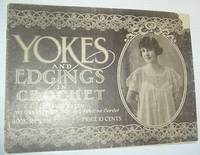
1918523a4020St. Louis: Valley Supply Co. 1918. Book. Illus. by Cordet Adeline. Fair. Paperback. First Edition. 8vo - over 7¾" - 9¾" tall. 15 pages. A very well-used original copy of this lovely booklet. All pages present but many loose. Above-average wear. Unmarked. Valley Supply Co. Paperback
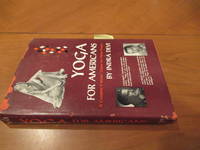
1957049992Englewood Cliffs Nj: Prentice-Hall 1957. 1st Edition 1st Printing. Hardcover. Near Fine/Very Good. Xxvi 226 Pp. Orange Cloth. First Printing 1957. Near Fine; Ownership Signature Dj With Light Chipping. Eugenie Peterson ; 1899 -2002 Born In St. Petersburg. Eugenie And Her Mother Escaped To Latvia As The Bolsheviks Came To Power In 1917 Losing The Family Fortune; In 1920 They Moved To Poland And In 1921 To Berlin Where She Became An Actress And Dancer. She Set Off To India In 1927 And Came Back Three Months Later A Changed Woman Speaking Only Of India. She Soon Went Back To India Selling Her Valuables To Pay For The Trip. At The Theosophical Society In Adyar Madras Now Chennai Dancing "An Indian Temple Dance" She Met Jawaharlal Nehru Starting A Long-Term Friendship And The Indian Film Director Bhagwati Mishra Who Gave Her A Part In Sher-E-Arab Arabian Knight: The 1930 Premiere Made Her A Film Star In India Under A New Stage Name Indra Devi. In 1930 She Married Jan Strakaty A Commercial Attache To The Czechoslovak Consulate In Bombay And For Some Years Lived As A Society Hostess There. She Became Interested In Yoga Nepal's Prince Mussoorie Showing Her Some Asanas And She Was Impressed By The Yoga Guru Krishnamacharya's Demonstration Of Apparently Stopping His Heart. In 1938 He Reluctantly Accepted Her As A Student. She Was The First Foreign Woman Among His Students In The Yogasala In The Mysore Palace Studying Alongside B.K.S Iyengar And K. Pattabhi Jois Who Went On To Become World-Famous Yoga Teachers. When She Was Leaving India To Follow Her Husband To China Krishnamacharya Asked Her To Work As A Yoga Teacher There. In 1939 She Held What Are Believed To Be The First Yoga Classes In China And Opened A School In Shanghai At The House Of Madame Chiang Kai-Shek. There Were Many Americans And Russians Among Her Pupils; She Also Taught Free Classes In Orphanages. More And More People Began To Call Her Mataji Which Means "Respected Mother. Her Husband Died Unexpectedly In 1946 And Devi Returned To India Arriving In Bombay As The British Raj Was Coming To An End. She Was Hosted By The Maharajah Of Tehri Garhwal . She Was Hoping To Stay In Kashmir To Teach Yoga In A Centre To Be Run By The Cambodian Monk Bellong Mahathera But Her Mother Called Her Back To Shanghai Where Devi's House Was Being Requisitioned By The Army In The Chinese Civil War. She Obtained A United States Visa And To San Francisco At The End Of 1947. In California She Met The Author And Philosopher Aldous Huxley And Krishnamurti Giving Her Access To Spiritually-Inclined Americans; An Especially Valuable Contact Was The Diet And Health Guru Paul Bragg Who Advised Film And Stage Stars. In 1948 She Opened A Yoga Studio In Hollywood The First In Los Angeles. Devi Taught Her Own Form Of Hatha Yoga With Asanas Postures And Pranayama Breath Control; She Avoided Spiritual Teaching Which She Preferred To Leave To Yoga Gurus. Her Teaching Style Was In Stefanie Syman's Words "Gentle And Even Relaxing". She Was Almost Immediately Successful In Attracting Leading Stars Including Men As Well As Women; Syman Notes That "She Could Charm The Pants Off Men". Elliott Goldberg Gives A Different Explanation For Her Success Attributing It To Her Packaging Of Yoga For Women As A "Beauty Secret Youth Elixir And Health Tonic". More Generally In His View Devi Saw Yoga As A Remedy For Anxiety And Stress Noting That This Transformed Yoga From Something That Dissolved The Ego To Something That Strengthened It Because He Commented Americans Did Want To Change "But Not All That Much". Devi's Advocacy Of Yoga For Stress Relief Contributed In Goldberg's View To The Widespread Acceptance Of Yoga In America And Earned Her The Nickname "First Lady Of Yoga". She Taught Yoga To Many Celebrities Including Greta Garbo Eva Gabor Gloria Swanson Ramon Novarro Robert Ryan Yul Brynner Jennifer Jones And The Violinist Yehudi Menuhin. See Wikipedia The Early Ancient Yoga Texts Are The First Psychologies. <br/> <br/> Prentice-Hall hardcover
19840021594Callahan Florida: Thomas O. Richardson 1984. 3rd Revised Printing. . Hardcover. Very Good/Very Good . VG/VG/3rd prntng. A tight and solid copy of an indepth county history. Not ex-library not a remainder. Third revised printing. 363 pages endpapers are maps of Florida starting at the Florida line-the St. Marys River down the coast to Smyrna Florida. Lots of pictures and illustrations lots of maps 2 main section broken down by rivers and railways in the county. Lots of information about local families. List of People interviewed for book information about communities that are no more. Book is clean with a little rubbing near spine. Pages are lightly tanned. No markings or soiling. Dust jacket has no tears or nicks a couple soiled spots on front cover. Jacket has been covered with mylar. Signed by author on the verso side of half title page with "Best Regards". <br/> <br/> Thomas O. Richardson hardcover
New Turkish Original bdg. HC. 4to. (29 x 24 cm). In Turkish. 173 p., fully color ills., 1 folded map in end-pocket. Yeryüzü suretleri: M. Sinan Genim Koleksiyonundan. [Antique Maps of Istanbul Exhibition catalogue]. 12-27 Nisan 2019. Curated by Erkan Doganay. Ancient Istanbul / Constantinople maps from the Collection of M. Sinan Genim. Includes 78 items such as rare plans, maps, panoramic photographs, engravings of Istanbul and districts from the 15th century to 19th century. Mostly they are printed in Europe, but also in the Ottoman Empire as well. Folded map in end-pocket is "Carte de la Mer de Marmara du Canal des Dardanelles et de celui de Constantinople" par Kauffer. Size: 45 x 86 cm.
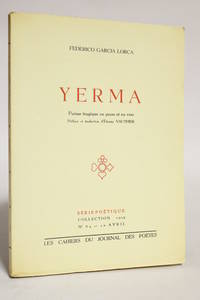
193957285Paris: Les Cahiers du Journal des Poètes 1939. Fine. Les Cahiers du Journal des Poètes Paris 1939 14 x 19 cm broché First edition of the French translation one of 50 numbered copies on Featherweight the tirage de tête. Illustrated with a photograph of the poet and his mother. A nice and rare copy printed colportage stamp on half-title page. Les Cahiers du Journal des Poètes unknown
Very Good English In contemporary bdg. Demy 8vo. In Ottoman script. 2 volumes set in 1: (195, [2] p.; 330, [2] p.), 7 folding plates (examples of invoices). B/w ills. Roumi: 1338 = Gregorian: 1922. Ozege: 23362. Rare. An important set for collectors of invoices, bills etc. Some folding invoice plates are in French, and Ottoman. Yeni usûl-i defterî. 2 volumes set.
2010071510-FNew York: Schocken Books 2010. Book. Very Fine. Soft cover. 1st Edition. 1st. Edition 1st. Printing before the trade copy 2010 Illustrated soft cover wraps 353 page book . This is the true first edition before the trade copy a scarce book. Condition : Very Fine. with a very light crece at the top corner see image Size: 8vo - over 7¾" - 9¾" tall. Schocken Books Paperback
199251523Clifton N.J.: AB Bookman Publications 1992. First edition 8vo pp. 8 171 1; illustrations and facsimiles throughout; fine copy in original black cloth-backed decorative paper-covered boards gilt-lettered spine. Designed by the legendary Ward Ritchie Ward Ritchie Press premiere book designer and printer from Los Angeles. <br/><br/> AB Bookman Publications hardcover books
2012054223Garnet Publishing 2012. 1st Edition . Hardcover. Fine. X 390 Pp. Illustrated Boards. First Edition. Fine. Inscribed By Emile Lahood To A Cousin In 2018. Written By Pakradouni Who Met With Lahood Weekly From June 1999 To November 2007. Per Wikipedia Émile Jamil Lahoud 1936- Is A Lebanese Politician Who Served As The 16Th President Of Lebanon From 1998 To 2007. His Main Foreign-Policy Achievement Was To End The Israeli Occupation Of Southern Lebanon In May 2000 Which Had Been Occupied Since 1982. He Downplayed Sectarianism And Rearmed The Lebanese Army With Help From Syria. However Factionalism And Lebanon's Politics Undermined His Strength. In A 2006 Der Spiegel Interview Lahoud Argued That Hezbollah Enjoys Prestige In Lebanon Because It "Freed Our Country". He Further Stated That Although Hezbollah Is A Small-Scale Organization It Stands Up To Israel And Voiced His Respect For Hezbollah Leader Hassan Nasrallah. In 2007 His Presidential Term Ended. However A New President Was Not Immediately Elected. Following A Political Deadlock Which Lasted For Six Months The Lebanese Parliament Elected Former Army Chief Michel Suleiman As President. It Was Claimed That Lahoud Spent Much Of His Presidency Term Swimming And Sunbathing At The Yarzeh Country Club Minutes Away From The Presidential Palace. Although There Were High Expectations From His Own Christian Maronite Community And The Support Of The Military Which He Had Commanded In The Post-War Period The Unpopular Lahoud Developed A Reputation As A Weak Leader By Some Largely Due To Following Syria On Most Matters. In Line With These Views Druze Leader Walid Jumblatt Publicly Described Lahoud As A "Helpless Ghost" Regarding His Presidency. Such Political Opinions Are Grounded On Partisan Politics In Lebanon Since Lahoud Is Generally Viewed With Respect And Gratitude By The Factions Of 8 March. Not Noted In The Wikipedia Analysis Is That Lahoud Like All Lebanese Politicians Would Probably Claim No Personal Responsibility For The Endless Politicization Corruption Nepotism And Immovable Stupidity Of The Government Of One Of The Most Dysfunctional Modern States - If A Temporary Cabal Of Local Warlords With No Interest In General Issues Of Administration For The Common Welfare And Their Apologists Can Be Called A Government. <br/> <br/> Garnet Publishing hardcover
1960041958Sewanee TN: University Press 1960. Paperback. Near Fine/Very Good . Illustrated. Limited Edition #31 of 250 copies. Paperback. Tissue paper dust jacket torn through where spine tie protrudes. 26pp. Full refund if not satisfied. University Press paperback
1956041959Sewanee TN: University Press 1956. First Edition. Paperback. Near Fine/Very Good . Illustrated. Limited Edition #234 of 250 copies. Paperback. Tissue paper dust jacket slightly torn through where spine tie protrudes. 41pp. Full refund if not satisfied. University Press paperback
1958041960Sewanee TN: University Press 1958. First Edition. Paperback. Near Fine/Very Good . Illustrated. Limited Edition #137 of 250 copies. Paperback. Tissue paper dust jacket slightly torn through where spine tie protrudes. 28pp. Full refund if not satisfied. University Press paperback
191014386Battle Creek MI: Advance Thresher Company. Very Good. 1910. First Edition. Softcover. Covers soiled. Wonderful illustrations of steam tractors and threshing engines. Some pencil notes on the back cover. ; Small 4to 9" - 11" tall; 68 pages . Advance Thresher Company paperback
193500283946White Plains N. Y.: Westchester County Reality Board 1935 Brown/gilt leatherette soiled. Blue aerial view photographs endpages. B/w frontisphoto of Westchester County Realty Board in White Plains many phot of county scenes. Advertisments for realitors data of cities legal rules List of Officers Committees Busines zoning Assessed Valuations ect. Some stains notes. Rare copy. 8vo - over 7¾" - 9¾" tall. 8vo - over 7¾" - 9¾" tall. First Edition. Soft cover. Good. Westchester County Reality Board paperback
1926028728Chicago / Bishop Ca: Laird And Lee 1926. Original Manuscript . Hardcover. Very Good. Manuscript Guest Book Full Of Autographs And Greetings From Guests At The Home Of William And Aurelia Mclean Of Bishop California 1931-1939. The Mcleans Had An Outstanding Collection Of Early Native American Baskets Which Their Guests Frequently Refer To In Their Messages. <br/> <br/> Laird And Lee hardcover
196742830Paris: Gallimard 1967. Fine. Gallimard Paris 1967 12.50 x 19.50 cm broché First edition one of 30 numbered copies on pur fil the only large paper copies. A very good copy. Gallimard unknown
New English Paperback. Dust wrapper. 4to. (30 x 21 cm). In English and Turkish. 101 p., color ills., 1 folded map. Yapi Kredi Coin Collection Exhibition 3: The wind blowing from Asia to Anatolia: An exhibition of Beylik Period coins.= Yapi Kredi Sikke Koleksiyonu Sergileri 3: Asya'dan Anadolu'ya inen rüzgâr: Beylikler Dönemi sikkeleri. Printed to 2000 copies.