78 262 résultats
Large 8vo. 2 pp. on bifolium. Important letter, in German, to the publisher Adolf Fuerstner in Berlin about the publication of the final edition of "Tannhäuser", recorded in Wagner's catalogue of works as "state 4", which since 1876 has remained to this day the most widely used and staged version. Save for a short quotation in a 1977 Stargardt catalogue, this letter is unpublished and therefore especially valuable. Fuerstner had taken over the rights from Meser at Dresden, who had published the first edition in 1845. Now, Wagner sends him the signed contract, announces the revised full score, explains the main changes he has made, and remains in joyful anticipation of receiving the agreed sum of 3,000 Goldmarks. Moreover, he reports that the Russian-born pianist and composer Josef Rubinstein, a friend and ardent admirer of Wagner's, will finish the arrangement of the 'Venusberg' scene within the next few days and send it to Fuerstner: "Today I am posting the fully revised full score of my new 'Tannhäuser' to your address, enclose the contract, with my signature, and expect the payment of 3,000 Marks. Mr. Josef Rubinstein will have completed the arrangement of the 'Venusberg' within the next few days and will send it to you as well. I infer that you are, at the moment, mainly interested in the Venusberg scene [Act I]. When performed separately and not in immediate conjunction with the overture, this scene has a special beginning which is both enclosed with the score and is also being used by Rubinstein for his arrangement of this separate piece [...]". In its present form, however, it is abridged, and thus Wagner achieves a very skilful dramatic climax in the 5th state. "[...] However, for a separate edition of the unabriged overture, as an independent concert piece, I have introduced a change in the violins which you will glean from the inserted sheet in the old score. I strongly desire that the full edition of this work, which has been significantly revised in a great many parts, be undertaken quite soon […]". Clearly, Wagner was impatient to see his "final" version performed as soon as possible. - Rubinstein was famous for excellent pianoforte transcriptions including the "Ring des Nibelungen"; in 1869 he was appointed "Kammerpianist" by Grand Duchess Helena. WBV Nr. 7168; Altmann Nr. 2699.
Large 4to. 1 p. To an undisclosed recipient, i. e. Karl Theodor von Küstner (1784-1864), director of the court theatre at Berlin, on the proposed world premiere of "Der Fliegende Holländer" ("The Flying Dutchman"), which was accepted for staging by Küstner's predecessor Count Redern by recommendation of Giacomo Meyerbeer. Since Redern and Küstner had both omitted to give a concrete date for staging, Wagner is now asking Küstner to tell him the current state of affairs. Moreover, he informs him that his "Rienzi" will be staged at Dresden within the next month, and invites him to visit the performance in case that he stays at Dresden at that time. - One month after this letter, Wagner was celebrating the premiere of "Rienzi" at the Dresden Court Theatre (20 October), one of his first major successful premieres. The "Flying Dutchman" was also first staged in Dresden (January 2, 1843) under his direction. - Stromger damage to edges. WBV 271. Sämtliche Briefe Vol. 2, No. 23.
1 S. Qu.-gr.-folio (406:483 mm). Extrem seltener, vermutlich unikaler Aushangzettel, für uns bibliographisch nicht nachweisbar. Am 31. Dezember 1813 hatte Beethoven im "Allgemeinen Intelligenzblatt zur Oesterreichisch-Kaiserlichen privilegirten Wiener Zeitung" (Nr. 209, 1317) unter dem Titel "Musikalische Akademie" folgende Anzeige veröffentlicht: "Der Wunsch zahlreicher, mir sehr verehrungswürdiger Freunde der Tonkunst, meine grosse Instrumental-Composition über Wellingtons Sieg bey Vittoria noch einmahl zu hören, macht es mir zur angenehmen Pflicht, dem schätzbaren Publikum hiermit anzukündigen, daß ich Sonntag den 2. Januar, die Ehre haben werde, mit dem Beystande der vorzüglichsten Tonkünstler von Wien, besagte Composition, mit neuen Gesangstücken und Chören vermehrt, im k. k. Redouten-Saale, zu meinem Besten, aufzuführen". - Auf dem Programm standen: "Erstens: Die neue große Symphonie [d. i. die 7. oder 8. Sinfonie]. Zweytens: Ein neuer feyerlicher Einzugs-Marsch mit Chören [Marsch Nr. 1 in F-Dur, "Yorckscher Marsch"), Drittens: Eine noch nie gehörte Baß-Arie, mit Begleitung des Chors, aus der Oper: Die Ruinen von Athen, die Scene des Oberpriesters im Tempel der Musen, gesungen aus Gefälligkeit für den Conzertgeber von Herrn Weinmüller k. k. Hofkapell- und Kammersänger [d. i. Festspiel nach Kotzebue, op. 113, wohl die Arie des Hohepriesters, "Will unser Genius noch einen Wunsch gewähren"], Viertens: Eine große vollstimmige Instrumental-Composition, geschrieben auf Welllingtons Sieg in der Schlacht bey Vittoria [d. i. "Sinfonisches Schlachtengemälde", op. 91)". - Bei dem im Aushang erwähnten Sänger Weinmüller handelt es sich um den deutsch-österreichischen Bass und Theaterregisseur Carl Weinmüller, dessen vorzüglichste musikalische Tat darin bestand, dass er 1814 zusammen mit Ignaz Saal und Johann Michael Vogl Beethovens weitgehend vergessene Oper "Fidelio" für eine Benefizvorstellung wählte "und den Komponisten damit zu einer grundlegenden Überarbeitung des Werkes anregte. Diese dritte, endgültige Fassung kam am 23. Mai 1814 im Theater am Kärntnertor erstmals zur Aufführung" (Wikipedia). - Etwas fleckig und abgegriffen; gefaltet.
Oblong 8vo. ¼ p. (5 lines). Sending greetings to the German composer, musical theorist and critic Adolf Bernhard Marx (1795-1866), founder and editor of the "Berliner Allgemeine Musikalische Zeitung": "Mozarts Witwe empfindet ein inniges Vergnügen, dem Herren Referendar Marx ihren freundlichsten Gruß und eine mehrfache, vielfache ausgezeichnete Achtung zu vermelden".
Oblong small 8vo (71 x 119 mm), on the verso of Dvorák's printed calling card. 1 page. Four bars on a single stave, a quotation from the concert overture "In Nature's Realm". Composed in 1891, the work is the first part part of a trilogy of overtures, with the "Carnival Overture" and "Othello". - Slightly browned due to paper, otherwise in excellent condition. Provenance: Sotheby's, 17 May 1990, lot 102; bought by the Greek-Italian film director and screenwriter George Pan Cosmatos (1941-2005); his sale, Sotheby's, 31 March 1998, lot 128.
4to. 229 ff. With woodcut title border. Contemporary pigskin on 5 raised double bands, richly blindstamped. Wants clasps. Upper cover stamped "Bassus 1610". Of the utmost rarity. - The first attempt at a collected edition, put forth by the composer's sons Ferdinand and Rudolph Lasso, containing 516 motets and with a two-page dedication to the ruling duke of Bavaria, Maximilian (dated January 1, 1604). A total of six voices were published in separate volumes with the music printed in letterpress, together forming one of the most famous works in the history of music publishing. - Two small paper flaws in the title page have been repaired without loss to text or to the fine woodcut border. Very well preserved. RISM L/LL, 1019. Eitner I, 59. Wolffheim II, 1842. Hirsch III, 886. Leuchtmann I, p. 59. Title of the Cantus illustrated in: Leuchtmann/Schaefer, O. di Lasso. Prachthandschriften u. Quellenüberlieferung (exhibition catalogue, Munich 1994), p. 63.
Oblong small 8vo (140 x 83 mm). On pink paper. Mendelssohn has carefully penned a nine-bar musical quotation, captioned "Canone a 2", corresponding to his work Canon in B minor. - Four corners lightly affixed to a slightly larger page. With small overall age wear, otherwise in good condition.
Large 4to. 2 pp. To an undisclosed recipient: "When I posted the letter to you the day before yesterday, I already half suspected that yours would come yesterday - and it really did, and scolded me, and I deserved it, too. But write me again soon and tell me how you are. Your letter is in a bad mood, and it couldn't very well be otherwise; but tell me, couldn't you undertake some good and proper project of your own, in seclusion, as a comfort and therapeutic? [...] I am sending this letter with Rosen's portrait to Paul in Hamburg, who has just arrived there and will be staying there a few months; he will certainly be able to send it to you soon. I hardly think the sketch will be of any use because it was done so very hastily; but I find the likeness so very good, and I ask particularly to see to it that I get it back undamaged. When you write of the dead season again, and I think again of the despairing foggy days I was amazed to see this time in James Park, and when I then also see the disgusting snow that has been lying here for several days, then I say Germany forever, after all. Small and miserably dead it is here, and yet there is much to live for. If I had enough character to turn down the next Rhinish Music Festival, it could be possible that I would stay entirely, my whole life, sitting here in Leipzig, and I and my art, we would be only the better for it. But I fear I am too vain for them; and yet I must do it sooner or later. We are furnishing our flat - as people say - i.e., there has been constant talk of wallpaper, curtains, and furniture, and in a week we are supposed to be able to move in, although we don't want to until 4 weeks from now; in a new house standing alone, on the third floor, the view to the South over the fields and the forest, to the North on the promenade and the city and towers, to the West on a big water mill with its wheels, then you only have to drop in, your quarters are ready; in a room papered with bouquets of flowers you are to have lodgings, and the white hall and our rooms are completely at your disposal. You shall hear music, half as much as I in the last weeks, i.e., up to your ears - singing, piano, quartets, of whatever kind you want. And better than all that you will find my Rüdesheimer 1834 wine. I picked it out in Bingen, had a cask of it transported here, and am creating a huge furor with it here in Leipzig because they aren't used to things like that. And now even you, who has had to make do with the barbaric [...] things: Hock [Hochheimer is a wine from the Main area], and still have a German heart - you will like it [...]" (transl. from the German original). - Mendelssohn paraphrases the quote from the opening poem of Goethe's collection of poetry, The West Eastern Divan: "North and West and South splinter, thrones burst, kingdoms tremble; fee to taste the air of patriarchs in the pure East". Rosen, to whom he refers, is the Sanskrit scholar Friedrich Rosen, who had died in London on September 12, 1837. Cecile Jeanrenaud is Mendelssohn's wife, who he had married on March 28, 1837. - Crude repair to marginal tears.
4to. 4 pp. on bifolium. To the Committee for this year's Lower Rhenish Music Festival in Dusseldorf. Mendelssohn, the 1839 Director of the Lower Rhenish Music Festival, writes to the festival's committee recommending the works to be included. "I hasten to answer, as the time is indeed approaching and is beginning to press. Against the march and chorus from the Ruins of Athens, which you are adding to the second day, it is only natural that I have nothing to object; I would suggest putting the piece right after the Eroica Symphony, where it would certainly have a good effect. But I wouldn't know what cantata by Bach to suggest for the second day as now programmed; I don't know any which would fit in as regards the time it needs and even more as regards style; if another piece needs to be selected, I would perhaps suggest the chorus by Haydn 'Des Staubes eitle Sorgen' but it seems enough to me, anyway. In 1833 with you and 1834 in Aachen, the program of the 2nd day was shorter than this; last year in Cologne it was at least no longer, and so I think: 1) Eroica Symph[ony], march and chorus by Beeth[oven], new hymn by Spohr. 2) Overture and Psalm -would be quite a sufficient program. To be sure, if Herr Rietz doesn't keep his promise, quite a substantial overture would have to be selected, to make the second part as interesting as possible. But this time the main thing for me would be if you could manage to have Alceste performed in the theater. You write of the difficulties with the chorus; they are indeed the biggest ones that can place themselves in its way, to my knowledge, but even if they couldn't be removed, I would prefer seeing Alceste performed with a very bad chorus a hundred times more than giving up the idea completely. First, in Alceste the main thing is Alceste herself, then Admet, then Hercules, and then only the chorus, and with a performance to be expected from Frl. von Fassmann and Tichatschek or Eichberger or some other outstanding Admet, the chorus recedes in any case into the background. Then there is the second question if it is impossible to improve the chorus? Couldn't 12-20 of the best chorus singers be brought in from Cologne and Aachen? I would with pleasure come a week earlier myself for this and hold separate rehearsals for the chorus every day to make this performance possible. Finally, several passages could and in such a case would have to be deleted, such as the ball in the second act and similar passages in which the chorus plays too much of a main part, and as I said, that would be that much more feasible as Alceste herself and her and Admet's suffering are definitely the main thing in the opera. As several of your members know, I already felt the urgent wish for something new in the course and sequence of the music festival last year, and I said so. My suggestions on this were perhaps not practical, but now, through this coincidence, the opportunity arises this time in Dusseldorf, at least, of giving the festival a new attraction of the kind I had in mind. If this music festival performs the Messiah on the first day, then the Beethoven symphony with a miscellaneous program, and finally a Gluck opera (and even if it is most inferior in execution and even if it has the worst chorus, but beautifully sung in the main roles and beautifully played by the orchestra), this would indeed be something new, as I wished, and because of that this music festival would be outstanding as compared to all the earlier ones. I would therefore very much wish that this plan, even if it be only the hope of it, be mentioned already in your first tentative announcements - how differently would the music festival appear because of it! In the interest of the public, too; in regard to the box office it would also make a palpable difference. Of course I assume that the performance would have to be considered in conjunction with both the others, and only those would receive tickets to the opera who had attended the music festival on the preceding days or had been participants in it. And even if the prices were not raised, the proceeds would be significant. Not to mention the enjoyment all friends of music would derive from it. I ask you to let me know your answer as soon as possible, as I would, as I said, to this end make my departure earlier, if necessary. In any case your speedy answer is now very much desired, as the time is now fast approaching [...]" (transl.). - In a postscript, Mendelssohn has written: "The fine tenor here, Schmidt, just came to ask if he couldn't take part in the music festival; he would try to arrange things so that he could come there at that time and take a solo pan. I told him you had written Tichatschek, but he claims that he is giving guest performances in Berlin at Pentecost and would thus not be able to come to the Rhine. Also, the things that Schmoetzer and Eichberger, whom I mentioned to him, are also detained. So I don't hesitate to let you know about his wish. In a second postscript written in the left margin of the first page Mendelssohn has added; Please have the kindness to hand the enclosed letter over to Director Schadow" (transl.). - The Lower Rhenish Music Festival (Das Niederrheinische Musikfest) was one of the most important festivals of classical music, which happened every year with few exceptions between 1818 and 1958 at Pentecost for 112 times. The Festival was held in various German cities over time and the directors included Robert Schuman, Richard Strauss, Franz Liszt, Otto Goldschmidt, Anton Rubinstein, Hans Richter & Richard Strauss. - Light browning; small clipped section on f. 2.
12mo. Together 3 pp. Highly interesting correspondence with the young conductor Roger Désormière (1898-1963) concerning a commission for the ballet "Mercure", a possible adaptation of his ballet music "La Belle Excentrique" as a symphonic piece, and Satie's rupture with the Groupe des Six. - On 7 February 1924, Satie criticizes the conductor Paul Paray, and especially his former friends Georges Auric and Francis Poulenc, implying that they make "rotten compromises", while lauding the André Caplet, Vladimir Golschmann, and the recipient as the "only three conductors" that he knows. In spite of a dismissive remark about the soprano Marguertie Bériza, he signals interest in working with her and Désormière: "Pour les spectacles de cette dame, disposez de moi comme vous l'entendrez". - The attack on Auric and Poulenc of the Groupe des Six foreshadows Satie's public rupture with his former friends in an article for the Paris-Journal published on 15 February. In the meantime, Satie had been commissioned to compose ballet music for Étienne de Beaumont's company "Soirées de Paris". The letter from 16 February reflects both events, with Satie first expressing his joy that Désormière was chosen as conductor of the Beaumont "thing", which would become "Mercure". Another project was the symphonic adaptation of his ballet music for "La Belle Excentrique" (1921) for one of Désormière's concerts. Satie concedes that the dancer Élisabeth Toulemont, known as Caryathis, was the owner of the piece, but appears to scold Georges Auric for objecting to the adaptation of the material due to her ownership. He announces he shall "write two little things in collaboration with Tzara" and stresses that he has "the right to turn 'la Belle Excentrique' into a symphonic piece, which Auric knows well but does not say". In closing, Satie advises Désormière to obtain a copy of his piano arrangement of "La Belle Excentrique", published by the famous Éditions de la Sirène in 1922. - The final letter in the collection from 26 February is a reaffirmation of Satie's plans for a rearrangement of "La Belle Excentrique" in order to reassure an impatient Désormière: "I work for you: give me, however, the time to compose what I have to do. Will you be so kind? ... Concerning 'La Belle Excentrique' do not 'worry': as soon as Caryathis will be back from the Midi, I will have the complete material. Yes" (transl.). - Désormière conducted "La Belle Excentrique" on 5 April at Charles Dullin's Théâre de l'Atelier. The premiere of the ballet "Mercure" with Satie's music, stage and costume designs by Pablo Picasso, and a choreography by Léonide Massine on 14 June 1924 resulted in a theatre scandal, as factions of the Parisian avantgarde audience clashed and the Surrealist group led by André Breton and Louis Aragon disrupted the performance. - Traces of folds. Minimally stained. Letter from 16 February somewhat creased. The letter from 16 February is published in the Correspondance presque complète, no. 1049.
8vo. 1 page. On yellow stationery, light creasing and thumbing, matted with pastel portrait of Tchaikovsky and albumen print photo of Mozart portrait and framed. Tchaikovsky discusses his newly-composed Orchestral Suite No. 4 Op. 61, usually referred to as "Mozartiana", composed to celebrate the centennial of Mozart's "Don Giovanni". Tchaikovsky personally conducted the debut performance of "Mozartiana" in Moscow in November of 1887. The composition's title is referred to in the heading and in the body of the manuscript.
Large 8vo. 4 pp. on bifolium. In German, to an unidentified member of the Wagner Society of Cologne, about a scheduled concert at the Gürzenich concert hall and his participation therein: "[...] I am quite satisfied with its programme, but I prefer to play the prelude to Lohengrin instead of the Ride of the Valkyries, which I really dislike to play, not least because of the enormous orchestra necessary [...]". Moreover, Wagner discusses concerts he refused to give at Leipzig, Dresden, Breslau, Prag, Graz, and Pest, as well as a concert at London which was organized by the British pianist and head of the Wagner Society of London, Edward Dannreuther (1844-1905). WBV 6442.
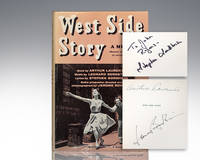
1958148050New York: Random House 1958. First edition of this classic musical. Octavo original half cloth. Boldly signed by Arthur Laurents Leonard Bernstein on the half-title page and inscribed by Stephen Sondheim on the front free endpaper. Review copy with the slip laid in fine in a very good dust jacket. Housed in a custom half morocco clamshell box by the Harcourt Bindery. Rare and desirable signed by these three contributors. In 1947 Jerome Robbins approached Leonard Bernstein and Arthur Laurents about collaborating on a contemporary musical adaptation of Romeo and Juliet. He proposed that the plot focus on the conflict between an Irish Catholic family and a Jewish family living on the Lower East Side of Manhattan during the Easter–Passover season. The girl has survived the Holocaust and emigrated from Israel; the conflict was to be centered around anti-Semitism of the Catholic "Jets" towards the Jewish "Emeralds" a name that made its way into the script as a reference. Eager to write his first musical Laurents immediately agreed. Bernstein wanted to present the material in operatic form but Robbins and Laurents resisted the suggestion. They described the project as "lyric theater" and Laurents wrote a first draft he called East Side Story. Only after he completed it did the group realize it was little more than a musicalization of themes that had already been covered in plays like Abie's Irish Rose. When he opted to drop out the three men went their separate ways and the piece was shelved for almost five years. In 1955 theatrical producer Martin Gabel was working on a stage adaptation of the James M. Cain novel Serenade about an opera singer who comes to the realization he is homosexual and he invited Laurents to write the book. Laurents accepted and suggested Bernstein and Robbins join the creative team. Robbins felt if the three were going to join forces they should return to East Side Story and Bernstein agreed. Laurents however was committed to Gabel who introduced him to the young composer/lyricist Stephen Sondheim. Sondheim auditioned by playing the score for Saturday Night his musical that was scheduled to open in the fall. Laurents liked the lyrics but was not impressed with the music. Sondheim did not care for Laurents' opinion. Serenade ultimately was shelved. Laurents was soon hired to write the screenplay for a remake of the 1934 Greta Garbo film The Painted Veil for Ava Gardner. While in Hollywood he contacted Bernstein who was in town conducting at the Hollywood Bowl. The two met at The Beverly Hills Hotel and the conversation turned to juvenile delinquent gangs a fairly recent social phenomenon that had received major coverage on the front pages of the morning newspapers due to a Chicano turf war. Bernstein suggested they rework East Side Story and set it in Los Angeles but Laurents felt he was more familiar with Puerto Rican immigrants and Harlem than he was with Mexican Americans and Olvera Street. The two contacted Robbins who was enthusiastic about a musical with a Latin beat. He arrived in Hollywood to choreograph the dance sequences for The King and I and he and Laurents began developing the musical while working on their respective projects keeping in touch with Bernstein who had returned to New York. When the producer of The Painted Veil replaced Gardner with Eleanor Parker and asked Laurents to revise his script with her in mind he backed out of the film freeing him to devote all his time to the stage musical. West Side Story is set in the Upper West Side neighborhood in New York City in the mid 1950s an ethnic blue-collar neighborhood in the early 1960s much of the neighborhood was cleared in an urban renewal project for the Lincoln Center which changed the neighborhood's character. The musical explores the rivalry between the Jets and the Sharks two teenage street gangs of different ethnic backgrounds. The members of the Sharks from Puerto Rico are taunted by the Jets a white gang. The young protagonist Tony a former member of the Jets and best friend of the gang's leader Riff falls in love with Maria the sister of Bernardo the leader of the Sharks. The dark theme sophisticated music extended dance scenes and focus on social problems marked a turning point in American musical theatre. Bernstein's score for the musical includes "Something's Coming" "Maria" "America" "Somewhere" "Tonight" "Jet Song" "I Feel Pretty" "A Boy Like That" "One Hand One Heart" "Gee Officer Krupke" and "Cool". The original 1957 Broadway production directed and choreographed by Jerome Robbins and produced by Robert E. Griffith and Harold Prince marked Sondheim's Broadway debut. It ran for 732 performances before going on tour. The production was nominated for six Tony Awards including Best Musical in 1957 but the award for Best Musical went to Meredith Willson's The Music Man. Robbins won the Tony Award for his choreography and Oliver Smith won for his scenic designs. The show had an even longer-running London production a number of revivals and international productions. A 1961 musical film of the same name directed by Robert Wise and Robbins starred Natalie Wood Richard Beymer Rita Moreno George Chakiris and Russ Tamblyn. The film was nominated for eleven Academy Awards and won ten including George Chakiris for Supporting Actor Rita Moreno for Supporting Actress and Best Picture. Random House hardcover
4 SS. auf Doppelblatt. 8vo. Beiliegend ein eh. Brief mit U. von Eduard Hanslick an Fritz Simrock. (1 S. 8vo). Inhaltsreicher Brief an seinen nicht namentlich genannten Verleger Fritz Simrock ("L. S."), der zusammen mit seinem Mitstreiter Robert Keller ein neues Verzeichnis von Brahms' Werken erstellen wollte und dabei auch Schützenhilfe von Eduard Hanslick erhalten hatte. Wenn Simrock schon etwas für ihn tun wolle, so wären nach Brahms' Ansicht Inserate in den von Barthold Senff herausgegebenen "Signalen" oder in Fritzschens "Musikalischem Wochenblatt" um vieles geeigneter. Was die Debatte zusätzlich anheizt, ist die geplante Anführung von Daten: "Also: ich finde die ganze Geschichte zwar unsinnig u. überflüssig, kann aber doch umso weniger dagegen sagen, als es ja schon 2 Kat. giebt. Gescheiter fände ich es schon, wenn Sie sich begnügten ein Verzeichniß der empfehlenswerthen Werke zu veröffentlichen! Das wäre so eine kleine, hübsche, billige Annonce für Senff u. Fritzsch! Niedlich wäre auch eine Anthologie von Gedichten u. Dichtern nach meiner Auswahl! Nun aber, damit ich auch was Positives sage: ich bin durchaus gegen die historischen Daten, die Sie u. Hr. Keller beabsichtigen. Ich finde sie nicht blos unnöthig sondern auch ungehörig. Es sieht schändlich eitel meinerseits aus u. daß ich nicht dazu mithelfe - u. dies nicht einmal ordentlich kann, glaubt doch Niemand. Also die lassen Sie ja weg. Und dann widersteht mir sehr der Gedanke daß der Katalog mit op. 100 erscheinen soll. Das sieht aus wie ein Jubiläum u. Sie werden auch noch zur Einsicht kommen daß dazu kein Anlaß vorhanden. Also lassen Sie ihn früher erscheinen, bei den nächsten 1, 2 opera die ich vielleicht noch in alten Schubladen finde. Denn daß ich wohlsituirter Mann noch arbeite, glauben Sie doch nicht? Vielleicht zeigen Sie Freund Hanslick diesen Zettel u. lassen sich von ihm sagen daß ich Recht habe". - Den Inhalt "dieses Zettels" missversteht Brahms allerdings und möglicherweise absichtlich, denn Hanslick schreibt unter dem 20. Juni d. J. ausdrücklich: "Ich gestehe, daß ich das Fehlen von Jahreszahlen im Schumann- u. Mendelssohn-Catalog schwer vermisse und Simrocks Idee für eine notwendige, von jedem Musiker ersehnte Reform in den themat[ischen] Catalogen halte […]" (vgl. die Beilage). - Beide Briefe mit unbedeutenden Faltspuren durch zeitgenöss. Kuvertierung, sonst tadellos. Gedruckt in: Deutsche Brahms-Gesellschaft (Hrsg.), Brahms' Briefe an Peter Joseph Simrock und Fritz Simrock, Bd. III (GA Bd. XI), Berlin, 1919, S. 98 ff., Nr. 528.
3 SS. auf Doppelblatt. 8vo. Brief aus Pörtschach am Wörthersee, wo Johannes Brahms viele Sommerurlaube verbrachte: "18 Bände! Und es soll nicht der Mühe wert sein einen Brief zu schreiben? Aber ich armer Mann, wie schwer fühle ich die Verantwortlichkeit die auf mir lastet! Kann ich denn hoffen durch ein paar letzte Bände alle früheren entschuldigen zu können? Wie Sie will ich nun Alles verschweigen was ich erzählen könnte! Aber ich denke wir sehen uns Pfingsten in Düsseldorf? (Ihr 19ter Band kommt auch dran.) Nur eilig sage ich auf Ihre Fragezeichen Einiges. Im Ganzen bin ich aber mehr für das Plaudern und freu mich also auf D[üssel]d[or]f. Die Partitur von Bd 19 war nicht in England aber Pohl, der sanfte Verräther, hat mir gestanden daß er von Engländern verführt worden sei u[nd] heimlich in der Probe nur die Stimmen notirt hat! [...] Wegen neuer Sachen die ich geschrieben habe halten Sie sich nur weiter an Ihren Referenten - er weiß entschieden mehr als ich! Nach England aber komme ich nicht leicht weil ich zu große Abneigung gegen Koncerte u[nd] andre Unruhen habe. Es hat nichts damit zu thun ob mir einmal englische Politik nicht gefällt oder engl. Reisende mißfallen. Letzteren wird übrigens mit bestem Erfolg jetzt von den Norddeutschen (Berlinern) der Rang streitig gemacht! Die Händelschen Arien haben Sie vielleicht in D[üssel]d[or]f im Koffer. Ich habe selbst ihrer ca. Hundert / ich fürchte es wird meinem nicht gerade überschwänglichen Interesse daran nicht gerade förderlich sein wenn ich auch sehe wie Andere - gerade wird der Satz nicht mehr! Aber ich hoffe auf Wiedersehen u[nd] schreibe nur noch m[eine] Adresse her: Pörtschach am See, Kärnten [...]".
4 SS. auf Doppelblatt. 8vo. Beiliegend eine gedruckte Porträtpostkarte. Sehr detailreicher Brief an seinen Verleger Julius Kistner über die Herausgabe seines "Spanischen Liederspiels": "Sie erhalten hierbei, geehrter Herr, das Spanische Liederspiel, dessen Herausgabe, wie ich wünsche, Ihnen noch in später Zukunft Lohn und Freude bringen möge. Nro. 4 u. 6 bleiben also weg, was Sie dem Stecher bei dem Stich der Inhaltsanzeige, u. der Numerirung der einzelnen Stücke bemerken wollen. Auf dem kleinen Blättchen habe ich angezeigt, wie ich mir die Einrichtung denke. Erst ein Umschlag, dann der Haupttitel, dann die Inhaltsanzeige. Die Gewandung überlasse ich Ihrem guten Geschmack. Aber der Haupttitel! Gern möchte ich dazu, wie zu dem Titel meines Albums, den Zeichner zu Hülfe nehmen. Schuberth hat das Titelblatt, das Sie wohl gesehn, ziemlich billig, Zeichnung und Ausführung des Steines zusammen für 6 Louisdor; dies aber deshalb, weil ich Prof. L. Richter persönlich kenne und sein Sohn Unterricht in der Composition bei mir hat. Ich glaube gewiß, daß er mir zu demselben Preise auch zu dem Liederspiel etwas zeichnet, und wie von ihm zu erwarten, etwas Feines, Anmuthiges. Ist Ihnen aber diese Ausgabe nicht zu groß? Bitte deshalb um Antwort. Den Notenstich des Liederspieles selbst denke ich mir zierlicher, als den gewöhnlichen - wenn nicht ganz so klein, wie den des Albums, so doch in ähnlicher Weise. Eine Umrandung der einzelnen Platten sieht auch sehr hübsch [aus]. Namentlich aber wünschte ich die Textschrift nicht zu kolossal. Am Besten wäre es, Sie ließen mir eine Stichprobe, vielleicht der 1sten Seite, zur Ansicht anfertigen [...]". Schumanns Liedersammlung erschien im November des Jahres. - Provenienz: J. & J. Lubrano, 2002.
4 pp. In-16. To an unknown recipient. Liszt is sick in Madonna del Rosario, he felt "very unwell walking up Monte Mario after having had dinner at the Vatican". He writes to confirm his presence at an important concert by Lippi despite his state of health. "After that [he will] endorse himself to eight days of imprisonment". His sicckness does not keep him from maintaining his social commitments with his correspondent, "Haxthausen and Mme Colban". - Enclosed a framed reproduction of the famous photography by Hanfstaengl that shows the pianist playing. - Provenance: Robert Bory, musicologist.
1922121509-SHollywood Cal .: James Abbe 1922. Photographic Image. Illus. by James Abbe. Fine. No Binding. Autographed. 1924c. This vintage black & white photo by the Hollywood photographer James Abbe 1883 - 1973 is of Rudolph Valentino 1895 - 1926 . This personalized vintage photo of Valentino sitting on a couch with a book on his lap is a scarce image of this Silent Movie Star in relaxed full view shot scarce in pose and signed. The photo is now matted and framed . The autograph is to a friend to one of the sweetest girls I know Rudy . Signed photos of Valentino are extremely rare and photos by this photographer are also scarce to the market . Over all framed size : 17.5" x 15.5" . Size: 8 x 10 Photo Matted. James Abbe unknown
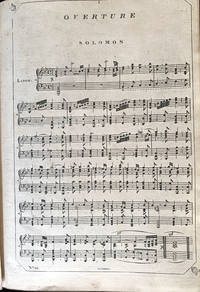
18191811018th and 19th century. The compositions include pieces for the voice piano violin and cello and range from sonatas to airs to operas. The majority of the works many with fine engravings were printed in Britain from notable music publishers. The publication dates vary from the late eighteenth to the mid-nineteenth century. The collection contains works by classical composers like Mozart Handel and Beethoven as well as poets like Felicia Hemans Lord Byron and Robert Burns. Overall the books offer an interesting survey in the history of British music publishing the printing of classical compositions and the collecting of music. A complete list of all compositions is available upon request.<br /> <br /> I. Countess of Lonsdale Music Collection<br /> Two volumes bound for the library of Grace Cecile Lowther née Gordon Countess of Lonsdale 1854-1941 wife of 5th Earl of Lonsdale and daughter of 10th Marquess of Huntly. The first volume contains eight violin compositions for sonatas and the second volume has the corresponding parts for the piano. The volumes contain the earliest imprints mostly from the 1790s and has works by Mozart Haydn and Pleyel among others. <br /> <br /> II. STEVENSON Sir John & Thomas MOORE<br /> A selection of Irish melodies with symphonies and accompaniments by Sir John Stevenson Mus. Doc. And characteristic words by Thomas Moore Esq.r. London: Published & sold at W. Powers c. 1808-1810.<br /> Two bound volumes of issues of Stevenson’s and Moore’s Irish Melodies c. 1808-1834. The first book includes issues 1-4 issue 1 is lacking the title-page. The second book includes issues 4-6 issue 4 is a duplicate. There were 10 total issues printed. Stevenson 1761–1833 was an Irish composer and Moore 1779–1852 was an Irish poet singer and songwriter. Irish Melodies is Stevenson’s best known work and he collaborated with Moore on several other projects.<br /> <br /> III. Original Scottish and Welsh Airs<br /> Three bound volumes that consist of Original Scottish airs and Orignal Welsh airs from the music publisher George Thomson with his signature. Between the three books there are early editions of four volumes of Original Scottish airs four volumes of the rare violin parts for Scottish airs and one volume of the Original Welsh airs and a volume of its optional violin part. Thomson employed composers like Pleyel and Haydn and the poet Robert Burns to produce his series of national airs. These volumes also contain many copperplate engravings in addition to the sheet music. Signature of John Carnegie Glasgow 1810 on all volumes.<br /> <br /> IV. HANDEL George Frederic<br /> Solomon composed by G.F. Handel arranged for the organ or piano-forte by Dr. John Clarke Cambridge. London: Printed by Clementi Collard & Collard c. 1825. Folio. iii 193 1 pp. Engraved title with border design and vignette by Isaac Taylor; inscription in brown ink of Charles Severn.<br /> Arrangement of the vocal score for Handel’s 1685–1759 oratorio Solomon HWV 67. Until recently the librettist of Solomon was unknown. However it is likely that the English/Jewish financier-poet Moses Mendes c. 1690–1758 provided the lyrics to Handel’s oratorio according to a new documentary source. The previous owner of this volume was Charles Severn 1806–1894 a musician and member of the Royal Society of Musicians in Great Britain.<br /> <br /> V. ROSSINI Gioachino Antonio<br /> Mosè in Egitto oratorio in tre atti musica di Rossini nuova edizione. Paris: Ou Magazin de Musique de Pacini c. 1825. Folio. ii 1 ii 203 pp.<br /> Rossini 1792–1868 was an Italian composer known for his comic operas including William Tell 1829. He composed Mosè in Egitto with the librettist Andrea Leone Tottola around 1818. Rossini later revised the opera adding a fourth act and a ballet in 1827 and renamed it Moïse et Pharaon. Both versions were highly successful and remain Rossini’s best known works.<br /> <br /> VI. Voice and piano-forte<br /> This volume contains 23 engraved pieces of music. The majority of works are romantic songs with lyrics for solos or duets. There are also works for the piano-forte. All entries except four are from British composers and/or poets. The exceptions are two songs from Italian composers based in England a duet from Mozart’s The Marriage of Figaro printed by a British music firm and a book of eight anonymous Italian duets. Highlights include three songs from Lord Bryon’s and Isaac Nathan’s Hebrew Melodies title-pages with lithographs from Maxim Gauci’s firm and many works by women composers and poets like Felicia Hermans.<br /> <br /> VII. Trios<br /> Three volumes of trios for the piano violin and cello. There are six compositions in total with each volume containing the parts for each instrument. The sheet music comes from a variety of publishing firms with a date range of the early to mid-nineteenth century and consists of works by Classical composers including Mendelssohn Mozart and Beethoven. unknown
181 fogli di pergamena manoscritti e colorati a mano da frati spagnoli al finire del secolo XVI i fogli misurano mm. 455 x 310 Splendida legatura coeva in pelle applicata su assi di legno, con borchie e ganci La legatura misura mm. 480 x 325 Il manoscritto porta un indice, anch'esso manoscritto Il volume, altamente prezioso, è stato notificato dalla Soprintendenza archivistica e bibliografica del Piemonte e della Valle d'Aosta nel 2019, e quindi non può essere esportato in paesi esteri, ma può essere acquistato solo per rimanere in Italia. Una volta acquistato farò comunicazione alla soprintendenza per ricevere il permesso per lo spostamento, che potrebbe richiedere svariati giorni. Il manoscritto è possibile vederlo, previo appuntamento, nel locale dove è conservato, telefonando al 3938246419.
3 Teile in einem Band. (10), 371, (3 w.) SS., Bl. 372, 373-738, (24) SS. 72, (4) SS. Mit einem Kupferstich und einer gest. Falttafel. Neuer Lederband mit Metallschließen. 4to. Schönes Exemplar des unter Kurfürst Johann Georg II. von Sachsen aufgelegten Gesangbuchs, darin als erster Teil die insgesamt vierte Auflage von Heinrich Schütz' Psalter. Die drei Teile mit eigenen Zwischentiteln (wo auch Druckort und Drucker genannt werden): "Der Psalter Davids, nach bekannten Kirchen-Melodeien. Durch D. Cornelium Beckern verfasset, aufs neue aber, mit Heinrich Schützens [...] eigenen Gesang-Weisen, aufgeleget", "Neu-eingerichtetes Gesang-Buch Herrn D. Martini Lutheri", und - mit selbständiger Paginierung - das "Kirchen-Gebeth-Buch". Die erste und zweite Auflage von Schützens Psalter (SWV 97a-256a) waren 1628 und 1640 erschienen, die dritte erweiterte Auflage (SWV 97-256) erschien 1661. Schütz, der bedeutendste deutsche Komponist des Frühbarock, führte den neuen konzertierenden Stil mit obligatem Generalbass aus Italien ein und vereinigte ihn höchst wirkungsvoll mit der deutschen Bibelprosa. - Der Gesamttitel hinter die Widmung gebunden. Der prachtvolle doppelblattgroße Kupferstich "Schütz in der alten Dresdner Schloßkirche im Kreise seiner Kantorei" (Abb. bei H. J. Moser, Heinrich Schütz, 2. Aufl. 1954, nach S. 496), den das erste Blatt in Versen erklärt, findet sich ausfaltbar am Schluss des Bandes. - Durchgehend gleichmäßig leicht gebräunt; kleine Fehlstellen am Unterrand des Faltkupfers fachmännisch hinterlegt. Von bemerkenswert guter Erhaltung. Bittinger S. 30 ff. RISM S 2285.
190:427 mm. In roter Leinenkassette (320:455 mm) mit Deckelschildchen. Sehr ansprechendes, großformatiges Albumblatt: Sieben 6/8-Takte Adagio in dreizeiligem System für "Flutes et Clarinettes", "Violons" und "V[iolonc]elli C[ontre]Basses" aus der Liebesszene von "Romeo und Julia": "Phrase de la scène d’amour de Roméo et Juliette Symphonie avec chœurs". - Die Ränder etwas gebräunt und fleckig, sonst tadellos erhalten.
4 SS. auf Doppelblatt. 8vo. An seinen Freund, den Komponisten Julius Otto Grimm, von ihm "Isegrimm" genannt, mit dem er den Sommer 1858 gemeinsam in Göttingen verbrachte. Dort lernte er auch seine Jugendliebe, die Professorentochter und Pianistin Agathe von Siebold (1835-1909) kennen. Bald nach dem Kennenlernen folgte die Verlobung, welche jedoch nicht lange anhielt. Für Agathe komponierte er den im Brief erwähnten "Brautgesang" sowie einige Lieder. Auch sein zweites Streichsextett spielt im 1. Satz mit einem Thema auf sie an; es enthält die Tonabfolge "A-G-A-H-E". Nach Detmold zurückgekehrt schreibt er an seinen Freund: "Nun ist es endlich Abend oder eigentlich Nacht geworden, ich bin allein und ungestört und kann dir, liebstes Kleeblatt [d. s. Agathe von Siebold, Julius Otto Grimm und dessen Ehefrau] schreiben. Viel Neues wird's nicht werden. Es läuft bei mir alles in Gedankenstriche aus. Hier ist wieder was zu rezensieren. Ich muß den Brautgesang gleich wieder haben [...] Philisterei vergesse ich. Gefallen ihm all die Neuigkeiten gar nicht, macht's mir keinen Pfifferling aus. Da wende ich mich an die Damens, die fragen nicht nach Partituren. Auch einige Lieder statt Briefe, wozu ich keine Zeit habe, kommen mit. Jetzt wird's kalt und ich schone des Fürsten Waldungen nicht, gehe aber doch spazieren, was Ihr wohl ganz aufgegeben habt. Göttinger Neuigkeiten muß ich mir hier erzählen lassen, wohin Herr v[on] Meysenbug sie regelmäßig abliefert [...] Grüsset Agathe von mir. Ich lege ein paar Lieder für sie ein [...] Und geniere dich nicht, Ise, über meine Sachen zu schimpfen. Dem Lustigen muß viel verziehen werden. Wir Kleber-Vier gefallen mir, Aber unser Briefschreiben nicht recht. Diese langen Pausen, diese wenigen Noten! Dienstag, Mittwoch hoffe ich, meine Noten wieder zu haben. Gute Nacht tausendmal, und noch einmal". - Faltspuren, Einriss im Mittelfalz (ohne Textverlust).
2 SS. auf Doppelblatt. 8vo. An einen "hochwolgeborenen Herrn Director", d. i. der Komponist und Dirigent Eduard Kremser, der von 1869 bis 1899 als Chormeister des Wiener Männergesangvereins wirkte: "Bauend auf Ihre Güte bitte ich innig, mich wissen lassen zu wollen: Wann und wo findet die letzte Probe von 'Helgoland' statt! Derselben möchte ich doch so gerne beiwohnen, wenn irgend möglich [...]". - "Helgoland", Bruckners weltliche Kantate für Männerchor und großes Orchester in g-Moll, war 1893 als Auftragswerk für die 50-Jahr-Feier des Wiener Männergesang-Vereins komponiert worden. Da Bruckner seine Neunte Sinfonie unvollendet hinterließ, gilt "Helgoland" als das letzte vollendete Werk des Komponisten, das einige Tage nach diesem Brief, am 8. Oktober, unter der Leitung von Eduard Kremser uraufgeführt wurde.
Zusammen 34 SS. auf 22 Bll. 4to. Meist mit eh. Adresse (Faltbriefe). Inhaltsreiche Korrespondenz mit seinem ihm freundschaftlich verbundenen Verleger Tobias Haslinger über Verlags- und Vertragsangelegenheiten, seine Klavierschule (die "Ausführliche theoretisch-praktische Anweisung zum Pianoforte Spiel"), ein Gastspiel in Dresden, einen Gesinnungswechsel in Sachen Engagement u. v. m. - I) "Hier übersende ich Ihnen das Manuscript des Rondo's, nebst dem darüber von mir ausgestellten Eigenthums Certificat. Daß ich mit dem Juden Schlesinger weder in Deutschland noch Paris nichts zu thun haben werde, können Sie sich ganz sicher verlaßen [...]" (15. I. 1826). - II) "[...] Der Journal Nachricht zu Folge scheint in Wien die Musik zwar viel getrieben zu werden; allein von hervorstechenden Autoren und Künstlern scheint es anjetzo etwas geleert zu seyn gegen ehemals [...]" (28. II. 1826). - III) "Sie werden sich wundern von mir einen Brief aus Dresden zu bekommen, allein ich bin auf einer kleinen Kunstreise hier. Ich spielte Ostermontag hier bei Hofe, gab den 1t. Aprill [sic] [ein] Konzert in Leipzig, und da man mir keine Ruhe gelassen auch hier zu spielen, so gebe ich nächsten Freitag d. 7t. hier [ein] Konzert [...]" (5. IV. 1826). - IV) "[...] Ich gehe nicht nach Dresden, sondern bleibe hier; man hat mir alle Vortheile, die ich dort gehabt hätte, auch hier zugestanden, und so glaube ich wohlgethan zu haben in meinem ersten Verhältniß zu bleiben; überdieß ist der gute König todt; wer weiß was sich ändert! [...]" (28. V. 1827). - V) "[...] Sind Sie so gefällig und laßen Sie sich den alten Hugelmann [d. i. wohl der Pianist und Komponist Joseph Hugelmann, geb. 1768] (der Klaviermeister, der leider wie viele andre seiner Art nichts zu thun haben, und in Wien das liebe Brod betteln müßen) holen; sagen Sie ihm, ich hätte ihm nicht selbst schreiben können weil ich seine Adress nicht wußte, und sind Sie zugleich so gütig ihm 37 fl. 30 xr Conventions Münze, (die ich von unserer Großfürstinn [sic] erhielt) für seine mir übergebenen Musikalien auszuzahlen; da sie einige Zeit krank war, und die Hochzeit der Prinzeßin dazwischen kam, so hatte ich keine Gelegenheit seine Angelegenheit früher zu besorgen [...]" (2. VIII. 1827). - Der Brief v. 12. X. 1827 mit einem mehrseitigen eh. Vertragsentwurf über seine "Klavierschule", der im Folgebrief v. 28. X. noch spezifiziert wird. Unterm 22. XI. berichtet Hummel erfreut: "Ich melde Ihnen auch, daß der Kaiser v. Rußland die Dedication meiner Schule huldreichst angenommen hat". - Unveröffentlicht.