78 262 résultats
16mo. 6 pp. To an unknown recipient, apparently a wealthy music lover and possibly a patron of the composer. In one of the letters Liszt invites himself with a friend at the recipient's place for a moment of musical relaxation and returns 20 francs to him that he has paid too much for concert tickets. In the other letter the pianist transmits him programmes and tickets for a concert and proposes to "honour the sight of Madonna des Rosario" and to let his correspondent know. The composer's time seems to be filled with musical social commitments: "All of my week is planned until Friday". - Provenance: Robert Bory, musicologist.
4to. (16), 269 pp. Original boards with giltstamped spine and cover. Preserved in a modern case of black chagrin with acrylic glass window. With Puccini's autograph inscription to the Italian politician Settimio Costantini (1839-99), mayor of Teramo and a representative in the Chamber of Deputies. Puccini inscribed this copy of "La Bohème" - considered his masterpiece by many - a mere week after its first performance on 1 February 1896 at the Teatro Regio in Turin under the direction of the young Arturo Toscanini. - Some slight staining throughout, more pronounced in first leaves. Binding rubbed at extremeties. Spine professionally repaired using the original binding. From the collection of Pierre Bergé with his bookplate on the front pastedown.
Oblong 8vo. 1 page. 5 bars for cor anglais ("corno inglese") from his opera "Snegòurotschka (Schneeflöckchen)" (The Snow Maiden), with the indication "Andante", inscribed "to Mademoiselle J. Le Bon".
Folio (274 x 350 mm). Title leaf, dedication leaf, 511 pp., engraved throughout. Original red morocco dedication binding with ornamental gilt spine and borders, giltstamped title and ornaments to covers. Gilt inner dentelle; leading egdes gilt. Blue silk endpapers. First edition of Spontini's most important and best-known opera. A superb copy, bound in sumptuous red morocco and decorated in the Empire Style, dedicated by the composer to Caroline Branchu, the famous black French opera soprano who played the title role of the young vestal at the première on 15 December 1807. The gilt title on the upper cover reads "Hommage d'Amitié / à Madame Branchu / par G. Spontini" and on the lower cover, below the monogram "CB": "De tout ce que je dois / Aux charmes de votre art / N'attendez pas que je convienne / Si vous acceptez votre part / Vous diminueriez trop la mienne". "La Vestale" was very well received and instantly achieved the status of a masterpiece. - Rose Timoléone Caroline Branchu, née Caroline Chevalier de Lavit (1780-1850) was born in Haiti, then the French colony of Saint-Domingue. Of mixed white and black ancestry, she was educated at the Paris Conservatory from the age of 16. As a singer attached to the royal court she is said to have been the mistress of Napoléon. - Some foxing and staining, imperceptible repairs to binding. Latterly in the collection of Pierre Bergé (his bookplate on the pastedown).
Small 4to. (4), 105 ff. Vellum, signed by binder E. A. Anders, Leipzig. Congratulatory contributions from eighty friends, composers, or collaborators of Henri Hinrichsen (1868-1942) on the occasion of his 25th anniversary as head of the classical music publisher Edition Peters, including composers such as Max Bruch (full page quotation from Violin Concerto No. 1 in G minor, Op. 26), Friedrich Klose, Walter Niemann, Siegfried Ochs, Hans Pfitzner, Emil von Sauer, Xaver Scharwenka, Arnold Schönberg (from his unfinished oratory "Die Jakobsleiter"), Christian Sinding, Hans Sitt and Karl Straube; and musicologists such as Max Friedlaender, Georg Göhler, Hermann Kretzschmar, Andreas Moser and his son Hans Joachim, Hugo Riemann, Max Seiffert and Fritz Stein. - Provenance: the Hinrichsen family (USA); acquired from the heirs in the mid-1970s by the German music dealer Hans Schneider, Tutzing, and offered in his catalogue 225 (1978) as lot 92 (with illustration).
8vo. 2 pp. on bifolium. To his editor Peter Joseph Simrock regarding his 4 songs, op. 17 which he had recently sent him for publication. Brahms informs him that Clara Schumann asks to send the full score as well as the voices to Dr. Hübner. - Brahms's "Gesänge für Frauenchor" (as his 4 songs are called in German) were given for the first time as part of Clara Schumann's concerts in Hamburg and Altona on January 15 and 16, 1861. - Julius Hübner was a German historical painter of the Düsseldorf school of painting and the brother-in-law of Brahms's friend, the painter Eduard Bendemann.
Oblong-4to. 1 page. System of 11 staves and 10 bars. Autograph mention in the upper margin: "Correctur Blatt D zur Seite 47" ["Correction sheet D on page 47"]. Fragment in which the Latin text "-ne Beati Be-" and the German text "-len Selig Se-" can be read. The manuscript relates to his Cantico del Sol di San Francesco d'Assisi, a setting of the famous Cantico del frate sole - literally "Hymn to Brother Sun" (also known as the "Hymn to the Sun" and, in certain adaptations, as "All Creatures Great and Small"). - Slightly stained and wrinkled, otherwise in good condition.
144:103 mm auf etwas größerem Untersatzkarton. Sieben Takte aus seiner am 28. März 1885 in Pilsen uraufgeführten dramatischen Kantate für Solisten, Chor und Orchester "Svatební košile". Die Widmung ist für den italienischen Komponisten und Alpinisten Leone Sinigaglia, der 1894 seine Heimatstadt Turin gen Wien verlassen hatte, um bei Eusebius Mandyczewski seine Kompositionsstudien zu vertiefen. "Vor seinem Wiener Aufenthalt komponierte er ungefähr 50 Werke. Er knüpfte Kontakte zu Brahms, Goldmark und Mahler und wurde ein enger Freund Dvoráks, der ihm Privatunterricht in Prag und Vysoká erteilte (1900/01) und Sinigaglias Interesse für das Volkslied weckte. Nach seiner Rückkehr nach Turin (1901) begann er, ab 1902 systematisch die Volkslieder des Berglandes von Cavoretto (bei Turin) zu sammeln (ca. 500). Kurz bevor Sinigaglia, der mit seiner Schwester Alina im Spital Mauriziano von Turin Zuflucht genommen hatte, von der faschistischen Polizei verhaftet werden sollte, starb er an einem Schlaganfall". - Das Portrait aus dem Atelier Edmund Tietz, Wien, mit dessen gedrucktem Signet am Trägerkarton. Adelmo Damerini, Art. "Sinigaglia, Leone", in MGG, s.v.
Folio. 8 pp. The present ms., a telling example of Hauer's idiosyncratic tastes and style, discusses matters such as "Musico-Symbolism", "Absolute Music", "Is There Such a Thing as Religion?", "Musicians' Idea-Music", the "Composition Compost Heap of Judaeo-Greek-Latin-Christian Cultural Ideas", "Twelve-Tonal Playing", and "Plagi-au-thor Societies". - Multiply stamped; slightly browned due to paper, otherwise in perfect condition.
Zusammen 11 SS. auf 3 Doppelbll. und 4 Einzelbll. 4to. Mit eh. Adresse (Faltbriefe). Mit mehreren Beilagen, darunter Gegenbriefe Haslingers, Briefe von Hummels Sohn Eduard, Empfangsscheine von Haslinger u. a., Briefe Dritter, Quittungen u. s. w. Inhaltsreiche Korrespondenz mit seinem ihm freundschaftlich verbundenen Verleger Tobias Haslinger über Verlags- und Vertragsangelegenheiten und zur Übersendung eines "Neuen Rondo", das dem Grafen Wass gewidmet ist (9. X. und 5. XI.), sowie mit der Erinnerung an ein noch ausständigen Honorars aus dem Vorjahr: "Ich habe bisher vergebens auf die Übersendung meines Honorars von 80# gewartet; ich liebe die Ordnung und liebe richtig zu empfangen wie zu zahlen. - Ich muß Ihnen bei dieser Gelegenheit auch mittheilen, daß ich mit allen meinen Verlegern die Einrichtung getroffen habe, 'daß jedesmal bei Abgang des Manuscripts auch der auf den Verleger trassirte Wechsel über die Honorarssumme mit-abgeht' weil ich auf andere Art nichts verabfolge als gegen gleich baare Bezahlung, es wären denn Summen von mehreren Tausenden [...]" (30. I. 1835). - Schon im Brief v. 1. IX. beklagt er, daß er "seit länger als einem Monat keinen Brief von Eduard erhalten habe"; und im Monat darauf dürfte eine Reihe von Haslingers Briefen zusammen eingetroffen sein, in denen er Hummel Bericht von Eduard erstattet, der zu dieser Zeit bei Haslinger eine Lehre zum Musikalienhändler absolvierte: "Ich kann nicht anders als Ihnen sehr dafür danken; obgleich es für mich wünschenswerther gewesen wäre, diese Briefe statt auf Einmal, in ordentlicher Monatsfrist wie sie datirt sind zu erhalten [...] Ich habe auch Eduarden heute einen Brief geschrieben und ihm befohlen mir augenblicklich zu schreiben und mir über alle Ihre Punkte eine wahre Erklärung und Grund anzugeben. - Sie können nicht glauben wie weh es mir thut, dieß alles von Eduard's Leichtsinn zu hören. - Ich wünsche, daß Sie keine so traurige Erfahrung an Ihrem Sohne, der nicht minder Hang zum Verschwenden Anlage zu haben scheint als der Meinige, machen mögen; denn glauben Sie sicher, fremde Augen sehen oft besser als die der Eltern [...]" (28. X.). - Beiliegend u. a. 1 eh. Schriftstück mit U. von Hummel an Haslinger betreffs einer Geldüberweisung von Haslinger an Hummels Sohn für dessen Auslagen (1834), 4 eh. Briefe mit U. von Eduard Hummel an Haslinger (der v. 26. VII. 1833 mit halbseitiger eh. Nachschrift von Hummels Vater) und 5 (davon 2 eh.) Briefe Haslingers an Hummel, darunter einer, in dem er von einem exquisiten Erwerb berichtet: "Händels Werke [...] habe ich, unter uns gesagt, in der Beeth. Versteigerung, durch ein ausserordentliches Zusammentreffen von für mich günstigen Verhältnissen, um den Preis von f. 102. C.M. erstanden. Ich werde Ihnen nicht zu sagen brauchen, daß mir alsbald darauf, und von mehreren Seiten mehr als das Doppelte dafür gebothen worden [...]" (eh. Brief v. 2. XII. 1827). - Unveröffentlicht.
Zusammen 17 SS. auf 16 Bll. 4to. Meist mit eh. Adresse (Faltbriefe). Inhaltsreiche Korrespondenz mit seinem ihm freundschaftlich verbundenen Verleger Tobias Haslinger über Verlags- und Vertragsangelegenheiten sowie über finanzielle Fragen im Familienkreis (1), Reisepläne (2), die zur Zeit wütende Cholera (3), ein Beethoven-Arrangement (4) und seinen Aufenthalt in London (5). - 1) "Ich habe Ihren letzten Brief (aber mit Schre[c]ken) erhalten; denn ich sah daraus, daß Sie meiner Schwiegermutter [...] 100 fl. C. M. gegeben haben. Lieber Freund, Sie wissen nicht wie sehr ich von der Famillie [sic] gemißbraucht werde, und was ich bereits seit vorigem Jahr für Rechnungen bei Beer und andern zahlte; das Ding kann nicht länger so fort gehen denn es wäre nur unmöglich so leichtsinnige Wirthschaft zu unterhalten und meine eigene Famillie [sic] darum zu bestehlen. Meine Schwiegermutter ist alt und schwach; diese leichtsinnigen Menschen wissen ihre Schwäche zu benutzen, und mißbrauchen dadurch meine Güte aufs Höchste [...]" (16. II.). - 2) "[...] ich und mein Eduard gehen den 20tn. d. weg, über Frankfurth wo ich mich nicht aufhalte, villeicht [!] ein paar Tage in Man[n]heim, 8 Tage in Stuttgardt, ein paar Tage vielleicht in Carlsruhe, einige Tage in Straßburg, 8 Tage in Paris; und so gedenke ich circa 20t. April in London zu seyn [...]" (11. III.). - 3) "[...] Es freut uns zu hören, daß Ihre liebe Frau und viele Ihrer Freunde die Madame Cholera glücklich überstanden haben; überhaupt scheint es, daß die Wiener Ärzte in ihrer Praktik mehr taugen als die Berliner gelehrten Ärzte, die sich heute noch herumzanken ob sie anste[c]kend sey oder nicht? [...]" (2. XI.). - 4) "[...] Die Cholera will nichts von uns wissen, dagegen tormentirt mich wie gewöhnlich der böse Novemb. u. Dec. - ich hatte einen Schnupfhusten wie ich in meinem ganzen Leben noch keinen hatte, und nun leide ich an Brustschmerzen von der heftigen Anstrengung [...] Was das Arrangiren der Beethovenschen Sinfonie zu 4 Händen anbelangt scheint mir weniger zweckmäßig, da sie od. wenigstens die Meisten meines Wissens schon von Czerny u. and. à 4 m. arrangirt sind, und ich die brauchbarsten davon schon selbst auf die Art wie die Haydn u. Mozartischen für Schultz arrangirt habe [...]" (4. XII.). - 5) "[...] Die Geschäfte gehen dieß Jahr weniger als voriges Jahr in London; die Auflösung des Parlaments hat die ganze Season verdorben. Auch Paganini, der einen großen Schlag zu machen beabsichtig[t]e, hatte doppelte Preise angesetzt und wurde dermaßen in allen hiesigen Zeitungen dieserwegen heruntergerissen, daß er (um nicht den höchsten Skandal zu erleben) auf die einfachen Preise zurückgehen mußte bevor er auftratt [!]; er wird zwar noch immer keine schlechten Geschäfte machen, doch nur halb so gut als er sich's erwartet hat. Daß er große Sensation machen würde und mußte war natürlich; doch zweifle ich sehr daß er es über 6 Konzerte bringen wird und davon dürften die Letztern schon ziemlich schwach ausfallen, denn man ist Hier [sic] im Ganzen viel zu unmusikalisch, und die Zahl der Liebhaber ist zu klein [...]" (6. VI.). - Unveröffentlicht.
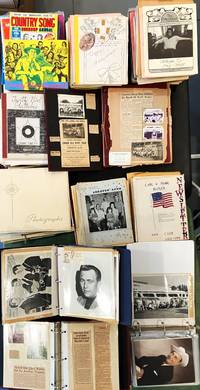
1960010285Nashville Tennessee: Various 1960. Scrapbook. Very Good. Pictorial Printed Wrappers. An important and substantial archive of material consisting of the Country Music Fan Club collection of Opal May Hardyman superfan and President of the Carl Butler and Pearl Fan Club which provides a comprehensive view of the dawn of the Country Music Fan Club era. While the Loretta Lynn Fan Club organized in 1963 by the Johnson sisters Loudilla Loretta and Kay Johnson is widely recognized as the first CM Fan Club the Carl Butler and Pearl club was organized in November of 1962 and with the publication of the Butler Bulletin in February of 1963 it may actually hold that distinction. Female fans have been a driving force behind the popularity of country music since its inception.Their unwavering devotion and loyalty have played a crucial role in shaping the genre's cultural significance. The 1960s witnessed a surge in the formation of country music fan clubs often spearheaded by women who were passionate about their favorite artists. These clubs provided a platform for fans to connect with one another share their love of music and support their idols.Beyond simply admiring their favorite artists female fans actively engaged with the country music industry. They wrote letters to their favorite stars attended concerts and purchased merchandise. Their enthusiasm helped to drive record sales and generate publicity for artists contributing to their success.This archive includes over 1500 items mostly photographs celebrity and candid with many that are signed and inscribed. Also 150 Fan Club Newsletters including 40 Carl and Pearl 20 Loretta Lynn 20 Bill Anderson 20 James O'Gwynn and 50 from some 40 other country stars. It was not uncommon for fans to belong to more than one fan club and in 1967 the Johnson sisters started the International Fan Club Organization IFCO to help many other country performers and fans organize. In 1968 IFCO held its first dinner and concert with 75 fan clubs in attendance. Also included are 7 scrapbooks and photo albums the most notable a 1960 Tour Bus Trip taken by Opal and her friends to the Grand Ole Opry in Nashville guided by Jim Reeves. Another scrapbook compiled by Opal is devoted entirely to Carl and Pearl. Another features many clippings and vernacular photos of the tragic deaths of C & W stars. Other items include: Broadsides Concert Programs and tickets Newspaper clippings Holiday and greeting cards post cards and multiple Country Music publications and assorted ephemera. A richly diverse and fascinating collection filling three bankers boxes from an important period and turning point in the history of Country Music. . Various Paperback
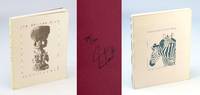
241j1550Toronto: The Cumberland Press. Good. 1988. Privately Published Limited Edition. Paperback. Signed and numbered 74/100 by Neil Peart inside back cover. "And now it was all over. I didn't want to replay it all or relive it again but man- will someone hurry up and figure out a way to slow the good times down But no- even African Time can't make a day last one minute longer." -p 201. Describes his African travel experiences during September of 1987. Neil Peart 1952-2020 was the renowned drummer and main lyricist of the internationally acclaimed Canadian rock band Rush which he joined in 1974. He dedicated this book to his then wife Jacqueline and daughter Selena both of whom left the world prematurely and tragically in the 1990s causing Peart to take a prolonged timeout from his musical career. Rush tribute website Cygnus-X1 suggests this to be one of several books/travelogues authored and privately published by Peart during the 1980's a full decade before he released his first novel. Apparently these books were all produced in very limited quantities and only gifted to friends and family thus rarely found. 205 5 pp. Bibliography. Occasional black and white illustrations by David Bygott. 11" x 8.5". Tight and unmarked with average wear. A sound and precious memento of the the iconic drummer known to his fans as "The Professor". ; Illustrations; 4to; Signed by Author . The Cumberland Press paperback
Small 8vo. 9 pages on 5 ff. Extraordinary and long musical letter from Bizet to Charles Gounod, notably about "Roméo et Juliette", whose rehearsals Bizet supervised at the Opéra-Comique during Gounod's exile in England: "Les liens qui nous unissent sont de ceux que ni l'absence ni le silence ne peuvent relâcher. Vous avez été le commencement de ma vie d'artiste. Je résulte de vous. Vous êtes la cause, et je suis la conséquence. J'ai craint d'être absorbé, je puis vous l'avouer maintenant et vous avez pu remarquer les effets de cette inquiétude. Je crois être aujourd'hui plus maître de ma main, et je ne sens plus que les bienfaits de votre salutaire et décisive influence [...] Je ne sais, mon cher Gounod, quelles sont les causes qui vous ont éloigné de nous! ... Nous pensons souvent à vous [...] Nous vous regrettons et nous vous aimons toujours. Nous avions bien besoin de vous ici [...] Le moment est venu d'organiser à Paris de grandes masses chorales. Vous seul aviez l'autorité nécessaire pour mener cette œuvre à bonne fin ... que d'années encore pour que l'un de nous se sente assez robuste pour initier nos Parisiens aux écrasantes beautés de Bach et de Haendel. Vous nous manquez ... et nous ne nous consolons de votre absence qu'en espérant votre retour lorsque l'heure de Polyeucte sera venue […]". - As for "Roméo et Juliette", Bizet has many things to ask Gounod, mainly regarding the question of the cuts to be made, of which he draws up a list, act by act. For the finale he intends to follow the version of the Theatre Lyrique. Finally, he urges Gounod to support Ernest Reyer rather than François Bazin to succeed Michele Carafa at the Institute: "un poëte ferait mieux l'affaire qu'un rhêteur sans style, sans érudition, sans conviction, sans idée, sans quoi que ce soit qui ressemble de près ou de loin à une qualité artistique". - Small tears to centrefold, otherwise in perfect condition.
Large 8vo. 3 pp. on bifolium. Amicable letter to Fanny von Pausinger, with whom Brahms had spent his last summer sojourn at Pörtschach, remembering the nice time together and some residents.
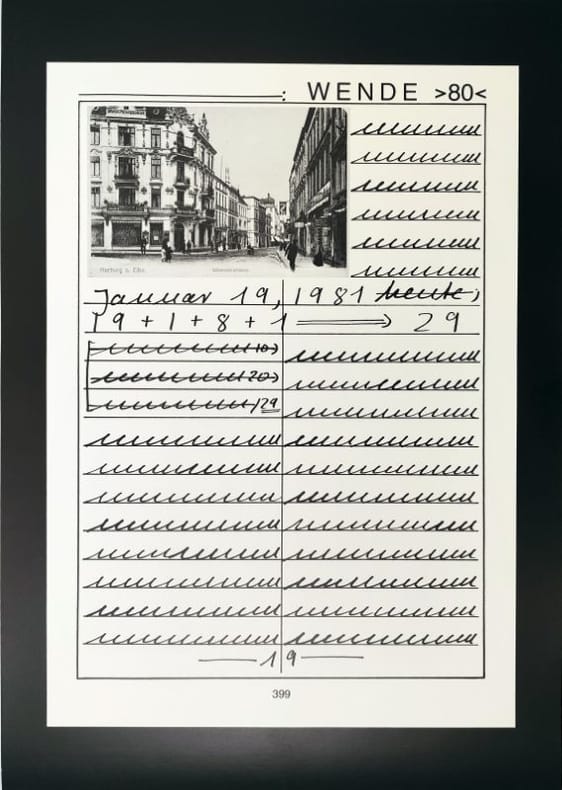
1052772 Allemagne, chez l'auteur, 1980/81, 11 disques vinyl 33trs, 30cm contenus dans un coffret en carton gris, accompagnés de 415 pages d'écritures, dessins, partitions ou illustrations, et un colophon contenus dans un second coffret. Tirage annoncé de 250 exemplaires numérotés.
8vo. 2 pages on bifolium. An appealingly pithy letter in English to an unknown recipient, with a musical quotation. The letter betrays a certain exasperation with his correspondent's questions: "I should think it quite impossible to answer your questions / 1) as I have no method at all when composing! / 2) as the art of composition is not at all to be learned and still - must be learned! / 3) as I have no particular favourite composer. All good composers are my favourites!' [...]". - The musical quotation comprises four bars from the violin sonata no. 2 in G (op. 13), on two staves. - Two larger tears rebacked. Provenance: Christie's, 26 June 1996, lot 257.
Folio (246 x 333 mm). 31, (1) pp. Engraved title-page and engraved music throughout, signed "Haydn mp" in ink in lower right comer of title-page. Bound with 31 other pieces, including another collection of six Haydn canzonettas. Paginated by a contemporary hand and bound in early 18th century half calf with gilt-lettered red morocco label "K. M. M. Saunders / Songs / Vol. II" to upper board. Manuscript index at rear. Edges sprinkled red. First edition, signed by the composer with his characteristic paraph, as in all copies. This first set of "Canzonette" was issued by Haydn from his lodgings during his final visit to London in 1794. lt must have been a commercial success, for a fair number of copies survive, and remains one of the few generally obtainable examples of an original signature of one of the 18th century masters of Viennese classicism. Two examples have appeared at auction before: both at Stargardt in Berlin, in 2004 and 2006, commanding €3,600 and €4,400 respectively. In both cases it was only the separate signed title-page (with the beginning of "The Mermaid's Song" on the verso) that was sold, having been removed from the 32-page score. - The present example is clear and unfaded, having been "in situ" since its early life, part of a bound collection of 31 similar pieces and collections from an Irish source, including many scarce examples of Dublin-printed songs, including Hime's very rare 1706 Dublin edition of Haydn's second set of Canzonettas, but also Mozart (1), Handel (4), Thomas Philipps (6), and J. A. Stevenson (3), all published ca. 1794 to 1803. - Binding worn but sound with a few professional repairs to hinges and spine. Minor soiling and small stains throughout, but a very good copy. Provenance: Katherine M. M. Saunders, probably of Dublin (her label to upper cover and ink name at head of several of the scores). Hoboken IX (1991) 1525. Hirsch III, 799. RISM H 2656.
3 SS. auf Doppelblatt. Kl.-4to. Freundschaftliche Zeilen an den Mäzen, Cellisten und Komponisten Michel Wielhorski zur Übersendung von sechs Partituren und mit einer Einladung nach Weimar, wo er ihm mehrere seiner sinfonischen Dichtungen vorspielen wolle: "Il y a peu de semaines je priai le Prince Eugène Wittgenstein de vous porter de ma part le paquet de mes six premières partitions parues, et aujourd'hui S.E. le Baron de Vitzthum veut bien se charger de vous remettre ces lignes. Si vous avez jeté un coup d'oeil sur les partitions vous vous serez apperçu (car votre regard sait entendre) que les années écoulées ne m'ont pas rendu plus mauvais musicien qu'auparavant, et maintenant je désirerais que ces lignes puissent vous dire avec plénitude aussi, combien je suis resté fidèlement attaché au souvenir de ceux qui ont été bons et bienveillans pour moi, parmi lesquels vous me permettrez de vous réserver une place particulière, - quelque chose comme celle du maître de chapelle dans l'orchestre, car plus d'une fois vous avez pris le soin d'indiquer la mesure et les nuances à plusieurs des exécutans lesquels ne s'en étaient pas bien avisés. Cmbien je serais heureux de reprendre avec vous quelques-unes de ces conversations où j'avais toujours un double profit d'agrément et d'instruction à faire! Peut-être viendrez-vous pourtant à quelque beau jour dans ces contrées, et si j'avais une faveur à demander à Madame la Grande Duchesse ce serait celle de vous inviter à venir passer l'inspection de notre nouveau ménage musical de Weymar. Ce me serait une véritable fête de vous faire entendre plusieurs de mes Poèmes symphoniques et de vous communiquer d'autres élucubrations de ma nouvelle sorte, lesquelles à défaut d'autre mérite ont au moins celui d'être l'expression propre et non empruntée de mon individu tel quel, qui vous restera toujours très sincèrement affectionné et respectueusement reconnaissant […]". - Einer kleinen Eingangsnotiz zufolge ("reçu le 9/21 août") hatte Wielhorski den Brief am 21. August erhalten, knapp viereinhalb Wochen vor seinem Tod am 21. September. - Mit kleinen Faltspuren und einem montierten Portrait Liszts auf Bl. 1 recto. Aus dem Besitz Arturo Toscaninis.
¾ S. 8vo. Mit eh. Adresse (Faltbrief). An den Leipziger Buchhändler, Kunsthändler und Verleger Theodor Oswald Weigel über den Erwerb von Beethoven-Manuskripten: Mendelssohn sei durchaus bereit, "für die beiden Convolute von Manuscripten Beethovens welche ich neulich auf Ihrem Comptoir sah die geforderte Summe von 25 Louis d'or zu zahlen. Einen höheren Preis zu geben würden mir allerdings meine Mittel nicht erlauben und würde ich vom Kaufe abstehen müssen, wenn die Besitzer über diese Bedingungen andern Sinnes würden. Doch hoffe ich dies um so weniger, als Sie mir dieselben ja in ihrem Namen mitgetheilt haben und als ich demnach wohl bestimmt annehmen kann, daß es dabei bleibt […]". - Mendelssohn besaß eine ganze Reihe von Autographen Beethovens und anderer, die er zum Teil von Giacomo Meyerbeers Bruder Heinrich, dem Enfant terrible der Familie, bekommen haben dürfte. "Obwohl die Familien Beer und Mendelssohn sich nicht mochten", liefert eine Bemerkung Heinrich Heines in seinen "Geständnissen" (in den 1854 erschienenen "Vermischten Schriften") einen Hinweis darauf, "daß Heinrich Beer und Mendelssohn sich gekannt haben. So ist es dem Sonderling Beer durchaus zuzutrauen, daß er die Partitur der 7. Symphonie Felix Mendelssohn schenkte; ob auch alle andern genannten Stücke kann vorerst nicht ermittelt werden. Jedenfalls befindet sich Heinrich Beers Autographen-Sammlung, zu der auch Mozarts 'Entführung aus dem Serail' gehörte, später bei [Felix' Bruder] Paul Mendelssohn, vermehrt um Stücke von Bach, die nachweislich wiederum Felix gehört hatten. Sowohl in den zahlreich hinterlassenen Papieren von Felix als auch in denen von Paul gibt es keinen Hinweis auf diese Sammlung. Es ist zu vermuten, daß Felix seine Autographe an Paul schenkte, denn Paul galt als der 'Wächter' der Familie, nicht nur in Geldangelegenheiten" (Elvers, s. u.). Mendelssohns Beethoven-Autographen gelangten schließlich 1908 durch eine Stiftung von Ernst von Mendelssohn Bartholdy, dem Sohn von Paul, in den Besitz der Königlichen Bibliothek in Berlin. - Leichte Gebrauchsspuren. Elvers, Rudolf: Felix Mendelssohns Beethoven-Autographe. In: Carl Dahlhaus u. a. (Hrsg.): Bericht über den Internationalen Musikwissenschaftlichen Kongreß Bonn 1970. Kassel, Bärenreiter, [1973], S. 380-382, hier S. 380f.
4to. 4 pp. on bifolium. Via Carl Klingemann to the German Orientalist Friedrich Rosen (1805-1837) in London, sharing his observations on the cold and malicious nature of the Berliners. The composer laments about the way the denizens seem to make it a point to treat the artists poorly during performances: "On the Festival you already know the details from Klingemann; it has become one of our dearest recollections, and I think it is my best composition. A few weeks later the surgeon declared my knee to be completely cured, and I thought I would be leaving shortly, but then the bitter cold came and I postponed the journey and began a large work (a symphony for orchestra, on which I worked a lot every day; it isn't quite finished, but I hope I can finish it before my departure, as I have already begun the last movement. My illness surprised me a few days before my departure, I had already taken my leave and had started to pack; now I'll have to postpone that at least a fortnight longer, but then I think I can leave; my plan is to go from here via Weimar to Munich, then through the Tyrol to Vienna; from Vienna I intend to go to Venice and Upper Italy in the middle or toward the end of summer, and then I think I'll spend next winter in Rome and Naples, then in the spring, if it is permitted to spend so much time on a plan, go to Paris and then to London from time to time, where there may be much smoke and fog and great crowds and poverty, but where pretty nice people live, too, and where I wasn't so bad off for a year. But will I find the same people there then? On this, as on your whole Let (that is Sanscrit for the future) I ask you to let [me] know a lot, also about everything which is dear and precious to me in London, and about our friends at some length. For you have a sharp eye, professor, and when you are sitting on the blue sofa, or silently making tea, or modestly gliding to and fro in the halls of the university with a light red [folder] and a long black robe, you will still make your accurate remarks and comments, and I expect more from you than from many a Berlin lady. What I have to tell you about Berlin, at last, is little and not pleasant, the people are cold, malicious, and make it a point of honor never to be content; even when [Henriette] Sonntag performed recently she was received quite coldly and was palpably slighted in favor of the others in the cast; her sister, who performed the next evening, was almost completely hissed from the stage, for which the other faction took revenge, and in their first scene (in Othello), all the participants were hissed at and Mme. Sonntag had a curtain call, and at that they speak, think, and do nothing differently than Mme. Sonntag and the factions for and against her. But is such formation of factions something a reasonable and interested public should do and doesn't it spoil any enjoyment of the work of art and all joy of the artist? But that's how they are in big and little things, and the Flower Market that opened yesterday in the University Gardens, for which a single gardener has obtained a monopoly, is just as good a proof of it as the dearth of operas other than by Spontini and Auber for which the Royal Theater has in turn obtained a monopoly, and like the monotony of the parties and conversations here; God will improve this when He has nothing to do but that, but I'm afraid He'll get other things and so much to reform that the Berliners' turn won't come for a long time, so for now they are good enough. Let me know what the Johnstons are doing, whether Ritter is still the same as back then, and whether Mühlenfels has been successfully introduced to society and speaks French with Federita. Let me know, too, about the stone monkeys, the wooden chairs from King Edmund the Cannibal's time, and the scraped-off portraits. My chests from England arrived a few days ago and filled me with longing again. Have you been back to Atwood's again since then, and did you entertain the fellow with some Ikojan Atchi? You see how I have learned from you. In short, write me about each and every thing, but especially, write me [...]" (transl.). - Friedrich Rosen became Professor of Sanscrit at the University of London (later University College) in 1827, at the age of twenty-two. Carl Klingemann was Mendelssohn's close friend and collaborator who wrote the words for many of the composer's songs. Karl Wilhelm Ludwig Heyse had been Mendelssohn's tutor until 1827. The Festival is possibly the Grosse Festmusik zum Dareifest (Grand Festive Music for the Durer Celebration) of 1828. The Symphony may be the Fingal's Cave Overture written in 1830. One of the Liechtenstein songs is doubtless Frühlingslied (Song of Spring), op. 19, no. 1.
8vo. 11 pp. Sewn. "Mad. Moscheles zum freundlichen Andenken [for Madame Moscheles in fond memory] / On the birth and Christening of Felix Moscheles the words by Barry Cornwall (B. W. Procter) the music by the Cher Sig. Neukomm […]".
8vo. 1½ pp. on bifolium. In Russian, thanking for the collection of poems "Scheherazade" by Tristan Klingsor, which he appreciated very much, himself having composed a symphonic suite under this title (which premiered in 1888). He apologizes for writing in Russian, adding that he cannot do so in French, but is confident that someone in his correspondent's circle will be able to translate. - In 1903 Maurice Ravel set three poems from Klingsor's collection to music. - With several small marginal tears, most prominent on the blank second half of the bifolium.
In 8vo and 4to. (folds, 1 with Russian stamp and with tear, 1 with stamp from the Royal Swedish Opera). 4½ pp. on 9 ff. With 1 autogr. envelope. To John Forsell, in Swedish. Sibelius writes of his admiration towards Forsell and other Swedish artists/conductors "till dig oförliknelige konstnär, Nils Grevillius och Ture Rangström". - Together with Sibelius' calling card and an envelope stamped Berlin. - Provenance: John Forsell (1868-1941), Swedish opera singer, Director at the Royal Swedish Opera in Stockholm between 1924 and 1939.
8vo. Engraved title, double-page engraved additional title (a view of Leipzig), (102) pp. with engraved notes in the text. Contemporary half vellum in modern half cloth box. Includes the facsimile reprint of the first edition, bound in half vellum (Leipzig 1964). Third edition, largely agreeing with the 1737 first: an important source for the history of song writing in the first half of the 18th century, influential for Viennese classicism and one of the first music editions by Breitkopf & Härtel. "Its engraved titles, imprinted notes and numerous charming woodcut vignettes make this one of the age's most delightful creations of book art" (cf. Mannheimer cat. 5, 1398 - this edition). Includes the frequently lacking frontispiece showing the double-page view of Leipzig. Two sequel volumes appeared in 1742-45. The author, who published all his works under his pseudonym "Sperontes", could by identified as J. S. Scholze (1705-50) only in 1885 by the musicologist and biographer of Bach, Philipp Spitta. - Binding rubbed with tiny flaws to covers; corners bumped. Margins slightly browned. This is the voucher copy from the library of the publishers Breitkopf & Härtel (their stamp on the title page); front pastedown has bookplate of the Leipzig publisher Oskar von Hase, who was trained at Breitkopf & Härtel and served as chairman of the Society of German Music Sellers from 1875 to 1901; later stamp of the musicologist Dr. Werner Danckert. RISM, S. 372. MGG XII, 1037. Eitner IX, 225. Hirsch III, 1078. Faber du Fauer 1759. Wolffheim II, 2439. Cf. Hayn/G. IV, 128 ("Enormously rare!"). Not in the Sperontes collection of J. Voerster ("Undoubtedly the Sperontes editions must count among the rarest music prints of all").