859 132 résultats
12mo. 1 p. To Louis Marcelin, artistic director of La Vie parisienne: "Cher Monsieur, Un extrême besoin d'argent me servira d'excuse auprès de vous si je vous reprends les habitations imaginaires, et si je vous prie de les remettre à Julien Lemer qui en fera ce qu'il voudra. - En vérité je n'ai pas de chance auprès de vous. J'espère que je me dédommagerai chez vous par un paquet de poèmes en proses. J'en ai bien une trentaine sur ma table mais ce sont des horreurs et des monstruosités qui feraient avorter vos lectrices enceintes [...]".
4to. Altogether (¾+¾ =) 1½ pp. on 4 ff. With integral address leaves. These two evocative letters, written in Italian and in the hand of Count Pietro Gamba (the brother of his beloved Teresa Guiccioli), were written while Byron was making his final preparations for his voyage to Greece, where he was to die nine months later "that Greece may still be free". Their addressee is the Greek patriot Giorgio Vitali (1776-1854) at Leghorn, from an ancient Venetian family and the commander of the Ionic vessel "Hercules" that Byron wanted to take. (I) In the first letter (July 7), Byron is rescheduling his departure to July 12: "[...] Capisco che il momento del forte conflitto è giunto [...]". (II) In the second (July 9), stating that in order not to lose a moment of his time, he has resolved not to make a stop at Leghorn except to take him on board along with an other English gentleman (James Hamilton Browne), and asking Vitali to tell his compatriots to have any despatches and instructions relating to his mission ready for his arrival. - Byron was to bid farewell to Teresa and board the "Hercules" on 13 July. However, his departure was to be delayed by calms, and then a storm. By some accounts, his mood at this time was despondent, almost fatalistic. During the delay he went on shore again to visit the house outside Genoa that he had shared with Teresa; as her brother recalled: "His conversation was somewhat melancholy on our way to Albaro, he spoke much of his past life, and of uncertainty of the future, 'where', said he, 'shall we be in a year?'" (quoted by Leslie A. Marchand, Byron: A Biography [1957] III, 1089). They eventually set sail from Genoa on the 16th. During the couple of days spent at Leghorn, Byron received a verse-tribute from Goethe and dashed off his famous reply: "I sailed from Genoa some days ago - was driven back by a Gale of Wind - and have since sailed again - and arrived here (Leghorn) this morning to receive on board some Greek passengers for their struggling country" (22 July 1823). They set sail once again on 24 July, and finally reached Cephalonia on 2 August. - In fine condition. Not published in Marchand's edition of Byron's Letters and Journals (1973-1994).
Typescript comprising 6 poems (altogether 6 pp.), each illustrated with an original watercolour. 6 bifolia within autograph wrapper. 4to. Presentation copy of the kind Hesse repeatedly prepared for close friends, comprising the poems: "Immer wieder", "Blumen nach einem Unwetter", "Karfreitag", "Der Klang", "Häuser am Abend" and "Tessiner Winter". Dedication to his sister Adele Gundert (1875-1949) on the occasion of her birthday on 15 August 1935 on the inside of the wrapper.
8vo. 2 pages on paper with perforated upper margin. In Russian. With one enclosure. To the unnamed philosopher Pyotr Petrovich Nikolaev in response to Nikolaev's new book. Tolstoy has read Nikolaev's book, and writes with a critique: "There is a lot of very good material in it, but you did well not to release it, and to want to work on it some more. The criticism of materialism is excellent, but you have not clarified what we feel and call matter. I think that there are other spiritual essences in which, just as in us, the basic essence (God) manifests itself partially, limitedly [...] / The book, as it is now, has merits [...] but the subject is so important that one cannot treat it seriously and attentively enough. / It is a shame that you live abroad [...]" (transl.). - P. P. Nikolaev (1873-1928) was philosopher and Tolstoyan who published a number of works in defence of freedom of religion. He was forced into exile in 1904, and lived in Nice from 1905 onwards. Tolstoy corresponded frequently with Nikolaev and engaged closely with his works - indeed, one of his last diary entries refers to reading one of his books. The work Tolstoy comments on in the present letter has not survived in the Yasnaya Polyana library, but may have been "Poniatie o boge kak o sovershennom sodanii" ('The Concept of God as the Perfect Basis of Consciousness', Geneva, 1907), which attempts to elucidate Tolstoy's ideas of God and the soul. - Enclosed is a letter to Nikolaev from Tolstoy's friend and editor V. G. Chertkov from 20 January 1903, encouraging him to send the manuscript of an article for Tolstoy to comment on (4to, ¾ page). Published on the basis of the retained copy in copy book 7, fol. 392f.
- Editions Pétridès, Paris 1947, 28x38cm, relié. - Montmartre vécu par Utrillo Éditions Pétridès | Paris 1947 | 28 x 38 cm | full calf with custom slipcase First edition, one of 240 numbered copies on vélin d'Arches vellum, illustrated with 22 color lithographs executed after gouaches, including 12 hors-texte, by Maurice Utrillo, printed by the workshops of Fernand Mourlot and Lucien Détruit. Binding lined with rods in white aniline calf, decoration painted in shades of opaline green and grey extending edge-to-edge on the liners, titanium rods and loose endpapers on matching paper. Title in grey and opaline green film lengthwise on the spine. Rigid decorated chemise, titled on the spine, slipcase. Binding signed by Julie Auzillon, titling by Geneviève Quarré de Boiry and palladium gilt top edge by Jean-Luc Bongrain. (2022) This book, presenting all the periods of the artist from Montmartre, was published on the occasion of the exhibition devoted to the works of Maurice Utrillo organized in 1947 at the gallery of Paul Pétridès. Very nice copy of this artist's book set in an outstanding art binding signed by one of the rising figures of contemporary French bookbinding. [FRENCH VERSION FOLLOWS] Édition originale, un des 240 exemplaires numérotés sur vélin d'Arches, illustrée de 22 lithographies en couleurs exécutées d'après des gouaches, dont 12 hors-texte, de Maurice Utrillo, tirées par les ateliers de Fernand Mourlot et Lucien Détruit. Reliure doublée à tiges en plein veau aniline blanc, décor peint en nuance de vert opaline et de gris se prolongeant sur les doublures bords à bords, tiges de titane et gardes volantes de papier assorties. Titrage au film gris et vert opaline en long sur le dos. Chemise rigide décorée, titrée sur le dos, étui. Reliure signée de Julie Auzillon, titrages de Geneviève Quarré de Boiry et tranche de tête dorée au palladium par Jean-Luc Bongrain. (2022) Cet ouvrage, présentant toutes les époques de l'artiste montmartrois, fut publié à l'occasion de l'exposition consacrée aux uvres de Maurice Utrillo organisée en 1947 à la galerie de Paul Pétridès. Très bel exemplaire de ce livre d'artiste établi dans une somptueuse reliure d'art signée par l'une des figures montantes de la reliure contemporaine française.
- Calmann Lévy, Paris 1880, 15,5x24cm, relié. - Édition originale. Reliure en demi maroquin noir à coins, dos à quatre nerfs sertis de pointillés dorés et orné de doubles caissons dorés décorés en angles, date et mention «?Ex. de J. Drouet?» dorées en queue, plats de papier marbré, gardes et contreplats de papier à la cuve, couvertures et dos conservés, tête dorée, reliure signée de René Aussourd. Quelques petites rousseurs principalement en début et fin de volume. Précieux envoi autographe signé de Victor Hugo à Juliette Drouet, le grand amour de sa vie?: «?à vous, ma dame. Humble hommage. V.?» L'exemplaire provient de la bibliothèque de Pierre Duché. Ce dernier avait acheté en bloc la bibliothèque de Juliette Drouet et avait confié les volumes à René Aussourd pour les faire relier de manière uniforme avec l'inscription permettant leur identification en queue. Ex-libris encollés sur un contreplat et une garde. C'est à la fin de l'année 1878, soit après plus de quarante ans de relation, que Victor Hugo et son amante emménagent enfin ensemble avenue d'Eylau, dans le petit hôtel où le poète finira sa vie. «?À partir de ce moment, on peut dire que la vie de Juliette ne fut plus guère qu'une tristesse ininterrompue, une servitude de toutes les heures. Elle souffre elle-même d'un cancer à l'estomac, elle sait qu'elle est condamnée, condamnée à mourir de faim?!?» (Louis Guimbaud, Victor Hugo et Juliette Drouet, Paris, 1927) Malgré ses souffrances et sa grande faiblesse physique, elle tient toujours avec fidélité le rôle de garde-malade de son «?Toto?». C'est d'ailleurs à cette époque que Bastien Lepage peint d'elle un portrait d'un réalisme frappant?: «?De son visage de déesse, sérieux et calme, la maladie impitoyable a fait une pauvre figure humaine, tirée et creusée, sillonnée de rides dont chacune semble conter quelque douleur.?» (op. cit.) Religions et religion paraît deux ans avant la disparition de Juliette ; il s'agit de l'un des derniers ouvrages qu'Hugo dédicace humblement au grand et dévoué amour de sa vie. Hugo rendra d'ailleurs hommage au dévouement sans faille de sa compagne en lui offrant une photographie sur laquelle il inscrit?: «?Cinquante ans, c'est le plus beau mariage.?». Exemplaire de la plus intime provenance. [ENGLISH DESCRIPTION ON DEMAND]
I: "Das Gesetz". 60¼ SS. auf 61 Bll. - II: "The Law". 71½ SS. auf 72 Bll. Zwischengebunden (1½+1½ =) 3 SS. auf 2 Bll. ms. Korrekturverzeichnis. Nachgebunden sind eine alternative Version des Schlusses (1½ SS. auf 2 Bll.), 4 (davon 2 eh. adr.) Kuverts von Thomas Mann an George Marek und 6 ms. Durchschläge von Briefen Mareks an Thomas Mann. Dunkelgrüner Kalbslederband mit vergoldetem Deckeltitel, -fileten und -fleurons. 4to. Mit einer Beilage (s. u.). Unikales Ensemble von Thomas Manns einziger Auftragsarbeit im deutschsprachigen Original und in englischer Übersetzung, beide mit zahlreichen eh. Korrekturen von Thomas Mann und einigen wenigen von George Marek, der diesen Band als Erinnerung an die gemeinsame Arbeit zusammengestellt hat und binden ließ. Thomas Mann widmete ihn am 20. Oktober 1942 mit den Worten: "An George Marek / tief gerührt von der Ehre, die er diesen Blättern erwies. Dem glänzenden Uebersetzer herzlich dankbar [...]". - 1941 war der aus Wien stammende Musikverleger, Librettist, Texter und Drehbuchautor Armin L. Robinson zusammen mit seiner Frau in die USA emigriert. Von den amerikanischen Unternehmungen des in Deutschland und Österreich erfolgreichen Librettisten weiß man wenig, gesichert ist jedoch, dass er Thomas Mann zu dessen bis dato erster (und schließlich auch letzter) Auftragsarbeit überreden konnte, nämlich einen Beitrag für die von ihm herausgegebene Anthologie "The Ten Commandments. Ten Short Novels of Hitler's War Against the Moral Code" zu verfassen. Mann, der von Mitte Jänner bis Mitte März mit seinem Beitrag beschäftigt war, war neben Rebecca West, Franz Werfel, John Erskine, Bruno Frank, Hendrik Willem Van Loon, Jules Romains, André Maurois, Sigrid Undset und Louis Bromfield einer von zehn Autoren, die jeweils eine Erzählung zu einem der zehn Gebote schrieben. Da seine reguläre englische Übersetzerin Helen Tracy Lowe-Porter damals mit anderen Arbeiten für ihn beschäftigt gewesen war, war Mann schließlich auf den in Österreich geborenen Musikkritiker und -schriftsteller George Marek (1902-87) gestoßen, der seit 1920 in New York lebte und für eine Werbeagentur tätig war; ab 1950 sollte Marek als Manager für die Plattenfirma RCA Victor arbeiten und schließlich Ende der 1950er Jahr zu deren Vizepräsidenten aufsteigen. Im Frühjahr und Sommer wechselten Mann und Marek mehrere Briefe (die Durchschläge von sechs Briefen Mareks liegen hier vor), in denen Übersetzungsdetails besprochen wurden, und im Spätsommer bzw. Herbst erschien Manns Erzählung schließlich unter dem Titel "Thou Shalt Have No Other Gods Before Me" in der genannten Anthologie bei Simon & Schuster. Im Jahr darauf folgte die deutschsprachige Erstveröffentlichung bei Bermann Fischer in Stockholm, und es entspann sich ein den Dichter enervierender Streit um die Frage nach dem Urheberrecht an der Erzählung. An sich war Mann Bermann Fischer verpflichtet (und durch diesen Alfred A. Knopf für den englischsprachigen Raum), doch hatte er unbedacht das Urheberrecht an Robinson abgetreten und es auch zugelassen, dass Felix Guggenheim eine "Luxusausgabe" in seiner Pacific Press herausbrachte. "As if this weren't enough, Knopf insisted on having the English version of the story done again from scratch by Mann's regular translator, Helen T. Lowe-Porter, a directive Mann described in his diary as 'a terrible blow for Marek', adding, 'I am disgusted by these trivialities' [...]" (Faber/Lehmann, Introduction, S. X). Das eh. Manuskript seiner Erzählung vermachte Mann noch im selben Jahr der Library of Congress, deren Briefpapier er für seine Niederschrift benutzt hatte. - Kleine Gebrauchsspuren, sonst ausgesprochen frisch mit Ausnahme von Mareks Briefdurchschlägen, die auf brüchigem, stark gebräuntem Papier getippt sind; der Einband an Gelenken und stellenweise auch an den Kanten stark berieben, sonst gut erhalten. - Beiliegend: Thomas Mann, Das Gesetz. Erzählung (Stockholm, Bermann Fischer, 1944). 160 SS. Illustrierter OPbd. 8vo. EA (WG², 90). Bindung leicht gelockert, Umschlag gebräunt, innen tadellos erhalten. Thomas Mann, The Tables Of The Law. Translated by Marion Faber and Stephen Lehmann (Philadelphia, Paul Dry Books, 2010).
Large 8vo. 4 vols. (= all published). XVIII, 126, (8) pp. 127-254, (8) pp. 255-382, (8) pp. 383-506 pp., blank leaf, (10) pp. Printed original wrappers stored in four separate brown cloth portfolios within matching slipcase. Extremely rare: this pirated edition constitutes the first American-produced independent printing of the first volume of "Das Kapital", published in four successive issues of "The Humboldt Library of Science" (based at 19 Astor Place, New York), Double Numbers 135-138 (second issue: a set of nos. 135-138 in the Karl Marx Memorial Library Luxembourg is dated from September 1 to October 15, 1890). Follows the legitimate first American edition produced in 1889 by Appleton & Co. in New York (a re-issue of the 1887 London edition), from sheets supplied by Swan Sonnenschein & Co. in London with a new title page only. - Closely printed, the work here comprises no more than 506 pages, followed by the list of the works and authors quoted. Each of the four parts has four leaves of publisher's ads at the end. - Text very slightly browned but mostly clean and well-preserved. Spines somewhat brittle and flaky; first volume reinforced at the spine; occasional edge chipping. No copy in the British Library; the only known copies are in the Library of Congress, in Moscow, and in Berlin (now likely in the Foundation Archives of Parties and Mass Organisations of the GDR in the Federal Archives [SAPMO]). - Provenance: from the collection of Chimen Abramsky (1916-2010), London. Not in Adams, Radical Literature in America, or in Marx-Engels Erstdrucke. Cf. PMM 359.
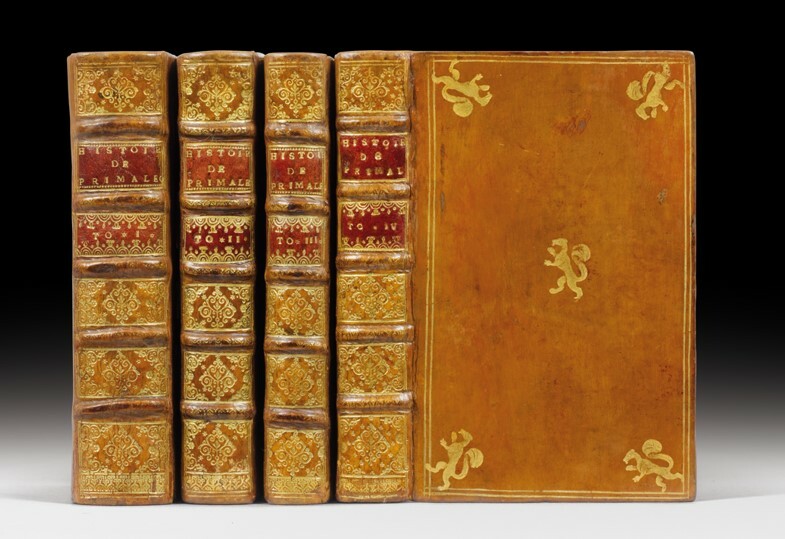
YTB-63Paris, Galliot du Pré, 1572 ; Jean Parant 1577 ; Sébastien Molin, 1587 ; Lyon, Abel l'Angelier, 1583. 4 volumes in-12 de (12) ff., 284 pp. (mal chiffrées 313), 258 ff. (mal chiffrés 256) ; (4)ff., 152 ff., (4)ff., 219 ff., (5) ff. Veau fauve, deux filets dorés en encadrement des plats avec pièces d'armes dorées aux angles et au centre, dos à nerfs orné de motifs dorés, pièces de titre et de tomaison rouges, tranches dorées sur marbrure, court en tête, titre courant atteint à certains feuillets, infime déchirure à un feuillet. Reliure armoriée vers 1650. 148 x 92 mm. EDITION ORIGINALE FRANÇAISE COMPLETE DE CE CELEBRE ROMAN DE CHEVALERIE TRADUIT DE L’ESPAGNOL ; elle est d’une telle rareté que ce prestigieux exemplaire semble être le seul réunissant en ancienne reliure uniforme les quatre parties parues en 1572, 1577, 1587 et 1583 ; le troisième livre est de la première édition parisienne de 1587. « Primaleon de Grèce, roman de chevalerie traduit de l'espagnol par François de Vernassal est une suite de Palmerin d'Olive. Le livre II est traduit par Guillaume Landré, les livres III et IV ont été traduits par G. Chappuys, qui a aussi traduit le second. Paru pour la première fois en 1512, il faisait suite au roman de Palmerin d'Olive (1511) dont il racontait les aventures des deux fils, Primaleon et Galendos. "Le Palmerin de Oliva eut une première édition en 1511 et semble bien être une imitation de l'Amadis. On y retrouve, en effet, des épisodes semblables : naissance secrète de Palmerin, amours de Palmerin et de Polinarda, triomphe de Palmerin sur le Grand Serpent qui garde la fontaine merveilleuse d'Artifaria. Palmerin résiste lui aussi à la séduction d'autres princesses et devient, comme Esplandian, empereur de Constantinople. Le Primaleon conte les aventures des deux fils de Palmerin, Primaleon et Polendos, ainsi que celles de Don Duardos, prince d'Angleterre. Cervantes, qui fait brûler le Palmeron de Oliva, ne mentionne pas le Primaleon, mais fait, en revanche, un éloge, jugé excessif de nos jours, du Palmeron de Inglaterra, roman dont le héros est le fils de Don Duardos et qui semble bien être l' oeuvre d'un auteur portugais. Les épisodes merveilleux s'y multiplient et le plus célèbre est sans doute celui de la coupe magique, où étaient congelées les larmes de Brandisia" (Encyclopaedia Universalis). "Le roman met nettement l'accent sur la galanterie ; mais les éléments réalistes y trouvent plus de place » (Laffont-Bompiani). PRECIEUX EXEMPLAIRE RELIE EN VEAU FAUVE DE L’EPOQUE AU CHIFFRE DE NICOLAS FOUQUET, VICOMTE DE MELUN ET DE VAUX, MARQUIS DE BELLE-ISLE, FILS DE FRANÇOIS, CONSEILLER D'ETAT ORDINAIRE, ET DE MARIE DE MAUPEOU, NE A PARIS EN 1615.
2 SS. 4to. An den nicht namentlich genannten Schriftsteller und Bibliothekar Philipp Joseph von Rehfues (1779-1843) in Stuttgart, der ihm eine seiner gegen die französische Fremdherrschaft gerichteten "Reden an das deutsche Volk" zugesandt hatte: "Ew. Wohlgeboren haben mich durch die baldige Mittheilung Ihrer patriotischen Schrift höchlich verbunden. Sie muß einen würdigen Platz einnehmen unter so manchen andern, welche die Behandlung des reichen Stoffes mit wahrhaft deutscher Gesinnung unternommen. Ist man nun über Gehalt und Zweck vollkommen einig; so kann bey solchen wohlgemeinten und lobenswürdigen Tagesschriften nur die Frage entstehen: bringen sie dasjenige zur Sprache, was der guten Sache für jetzt und künftig förderlich ist? und, welchen Beyfall kann ihnen der Rede-Künstler, der Aestheticker zollen? Beydes, mit Grund, ruhig und im Zusammenhange zu thun, haben sich vorzügliche Männer vereinigt, deren in der allgemeinen Literatur-Zeitung schon abgedruckte Anstrengungen Ew. Wohlgeboren vielleicht nicht unbekannt geblieben sind. Ich bin gewiß, daß man daselbst auch dieser neuen bedeutenden Arbeit alle Gerechtigkeit wird widerfahren lassen [...]". - An den Rändern stärker, sonst nur gering fleckig. Sophienausgabe Bd. 24, Nr. 6734 (nach dem Konzept).
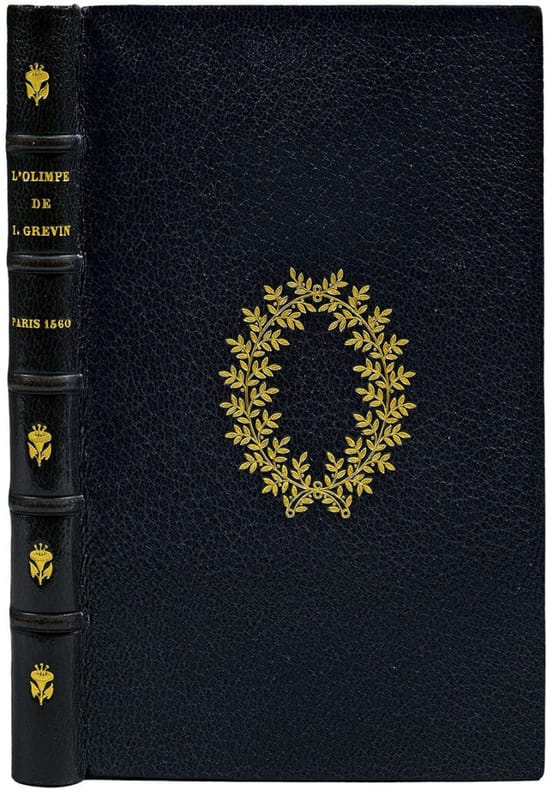
LCS-17609L’Olimpe, seul recueil poétique important de Grévin, contient les sonnets adressés à sa rétive maitresse Nicole Estienne, « fleur de seize ans », fille de l’imprimeur et médecin Charles Estienne. Publié alors qu’il avait vingt-deux ans, il comporte une centaine de sonnets chantant son amour et célébrant les perfections de l’idole. In-8 de (8) ff., 216 pp. Maroquin bleu nuit à grain long, couronne de lauriers frappée or au centre des plats, dos à nerfs orné de fleurons dorés, double filet or sur les coupes, roulette intérieure dorée, tranches dorées sur marbrure. Mercier Sr de Cuzin.163 x 100 mm.
3 SS. auf Doppelblatt. Gr.-4to. Auf Briefpapier des "Simplicissimus" - Albert Langen Verlag. An seinen Jugendfreund, den späteren Kunsthistoriker und Romanisten Otto Grautoff (1876-1937): "Lieber Grautoff: besten Dank für Deinen letzten Brief, in dem wieder interessante Dinge standen. Du thust, als ob ich von der Assistentenangelegenheit schon etwas gewußt hätte. Keineswegs! Du hattest mir das letzte Mal nur den Namen des Professors K. genannt, nichts weiter. Aber es wäre wahrhaftig aller Ehren werth. K. Bibliotheksassistent! Gehören dazu nicht überhaupt 'studirte' Leute? Ich bin schon lange erstaunt und erfreut über Deine Entwicklung. Auch Deine 'Vorträge', Dein 'Buch' etc. machen mir starken Eindruck. Hast Du Dich etwa auch äußerlich so verändert? Wahrscheinlich hast Du einen großen Backenbart und eine goldene Brille? [...] Hattest Du das Gedicht, das schöne Momente hat, für den Simplicissimus berechnet? Ach, dazu ist es zu melancholisch und zu persönlich. 'Wir' brauchen aufgeweckte und überlegene Sachen ... was aber 'mich' nicht hindert, ebenfalls hie und da Verse zu schreiben, wie die, welche ich Dir, trotz ihrer Unfertigkeit, vielleicht beilegen werde. - Mit meiner Prosa geht es mir besser. Fischers Rundschau bringt nächstens wieder einmal eine Novelle von mir, und auf jeder Karte 'erwartet' Dr. Bie 'in voller Spannung' meinen Roman. Sein Wohlwollen und Interesse rührt ganz einfach, und ich kann ihn nur bitten, es nicht erlahmen zu lassen, denn er muß sich noch gedulden; es fehlt noch etwa ein Drittel des Buches. Gestern Abend habe ich übrigens einen neuen Abschnitt im Familienkreise vorgelesen [...]". - Am ersten Blatt verso, um 90 Grad nach rechts geneigt, Manns von Platen beeinflusstes, vom Verfasser nicht veröffentlichtes Gedicht "Nur Eins": "Wir, denen Gott den trüben Sinn gegeben / Und alle Tiefen wies, wo Scham und Graun / Sind ewig fremd den Fröhlichen im Leben, / Die harmlos auf des Daseins Spiele schaun. // Und weil der Menschen Seele zu ergründen / Hohnvoll auch mich der Drang gefangen hält, / Will ich es euch mit schwerem Worte künden: / Erkenntnis ist die tiefste Qual der Welt. // Denn Eines ist es, was in allem Leiden / Uns stark erhält und aufrecht fort und fort, / Ein trostreich Spiel voll höchster, feinster Freuden / Den Unglückseligsten: Es ist das Wort." Unbedeutende Randeinrisse. - Nach Grautoffs Tod im Pariser Exil erwarb der Verleger Kurt Leo Maschler (1898-1986) die Korrespondenzsammlung von dessen Witwe Erna Grautoff. Nach Maschlers Flucht aus Österreich 1938 wurde der zurückgelassene Bestand von der Gestapo der ÖNB überstellt und von dieser in deren Autographensammlung einsigniert (am unteren Rand die ÖNB-Signatur von 1939: Autogr. 141/58-42). 1949 wurde die Sammlung an Maschler rückgestellt (vgl. ÖNB, Allg. Verwaltungs- u. Korrespondenzakten 00/1949 A); erworben aus dem Nachlaß Maschler. T. Mann, Briefe an Otto Grautoff 1894-1901 und Ida Boy-Ed 1903-1928, hg. von Peter de Mendelssohn (Frankfurt a. M. 1975), S. 108f. Die Briefe Thomas Manns. Regesten und Register. Bd. I. Briefe 1889-1933, bearb. und hg. von Hans Bürgin u. a. (Frankfurt a. M. 1976) 98/12. Nicht bei T. Mann, Große Frankfurter Ausgabe, Briefe I (1889-1913) (Frankfurt a. M. 2002).
246:178 mm. Mounted on cardboard. Fine head and shoulders portrait. - Mild toning and scratching.
15731669261573. ROMAN EMPERORS. Imagines XXIIII Caesarum a Iulio ad Alexandrum Severum usque ab antiquis marmoribus excerptae nuper impressae. Edited and engraved by Donato Bertelli. Engraved title-page and 24 full-page engraved portraits numbered I-XXIV of Roman Emperors from Julius Caesar to Severus Alexander. 4to. 228 x 168 mm bound in later Italian quarter vellum over boards edges speckled red. Venice: apud Donatum Bertellum ad signum divi Marci 1573. These 24 expressive portrait plates "extracted from antique marbles" show 23 of the 27 emperors who ruled during the Julio-Claudian Flavian and Nervan-Antonian dynasties in profile or three-quarter perspective plus a profile of Lucius Aelius AD 101-138 "L. Helius Verus Imp. XX" the adopted son of Hadrian who never ascended the throne. The group excludes Lucius Verus AD 130-169 co-emperor with Marcus Aurelius; Didius Julianus d. AD 193; Geta AD 189-211; and Macrinus who ruled temporarily with his son Diadumenian both executed in AD 218 according with the other known copies of this book which have 23-25 plates. The engraver and printer of this series Donato Bertelli fl. 1565-1574 is most famous for his cartographic publications notably Le vere imagini et descriptioni delle più belle città del mondo 1569 dedicated to J. J. Fugger von Kirchberg. Sparse annotations in contemporary ink. The plates are mounted on laid paper and bound out of order. Very rare. No known copies in the U.S. and no records at auction in ABPC. OCLC locates just one copy in Freiburg Germany and the Italian census EDIT 16 adds one more Biblioteca Ambrosiana Milan: CNCE 68584. DBI online Bertelli. Le Blanc Manuel de l'amateur d'estampes I p. 307. Not in Cicognara. hardcover books
8vo. (8), 79 pp. Bound with both original giltstamped cloth-structured wrappers in later half cloth. First edition. Inscribed by the author on flyleaf to Therese Henriques (1833-83), in whose home Andersen was a frequent visitor during the last 15 years of his life: "Fru Therese Henriques som fra Pjanoet forstaaer at fortælle digterisk Eventyr og Historier bringes denne lille Bouquet med hjertelig Hengivenhed H. C. Andersen" ("Mrs. Therese Henriques, who from the piano understands how poetically to weave fairy tales and stories, is given this little bouquet with heartfelt devotion. H. C. Andersen"). - Henriques's house was full of life and happy days as a large circle of both Danish and foreign musicians and artists visited the salons and parties held there. The friendship with Henriques was actually established in August Bournonville's home, where the poet first heard the young, talented Therese Henriques play the piano. Immediately, a warm friendship between the two was kindled, and it would last a lifetime. Provenance: descendants of Henriques family.
8vo. (II)-V, (2), 282 pp. With 6 plates (one bound as an illustrated half-title or original illustrated upper wrapper cover). Contemporary half calf with giltstamped spine and marbled covers; all edges marbled. Rare first German edition. Inscribed to the translator's brother, the physician and botanist Emil Charles Nicolas Petit (1817-93), for Christmas 1844: "Hr. Bat. Chir. E. Petit / fra Oversaetteren og / Originalens Forfatter, / der sender dem, som / venlig Jule-Hilsen" ("For the army surgeon E. Petit, from the translator and the author of the original, who send this by way of Yuletide greetings").
8vo. 1 page. To a friend, criticizing a philosophical work similar to those of Nicolas Malebranche and René Descartes, but lacking in style and even in correct French, wherein the author claims fire to be the main principle of everything, and the atmosphere to be nothing more than a mass of aqueous molecules which charge, moisten, and minimize the power of fire, without giving the proper scientific facts confirming his theory, concluding with the observation that the age of experimental philosophy has come to supersede that of visions: "Cet ouvrage n'est pas sans idées. C'est une réverie de la tournure de celles de Malebranche et de Descartes, mais point de stile, quelquefoi même pas de Français. Si ce qu'il y a là dedans de systematique etait tombé dans la tête de Bufon, à force d'expressions, De Subtilités et de couleur, je ne sais ce qu'il n'en aurait pas fait. Dans l'état où cela est, point de sensation d'espérer. Selon l'auteur, Le feu est le principe de tout, excepté de son ouvrage. Quand on se propose de demonstrer qu'il n'y a point d'air, mais que notre athmosphère n'est qu'un amas de molecules aqueuses qui chargent, mouillent et [...] appesantissent Les ailes du feu, il faudrait commencer par l'aprovisionner d'un bon nombre de faits, et la reponse à tous ceux qu'on peut apposer, n'est ce rien? [...] Le reigne de la philosophie experimentale est venu, et celui des visions est passé [...]". - With pencil attribution at the lower edge. Number 24 stamped on verso. Traces of former mounting; slightly brownstained. Roth/Varloot, Correspondence XVI, 980.
4to. 1 p. on a bifolium. In German. To the classicist Heinrich Karl Eichstädt, then serving as director of the Philological Seminary at Jena, requesting biographical and bibliographical information: "You would do me a great kindness if you were to provide me with the following notes which I request: Linné - year of birth; dear of death; Hofrat Büttner: year of birth; year of death; Professor Batsch: first name; year of birth; year of death; Rupp's Flora Jenensis: first edition? [...]" (transl.). - All answers, with the exception of the last, are supplied in Eichstädt's own hand. "Flora Jenensis" by the botanist Heinrich Bernhard Rupp was published in 1718. - Occasional light wrinkling, otherwise in excellent condition. Published in: Sophienausgabe, Vierte Abteilung: Briefe, vol 28: March-December 1817, no. 7711.
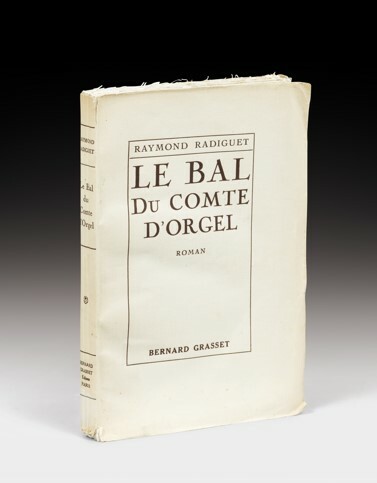
YTB-64Paris, Bernard Grasset, 1924. In-12 de XV et 239 pp., brochure de l’éditeur, exemplaire non rogné. 190 x 130 mm. EDITION ORIGINALE DU DERNIER ROMAN DU JEUNE RADIGUET. L’un des mythiques 10 premiers exemplaires sur Chine. « Ce second et dernier livre du jeune Raymond Radiguet (1903-1923), paru un an après sa mort, marque une étape dans la manière de cet écrivain si prodigieusement précoce. Tandis que dans ‘le Diable au corps’ il avait traité le thème d’un adolescent engagé dans un trop grand amour, avec d’évidentes intentions antiromantiques et anti-rhétoriques, se fiant seulement aux maigres enchantements d’une minutieuse et précise ‘relation’, il tente ici le roman de pure analyse : un roman, où seule la psychologie est romanesque, tout effort d’imagination tendant à suggérer, non des événements extérieurs, mais des sentiments. Comme tel, le roman, ou plutôt le conte, est dépourvu de toute intrigue. François, jeune homme tranquille et raffiné, qui vit seul avec sa mère et se trouve suffisamment riche pour n’être pas obligé d’exercer une profession, fait par hasard, un soir, la connaissance au théâtre du comte Anne d’Orgel, type pittoresque d’aristocrate pour qui la vie consiste à observer scrupuleusement et sagement une série de devoirs mondains. L’excellent vieillard l’introduit dans son milieu et dans sa famille. François y fait la connaissance de la jeune femme de son nouvel ami. Quelques regards suffisent pour faire naître l’amour entre eux. Cet amour est cependant combattu par le sens du devoir et par la loyauté de ces deux âmes. Au cours d’un bal, les deux protagonistes acquièrent la certitude intime et profonde que leur passion, pour dominée qu’elle soit par la fatalité, n’en sera pas moins toujours sacrifiée au devoir. En effet, rien ne se passe et le drame reste purement intérieur : ce qui nous vaut de minutieuses analyses psychologiques. Radiguet a offert, avec ce petit livre, un modèle typique d’une des tendances caractéristiques qui domine le roman français contemporain : le néo-classicisme. » (Dictionnaire des Œuvres). Dans son Journal Gide écrit : « Après Le Grand Meaulnes, lu le Bal du comte d'Orgel que je ne connaissais pas davantage. Extraordinaire pureté de ce livre ; presque excessive. Cela tient de la gageure et de l'acrobatie. La réussite est à peu près parfaite. Bien supérieur au Grand Meaulnes ». TRES BEL EXEMPLAIRE CONSERVE BROCHE, A TOUTES MARGES, TEL QUE PARU.
8vo. 2 pages on bifolium. In Russian. To the unnamed P. L. Uspensky, acknowledging receipt of 500 roubles: "I will try to use them in the best possible way for the benefit of those in need. The canteens have now been discontinued and will resume from the winter, if there are no obstacles to this. If this happened, then I would distribute the help entrusted to me [...] to the exhausted and sick [...]" (transl.). - Published from the retained copy in copy book 1, ff. 220-221. The recipient had written to Tolstoy on 10 August to say that he was sending him the money to help those affected by crop failure. - In fine condition.
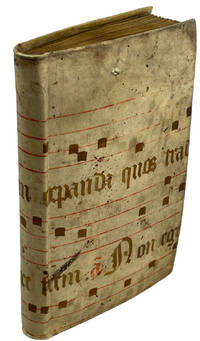
1504100<p>EXTREMELY RARE BOOK OF HOURS PRINTED ON VELLUM<br />ILLUSTRATION FROM MASTER OF THE APOCALYPSE OF THE ROSE'S ATELIER.<br />THE ONLY KNOWN COMPLETE COPY!</p><p>BOOK OF HOURS USE OF ROMAN CHURCH. A la louenge de dieu et de sa tres saincte et glorieuse mere et a ledification de tous bons catholiques furent commences ces presentes heures A lusaige de Romme. Colophone: " …achevez lan mil. ccccc. et iiii. le. xxii. iour de aoust pour Gillet Hardouyn libraire marchant demourant a Paris sur le pont au change a l'enseigne de la Rose Imprimeez par Anthoine Chappiel imprimeur demourant a Paris en la rue de beau vois a lenseigne des Connins " Paris: Antoine Chappiel for Gilles Hardouyn 22 August 1504. </p><p>8vo 17 x 10 cm binding from a reused middle age handwritten vellum page with Gregorian music notations gilt edges ff. 80 signature A-K8. Gothic type 32 lines. Text in Latin except for the prayer opening the volume and the title A1r the almanac A1v some prayers appearing at the end of the volume and the colophon K8r in French almanac for years 1497-1520.<br />13 FULL-PAGE WOODCUTS 28 SMALLER WOODCUTS ILLUSTRATING THE GOSPELS AND THE VARIOUS PRAYERS; HEAD-LETTERS ILLUMINATED IN BLUE RED AND GOLD. <br />EXTREMELY RARE BOOK OF HOURS PRINTED ON VELLUM BY ANDRE' CHAPPIEL FOR GILLES HARDOUIN: ACCORDING TO WORLDCAT AND USTC THERE ARE ONLY TWO OTHER RECORDED COPIES AT BIBLIOTHEQUE MUNICIPALE DE LYON INCOMPLETE MISSING THE LAST MINIATURE RICH MAN AND LAZARUS AND VERSAILLES MISSING DIFFERENT QUIRES. <br />TEXT: f. A1r: versified prayer: " Jesus soit en ma teste et en mon entendement Jesus soit en mes yeulx et en mon regardement … "; f. A1v: almanac giving the dates of the " Dimanche des Brandons" first Sunday of Lent or Quadragesima Sunday Easter and Advent for the years 1497 to 1520; f. A2r-A4v: calendar; f. A5r-B1v: abstracts from the Gospels of the four Evangelists; f. B2r-F2v: Hours of the Virgin use of Rome f. B3r: Matins; f. B8v Lauds; f. C4v: Matins of the Holy Cross; f. C5v: Matins of the Holy Spirit; f. C6v: Prime; f. D1r: Terce; f. D3v: Sext; f. D6r: None; f. D8v: Vesper; f. D1r: Compline; f. F3r-G1v: seven Penitential Psalms followed by litanies and other prayers; f. G3r-H6r: Office of the Dead; f. H6r-K8r: various prayers; f. K8r: colophon.</p><p>ILLUSTRATIONS:<br />• Tree of Jesse f B2v<br />• Annunciation f B3r<br />• Visitation f B8v<br />• Crucifixion f C4v <br />• Pentecost f C5v<br />• Nativity C6v<br />• Adoration of the Shepherds D1r<br />• Adoration of the Magi D3v<br />• Presentation in the Temple D6r<br />• Flight into Egypt D8v<br />• Coronation of the Virgin E4r<br />• Anointing of King David by Samuel F3r<br />• Rich man and Lazarus G2r</p><p>28 small figures illustrating the Gospels and the various prayers at the end of the book John the Apostle; Luke the Evangelist; Matthew the Apostle; Mark the Evangelist; the Crucifixion; Christ and the Angel; the Holy Shroud; the Flight into Egypt; the Archangel Michael; St. Johan the Baptist; John the Apostle; Saints Peter and Paul; Saint James; Saint Stephen; Saint Lawrence; Saint Christopher; Saint Sebastian; Saint Nicholas; Saint Anthony; Saint Anne; Saint Mary Magdalene; Saint Catherine; Saint Margaret; Saint Barbara; Saint Apollonia; Christ Pantocrator; Holy Mary; Saint Barbara.</p><p>The metalcuts used in this book were part of a series that both ANTHOINE CHAPPIEL and GUILLAUME ANABAT used for the Hardouin brothers. The series comes from the MASTER OF THE APOCALYPSE OF THE ROSE'S ATELIER.</p><p><br />ANTOINE CHAPPIEL printer in Paris 1500-1504 succeeded by Guillaume Anabat 1505–1510. <br />Chappiel's earliest dated book is from 1500. The Inventaire chronlogique records dated books in 1502 1503 and 1504. From 1502 to August 1504 he printed under the sign: "Au college de Triguet en la rue Sainct Jean de Latran; - In collegio Tregorensi or: --nuncupato de Triguet juxta sanctum 1ohannem Lateranensem ".</p><p>In August 1504 and on a Book of Hours without date we read: " Rue de Beauvois a lenseigne des Connins; Rue de rue sainct Jehan de Beauvais a lenseigne des Congnis. "</p><p>CONDITION: Very good copy of an extremely rare book of hours printed on vellum.</p><p>REFERENCES: Bohatta 790; Lacombe Books of Hours Printed in the 15th and the 16th Century p. 87-88 No. 143bis the Versailles copy incomplete; Moreau Inventaire Chronologique des Éditions Parisiennes du XVIe siècle I p. 128: 1504 No. 48; USTC 6689; Andrew Pettegree Malcolm Walsby and Alexander Wilkinson French Vernacular Books Books published in the French language before 1601 Leiden Brill 2007 REF. 29496; Philippe Renouard Répertoire des imprimeurs parisiens Minard 1965; Heribert Tenschert Horae b.m.v. 365 gedruckte Stundenbücher der Sammlung Bibermühle 1487–1586 2015.</p> Anthoine Chappiel for Gilles Hardouyn
8vo. 2 pages. To his translator Heinrich Zeise, with whom he corresponded frequently. While most of their correspondence has been published, this letter was previously unknown. Apart from matters regarding translations, Andersen writes that he sends greetings from his close friend, the Danish physicist and chemist Hans Christian Oersted, and, in a postscript, that he is staying at the Hotel du Nord on Kongens Nytorv. - Slight defect to upper right corner.
8vo. (8), 72 pp. Publisher's original printed front wrapper; lower wrapper and spine replaced. Stored in modern half morocco case with flat gilt spine and marbled covers. First edition. - First collection in Andersen's second series of "New Fairy Tales", containing the tales "The Old Street Lamp", "The Neighbouring Families", "The Darning Needle", and "Little Tuk", as well as the famous, bleak tale of "The Shadow". With a long and thoughtful autograph inscription in verse to William Oehlenschläger, the son of his friend and benefactor Adam Oehlenschläger, written on the back of the upper wrapper: "Min inderlig kjaere Ven / William Oehlenschlaeger. / Her er’mine Børn, de yngste fem, / Jeg taenke hos Dig de finde et Hjem. / De komme i Digter Kongens Slot, / Dig søge de der og saa faae de det godt / H. C. Andersen / Paaskemorgen" ("My very dearest friend William Oehlenschlaeger. Here are my youngest five children: I believe they shall find a home with you. They enter the Poet King's castle, where they shall seek you out and find their happiness. H. C. Andersen, on Easter morning"). - It was Andersen's wont to send copies of his fairy tales to his friends' and relatives' children. The poet and romantic playwright Adam Gottlob Oehlenschläger (1779-1850), revered by Heine, was the author of the Danish national anthem. Oehlenschläger had met the 17-year-old Andersen in 1822 and supported the struggling young man from the beginning; Andersen's early writings are informed by a desire to imitate the work of his much-admired mentor. - Binding repaired, preserving the inscribed upper cover only, remargined and reinforced in places. Paper somewhat browned throughout, as common. Provenance: 1) William Oehlenschlaeger; 2) Bent W. Dahlström, Danish publisher (his bookplate on inside of morocco case and lower wrapper); 3) collection of Pierre Bergé. A charming association piece. Nielsen, H. C. Andersen Bibliografi, 1942, no. 516. Bork, H. C. Andersen. Catalogue of First Editions Collected by Jens S. Bork, 2014, p. 91: "The second cycle of fairy-tales is considered the breakthrough for Andersen as a story teller." Oeuvres, I, Pléiade, 1992, pp. 320-355 & 1320.
8vo. (6), 309 pp. Bound with both original wrappers in later half morocco. First edition. Inscribed by the author on front wrapper to Therese Henriques (1833-83), in whose home Hans Christian Andersen was a frequent visitor during the last 15 years of his life. The home was full of life and happy days as a large circle of both Danish and foreign musicians and artists visited the salons and parties held there. The friendship with Henriques was established in August Bournonville's home, where the poet first heard the young, talented Therese Henriques play the piano. Immediately, a warm friendship between the two was kindled, and it would last a lifetime. - Provenance: descendants of the Henriques family.
Je 1 S. auf 1 Bl. 8vo. Zusammen unter Passepartout, gerahmt. Gesamtgröße 247:322 mm. An Paul Lindau: "Freundlichen Dank, lieber Lindau, für Ihren liebenswürdigen Brief. Ja, ich muß mich oft entschuldigen, daß ich steinalt bin. Also bitte! Die beifolgenden Zeilen dürfen Sie, wenn Sie wollen, für das Wilbrandtsche Gedenkbuch verwenden [...]". Das Gedicht "Immerhin" mit vier Strophen zu je vier Zeilen: "Die Sonne geht auf und unter / Schon lange vieltausendmal, / Noch immer eilen so munter / Die Bächlein in's blühende Thal [...]". Bei dem "Gedenkbuch" handelt es sich um den noch im selben Jahr bei Cotta erscheinenden Band "Adolf Wilbrandt. Zum 24. August 1907 von seinen Freunden. Mit drei Bildnissen von Franz Lenbach und einer photographischen Aufnahme von Erwin Raupp". Als Herausgeber zeichneten die "Freunde von Adolf Wilbrandt". - Etwas lichtrandig, sonst tadellos erhalten. Mit geringfügigen Transkriptionsfehlern abgedruckt in: Wilhelm Busch: Sämtliche Briefe. Band II: Briefe 1893 bis 1908 (Hannover 1969), S. 267.