859 132 résultats
4to. 2½ pp. on bifolium. With autogr. address. To "Monsieur Bertrand, Pasteur de l'Eglise française à Berne", discussing an anonymous letter which very much upsets Voltaire because of the fake attribution to somebody else: "Me voilà toujours cloué à mes Délices, mon cher Monsieur, en proye aux maladies et aux ouvriers. Je travaille à me défaire de tout cela pour venir rendre mes hommages à Berne. J'y viendrai lire le cathechisme dont vous me parlez, car en vérité - je me sens un peu de votre Relligion: je suis indulgent comme vous, j'aime Dieu et le genre humain, et je ne damne personne. Ce n'est pas que l'auteur de la Lettre anonime n'ait fait une action damnable ou tout au moins condamnable: ce n'est point-là du fanatisme tout pur, c'est une méchanceté réfléchie: j'avoue avec vous que l'auteur est un fou, mais c'est un fou très-dangereux. Il écrit une lettre de Lausanne contre les premiers Eclésiastiques et les premiers magistrats du pays; il me dit dans cette lettre que ceux qui me font l'honneur de venir chez moi écrivent à Berne contre moi. Il envoye sa lettre cachetée à un de ses parens à Berne, et le prie de mettre le dessus de la Lettre. Ce parent se prête innocemment à cette manœuvre dont il ne soupçonne pas la malignité. Ce sont des choses qu'on peut aisément savoir de Mr. Roberty employé à la Poste de Berne. Pour comble de perversité ce brouillon a cacheté sa lettre d'un cachet surmonté de la Lettre 'H' et a répandu lui-même dans Lausanne qu'un magistrat de Berne m'avait écrit une lettre de reproches. Mes amis m'ont conseillé d'écrire à Mr. de Haller, me flattant qu'il pourait me mettre au fait de cette manœuvre dans laquelle on semblait abuser de son nom, et qu'il en était indigné. On m'avait dit qu'il avait quelque intendance sur les postes, et c'est cette raison quo me détermine à prendre la liberté de m'adresser à lui. Je n'osai pas lui éxpliquer ce que la lettre anonime contenait ; je me contentai de lui parler en général pour obtenir quelques éclaircissements. Je suis actuellement tout éclairci : je sais de quelle main ce tra[vail ?] infame est parti, et je suis persuadé que vos magistrats ne souffriraient point qu'un homme écrivît de Lausanne des calomnies contre les premiers de Lausanne, et les envoyât par la poste de Berne pour faire croire que sa lettre est écrite par quelqu'un de ses souverains. Cet abus de toutes les Loix, et ce manque de respect à ses maîtres n'est pas tolérable. Je vous supplie, Monsieur, de vouloir bien communiquer ma lettre à Mr. Freudenreich et à Mr. de Haller. Je sais qu'il y a bien des tracasseries à Lausanne, mais je ne m'en mêle point. Je n'ai été qu'une seule fois dans cette ville. On m'a dit que de jeunes ministres n'ont pas pour leurs anciens toute la considération qu'ils leur doivent ; que quelquefois même ils prêchent les uns contre les autres ; mais ce n'est pas à moi à prendre connaissance de ces petits scandales ; un malade doit se tenir au coin de son feu, et un étranger doit se taire.Bon soir mon cher philosophe relligieux et humain. Mille respects je vous en prie à Monsieur C. C. de Freudenreich et à M. le Baron de Haller". - Somewhat browned and spotty; small damages to edges; paper cut-out due to opening seal on fol. 2 (not touching text). - Provenance: Asta Hoepli, Zurich, May 26, 1933, lot 47.
- Gallimard, Paris 1954, 14,5x21,5cm, relié sous étui. - Edition originale, un des 41 exemplaires numérotés sur Hollande, tirage de tête. Reliure en plein maroquin janséniste vert sapin, dos lisse très légèrement assombri sans gravité, gardes et contreplats de daim gris souris, couvertures et dos conservés, toutes tranches dorées, étui bordé de maroquin vert sapin, plats de papier façon bois, intérieur de papier gris souris, superbe reliure en plein maroquin signée A. Bourdet. Très bel exemplaire parfaitement établi. Provenance : de la bibliothèque du grand bibliophile François Ragazzoni avec son ex-libris encollé sur une garde. [ENGLISH DESCRIPTION ON DEMAND]
- Gallimard, Paris 1965-1968, 14,5x21,5cm, 3 volumes brochés. - First edition, one of the 27 copies (for the first volume) and of the 23 copies (for the two other) numbered on Hollande paper, the tirage de tête for each volume. A very slight tear to head of first cover of the first volume. Extremely rare and nice set of the complete trilogy Frère Océan. [FRENCH VERSION FOLLOWS] Édition originale, respectivement un des 27 (pour le premier volume) et des 23 (pour les deux suivants) exemplaires numérotés sur Hollande, tirage de tête pour chacun des volumes. Une très légère éraflure en tête du premier plat du premier volume. Rarissime et bel ensemble formant la trilogie complète intitulée Frère Océan.
- S.n., Fresnes 1942, 14x21,5cm, en feuilles sous couverture rose. - Édition originale de la première uvre de Jean Genet, écrite à Fresnes, imprimée à quelques exemplaires et publiée à compte d'auteur, qui parut clandestinement alors qu'il purgeait une peine de prison pour vol de livres. La brochure, de treize pages, en feuilles et sans pagination, fut imprimée sur papier brun sous une couverture rose ou blanche. Notre exemplaire est présenté sous chemise en demi box vieux rose, plats de papier à motif géométrique, étui bordé de box vieux rose, ensemble signé de Thomas Boichot. «?J'ai dédié ce poème à la mémoire de mon ami Maurice Pilorge, dont le corps et le visage radieux hantent mes nuits sans sommeil...?». Ainsi Jean Genet explique-t-il la genèse de ce poème, hommage à «?l'assassin de 20 ans?», guillotiné, dont il a partagé les quarante dernières journées. Selon François Sentein, biographe de Maurice Pilorge (L'Assassin et son bourreau), les deux hommes ne se seraient jamais véritablement rencontrés et Jean Genet en fera un compagnon fantasmé, «?mort avec l'insouciance d'un dandy?» (Edmund White, Jean Genet). Jean Cocteau, qui deviendra l'ami et l'ange gardien de Jean Genet - il lui évitera la prison à perpétuité quelques années plus tard - raconte dans son Journal?: «?Parfois, il m'arrive un miracle. Par exemple, Le Condamné à mort de Jean Genet. Je crois qu'il n'en existe que quatre exemplaires. Il a déchiré le reste. Ce long poème est une splendeur. Jean Genet sort de Fresnes (la plaquette est datée de la prison, «?Fresnes, septembre 1942?»). Poème érotique à la gloire de Maurice Pilorge, assassin de vingt ans, exécuté le 12 mars 1939, à Saint-Brieuc. L'érotisme de Genet ne choque jamais. Son obscénité n'est jamais obscène. Un grand mouvement magnifique domine tout. La prose qui débute est courte, insolente, hautaine. Style parfait.?» Rarissime et très bel exemplaire tel que paru. [ENGLISH DESCRIPTION ON DEMAND]
- Librairie de l'Art Indépendant, Paris 1893, 20x20cm, relié. - Le Voyage d'Urien [Urien's Voyage] Librairie de l'Art Indépendant | Paris 1893 | 20 x 20 cm | full morocco and custom slipcase First edition, printed on 25 May 1893, by Paul Schmidt, typographer, and Edw. Ancourt lithographer in 300 numbered copies on vergé crème paper plus a few copies on China and Japon paper. Brown morocco by Gruel, spine in six compartments, date at foot, pastedowns lined with red morocco with gilt fillet frame, brown silk endpapers, double fillet to edges of boards, gilt roulettes to head- and tail-pieces, covers and spine preserved, all edges gilt, brown morocco-edged slipcase. Occasional light spotting. This work was conceived and executed in collaboration with Maurice Denis, who illustrated it with 31 original lithographs printed in two tones, the background being now ochre, now light green. That member of the Nabi group managed to free himself of all descriptive servitude in order better to join the text as co-creator. Handsome autograph inscription signed by André Gide to Edouard Picard in ink to half-title. Le Voyage d'Urien is one of the great illustrated books in the tradition of painter's books begun by Édouard Manet, Charles Cros and Stéphane Mallarmé in 1874-1875. The collaboration between the painter and the author proved very close. "This book is the most heightened mark of Symbolism, the ratification by the Nabis of the principle of dialogue inherent to the book" (Yves Peyré). This journey "of nothing" ["du rien"] is an ironic Odyssey written "as a reaction to the naturalist school," where a few young people in search of "glorious destinies" set off on allegorical wanderings, culminating in the frozen wastes of sterility. A fine copy handsomely bound by Gruel. Naville, Bibliographie des écrits d'André Gide, nº VI.- Chapon, Le Peintre et le livre, 1870-1970, pp. 38-41.- Peyré, Peinture et poésie, le dialogue par le livre, 1874-2000, n° 4 et pp. 105-106.- The Artist and the Book, 1860-1960, Boston, n° 76. [FRENCH VERSION FOLLOWS] Édition originale achevée d'imprimée le 25 mai 1893 sur les presses de Paul Schmidt, typographe et de Edw. Ancourt, lithographe et tirée à 300 exemplaires numérotés sur vergé crème plus quelques exemplaires sur Chine et Japon. Reliure en plein maroquin brun, dos à cinq nerfs, date en queue, contreplats doublés de maroquin roux à encadrement d'un filet doré, gardes de soie brunes, double filet sur les coupes, roulettes dorées sur les coiffes, couvertures et dos conservés, toutes tranches dorées, étui bordé de maroquin brun, reliure signée Huser. Quelques rares rousseurs. Ouvrage conçu et réalisé en collaboration avec Maurice Denis qui l'illustra de 31 lithographies originales tirées en deux tons, sur fond tantôt ocre, tantôt vert pâle. Le Nabi est parvenu à se libérer de toute servitude descriptive pour mieux investir le texte en créateur. Précieux envoi autographe signé d'André Gide à Edmond Picard à l'encre sur la page de faux-titre. Le Voyage d'Urien est un des grands livres illustrés dans la tradition du livre de peintre inaugurée par Édouard Manet, Charles Cros et Stéphane Mallarmé en 1874-1875. La collaboration entre le peintre et l'auteur fut des plus étroites. «?Ce livre est la trace la plus accentuée du symbolisme, la ratification par les Nabis du principe du livre de dialogue?» (Yves Peyré). Ce voyage du Rien est une odyssée ironique, écrite «?en réaction contre l'école naturaliste?» où quelques jeunes gens en quête de «?glorieuses destinées?» s'embarquent pour un périple allégorique qui débouche dans les déserts glacés de la stérilité. Très bel exemplaire parfaitement établi par Huser. Naville, Bibliographie des écrits d'André Gide, nº VI.- Chapon, Le Peintre et le Livre, 1870-1970, pp. 38-41. Peyré, Peinture et poésie, le Dialogue par le livre, 1874-2000, n° 4 et pp. 105-106. The Artist and the Book, 1860-1960, Boston, n° 76.
- Michel Lévy, Paris 1880, 15,5x23,5cm, relié. - HUGO Victor Religions et religion First edition. Contemporary half red shagreen over marbled paper boards, (a few discreet repairs), spine in six compartments, date to foot, marbled paper-lined endpapers and pastedowns, covers preserved, top edge red. A very handsome autograph inscription signed by Victor Hugo to Alphonse Daudet. Mrs. Daudet's collection stamp to first endpaper. Victor Hugo represented for Alphonse Daudet, as for the other writers of his generation, the incontestable master of the Pantheon of the arts. His benevolent attention runs through Daudet's work, often listed side by side with Rousseau, Byron, Sand and Delacroix. If during Daudet's childhood and youth, Hugo, an exile of enormous stature in Guernsey, remained a distant ideal, "almost above humanity", his return to France allowed him finally to meet the master. Around 1875, just after his first works appeared, Alphonse and Julia Daudet were thus invited to Hugo's house; Hugo was living with Juliette Drouet at the time. From then on, they become frequent visitors to the house right up to the poet's death. Hugo helped with the young Léon Daudet's education, his grandson Georges' best friend and, later, for a short while, Jeanne's husband. In her Souvenirs d'un cercle littéraire [Memories of a Literary Circle], Julia Daudet talks of their friendship of ten years with "the idol of lyric France": "I can see Victor Hugo at the end of his great table: the aged master, a little cut off, a little deaf, presiding with god-like silence, the little absences of a genius on the verge of immortality. His hair all white, his face colorful, and his eyes like an old lion's that would occasionally flash with ferocious bursts of force. He is listening to my husband and Catulle Mendès, between whom there is a very animated discussion on the subject of the youth and celebrity of famous men and their charm for women...During the debate, we moved through to the salon, with Hugo musing beside the fire, famous, omni-present and a demi-god, but perhaps still missing his youth a little, as Mme Drouet sleeps softly." The friendship between this great Romantic writer and one of the masters of the nascent naturalist school is testimony to Hugo's sharpness who, even during his glory days, preserved a special and benevolent attention for modern literature, no matter how far removed it was from his own lyricism. This inscription from Hugo to Daudet on a work considered - along with Le Pape [The Pope] and La Pitié suprême [The Supreme Compassion] - a "philosophical testament" by Henri Guillemin, resonates strongly, the passing of the writer's political and moral responsibilities to a devoted disciple. Provenance: Alphonse Daudet, his sale at Sicklès (1990, IV, n°1200) then Philippe Zoummeroff's sale (2 Avril 2001). An extract from Memories of a Literary Circle by Julia Daudet : "How could I forget that first visit to his, in the rue de Clichy, in a modest apartment so out of proportion to his glory, to the image of his glory that we had, which would have filled entire palaces. He got up out of his chair beside the fire, opposite Madame Drouet, his old friend...I was shocked by how small he was but soon, after he had greeted me and begun talking to me, I felt him very big indeed, very intimidating. And this timidity that I felt then, I would always feel towards him, the result of my great admiration and respect, something akin to that for an absent god, that my parents had inculcated within me for inspired poets. I could never overcome that wobble in my voice whenever I would reply to his kind words, and I was shocked to hear women, over the course of almost ten years, when admitted to his presence, regale him with their personal matters and their everyday chatter. That evening, when he had introduced me, all in a flutter, to Madame Drouet, she said to me with her most charming grace: 'This is the old people's bit, you know, and you'r
- Mercure de France, Paris 1896, 9,5x15,5cm, relié. - Ubu Roi [Ubu the King] Mercure de France | Paris 1896 | 9.5 x 15.5 cm | half morocco The first edition with two portraits of Père Ubu drawn by Alfred Jarry. Half brown morocco over marbled paper boards by G. Gauché, spine in five compartments, raised bands with blind ruled fillet, gilt date to foot of spine, marbled endpapers and pastedowns, covers and spine (repaired) preserved, top edge gilt. A rare, handsome autograph inscription signed by Alfred Jarry: "Georges Rodenbach's copy. Alfred Jarry." Provenance: from the personal collection of President Georges Pompidou with his ex-libris to endpaper. "He showed that he could, at the same time, love Racine and Soulages... Poussin and Max Ernst... Virgil and René Char, and from that point of view, he was outstanding." (Alain Peyrefitte). From behind a desk in the école Normale and high up in the government administration, in the bank, and finally as a politician, Georges Pompidou put together in the heart of his personal collection an "anthology" of French literature. This handsome copy of Ubu Roi reveals his identity as a man of letters, between classicism and the avant-garde. Pompidou, whose literary training would imbue both his thinking and political speeches, showed a taste, cultivated alongside his wife Claude, for modern art, cinema, and the theatre: we know that he was well acquainted with Jules Romains, read Beckett and was a great admirer of Louis Jouvet. The arts, among other things, owe him a debt for the unfailing support he showed the Théâtre National Populaire of Jean Vilar, who presented a new staging of Ubu Roi in 1958 at Chaillot. This copy of Jarry's masterpiece also bears witness to its famous first owner, the Belgian Symbolist Georges Rodenbach, "one of the most perfect writers in Flanders," who received this work with a signed inscription from the author, his fellow contributor to the Revue blanche. They were both disciples of Stéphane Mallarmé, meeting every Tuesday with their master at his salon in the rue de Rome. Also a member of the circle of the Hydropathes in which Jarry was an active participant, Rodenbach published in the same year as Ubu one of his most important collections of poems, Les vies encloses, inspired by the occultism of Novalis and the German Romantics. With Jarry claiming to be a follower of Pantagruel as Rodenbach did of Baudelaire, one of them struggled with the incomprehension of the public, while the other revelled in it: they developed at the two extremes of the Mallarmé spectrum. An admirable witness of the Parisian literary and bohemian microcosm, this work with its prestigious provenance brings together two great names of the avant-garde theatre and fin-de-siecle poetry: Jarry, the ultimate mystifier, and Rodenbach, the nostalgic poet of cloistered lives. [FRENCH VERSION FOLLOWS] Édition originale illustrée de deux portraits du Père Ubu dessiné par Alfred Jarry. Reliure en demi maroquin fauve à coins, dos quatre nerfs sertis de filets noirs, date dorée en queue, plats, gardes et contreplats de papier marbré, couvertures et dos (comportant des restaurations) conservés, tête dorée, reliure signée G. Gauché. Précieux et rare envoi autographe signé d'Alfred Jarry?: «?Exemplaire de Georges Rodenbach. Alfred Jarry.?» Provenance : de la bibliothèque personnelle du Président Georges Pompidou avec son ex-libris encollé sur un contreplat. « Il a montré qu'on pouvait à la fois aimer Racine et aimer Soulages... Poussin et Max Ernst... Virgile et René Char, et de ce point de vue, il a été exemplaire » (Alain Peyrefitte). Sur les bancs de l'Ecole Normale et dans la haute administration, la banque et enfin la politique, Georges Pompidou a constitué au sein de sa bibliothèque personnelle une "anthologie" de la littérature française. Ce précieux exemplaire d'Ubu Roi est révélateur de son identité d'homme de lettres, entre classicisme et avant-garde. Pompidou, dont la formation littér
- Chez tous les libraires, Paris & Bruxelles 1874, 12x19cm, relié sous chemise et étui. - Les Chants de Maldoror [The Songs of Maldoror] Chez tous les libraires | Paris & Bruxelles 1874 | 12 x 19 cm | morocco in custom chemise & slipcase Rare first edition, second issue with the 1874 wrapper and title page. Binding in full red morocco, inlaid boards with a significant gauffered black Box decoration, double red morocco paste-downs, double red baize endpapers, preserved wrappers with a tiny snag at the head of the first board, all edges gilt, dust jacket with flaps in a band of half red morocco, red morocco and black cloth slipcase, superb binding signed by Georges Leroux. Stamped ex-libris from Ch. Delgouffre on the half-title page. Printed in 1869 by Lacroix, this edition was not sold for fear of censorship. Only around ten copies were paper bound and given to the author (five have been identified to date). In 1874, Jean-Baptiste Rozez, another Belgian bookseller-publisher, recovers the stock and publishes the work with cover and a title page with the date 1874, and no mention of the publisher. Dizzying literature at the limit of the sustainable, literature of adolescent excess, of total darkness, Les Chants de Maldoror, or the epic of a wandering evil figure in the world, became famous thanks to the surrealists who made it a true aesthetic manifesto. Magnificent copy perfectly set in full inlaid morocco signed by Georges Leroux, one of the greatest binders of the second part of the twentieth century. [FRENCH VERSION FOLLOWS] Édition originale rare, avec la couverture et le titre à la date de 1874. Reliure en plein maroquin rouge, dos lisse et plats mosaïqués d'un important décor de box noir gaufré, contreplats doublés de maroquin rouge, gardes doublées de feutrine rouge, couvertures conservées comportant un infime accroc en tête du premier plat, toutes tranches dorées, chemise à rabats en demi maroquin rouge à bande, étui de maroquin rouge et de toile noire, superbe reliure signée de Georges Leroux. Ex-libris de Ch. Delgouffre au tampon sur la page de faux titre. Imprimée en 1869 par Lacroix, cette édition ne fut pas mise dans le commerce par crainte de la censure. Seuls une dizaine d'exemplaires furent brochés et remis à l'auteur (cinq ont été recensés à ce jour). En 1874, Jean-Baptiste Rozez, autre libraire-éditeur belge, récupère le stock et publie l'ouvrage avec une couverture et une page de titre de relais à la date 1874, et sans mention d'éditeur. C'est dans sa librairie que les poètes de la Jeune Belgique découvriront les premiers ce texte. Littérature du vertige à la limite du soutenable, de l'outrance adolescente, d'une noirceur totale, Les Chants de Maldoror, ou l'épopée d'une figure du mal errant dans le monde, devint célèbre grâce aux surréalistes qui en firent un véritable manifeste esthétique. Magnifique exemplaire parfaitement établi en plein maroquin mosaïqué signé de Georges Leroux, l'un des plus grands relieurs de la deuxième partie du XXè siècle.
- D. Giraud & J. Dagneau, Paris 1852, 9,5x15,5cm, relié. - First edition, of which there were no large paper copies. Early 20th century pastiche half brown calf over marbled paper boards, blindtooled fleurons and double gilt fillets to spine, marbled paper endpapers and pastedowns, covers preserved. A very rare autograph inscription signed by Gérard de Nerval to Monsieur Ferdinand Langlé, the founder of the Pompes Funèbre in 1828, but also involved in literature, theatre and journalism under the pseudonyms of Ferdinand, Eusèbe and Charles Odry. A little spotting. Autograph inscriptions by Gérard de Nerval are of the utmost rarity. [FRENCH VERSION FOLLOWS] Édition originale pour laquelle il n'a pas été tiré de grands papiers. Reliure en demi veau brun à coins, dos lisse orné de fleurons noirs et de doubles filets dorés, plats, gardes et contreplats de papier marbré, couvertures conservées, tête dorée, reliure pastiche du début du XXème. Quelques rousseurs. Très rare envoi autographe signé de Gérard de Nerval à son ami l'écrivain et dramaturge Ferdinand Langlé. Ferdinand Langlé est notamment l'auteur des Contes du gay sçavoir, receuil de fabliaux médiévaux qui ont inspiré à Aloysius Bertrand son Gaspard de la nuit, dans lequel plusieurs citations de Langlé servent d'épigraphes aux chapitres. En adressant à son ami ces Contes et facéties, Nerval s'invite dans la danse de cette littérature fantastico-médiévale d'une grande liberté de ton et de style initiée par le recueil de Langlé. Les envois autographes de Gérard de Nerval sont d'une insigne rareté.
- Félix Bonnaire & Victor Magen & Comon & Hippolyte Souverain, Paris 1837-1841, 13x20,5cm, 27 volumes reliés. - "Edition extrêmement importante, un grand nombre d'oeuvres y paraissent en édition originale. L'ensemble de ces 27 volumes est rare." (Clouzot) Les titres en édition originale sont les suivants : Mattea, Lettres d'un Voyageur, La Dernière Aldini, Les Maîtres mosaïstes, L'Uscoque, Spiridion, Les Sept Cordes de la lyre, Gabriel, Pauline et Un hiver à Majorque. L'ouvrage est illustré d'un portrait de l'auteur en tête du premier volume. Reliures en demi basane marron, dos éclaircis à quatre nerfs ornés de doubles caissons dorés, double filet doré en tête et en queue des dos, plats de pavé à la cuve, gardes et contreplats de papier caillouté, tranches marbrées, quelques très rares coins émoussés, reliures de l'époque. Quelques rousseurs, une claire mouillure affectant les derniers feuillets du vingt-et-unième volume. Très rare ensemble complet établi en reliure de l'époque. [ENGLISH DESCRIPTION ON DEMAND]
- Gallimard, Paris 1939, 12x19cm, relié sous étui. - Gallimard | Paris 1939 | 12 x 19 cm | bound in morocco with custom slipcase First edition, one of 40 numbered copies on vélin pur fil paper, the tirage de tête (deluxe copies). Full morocco, covers and spine preserved, slipcase, elegant binding signed by Semet & Plumelle. Provenances: mostly from Robert Desprechins' library with his ex-libris drawn by Jean Cocteau, and by Louis de Sadeleer with his engraved ex-libris. A very nice copy beautifully bound morocco signed by Semet & Plumelle. [FRENCH VERSION FOLLOWS] Edition originale, un des 40 exemplaires numérotés sur vélin pur fil, tirage de tête. Reliure en plein maroquin gris anthracite, dos lisse titré au palladium, date au palladium, gardes et contreplats de papier noir à effets argentés, encadrement d'un double filet au palladium sur les contreplats, toutes tranches au palladium, couvertures et dos conservés, étui en papier noir à effets argentés et bordé de maroquin gris anthracite, élégante reliure signée Semet & Plumelle. Provenances : notamment des bibliothèques Robert Desprechins avec son ex-libris dessiné par Jean Cocteau, de Louis de Sadeleer avec son ex-libris gravé. Très bel exemplaire du seul recueil de nouvelles de Sartre magnifiquement établi dans une reliure en plein maroquin signée Semet & Plumelle.
- Gallimard, Paris 1943, 12x19cm, relié sous chemise et étui. - Gallimard | Paris 1943 | 12 x 19 cm | bound in morocco with custom slipcase and chemise First edition, one of 18 numbered copies on pur fil paper, the tirage de tête (deluxe copy). Jansenist red morocco, spine in six compartments, gilt date to foot of spine, pastedowns and endpapers in black morocco, covers and spine preserved, all edges gilt; half red morocco chemise, spine in six compartments, date in gilt at foot of spine, lined in black felt; slipcase edged in red morocco, lined in ochre felt, binding signed by Duhayon. A superb copy handsomely bound in a triple binding by Duhayon. [FRENCH VERSION FOLLOWS] Edition originale, un des 18 exemplaires numérotés sur pur fil, tirage de tête. Reliure en plein maroquin janséniste rouge, dos à cinq nerfs, date dorée en queue, gardes et contreplats de maroquin noir, couvertures et dos conservés, toutes tranches dorées; chemise en demi maroquin rouge, dos à cinq nerfs, date dorée en queue, intérieur de feutrine noire; étui bordé de maroquin rouge, intérieur de feutrine ocre, très élégant ensemble magnifiquement établi par Duhayon. Superbe exemplaire parfaitement établi dans une reliure triplée de Duhayon.
- Plon, Paris 1951, 14x20,5cm, broché. - [Memoirs of Hadrian] First edition, one of 115 numbered copies on alfa, only large papers after 35 pure wire. Two small signs of foxing, a discreet sign of a fold, a beautiful copy as published. Rare and very sought after in large paper. [FRENCH VERSION FOLLOWS] Édition originale, un des 115 exemplaires numérotés sur alfa, seuls grands papiers après 35 pur fil. Deux petites rousseurs sur le premier plat de couverture, une discrète trace de pliure, bel exemplaire tel que paru. Rare et très recherché en grand papier.
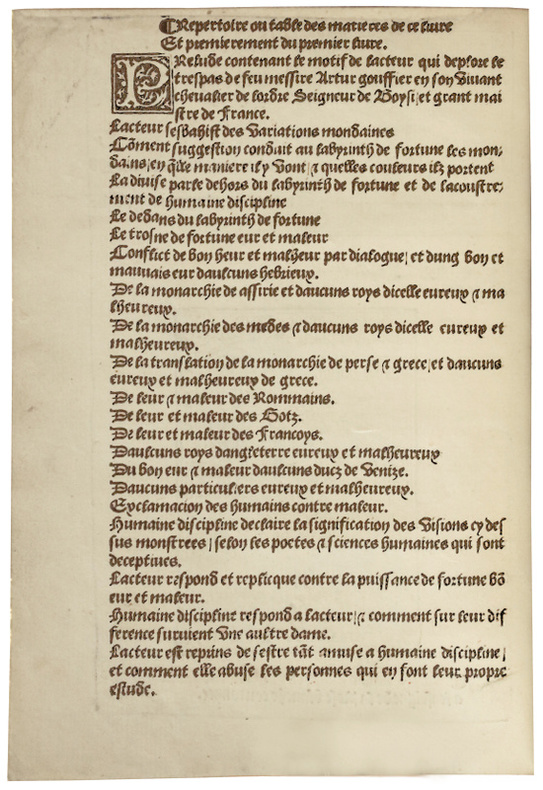
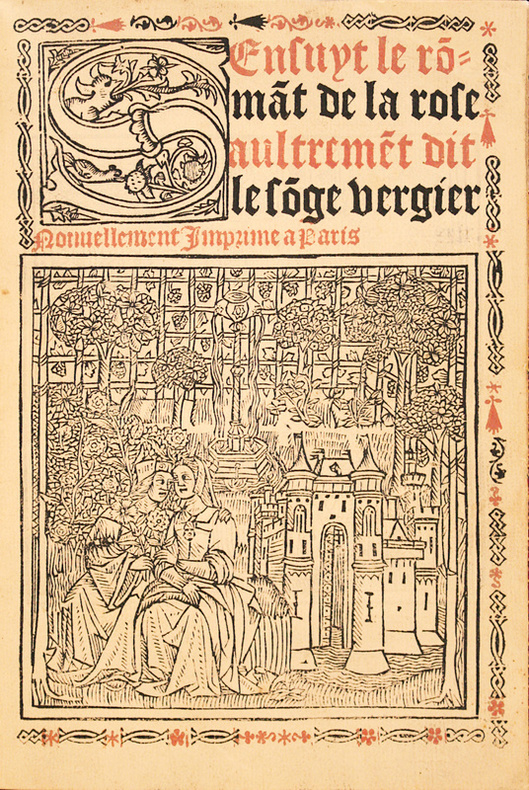
LCS-17502Précieux exemplaire cité par Tchemerzine, ayant appartenu au baron Seillière puis à Marcel Bénard, et ayant figuré à l’exposition Dix siècles de Livres français en 1949. Paris, Philippe le Noir, s.d. [c. 1526]. Petit in-4 gothique de (4) ff. prél. titre compris, (145) ff., 1 mm. de la marge bl. sup.du titre a été anciennement renforcé sans manque. Maroquin rouge, somptueux décor à la fanfare sur les plats, armes frappées or au centre, dos à nerfs richement orné, double filet or sur les coupes, roulette dorée intérieure, tranches dorées sur marbrures. Reliure signée Belz-Niedrée. 187 x 132 mm.
LCS-14900Un roman d'amour et d'aventures superbement illustré, très en vogue à la Renaissance. Paris, N. Couteau pour G. du Pré, 1527. In-4 de (8) ff., 169 ff. y compris 3 grand bois à pleine page, (1) f. pour la marque de l’imprimeur, nombreuses majuscules ornées. Relié en plein maroquin brun, plats entièrement ornés d'un triple encadrement de filets à froid, et d'une large roulette feuillagée à froid, écoinçons dorés aux angles, fleuron central losange frappé or, dos à nerfs orné de roulettes à froid et de fleurons dorés, double filet or sur les coupes, large roulette intérieure dorée, tranches dorées et ciselées. Laurent Claessens. 238 x 170 mm.
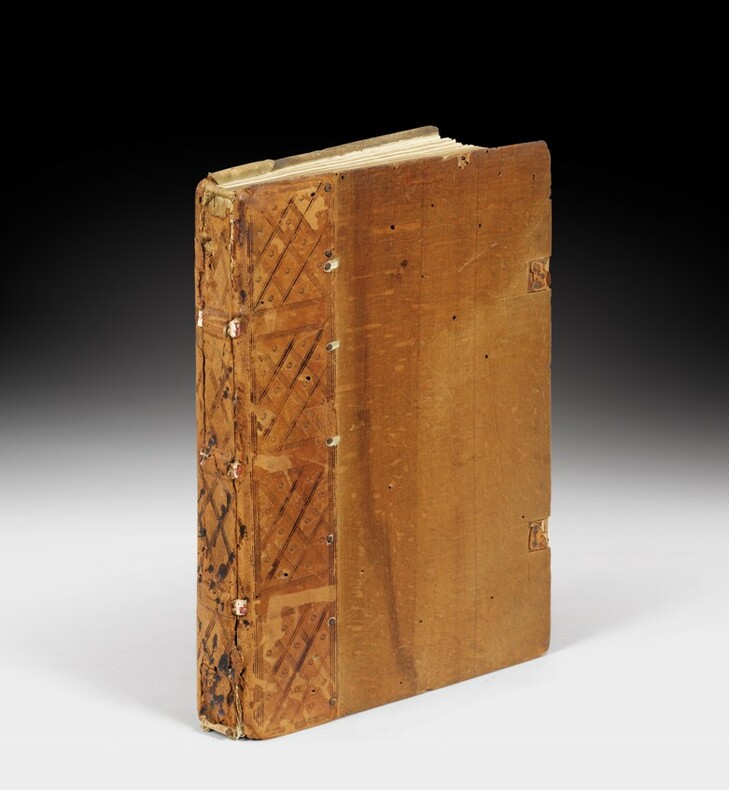
YTB-57Venice, Simon Bevilacqua, 20 october 1498. Chancery folio of 218 leaves. A4 a-z A-C8D6,62 lines of commentary plus headline, roman type, some leaves with deckle edge at foredge, contemporary half tooled calf over wooden boards (lower pastedown with watermark o fa basilisk, Briquet 2674, dated Ferrara, 1505), two clasps, paper lettering pieces on lower cover with author’s name and a red X, in modern drop-backed folding box. 307 x 212 mm. EDITION INCUNABLE CITEE PAR BRUNET. La Guerre civile, plus connue sous le nom de Pharsale, est une épopée latine inachevée, écrite en hexamètres dactyliques, œuvre principale de Lucain. Dans cette épopée, qui retrace le début de la guerre civile que se livrèrent Jules César et Pompée, entre 49 et 45 av. J. C., Lucain se rattache à la tradition d'Ennius en refusant d'écrire une épopée mythologique et participe aux préoccupations scientifiques de son temps : géographie, astronomie, histoire naturelle. Dans son épopée, les dieux n'interviennent pas, mais on trouve des rêves prémonitoires et des monstra (des « présages » ou « oracles »). Par rapport à la grande épopée qu'est L’Enéide, le texte de Lucain présente une réelle originalité. Elle ne décrit pas un passé lointain et légendaire, mais s'attache à des événements historiques datant de moins d'un siècle, ainsi que l'avaient fait Naevius dans son Bellum Punicum ou encore Quintus Ennius dans ses Annales de la République Romaine, racontant tous deux les épisodes contemporains des guerres puniques. Une autre de ses particularités, liée à la première, est le refus du merveilleux. C'est une œuvre pessimiste et profondément marquée par le stoïcisme. La sagesse de Caton d'Utique y est opposée à l'ambition et à l'intempérance de César, responsable d'une guerre dont l'horreur est peinte avec une particulière vivacité. FORT BEL EXEMPLAIRE CONSERVE DANS SA RELIURE EN VEAU DECORE SUR AIS DE BOIS DE L’EPOQUE. Certes, quelques traces d’usures au dos et aux attaches mais fort plaisant incunable de ce texte majeur en condition du temps.
1824ST17496-014Zurich: by the author and Henry Fuessli and Comp 1824-25. FIRST EDITION. 445 x 325 mm. 17 1/2 x 12 3/4". 26 leaves of descriptive text. Lacking title page and dedication.Commentary by art historian Johann Jacob Horner. <br/> Modern tan half morocco over olive green buckram raised bands spine panels with gilt ornament red morocco label. 24 FINE AQUATINT VIEWS COLORED BY A CONTEMPORARY HAND. Brunet III 357. Text pages variably foxed from a little to very but somehow THE LOVELY PLATES IN FINE CLEAN CONDITION--fresh and bright with pleasing coloring in an unworn sympathetic binding.<br/> <br/> This is a rare complete colored set of Hüber's famed views of Pompeii much sought-after by armchair travellers after excavations uncovered that urban time capsule in the late 18th century. The German-born Hüber 1787-1871 settled in Naples in his early 20s studying landscape painting with Dutch émigré painter Jacob Philipp Hackert 1737-1807 who was known for his lush scenes often featuring ruins. His arrival in the region coincided with the occupation of Naples by the French who accelerated the excavations underway at Pomepii which had been buried by the eruption of Vesuvius in 79 A.D. The rapid burial of the city in volcanic ash had captured a moment in time and the opportunity to see a well-preserved example of life in the ancient Roman Empire caught in medias res drew eager travellers on the Grand Tour of the Continent. Hüber's well-executed views often picture these tourists and their contemporary dress contrasts sharply with the classical ruins. Lord Napier in his "Notes on Modern Painting at Naples" 1855 credits Hüber for introducing the use of watercolors to the meticulously drawn landscapes then being produced. This innovation is displayed in the hand-colored plates here which were also issued in uncolored state. Napier was correct to appreciate the value of adding colors which increases both the drama of the views and the pleasure of the viewer. Because the attractive sets with color were often broken up complete volumes of the colored plates are rarely seen for sale: we could trace just three such copies sold at auction as listed in RBH and ABPC the two best ones were the Feltrinelli copy which sold for $14330 in 2001 and the Donaueschingen copy fetching $13750 in 2014. Ours does not have the distinguished provenance attached to those copies and it lacks two preliminary leaves but the text is present and most important the lovely colored plates are in fine condition. by the author and Henry Fuessli and Comp unknown
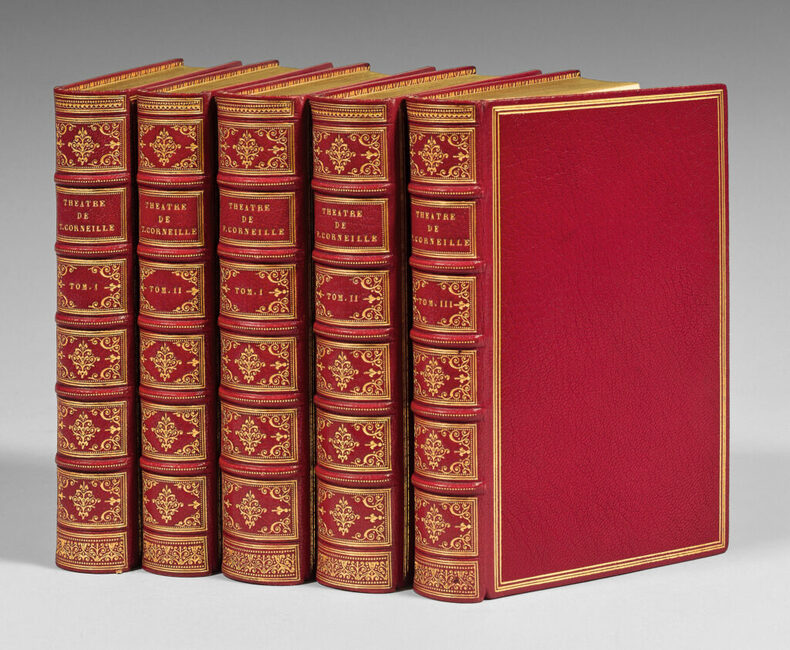
LCS-18332La plus rare des grandes éditions en partie originale du Théâtre de Pierre Corneille imprimée à Paris en 1660, «à ses yeux l’une des plus importantes »; elle manquait à la collection Dennery. Imprimé à Rouen, et se vend à Paris, chez Augustin Courbé Et chez Guillaume de Luyne, 1660. Avec privilège du roy. 3 volumes in-8. On joint à cette édition les deux volumes suivants imprimés dans le même format et avec les mêmes caractères: - Poëmes dramatiques de T. Corneille. I. [II.] partie. Imprimé à Rouen, et se vendent à Paris, chez Augustin Courbé Et Guillaume de Luyne, 1661. Avec privilège du Roy. 2 volumes in-8. Soit en tout 5 volumes petit in-8 de: I/ xc pp., (6) pp. dont 1 gravure à pleine page, 704 pp.; II/ cxvii pp., (10) pp., 720; III/ lxxxiiii pp., (5) pp., pp. 1 à 178, (2) ff. comportant un tirage à part des pp. 177-178, pp. 179 à 632; I/ (2) ff., 710 pp., (2) pp.; II/ (4) pp., 652, (4) pp., la dernière blanche. Maroquin rouge, triple filet doré encadrant les plats, dos à nerfs ornés de fleurons dorés, double filet or sur les coupes, large roulette intérieure dorée, tranches dorées sur marbrure. Cuzin. 163 x 105 mm.
LCS-17339Parmi les 251 œuvres d’Alexandre Dumas recensées par le bibliographe M. Clouzot (Guide du bibliophile français du XIXe siècle, Paris, 1996) 4 seulement portent la mention « très recherchée » : Les Trois Mousquetaires ; Le Comte de Monte-Christo ; La Tour de Nesle ; Mes Mémoires. Paris, J. N. Barba, 1832.In-8 de (4) ff., 98 pp., relié comme souvent sans les (2) pp. d’annonces commerciales du libraire Demi-maroquin bordeaux à coins, dos lisse orné d’un fleuron doré, témoins. Reliure signée de Champs, vers 1870.209 x 130 mm.
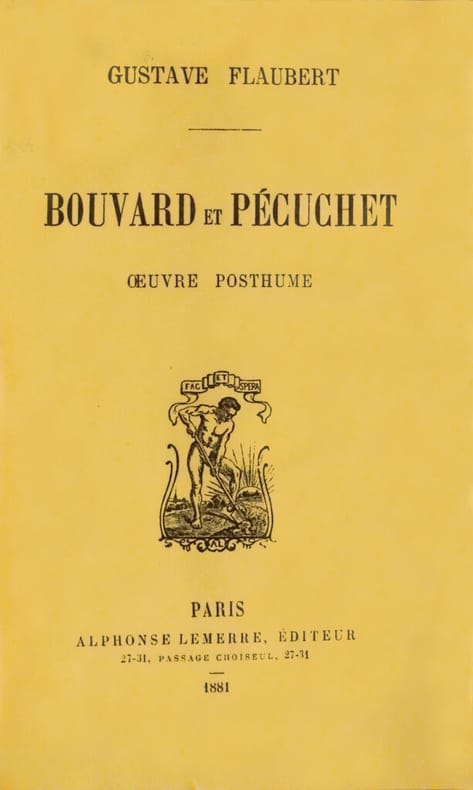
LCS-18073L’un des 55 précieux exemplaires sur Hollande. Paris, Lemerre, 1881. In-12 de (1) f.bl., (2) ff., 400 pp., (1) f.bl., piqures sur les gardes. Demi-maroquin vert à coins, dos lisse, non rogné, couvertures jaunes imprimées et dos conservés. Reliure de l’époque. 183 x 120 mm.
LCS-186448
LCS-17812Précieux exemplaire orné de 5 figures, le seul répertorié de premier état, provenant des bibliothèques A. Firmin-didot et C. Bourlon de Rouvre, cité par Tchemerzine et Bourdillon. Paris, J. Jehannot, s.d. [vers 1520-1521]. Petit in-4, a8, b-e4, f8, g-k4, l8, m-p4, q8, r-v4, x8, y-z4, r4, A-B4, C8, D4, E6 = (142) ff., 2 col., 41 l., 1 grand bois sur le titre répété au verso, extrémité de l’angle supérieure droit du titre restauré. Maroquin rouge, large fleuron doré au centre des plats, dos à nerfs orné, double filet or sur les coupes, tranches dorées. Trautz‑Bauzonnet. 188 x 129 mm.
1450261961450. <blockquote><p>Uberti's father had been referenced by Dante</p></blockquote><p>The City State of Florence:</p><p>In the 1300s the Italian city-states were embroiled in complex political machinations between each other—chiefly Milan Florence Pisa Siena Genoa Ferrara Mantua Verona and Venice— and the overarching powers of the Papacy and the Holy Roman Empire. Even within factions that seemed to support the same objectives: the Guelphs who battled the Ghibellines split in to the White Guelphs and Black Guelphs and ultimately the Black Guelphs exiled Dante Alighieri 1265-1321 from his beloved city state of Florence in 1302. During this exile Dante wrote the Commedia his love-song to Beatrice to his pagan and Christian poet-idols to a reimagined theology incorporating courtly love and Greek philosophy and to the city and people of Florence. He wrote his three canticles in a style called terza rima rhyming stanzas of three lines which was frequently imitated by later poets.</p><p>The Power and Poetry of Florence:<br />Despite the political turmoil Florence rose in power not only in Italy but throughout Europe in part because of the strength of its gold based economy. Florence stepped out of the Middle Ages into the Renaissance with a flourish of distinct and memorable art and poetry but the mid-1300s offered another tragedy for the dazzling city state. In 1348 the Black Plague ravaged the Italian peninsula. Poets turned their pens towards chronicling this devastation with perhaps the most-well known being the Decameron of Florentine poet Giovanni Boccaccio 1313-1375. The Decameron likely begun shortly after 1348 and completed in 1353 follows ten young people as they leave Florence to flee the plague. On the way they entertain themselves through a series of stories to take their minds off of the horrors around them.</p><p>Fazio degli Uberti and Dante:<br />Fazio degli Uberti 1305/9- ca.1367 is not as well-known as Dante or Boccaccio who are two of the “Tre Corone†of Italy with Petrarch as the third crown. Fazio was born in 1305 or 1309 to a family of some importance who identified politically as Ghibellines who supported the Holy Roman Emperor rather than the Pope. The family’s Ghibelline alignment accorded Fazio’s ancestor Farinata degli Uberti a place in Dante’s Inferno. In Canto 6 Farinata is listed among the Florentines who have done more bad than good for the city. Though in Canto 6 Dante asks where the great Florentines are who had “minds bent towards good†including Farinata he is told that in fact these Florentines are those with the blackest souls and the fact that Dante thinks of them with esteem shows how warped Florence has become. Later in Canto 10 Dante will meet with Farinata himself among the heretics and in Canto 28 he will understand how Florence suffers because of men such as Farinata in part because of the schism between the Guelfs and Ghibellines.</p><p>Despite this condemnation of his family in 1345 Fazio wrote his most noted poem the Dittamondo an emulation of Dante’s Commedia. The title Dittamondo is an vernacularization of the Latin dicta mundi indicating that it is an encyclopaedic text of what is known and said of the world. Like Dante’s journey under the guidance of Virgil Statius and finally Beatrice Fazio’s narrator meets with the allegorical figure of Virtue he and the Roman geographer Solinus travelled the whole world Italy Greece Germany France Spain northern Europe Africa and parts of Asia with Solinus giving the narrator descriptions of the cities visited. In addition numerous other snippets of information are added from the works of Pliny the Elder Isidore of Seville and Pomponius Mela. Even the style of poetry Fazio employed for his didactic poem was modelled after Dante’s own terza rima. However unlike Dante’s poem Fazio’s is far more encyclopaedic rather than a tour de force of allegorical and contemporary political satire clothed in Dante’s masterful command of language. Like Dante Fazio was exiled from Florence and like Dante Fazio wrote of his exile from the city. The Dittamondo remained incomplete upon Fazio’s death around 1367.</p><p>History of the Manuscript Tradition of Dittamondo:<br />While no comprehensive survey of manuscripts exists it is clear that the text is rare in manuscript with the Arlima database listing only BnF. italien 81 and Venice Biblioteca Nazionale Marciana Cl. IX c. XI. To these should be added Turin Biblioteca Nazionale Universitaria cod N 1 5; Milan Biblioteca Nazionale AC.X.30; and other single volumes in the Biblioteca Riccardiana in Florence the Biblioteca Angelica in Rome and the university library of Bologna as well as a fourteenth-century fragment in the Biblioteca Archiginnasio in the same city.</p><p>The Schoenberg database lists no copy offered for sale since that from the Joseph Martini library by Hoepli on 27 August 1934 lot 177 there with that previously appearing as Sotheby's 10 June 1918 lot 504.</p><p>The document:</p><p><strong>Bifolium from a large humanist manuscript</strong> of Fazio degli Uberti Dittamondo in Italian on parchment Italy mid-fifteenth century within a century of Fazio’s death. Each leaf approximately 330 by 240mm. Two conjoined leaves each with single column of 33 lines of an accomplished humanist hand with parts of chapters X-XI and XIII-XIV of Book 6 one large simple initial in pale blue the text set within an extensive gloss in Italian in smaller script recovered from the binding of a seventeenth-century book and hence with scuffs spots small holes one corner torn away with loss to gloss there scrawls and areas of text on outerside abraded and illegible.</p><p>This bifolium would be one of the center leaves in the gathering or quire sandwiched between other successive leaves folded and sewn in the gutter the crease in the center of the bifolium separating the earlier part of the text from the later to create the legible linear text.</p><p>The content deals with Old Testament and Hebrew Bible figures.</p><p>Chapter X gives a précis of Old Testament stories in terza rima mentioning Jacob Laban Rachel and Lia Reuben Gad Asher and Potiphar.</p><p>Chapter XI continues with the genealogy of the tribe of Levi which includes and touches on Aaron and Moses who is the main focus of this section.</p><p>The text on the bifolium jumps forward to Chapter XIII where holy lives are described including that of Mary of Egypt. From the Book of Kings in the Hebrew Bible Fazio weaves in mention of Elisha’s punishment of Ghazi who stole robes and treasure from his Naaman the Syrian. Elisha transferred Naaman’s leprosy to Ghazi. Fazio demonstrating his wide knowledge of this material says that “io non ti canto apertamente qui come Eliseo reuscitò un morto col Santo prego…†I won’t tell you openly how Elisha resurrected a dead man with holy prater and follows with another secret: “io non ti canto poi che li fu scorto fuel pargoletto…†I won’t tell you that a little baby was seen there that gave light and brightness….</p><p>Beginning with Ahaziah the sixth King of Judah Chapter XIV follows this line through Ezechias and castigates Sennacherib the king of the Neo-Assyrian Empire who did not accept God. Fazio finds and points to “Olda d’Ain†a female prophet heard by the world.</p><p>The text of the Dittamondo is surrounded by annotations in a contemporary hand employing more frequent abbreviations. These notes provide further details about the events described in the poem with a patte-de-mouche flourish at the end of each section.</p><p><img class=""alignnone wp-image-25018 size-post-window"" src=""https://cdn.raabcollection.com/wp-content/uploads/20231204144051/Folder-site-11-1600x1327.jpg"" alt="""" width=""1600"" height=""1327"" /></p> hardcover
14502275018/10/1450. <blockquote><p>We can recall nothing similar having reached the market</p><p> </p><p>From the collection of Dr. Otto O. Fisher who bought primarily in the 1930s and 1940s so this not been offered for sale in nearly a century</p></blockquote><p>The Hundred Years’ War was one of the most notable conflicts of the Middle Ages. For 116 years interrupted by several truces five generations of kings from two rival dynasties - the English House of Plantagenet and the French House of Valois - fought for the throne of the largest kingdom in Western Europe - France. The war’s effect on European history was lasting. Both sides produced innovations in military technology and tactics such as professional standing armies and artillery that permanently changed warfare in Europe; chivalry which had reached its height during the conflict subsequently declined. Stronger national identities took root in both countries which became more centralized and gradually rose as global powers that expanded into the New World.</p><p>In the 1430s-50s the English clung to their dwindling possessions while French King Charles VII of the Valois dynasty slowly chipped away at them one piece at a time. By 1440 the French had driven the English completely from the valley of the Loire and the English retained only Normandy in the north and Gascony in the south. The Truce of Tours in 1444 gave the French a much-needed respite during which time Charles completed some necessary military reforms and prepared for the final grinding campaigns in a conflict that had begun more than a century earlier—well before anyone’s living memory.</p><p>Soon the war started up again. Under the weak kingship of Henry VI England seemed powerless to stop the French offensive of 1449 to recapture Normandy. The last major battle occurred in April 1450. With no other significant English forces in Normandy the whole region quickly fell to the victorious French. Caen was captured in June and Cherbourg the last English-held fortress in Normandy fell in August.</p><p>Among the commanders on the French side were the Count of Armagnac and his son the Viscount both named John.</p><p><strong>Autograph document signed</strong><em> ""Jehan John D'Armagnac""</em> October 18 1450 receiving 2000 livres a significant sum originally bestowed by the French King to Estienne Petit the treasurer to King Charles VII in the region the <em>""last march""</em> as the document notes for the purpose of attacking the English in April 1450 and after. <em>""I Jehan d'Armagnac Vicomte de Lomagne swear that I have received from Mr. Etienne Petit treasurer and collector of Languedoc the sum of 2000 livres that Mons. the King by distribution of his finances for Languedoc of 170000 livres awarded to the said Seigneur a Montpelier in the month of March last gave to furnish for us our expenses and to compensate for our efforts done in the surveying and conquest of Normandy.""</em></p><p>Jehan V was the last in the line of powerful Armagnac rulers. He fell out of favor with Charles who dispatched ""John the Bourbon"" to capture him but John fled to Spain. He was granted a return by Louis XI but soon revolted against him as well. Armagnac was part of the league that called itself ""Bien public"" or ""public good"" and threatened Paris at the head of 6000 mounted men. In 1469 Louis responded under the pretense that John was treating with ambassadors from England and sent an army under Antoine de Chabannes to rout him. John fled to Spain only to reappear in 1471 in the train of the king's rebellious brother the duc de Guyenne. John was stabbed to death in the 1470s without eligible male heir.</p> unknown
I: Manuskript von Clara Malraux. 100 Bll., teils beidseitig beschrieben. 4to. - II: Typoskript. 74 Bll., einseitig beschrieben. 4to. - III: Typoskript "Gustav Janouch: Franz Kafka sagte … Erinnerungen und Aufzeichnungen". Prag, 1947. 182 einseitig beschr. Bll. 4to. - IV: Typoskript "Anmerkungen und Erläuterungen". Titel und 19 einseitig beschr. Bll. 4to. Mit zahlreichen Beilagen (s. u.). Die "Gespräche mit Kafka", die der Prager Autor Gustav Janouch nach eigener Angabe 1920 als 17-Jähriger geführt und später aufgezeichnet hatte, erschienen 1951 bei S. Fischer und machten in der Kafkaforschung sogleich Furore. Wie Janouch in der erweiterten Ausgabe 1968 schrieb, kam es schon "sehr bald zu einer französischen, italienischen, schwedischen, amerikanischen, südslawischen, spanischen - ja! - und sogar zu einer japanischen Ausgabe" (S. 7). Das vorliegende Dossier enthält (I) das 100 teils beidseitig beschriebene Blatt umfassende Werkmanuskript von Clara Malraux, die für Calmann-Lévy in Paris die französische Übersetzung besorgte, welche 1952 erscheinen sollte, sowie (II) eine 74 Blatt starke, unvollständige maschinschriftliche Fassung bis Kapitel 60 ("Franz Kafka parle ... Souvenirs et notes"). - Die Anmerkungen in der deutschsprachigen Erstausgabe stammten von Jana Vachovec, der Frau von Janouchs Freund Georg Vachovec, die 1947 unter dem Pseudonym "Alma Urs" von dessen Erinnerungsbuch ein maschinschriftliches Original nebst 2 Durchschlägen (deren einer hier als III vorliegt) angefertigt hatte (S. 13f.). Bei dem hier weiters vorliegenden (IV) deutschsprachigen Typoskript der "Anmerkungen und Erläuterungen" handelt es sich um eine Vorstufe der in der Abschrift enthaltenen "Anmerkungen und Erläuterungen". Die Anmerkungen (in III und IV) folgen in ihrer Numerierung noch Janouchs Unterteilung in Kapitel, während sie im Buch auf Seitenzahl und Zeile verweisen; überdies enthalten sie noch kleine Fehler, die in der Buchausgabe korrigiert wurden (so etwa heißt Otto Pick im Typoskript noch "Oskar", und Brods Gattin Else wurde im Typoskript noch am 21. IX. 1890 und nicht am 21. VIII. 1883 geboren). Umgekehrt finden sich allerdings auch in der Buchausgabe kleine Fehler, die im Typoskript noch korrekt waren: So ist etwa das Geburtsjahr von Felix Weltsch unstrittig 1884 und nicht, wie es in der Buchausgabe heißt, 1889 (Anm. zu S. 23, Zeile 2). - Neben den erwähnten Originalmanuskripten und -typoskripten enthält das Dossier noch eine nicht von Claire Malraux stammende hs. französische Fassung der "Anmerkungen und Erläuterungen" (46 einseitig beschr. Bll.) sowie ein unvollständiges Typoskript davon (24 Bll. inkl. einiger Doubletten), 6 Aufsätze über Kafka aus den 1940er und 1950er Jahren, zahlreiche bis in die 1990er Jahre hineinreichende, meist französische Zeitungsausschnitte zu Kafka und einen eigenh. Brief mit U. von Gustav Janouch an Max Brod (dat. 6. III. 1950, 2 SS. auf Doppelblatt, 8vo; in tschechischer Sprache). - I + II: in gutem Zustand; III: fleckig und merklich lädiert infolge starker Inanspruchnahme (vgl. hierzu die erweiterte Ausgabe S. 14f.). I: Gespräche mit Kafka. Erinnerungen und Aufzeichnungen. Frankfurt a. M., S. Fischer, 1951 (EA). - II: Erweiterte Ausgabe. Ebd., 1968.