VERNE JulesMareMagnum

858 328 résultats
- Hetzel, Paris s.d. (1904), 12x19cm, relié. - Édition originale pour laquelle il n'a pas été tiré de grands papiers. Reliure en demi veau noisette, dos lisse orné de doubles filets dorés, plats de papier marbré, couvertures montées sur onglets conservées, tête mouchetée, reliure pastiche moderne non signée de Goy & Vilaine. Ouvrage orné d'illustrations originales de L. Benett. Très rare envoi autographe signé de Jules Verne à [Achille] Tournier, alors Préfet de la Somme. Jules Verne s'installe à Amiens, ville natale de sa femme, en 1871: « Sur le désir de ma femme je me fixe à Amiens, ville sage, policée, d'humeur égale, la société y est cordiale et lettrée. On est près de Paris, assez pour en avoir le reflet, sans le bruit insupportable et l'agitation stérile. Et pour tout dire, mon Saint-Michel reste amarré au Crotoy. ». Son affection pour la région ne cessera de croître et il ne quittera plus la capitale picarde, participant activement à la vie politique locale. Nommé directeur de l'Académie des Sciences, Belles-Lettres et Arts, en 1875 il prononce à cette occasion un discours resté célèbre : "Une Ville idéale : Amiens en l'an 2000." En 1888 il est élu au conseil municipal d'Amiens où il siège jusqu'en 1903. C'est le préfet de la Somme qui lui remet sa décoration lorsqu'il est promu officier de la légion d'honneur en 1892. "Les gens me demandent souvent, pourquoi je réside à Amiens, moi qui suis si complètement Parisien d'instinct. Eh bien, parce que, comme je vous ai dit, j'ai du sang breton, et que j'aime la tranquillité, et je ne pourrais être plus heureux que dans un cloître. Une vie calme d'étude et de travail fait ma joie. " ( juin 1893, in Mac Clure's magazine). Ouvrage orné d'illustrations originales de L. Benett. Bel exemplaire. [ENGLISH DESCRIPTION ON DEMAND]
1778AMO-4503A Paris, chez la veuve Duchesne, 1778 [de l'imprimerie de Claude Simon] [de l'imprimerie de Clousier]. 6 volumes in-8 (21,5 x 13,5 cm) de XVI-594, 600, 479, 462, 472 et 524-(3) pages. 1 portrait de l'auteur en frontispice et 2 figures d'après Marillier. Reliure de l'époque plein maroquin rouge à grain long, dos lisses richements ornés aux petits fers typiques de l'époque Directoire (1795-1799), pièces de titres (auteur et titre de chaque volume) en maroquin vert, roulette dorée en encadrement des plats et sur les coupes, doublures et gardes de papier marbré, encadrement intérieur de roulettes dorées, tranches dorées (reliure signée Bradel le Jeune, rue d'Ecosses, n°1, quartier Ste Geneviève, à Paris - avec son étiquette contrecollée au verso de la garde du premier volume). Impression sur papier fort à belles marges (grand papier). Excellent état de l'ensemble des volumes, reliures et intérieur. Très frais. Quelques infimes marques et ombres aux reliures qui sont néanmoins dans un splendide état de conservation.
194851689André Gonin 1948 In-folio, en ff. sous couverture rempliée, chemise et emboîtage, 80 pp.18 lithographies en couleurs tirées dans les ateliers des Arts graphiques J.-E. Wolfensberg. Bel exemplaire.
First edition, first impression, published March 1944. Hardcover with original unclipped dust jacket (10s 6d). This copy has spent much of its life protected by a brown kraft paper cover. Hayek himself referred to it as 'that unobtainable book' shortly after publication. Original DJ is very fragile, showing significant shelf and handling wear, with marked discolouration and foxing. The edges are worn, with notable waved creasing and open and closed tears (see our image). The brown paper protective cover has the title and author hand written in decorative font to the front. The spine is cocked, with a single crease running the length. Gilt lettering to spine is strong. Front and rear boards show only slight blemishes. Corners are bumped. There is gentle foxing to F&REPs extending to the pageblock. Henry Newham, ('Candidus' columnist on the Daily Sketch), reviewed the book on 30.3.1944; part of his review is adhered to the front pastedown. The previous owner, E.W Garrett, has penned name and address to FEP. Rather ironically this address is the former home of George Sturt (1863-1927), an English writer on collective craftsmen, wheelwrights and farmers, not speculators nor individualists, (Source Farnham CC, and the Bourne Conservation Group). The pages are in good condition. A few show small signs of foxing but the text remains clean, they are well bound and show no notes or marginalia. This is the only copy available for sale in the world. If the UK economy was booming with a safe health service, good education and profitable businesses then the price of this would be much higher.... but it isn't hence dutch auction in process. CN Used
056995Paris [ René Bonnel ] 1928 in 4 (25x19,5) 1 volume broché, couverture imprimée à rabats, 103 pages [1], non rogné. L'illustration comprend 8 lithographies originales à pleine page d'André Masson. Maquette de Pascal Pia. Georges Bataille, 1897-1962, écrivain français. Premier récit érotique de Georges Bataille publié clandestinement par René Bonnel sous le pseudonyme de Lord Auch. Edition originale. Tirage limité à 134 exemplaires, celui-ci un des 125 sur vergé d'Arches à la forme. Très bel exemplaire ( Photographies sur demande / We can send pictures of this book on simple request )
4to and oblong 8vo. Altogether 10½ pp. on 13 ff. Series of 11 typed letters and one postcard signed to Francisco ("Paco") Porrúa, his Spanish-language translator and publisher, beginning by thanking him for his copy of "Cronicas Marcianas" with the prologue by Borges ("my wife speaks highly of your careful and sensitive work on this [...] I await publication of EL HOMBRE ILUSTRADO, happily [...]", 6 Nov. 1955), the next speaking of his father's death but pleased at the reception of the "Martian Chronicles" ("Rarely have I been treated so well in my own country [...]", 39 March 1958), talking of writing a screenplay of "And The Rock Cried Out" directed by Carol Reed, the Jean-Louis Barrault adaptation of the "Martian Chronicles", and visiting the set of "Fahrenheit 451" directed by Truffaut, discussing the possibility of producing two of his plays in Buenos Aires ("a startling evening, of great contrast", 17 March 1962), asking for the publication of hardcover editions of his works in Spain (on a letterhead depicting the Illustrated Man, 24 Aug. 1971), sending a list of his works so they can be published in the right order, and other business matters: "Yes, I have written one other play which you have not seen. It is THE DAY IT RAINED FOREVER. I am sending you a copy under separate cover. I am happy to hear that you may publish a book of my plays, which would delight me. For now, I am on my way to London to visit the set of FAHRENHEIT 451 now in film production starring Julie Christie and Oskar Werner and directed by FRANCOIS TRUFFAUT [...]" (17 Feb. 1966). - Small creases, marks and dust-staining, six holes punched for filing. Provenance: Francisco Porrúa; thence by descent to his son.
9 pp. altogether. Various formats; 2 cards with autogr. address. Includes 6 typed envelopes. In German, to the emigré musical scholar Viktor Zuckerkandl (1896-1965): "[...] From the clear blue hell two novels dropped into my lap - one is finished, thank God - and thus everything else which I consider more important (epistemology, politics) has been shifted to the background. And apart from this, everything in this world appears to me unimportant and precarious. One can no longer work for eternity, for we have left it behind. And as I am silly enough to be depressed by this fact more than would be adequate, my physical condition is also somewhat un-brilliant. My bouts of tiredness are rather abnormal and I battle them with vitamins, hormones, iron, calcium preparations, sometimes not altogether without success [...]" (29 Nov. 1950). Other letters contain extensive ruminations on the humanities and various novels. An undated carbon copy contains Broch's evaluation of Zuckerkandl's then-current research project with six-line greetings: "Dearest, I hope you approve of the following. MS to follow, if possible (even if it embitters the author - it usually does) with my notes of commentary [...]".
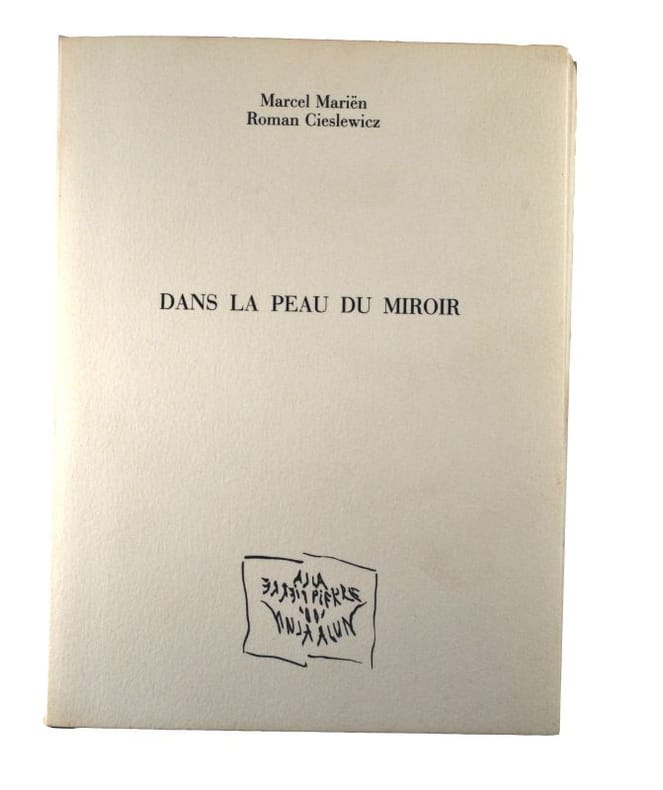
19881040951988 Bruxelles, La Pierre d’Alun, 1988, 224x166mm, 84pp., en feuilles sous couverture imprimée.Le texte de Marcel Mariën est illustré de 10 photomontages originaux de Roman Cieslewicz.Exemplaire 15/50 réservés aux amis de « La Pierre d’Alun » signés par les auteurs et comportant en frontispice une sérigraphie originale signée et numérotée de Roman Cieslewicz.Exemplaire unique comprenant les dix photomontages originaux, 360x265mm, portant tous au dos le cachet de la vente de l’atelier, l'ensemble contenu dans une boîte spécialement conçue et réalisée par l'Atelier Devauchelle.Roman Cieslewicz commence sa carrière cher « Elle » en 1963 ou il est rapidement nommé directeur artistique ; puis il dirige l’agence M.A.F.I.A. ou il conçoit des campagnes pour Prisunic, Woolmark, 3 Suisses ou Lancaster ; puis il crée la revue « Opus International », la revue « Kitsch » avec Topor et Sternberg, puis commence une longue collaboration avec le Centre Pompidou pour lequel il crée de nombreuses affiches et catalogues. Dans cette collaboration avec Marcel Mariën on reconnait l’influence du surréalisme belge.Provenance des photomontages : vente atelier Cieslewicz, Paris,19 mars 2006 , lot 238.(104095)
3 pp. on bifolium with integral address panel, to the "Revd. T. Burbidge, Rugby". One penny postage stamp. Traces of seal. Includes a photographic albumen print copy of a portrait of Clough. A very early, unknown letter to his friend Thomas Burbidge (1816-92) at Rugby, written while Clough was preparing for his final exams at Balliol: - "My dear Burbidge, You must not let another washing-day go by without writing to me. I am not very hard at work, for I am very tired &, since Yesterday Morning, not over well; perhaps in part owing to the heat which was more than worthy of May-day. I find that I have forgotten my books by wholesale, & I really cannot get them up again; so I take my chance; & indeed I care very little whether I miss or not. I fell into another Sonnet the other day; which I will send you to fill up the half sheet, & for that reason only, I am sure. / To the great Metropolis. / Traffic, to speak from knowledge scarce begun, / I saw & travelling & fashion. Yea, / And if that Competition & display / Make a great Capital, then thou art one, / One, it may be, unrivalled neath the Sun. / But [outward, corrected to:] sovereign Symbol of the great and good, / True Royalty & genuine Statesmanhood, / Nobleness, learning, Piety was none. / If such realities indeed there are / Working within, unsignified, tis well; / The Stranger's fancy of the thing thou art / Is rather truly of a huge Bazaar, / A railway-terminus, a gay Hotel, / Anything but a mighty Nation's heart. Or should we begin better / If speak I may from knowledge but begun / Travelling there is, traffic, & fashion; - Yea, / If Stir & Competition &c.". - Clough had first visited London that April - on two weeks' vacation for extra tuition from a science tutor, Robert Lowe - and the satirical sonnet he produced reveals how little he must have enjoyed his stay. The poem was first published in 1951 in Lowry's, Norrington's and Mulhauser's edition, from a fair copy in the author's 1839-42 notebook. The present textual witness, hitherto unknown, provides interesting variations and amendments and may well pre-date the fair copy, which is simply annotated "April 1841". - Clough's ostensible indifference toward the results of his imminent examinations - the first paper would be written a week later, on 10 May, and the final oral exam was due for the 19th - was given the lie when, upon obtaining merely second class honours, he at once walked all the way to Rugby to confess to Dr Arnold, "I have failed". Unpublished in F. L. Mulhauser (ed.), The Correspondence of Arthur Hugh Clough (OUP 1957), nor in his census of known letters.
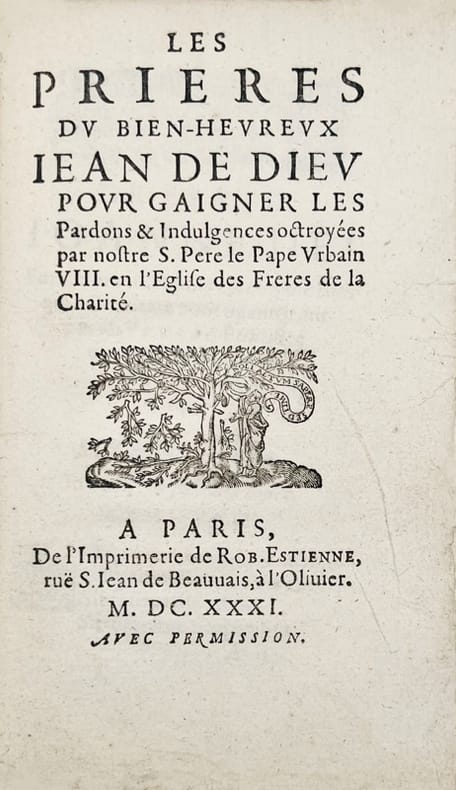
163144644A Paris, De l'Imprimerie de Rob. Estienne, 1631. In-12 de 1 feuillet blanc, 20 pp., 1 feuillet blanc, maroquin bleu turquoise, double encadrement de filets dorés et rosace centrale de fleur et palmette dorées, dos finement orné à nerfs, dentelle intérieure, entièrement non rogné, tranches dorées sur témoins (Lortic).
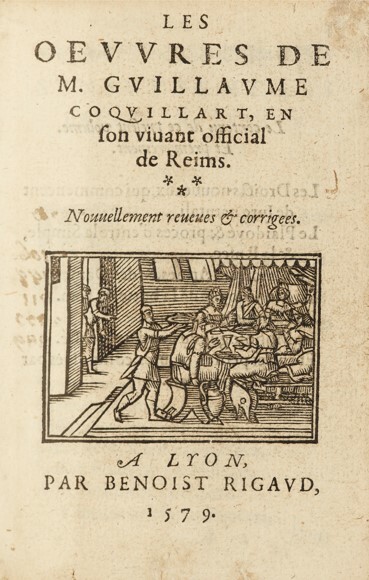
1579YTB-31Lyon, Benoist Rigaud, 1579. In-16 de 256 pp. Vélin ivoire, tranches jaspées. Reliure de l’époque. 116 x 74 mm. « La plus rare des éditions des Œuvres de Coquillart publiées au XVIe siècle. Elle est la dernière publiée au XVIe siècle. M. Brunet n’a fait que la citer, sans l’avoir vue. » (Catalogue A. Firmin-Didot). Tchemerzine, II, 519 ; Baudrier, III, 351 ; Brunet, II, 267 ; Catalogue A. Firmin-Didot, n°167 ; Bulletin du bibliophile, n°1428 ; J. Gay, p.98. « Edition bonne et rare, faite sans doute sur celle de G. du Pré » (Tchemerzine). « Edition rare » (Bulletin du bibliophile). LES ŒUVRES DE COQUILLART CONTIENNENT : « Les Droitz nouveaux ; Le Playdoyer de Coquillart d’entre la Simple & la Rusée, L’enqueste d’entre la Simple et la Rusée, Le blason des armes, & des dames, Le Monologue de la botte de foin, Le Monologue du Puys, Le monologue des perrucques « Les œuvres de Coquillart se trouvent rarement dans une bibliothèque moderne. De plusieurs des éditions publiées il ne reste qu’un seul exemplaire connu. Quand ces reliques de l’ancienne typographie reparaissent sur l’horizon, les bibliophiles se les disputent et les portent à des prix fabuleux. Lyon, ce berceau des lettres au XVe et XVIe siècles, cette ville où l’imprimerie brilla d’un si grand lustre voulut aussi publier un Coquillart. Le Manuel du libraire cite une édition in-16 donnée par Benoist Rigaud à Lyon en 1579. Nous n’avons pu la consulter. » (Les Œuvres de Guillaume Coquillart, 1847, Tome II). PRECIEUX ET BEL EXEMPLAIRE CONSERVE DANS SON VELIN IVOIRE DU TEMPS. LES GRANDS POETES FRANÇAIS DE LA RENAISSANCE CONSERVES DANS LEUR RELIURE DE L’EPOQUE CONSTITUENT LES CHEFS-D’ŒUVRE DE LA HAUTE BIBLIOPHILIE.
Ms.: 4to. 6 pp. Letters: 8vo. Altogether 5 SS. Bound as a set in red half morocco with gilt spine. "Souvenirs de Jeunesse / Le Grand caricaturiste André Gill": "J'ai rencontré André Gill au bon moment, à l'heure fraiche des amitiés de jeunesse, quand la terre encore molle s'ouvre à toute semence, pour des moissons de tendresse et d'admiration. J'avais vingt-trois ans, lui guère davantage. J'étais campagnard à l'époque, campagnard de banlieue, hirsute, velu, chevelu, botté comme un tzigane, coiffé comme un tyrolien, logeant entre Clamart et Meudon, à la porte du bois. Nous vivions là quatre ou cinq dans des payotes, Charles Bataille, Jean Duboys, Paul Arène, qui encore? On s'était réuni pour travailler, et l'on travaillait surtout à courir les routes forestières, cherchant des rimes fraiches et des champignons à gros pied [...]". - As may be gleaned from the included letters to the classiscist Alphonse Naus van Daell in Boston, these "pages inédites" were intended for a volume of selected works which van Daell was planning. Also included is the draft of a letter by van Daell to Daudet, dismissing his original suggestion of an American edition of his "contes patriotiques", along with another letter concerning the projected collection, by the American writer Frank W. Freeborn. - Slightly rubbed and scuffed.
8vo. (10), 192 pp. Contemporary red full cloth with giltstamped spine-title, giltstamped borders and 2 ornaments on the covers featuring characters from the story. All edges gilt. Presentation copy of the all-time bestseller illustrated by John Tenniel, signed and inscribed by the author to half-title: "Mary Harriet Rowden, / from the Author. / May 24. 1869". In a lovely binding prepared by the London bookbinder Burn & Co. with their label to lower pastedown, sixth edition. - Mary Harriet Rowden was the daughter of the Revd. Dr Edward Rowden. Her address is given next to the author's inscription in her own hand: "15. S. Giles / Oxford". - Covers slightly spotted. Rebacked with original spine relaid. Occasional minor spotting, front endpaper repaired at margins. A fine copy. Williams, Madan, Green & Crutch 46d.
4¾ SS. auf 5 Bll. Gr.-4to. Vollständiges Feuilleton über das Verhältnis zwischen Frankreich und England im Vorfeld der Wahl eines neuen Königs für Griechenland nach dem Sturz Ottos I. Dumas macht sich stark für Amadeus von Savoyen, den jüngeren Sohn des italienischen Königs Viktor Emanuel II., und wirft England Vertragsbruch vor. - Der Artikel beginnt: "Nous lavons dit il y a quelques jours la France et langleterre sont en train de se brouiller. L'Entente Cordiale avec L'angleterre, cette tradition du regent, adoptée par Louis Philippe - acceptée par Napoleon III malgré la malediction de Napoleon premier, est fatale non seulement à linteret, mais à lhonneur de la France. Labandon des francais au Mexique - Le refus dintervention de Langleterre dans les affaires damérique - avaient deja mis du froid entre les deux puissances. La revolution de Grecs va achever de les brouiller […]". - Bläuliches Papier; die Tinte leicht durchschlagend; teilweise leicht fleckig und stellenweise geringer Tintenfraß.
Folio. 16½ pp. on 17 ff. Obituary on the French writer Jean Binet-Valmer, who had died in April 1940: "C'etait un homme. Il eut des vertus d'homme et des faiblesses d'homme. Mais, en lui, jamais rien de mesquin ni de petit [...] Et je n'exagère pas en declarant ici qu'aux heures redoutables que traverse la France, elle aurait grand besoin de retrouver des hommes neufs qui ressembleraient à ce que fut Binet-Valmer [...]". - Edges slightly frayed, otherwise in good condition.
4to (19 x 20 cm). 2 pages on 1 leaf, apparently cut down from a larger leaf. With one enclosure (see below). Draft letter in a secretarial hand, expressing Goethe's wish that the mining director Carl Theodor von Kleinschrod procure for him one of the fossil Hippurites that were discussed and displayed at the gathering of scientists at Munich, and noting that it would give him particular pleasure to incorporate said fossil into the excellent collection in his care: "Zum Beweis daß mit dem Leben auch Lust und Neigung [holograph: 'zu Natur zu Kunst und Wissen sogleich'] zurückkehren, möchte ich die bittende Frage hinzufügen: ob nicht H. Bergrath Kleinschrott mir einen solchen Hippuriten wie sie bey jener Versammlung der Naturforscher in München zur Sprache gekommen und vorgezeigt worden, verschaffen könnte? [...]". Goethe's corrections comprise some deletions and the addition of thirteen words. - At Weimar, Goethe was a keen collector of rocks, minerals and fossils from 1780 onwards; his collection of the latter alone comprised some 718 specimens. The subject under discussion in the present draft letter are Hippurites, fossils discovered in Bavaria in 1827 and erroneously first identified as remains of corals. - With a manuscript attestation of authenticity in the hand of Hinrich Lichtenstein in the left-hand margin of the first page ("Beim Besuch des Goetheschen Hauses in Weimar 28 Sept. 36 ist mir dieses Blatt als ein Andenken an Goethes Weise zu correspondiren geschenkt worden. Die Correcturen sind von seiner Hand. Lichtenstein"). Together with an autograph letter signed by the poet and close friend of Goethe's, Karl Ludwig von Knebel, possibly to Hinrich Lichtenstein, concerning his sister, some drawings and Princess Caroline in Weimar ([Jena,] 26 April 1808, 1 page, 8vo). Sämtliche Werke, Münchner Ausgabe, vol. 20.3 (1998), p. 859.
4to. 1 p. on bifolium. In Russian. Also bearing a translation of the letter into French in the hand of Sophia Andreyeva (1 p.). To the American bibliophile James Carleton Young, who had offered to purchase a manuscript of Gorky's: "You once proposed that I sell you one of my manuscripts for your library. Today I am offering you the manuscript of my play, 'Children of the Sun', written during my imprisonment in the Peter and Paul Fortress in St Petersburg. The money you give me for this manuscript will be employed for the work of delivering my people who are sinking under their political burden. It is not proper for me, Sir, to set the price: I ask you to do so according to your opinion, for my intention is to ask you to help me [...]" (transl.). - Gorky provides his address at 4 Vozdvizhenka Street, Moscow, where he lived in furnished rooms at the Peterhof Hotel in 1905. James Carleton Young (1856-1918) was a celebrated American collector; his collection was sold at auction by Anderson Galleries in New York, 1916. - Provenance: Heritage auction, 14 October 2010, lot 34174. Some slight damage to edges, otherwise in fine condition.
4to. 1 page. In Russian. To an author named Anna Nikolayevna, concerning the possible publication of the novel "Dawns" in Gorky's Parus publishing house. Expecting the rejection of the unfinished manuscript, Gorky advises her either to finish the novel or to turn its prologue into an independent short story: "I asked the editorial staff whether I can send them the manuscript of the prologue to the novel for review and they answered me that this would be useless if the piece is still not finished. I asked about it because, in its current form, they would have surely returned your manuscript, which I wanted to avoid. I have reread the prologue once again and I advise you the following: do not send 'Dawns' anywhere unless you finish the whole piece or turn the prologue into a separate short story" (transl.). - In a short postscript, Gorky refers Anna Nikolayevna to an editor: "At 'Parus' you have to write to Belousov (I hope that I got the surname right, but I think I did), his name is Ivan Nikolayevich". - Maxim Gorky founded Parus together with Alexander Tikhonov and I. P. Ladyzhnikov in 1915 in order to publish the monthly literary review "Letopis" (1915-17), the daily "Novaïa jizn" (1915-18), and books that opposed Russia's involvement in World War I and the war in general. "Letopis" was social-democratically oriented and thus in opposition to the Bolshevik Revolution of 1917. Among its contributors were such important authors as Alexander Bogdanov, Ivan Bunin, Anatole France, Lev Kamenev, Alexandra Kollontai, Vladimir Mayakovsky, Romain Rolland, and H. G. Wells. Although the recipient has not yet been identified, the letter can be dated with respect to 'Parus', which only existed from 1915 to 1918. - Somewhat spotty. Full transcription of the Russian original available.
4to. 1¼ typescript pp., ¾ autograph page (in pencil). With typescript envelope. Important, unpublished letter to the leftist activist and writer Abner Green in New York, remarking on American literary circles and the use of advocating against fascism: "[...] But one thing you don't need to worry about is the way the boys think I'm lousy. If you are ever very popular you will be very unpopular sooner or later. Only one thing will avoid that and that is devoting your live [!] to being popular or being fashionable [autograph insertion: 'ie., Galsworthy - Lewis right now I think - maybe wrong'] and that means that you won't do anything worth a damn and will stink as soon as your are dead. I've insulted all the bastards who make and keep your ['fame', stricken out and corrected to:] reputation while you are doing it so I do not have to carry that as an added weight and have only my stuff to devote myself too [!]. As long as I can write will always be popular again sooner or later whether want to or not. What the boys say is what is fashionable. Hell I was fashionable as you want but when it was going on I stayed away from the country and never saw anybody that read my stuff. They don't really care anything about writing and they know nothing about it. Right now if I could write Hamlet the Marxian slanted critics would say it was lousy. But if I came out as a communist I could write straight shit slanted and they would say it was marvellous and world moving epochistic [...] It's funny though how literary people hate fishing and shooting. They also hate kidding. If you kid that means you can't really be any good because they wouldn't kid because that would mean a loss of their dignity [...] I was talking with Jack Lawson (John Howard Lawson) and I was kidding about suicide, making some joke about it and he walked out of the room announcing his brother committed suicide and he would hear no jokes about it. Well so had my old man and plenty of others in the family. What was this starting to prove? Oh yes you mustn't make jokes if you are a serious writer. I think you slipped on the Malady of Power piece. That was meant to reach people that the other one wouldn't; the people who if they saw a serious piece by me wouldn't read it. They sold 50,000 copies of that notes on the next war in Hungary in pamphlet form. The piece on Wings Over Africa will raise plenty hell there too and will do plenty of damage smuggled into Italy as a pamphlet. What's better? To do that? Or sit around with Sidney Kingsley, Clifford Odets, Archibald MacLeish and Genevieve Taggard at a restaurant and discuss steps we must take against War and Fascism? Well lets not get into that. The difference is that if you go to the meetings and put your name on the letterheads you are fashionable and if you do your goddamndest against War and Fascism knowing what both of them are and haveing [!] seen plenty of both and how to hit them where they hurt and keep on trying to do it why you are a shit who writes [inserted: 'rubbish'] for the Men's Clothing Trade Journal [... ]". - In the autograph postscript Hemingway promises to send Green a copy of a text published in "Esquire" and his 1935 work of nonfiction "Green Hills of Africa", also mentioning his wish to settle down and write long novels: "Don't bother to spend 50c on the Feb. Esquire. I get one free and will tear the piece out and send it to you. You were smart about the country in Green Hills - I had to learn to do that you see - Learning my trade if I could ever of write a big novel sometime with all the different kinds of people and the country and the whole damned thing it would be worth having learned to do - after I go where I want to go and see what I want to see before I die. But I have worked hard enough to be entitled to live my life for a while because you are dead so damned soon. Am going to settle down somewhere where there is a good trout stream and do nothing but write every morning - and fish every afternoon, write long novels. But not ready to do that yet. Haven't you any curiosity about the different continents or places?". - Inherently fragile; browned, edges frayed and chipped, small marginal tears. Provenance: sold in 1991 as part of Abner Green's papers at Sotheby's New York (12 December, lot 47). Later sold separately by Sotheby's on 25 Nov 1997 (lot 84). Not in Baker, Selected Letters.
1 S. auf Doppelblatt. 8vo. An den Verleger Joseph Rütten ("Litterarische Anstalt") in Frankfurt a. M. wegen einer neuen Ausgabe seines "Struwwelpeter": "Ich gedenke im Anfang des nächsten Monates [...] mit meiner Frau eine Reise nach München und Tyrol anzutreten, und dafür soll Freund Struwwelpeter einen Theil der Reisekosten aus seinem goldenen Haupthaar schütteln. Da nun, wenn ich nicht irre, der Drucker bereits beginnt, 5000 Mann Deutsche und 3600 Engländer mobil zu machen, so wäre es mir erfreulich, wenn Sie mir bis dahin zu obigem Zwecke meine Tantième zusenden wollten [...] Zum weiteren Bekanntwerden unseres löblichen Kindes will ich unterwegs in beiderseitigem Interesse auf's Eifrigste bedacht sein [...]". - Der "Struwwelpeter" war zuerst 1845 erschienen, die erste englische Ausgabe 1848 bei Volckmar in Leipzig. - Tadellos erhalten.
2 pages (48 lines), 8vo. The first page comprising two leaf fragments stuck together. "Den Kunstschatz schützen sie, den wohlbewußten, | und jeder stöhnt und reißt sich auf die Brust. | Von eines Weltkriegs sämtlichen Verlusten | wär' dieser doch der schmerzlichste Verlust. | Denn die Kultur, sie ist ja doch das Letzte, | was bleibt uns denn, trägt man auch sie davon, | all jenes Köstliche, das uns versetzte | in eine noch weit höhere Region! [...]". - This fine example of Kraus's comic pathos was first published in 1922 in Worte in Versen VI.
LCS-1864021
LCS-A57L’exemplaire Delbergue-Cormont, le plus richement illustré parmi les quelques exemplaires de luxe cités par Cohen, ici orné des gravures en 4 états. Provenances: Delbergue-Cormont; H. Bonnasse (ex-libris). A Paris, de l’Imprimerie de P. Didot l’aîné, an V, 1797. 2 tomes en 2 volumes in-12. Tome I: 255 pp., plus 1 portrait en double état et 4 figures en 4 états. Tome II: 239 pp., plus 4 figures en 4 états et 2 portraits. En tout 3 portraits gravés et 8 charmantes figures par Lefèvre, gravées par Coiny. Plein maroquin bleu, triple filet doré, dos à nerfs richement ornés, double filet or sur les coupes, roulette intérieure, têtes dorées. Reliure signée Cuzin. 160 x 98 mm.
4to. ¾ p. Quoting the opening lines from his famous essay "Leiden und Grösse Richard Wagners" ("The suffering and greatness of Richard Wagner"), written in 1933. - Minor smudging; punched holes to left edge.
½ S. 8vo. In Bleistift. Auf Briefpapier mit Briefkopf "Thomas Mann". An seinen Jugendfreund, den späteren Kunsthistoriker und Romanisten Otto Grautoff (1876-1937): "Lieber, ich sehe, ich werde mich gewöhnen müssen, mittags der knapp bemessenen Zeit wegen in der Stadt zu essen, und zwar so zwischen 3/4 12 und 1 Uhr. Das ist früh, aber wir sollten trotzdem dabei zusammen halten. Ich war heute im Heck und es hat mir ganz gut gefallen. Iß doch in den nächsten Tagen auch um 12 Uhr dort. Es wird mit meinem Fuß wohl so wie so nicht mehr lange dauern. - Dank für Brief und Drucksache. Der Aufsatz ist hübsch geschrieben, das kann ich sagen. Über die Vorträge mußt Du mir noch mündlich erzählen [...]". - Nach Grautoffs Tod im Pariser Exil erwarb der Verleger Kurt Leo Maschler (1898-1986) die Korrespondenzsammlung von dessen Witwe Erna Grautoff. Nach Maschlers Flucht aus Österreich 1938 wurde der zurückgelassene Bestand von der Gestapo der ÖNB überstellt und von dieser in deren Autographensammlung einsigniert (am unteren Rand die ÖNB-Signatur von 1939: Autogr. 141/58-56). 1949 wurde die Sammlung an Maschler rückgestellt (vgl. ÖNB, Allg. Verwaltungs- u. Korrespondenzakten 00/1949 A); erworben aus dem Nachlaß Maschler. T. Mann, Briefe an Otto Grautoff 1894-1901 und Ida Boy-Ed 1903-1928, hg. von Peter de Mendelssohn (Frankfurt a. M. 1975), S. 126. Die Briefe Thomas Manns. Regesten und Register. Bd. I. Briefe 1889-1933, bearb. und hg. von Hans Bürgin u. a. (Frankfurt a. M. 1976) 00/27. Nicht bei T. Mann, Große Frankfurter Ausgabe, Briefe I (1889-1913) (Frankfurt a. M. 2002).