858 328 résultats
12mo. (81), 44 blank, (1) pp. In pencil and ink. With 14 drawings and sketches. Contemporary black calf. In dustjacket. All edges gilt. Endpapers marbled. Intriguing pocket-size notebook used by Carco during his trip to Egypt in 1932, in the context of a report on drugs and narcotics, when he visited Alexandria and Cairo and met his second wife, Eliane Négrin. Filled with notes taken on the spot, as well as stories, mainly in pencil, it was used in the novel "Palace Égypte" (Albin Michel, 1933), and in the writing of the "Heures d'Égypte" (Avignon, 1940), a title Carco later set at the head of the first page in blue ink. The drawings and pencil sketches include a bust of Ramses, the head of King Tarraco, a slave, a throne, and goldsmith's work. Outlining his time in Egypt, Carco mentions Abbot Drioton, curator of the Cairo museum, describes his impressions of the Arabs, the conduct of the veiled women in the gardens of the Ezbekieh and in the street, as well as a conversation with an archaeologist, and provides atmospheric descriptions of landmarks, including Major Gayer-Anderson's house, and his first glimpse of the pyramids from his boat on the Nile, creating a mood of "soft harmony": "Pyramides fond d'or sur le sable rose puis orangées, safran renvoyant la lumière tout est hâlé, d'une harmonie altérée de douceur [...]". Some entries also speak of his dire financial situation and his excessive lifestyle: "My old man, my dear, I've got the money at Deauville, in a suitcase. Every day I take a bundle. Not good for money. The gulf is very good: the little hotel Normandie [...] Domestics. Always hunting and wysky. At home, radio, fridge and wysky. I don't talk to poor people. No good! Too much misery, always shopping. I hate to buy a hundred hats for two years and she refuses. Impossible to understand [...] More money, eh? Broke is ugly. OK I don't have the money. 'Drunk wallet, come here' [...]". - Includes quotations from Nerval, Baudelaire, Du Camp and others, as well as a list of writers, journalists, critics, etc. at the end, probably for the press service of "Heures d'Égypte". - A unique survival in excellent condition.
I: À Hyacinte Pilorge. Une page autographe in-8, Genève, dimanche 9 octobre [1831], adresse au dos. Déchirure avec manque en bout de deux lignes de texte. - II: À un vicaire. Une page signée in-8, mardi 15 mars 1842. I: À propos d'une chanson de Béranger qui lui est dédiée. Il a écrit la veille à son "cher Hyacinte, pour [lui] dire d'effacer cette phrase dans [sa] réponse à M. de Béranger, s'il en étoit encore temps à l'impression chez Ladvocat: Si vos sujets sont du moment, votre style ne l'est pas, dans l'anarchie de la nouvelle école [...]". Il annonce son arrivée à Paris, le 16 et "aimerai[t] que l'on retarde "d'un ou deux jours la publication, si faire se pouvoit [...]". - Alors que Chateaubriand, après avoir refusé de reconnaître à la chambre des pairs la légitimité du pouvoir de Louis-Philippe, s'était quelque temps réfugié en Suisse, l'écrivain Pierre-Jean de Béranger avait fait paraître une chanson, "à M. de Chateaubriand", qui commençait ainsi: "Chateaubriand, pourquoi fuir ta patrie, fuir son amour notre encens et nos soins? N'entends tu pas la France qui s'écrie: mon beau ciel pleure une étoile de moins". La chanson de Béranger et la Réponse de Chateaubriand allaient paraître dans Paris ou le livre des Cent-et-un, une publication du libraire éditeur Ladvocat qui connut quinze volumes de 1832 à 1834. Son ambition était d'offrir une image de la vie parisienne en demandant des collaborations aux principaux écrivains de l'époque. - II: À un vicaire. Une page signée in-8, mardi 15 mars 1842. Cette seconde lettre est de la main de son secrétaire, mentionné dans la lettre "j'ai à peine pu signer ces lignes que j'ai dictées à Pilorge". Il "regarde le reste de [sa] vie comme perdu: tant mieux ; c'est quelques heures de plus à [son] profit comme Chrétien".
4to. 1 page. This wonderful poem was composed in memory of the young deceased French novelist and poet Raymond Radiguet, whose mentor Cocteau was.
4to. 4½ pages on 5 ff. In pencil. Charming reflections, in French, on the essence of poetry: "La poësie si j'osais la définir serait l'élégance même. est donc normal qu'elle joue de la plus petite chose à la plus grande - mais grande ou petite la chose devient souvient invisible lorsque la poësie l'habite [...] faut croire que ce monde pris naissance dans un certain désordre qui devint notre ordre et en quelques sorte notre style personnel [...] J'ai remarqué que je prenais le style du personnage que je joue, dans la vie, non pas que je me pousse dans ce sens pour me donner le réalisme qui est à la base de toute poësie. C'est celui qui me permettrait de montrer au jour tous les défauts que j'ai essayé de tirer de moi. J'aimerais presque toujours jouer des rôles qui ne sont pas pour moi... Les êtres anti-poëtiques sont les êtres qui veulent écrire le langage poëtique. Le cinéma permet de dépasser les frontières humaines, comme le prouve 'orphée' parce qu'il nous montre de qui l'écriture ou l'imagination nous offre de nous [...] La poësie est une haute élégance morale. Oui la poësie est lente et nous jugeons parfois trop vite. La lumière des poëtes est aussi longue à vous arriver que celle des étoiles [...] notre époque ou la poësie se cache de plus en plus et se montre sans cesse là où on ne croyait pas l'attendre. Le comble de la poësie c'est de n'avoir pas 'l'air poëtique'. L'artisanat est la poësie même. J'aime rendre réalisable l'irréalisable. Ce qui me donne le plus de courage mais hélas on ne fait pas ce qu'on veut. La définition de moi-même: le travail et le désir de plaire aux quelques personnes qui comptent à mes yeux" (transl.: "Poetry, if I dared to define it, would be elegance itself. It is therefore normal that it plays from the smallest to the largest thing - but large or small the thing becomes invisible memory when poetry inhabits it [...] I have noticed that I take the style of the character I play in life, not that I push myself in that direction to give myself the realism that is the basis of all poetry. It's the one that would allow me to show in the daylight all the flaws I tried to draw from myself. I would almost always like to play roles that are not for me [...] Anti-poetic beings are those who want to write the language of poetry. Cinema makes it possible to transcend human limits, as 'Orpheus' attests, showing us what writing and imagination have to offer us. [...] Poetry is a high moral elegance. Yes, poetry is slow and we sometimes judge too quickly. The light of the poets is as long to come to you as the light of the stars [...] our age in which poetry is increasingly hidden and is constantly showing itself where we thought it was not expected. The height of poetry is not to 'look poetic'. Craftsmanship is poetry itself. I like to make the unattainable realizable. That gives me the most courage, but alas, we do not do what we want. The definition of myself: work and the desire to please the few people that matter to me").
4to. 1 page. The present poem is a tribute to Mallarmé, and shows some some deviations in comparison to the published text in "Poèmes épars (1945-1963)", including the full title "La Pénultième est morte/Tombeau de Mallarmé".
4to. 4½ pp. on 6 ff. In French. Highly interesting manuscript for an article written in response to criticism of Cocteau’s collaboration with the Saclay Nuclear Research. Cocteau had been asked by the research centre to provide the text for the voice-over commentary of the 1956 documentary short "À l’aube d’un nouveau monde" on nuclear energy. This was preceded by Cocteau’s 1953 publication "Journal d’un inconnu" with a chapter entitled "Des Distances" on his notion of space that had convinced the scientists at Saclay of Cocteau's potential as a science communicator. The manuscript opens with the remark that he had to "laugh a lot" about the "article by a young journalist who believes nuclear research to be a fashion" and who compared Cocteau to the legendary dandy Beau Brummell for following this apparent fad. Cocteau argues that nuclear research began with the Greek philosopher Heraclitus and accuses the journalist of not knowing his work, pointing to his "Journal d’un inconnu" as the origin of the collaboration. He compares science and poetry to organisms "that will not suffer the smallest inexactness, the smallest vagueness" and goes on to defend the opening phrase of the voice-over, "Few scientists master the use of the word", that had apparently been misunderstood as an insult. For Cocteau, the "privilege of the poet consists in making the abstract concrete, in defining the invisible, to procure it with volume and outlines, in short, to become the interpreter of scientists". Although he mentions Henri Bergson and Henri Poincaré as exceptions to the rule, Cocteau insists that scientists "are more comfortable with algebraic formulae than with those of syntax". At the same time, he stresses that "his formulas" for the film "are the opposite of the 'poetic' style", comparing his text to a simple attempt "to make a stroll among machines of mysterious use less unpleasant". He underlines that he was not allowed to employ "the slightest bit of imagination", which he "detests", but that he also had to "evade the bleak platitudes of guidebooks". It is arguable whether a simile like the following is devoid of imagination: “with pastoral innocence nature employs the method of Poe’s Purloined Letter to dissimulate the most formidable secrets". The theme of dissimulation continues in the second half of the text, when Cocteau conceives "the Sphinx of atomism" and compares the Geiger counter to a truffle pig. Cocteau closes with thanks to the scientists at Saclay. - 5 pages are numbered 1 through 4, with an annex to page 2. An unnumbered leaf with the autograph designation "Monsieur Louis Aragon" suggests that the text was supposed to be published in Aragon’s literary weekly "Les Lettres françaises". Several cancellations and changes by Cocteau's hand. Minimal stains and tears. A minor tear due to fire damage on page 3 restored with adhesive tape.
4to. 2 pages. Beautiful and moving letter to his friend Max Jacob. Exhausted by the treatment, Cocteau begins the letter by apologizing to his friend: "Pardonne moi d'écrire si mal & des choses si bêtes - c'est le premier [sic!] lettre permis par le médecin et je n'ai aucune force. Je ne peux encore aller du lit à la table, mais mon chéri, mon pauvre enfant merveilleux tu ne comprendras donc jamais que ‘mes silences' sur tes poèmes n'ont aucune signification de blâme - que la moindre boucle d'une de tes lettres a déjà du prestige pour mes yeux et mon coeur - que je t'approuve d'avance comme faisaient les admiratrices de Sarah Bernhardt [...] Depuis avant-hier je suis hors de danger - alors le médecin ne m'écoute même plus et me laisse avec une tulle de nerfs autour du poumon gauche et des aigrettes atroces [...] Très heureux d'Hugnet libéré du service [...] Mon Max je t'aime. Ton amitié, ta bonté pour mon oeuvre sont toute ma récompense. Je t'embrasse, Jean" (transl.: "Forgive me for writing so badly & such silly things - this is the first letter allowed by the doctor and I have no strength. I cannot yet go from bed to table, but my darling, my poor, wonderful child, you will never understand that 'my silences' on your poems have no blame significance - that the slightest loop of one of your letters has already prestige for my eyes and my heart - that I approve of you in advance as did the admirers of Sarah Bernhardt [...] Since the day before yesterday I am out of danger - so the doctor doesn't even listen to me anymore and leaves me with a tulle of nerves around my left lung and atrocious regrets [...] Very happy about Hugnet being released from the service [...] My Max, I love you. Your friendship, your kindness for my work are all my reward. I embrace you, Jean").
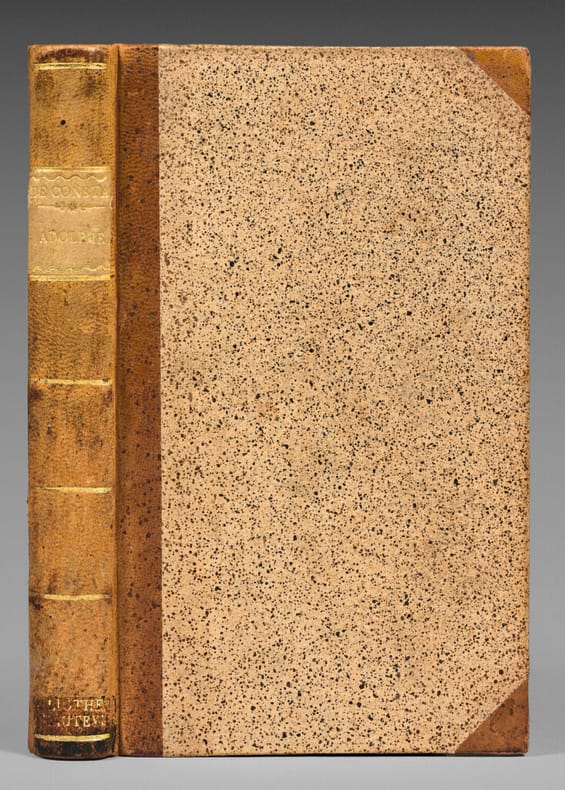
LCS-18575En Français dans le texte, n°225. Paris, Treuttel et Würtz, Londres, H. Colburn, 1816. In-12 de vii, (1) p.bl., 228 pp. Quelques piqûres. Relié en demi-basane havane à coins, dos lisse orné de filets dorés formant faux-nerfs, mention Bibliothèque d’Hauteville frappé en lettres d’or en pied du dos. Reliure de l’époque. 163 x 99 mm.
LCS-1864090
LCS-18640889
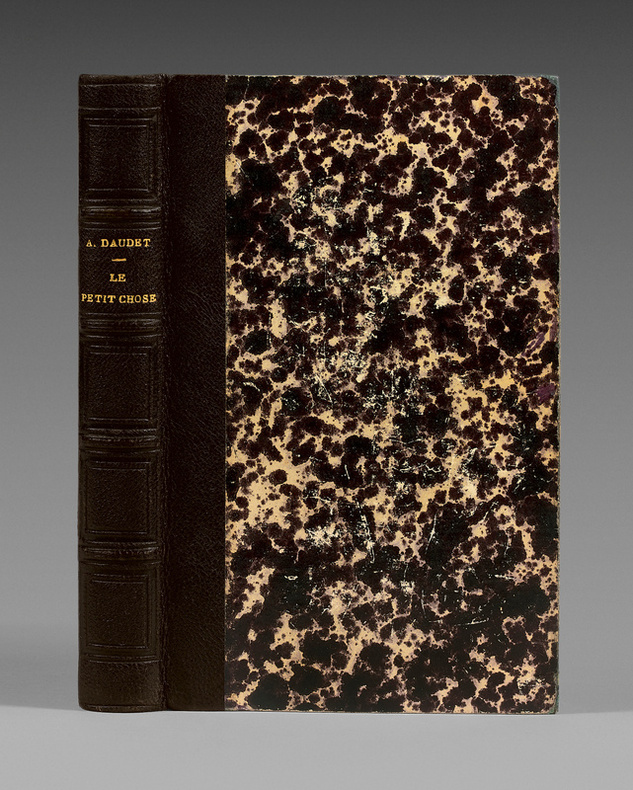
LCS-18140Edition originale, « rare et très recherchée » du Petit chose. (Clouzot, 80). Paris, J. Hetzel, 1868. In-12 de (3) ff., 370 pp. Pte. tache en marge des pp. 151-155, qq. rares rousseurs. Demi-chagrin noir, plats de papier marbré, dos à nerfs orné de filets à froid dans les caissons, tranches mouchetées. Reliure de l’époque. 175 x 110 mm.
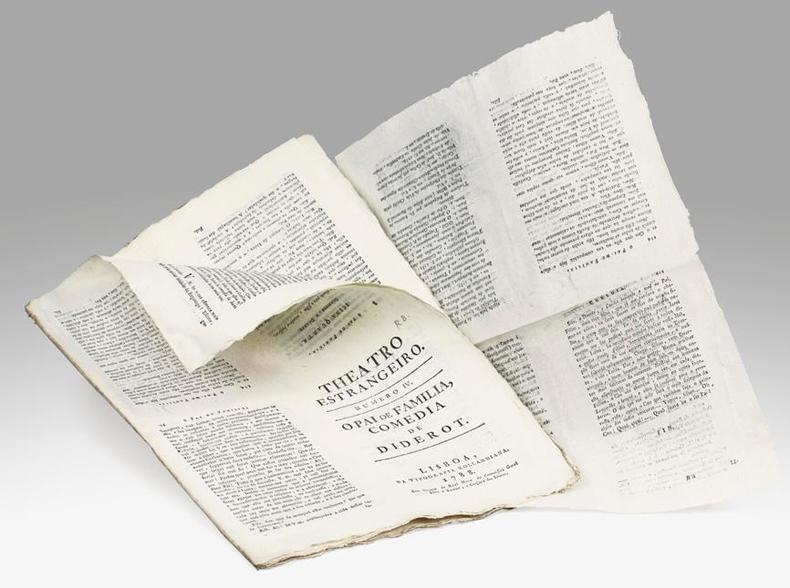
1788YTB-930 pp., à l’état de parution, en feuilles, non rognées, non coupées, non reliées, condition d’une grande rareté. 313 x 215 mm. TRES RARE EDITION ORIGINALE PORTUGAISE D’UN PERE DE FAMILLE, CETTE PIECE INSPIREE PAR L’AMOUR DE DIDEROT POUR SA FUTURE FEMME, MADEMOISELLE CHAMPION. « Au XVIIIème siècle, la puissance que la France exerça sur une grande partie de l’Europe passa par ses libres opinions et ses théories d’amélioration sociale. Partout à cette époque se retrouvent les idées françaises. Elles sont dans l’académie de Berlin, dans la cour de Catherine, dans les conseils de Joseph II. Elles influent sur les gouvernements, elles transforment l’esprit des sociétés. Au Portugal, le marquis de Pombal fait traduire en portugais Voltaire et Diderot ; mais, entouré d’ennemis, établit les plus rigoureuses entraves sur la presse » (M. Villemain). PRECIEUX EXEMPLAIRE CONSERVE DANS SON ETAT DE PARUTION, EN FEUILLES, CONDITION D’UNE GRANDE RARETE. Aucun exemplaire n’est passé sur le marché public international depuis le début des relevés, il y a plus de 35 ans. Aucun exemplaire n’est répertorié dans les Institutions publiques nationales ; seulement 4 dans les Institutions publiques Internationales : Bibliotheca Nacional de Madrid, Espagne, Leeds University, UK, University of North Carolina at Chapel Hill et Harvard University, USA.
157212008A Lyon, Pierre Roussin pour] Antoine Gryphiu, 1572. In-4 réglé de 12 feuillets, maroquin rouge, dos à nerfs, dentelle intérieure, tranches dorées (Thibaron).
4to. 88 pages. Corrected proofs for an article by Dumas, couched as an open letter addressed to the deputy Gustave Rivet, who had proposed legislation requiring investigations into the paternity of illegitimate children. An interesting document about the history of French social legislation at the end of the 19th century, containing substantive corrections and the author's signature; several pages are entirely handwritten. - With his bill, Rivet had pushed for inquiries into paternity and for parents' shared legal responsibility for children born out of wedlock, as the fact that the biological father faced no legal consequences whatever resulted in shockingly high numbers of infant deaths and abandonments. In his article, Dumas reviews the relevant arguments for and against such legislation produced by various figures of society such as the former President of the Court of Appeals, M. Larombière, and derides the suggestion that novelists are to blame for having in their stories aroused an excess of pity for the fates of "seduced women". Dumas goes on to describe the case of a sixteen-year-old housemaid who gave birth to two illegitimate children and sued the father, her relative and guardian, for support. Not only did the court deny any obligation on the father's part to provide for his illegitimate children, but the father was even able to file a counter-suit against the mother for the inconveniences to which the trial had exposed him. - Dumas's article ends with a defence of the women faced with such an ordeal, and of all writers and playwrights who choose to write about these facts and indict this social injustice. He gives examples of various constellations and aspects of relevant cases and discusses serious social wrongs such as incest, endorsing an improvement of the lot of innocent children and their mothers through a law for the investigation of paternity. - Addenda: Two printed speeches at the Académie française by Raymond Poincaré (1909) and Henri-Robert (1924) and three printed poems by Élie Fourès, Fabre des Essarts and Maurice Boniface on the occasion of the inauguration of a monument for Dumas on the Place Malesherbes on 4 November 1883.
4to. 3 pp. on bifolium. 15 stanzas with 6 lines each. Together with an albumen silver print (85 x 54 mm, matted). Three pages on a bifolium, handwritten by Dumas entirely in French. "Alex. Dumas" is printed in an unknown hand at bottom right corner of top page. The albumen print pictures Dumas sitting down with his hands resting on cane. - Paper has been reinforced with archival material on verso at folds. Toning throughout, a bit darker at edges. "19B" has been written in pencil on the lower left corner of top page. Image has some speckling and slight buckling, but remains very attractive.
90:56 mm. An excellent signed and inscribed cabinet photograph. The A. Bernoud image, depicting the French poet in a half length formal pose. Signed and inscribed "A ma bonne amie […] Al. Dumas" in bold black ink, in French, to the lower clear area of the photograph. Matted in off-white to an overall size of 148: 110 mm.
97:61 mm. A very fine signed and inscribed sepia cabinet photograph, the Alophe image from Paris depicting the author standing in a full length formal pose. Signed and inscribed to the verso ("To my good friend Lefrançois, Al. Dumas"), in French. - Extremely small age wear, otherwise in fine condition.
Folio (ca. 280 x 432 mm). 2¼ pp. on bifolium. A scene from the play "Lorenzino", which premiered at the Théâtre-Français on 24 February 1842. The subject is the same as in Alfred de Musset and George Sand's 1834 drama "Lorenzaccio": the assassination of the tyrant of Florence, Duke Alexander, by his cousin and favourite Lorenzo de' Medici. This double-page draft gives a variant of Act II, Scene IV, between Michele and Lorenzino. The first page is in prose: Michele is going to perform a scene from the tragedy of Brutus composed by Lorenzino, playing the role of Brutus, and asks Lorenzino to give him the reply, in the role of Caesar. The continuation is in verse, between Brutus and Caesar, until Brutus's reply: "Non Cesar est un Dieu" ("No Caesar is a God"). - Some erasures and corrections; note on the content in pencil near upper margin. Small puncture in the centre; margins slightly creased. Folded.
Zusammen ca. 36 SS. auf 12 Doppelbll. und 1 Einzelbl. 8vo. Ein Brief mit eh. Adresse verso (Faltbrief). An Rosa von Gerold über Pläne und die Umsetzung von Buchprojekten nach Anselm Feuerbachs Tod, über dessen Vermächtnis, Henriettes Augenleiden und gesellschaftliche Vorkommnisse, Komplimente zu einer Publikation Rosas und Beileidsbekundungen zum Tode Moritz v. Gerolds und vermutlich Rosas Bruders Bruno (1834-86): "Es sollen einstweilen 50 Exemplare des Vermächtnisses zur Vertheilung an Akademieschulen nach München und 6 Exemplare an Kunstgewerbsschüler nach Nürnberg gesandt werden [...] Nicht wahr, liebe Frau von Gerold, Sie haben die Güte diese Angelegenheit in die Hand zu nehmen. Fragen Sie nur das Bildchen, das bittet auch [...]" (6. XII. 1884). - "Seit mehreren Monaten weiß ich, daß ich auf beiden Augen den grauen Staar [!] habe. Das linke ist schon ganz verdunkelt, das rechte dient mir noch, aber immer nur für kurze Zeit [...] Denken Sie, daß die Amazonen Schlacht noch unbezahlt in einen betrügerischen 2 Millionen banquerott gefallen ist? Herr Gurlitt hat sich in seinem Kunstmäcen [sic] schlimm getäuscht. Es hat ihm und mir Mühe und Opfer genug gekostet, bis das edle Bild aus dem Schlamm gerettet und nun wieder mein geworden ist. Ich denke nicht mehr an Verkauf -, sondern will es testamentlich vermachen, da fast alle Bilder Anselms schließlich in die Nationalgalerie in Berlin einmünden so will ich auch das große Bild dafür stiften und bitte Sie auch für das kleine Portrait dieselbe Bestimmung zu treffen. Die ganze Galerie von Gräf u. Schach geht ja auch dieses Weges [...] Die Operationen werden in der Würzburger Klinik gemacht, zuerst das linke Auge [...]" (19. VIII. 1885). - "Ich hatte in Berlin Geschäfte, die Niemand für mich besorgen konnte und dann wollte ich auch nochmals so gerne Anselms Bilder sehen, ehe meine Augen den Dienst versagen [...] Ich habe nicht die kleinste Publication gemacht zu Anselms Andenken, seit der zweiten Ausgabe des Vermächtnisses [...]" (10. III. [o. J.]). - "Ihre Anschauung u. Darstellung, sowohl die der großen Naturbilder als der reizenden Staffagen sind so wahrhaftig und lebensvoll, daß man mit Ihnen geht, wohin Sie den Leser führen und schließlich meint, man hätte die Reise selbst mitgemacht. Es sind großartige Schilderungen des Meeres bei Tag und Nacht und ganz besonders hat mich Ihre In-Scene Setzung der Electra ergriffen. Dazu kommen nun diese wunderbaren kleinen Zeichnungen für deren Anmuth und Freiheit man kaum Worte finden kann. Es sind einzelne darunter, die ich kaum ohne Thränen ansehen kann, so die Säulenaden des Parthenon und Erechtheion und verschiedene Inselansichten [...]" (14. XII. 1884). - Ein Brief auf Briefpapier mit Trauerrand.
4to. 1 S. Montiert in königsblauer Maroquinmappe mit Deckel- und Innenkantenvergoldung, mehrfarbigen Deckelintarsien und blauem Moiréseidenvorsatz, in königsblauem Maroquingschuber mit goldgeprägtem Rückentitel. Das Manuskript eines der populärsten Gedichte des bekannten "Children's Poet", datiert und (wohl später) in blauer Tinte signiert. - Angerändert. - Beiliegend bzw. beigebunden: ein radiertes Porträt des Dichters von W. H. W. Bicknell auf aufgelegtem China, ein Druck des Gedichts (3/4 Seite einer Oktav-Ausgabe, angerändert), eine 7 Quartseiten umfassende handschriftliche Vertonung des Gedichts von Colin Kemper und eine handschriftliche Notiz: "This is the original manuscript of 'The Sugar Plum Tree' by my father Eugene Field, and comes direct from the personal collection of my father. This manuscript was one of the allotment of my portion of the manuscripts of the estate and given to me at the time the final settlement was made. Eugene Field II, Oct 20 - 1925." - Besonders schön gebunden. Schuber gering berieben.
8vo. 2 pp. In French, an effusive and impatient letter to a fellow author and collaborator, offering advice on keeping the earnings of his poems, that he cannot access a notebook because he thinks he locked it up in an attic trunk together with the key, and that he is dissatisfied with the preface he wrote. In part, in translation: "Another question. What title? 'Posthumous Poetry' would only be good for a sub-title. I've been ransacking my brains and haven't come up with anything. - I've re-read my preface, with which I am not very satisfied. It seems cold, awkward, and poorly written. In short, it displeases me. I am going to rework it only insofar as correcting it goes. As for doing another one, I haven't got the time, and anyway, I can't see how I could do it better, even though I think it rather shabby." - Light chipping at edges and to centerfold, some small tape repairs to verso.
8vo. 1 page on bifolium. To the writer and critic Jules Lemaître (1853-1914). Flattered by an article on his "novels of contemporary mores" published in the "Revue politique et littéraire", Flaubert impatiently awaits Lemaître's next work, and concludes with an invitation to his home in Croisset, where he plans to remain all winter, working on "Bouvard et Pécuchet" (an unfinished novel published posthumously in 1881): "Comment vous remercier de l'article? et de la lettre que l'accompagne! Vous me confondez c'est trop! & d'abord, je suis loin d'avoir la science que vous me prétez! [...] J'attends la fin de votre oeuvre (car c'en est une) avec [...] impatience. Alors, nous causerons un peu longuement mais ce qui serait plus commode ce serait de causer à Croisset [...] Venez donc, quand il vous plaira. Je ne bougerai d'ici, de tout l'hiver, ayant à cœur de finir le lourd bouquin que j'élabore [...]". - Small marginal flaws; slightly fingerstained.
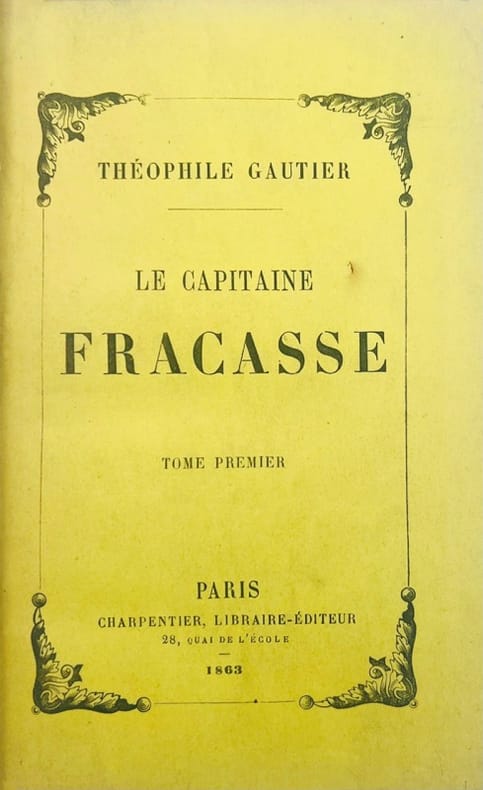
186344611Paris, Charpentier, 1863. 2 tomes en 2 volumes in-12 de (4)-IV-373-(3) pp. ; (4)-382-(2) pp., demi-maroquin brun Bradel à coins, dos lisse titré et daté en pied, couvertures et dos conservés, entièrement non rogné (Yseux sc de Thierry-Simier).
Various formats. Altogether 16 ½ pp. on 13 ff. Important French correspondence with the publisher and friend Édouard Ducoté revolving around the literary journal L'Ermitage (1896-1906). In what is probably the earliest letter of the collection, Gide announces that Henri Albert would be willing to publish a passage of his latest Nietzsche translation in L'Ermitage. Gide was eager to see the text in the February issue but Charles Chanvin, another editor, had put Albert off: "It would be good if it appeared in February lest it lose its freshness [...] - But Chanvin told him that L'Ermitage probably would not be able to print it before March. Please speak up to inform him [...]". Albert's translation of an unpublished preface to "Human, All Too Human" ultimately appeared in June 1902. - Gide published two articles in the February issue of 1902 but was highly critical of the copy-editing or the lack thereof: "Effectively, coming back here, I found L'Ermitage. It is really irritating that nobody takes care of revising the proofs one last time. My article is full of very deplorable errors: the apostrophes fall randomly and in such a way that one often understands nothing anymore [...] Why is the title not centered? All of this could be ignored in a polemical magazine but L'Ermitage aspires to be something else [...]" (Cuverville, "Mercredi"). Gide even asks whether the composition of the other article is still intact, as he would like for it to be corrected and reprinted. Concerning this article "Les limites de l'art", Gide had hoped that it would "pass unnoticed" so as "not to amuse Bouhélier too much". This alludes to Gide's turbulent relationship to Saint-Georges de Bouhélier and his literary movement "Le naturisme", an antagonistic reaction to symbolism. - The proofreading problem appears to have persisted, for Gide complains about more errors in the March issue. The letter concerning this issue is highly interesting, as Gide talks about a creative blockage and exhaustion: "We're now twelve days in the countryside. The weather is splendid and spring has begun... Much less so in my head. My mind is frozen as if it were winter; not a sentence, not a word stirs. And I feel as if I had written 'The New Christ'. For twenty days now, the proofs of my book are awaiting me; even to correct them is beyond my abilities; I only have some [energy] for sowing my flowers and for putting hay around my roses. In the meantime, I've read L'Ermitage. The issue is too good not to suffer from being so miserably corrected [...]". The book in question is very likely Gide's famous novel "The Immoralist". - In the only dated letter in this collection, from 15 March 1902, Gide announces some "very mediocre verses" by "a friend of a friend" which he was asked to forward to L'Ermitage. Despite his severe words, Gide casts doubt on his ability to judge the work and leaves the final decision to Ducoté: "I responded directly to my friend that I did not consider them good and that I could not recommend them to you [...] But (I continued to write) that I could, after all, be mistaken and that I would leave to you the office of the final court of appeal [...]". The poet in question was Maurice Cremnitz, a close friend of Guillaume Apollinaire. - Gide spent parts of the summer of 1902 "vagabonding between Biarritz and Cauterets" and planned to visit Ducoté in La Bouille (Normandy): "Yes, I am more than hoping for September; the other day a chiromancer revealed a fatal line to me, so terrible that I do not dare promise anything anymore, but please be assured that I still have the desire and that I am willing to come see you in La Bouille". Both letters in the collection mentioning La Bouille are primarily concerned with Gide's interest in the young Jacques Copeau. After congratulating Ducoté for accepting a text by Francis de Miomandre, Gide praises Copeau's manuscript but expresses some reservations with respect to its publication: "Concerning J. Copeau, I admit that his manuscript is far from displeasing to me; it is well thought, well written and emotionally intelligent; if it were not for my book, I would immediately tell you: publish. But I would have wished L'Ermitage already to have made J. Copeau known for other things; otherwise I fear that L'Ermitage will appear to publish primarily for the subject matter. Furthermore, I would like this prose to be published a little later. November, for example, at the moment when the new edition of 'The Immoralist' appears. Thus, should L'Ermitage lack a little bit of content and you, on the other hand, keep another manuscript of Copeau's in your drawer that, according to you, is not lacking in taste, could you not publish something else by him first? [...]". In the second letter, Gide renews his praise but again urges Ducoté to publish additional texts, as he finds the manuscript "a little bit meager for someone who isn't a Mr. Jammes". In 1902 only Copeau's "Notes d'Enfance" were published in the November issue of L'Ermitage. Gide and Copeau were among the founders of La Nouvelle Revue Française in 1909. - A letter concerning Gide's play "Bethsabé" is likely to be the latest item in the collection. By coincidence, both Ducoté and Gide had written plays based on the biblical story of Bathsheba. In the letter, Gide reassures Ducoté that their works can coexist: "The coincidence is curious indeed but I do not believe that there is much to worry about. What actually surprises me is the difference of our pieces since they are based on the same figures: the theme, the form, the characters, everything differs. I think this stems from the almost unlimited latitude that the Biblical description offers the imagination. And this explains how, for two so dissimilar dramas, the Bible could have tempted two so dissimilar spirits as ours but both solicitous about works of art [...]". L'Ermitage published "Bethsabé" in the January and February issues of 1903. The fate of Ducoté's play "Uriah's wife" is unknown. - Well preserved. With collector's notes in pencil. A third of the second sheet of the letter concerning Copeau's new manuscript has been cut out, but there is no apparent loss of text.
8vo and 12mo. 5½ pp. on 20 ff. Together with 5 portraits. The earliest and most important piece of the collection is a letter to Victor Hugo that can be dated to the first half of 1836. After inquiring whether Hugo is still in Paris, Girardin asks him to join a dinner with several supporters ahead of the launch of "La Presse" on 15 June 1836. Girardin stresses the importance of the occasion and of Hugo's role: "Il faut que votre voix m'aide a mettre sur pied toute notre phalange". The supporters mentioned are the poet and author Alphonse de Lamartine (1790-1869), the politician and journalist Jean-Pierre Pagès (1784-1866), and the journalist Adolphe Granier de Cassagnac (1806-80). The first publication of "La Presse" can be described as a pre-launch prospectus, laying down Girardin's journalistic principles and expectations, the scope of "La Presse" and its price. The first article was entitled "Esprit de la rédaction" and opened with a quote by Victor Hugo, connecting the values of the French Revolution with the ongoing struggle for civilizing progress, that was written for the occasion. Quotes by Lamartine and commentaries on the "Present and the future of France" by Hugo and Lamartine were also included. The official launch of "La Presse" as a daily newspaper followed on 1 July 1836 and was an immediate success due to its low price and the collaboration with important authors such as Honoré de Balzac, Alexandre Dumas, Victor Hugo, and Eugène Scribe. - The second dated letter of the collection highlights Émile de Girardin's bitter conflict with the competing newspaper "Le National". This conflict had culminated in a duel between Girardin and Armand Carrel, the co-founder and editor of "Le National", on 21 July 1836, which left both men severely injured. Carrel succumbed to his injuries three days later, and Girardin decided not to agree to any more duels. - Nevertheless, the feud between the two newspapers continued. In a letter to the editor-in-chief of "Le National", dated 23 October 1843, Girardin insists on the publication of his reply to a letter by a magistrate that has been published by "Le National" in connection with a local affair in Bourganeuf (Creuse departement) that personally involved Girardin. The letter had originally been published in 1839 but was republished in reaction to an article in "La Presse" from 11 May 1843, upon the election of the new mayor of Bourganeuf, that alludes to the affair and hostilities towards Girardin. It is this certainly minor affair that incited Girardin's acrimonious letter, which very formally addressed the editor-in-chief Jules Bastide as "Monsieur le Gérant du National". - The collection also includes two undated letters. One to the publisher Michel Levy concerning letters of the painter Charles Latoison-Duval, which Girardin recommends for publication: "Cette lettre vous sera remis par M. Latoison-Duval qui a écrit des lettres dont j'ai lu la première. Elle m'a paru saillante. [...]". - The second undated letter was written to apologize to a an unnamed recipient for not having been able to meet her. In another letter of apology, dated 14 May 1861, Girardin cancels a promenade with the recipient because of an urgent appointment at the prefecture. - The final letter in the collection is a beautiful testimony to Girardin's enthusiasm for the theatre. In 1864 Girardin had collaborated with Alexandre Dumas fils on his only play, "Le supplice d'une femme". As the Comédie Française picked up the play, Girardin contacted the actor Henri Lafontaine, who was considered for the male lead, requesting a meeting: "Monsieur, vous avez été informé, je le crois, que je vous destinais l'un des deux rôles du drame que la Comédie Française a reçu et qui est intitulé: Le supplice d'une femme. Ce rôle vif sera distribué, mais avant qu'il le soit, si cela vous plaisait, nous en pourrions causer" (Paris, 31 Dec. 1864). The play premiered on 29 April 1865 with Lafontaine and Zélia Ponsin, following which she was elected a Sociétaire of the Comédie Française. - Together with 3 portrait photographs, 1 Woodburytype, and 1 lithograph of Émile de Girardin. The Woodburytype was produced for the "Galerie Contemporaine" by the Parisian studio G. Fontaine and can be dated to ca. 1876. - Well preserved. The letter to Victor Hugo with traces of folds and autograph address; the letter to Lévy somewhat smudged. Collector's notes in pencil (mostly numbering) and traces of former mounting on all pieces.