152 151 résultats
Edizione originale, prima tiratura dell’ultimo fascicolo. Ottimo esemplare, freschissimo, a pieni margini con barbe. L’opera uscì a Milano, a spese dell’autore, in 500 copie tutte tirate su carta forte. Esemplare nella variante A, più rara della B e riconoscibile a p. 225 per l’ultimo quartino numerato “15” e per la lezione “e / sulle Sirene incantate da Ulisse perch'ei gettò nel mare / i propri genitali”, cui segue il testo latino e sette righe in italiano. Sulle copie invendute della tiratura l’autore fece apportare successive modifiche sostituendo l’ultimo quartino. Cfr. Acchiappati, 34: «Considerata questa realtà [lo scarsissimo smercio dell’edizione], è legittimo supporre che nel momento in cui Foscolo decise di apportare la nota variante, nei magazzini del Genio Tipografico giacessero almeno 400 delle 500 copie stampate: questa la ragione la maggior rarità della variante A». L’opera fu impressa su bella carta forte,a spese del Foscolo, ma risultò un fallimento: solo 30 copie furono vendute. Cfr. Ottolini, 104; Calzavara p. 31; Parenti, Cat. Foscoliana, p. 31.
pp. 14 in quartini sciolti su carta Rosaspina con 7 incisioni numer. e firm. di G. Beato, R. Bruscaglia, F. Luzi, P. Spallacci, R. Stelluti, W. Valentini e L. Veronesi. Ediz. di 135 esempl. complessivi, il ns. fa parte dei 35 in cifre romane. Quest'opera, creata per celebrare l'artista marchigiano, è presentata da un testo critico di L. Dania e contiene 5 poesie del Licini e 7 bei lavori incisori di grande formato. Compaiono lievissime fioriture nelle pagine di teste, mentre le tavole delle opere sono perfette. Ottimo stato di conservazione. Raro vol. mancante al Jentsch.
Formato cm. 50x35. Pagine XXXVII, 248. Rilegatura in tela rigida con titolo in oro al dorso e al piatto. La custodia è mancante. Stato di conservazione ottimo. Parafrasi ad opera di Pierre Pascal, in versi alessandrini in lingua francese, dell'Apocalisse di Giovanni, con sedici xilografie dell’Apocalypsis cum figuris di Albrecht Dürer riprese dai legni originali usati per le stampe del 1498 e 1511. Splendida ed introvabile opera, in edizione numerata di 560 esemplari.
Introduzione di Jacqueline Risset. Una poesia di Andrea Zanzotto in italiano, francese (tradotta da Jacqueline Risset), inglese (tradotta da Patrick Creagh), tedesco (tradotta da Richard Schwaderer). 12 opere grafiche originali a colori di Giò Pomodoro, numerate e firmate a matita dall'Artista (cm 48x35). Opera ideata da Guido Ballo Stampe create da Pomodoro nel 1976, tirate a mano coi torchi della Sigma Serigrafia su carta Miliani di Fabriano appositamente creata col marchio dell'Editore. Testi composti coi tipi delle Arti Grafiche Nobili di Pesaro. Legatura di Bpm, Milano. Es. 9/90. Folio (cm 50x38). pp. 24+stampe. . Ottimo (Fine). . Prima ed. di 90+X es. numerati. .
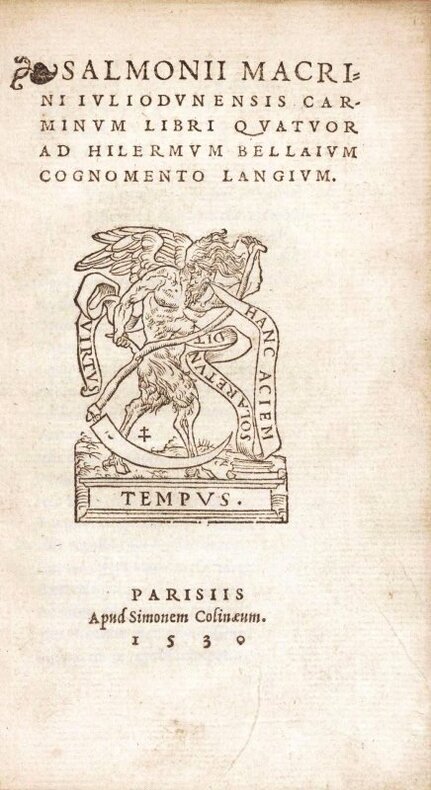
357Paris ; id. : Simon de Colines ; id., 1530 ; 1528. LES RETENTISSANTS DEUX PREMIERS RECUEILS D'ODES PROFANES DU PLUS GRAND POÈTE NÉO-LATIN DU XVIE SIÈCLE, « L'HORACE FRANÇAIS », PRÉCURSEUR DE LA PLÉIADE
Con 2 litografie originali a colori, numerate e firmate, di Rufino Tamayo (cm 28x38). Riproduzione del manoscritto firmato da Asturias. Note bio-bibliografiche e foto di Asturias di Henri Cartier-Bresson. Poems by Miguel Angel Asturias, accompanied by two numbered and signed lithographs by Rufino Tamayo (cm 28x38). Reproduction of the manuscript with an original signature by the poet. Photos in black and white by Henri Cartier-Bresson Edizione composta in carattere Garamond da Ruggero Olivieri, Milano e stampata dalla Tipografia Stefanoni, Lecco su carta a mano della Filicarta di Brugherio. Incisioni tirate da Alberto Caprini di Roma. Legatura di Giovanni De Stefanis di Milano. Folio. pp. 64 nn. . Ottimo (Fine). . Edizione originale di 129 + XIV es. numerati. .
Prima edizione. Ottimo esemplare. Unico numero pubblicato (n.1 ottobre) della rivista diretta da Daniela Palazzoli e Gianni Emilio Simonetti, in redazione: Sergio Albergoni, Till Neuburg, Gianni Sassi. Testi e composizioni di poesia visiva di vari artisti tra gli altri di: Alexandro Jodorowsky, Gianfranco Baruchello, Andrè Balthazar, Lordes Castro, Ben Vautier. Caratterizzata da un’innovativa impaginazione a doppia fisarmonica si propone come sede d’incontro della cultura contemporanea nazionale e internazionale, di sostegno dell’attività sperimentale e di ricerca culturale, di programma della nuova avanguardia “. Raro. Maffei. Riviste d’arte d’avanguardia, p. 84
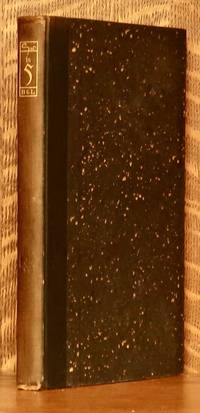
192654530New York: Boni and Liveright 1926. limited edition. Hardcover. Very good. 6 x 9 in. Black cloth with black paper speckled with gold. Limited edition of 77 copies on special paper 70 for sale signed by Cummings on the limitation pg in black ink limitation number is 48 in blue ink. Condition is VERY GOOD ; covers and spine very clean spine is mildly sunned with gilt spine titles a touch dull but nicely visible. Spine ends bumped with minimal wear to spine ends and corners. BInding tight. Small pencil note on upper front pastedown text is extremely clean with no markings. Pg 14 has some wrinkling in a spot appears due to contact with water but is not stained. Green Gotham Book Mart NYC paper label on rear pastedown. Very scarce. Poetry. RGR. Case. Boni and Liveright hardcover
34839NEW DIRECTIONS 1966. LIMITED EDITION OF 190 FOR SALE THS BEING NUMBER 46. SIGNED BY POUND. PRINTED IN DANTE TYPE ON THE HAND-PRESS OF THE OFFICINA BODONI VERONA. PESCIA PAPER MUSTARD CLOTH CREAM SPINE ACETATE COVER CARD SLIP CASE. A FINE COPY. VERY SCARCE. NEW DIRECTIONS, 1966 hardcover
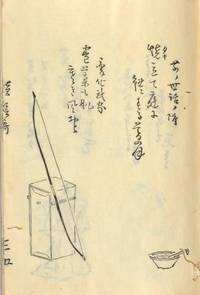
1811912271811. POETRY GIBAKU 宜麦1751-1828 compiler. ZOKU E KASEN ç¶šçµµæŒä»™. 2 vols. Bunka 8 1811. 22.7 x 16.0 cm . There are 83 single page images with poems printed skillfully in sumi-e. Interestingly the block cutter Asakura Konpachi æœå€‰ä»Šå…« is credited but no one else. The date comes from the preface. There is no colophon. Probably privately printed. In lovely shape and very good printing. An excellent example of the genre. unknown
1854007688Boston: C. S. Francis & Co. 1854. A SCARCE early collection of her poems beautifully bound in contempoary chocolate morocco gilt titles 5 raised bands stamped and tooled rules and decorations all edges dyed red dark brown endpapers. xvii 312. xvi 300. viii 234. Contains all her poems to date the third volume contains "Prometheus Bound and other Poems including Sonnets from the Portugese Casa Guidi Windows etc." Volume I contains her 1844 Dedication to her Father and Introduction by H. T.Tuckerman and the 1850 author's advertisement. Near Fine a few small rubs to morocco white end pages toned period armorial bookplates of Ward front paste downs the owner's name "Julia F. Ward 1855" front end pages is nearly invisible due to dark brown color of paper. . New American Edition. Morocco. Near Fine/No Jacket As Issued. 12mo - over 6¾" - 7¾" tall. C. S. Francis & Co. Hardcover books
20189868Dublin: The Salvage Press 2018. Limited Edition. Hardcover. Fine in Fine Archival Box. Printed in an edition of 80 books. Copies numbered 1 – 50 have been bound in marbled paper over boards housed in a transparent perspex slipcase. Four similar copies marked i – iv are for collaborators. Copies lettered A – Z have been half-bound in salmon leather and marbled paper and are presented accompanied by a folded down printing of the complete woodcut on 120 gsm Zerkall in a cloth covered solander box. Presented in a cloth covered solander box accompanied by a folded print copies A — Z make up the deluxe edition. <br/><br/>"In this series of poems Doireann Nà GhrÃofa responds to art by Alice Maher. Nine Silences is a consideration of the embodiment of female silence mermaids and the monstrousness of the feminine deepening into an exploration of the otherness of female desire and domesticity." artist statement <br />Designed typeset and letterpress printed by Jamie Murphy with great assistance from Sarah OÂ’Neill Lorcan Rush and Lauren Shannon OÂ’Brien at Distillers Press NCAD Dublin. The type is hand-set in 14 and 24 point Méridien designed by Adrian Frutiger in 1954 this foundry type released by Deberny & Peignot Paris 1957. Alice MaherÂ’s fragmented woodcut has been printed from scorched and brushed ash. The 150gsm Hodgkinson handmade paper was produced for the Stanbrook Abbey Press in 1974 and kept dry until now by John Purcell in London. The marbled paper design has been prepared by Jemma Lewis using Irish Carrageen Moss. The bindings were executed by Tom Pat Tommy and Patricia Duffy at their workshop in DublinÂ’s Five Lamps area. The Salvage Press hardcover books
9868Dublin: The Salvage Press 2018. Limited Edition. Hardcover. Fine in Fine Archival Box. Limited Edition. Hardcover. "In this series of poems Doireann Ní Ghríofa responds to art by Alice Maher. Nine Silences is a consideration of the embodiment of female silence mermaids and the monstrousness of the feminine deepening into an exploration of the otherness of female desire and domesticity." artist statement<br /> Designed typeset and letterpress printed by Jamie Murphy with great assistance from Sarah O'Neill Lorcan Rush and Lauren Shannon O'Brien at Distillers Press NCAD Dublin. The type is hand-set in 14 and 24 point Méridien designed by Adrian Frutiger in 1954 this foundry type released by Deberny & Peignot Paris 1957. Alice Maher's fragmented woodcut has been printed from scorched and brushed ash. The 150gsm Hodgkinson handmade paper was produced for the Stanbrook Abbey Press in 1974 and kept dry until now by John Purcell in London. The marbled paper design has been prepared by Jemma Lewis using Irish Carrageen Moss. The bindings were executed by Tom Pat Tommy and Patricia Duffy at their workshop in Dublin's Five Lamps area. Printed in an edition of 80 books. Copies numbered 1 - 50 have been bound in marbled paper over boards housed in a transparent perspex slipcase. Four similar copies marked i - iv are for collaborators. Copies lettered A - Z have been half-bound in salmon leather and marbled paper and are presented accompanied by a folded down printing of the complete woodcut on 120 gsm Zerkall in a cloth covered solander box. Presented in a cloth covered solander box accompanied by a folded print copies A - Z make up the deluxe edition. The Salvage Press hardcover
1872007732London: Basil Montagu / Pickering 1872. Two volumes RARE First Edition 1872. Bust frontispiece in Vol. I and portrait frontispiece Vol. II. Half titles ccxcv 322 pp. errata 496 pp. Bound in dark brown full crushed morocco wide ornate gilt decorations on covers richly gilt spine in six panels red leather labels wide ornate gilt inner dentelles all edges gilt marbled end papers signed on inner dentelles "Bound by F. Bedford". An exceptional set Near Fine light shelfwear bottom edges morocco rear cover Vol. I lightly rubbed. The first collected edition of this noted English diplomat and man of letters. Last time at auction for the 1872 first edition was 1919 according to auction search results. . First Edition. Morocco. Near Fine/No Jacket As Issued. Royal Octavo . Basil Montagu / Pickering Hardcover books
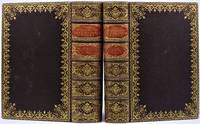
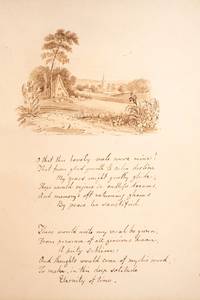
06392England: 1830. A Handsome Early Nineteenth-Century Poetry Anthology Manuscript<br /> Elegantly Written and Illustrated with Charming Wash Drawings<br /> <br /> MANUSCRIPT POETRY ANTHOLOGY. Manuscript anthology of English poetry. England early-to mid-19th century.<br /> <br /> Square octavo 7 3/4 x 6 3/8 inches; 197 x 162 mm. 115 manuscript pages followed by four manuscript pages of index and one blank leaf. Written throughout in a clear and elegant brown-ink cursive hand. Several pages embellished with attractive pen-and-wash drawings including pastoral landscapes and small ornamental vignettes one depicting a rustic cottage beside a stream with church spire beyond another a pair of doves rendered in delicate gray wash.<br /> <br /> Handsomely bound in full contemporary maroon straight-grain morocco covers decoratively paneled in gilt and blind with elaborate floral corner borders spine in compartments richly ruled and ornamented in gilt board edges and turn-ins gilt red endpapers all edges gilt.<br /> <br /> A particularly appealing early nineteenth-century manuscript poetry anthology carefully compiled by an accomplished hand and attractively embellished with original drawings. The manuscript contains copies of poems and extracts by many of the most celebrated poets of the English canon including Robert Burns Lord Byron William Cowper Oliver Goldsmith John Milton Alexander Pope Sir Walter Scott William Shakespeare James Thomson and William Wordsworth together with additional popular verses circulating in print culture during the late eighteenth and early nineteenth centuries.<br /> <br /> The selection reflects the literary taste of the Romantic age drawing heavily on poets whose works were widely read and admired in the decades around 1800. Many poems were clearly copied from contemporary printed editions and literary magazines a common practice among educated readers of the period who assembled their own "commonplace books" or poetic albums as records of personal reading and reflection. Such manuscripts served both as repositories of admired literature and as exercises in penmanship literary appreciation and polite accomplishment.<br /> The present manuscript belongs firmly within this tradition. The writing is careful and highly legible suggesting a compiler who took pride in both calligraphy and arrangement. Several poems are introduced with small decorative drawings charmingly executed in sepia wash and placed above the text in the manner of vignette illustrations. These include a pastoral landscape scene accompanying lines beginning "O that this lovely vale were mine!" and a small study of doves above a transcription of lines attributed to Wordsworth beginning "Stay passenger and though within / Nor gold nor glittering gems are seen.". The drawings though modest in scale give the volume the atmosphere of a personal gift book or keepsake rather than a purely utilitarian notebook.<br /> <br /> A neatly prepared manuscript index at the end of the volume lists the poems and authors demonstrating that the compiler intended the book to function as a permanent anthology rather than a casual collection of copied verses. The combination of literary selection calligraphic care and decorative illustration suggests a manuscript created either as a cultivated personal project or as a presentation volume within the domestic literary culture of the early nineteenth century.<br /> <br /> Manuscript poetry anthologies of this kind were especially popular in Britain during the late Georgian and early Victorian periods when poetry formed an essential part of polite education and social life. Before the widespread availability of inexpensive printed anthologies readers frequently created their own compilations of favorite poems. These volumes often preserve fascinating evidence of the reading habits and aesthetic preferences of their compilers and when illustrated-as in the present example-they provide a particularly vivid glimpse into the culture of literary appreciation in the Romantic era.<br /> <br /> A handsome and engaging survival: a finely bound and attractively illustrated nineteenth-century manuscript anthology celebrating the great poets of the English language. England: , 1830 unknown
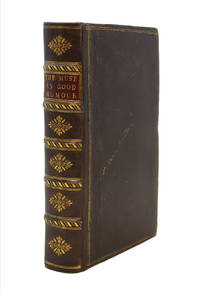
174568491London: Printed for M. Cooper 1745. POETRY. with: The Muse in Good Humour: or A Collection of Enigma's Serious and Comic. With a Complete Key to the Whole. Part II. Vol. II. London: Printed for M. Cooper 1745.<br> <br> First Cooper edition. Volume II only. Two parts in one twelvemo volume comprising Part II 6 1/2 x 3 5/8 inches; 164 x 94 mm. 2 ii 174; viii 148 pp. Bound without General title-page. Parts I and II each with separate title-page and pagination. According to ESTC no copy of Volume I is recorded and it is believed that possibly volume I is the 1744 J. Noble volume. "Vol.1 is yet to be identified; no copies reported 12/2016. Is 'vol.1' in fact 'The Muse in good humour. Or A collection of comic tales &c.' first published in 1744 ESTC T197901 by J. Noble" ESTC. Additionally according to ESTC part II of this volume "comprises the sheets of 'The muse in masquerade'. London: J. Noble 1745 ESTC T83724 with a different title page." Part I with frontispiece and four engraved vignettes. Part II with engraved vignette on title-page. Some of the engravings are signed by illustrator and caricaturist George Bickham Jr. We could find no other copy at auction and only two in U.S. libraries both Volume II only as well.<br> <br> Contemporary calf rebacked to style. Boards ruled in gilt. Spine stamped in gilt. Red morocco spine label lettered in gilt. Some minor scuffing to boards. Minor marginal repair to part II title-page. Engraved vignette on page 79 trimmed close just touching image. Overall a very good copy.<br> <br> "The successful two-volume Muse in Good Humour published by Francis and James Noble and copies by Mary Cooper contains. tales by Gay Prior Congreve and Dryden and one again Pope's Miller of Trompington. Cooper even advertised 'The Imperfect Enjoyment' probably by Etherege but did not print it; many editions indeed were made up. Like The Poetical Tell-Tale this collection of bawdy verse presents its items in random order for fitful reading modeling a use for literature increasingly deplored by the literary establishment." Making the Modern Reader: Cultural Mediation in Early Modern Literary Anthologies. By Barbara M. Benedict.<br> <br> HBS 68491.<br> <br> $2500. Printed for M. Cooper unknown
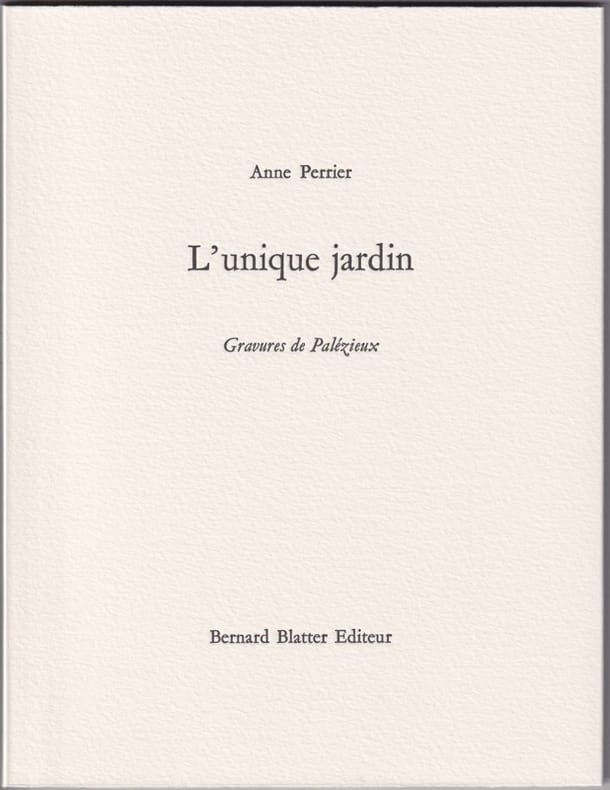
19997262[Montreux], Bernard Blatter éditeur, 1999. In-4 de 27-[4] pages, en feuilles sous chemise imprimée à grands rabats, étui carton de protection.
199921809[Montreux], Bernard Blatter éditeur, 1999. In-4 de 27-[4] pages, en feuilles sous chemise imprimée à grands rabats, étui carton de protection.
1822007996Tavinorum Turin: Ex Typis Viduae Pomba et Filiorum 1822. Book. Very Good Plus. Vellum. First Edition Thus. 8vo - over 7¾" - 9¾" tall. SCARCE edition. Frontispiece portrait Vol.I. viii 486 2 454 lvi 490 1 565 1 508 xii 505 2 445 763. Eight volumes published in Turin Italy 1822-1827. Text and notes in Latin. Armorial bookplates of John Timbrell Milward Pierce. Vols. 2-7 at front or rear paste downs. A beautifully bound set in later 19th c. full vellum the backs with red morocco label in gilt and intricate gilt decorations marbled end papers. Very Good Plus light soiling 1/2"red mark fore edge Vol. I. Pieter Burman 1668 - 31 March 1741 also known as Peter or Pieter Burmann "the Elder" to distinguish him from his nephew was a Dutch classical scholar. His first publication of the works of Ovid was in 1713. A heavy set please be advised added shipping charges will be requested for international orders. Ex Typis Viduae Pomba et Filiorum Hardcover
1926103916Paris, à l'image des trois colombes, impr. Frazier-Soye 1926 In-4 25,5 x 16,5 cm. Reliure plein maroquin vert émeraude, signé Yseux successeur de Thierry-Simier, sous étui carton jaspé bordé maroquin, dos lisse avec incrusation d’une rose polychrome en tête et en pied, plats encadrés d’un filet doré avec incrustation d’une rose polychrome en coins de tête, tête dorée, contreplats et pages de garde marouflés de soie grenat, contreplats encadrés d’un double filet doré écoinçonnés de roses à l’identique, couvertures et dos conservés, 140 pp., illustré de 25 eaux-fortes originales en couleurs de Sylvain Sauvage, dont un frontispice, 4 hors-texte et 20 in-texte. Tirage limité à 271 exemplaires numérotés. Celui-ci, N X / XV des exemplaires. Dos insolé.
Edizione originale. Ottimo esemplare completo del rarissimo astuccio originale illustrato da Chagall, spesso mancante dalle copie che circolano sul mercato: il numero 288 di soli 330, in ottime condizioni (da segnalare una contenuta lacerazione alla testa del dorso, che coinvolge anche parte della cerniera anteriore, senza perdite; restauri perimetrali al cofanetto, perfettamente eseguiti), completo dell’originale pergamino semitrasparente avvolto alla copertina ripiegata ai bordi. Bellissimo libro d’artista splendidamente stampato per le cure del maestro Daniel Jacomet in una tiratura composta da 330 esemplari «sur Vélin B.F.K. de Rives à la curve» oltre a venticinque esemplari di testa siglati A-Y su carta diversa. Il frontespizio e otto tavole a piena pagina sono colorate a mano secondo la tecnica del pochoir. Dopo questa raffinatissima edizione in tiratura limitata, stampata subito a ridosso della Seconda guerra mondiale in preciso accordo tra poeta e pittore — «Je savais, en écrivant ces poèmes, qui’ls seraient illustrés par des dessins de Marc Chagall» dichiara Éluard in esergo — la raccolta sarà ristampata dallo stesso Bordas in tiratura molto più ampia, sempre con i disegni di Chagall (ma senza la qualità e i pochoir dell’originale), nel 1950, in un’edizione commercializzata anche sul mercato anglosassone per i tipi di Gray Falcon a Philadelphia e Trianon a Londra. -- «Chagall […] en mai 1946 se rendait à Paris pour un séjour de trois mois, accompagné par son ami le collectionneur Louis Stern. […] Lorsque Chagall débarqua à Paris, Eluard en était, en fait, absent depuis le 8 avril pour un long voyage en Tchécoslovaquie, en Italie, en Grèce et en Yougoslavie; il n’a pu retourner dans la capitale qu’à la fin juin au plus tôt: le 6 juillet il écrivait de Paris au ministre de l’Education Nationale pour refuser la Légion d’Honneur, s’excusant de son silence sur ses voyages. Les contacts avec le peintre furent donc forcément limités, puisque celui-ci allait regagner les Etats-Unis. Ils furent suffisants en tout cas pour convenir que Chagall illustrerait un recueil dont Eluard lui enverrait les textes: Le Dur Désir de Durer, qui sortira des presses le 11 novembre 1946. […] “Je savais en écrivant ces poèmes”, écrit Eluard en épigraphe […]. L’affirmation ne nout paraît pas valable pour les 19 poèmes du recueil, puisque «De solitude en solitude vers la vie» est daté de décembre 1945, que le poème «Du fond de l'abîme» (qui s’intitulait à l'origine «Le dur désir de durer») remonte, selon le témoignage de Claude Roy, à l'été de 1945 […] «Ici» échappe aussi à l’éclairage chagallien puisqu’il parut en juin 194S dans le n. 3 de la revue clermontoise “Espace”. Nous rangerions volontiers, pour des raisons d’analogie, «Grandeur d’hier et d’aujourd'hui» et «Puisqu’il n’est plus question de force» dans le même lot. Nous conserverions donc dans la pleine lumière de Chagall les douze premiers poèmes du recueil, et les deux derniers» (Gateau, Éluard, Picasso et la peinture, pp. 179-180). Monod, Manuel, n. 4209
Collezione completa in edizione originale. Collezione completa di 114 numeri dal maggio 1979 al dicembre 1988 in ottimo stato di conservazione. Nel 1979 la casa editrice milanese Multhipla diretta da Gino Di Maggio decise di riprendere l’esperienza del periodico «AlfaBeta. Laboratorio di critica delle arti visive, di storia dell’arte e …» terminata nel marzo del 1976 dopo soli otto numeri, dando vita ad «Alfabeta. Mensile di informazione culturale». Rispetto alla rivista originaria, più strettamente legata all’ambito artistico, la nuova serie ha interessi - come del resto il sottotitolo dichiara – culturali in senso più ampio, concentrandosi in modo particolare nel campo letterario e in quello politico. Animatori del progetto furono, oltre allo stesso Di Maggio e a Gianni Sassi nella vesta di art director, Nanni Balestrini, Umberto Eco, Paolo Volponi, Antonio Porta, Maria Corti, Francesco Leonetti, Pier Aldo Rovatti e Mario Spinella. Più avanti, il comitato di redazione includerà anche Omar Calabrese, Carlo Formenti, Vincenzo Bonazza, Marisa Giuffra, Nino Trombetta e Maurizio Ferraris. Volontà di Nanni Balestrini – che a ragione può essere considerato come una delle figure fondamentali della rivista, se non la più importante – era quella di creare un gruppo caratterizzato da interessi culturali e posizionamenti politici diversi tra loro così da cogliere e restituire criticamente e nel modo più completo possibile i mutamenti in atto e i movimenti emergenti generando, seppur nella differenza, un fronte comune contro la crisi e il ritiro dalla scena pubblica degli intellettuali e contro il disimpegno politico venuti dopo la stagione del fermento culturale e delle lotte. L’avventura di «Alfabeta» terminerà nel 1988 con il numero 114. Solo nel 2010 Balestrini e Di Maggio cercheranno di recuperare il senso di quell’avventura tanto importante fondando «Alfabeta 2 - mensile di intervento culturale».
In-8°, 2 parti: 541(3);-54 (2). Legatura in pelle contemporanea con cornice in oro ai piatti, nervature, tasselli e titolo in oro al dorso, tagli in oro, buona copia, ex libris alla sguardia inziale di contropiatto. Prima edizione, che si distingue dalla seconda stampata nello stesso anno per la differenza dei fregi e dei capolettera e soprattutto per la differente consistenza della seconda parte, qui in 54 pp, nella seconda edizione in 38pp. Willems, Les Elzevier, 858 Contemporary calf binding with gold frame on the plates, bands, labels and gilt title on the spine, gold edges, good copy, ex libris at the endpaper of the front cover. First edition, which differs from the second printed in the same year for the difference of the friezes and the initials and above all for the different consistency of the second part, here in 54 pp, in the second edition in 38pp. Willems, Les Elzevier, 858 Capolavoro della letteratura erotica sono i Ragionamenti di Pietro Aretino, cioè i dialoghi tra prostitute, diviso in due parti, in cui si raccontano storie salaci e si propongono riflessioni. La Puttana Errante è licenziosa quanto la prima parte: si conclude con un'enumerazione esplicita delle posizioni sessuali (ed è spesso associata a una serie di tavole che le illustrano ciascuna). Alcuni hanno affermato che non è, infatti, di Aretino ma di Niccolò Franco o dell'assistente di Aretino, Lorenzo Venier. Masterpiece of erotic literature are Pietro Aretino's Ragionamenti, that is the dialogues between prostitutes, divided into two parts, in which spicy stories are told and reflections are proposed. La Puttana errante is as licentious as the first part: it ends with an explicit enumeration of sexual positions (and is often associated with a series of plates illustrating each). Some have stated that it is not, in fact, from Aretino but from Niccolò Franco or from Aretino's assistant, Lorenzo Venier.
Otto epigrammi di Marziale con versione italiana a fronte espressamente curata da Roberto Sanesi. Due acqueforti originali a colori, numerate e firmate di Baj (cm 26x19). Una delle prime 10 copie con allegata una suite delle incisioni, stampate su carta Rosaspina di Fabriano, numerate e firmate, raccolte con un frontespizio in cartella (''Due aqueforti per Marziale'', cm 25x35) Acquaforti stampate da Giorgio Upiglio. Carta Ventura, carattere Garamond Stempel, marca in rosso. Esemplare n. 10. 8vo. pp. 28+incisioni sciolte. Dedica firmata dell'Artista, datata 25/10/1967, con un'opera originale (cravatta di plastica colorata) spillata alla prima pagina (Inscribed and signed by the Artist with an original art work). Ottimo (Fine). . Edizione originale di 40 + XL es. numerati. .
In-4°; pp. (32), con 2 tavole f.t. incise da Francesco Bartolozzi (1727-1815), una vignetta incisa su rame al frontespizio, una testatina e 3 grandi finalini, di cui due da invenzioni di Piazzetta, incise da Fiorenza Marcello e Felicita Sartori. Sonetto introduttivo di Gasparo Gozzi, al termine una poesia di Giovanni MArsili. Legatura in cartonato colorato. Gamba p. 613.