BRETON André (APOLLINAIRE Guillaume)MareMagnum

152 180 résultats
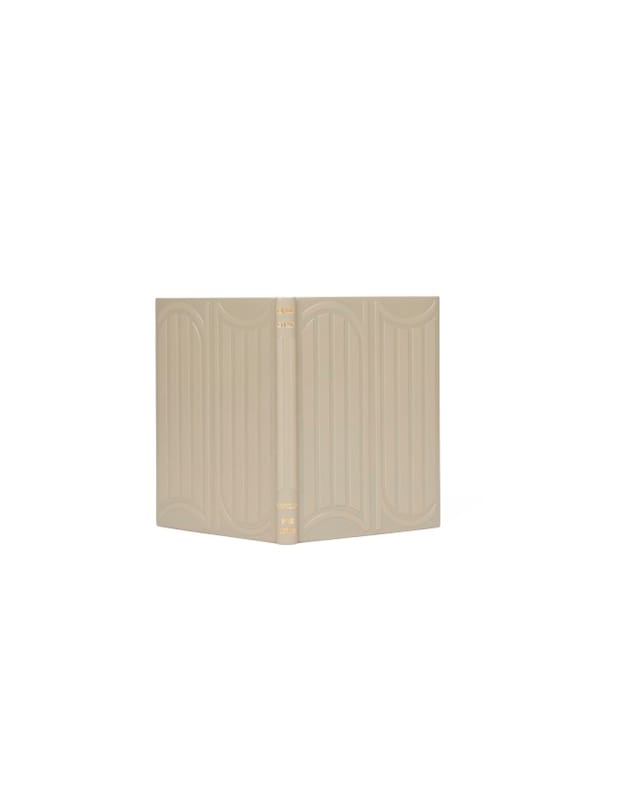
- circa 1917-1918, 22,3x27,6, une feuille sous chemise et étui. - «Décembre»: autograph youthful poem dedicated to Guillaume Apollinaire. «I would have savaged the life of your poor angel breast.» [ca 1917-1918] | 22.3 x 27.6 | single sheet in custom chemise and slipcase A remarkable autograph poem of youth by André Breton dedicated to Guillaume Apollinaire entitled «Décembre». 20 verses in ink on vergé d'Arches paper, composed in December 1915. This manuscript was copied between March 1917 and the beginning of 1918. This poem is presented in a chemise and case with paper boards decorated with abstract motifs, the spine of the chemise in green morocco, pastedowns and endpapers of beige suede, a sheet of flexible plexiglass protecting the poem, case lined with green morocco, piece of green paper with caption «poème autographe» to bottom of upper cover of case, the whole by Thomas Boichot. Key poem of the author's pre-Dadaist period, it formed part of the set of 7 manuscript poems by Breton (known as coll. X. in the uvres complètes d'André Breton, volume I in La Bibliothèque de la Pléiade, Gallimard, 1988, p. 1071). Thiese poems of his juvenilia are carefully copied out in black ink on watermarked vergé paper. The small collection was addressed to his circle of friends and writers, most notably including Valéry, Apollinaire, Théodore Fraenkel, and his brother in arms André Paris. They were later published in his first collection, Mont de piété, which appeared in June 1919, published by Au Sans Pareil, established not long before by his friend René Hilsum. The precise dating of this set of autograph poems is made possible by the composition of the final poem in the set («André Derain»), written on 24 March 1917, which provides a definitive terminus post quem. An earlier version of the poem «Age», dedicated to Léon-Paul Fargue, appears in our collection under its original name, «Poème». Dated by the author 19 February 1916, the day of his 20th birthday, and composed 10 days previously (according to his letters), it was not retitled and reworked until its publication in July 1918 in Les Trois Roses. Judging by the similarities to things published before this last poem, the seven autograph poems were probably written during 1917 or at the beginning of 1918, while Breton was doing his residency in Val-de-Grâce and where, significantly, he made the acquaintance of Louis Aragon. The poems that make up Mont de piété represent a rare and valuable insight into his youthful influences at the dawn of his joining the Dada movement and his discovery of automatic writing. Quite short and sometimes sibylline, one detects Symbolist highlights borrowed from Mallarmé, whom he rediscovered at poetry mornings in the théâtre Antoine and the Vieux-Colombier accompanied by his schoolfriend Théodore Fraenkel. During the first month of the War, Breton also dedicated himself to Rimbaud, plunging into Les Illuminations, the only work he carried with him in the confusion and haste that followed the outbreak of war. From his readings of Rimbaud were born the poems «Décembre», «Age», and «André Derain», while he borrowed Apollinaire's muse Marie Laurencin to whom he dedicated «L'an suave». The author's poetic inheritance was particularly marked by Paul Valéry, with whom he corresponded from 1914. Valéry played a considerable role in the writing of the poems of Mont de piété with the advice he gave the young poet. Admiring his disciple's audacity, who addressed each of these poems to him, he characterized the poem «Façon» (1916) thus: «The theme, language, scope, meter, everything is new, in the style, the manner of the future» (Letter of June 1916, uvres complètes d'André Breton, vol. I in La Bibliothèque de la Pléiade, Gallimard, 1988, p. 1072). These essential buds of Breton's youth were written between his seventeenth and twenty-third year. Taken by surprise in Lorient by the declaration of war, he became a military nurse, serving in several hospitals
1922197421922 10 grands dessins originaux à lencre de Chine, (1922), (19.5 x 17 cm. et 16 x 16 cm) et 7 culs de lampe tête de chapitre (3.5 x 5.5 cm), non signés, montés sous Marie-Louise, dans un coffret damassé à décor floral art-déco bleu-gris, titré sur le premier plat, (J.C. Chalanson Relieur).
- s.l. s.d. (1907), 15,7x23,1cm, 1 page 1/2 sur 2 feuillets. - Handwritten poem to Kérimé « Je cacherai ma flûte » [1907] | 15,7 x 23,1 cm | 1 page 1/2 on 2 leaves Handwritten poem entitled « Je cacherai ma flûte », dedicated and offered to Kérimé («Pour le petit faune »). One and a half pages written in purple ink on two leaves edged with border of violets, in total 32 alexandrine verses. The poem was published under the same title in Flambeaux éteints (Edward Sansot & Cie, 1907). This first manuscript version has some variations from the printed text. Je m'écoute, avec des frissons ardents, Moi, le petit faune au regard farouche... L'âme des forêts vit entre mes dents Et le Dieu du rythme habite ma bouche. Dans ce bois, loin des aegipans rôdeurs Mon cur est plus doux qu'une rose ouverte; Les rayons, chargés d'heureuses odeurs, Dansent au son frais de ma flûte verte. Mêlez vos cheveux et joignez vos bras Sur l'herbe humide où le bélier s'ébroue, Nymphes des halliers! - ne m'approchez pas, Allez rire ailleurs pendant que je joue. Car j'ai la pudeur de mon art sacré, Et, pour honorer la muse hautaine Je chercherai l'ombre et je cacherai Mes pipeaux vibrants dans le creux d'un chêne. Parmi la tiédeur, parmi les parfums, Je jouerai le long du jour, jusqu'à l'heure Des churs turbulents et des jeux communs Et des seins offerts que la brise effleure. Je tairai mon chant pieux et loyal Aux amants de vin, aux chercheurs de proie Seul le vent du soir apprendra mon mal Et les arbres seuls apprendront ma joie. Je défends ainsi mes instants meilleurs... Vous qui m'épiez de vos yeux de chèvres, Ô mes compagnons! allez rire ailleurs Pendant que le chant fleurit sur mes lèvres. Sinon, je suis faune après tout, si beau Que soit mon chant, et, bouc qui se rebiffe, Je me vengerai d'un coup de sabot Et d'un coup de corne et d'un coup de griffe. Provenance: Kérimé Turkhan-Pacha. The Sappho lover and her sofa muse Considered as a literary work in its own right, Renée Vivien's correspondence with Kérimé Turkhan-Pacha is sprinkled with very rare poems that enhance the poet's romantic passion for her oriental muse. In spring 1904, Vivien received an unexpected letter. A mysterious young Turkish woman, living in Constantinople and who signed Kérimé Turkhan-Pacha, enthusiastically told her about a book she had just read. [...] Intrigued and at the same time flattered, Vivien responded to the unknown woman [...] This letter was to be followed by more than a hundred others and dozens of postcards to Kérimé Turkhan-Pacha. [...] During the summer of 1905, when Vivien will make a pilgrimage to Lesbos with Natalie Barney, she will absolutely stop in Constantinople to get to know the fictional (as she imaged) Kérimé. She saw her again several times, always in Constantinople, and their correspondence continued until 1908. Born in 1876, Kérimé Turkhan-Pacha belonged to the Constantinople high society. Very cultured, raised French, she shone in the salons of the Ottoman capital. She was distinguished by her real beauty [...]. This seductive creature, whom Vivien had to imagine languishing on cushions in the shade of a Bosphorus harem, had married a Turk much older than her around 1900, Turkhan-Pacha. [...] Becoming a widow, Kérimé lived in Paris, where she had the opportunity to court Natalie Barney; she died in Athens in 1948. Worldly and very beautiful, [...] Kérimé belonged to the Turkish elite [..] whose women began to change their mentality. Just like Loti's Désenchantées [...] Kérimé found it troublesome to support the old customs of her country. «I was very young and I was cloistered away and aspired only to bite all the forbidden fruits», she told Le Dantec. [...] For Vivien, Kérimé represented the mirage of the East, which had already fascinated the entire 19th century: Chateaubriand, Delacroix, Nerval, Flaubert, Loti, Barrès... Turkish romanticism then permeated French literature. In 1898 Jean Lorrain had published La Dame turque (anot
- s.l. s.d. (1906), 17,7x21,9cm, 2 pages sur un feuillet. - Handwritten poem to Kérimé « Pour elle seule » [« Eminé »] [1906] | 17,7 x 21,9 cm | 2 pages on one leaf Handwritten poem entitled « Pour elle seule », dedicated and offered to Kérimé. Two pages written in purple ink on a leaf of lined and margined paper, in total 30 alexandrine verses. The poem was published under the title « Eminé » in À l'heure des mains jointes (Alphonse Lemerre, 1906). This first manuscript version has several variations from the printed text. Some verses have even been totally abandoned: « Et lui dirai: Voici que les temps sont venus/Visage détaché sur le fond d'une trame; /Mais je dédaignerai les arbres aux troncs d'or/Et les fleurs de saphir pour un plus beau trésor. » Le couchant répandra la neige des opales, Et l'air sera chargé d'odeurs orientales Les caïques furtifs jetteront leur éclair De poissons argentins qui sillonnent la mer. Ce sera le hasard qu'on aime et qu'on redoute. A pas lents, mon destin marchera sur la route. Je le reconnaîtrai parmi les inconnus Et lui dirai: Voici que les temps sont venus. Et mon destin aura la forme d'une femme, Visage détaché sur le fond d'une trame; Et mon destin aura de profonds cheveux bleus. Ce sera le fantasque et le miraculeux. Involontairement, comme lorsque l'on pleure Je me répéterai: toute femme a son heure. « Aucune ne sera pareille à celle-ci. « Nul être n'attendra ce que j'attends ici. » Celle qui brillera dans l'ombre solitaire M'emmènera dans le domaine du mystère. Près d'elle, j'entrerai, pâle comme Aladdin Dans un prestigieux et terrible jardin. Mon cher destin, avec des lenteurs attendries, Détachera pour moi des fruits de pierreries. Mais je dédaignerai les arbres aux troncs d'or Et les fleurs de saphir pour un plus beau trésor. Car je mépriserai le soleil et la lune Et les astres fleuris, pour cette femme brune. Ses yeux seront l'abîme où sombre l'univers Et ses cheveux seront la nuit où je me perds. à ses pieds nus, pleurant d'extases infinies, Je laisserai tomber la lampe des génies. Provenance: Kérimé Turkhan-Pacha. The Sappho lover and her sofa muse Considered as a literary work in its own right, Renée Vivien's correspondence with Kérimé Turkhan-Pacha is sprinkled with very rare poems that enhance the poet's romantic passion for her oriental muse. In spring 1904, Vivien received an unexpected letter. A mysterious young Turkish woman, living in Constantinople and who signed Kérimé Turkhan-Pacha, enthusiastically told her about a book she had just read. [...] Intrigued and at the same time flattered, Vivien responded to the unknown woman [...] This letter was to be followed by more than a hundred others and dozens of postcards to Kérimé Turkhan-Pacha. [...] During the summer of 1905, when Vivien will make a pilgrimage to Lesbos with Natalie Barney, she will absolutely stop in Constantinople to get to know the fictional (as she imaged) Kérimé. She saw her again several times, always in Constantinople, and their correspondence continued until 1908. Born in 1876, Kérimé Turkhan-Pacha belonged to the Constantinople high society. Very cultured, raised French, she shone in the salons of the Ottoman capital. She was distinguished by her real beauty [...]. This seductive creature, whom Vivien had to imagine languishing on cushions in the shade of a Bosphorus harem, had married a Turk much older than her around 1900, Turkhan-Pacha. [...] Becoming a widow, Kérimé lived in Paris, where she had the opportunity to court Natalie Barney; she died in Athens in 1948. Worldly and very beautiful, [...] Kérimé belonged to the Turkish elite [..] whose women began to change their mentality. Just like Loti's Désenchantées [...] Kérimé found it troublesome to support the old customs of her country. «I was very young and I was cloistered away and aspired only to bite all the forbidden fruits», she told Le Dantec. [...] For Vivien, Kérimé represented the mirage of the East, which had already fasc
- Constantinople s.d. (1907), 21x27cm, 1/2 page et quelques lignes sur un feuillet. - Handwritten poem to Kérimé « Que la volupté est triste...!» [Paroles soupirées] Constantinople [1907] | 21 x 27 cm, 1/2 page and a few lines on a leaf Handwritten poem entitled « Que la volupté est triste... ! », dedicated and offered to Kérimé. Half a page written in black ink on a leaf of headed paper from the Constantinople Péra-Palace & Summer-Palace, a total of 15 alexandrine verses. The poem was published under the title «Paroles soupirées» in Flambeaux éteints (Edward Sansot & Cie, 1907). This first manuscript version has several variations from the printed text. Some verses have even been totally abandoned: "Pareille au chant brisé qui vient nous décevoir,/ Avec les cierges d'or allumés dans le soir". Quelle tristesse après le plaisir, mon amie, Quand le dernier baiser, plus triste qu'un sanglot, S'échappe en frémissant de ta bouche blêmie, Et que, mélancolique et lente, sans un mot, Tu t'éloignes à pas songeurs, ô mon amie! Pareille à la douleur des adieux, dans le soir, L'angoisse qui vient de la volupté lasse! Pareille au chant brisé qui vient nous décevoir, Pareille au noir cortège impérial qui passe Avec les cierges d'or allumés dans le soir... Et je te sens déçue et je me sens lointaine... Nous demeurons, avec les yeux de l'exilé, Suivant, tandis qu'un fil d'or frêle nous enchaîne, Du même regard las notre rêve envolé... Autre déjà, tu me souris, déjà lointaine... Provenance: Kérimé Turkhan-Pacha. The Sappho lover and her sofa muse Considered as a literary work in its own right, Renée Vivien's correspondence with Kérimé Turkhan-Pacha is sprinkled with very rare poems that enhance the poet's romantic passion for her oriental muse. In spring 1904, Vivien received an unexpected letter. A mysterious young Turkish woman, living in Constantinople and who signed Kérimé Turkhan-Pacha, enthusiastically told her about a book she had just read. [...] Intrigued and at the same time flattered, Vivien responded to the unknown woman [...] This letter was to be followed by more than a hundred others and dozens of postcards to Kérimé Turkhan-Pacha. [...] During the summer of 1905, when Vivien will make a pilgrimage to Lesbos with Natalie Barney, she will absolutely stop in Constantinople to get to know the fictional (as she imaged) Kérimé. She saw her again several times, always in Constantinople, and their correspondence continued until 1908. Born in 1876, Kérimé Turkhan-Pacha belonged to the Constantinople high society. Very cultured, raised French, she shone in the salons of the Ottoman capital. She was distinguished by her real beauty [...]. This seductive creature, whom Vivien had to imagine languishing on cushions in the shade of a Bosphorus harem, had married a Turk much older than her around 1900, Turkhan-Pacha. [...] Becoming a widow, Kérimé lived in Paris, where she had the opportunity to court Natalie Barney; she died in Athens in 1948. Worldly and very beautiful, [...] Kérimé belonged to the Turkish elite [..] whose women began to change their mentality. Just like Loti's Désenchantées [...] Kérimé found it troublesome to support the old customs of her country. «I was very young and I was cloistered away and aspired only to bite all the forbidden fruits», she told Le Dantec. [...] For Vivien, Kérimé represented the mirage of the East, which had already fascinated the entire 19th century: Chateaubriand, Delacroix, Nerval, Flaubert, Loti, Barrès... Turkish romanticism then permeated French literature. In 1898 Jean Lorrain had published La Dame turque (another pasha woman...) and in 1906 Loti would publish his famous novel Les Désenchantées." (J.-P. Goujon, Tes blessures sont plus douces que leurs caresses) This superb elegy with its "Bosphorus sultana" takes up all the elements of this aesthetic mythology in a superb sapphic reappropriation of the languor and sensuality of the fantasized East. Exceptionally rare, the manuscript
19301389de la main à la main, s.l. 1930. 1 volume in-4 (270 x 215 mm) broché sous couverture rouge (279 x 220 mm) imprimée du titre en noir sur le premier plat uniquement, 35 pp. + 2 fnch. Seconde édition, (en partie originale), du premier recueil de poèmes de René Char augmentée de cinq nouveaux, les quatorze originaux étant ici modifiés. Avec une illustration hors-texte du peintre catalan Francesc Domingo imprimée en noir. Aussi rare que la première (26 ex.) celle-ci a été tirée "qu'on le veuille ou non" à 39 exemplaires hors-commerce le 5 Février 1930 : 5 Vergé d'Arches + 7 sur Guérimand vert d'eau + 27 sur couché Prioux. Au colophon on lit : " Il est réconfortant de savoir que les imbéciles n'en sauront rien ". Celui-ci 1 DES 7 EXEMPLAIRES SUR PAPIER VERT, numéroté et justifié à l'encre par René Char "EXEMPLAIRE D'ANDRÉ BRETON". Sur le faux-titre, René Char a ajouté de sa plume "Pour distraire Madame Marcelle Ferry, cet ARSENAL, René Char". Le recueil est dédié à Paul Eluard.
Tutto il pubblicato. Fascicoli sciolti ottimamente conservati. Fondata a Firenze nel gennaio 1926, dal 1929 cambia il sottotitolo in Rivista mensile di letteratura. Uscì con cadenza dapprima mensile e poi bimestrale. Nel 1929 si associò nella direzione G. Ferrara, sostituito l'anno successivo da A. Bonsanti; nel 1933 Carocci tornò ad essere unico direttore. Solaria fu la più importante rivista letteraria del novecento. Fra i suoi collaboratori convissero due anime, due diverse vocazioni: quella dei "rondisti" (Bacchelli, Loria, Tecchi, Bonsanti) convinta di poter dar vita ad una autonoma civiltà letteraria fuori da ogni compromesso con la politica, e quella di provenienza torinese con alle spalle l'esperienza del "Baretti" (Montale, Ginzburg, Garosci, Debenedetti, Solmi) che proseguendo la linea gobettiana professò un maggior impegno civile da parte degli intellettuali. Tra i collaboratori, oltre ai sopra citati, troviamo: Saba, Raimondi, Franchi, Giotti, Debenedetti, Pavolini, Quasimodo, Gadda, Vittorini, e molti altri. Uscirono in tutto 78 fascicoli; in 16° le prime annate poi in 8°. Il n. 2, marzo-aprile, del 1934 fu sequestrato dal prefetto di Firenze. L’ultimo fascicolo porta la data settembre-dicembre 1934, ma in realtà finito di stampare e distribuito nel marzo 1936.
1623ABC_46765Middelburg: Jan Pietersz. van de Venne 1623. Contemporary gold-tooled vellum with the title and imprint lettered in gold on the spine the spine divided in compartments by single fillets with an ornament in each compartment red and blue sprinkled edges. 4to. With a large woodcut printer's device on the title page of each part a woodcut headpiece with a view of Middelburg at the start of each part a full-page engraved emblematic coat of arms and 7 large emblems by D. van Bremden W. de Passe P. de Jode C. van Queboren and P. Serwouter after designs by Adriaen van de Venne in the first part; 8 large engravings in the text showing witty scenes designed and engraved by Adriaen van de Venne in the second part. 2 works in 1 volume. With: 2 VENNE Adriaen van de. Tafereel van sinne-mal.Middelburg Jan Pietersz vande Venne 1623. Rare first edition of the "Zeeland Nightingale" perhaps the most intriguing Dutch songbook of the early 17th century both from the literary point of view as from the point of view of book illustration and printing. The work was intended to spread the glory of the province of Zeeland and includes contributions of 18 poets born or living in Zeeland. Produced by the literal society of Middelburg it showcases the cultural identity of Zeeland through love lyrics devotional poetry and moral verse. The work continued to inspire for many centuries as the present copy was owned by the English explorer Frank Linsley James 1851-1890 and the Frysian art collector and notary Nanne Ottema 1874-1955.The nightingale was a symbol for talented poets and this work was to show the world that Zeeland was the place to be for modern artists. The initiator was most likely Jacob Cats. Contributions came from Cats himself Anna Roemer Visscher Philibert van Borssele Adriaen Valerius Johannis de Bruyne and many others. Adriaen van de Venne contributed a love song Zeeusche Mey-clacht accompanied by a beautiful illustration of a well-dressed young man leaning over a stream and mirroring himself in the water engraved by W. de Passe. At the end to promote sales a newly finished work by Adriaen van de Venne the brother of the publisher was added Tafereel van Sinne-Mal. In this work is found the beautiful engraving of the "Middelburgsche Lauwerhof" the fine garden at the back of his brother's printing office and in the accompanying song all things sold at his brother's bookshop are listed such as maps and prints paintings and lacquered ware compasses and nautical instruments watches etc. Other fine and interesting plates are the mussel-seller and the knife-grinder especially dedicated to Magdalena de Passe.From the early days the province of Zeeland represented within the new Dutch Republic a cultural centre of its own. At the time the most popular and respected Dutch poet Jacob Cats resided in Zeeland and declared himself very satisfied with his Middelburg printer. Afterwards Huygens had some of his works printed at Zeeland then Anna Roemer Visscher came to visit and exchanged poems with the Zeeland poets. Cats' brilliant illustrator Adriaen van de Venne also moved to Middelburg. His brother Jan Pietersz van de Venne had already established a flourishing business there as publisher and bookseller allowing the Zeeland intellectuals poets and artists to meet. With the bookplate of explorer Frank Linsley James 1851-1890 and the manuscript ownership annotation of Rev. Henry White of Lichfield dates unknown dated 1819 on the front pastedown the ex libris stamp of Nanne Ottema 1874-1955 on the second flyleaf. The vellum is slightly soiled. The leaves are lightly browned occassionally slightly foxed in the margins the lower corner of the last 2 pages has been restored. Otherwise in good condition.l Landwehr Emblem and fable books 588; Praz 540; Scheurleer pp. 149; STCN 831125780; USTC 1026749; Waller 1256; cf. Nagtglas pp. 818-22 on the Vande Venne family. Jan Pietersz. van de Venne, hardcover
Seconda edizione, definitiva, di molto modificata e aumentata, in parte originale. Ottimo esemplare, fresco e pulito (lievissime fioriture ad alcune carte), a grandi margini (185 x 121 mm), in bella legatura moderna. Il libro poetico più importante del secondo Ottocento nacque come suite di diciotto poesie apparse sulla «Revue des deux mondes» X, 2, maggio-giugno 1855. Due anni dopo, nel 1857, la prima edizione in volume della raccolta, contenente centosei poesie, subisce un processo dal quale escono condannati il poeta e l’editore, costretti tra le altre cose a censurare sei poesie («Les Bijoux», «Le Léthé», «À Celle qui est trop gaie», «Lesbos», «Femmes damnées», «Les Métamorphoses du vampire»). Passati tre anni, è la volta dell’edizione definitiva: messa in vendita al prezzo di 3 franchi nel febbraio 1861, fu tirata in 1500 esemplari. L’edizione contiene le poesie dell’edizione del 1857 — eccetto le sei censurate — quelle uscite in rivista tra il ‘57 e il ‘61 e una inedita, «La Fin de la journée», per un totale di 126 componimenti. Le sezioni in cui è suddivisa l’opera vengono riorganizzate e passano da cinque a sei, con l’ingresso dei «Tableaux parisiens», tra le vette più alte della produzione di Baudelaire. Il frontespizio avrebbe dovuto recare un’incisione allegorica di Bracquemond, che fu però rifiutata senza esitazione dal poeta. Bracquemond dovette dunque rinunciare al suo progetto e limitarsi a incidere un ritratto di Baudelaire, che diventerà poi una delle sue immagini più famose e iconiche. Vicaire, Manuel de l’amateur de Livres I (Paris 1894), coll. 341-4; Carteret, Le Trésor I (Paris 1924), pp. 118-24; Talvart & Place, Bibliographie des auteurs modernes de langue française I (Paris 1928), p. 284, n. 9.b; Baudelaire, Œuvres complètes (Paris 1975); En français dans le texte (Paris 1990), n. 276
In-4°; pp. (12), 88; marca tipografica su legno al frontespizio, fregi tipografici nel testo. Al frontespizio una nota manoscritta “Crusca. Costò L. 24”. A p. 28 l'errata incollata su "El or" per "El'onor". Esemplare in barbe. Legatura in cartonato antico. Buona copia. Dedica al cardinal Maffeo Barberini. EDIZIONE ORIGINALE dell’intera opera poetica di Michelangelo (1475-1564), che Michelangelo Buonarroti il Giovane fece pubblicare attingendo a manoscritti dello zio conservati nella “Libreria Vaticana” e presso gli eredi. Buonarroti il Giovane professò lungo tutta la vita un vero e proprio culto dell’antenato; amante delle lettere e delle arti studiò filosofia a Pisa dove conobbe Galileo e consolidò l’amicizia con Maffeo Barberini. La dedica a Maffeo Barberini ancora Cardinale avviene nello stesso anno in cui diverrà papa col nome di Urbano VIII. Gamba 248: «Il Buonarroti nipote dedica quest'edizione al card. Maffeo Barberini. [...] Le Rime furono in gran parte tratte da Codici esistenti in Roma e in Firenze; ma [...] furono omessi alcuni componimenti spezzatamente citati dal Varchi e da altri, col desiderio di pubblicarli quando venisse fatto di ritrovarli integri». Razzolini, p. 77; Parenti, p. 108; Brunet I, 1394. In-4 °; pp. (12), 88; woodcut printer’s mark on the title page, typographical friezes in the text. On the title page a handwritten note “Crusca. It cost L. 24 ". On p. 28 the errata glued on "El or" for "El'onor". Deckle edges. Contemporary hardcover binding. Dedication to Cardinal Maffeo Barberini. ORIGINAL EDITION of Michelangelo's entire poetic work (1475-1564), which Michelangelo Buonarroti the Younger had published checking his uncle's manuscripts kept in the "Vatican Library" and with his heirs. Buonarroti the Younger professed a real cult of the ancestor throughout his life; lover of letters and arts, he studied philosophy in Pisa where he met Galileo and consolidated his friendship with Maffeo Barberini. The dedication to Maffeo Barberini as Cardinal takes place in the same year in which he will become pope with the name of Urban VIII. Gamba 248: «The nephew Buonarroti dedicates this edition to card. Maffeo Barberini. [...] The Rhymes were largely taken from existing Codes in Rome and Florence; but [...] some compositions were omitted variously cited by Varchi and others, with the desire to publish them when it was done to find them intact ». Razzolini, p. 77; Relatives, p. 108; Brunet I, 1394.
Edizione originale. Ottimo esemplare, freschissimo e molto pulito (mm 155 x 95). «Il libro di poesie più sconosciuto e forse ancora più misterioso di Leopardi» (Paola Italia, «Premessa. Ragioni di un libro», in «L’Ellisse» VI-2014, p. 7). L'edizione della seconda raccolta poetica vide la luce ai primi del 1827, ma con data del 1826. La prima sezione di «Idilli» presenta alcuni testi già apparsi su «Il Nuovo Ricoglitore» (dic. 1825, pp. 903-4; gen. 1826, pp. 45-51): si tratta de «L’infinto», «La sera del giorno festivo», «La ricordanza», «Il sogno» (uscito anonimo anche sul num. 33, 13 agosto 1825, del «Caffé di Petronio»), «Lo spavento notturno» e «La vita solitaria». Seguono — del tutto inediti — due «Elegie» di argomento amoroso, i cinque «Sonetti» di impianto satirico contro «ser Pecora fiorentino beccaio», e l’«Epistola al Conte Carlo Pepoli» in versi sciolti. Chiudono il volume i volgarizzamenti della «Batracomiomachia» (qui chiamata «Guerra dei topi e delle rane») e della «Satira di Simonide», già editi rispettivamente sul «Caffé di Petronio» (nn. 19, 20, 21 del 1825) e sul «Nuovo Ricoglitore» (n. 11 del 1825). La pubblicazione dei «Versi» si deve in gran parte all’iniziativa di Brighenti, editore-stampatore con cui Leopardi aveva già collaborato stampando le «Canzoni» del 1824 (e al quale era legato da uno rapporto molto stretto, come testimonia la fitta corrispondenza epistolare). I due avevano in mente un progetto (poi naufragato) per un’edizione delle opere complete di Leopardi; e Brighenti, forse per porre menda alla mancata edizione, propose al poeta di stampare «un opuscoletto leggiadro, breve, non pedantesco, non puristico, non grammatico, inedito». Il poeta accettò e furono pubblicati i «Versi», che nelle intenzioni dell’editore dovevano diventare parte di un complessivo ciclo leopardiano: «a dispetto del fatto che si tratti di due volumi distinti, già fin d’ora “Canzoni” e “Versi” vengono presentati come complementari: stessa carta, stesso formato, stesso corpo tipografico» (Paola Italia, p. 9), intenzione confermata dal fatto che l’unico catalogo della Stamperia delle Muse (1828) riporta alla voce di quest’opera «Versi in aggiunta alle Canzoni dello stesso Autore». Mazzatinti e Menghini, Bibliografia leopardiana, n. 661 ; Catalogo del fondo leopardiano, n. 83 ; De Robertis, Canti ed. critica, pp. XLIV-LIII ; Italia, Giacomo Leopardi. Il libro dei Versi del 1826: ‘poesie originali’ (L’Ellisse 9.2, 2014)
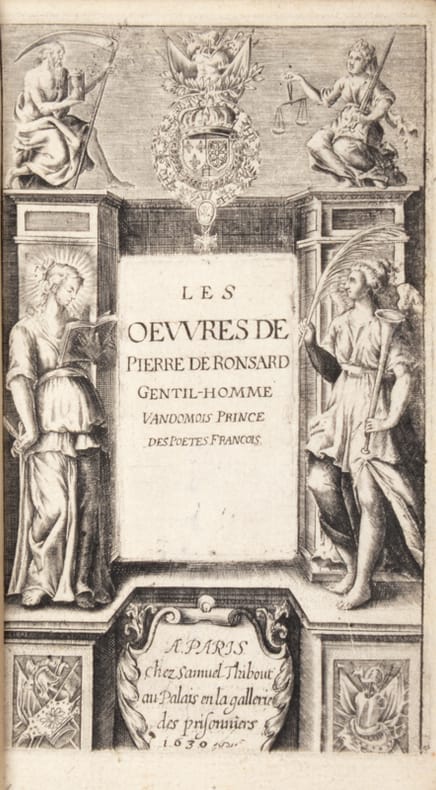
162942097Paris, Mathurin Hénault, Samuel Thibout, Rolin Baraigne, 1629-1630. 11 tomes en 5 vol. petit in-12, [vol. 1] (20)-680-(18) pp. sans le dernier feuillet blanc, frontispice, table ; [vol. 2] 917-(5) 1 f.bl., frontispice, table ; [vol. 3] 724-(6) pp., sans le dernier feuillet blanc, frontispice, table ; [vol. 4] 687-(9) pp., frontispice, table ; [vol. 5] 855-(11) pp., frontispice, table, caractères italiques, maroquin rouge, dos à nerfs orné à petits fers, inscription en pied "Paris 1630", double encadrement de filets dorés, fleurons aux angles sur les plats, dentelle intérieure, tranches dorées sur marbrure (Allô).
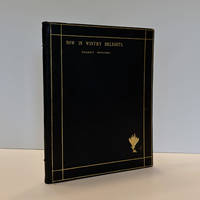
1903010693Oxford: Daniel Press 1903. Book. Near Fine. Morocco. 1st Edition. 8vo - over 7¾ - 9¾" tall. Finely bound in pebble-grain black morocco with title author and floral decoration gilt front cover with gilt tooling top cover edges and turn-ins and with blind tooling back cover. Two raised bands no lettering on spine. Stamp signed in gilt at front turn-in "Spottiswoode & Co. Ltd. Bindery". Original paper wrappers bound in with Daniel Press insignia on rear wrapper. Contents Fine. With a facsimile folding leaf of manuscript in collotype. Near Fine minor rubbing to boards even toning at edges of end papers as usual caused by binding glue. Madan 54 Inscribed in Latin by Luxmoore to Brinton on recto of front endpaper: "Huberto Brinton Adjutori optime merito Senex Etonensis Etonae non Dec. MCMXXIV H.E.L." To a most-deserving Assistant Master an old Etonian gives this at Eton on the Nones of December December 5th 1924. Also includes a laid-in ALS in ink from Luxmoore to Brinton dated Dec.12 1924. Headed "Baldwin's Bec". "My dear Brinton I take the liberty of sending you a 'leaving book'. I value it because it was written to deal with the theories of my pupil Will Stone. You may value it perhaps because the issues of the Daniel Press - now at an end - are much sought after. & also I hope for the sake of an old friendship I most heartily claim to include your dear wife ever yours HE Luxmoore". Henry Elford Luxmoore 1841-1926 was an influential English author and horticulturalist. Luxmoore is known for his forty-one-year tenure at Eton in the classics department from 1867-1908. He also served as the House Master at Baldwin's Bec prior from 1872-1902. Luxmoore was a good friend of noted ghost story writer M.R. James and is also known for his creation of the Luxmoore Garden at Eton. Hubert Brinton 1863-1941 was another prominent schoolmaster at Eton serving as an Assistant Master from 1887-1924 and as House Master at Baldwin's Bec from 1902-1924. He was a close peer with H. E. Luxmoore during his time at Eton. Adding to his Eton legacy in 1919 Brinton's former students hosted the first "Old Boy" dinner which officially marked the beginning of a community group known as the Brinton Club. William Johnson Stone 1872-1901 was the author of the highly regarded yet controversial academic treatise On the Use of Classical Metres in English 1898 which caused a massive stir amongst classical scholars and poets. He fell ill and passed away at the young age of 28 in February of 1901 while working as an Asst. Master at Marlborough College. Robert Bridges 1844-1930 was trained as a medical doctor and practiced medicine several years before launching his career as a poet in his 40s. He was appointed Poet Laureate of England in 1914. Stone's tragic and sudden death particularly devastated Bridges. To honor his memory in 1901 Bridges appended Stone's essay to his own famous work published as Milton's Prosody & Classical Metres in English Verse by William Johnson Stone. The offered title Now in Wintry Delights is written as an epistle in quantitative hexameters using Stone's theories. The Daniel Press founded by Charles Henry Olive Daniel 1836-1919 and his wife Emily ran from 1874 to 1923. The press notably sparked the revival of Fell Types an idiosyncratic collection of 17th-century type faces. It also served as a stepping stone between Victorian parlor printing and the Arts & Crafts private press movement pioneered by William Morris and his Kelmscott Press founded in 1891. One of Daniel's closest literary collaborators was Robert Bridges as Daniel was willing to hand-set the complex typographical nature of much of Bridges's poetry. Given the fine leather binding the diligently selected work the dated Luxmoore letter and inscription and the strong Eton College associations between Luxmoore Brinton Stone Bridges and the Daniel Press this is a highly desirable one-of-a-kind offering that epitomizes the perfect 'leaving book' gift between two "Old Boys". . Daniel Press Hardcover
1670010073Published by In the Savoy Printed by T.N. for Henry Herringman at the Blew Anchor in the Lower Walk of the New Exchange London 1670. Book. Near Fine. Full Calf. Second Edition. 12mo - over 6¾" - 7¾" tall. Frontispiece 16 208 28 67 pages. Two volumes bound in 18th c. calf with royal coat-of-arms stamped center of front board bordered with triple rules in blind with acorn decorations stamped at corners edges dyed red. Near Fine the label perhaps refreshed at a later date with the bookplate of Gower Earl Gower front paste down and Gower's coat-of-arms printed verso of title page of Steps to the Temple Lord Gower having obviously had this copy bound to his specifications. TWO VOLUMES bound as one. "Steps to the Temple" and "The Delights of the Muses" are actually the 3rd editions even though stating second edition while "Carmen Deo Nostro" and "Poemata et Epigrammata Quae Scripsit Latina & Graeca" are both second editions. John Leveson-Gower 1st Earl Gower PC 1694 -1754 was an English Tory politician and peer who twice served as Lord Privy Seal from 1742 to 1743 and 1744 to 1754. Leveson-Gower also served in the Parliament of Great Britain where he sat in the House of Lords as a leading member of the Tories prior to switching his political affiliation and serving in various Whig-led government ministries until his death in 1754. A quite handsome copy Crashaw's early editions are uncommon. Published by In the Savoy, Printed by T.N. for Henry Herringman at the Blew Anchor in the Lower Walk of the New Exchange, London Hardcover
Edizione originale. Più che buon esemplare (localizzati restauri ai piatti e al dorso; leggerissima brunitura uniforme alle carte). La copia di Olimpo Gianoglio, come attesta il timbro al frontespizio. Nato a Torino il 31 gennaio 1911 Gianoglio fu ingegnere di formazione e prese parte al partito fascista, venendo nominato membro del consiglio direttivo di Aosta. Colpito dalla confisca dei beni nel 1945, molti anni dopo la guerra scrisse il volume «Compendio ed esercizi risolti di geometria analitica per le scuole superiori», pubblicato a Torino nel 1968. È presumibilmente suo il sonetto autografo di argomento amoroso a pagina 98, scritto a matita e datato «21 mag. ’33». Il libro poetico più importante del Novecento italiano. Delle 43 poesie, una quindicina erano già apparse — in redazioni differenti — su note riviste letterarie dell’epoca, tra le quali «Primo tempo». Fu Sergio Solmi di «Primo tempo» il tramite tra Montale e Piero Gobetti, l’intellettuale che due anni prima, nell’aprile 1923, aveva fondato una casa editrice tanto prolifica quanto eccezionale per qualità di contenuti, coagulando attorno al suo progetto gran parte del milieu torinese di impronta democratica e liberale. Dai documenti emerge come la tiratura sia stata prevista in 1000 copie, oltre a una tiratura di lusso in 15 copie numerate che quasi certamente non fu mai stampata, non essendosene trovato alcun riscontro. Scrisse il poeta nel 28 aprile 1925: «Caro Gobetti, hai avuto le bozze? [...] Naturalmente mi farai l'edizione nel formato solito dei quaderni, mi ero spaventato dapprima vedendo quei lenzuoli di carta. Ma non era il caso. Dato che il libretto viene spaventosamente smilzo, ti prego di far spazieggiare fino al possibile (fogli bianchi, ecc). Tanto non arriva alle 100 pagine neanche a largheggiare. Fa’ stampare in carta un po’ grossa. So che per la copertina sei inflessibile (frangar non flectar); ma potresti far mettere nome e titolo, per il lungo, nel dorso della plaquette. È un’invenzione che andrebbe bene per tutte le edizioni. So anche che mi concedi le copie di lusso (!), e ti ringrazio. Fanne tirare 15 (con relativa dicitura) numerate dal 1 al 15. Prima che il libro sia uscito (e cioè presto) ti farò avere altre 40-50 prenotazioni sicure; non ti sarà [...]. Addio, siamo in lutto per l'arrivo del Farinacci. Che Dio ce la mandi buona! Quando andiamo tutti all'estero? [...]». Molti anni dopo, in un intervista per la Rai curata da Giancarlo Vigorelli e trasmessa nel febbraio 1969, Montale ebbe a dichiarare che: «La prima [edizione] addirittura durò un giorno o due, perché bruciò il magazzino, circa metà delle copie andarono così felicemente esaurite [...] mio padre [...] ignorava l’esistenza della prima edizione». Barile, Bibliografia montaliana, A1 ; Accame-Lanzillotta, Le edizioni e i tipografi Gobetti, n. 69 ; Gambetti, Preziosi del Novecento (Alai 3, 2017), p. 21
Edizione originale di parte del «Misogallo». Minimo foxing, molto leggero e marginale solo su alcune carte, nel complesso un ottimo esemplare in barbe. A p. 12 una mano antica (di Alfieri?) corregge l’ipometria del verso «Nascenti in cima a una vil pancia» aggiungendo la parola «cima» (la lezione definitiva recita «in cima in cima»). «Per mezzo del corriere Bruni riceverete franco di porto un piccolo involtuzzo. Contiene otto o dieci copie di alcune inezie mie stampate con mio consenso senza il mio nome da un libraiuccio che le aveva manoscritte presso di sé, e sfigurate come suol essere di quelle poesiuzze che corrono manoscritte. Queste sono un frammento del Misogallo; una brochure de circonstance direbbero quei buffoni così abili nel dar nomi ed inabili nel far cose. Una delle copie in carta alquanto meno cattiva e un pochino più grande, è inscritta a voi, e quella vi serberete. Dell’altre, datane una a mia sorella per parte mia, ne disporrete come vi piace, ma noterete però che codesto è un contravveleno da non poter piacere se non se a quelli che non han preso il veleno prima» (G. Mazzatinti, «Lettere edite e inedite di Vittorio Alfieri», 1890, p. 359). -- Con queste parole, il 4 febbraio del 1800, Alfieri inviava all’abate Tommaso di Caluso alcuni esemplari del «Contravveleno poetico», l’unica parte del «Misogallo» pubblicata in vita l’autore: l’opera completa fu stampata per la prima volta solo molti anni più tardi, nel 1814, a Pisa, presso Sebastiano Nistri. -- Il prezioso volumetto raccoglie «sette sonetti e undici epigrammi estratti dall’acido prosimetro [il Misogallo], insieme con l’epigramma “Misto coll’irto crin, del crin più sconcia” mordace caricatura di un rivoluzionario di Francia, abbozzata nel febbraio ’99, circa un anno dopo la chiusura del cantiere misogallico, e destinata alle Rime» (“Per far di bianca carta carta nera”, n. 12). -- L’edizione è rara e preziosa: ne sono censite solo 8 copie nel Catalogo Sbn. “Per far di bianca carta carta nera”. Prime edizioni e cimeli alfieriani, n. 12, pp. 92-92; Melzi, Dizionario di opere anonime e pseudonime, v. 1, p. 252; manca al Bustico.
191764269circa 1917-1918 | 22.30 x 27.60 cm | une feuille sous chemise et étui
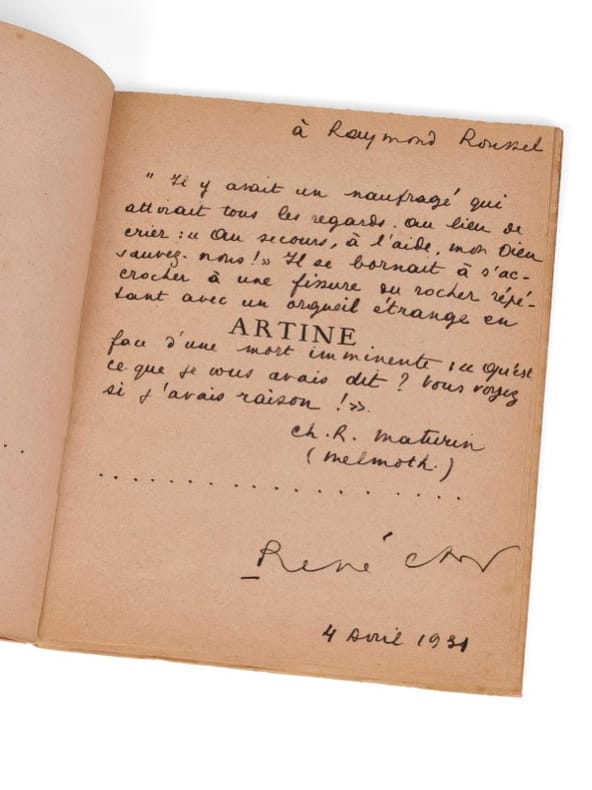
193029797Exemplaire offert à Raymond Roussel, seul envoi connu Paris, Éditions Surréalistes, chez José Corti, (25 novembre) 1930. 1 vol. (185 x 235 mm) de [48] p. Broché. Édition originale. Un des 185 exemplaires sur papier Ingres rose (n° 38). Envoi signé : « à Raymond Roussel », suivi de cette citation : « Il y avait un naufragé qui attirait tous les regards. Au lieu de crier : ‘Au secours, à l’aide, mon Dieu sauvez-nous !’ Il se bornait à s’accrocher à une fissure au rocher répétant avec un orgueil étrange en face d’une mort imminente : ‘qu’est-ce que je vous avais dit ? Vous voyez si j’avais raison !’ Ch. R. Maturin (Melmoth)». L’envoi est daté et signé « René Char, 4 avril 1931 ».
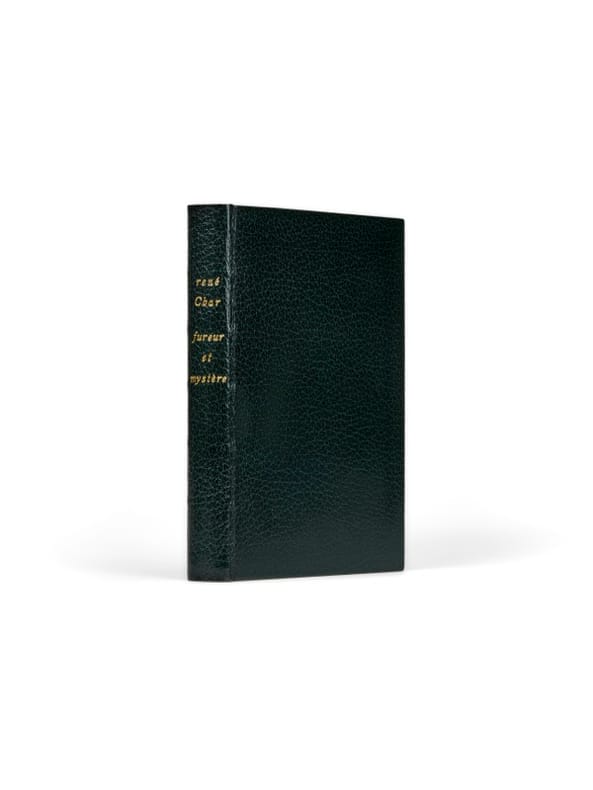
194832609Le recueil central de René Char Paris, Gallimard (14 septembre) 1948. 1 vol. (115 x 185 mm) de 264 p., [1] et 1 f. Maroquin vert, titre doré, filet doré sur les coupes, contreplats et gardes de chèvre velours assortis, tranches dorées sur témoins, couvertures et dos conservés, chemise et étui bordés (reliure signée de P.-L. Martin, 1959). Édition collective, en partie originale. Un des 14 premiers exemplaires sur vélin [vergé] de Hollande (n° X).
193626619Exemplaire de tête avec envoi dans une reliure de Pierre-Lucien Martin Paris, G.L.M., (31 décembre) 1936. 1 vol. (125 x 165 mm) non paginé. Box gris, décor mosaïqué en relief aux plats et sur le dos, doublures et gardes chèvre velours, titre doré, tranches dorées sur témoins, chemise et étui bordés (reliure signée de P.-L. Martin, 1985). Édition originale. Un des 20 premiers exemplaires sur Arches, celui-ci hors commerce. Envoi signé : « à Roger Bonon avec les sentiments amicaux de René Char ».
Prima edizione, nell’emissione autonoma. Esemplare splendido, a pieni margini con barbe (160 x 110 mm), freschissimo. Rarissima stampa a sé della prima raccolta assoluta di poesie del Foscolo, con la quale, orgogliosamente, il poeta «rifiuta[va] tutte le altre fino ad oggi stampate [...] cose troppo giovanili [...]» (dalla nota in corsivo a p. [2], datata «Milano, Agosto 1802»). Il nucleo (otto sonetti e l’ode «A Luigia Pallavicini») era apparso nel «Nuovo giornale dei letterati», volume IV, ottobre 1802 (ma uscito in ritardo, almeno verso la fine dell’anno); il medesimo editore del giornale ne fece una pubblicazione autonoma, in alcuni esemplari posta in appendice, con propria numerazione, alle «Poesie di Giuseppe Parini milanese» (stampate sempre dalla Tipografia della Società Letteraria di Pisa nel 1803); la plaquette venne venduta anche separatamente — e come tale era nota a bibliografi e studiosi, fino a che non ne fu rivelata la presenza in coda al Parini in un articolo pubblicato alle soglie del nuovo millennio sulla rivista per bibliofili «Wuz». Data l’estrema rarità della plaquette, grande mistero era sempre aleggiato intorno a questa stampa: «Non è noto con certezza quando sia stata diffusa questa edizioncina, che reca per la prima volta il titolo ‘Poesie di Ugo Foscolo’, né in quale momento Foscolo l’abbia conosciuta. A metà di aprile non doveva avere ancora notizia dell’edizione pisana, ed è probabile che questa, pur già stampata, non fosse ancora in circolazione» scriveva Gianfranco Acchiappati nel 1988, recensendo l’esemplare in emissione autonoma della sua collezione. -- Sette degli otto sonetti stampati nella raccolta apparivano al pubblico per la prima volta (Non son chi fui...; Che sta? Già il secol...; E tu ne’ carmi avrai...; Perché taccia il rumor...; Così gl’interi giorni...; Meritatamente, però ch’io potrei; Solcata ho fronte...); «Te nudrice alle Muse...» era già stato stampato su «Il Parnasso democratico», vol. II (Bologna 1800); l’ode «A Luigia Pallavicini» appare qui con varianti sostanziali rispetto all’edizione originale pubblicata sempre nel 1800 dalla Stamperia Frugoni di Genova. Milani, Un Foscolo in coda a Parini, Wuz 7 settembre 2002, pp. 48-49; Raccolta foscoliana Acchiappati, n. 31; Scotti, Foscolo ed. nazionale I, p. 12
1869389491869 In-12 (184 x 118 mm), demi-maroquin havane à coins, dos janséniste à 5 nerfs, auteur et titre dorés, daté en pied, couvertures conservées, tête dorée, protégé sous étui bordé du même maroquin (reliure signée Semet et Plumelle), 332, (2) pages. Paris et Bruxelles, chez tous les libraires [Lacroix-Verboeckhoven, 1869 pour le texte]; Typ. de E. Wittmann, 1874 [faux-titre et titre].
190778723Constantinople s. d. [1907] | 21 x 27 cm | 1/2 page et quelques lignes sur un feuillet
190778724s. l. s. d. [1907] | 15.70 x 23.10 cm | 1 page 1/2 sur 2 feuillets
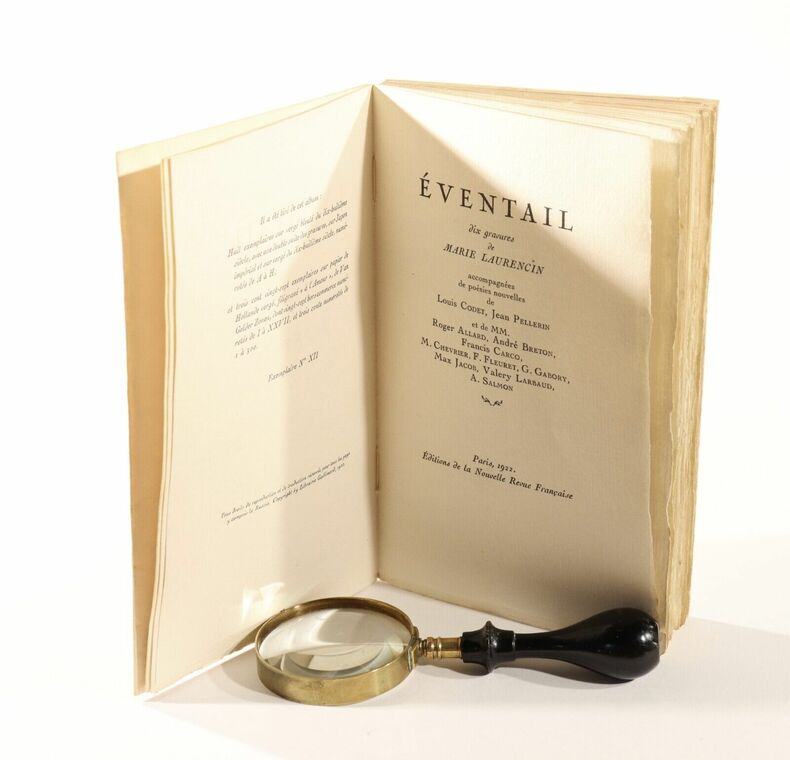
1922AMO-4511Paris, 1922. Editions de la Nouvelle Revue Française. 1 volume petit in-8 (19,5 x 12 cm) broché de 61-(5) pages, avec 10 pointes sèches originales de Marie Laurencin tirées dans le texte au format carré 8,5 x 7,5 cm environ. Couverture rempliée imprimée en couleurs (bleu et rose) formant un éventail. Excellent état. Quelques décharges et ombres à la couverture sinon parfait exemplaire. Tirage unique à 335 exemplaires. Celui-ci, un des 27 exemplaires hors-commerce tirés sur Hollande vergé Van Gelder Zonen. Il a été tiré 300 exemplaires sur ce même papier et 8 exemplaires sur vergé bleuté du dix-huitième siècle avec une double suite des gravures, sur Japon impérial et sur vergé du dix-huitième siècle. Notre exemplaire contient en plus : - 1 état supplémentaire tiré à part de la couverture en couleurs avec l'éventail (sur vergé). - 1 état de l'éventail en couleurs tiré seul avant la lettre (sur vergé). - 1 suite complète des 10 pointes sèches tirées à part sur papier vergé Ingres. Le chiffre du tirage à part de cette suite n'est pas connu mais elle était sans aucun doute réservée aux exemplaires de tête et aux exemplaires de collaborateurs (soit une trentaine d'exemplaires en tout).