Pedrini, Filippo - 1758 - Bologna - 1844Antiquariat.de

48 779 résultats
066-Do.J. Feder in Braun, braun laviert, über einer Skizze in schwarzer Kreide, mit Bleistift umrandet, auf Bütten, aufgezogen, rechts unten von alter Hand bezeichnet ?Mola?. 26,3 x 18,2 cm. Provenienz: Sammlung Joanneum, Graz, Lugt 2709; Sammlung L. H. Philippi, Hamburg, Lugt 1335.
197062503ABStuttgart. London. Reykjavik., Edition Hansjörg Mayer., 1970. 23 x 17 cm. [256] S. OKarton mit verleimter Papp-Manschette mit Montagen., 62503AB Auflage 1000 Exemplare. Buch am Rücken berieben, am oberen Kapital 1 cm Abrieb des Bezugspapier. Sonst sehr gutes Exemmplar. Gesammelte Werke Band 11.
FH-446o.J. Farbholzschnitt, auf cremefarbenem Japan, mit Bleistift signiert, bezeichnet und betitelt ?Original-Farbenholzschnitt Handdruck ?In den Bergen?. Darstellungsgröße 23,7:29,7 cm, Blattgröße 26,2:31,5 cm. Literatur: Thiemann-Stoedtner FH 84; Merx 349 F. Prachtvoller Abdruck in satten Farben und tadelloser Erhaltung!
409-Eo.J. Bleistift, auf cremefarbenem Zeichenkarton, links unten monogrammiert und datiert ?PVS (ligiert) 1840?. 35,7:26,8 cm. An den Rändern leicht vergilbt. Provenienz: Sammlung A. O. Meyer, Hamburg, Lugt 1994; Sammlung G. Engelbrecht, Hamburg, Lugt 1148; Sammlung C. Heumann, Chemnitz, Lugt 2841 a; C.G. Boerner, Leipzig, Auktion CXXIII, 16.-18. März 1914, Nr. 841, S. 93 (Sammlung A.O. Meyer). Literatur: M. Spahn: Philipp Veit. Bielefeld/Leipzig 1901, S. 29, Abb. 25; Kunst der Zeit. Heft 10, II. Jg. Sonderheft Humor in der Malerei XIX. Jahrhundert bis zur Gegenwart. Hrsg. anläßlich der Ausstellung in den Räumen der Berliner Sezession. 15. Sept.-28. Okt. 1928. Beiliegendes Verzeichnis der ausgestellten Werke Nr. 688, S. 11; N. Suhr: Philipp Veit (1793-1877). Leben und Werk eines Nazareners, Weinheim 1991, ZV 60.
753-Eo.J. Aquarell über Bleistift, auf festem strukturiertem Ve-lin, rechts unten monogrammiert ?C. W. f?. 51,5:36,8 cm.
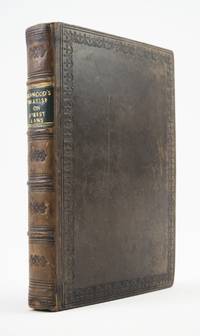
1598ST20689London: Printed by Thomas Wight and Bonham Norton 1598. FIRST PUBLISHED EDITION and First Edition under this Title. 192 x 139 mm. 7 5/8 x 5 1/2". 8 p.l. 154 162-65 159-67 1 blank 6 leaves. Errors in pagination but text complete. <br/> Late 19th century dark brown calf covers tooled in blind with plain rules and fleur-de-lys roll raised bands spine panels with small blind-stamped ornament black morocco label marbled endpapers neat repairs to ends of both joints. Front pastedown with engraved armorial bookplate of Godfrey Wentworth Woolley Park. Beale T-413; Mellon/Podeschi 15; Schwerdt II 7; STC 17291; ESTC S111993.<br /> Extremities slightly rubbed boards a little chafed in spots text lightly pressed but not washed a bit of browning to edges and occasional minor marginal foxing or traces of corner creases but quite an excellent copy the text clean and still fresh throughout and the perfectly suitable binding with no significant wear.<br/> <br/> This is a pleasing country gentleman's copy of the first published treatise on the laws governing English forests. Our author the fittingly named woodsman John Manwood d. 1610 served as gamekeeper of Waltham Forest as well as a justice of the New Forest. DNB tells us that he was possibly a barrister at Lincoln's Inn which would explain his interest in and knowledge of the law. Manwood tells us in the dedicatory epistle that he composed the present work in response to the precarious state of forest preservation stating that "so many do daily so contemptuously commit such heynous spoiles and trespasses" against the country's woodlands but "verie little or nothing as yet is extant concerning the Lawes of the Forrest" to help manage such behaviors. Our copy comes from the first published edition following only the 1592 pamphlet entitled "A Brefe Collection of the Lawes of the Forest" issued for private circulation and now extraordinarily rare. According to DNB the present treatise is "the only substantial work on the subject ever to reach the press" making it an enduringly useful source for those interested in the topics contained which include laws about hunting and perambulation in forests. It remained the standard work on the subject until the 19th century and Schwerdt writes that it has been "invaluable to students and lovers of ancient sport." Our copy is from the library of Yorkshire landowner Godfrey Wentworth 1773-1834 who served as High Sheriff of Yorkshire from 1796-97 and in the House of Commons from 1806-08. He probably had no need for a later printing of the work. Printed by Thomas Wight and Bonham Norton unknown
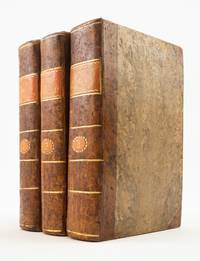
1717ST20754Lyon: Chez Anisson et Posuel 1717. Second Edition. 197 x 125 mm. 7 3/4 x 5". Three volumes. <br/> Pleasing contemporary half calf over paper boards painted to resemble tree calf smooth spines with gilt rules and two citron morocco labels. Attractive woodcut head- and tailpieces throughout WITH 153 ENGRAVED PLATES depicting the scenery flora fauna dress and architecture of locations described. Contemporary ink ownership inscription of De St. George on title page. Brunet V 903; Graesse VII 180. Corners slightly bumped and rubbed joints with just a hint of flaking but the period bindings solid and still extremely attractive survivals. Internally with a handful of quires faintly browned other trivial defects BUT AN UNUSUALLY WELL-PRESERVED SET inside and out.<br/> <br/> This lively narrative of travel at the turn of the 18th century includes a wealth of illustrations and a pleasing period bindings. A professor at the Jardin des Plantes in Paris Joseph Pitton de Tournefort 1656-1708 developed a system of botanical classification that became the standard method until it was superseded by Linnaeus in 1753. He made numerous collecting trips throughout his career; the present work is the record of his most significant voyage through Greece Turkey and along the Black Sea to Armenia and Georgia. The expedition which took place between 1700-02 had been proposed by the Comte du Pontchartrain then Secretary of State in 1699 as both a botanical and commercial endeavor. Tournefort's observations include a wealth of botanical detail but are also a rich source of information about the landscapes and peoples he encountered. He was accompanied on this voyage by German botanist Andreas Gundelsheimer and by the painter Claude Aubriet ca. 1665-1742 who had collaborated with Tournefort on his previous work "Eléments de Botanique." The work of Aubriet a botanical illustrator at the Jardin des Plantes was long appreciated by botanists and laypeople alike for its beauty and accuracy. The detailed depictions of plants here are accompanied by illustrated maps and engravings depicting zoological specimens archaeological sites and the costumes and cultures of the areas visited. The account was published posthumously in 1717 first in Paris and then shortly afterward in the present Lyon edition. The bindings here were never meant to be showy but they have come down to us in a remarkable state of preservation given their pedestrian construction and expected use. Chez Anisson et Posuel unknown
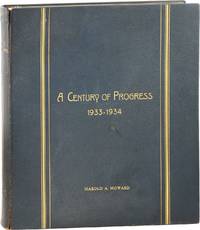
88343Chicago: 1934. Folio ca. 35 x 29.5 cm. Album in full morocco with gilt titles and rules binding signed "Arthur Hertzberg & Craftsmen"; silk moiré endpapers; calligraphic presentation leaf and 51 hinged leaves of large-format pencil-captioned silver-gelatin prints each ca. 28cm x 20 cm 11" x 8" or the reverse. This copy presented to Harold A. Howard 1868-1936 prominent Chicago real-estate tycoon and society figure. Photographer identified at base of spine. Slight wear including a ca. 3" separation at front joint near crown; a few leaves with faint marginal soil or foxing away from printed area; complete and Very Good.<br /> <br /> One of presumably very few presentation albums presented by the Century of Progress Exposition to prominent backers and members of Chicago's elite. The photographs all produced by the Exposition's official photographer the Kaufman & Fabry Company are of the highest quality exceptional for capturing the high modernism of the period and indeed of the event itself which is still considered a pivotal moment in the popularization of the modernist aesthetic in the United States as well as the introduction of the "Art Deco" style. Significantly the plan and most of the Exposition's infrastructure were designed by the young architects Louis Skidmore and Nathaniel Owings who a few years later would go on to found the epoch-defining firm Skidmore Owings & Merrill whose high-rise office towers came to personify the skylines of many of America's major cities Chicago's in particular. Though no limitation is stated for this album given the expense of production we would surmise that no more than a few dozen would have been produced. OCLC notes ten copies in American institutions each with presentations to a different recipient; a few others traced at auction and in commerce. unknown
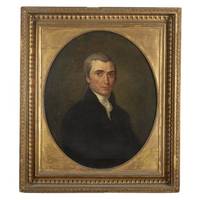
1815690611815. 25 inches x 20 inches. 25 inches x 20 inches. A Great Nineteenth-Century Pennsylvania Jurist American School 19th Century. Read John Meredith 1797-1874. Portrait of John Meredith Read. Philadelphia c.1815. 25" x 20" image size. Oil on canvas in ornate nineteenth-century gilded wood frame. Some minor nicks and chips to frame gilding slightly dulled otherwise fine. $3000. Read was elected to the Pennsylvania House of Representatives in 1822 and 1823 and served as City Solicitor of Philadelphia from 1830 to 1833. He was appointed District Attorney of the Eastern District of Pennsylvania in 1837 and held the office until 1845. Read became Justice of the Supreme Court of Pennsylvania in 1858 and Chief Justice of the Supreme Court of Pennsylvania in 1872. Read gained an international reputation for the depth of his knowledge eloquence and masterly arguments in the courtroom. Active in politics Read was an early supporter and organizer of the Republican Party. This portrait belonged to the Philadelphia Bar Association. Founded in 1802 it is the oldest association of lawyers in the United States. Its library where this portrait was last displayed was renamed the Theodore F. Jenkins Memorial Law Library in 1967. unknown books
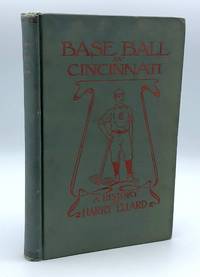
1907403892Cincinnati: Johnson & Hardin for the Author 1907. 8vo. 252 pp. Frontispiece portrait of the author 57 plates. Original grey cloth blocked in red on front cover lettered on spine. A very good copy hinges cracked light wear at extremities. As-issued without jacket. SCARCE FIRST EDITION one of 500 copies of the "Subscriber's Edition" this copy out-of-series. Inscribed on the front free endpaper: "To my friend Henry Taylor Birch Captain of Antioch College Base Ball Team 1867-8 from Alfred K. Nippert Cincinnati O Oct 17th 1937." Birch was the pitcher in the historic first game between the Cincinnati Red Stockings and Antioch College. He later became a prominent Chicago attorney and philanthropist. A public park in Ft. Lauderdale FL bears his name and he donated paintings to the Art Institute of Chicago. Nippert was one of the most prominent judges in Cincinnati his wife was Maud Bamble Nippert heir to the Proctor & Gamble Company. Nippert traveled to Germany in 1916 with an unofficial message from President Wilson: he met with Kaiser Wilhelm stating that while Wilson did not doubt the sincerity of the German leaders he felt he had the support of the American people in his controversy with the Germans over submarine warfare. "In 1869 when the Cincinnati Red Stockings began their inaugural season as history's first professional baseball team they played a preseason game at the site of what is now the Grand Union Terminal in Cincinnati against the Antiochs who were regarded as one of the finest amateur clubs in Ohio. The game was played on May 15 1869 and Cincinnati defeated Antioch 41-7. Antioch had been scheduled to host the first game of this professional tour on May 31 1869 but pouring rain and an unplayable field kept the teams off the diamond. So while Antioch was not a part of the first professional baseball game the college does hold claim to hosting the first ever rainout in professional baseball" Guschov Stephen D. The Red Stockings of Cincinnati: Base Ball's First All-Professional Team and its Historic 1869 and 1870 Seasons Jefferson NC.: McFarland & Co. 1998 p. 45. Ellard writes of the game with Antioch on page 154 though he gets the details wrong see Dan Hotaling "The Antioch Connection The First Professional Game". Ellard's father had been a founding member of the Red Stockings often cited as the first professional club. Most of the book is dedicated to the Red Stockings of 1866-1870 which went undefeated for 1869 and much of 1870. The author had unique access to the original records of the club. . <br/><br/> Johnson & Hardin for the Author hardcover books
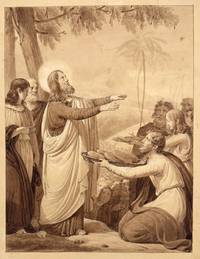
2260Ink and wash in black sepia and grayish brown ink with white heightening on wove paper 12 1/4 x 9 3/4 inches 311 x 248 mm the full sheet. In very good condition with some minor areas of light discoloration in the margins. Pencil inscription in French on the verso. unknown
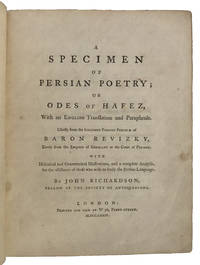
1774ME1081London:: Printed and Sold at No. 76 Fleet-Street 1774. 1774. 4to. iv xv 1 68 pp. Original full calf gilt spine; neatly rebacked to style preserving original endsheets. Inscribed by an early owner "This Book belonging to Monsieur Pierre Monneron." Extremely rare. This is the first edition in English of the ghazals of Hafez translated by one of the leading Persian orientalists of his day John Richardson FAS of Wadham College Oxford and famous for his seminal work written in conjunction with Sir William Jones the work being A Dictionary Persian Arabic and English 1777. / Hafez was previously unknown to the western world until Count Karl Emerich Reviczky von Revisnye 1737-1793 the Hungarian Orientalist and bibliophile 'discovered' him and brought his poetic classic to Europe with this Vienna printing. The work features an extensive text on Hafez and a translation of selected ghazals . Reviczky von Revisnye also issued in 1784 1794 a catalogue of his Greek and Latin library using the pseudonym of "Periergus Deltophilus". In the prefatory essay for that volume he shows an interest in the printing of Nicolas Jenson Aldus Manutius and the Estiennes. / Hafez was born in Shiraz Persia and lived approximately from 1325/26–1389/1390. He is considered a mystic and poet. His life and poems are the subject of much analysis commentary and interpretation influencing post-fourteenth century Persian writing more than any other author. FULL TITLE: A Specimen of Persian Poetry; or Odes of Hafez With an English Translation and Paraphrase. Chiefly from the Specimen Poeseos Persicae of Baron Revizky Envoy from the Emperor of Germany to the Court of Poland. With Historical and Grammatical Illustrations and a complete Analysis for the assistance of those who wish to study the Persian language. Printed and Sold at No. 76, Fleet-Street, 1774. unknown books
183426035Italy 1834. Pen-and-ink watercolour and gouache painted black border titled and dated in white gouache in the lower margin within the border. Lovely 19th-century watercolour of Palermo.<br/> <br/>Catering to the foreigners flocking to the region on the Grand Tour this lovely watercolour shows the town of Palermo with its beautiful hills and mountains in the background with a large fort in the harbour with a British and French ship beside it. The sky is awash in pinks and blues displaying the incredible light of the region. unknown books
197064488ABNew York., Kineticism Press., 1970-1976. 24 x 24 cm / 43,5 x 29,5 cm. OBroschur und OKarton., 64488A_1 13 Hefte / 13 Volumes. First printing. Insgesamt sehr gutes, frisches Exemplar.
1845128-W1845. Aquarell, über Bleistift, auf festem chamoisfarbenem Velin, verso bezeichnet und datiert ?Im Forstenrieder Park. den 27ten August 1845.? 19,5:14,7 cm. Literatur: Aus adeligen Alben. 100 Aquarelle des 19. Jahrhunderts. Buch und Kunstantiquariat Robert Wölfle, München 1993, Kat. 88, Nr. 12 mit Farbabb.
Acquaforte e punta secca, 1939. Misure della lastra, 260x 185 mm misure del foglio 283x203 mm. Esemplare unico, come da iscrizione a matita “p. e. u” (prova esemplare unico) in basso. Variante dell’opera I guerrieri dello stesso anno (Marino, 866, Ficacci, 85), con numerose modifiche e su una lastra di dimensioni diverse. Firma e data incise sulla lastra in basso a sinistra, firma e titolo a matita in basso “I guerrieri P. e. u Luigi Bartolini”. Luigi Bartolini è considerato uno dei maggiori incisori italiani del Novecento, insieme a Giorgio Morandi e Giuseppe Viviani. Oltre ad essere un prolifico incisore (al suo attivo oltre mille acqueforti), fu anche pittore e scrittore. Partecipò sia come pittore che come incisore a diverse edizioni della Biennale di Venezia dal 1928 al 1962. Presente a varie manifestazioni artistiche, sviluppò diverse maniere definite: ‘maniera bionda’, ‘lineare’ e ‘nera’. Ricordiamo soprattutto le acqueforti della serie Marche e della serie Sicilia. Iniziò la sua produzione grafica nel 1914 e il suo stile si rifà alla tradizione naturalistica dell’Ottocento. Molte sue incisioni si possono ricollegare ad alcune opere del Goya, di Telemaco Signorini e di Giovanni Fattori. Eccellente nella rappresentazione della natura morta e del paesaggio, spesso il Bartolini rappresentò dolcemente le cose e gli oggetti più umili, i soggetti di natura più dimessi. In essi ritroviamo il sentimento che diviene immagine e la forma che si sviluppa in espressione. Con Bartolini l’incisione torna ad essere un mezzo di espressione poetica libera dal simbolismo e dal vedutismo allora in voga presso le accademie. Nelle sue acqueforti prevale ora un tratteggio leggero (genere biondo), ora una ricerca del chiaroscuro alla Rembrandt (genere nero). Bibliografia C. Barsanti, Catalogo ragionato dell’opera grafica di Luigi Bartolini, Galleria Marino Roma (1972), n. 866; Ficacci, Luigi Bartolini alla Calcografia, n. 85. Etching and drypoint, 1939. Plate size, 260x 185 mm sheet size 283x203 mm. A unique example, as per pencil inscription "p. e. u" at bottom. Variant of the work I guerrieri of the same year (Marino, 866, Ficacci, 85), with numerous changes and engraved on a plate of different size. Signature and date engraved on the plate at lower left, and signature and title in pencil at bottom "I guerrieri P. e. u Luigi Bartolini". Born in Cupramontana near Ancona, Luigi Bartolini was the twentieth century Italian etcher, who came closest to the stature of his great rival, Morandi. As a teenager, he saw the collection of etchings, including work by Callot, owned by the Corradi family in Iesi. From 1907 to 1910 Bartolini studied at the Istituto di Belle Arti in Siena, and started to etch c. 1909. He moved to Rome in 1910, where until 1912 he frequented the Accademia di Belle Arti, while also attending lectures on literature and the history of art, and courses on anatomy at the University in Rome. Bartolini studied the etchings of Goya and took lessons on drawing at the Accademia di Spagna. From there, he went to Florence in 1913, where he attended the Scuola del nudo. Bartolini continued his anatomical research, as well as studying architecture, making himself the most assiduous student of all Italian twentieth century printmakers. He also visited the Uffizi and Florentine print dealers to look at the etchings of Rembrandt and Fattori. Bartolini painted his first oils just before the outbreak of the First World War. Although he painted pictures throughout the rest of his career, and was awarded the Premio Marzotto for them in 1956, they have been far eclipsed in fame by his etchings and writings. During the First World War, Bartolini published his first collection of poetry. A very prolific and accomplished writer, in this field he is best known today as the author of the novel, 'Ladri di biciclette' (Bicycle thieves), of 1946, which was quickly turned into a celebrated film by Vittorio de Sica and Cesar Zavattini. After the First World War, Bartolini held a series of minor teaching posts in Macerata, Sassari, Avezzano, Pola, and Caltagirone, while he continued to etch, and started a long career as a polemical journalist and critic of art and architecture. From 1923 to 1929, he wrote for the Naples periodical, 'Cimento', but he also contributed to 'Il Selvaggio', 'Quadrivio', 'Italia letteraria', and 'L'Ambrosiana'. Bartolini's 1924 exhibition of etchings at the Casa d'Arte Bragaglia in Rome was a great success, and later that year he showed 70 etched landscapes of the Marches at the Casa Palazzo di Roma. The following year he visited Paris, where he paid particular attention to the paintings of Van Gogh. Bartolini's political convictions led him to being assaulted by Fascists and hospitalised in 1928. Two years later, he won a prize at the Venice Biennale, where he had exhibited a portfolio of etchings. In 1930, the Turin publisher, Buratti, began to issue a series of portfolios of etchings by contemporary Italian artists under the editorship of Cipriano Oppi, selecting Bartolini for the first album. The following year, Buratti published 'Le carte parlanti', a portfolio of 10 of Bartolini's etchings, which was published in an edition of 20. In 1932, Bartolini shared the first prize at the Prima mostra dell'incisione moderna at the Uffizi with Morandi and Boccioni. His close friend, the leading anti-Fascist art historian, Lionello Venturi, acted as his agent selling his etchings in Paris. Bartolini's correspondence with his compatriots in exile led to his imprisonment, from which he was released on Mussolini's personal intervention. He was then placed under political surveillance. From 1933 to 1938, Bartolini taught in Merano, where he painted and etched in the open air, finding subjects on the banks of the fast flowing Adige. Despite being under political suspicion, he was given a one - man show of 50 etchings at the second Rome Quadri...
Acquaforte, 1740 circa, monogrammato in lastra in basso al centro A.C. Esemplare nel secondo stato finale, dopo le aggiunte e con la sigla in basso al centro. Della serie Vedute altre prese da i Luoghi altri ideate. In basso a sinistra in primo piano, la continuazione della barca e del ponte parzialmente visti nell'acquaforte Il carro che passa sopra un ponte. Sulla riva lontana del fiume il monumento, incorniciato da un albero e dal fogliame. In lontananza, oltre una zona collinare, vista di una città con torri, campanile, cupole e una piramide. Originariamente questa stampa e Il carro che passa sopra un ponte formavano una lastra unica che venne tagliata forse per un difetto di morsura verificatosi nella zona dell’albero sovrastante il piccolo monumento. Per tale ragione la parte destra della lastra subì una riduzione di circa 25 mm in altezza. Non si conoscono impressioni prima del taglio del rame che venne operato dallo stesso artista, come dimostra l’apposizione – nel secondo stato – della sigla A.C. sul margine inferiore della lastrina con Il Piccolo Monumento. L’elemento decorativo posto alla sommità dell’edificio, forse un leone, è assai prossimo alla scultura, pure enigmatica, che compare sulla colonna ionica del dipinto Capriccio con tempio e colonna. L’opera appartiene alle Vedute altre prese da i luoghi altre ideate… serie delle acqueforti dedicate al console ed amico Joseph Smith, la cui esecuzione va dal 1740 al 1744 circa. Si inserisce nello sviluppo artistico del Canaletto non come parentesi marginale, ma come un momento essenziale di alcuni problemi stilistici, che troveranno la loro piena realizzazione nei primi capolavori eseguiti nel soggiorno inglese. La serie raggruppa fogli che evocano un itinerario che partendo dalla laguna, cioè da Marghera, passando per Mestre, risale il corso del Brenta fino a Padova, non solo inscenata nel cosmorama del Prà della Valle ma in una veduta che segna il passaggio tra la realtà dei luoghi e la fantasia del capriccio. Se il Portico con la lanterna, indubbiamente una delle prove più alte dell’arte incisoria del Canaletto, è una veduta di piena fantasia, l’acquaforte con la cosiddetta Casa del 1741, ricongiunta con la Casa del colonnato, è l’evocazione di una città, che se pur manca di precisi riferimenti topografici, è intrisa di atmosfera veneziana. Giovanni Antonio Canal detto Canaletto (Venezia 17 ottobre 1697 – Venezia 19 aprile 1768)) fu il più illustre protagonista del vedutismo veneziano del Settecento. Grazie a contatti con amatori e collezionisti inglesi in viaggio a Venezia o residenti nella città lagunare, Canaletto beneficia di grande notorietà in Inghilterra presso la più alta aristocrazia e perfino la famiglia reale. Attorno al 1730 suo agente esclusivo è un inglese, il console Joseph Smith: divenuto mercante di quadri, questi si adopera con abilità e tenacia per introdurre il suo protetto nel mercato britannico delle opere d’arte, il più florido al tempo. Titolare di una grande bottega e affiancato da innumerevoli assistenti, Canaletto è artista e abile imprenditore. Nelle opere del Canaletto la città lagunare era raffigurata con grande oggettività: le sue composizioni erano sempre rigorosamente studiate attraverso numerosi disegni preparatori, tratti direttamente dal vero. La “veduta” fu uno dei generi più caratteristici della pittura del Settecento. Si differenzia dal paesaggio (altro genere molto diffuso nel XVIII secolo) per la rappresentazione oggettiva di luoghi e architetture, realizzata attraverso una prospettiva ben studiata. Venezia fu il centro di maggior produzione di “vedute”, con alcune personalità di grande spicco. Al verso, timbro di collezione di James Henry Lockhart (Pittsburgh 1912-Rotonda West 2002) - Lugt 4387. Magnifica prova, impressa su carta vergata coeva, con margini, in ottimo stato di conservazione. Bibliografia Bromberg, n. 33 p. 169; Succi, I, p... Etching, 1740 circa, signed with monogram bottom centre: A. C. Second final state, with the signature added and other additions. From the series: Vedute alter prese da i Luoghi altri ideate - In the lower left foreground, the continuation of the boat and bridge partially seen on the etching The Waggon Passing over a Bridge. On the far bank of the river the monument, framed by a tree and foliage. In the distance beyond a hilly area, view of a town with towers, campanile, domes and a pyramid. Originally this print and The Waggon Passing over a Bridge formed a single plate that was cut perhaps because of a morsure defect occurred in the area of the tree above the small monument. For this reason, the right side of the plate was reduced in height by about 25 mm. There are no known impressions before the cutting of the copper, which was done by the artist himself, as shown by the affixing - in the second state - of the initials A.C. on the lower margin of the plate with The Little Monument. The work belongs to the Vedute altre prese da i luoghi altre ideate... series of etchings dedicated to the consul and friend Joseph Smith, whose execution goes from about 1740 to 1744. It is part of the artistic development of Canaletto not as a marginal parenthesis, but as an essential moment of some stylistic problems, which will find their full realization in the first masterpieces executed in his English stay. The series groups together sheets that evoke an itinerary that starting from the lagoon, that is from Marghera, passing through Mestre, goes up the course of the Brenta to Padua, not only staged in the cosmorama of Prà della Valle but in a view that marks the passage between the reality of places and the fantasy of caprice. If the Portico with the lantern, undoubtedly one of the highest proofs of Canaletto's engraving art, is a view of full fantasy, the etching with the so-called House of 1741, rejoined with the House of the colonnade, is the evocation of a city, which even though it lacks precise topographical references, is imbued with Venetian atmosphere. Giovanni Antonio Canal called Canaletto (Venice 17 October 1697 - Venice 19 April 1768)) was the most illustrious protagonist of the Venetian vedutismo of the eighteenth century. Thanks to his contacts with English amateurs and collectors travelling to Venice or living in the lagoon city, Canaletto enjoyed great notoriety in England among the highest aristocracy and even the royal family. Around 1730 his exclusive agent was an Englishman, the consul Joseph Smith: having become a picture dealer, he worked with skill and tenacity to introduce his protégé into the British market of works of art, the most flourishing at the time. Owner of a large workshop and flanked by countless assistants, Canaletto is an artist and a skilled entrepreneur. In Canaletto's works the lagoon city was depicted with great objectivity: his compositions were always rigorously studied through numerous preparatory drawings, taken directly from life. The "veduta" was one of the most characteristic genres of eighteenth-century painting. It differs from landscape (another genre widespread in the eighteenth century) for the objective representation of places and architecture, achieved through a well-studied perspective. Venice was the center of greater production of "views", with some very important personalities. On verso, collection mark of James Henry Lockhart (Pittsburgh 1912-Rotonda West 2002)- Lugt 4387. A fine impression, printed on contemporary laid paper, good condition. Bibliografia Bromberg, n. 33 p. 169; Succi, I, p. 278, n. 7.
Acquaforte, 1625, firmata in basso al centro N. Deson Rem. In. Sculp. Et ex. Magnifica prova, nel secondo stato di tre con l’imprint dell’artista; esiste un terzo stato con l'excudit di Edmé Moreau, che apparentemente acquistò la lastra dopo la morte dell'artista. Impressa su carta vergata coeva e rifilata al rame, piega di stampa nella parte inferiore sinistra, minime abrasioni al verso, per il resto in ottimo stato di conservazione. Rara acquaforte della facciata della cattedrale di Reims dell'artista locale Nicolas de Son (attivo dal 1625 al 37), che fece parte di una breve stagione della stampa autoctona nella provincia di Champagne dagli anni 1620 agli anni 1640 insieme ad artisti come Edmé Moreau, Jean Colin e Nicolas Regnesson. La grande stampa rappresenta la facciata ovest della cattedrale in grande dettaglio, mostrando non solo le composizioni più ampie dei principali programmi scultorei chiaramente delineati, ma anche diversi passaggi architettonici e scultorei secondari, come i doccioni dell'edificio e i trafori delle sue rinomate finestre in vetro dipinto. La tavola sembra aver seguito il successo dell'acquaforte di Moreau del 1623 dello stesso soggetto, ma l'ha superato per qualità tecnica e sfumature storiche ("Quella eseguita da Nicolas de Son è migliore"; "In questa stampa, Nicolas de Son dimostra la sua sorprendente comprensione dell'arte gotica, rara all'epoca" [Age of the Musketeers, p. 124]). De Son, le cui prime opere mostrano l'influenza di Jacques Callot (c. 1592-1635), dimostra molta della maestria tecnica del famoso incisore lorenese: egli contrappone gli attori di pietra della storia sacra raffigurata nell'architettura con i variegati abitanti della città del XVII secolo, minuziosamente resi, che interagiscono con la cattedrale medievale, una gamma di personaggi dai mendicanti al portale principale, ai negozianti nelle loro bancarelle, ai cittadini di classe superiore con i loro cavalli e carrozze. De Son rende magistralmente il paesaggio urbano mentre si allontana, mostrando i recinti del palazzo arcivescovile (il Palais du Tau) sulla destra e i tetti di paglia (uno riparato dagli operai) delle abitazioni sulla sinistra. Le prime incisioni in pendant di De Son, Cristo e la donna di Samaria e La cena di Emmaus, mostrano ancora una notevole aderenza a Callot, ma le sue scene di genere un po' più tardive (per esempio La fiera del villaggio) e il suo capolavoro, Suite di dodici paesaggi, dimostrano scelte di disegno più originali. La presente acquaforte e un'opera simile che raffigura la chiesa abbaziale di Saint Nicaise, ora distrutta, sono le uniche due opere datate dell'artista, entrambe del 1625. Poco è noto della vita di Nicolas de Son, che lavorò come disegnatore e incisore a Reims, a parte alcune incisioni firmate e un riferimento alla sua morte nel 1637. De Son produsse un piccolo corpus di incisioni di Callot, Vignon e Jan Lys, così come due vedute della Cattedrale di Reims di sua invenzione, entrambe datate 1625. Bibliografia S. Reed, French Prints from the Age of the Musketeers, p. 124-5, no. 55; LeBlanc 15; M. Sutaine, Nicolas de Son Graveur, Travaux de l’Académie Impériale de Reims, vol. 35, no. 4 (1862), pp. 122-9. Etching, 1625, signed at the bottom center N. Deson Rem. In. Sculp. Et ex. Magnificent proof, rich in tones, of the second state of three with the artist's imprint, printed on contemporary laid paper, trimmed to the copperplate, printing crease in the lower left corner, minimal abrasions on the verso, otherwise in excellent condition. Rare etching of the façade of Reims Cathedral by the local artist Nicolas de Son (active 1625-37), who was part of a brief flourishing of native printmaking in the province of Champagne from the 1620s through the 1640s along with such artists as Edmé Moreau, Jean Colin, and Nicolas Regnesson. The large print represents the cathedral’s west front in great detail, with not only the broader compositions of the major sculptural programs clearly delineated, but also several ancillary architectural and sculptural passages, such as the building’s gargoyle waterspouts and the tracery of its renowned painted glass windows. Le somptueux frontispiece seems to have followed upon the success of Moreau’s 1623 etching of the same subject, but surpassed it in technical quality and historical nuance (“The one executed by Nicolas de Son is better”; “In this print, Nicolas de Son demonstrates his astonishing understanding of gothic art, rare at the time” [Age of the Musketeers, p. 124]). De Son, whose early works show the influence of Jacques Callot (c. 1592-1635), demonstrates much of the technical mastery of the famous Lorraine etcher: He contrasts the stony actors of sacred history depicted in the architecture with the varied, minutely rendered inhabitants of the seventeenth-century town interacting with the medieval cathedral, a range of characters from beggars at the main portal, to shopkeepers in their stalls, to upper-class citizens with their horses and carriages. De Son masterfully renders the townscape as it recedes in the distance, showing the precincts of the archbishop’s palace (the Palais du Tau) at the right and the thatched roofs (one being repaired by workmen) of dwellings at the left. De Son’s early pendant etchings, Christ and the Woman of Samaria and The Supper of Emmaus, still show considerable adherence to Callot, but his somewhat later genre scenes (e.g. The Village Fair) and his masterpiece, Suite of Twelve Landscapes, demonstrate more original design choices. The present etching and a similar piece depicting the now destroyed abbey church of Saint Nicaise are the artist’s only two dated works, both 1625. This impression of Le somptueux frontispiece carries De Son’s signature and his excudit, indicating that it is from the print’s second state; a third state exists with the excudit of Edmé Moreau, who apparently acquired the plate after the artist’s death. Virtually nothing is known about the life of Nicolas de Son, who worked as a draughtsman and etcher in Reims, apart from a few signed etchings and a source reference to his death in 1637. De Son produced a small corpus of etchings after Callot, Vignon and Jan Lys as well as two views of the Cathedral of Reims after his own invention, both of which are dated 1625. Bibliografia S. Reed, French Prints from the Age of the Musketeers, p. 124-5, no. 55; LeBlanc 15; M. Sutaine, Nicolas de Son Graveur, Travaux de l’Académie Impériale de Reims, vol. 35, no. 4 (1862), pp. 122-9.
138-Wo.J. Feder und Pinsel in Schwarz, grau laviert, auf Velin, links unten signiert und datiert ?Fe 31?, verso Nachlaßstempel. 32,8:25,1 cm. Insgesamt nicht ganz frisch. Aus einem Skizzenbuch. Literatur: Ausst. Kat.: ilse fehling - bauhaus bühne akt skulptur, Galerie Bernd Dürr, München 1990, Nr. 86 mit Abb. (dort irrtümlich mit 29 x 17,5 cm angegeben).
170-Wo.J. Bleistift, mit Bleistiftlinie umrandet, auf chamoisfarbenem Pauspapier, rechts unten monogrammiert ?IK.?. 22,8:17,8 cm. Aufgrund des ausdrucksstark-dynamischen Zeichenstrichs möglicherweise frühe Arbeit der Künstlerin. Zudem hat das Blatt, da Kerkovius nur selten mit dem Bleistift arbeitete - die Pastelltechnik war ihr Gebiet -, einen besonderen Reiz.
EN-116o.J. Radierung, 1911, auf chamoisfarbenem Japan, mit dem Nachlass-stempel und der Signatur von Anita Lehmbruck, verso betitelt. 23,8:17,8 cm. Literatur: Petermann 6. ? Sehr guter, breitrandiger Abdruck mit starkem Wischton.
0818-Co.J. Kaltnadelradierung mit Aquatinta, ca. 1901/02, auf Van Gelder Zonen-Bütten, rechts unten signiert ?Orlik?. 23,9 x 16 cm, Blattgröße 32,6 x 26,5 cm.- Prachtvoller Druck mit breitem Rand. Literatur: Eugen Otto, Emil Orlik Leben und Werk 1870-1932 Prag Wien Berlin, Verlag Christian Brandstätter, S. 137 mit Abb.; Glöckner 1992, 105.
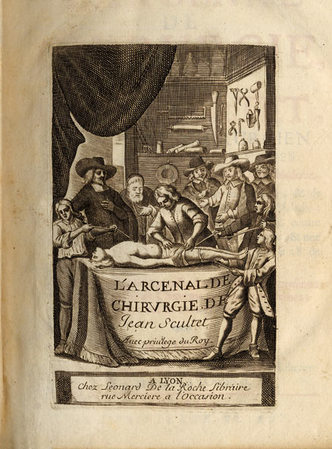
17129402Lyon, Léonard De La Roche, 1712 ; in-4 ; plein veau havane, dos à nerfs richement décoré et doré, pièce de titre grenat, tranches mouchetées rouges (reliure de l'époque) ; (16) y compris le frontispice gravé, titre en rouge et noir, Dédicace aux médecins et chirurgiens de Lyon, table, 369, (3), 138, (22) pp. de tables ; 46 planches numérotées plus 4 non chiffrées soit 50 planches gravées hors-texte au total, certaines dépliantes, représentant de très nombreux outils et appareils, des opérations et 3 planches de monstres.
ix, [1], 457 pages. References. Index. In this, Skinner's first book, he "launched a new science based on selection by consequences as the mechanism through which behavior changes during the lifetime of the individual. The book summarizes nearly ten years of research, spanning the years of Skinner's graduate school days at Harvard through his three years as a member of the Society of Fellows. Here he defines his basic unit of behavior, the operant, proposes rate as the basic datum, and describes his research program-to identify the variables of which behavior is a function." - B.F. Skinner Foundation. Name of Arthur Gladstone stamped atop front free endpaper is presumably that of the Swarthmore College professor who edited the 'Bulletin of the Research Exchange on the Prevention of War' in the 1950s. Ink marginal lines and/or marginalia on approximately 23 pages appear recent. Dust jacket not included. Moderate wear to black cloth-covered boards. Bright gilt lettering upon backstrip. Binding tight. Book
197069451ABZumikon (Schweiz)., Editions Pyra AG / Victor Vasarely., o. J. [1970]. 10,2 x 10,2 x 66 cm., 69451A Winzigste Bereibungen und minimalste Klebeschatten auf einer Seite, sonst guter bis sehr guter Zustand.