48 779 résultats
1907012194Cleveland OH: The Burrows Brothers Company 1907. 616pp/frontis/illus/maps. #30 of 150 copies.In near fine clean slipcase. Beautifully printed on extra large laid paper bound in a richly tooled half leather binder. An exceedingly rare volume. Includes: illustrations diagrams maps. During the American Revolutionary War a contingent of Delaware Christian Indians led by John Heckwelder an assistant to Moravian missionary David Zeisberger founded the last of five missions to occupy the Tuscarawas Valley between May 3 1772 and September 8 1781. Heckewelder spent forty years as a missionary among the Indians in the Ohio Valley. He was praised for his understanding of the Indian language and customs but is also known for his account of the massacre of the Christian Indians at Gnadenhutten by troops lead by Col. David Williamson in 1782. Light nicks on spine. Clean no marks. Beautiful copy. 1st Printing. Half-Leather. Near Fine/No Jacket - Issued. Folio - over 12" - 15" tall. Limited Numbered Copy. The Burrows Brothers Company Hardcover
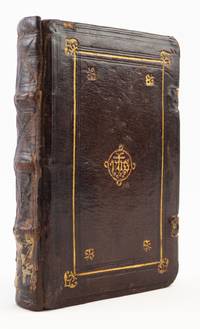
1538ST19567-018Venetiis Venice: in officina heredum Luceantonii Junte hiers of Lucantonio Giunta 1538. 149 x 104 mm. 5 7/8 x 4". 8 143 of 144 leaves lacking leaf p6. <br/> Contemporary Venetian morocco rebacked preserving original blind-ruled spine and corners rounded off and renewed covers each with blind-ruled borders and a gilt- and blind-ruled panel with gilt fleurons in each inner and outer corner central gilt IHS monogram raised bands brass clasps renewed all edges gilt and gauffered lacking final endleaf. Printer's device on title numerous historiated woodcut initials first page of text with woodcut border two full-page woodcut illustrations. Printed in red and black. Essling 181; Sander 5970 under "autres éditions"; EDIT 16 CNCE 11880. Original spine somewhat crackled bottom compartment with slight surface loss perhaps from removal of a label covers with several but insignificant small dings very minor dampstain at extreme top edge of a few leaves other trivial imperfections but a clean fresh and bright copy in an attractive early binding.<br/> <br/> Offered in what is probably its original binding this is a very rare edition of a Psalter done by one of the leading Venetian printing families of the 15th and 16th centuries. A major figure in the Italian book trade Lucantonio Giunta 1457-1538 began his career as a bookseller in Venice in 1477 and became a printer there in 1489. Together with family members and carefully arranged partnerships Giunta expanded his printing empire into numerous cities in Europe including Lyon Lisbon Antwerp Frankfurt and Salamanca. The present book was printed just after the death of Lucantonio whose heirs would continue to run the family business which grew prosperous in part because of its specialty in producing liturgical works such as this. The contents here are routine but the well-preserved decorative period binding makes the volume definitely worth having. in officina heredum Luceantonii Junte [hiers of Lucantonio Giunta] unknown
1774ST12037<p>Vicenza: per Gio. Battista Vendramini Mosca 1774. FIRST EDITION. 305 x 216 mm. 12 x 8 1/2". lxxvi pp.</p><p>Original paste paper boards covered in red and green block-printed patterned paper. In a modern red cloth folding box. Frontispiece engraving of the arms of bride and groom engraved allegorical vignettes on title page and at end woodcut head- and tailpieces and foliated initials all done with considerable charm. Spine and head edge just slightly faded a couple of very small snags in backstrip one page with mild thumbing but A SUPERB COPY EXCEPTIONALLY CLEAN FRESH AND BRIGHT both the text and original printed paper wrappers in an almost unbelievable state of preservation.<br /><br />This is a remarkably well-preserved Italian "wedding book" a souvenir produced for friends and guests of a noble bride and groom. It contains a collection of romantic poems by 28 different authors along with engravings of the newlyweds' arms. This kind of book was popular in Italy particularly in the north during the second half of the 18th and early part of the 19th centuries. Such occasional works were produced by printers in the major cities like Venice Vicenza Padua Trento and Milan for assorted noble patrons. Copies of these fête books are to be found today in Italian and Swiss libraries but only two copies of any such volumes are held in North America one by the New York Public Library and one by the Getty. KVK locates four copies of our work one of them damaged in three Italian libraries. The groom here Count Lodovico Tiene or Thiene was a scion of one of Vicenza's most important families. His ancestor also named Lodovico built the Palazzo Thiene that was memorably remodelled by Vicenza's most famous son Andrea Palladio. Our volume was obviously a treasured keepsake that was carefully stored away from light and dust and it looks amazingly like it must have on the day of the happy nuptials.</p> per Gio. Battista Vendramini Mosca
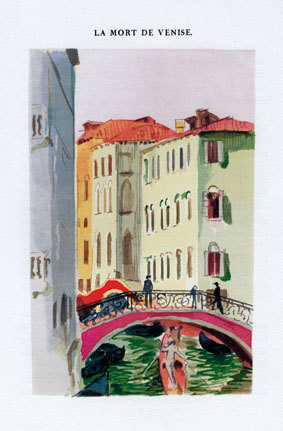
19301180Paris, Editions EOS, 1930 ; in-4 en feuillets, couverture rempliée rouge-brique, sous chemise cartonnée à larges rabats et lacets de soie de même couleur et illustrée d’un grand bois gravé bistre, dos en percaline bistre ; (4) feuillets, 88 pages, (4) feuillets ; 20 bois gravés en couleurs dont dix hors-texte, six vignettes et culs-de-lampe et un grand bois illustrant l’étui et la couverture.
012-Io.J. Feder und Pinsel in Grau, grau laviert, über Bleistiftskizze, auf Velin, im Unterrand betitelt, rechts unten signiert ?Arthur Blaschnik fec.?. 22,7:28,5 cm. Zwei kleine Fehlstellen im linken Rand ergänzt, rechte obere Ecke angesetzt, zwei Knickfalten geglättet.
FH-043o.J. Farblinolschnitt, 1922, auf Japan, mit Bleistift signiert und als ?Handdruck? bezeichnet. Darstellungsgröße 17,5:18,5 cm, Blattgröße 19,2:19,6 cm. Vorzüglicher, farbintensiver Abdruck!
FH-045o.J. Farblinolschnitt, 1922, auf chamoisfarbenem Japan-Bütten, signiert und als ?Handdruck? bezeichnet. Darstellungsgröße 21,8:22 cm, Blattgröße 23,5:22,8 cm. Sehr guter Abdruck, tadellos und frisch! Literatur: Ausst.-Katalog: Holzschnitt. Wien ab 1900. Wien, Galerie bei der Albertina, 2016/2017, Nr. 44 mit Farbabb.
084-Io.J. Aquarellskizze, über Bleistift, auf cremefarbenem Velin, links unten bezeichnet ?Von Genazzano am Volskergebirge?. 14,5:38,8 cm. Zwei vertikale Knickfalten. Provenienz: Galerie Gerda Bassenge, Berlin, 1966; Galerie Joseph Fach, Frankfurt am Main (als V.P. Mohn); Sammlung H. Märkt, Reutlingen. Literatur: Chr. Steinhoff: Salomon Corrodi und seine Zeit 1810-1892. Ein Schweizer Künstlerleben im 19. Jahrhundert, Fehraltorf 1992, vgl. Nr. 48 ?Blick auf Rom vom Monte Mario aus?. Panoramen sind im Werk Corrodis mehrfach zu finden.
EN-097o.J. Holzschnitt, um 1922, auf weichem Japan, verso von anderer Hand mit Bleistift bezeichnet. 17:29,5 cm, Blattgröße 29:46 cm. Leicht stockfleckig.- Graphische Arbeiten von Erich Dieckmann tauchen äußerst selten im Kunsthandel auf! Der vorliegende Holzschnit entstand in der Zeit seines Studiums am Bauhaus bei Johannes Itten.
346-Eo.J. Bleistift, auf gelblichem Velin, links unten bezeichnet, datiert und signiert ?Achenthal 1853 F. Eisenlohr.?. 21,5:32,6 cm.
EN-018o.J. Aquarellierte Lithographie, 1931, auf Bütten mit Wasserzeichen: JW Zanders, mit Bleistift signiert, datiert und mit der Werknummer bezeichnet ?Orig. Lith. (1931, III), handcol.?. Darstellungsgröße 35,5:23 cm, Blattgröße 48,5:34,7 cm. - Leicht fleckig und knitterfaltig. Sehr schönes und eines von wenigen handkolorierten Exemplaren! Literatur: Ausst. Katalog: Steindrucke von Adolf Erbslöh München. München, Karl und Faber, 1982, Nr. 30 mit Abb.
597-Eo.J. Bleistift, um 1835, auf Bütten. 27,1:19,8 cm. - Mit Quetschfalte im Papier und einigen Braunfleckchen. Vergleichsliteratur: Die Zeichnungen und Aquarelle des 19. Jahrhunderts in der Graphischen Sammlung der Staatsgalerie Stuttgart. Bestandskatalog. Bearb. von Ulrike Gauss. Stuttgart 1976, Nr. 245 mit Abb. Dargestellt ist auf unserer Zeichnung - ebenso wie auf der in Stuttgart - vermutlich eine der Schwestern des Künstlers, bei denen Fellner in Stuttgart lebte.
480-Eo.J. Bleistift, um 1835, auf cremefarbenem Papier mit Fragment des Wasserzeichens: J Whatman 18??. 26,2 x 18,7 cm. Provenienz: L? Art Ancien S.A., Zürich, 1981, Katalog 71, Nr. 38. Vergleichsliteratur: Die Zeichnungen und Aquarelle des 19. Jahrhunderts in der Graphischen Sammlung der Staatsgalerie Stuttgart. Bestandskatalog. Bearb. von Ulrike Gauss. Stuttgart 1976, Nr. 245 mit Abb. Dargestellt ist auf unserer Zeichnung - ebenso wie auf der in Stuttgart - vermutlich eine der Schwestern des Künstlers, bei denen Fellner in Stuttgart lebte.
FH-354o.J. Farbholzschnitt von mehreren Stöcken, 1904, auf blauem Velin, mit Bleistift signiert und als ?Originalholzschnitt Handdruck? bezeichnet. 18:12 cm, auf die Umfassungslinie geschnitten, unten und links mit Rändchen. Werknummer 4. ? Sehr selten!
324-Eo.J. Aquarell, weiß gehöht, über Bleistift, auf cremefarbenem Velin. 15,5:25 cm. In den Rändern ungleich beschnitten. Die flott gemalte Landschaft stammt sicher aus einem Skizzenbuch und dürfte auf Geists Reise nach Antwerpen im Jahr 1861 entstanden sein. Eine freiere Handhabung in der Darstellung von Licht- und Luftphänomen nach französischen Vorbildern, von denen er sich nur bedingt anregen ließ, ist hier zu beobachten.
153-Ho.J. Gouache, teils pastos aufgetragen, auf dünnem Japan-Bütten. 27,7:29,5 cm. Charakteristisches Aquarell von leuchtender Farbigkeit. ? Mit Schöpfrand an drei Seiten. Interessante experimentelle Arbeit!
287-Eo.J. Aquarell und Deckfarben, über Bleistift, auf hellgrauem Bütten, verso bezeichnet ?Adolf Hoeffler?. 30:43,3 cm. Etwas stockfleckig, verso mit Hinterklebungen an den Rändern.
233-Eo.J. Bleistift, weiß gehöht, auf grauem festem Bütten mit Fragment eines Wasserzeichens. 20,9:27,5 cm. Ingesamt ein wenig fleckig. Provenienz: Sammlung Tremmel. Literatur: Ketterer, Mai 2003. Nr. 300.
585-Eo.J. Feder in Grau, in Sepia laviert, mit schwarzer Tuschlinie umrandet, auf chamoisfarbenem Velin, auf dem abgeschnittenen Streifen eines nicht mehr vorhandenen Untersatzpapieres signiert, datiert und bezeichnet ?Gezeichnet von Heinrich Friedrich Höfler (sic!) und den Preis erhalten den 26ten Aprill 1809. / Lit. B. No 3.?. 49:60,5 cm. - Papier insgesamt leicht vergilbt, kleinere Randeinrisse sorgfältig restauriert. Die südliche Landschaft verrät in ihrer etwas dilettantischen Zeichenweise die noch nicht sehr geübte Hand des jungen Künstlers. Möglicherweise ist das Blatt nach einer fremden Vorlage und im Zeichenunterricht bei J.A.B. Reges entstanden.
FH-444o.J. Farbholzschnitt, 1916, (Schwarz, Gelb, Grau), auf Japan-Bütten, mit Bleistift signiert ?L.H. Jungnickel?. Darstellungsgröße 15,1:14,5 cm, Blattgröße 22,7:20 cm. Literatur: Katalog: Laske/Jungnickel/v. Zürlow. Albertina, 1978/79, Nr. 180; O. Zoff, Die Graphischen Künste, 39. Jg. Wien 1916, p. 68/69.
EN-088o.J. Lithographie, 1922, auf cremefarbenem Bütten mit Wasserzeichen: JW Zanders und Einhorn, mit Bleistift signiert, datiert und nummeriert. Darstellungsgröße 38,8:27,3 cm, Blattgröße 58,4:38,4 cm. Literatur: Amman L 8, mit Werknummer bezeichnet ?1922/VIII?. - Nr. 27 von 40 Exx. Wunderbarer Abdruck, lediglich der obere und untere Rand vom Druck etwas wellig, die linke untere und obere Ecke ergänzt.
EN-077o.J. Lithographie 1922, auf chamoisfarbenem Bütten, mit Bleistift signiert, datiert, nummeriert und Werknummer bezeichnet. Darstellungsgröße 27,7: 42 cm, Blattgröße 37,6: 54,9cm. Amman L 5. Nr. 3 von 50 Exx, davon 5 auf Bütten chamois. Sehr schöner Druck mit breitem Rand.
EN-038o.J. Holzschnitt, 1919, auf gelblichem Velin, mit Bleistift signiert, datiert und als ?Handdruck? bezeichnet. Darstellungsgröße ca. 19:12,5 cm, Blattgröße 33:21 cm. - Mit vereinzelten Stockfleckchen. Sehr guter Abdruck und selten! Provenienz: Aus dem künstlerischen Nachlass. Literatur: Ausst. Katalog: Edmund Daniel Kinzinger 1888-1963. Reuchlinhaus Pforzheim, eine Ausstellung der Stadt Pforzheim und der Galerie Joseph Fach, Frankfurt am Main, bearb. von Anne-Dore Ketelsen-Volkhardt. Pforzheim, 1988, Nr. 30, Abb. S. 46.
293-Eo.J. Pinsel in Grau, grau laviert, über Kohle, um 1819, auf bräunlichem Bütten, verso signiert und bezeichnet ?Klengel f. Dresden.? und von fremder Hand datiert ?(1790)?. 21,7:27,7 cm. Verso: Skizze einer sitzenden Frau und weitere Skizzen von Köpfen. Kohle, teil grau laviert und weiß gehöht. Rand ungleichmäßig beschnitten. Vergleichsliteratur: A. Fröhlich ?Glücklich gewählte Natur...?. Der Dresdner Landschaftsmaler Johann Christian Klengel (1751-1824). Monographie und Werkverzeichnis der Gemälde, Zeichnungen, Radierungen und Lithographien, Hildesheim/Zürich/New York 2005, S. 381, G 376. Klengel zeigt auf unserem Blatt ein in seinem Schaffen wiederkehrendes Motiv: die Vielfältigkeit der Landarbeit, so einen Mann bei der Kartoffelernte, einen Holzträger, auch einen heimwärts ziehenden, von schwerer Arbeit gebeugten Mann mit einem Hund und eine weitere Person mit einer schweren Last auf dem Rücken. Hier handelt es sich sicher um eine Vorzeichnung zu einer bei Fröhlich aufgeführten, im Besitz der Graphischen Sammlung, Kunstsammlung Weimar, befindlichen Radierung Klengels von 1819, wenn auch die Figur links sich unterscheidet durch das Arbeitsgerät, hier eine Schaufel, dort eine Heugabel, auch sind die rechts vom Pferd aufgeführten Personen hier nicht als zusammenhängende Gruppe zu verstehen.
Bulino, 1530, firmato in lastra, in basso nell’immagine, con il monogramma “L” seguito dall’iscrizione “SPES”. Esemplare nel primo stato, di tre.Superba prova, ricca di toni e ben contrastata, impressa su carta vergata coeva, rifilata alla linea del rame, in eccellente stato conservativo.Della serie “Le Virtù”, composta da sette tavole. La data, 1530, è riportata sulla prima e sulla quarta tavola, raffiguranti le virtù della Fede e della Prudenza.“Le Virtù cristiane, dette teologali, erano Fede, Speranza e Carità, e a queste ultime i padri della chiesa aggiunsero le quattro virtù cardinali descritte nella repubblica di Platone: Giustizia, Prudenza e Temperanza. Cosicchè questi soggetti trattati dagli artisti come serie, alle volte in contrasto con i Vizi Capitali (che Luca non eseguì) erano graditi al Clero. Luca, sempre attento a eseguire immagini che potessero essere facilmente apprezzate, si impegnò a fondo eseguendo questi sette nudi nel suo stile italianeggiante in cui gli effetti di monumentalità e di tutto tondo sono particolarmente riusciti.” (Salamon, 114) Engraving, 1530, signed with the monogram "L" and lettered "SPES". First state, of three.Magnificent work, printed on contemporary laid paper, trimmed close to platemark, in excellent condition.A nude allegorical figure of hope sits on a stone ledge in profile to right, her hands are raised before her and she looks out of a doorway at back right toward a ray of light in the sky at upper right; an angel at upper left holds a halo over her head.The plate is the second in a series of seven plates of the Virtues. Two of the seven plates bear the date 1530.The Christian Virtues, called theological, were Faith, Hope and Charity, and to the latter the fathers of the church added the four cardinal virtues described in Plato's republic: Justice, Prudence and Temperance. So these subjects treated by the artists as serious, sometimes in contrast to the Capital Vices (which Luke did not perform) were appreciated by the Clergy. Luca, always careful to execute images that could be easily appreciated, worked hard to execute these seven nudes in his Italian style in which the effects of monumentality and all-round are particularly successful. Bartsch VII.420.128; Hollstein 128; Filedt-Kok, 128; The New Hollstein, 128; TIB, 115; Salamon, n. 114.